Benin City Art Style
Explore Benin City art: Edo court bronzes, ivory carving, coral regalia, relief figures, and richly patinated ceremonial surfaces.
Instantly rendered in Benin City — or transform a photo
Benin City Gallery
Tap any artwork to explore it
What is Benin City Art Style?
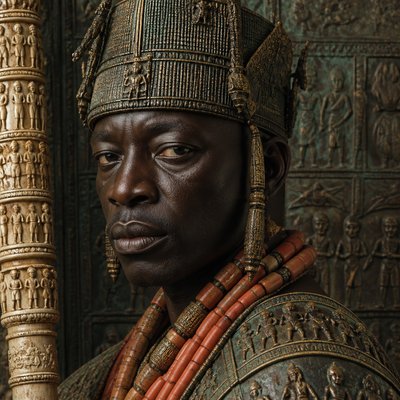
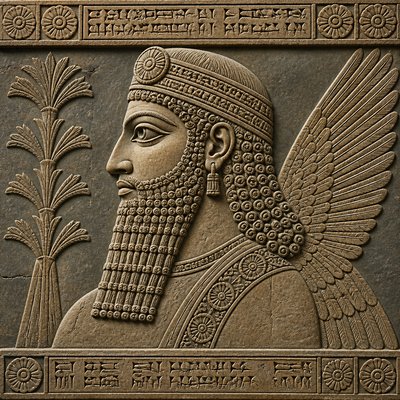
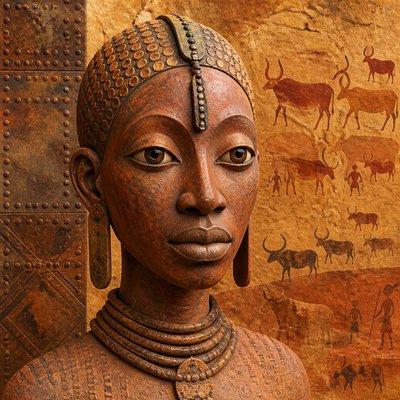
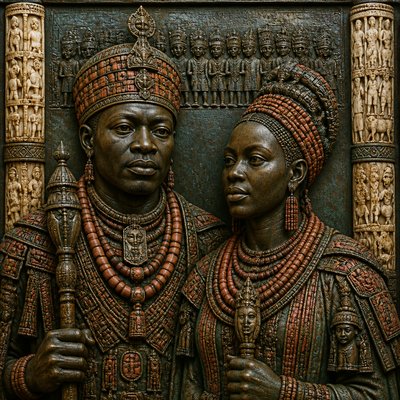
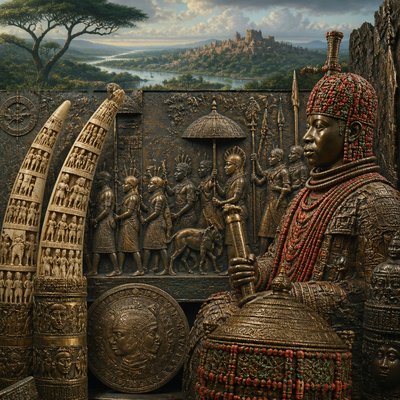
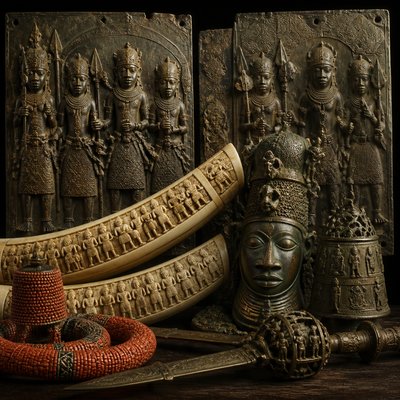
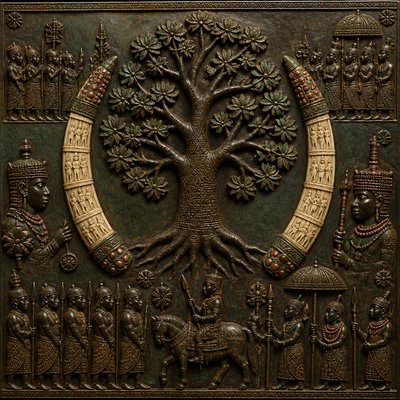
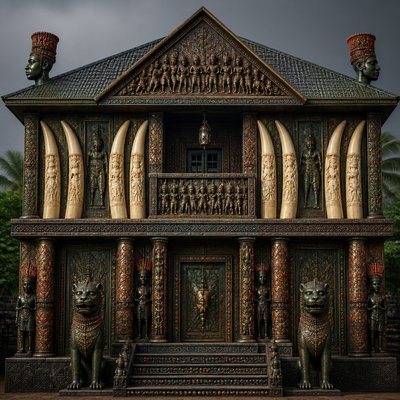
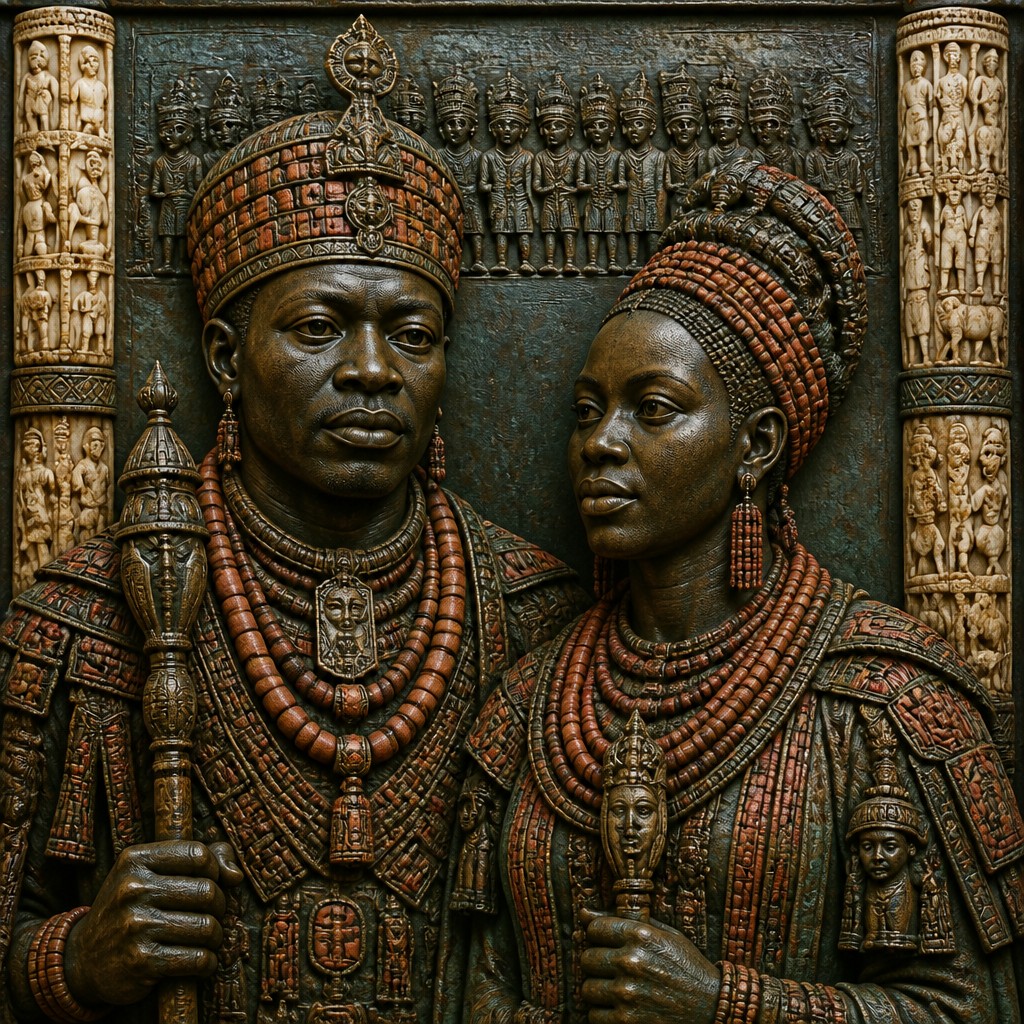
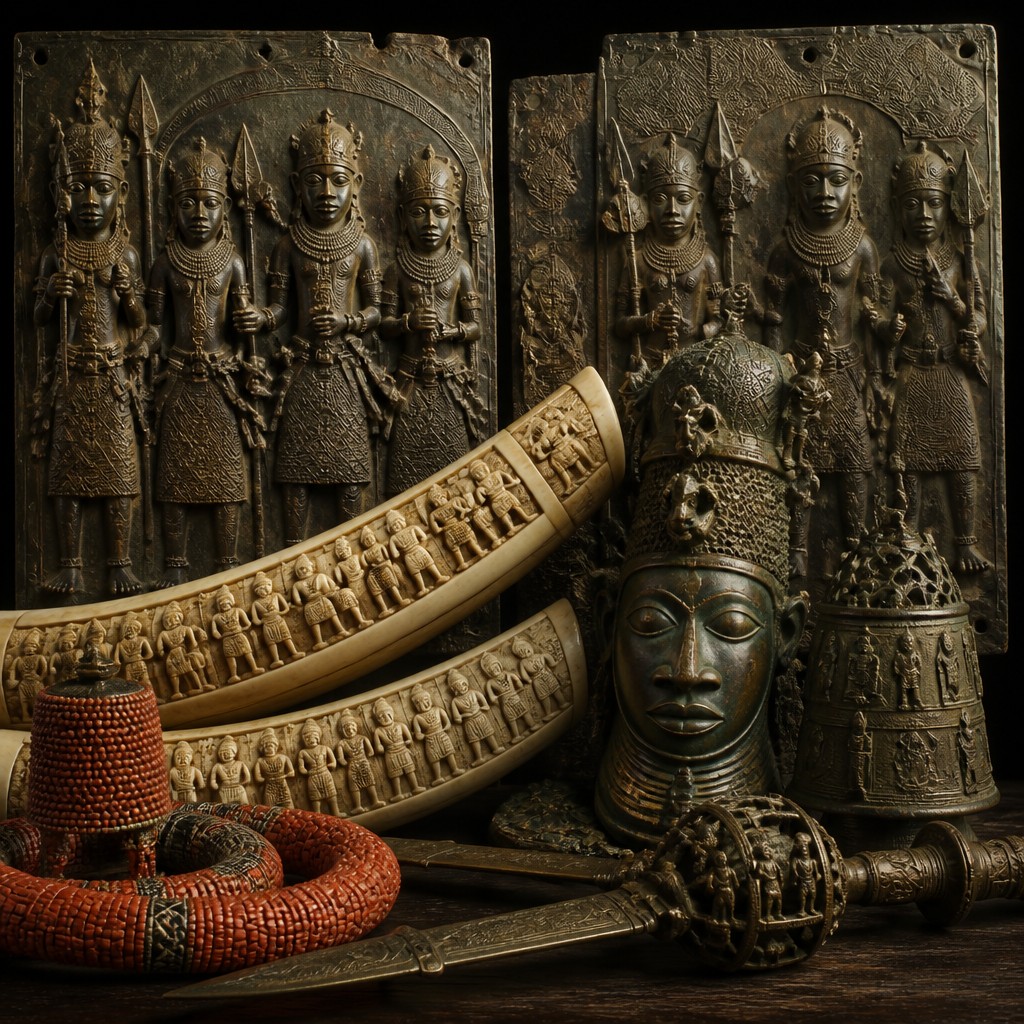
Benin City art style refers to the courtly visual tradition of the Edo Kingdom of Benin, centered in present-day southern Nigeria. It is especially associated with cast brass and bronze plaques, commemorative heads, figures, vessels, bells, masks, and elaborately carved ivory objects made for the royal palace and its ceremonial life. The works often present rulers, attendants, warriors, officials, and ritual participants in frontal or carefully ordered compositions, with status conveyed through regalia, gesture, scale, and position.
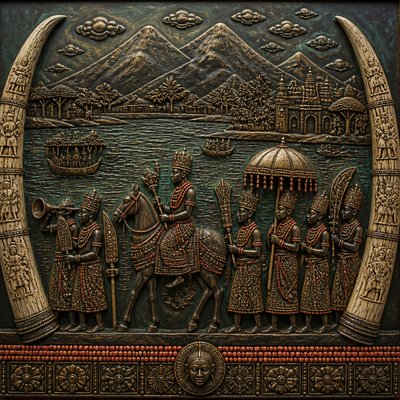
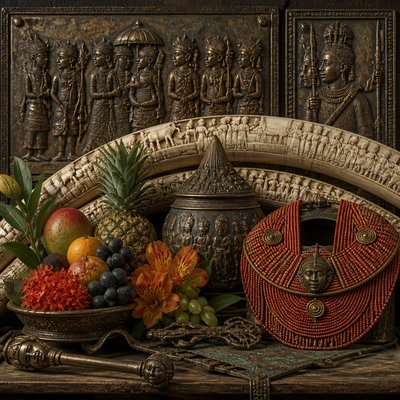
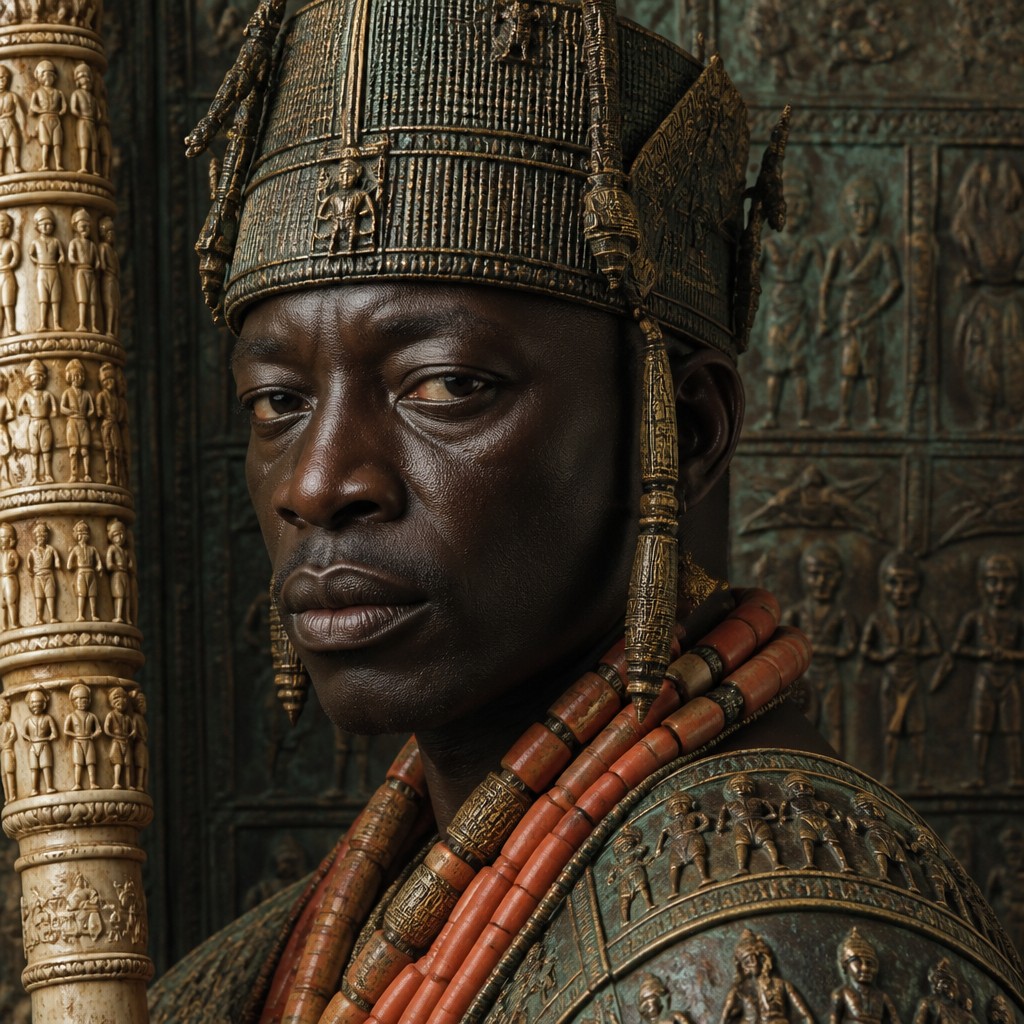
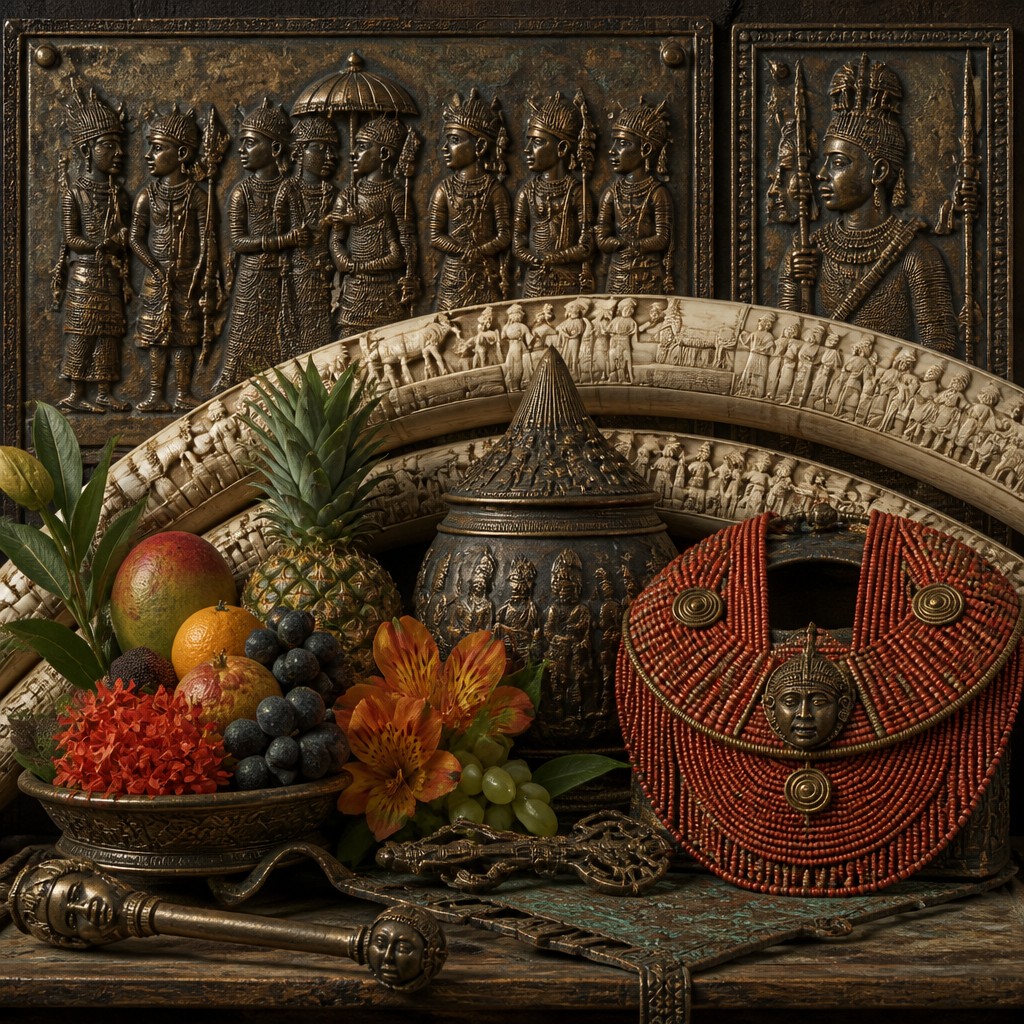
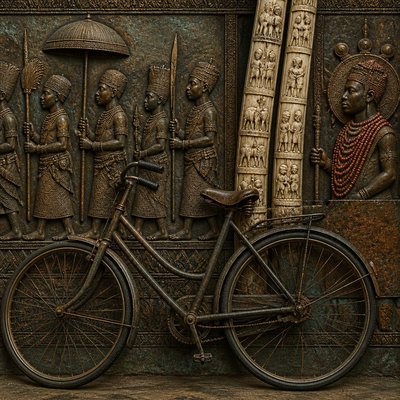
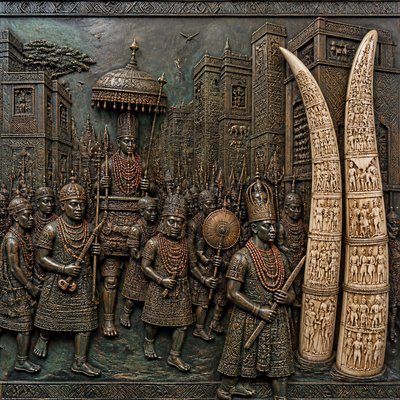
Its visual identity combines high relief, precise contour, dense ornament, and a deliberately authoritative sense of hierarchy. Coral-bead collars, patterned textiles, weapons, animal emblems, and palace architecture create richly legible surfaces, while dark brown, black, or greenish patinas emphasize the modeling of cast metal. Ivory tusks and other carved objects commonly use stacked registers, spiraling compositions, and repeated figures to organize historical, dynastic, and ceremonial imagery.
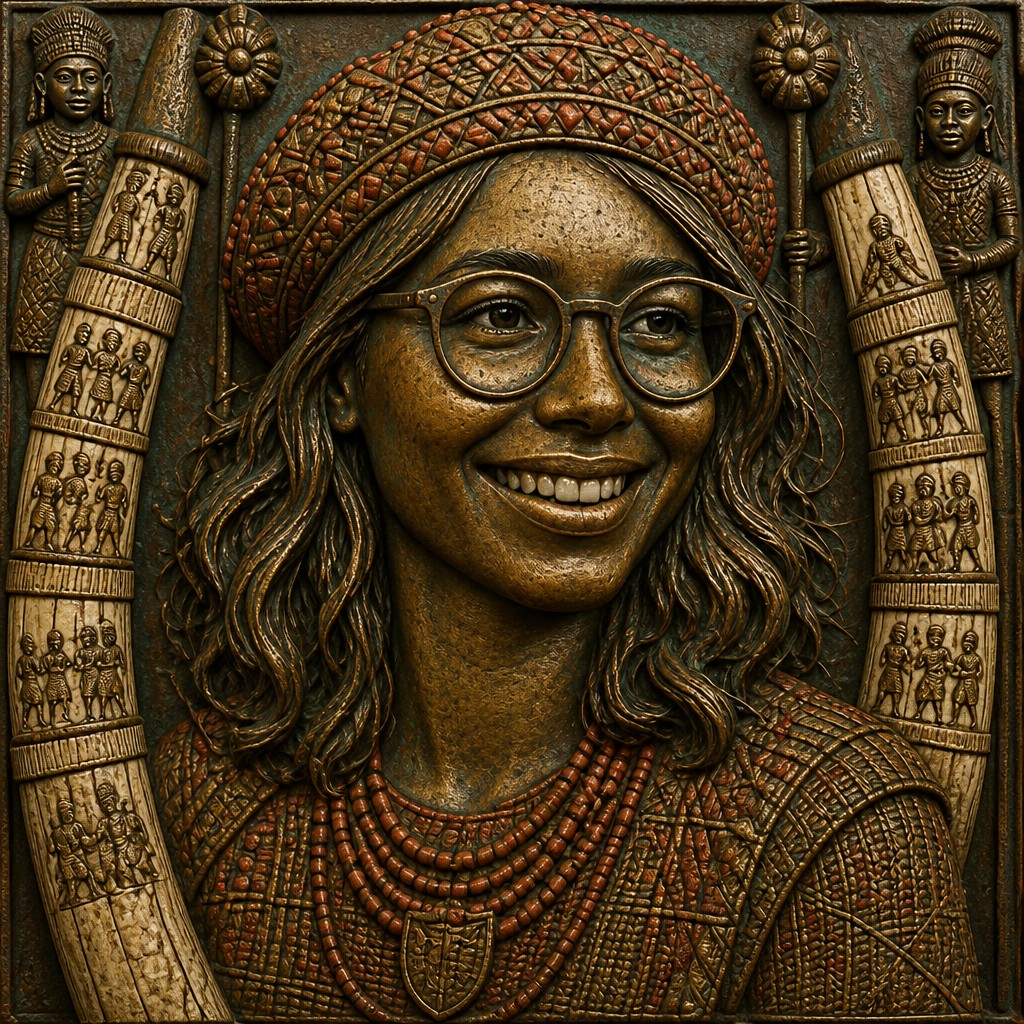
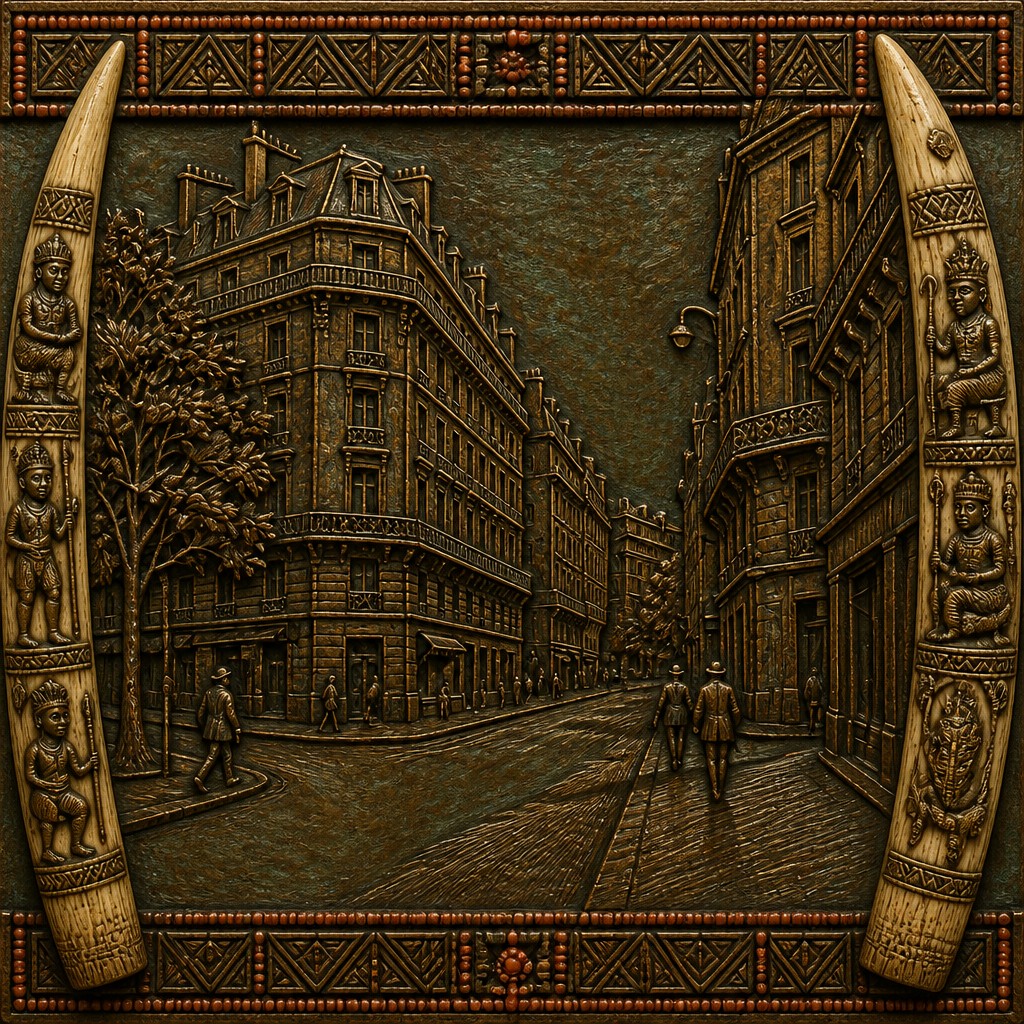
Try It On Your Photos
Upload any photo and convert it into Benin City Art Style — drag the sliders to compare before and after.


What Defines Benin City Art Style
The signature details, up close
High-relief cast metal
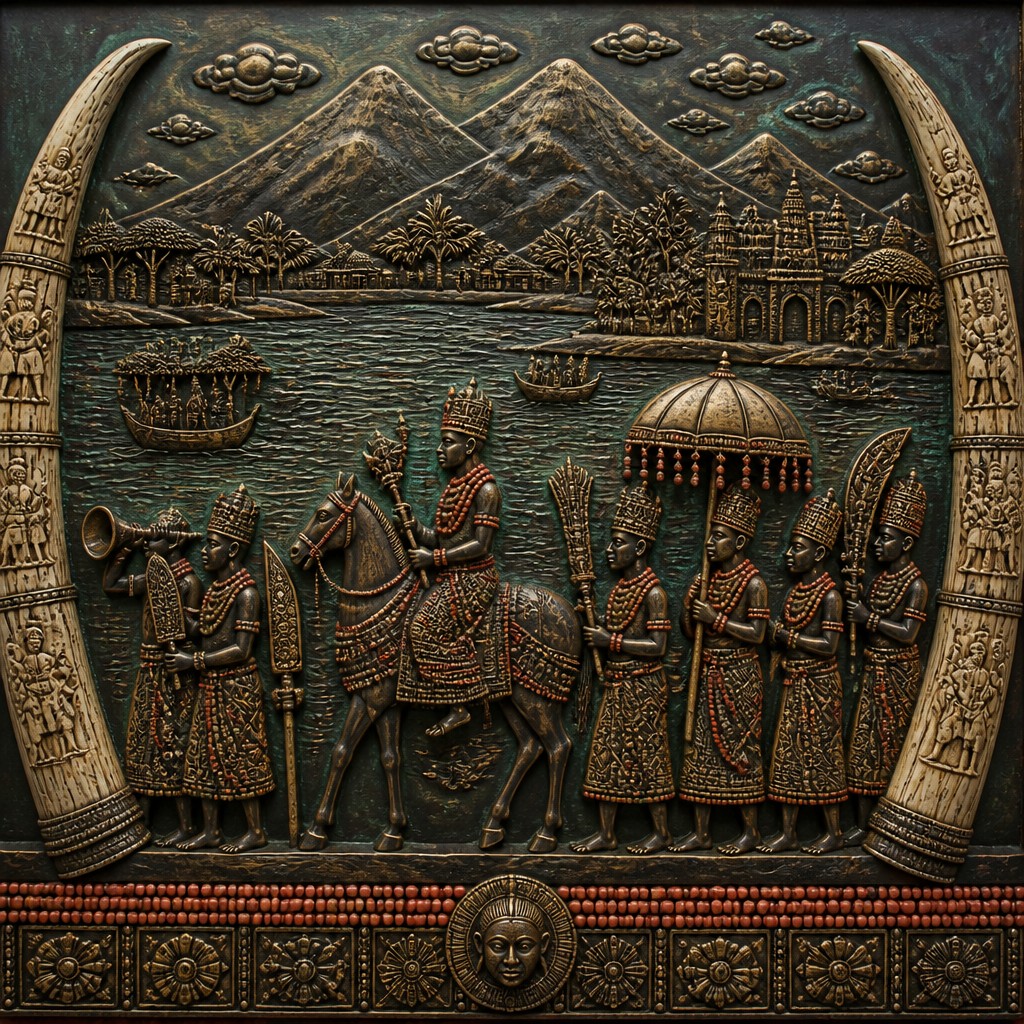
Brass and bronze plaques use projecting figures, raised borders, and carefully modeled details to create a strong tactile surface. Subtle variations in relief distinguish faces, garments, weapons, and ornamental motifs.
Courtly hierarchy
Scale, central placement, posture, and costume communicate rank and ritual importance. Royal figures are often surrounded by attendants, officials, warriors, or symbolic animals in ordered compositions.
Coral regalia and patterned costume
Layered coral-bead collars, crowns, belts, and necklaces are among the most recognizable visual markers. Repeated geometric patterns also describe textiles, armor, beadwork, and ceremonial accessories.
Layered ivory carving
Ivory tusks and objects may carry spiraling bands or stacked figural registers that wrap around the surface. Dense carving turns the cylindrical form into a continuous narrative and ceremonial field.
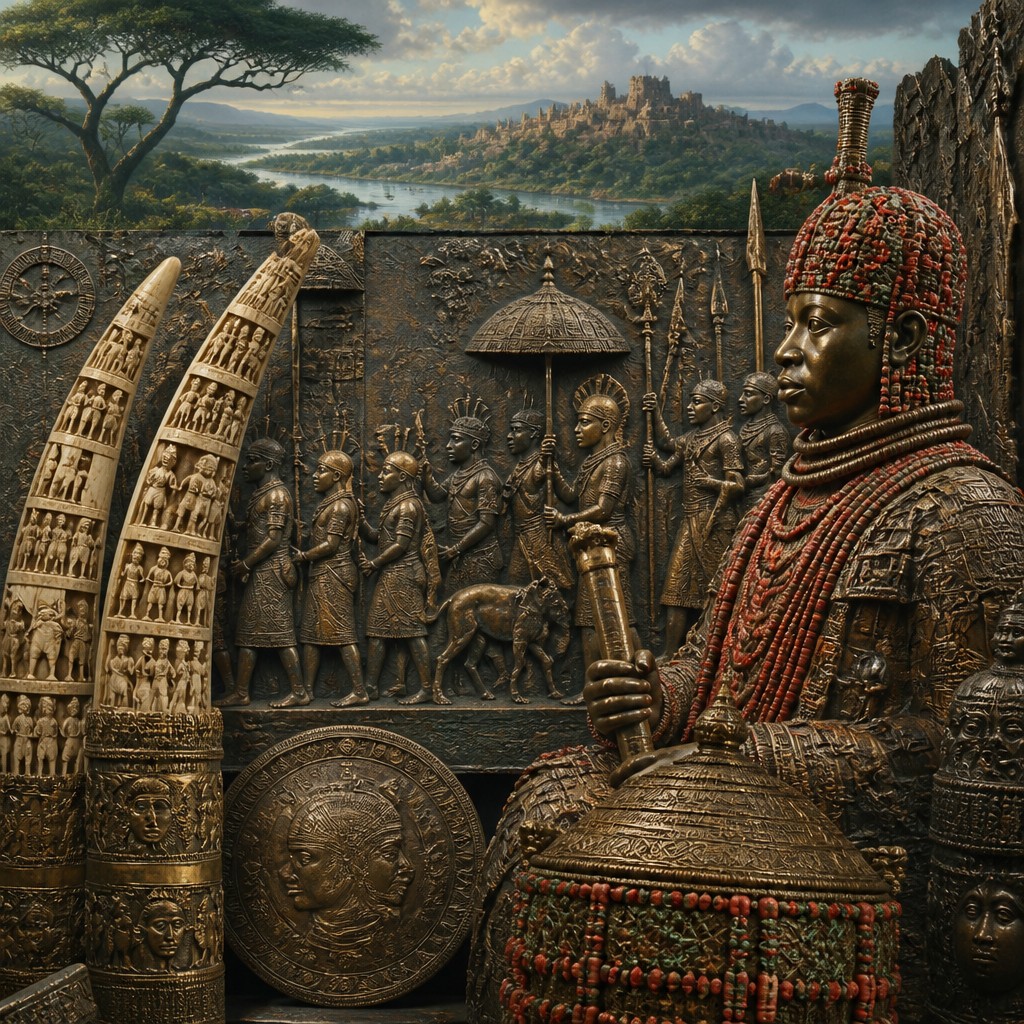
Lost-wax craftsmanship
Traditional brass casting commonly uses a wax model encased in clay; once heated, the wax melts away and molten metal fills the mold. This process permits individualized works with fine surface detail, though each mold is generally used only once.
Aged, burnished surfaces
Darkened patinas, polished highlights, and granular casting textures give metal objects visual depth. Greenish verdigris can appear through aging, but historically appropriate surfaces also include warm brown, reddish, and nearly black tones.
Symbolic animals and emblems
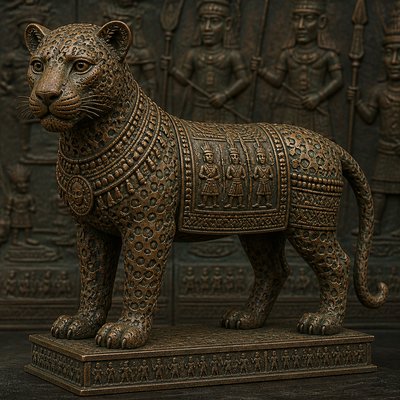
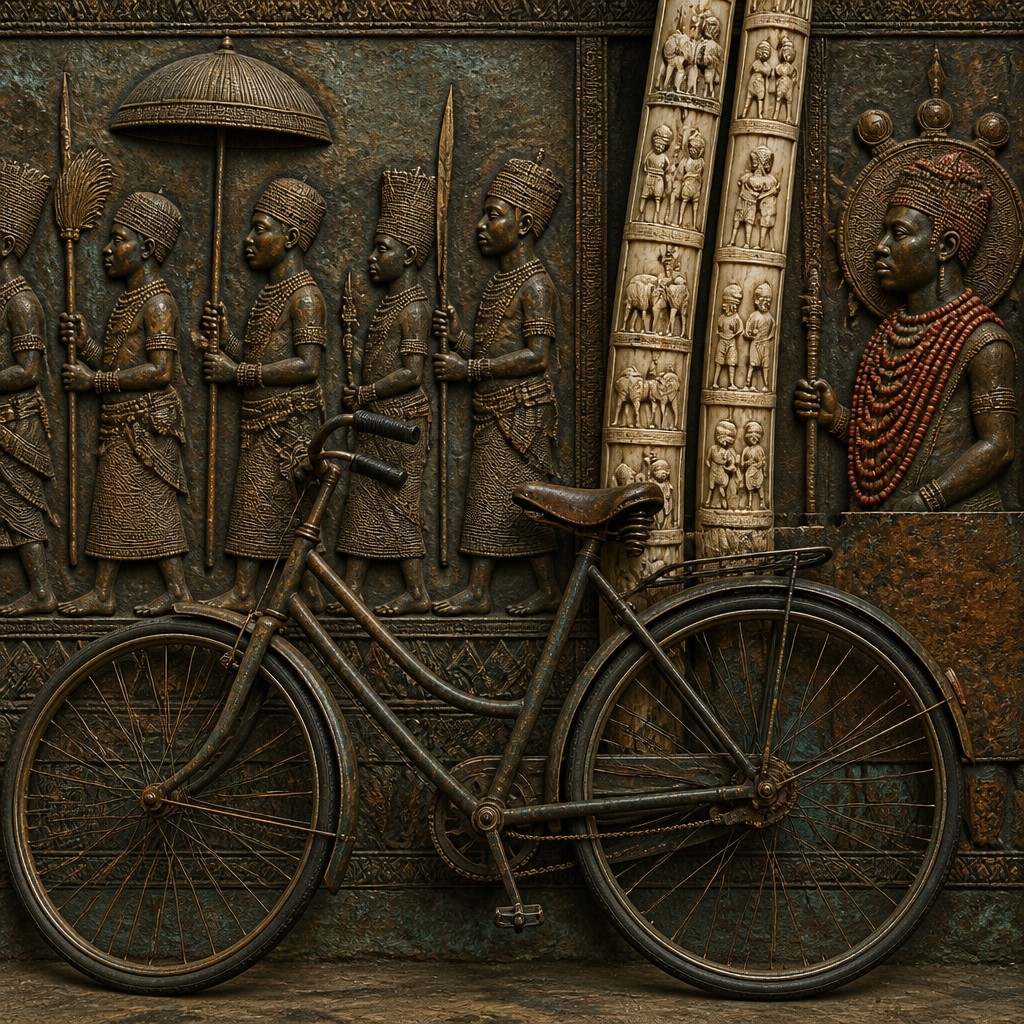
Leopards, mudfish, crocodiles, birds, snakes, and other motifs can refer to royal authority, spiritual power, military force, or the aquatic environment. Their meaning depends on the object, context, and Edo visual vocabulary.
Benin City Prompt Ideas
Start from an idea — each one opens the generator with the style ready to go. See all 40 Benin City prompts →
How to Create Benin City Art
Master the craft step by step — or skip straight to creating. Read the full guide →
- 1
Build a relief composition
Arrange a central courtly figure with attendants or symbolic animals in shallow-to-high relief, using raised borders to contain the scene. Keep figures frontal or strongly posed and make rank readable through scale, placement, and costume.
- 2
Model cast-metal texture
For physical work, sculpt a wax or polymer model, create a suitable investment mold, and use professional foundry practice for casting and finishing. Digitally, use sculpting software with layered displacement, crisp incised lines, and selective polishing to suggest cast brass.
- 3
Use historically grounded regalia
Include coral-bead collars, crowns, patterned wrappers, ceremonial weapons, and courtly accessories with restraint and research. Avoid mixing unrelated African motifs into a generic fantasy costume.
- 4
Design a patina and lighting scheme
Start with dark brown or blackened brass, then add restrained green oxidation and burnished highlights on raised edges. Raking side light, warm gallery light, or a neutral archival setup can reveal the relief without flattening it.
- 5
Plan digital or AI-assisted imagery
Specify a cast brass plaque, Edo court ceremony, high relief, coral regalia, layered registers, and aged metal rather than relying on a broad cultural label alone. Add constraints such as historically grounded costume, no modern objects, and an uncluttered museum-quality view.
- 6
Adapt the form to a subject
For a portrait or animal, frame the subject like a commemorative plaque or carved tusk, using frontal symmetry, ornamental borders, and symbolic accessories. Preserve the visual logic of court art instead of merely applying a bronze-colored filter.
The Story
History & Origins of Benin City
The tradition developed within the royal arts of the Kingdom of Benin, whose capital was Benin City in the Edo region. Metal casting and ivory carving flourished over several centuries, with surviving palace plaques particularly associated with the sixteenth and seventeenth centuries, although the broader tradition continued and changed into the nineteenth century and beyond. Works were produced through specialized court workshops using techniques including lost-wax casting for brass and bronze and relief carving for ivory.
The British punitive expedition of 1897 resulted in the looting and dispersal of many palace objects into European and North American collections, profoundly shaping how the tradition was encountered by the modern art world. Contemporary Edo artists and cultural institutions continue to sustain, reinterpret, and advocate for this heritage, including through debates over provenance, restitution, and the return of looted works.
Influences: The style is connected to Edo court art, West African lost-wax metalworking, royal commemorative sculpture, ivory-carving traditions, and ceremonial regalia. It can also be studied alongside other African court arts and relief traditions, but it should not be collapsed into a generalized category of African art. Contemporary interpretations may intersect with museum display, restitution discourse, historical portraiture, and digitally modeled sculpture.
Frequently Asked Questions
What defines Benin City art style?
It is defined by the courtly art tradition of the Edo Kingdom of Benin, especially cast brass and bronze reliefs, carved ivory, royal regalia, and highly ordered ceremonial imagery. Frontal figures, hierarchical composition, coral beads, symbolic animals, and richly worked surfaces are central features.
Is Benin City art the same as all African bronze art?
No. Benin City art refers specifically to the Edo court tradition associated with the Kingdom of Benin and Benin City in southern Nigeria. Other African regions have distinct metalworking histories, materials, iconographies, and social contexts.
When were the famous Benin plaques made?
Many surviving palace plaques are generally associated with the sixteenth and seventeenth centuries, although Benin court arts developed over a much longer period and continued into the nineteenth century and later. Dating individual works can be complex and depends on style, materials, provenance, and technical study.
What techniques are associated with this tradition?
Lost-wax casting is central to the production of many brass and bronze objects, while ivory works are carved with knives, chisels, drills, and other specialized tools. Surfaces may be polished, incised, textured, or chemically and naturally patinated.
How can I create an image inspired by this style respectfully?
Name the Edo court context, specify the material and composition, and research regalia and symbols rather than combining unrelated African references. Avoid presenting sacred or historical objects as generic exotic decoration, and use prompts that distinguish contemporary reinterpretation from an authentic museum artifact.
Where is this style used today?
Its forms and visual principles appear in museums, cultural education, contemporary Edo artistic practice, public heritage projects, historical illustration, sculpture, jewelry, and digital art. Current discussions also address the 1897 looting of palace objects and the provenance and restitution of works held abroad.
Create your first Benin City artwork
Describe anything — or upload a photo — and see it in Benin City Art Style in seconds.
Related Styles
Discover similar art styles