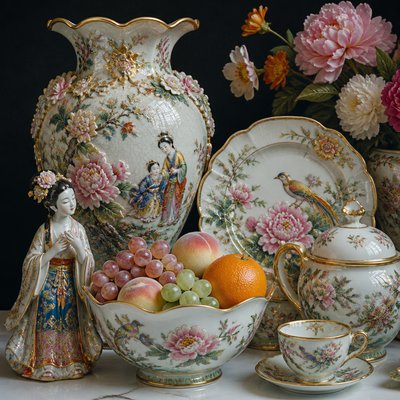
Ancient Chinese Bronze Art Style
Explore Ancient Chinese bronze art: Shang and Zhou ritual vessels, taotie masks, thunder meanders, cast relief, and mineral-green patina.
Instantly rendered in Ancient Chinese Bronze — or transform a photo
Ancient Chinese Bronze Gallery
Tap any artwork to explore it
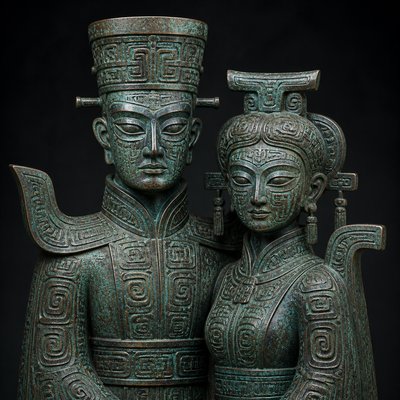
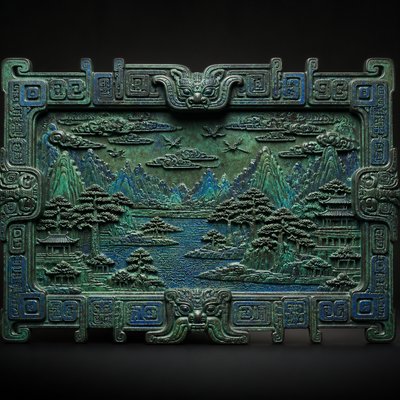
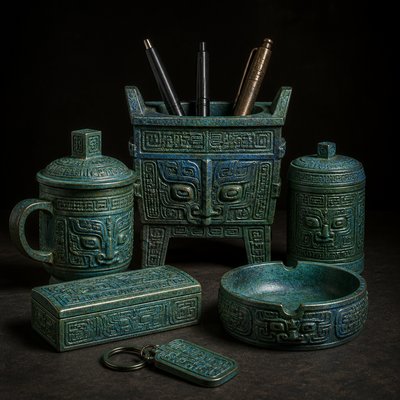
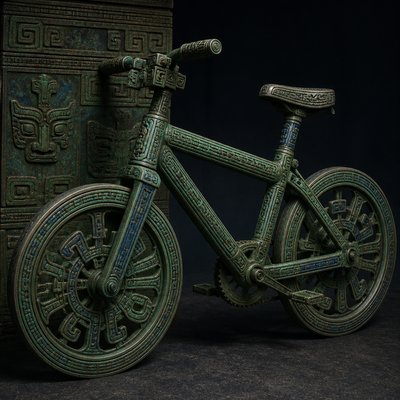
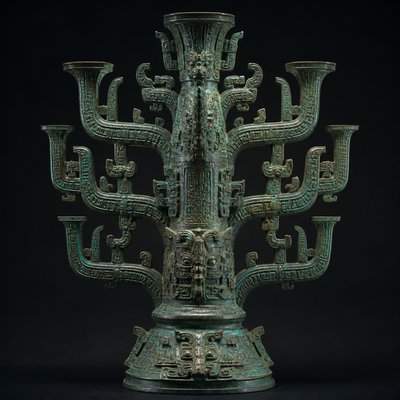
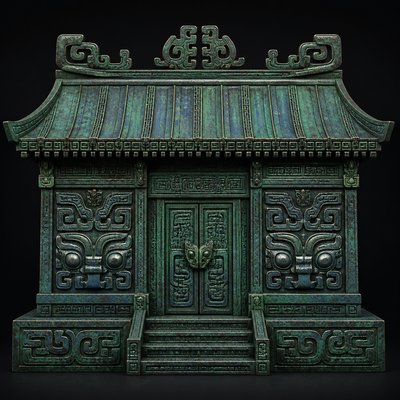
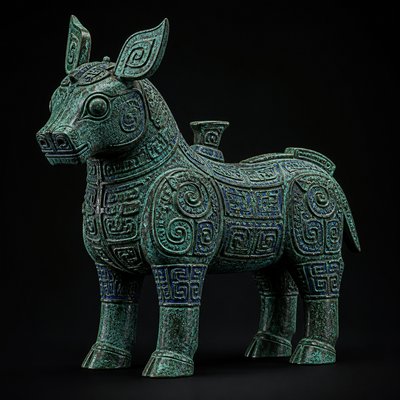
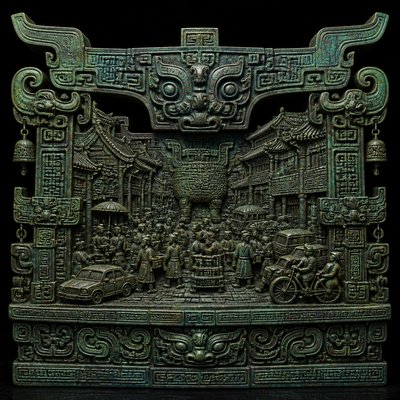
What is Ancient Chinese Bronze Art Style?
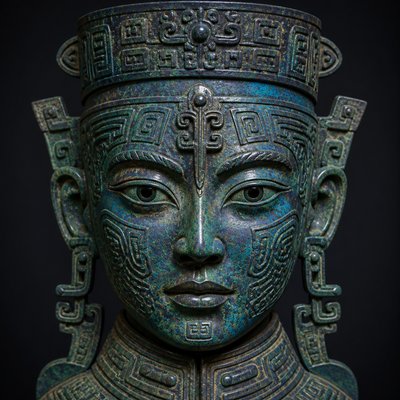
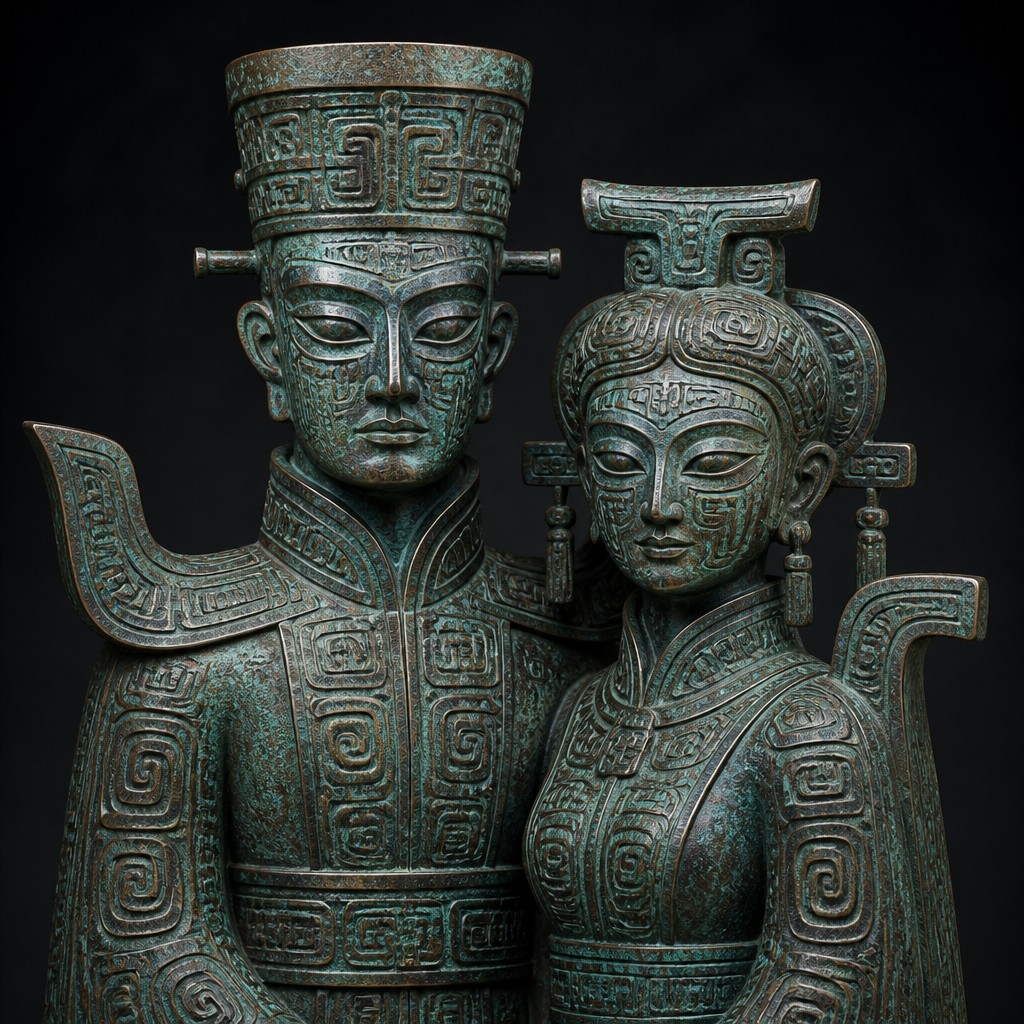
Ancient Chinese Bronze Art Style refers to the visual language of ritual bronzes made chiefly during the Shang and Zhou periods, from approximately the second millennium BCE through the early centuries of the first millennium BCE. Its imagery is defined by frontal taotie masks, paired creatures, dragons, birds, serpents, and tightly packed geometric ornament arranged across vessels, weapons, bells, and other ceremonial objects.
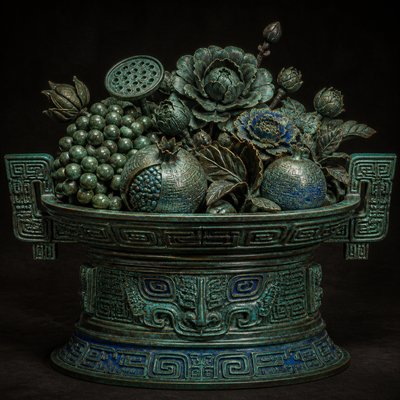
The style looks powerful and intricate because bronze objects were conceived as both functional ritual instruments and carriers of ancestral, political, and religious meaning. Angular relief, raised flanges, repeating spirals, and thunder-pattern meanders divide the surface into ordered registers. A green malachite patina and blue mineral oxidation are common visual cues in modern representations, although surviving bronzes display a wider range of brown, gray, black, blue, and green corrosion colors depending on burial conditions and later exposure.
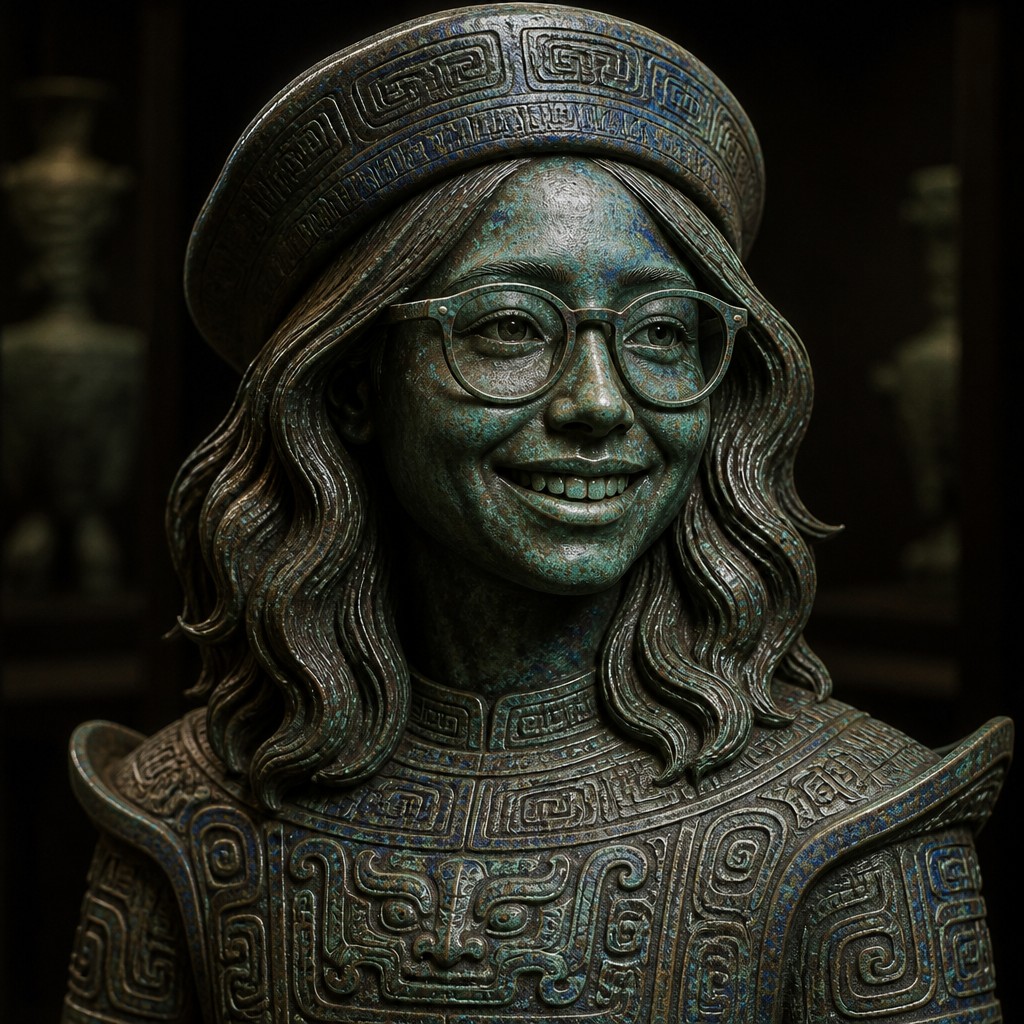
Try It On Your Photos
Upload any photo and convert it into Ancient Chinese Bronze Art Style — drag the sliders to compare before and after.

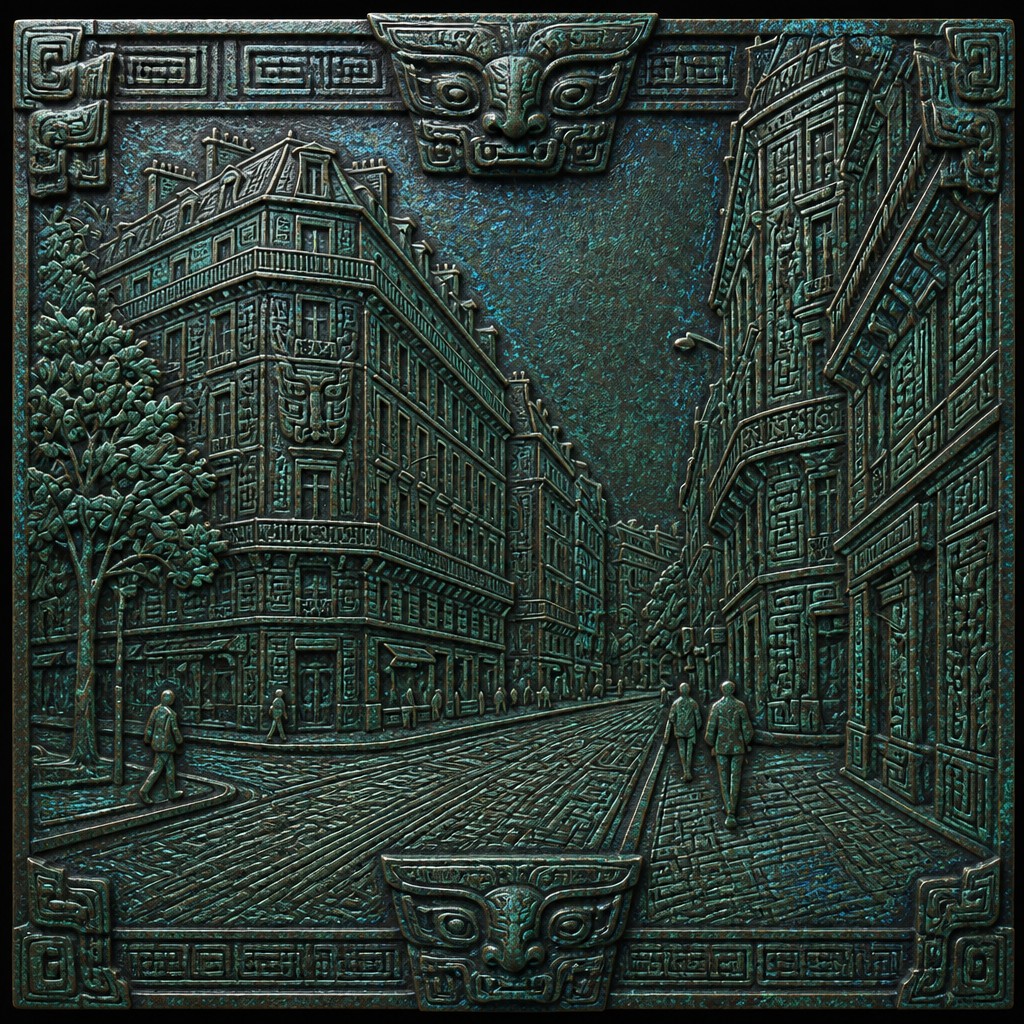

What Defines Ancient Chinese Bronze Art Style
The signature details, up close
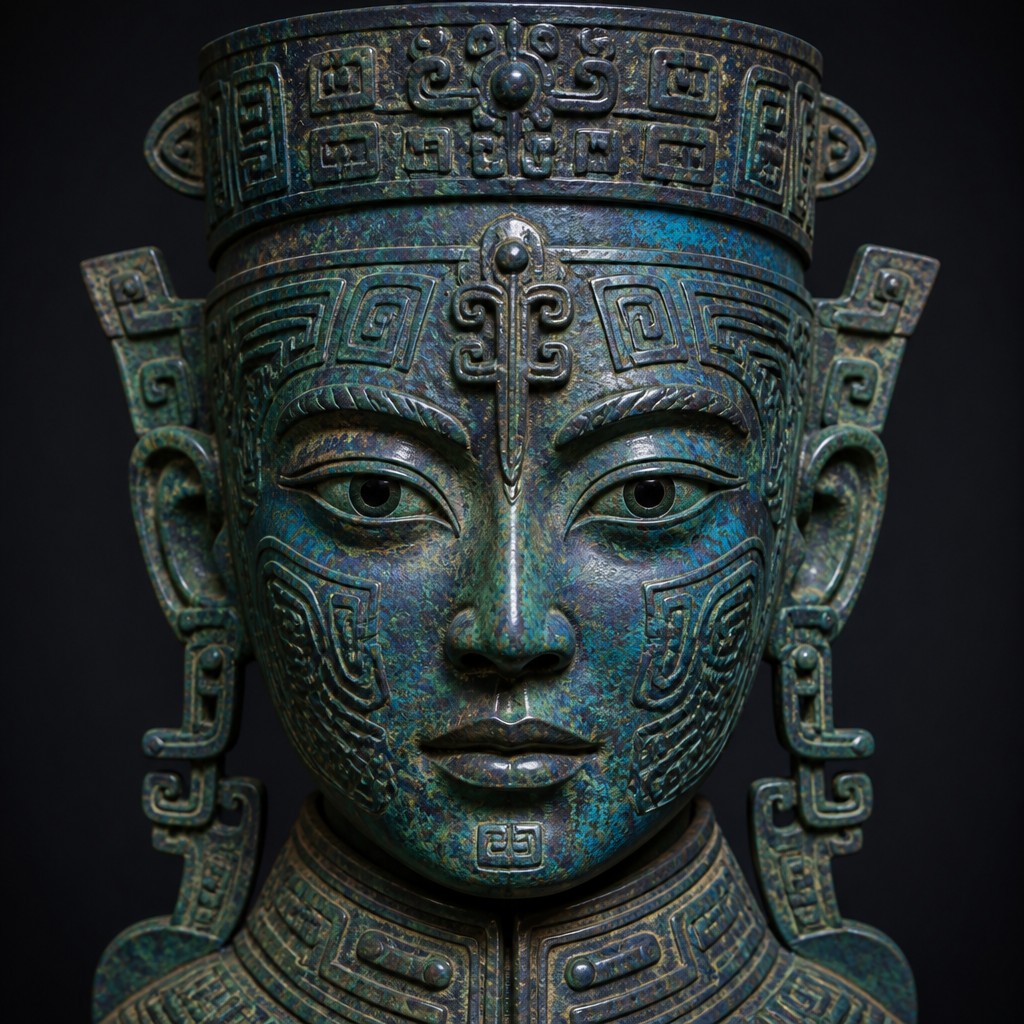
Frontal taotie masks
The taotie is a highly stylized, often symmetrical mask assembled from mirrored eyes, horns, jaws, and curling creature forms. Its exact meaning remains debated, but it functions visually as an imposing guardian or supernatural presence.
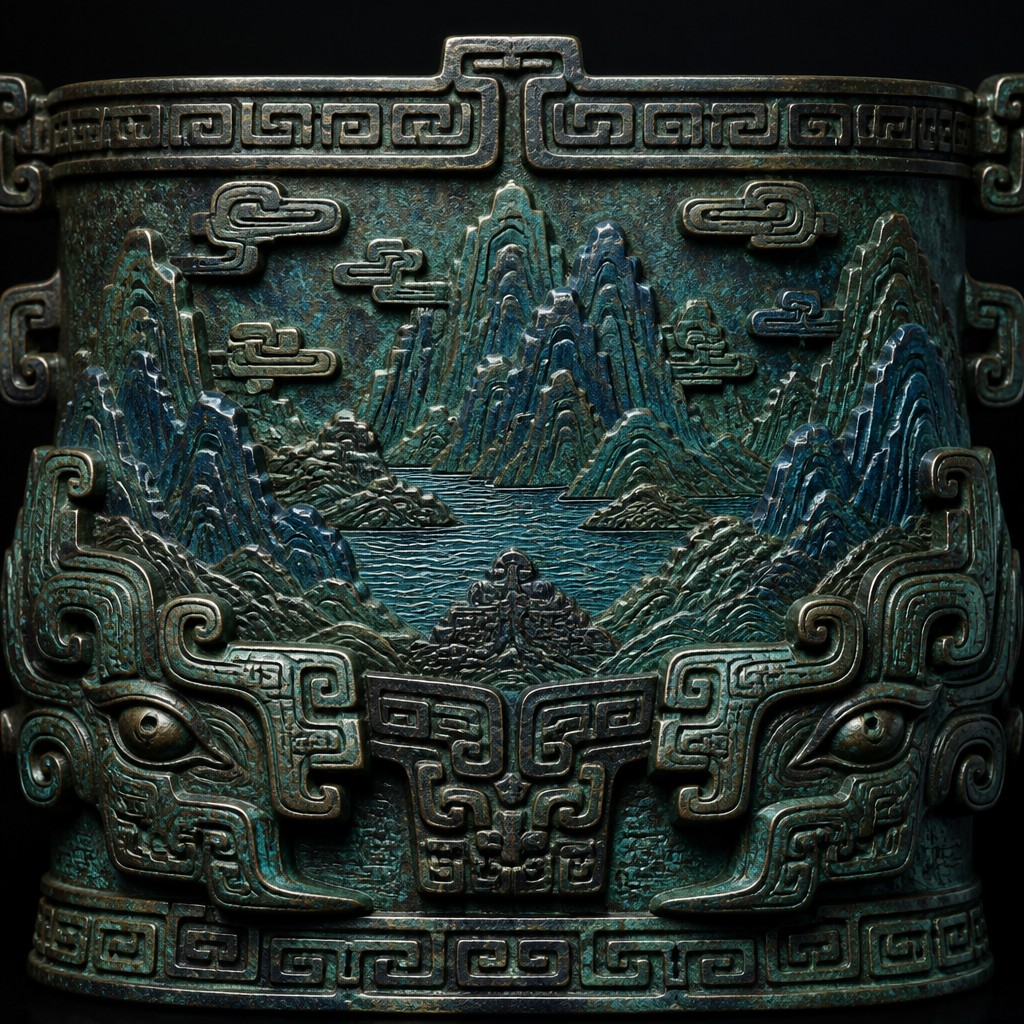
Thunder-pattern meanders
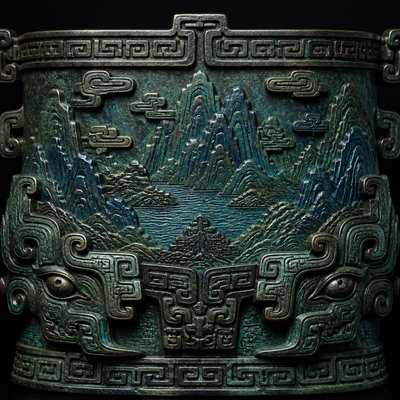
Angular leiwen, often translated as thunder patterns, fill backgrounds and borders with continuous geometric spirals. Their repetition creates a dense, vibrating surface rather than open pictorial space.
Piece-mold relief
Traditional bronze decoration appears as raised flanges, bosses, ribs, and low or high relief integrated into the casting. Motifs are arranged in registers that follow the vessel's structure.
Symmetry and controlled hierarchy
Central masks, paired animals, and balanced registers give the compositions a formal, ceremonial order. Even complex ornament usually follows a clear axis or structural division.
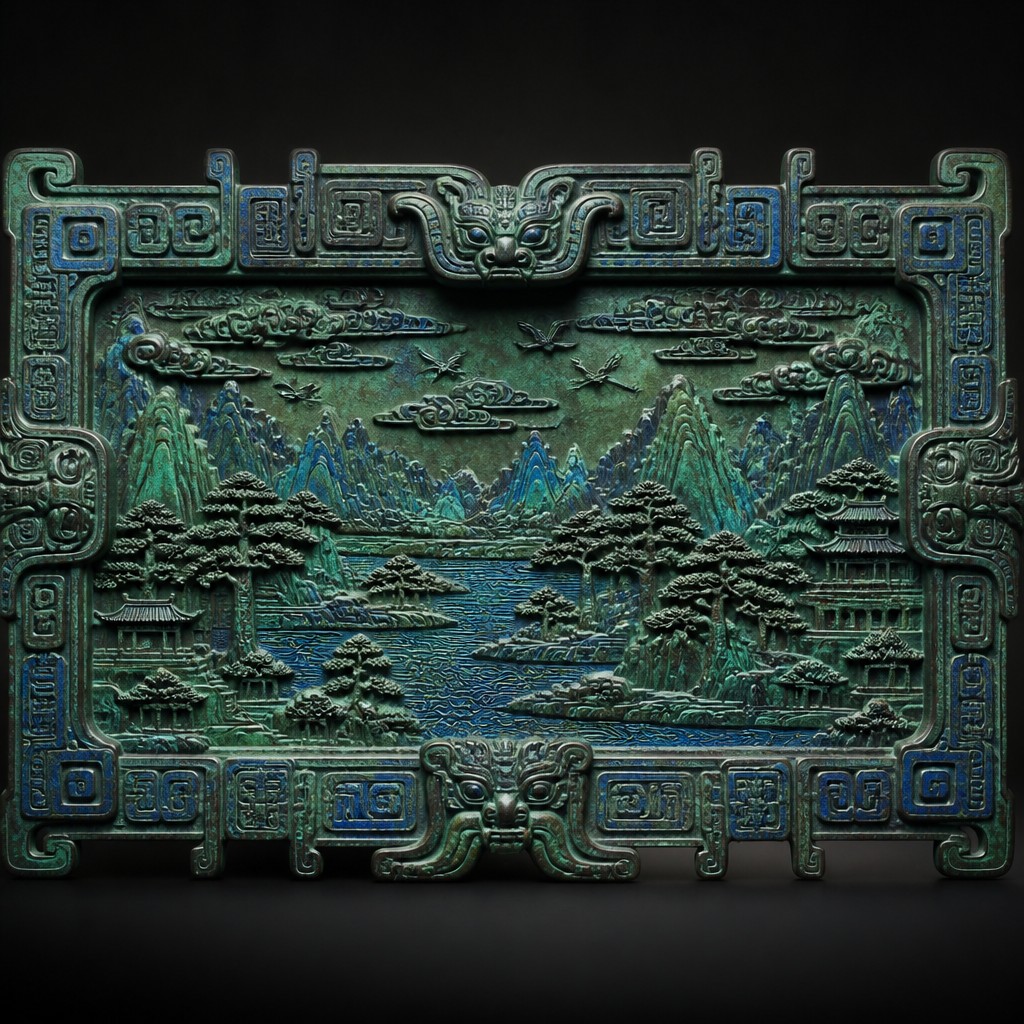
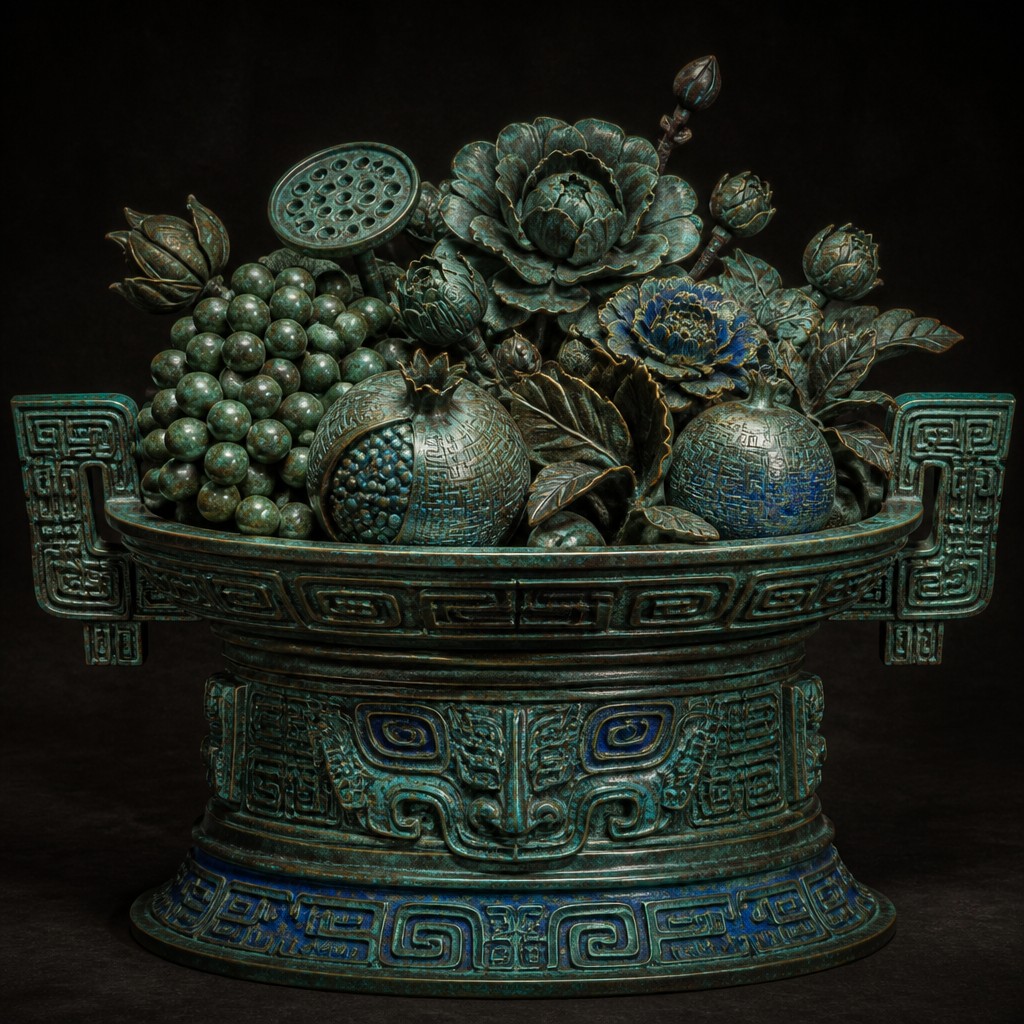
Mineral patina
Green malachite-like corrosion, blue azurite tones, brown surfaces, and dark oxidation suggest age and burial. Patina should appear uneven and integrated with the metal rather than applied as a flat green coating.
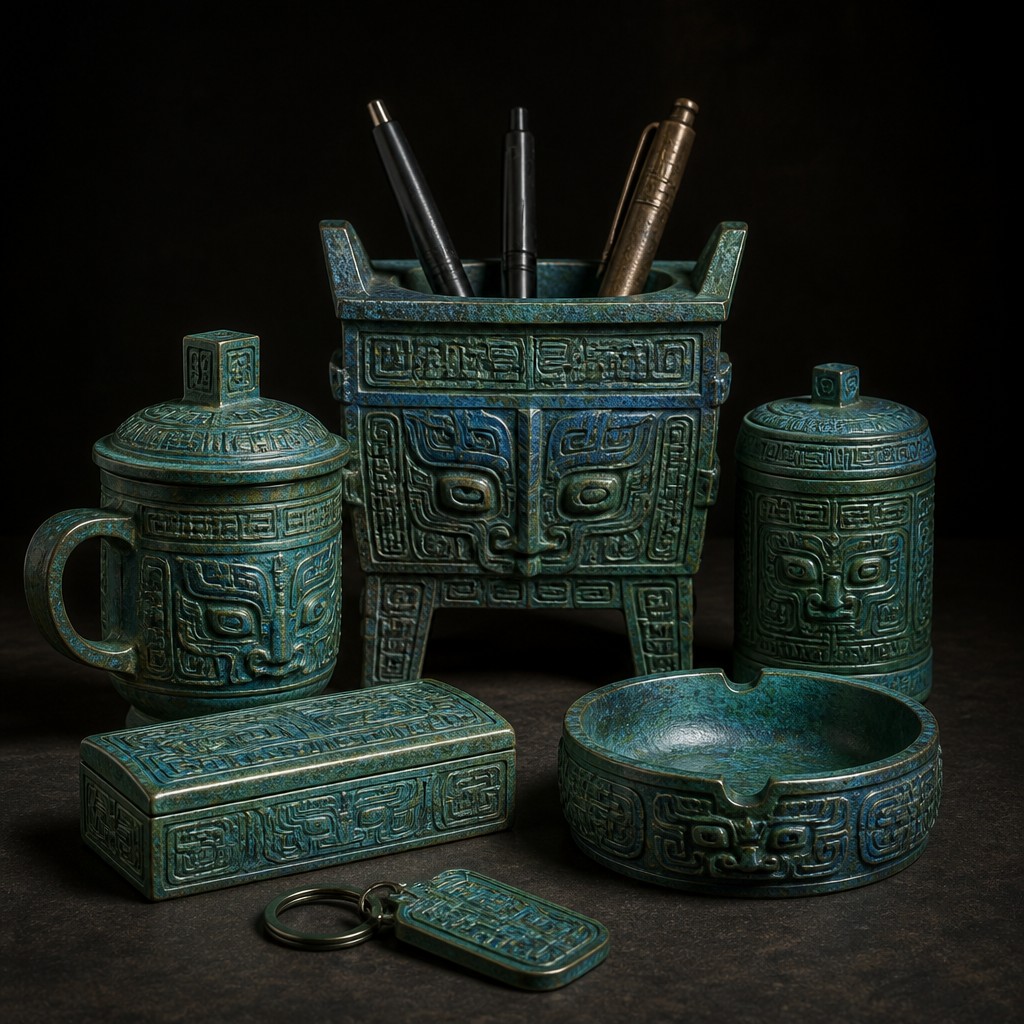
Dense interlocking creatures
Dragons, birds, serpents, felines, and composite beings interlock with spirals and angular borders. Their anatomy is deliberately transformed into signs, hooks, curves, and mirrored fragments.
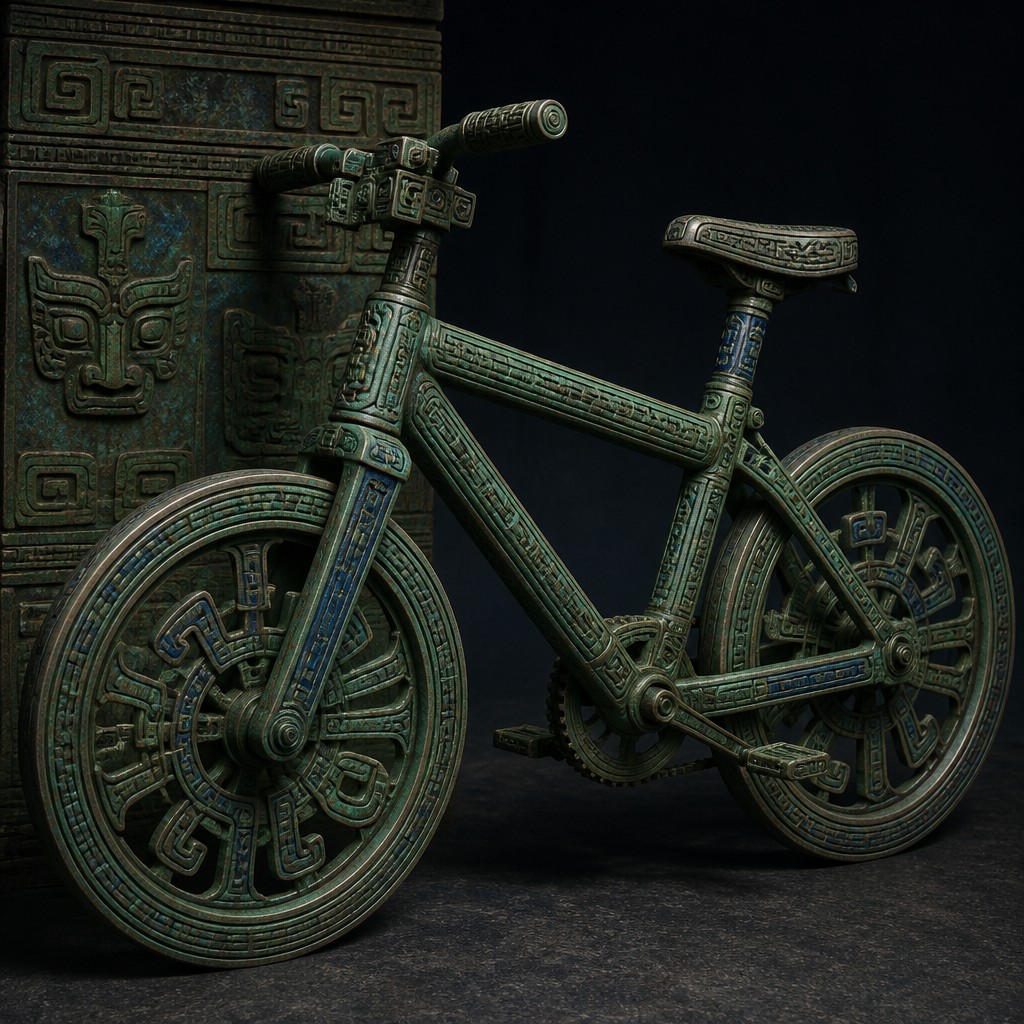
Ritual vessel silhouettes
Tripod food vessels, tall wine containers, pouring vessels, covered jars, and bells provide the characteristic architectural framework. Thick walls, flared rims, handles, feet, and projecting fins emphasize weight and authority.
Try It
Create Videos in Ancient Chinese Bronze Art Style
Styles aren't just for stills — describe a scene or animate an image and get a short video rendered in Ancient Chinese Bronze. Press play to see this pond come to life.
Make a VideoAncient Chinese Bronze Prompt Ideas
Start from an idea — each one opens the generator with the style ready to go. See all 40 Ancient Chinese Bronze prompts →
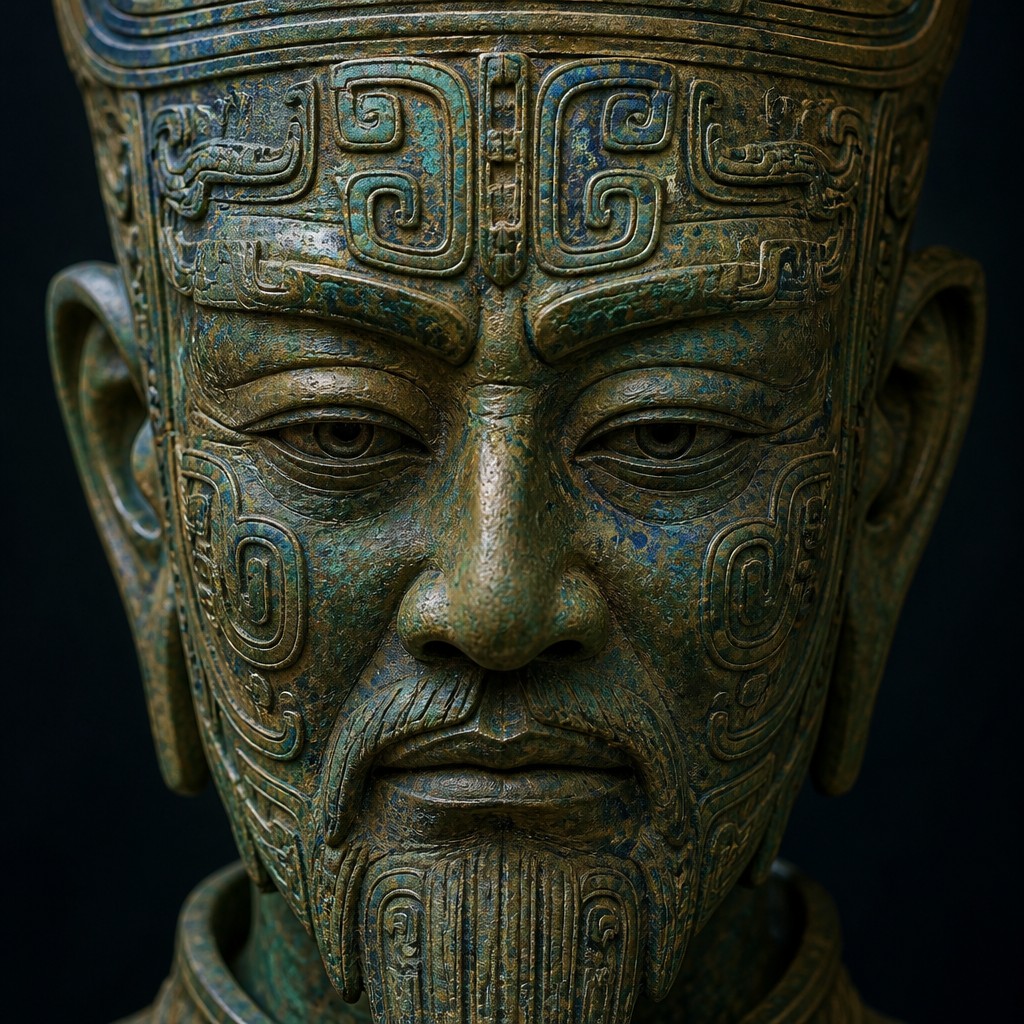
“close-up portrait of an elderly person with expressive weathered features”
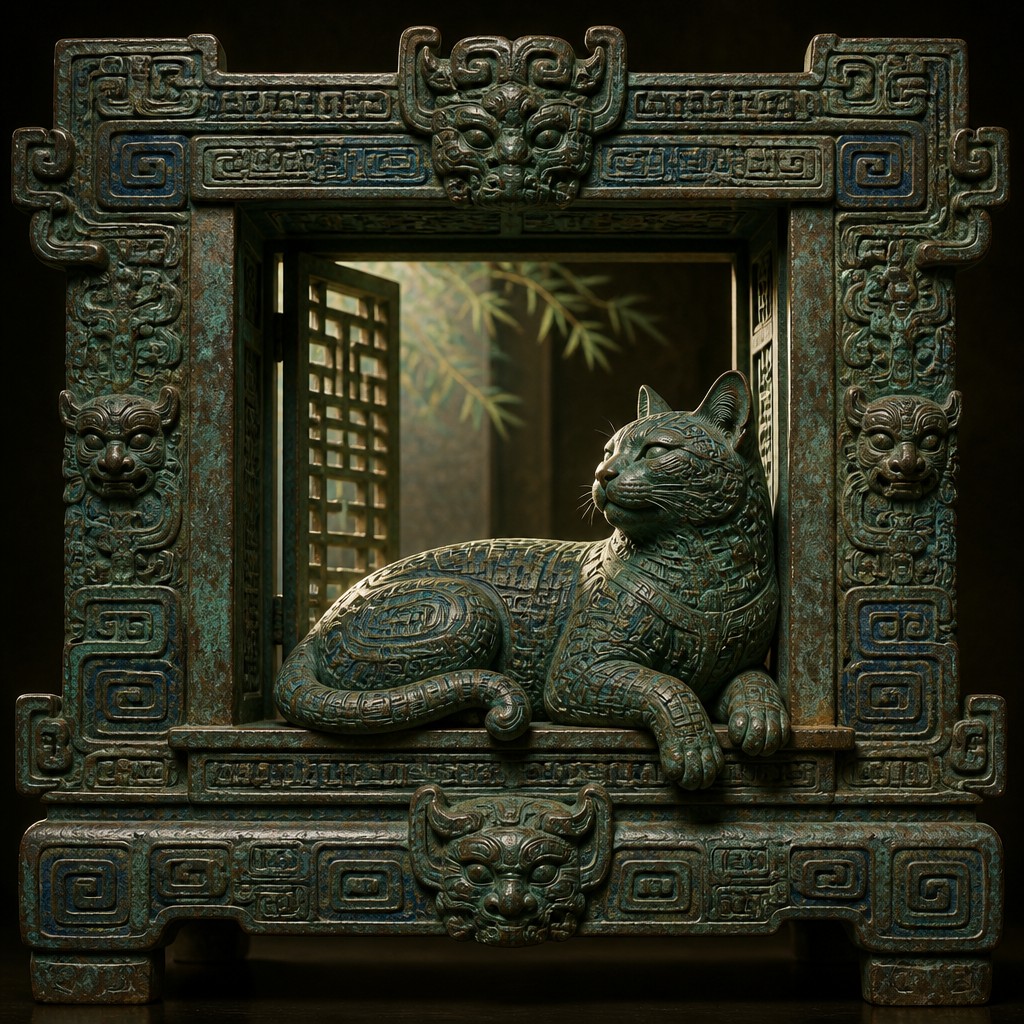
“a cat lounging in a sunlit window”
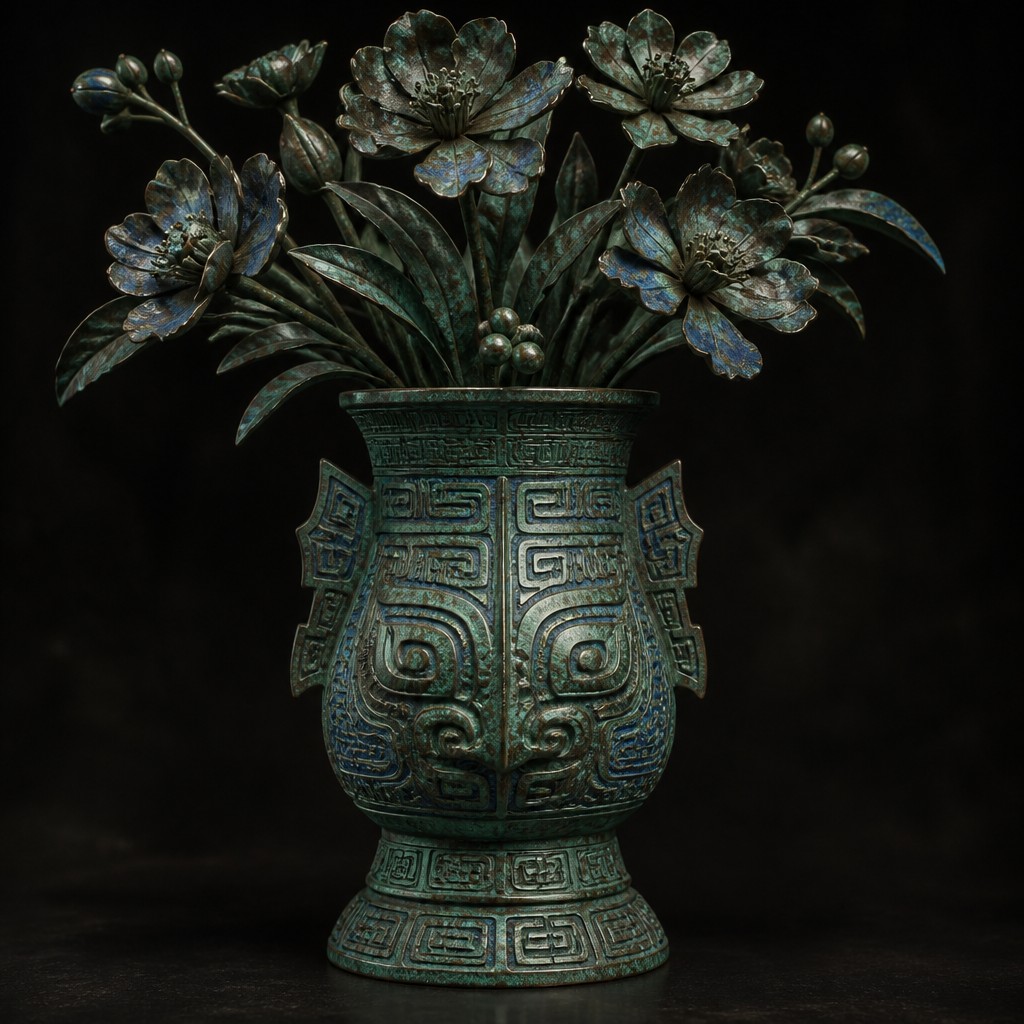
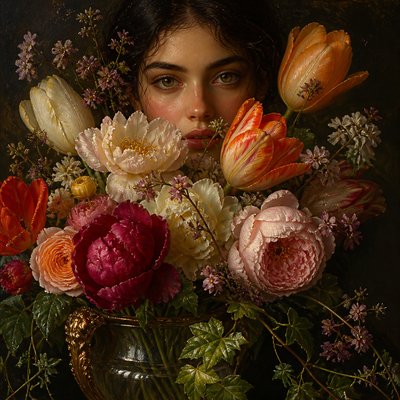
“bouquet of flowers in a glass vase”
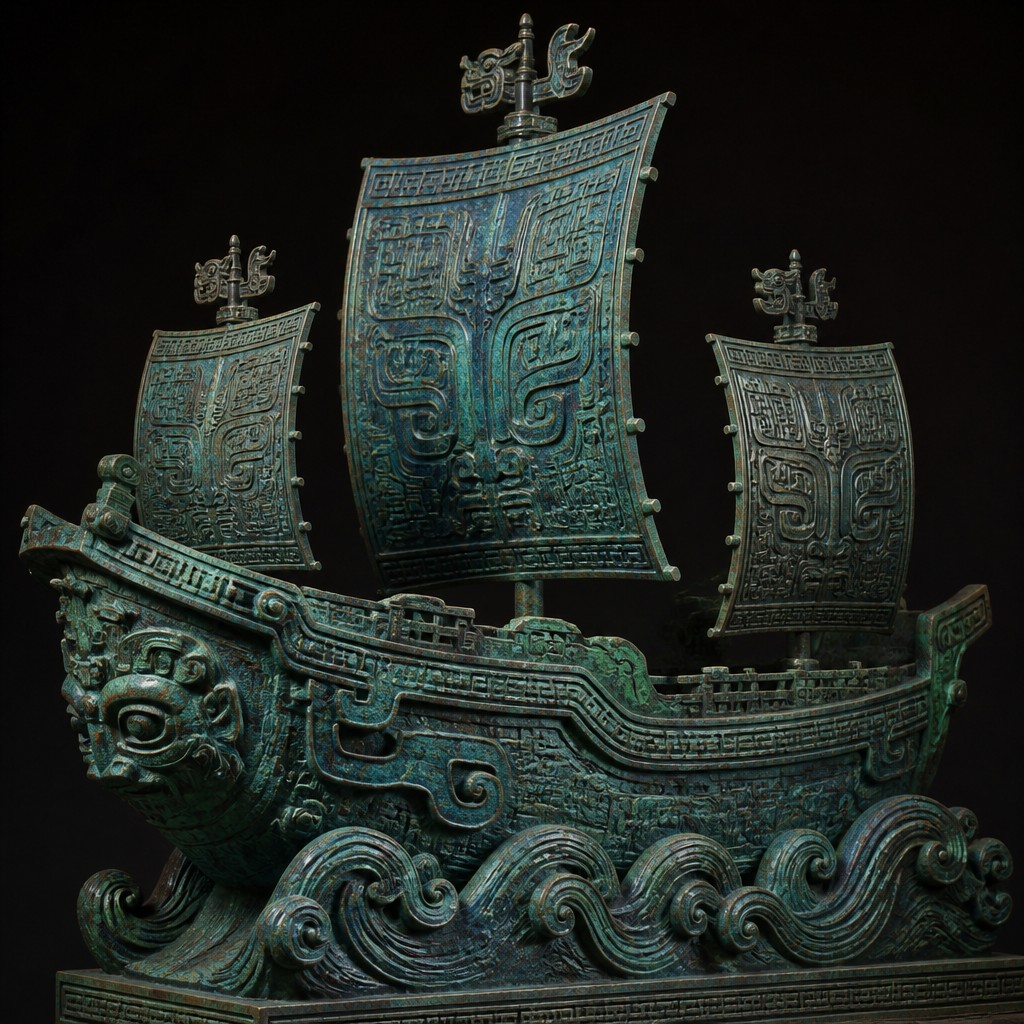
“sailing ship on a stormy sea”
How to Create Ancient Chinese Bronze Art
Master the craft step by step — or skip straight to creating. Read the full guide →
- 1
Build the structure first
Begin with a stable vessel, mask, bell, or plaque silhouette before adding ornament. Divide the form into bands and registers so the decoration follows the object's volume.
- 2
Design a mirrored mask
Construct the taotie from a strong central axis, paired eyes, projecting horns or ears, and curling side elements. Keep the facial structure readable even when the surrounding creatures become densely interlocked.
- 3
Use angular line and relief
Favor squared spirals, hooked contours, raised ridges, flanges, and shallow cast relief over soft painterly brushwork. In digital work, combine height or normal maps with directional lighting to make the ornament feel physically cast.
- 4
Layer believable oxidation
Place dark recesses beneath raised details, then add irregular green and blue mineral deposits along edges, cavities, and weathered areas. Preserve patches of exposed brown or charcoal bronze to avoid an artificial uniformly colored surface.
- 5
Control the presentation
Use a nearly black museum-like background, a restrained composition, and focused raking light that reveals texture. For a traditional study, model forms in clay or wax and translate the design into carved or cast relief; for digital work, use sculpting, procedural pattern tools, and metallic materials.
- 6
Write precise generation prompts
Specify the subject, frontal symmetry, piece-mold relief, taotie-like mask structure, thunder-pattern borders, mineral patina, and lighting separately. For image-to-image work, preserve the source silhouette while asking for cast bronze material, ceremonial registers, and dense interlocking ornament.

The Story
History & Origins of Ancient Chinese Bronze
Bronze casting developed in early Chinese societies before reaching exceptional scale and technical complexity during the Shang dynasty, roughly 1600–1046 BCE, and continuing through the Western and Eastern Zhou periods. Ritual vessels such as food containers, wine vessels, water vessels, and bells were commissioned for ancestral ceremonies and public rites. Their inscriptions could record lineage, offerings, military events, land grants, or acts of political authority.
Many large bronzes were produced with the piece-mold casting method: a clay model and sectional molds were prepared, decorative cores and inserts were positioned, and molten bronze was poured into the assembled mold. This differed from the lost-wax methods widely used in other ancient metalworking traditions. Over time, ornament became more varied and sometimes more open and narrative, while bronze casting remained connected to ritual status, regional workshops, and the formal culture of early Chinese states.
Influences: The style is closely related to Shang and Zhou ritual bronzes, early Chinese ancestral religion, archaic Chinese decorative systems, and the formal vocabulary of early East Asian metalwork. It also draws on the visual logic of animal-style ornament, geometric pattern design, archaeological reconstruction, museum display, and contemporary sculptural rendering. Modern interpretations often intensify the green patina and dramatic lighting for legibility, even though historical surfaces were more varied.

Frequently Asked Questions
What defines Ancient Chinese Bronze Art Style?
Its defining features are symmetrical taotie masks, angular thunder-pattern meanders, interlocking animal forms, raised cast relief, and structured decorative registers. The style also depends on the visual weight of bronze and the ceremonial presence of ritual objects.
When did this style originate?
The tradition developed in early Chinese Bronze Age cultures and reached major prominence during the Shang dynasty, approximately 1600–1046 BCE. It continued and changed during the Western and Eastern Zhou periods, extending into the early imperial era.
Is every green bronze surface historically accurate?
No. Green malachite-like patina is a useful shorthand for aged bronze, but real archaeological surfaces vary widely. Burial chemistry, alloy composition, moisture, soil, conservation, and exposure can produce green, blue, brown, gray, or black corrosion.
How is this different from ancient Greek or Roman bronze art?
Ancient Chinese ritual bronzes are especially associated with piece-mold casting, formal vessel architecture, ancestral ceremony, and dense geometric-animal ornament. Greek and Roman bronzes more often emphasize modeled naturalistic figures, though the ancient Mediterranean world also included abstract and ritual metalwork.
Can a modern artist create this style without casting bronze?
Yes. Relief can be designed in clay, carved in wood or plaster, modeled digitally, or rendered with height and normal maps. The result is most convincing when it preserves structural symmetry, cast-looking edges, layered registers, and uneven oxidation rather than merely applying a green metallic filter.
Where is this visual style commonly used today?
It appears in museum reconstructions, historical illustration, archaeology-inspired sculpture, jewelry, game assets, editorial graphics, packaging, and fantasy worldbuilding. Contemporary designs should distinguish respectful reference to historical motifs from claims that a modern object is an authentic ancient artifact.

Create your first Ancient Chinese Bronze artwork
Describe anything — or upload a photo — and see it in Ancient Chinese Bronze Art Style in seconds.
Related Styles
Discover similar art styles