Moss Graffiti Street Art Style
Living moss street art on walls: eco-graffiti imagery with velvety green textures, urban decay, and organic overgrowth.
Instantly rendered in Moss Graffiti Street — or transform a photo
Moss Graffiti Street Gallery
Tap any artwork to explore it
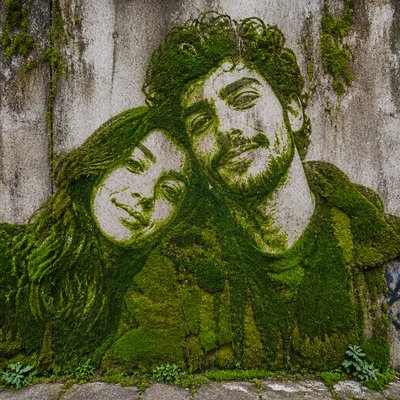
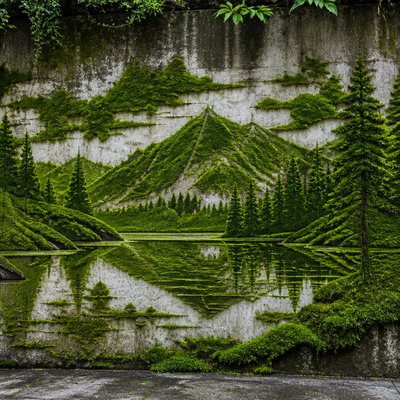




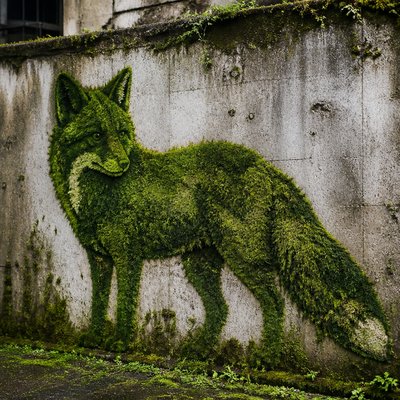
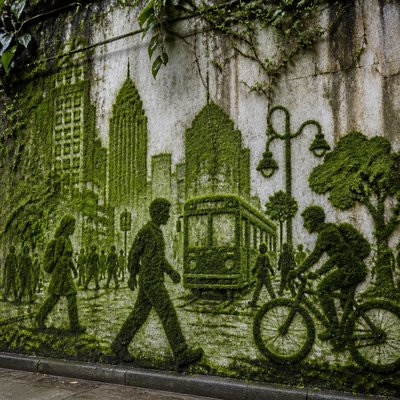
What is Moss Graffiti Street Art Style?
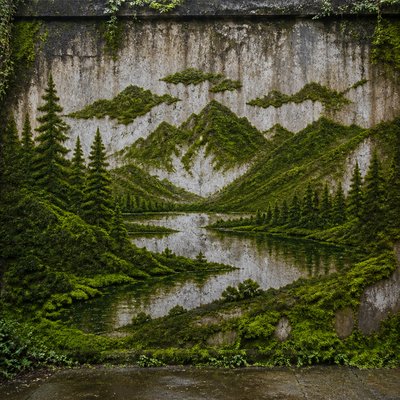
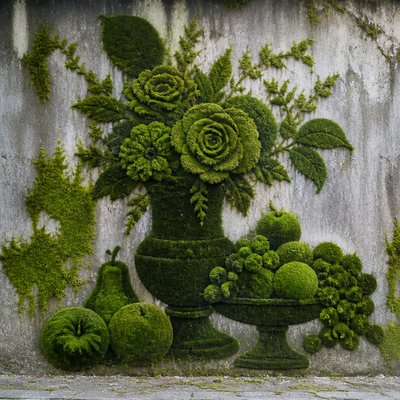
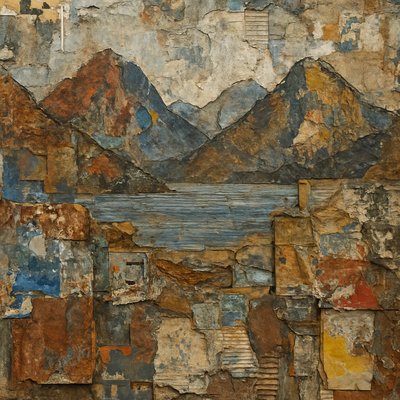
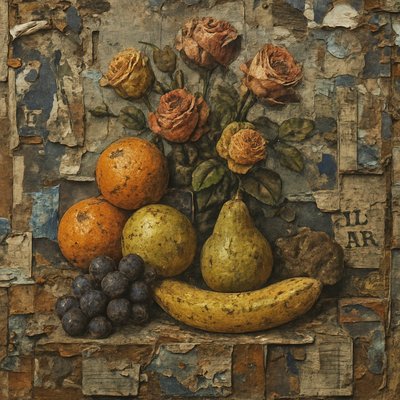
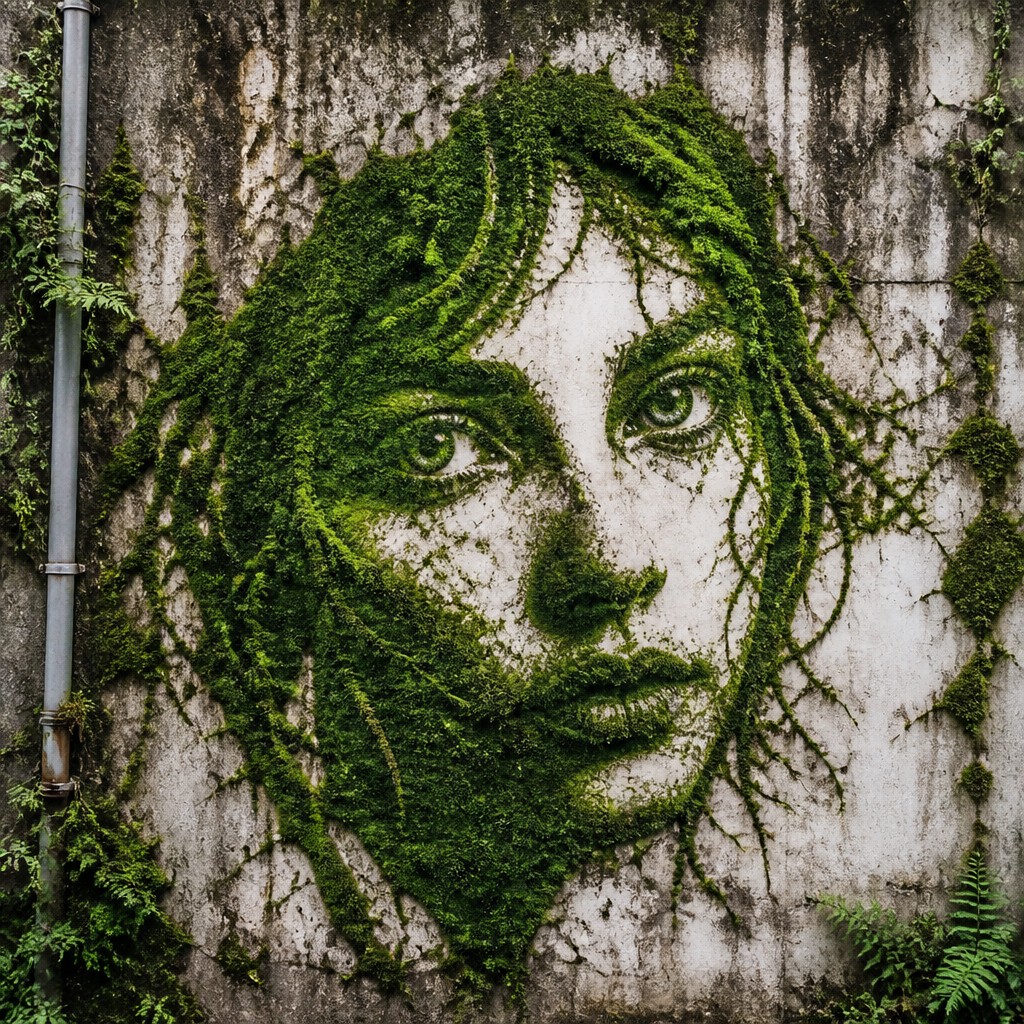
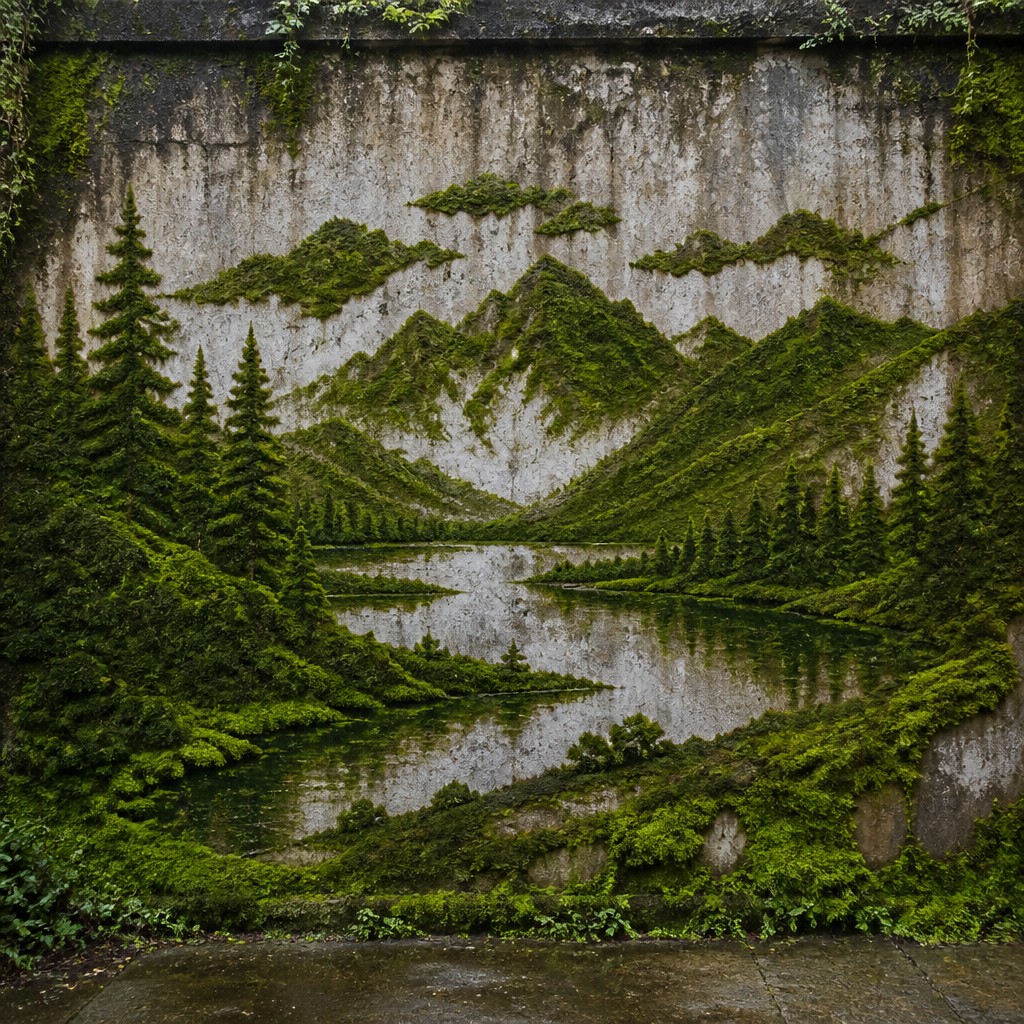
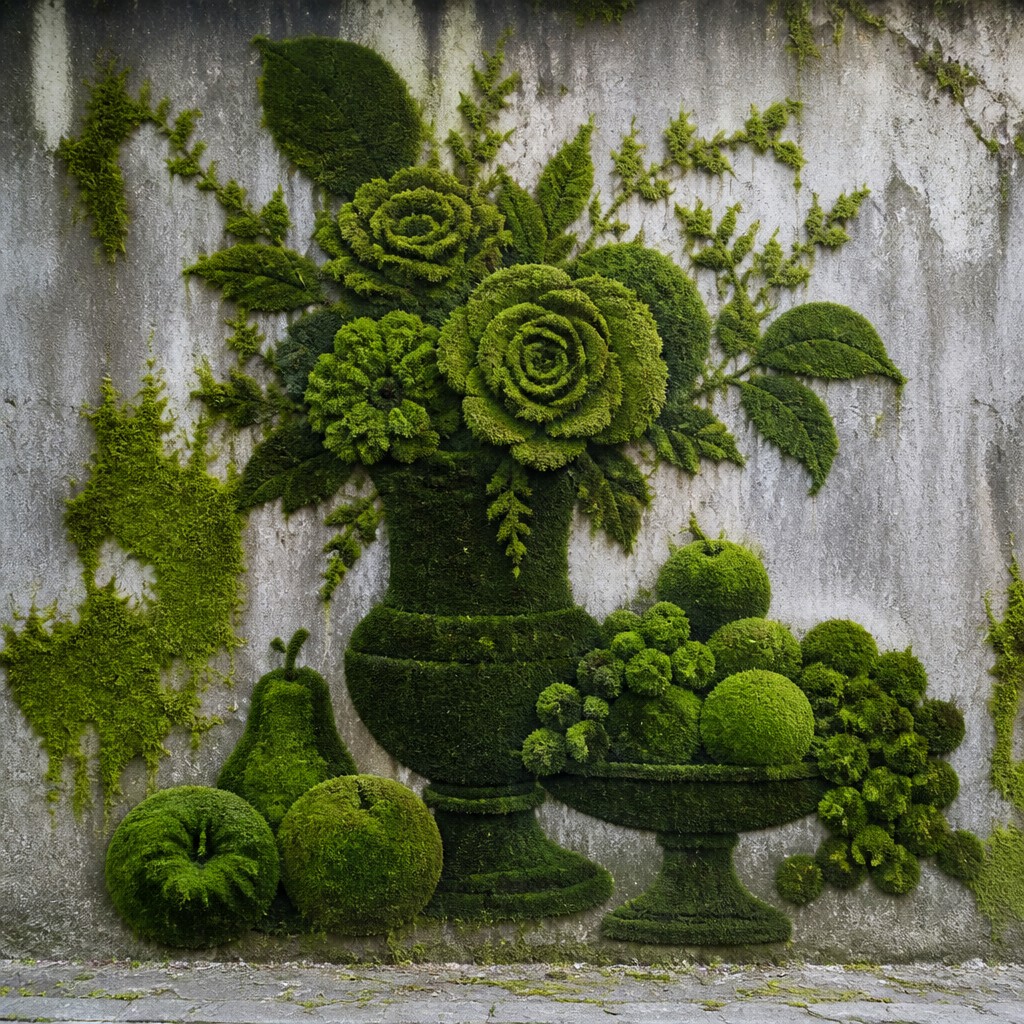
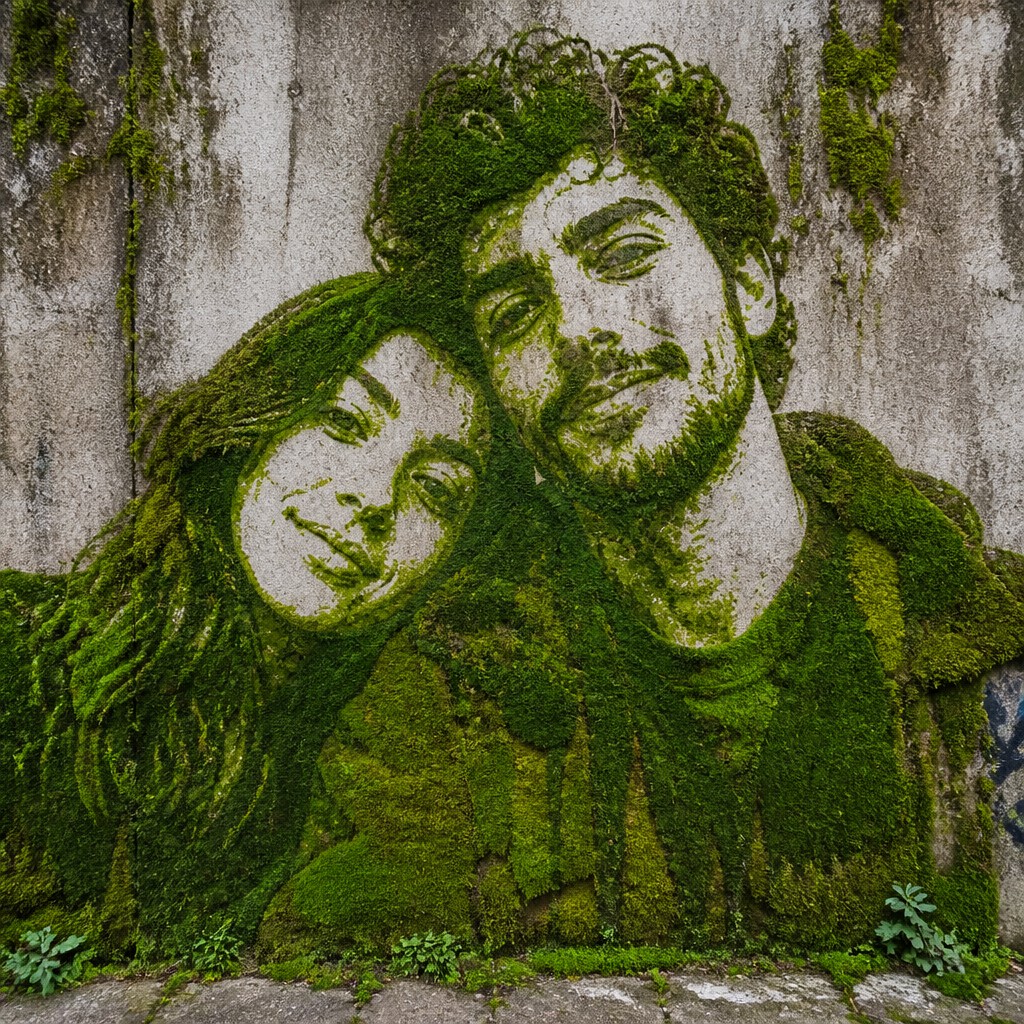
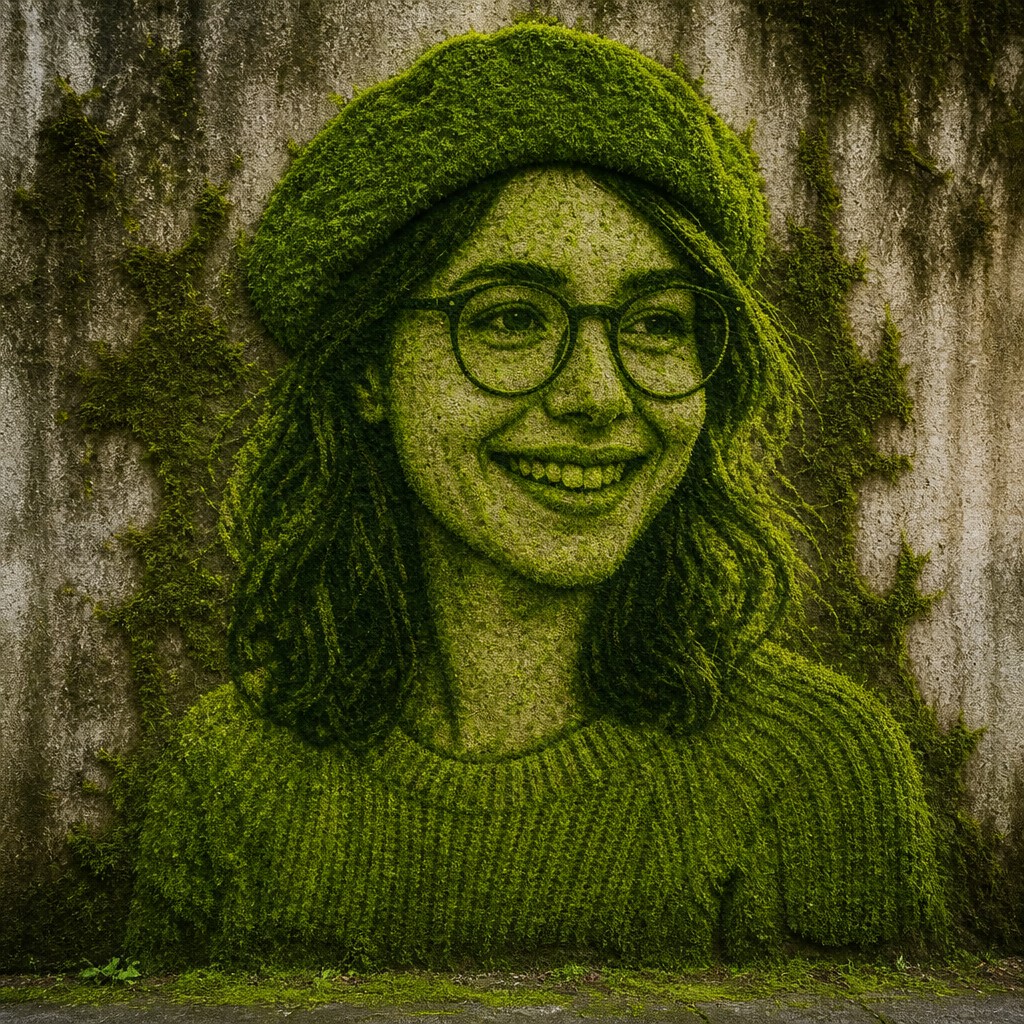
Moss graffiti street art is an eco-oriented visual style in which images appear to be made from living moss and other low-growing plants applied to urban walls. Its identity comes from the contrast between plush, organic green surfaces and hard architectural substrates such as concrete, brick, or stucco. The look is usually uneven and tactile: dense moss clusters form the main shapes, while thinner patches, damp sheen, and irregular edges make the composition feel alive and changing.
The style combines the visual language of graffiti and mural art with the biology of plant growth. Because moss expands, recedes, and responds to light and moisture, the image tends to look less like a fixed painted mark and more like a cultivated intervention in the city. As a result, moss graffiti often reads as both design and ecology: an image that suggests environmental care, urban reclamation, and the softening of hard surfaces through living texture.
Try It On Your Photos
Upload any photo and convert it into Moss Graffiti Street Art Style — drag the sliders to compare before and after.


What Defines Moss Graffiti Street Art Style
The signature details, up close
Living green texture
The central visual cue is a mossy surface with a soft, velvety, botanical texture. Colors typically range from bright emerald to deep forest green, often with subtle variation caused by moisture and density.
Weathered urban substrate
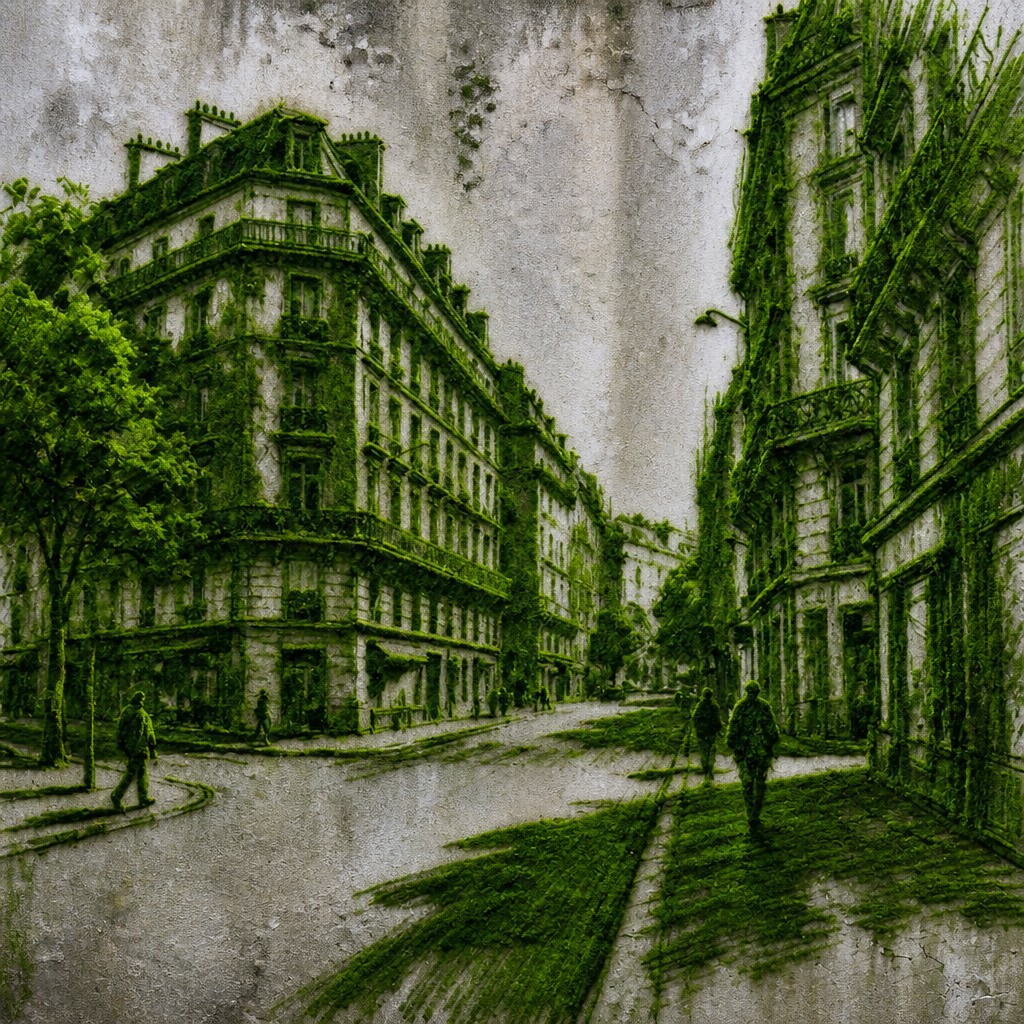
The wall remains visible as an important part of the image. Raw concrete, cracked brick, peeling plaster, and stains emphasize the contrast between built environment and organic growth.
Irregular, creeping edges
Unlike clean painted outlines, moss forms uneven borders that creep beyond the intended silhouette. This gives the image a living, unstable quality.
Patchy coverage and density shifts
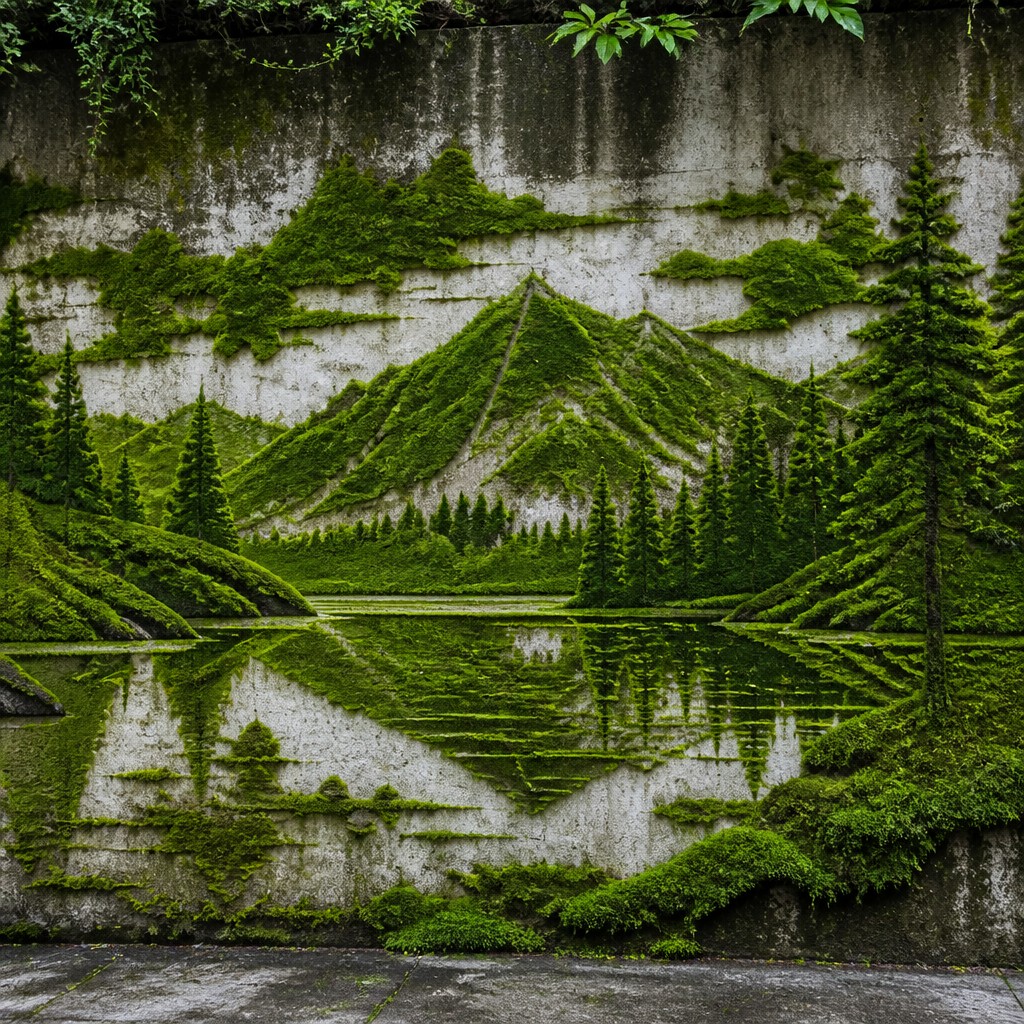
The design often alternates between thick, plush areas and thinner sections where the wall shows through. Those shifts make the image feel naturally grown rather than mechanically applied.
Damp, fresh atmosphere
A slight sheen, soft daylight, and a sense of moisture are common. These cues reinforce the impression that the image is alive and recently watered or naturally thriving.
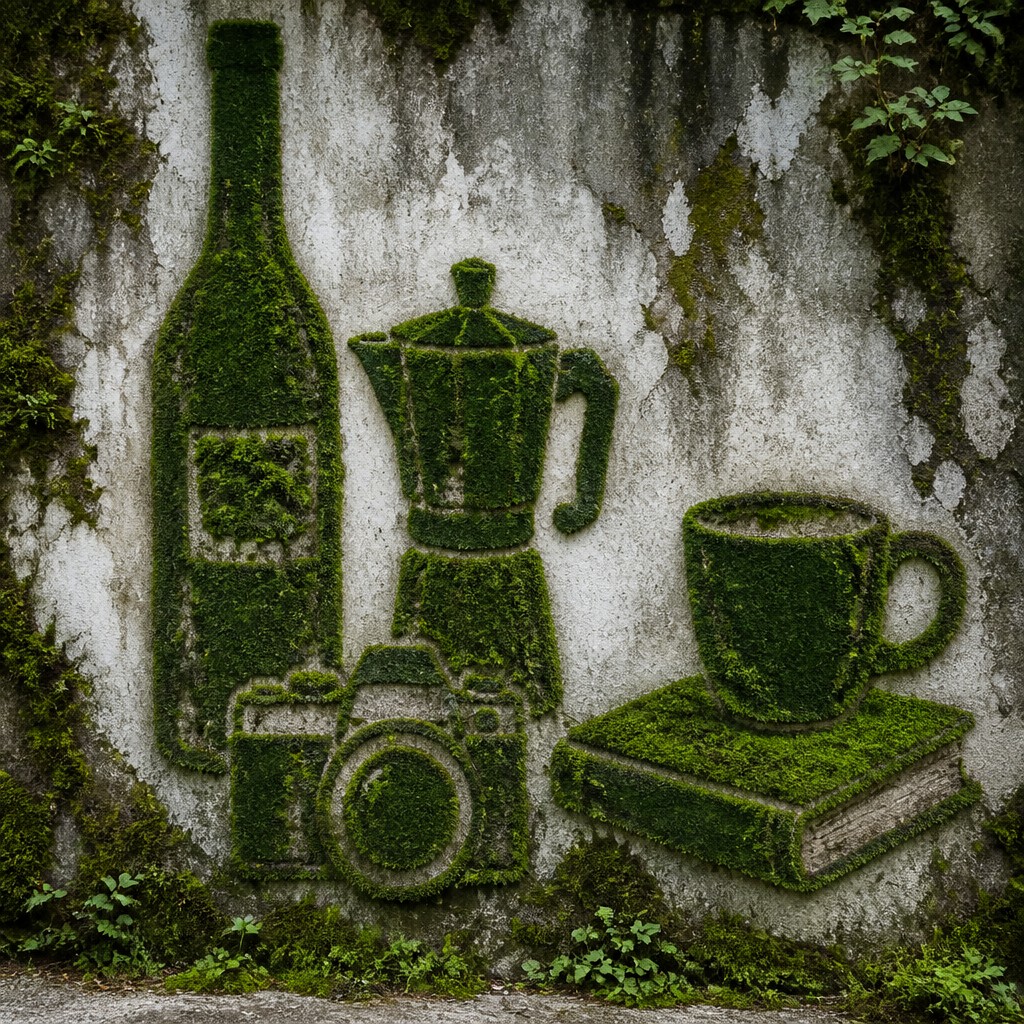
Eco-activist street-art mood
The style frequently carries a message of environmental care or urban renewal. Even when abstract, it suggests reclaiming neglected surfaces through gentle intervention rather than aggressive marking.
Try It
Create Videos in Moss Graffiti Street Art Style
Styles aren't just for stills — describe a scene or animate an image and get a short video rendered in Moss Graffiti Street. Press play to see this pond come to life.
Make a VideoMoss Graffiti Street Prompt Ideas
Start from an idea — each one opens the generator with the style ready to go. See all 40 Moss Graffiti Street prompts →
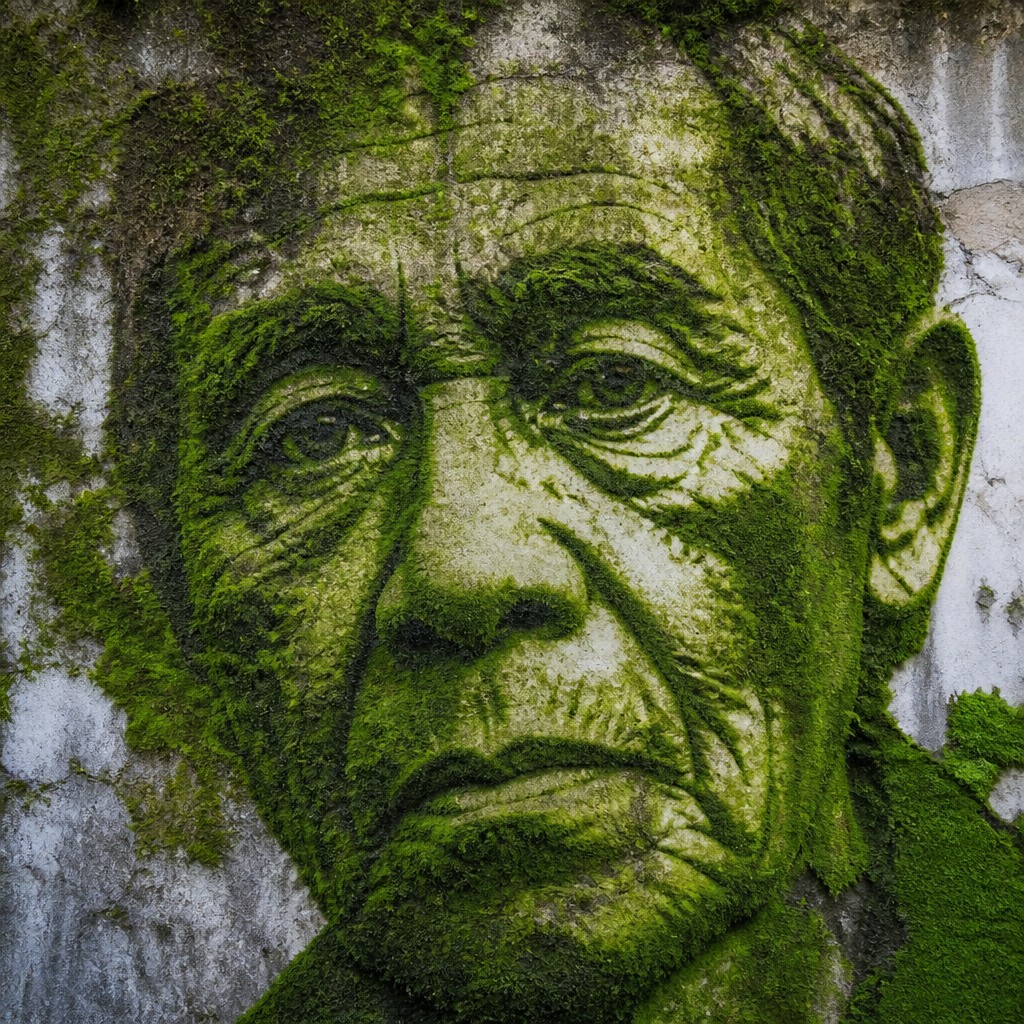
“close-up portrait of an elderly person with expressive weathered features”
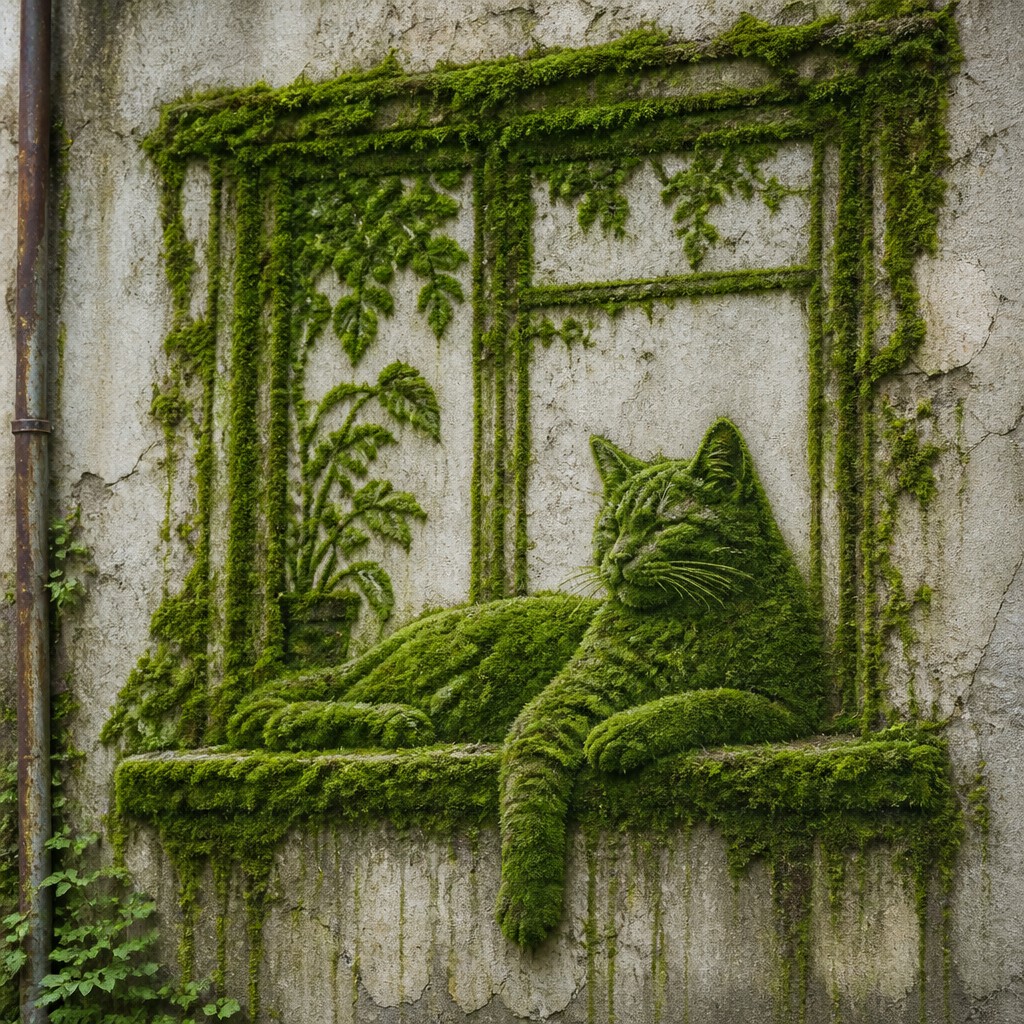
“a cat lounging in a sunlit window”
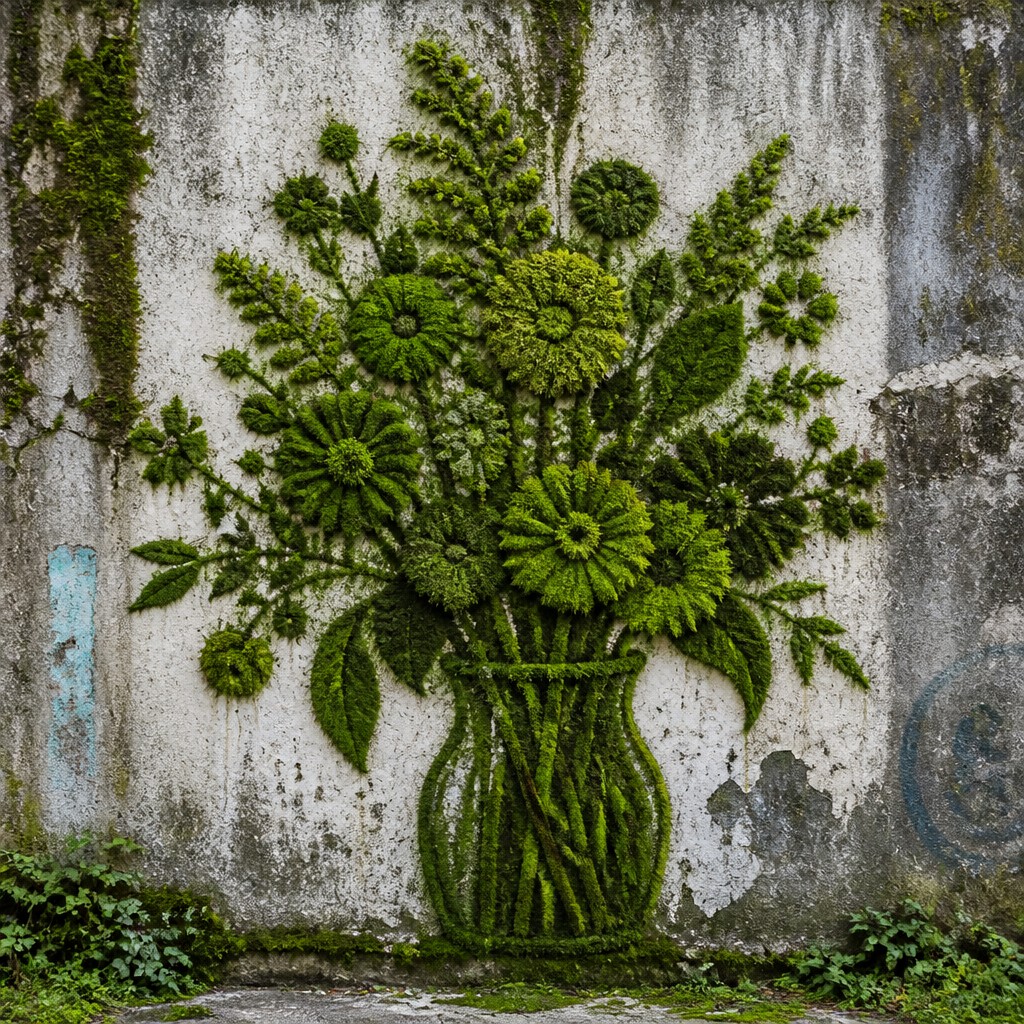
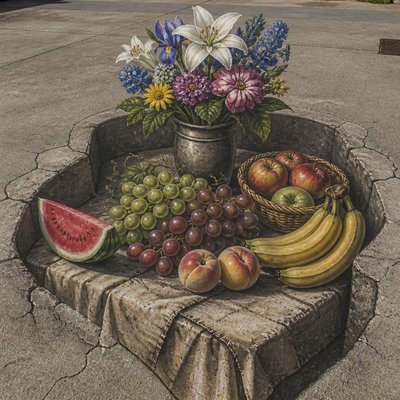
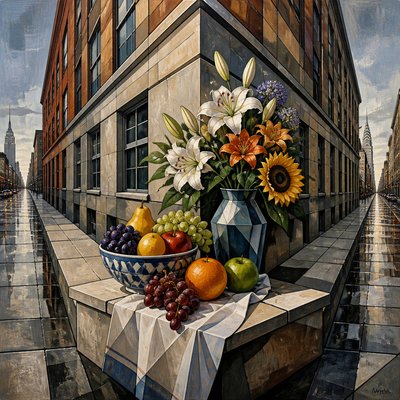
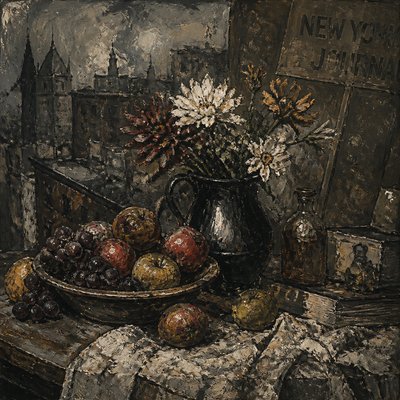
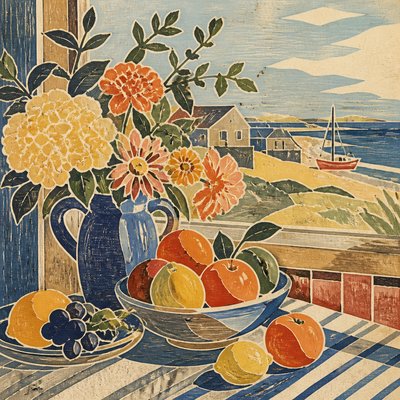
“bouquet of flowers in a glass vase”
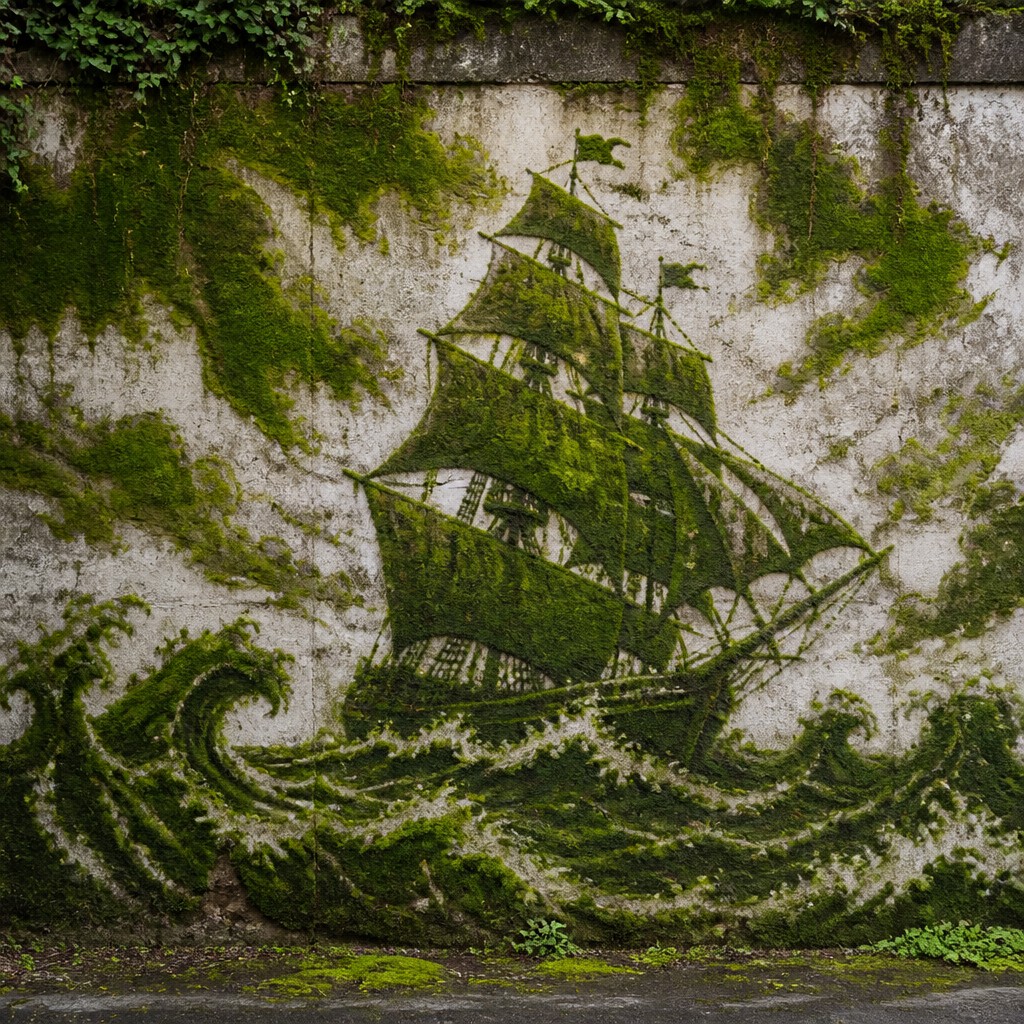
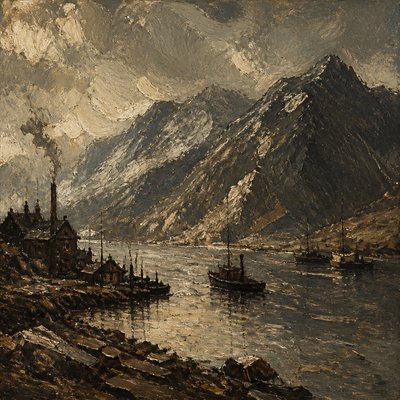
“sailing ship on a stormy sea”
How to Create Moss Graffiti Street Art
Master the craft step by step — or skip straight to creating. Read the full guide →
- 1
Build the form from masses, not outlines
When painting or compositing, think in clusters of moss rather than linework. Start with the largest silhouettes, then add texture and irregular edges so the image feels grown instead of drawn.
- 2
Preserve the wall as a visible partner
Leave negative space, cracks, and stains visible to maintain the street-art context. The contrast between organic growth and raw masonry is essential to the style.
- 3
Use layered green variation
Mix several greens and subtle brown or yellow undertones to avoid a flat look. Small shifts in saturation and value help suggest moisture, depth, and biological irregularity.
- 4
Emphasize tactile realism in digital work
In photo editing or illustration, add fuzzy edge detail, porous texture, and soft natural lighting. Avoid smooth gradients and hard vector outlines unless you are intentionally stylizing the piece.
- 5
Treat growth as time-based design
Whether working traditionally or with generated imagery, include signs of expansion, thinning, and asymmetry. The appeal of the style comes from the sense that the artwork is still evolving.
- 6
For prompt-based generation, specify materials and setting
Mention living moss, weathered urban walls, damp botanical texture, and organic overgrowth. Include the subject you want rendered in moss form, but keep the atmosphere grounded in daylight and urban surface detail.

The Story
History & Origins of Moss Graffiti Street
Moss graffiti is not a historical art movement in the strict sense but a contemporary, hybrid practice that emerged from several overlapping traditions: street art, guerrilla gardening, ecological design, and public art. Its visual logic also draws on moss gardens, planted wall systems, and land art's interest in site, time, and natural process. In that sense, it belongs to the broader shift in late 20th- and 21st-century art toward environmentally engaged materials and interventions in public space.
Aesthetic precedents can be found in graffiti's wall-based image culture and in land art and environmental art, where creators treated landscape and weathering as part of the work. Moss graffiti updates those ideas by substituting spray paint with living plant matter, turning the wall into a temporary growing surface. The style is therefore best understood as an eco-street-art lineage rather than a discrete historical school.
Influences: Moss graffiti draws from graffiti and muralism for its wall-based image culture, from guerrilla gardening and ecological design for its activist impulse, and from land art and environmental art for its attention to site and natural process. Its visual softness also echoes moss gardens and botanical installation art, while its urban context keeps it close to contemporary street art rather than landscape practice.
Frequently Asked Questions
What defines moss graffiti street art?
It is an urban image style that appears to be made from living moss rather than paint. The defining traits are velvety green texture, irregular organic edges, and a strong contrast between plant growth and the hard surface of a wall.
Is moss graffiti actually made with real plants?
In some cases, yes: creators and designers have used living moss or plant-based mixtures on suitable surfaces. In image-making, however, the style can also be simulated digitally to evoke the look of living growth without using real vegetation.
How is it different from regular graffiti?
Traditional graffiti usually relies on spray paint, ink, or markers and often emphasizes lettering, color, and gesture. Moss graffiti replaces pigment with organic material, so the image feels softer, slower, and more ecological in both appearance and concept.
What subjects work well in this style?
Simple silhouettes, symbols, animals, faces, and typography translate especially well because moss has soft edges and varying density. High-contrast forms are easier to read than highly detailed scenes.
What materials are used to create it traditionally?
Real-world versions may use moss, supportive planting media, and walls or structures that can retain moisture and allow growth. Because living materials need the right conditions, the style is often site-specific and temporary.
Where is moss graffiti commonly used?
It appears in eco-art projects, public interventions, urban beautification efforts, and conceptual street art. It is especially associated with spaces where artists want to comment on sustainability, neglected architecture, or the possibility of restoring nature to the city.

Create your first Moss Graffiti Street artwork
Describe anything — or upload a photo — and see it in Moss Graffiti Street Art Style in seconds.
Make Something with Moss Graffiti Street
Related Styles
Discover similar art styles