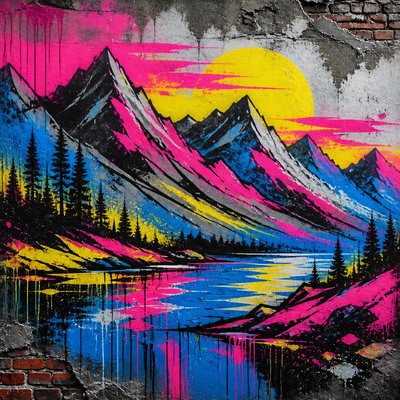
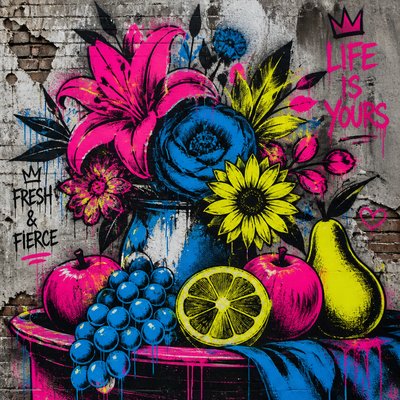
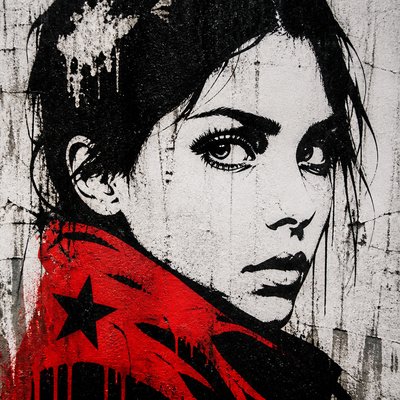
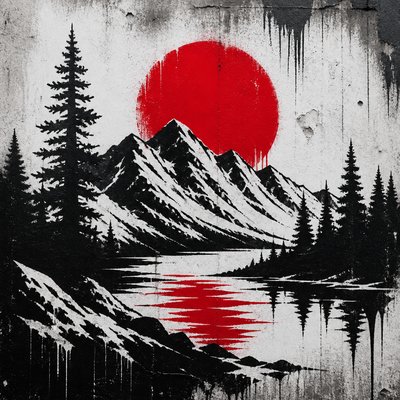
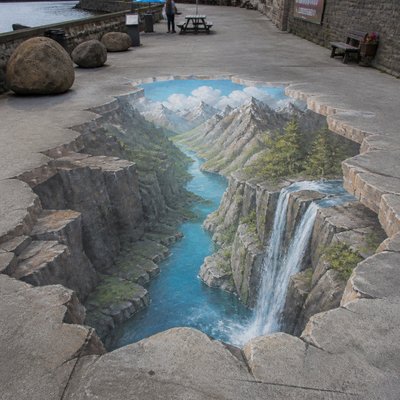
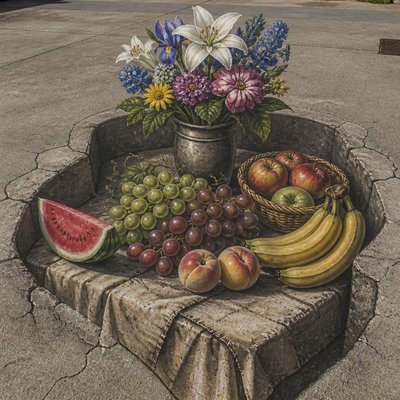
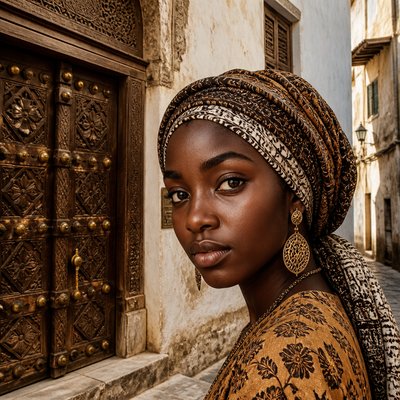
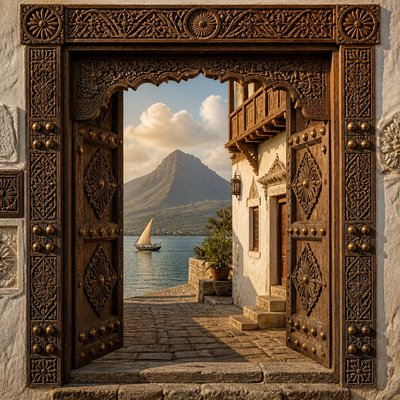
Sticker Bomb Street Art Style
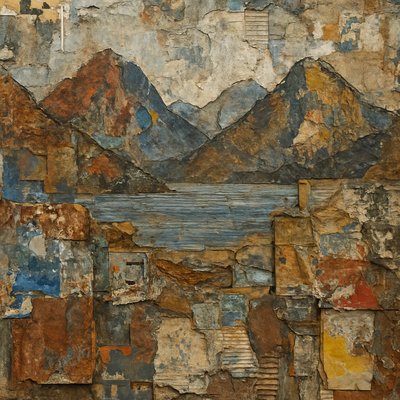
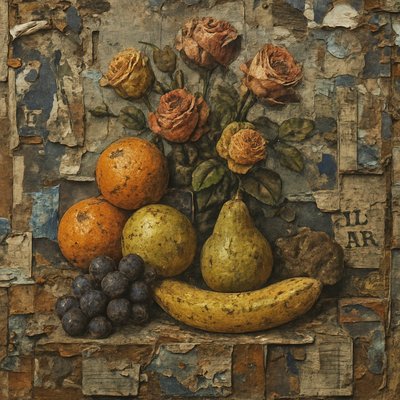
Dense layered street collage built from overlapping vinyl stickers, marker tags, and bold graphic colors with chaotic urban energy.
Instantly rendered in Sticker Bomb Street — or transform a photo
Sticker Bomb Street Gallery
Tap any artwork to explore it
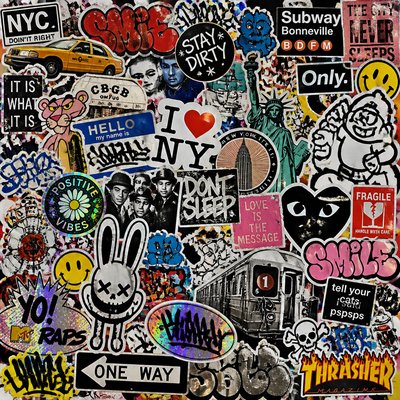
What is Sticker Bomb Street Art Style?
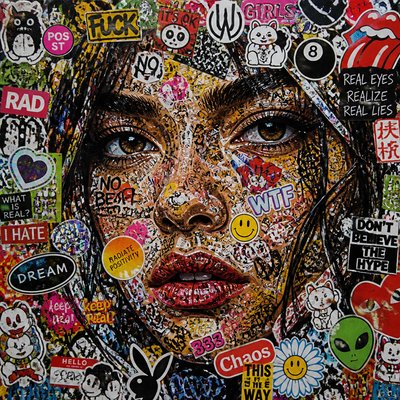
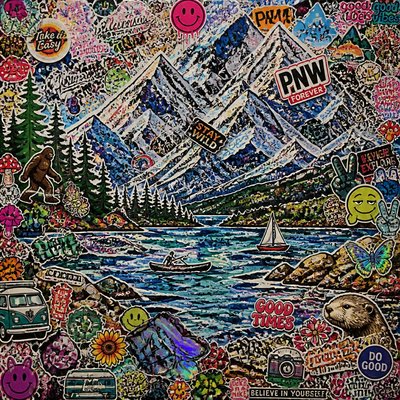
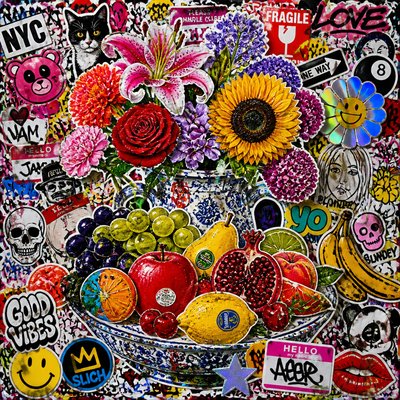
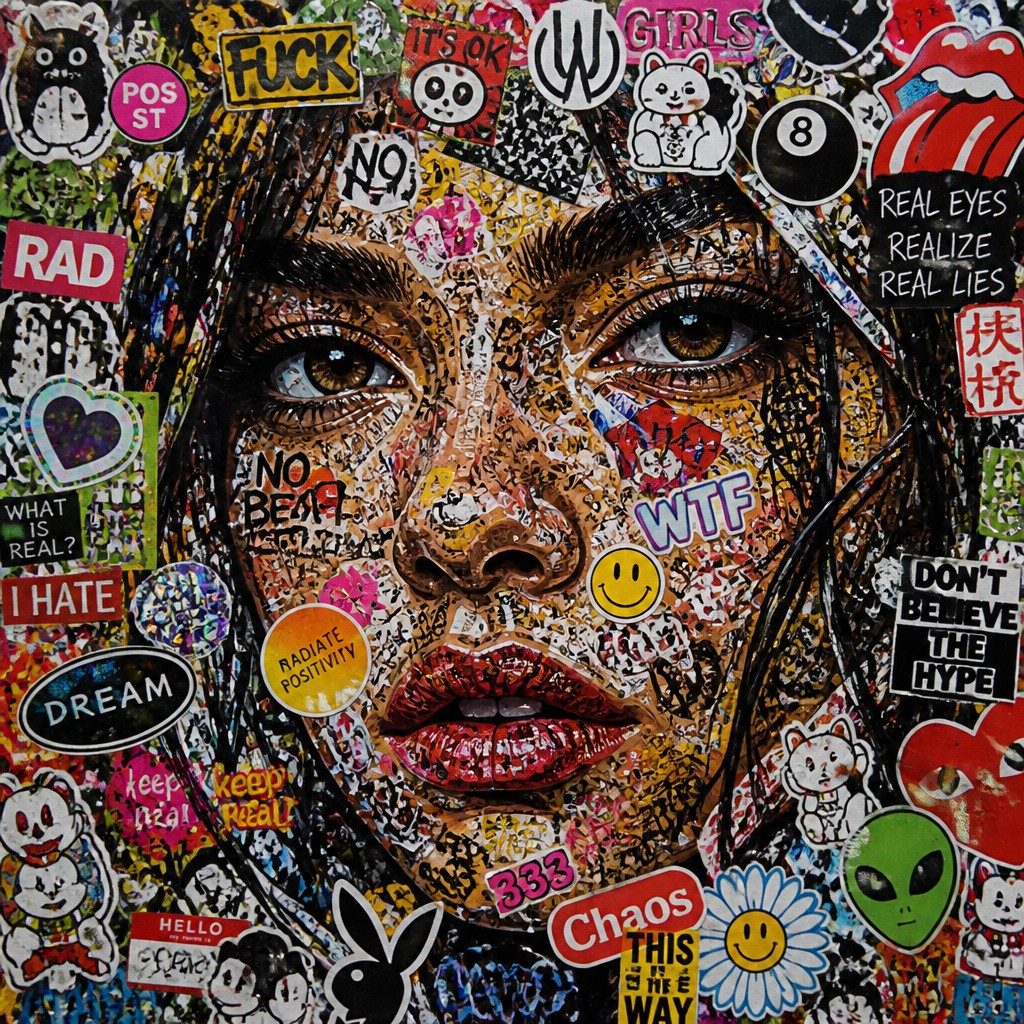
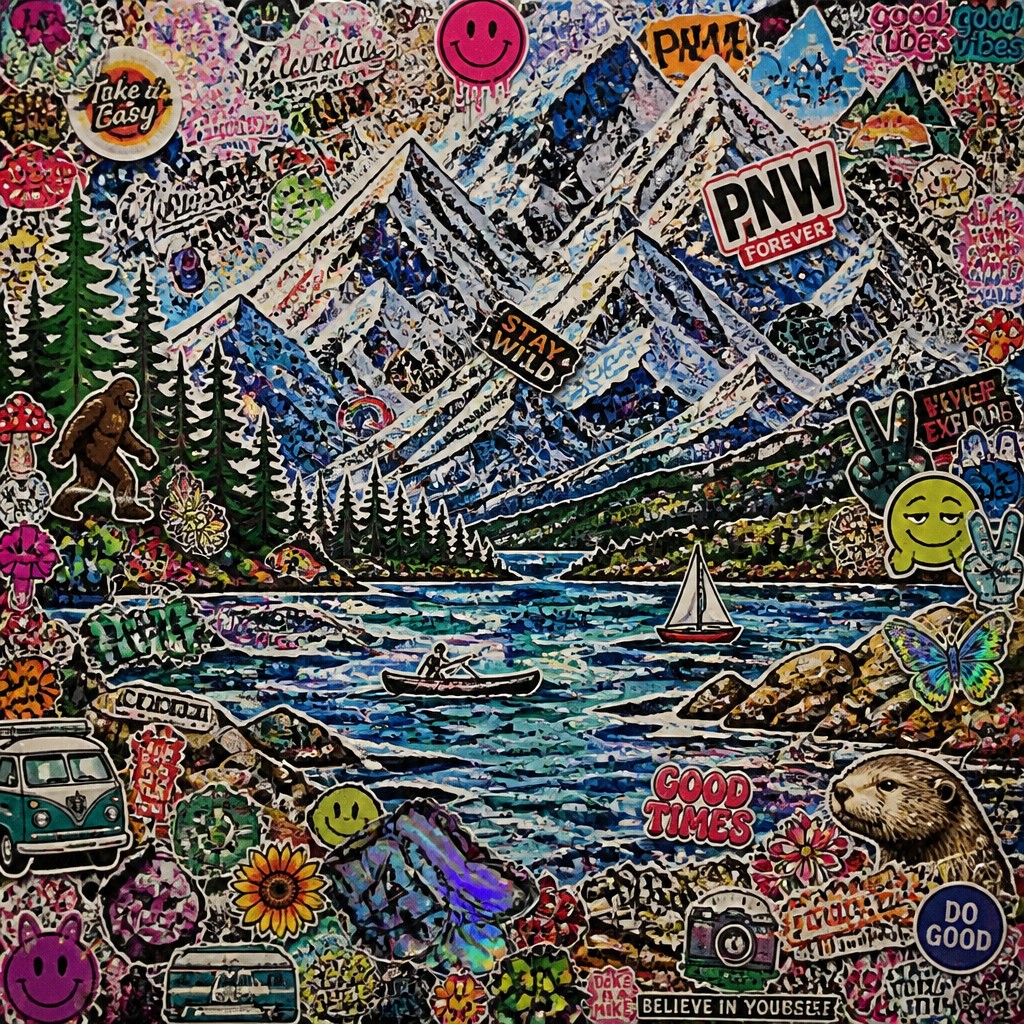
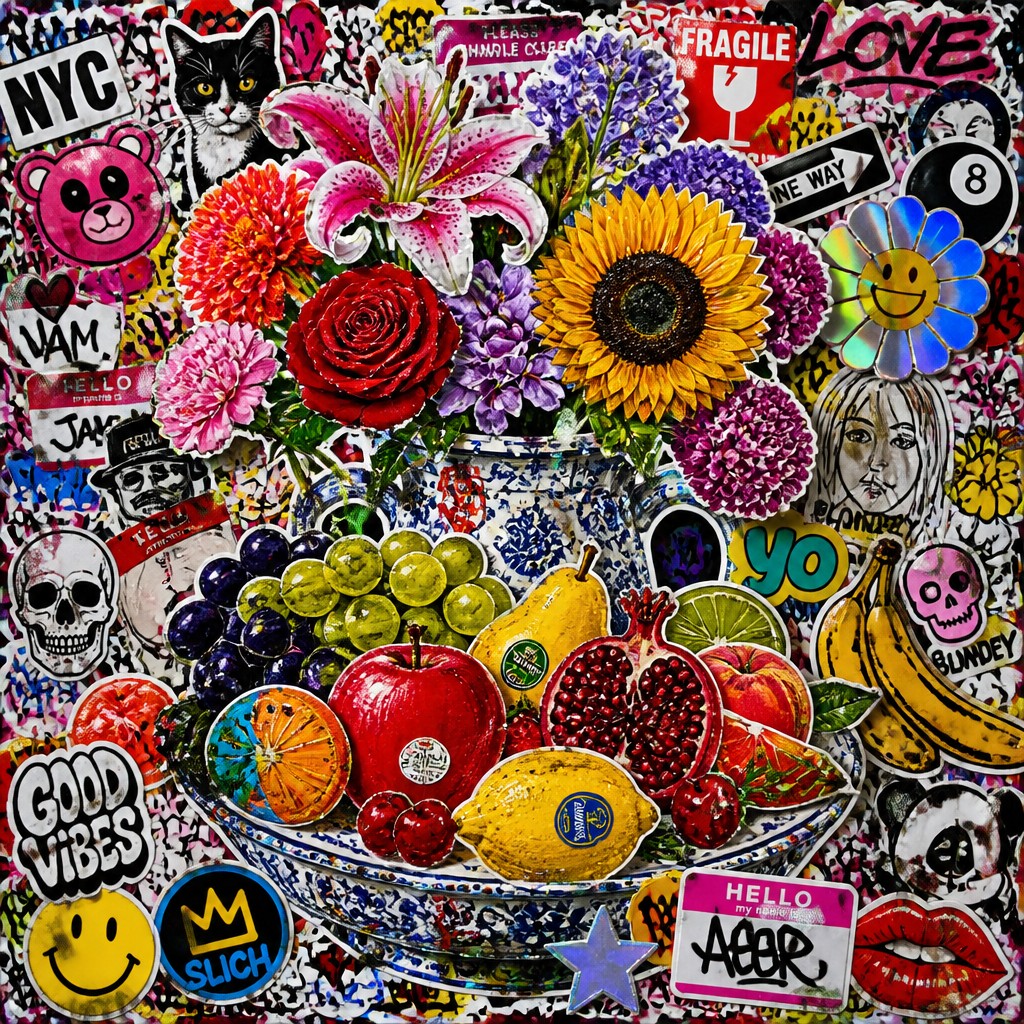
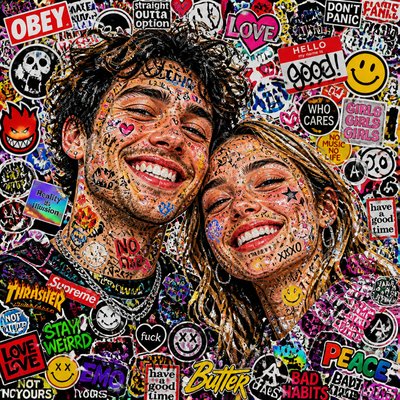
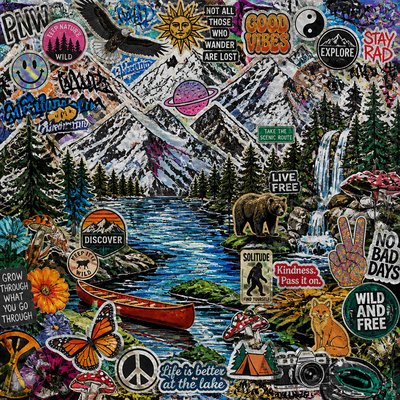
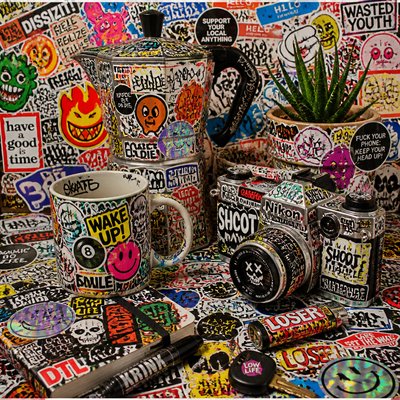
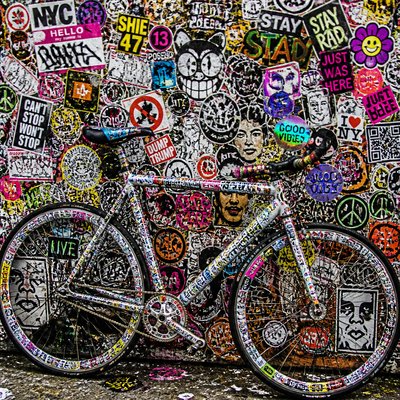
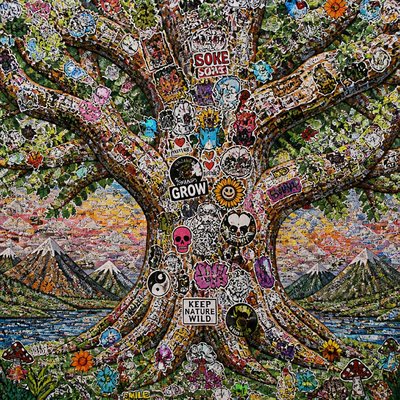
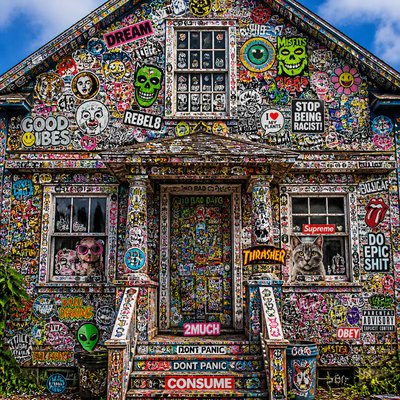
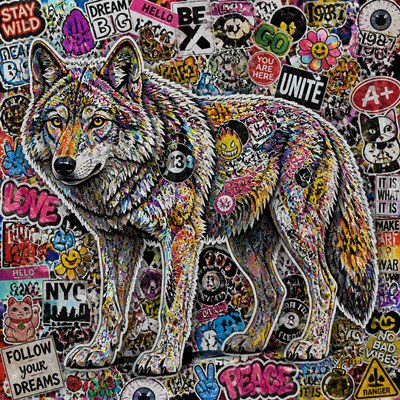
Sticker bomb street art is a dense collage-based visual style built from overlapping stickers, tags, logos, doodles, and graphic fragments. It is defined by visual crowding: nearly every surface is covered, with each layer partially obscuring the last, producing a noisy, accumulated composition that feels improvised but intentional.
Its look comes from the physical behavior of stickers and pasted ephemera in urban environments. White die-cut borders, curled corners, scuffed surfaces, glossy highlights, matte patches, and torn edges all help create a sense of dimensionality. The style often mixes illustration, typography, iconography, and marker interventions, so it reads as both street marking and collaborative visual accumulation.
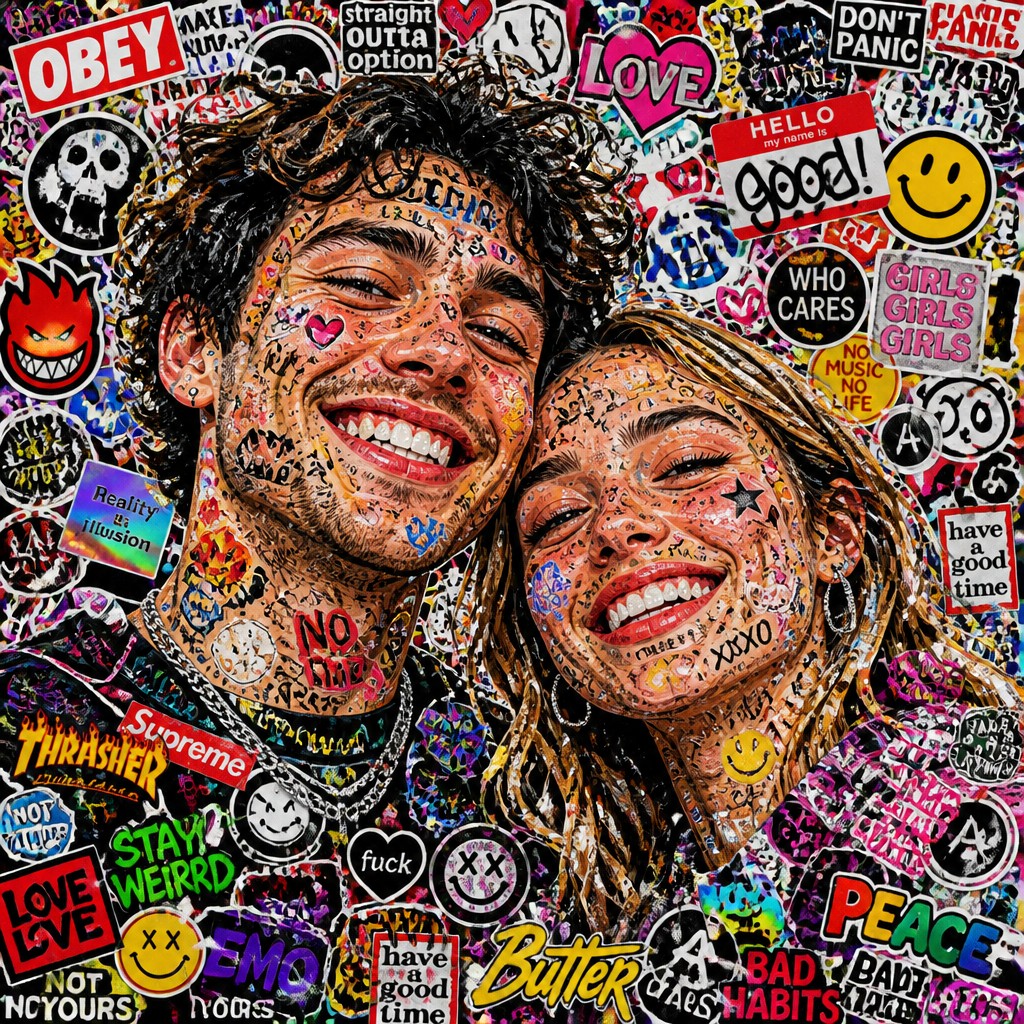
Try It On Your Photos
Upload any photo and convert it into Sticker Bomb Street Art Style — drag the sliders to compare before and after.
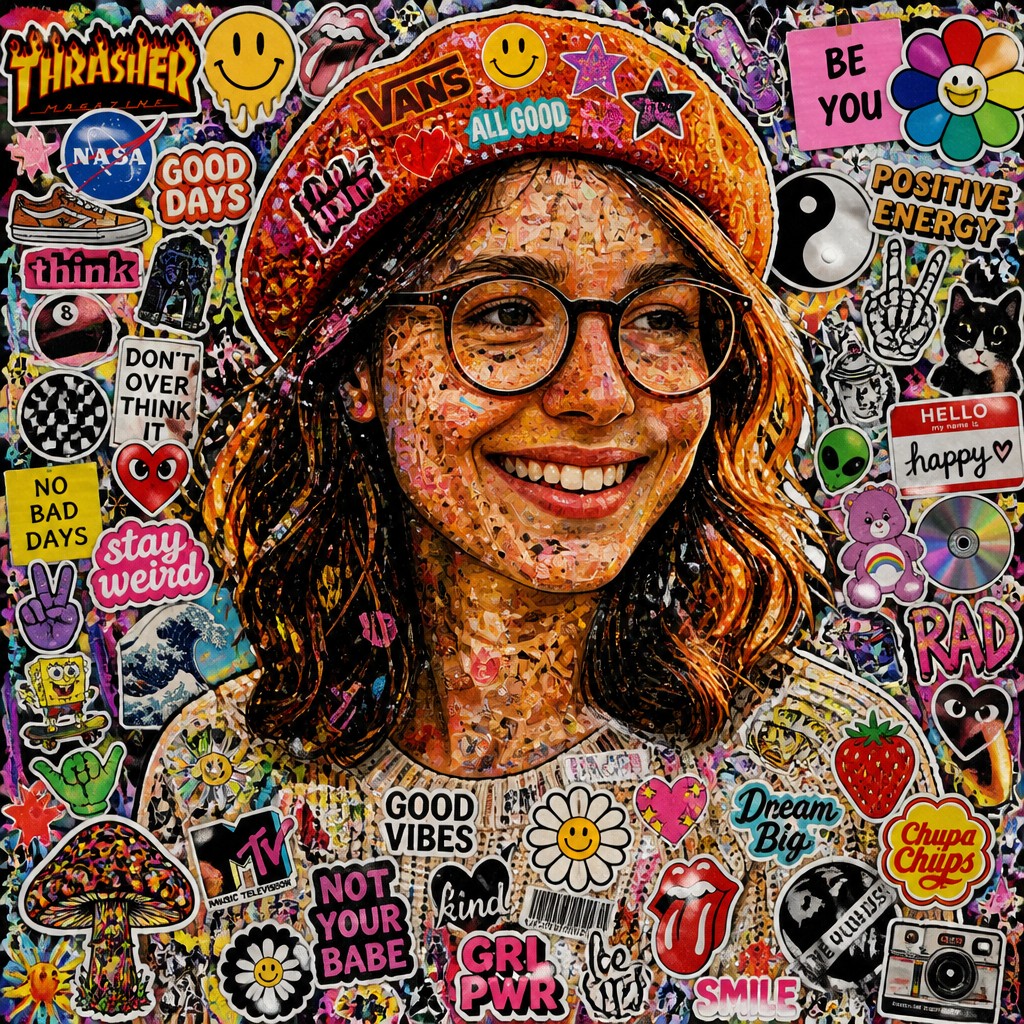

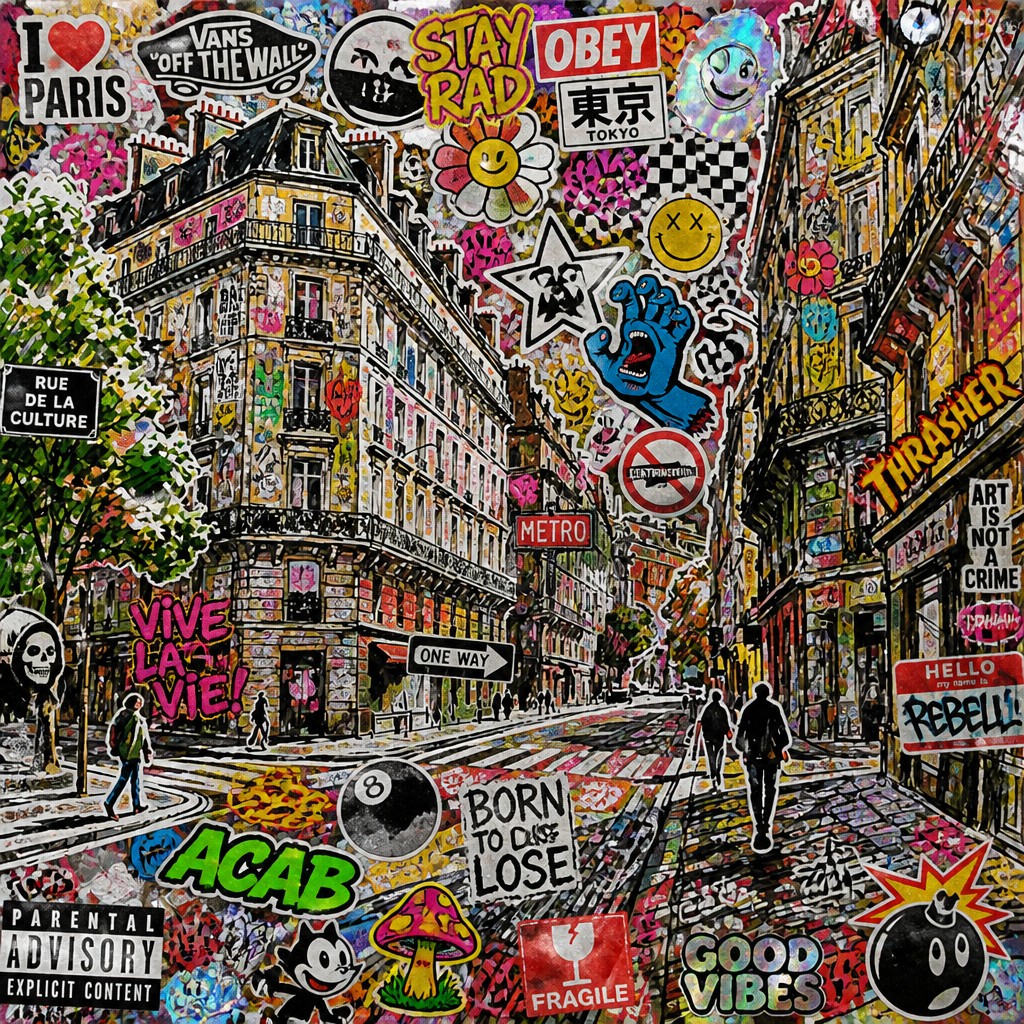

What Defines Sticker Bomb Street Art Style
The signature details, up close
Overlapping sticker layers
The surface is built from many small graphic pieces stacked on top of one another. Edges intersect constantly, and earlier elements are only partly visible beneath later additions.
Die-cut borders and pasted edges
Individual stickers often retain white outlines or cut contours that separate them from the background. Peeling corners, lifted edges, and slight warping make the collage feel physically mounted rather than digitally flat.
High visual density
Negative space is minimized, often almost eliminated. The eye moves from one fragment to the next without rest, creating a packed and restless composition.
Mixed graphic languages
The style combines logos, cartoons, hand lettering, symbols, tags, and abstract marks. This mixture gives the collage a communal, collected-over-time appearance.
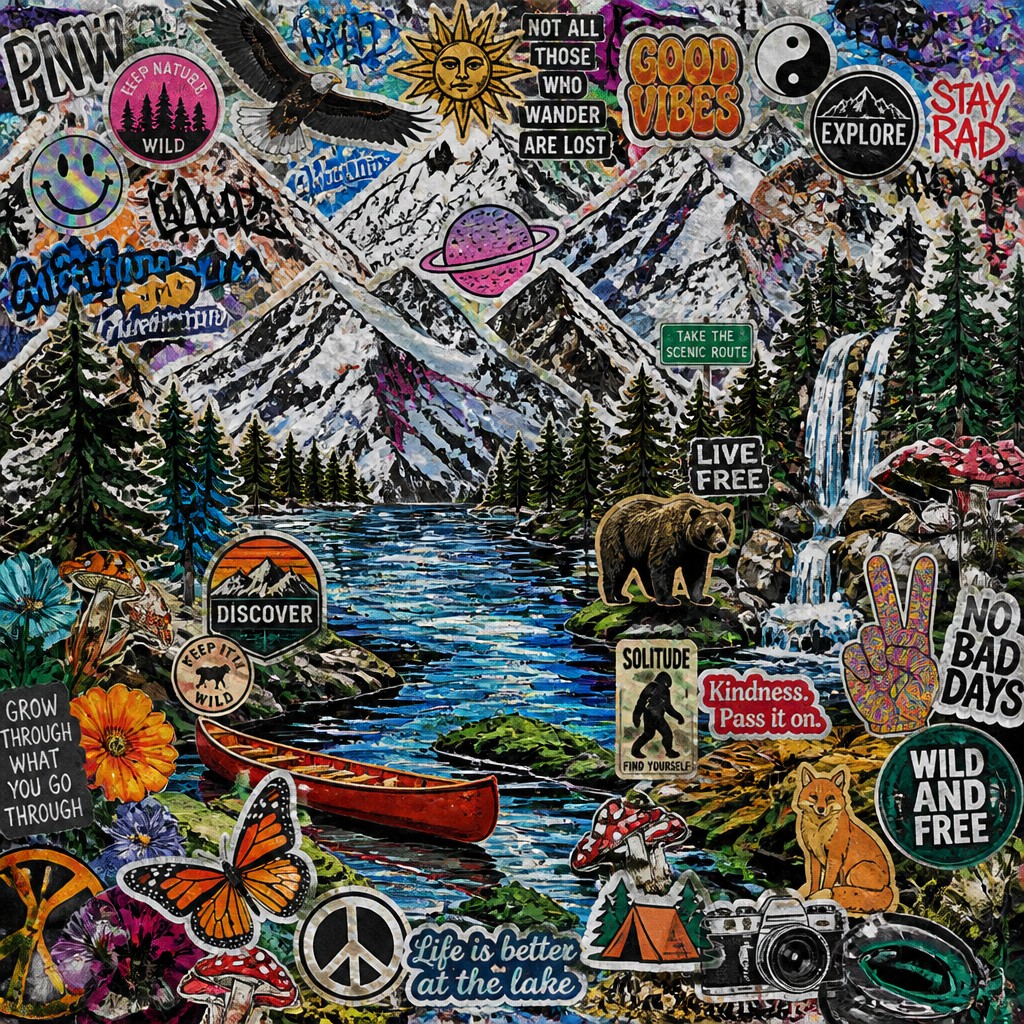
Gloss, matte, and reflective variation
Different surface finishes catch light differently, adding tactile realism. Holographic or metallic accents are common because they echo real sticker production and street-sign sheen.
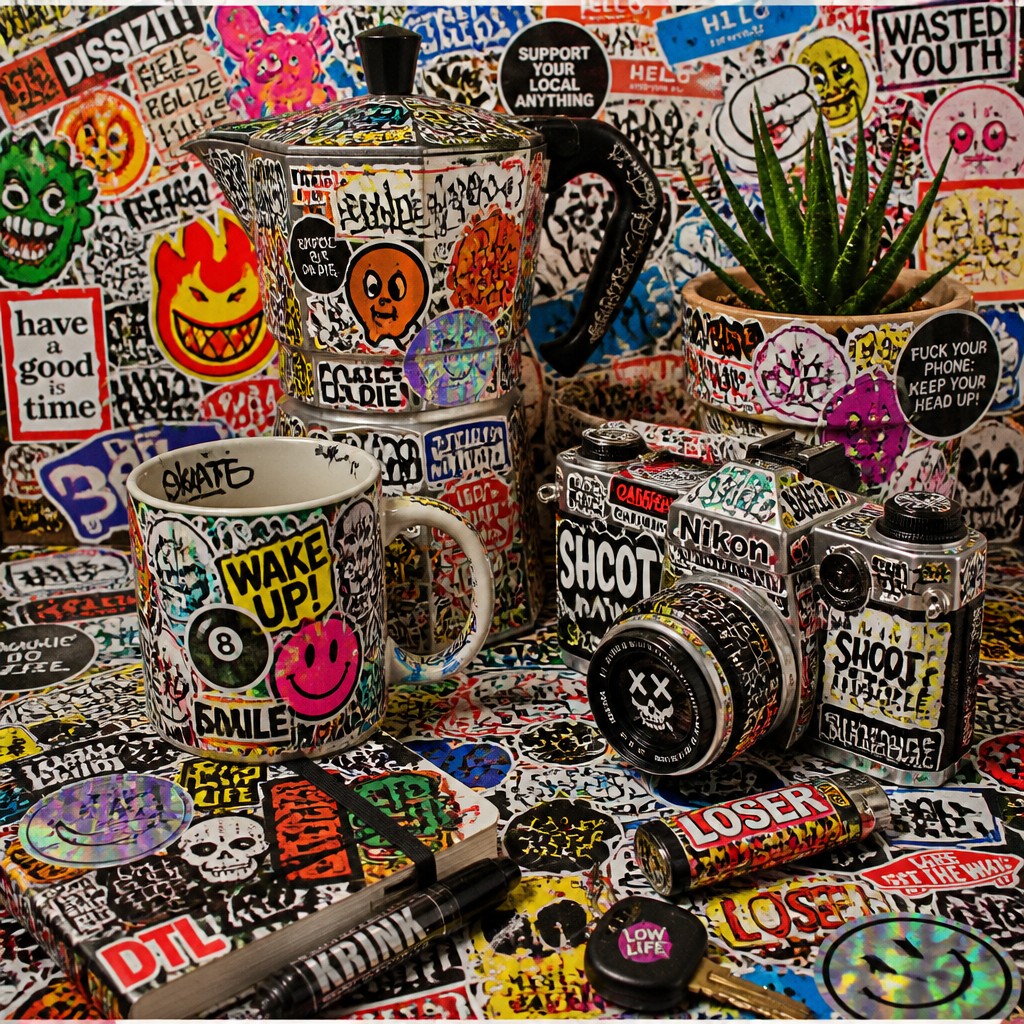
Marker and paint interruptions
Hand-drawn lines, scribbles, arrows, and tags often bridge the gaps between stickers. These interventions unify the collage while keeping its raw, improvised character.
Try It
Create Videos in Sticker Bomb Street Art Style
Styles aren't just for stills — describe a scene or animate an image and get a short video rendered in Sticker Bomb Street. Press play to see this pond come to life.
Make a VideoSticker Bomb Street Prompt Ideas
Start from an idea — each one opens the generator with the style ready to go. See all 40 Sticker Bomb Street prompts →
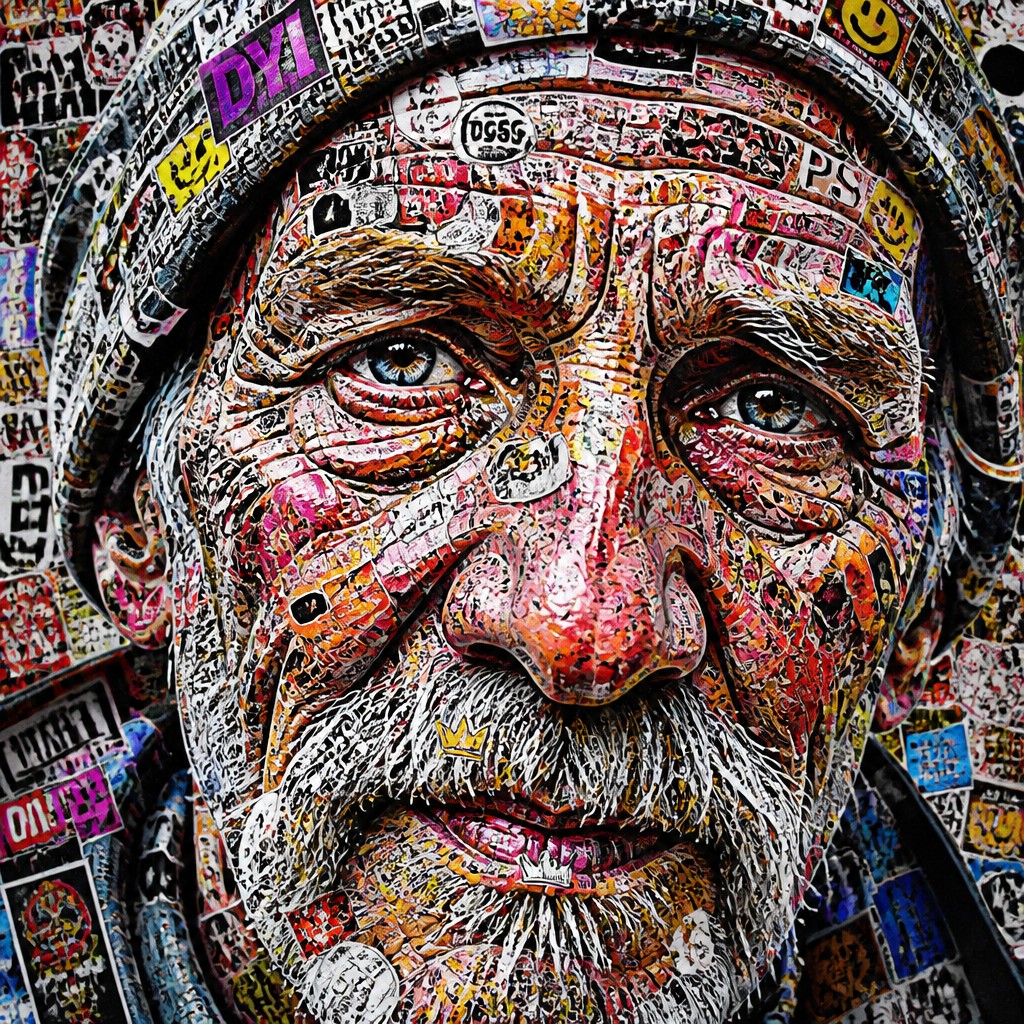
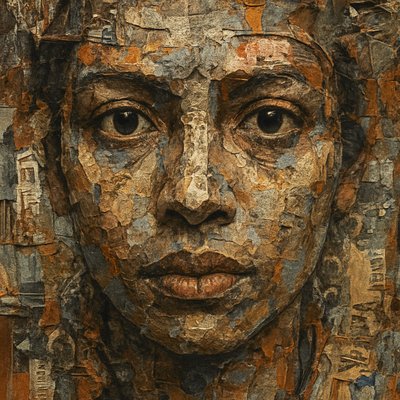
“close-up portrait of an elderly person with expressive weathered features”
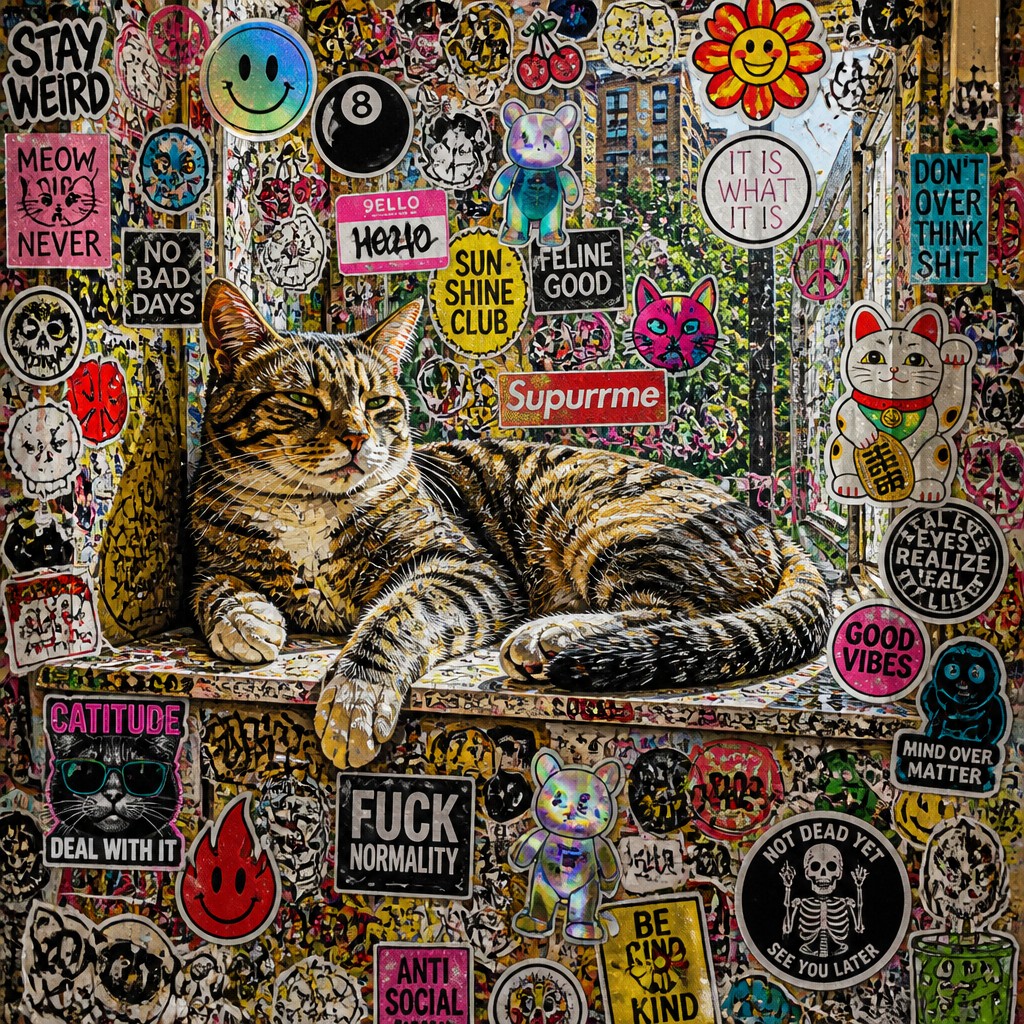
“a cat lounging in a sunlit window”
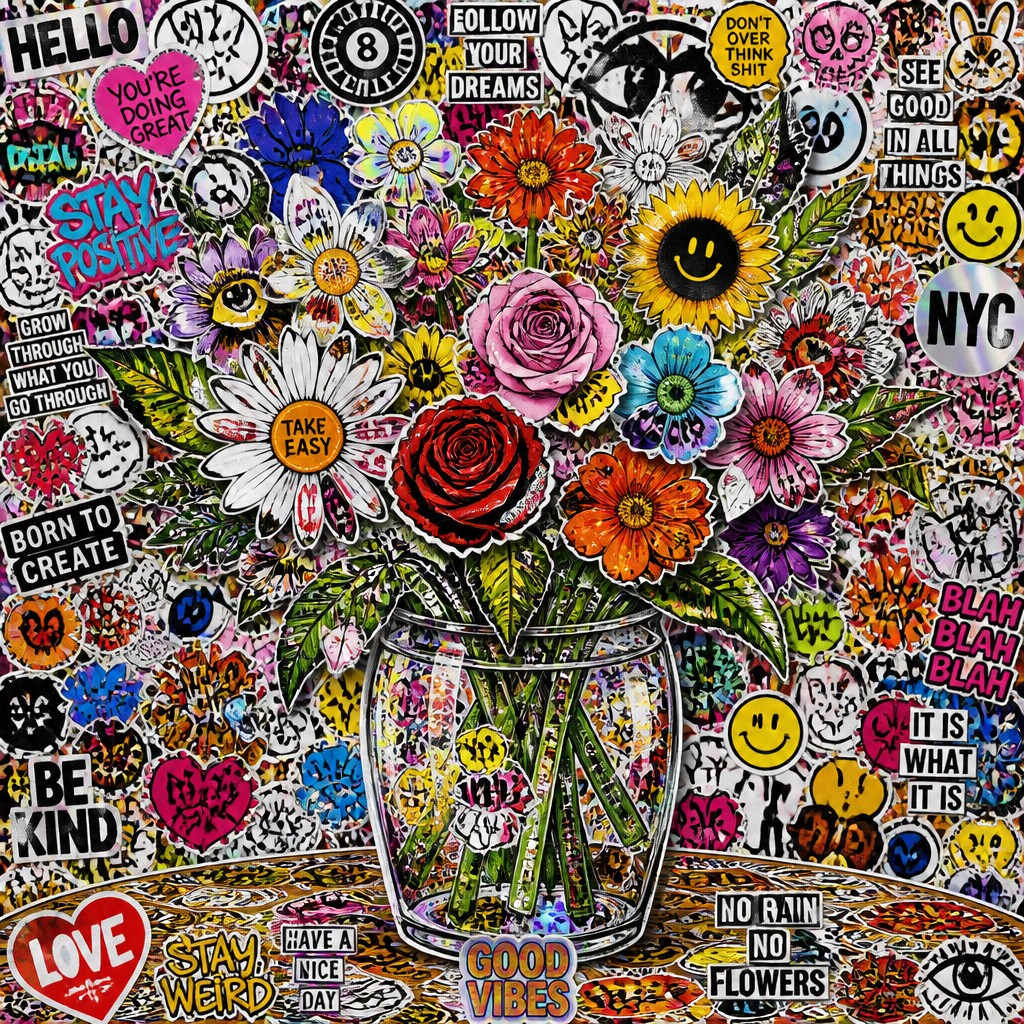
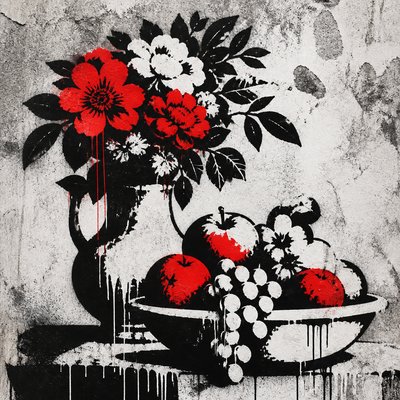
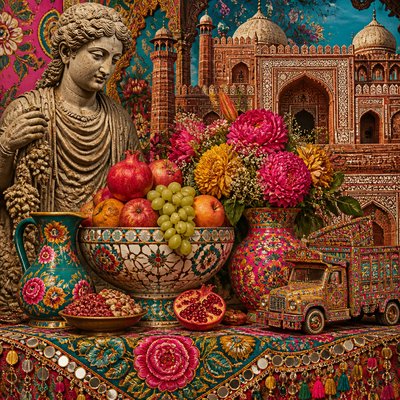
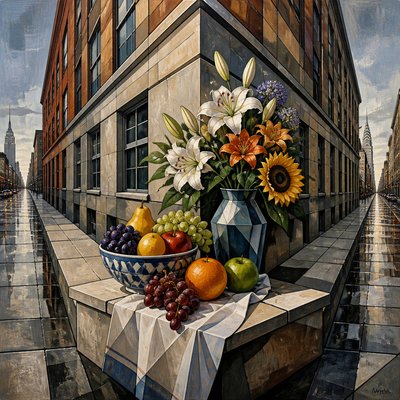
“bouquet of flowers in a glass vase”
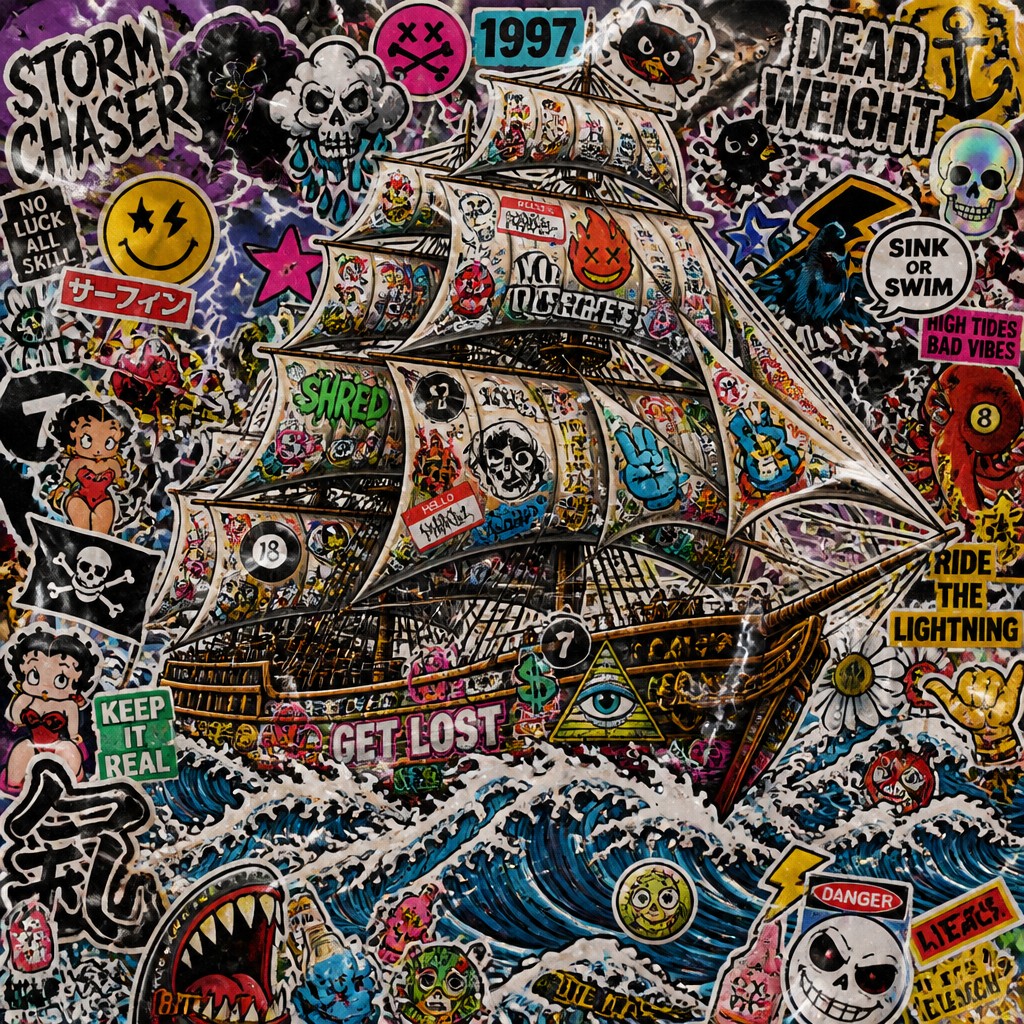
“sailing ship on a stormy sea”
How to Create Sticker Bomb Street Art
Master the craft step by step — or skip straight to creating. Read the full guide →
- 1
Build in layers, not from a single image
Start with a subject or focal area, then cover it with many smaller graphics that partially obscure each other. Use repetition, overlap, and uneven placement to make the surface feel accumulated over time.
- 2
Vary sticker finishes and edge quality
Mix crisp die-cut shapes with torn, wrinkled, and lifted pieces so the collage feels physical. In digital work, add subtle shadows, edge curl, and specular highlights to simulate adhesive material.
- 3
Combine graphic vocabularies
Blend typography, icons, cartoon marks, abstract doodles, and logo-like forms rather than staying in one visual register. The style depends on contrast between different contributors and print aesthetics.
- 4
Control the palette with saturation and accent colors
Use vivid print colors, then punctuate them with metallic, holographic, black, and white elements for rhythm. A crowded palette works best when a few recurring hues help the composition stay legible.
- 5
Leave almost no empty space
Whether working by hand or digitally, keep filling gaps until the surface reads as fully occupied. If generating from text, specify dense collage, overlapping vinyl stickers, white outlines, peeled corners, and maximum visual density.
- 6
Use photo source material carefully in image-to-image work
For transforming a real photo, preserve the underlying structure only if you want it to read as a pasted surface. Mask key areas with sticker shapes and layered graphics so the original image becomes embedded within the collage.

The Story
History & Origins of Sticker Bomb Street
Sticker bombing developed as part of late 20th-century and early 21st-century street culture, alongside graffiti, skateboarding, punk graphics, zine culture, and independent sticker production. Unlike mural painting, it favors portability and repetition: small adhesive graphics can be distributed, traded, and layered quickly across urban surfaces, turning signs, poles, storefronts, and public infrastructure into informal collages.
Its aesthetic lineage includes graffiti lettering, poster art, punk collage, comic-book graphics, and DIY print culture. The style is not tied to a single canonical movement or founder; instead, it reflects a broader urban visual practice in which many contributors add to the same surface over time. In contemporary graphic art and digital image-making, sticker bombing is often recreated as a deliberately overloaded collage aesthetic that preserves the feeling of accumulation, repetition, and crowding.
Influences: Sticker bombing draws from graffiti, poster art, punk collage, zine production, skate graphics, and comic-book illustration. It also overlaps with the visual logic of pop art and appropriation-based graphic design, though it is more improvised and surface-driven than canonical pop-art practices associated with major postwar pop artists. Its strongest historical relatives are street art, DIY print culture, and the informal layering habits of urban visual communication.
Frequently Asked Questions
What defines sticker bomb street art?
It is defined by dense overlap: many stickers or sticker-like graphics are layered until the surface is almost fully covered. The composition usually includes die-cut borders, peeled edges, saturated colors, and mixed handwritten or printed marks. The result feels like a collage built collectively over time.
How is it different from graffiti?
Graffiti usually emphasizes lettering, signatures, and spray-based mark-making, while sticker bombing uses adhesive graphics as the main unit of expression. The two often appear together in public space, but sticker bombing reads more like a pasted collage than a painted inscription. It is also easier to distribute and repeat because stickers can be pre-made.
Is sticker bombing considered street art or graphic design?
It sits between the two. In public space it functions as street art, but its building blocks are often graphic-design objects such as logos, mascots, and typographic labels. Many examples also borrow from illustration, making it a hybrid visual language.
What kinds of subjects work well in this style?
Simple, bold subjects work best because they can survive being partially covered by other layers. Faces, mascots, symbols, product-style graphics, slogans, and abstract icons all adapt well to the crowded surface. Busy subjects can work too, but they need strong silhouettes or high contrast.
How do I make an image look authentic in this style?
Focus on physical signs of sticker use: white cut borders, slight perspective shifts, shadows, peeled corners, and layered occlusion. Add a mix of glossy, matte, and metallic finishes so the surface feels like actual printed material. The strongest results usually come from making the image look accumulated rather than neatly designed.
Where is this style commonly used?
It appears on skateboards, laptops, luggage, helmets, street poles, shop shutters, and public signs. It is also used in music graphics, youth culture branding, and digital collage art. The common thread is a surface that invites accumulation and personal marking.
Create your first Sticker Bomb Street artwork
Describe anything — or upload a photo — and see it in Sticker Bomb Street Art Style in seconds.
Make Something with Sticker Bomb Street
Compare Sticker Bomb Street
Related Styles
Discover similar art styles