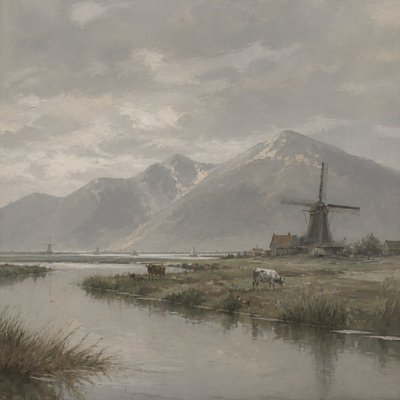
Cubo-Futurism Art Style
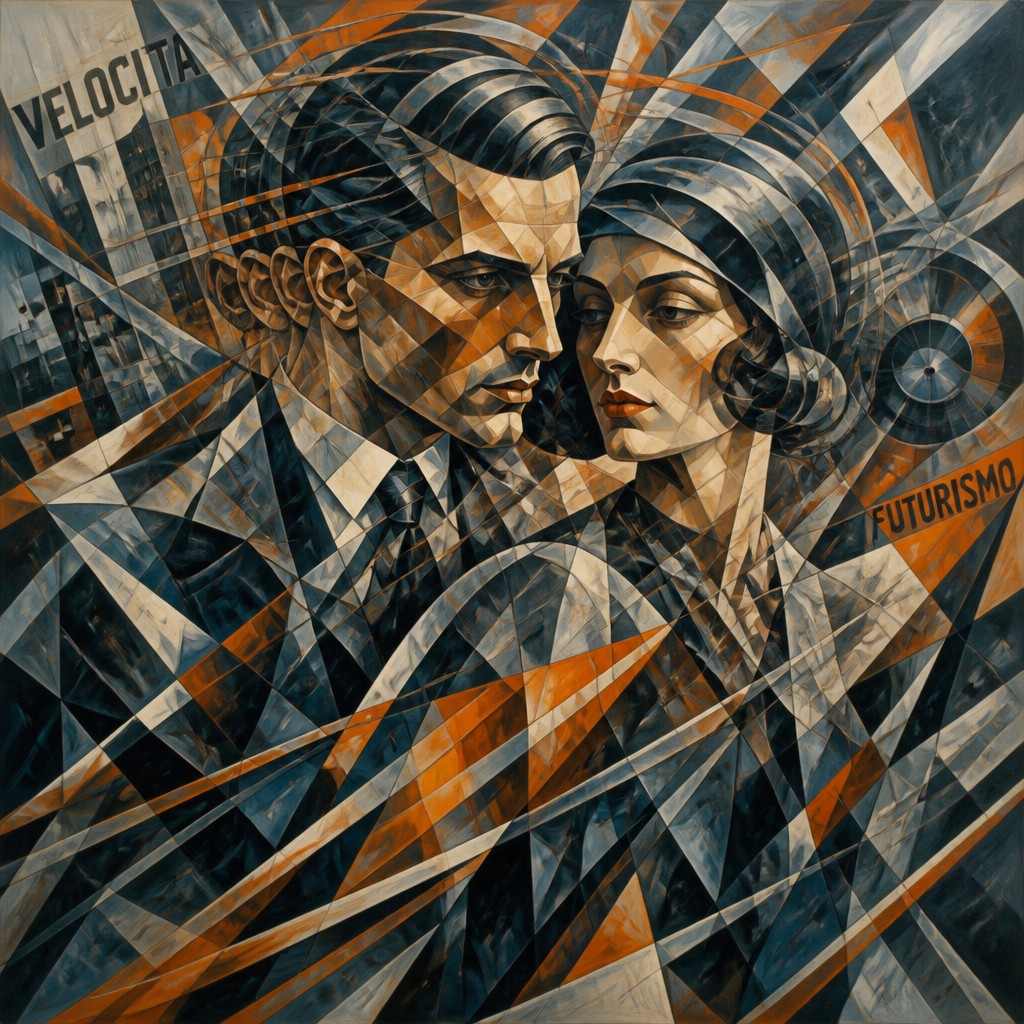
Cubo-Futurism blends Cubist fragmentation with Futurist motion for dynamic, machine-age images of speed, energy, and industrial forms.
Instantly rendered in Cubo-Futurism — or transform a photo
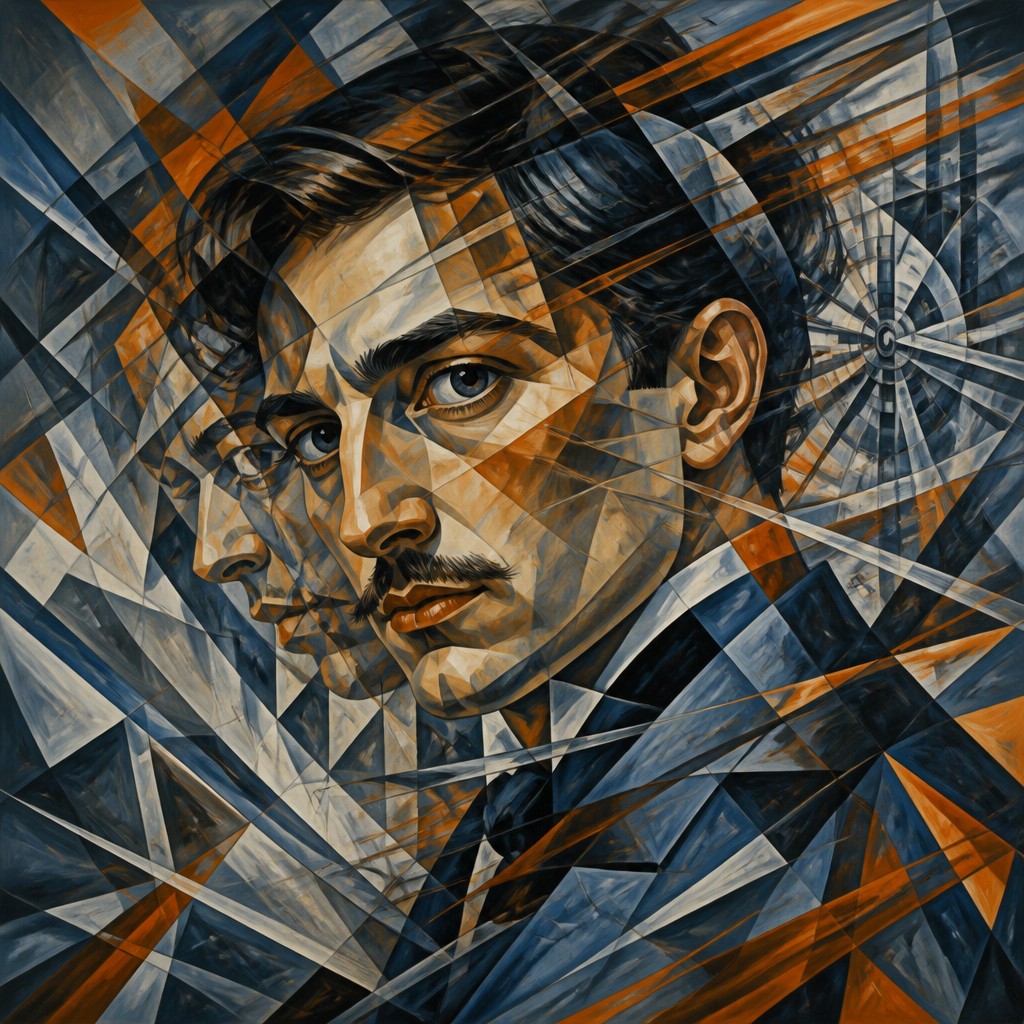
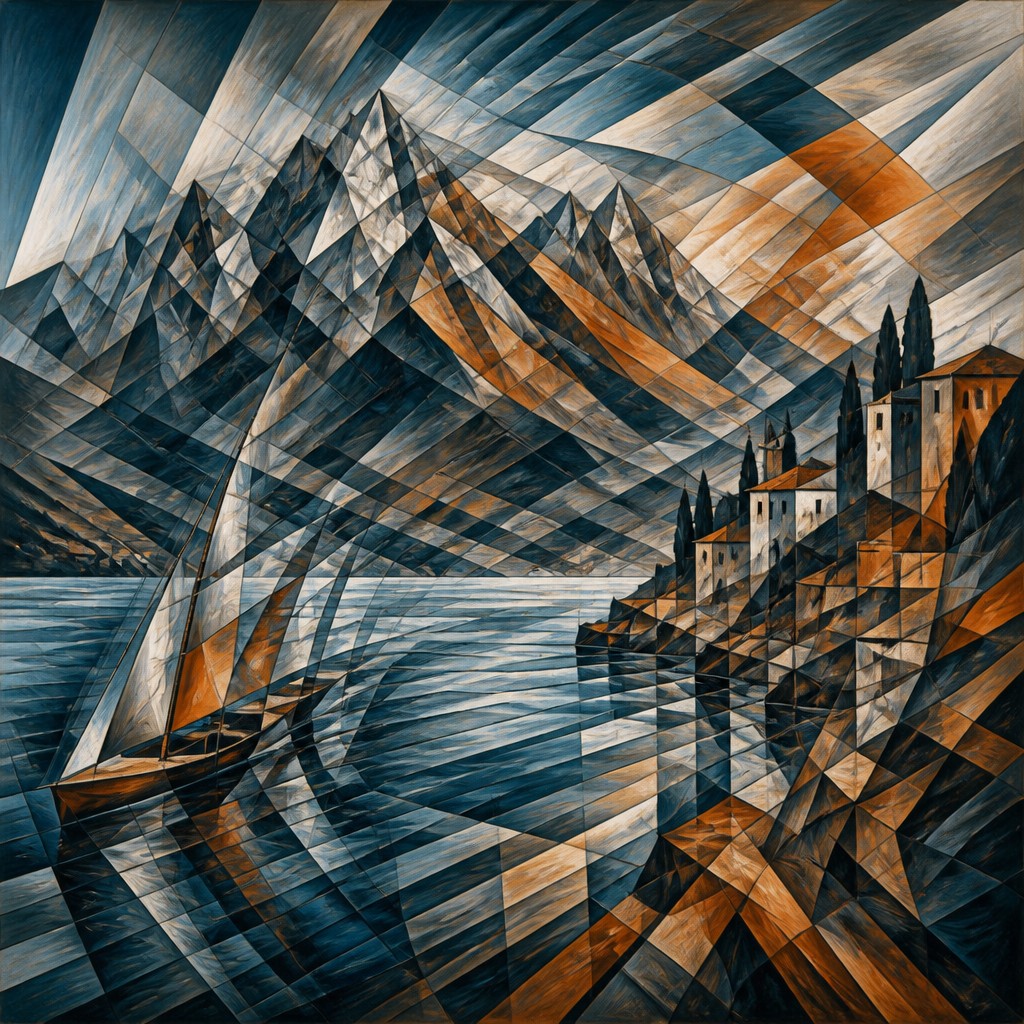
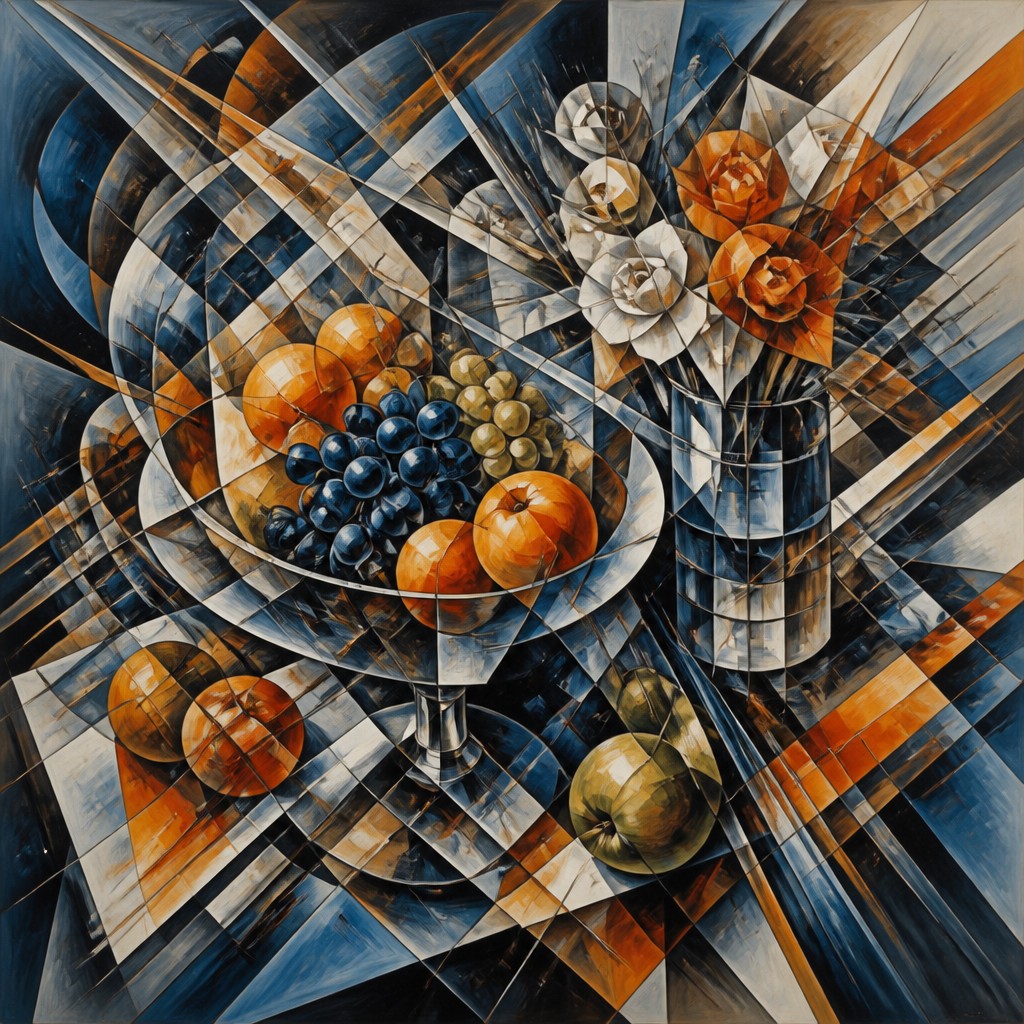
Cubo-Futurism Gallery
Tap any artwork to explore it
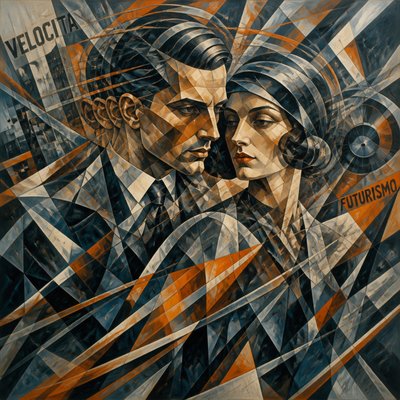
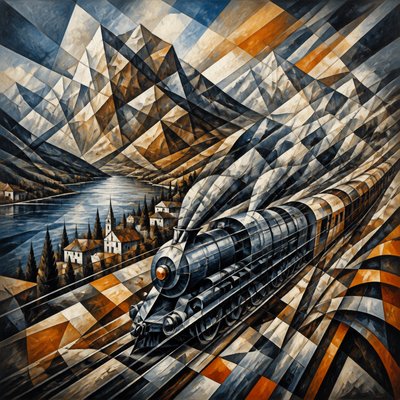
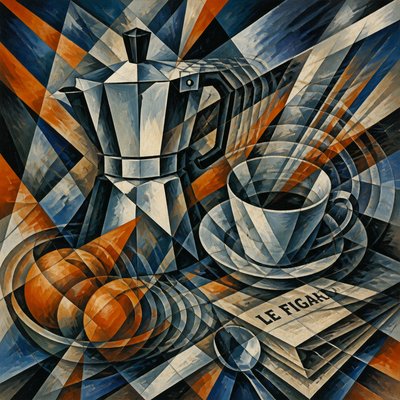
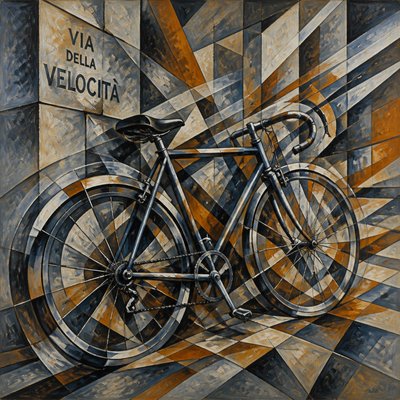
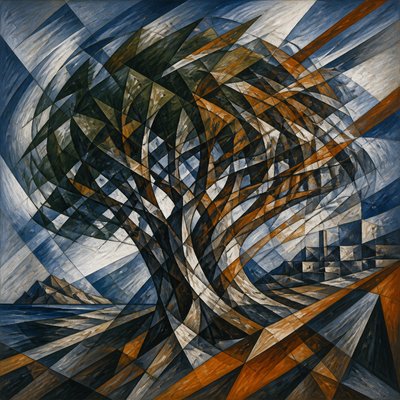
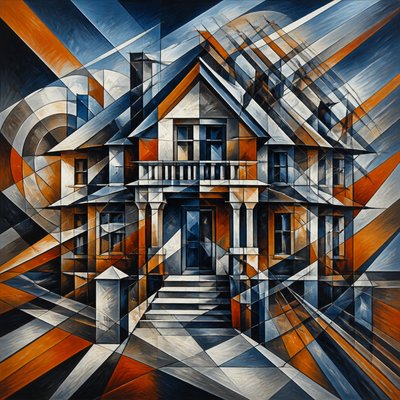
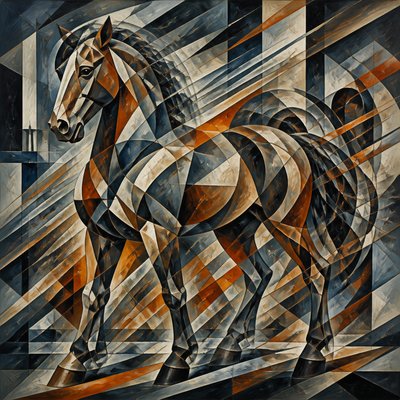
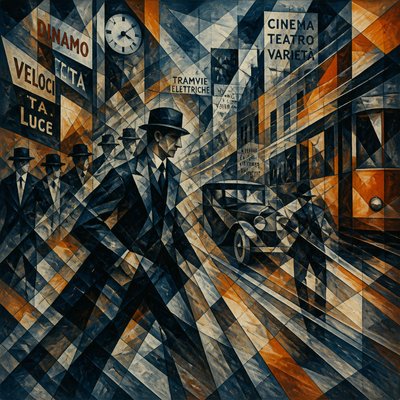
What is Cubo-Futurism Art Style?
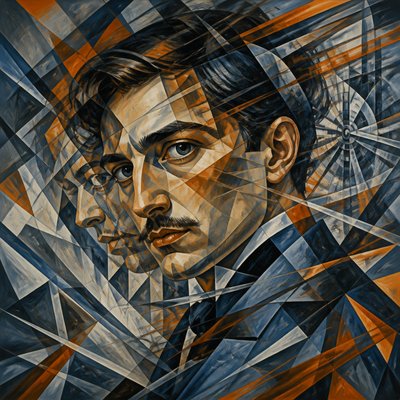
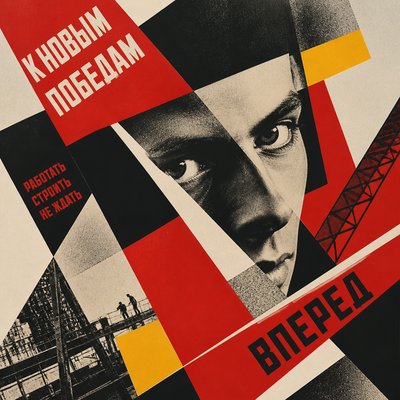
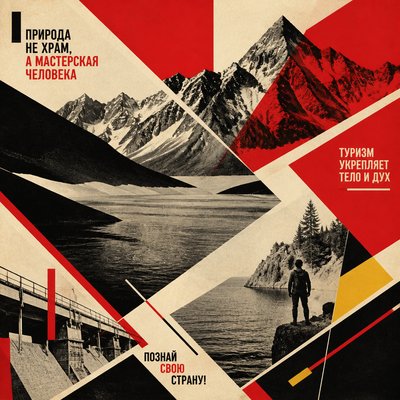
Cubo-Futurism is a hybrid visual language that combines Cubist fragmentation with Futurist dynamism. Forms are broken into angular facets, then animated through repeated contours, diagonal thrusts, and layered motion cues that make the subject feel as if it is moving through space. The result is a composition that remains recognizable while conveying acceleration, mechanical power, and the visual noise of the modern industrial age.
Its identity comes from the tension between structure and motion. Cubist influence supplies the fractured geometry and multiple viewpoints; Futurist influence supplies speed lines, rhythmic repetition, and a sense of force moving across the picture plane. The style often favors machine-age subjects—vehicles, city infrastructure, factories, athletes, and streamlined figures—but it can be applied to any subject when the goal is to express energy, simultaneity, and modernity through sharp abstracted form.
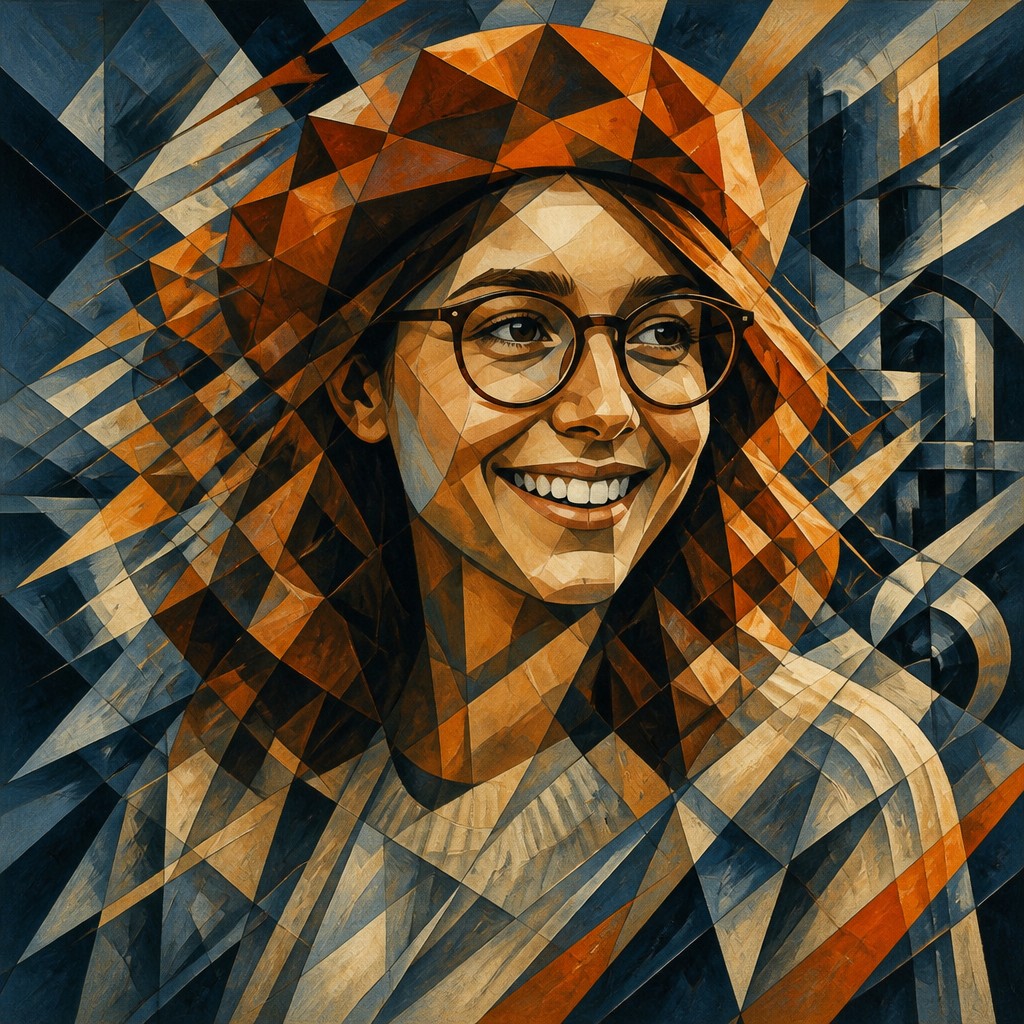
Try It On Your Photos
Upload any photo and convert it into Cubo-Futurism Art Style — drag the sliders to compare before and after.


What Defines Cubo-Futurism Art Style
The signature details, up close
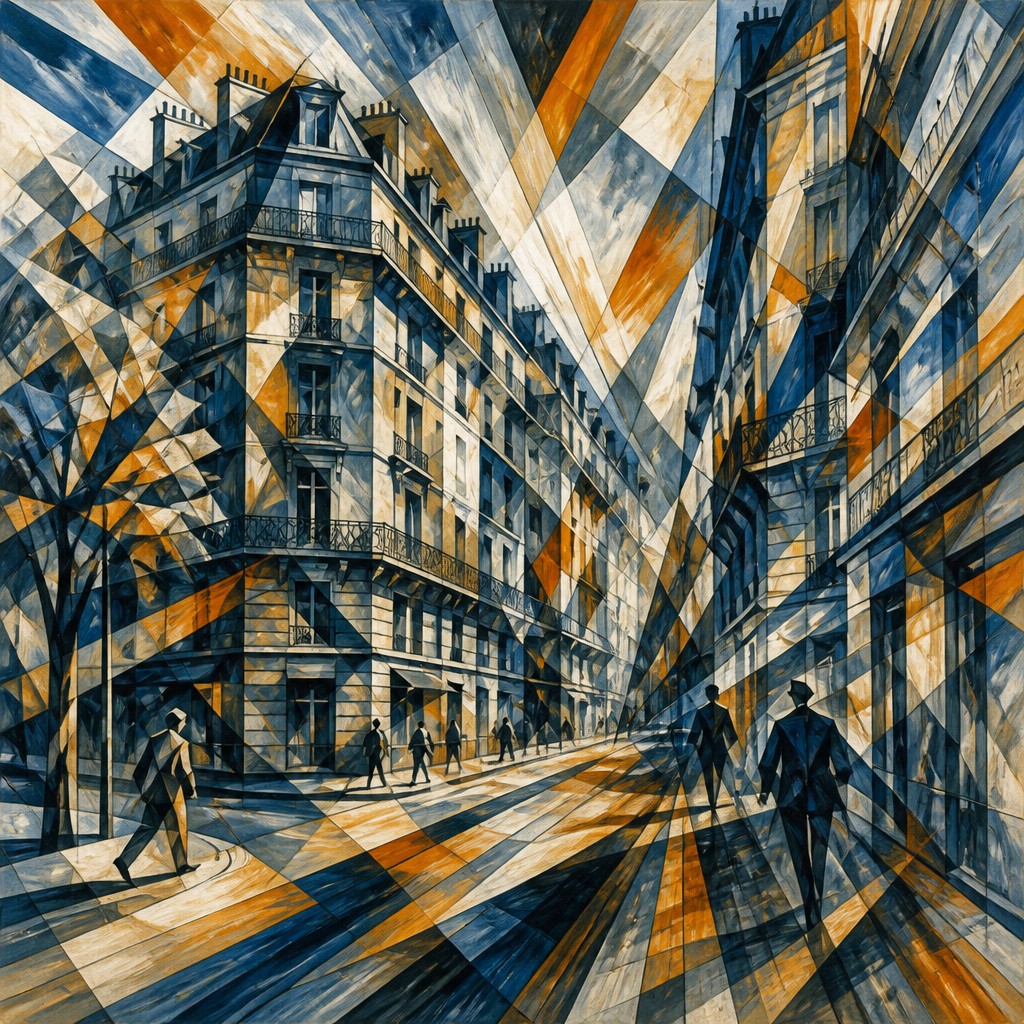
Fragmented geometry
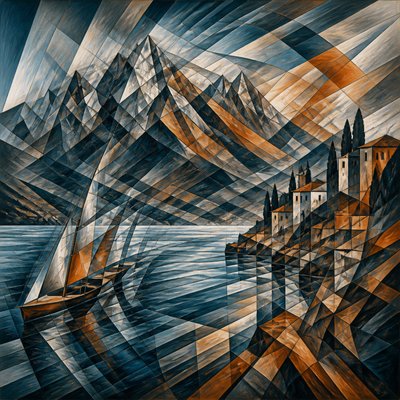
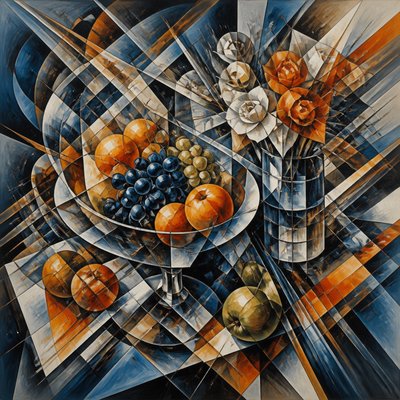
Subjects are divided into angular planes, shards, and faceted surfaces. These broken forms suggest multiple viewpoints at once, a hallmark inherited from Cubism.
Sequential motion cues
Repeated outlines, offset silhouettes, and layered contours imply movement across time. The image often feels like several moments compressed into one frame.
Diagonal force and momentum
Strong diagonal lines cut through the composition to create acceleration and directional thrust. This gives the image a sense of propulsion rather than stasis.
Machine-age subject matter
Industrial themes such as trains, automobiles, turbines, architecture, and urban infrastructure are especially common. Even human figures are often rendered with mechanical energy or streamlined anatomy.
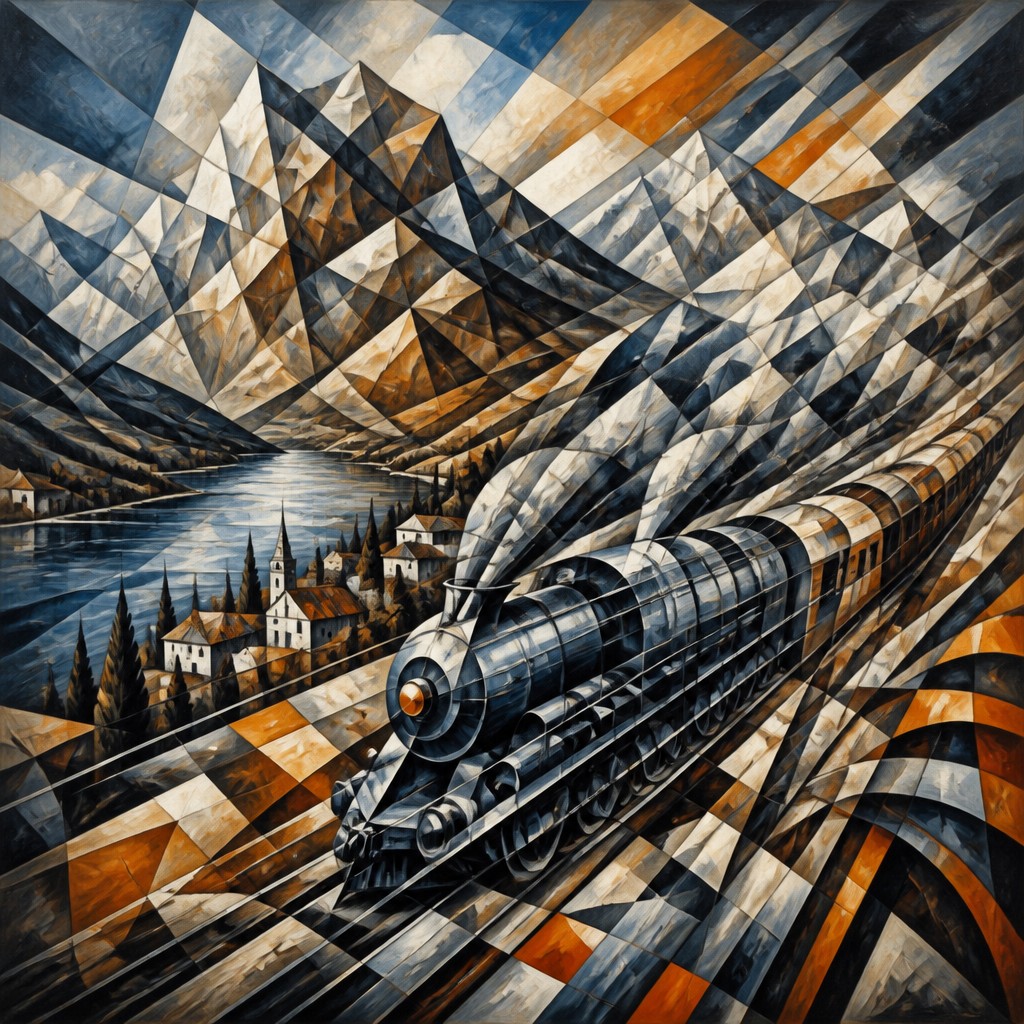
Sharp contrast and faceted light
Light and shadow are split across fractured planes, producing a hard-edged, metallic look. This can make surfaces feel reflective, engineered, or electrically charged.
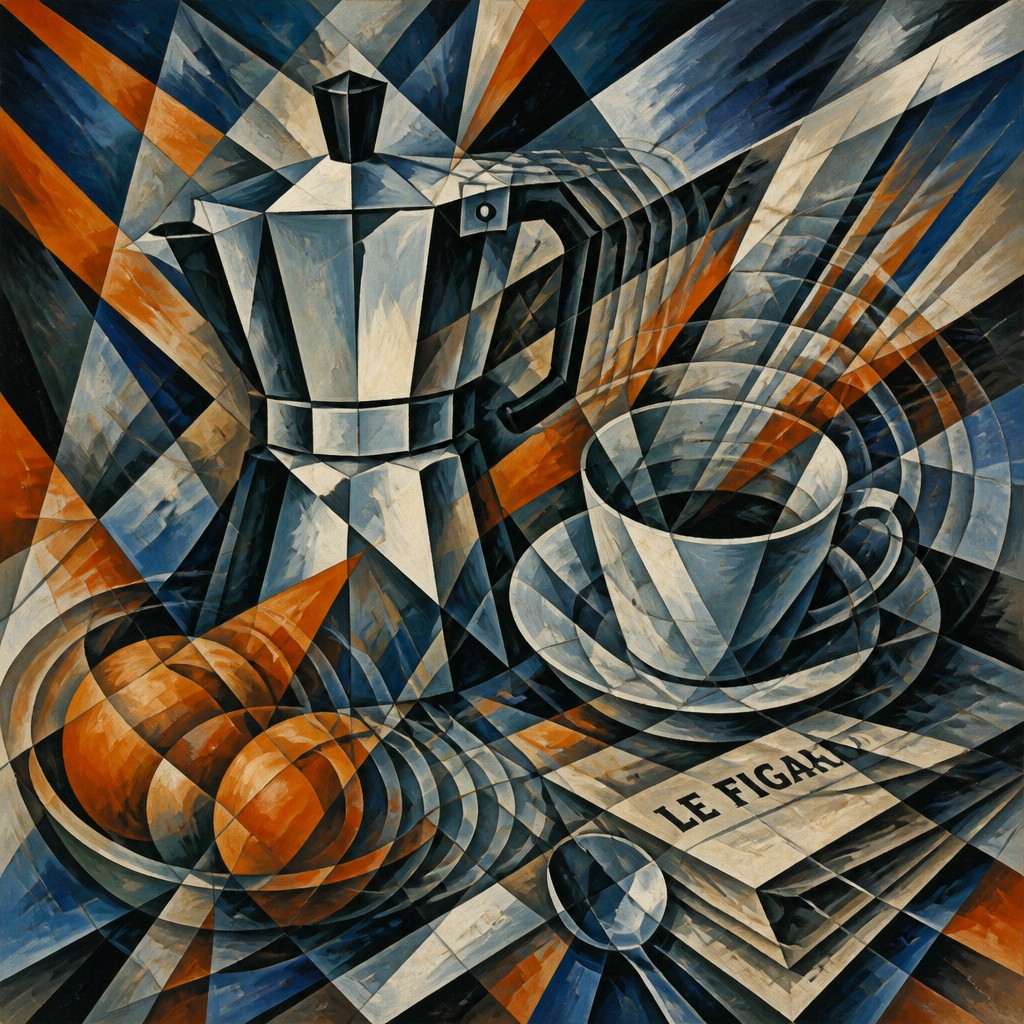
Rhythmic composition
Visual repetition organizes the chaos of fragmentation into a pulse or beat. The overall effect is energetic but still structured.
Try It
Create Videos in Cubo-Futurism Art Style
Styles aren't just for stills — describe a scene or animate an image and get a short video rendered in Cubo-Futurism. Press play to see this pond come to life.
Make a VideoCubo-Futurism Prompt Ideas
Start from an idea — each one opens the generator with the style ready to go. See all 40 Cubo-Futurism prompts →
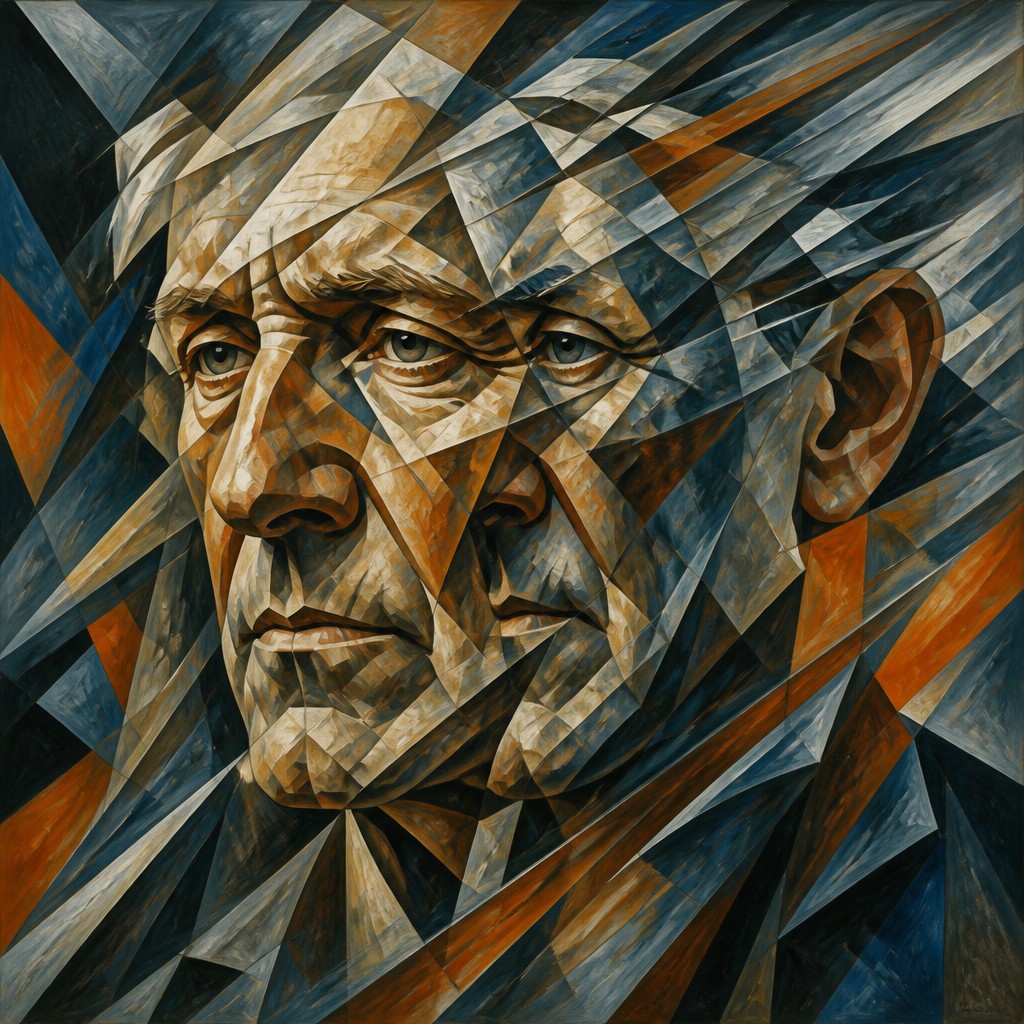
“close-up portrait of an elderly person with expressive weathered features”
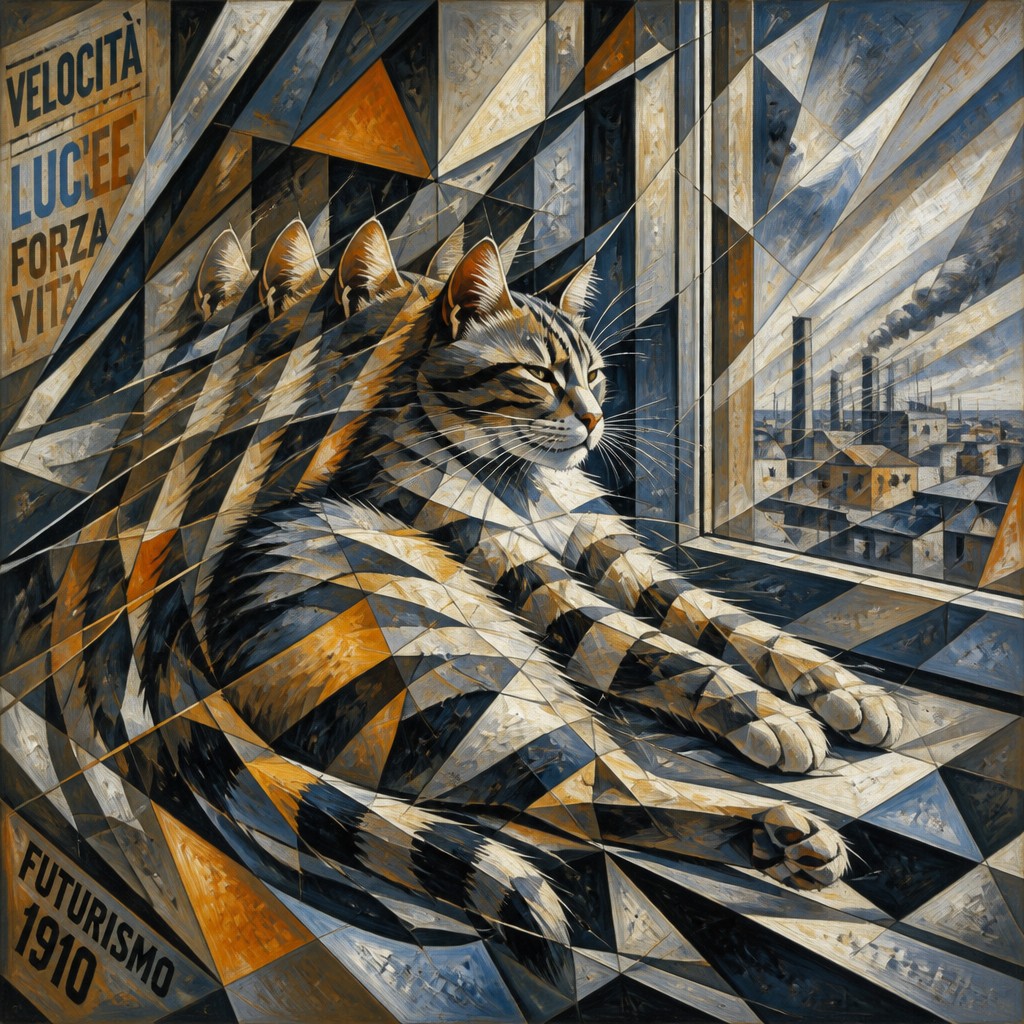
“a cat lounging in a sunlit window”
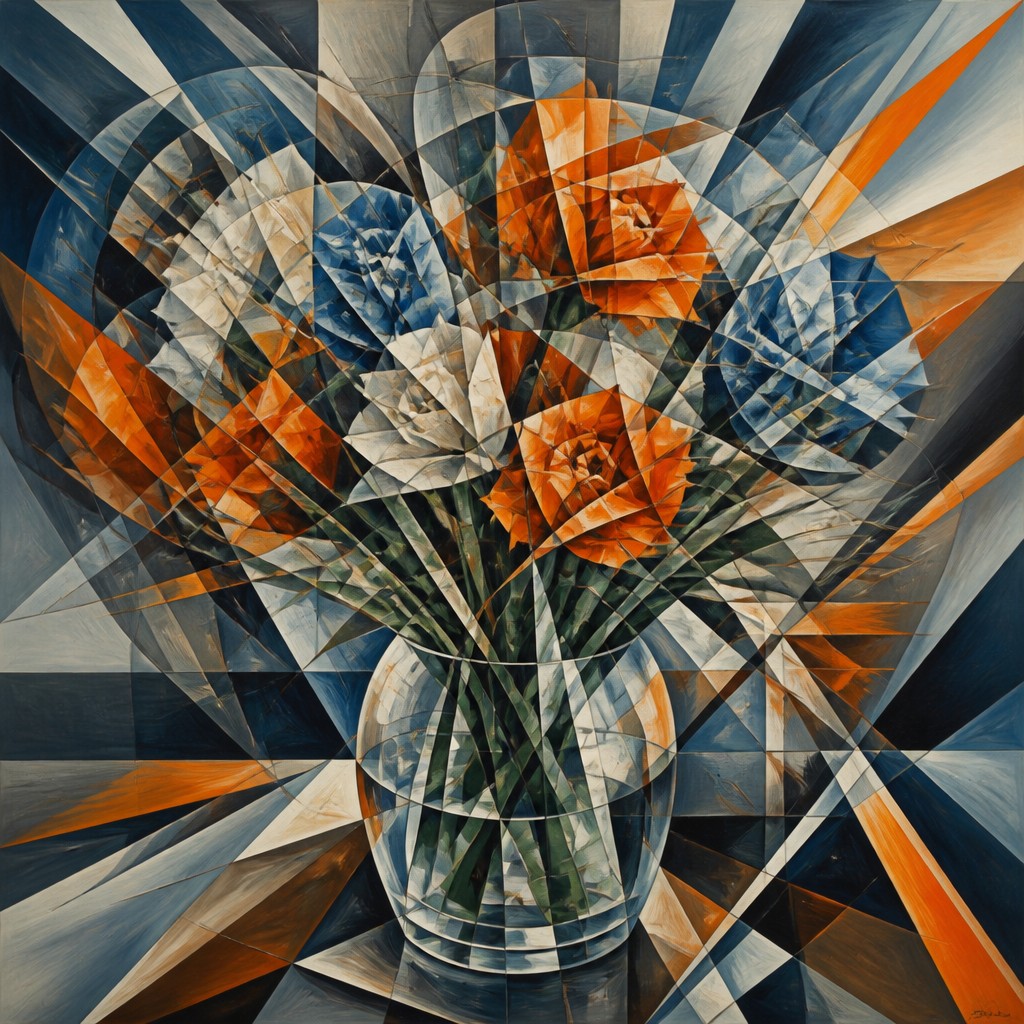
“bouquet of flowers in a glass vase”
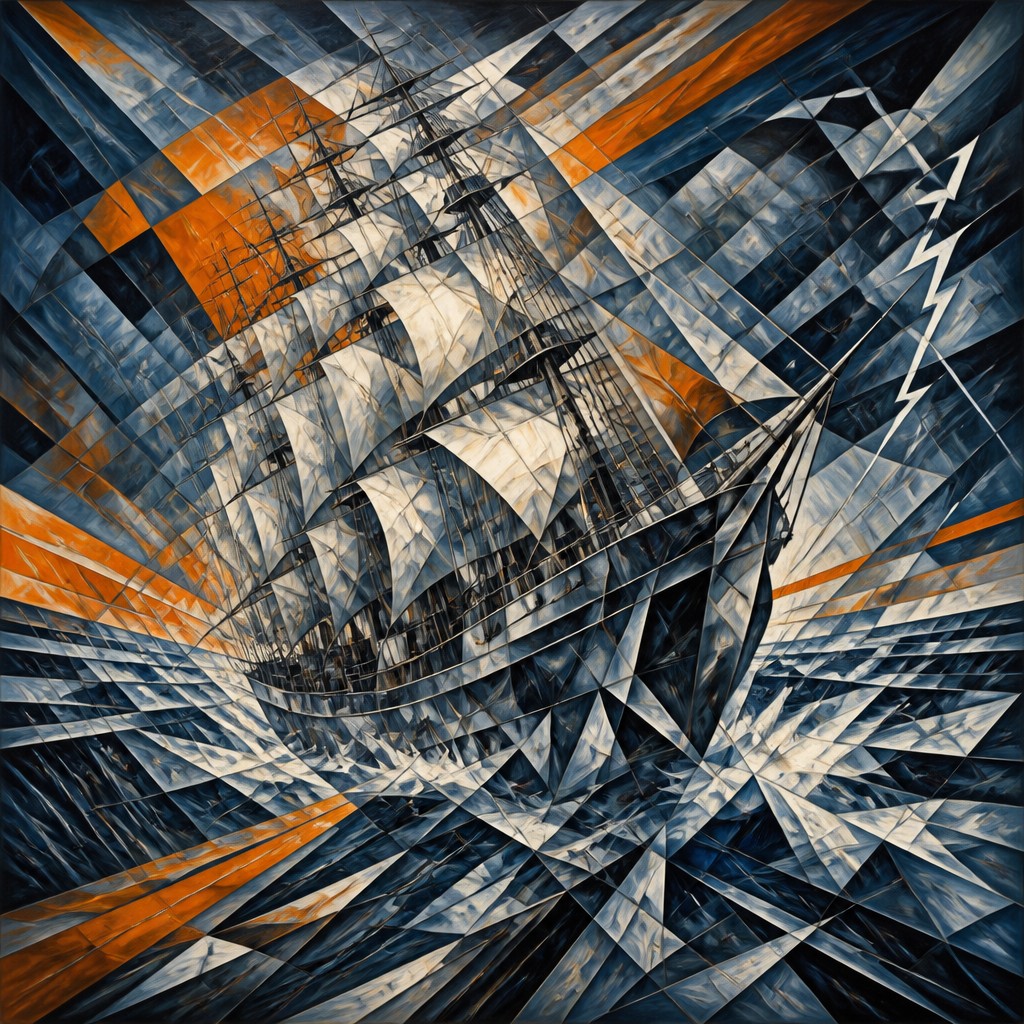
“sailing ship on a stormy sea”
How to Create Cubo-Futurism Art
Master the craft step by step — or skip straight to creating. Read the full guide →
- 1
Build the subject in simple masses first
Start with a clear underlying silhouette so the image remains readable after fragmentation. Then break that form into angular facets and offset duplicates to suggest motion without losing the core subject.
- 2
Use diagonals to drive the composition
Arrange major edges, contours, and lighting breaks along diagonal pathways. In both drawing and digital painting, this helps create the forward-moving tension associated with the style.
- 3
Layer motion through repetition
Repeat the same contour or limb position several times with slight shifts to imply sequential movement. Keep the spacing uneven so the image feels kinetic rather than mechanical in a literal sense.
- 4
Choose a metallic industrial palette
Steel blue, chrome silver, charcoal, black, and burnt orange are especially effective. Use high-contrast highlights and shadow blocks to make the fractured planes read as hard material.
- 5
Balance abstraction with legibility
The style works best when the subject remains recognizable despite the fragmentation. Whether working traditionally or digitally, preserve a few anchor details such as wheels, limbs, windows, or facial orientation.
- 6
For prompt-based generation, specify motion and geometry
Describe the subject, then add cues such as overlapping contours, fragmented planes, diagonal force lines, and machine-age color values. If using image transformation, ask for sharper faceting and stronger motion trails while keeping the original pose or object identifiable.
The Story
History & Origins of Cubo-Futurism
Cubo-Futurism is not a single historical school with a fixed manifesto so much as a descriptive label for an aesthetic lineage that emerged from early 20th-century European avant-garde experiments. It draws primarily from Cubism, associated with leading Cubist innovators and later Synthetic Cubism, and from Italian Futurism, whose artists sought to depict speed, technology, and modern life. In practice, the style reflects the shared ambition of these movements to break away from naturalistic representation and to visualize a world transformed by motion and machinery.
Historically, cubist-futurist hybrids appeared most clearly in works from the 1910s, when artists across Europe experimented with fractured forms and sequential movement effects. The term is also used more broadly today to describe images that merge angular abstraction with kinetic force, especially in digital illustration, poster design, and conceptual art. In contemporary usage, it functions as a visual strategy rather than a strict historical category.
Influences: Cubo-Futurism sits at the intersection of Cubism and Italian Futurism, borrowing fractured spatial analysis from leading Cubist innovators and kinetic modernism from major Italian Futurist artists. It also relates to later forms of dynamic abstraction in poster design, constructivist graphics, and modernist illustration, especially where speed, industry, and urban energy are emphasized.

Frequently Asked Questions
What defines Cubo-Futurism?
Cubo-Futurism is defined by the combination of cubist fragmentation and futurist motion. It breaks a subject into geometric planes while also showing movement through repeated contours, diagonals, and layered positions.
How is it different from Cubism?
Cubism typically focuses on multiple viewpoints, structure, and the analysis of form. Cubo-Futurism adds a strong sense of speed, direction, and time, making the composition feel animated rather than primarily analytical.
How is it different from Futurism?
Futurism emphasizes motion, energy, and modern life, often using dynamic lines and sequential images. Cubo-Futurism adds the fractured geometry and faceted construction associated with Cubism, creating a more angular and segmented look.
What subjects work best in this style?
Industrial and urban subjects are especially effective: trains, cars, factories, architecture, machinery, and city scenes. Human figures can also work well when posed in action or rendered with strong directional movement.
Can Cubo-Futurism be used in digital art?
Yes. Digital tools are well suited to layered contours, geometric masking, and strong value contrasts. The style also adapts well to prompt-based generation when the prompt emphasizes fragmentation, motion, and machine-age color.
What makes an image feel truly Cubo-Futurist instead of just abstract?
The key is recognizability. The subject should still be identifiable beneath the fragmentation, and the motion cues should organize the composition around a clear sense of direction or speed.
Create your first Cubo-Futurism artwork
Describe anything — or upload a photo — and see it in Cubo-Futurism Art Style in seconds.
Make Something with Cubo-Futurism
Related Styles
Discover similar art styles