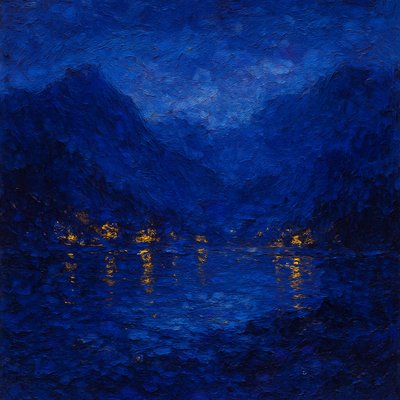
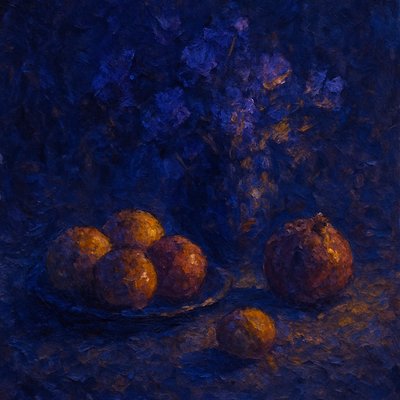
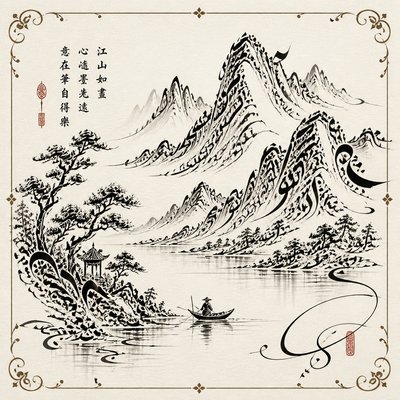
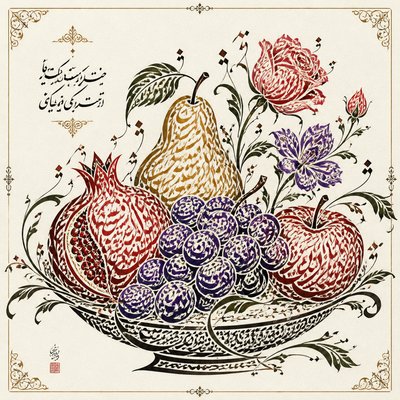
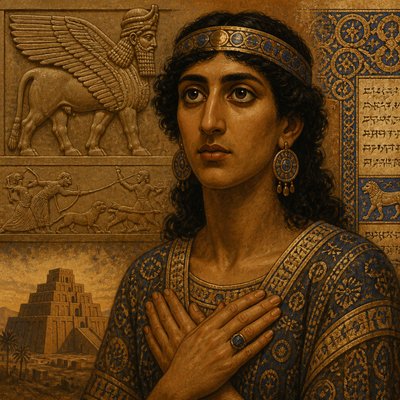
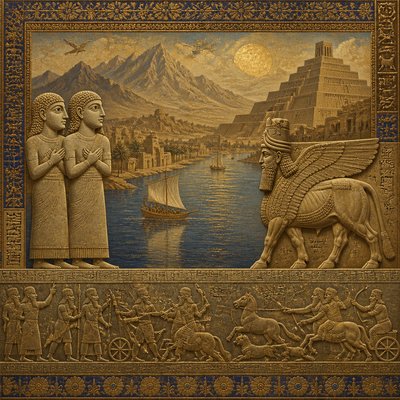
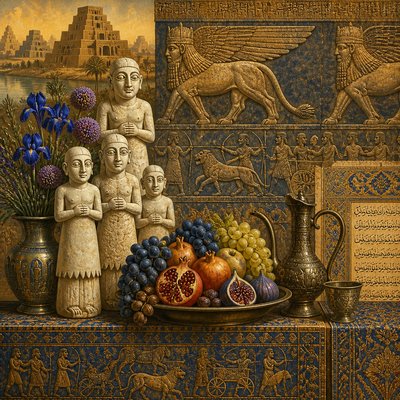
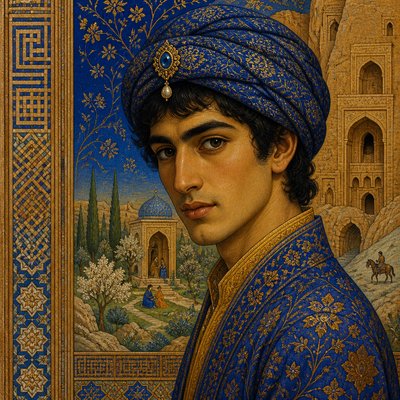
Aesthetic Movement Art Style
Explore Aesthetic Movement art: art for art's sake, Japanese-inspired composition, peacock hues, languid figures and refined tonal harmony.
Instantly rendered in Aesthetic Movement — or transform a photo
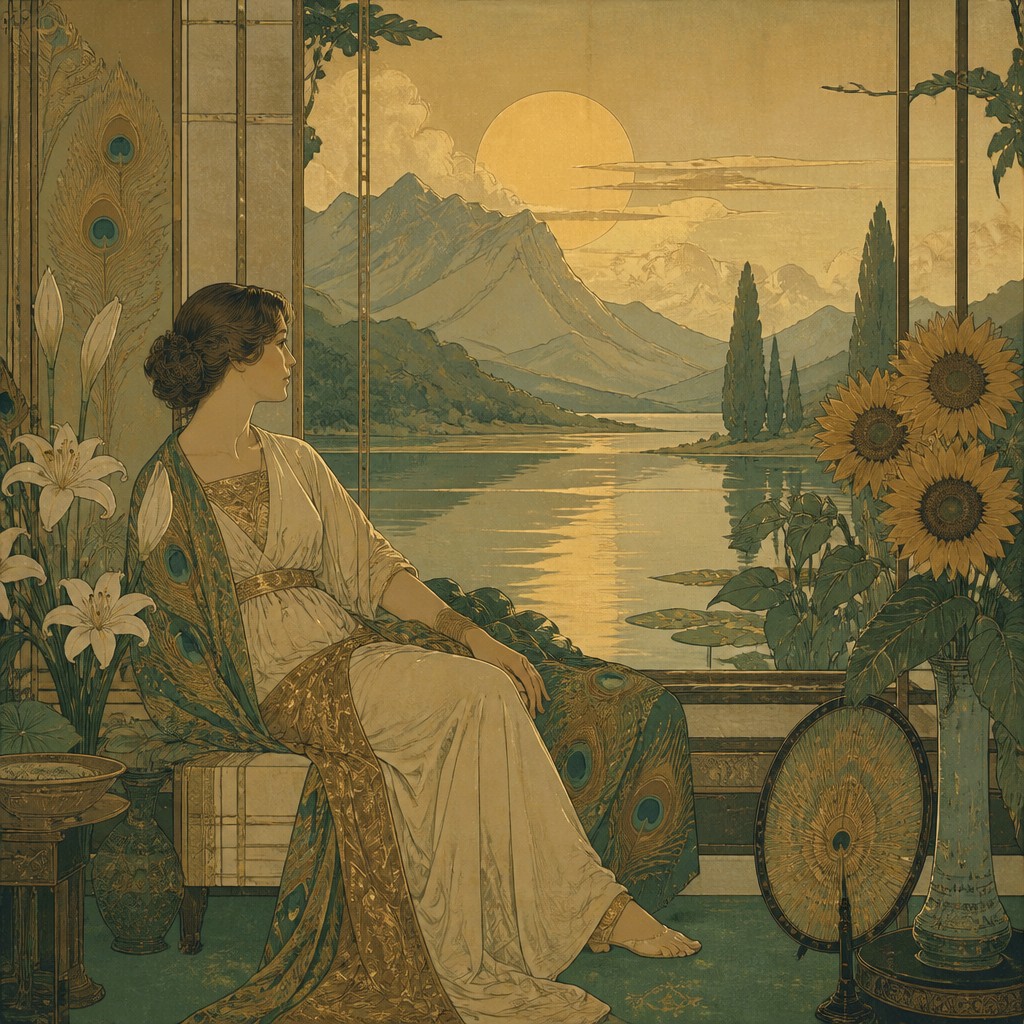
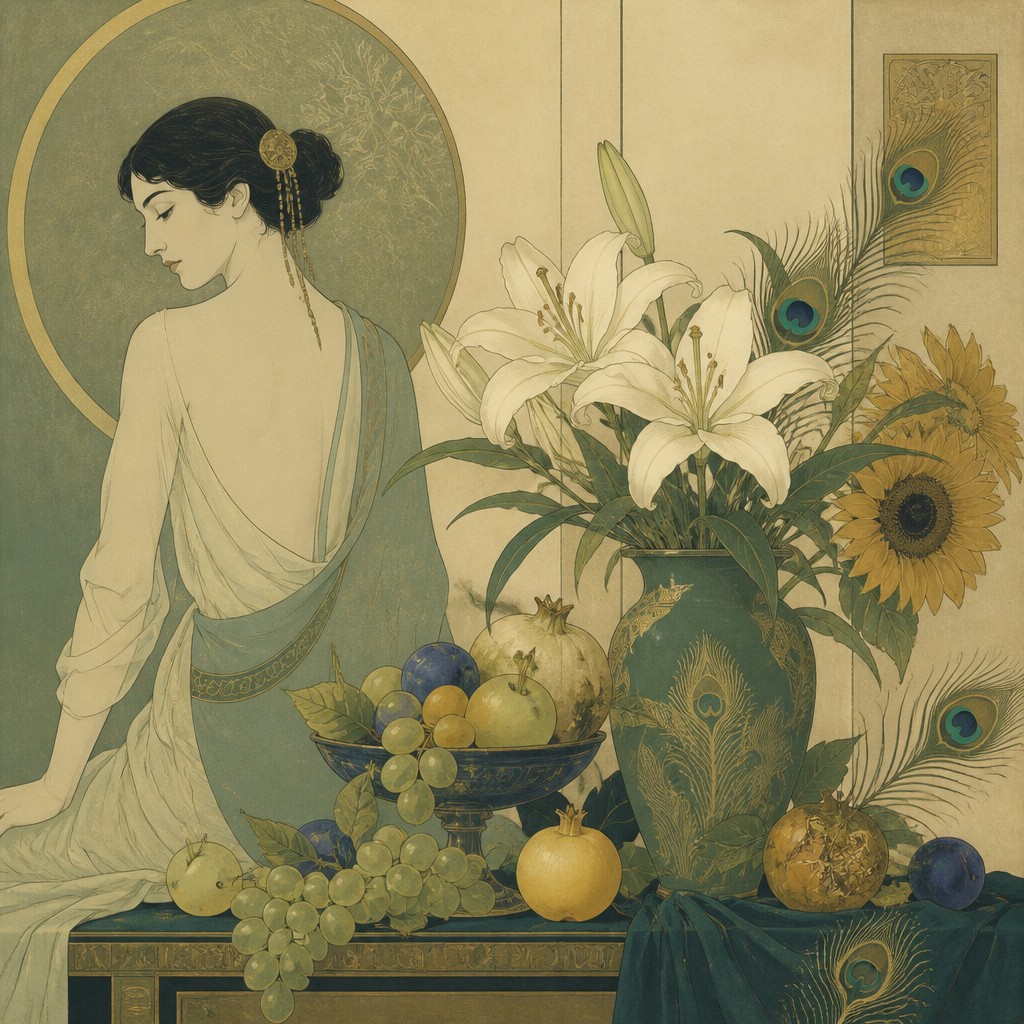
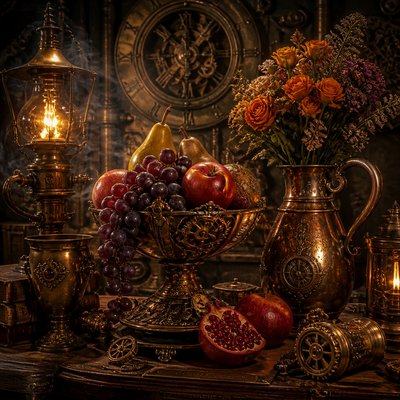
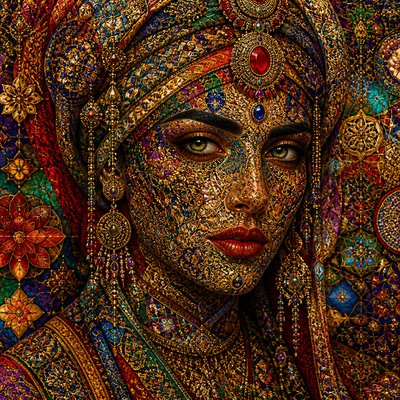
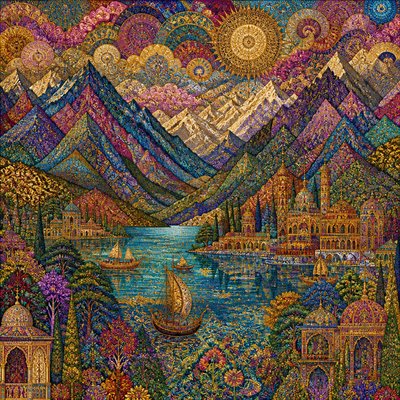
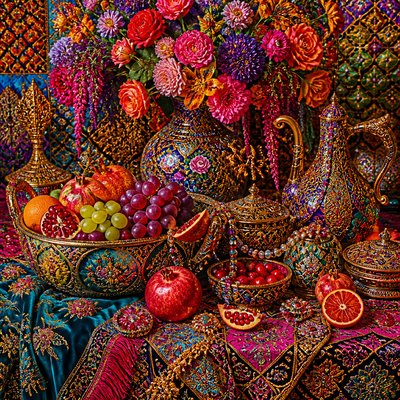
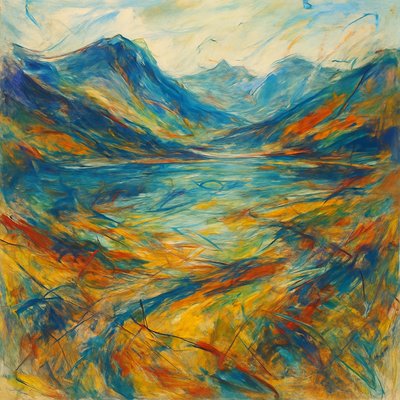
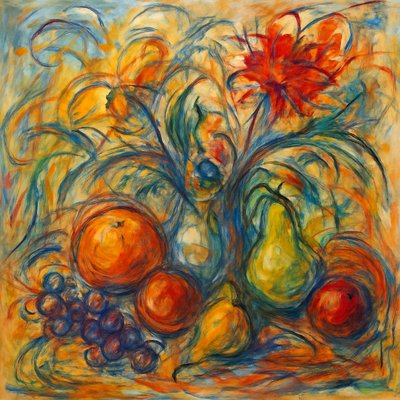
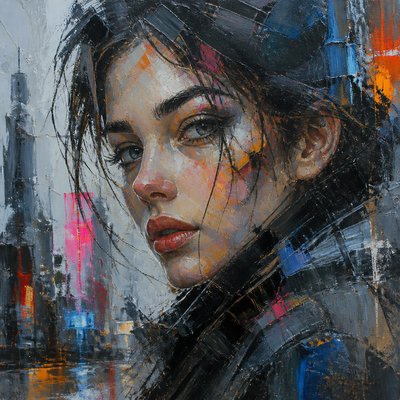
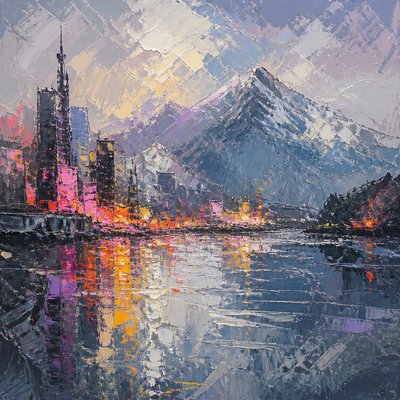
Aesthetic Movement Gallery
Tap any artwork to explore it
What is Aesthetic Movement Art Style?
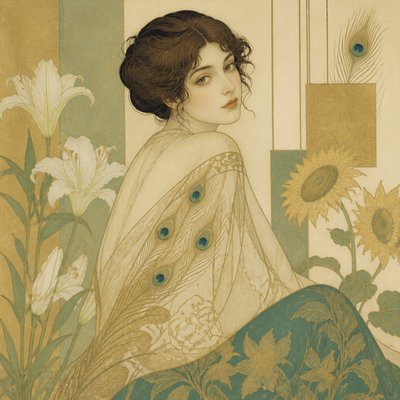
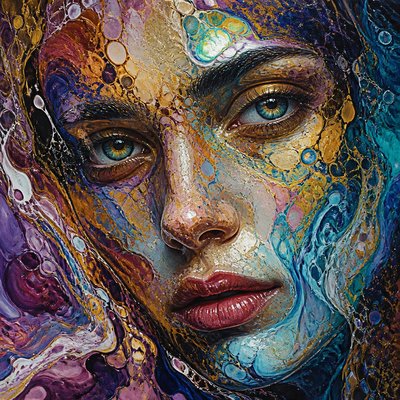
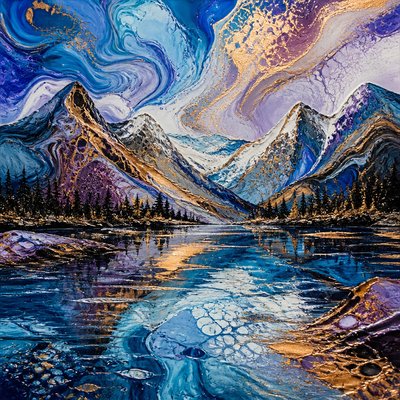
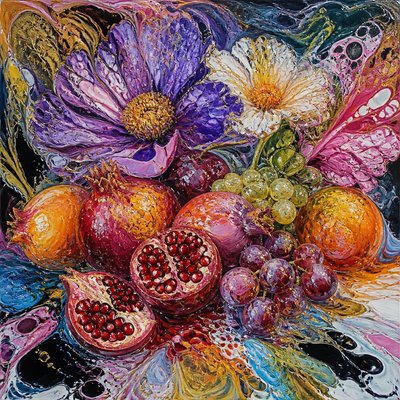
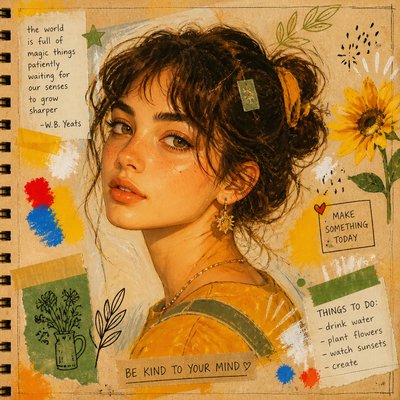
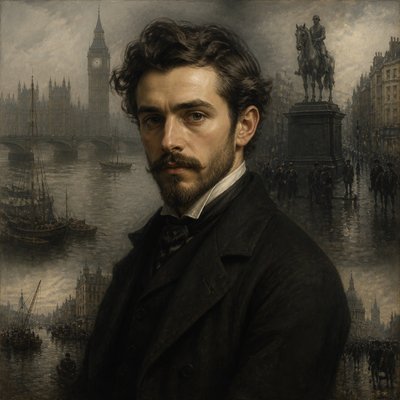
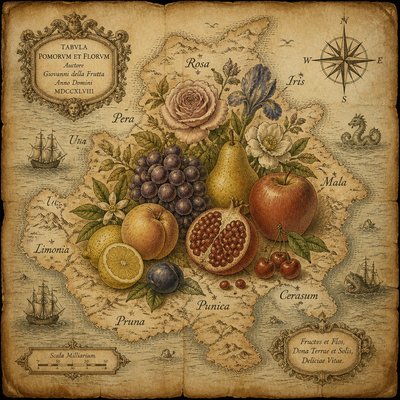
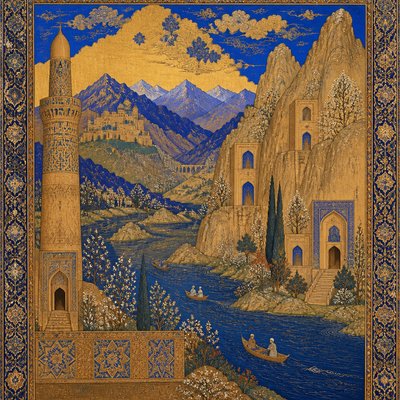
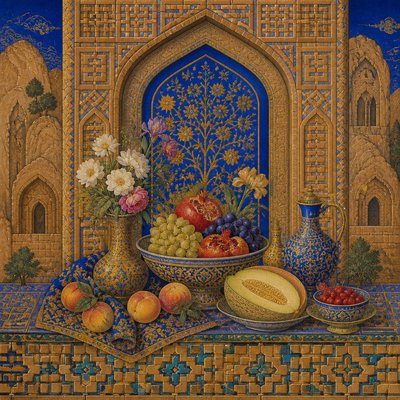
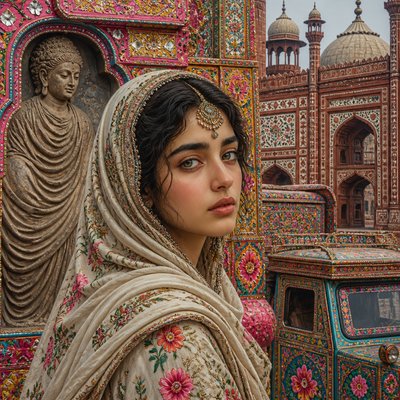
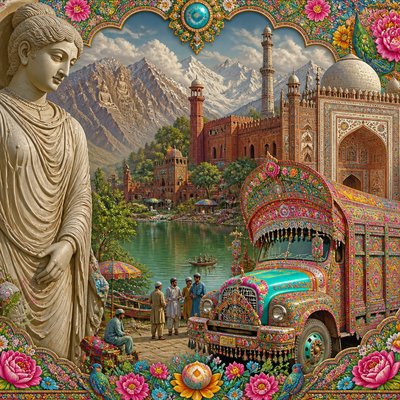
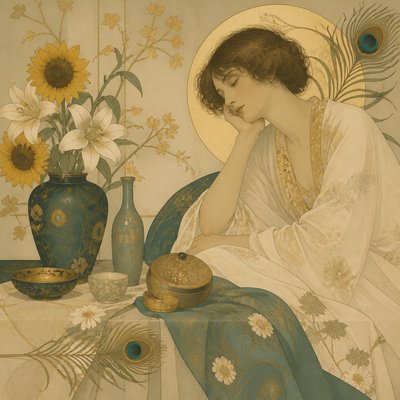
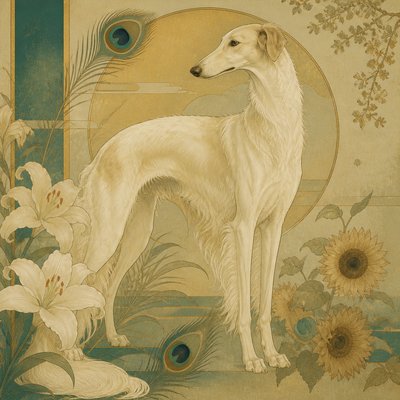
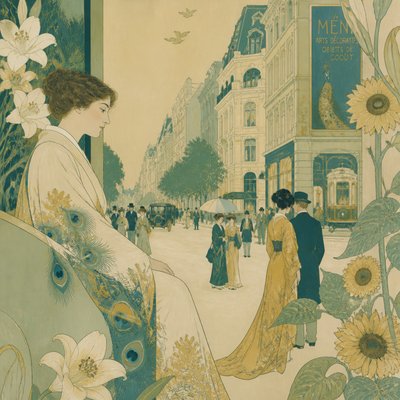
The Aesthetic Movement was a late nineteenth-century approach to art and design organized around the principle of “art for art’s sake.” Rather than prioritizing moral instruction, historical narrative or practical utility, it emphasized beauty, sensory pleasure, refined arrangement and the unity of visual experience. In painting and illustration, this often appears as languid figures, contemplative expressions, elegant interiors, ornamental plants and carefully controlled color relationships.
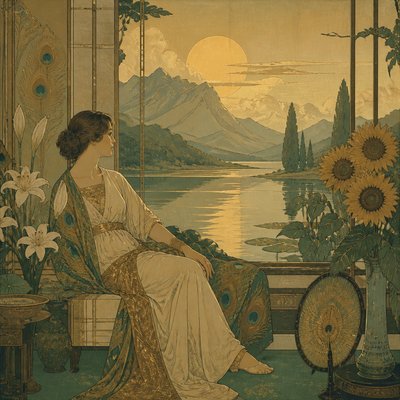
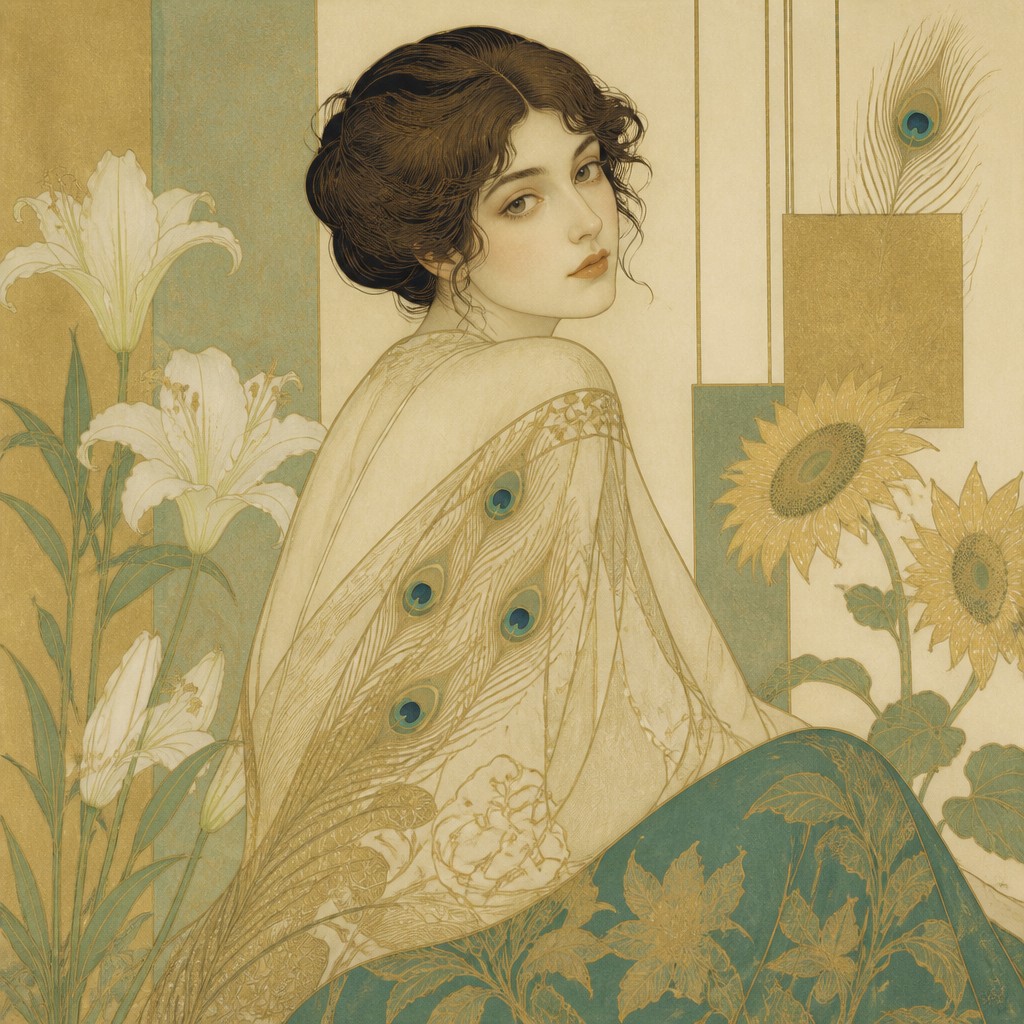
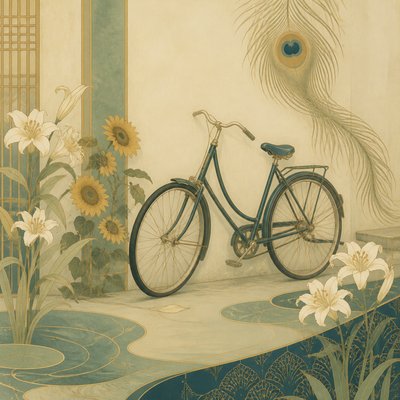
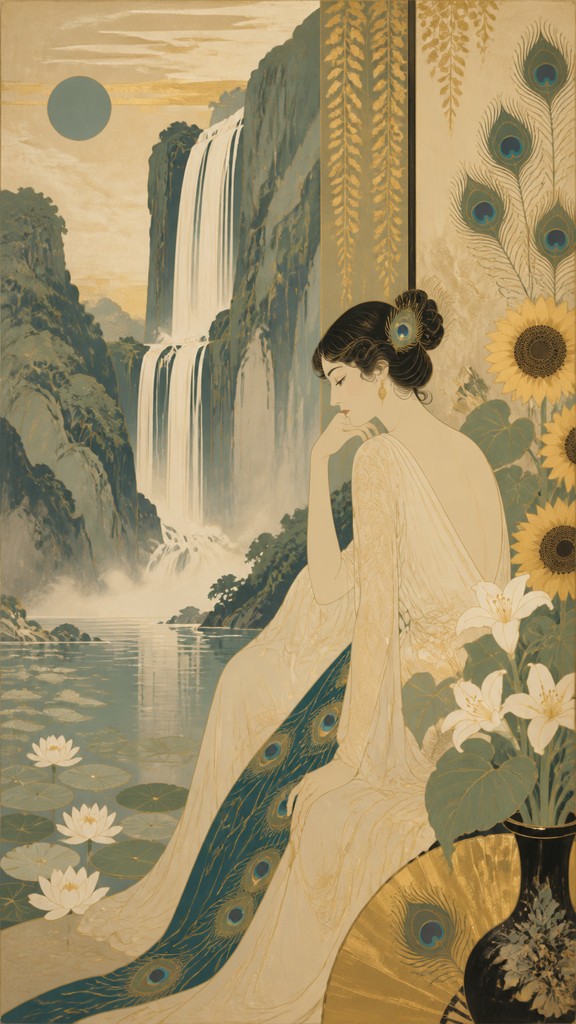
Its visual identity combines ivory, gold, sage, peacock blue-green and other subdued jewel tones with flattened perspective, asymmetrical spacing and sparse but deliberate decoration. Japanese woodblock prints, imported ceramics, textiles and screens helped encourage an interest in open compositions, patterned surfaces and the artistic value of ordinary domestic objects. The result is a style that feels still, cultivated and dreamlike, where atmosphere and tonal harmony matter more than dramatic action.
Try It On Your Photos
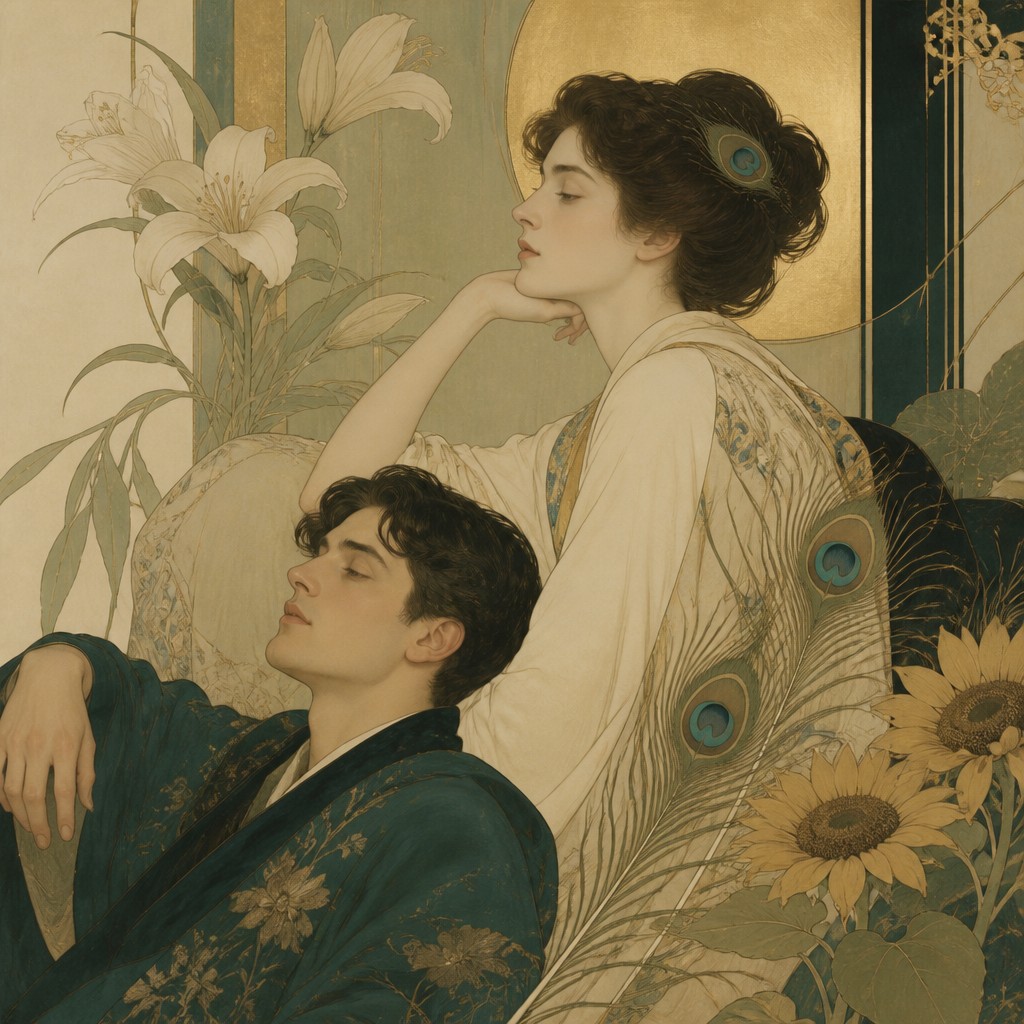
Upload any photo and convert it into Aesthetic Movement Art Style — drag the sliders to compare before and after.

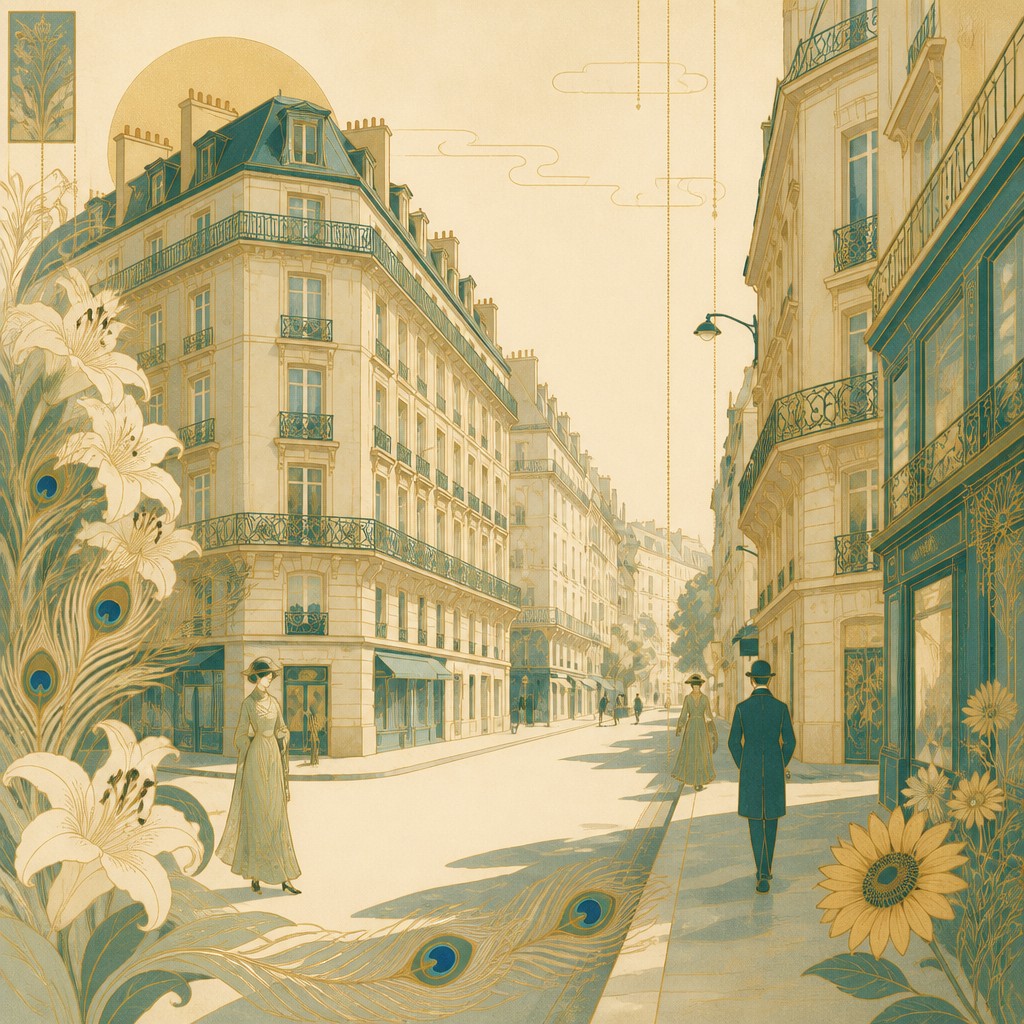

What Defines Aesthetic Movement Art Style
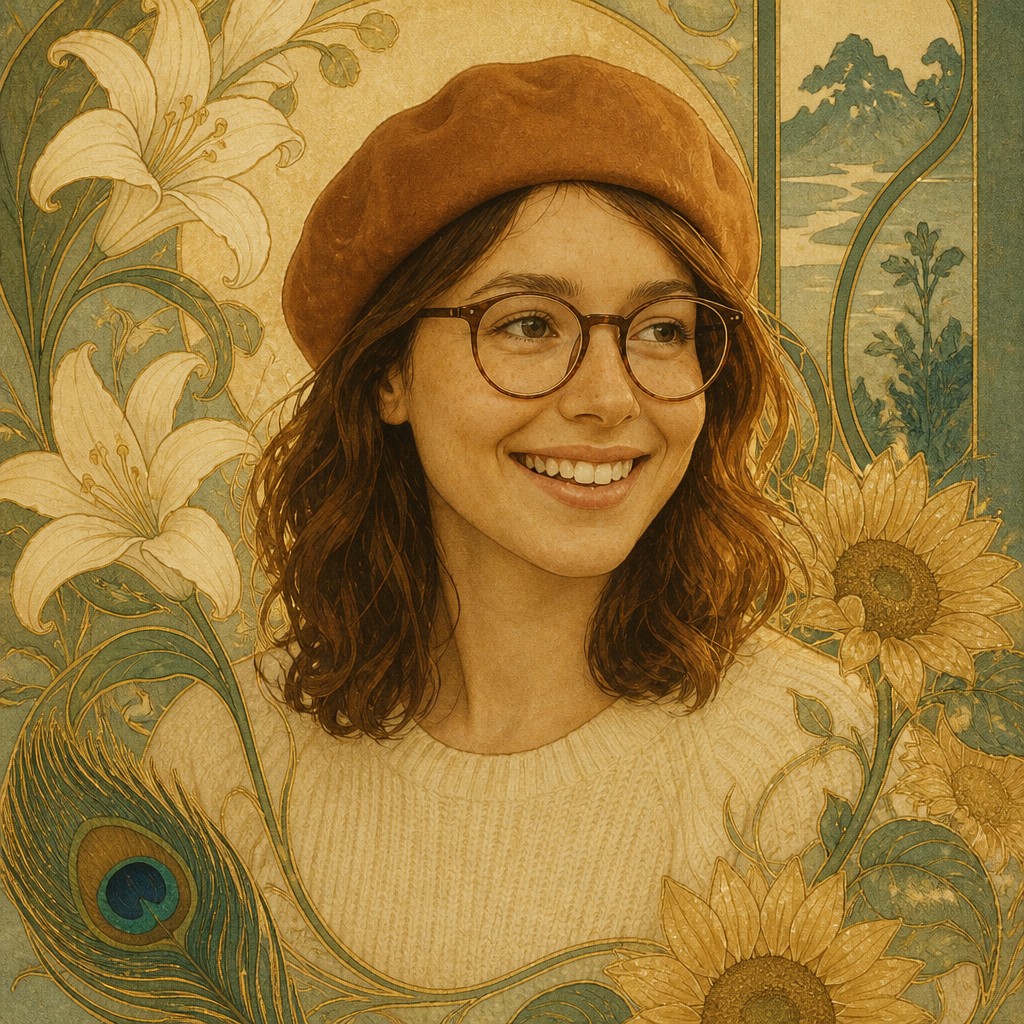
The signature details, up close
Art for art’s sake
The image treats beauty, mood and formal harmony as its central subject rather than narrative instruction or political messaging. Decorative pleasure is considered a complete artistic purpose.
Languid figures
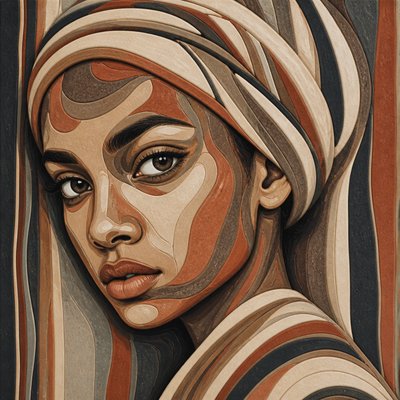
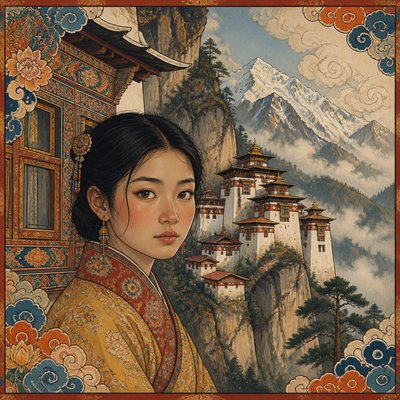
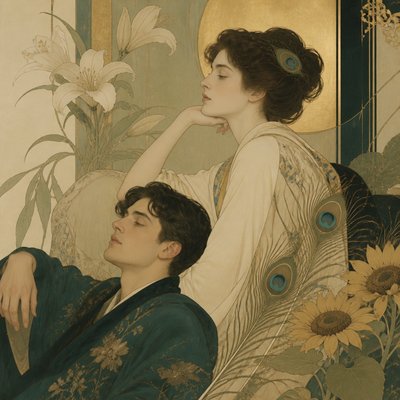
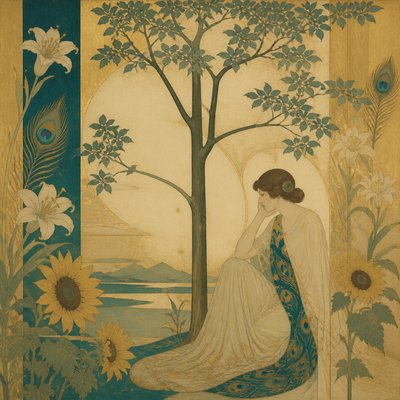
Figures tend to appear graceful, still and introspective, with elongated poses, relaxed gestures and an air of cultivated detachment. Their presence supports the composition instead of driving a dramatic plot.
Peacock-toned palette
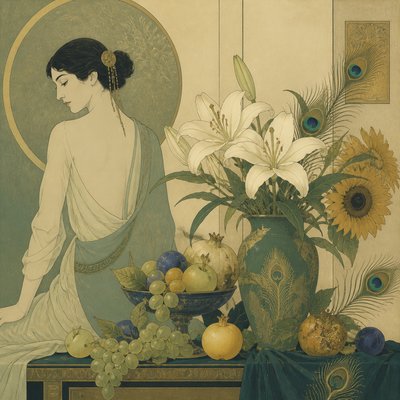
Peacock blue-green, teal, sage, ivory, muted gold and occasional deep jewel tones create a sophisticated chromatic structure. Colors are usually balanced and softened rather than pushed toward stark contrast.
Japanese-inspired flattening
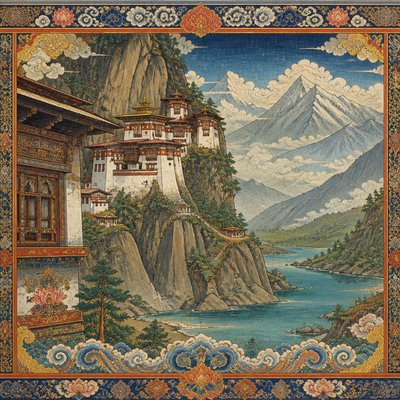
Broad areas of pattern, shallow space, cropped forms and asymmetrical placement recall the influence of Japanese prints and decorative objects on nineteenth-century Western art. Depth is suggested selectively instead of built through strict academic perspective.
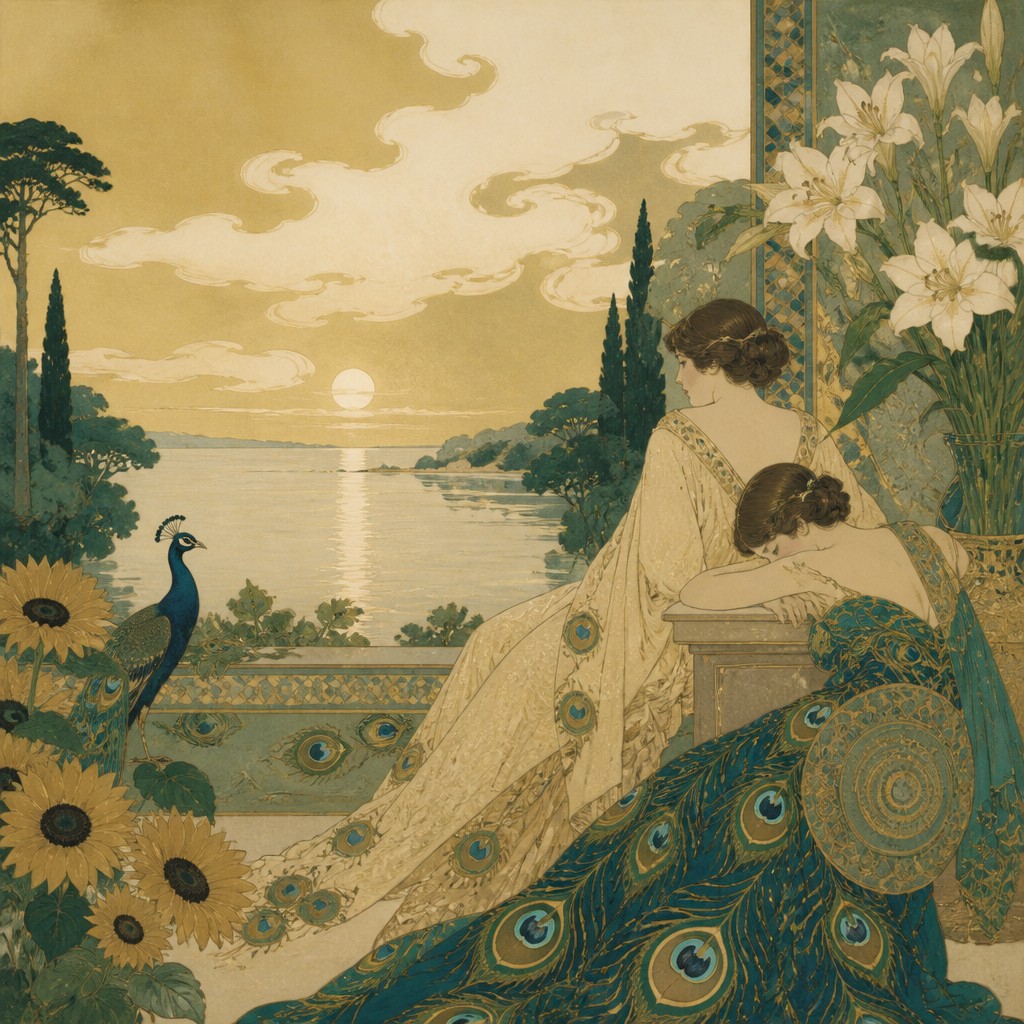
Ornamental botanical motifs
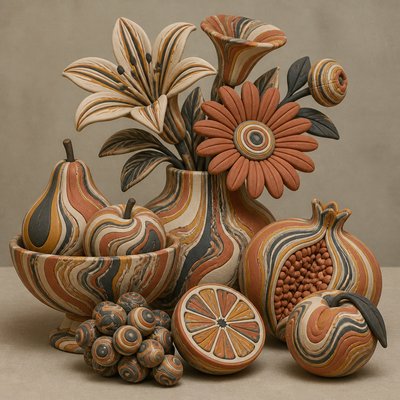
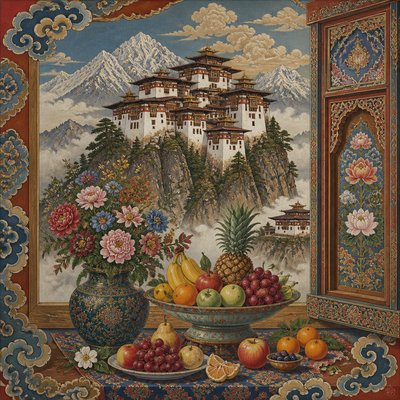
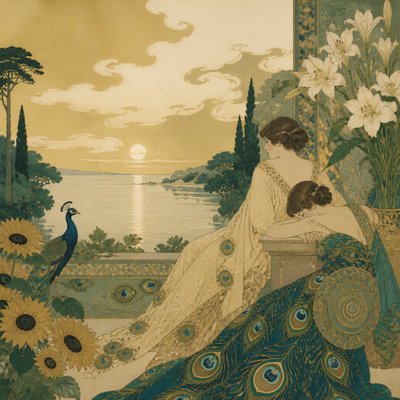
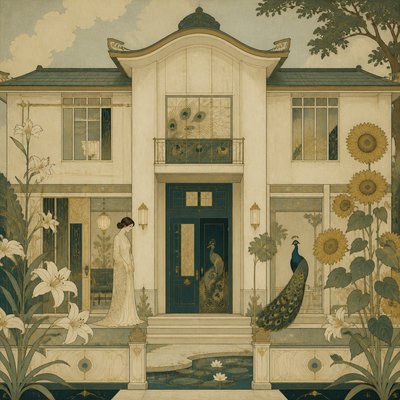
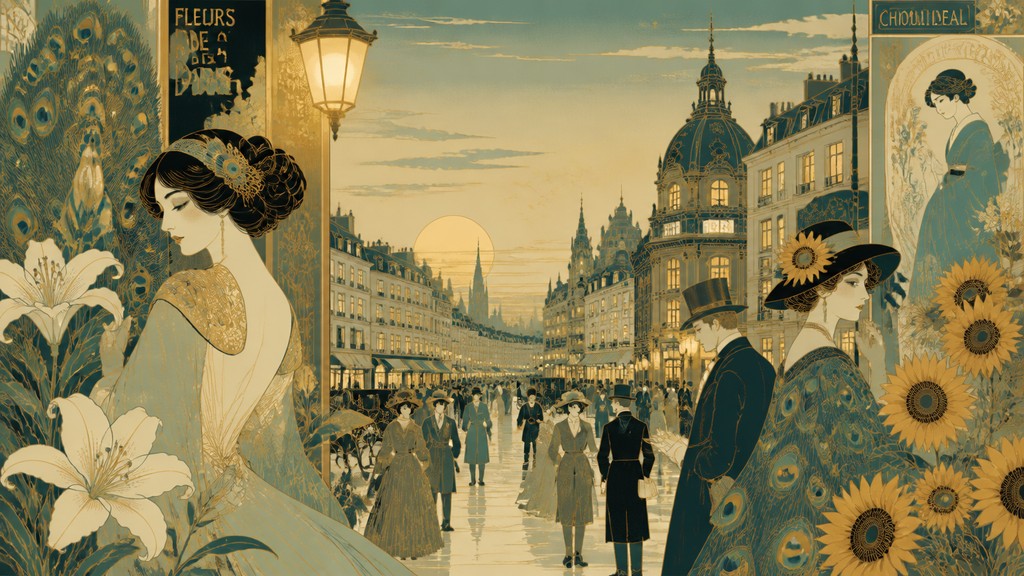
Lilies, sunflowers, peacock feathers, trailing foliage and stylized flowers provide rhythm and symbolic decoration. Plants may frame a figure, repeat across a surface or function as the primary subject.
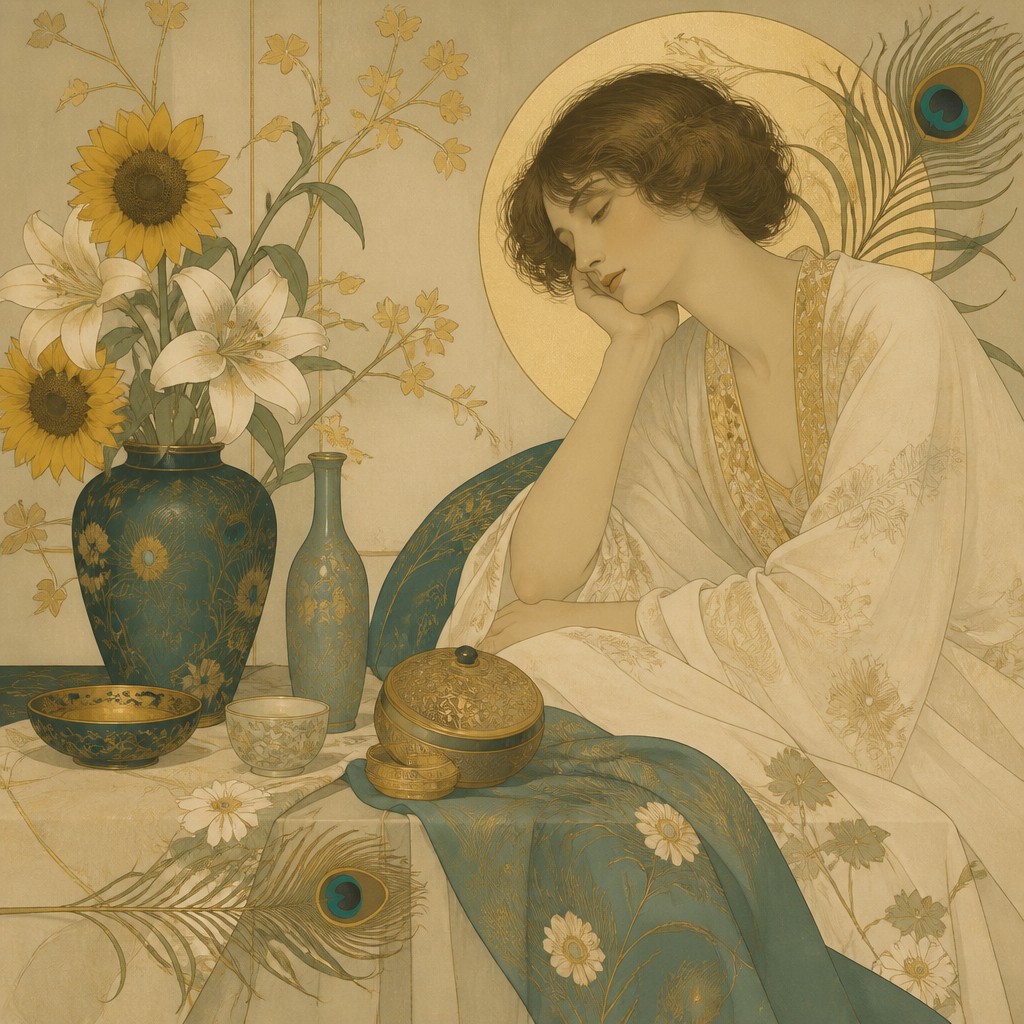
Harmonious interiors
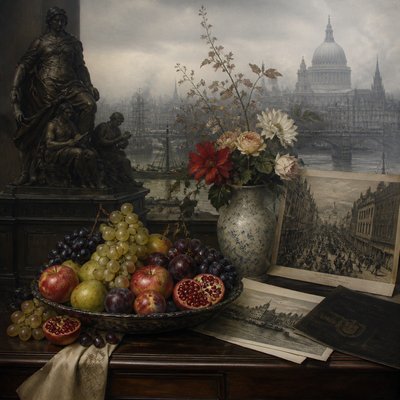
Domestic rooms, screens, textiles, ceramics and arranged furnishings create quiet settings in which color and pattern are carefully coordinated. The room often feels like a total work of art rather than a neutral backdrop.
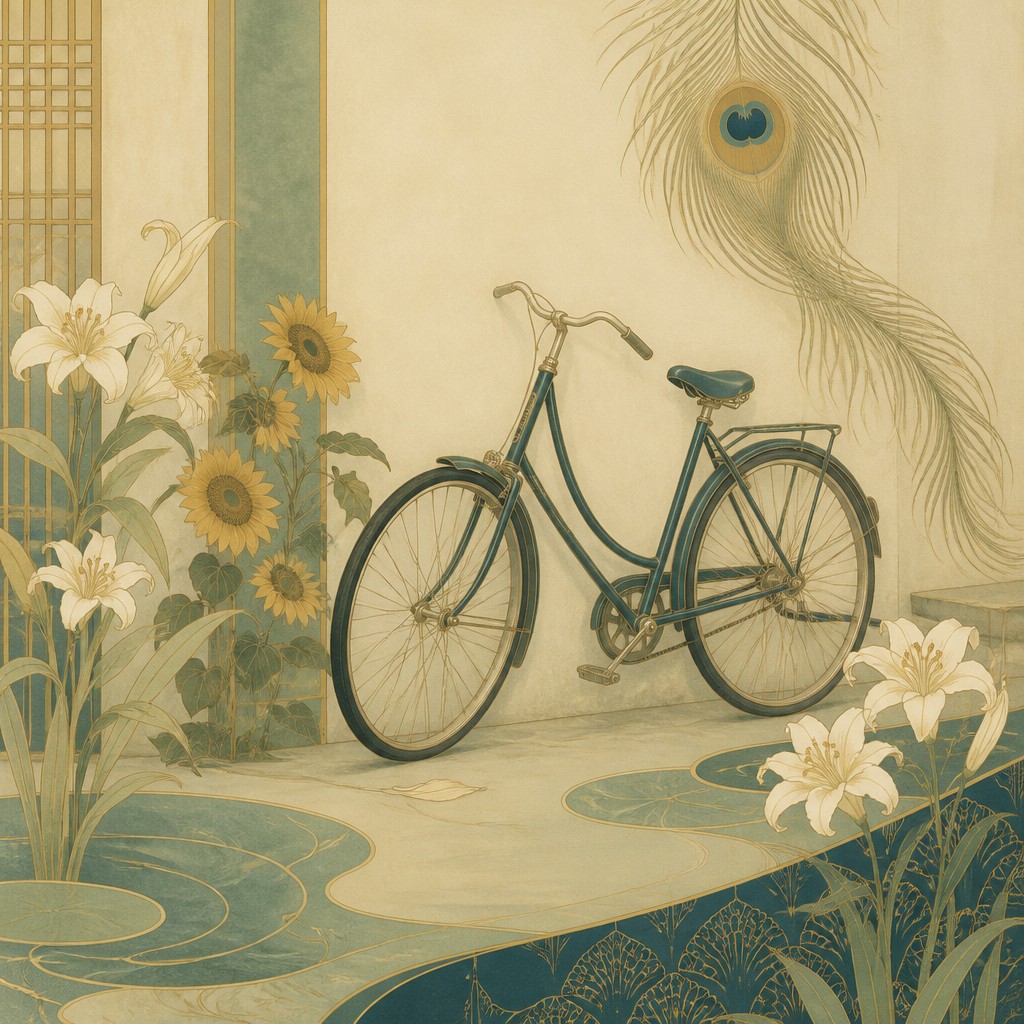
Dreamy restraint
Soft light, low visual noise and contemplative stillness produce an atmosphere of reverie. Detail is selective: a few precise textures or motifs carry the decorative impact.
Try It
Create Videos in Aesthetic Movement Art Style
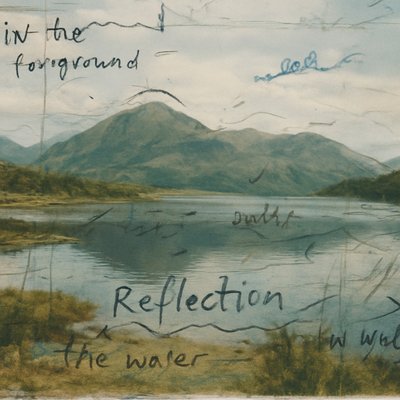
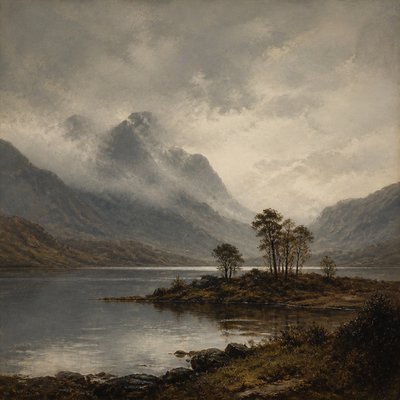
Styles aren't just for stills — describe a scene or animate an image and get a short video rendered in Aesthetic Movement. Press play to see this pond come to life.
Make a VideoAesthetic Movement Prompt Ideas
Start from an idea — each one opens the generator with the style ready to go. See all 40 Aesthetic Movement prompts →
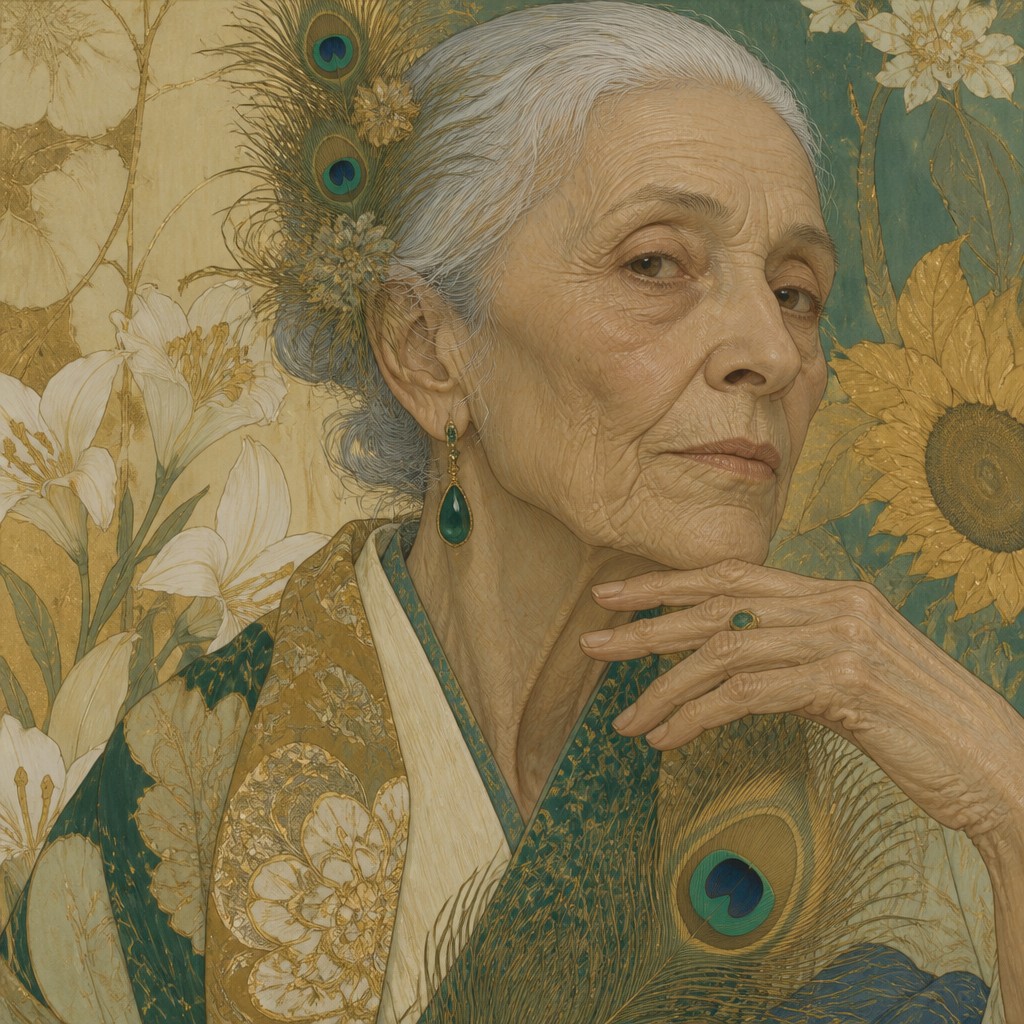
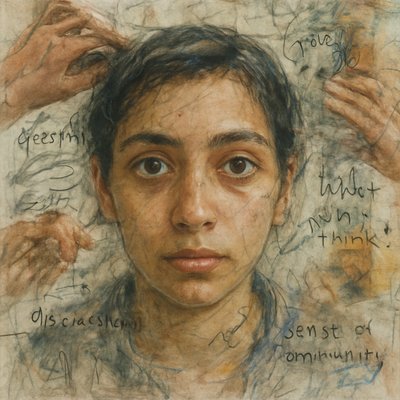
“close-up portrait of an elderly person with expressive weathered features”
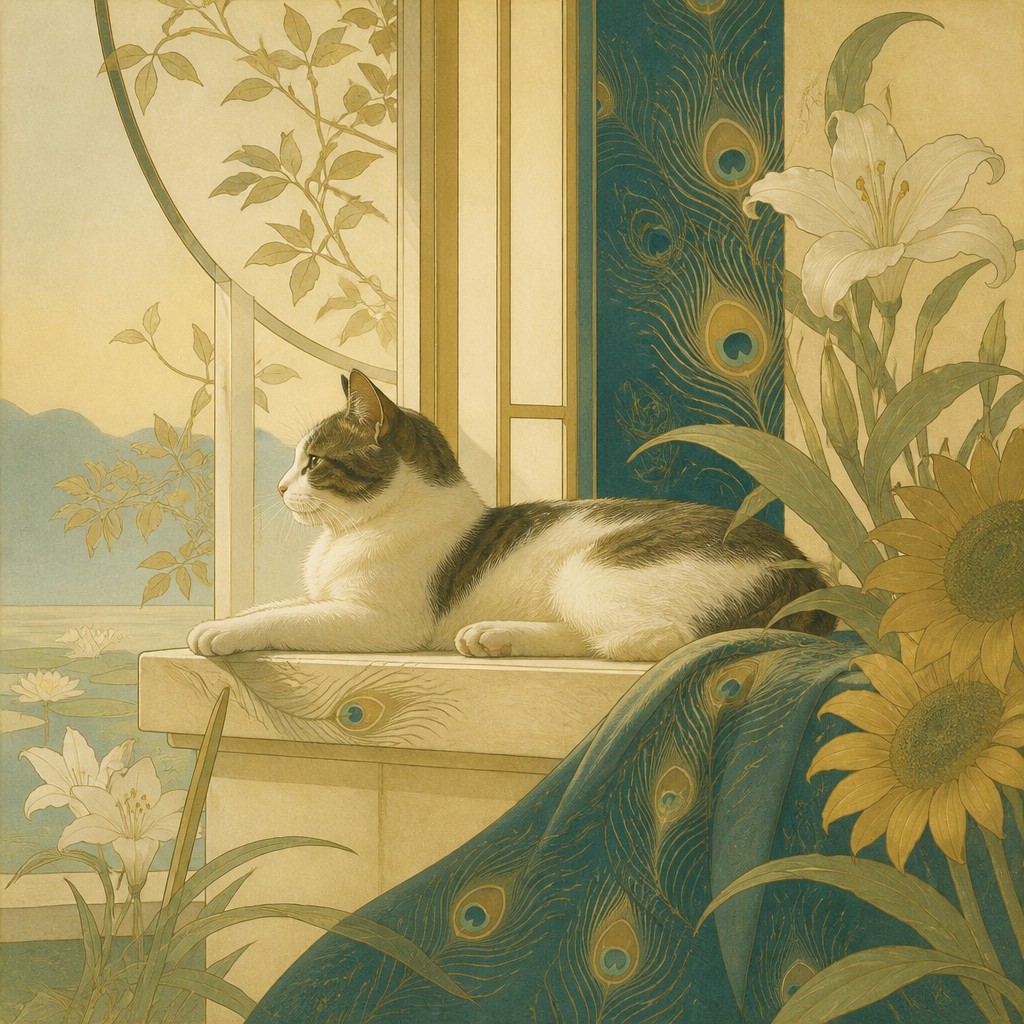
“a cat lounging in a sunlit window”
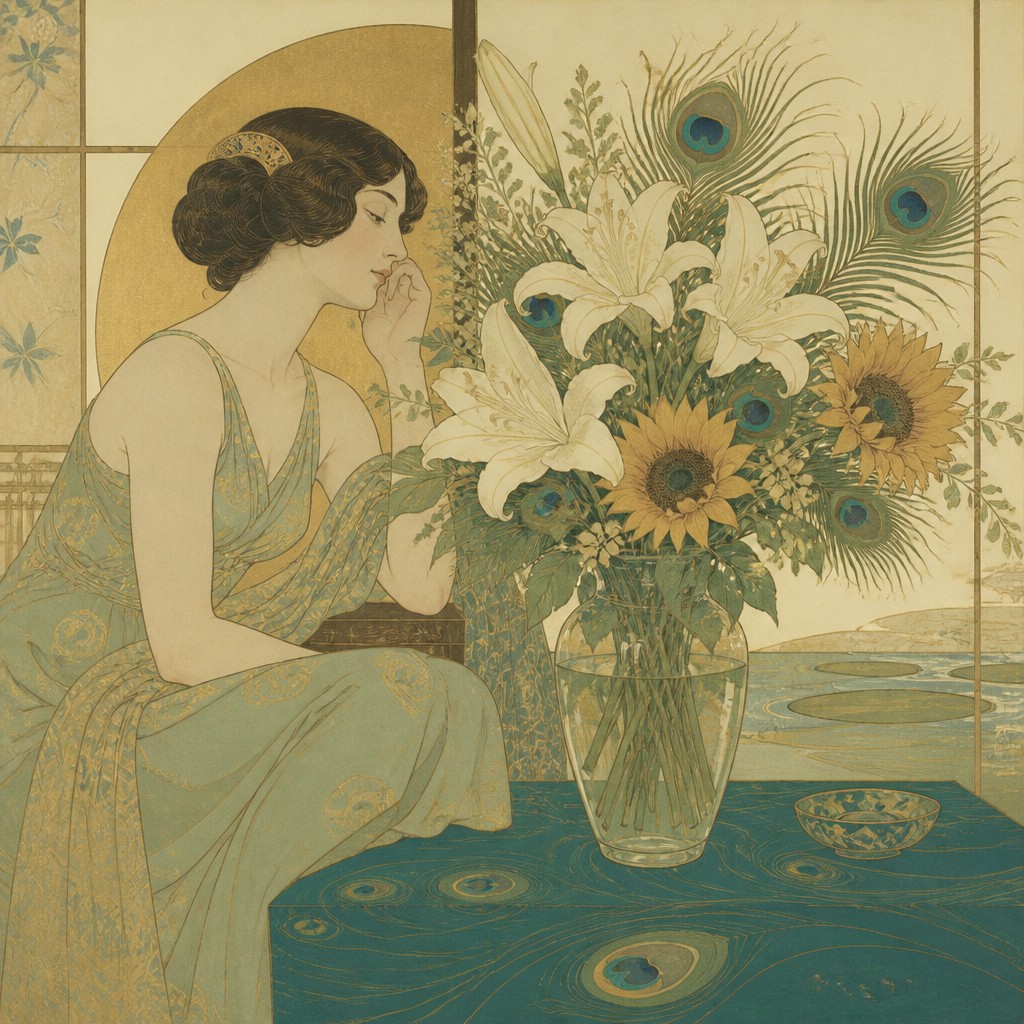
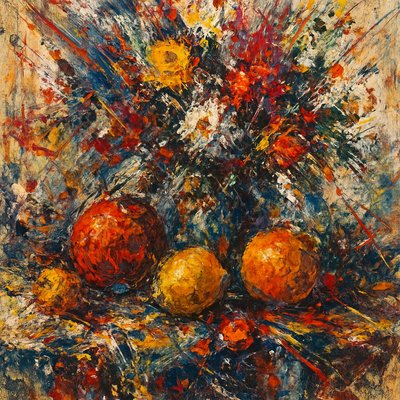
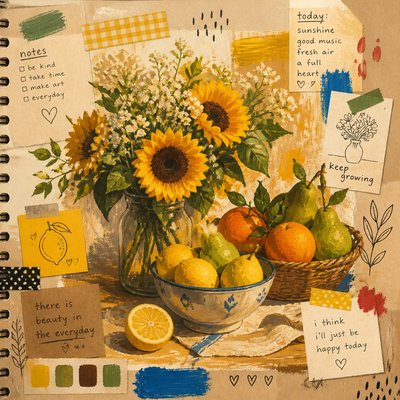
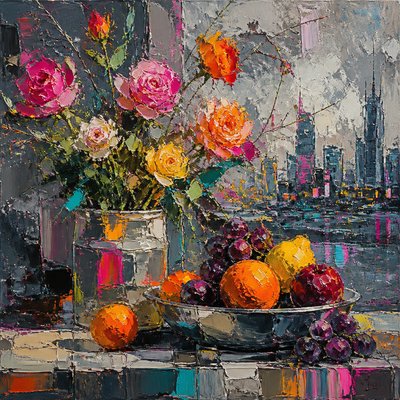
“bouquet of flowers in a glass vase”
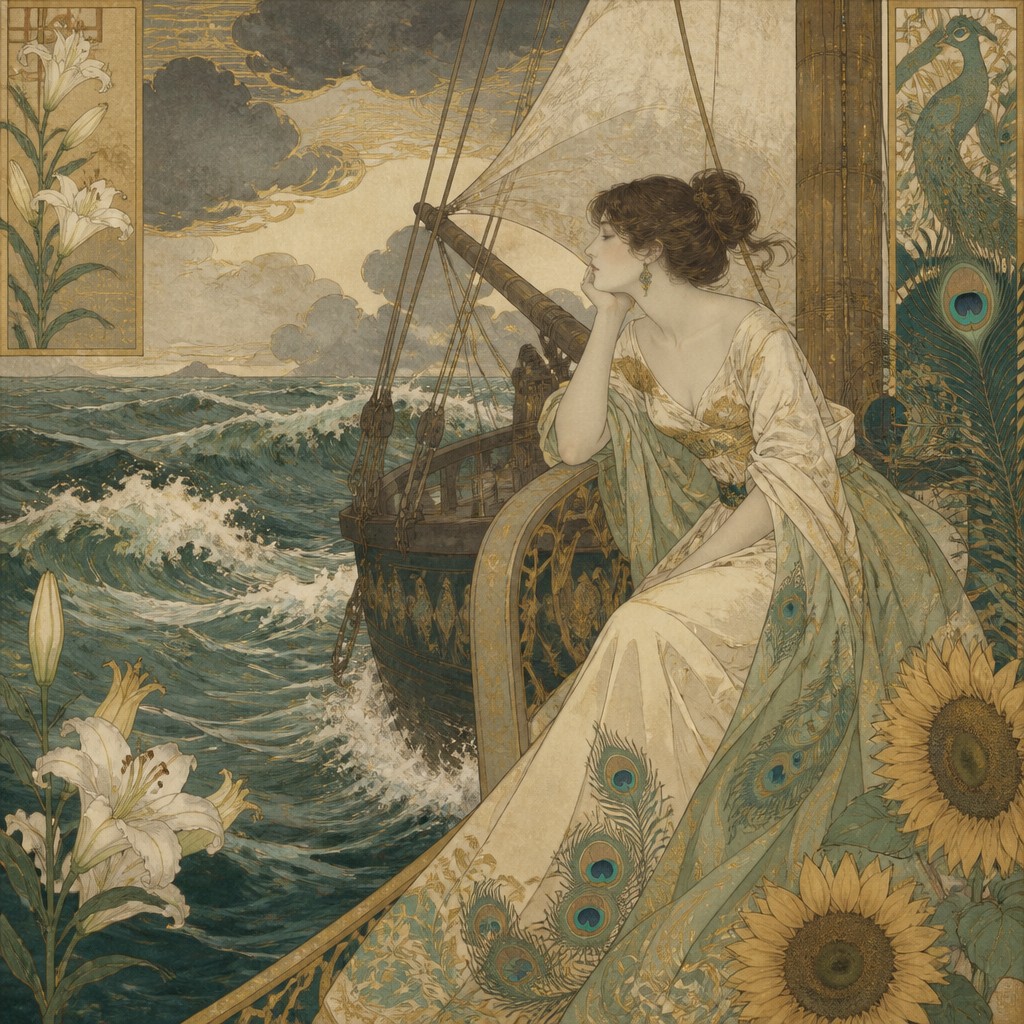
“sailing ship on a stormy sea”
How to Create Aesthetic Movement Art
Master the craft step by step — or skip straight to creating. Read the full guide →
- 1
Build a limited palette
Begin with ivory or warm cream, then add sage, muted gold and peacock blue-green as structural colors. Reserve darker teal or brown for accents so the image remains harmonious rather than theatrical.
- 2
Flatten and simplify the composition
Use shallow perspective, broad patterned areas and asymmetrical placement inspired by Japanese prints. Remove unnecessary background detail and let negative space create elegance.
- 3
Design the room as a unified artwork
Coordinate the figure, wallpaper, textiles, flowers, ceramics and furniture through repeated colors and shapes. In traditional media, establish the tonal arrangement first, then add controlled ornamental details with watercolor, gouache, tempera or decorative oil painting.
- 4
Pose for stillness
Choose a relaxed seated or standing figure with a gentle turn of the head, elongated posture and minimal gesture. Soft window light and a contemplative expression support the movement’s preference for mood over action.
- 5
Use pattern selectively
Add a few high-value motifs—such as a peacock feather screen, lilies or a floral textile—rather than covering every surface. Repetition should create visual rhythm while preserving quiet areas for the eye to rest.
- 6
Guide digital or prompt-based creation precisely
Specify the subject, interior, restrained palette, flattened composition, botanical motifs, lighting and emotional tone in that order. For image-to-image work, preserve the original pose or structure while reducing harsh contrast, simplifying perspective and harmonizing the colors.

The Story
History & Origins of Aesthetic Movement
The Aesthetic Movement developed primarily in Britain during the 1860s and expanded through painting, decorative arts, interior design, illustration, literature and dress during the 1870s and 1880s. It emerged partly in reaction to Victorian industrial mass production, academic conventions and the expectation that art should communicate a clear moral or social lesson. Its advocates promoted beauty, craftsmanship and the integration of art into everyday surroundings.
The movement declined as a unified cultural force toward the end of the nineteenth century, but its principles continued through Art Nouveau, modern interior design, poster art and later decorative illustration. Contemporary interpretations often amplify its recognizable motifs—peacock feathers, lilies, sunflowers, ornate rooms and elegant figures—while simplifying them through digital compositing, flattened forms and restrained palettes.
Influences: The style is rooted in the nineteenth-century British Aesthetic Movement and draws on Japanese ukiyo-e prints, East Asian decorative screens, ceramics and textiles, as well as Pre-Raphaelite linearity, Victorian interior design and the broader Arts and Crafts concern with craftsmanship. Later echoes appear in Art Nouveau ornament, Symbolist mood, decorative poster design and contemporary maximalist interiors. Its modern digital form often combines these historical references with editorial portraiture, collage-like flattening and curated color grading.
Frequently Asked Questions
What defines the Aesthetic Movement art style?
It is defined by the pursuit of beauty, sensory refinement and formal harmony as ends in themselves. Common features include languid figures, elegant interiors, flattened compositions, botanical ornament and a palette of ivory, sage, gold and peacock blue-green.
When did the Aesthetic Movement develop?
The movement developed chiefly in Britain from the 1860s through the 1880s, with related ideas continuing into the 1890s. It crossed painting, illustration, decorative arts, interior design, literature, clothing and domestic objects.
How is it different from Art Nouveau?
The Aesthetic Movement places particular emphasis on refined tonal harmony, decorative interiors and the principle of art for art’s sake. Art Nouveau, which followed and overlapped with it, is more strongly identified with flowing organic lines, whiplash curves and integrated architectural ornament.
Is the Aesthetic Movement the same as Victorian art?
No. It developed within the Victorian period but reacted against some Victorian expectations that art should be moral, instructive or historically significant. Aesthetic works may share the period’s furnishings and materials while pursuing decorative pleasure and contemplative mood instead.
What materials and techniques suit this style?
Watercolor, gouache, tempera, decorative oil painting, colored pencil, collage and digital painting all work well. Use a limited palette, softened edges, deliberate pattern, selective detail and shallow space; traditional work benefits from establishing the overall tonal arrangement before adding ornament.
Where is this style commonly used today?
It appears in editorial illustration, portrait art, book covers, wallpaper, textile design, interiors, fashion imagery, packaging and atmospheric digital artwork. Its emphasis on coordinated color and decorative surfaces also makes it effective for room scenes and still lifes.
Create your first Aesthetic Movement artwork
Describe anything — or upload a photo — and see it in Aesthetic Movement Art Style in seconds.
Related Styles
Discover similar art styles