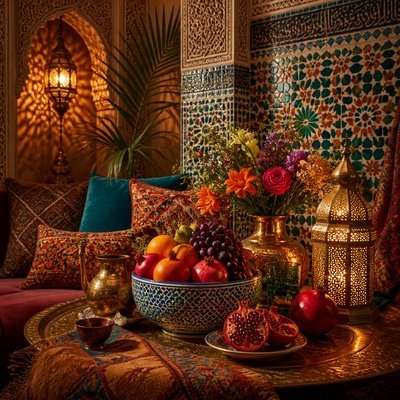
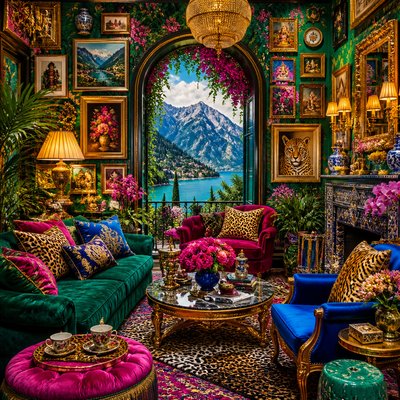
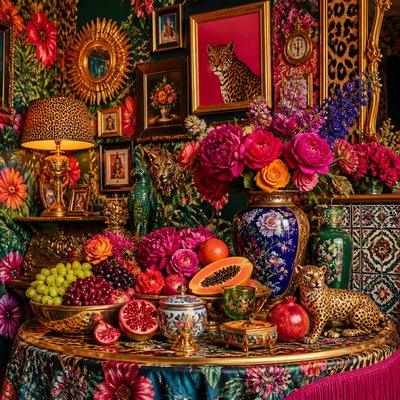
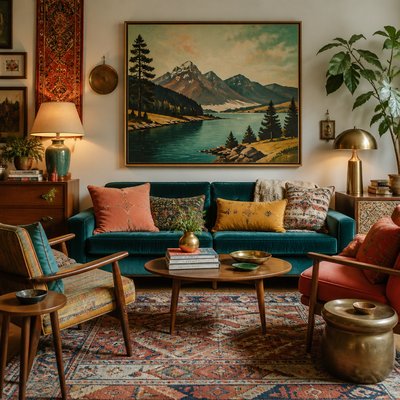
Art Deco Interior Design
Glamorous 1920s interiors with geometric ornament, lacquered surfaces, metallic accents, symmetry, and jewel-toned luxury.
Instantly rendered in Art Deco Interior Design — or transform a photo

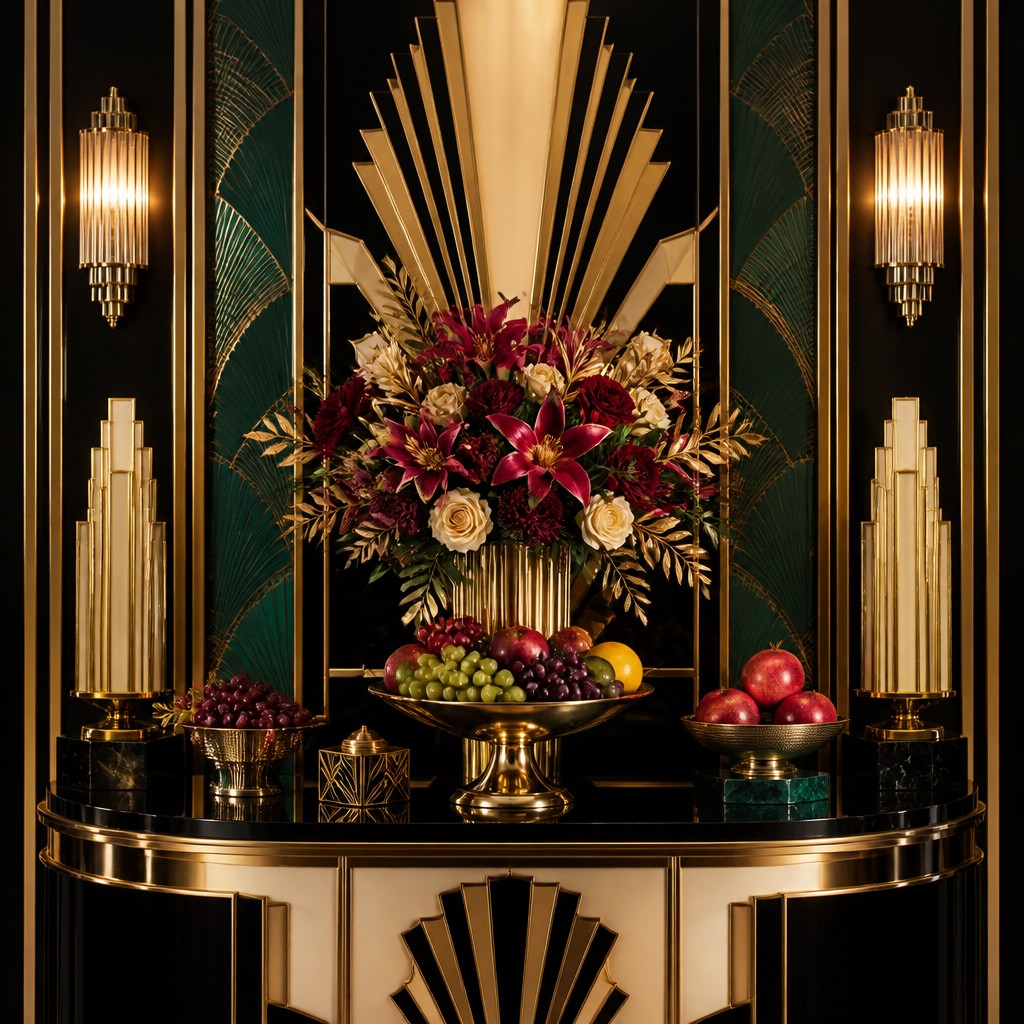
Art Deco Interior Design Gallery
Tap any artwork to explore it

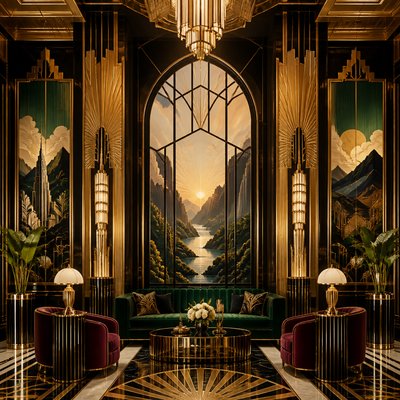
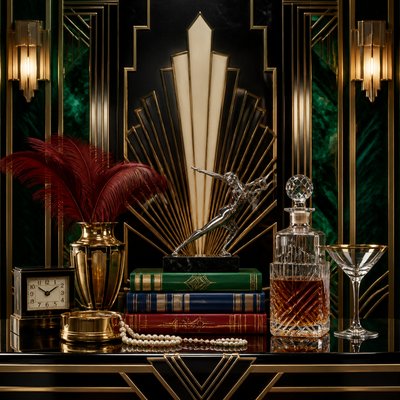
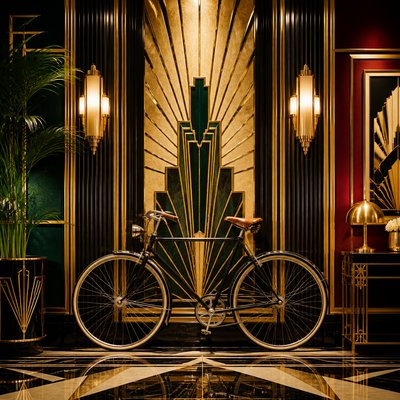
What is Art Deco Interior Design?
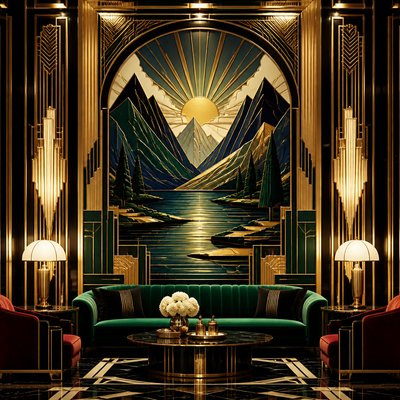
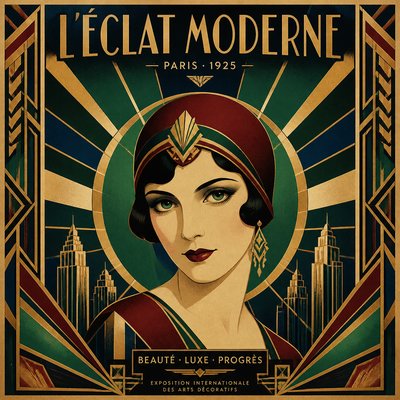
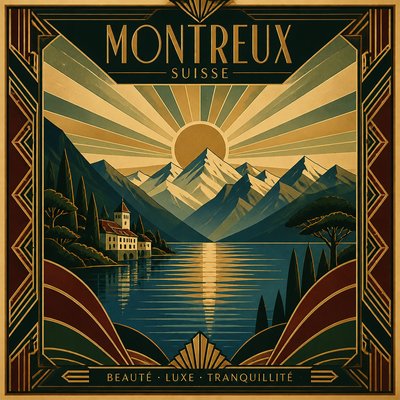
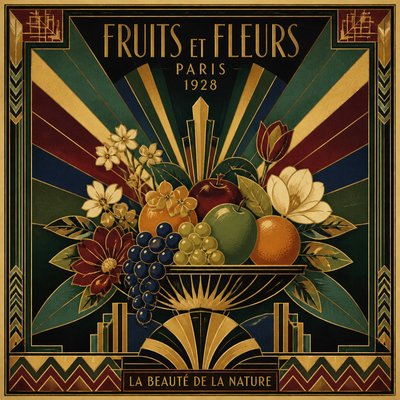
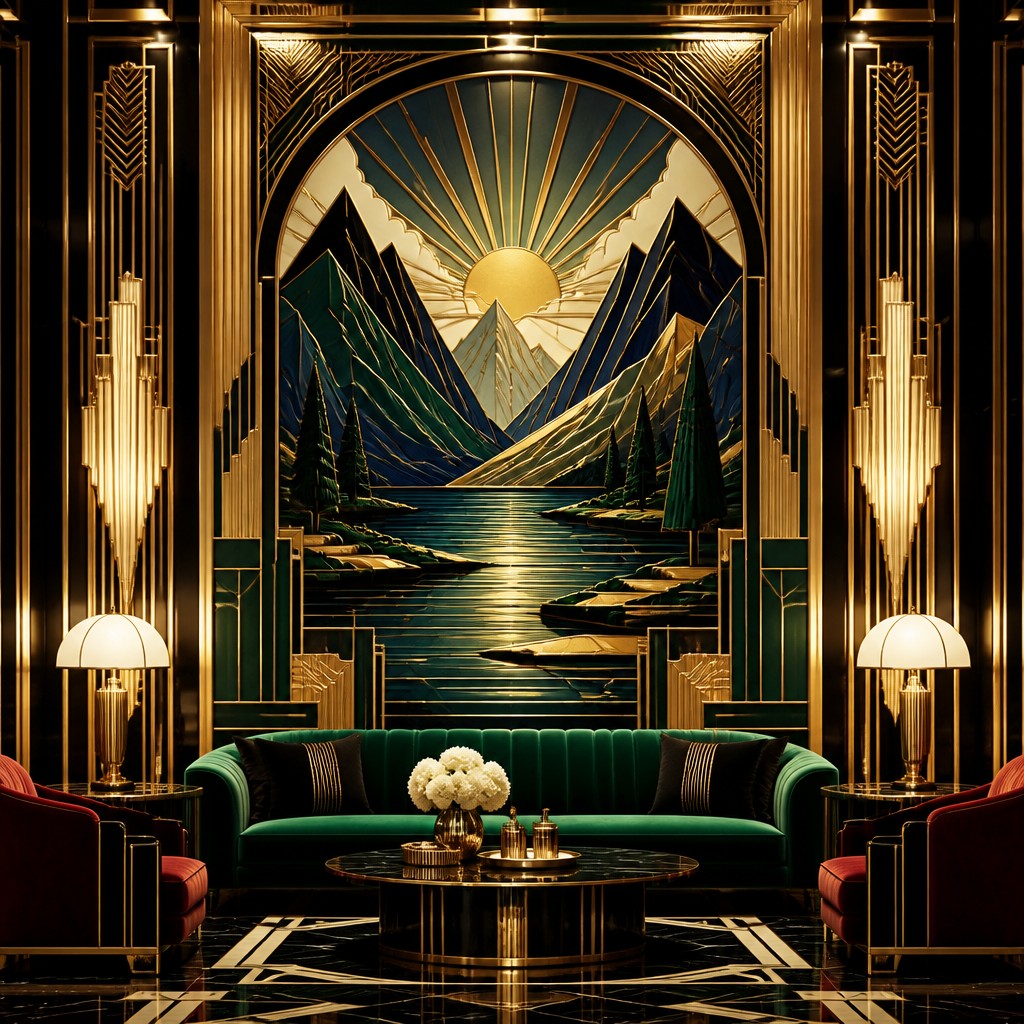
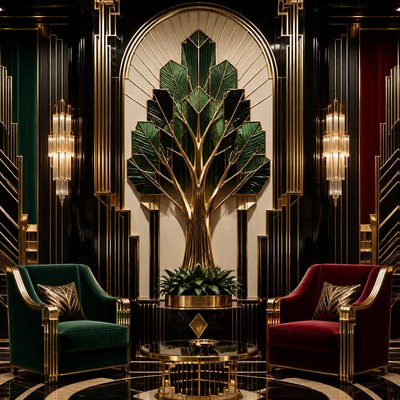
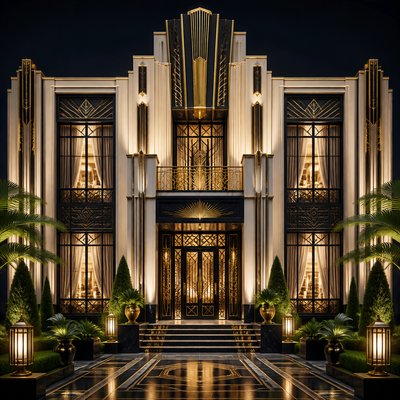
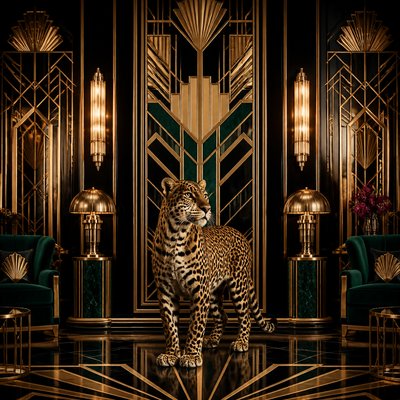
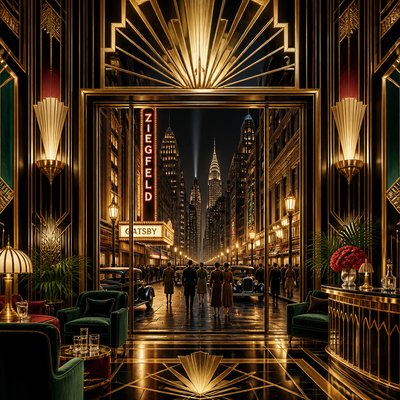
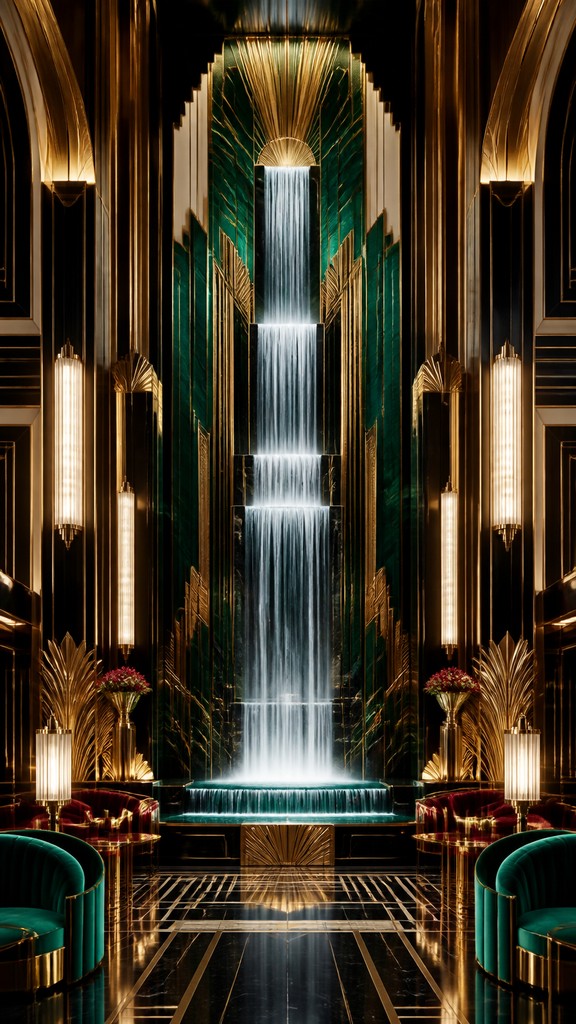
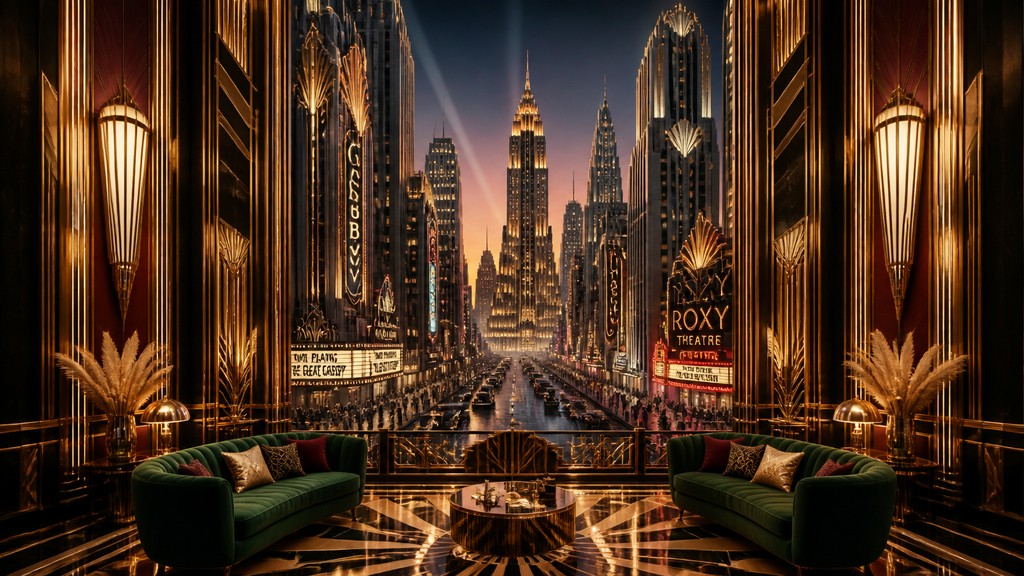
Art Deco interior design is a decorative style associated with the 1920s and 1930s, defined by geometric ornament, polished materials, and a sense of theatrical luxury. In interiors, it favors strong symmetry, vertical emphasis, stepped forms, chevrons, sunbursts, zigzags, and streamlined silhouettes, often combined with rich woods, lacquer, marble, glass, chrome, brass, and velvet.
The style looks the way it does because it was shaped by modernity, machine-age precision, and a desire for glamour after the austerity of World War I. It balances lavish surface decoration with disciplined geometry, producing rooms that feel both opulent and controlled: a visual language of elegance, speed, and urban sophistication.

Try It On Your Photos
Upload any photo and convert it into Art Deco Interior Design — drag the sliders to compare before and after.
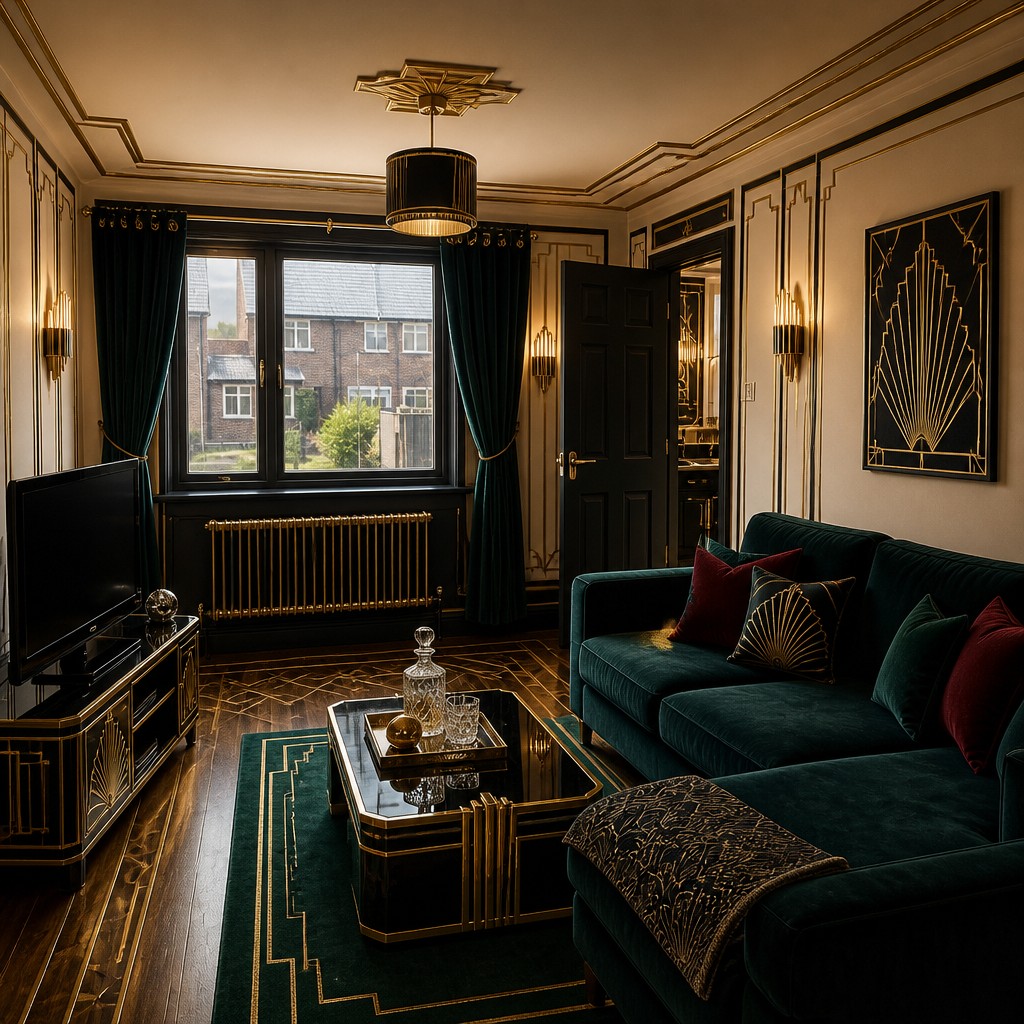
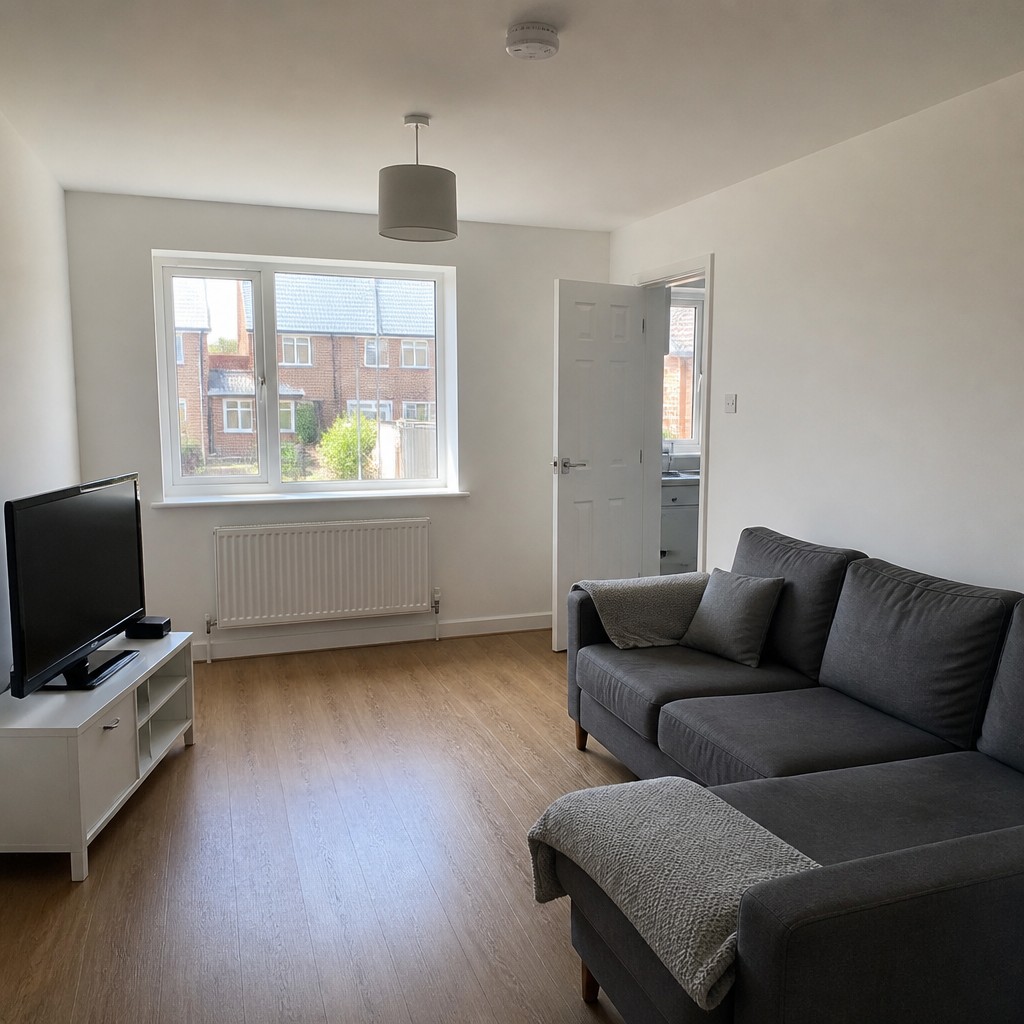


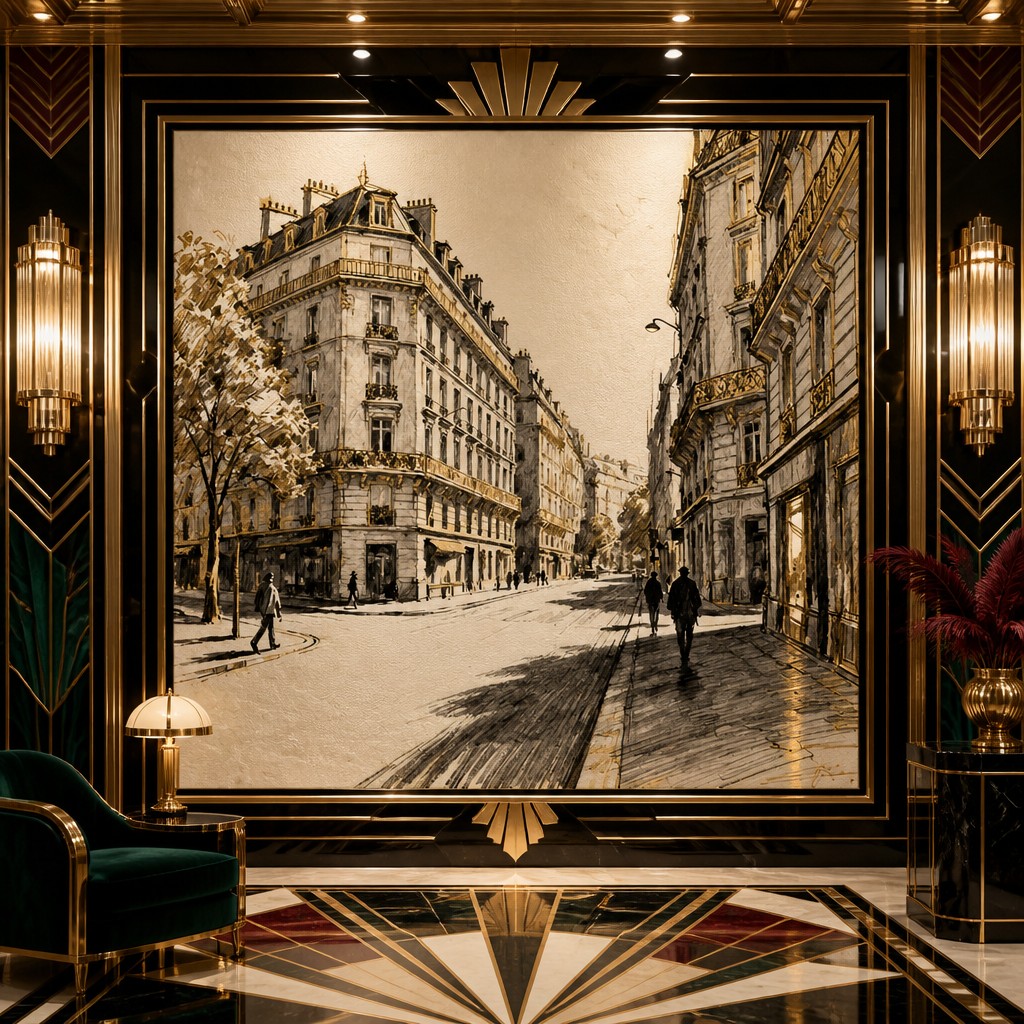

What Defines Art Deco Interior Design
The signature details, up close
Geometric ornament
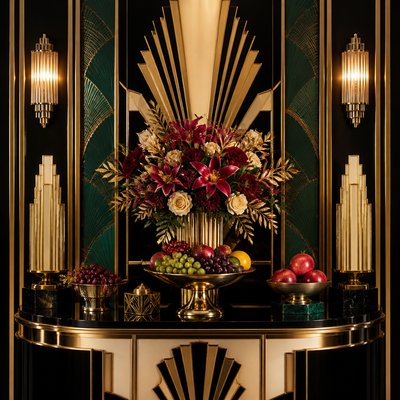
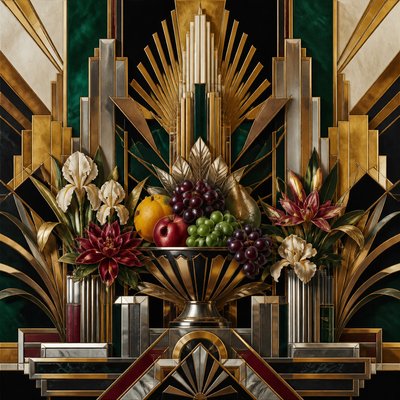
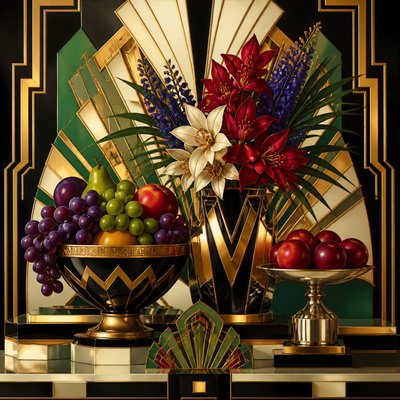
Chevrons, sunbursts, zigzags, stepped forms, and fan motifs are core decorative elements. These shapes create visual rhythm and a sense of order across walls, ceilings, furniture, and textiles.
Luxurious materials
The style commonly uses marble, ebony, lacquer, mirrored glass, chrome, brass, polished wood, velvet, and silk. Materials are chosen for their sheen, tactility, and association with wealth.
Symmetry and verticality
Rooms are typically arranged with balanced compositions and strong central axes. Tall furniture, elongated paneling, and repeated vertical lines give spaces a formal, upward pull.
High-contrast color palettes
Common schemes combine black, ivory, gold, silver, emerald, sapphire, ruby, and deep burgundy. Contrast is important, whether through dramatic pairings or jewel tones set against dark grounds.
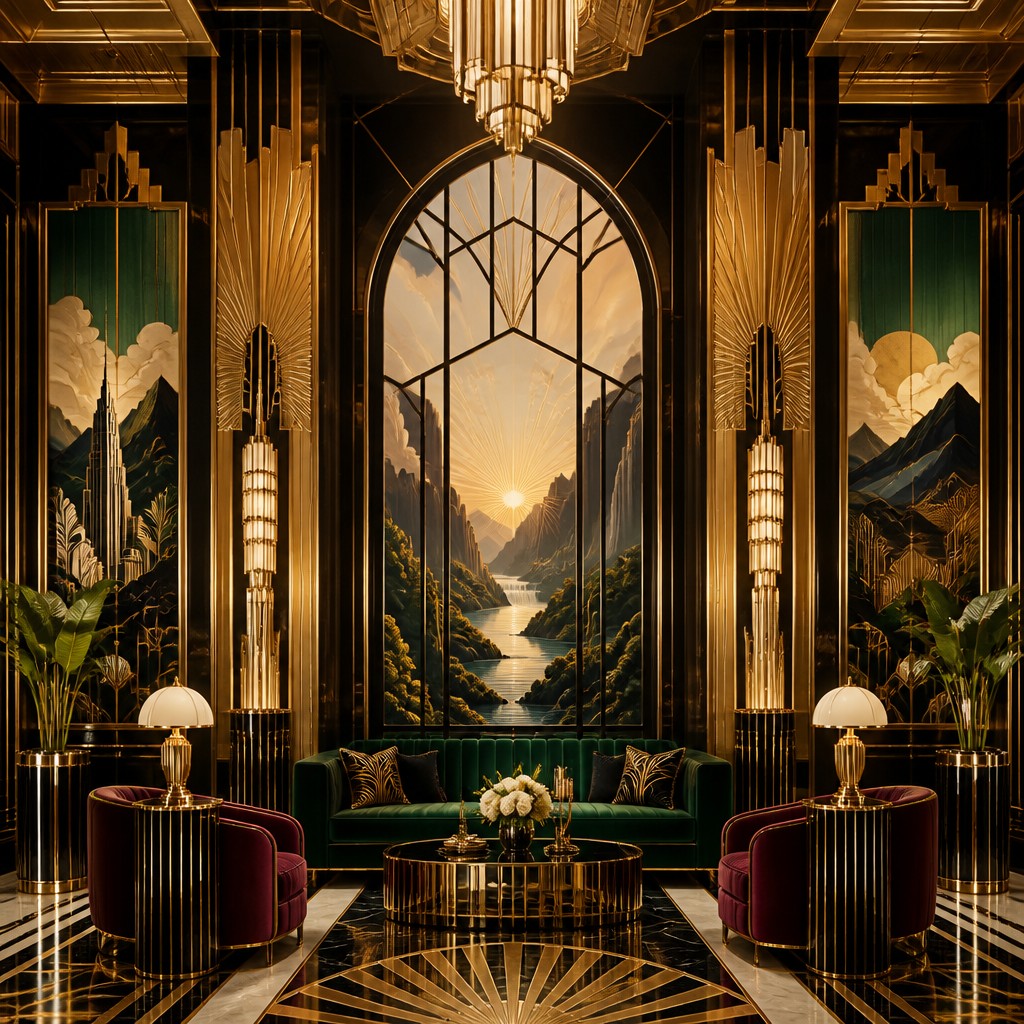
Reflective and layered surfaces
Glossy finishes, mirrors, lacquer, metallic trim, and glass amplify light and add depth. These are often offset by matte velvet or textured upholstery to keep the room from feeling visually flat.

Theatrical elegance
Lighting, furniture, and ornament often create a staged, glamorous atmosphere. The result is less about casual comfort than about cultivated display and composed drama.
Try It
Create Videos in Art Deco Interior Design
Styles aren't just for stills — describe a scene or animate an image and get a short video rendered in Art Deco Interior Design. Press play to see this pond come to life.
Make a VideoArt Deco Interior Design Prompt Ideas
Start from an idea — each one opens the generator with the style ready to go. See all 40 Art Deco Interior Design prompts →

“close-up portrait of an elderly person with expressive weathered features”
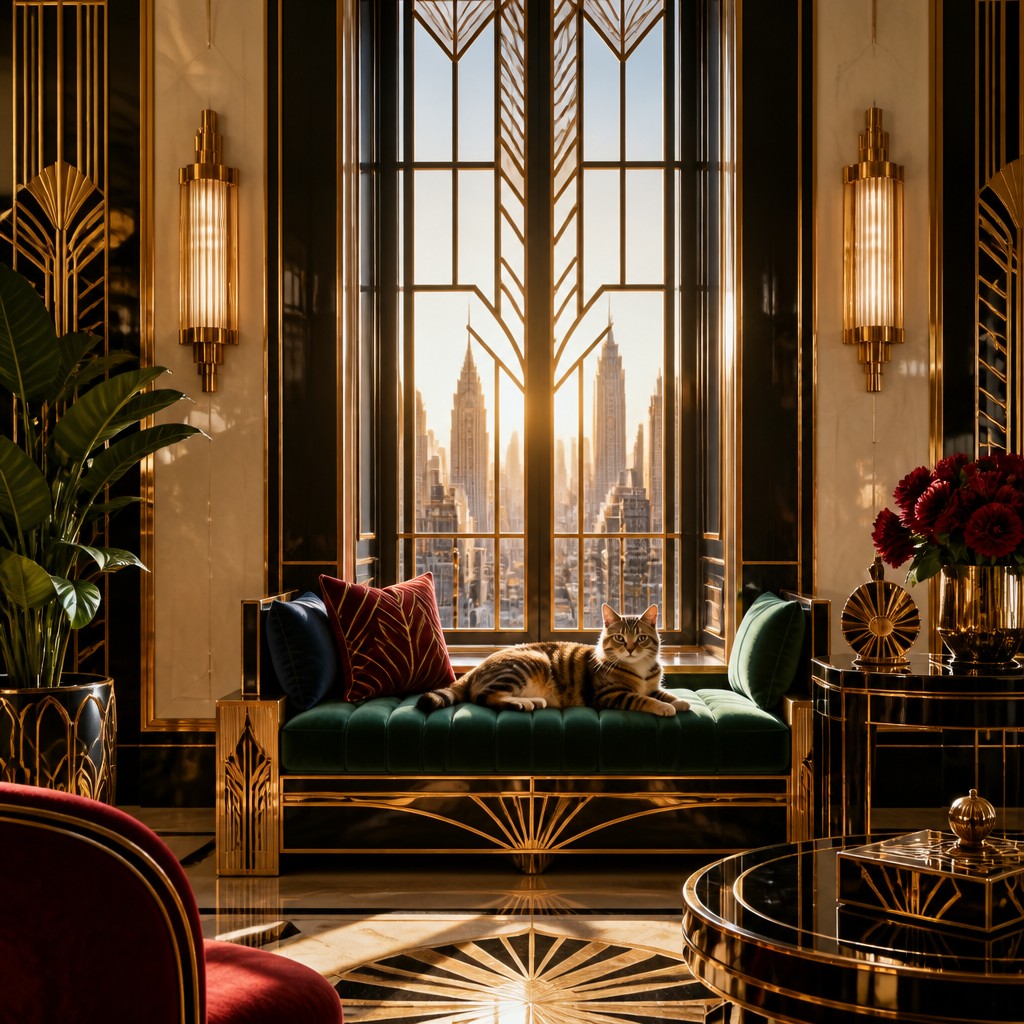
“a cat lounging in a sunlit window”
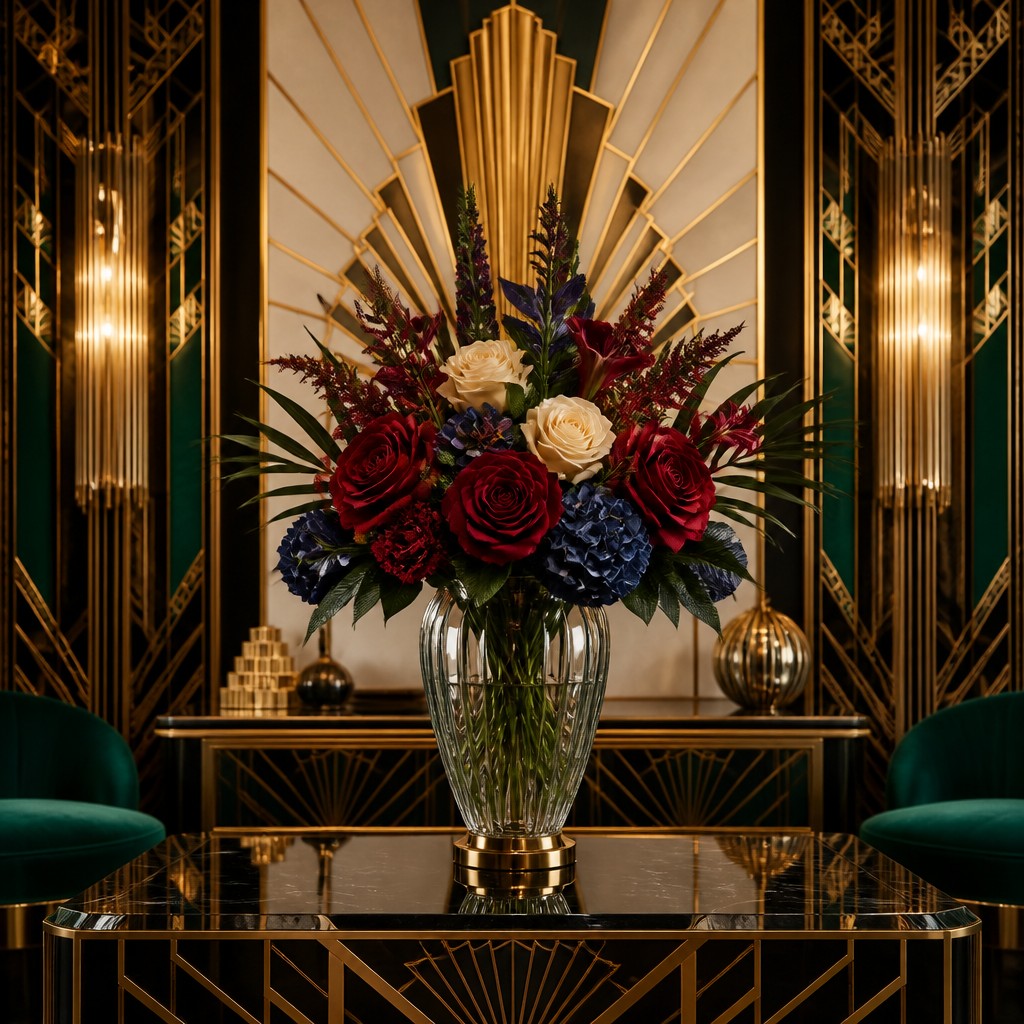
“bouquet of flowers in a glass vase”
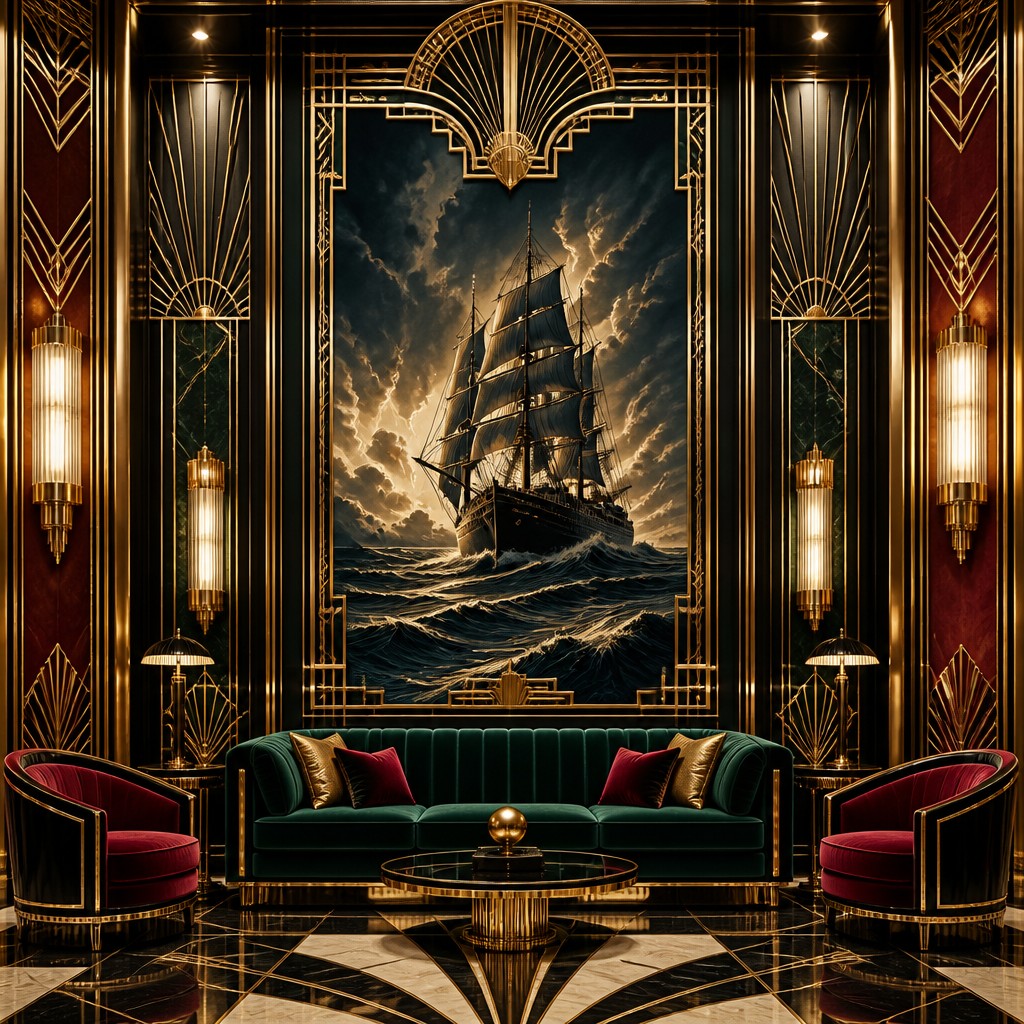
“sailing ship on a stormy sea”
How to Create Art Deco Interior Design Art
Master the craft step by step — or skip straight to creating. Read the full guide →
- 1
Build the room around a strong axis
Start with a symmetrical plan or a centered focal point such as a fireplace, console, headboard, or mirrored wall. Use repeating vertical elements—pilasters, paneling, tall lamps, or curtain drapes—to reinforce the style's formal structure.
- 2
Use geometric ornament sparingly but decisively
Introduce chevrons, stepped borders, sunbursts, and fan motifs in rugs, wallpapers, inlays, or light fixtures rather than everywhere at once. A few precise motifs are more convincing than a clutter of unrelated patterns.
- 3
Balance sheen with softness
Pair reflective materials such as brass, chrome, glass, and lacquer with plush textiles like velvet, satin, or mohair. In digital work, emphasize sharp highlights and controlled reflections; in traditional work, use clean edges and layered contrasts to suggest polished surfaces.
- 4
Choose a restrained but rich palette
Favor black, ivory, and metallics as a base, then add jewel tones for drama. When creating prompts, specify both the architecture and the materials—for example, mirrored panels, brass trim, velvet seating, and geometric floor inlay.
- 5
Design lighting for spectacle
Use chandeliers, sconces, uplighting, or spot-lit accents to catch metallic surfaces and create contrast. For image generation, include words like dramatic lighting, glossy reflections, and theatrical ambiance to preserve the style's polished look.
- 6
Reference the period without copying a single room
Combine period-appropriate furniture silhouettes, ornament, and finishes into a coherent interior rather than reproducing a specific historic example. If generating digitally, prompt for '1920s-inspired interior' plus material and motif details; if painting or rendering manually, block in geometry first and refine ornament second.
The Story
History & Origins of Art Deco Interior Design
Art Deco emerged in France in the years before World War I and became internationally prominent after the Exposition Internationale des Arts Décoratifs et Industriels Modernes in Paris in 1925, from which the style later took its name. It spread through architecture, interiors, furniture, textiles, graphic design, and decorative arts during the 1920s and 1930s, especially in urban centers in Europe, the United States, and beyond.
The style drew on multiple sources: Cubist geometry, the streamlined aesthetics of modern engineering, exoticized references to ancient Egyptian, Mesoamerican, and Asian ornament, and the luxury traditions of fine furniture and handcrafted decorative arts. In interior design, it developed as a prestigious, modern alternative to older historicist styles, combining artisanal richness with the visual discipline of the machine age.
Influences: Art Deco interior design is closely related to the broader Art Deco movement in architecture and decorative arts, and it also overlaps with Cubist geometry, machine-age modernism, and luxe historicism. In the visual arts, its emphasis on stylized form and ornament can be compared with the flattened geometry of Cubism, while its appetite for glamour and decorative display connects it to the design cultures of the interwar period; among canonical figures associated with the broader movement are leading French furniture designers, prominent French metalworkers, and the graphic work of a major French poster designer.
Frequently Asked Questions
What defines Art Deco interior design?
Its defining features are geometric ornament, symmetry, luxurious materials, and a polished, theatrical sense of glamour. The style uses strong lines and repeated motifs to create order, then elevates that structure with rich finishes and metallic accents.
How is it different from Art Nouveau?
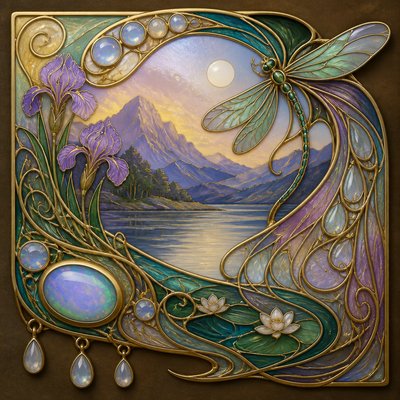
Art Nouveau usually favors flowing, organic, vine-like curves and hand-drawn asymmetry. Art Deco is more geometric, streamlined, and architectural, with a stronger emphasis on polished surfaces and modern luxury.
What colors are most associated with this style?
Black, ivory, gold, silver, emerald, sapphire, ruby, and burgundy are especially characteristic. High contrast is important, and the palette often feels jewel-like rather than pastel or muted.
Where is Art Deco interior design commonly used today?
It is often used in luxury hotels, cocktail bars, theaters, restaurants, boutique retail spaces, and residential interiors that want a refined vintage look. It also appears in film sets and editorial design when a glamorous interwar atmosphere is desired.
What materials should I use to make an Art Deco room feel authentic?
Look for lacquered wood, marble, brass, chrome, mirrored glass, and rich textiles such as velvet or silk. The key is to mix glossy and soft textures so the space feels both polished and layered.
Can Art Deco interiors be minimal?
They can be simplified, but they are rarely austere in the modern-minimalist sense. A pared-down Art Deco interior still needs symmetry, elegant materials, and at least a few decisive geometric or metallic details to read correctly.
Create your first Art Deco Interior Design artwork
Describe anything — or upload a photo — and see it in Art Deco Interior Design in seconds.
Make Something with Art Deco Interior Design
Related Styles
Discover similar art styles