Solarpunk Aesthetic
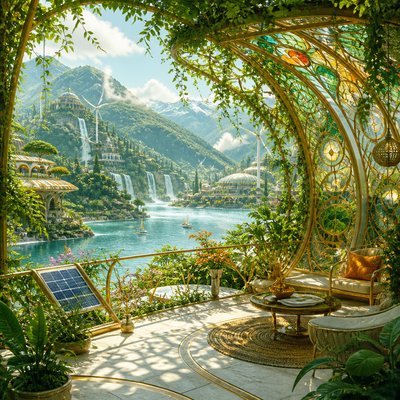
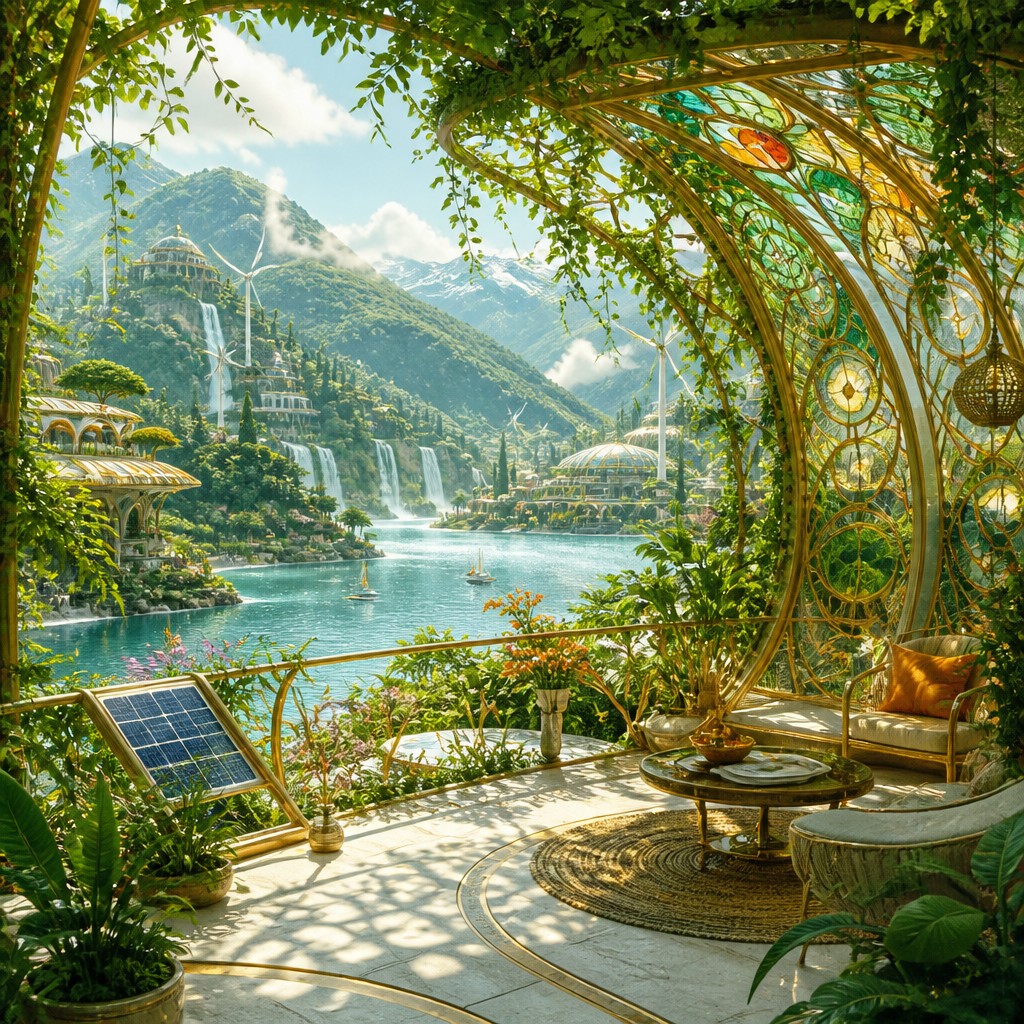
Sunlit eco-future with lush greens, golds, flowing organic forms, stained glass accents, and optimistic nature-tech harmony.
Instantly rendered in Solarpunk Aesthetic — or transform a photo


Solarpunk Aesthetic Gallery
Tap any artwork to explore it

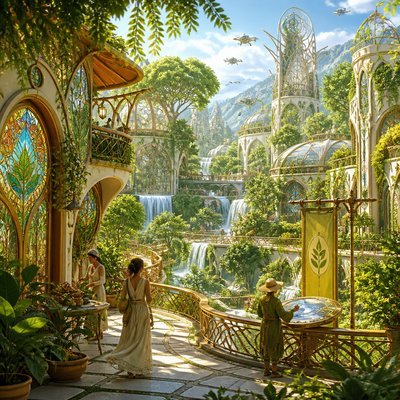

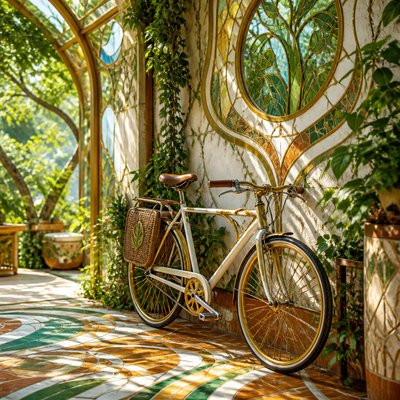
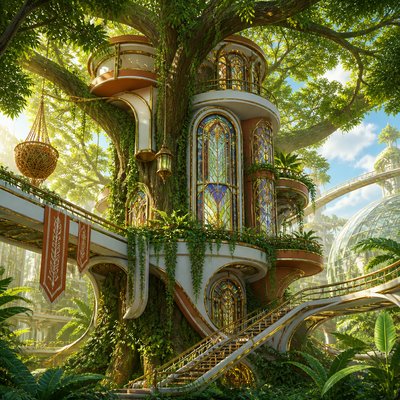
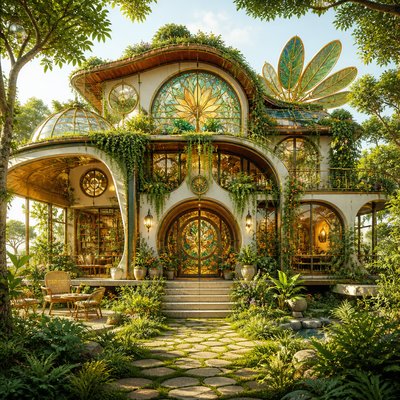
What is Solarpunk Aesthetic?
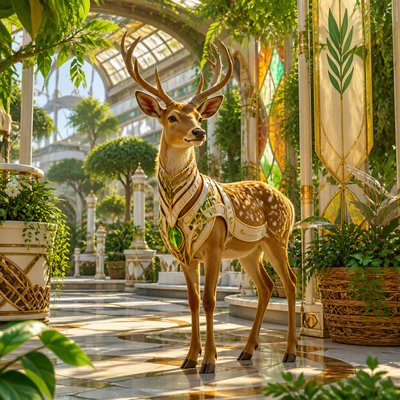
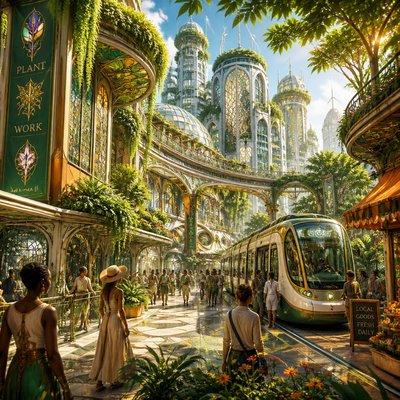
Solarpunk is an optimistic visual style built around the idea of a sustainable future in which technology, architecture, and ecology coexist harmoniously. Its imagery typically features abundant plant life, sunlit spaces, warm metallic surfaces, and structures that feel both handcrafted and advanced, often combining clean engineering with organic curves and garden-like abundance.
The style is recognizable for its bright, restorative palette: verdant greens, warm golds, white walls, terracotta, and glass that catches and scatters daylight. Solar panels, vertical gardens, water systems, and ecological infrastructure are often integrated into buildings rather than hidden away, creating a future that feels inhabited, lived-in, and ecologically plausible rather than sterile or dystopian.

Try It On Your Photos
Upload any photo and convert it into Solarpunk Aesthetic — drag the sliders to compare before and after.



What Defines Solarpunk Aesthetic
The signature details, up close
Lush vegetation
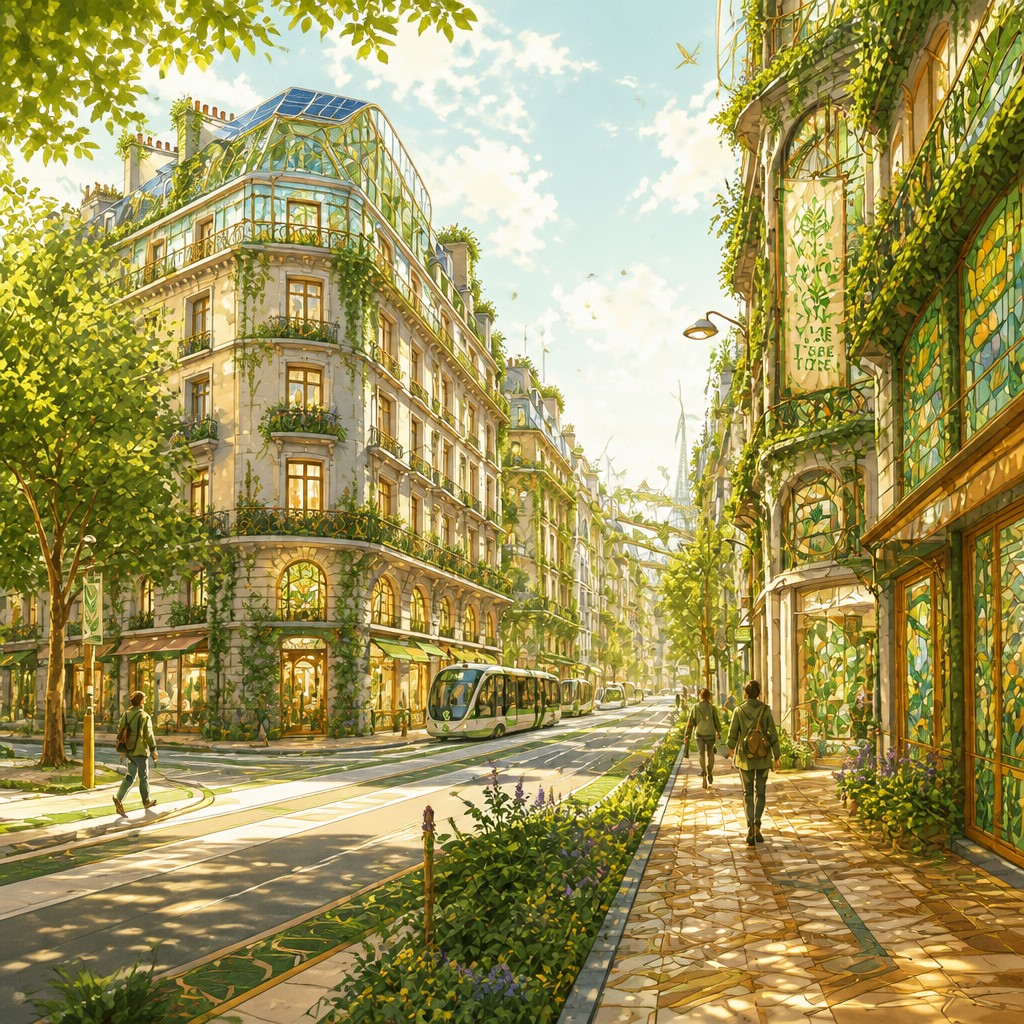
Plants are not decoration but a structural and atmospheric element: vines, canopies, rooftop gardens, moss, and dense foliage frame the scene. The environment usually feels cultivated, thriving, and deeply inhabited by nature.
Sunlit warmth
Light is central to the style, with strong daylight, golden highlights, and radiant atmospheres that suggest clean air and open space. Shadows tend to be soft and welcoming rather than harsh or dramatic.
Organic architecture
Buildings often use rounded edges, flowing lines, terraces, arches, and layered forms that echo plant growth and natural contours. Even when the design is futuristic, it avoids cold minimalism in favor of softness and visual continuity with the landscape.
Nature-tech integration
Solar panels, transparent materials, rainwater systems, and ecological infrastructure are visible and celebrated instead of concealed. The technological elements are clean and modern, but they are always integrated into an ecosystem rather than imposed on it.
Craft materials and texture
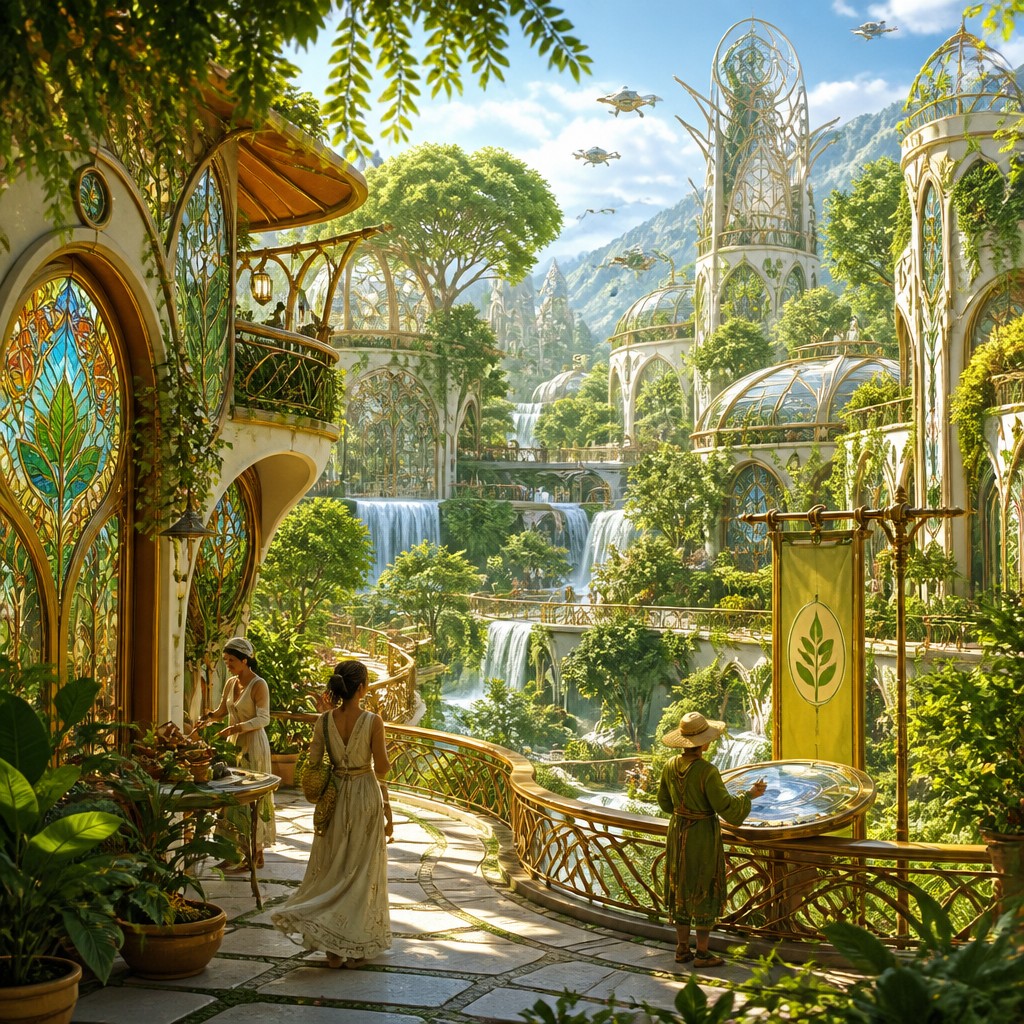
Woven fiber, polished metal, ceramic, wood, terracotta, and textured glass are common surfaces. The style often balances handmade tactility with precision fabrication, giving scenes a believable human scale.

Hopeful civic atmosphere
People, public spaces, and communal gardens are often implied even when no figures are shown. The mood is orderly, restorative, and socially optimistic, emphasizing stewardship, abundance, and collective care.
Try It
Create Videos in Solarpunk Aesthetic
Styles aren't just for stills — describe a scene or animate an image and get a short video rendered in Solarpunk Aesthetic. Press play to see this pond come to life.
Make a VideoSolarpunk Aesthetic Prompt Ideas
Start from an idea — each one opens the generator with the style ready to go. See all 40 Solarpunk Aesthetic prompts →
How to Create Solarpunk Aesthetic Art
Master the craft step by step — or skip straight to creating. Read the full guide →
- 1
Build a bright ecological palette
Use greens, golds, warm whites, terracotta, and clear glass as the core palette, then add small accents of blue or stained-glass color for contrast. Keep the overall lighting daylight-based and avoid heavy smoke, grime, or neon dominance.
- 2
Blend organic and engineered forms
Sketch architecture with flowing, plant-like curves but keep the mechanical logic readable: solar arrays, vents, walkways, and water channels should feel functional. In digital work, layer hard-edged structures beneath softer foliage so the scene reads as designed rather than random.
- 3
Prioritize texture and material contrast
Combine polished surfaces with woven, ceramic, leafy, and fibrous textures to create tactile variety. In painting or drawing, vary brushwork so glass, metal, and leaves have clearly different surface qualities.
- 4
Use light as an atmospheric anchor
Place sunlight where it can pass through leaves, glass, and open courtyards to create luminous highlights and color spill. If generating with prompts, emphasize radiant daylight, sunbeams, and transparent architecture for a more authentic result.
- 5
Show sustainable systems openly
Make ecological infrastructure part of the composition: green roofs, water collection, vertical farms, and transit corridors can be foreground elements. For prompt-based creation, combine a subject with phrases like integrated solar power, rooftop garden, and climate-resilient habitat.
The Story
History & Origins of Solarpunk Aesthetic
Solarpunk is not a historical art movement in the conventional sense, but a contemporary aesthetic and cultural tendency that emerged in the 2000s and 2010s from environmental design, speculative fiction, and internet-based visual culture. Its name positions it as a response to darker science-fiction futures: instead of urban decay, surveillance, or industrial ruin, solarpunk imagines renewable energy, communal living, and nature-integrated cities.
Its visual lineage draws from Art Nouveau’s flowing botanical ornament, Arts and Crafts ideals of handmade craft and material honesty, modern ecological architecture, biophilic design, and fantasy illustration. It also borrows from stained glass, tropical and garden architecture, and optimistic mid-century visions of the future, while reworking these sources into a contemporary language of sustainability and social repair.
Influences: Solarpunk draws heavily from Art Nouveau, especially the botanical ornament and sinuous line associated with Alphonse Mucha, Antoni Gaudí, and Hector Guimard, as well as from the Arts and Crafts movement’s emphasis on craft, material honesty, and humane design. It also overlaps with biophilic architecture, sustainable urbanism, and speculative fiction that imagines socially and environmentally restorative futures, while using the optimism of garden design, stained glass, and vernacular craft traditions to counter dystopian science-fiction conventions.
Frequently Asked Questions
What defines the solarpunk aesthetic?
Solarpunk is defined by a hopeful vision of the future where ecology and technology work together. Visually, that means abundant greenery, warm sunlight, organic curves, and visible sustainable systems like solar power, gardens, and water collection. The overall feeling is restorative rather than bleak.
How is solarpunk different from cyberpunk?
Cyberpunk usually depicts high technology in a fractured, neon-lit, often unequal society, while solarpunk imagines low-carbon or regenerative futures. The color palette is also different: solarpunk favors natural greens, golds, and daylight, whereas cyberpunk leans toward dark urban nights, neon, and industrial contrast. Solarpunk is less about rebellion in a ruined system and more about building a livable one.
Is solarpunk a historical art movement?
No, it is a contemporary aesthetic and cultural movement rather than a canonical historical school of art. It draws its visual language from earlier movements and design traditions, especially Art Nouveau, Arts and Crafts, and ecological architecture. Its identity is shaped more by cross-disciplinary cultural exchange than by a formal manifesto.
What subjects work well in solarpunk art?
Architecture, cityscapes, gardens, public transit, community spaces, and domestic interiors are especially effective because they let the ecological and social side of the style come through. Portraits can also work well when the setting includes textiles, plants, and warm natural light. The style is strongest when the environment feels as important as the main subject.
How do I make a photo look solarpunk?
Emphasize greenery, warm sunlight, and integrated eco-design while reducing sterile, industrial, or high-contrast elements. Add rooftop gardens, vines, natural textures, glass, and terracotta tones, and soften the overall lighting so the image feels bright and breathable. The goal is to transform the scene into a plausible sustainable future rather than simply making it more colorful.
Where is solarpunk commonly used?
It appears in illustration, concept art, worldbuilding, speculative fiction, architecture visualization, and environmental design concepts. It is also common in posters, editorial imagery, and community-oriented futurist art. The style is particularly useful when the subject is a hopeful future, climate adaptation, or human-scale urban life.
Create your first Solarpunk Aesthetic artwork
Describe anything — or upload a photo — and see it in Solarpunk Aesthetic in seconds.
Related Styles
Discover similar art styles