Skater Aesthetic
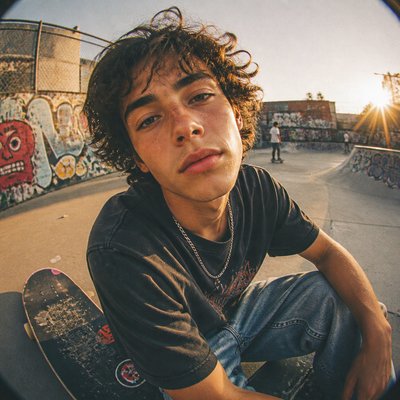
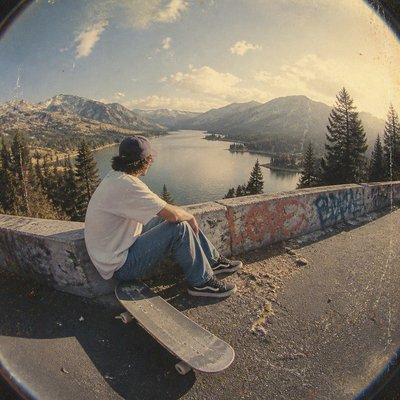
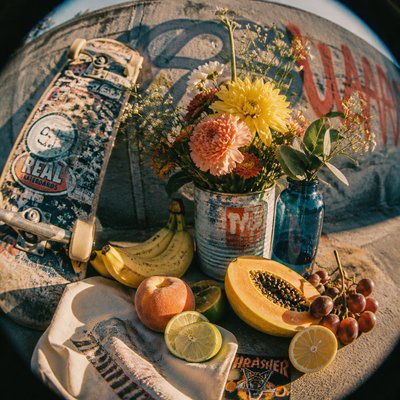
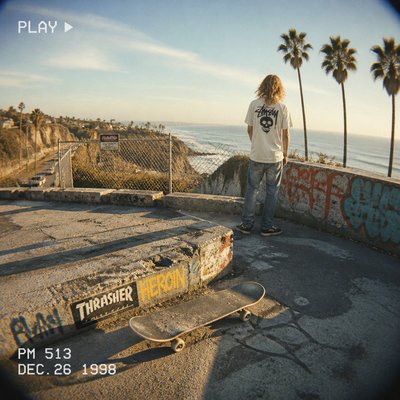
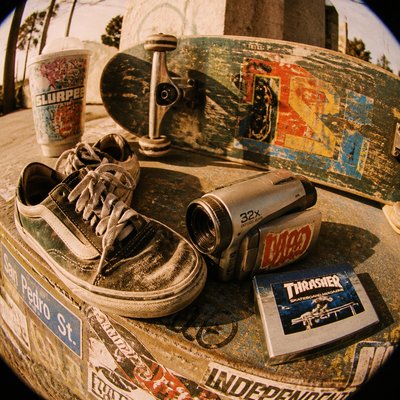
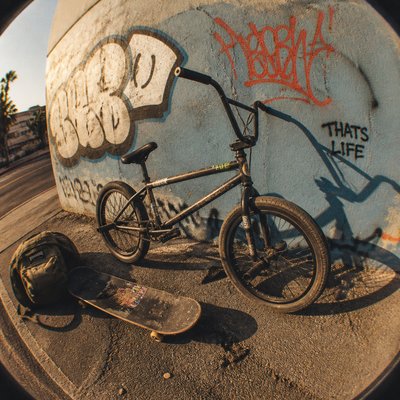
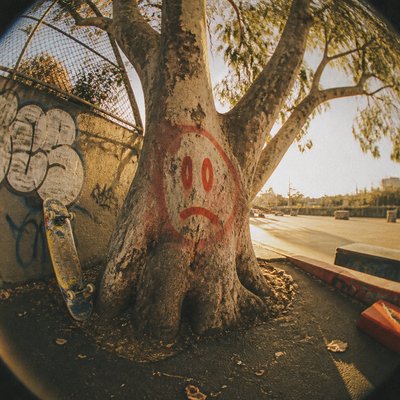
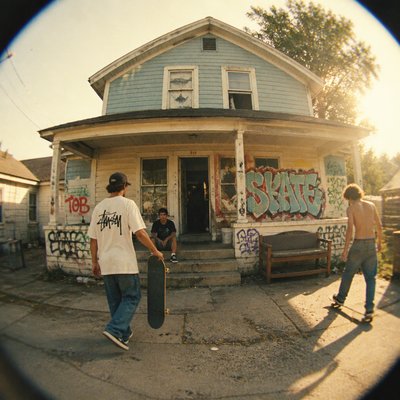
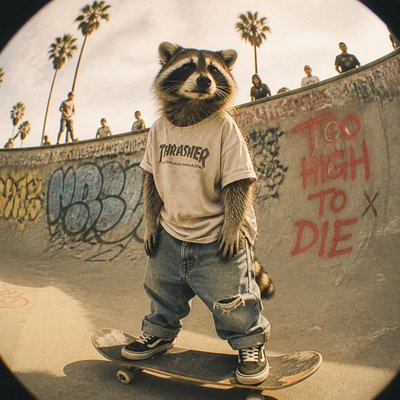
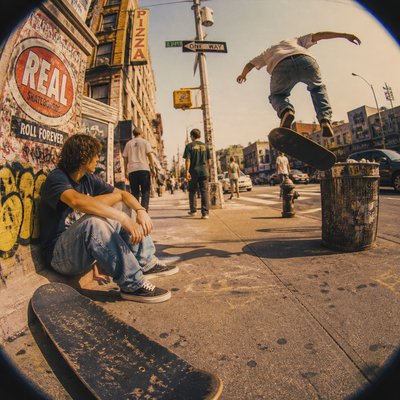
Sun-bleached concrete, scuffed textures, fisheye energy, and loose streetwise skate culture in a raw, candid visual style.
Instantly rendered in Skater Aesthetic — or transform a photo
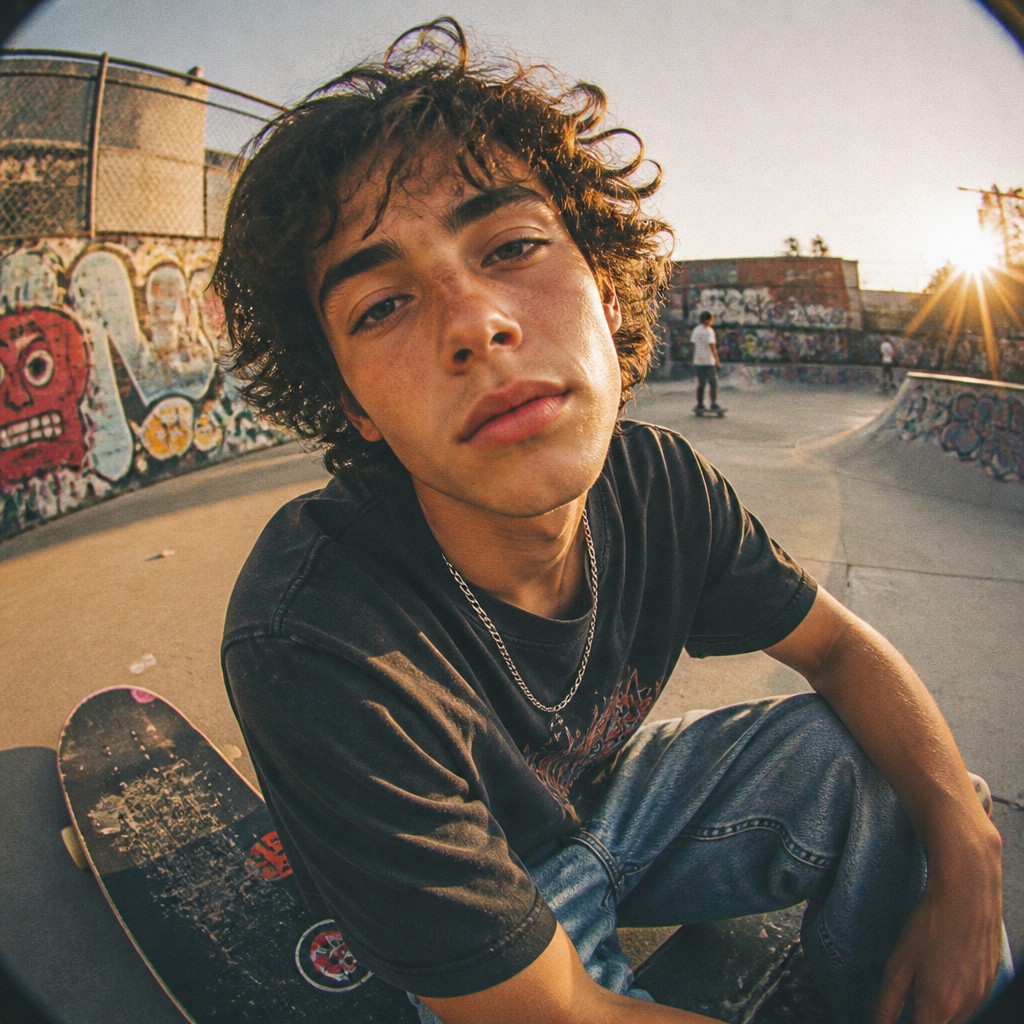
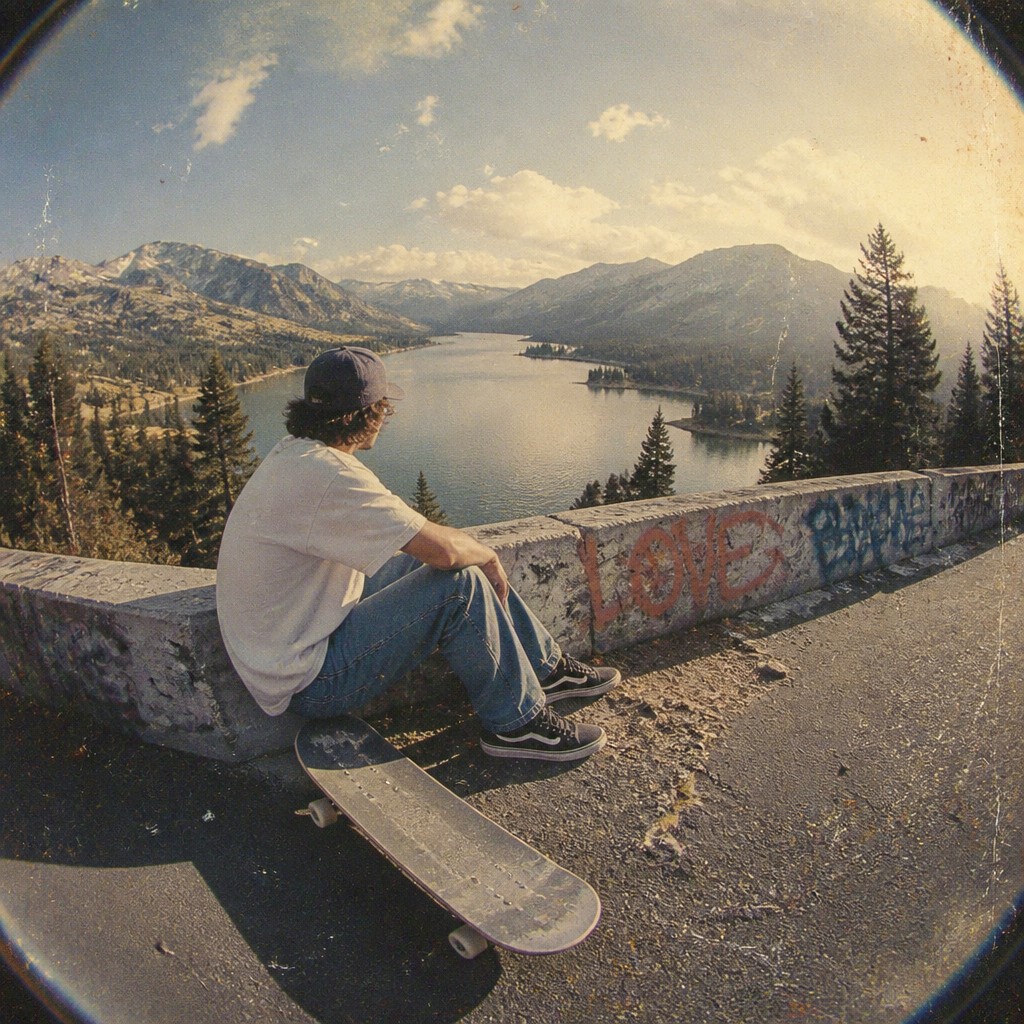
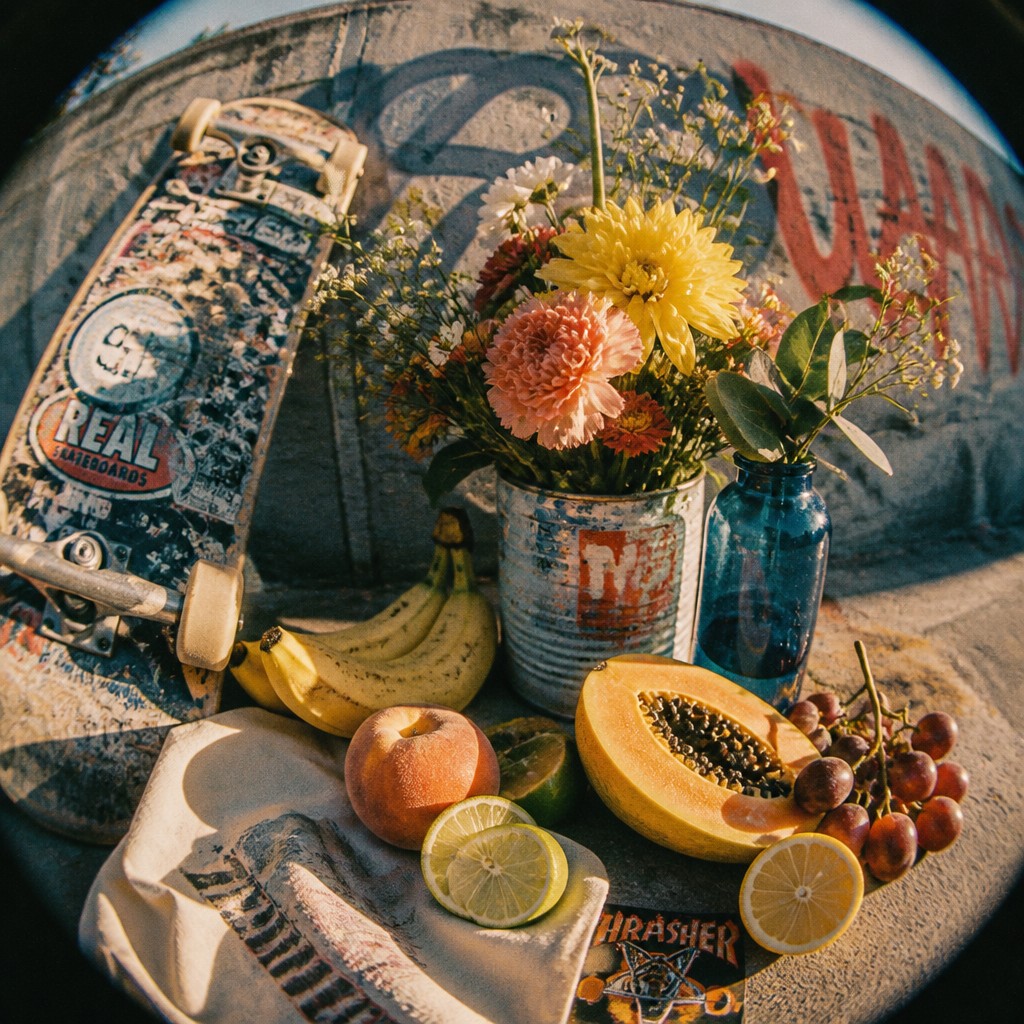
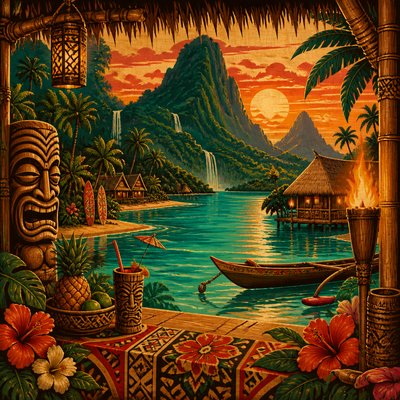
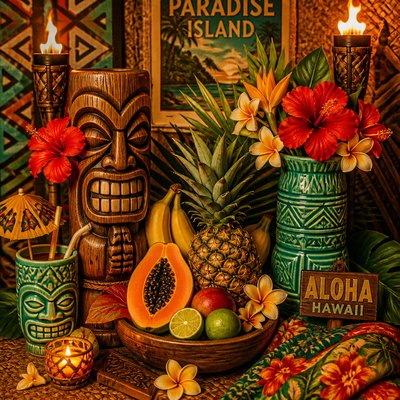
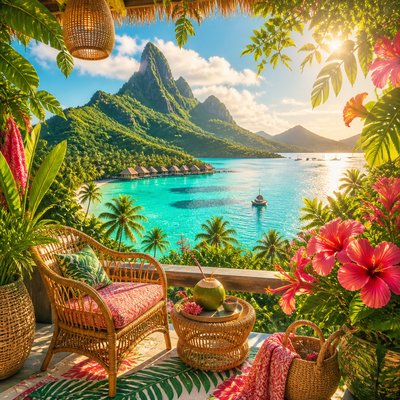
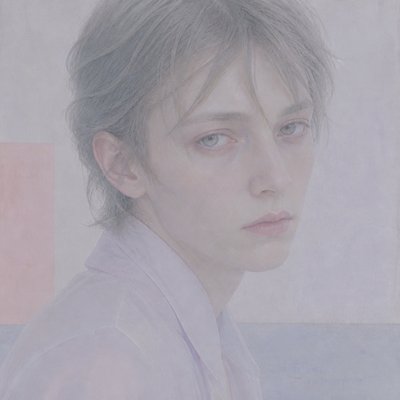
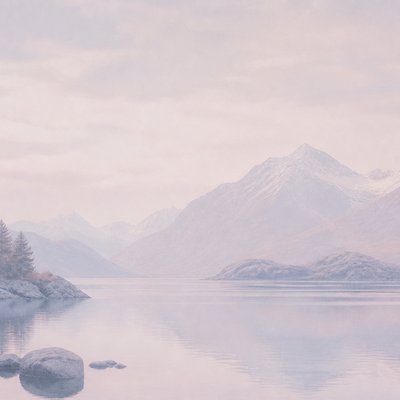
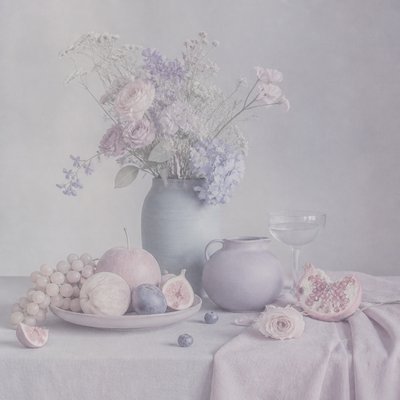
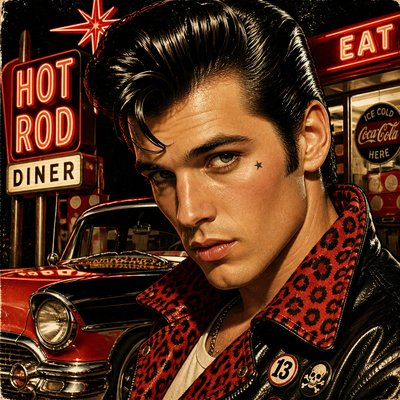
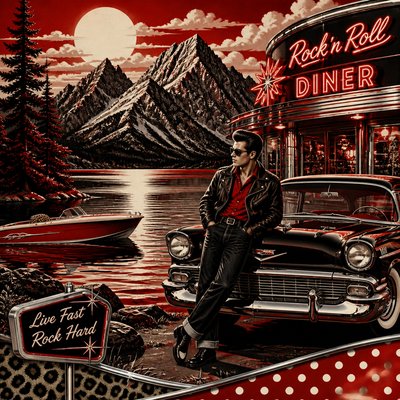
Skater Aesthetic Gallery
Tap any artwork to explore it
What is Skater Aesthetic?
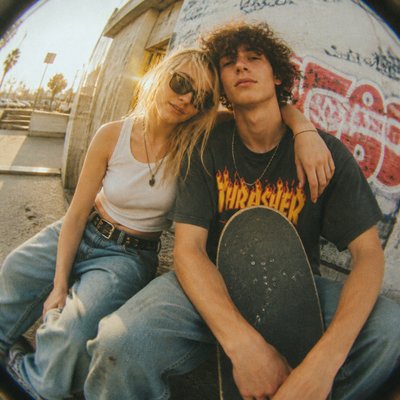
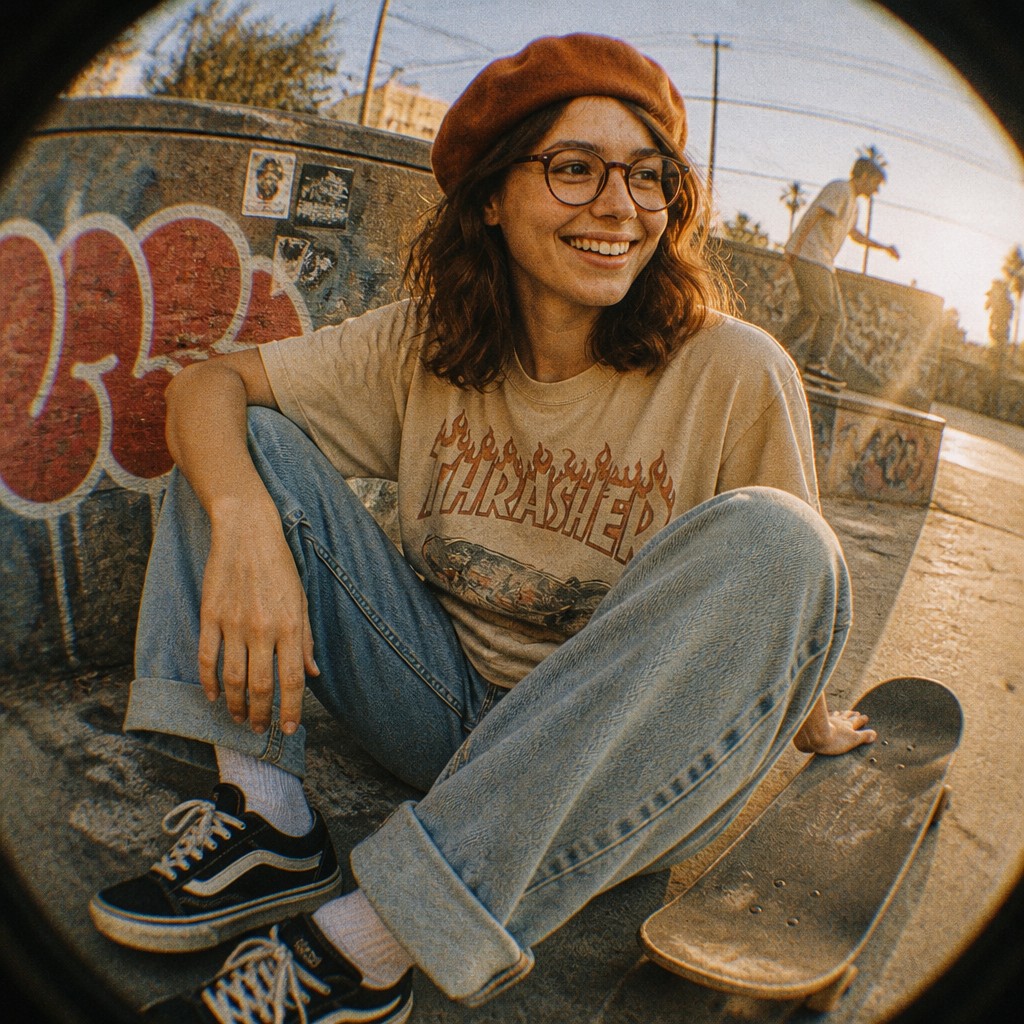
Skater aesthetic is a loose, streetwise visual style shaped by skate culture: weathered concrete, scuffed grip tape, worn denim, chipped paint, and the candid energy of movement caught on the fly. It favors an unpolished, lived-in look rather than a carefully staged one, with a strong emphasis on everyday street environments, improvisation, and the physical traces left by repeated use.
Its visual identity is built from sun-bleached color, rough texture, and dynamic framing. Fisheye distortion, low-angle viewpoints, camcorder-like grain, and hazy afternoon light all help create the feeling of being in the moment—watching a trick attempt, a hangout, or a ride through the city. The result is casual but intentional: a style that reads as spontaneous, rebellious, and rooted in urban youth culture.
Try It On Your Photos
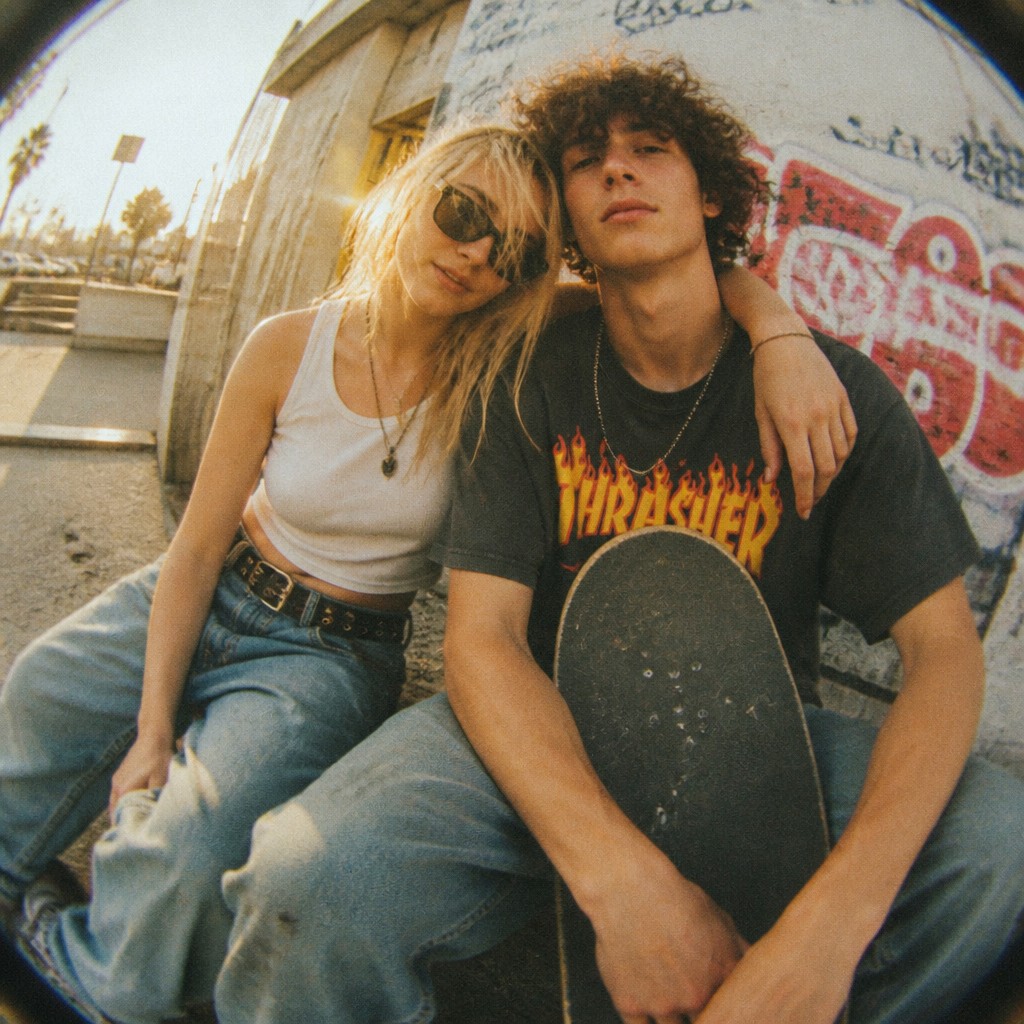
Upload any photo and convert it into Skater Aesthetic — drag the sliders to compare before and after.


What Defines Skater Aesthetic
The signature details, up close
Sun-bleached palette
Colors are faded and heat-worn: concrete gray, washed denim blue, dusty black, off-white, and muted primaries. Small bursts of spray-paint, sticker, or tag color often punctuate the scene.
Rough urban surfaces
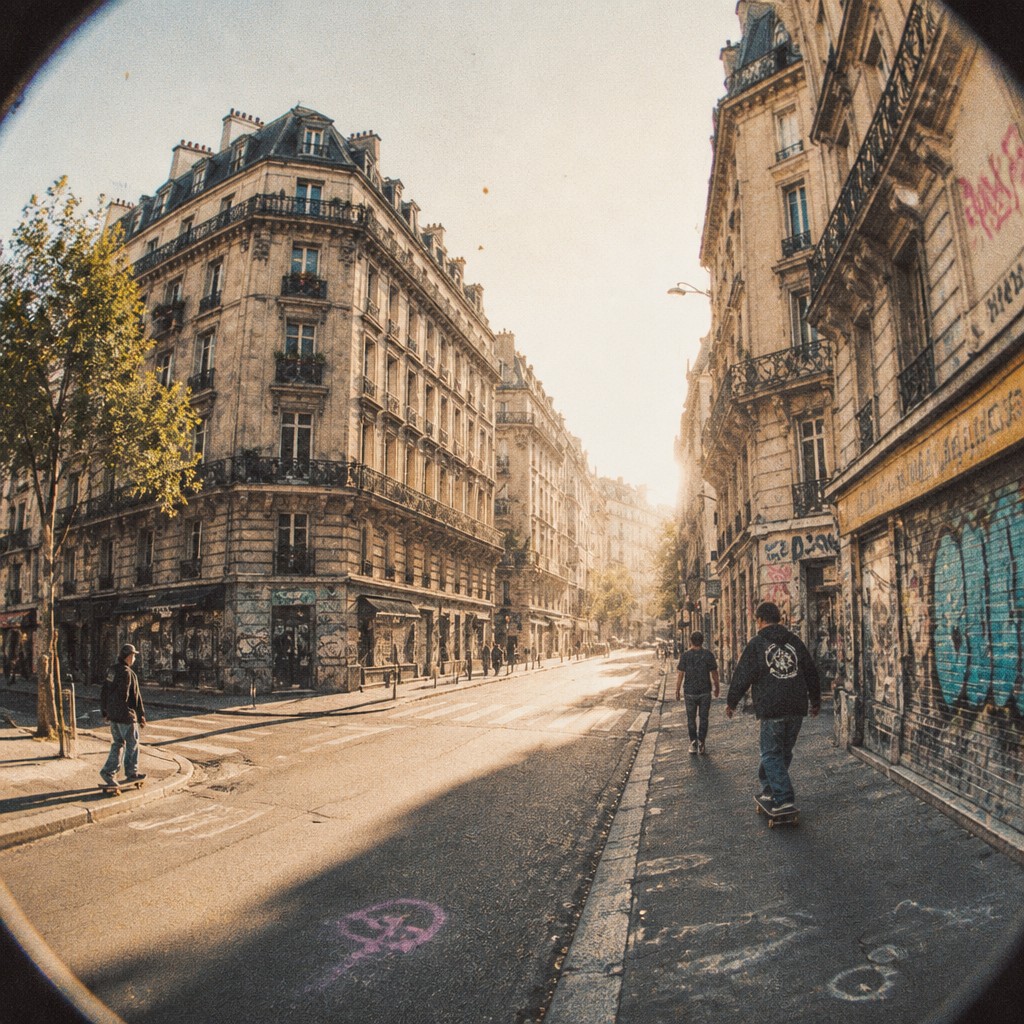
Texture is central: scuffed grip tape, chipped paint, scratched metal, worn canvas, cracked pavement, and dusty ledges. These details make the image feel physical and used.
Candid motion and attitude
Poses and compositions feel unforced, as if caught mid-ride, mid-conversation, or mid-laugh. The body language is relaxed, defiant, and streetwise rather than polished or posed.
Fisheye and low-angle framing
Wide, distorted perspectives are common, especially in close action shots. Low camera placement emphasizes boards, feet, rails, and the architecture of the skate spot.
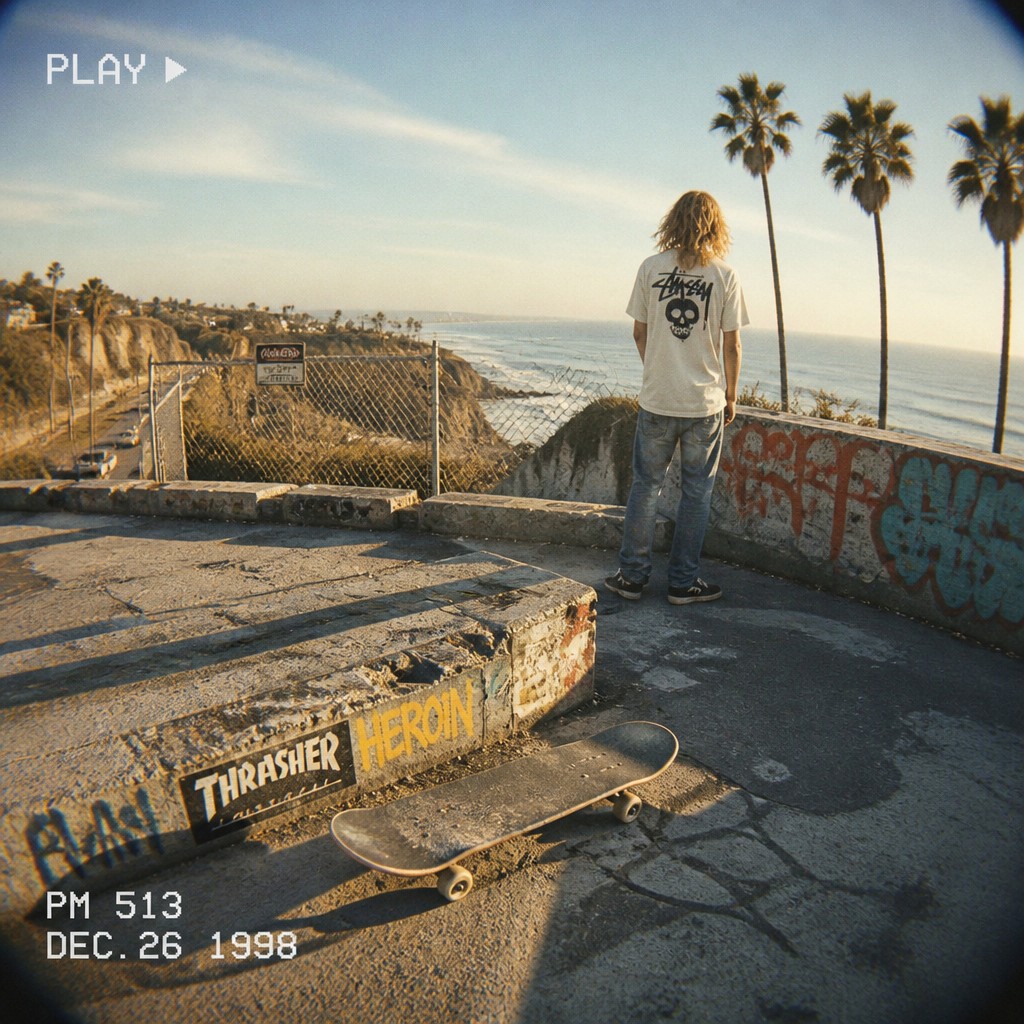
Analog warmth and grain
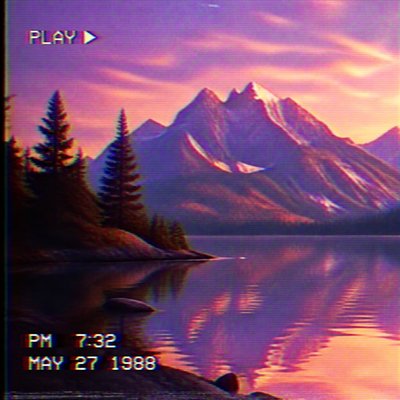
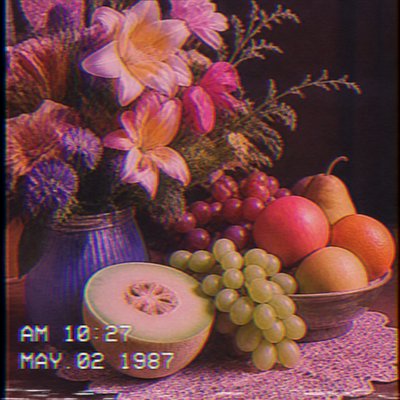
The style often borrows the look of film snapshots and camcorder footage: soft haze, grain, slight blur, and warm afternoon light. These effects make the scene feel nostalgic and immediate at once.
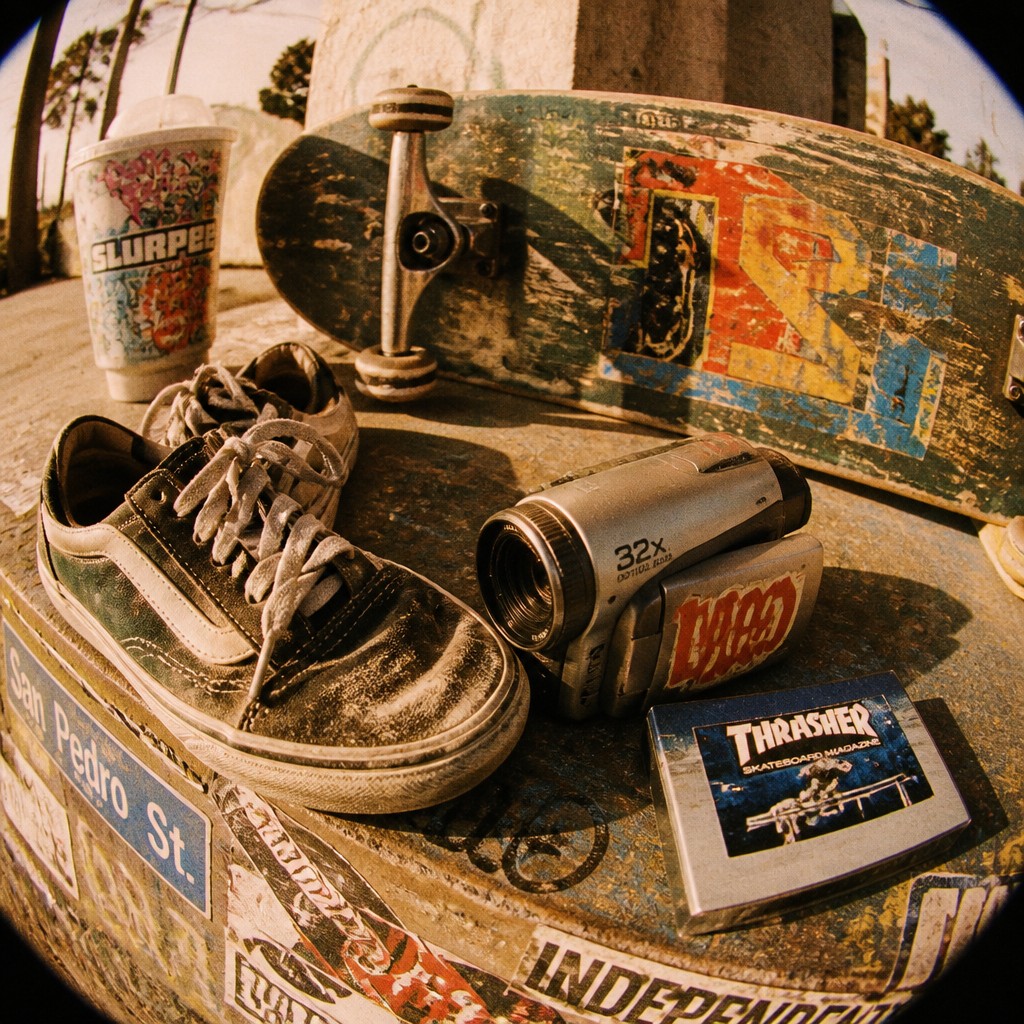
DIY street culture cues
Sticker bombing, hand-drawn lettering, makeshift obstacles, and improvised hangout spaces reinforce the culture’s independent, self-made character. The environment often looks occupied rather than curated.
Try It
Create Videos in Skater Aesthetic
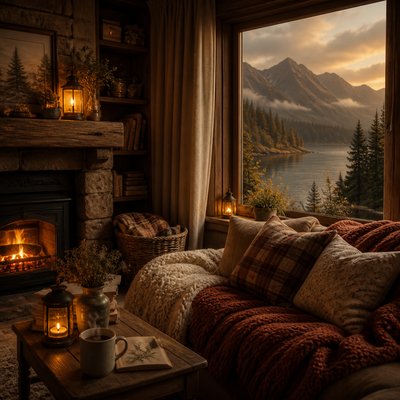
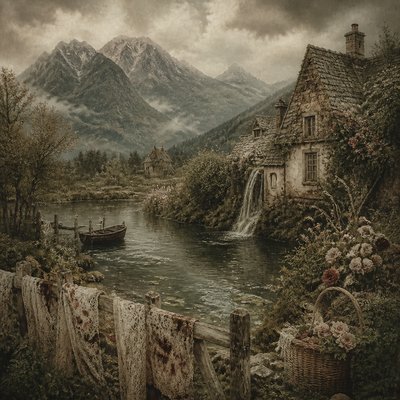
Styles aren't just for stills — describe a scene or animate an image and get a short video rendered in Skater Aesthetic. Press play to see this pond come to life.
Make a VideoSkater Aesthetic Prompt Ideas
Start from an idea — each one opens the generator with the style ready to go. See all 40 Skater Aesthetic prompts →
How to Create Skater Aesthetic Art
Master the craft step by step — or skip straight to creating. Read the full guide →
- 1
Use weathered city surfaces as the setting
Choose environments with concrete, rails, stair sets, loading docks, walls, and asphalt so the scene naturally carries skate culture texture. In traditional work, emphasize scuffs, cracks, and chipped paint; in digital work, layer subtle grunge and surface wear instead of over-smoothing.
- 2
Keep the composition candid and kinetic
Frame subjects as if caught in an unplanned moment, with off-center balance, partial motion blur, or a sense of improvisation. For generated images, ask for loose candid composition, mid-action movement, and a lived-in street snapshot feel.
- 3
Push the perspective
A low camera angle or fisheye lens helps convey speed, scale, and proximity to the board and ground. When drawing or photographing, shoot from near the pavement; when prompting, specify fisheye distortion, wide-angle energy, or close-up action framing.
- 4
Limit the palette and soften the light
Use faded denim blues, concrete grays, washed reds, and sun-bleached neutrals, with a few bright accent colors. Golden afternoon light, haze, and gentle contrast help create the warm, worn look associated with skate media.
- 5
Build in tactile imperfections
Add grain, dust, chipped edges, sticker residue, and slight blur to avoid a glossy finish. In prompt-based creation, include cues like camcorder grain, rough asphalt texture, worn canvas, chipped paint, and scuffed grip tape.
The Story
History & Origins of Skater Aesthetic
Skater aesthetic is not a single historical art movement so much as a contemporary cultural look that emerged from skateboarding subculture, especially in late-20th-century urban America and its global offshoots. Its visual vocabulary grew out of skate zines, VHS skate videos, DIY flyers, sticker culture, graffiti, and candid photography, where rough edges were not flaws but evidence of authenticity and participation.
Its lineage draws from several real traditions: documentary street photography, punk and DIY graphics, graffiti and street art, and the low-fi image quality of analog video. The fisheye lens became especially associated with skate imagery because it exaggerates speed, proximity, and spatial distortion, while the worn surfaces and casual compositions reflect the material world of skating itself—concrete, rails, ramps, decks, shoes, and hand-me-down clothing.
Influences: Skater aesthetic overlaps with documentary street photography, punk visual culture, graffiti, and DIY zine design, while its visual language also recalls the casual immediacy of analog snapshot and camcorder imagery. In real historical terms, its closest kin are not a single canonical art movement but a convergence of 20th-century street photography, low-fi subcultural print culture, and the image-making practices surrounding skateboarding media.
Frequently Asked Questions
What defines skater aesthetic?
It is defined by a mix of urban wear-and-tear, casual youth styling, and movement-centered imagery. The look typically includes faded colors, rough textures, candid poses, and camera effects such as fisheye distortion or grain.
Is skater aesthetic the same as streetwear?
Not exactly. Streetwear is mainly a fashion category, while skater aesthetic is a broader visual mood that includes clothing, locations, lighting, camera framing, and surface texture. Streetwear can appear inside the style, but skate imagery usually feels rougher and more documentary.
Why does fisheye perspective appear so often in skate imagery?
Fisheye lenses exaggerate speed, proximity, and the scale of obstacles, which makes tricks feel more dynamic. They also place the viewer close to the ground and the board, matching the physical point of view of skate culture.
How do I make art or photos in this style?
Focus on worn city surfaces, casual movement, and a limited, sun-faded palette. Use low angles, visible texture, and imperfect framing rather than polished symmetry; for digital generation, include terms like rough asphalt, camcorder grain, loose candid composition, and warm afternoon light.
What types of images work best in skater aesthetic?
Action shots, portraits of skaters, street scenes, abandoned lots, ramps, rails, and close-ups of boards and shoes all fit well. The style also works for editorial fashion, posters, and youth-culture scenes if the image keeps its gritty, spontaneous character.
How is skater aesthetic different from grunge or punk?
It shares punk and grunge’s love of imperfection, but skater aesthetic is more tied to motion, outdoor urban spaces, and the material culture of skateboarding. It tends to feel sunnier and more kinetic than punk, and less dark or brooding than many grunge images.
Create your first Skater Aesthetic artwork
Describe anything — or upload a photo — and see it in Skater Aesthetic in seconds.
Related Styles
Discover similar art styles