Kidcore Aesthetic
Kidcore aesthetic: primary colors, toys, stickers, rainbow doodles, and playful 90s childhood nostalgia in art and design.
Instantly rendered in Kidcore Aesthetic — or transform a photo
Kidcore Aesthetic Gallery
Tap any artwork to explore it
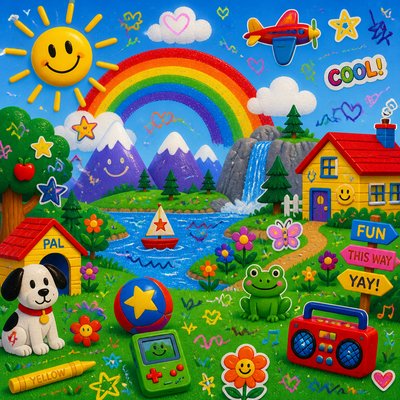
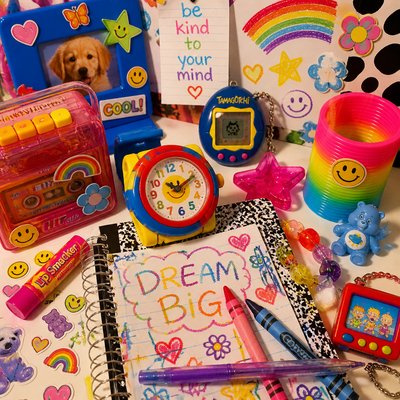
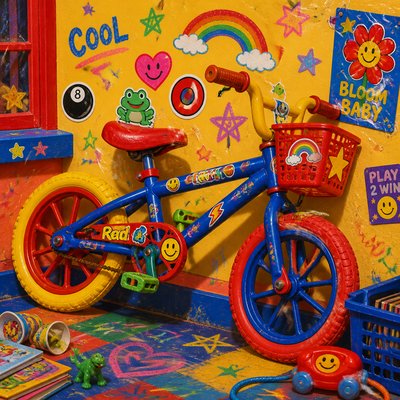
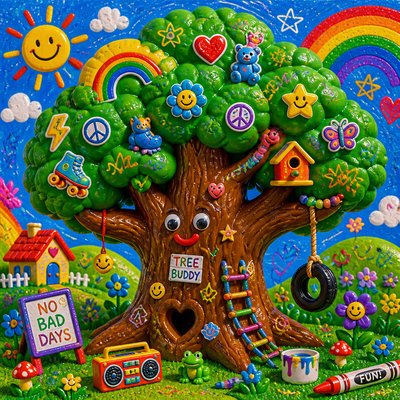
What is Kidcore Aesthetic?
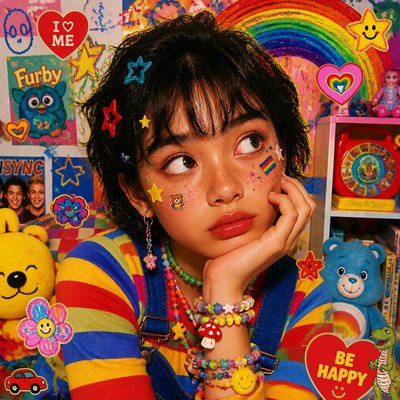
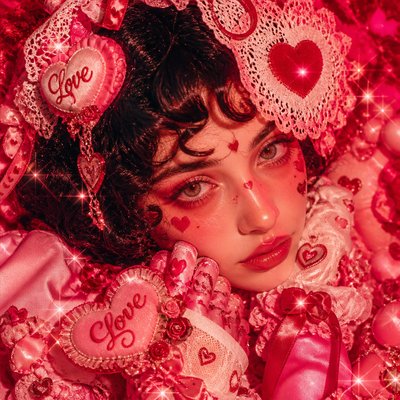
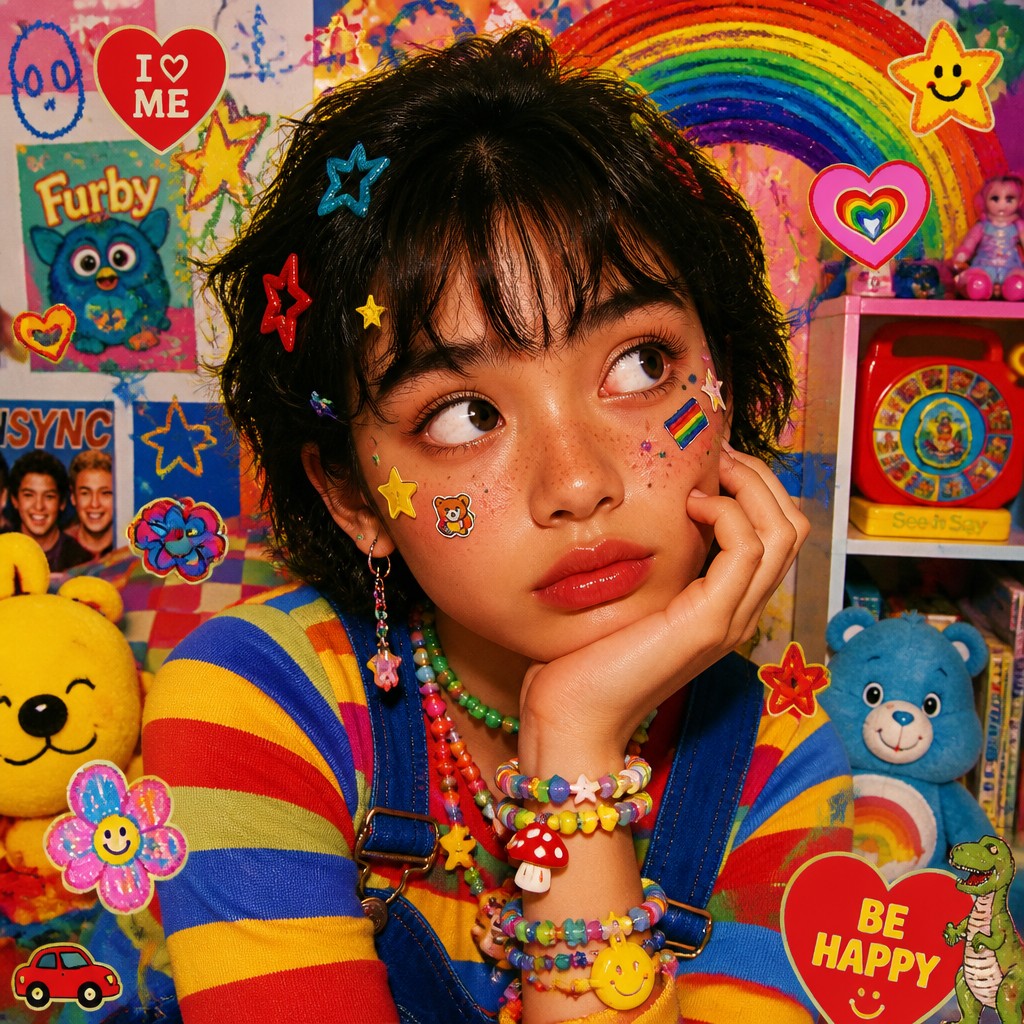
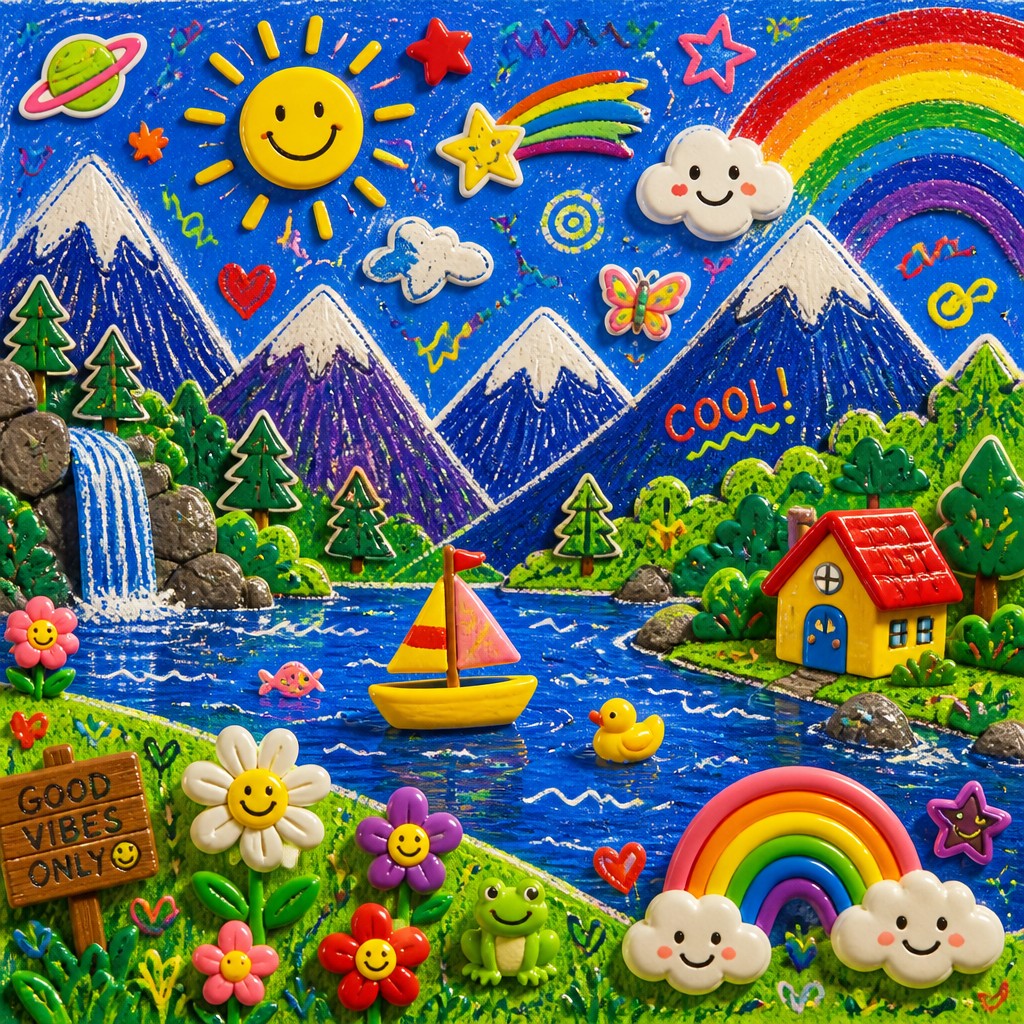
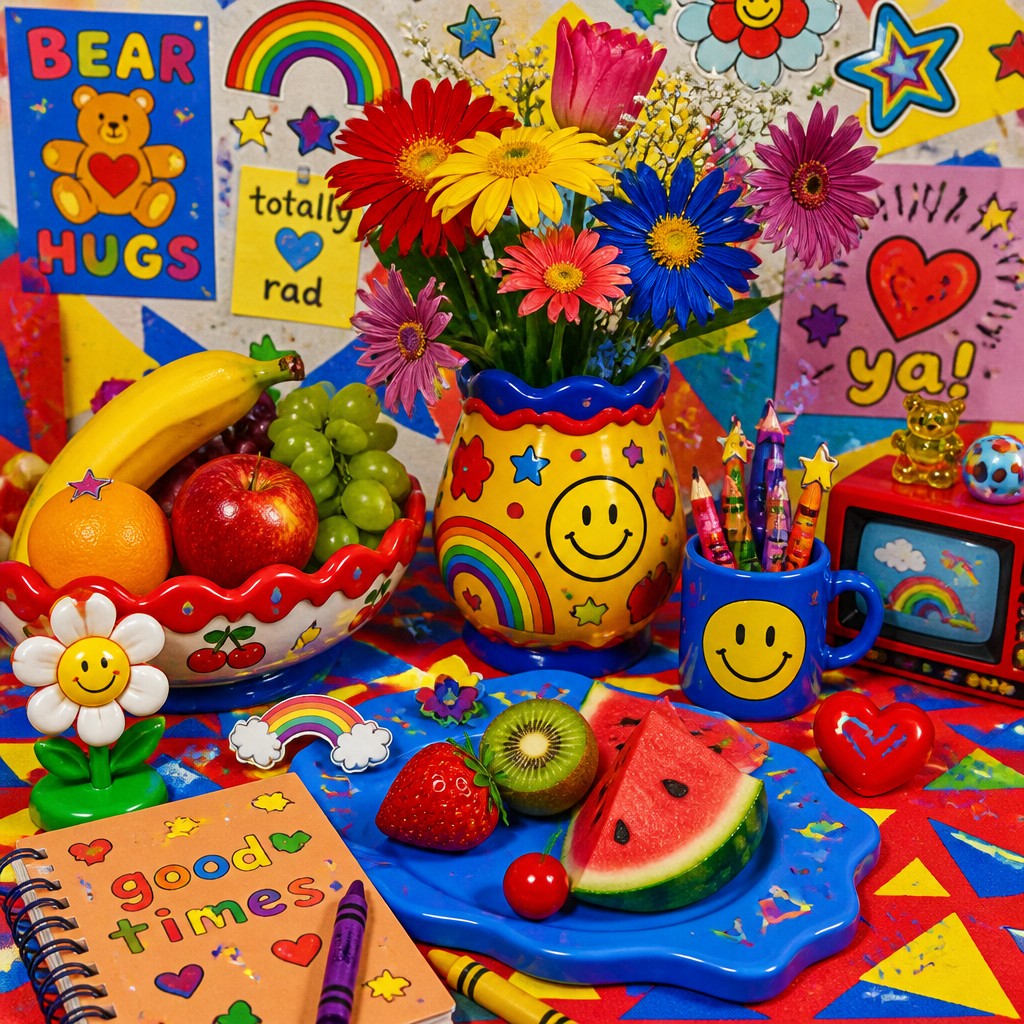
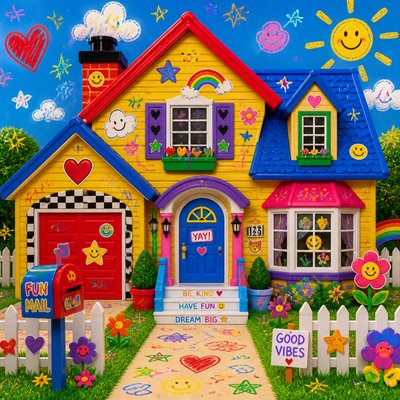
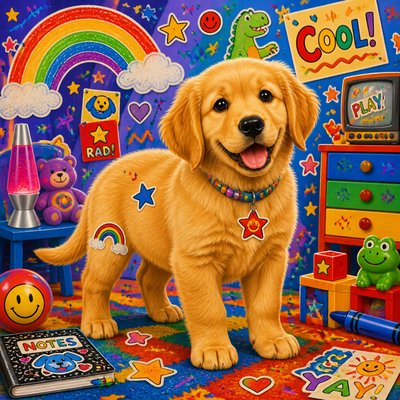
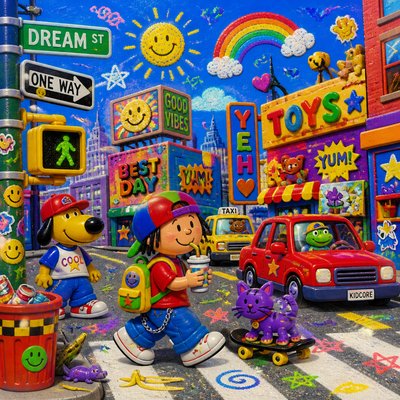
Kidcore aesthetic is a nostalgia-driven visual style built from the look and feeling of childhood play: primary colors, rainbow accents, toy-like objects, sticker graphics, doodles, and cheerful clutter. It often resembles a mix of bedroom decoration, classroom craft supplies, playground imagery, and early internet-era design, all arranged to feel energetic, innocent, and slightly chaotic.
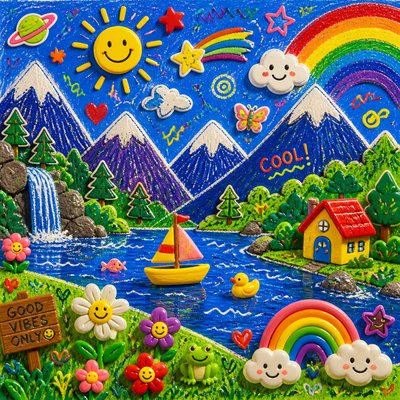
Its visual identity depends on saturated color and a deliberate lack of restraint. Shapes are simple and rounded, surfaces may appear glossy like plastic or textured like crayon and marker, and compositions are packed with small motifs such as stars, hearts, smiley faces, clouds, blocks, animal toys, and cutout stickers. The style works because it translates childhood associations into a coherent visual language: bright color for excitement, soft imperfection for handmade memory, and busy composition for the sense of abundance found in toy-filled spaces.
Try It On Your Photos
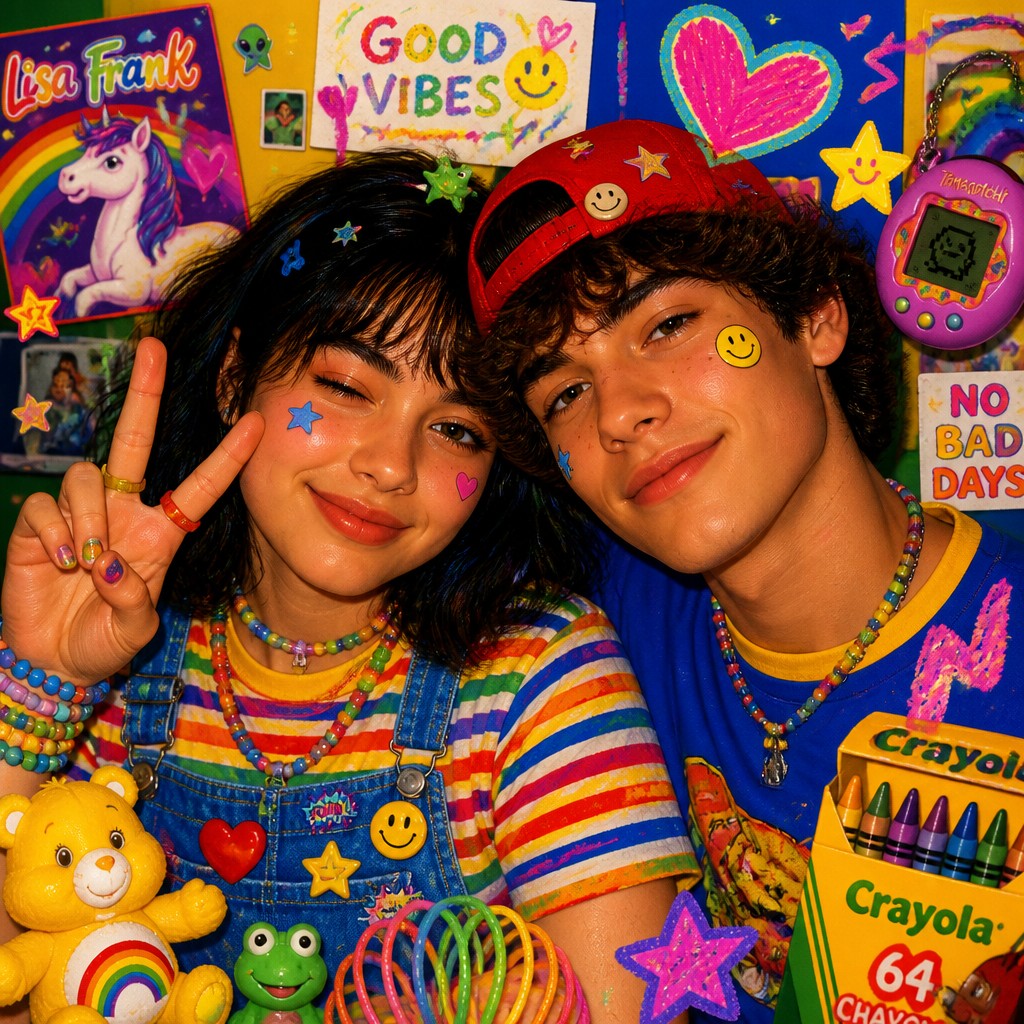
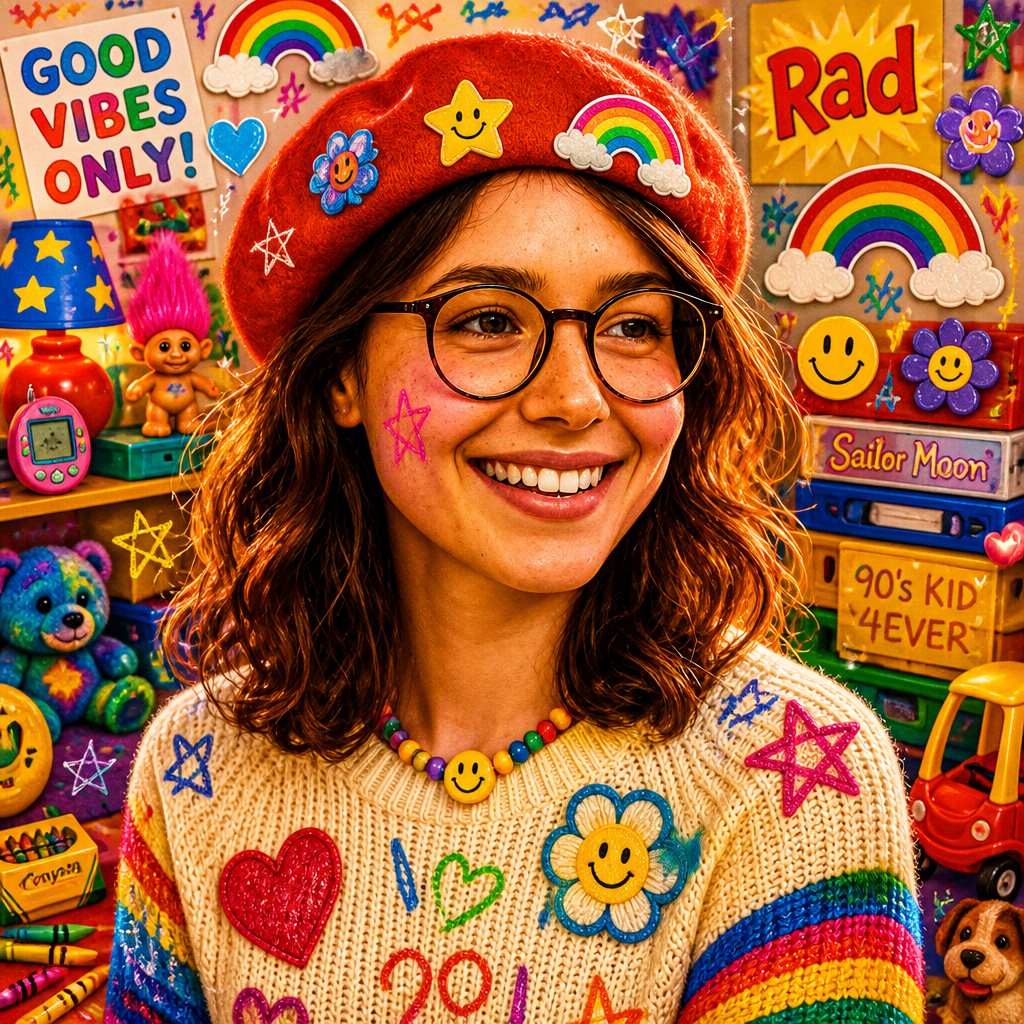
Upload any photo and convert it into Kidcore Aesthetic — drag the sliders to compare before and after.


What Defines Kidcore Aesthetic
The signature details, up close
Primary-color palette
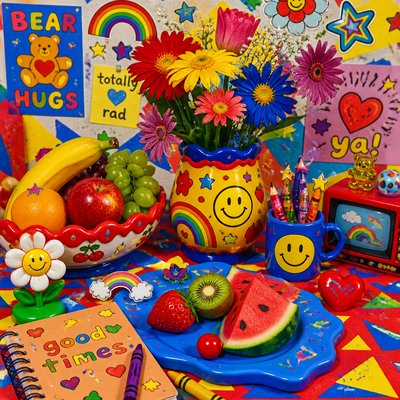
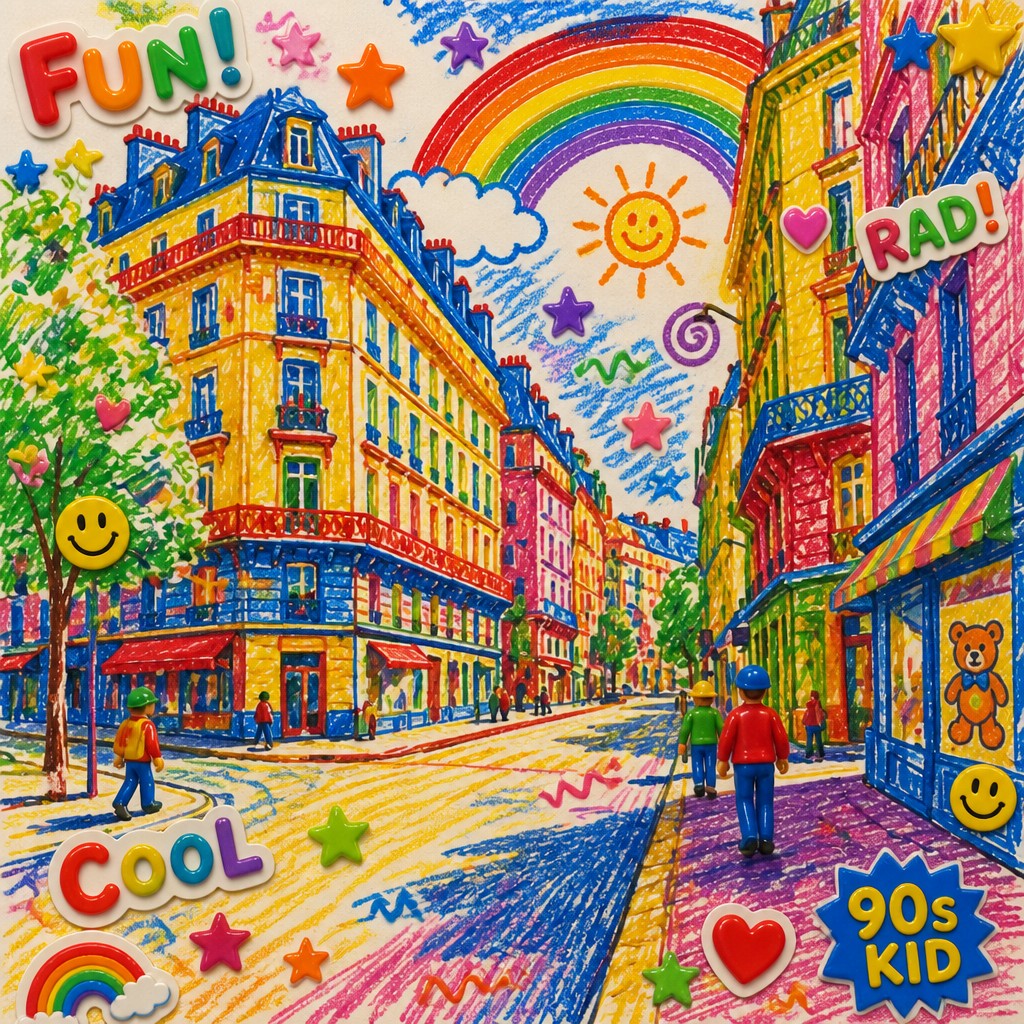
Red, blue, yellow, and bright rainbow accents are central to the style. Colors are usually high-saturation and high-contrast, creating a toybox effect that feels instantly cheerful.
Sticker and doodle motifs
Hearts, stars, smiley faces, clouds, bows, sparkles, and other simple icons appear repeatedly. They are often arranged like stickers, stamps, or notebook doodles rather than formal illustration elements.
Toy-like surfaces
Objects often look plastic, glossy, puffy, or molded, evoking action figures, school supplies, and bubble lettering. Even in flat images, the rendering may suggest shine, embossed texture, or crayon-like marks.
Cluttered composition
Kidcore typically favors visual abundance over open space. Layers of objects, patterns, and small details create the feeling of a packed bedroom wall, toy shelf, or craft desk.
Handmade texture
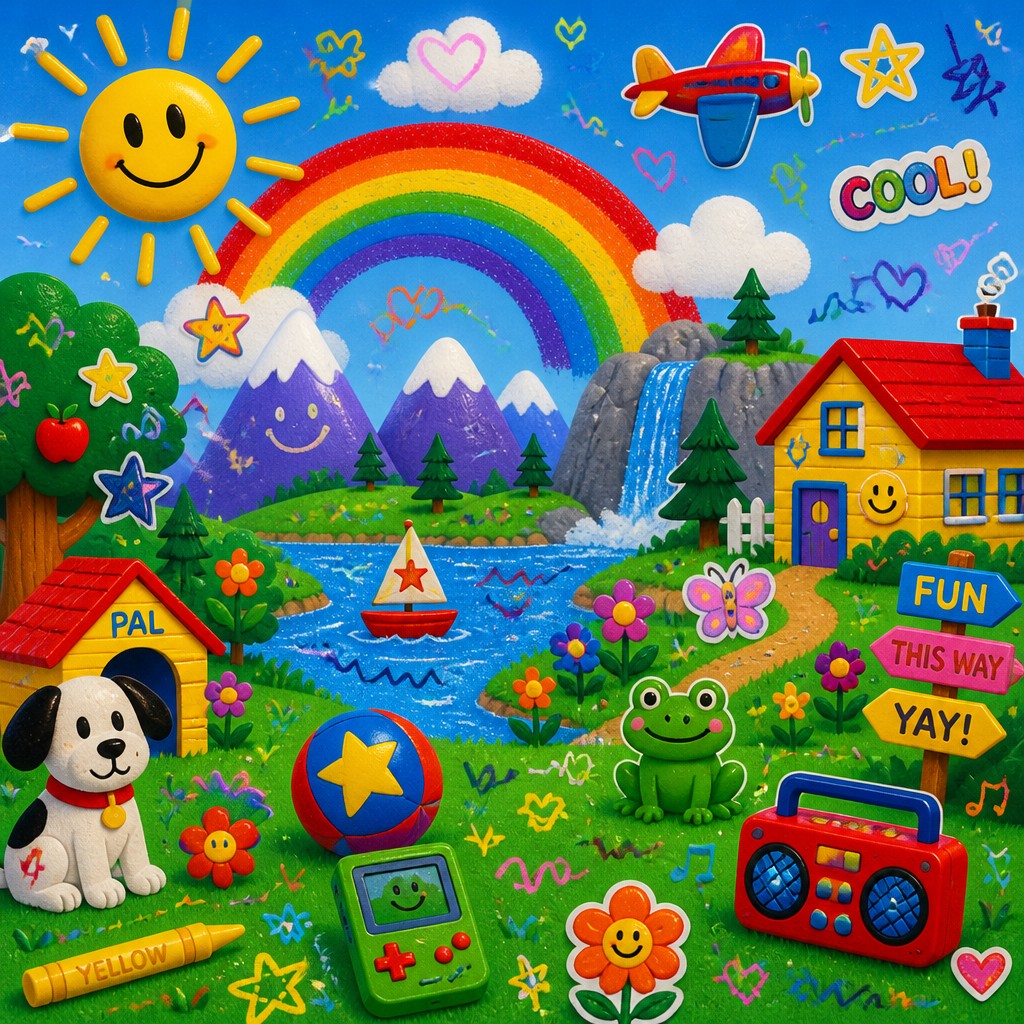
Crayon grain, marker strokes, cut-paper edges, glitter effects, and rough linework help the style feel handmade and personal. These imperfections are important because they echo children’s drawings and school art projects.
Nostalgic childhood references
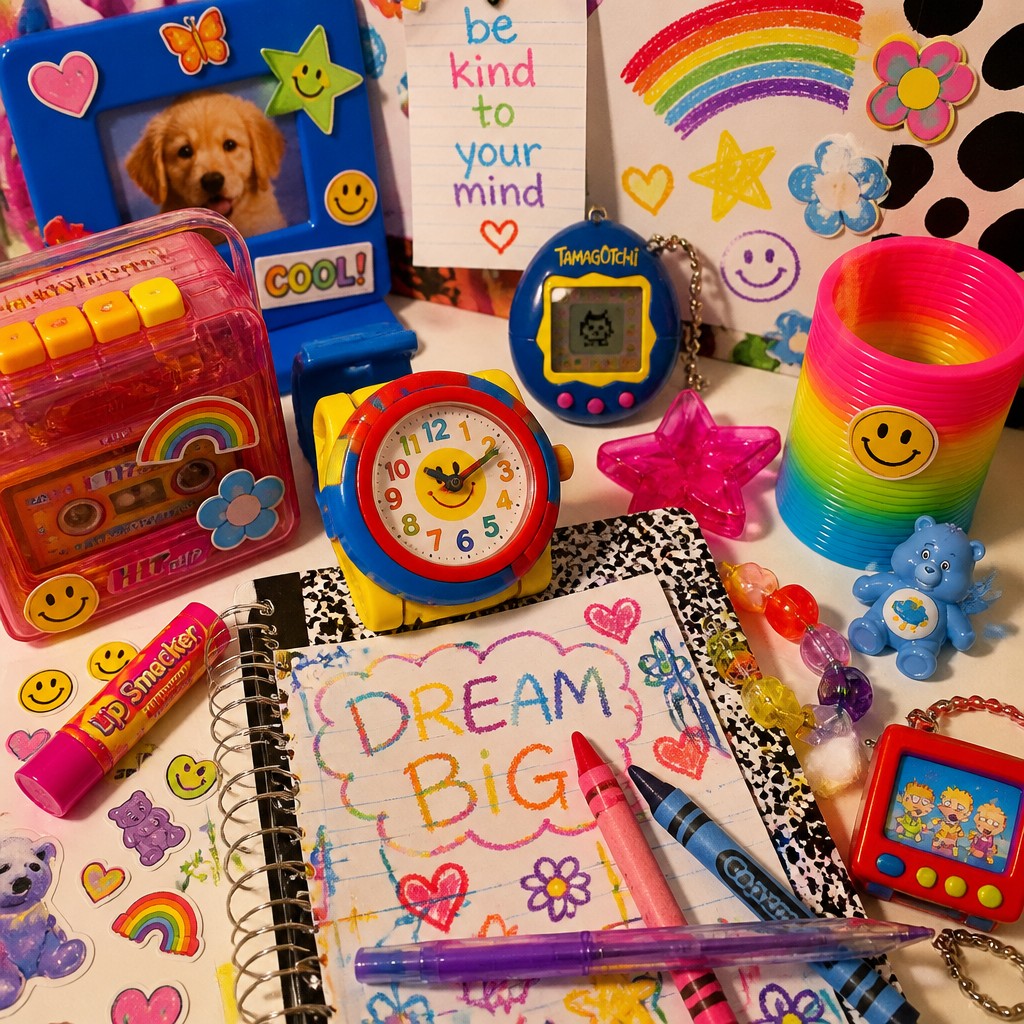
The style often includes crayons, building blocks, plush toys, playground equipment, lunchboxes, candy wrappers, and 90s-era cartoon language. These references anchor the aesthetic in memory rather than in realism.
Try It
Create Videos in Kidcore Aesthetic
Styles aren't just for stills — describe a scene or animate an image and get a short video rendered in Kidcore Aesthetic. Press play to see this pond come to life.
Make a VideoKidcore Aesthetic Prompt Ideas
Start from an idea — each one opens the generator with the style ready to go. See all 40 Kidcore Aesthetic prompts →
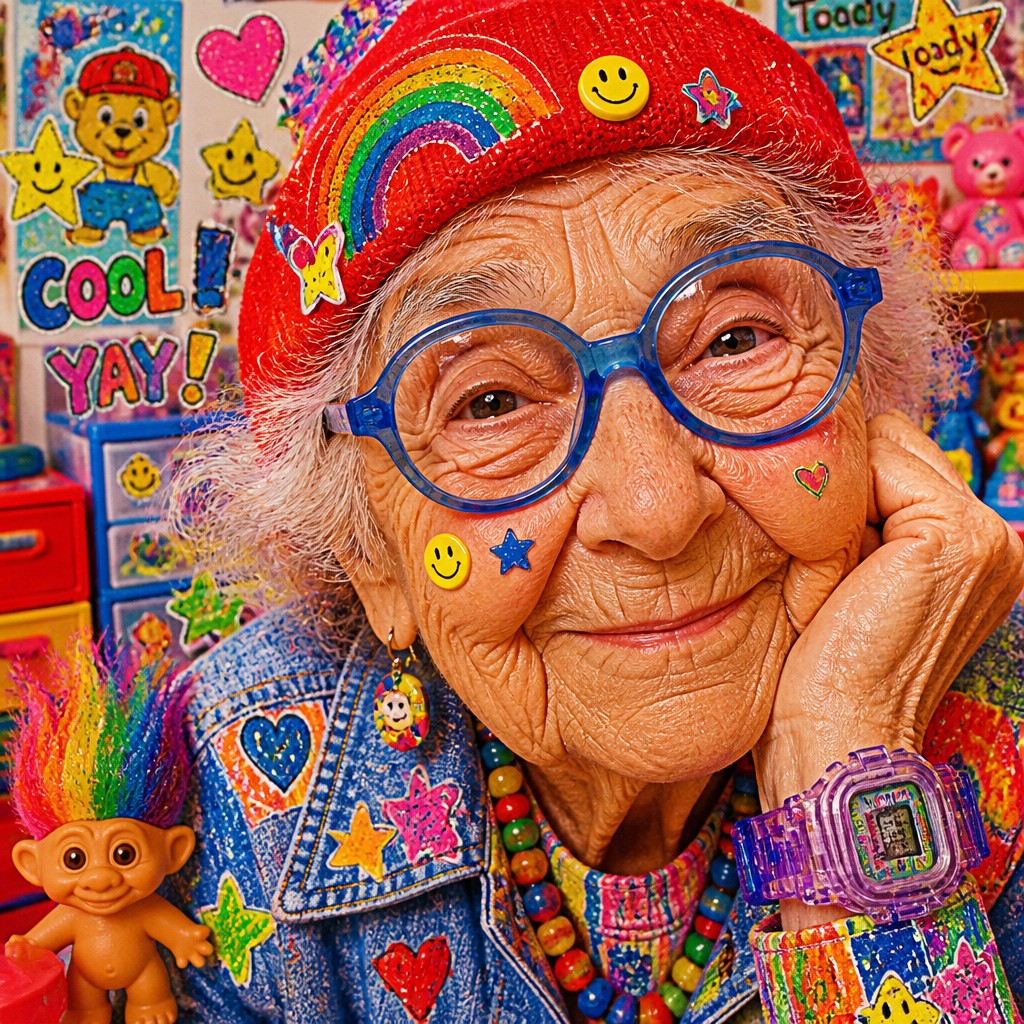
“close-up portrait of an elderly person with expressive weathered features”
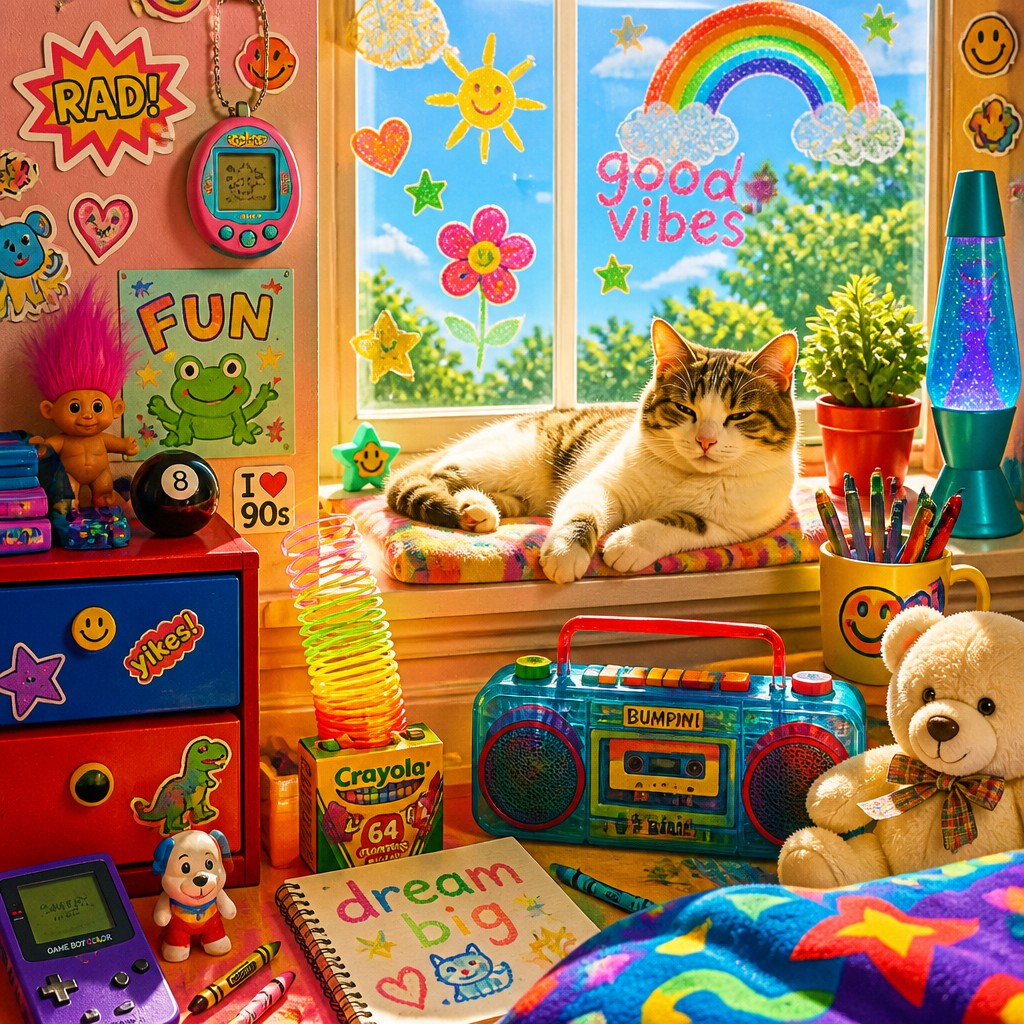
“a cat lounging in a sunlit window”
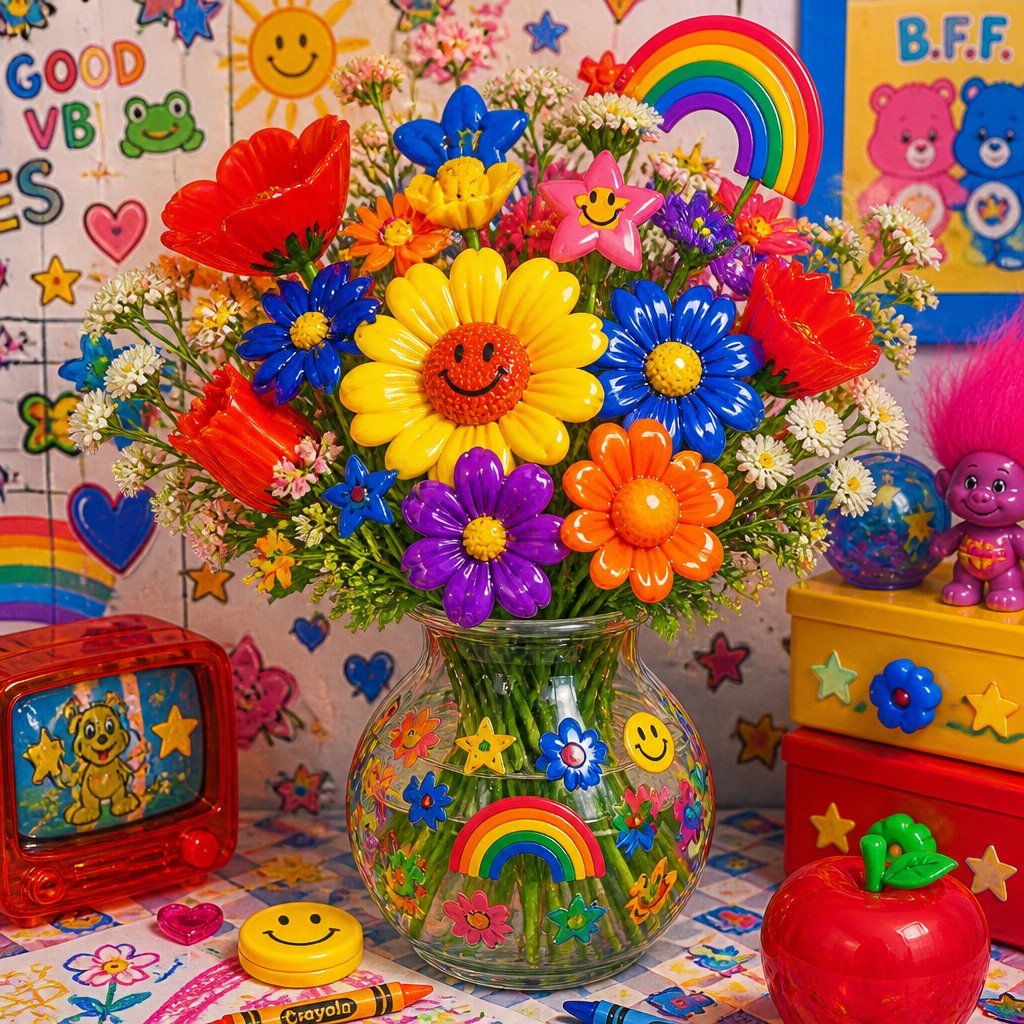
“bouquet of flowers in a glass vase”
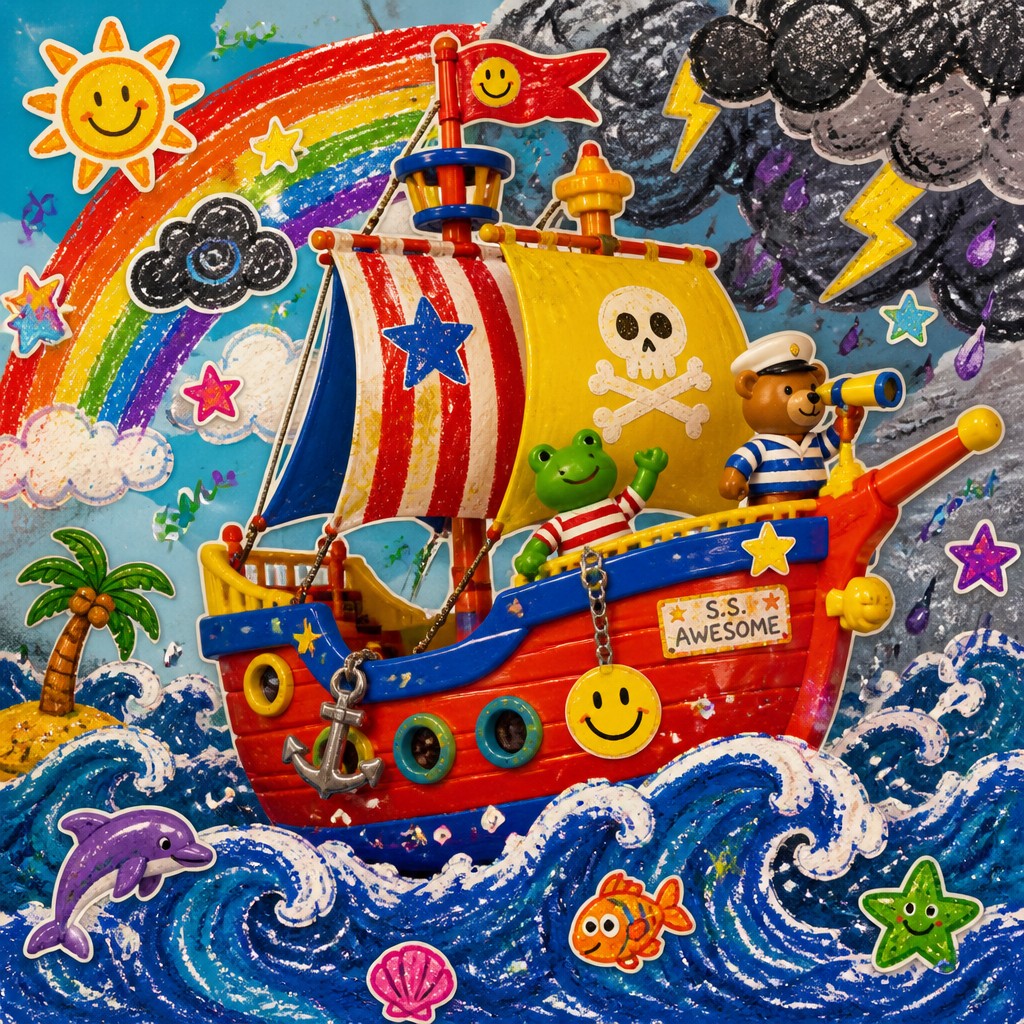
“sailing ship on a stormy sea”
How to Create Kidcore Aesthetic Art
Master the craft step by step — or skip straight to creating. Read the full guide →
- 1
Build a primary-color foundation
Start with a palette dominated by red, blue, yellow, and white, then add rainbow accents sparingly for variety. Keep contrast high and avoid muted tones unless you want the image to feel more vintage or worn.
- 2
Use simple, familiar symbols
Fill the composition with easy-to-recognize childlike motifs such as stars, hearts, balloons, blocks, ducks, clouds, or smiley faces. Repetition matters more than complexity; the style reads strongest when the imagery feels like sticker sheets or notebook margins.
- 3
Mix clean shapes with handmade texture
In traditional media, combine cut-paper forms, marker outlines, and crayon shading to suggest both craft and play. In digital work, layer glossy toy surfaces with grain, scribble marks, and imperfect edges so the image feels lively rather than sterile.
- 4
Embrace visual clutter
Avoid empty backgrounds unless you are intentionally isolating a single object. The aesthetic usually benefits from dense layering, overlapping objects, and small decorative details that create the feeling of a busy child’s space.
- 5
Describe the mood clearly in prompts
When generating images, emphasize nostalgia, playful clutter, plastic gloss, crayon texture, rainbow accents, and 90s childhood-room energy. Subject matter can be almost anything, but the prompt should direct the rendering toward toy-like, cheerful, and handmade visuals.
The Story
History & Origins of Kidcore Aesthetic
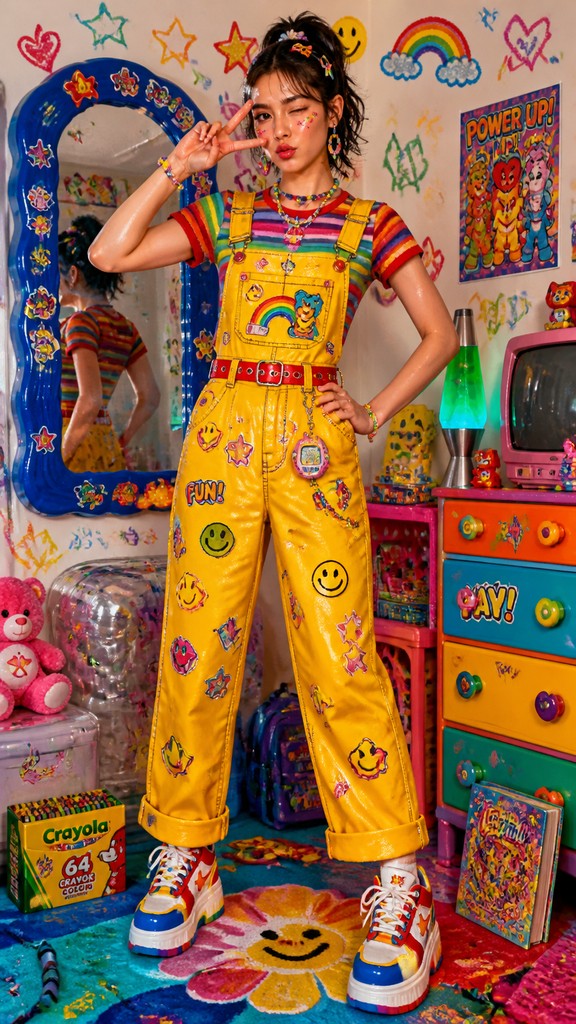
Kidcore does not come from a single historical art movement. It emerged as a contemporary internet aesthetic that draws on a wider lineage of children’s visual culture: toy packaging, preschool graphics, sticker albums, school supplies, cartoon iconography, and the design language of 1990s children’s rooms, classrooms, and media. Its popularity grew through online communities that catalogued and remixed nostalgic styles into named aesthetics.
Its development is closely tied to post-2010s nostalgia culture, especially the recycling of 1990s and early-2000s childhood imagery in social media, fashion, graphic design, and illustration. The aesthetic also borrows from handmade craft traditions, comic illustration, and pop graphics, but it repackages those influences into a specific emotional register: playful, cluttered, sentimental, and intentionally juvenile in the broad, celebratory sense of the word.
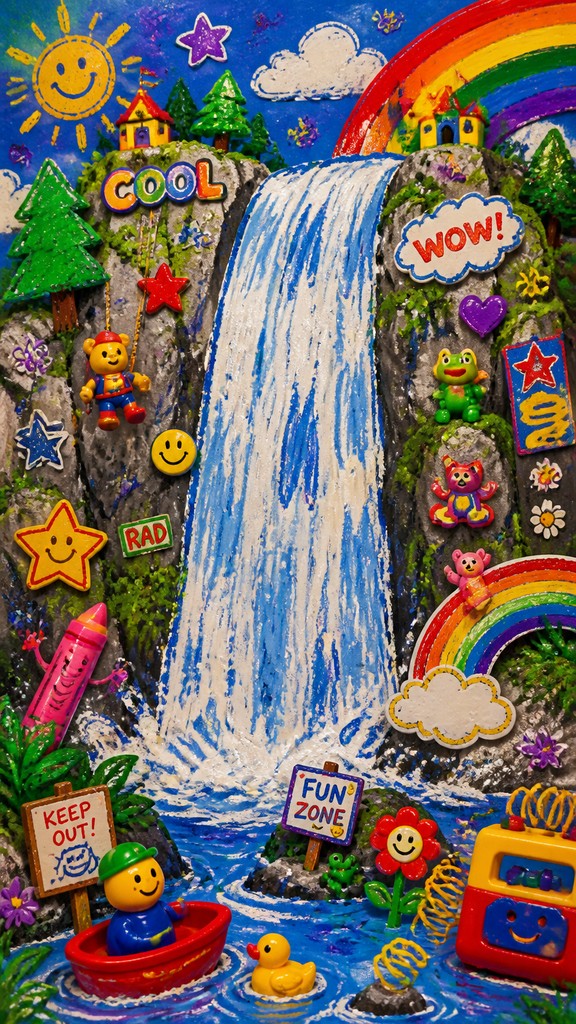
Influences: Kidcore draws from several real visual traditions: children’s book illustration, toy packaging design, pop art’s bold color language, comic graphics, and craft-based collage. It also overlaps with the playful simplification seen in artists such as Keith Haring and Yayoi Kusama, though kidcore is not a formal movement and should be understood as a contemporary aesthetic rather than a historical school. Its closest cultural sources are 1990s preschool media, sticker culture, and early digital graphics.
Frequently Asked Questions
What defines kidcore aesthetic?
Kidcore is defined by bright primary colors, childlike symbols, toy-inspired surfaces, and a cluttered, playful composition. It aims to evoke the feeling of childhood joy, especially the visual world of 90s bedrooms, classrooms, and playgrounds. The style is more about nostalgia and abundance than realism.
Is kidcore the same as kawaii?
Not exactly. Kawaii usually centers on cuteness, softness, and Japanese character design, while kidcore is broader and more tied to Western childhood nostalgia, primary colors, and toy-room clutter. They can overlap in charm and simplicity, but kidcore is usually louder, more chaotic, and more explicitly 90s-coded.
What colors are used in kidcore art?
The core palette is primary colors: red, blue, and yellow, often with white and rainbow accents. Pink, green, orange, and pastel tones may appear, but they are usually used in a way that keeps the overall image bright and toy-like. High saturation is more important than any specific shade.
How do I make something look more kidcore?
Use simple shapes, cheerful icons, layered stickers, and a busy layout. Add crayon texture, marker lines, or glossy plastic effects so the image feels handmade and toy-like. The strongest kidcore images usually look like a mix of craft project, bedroom decor, and cartoon memory.
Where is kidcore commonly used?
Kidcore appears in illustration, fashion, stationery, branding, social media graphics, album art, and playful product packaging. It is especially common in projects that want to feel nostalgic, friendly, or youthful without becoming minimalist or sleek. The style is also popular in personal digital art and decorative collage work.
Can kidcore be used for serious subjects?
Yes, but the tone changes the meaning. Applying kidcore to serious content can create irony, tenderness, or contrast by setting an intense subject inside an innocent visual language. That said, the style is usually strongest when the subject supports its upbeat, memory-driven mood.
Create your first Kidcore Aesthetic artwork
Describe anything — or upload a photo — and see it in Kidcore Aesthetic in seconds.
Make Something with Kidcore Aesthetic
Related Styles
Discover similar art styles