Brutalist Architecture Art
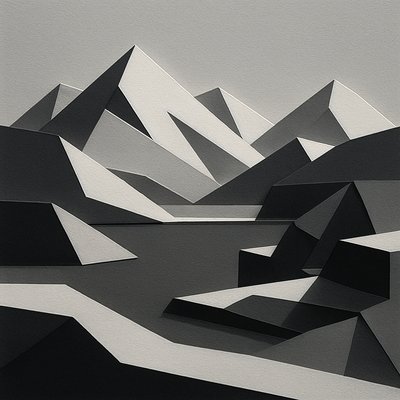
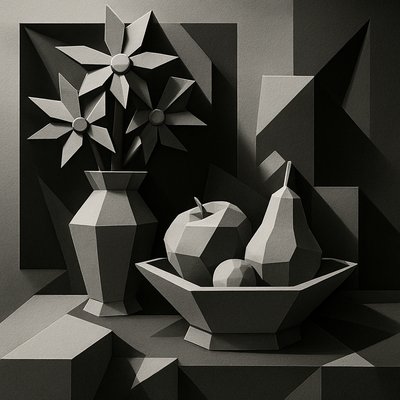
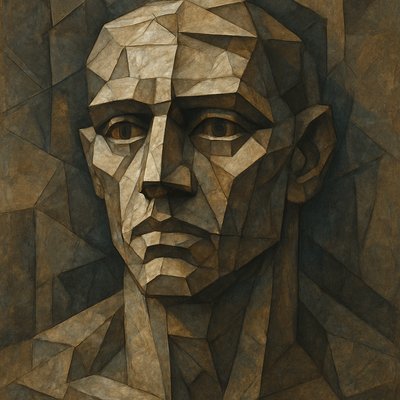
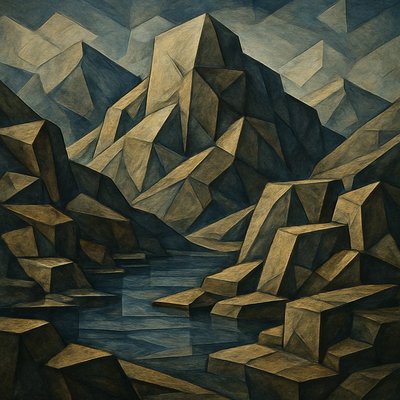
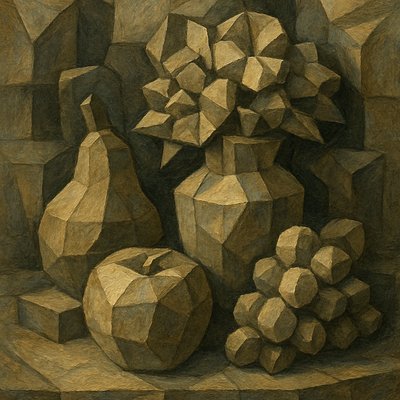
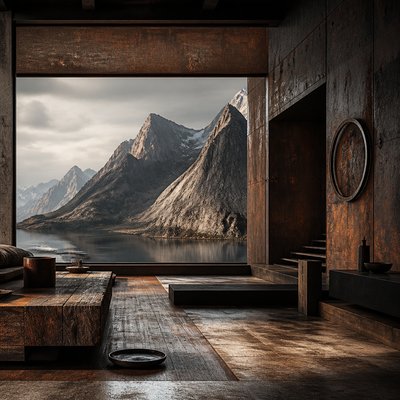
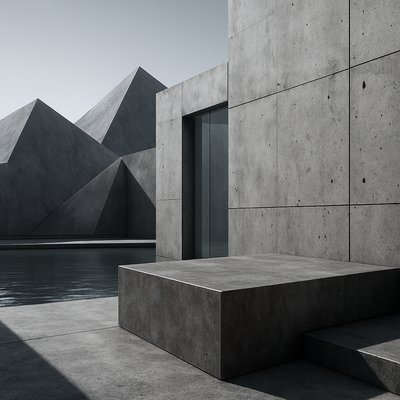
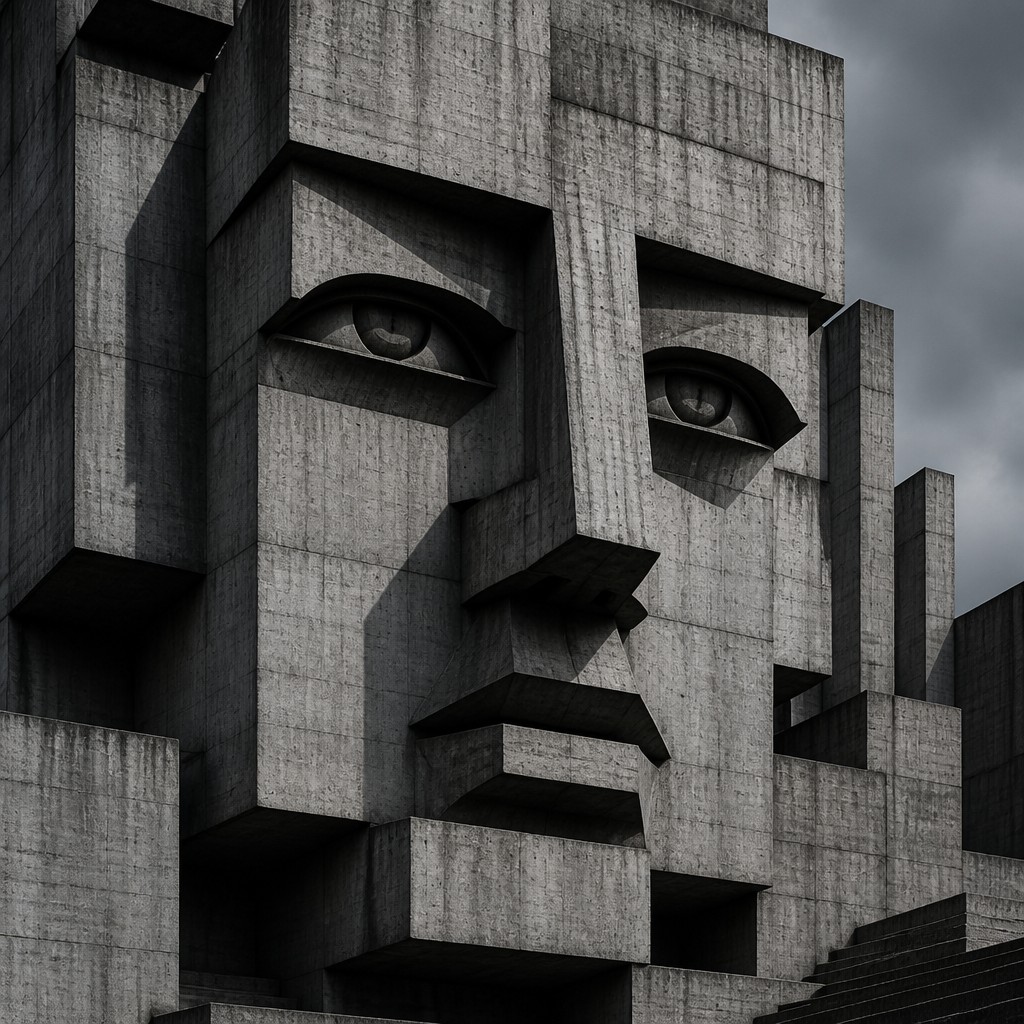
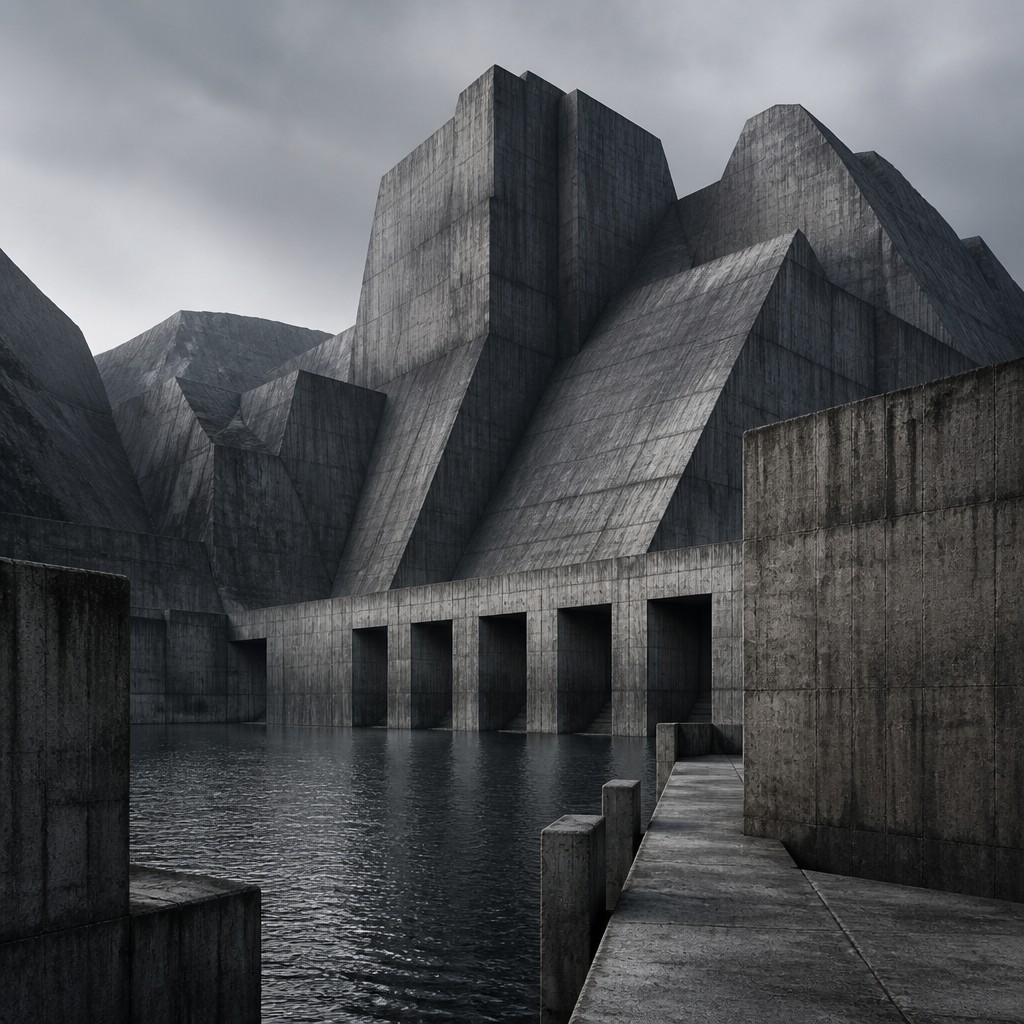
Raw concrete, blocky massing, and fortress-like geometry define this austere architectural style.
Instantly rendered in Brutalist Architecture — or transform a photo
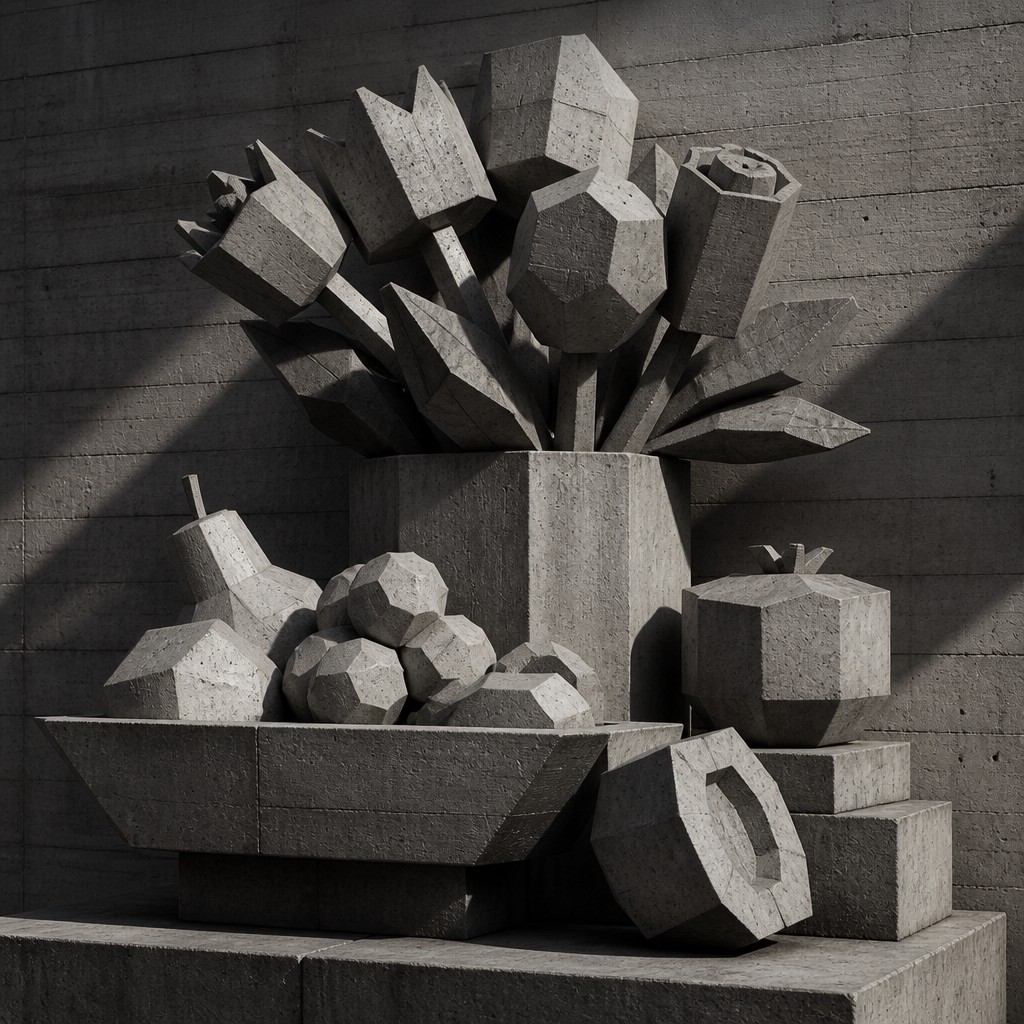
Brutalist Architecture Gallery
Tap any artwork to explore it
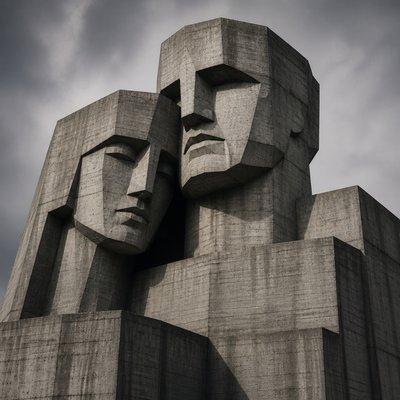
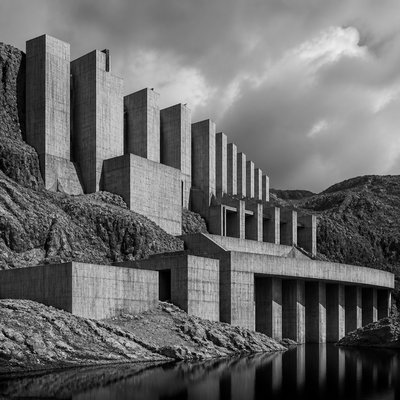
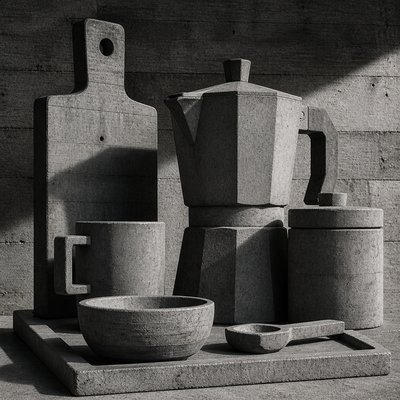
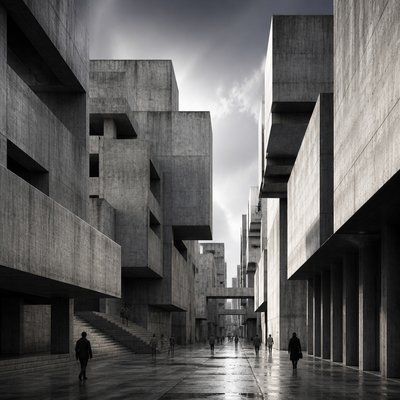
What is Brutalist Architecture Art?
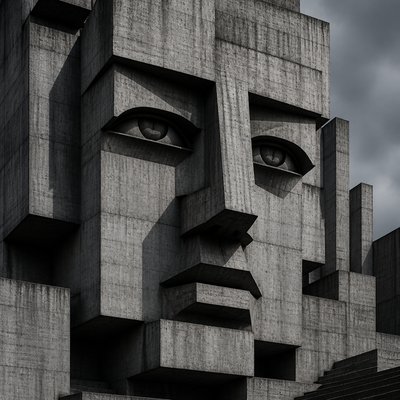
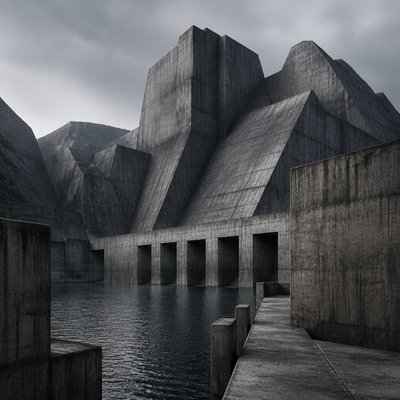
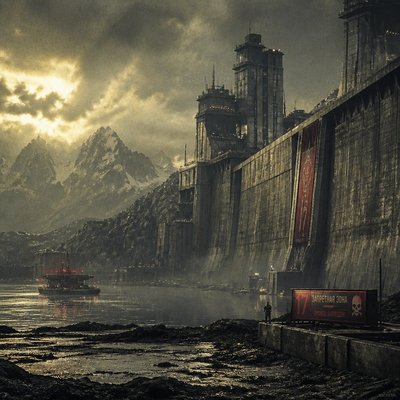
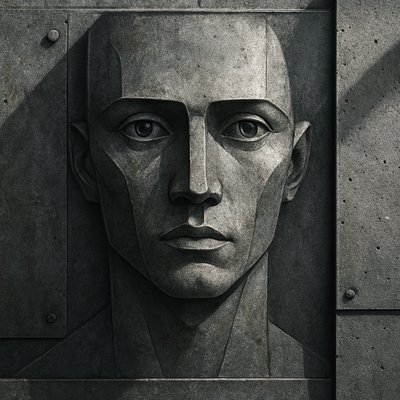
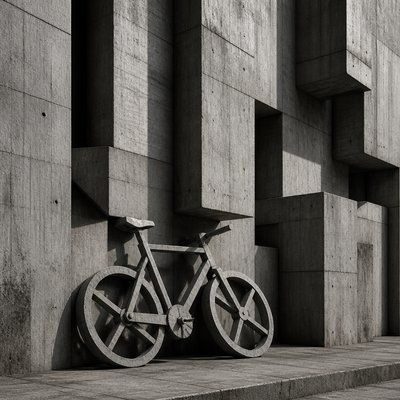
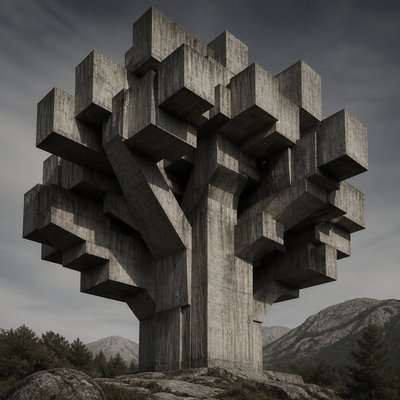
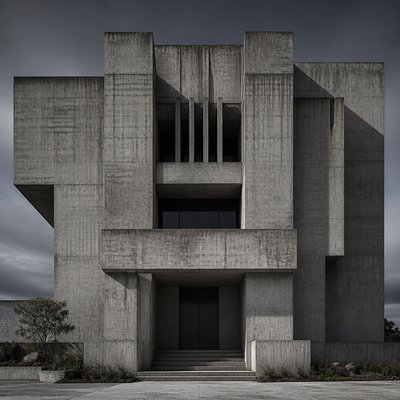
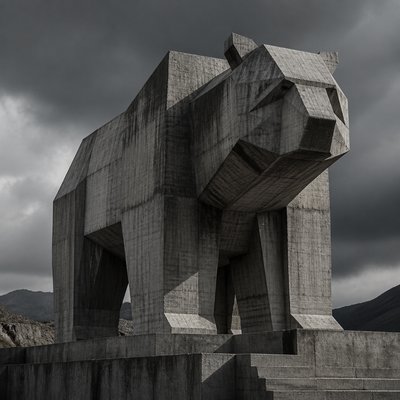
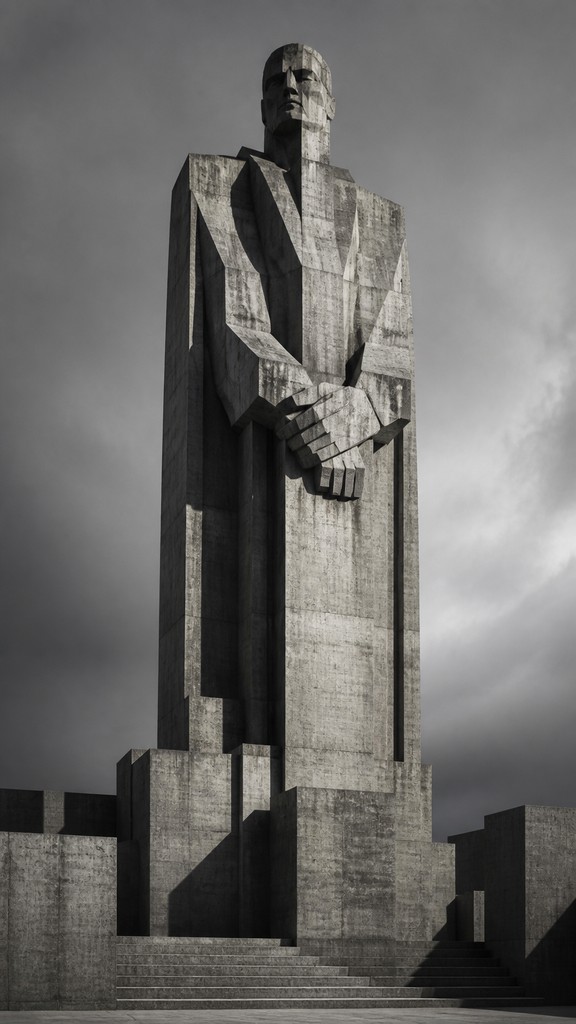
Brutalist Architecture Art is a visual style centered on massive, simplified structures that emphasize raw material, heavy geometry, and an uncompromising sense of weight. Its most recognizable features are monolithic forms, board-formed concrete surfaces, deep shadowed recesses, and a near-total rejection of decorative detail.
The style feels austere because it makes structure visible rather than disguising it. Thick walls, repetitive modules, and minimal openings create a fortress-like impression, while the rough texture of unfinished concrete gives buildings a tactile, sculptural quality. In image-making, it is often used to convey authority, severity, modernity, institutional power, or postwar urban monumentality.
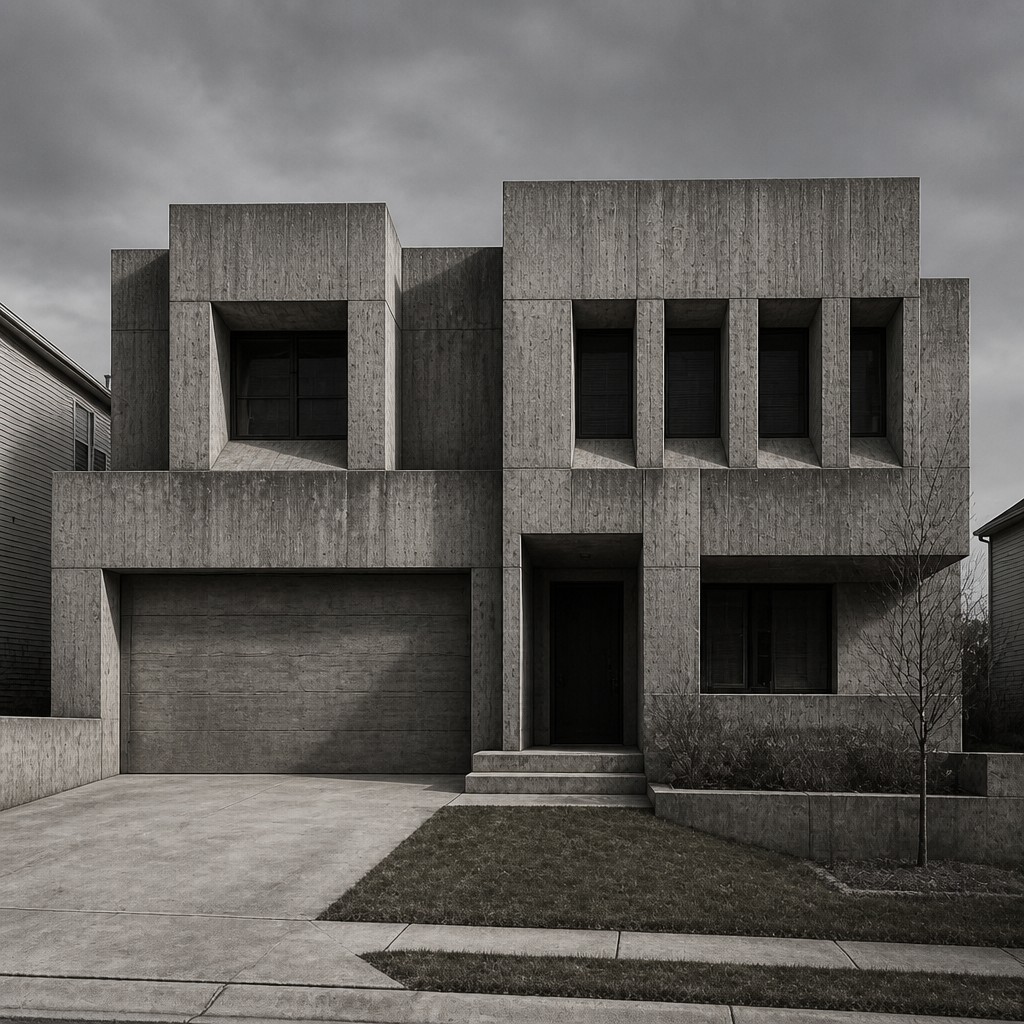
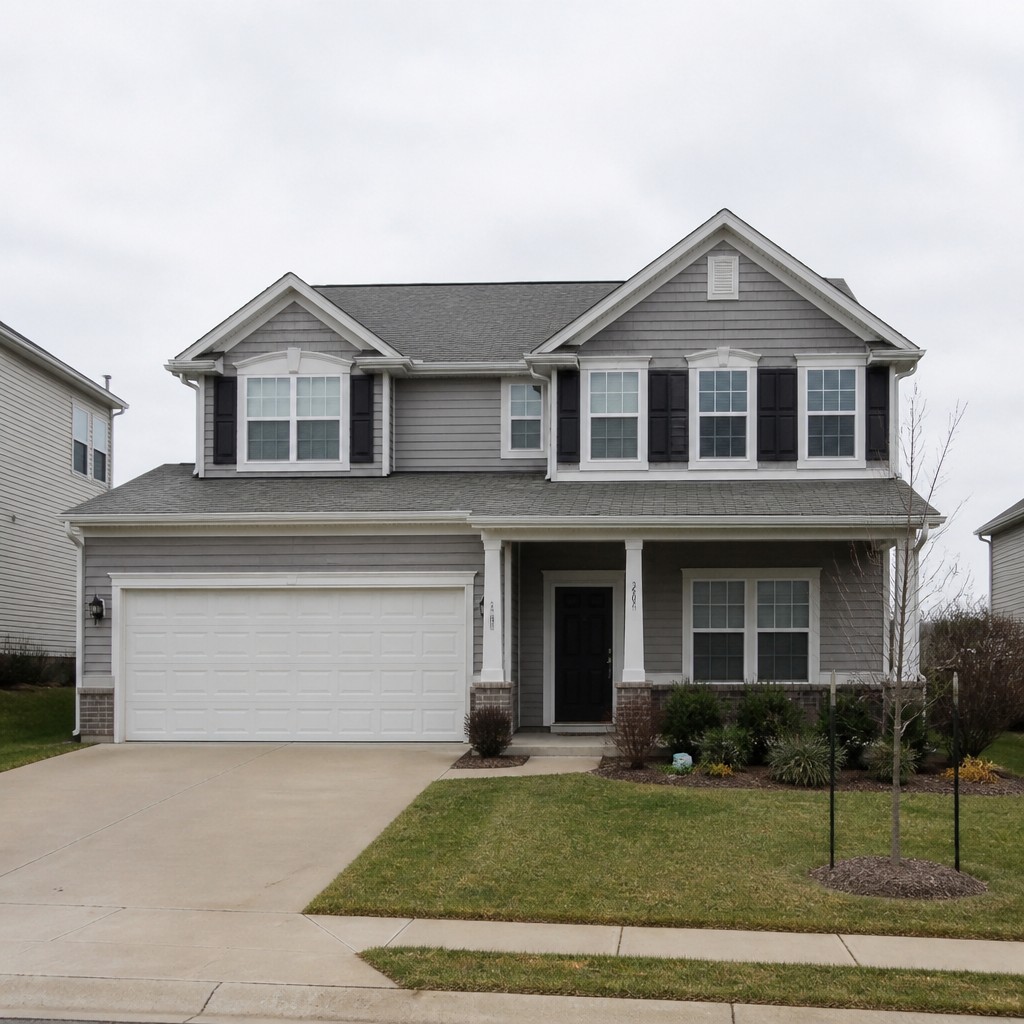
Try It On Your Photos
Upload any photo and convert it into Brutalist Architecture Art — drag the sliders to compare before and after.
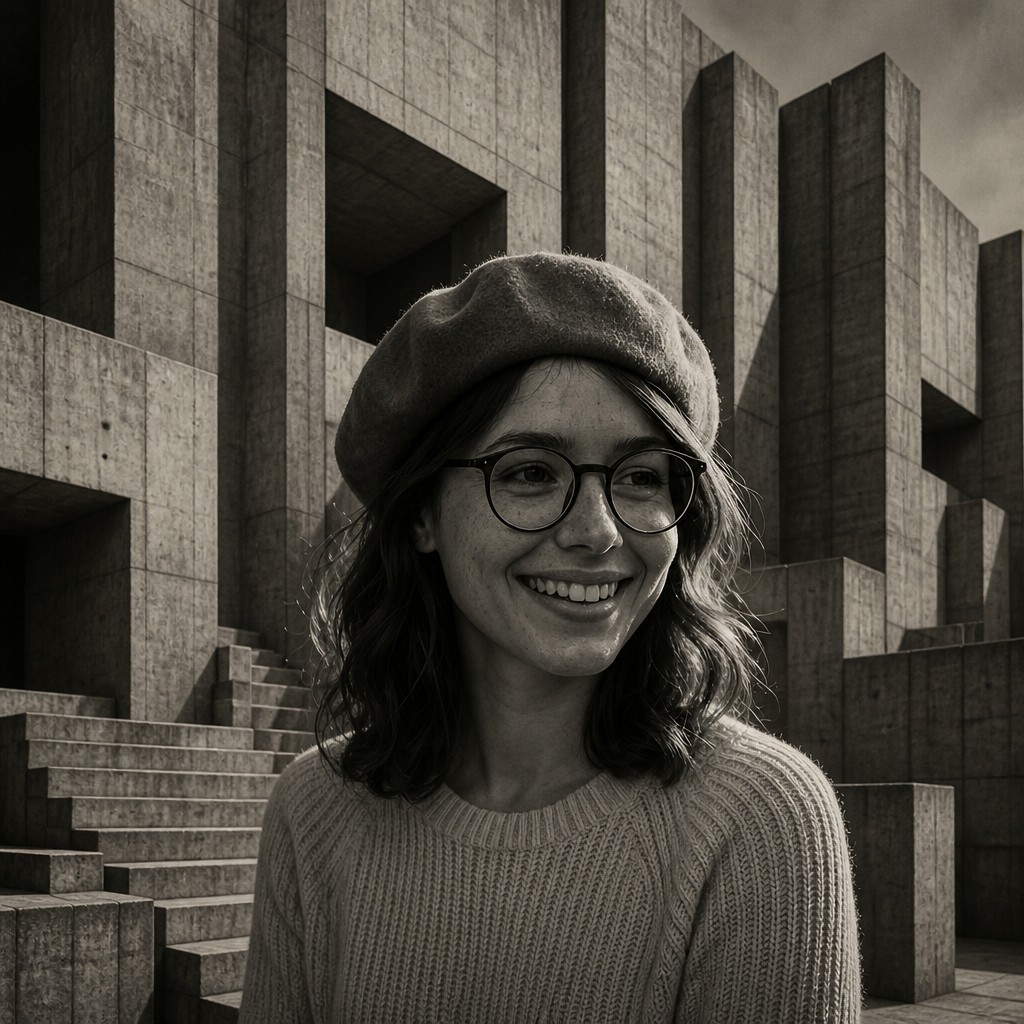

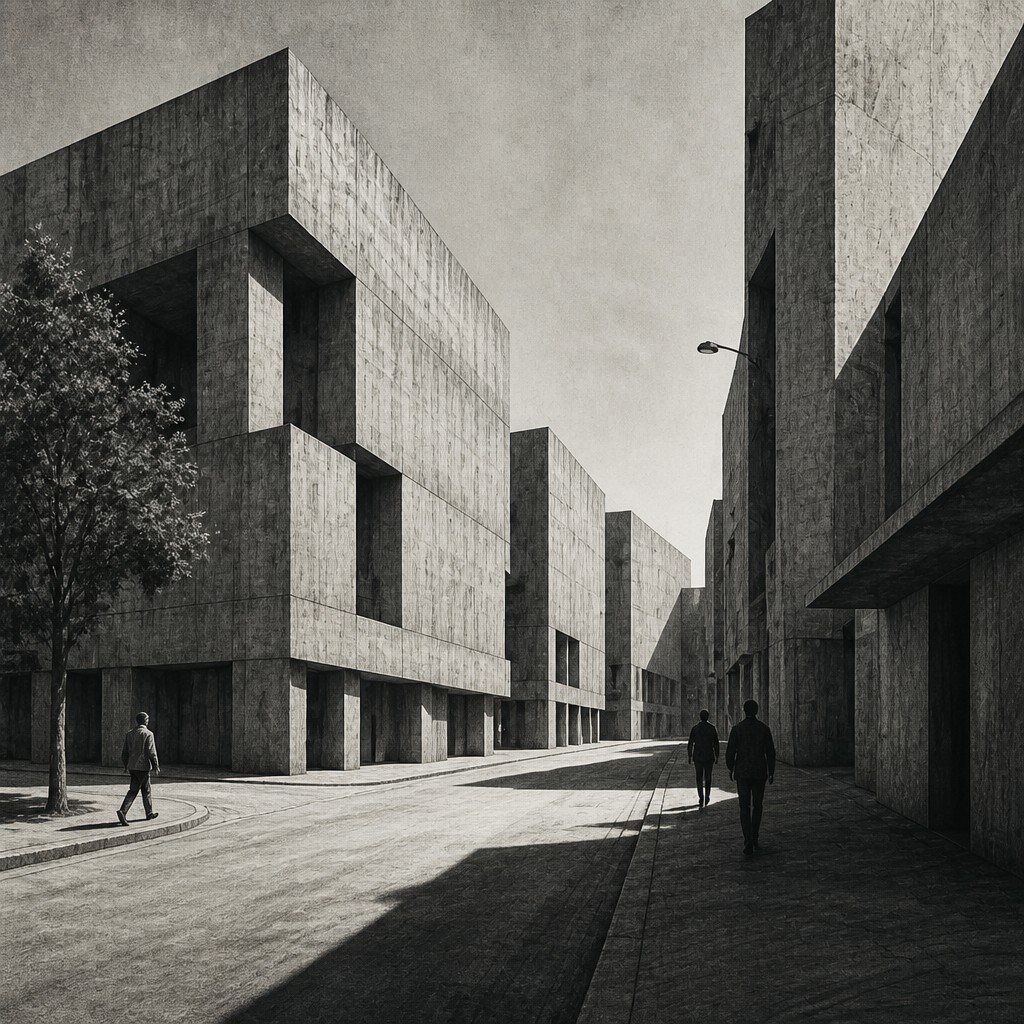

What Defines Brutalist Architecture Art
The signature details, up close
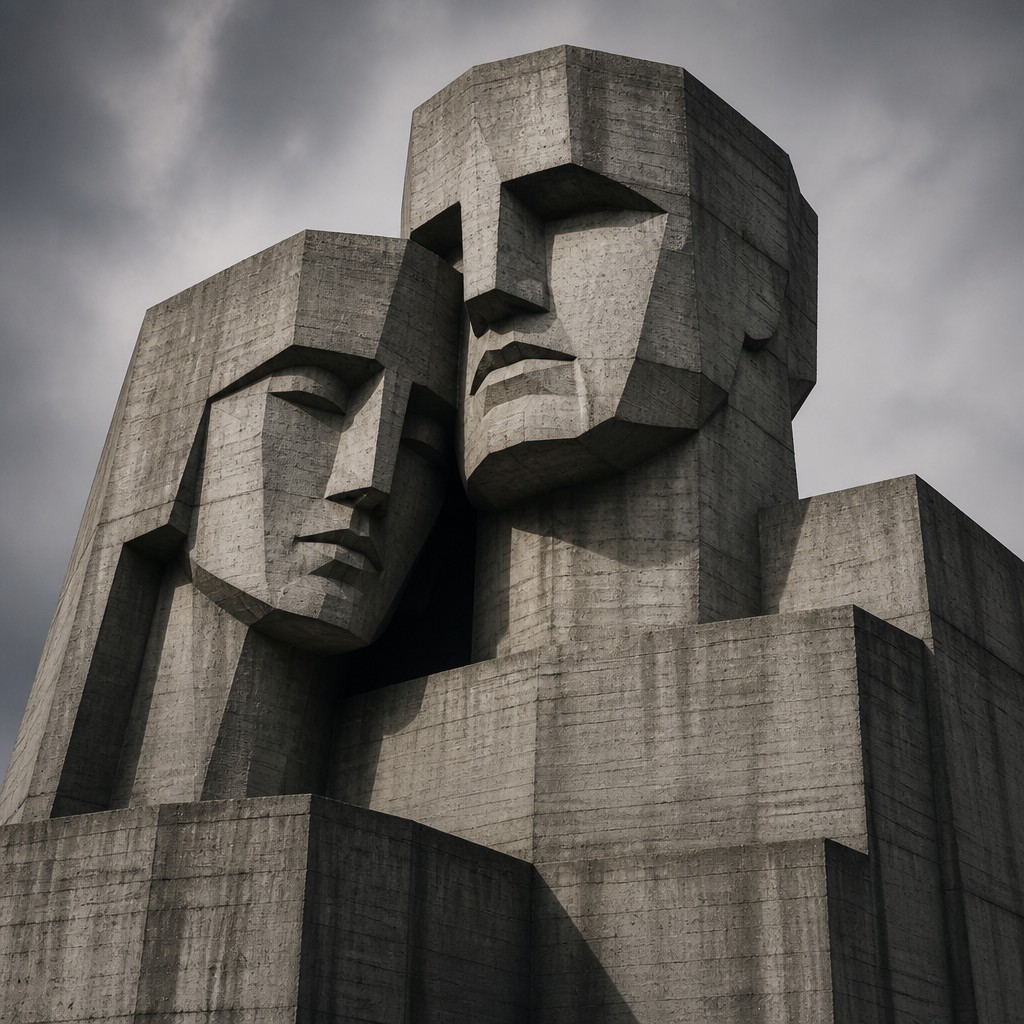
Monolithic massing
Buildings are composed as large, block-like volumes rather than slender or ornamental forms. The overall silhouette is heavy, compact, and fortress-like.
Raw concrete surfaces
Exposed concrete is the defining material, often shown with board-formed grain, casting seams, stains, and weathering. The surface is meant to read as honest and unadorned.
Minimal fenestration
Windows are typically small, deeply recessed, or arranged in rigid grids. Openings are reduced to emphasize enclosure and mass.
Repetitive modular rhythm
Structural bays, repeated slabs, and geometric subdivisions create a strict visual cadence. This repetition reinforces the sense of order and institutional scale.
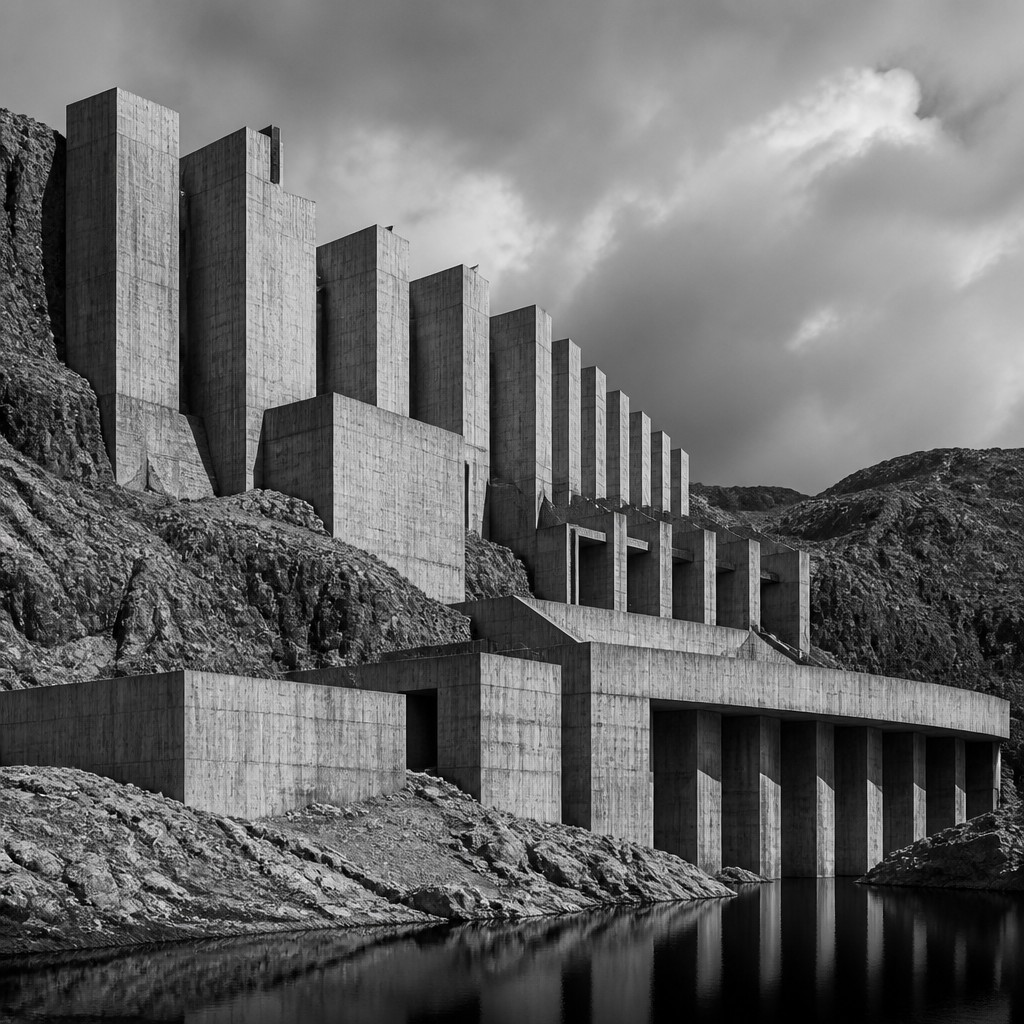
Deep shadow and chiaroscuro
Strong directional light exaggerates recesses, cantilevers, and voids. Shadow is essential to the style because it reveals the depth of the forms.
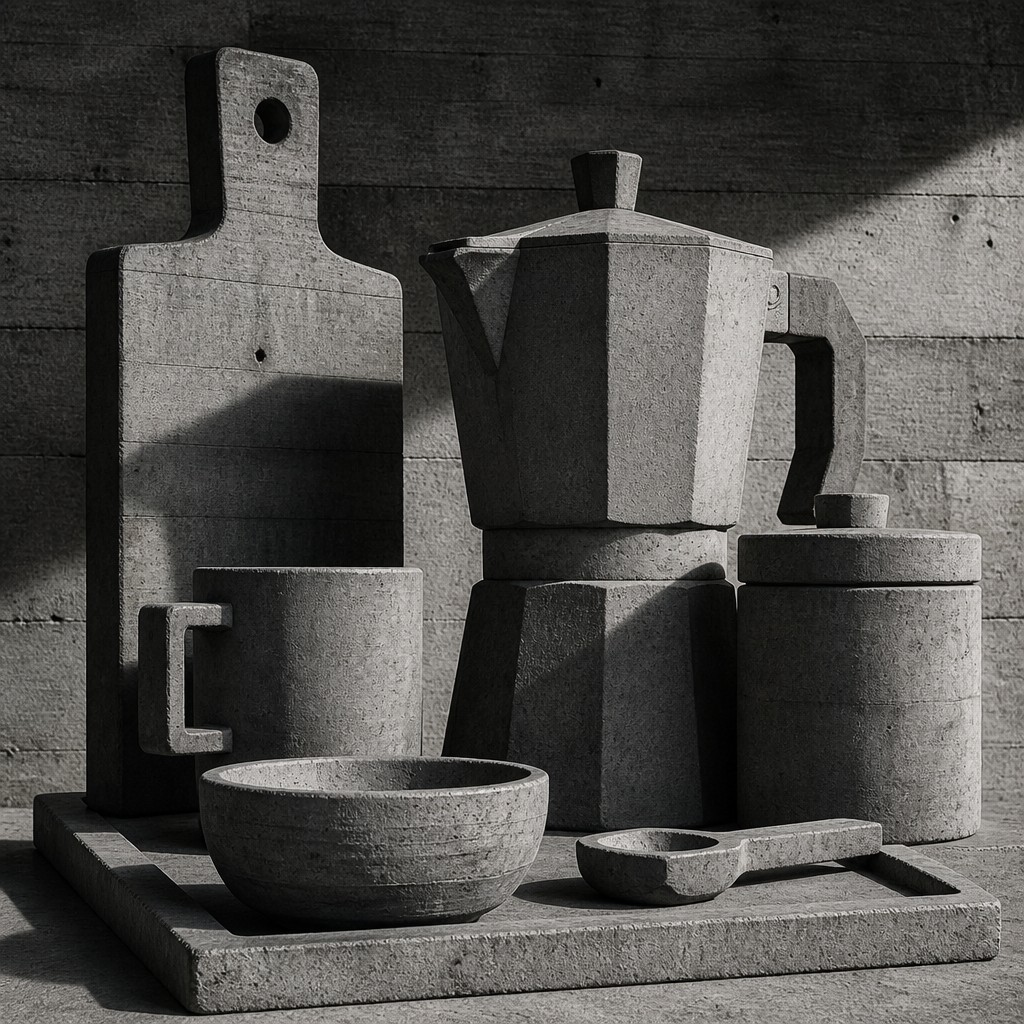
Austere monumentality
The emotional tone is severe, solemn, and civic rather than decorative or picturesque. The architecture is often perceived as sculptural because it prioritizes mass and presence over ornament.
Try It
Create Videos in Brutalist Architecture Art
Styles aren't just for stills — describe a scene or animate an image and get a short video rendered in Brutalist Architecture. Press play to see this pond come to life.
Make a VideoBrutalist Architecture Prompt Ideas
Start from an idea — each one opens the generator with the style ready to go. See all 40 Brutalist Architecture prompts →
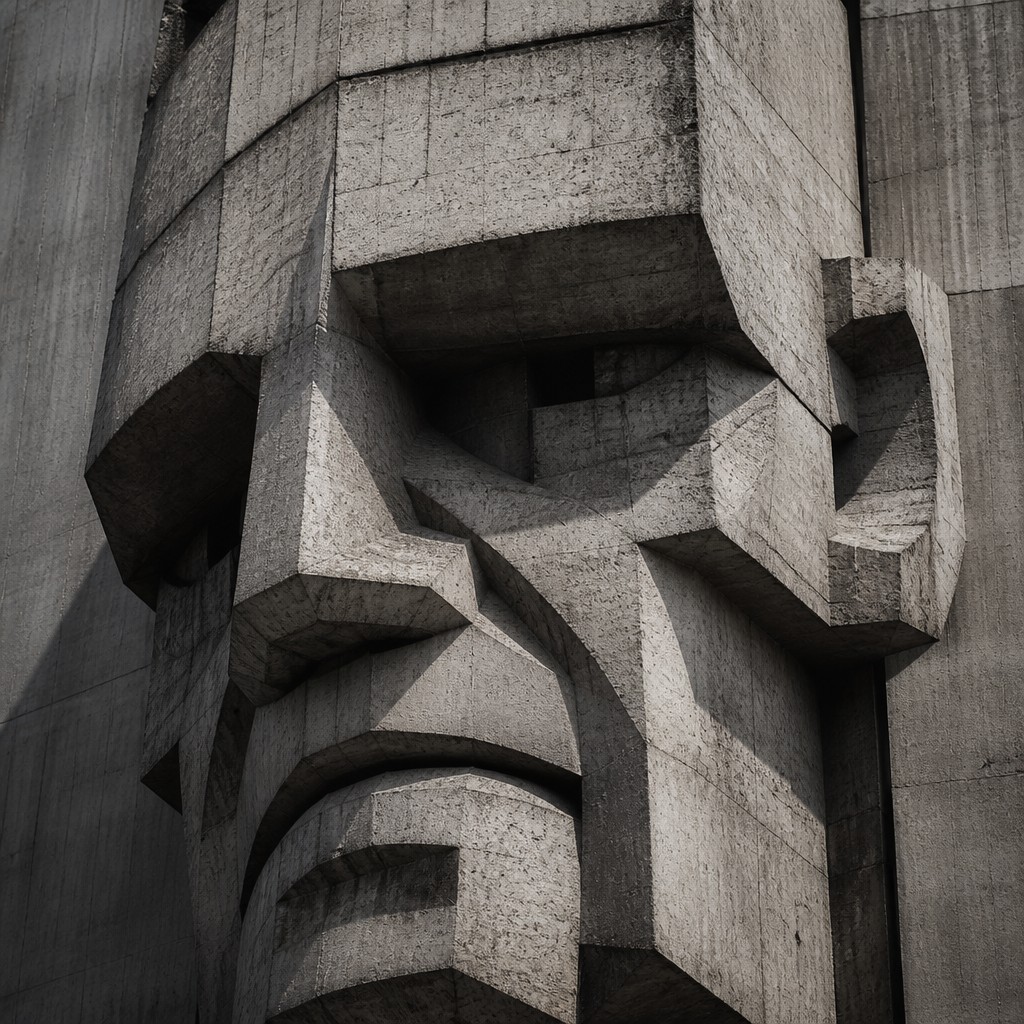
“close-up portrait of an elderly person with expressive weathered features”
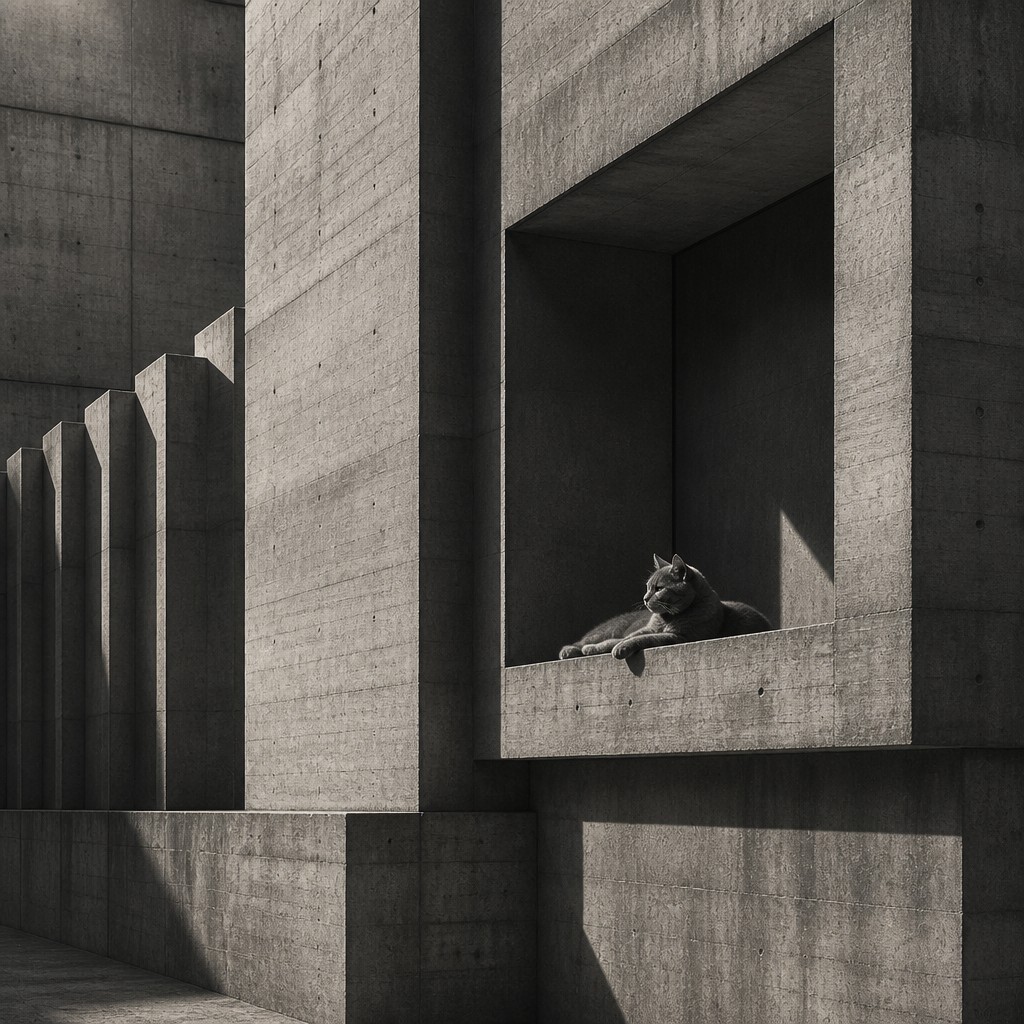
“a cat lounging in a sunlit window”
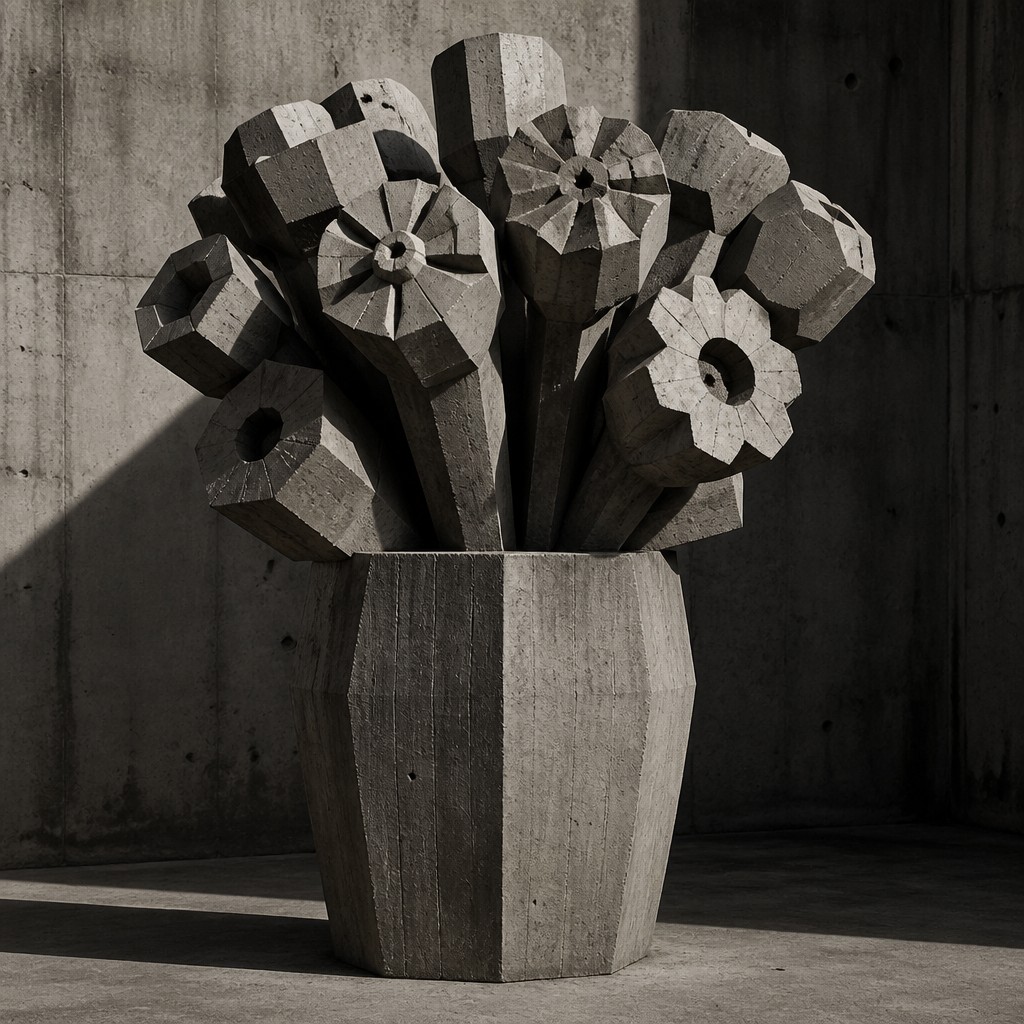
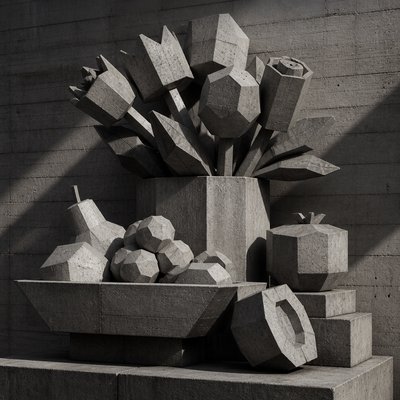
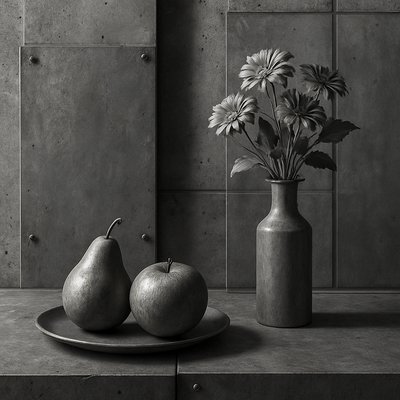
“bouquet of flowers in a glass vase”
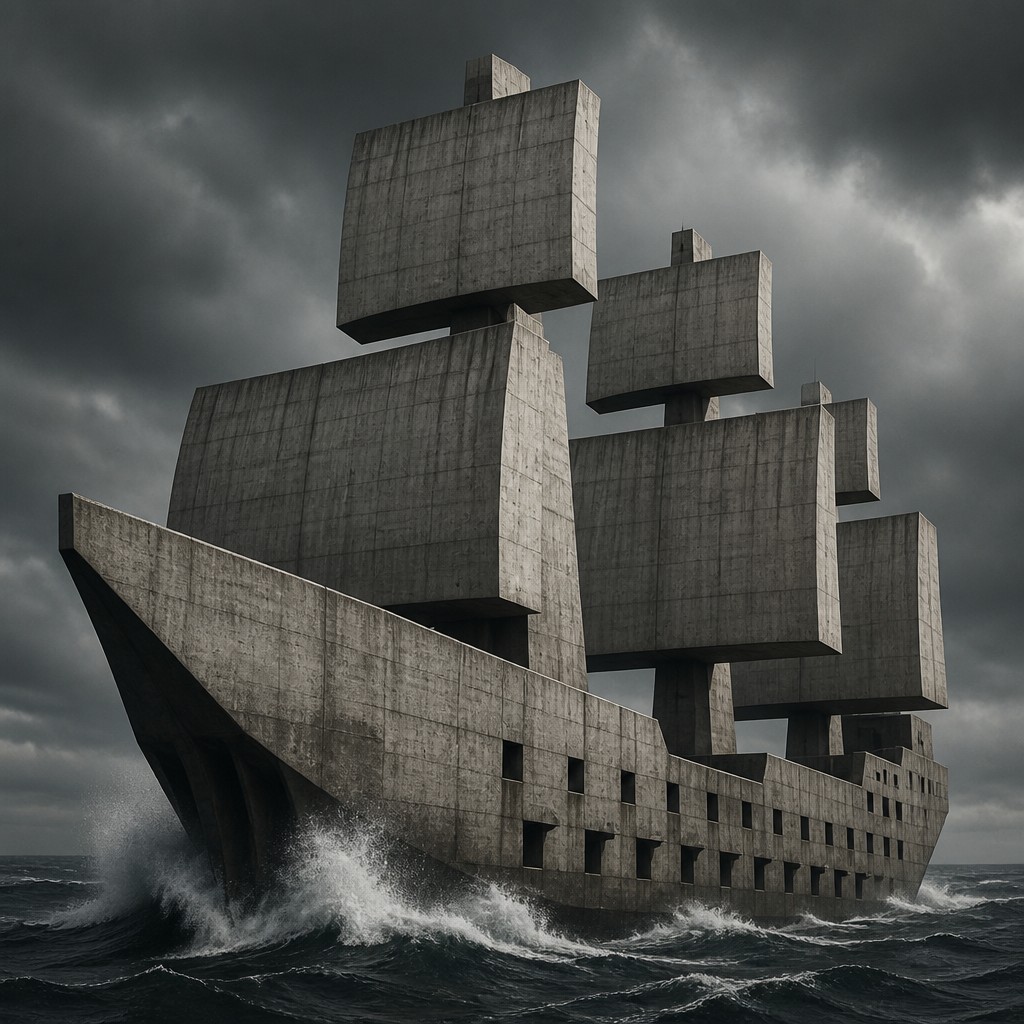
“sailing ship on a stormy sea”
How to Create Brutalist Architecture Art
Master the craft step by step — or skip straight to creating. Read the full guide →
- 1
Build from simple geometric volumes
Start with stacked rectangles, slabs, towers, and bridges rather than complex curves. Emphasize a strong silhouette and make the composition feel engineered and weighty.
- 2
Use concrete texture as structure, not decoration
Apply board-formed grain, seam lines, staining, and weathering with restraint. The surface should suggest cast material and construction process rather than surface embellishment.
- 3
Control light for dramatic relief
Use low-angle or hard directional light to carve out recesses and cast long shadows. This is especially important in rendering, photography, and digital painting because the style depends on contrast to communicate mass.
- 4
Limit the palette
Work primarily in greys, off-whites, charcoal, and muted stone tones. Small variations in value and temperature are enough to distinguish planes without breaking the austere look.
- 5
Create with an architectural mindset
Whether drawing by hand or working digitally, think in terms of structure, proportion, and module. For prompt-based generation, specify raw concrete, heavy block forms, minimal windows, deep shadows, and weathered surfaces to keep the result grounded in the style.
The Story
History & Origins of Brutalist Architecture
Brutalism emerged in the mid-20th century, especially in the 1950s through the 1970s, as a major architectural tendency in Europe and later North America and elsewhere. The term is commonly linked to the French phrase béton brut, meaning raw concrete, and the work of leading modernist architects of exposed concrete, whose later buildings helped define the aesthetic of exposed material, heavy massing, and stark formal clarity. Other widely associated architects include the pioneering husband-and-wife team associated with British postwar housing and civic design, major American postwar brutalist designers, influential mid-century modernist designers and architects, and notable late-modernist architects known for severe concrete monuments.
Its lineage combines modernist functionalism, postwar reconstruction, and a desire for honest expression of structure and materials. In contemporary visual culture, Brutalism persists not only in architecture but also in digital illustration, concept art, and urban photography, where its monumental forms and weathered surfaces are used to evoke permanence, institutional rigor, and a dramatic sense of spatial scale.
Influences: This style is rooted in mid-century modernism, postwar architectural realism, and the material honesty of béton brut. It also shares visual priorities with Constructivism’s structural clarity and with sculptural abstraction, though Brutalism is defined more by built mass and exposed material than by pure abstraction. Among canonical architects associated with the historical movement are leading modernist architects of exposed concrete, the pioneering husband-and-wife team associated with British postwar housing and civic design, major American postwar brutalist designers, influential mid-century modernist designers and architects, and notable late-modernist architects known for severe concrete monuments.

Frequently Asked Questions
What defines Brutalist Architecture Art?
It is defined by heavy, block-like forms, exposed concrete, minimal ornament, and a severe, fortress-like appearance. The style emphasizes structure, mass, and surface texture over decorative detail. Deep shadows and repetitive modular geometry are usually part of the look.
Is Brutalism the same as modernism?
Not exactly. Brutalism grew out of modernism and shares its interest in function and structural honesty, but it is much heavier, rougher, and more visually imposing. Where many modernist buildings feel light or refined, Brutalist buildings often feel monumental and austere.
Why does Brutalist architecture use so much concrete?
Concrete was valued for its structural flexibility, affordability, and ability to be cast into large forms. In Brutalist design, the material is usually left exposed so the building reads as a raw, truthful construction rather than a decorative shell. That exposed surface became one of the style’s strongest visual signatures.
How do I make an image look Brutalist?
Focus on simple geometric masses, raw concrete texture, and minimal openings. Use hard light and a restrained grey palette so the form and shadow do most of the visual work. In digital work, preserve seams, stains, and roughness rather than smoothing everything away.
Where is Brutalist style commonly used?
Historically it appeared in government buildings, universities, housing projects, churches, museums, and civic centers. In image-making it is also used for sci-fi environments, dystopian cityscapes, memorials, and editorial architecture studies because of its dramatic, monumental character.
How is Brutalist architecture different from minimalist design?
Both can avoid ornament, but Brutalism is generally heavier, rougher, and more materially expressive. Minimalism often aims for quiet simplicity and refined surfaces, while Brutalism foregrounds mass, texture, and an uncompromising structural presence.

Create your first Brutalist Architecture artwork
Describe anything — or upload a photo — and see it in Brutalist Architecture Art in seconds.
Make Something with Brutalist Architecture
Compare Brutalist Architecture
Related Styles
Discover similar art styles