Projection Mapping Style
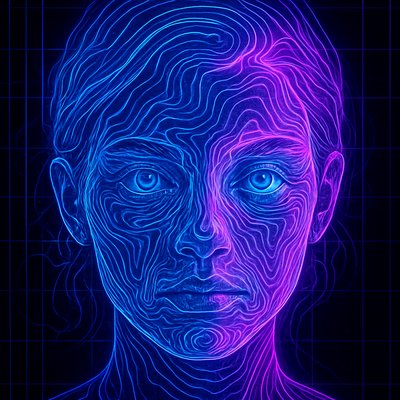
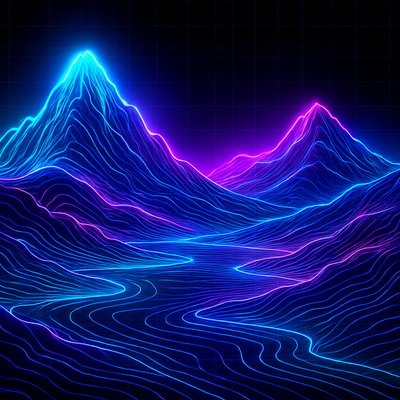
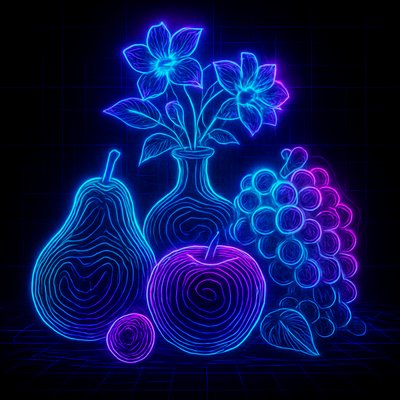
Explore Projection Mapping Style: glowing architectural illusions, animated geometry, saturated beams, and night-time facades transformed by light.
Instantly rendered in Projection Mapping — or transform a photo
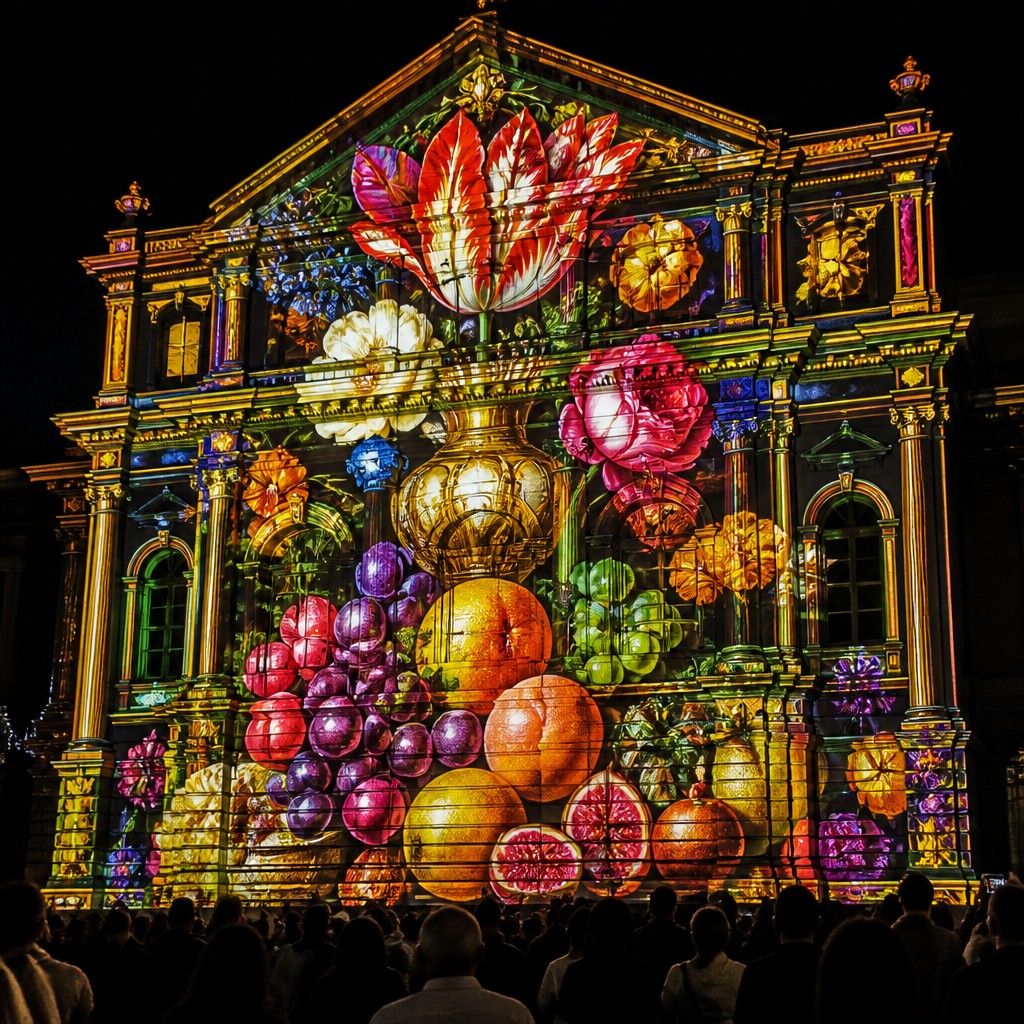
Projection Mapping Gallery
Tap any artwork to explore it
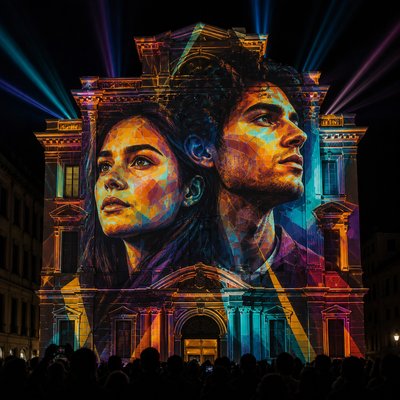
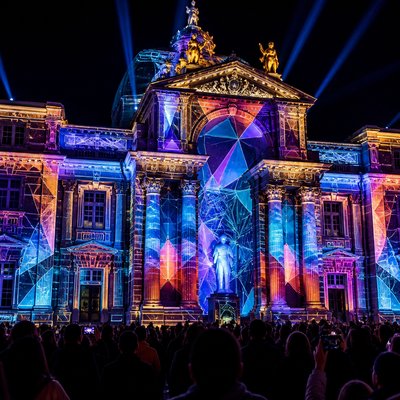
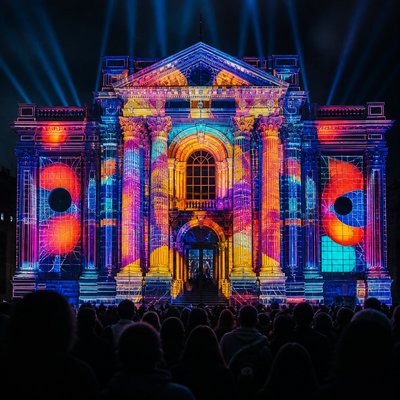
What is Projection Mapping Style?
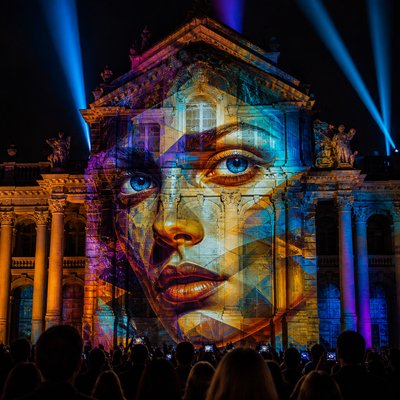
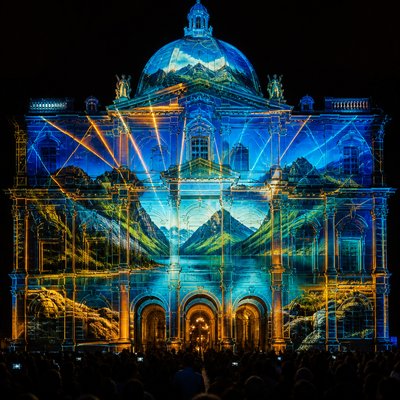
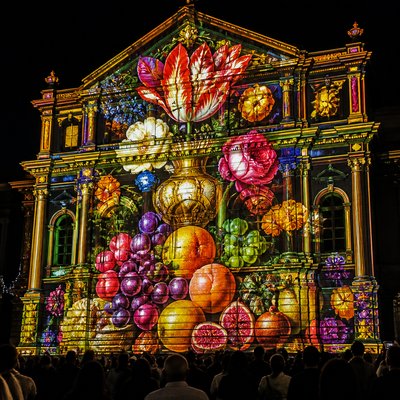
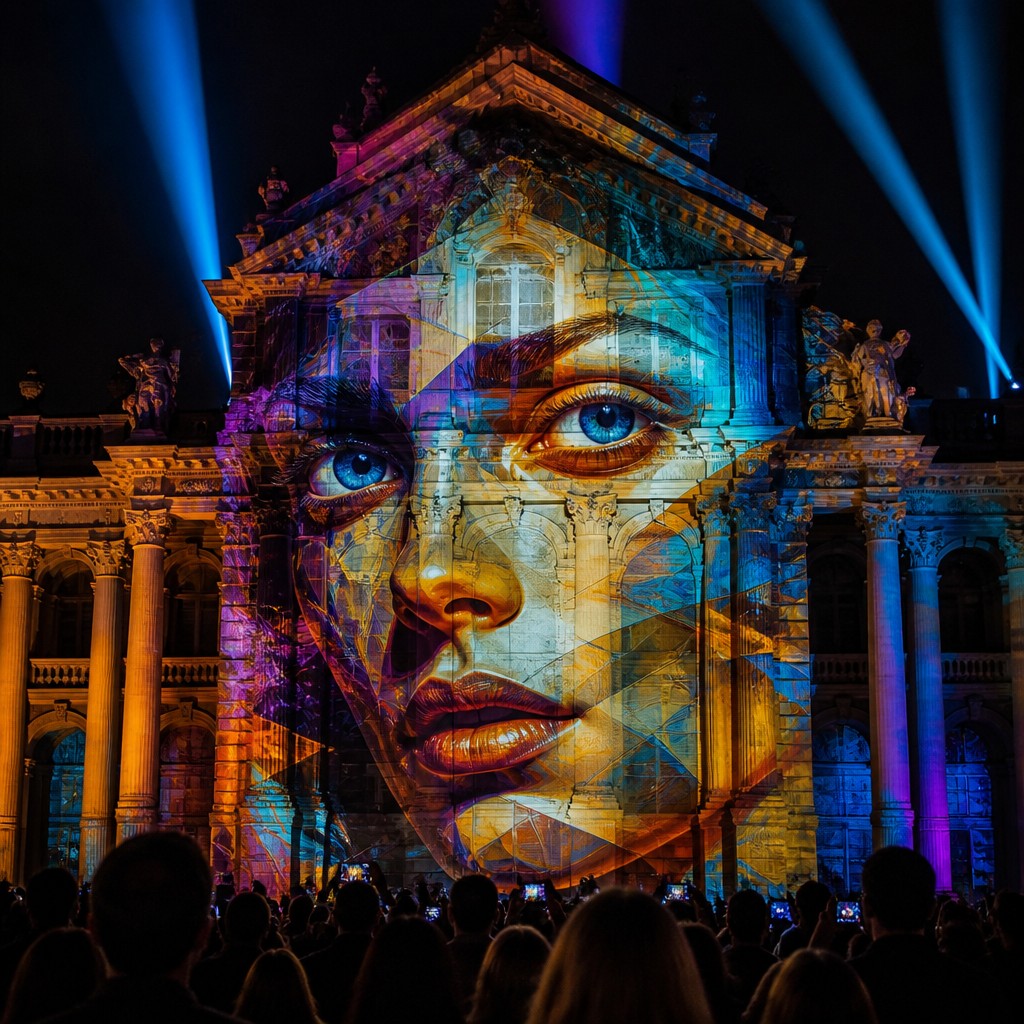
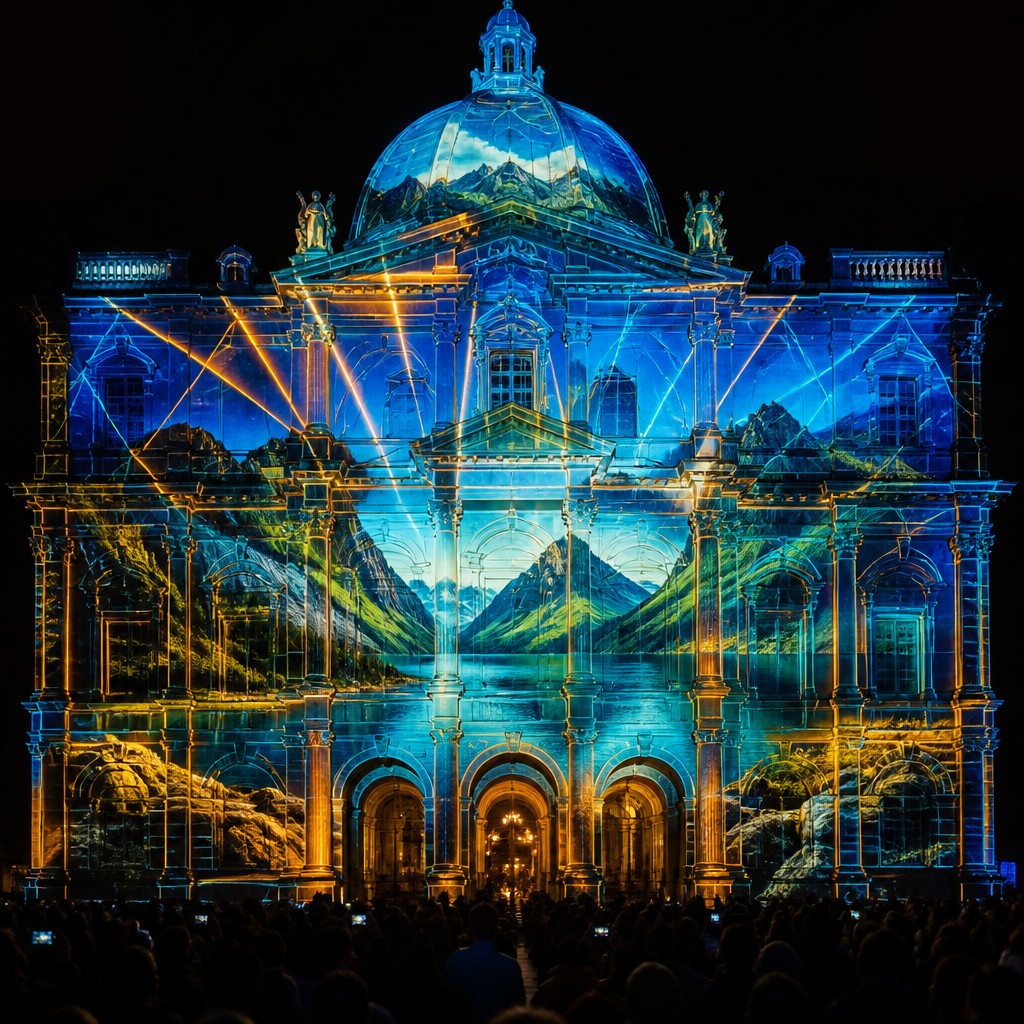
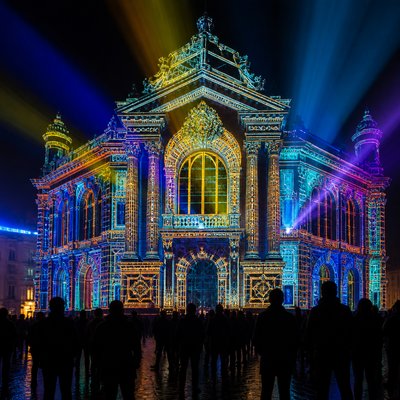
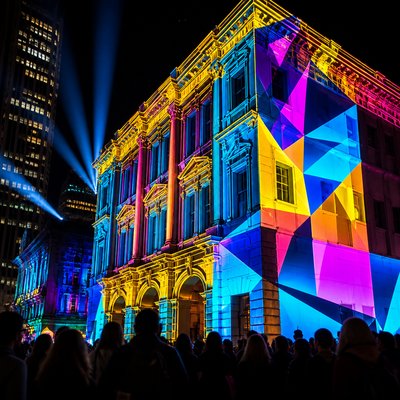
Projection Mapping Style depicts architecture as a screen for precisely aligned light, animation, and spatial illusion. Facades appear to bend, fracture, dissolve, or transform as luminous graphics follow windows, columns, cornices, arches, and other structural features. The usual setting is nighttime, when intense projected color contrasts with surrounding darkness and silhouettes of spectators establish scale.
Although projection mapping is fundamentally a time-based installation technique, its visual language translates effectively into still images, photography, illustration, and text-to-image work. The style looks convincing when the projected patterns respect the building's perspective and surface divisions while simultaneously creating impossible transformations. Its characteristic tension comes from combining hard architectural geometry with fluid light, animated texture, and theatrical atmosphere.
Try It On Your Photos
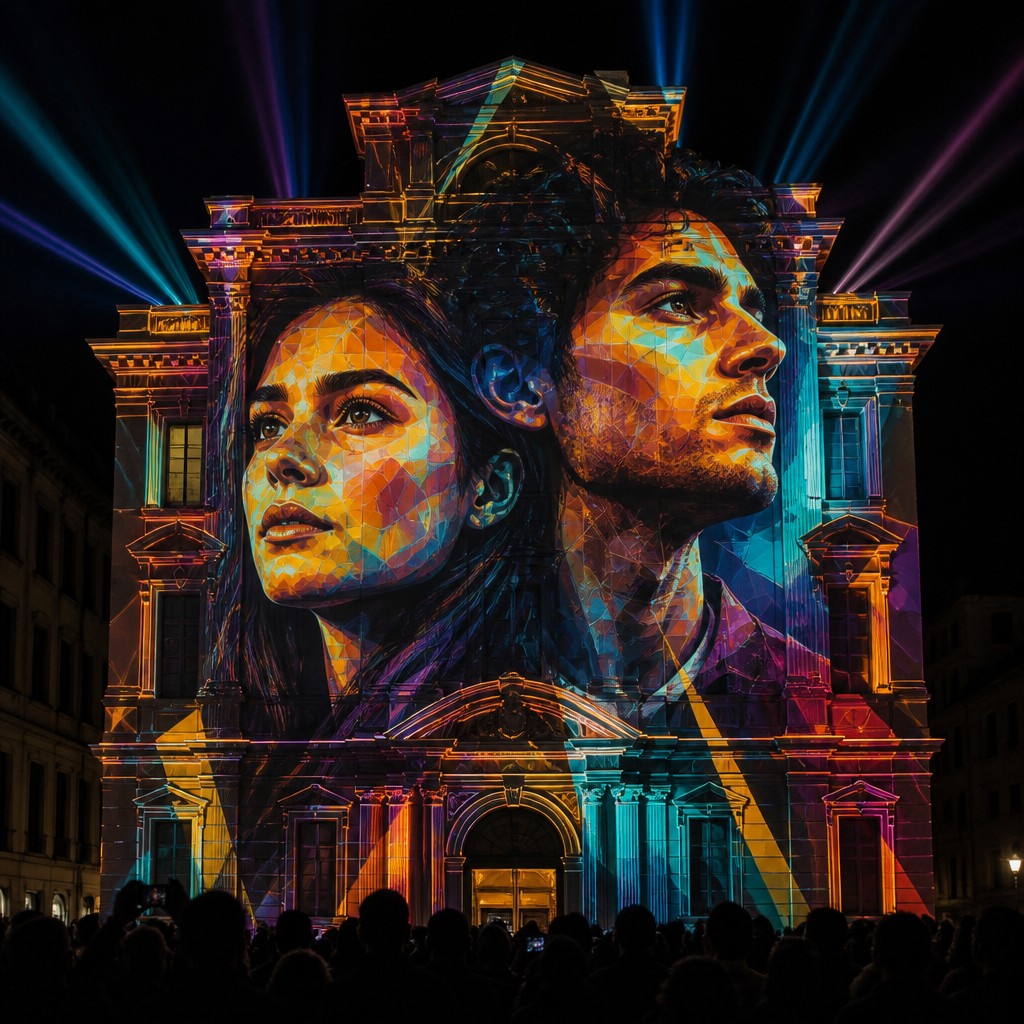
Upload any photo and convert it into Projection Mapping Style — drag the sliders to compare before and after.


What Defines Projection Mapping Style
The signature details, up close
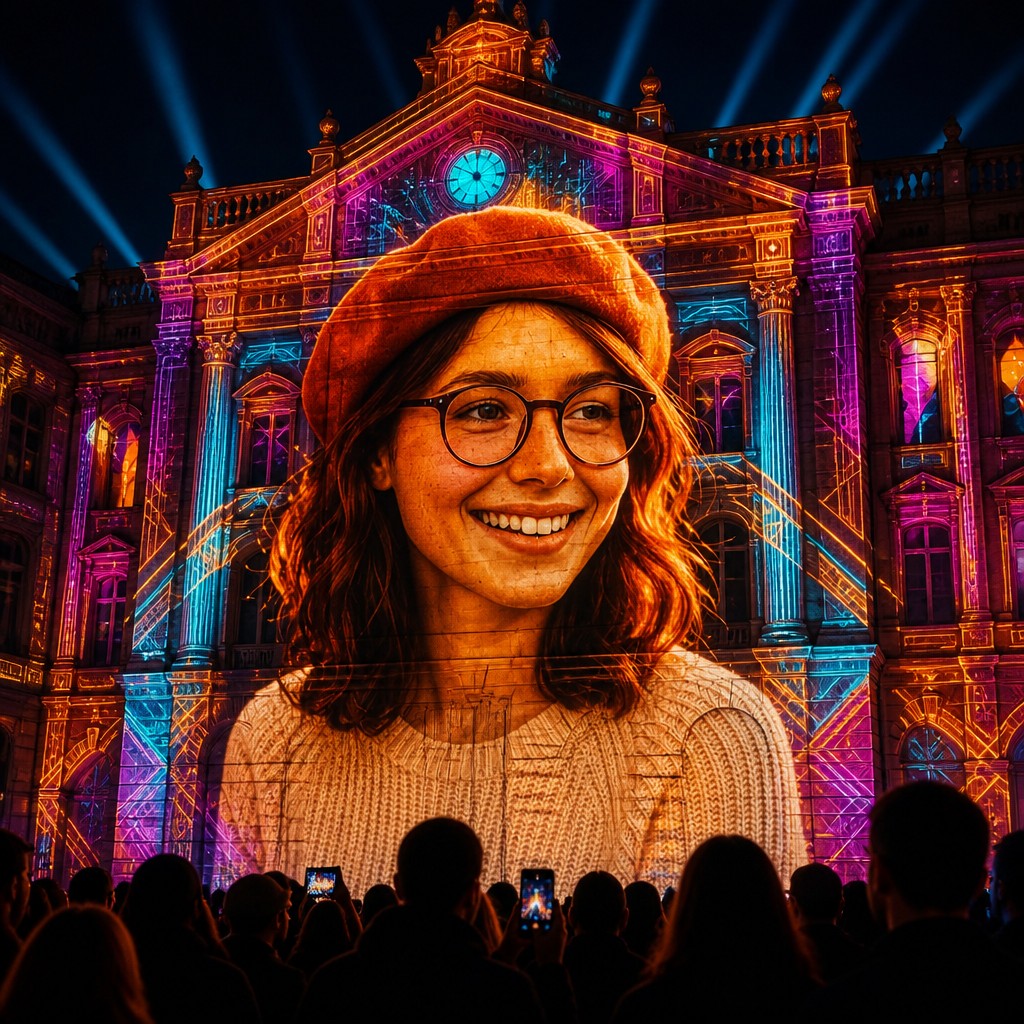
Architecture as a projection surface
Buildings remain legible through windows, masonry, columns, rooflines, and ornament, but these elements are treated as coordinates for projected imagery. The facade functions simultaneously as subject, screen, and illusionistic structure.
Warped spatial geometry
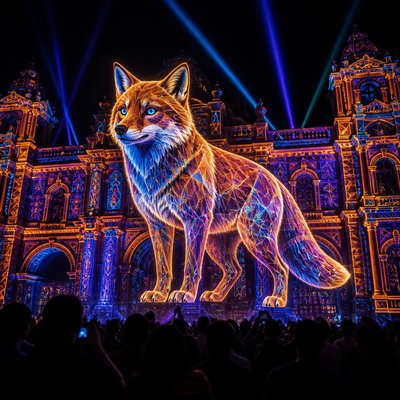
Straight walls may appear to buckle, open, stretch, or collapse through carefully aligned patterns. Perspective shifts and false depth create the impression that solid stone is moving without fully abandoning the building's original form.
Luminous geometric tracery
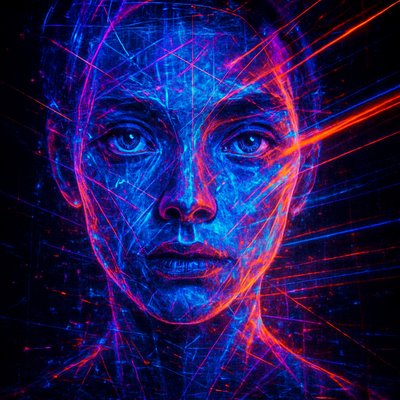
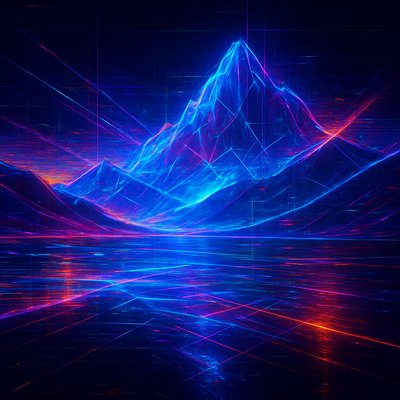
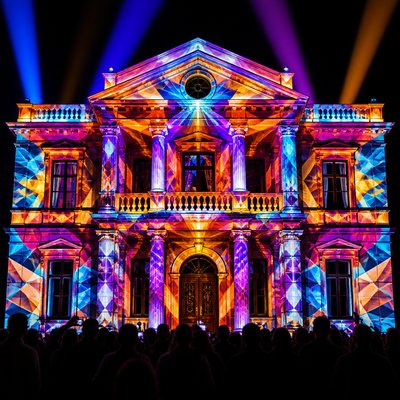
Lines, grids, polygons, concentric shapes, and architectural contours glow across cornices, columns, arches, and windows. These precise marks suggest animated calibration and make the projection feel physically fitted to the facade.
Saturated beams and color contrast
Electric cyan, magenta, violet, red, blue, and amber commonly cut through a dark environment. High chromatic intensity separates the projected image from the night sky and emphasizes the artificial, theatrical source of the light.
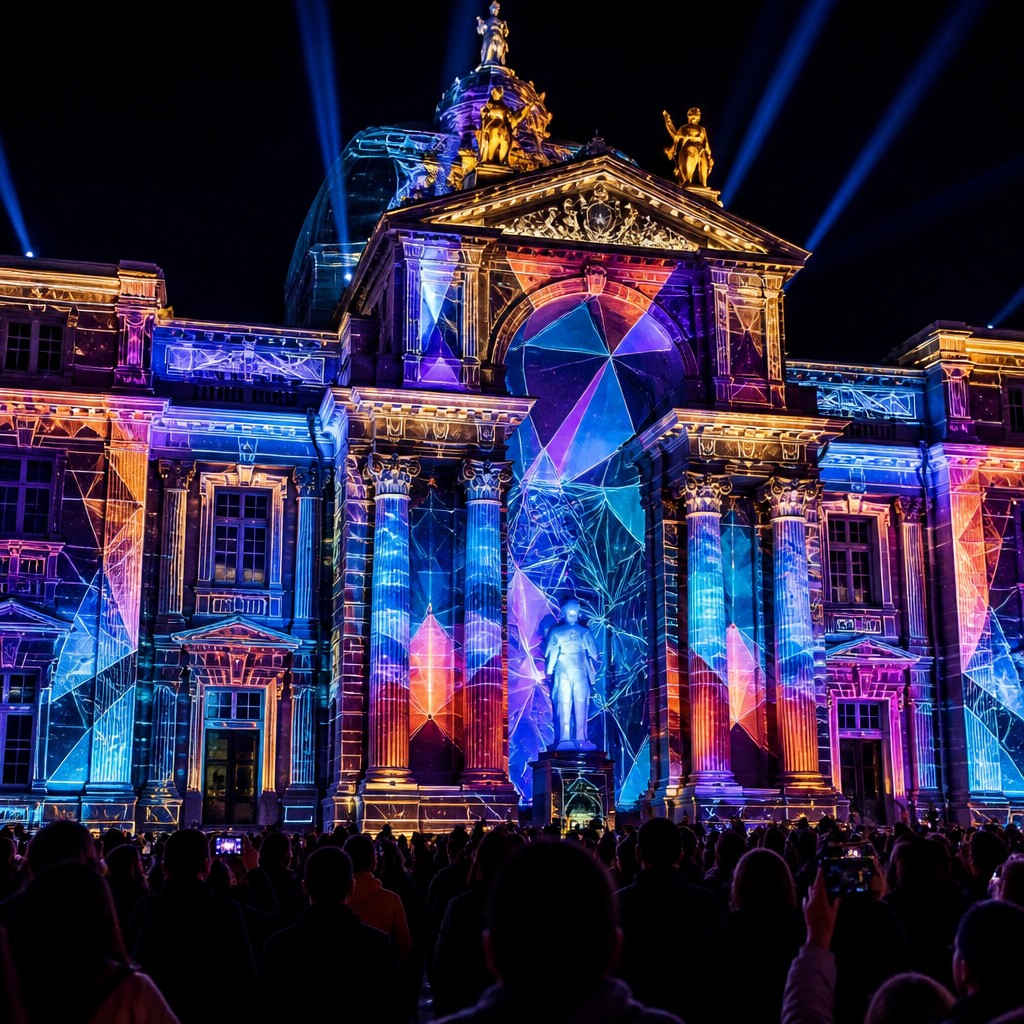
Animated-looking surface textures
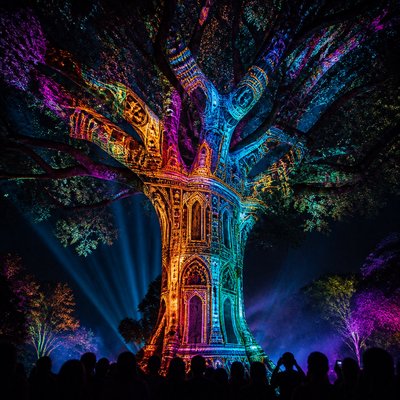
Stone, brick, glass, or plaster can dissolve into flowing particles, liquid gradients, digital noise, flame-like ribbons, or shifting mosaics. Even in a still image, directional streaks and layered transparency imply motion.
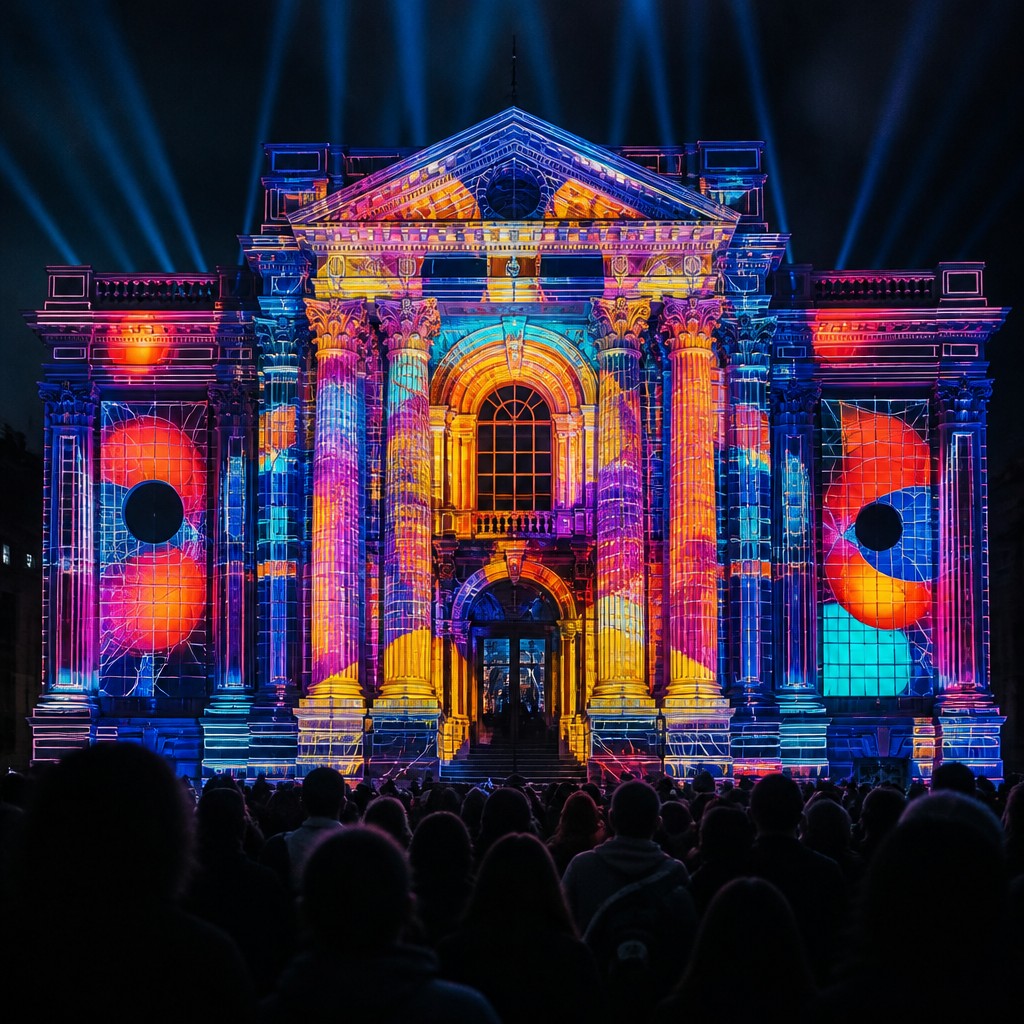
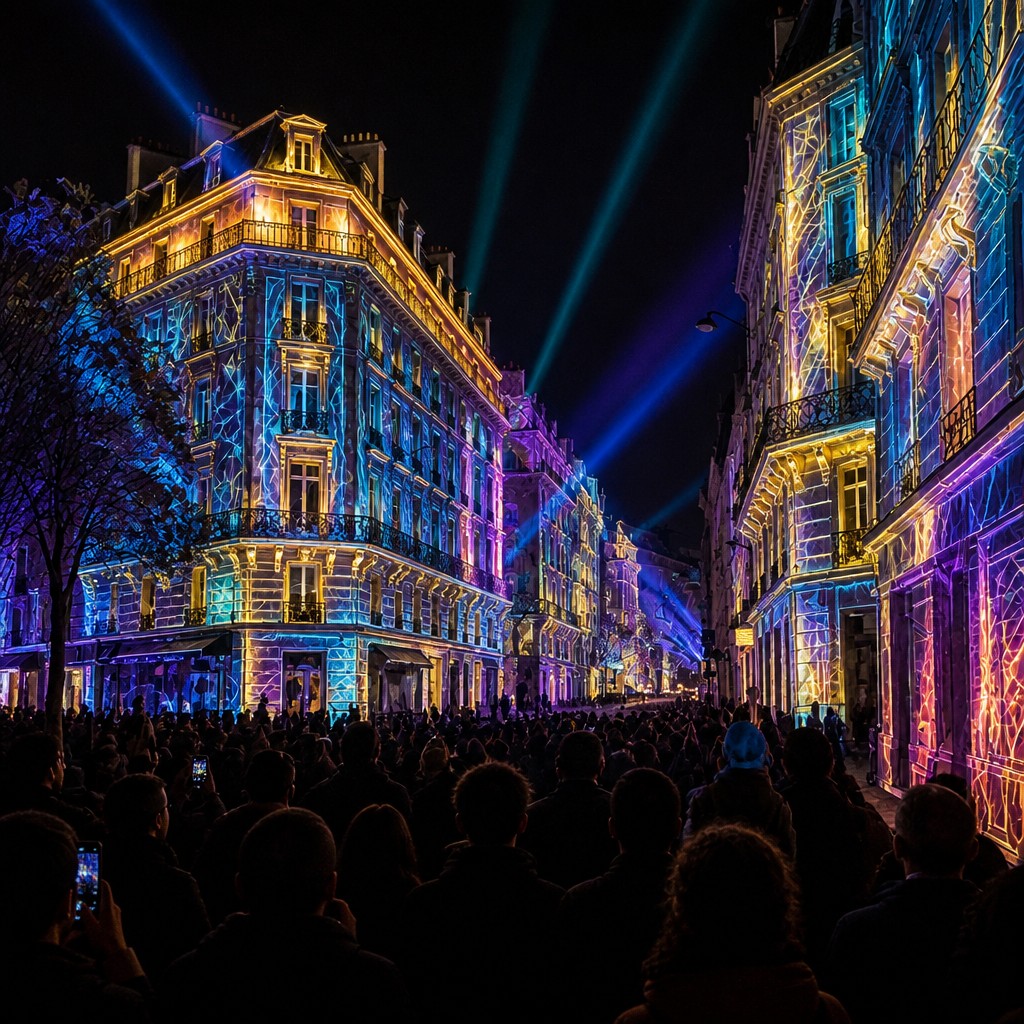
Nighttime spectacle and human scale
A dark public space and a crowd of small silhouetted viewers provide context for the event. The audience anchors the architecture's monumental scale and adds a sense of collective performance.
Projection Mapping Prompt Ideas
Start from an idea — each one opens the generator with the style ready to go. See all 40 Projection Mapping prompts →
How to Create Projection Mapping Art
Master the craft step by step — or skip straight to creating. Read the full guide →
- 1
Choose a structurally readable facade
Start with a building whose windows, columns, arches, or cornices create clear zones for alignment. Photograph it frontally or from a controlled angle so the architecture remains identifiable beneath the effects.
- 2
Build the illusion from the building's geometry
In digital compositing or projection software, mask architectural sections and conform grids, contours, and animated textures to their perspective. Preserve selected edges while distorting others to make the transformation appear intentional rather than randomly overlaid.
- 3
Control darkness and color
Use a deep night background with limited ambient illumination, then reserve the strongest exposure for the projected areas. Pair a small number of saturated hues with white or pale highlights so the image retains structure and does not become an undifferentiated glow.
- 4
Suggest motion in a still frame
Layer directional beams, repeated frames, particles, scan lines, liquid gradients, or dissolving textures across the facade. Slight trails and staged transitions can imply animation without sacrificing crisp architectural detail.
- 5
Add audience and event atmosphere
Place silhouetted spectators, barriers, or a plaza in the foreground, keeping them darker and less detailed than the building. Reflected color on pavement, haze, and a restrained amount of smoke can connect the projection to the surrounding space.
- 6
Use precise prompt language for digital generation
Specify the building type, viewing angle, night setting, mapped architectural contours, saturated beam colors, warped facade, crisp luminous geometry, and silhouetted crowd. For image-to-image work, preserve the original structure with a moderate transformation strength; for text-to-image work, emphasize accurate perspective and light physically aligned to the architecture.
The Story
History & Origins of Projection Mapping
Projection Mapping Style is a contemporary, niche aesthetic rather than a historically codified art movement. It draws on the longer traditions of magic lanterns, theatrical scenography, architectural illumination, large-scale slide and video projection, public spectacle, and experimental animation. With the spread of digital video, precise spatial calibration, powerful projectors, and real-time graphics during the late 20th and early 21st centuries, buildings increasingly became canvases for immersive audiovisual events.
The still-image version condenses a moving installation into one dramatic frame: a recognizable facade, a projected transformation, saturated color, and an audience witnessing the event. Its development is closely related to media architecture, urban light festivals, projection-based performance, and contemporary digital installation art rather than to a single school or individual creator.
Influences: The style combines architectural projection and media-architecture practices with theatrical scenography, public light festivals, experimental animation, kinetic art, optical art, and installation art. It also borrows the spectacle and scale of civic monuments, the geometric discipline of modernist design, the atmospheric color of neon photography, and the spatial distortions associated with surreal and abstract digital imagery.
Frequently Asked Questions
What defines Projection Mapping Style?
It is defined by light that appears precisely fitted to an architectural surface while making that surface transform or break spatial rules. Key signals include a nighttime setting, saturated beams, glowing geometric contours, animated-looking textures, and spectators shown at monumental scale.
Is projection mapping an art style or a technical process?
Projection mapping is primarily a technical and performance process in which moving images are calibrated to a physical surface. Projection Mapping Style refers to the recognizable visual language derived from that process, including mapped geometry, facade distortion, luminous color, and public-event atmosphere.
How is it different from ordinary architectural lighting?
Architectural lighting usually reveals, accents, or colors a building without making its form appear to change. Projection mapping uses animated imagery and spatial alignment to create illusions such as folding walls, moving windows, dissolving stone, and impossible depth.
Can this style be created with a photograph?
Yes. A building photograph can be composited with perspective-matched masks, luminous graphics, beams, haze, and a foreground crowd. The most convincing results preserve recognizable architectural edges and make the light interact with windows, masonry, pavement, and nearby surfaces.
What subjects work best with this visual language?
Large, structurally distinctive subjects work best, including civic buildings, castles, theaters, bridges, temples, industrial sites, and skyscrapers. Facades with strong symmetry or repeated architectural elements provide clear guides for geometric projection.
Where is this style commonly used?
It appears in public art installations, urban light festivals, concerts, cultural events, museum programs, theatrical productions, advertising spectacles, architectural visualizations, photography, and digital concept art. Static illustrations often use it to suggest a larger immersive event beyond the frame.
Create your first Projection Mapping artwork
Describe anything — or upload a photo — and see it in Projection Mapping Style in seconds.
Related Styles
Discover similar art styles