E-Girl Aesthetic
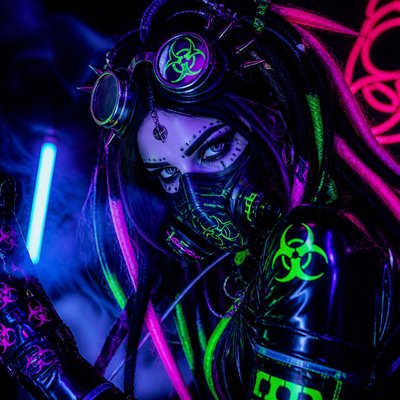
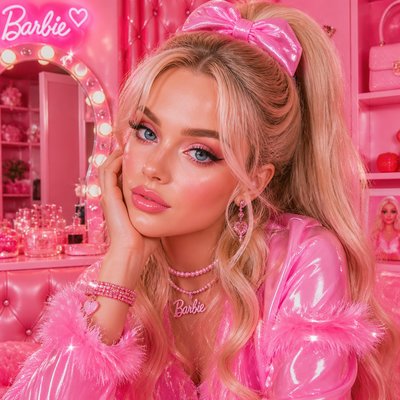
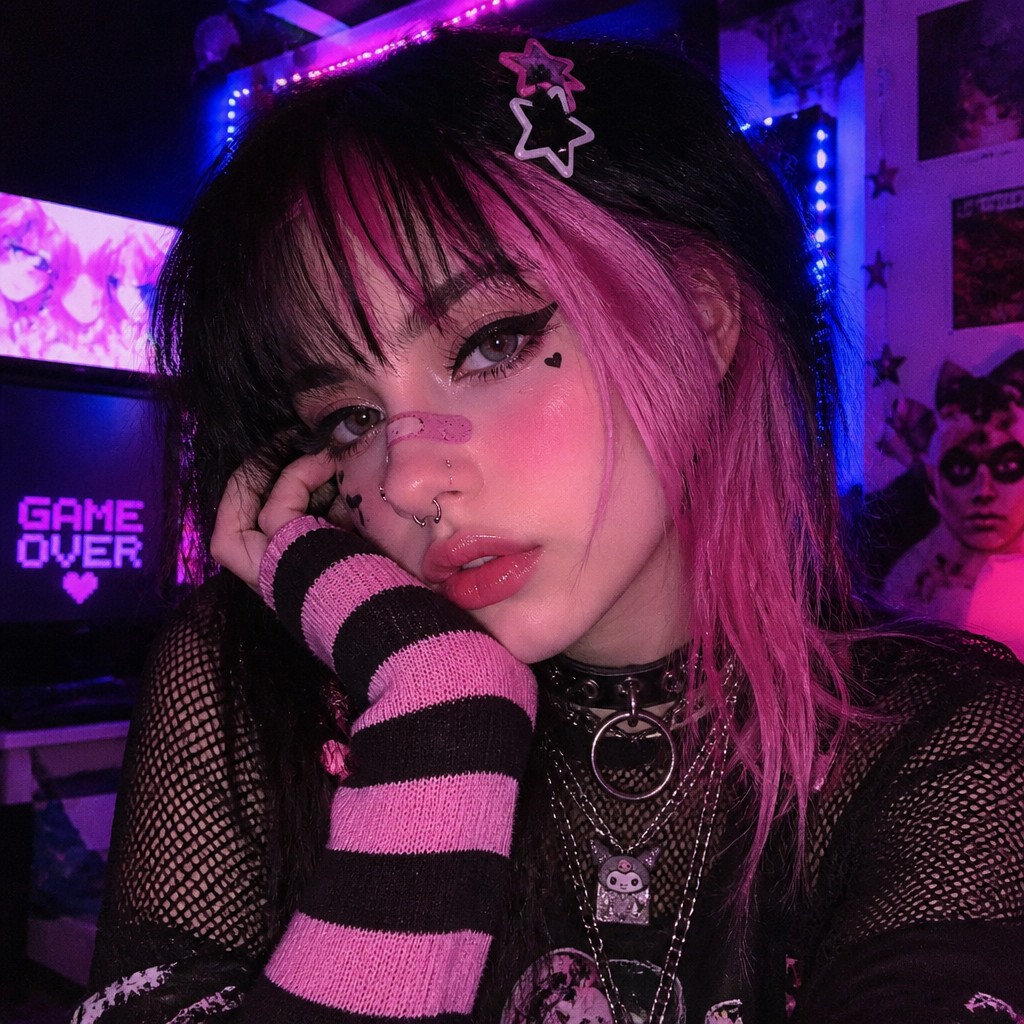
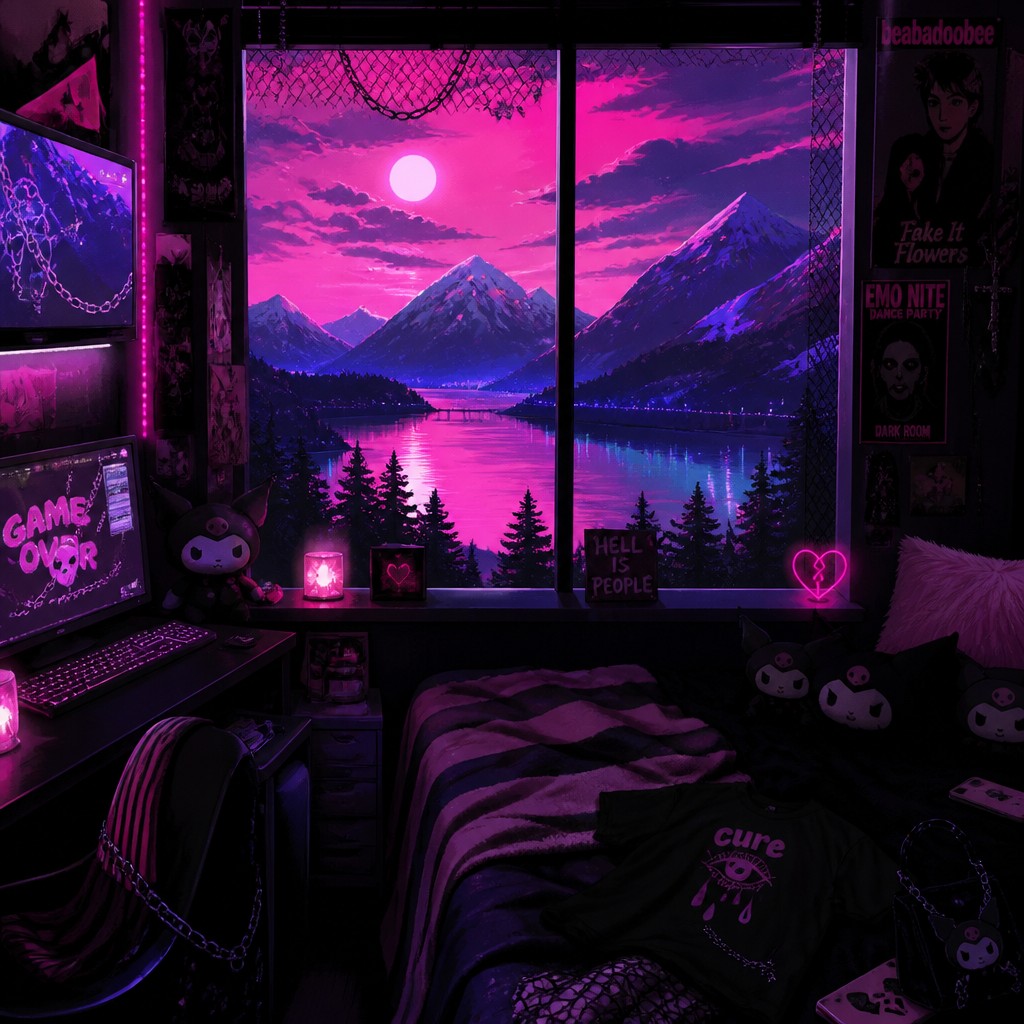
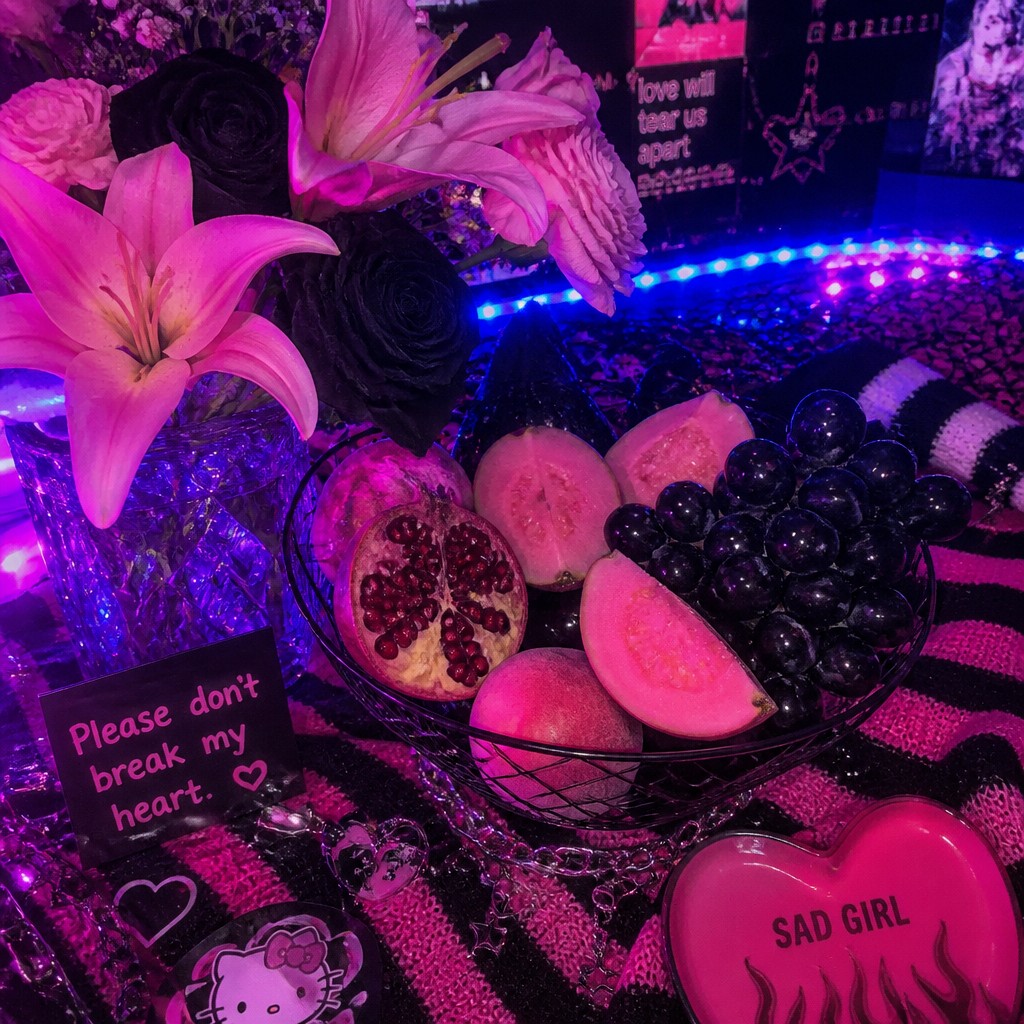
Neon pink-and-black alt aesthetic with LED glow, glossy webcam lighting, grunge textures, and internet-era bedroom mood.
Instantly rendered in E-Girl Aesthetic — or transform a photo
E-Girl Aesthetic Gallery
Tap any artwork to explore it
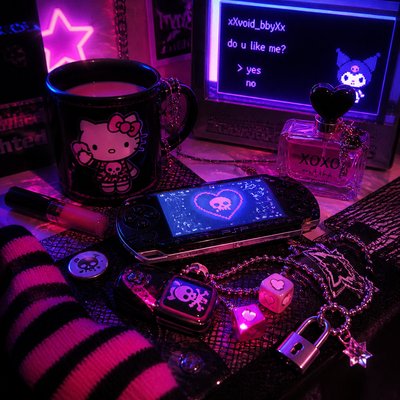
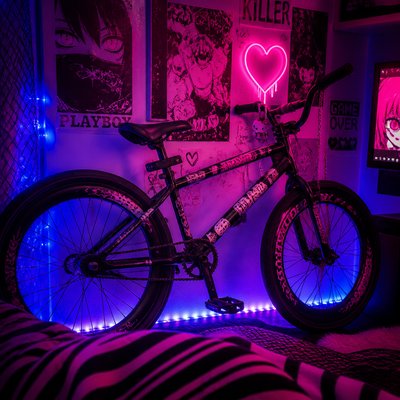
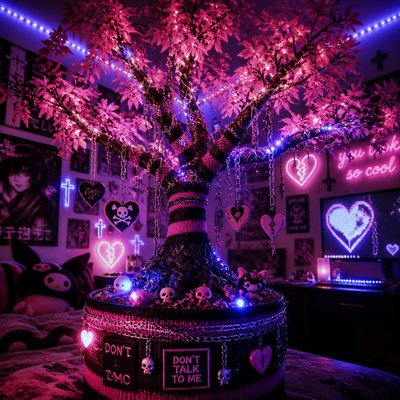
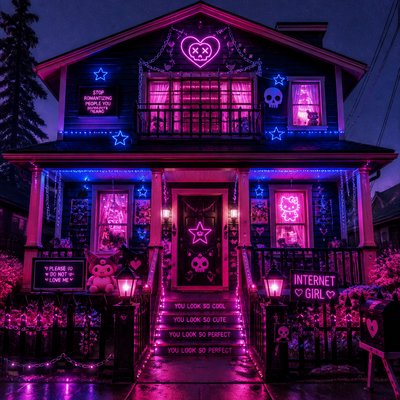
What is E-Girl Aesthetic?
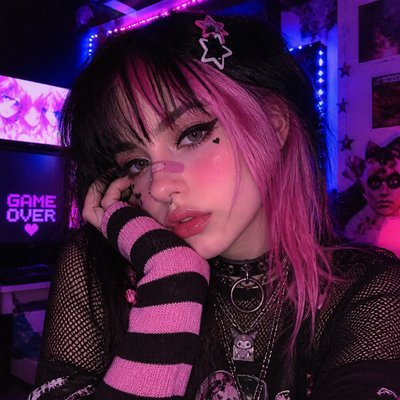
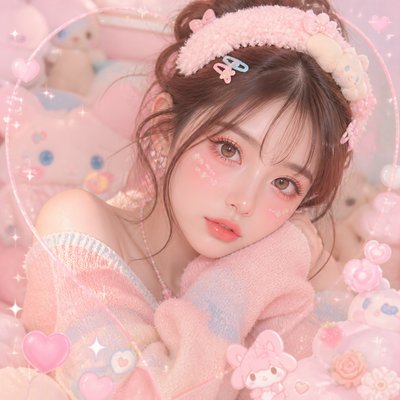
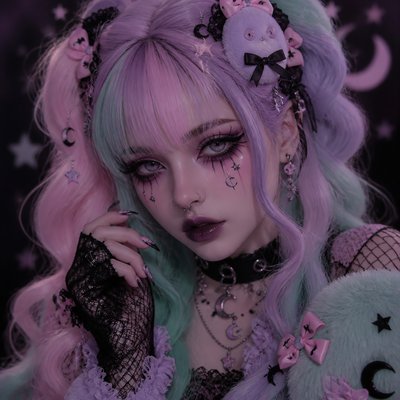
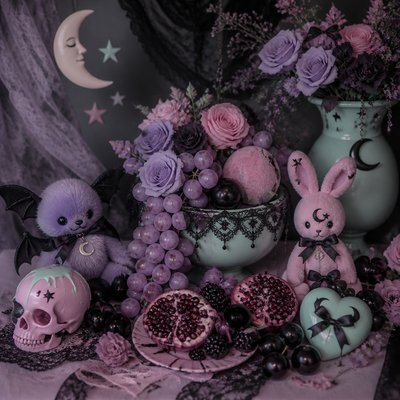
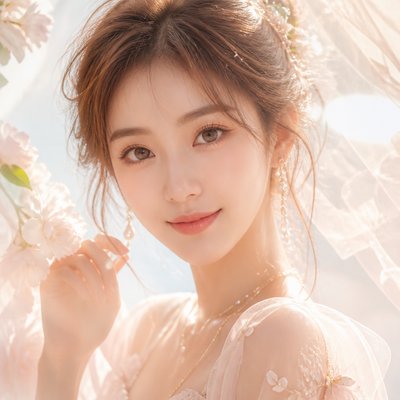
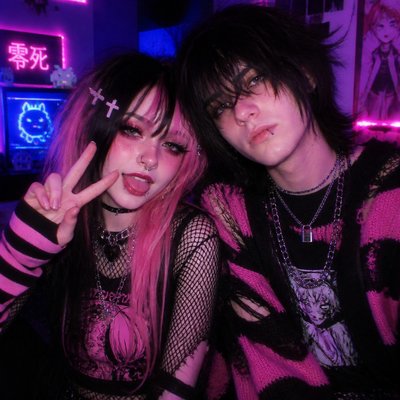
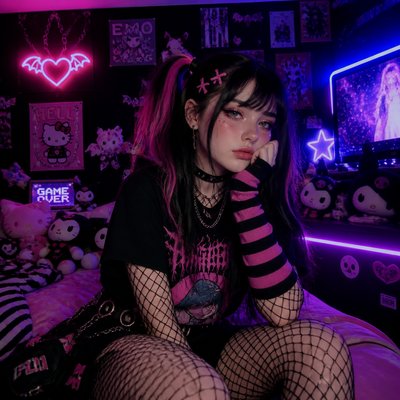
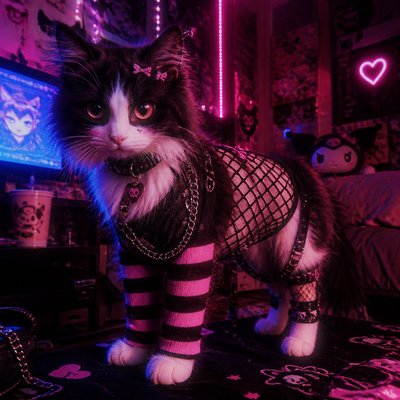
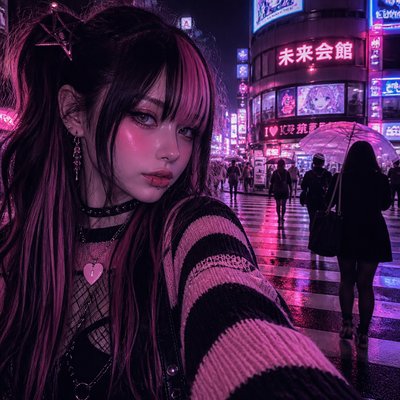
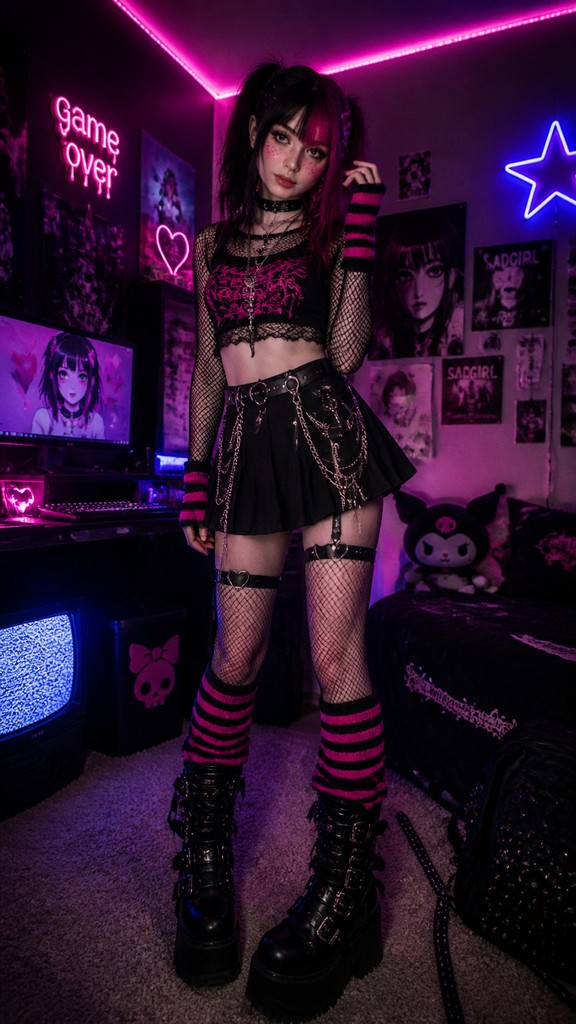
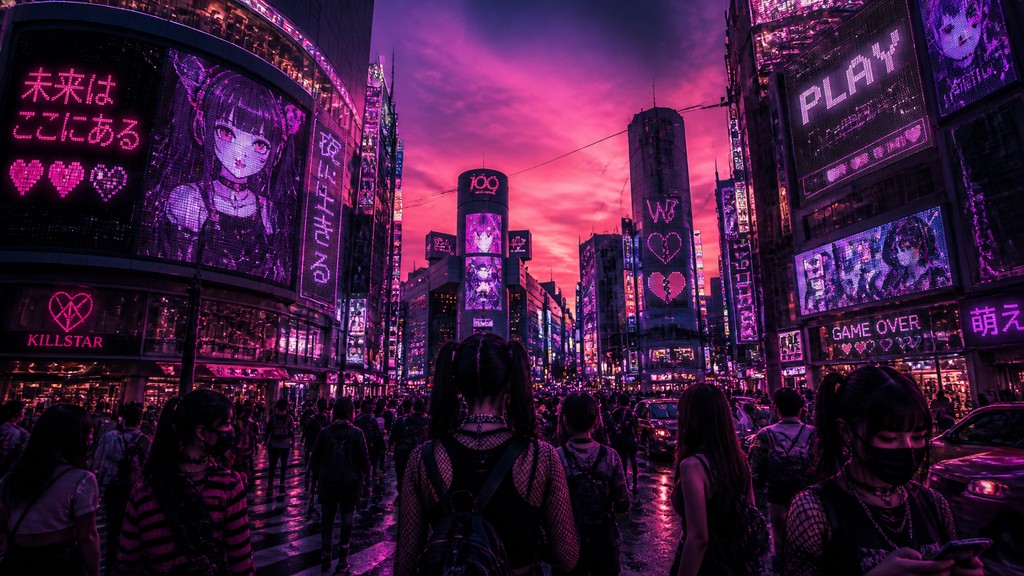
E-girl aesthetic is a contemporary internet-born visual style built around the look of neon-lit bedroom culture: pink and black color blocking, electric blue or violet LED accents, soft screen glow, and a deliberate mix of cute and gritty surfaces. It often appears in portraits, fashion imagery, avatars, and edited photos where the subject is framed by headphones, dyed hair, chokers, striped tops, mesh fabrics, and other signals of online alt identity.
Its visual identity comes from the collision of social-media polish and bedroom-scale intimacy. The lighting usually feels artificial and enclosed, as if the scene is illuminated by a phone screen, monitor, or LED strip rather than daylight. Glossy highlights, blush warmth, slight digital grain, and a webcam-like softness help the image feel immediate and digitally mediated, while chains, plaid, knit textures, eyeliner-heavy makeup, and dark backdrops keep it grounded in punk, emo, and grunge-derived subculture.
Try It On Your Photos
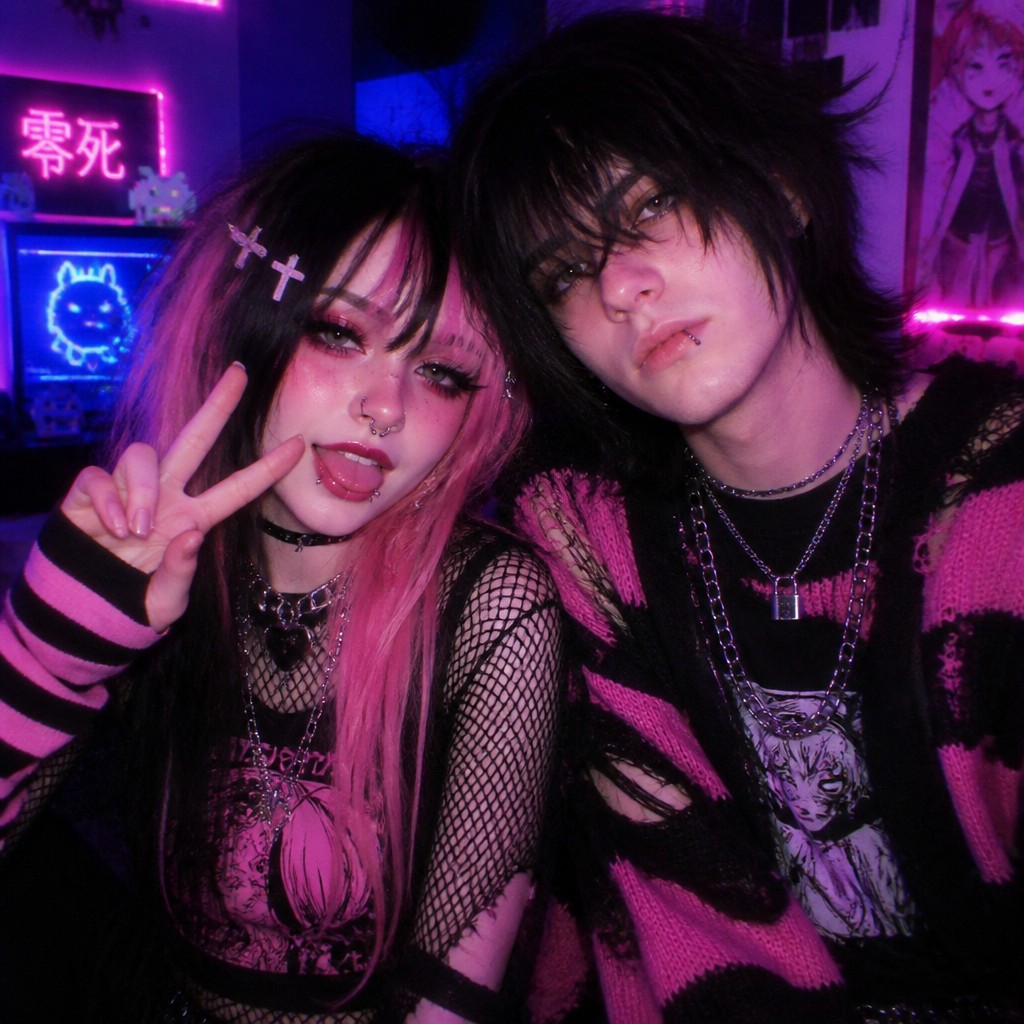
Upload any photo and convert it into E-Girl Aesthetic — drag the sliders to compare before and after.


What Defines E-Girl Aesthetic
The signature details, up close
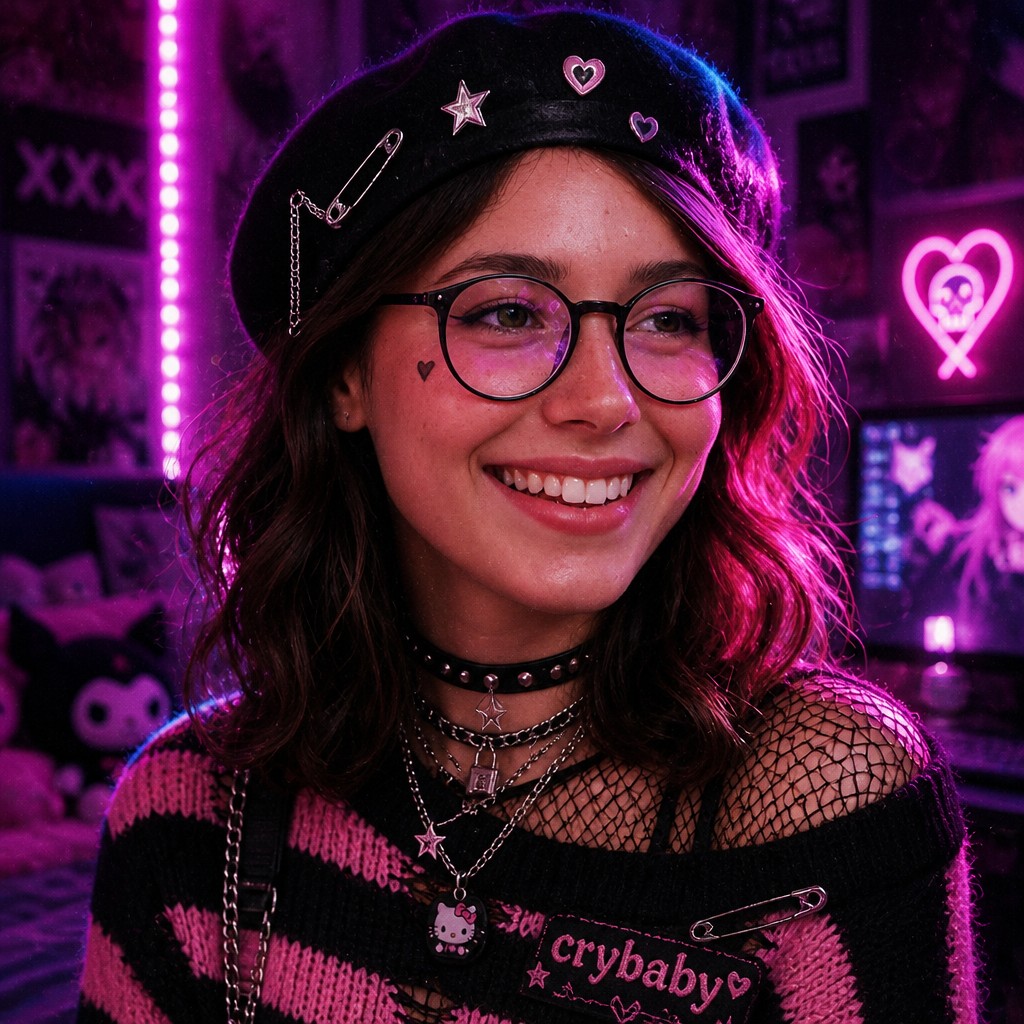
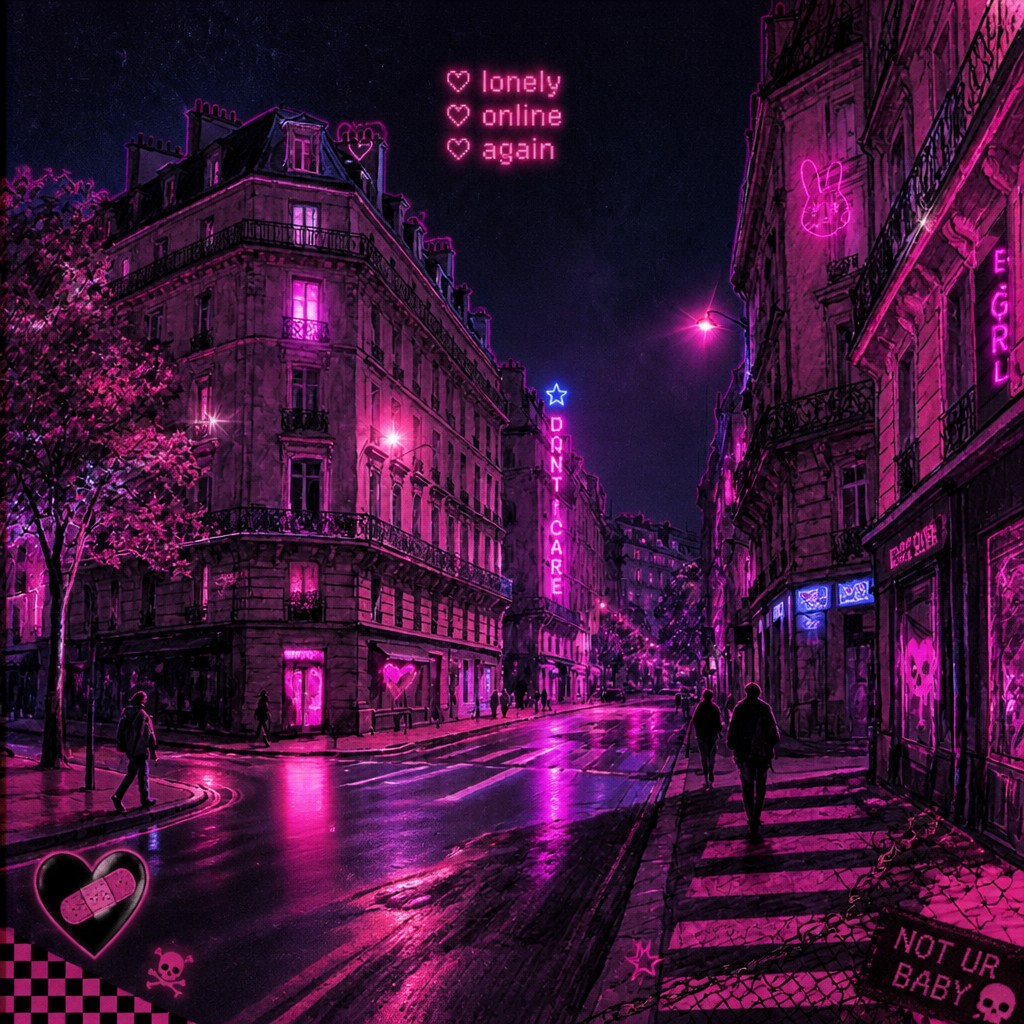
Pink-and-black base palette
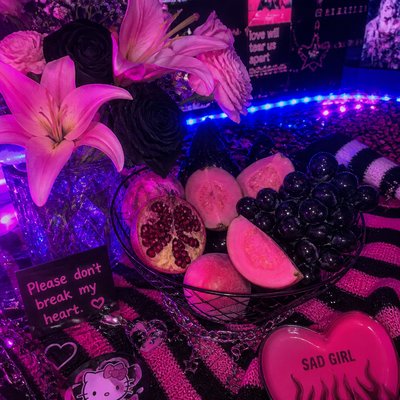
The style typically relies on saturated pinks paired with black for strong contrast. Electric blue, violet, and occasional white highlights are used as accent colors rather than dominant hues.
LED and screen lighting
Lighting often resembles glow from neon strips, monitors, or phone screens. This creates a cool artificial edge while keeping skin tones softly warm and slightly overexposed.
Glossy, soft-focus finish
Images often have shiny highlights on lips, hair, and accessories, combined with a webcam-like bloom or gentle blur. A light digital grain or compression feel helps the image read as internet-native.
Alt-fashion textures
Mesh, chains, striped knits, plaid, faux leather, and fishnet are common surface details. These materials reinforce the mix of playful internet fashion and punk/grunge attitude.
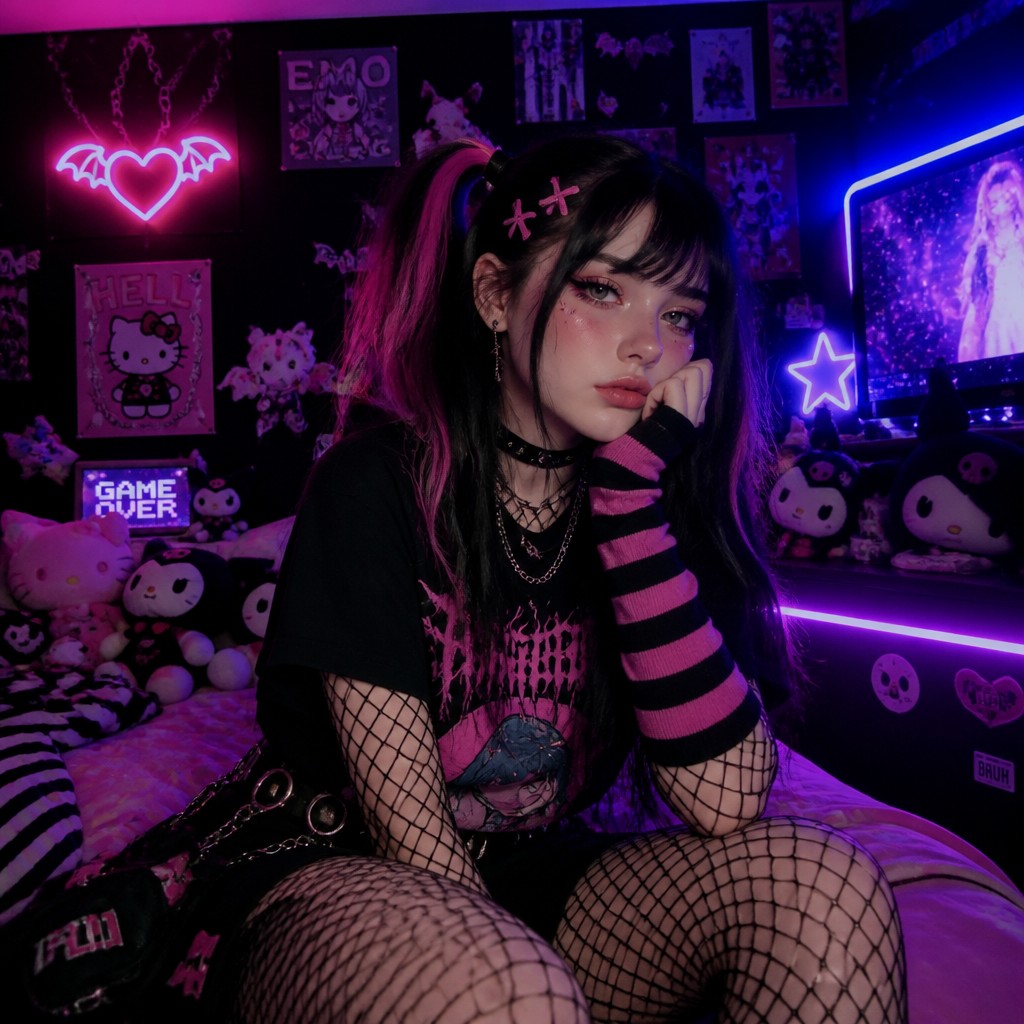
Bedroom and online space setting
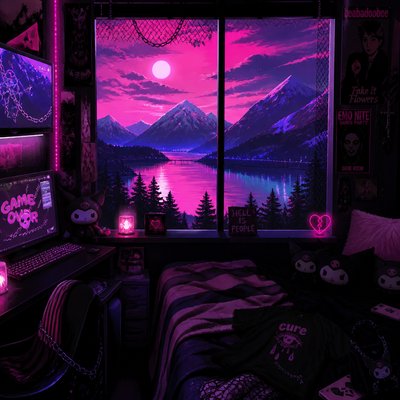
The environment usually suggests a personal interior rather than a public scene: posters, LED strips, monitors, gaming gear, or dim bedding. This setting makes the style feel intimate, self-staged, and highly mediated.
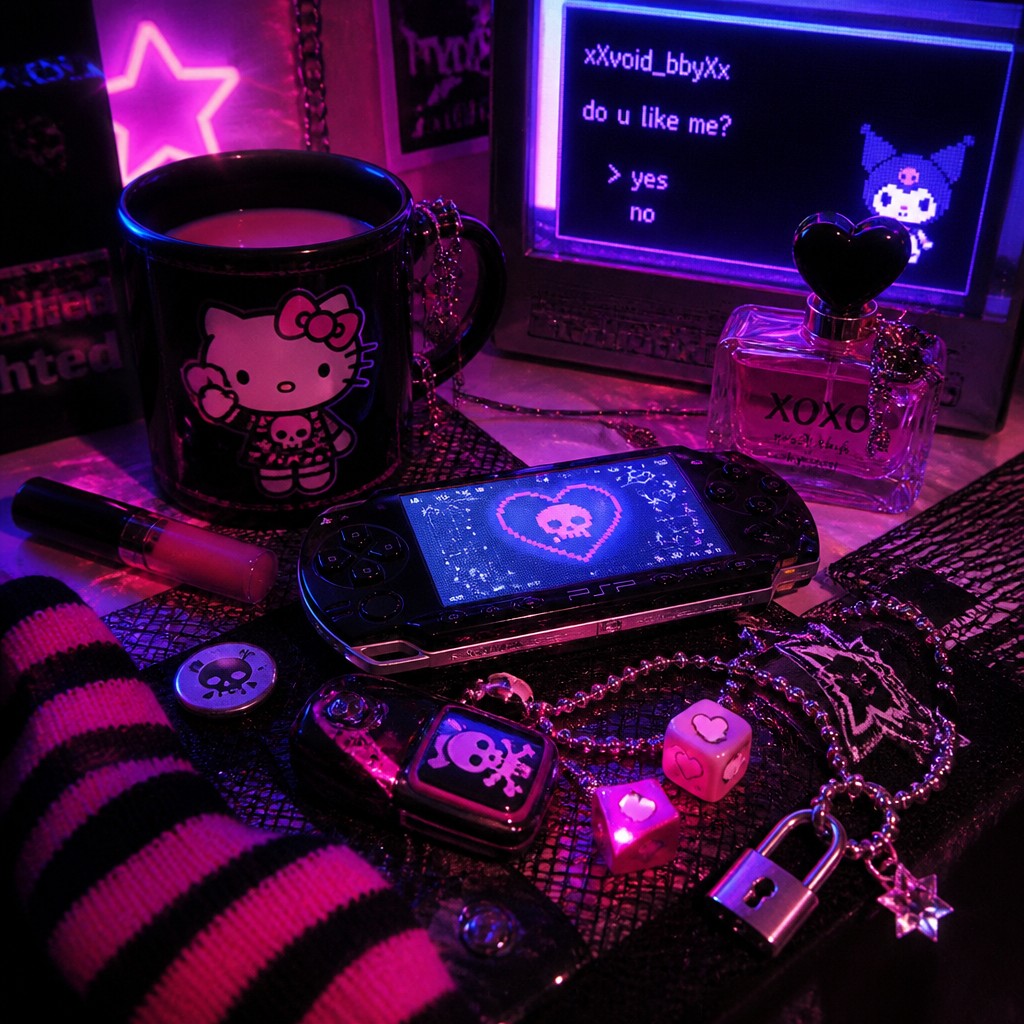
Cute-grunge contrast
The style deliberately balances softness and toughness. Blush, hearts, and rounded features may coexist with heavy eyeliner, dark lipstick, piercings, tattoos, or sharp facial expression.
Try It
Create Videos in E-Girl Aesthetic
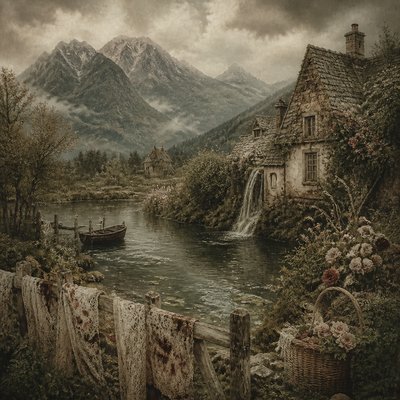
Styles aren't just for stills — describe a scene or animate an image and get a short video rendered in E-Girl Aesthetic. Press play to see this pond come to life.
Make a VideoE-Girl Aesthetic Prompt Ideas
Start from an idea — each one opens the generator with the style ready to go. See all 40 E-Girl Aesthetic prompts →
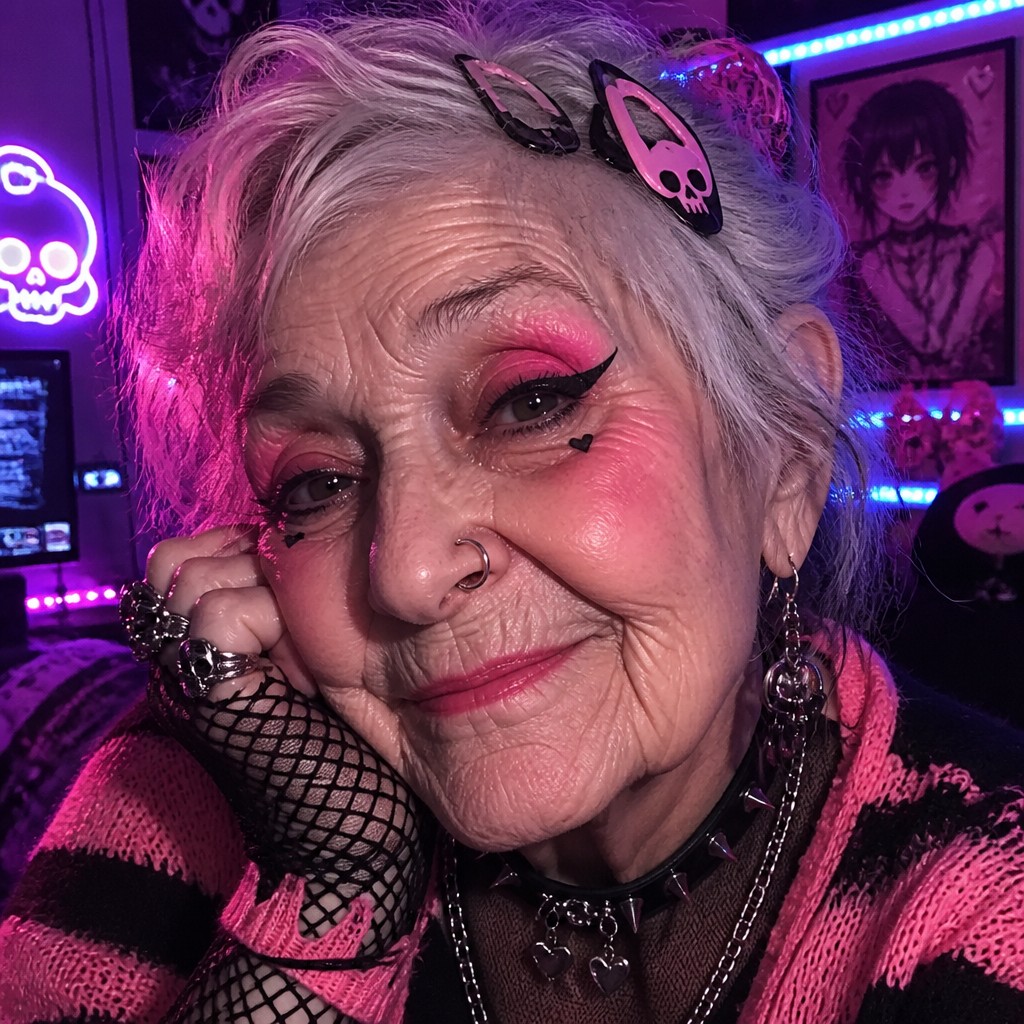
“close-up portrait of an elderly person with expressive weathered features”
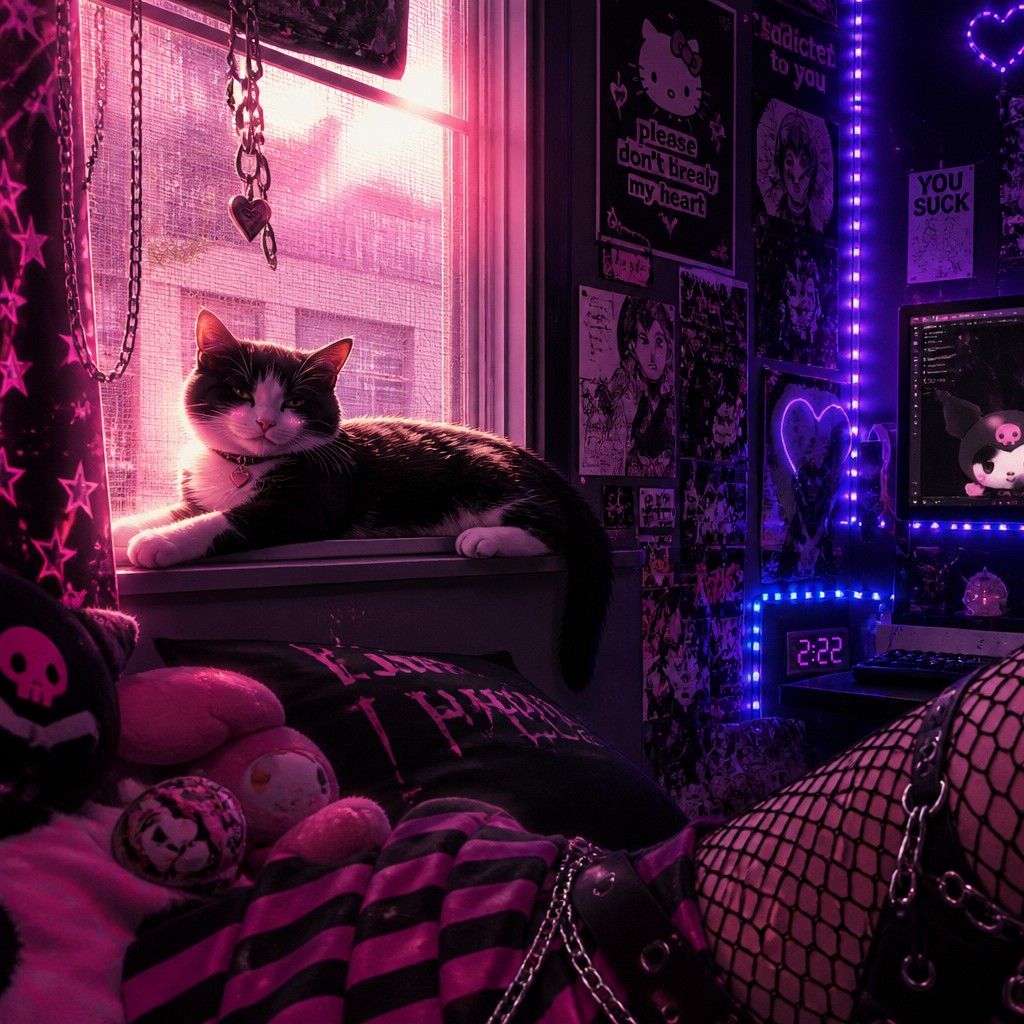
“a cat lounging in a sunlit window”
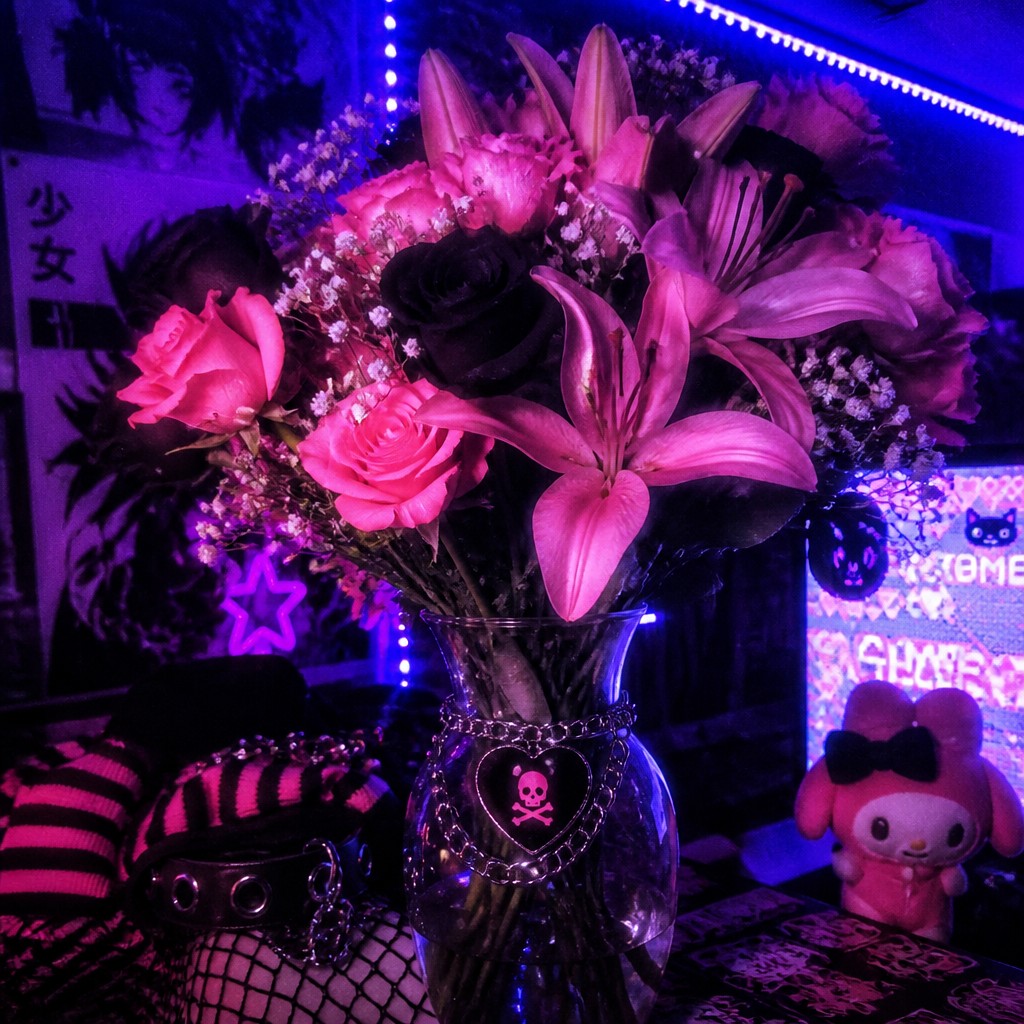
“bouquet of flowers in a glass vase”
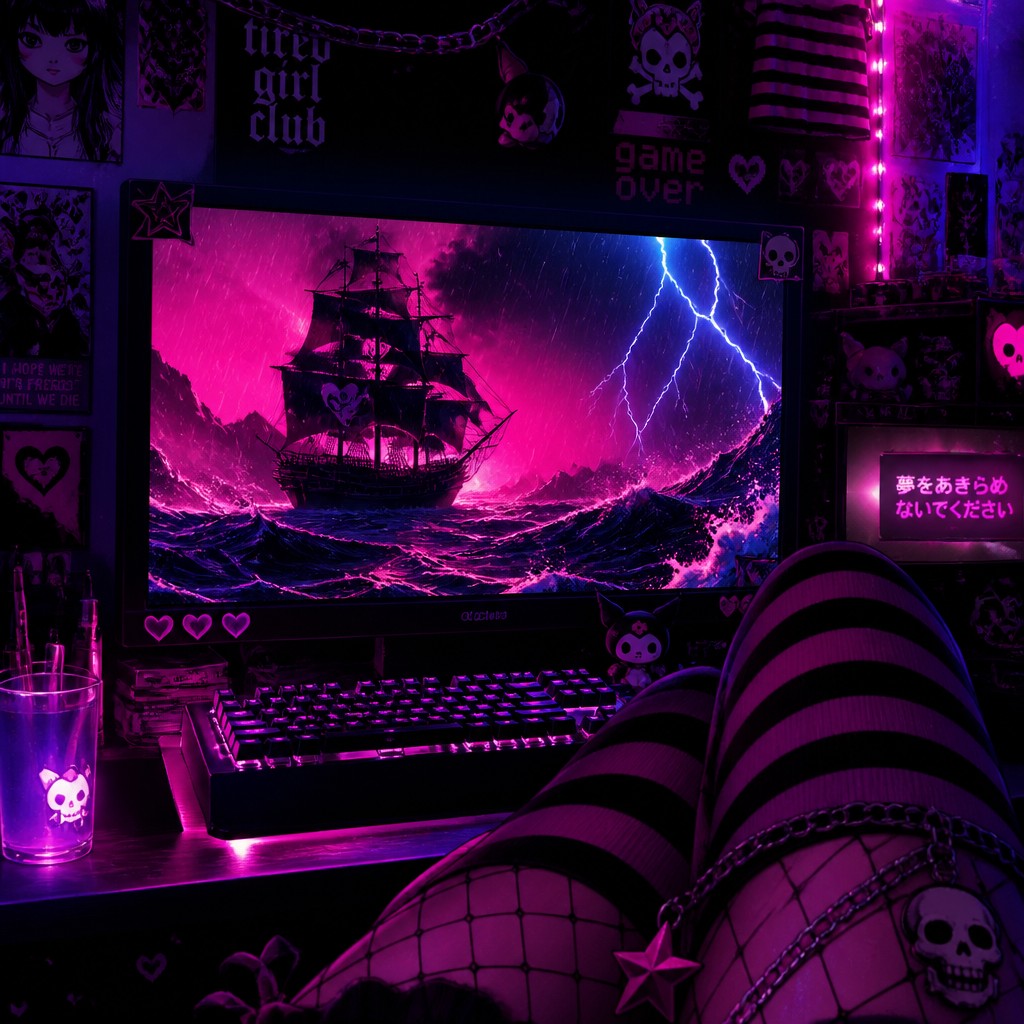
“sailing ship on a stormy sea”
How to Create E-Girl Aesthetic Art
Master the craft step by step — or skip straight to creating. Read the full guide →
- 1
Build the palette first
Start with black as the anchor color, then add saturated pink and one cool neon accent such as blue or violet. Keep the palette limited so the glow and contrast read immediately, whether you are painting, compositing, or photographing.
- 2
Use enclosed artificial lighting
Light the scene as if it is coming from LEDs, a monitor, or a phone display. In traditional art, simulate this with rim lighting and reflective highlights; in digital work, add bloom, glow, and soft shadow falloff.
- 3
Layer texture over polish
Combine smooth skin, glossy lips, and shiny accessories with visibly rougher details like mesh, knit, grain, or compression artifacts. The style works best when the image feels curated but not perfectly clean.
- 4
Center the subject in a personal space
Place the figure in a bedroom-like environment or another intimate indoor setting with posters, screens, strings of light, or gaming peripherals. Even when simplified, the background should suggest online identity and self-display.
- 5
Balance cute and abrasive signals
Mix playful elements such as blush, pastel accessories, or heart motifs with grunge or punk cues like dark makeup, chains, and striped shirts. This tension is the core of the style, so avoid making it purely kawaii or purely edgy.
- 6
For prompt-based generation, specify lighting and materials
Describe the subject, then add the key visual conditions: neon pink and black palette, LED glow, soft webcam bloom, slight grain, mesh and chain textures, and a dark bedroom setting. The more concrete the light source and fabric details, the more recognizable the result.
The Story
History & Origins of E-Girl Aesthetic
E-girl aesthetic emerged in the late 2010s from the visual culture of platforms such as TikTok, Instagram, Tumblr, and gaming-adjacent online spaces. It does not belong to a single historical art movement; instead, it is a social-media style assembled from earlier youth subcultures, particularly emo, scene, punk, grunge, kawaii, and cyber-inspired internet fashion. Its spread was accelerated by short-form video, selfie culture, and the rise of heavily filtered portrait photography.
The style’s lineage also includes nightclub and rave lighting, Y2K graphic sensibilities, and the stylized self-presentation of webcam and livestream culture. As a result, e-girl imagery often feels both performative and intimate: a curated bedroom set, a digital persona, and a fashion statement all at once. In visual art, it has become a recognizable shorthand for contemporary online femininity, alt-internet identity, and the aesthetics of screen-mediated youth culture.
Influences: E-girl aesthetic draws from emo and scene fashion, punk and grunge attitude, kawaii and pastel internet culture, and the visual language of webcam selfies, livestreams, and early social-media portrait editing. It also overlaps with Y2K design, rave and club lighting, and cyber-inspired digital aesthetics, though it is less a direct continuation of those traditions than a remix of their surface cues. In art-historical terms, it is best understood as a contemporary media style rather than a canonical movement, shaped by platform culture and self-portrait conventions rather than by a single school or artist.

Frequently Asked Questions
What defines the e-girl aesthetic?
The style is defined by a pink-and-black palette, neon LED lighting, soft screen glow, and a mix of cute and grunge details. Common visual cues include striped tops, mesh, chains, heavy eyeliner, glossy lips, and bedroom interiors. It should feel like a self-styled internet persona rather than a neutral portrait.
Is e-girl the same as emo or scene style?
No. Emo and scene are earlier subcultures with their own music, fashion, and historical contexts, while e-girl is a later internet-era aesthetic that borrows from both. E-girl usually looks more screen-lit, selfie-based, and platform-native, with stronger emphasis on neon glow and social-media presentation.
What colors are most associated with this style?
Pink and black are the core combination, often supported by electric blue, violet, and white highlights. The color balance should feel saturated but controlled, with dark areas creating contrast for the neon accents. Warm blush tones are also common on skin and cheeks.
How can I make a photo look more like this style?
Use low-key indoor lighting, preferably from LEDs or a monitor, and emphasize soft bloom, slight blur, and mild grain. Add alt-fashion cues such as chokers, chains, mesh, striped clothing, or dyed hair, and keep the background bedroom-like or digitally cluttered. Strong contrast between polished skin and rough textures is important.
Where is the e-girl aesthetic commonly used?
It appears in portraits, selfies, avatar art, fan art, gaming identity, fashion photography, and short-form video visuals. It is especially common in internet-native contexts where personal style is performed through editing, lighting, and curated bedroom setups. It can also be used in character design for alt, gamer, or cyber-inflected personalities.
How does it differ from cyberpunk?
Cyberpunk usually emphasizes futuristic technology, urban decay, and a more explicitly sci-fi setting, while e-girl aesthetic is grounded in bedroom interiors and social-media self-presentation. Both may use neon and digital glow, but e-girl is softer, more intimate, and more fashion-centered. The mood is less dystopian and more performative.
Create your first E-Girl Aesthetic artwork
Describe anything — or upload a photo — and see it in E-Girl Aesthetic in seconds.
Make Something with E-Girl Aesthetic
Related Styles
Discover similar art styles