Victorian Furniture Art
Ornate 19th-century furniture with carved wood, tufted upholstery, dark finishes, and romantic Victorian-era detail.
Instantly rendered in Victorian Furniture — or transform a photo
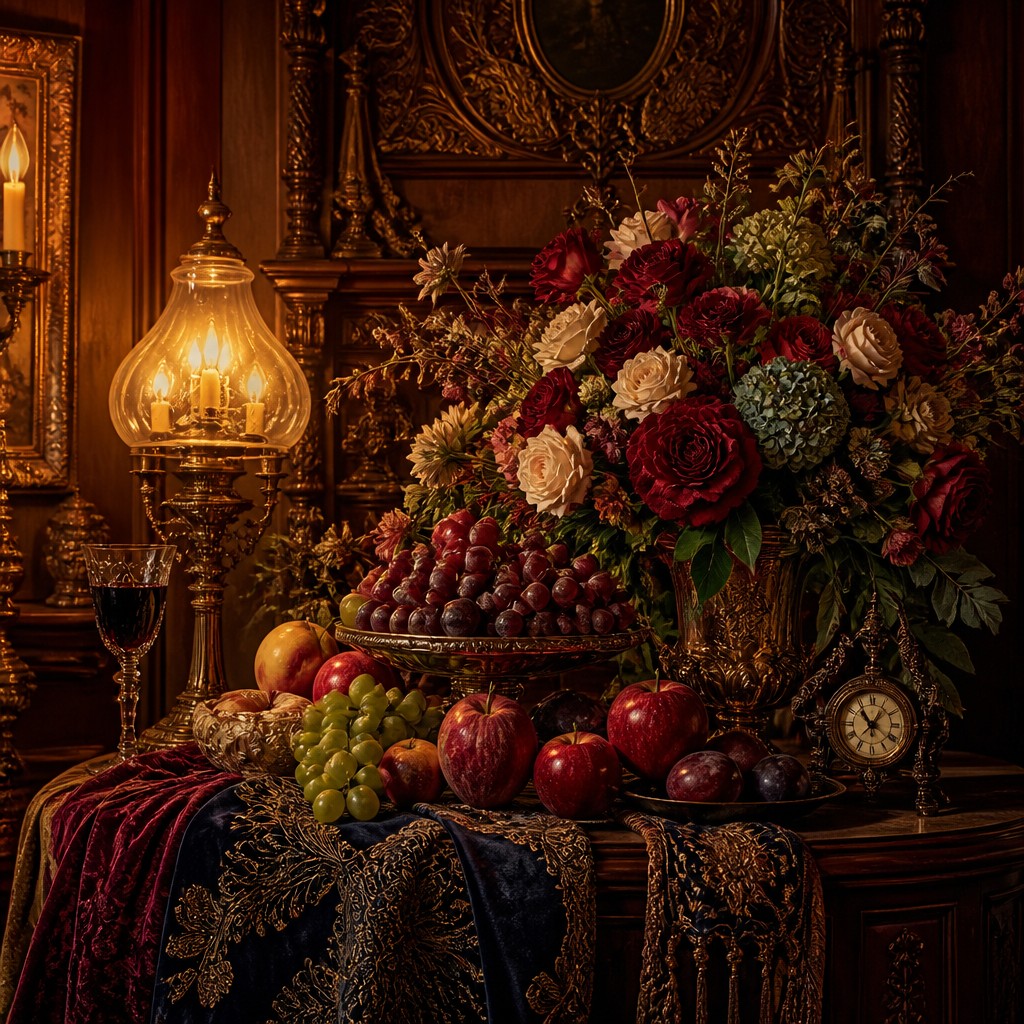
Victorian Furniture Gallery
Tap any artwork to explore it
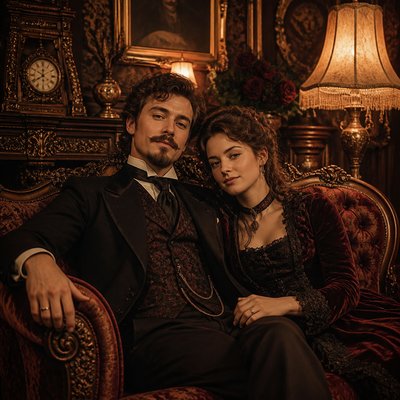
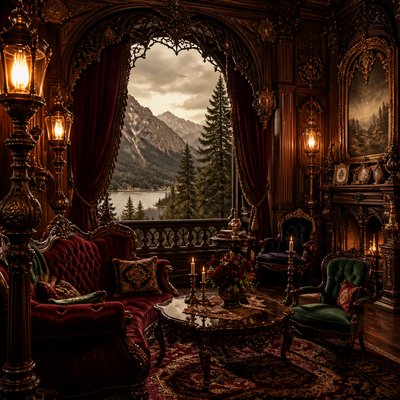
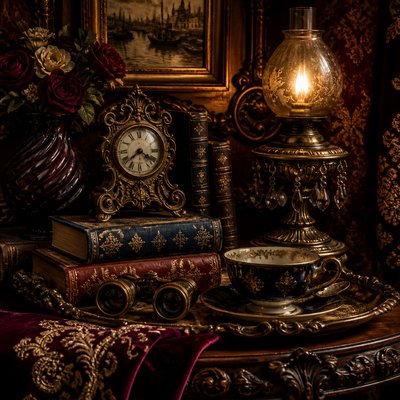
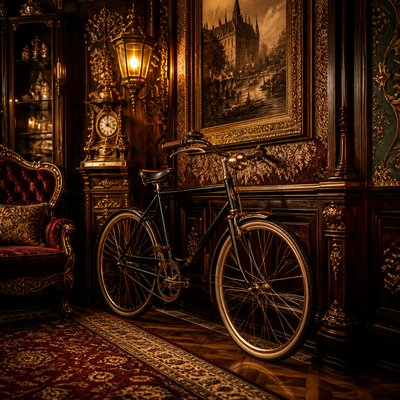
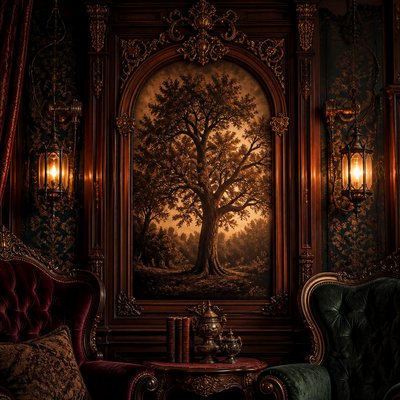
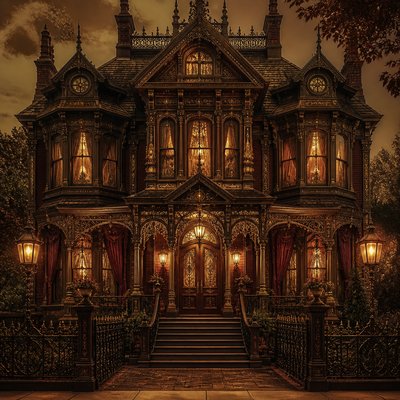
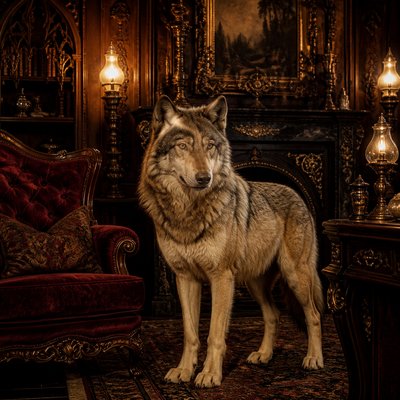
What is Victorian Furniture Art?
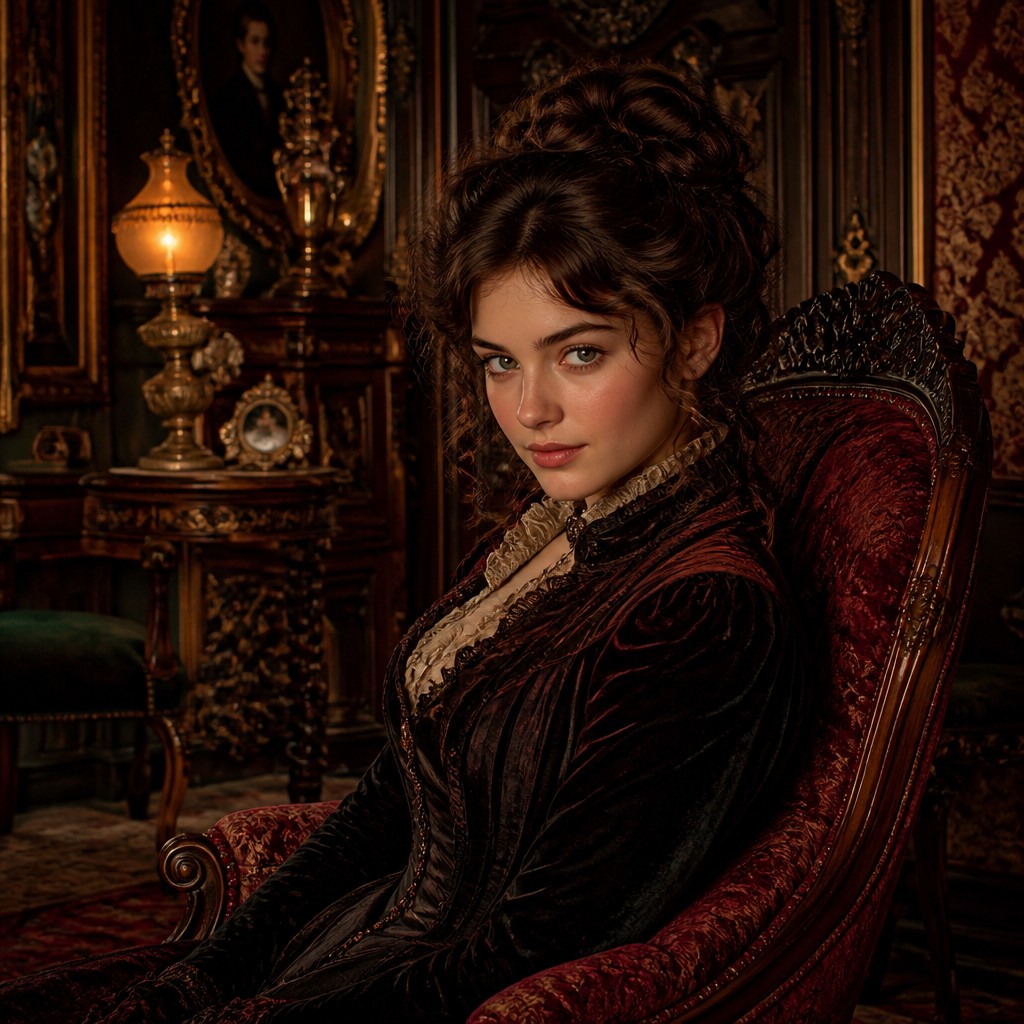
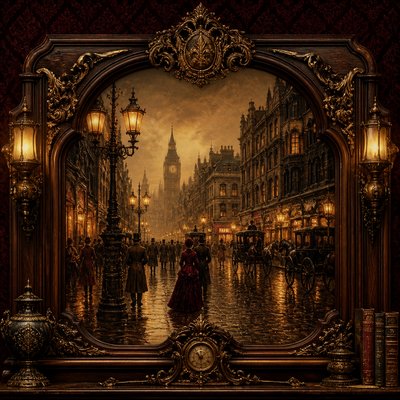
Victorian Furniture Art refers to the visual language of 19th-century furniture design associated with the Victorian era, especially pieces marked by dense ornament, carved detail, plush upholstery, and dark, polished woods. It is not a single unified style so much as a family of decorative approaches that flourished in Britain and spread through Europe and the United States during the reign of a British monarch, when interiors were expected to project comfort, respectability, wealth, and moral seriousness through elaborate craftsmanship.
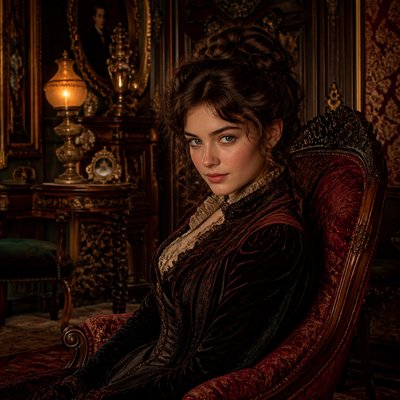
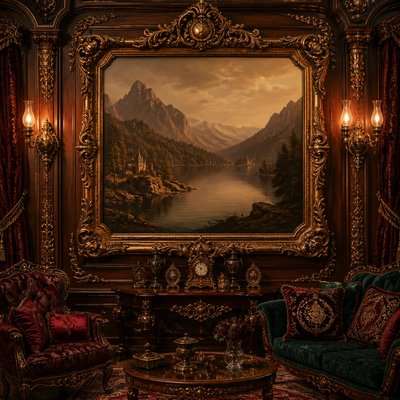
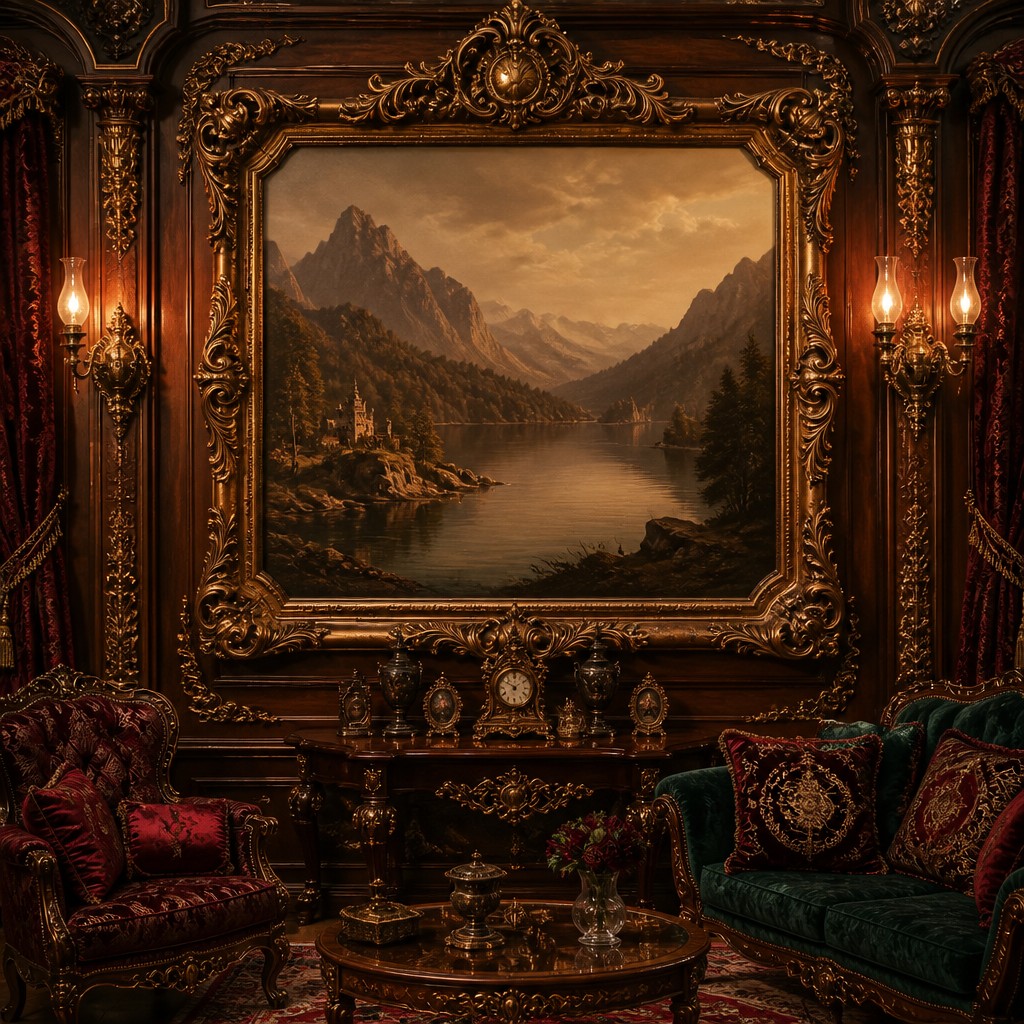
Its visual identity is defined by heavy forms and rich surface treatment: mahogany, walnut, rosewood, tufted velvet, damask, brocade, brass fittings, turned legs, scrollwork, cabriole silhouettes, and revival details borrowed from earlier European traditions. The look tends to feel warm, romantic, and slightly theatrical because Victorian design valued layered decoration and historical reference, producing furniture that reads as both domestic and ceremonious.
Try It On Your Photos
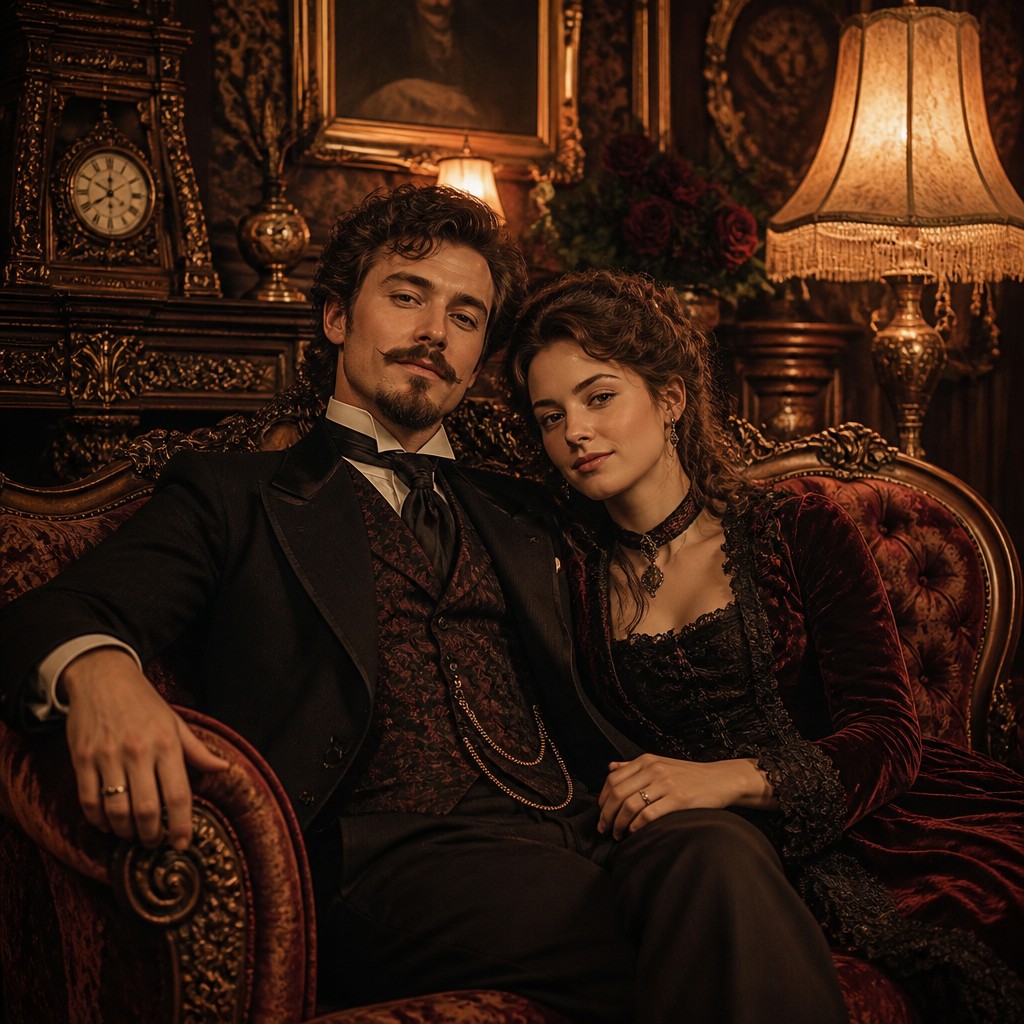
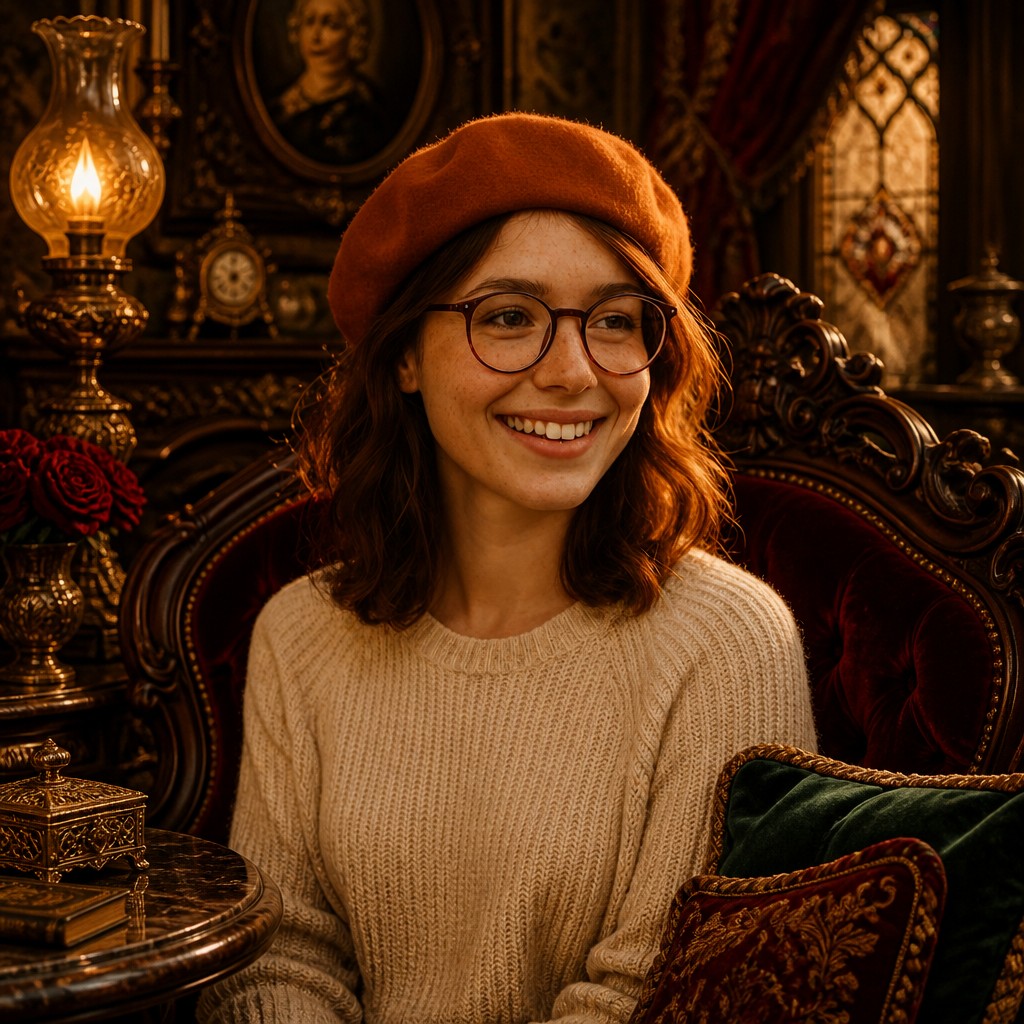
Upload any photo and convert it into Victorian Furniture Art — drag the sliders to compare before and after.


What Defines Victorian Furniture Art
The signature details, up close
Dark polished hardwoods
Mahogany, walnut, and rosewood are central to the look, often finished to a deep sheen that emphasizes grain and depth. The dark wood grounds the ornament and gives the furniture a heavy, dignified presence.
Ornate carved surfaces
Scrolls, acanthus leaves, floral motifs, and pierced details appear on legs, arms, crests, and aprons. Carving is used not just as decoration but as a way to make the silhouette feel elaborate and historically referential.
Tufted and upholstered comfort
Button-tufted backs, rolled arms, and padded seats signal domestic luxury. Fabrics such as velvet, damask, and brocade often introduce jewel tones that contrast with the dark wood frame.
Revival eclecticism
Victorian furniture frequently blends Gothic-revival pointed details, Rococo curves, and occasional Renaissance or Elizabethan references. This eclectic mix is one of the clearest identifiers of the style.
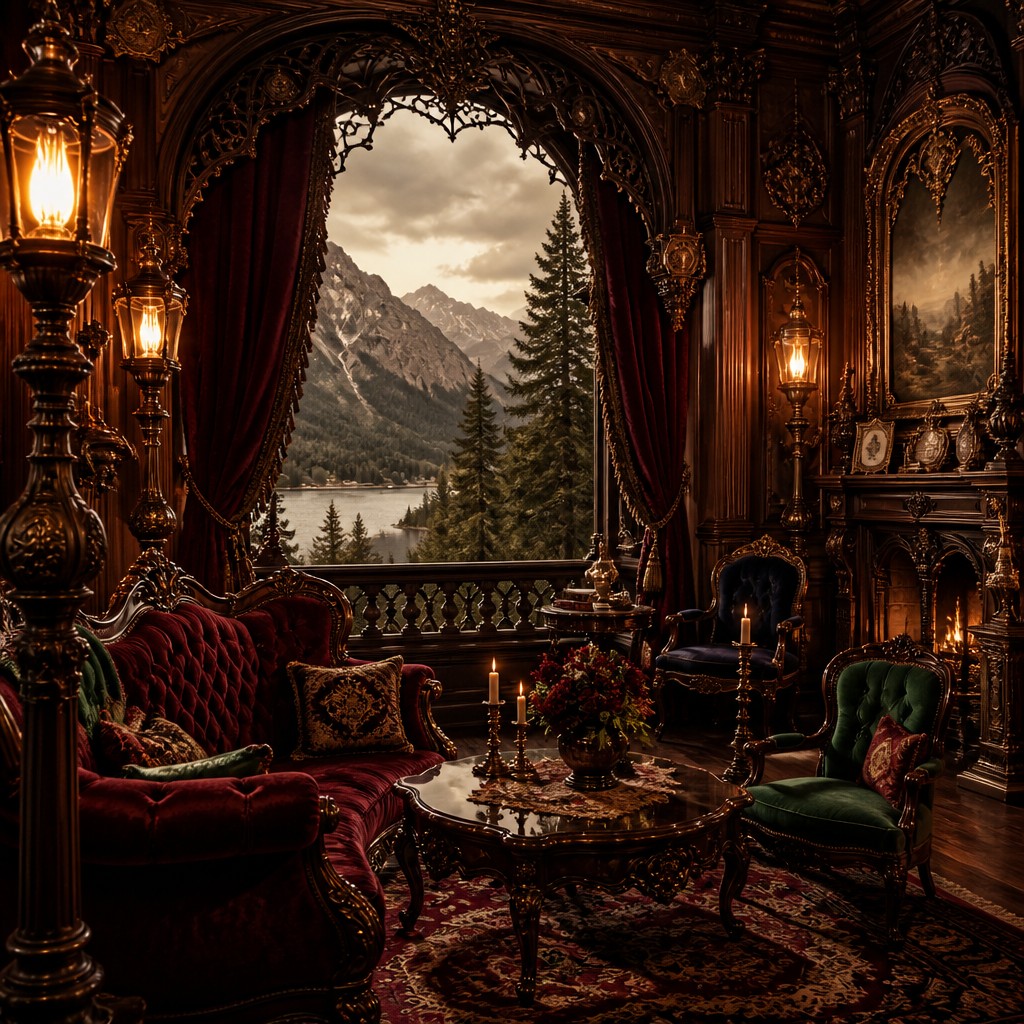
Brass, gilt, and metal accents
Hardware, mounts, casters, and trim may be finished in brass or gilt, sometimes aged to a muted patina. These details catch light and reinforce the furniture’s sense of richness.
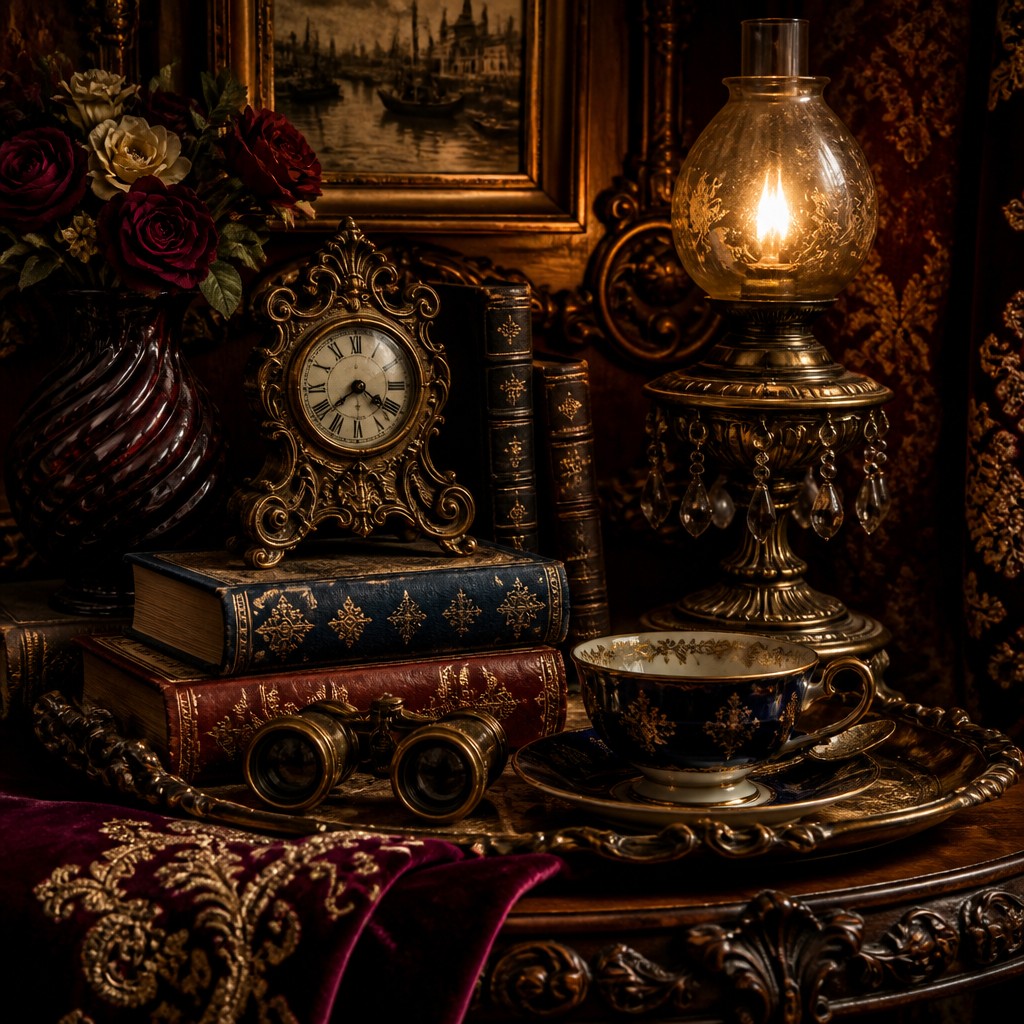
Symmetry and dense ornament
Although the surfaces are busy, the overall composition usually remains balanced and formal. Ornament is distributed in a structured way, creating a sense of order within complexity.
Try It
Create Videos in Victorian Furniture Art
Styles aren't just for stills — describe a scene or animate an image and get a short video rendered in Victorian Furniture. Press play to see this pond come to life.
Make a VideoVictorian Furniture Prompt Ideas
Start from an idea — each one opens the generator with the style ready to go. See all 40 Victorian Furniture prompts →
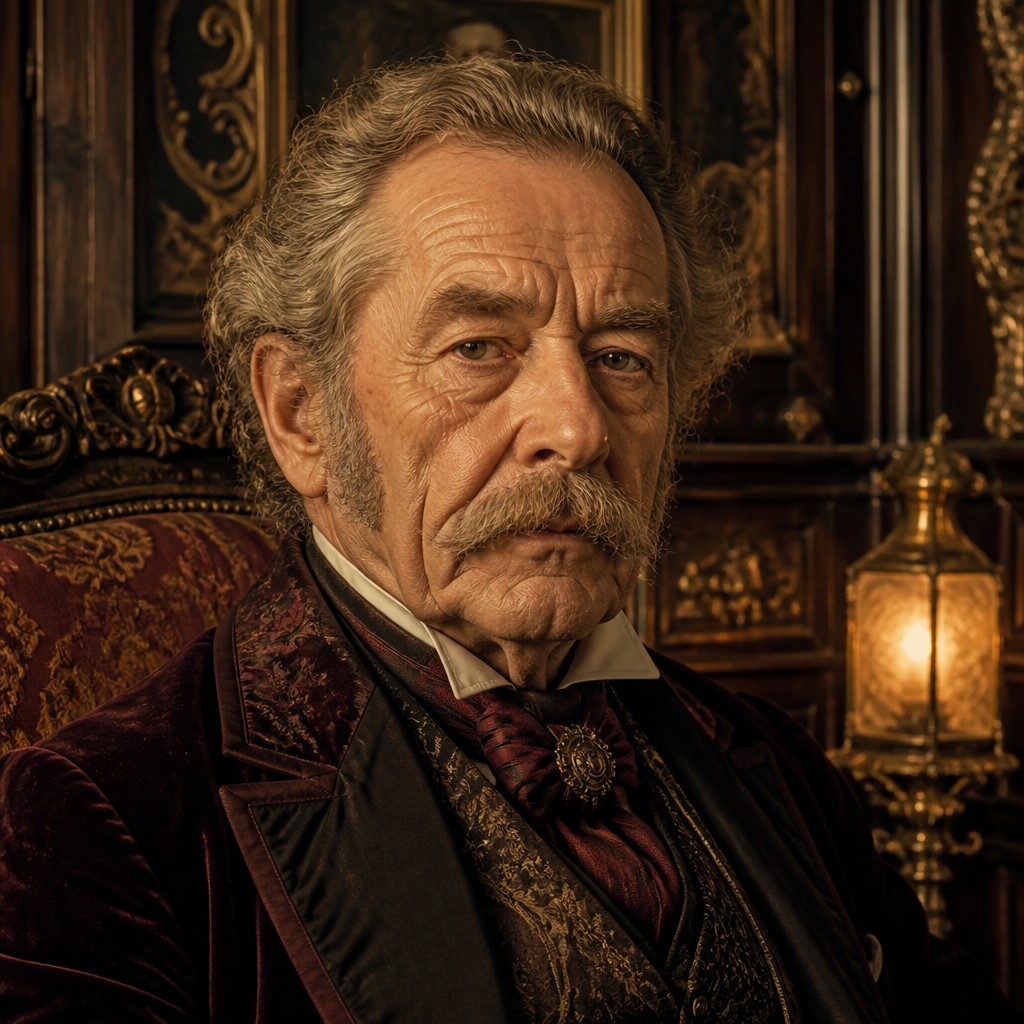
“close-up portrait of an elderly person with expressive weathered features”
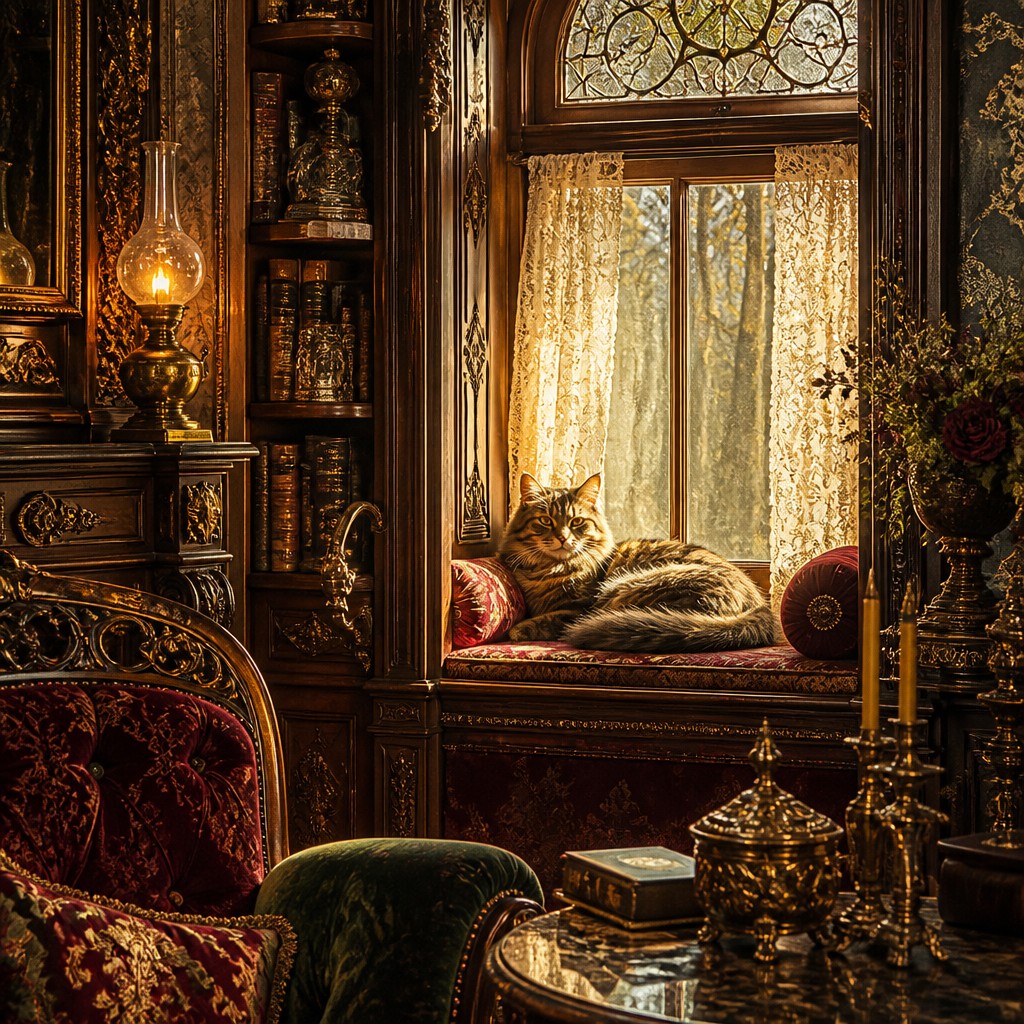
“a cat lounging in a sunlit window”
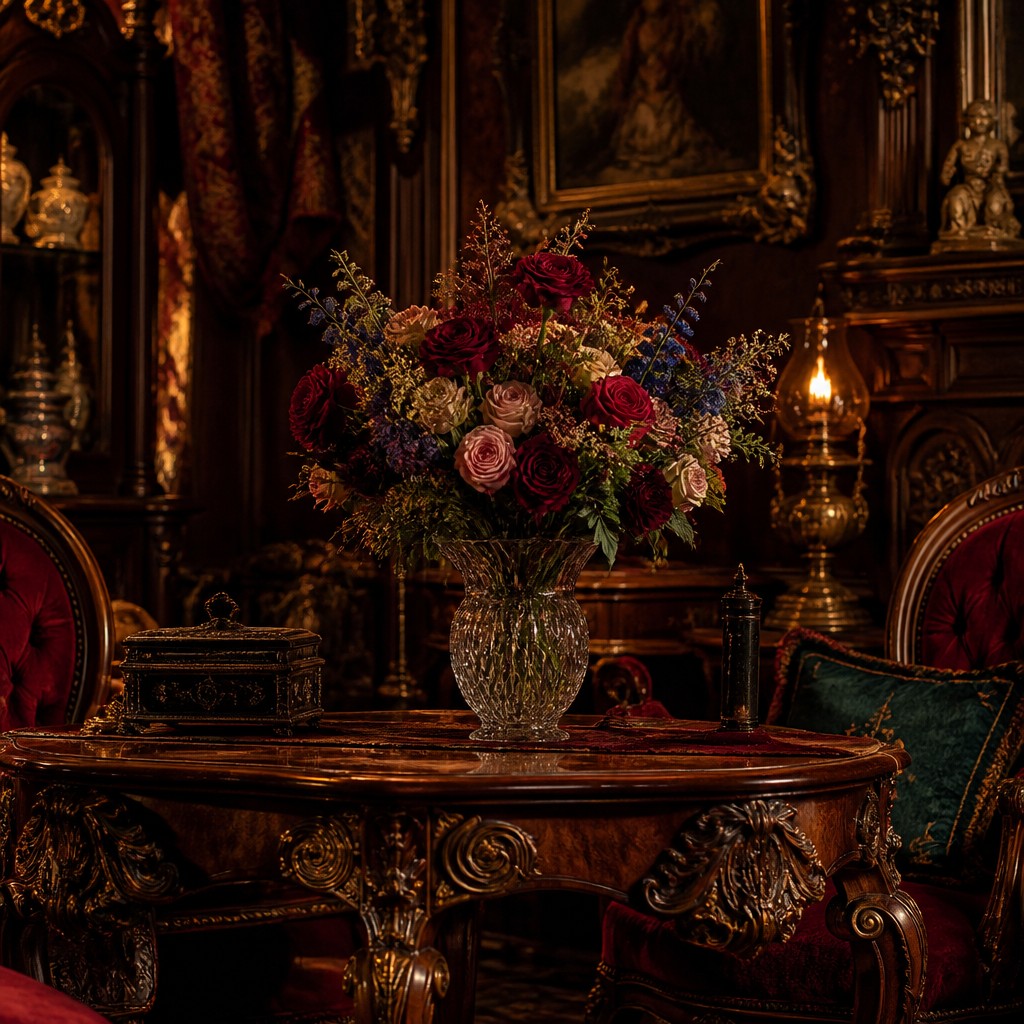
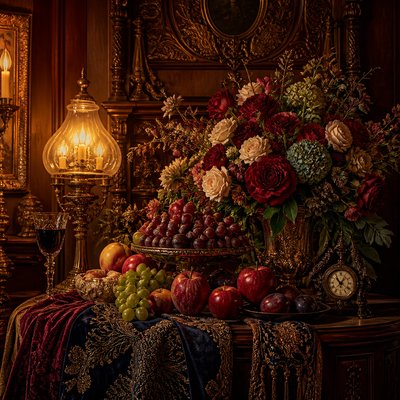
“bouquet of flowers in a glass vase”
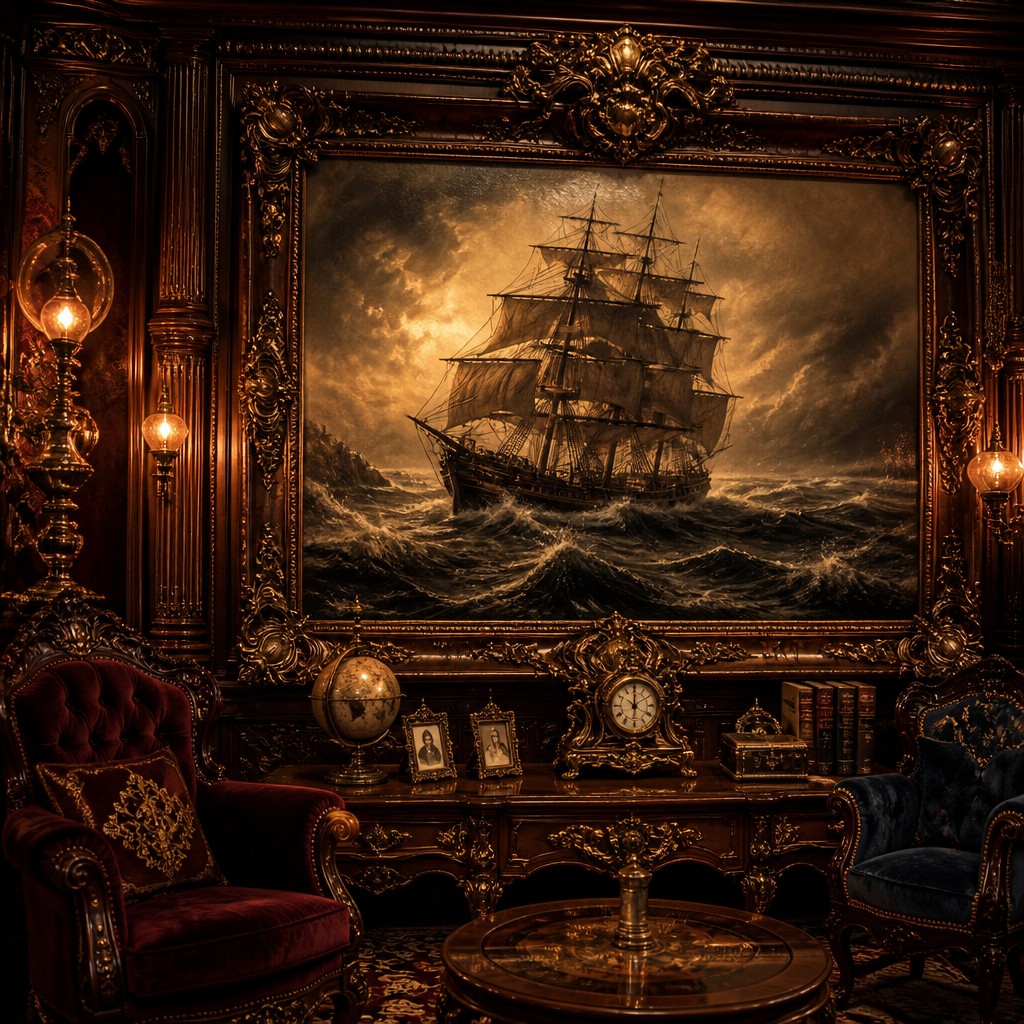
“sailing ship on a stormy sea”
How to Create Victorian Furniture Art
Master the craft step by step — or skip straight to creating. Read the full guide →
- 1
Build the form first
Start with a strong silhouette: high backs, curved arms, cabriole legs, or pedestal bases all help establish the period feel. In traditional drawing or 3D work, keep proportions substantial and avoid overly minimal lines, since Victorian furniture looks heavy and intentional.
- 2
Layer ornament with restraint
Add carved motifs at structural points such as the crest rail, apron, arm supports, and leg joints. The style is ornate, but the decoration should follow the furniture’s construction so it feels authentic rather than randomly embellished.
- 3
Use rich material contrast
Pair dark woods with saturated textiles like burgundy velvet, emerald damask, or sapphire brocade. In digital painting or image editing, emphasize sheen on wood and soft diffusion in fabric to distinguish hard and plush surfaces.
- 4
Light it like an interior tableau
Warm, amber-toned lighting helps reproduce the gas-lit atmosphere associated with Victorian rooms. Use deep shadows in carved recesses and soft highlights along polished edges to create depth and a romantic mood.
- 5
Reference period ornament when generating prompts
If using text prompts, name the subject clearly and specify Victorian materials, carved detailing, tufted upholstery, and dark polished finishes. Strong prompts often benefit from including the setting too, such as a parlor, library, or formal sitting room.
The Story
History & Origins of Victorian Furniture
Victorian furniture developed during the 1837–1901 reign of a British monarch, a period shaped by industrial manufacturing, expanding middle-class taste, and intense interest in historical revival styles. Rather than inventing an entirely new visual system, designers and cabinetmakers adapted motifs from Rococo, Gothic, Renaissance, and later Neoclassical sources, often combining them within the same interior. Mass production made ornate furniture more widely available, while skilled workshops and high-end manufacturers continued to produce richly carved pieces for affluent clients.
Its lineage continues to influence contemporary historicist interiors, film set design, and decorative arts revival work. Because the style emerged in a culture that prized display, sentiment, and domestic abundance, it remains strongly associated with parlor rooms, libraries, formal seating, and other interior spaces meant to feel established and ceremonially furnished.
Influences: Victorian furniture draws from a mixture of historical revivals rather than a single predecessor: Rococo for curving scroll forms, Gothic Revival for pointed tracery and medieval romance, Renaissance and Elizabethan revival for heavy carved solidity, and Neoclassical taste for formal symmetry. In the broader decorative arts, leading Gothic Revival theorists and designers helped popularize the movement’s principles in Britain, while later advocates of reform-minded domestic design encouraged more disciplined approaches within Victorian interiors. The style also reflects the impact of industrial manufacturing on furniture production, which expanded the reach of elaborate ornament across different social classes.

Frequently Asked Questions
What defines Victorian furniture art?
It is defined by ornate carving, dark polished woods, tufted upholstery, and a romantic, historically referential sense of decoration. The style often mixes multiple revival influences, especially Gothic and Rococo forms, within a single piece or room.
How is Victorian furniture different from Edwardian furniture?
Victorian furniture is typically heavier, darker, and more ornamented, with richer carving and more visual density. Edwardian furniture trends lighter, cleaner, and more restrained, reflecting changing taste at the turn of the 20th century.
What woods and fabrics are most associated with this style?
Mahogany, walnut, and rosewood are especially characteristic woods. Upholstery often uses velvet, damask, brocade, leather, or other rich textiles in deep jewel tones.
How do I make an image look Victorian without making it too modern?
Avoid minimal lines, bright white surfaces, and streamlined silhouettes. Use carved details, formal proportions, warm lighting, and historically grounded materials like dark wood and patterned fabric.
Where is Victorian furniture commonly used today?
It appears in period interiors, historic homes, antique restoration, film and theater sets, and decorative illustration. It is also used in contemporary gothic, vintage, and maximalist interiors as a statement style.
Can Victorian furniture be shown in digital art or photography-based work?
Yes. Digital painting, 3D rendering, compositing, and photo-based interior styling can all depict the style effectively if the materials, ornament, and lighting are carefully controlled. The key is preserving the weight and texture that make the furniture feel authentic.
Create your first Victorian Furniture artwork
Describe anything — or upload a photo — and see it in Victorian Furniture Art in seconds.
Make Something with Victorian Furniture
Related Styles
Discover similar art styles