Islamic Architecture
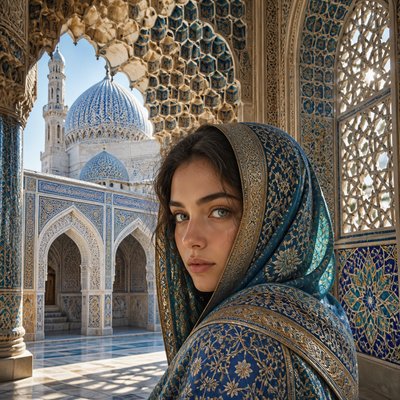
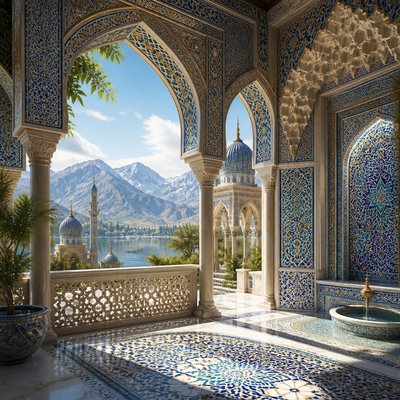
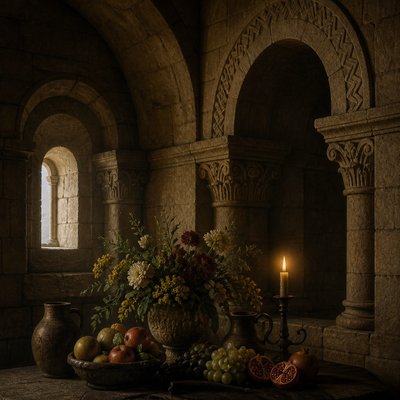
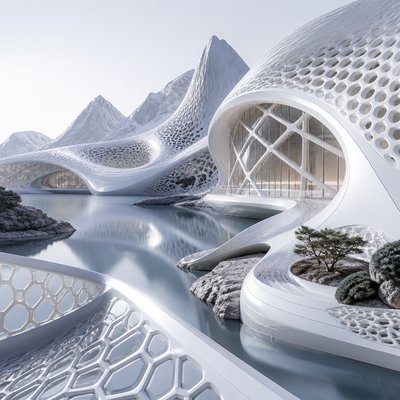
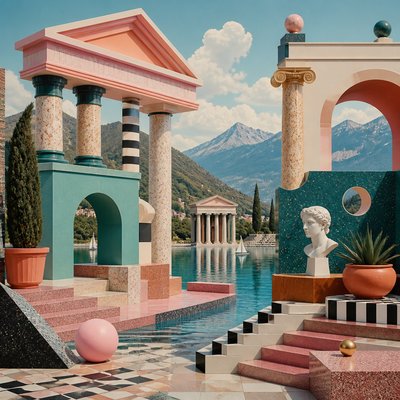
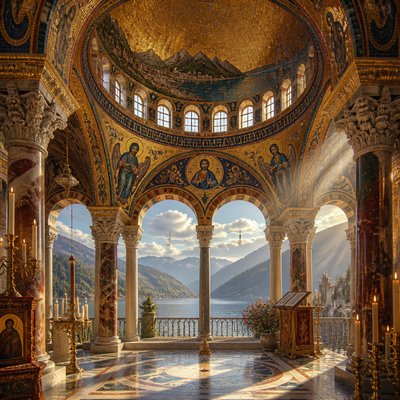
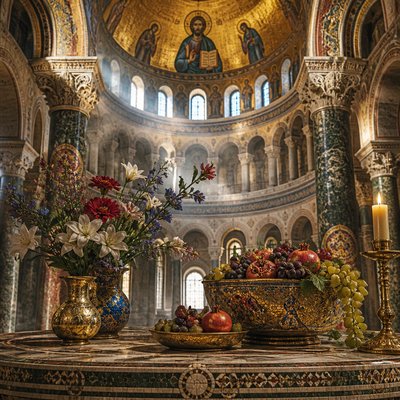
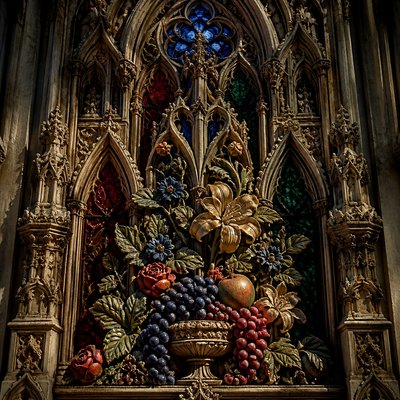
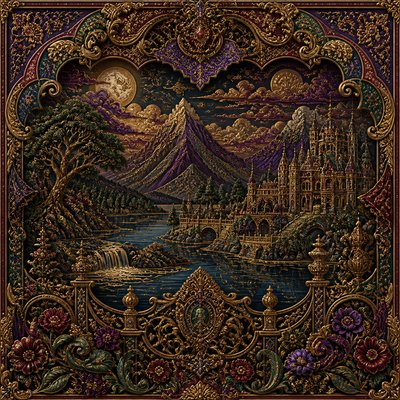
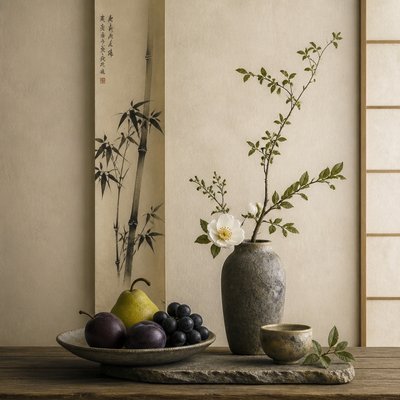
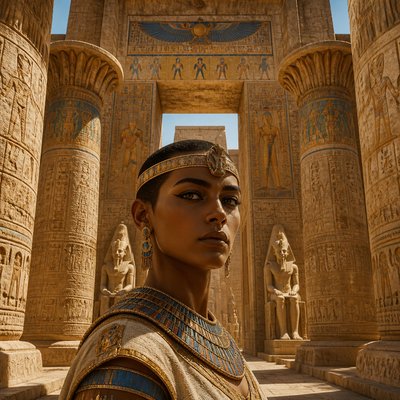
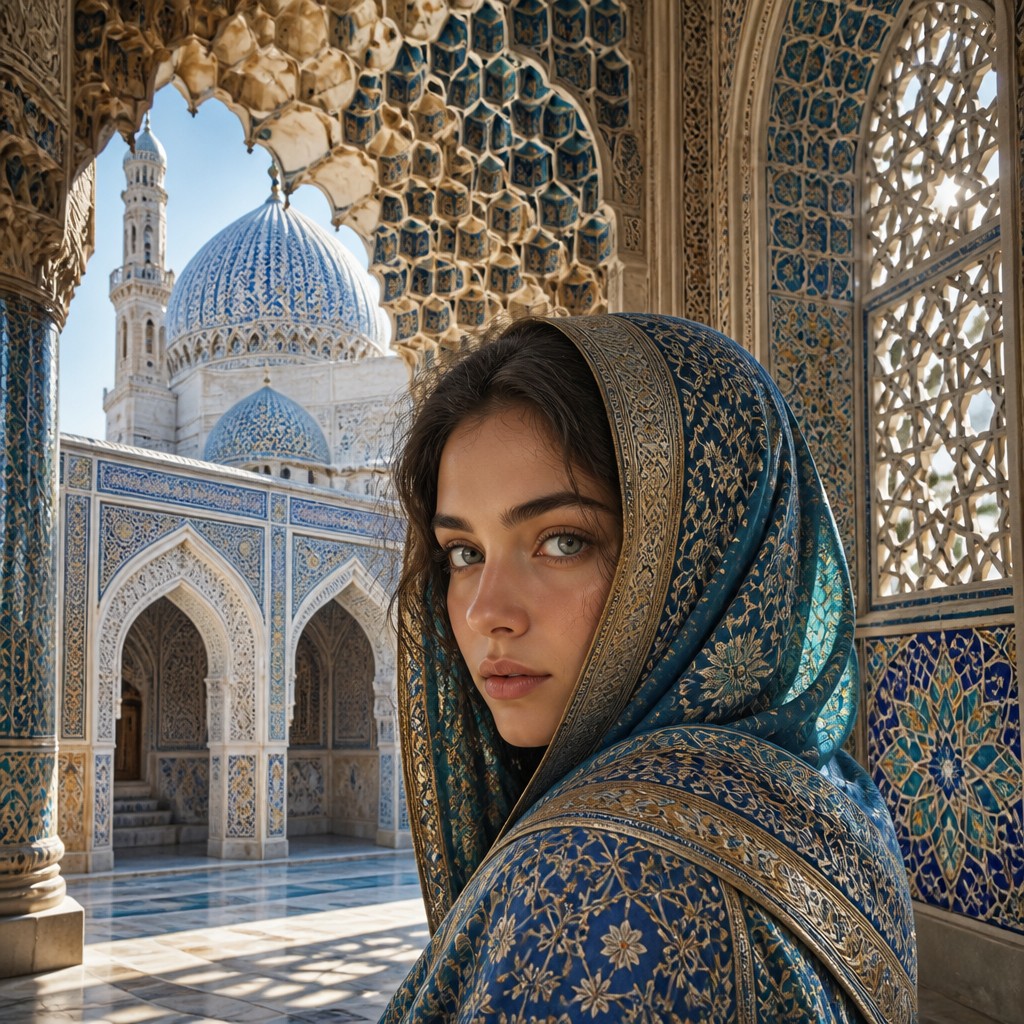
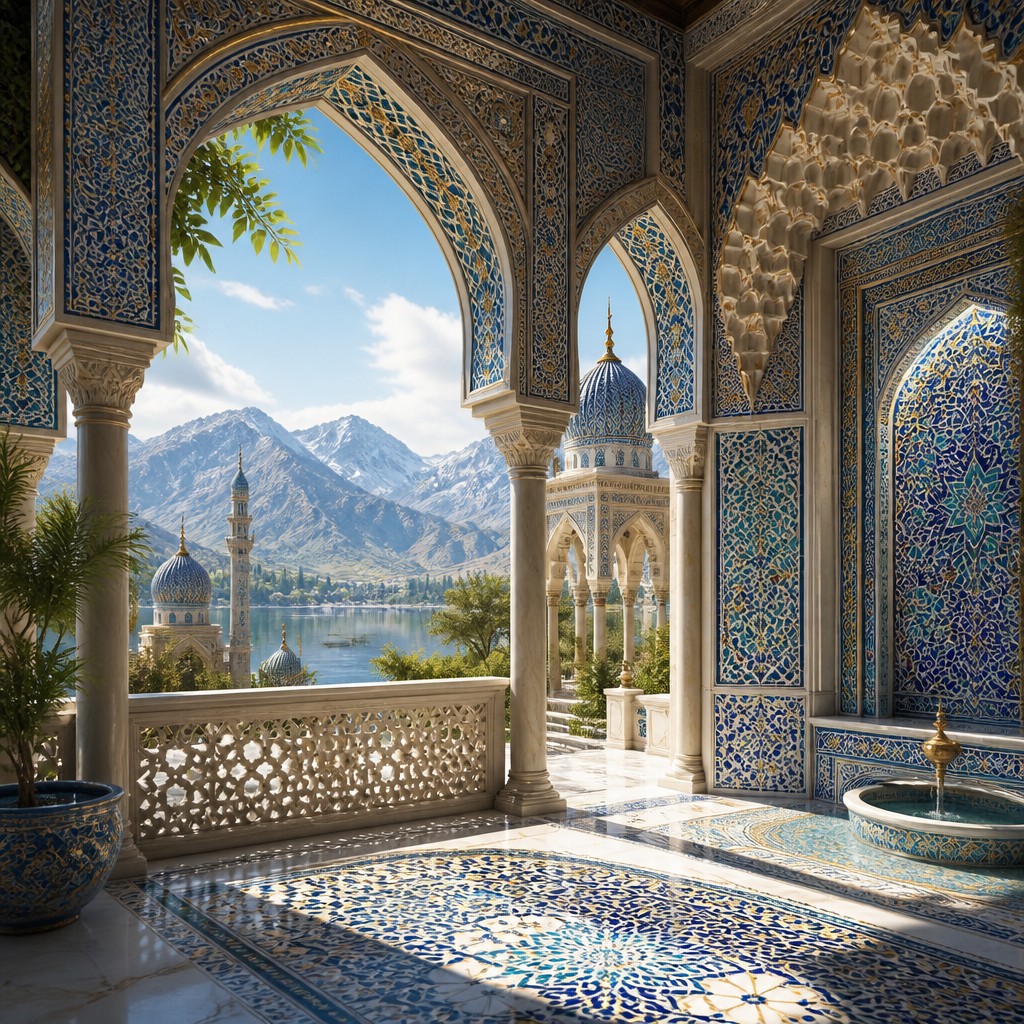
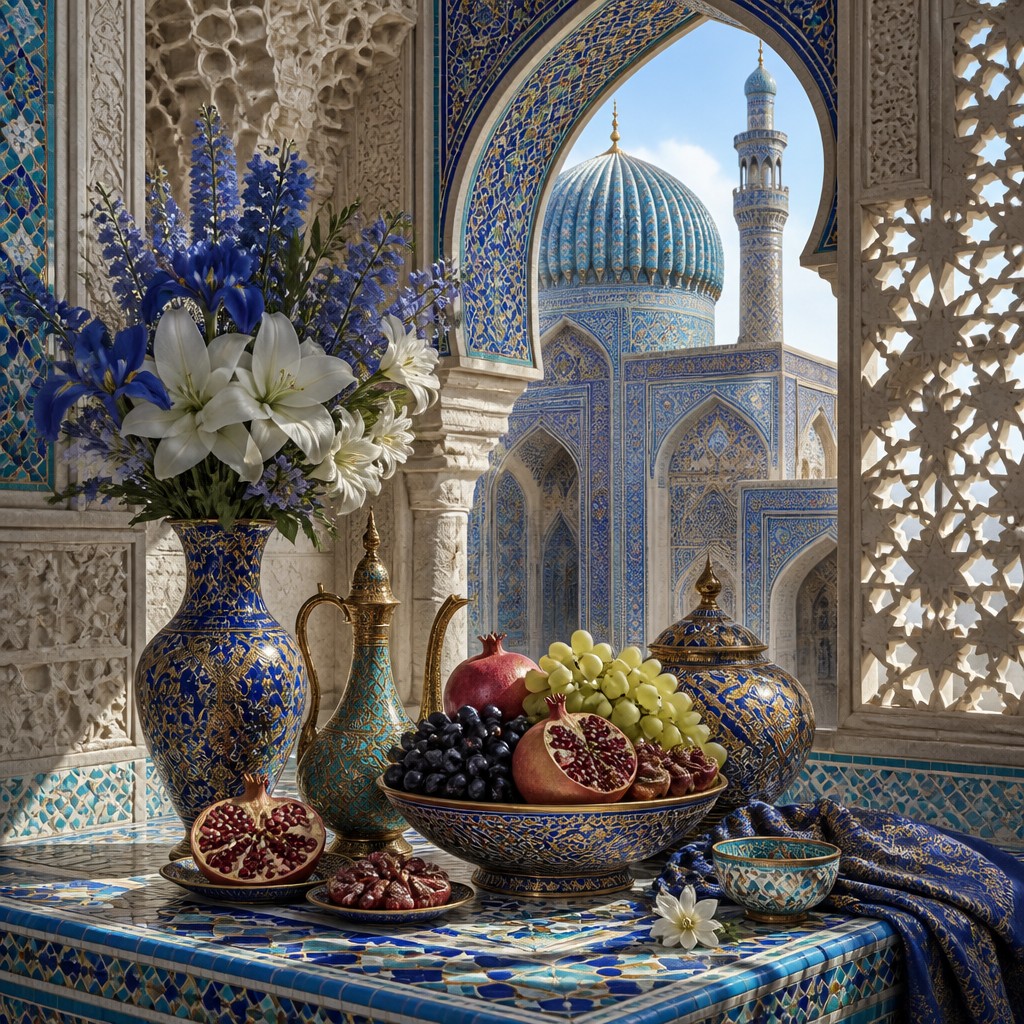
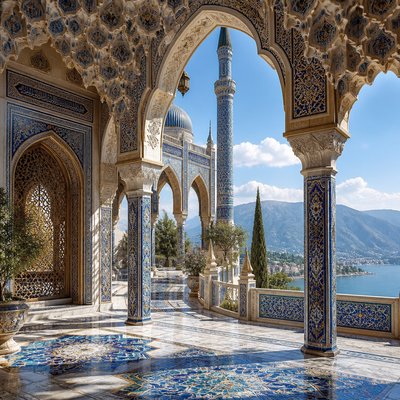
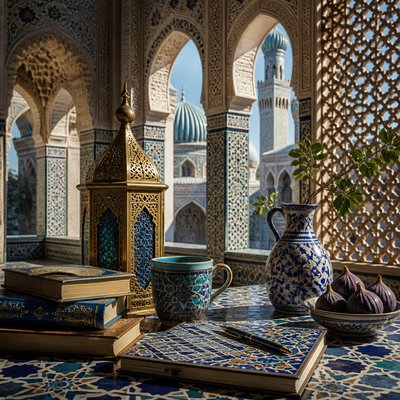
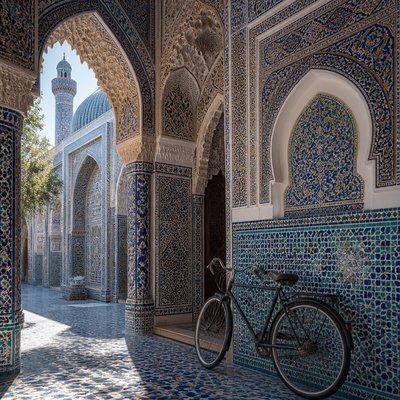
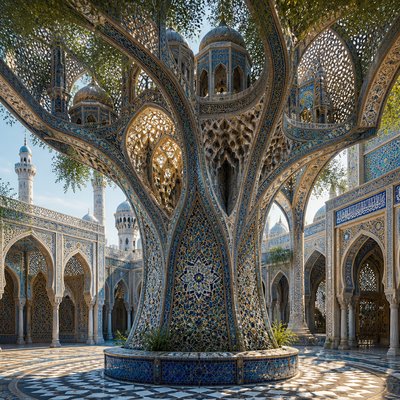
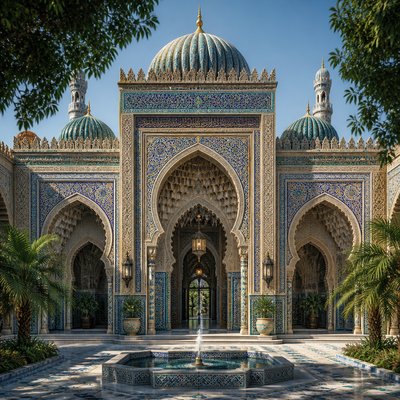
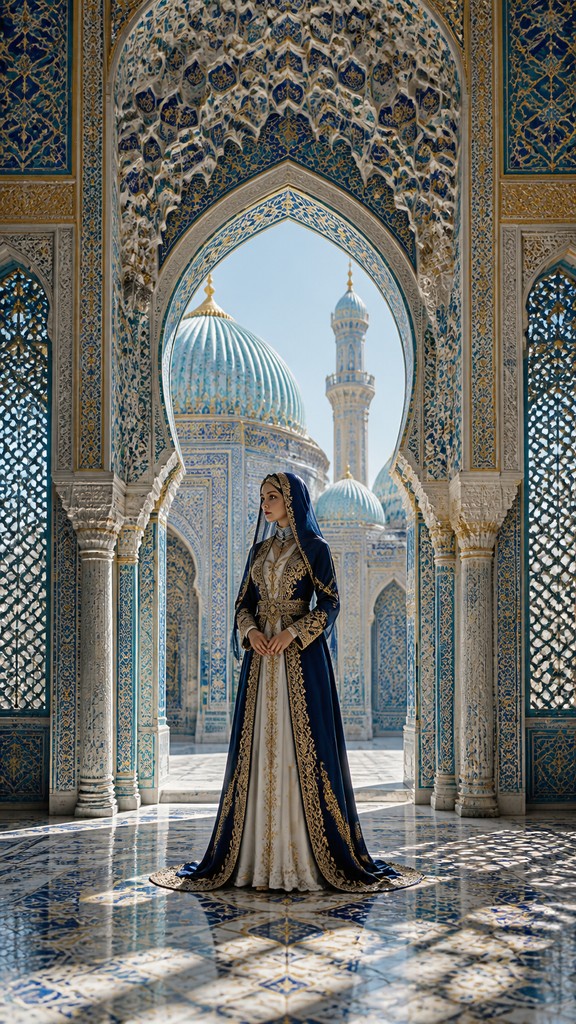
Ornate arches, cobalt tilework, and muqarnas vaults define the contemplative geometry of Islamic architecture.
Instantly rendered in Islamic Architecture — or transform a photo
Islamic Architecture Gallery
Tap any artwork to explore it
What is Islamic Architecture?
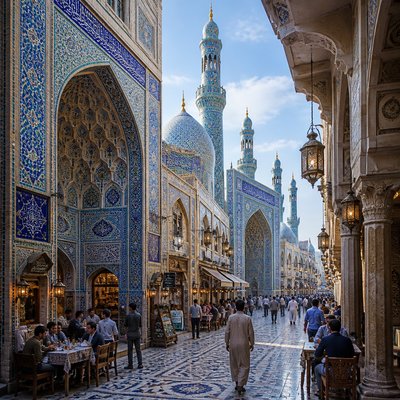
Islamic architecture is a broad architectural tradition shaped by the religious, civic, and decorative arts of the Islamic world from the 7th century onward. It is not a single fixed style, but a family of regional traditions spanning the Middle East, North Africa, Iberia, Central Asia, Persia, South Asia, and beyond. Its most recognizable features include horseshoe and pointed arches, domes, minarets, courtyards, calligraphy, geometric tilework, and intricately patterned surfaces.
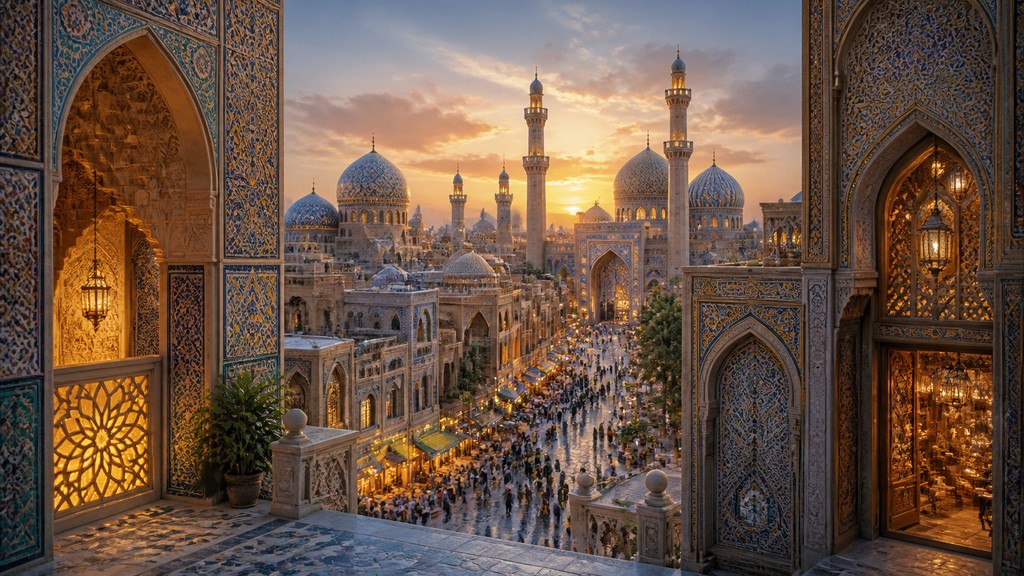
Visually, the style balances structural clarity with dense ornament. Repeated geometry, arabesques, and muqarnas create a sense of order that is both mathematical and devotional, while shaded courtyards, water, and screens soften light and temperature. The resulting atmosphere is often contemplative and inward-looking: spaces are designed to guide movement, modulate daylight, and transform walls, vaults, and domes into surfaces of rhythmic pattern and refined craft.
Try It On Your Photos
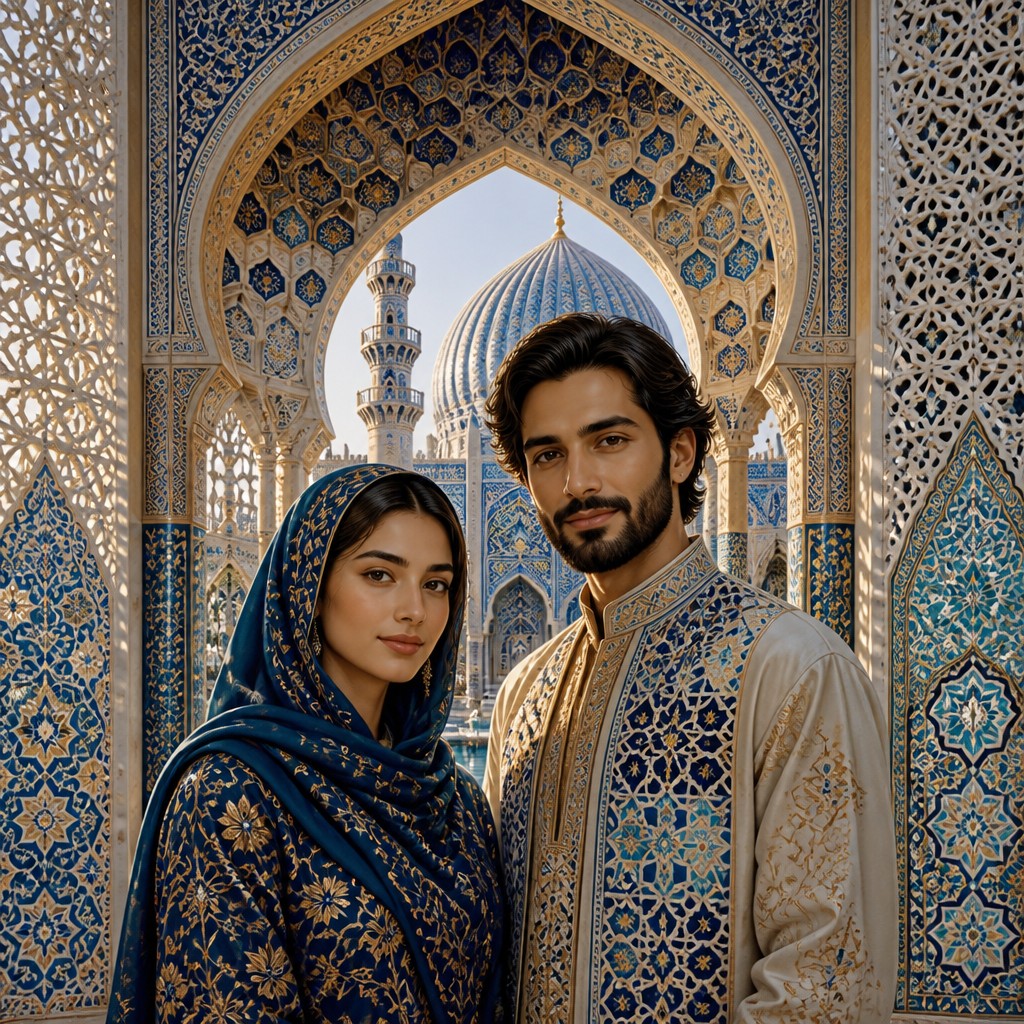
Upload any photo and convert it into Islamic Architecture — drag the sliders to compare before and after.
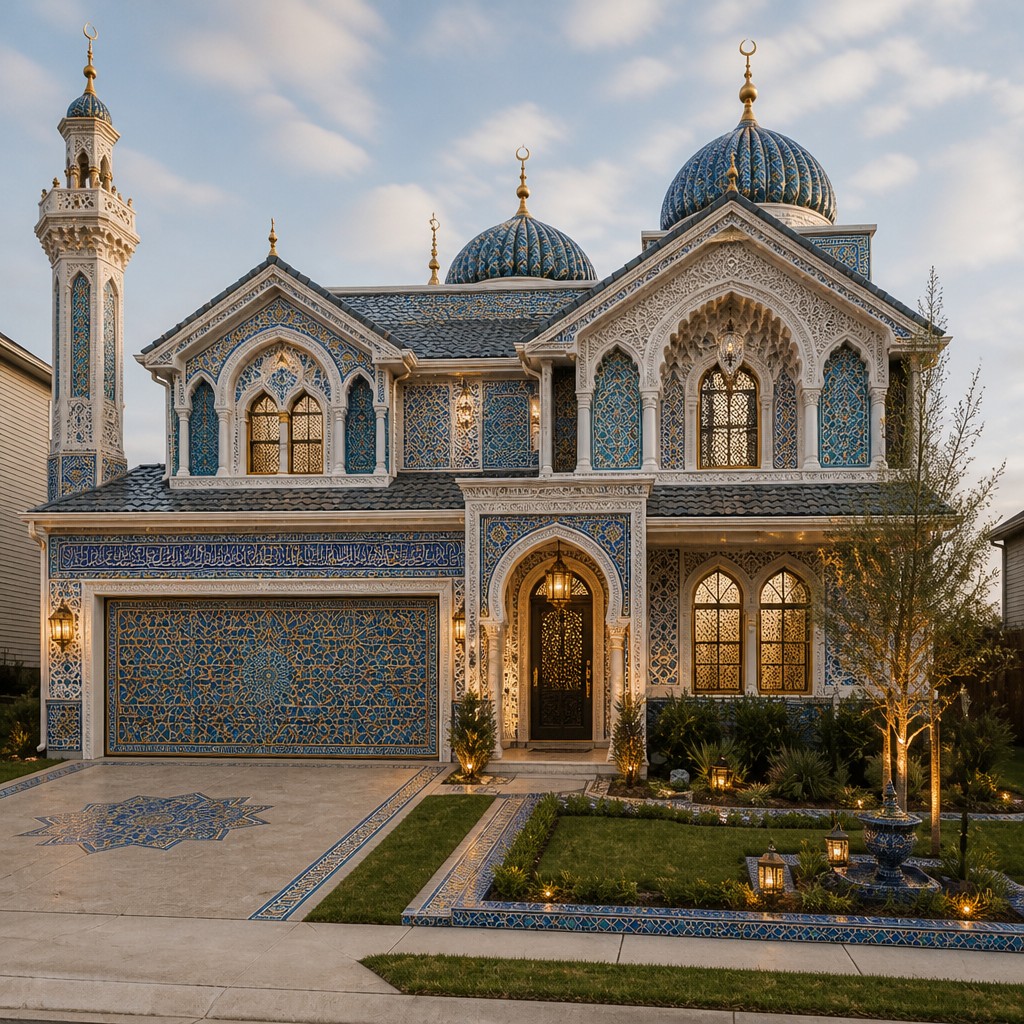
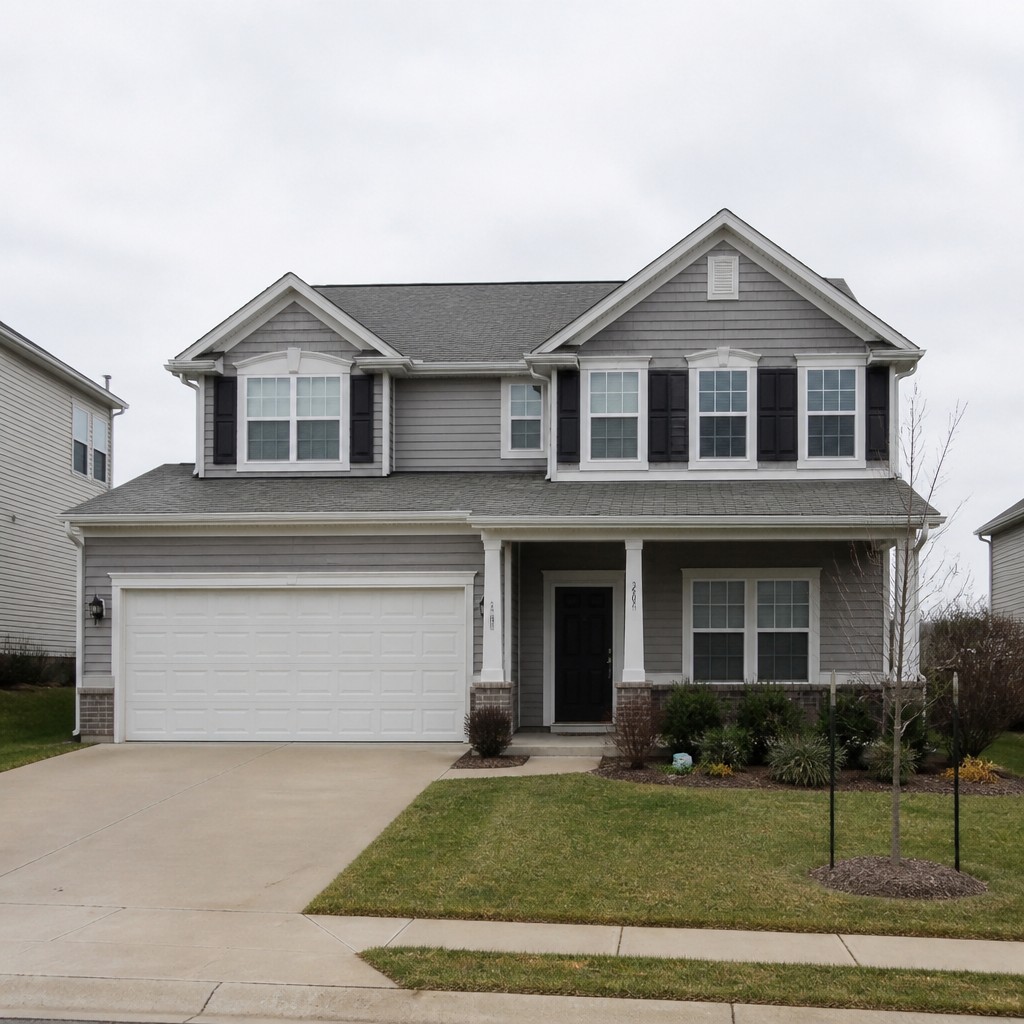


What Defines Islamic Architecture
The signature details, up close
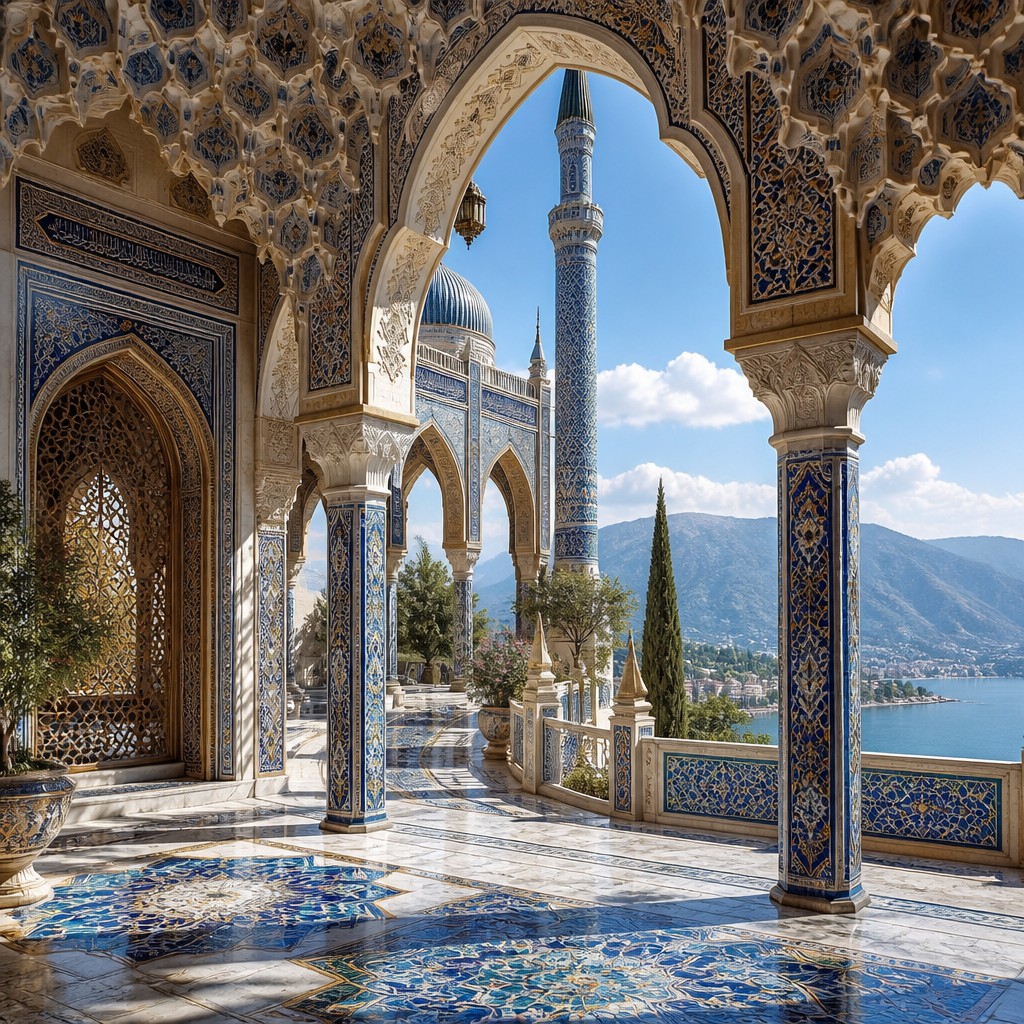
Arches and vaulting
Pointed arches, horseshoe arches, and intersecting arcades are among the most recognizable structural elements. Muqarnas honeycomb vaulting often appears in portals, domes, and transition zones, creating a faceted, almost crystalline effect.
Geometric pattern
Star polygons, tessellations, interlacing bands, and repeat units organize surfaces with mathematical precision. These patterns often cover tile panels, screens, ceilings, and floors, producing visual continuity across the building.
Arabesque ornament
Flowing vegetal scrolls and stylized vines soften the geometry with curving, continuous movement. Arabesques frequently coexist with calligraphy and geometric pattern, creating layered decoration without a single focal image.
Tile, stucco, and glazed surfaces
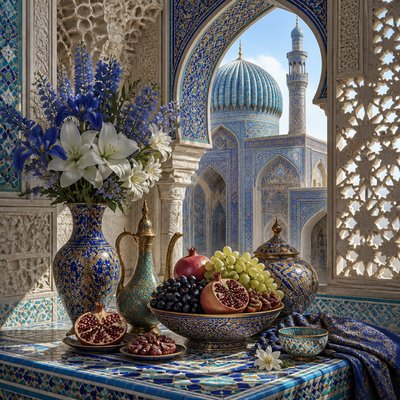
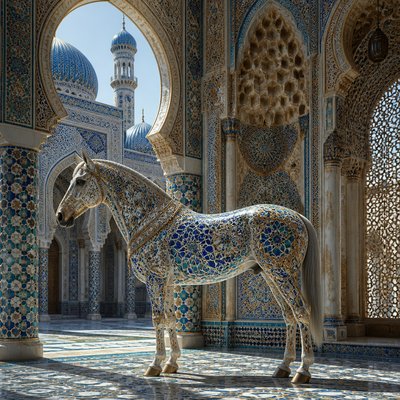
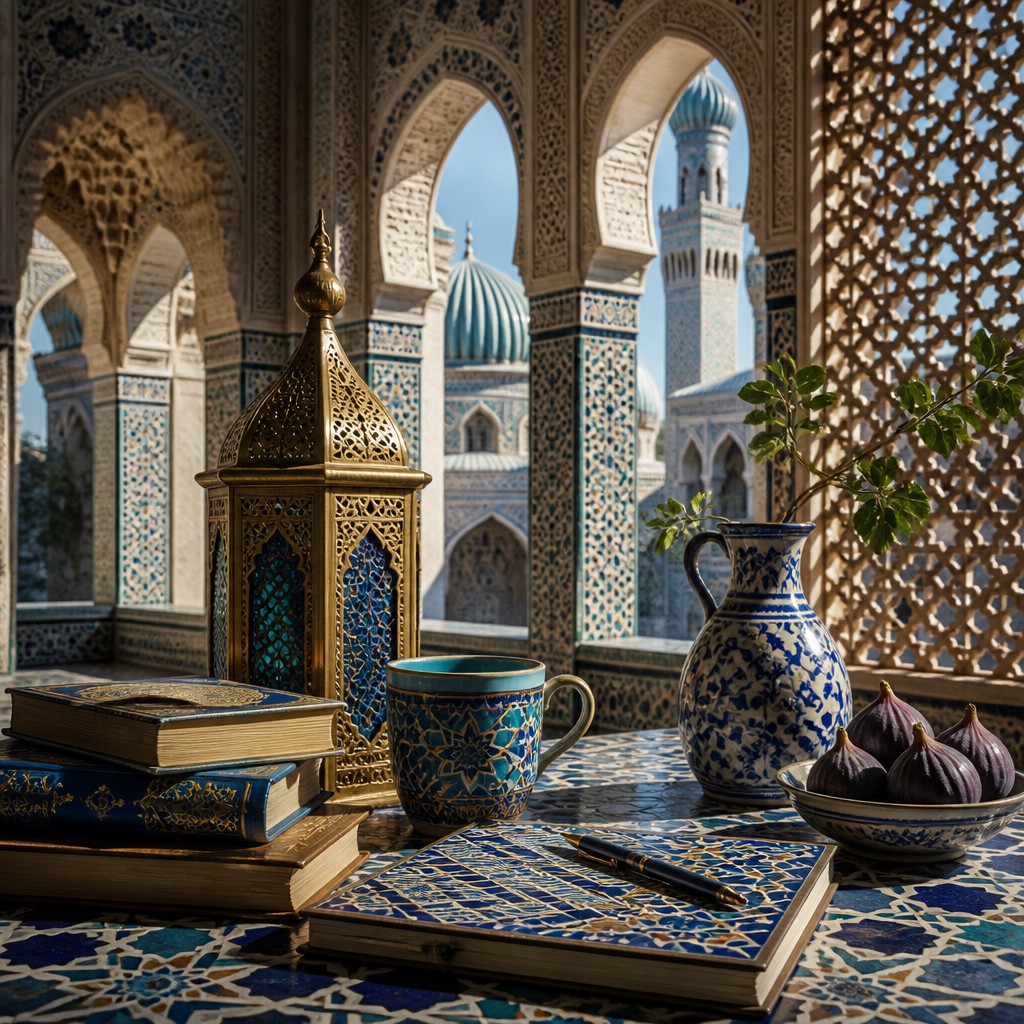
Cobalt blue, turquoise, white, black, and gold are common in ceramic tile and glaze traditions, especially in Persian, Central Asian, and Ottoman contexts. Carved stucco and glazed brick add depth, texture, and a luminous finish.
Screening and light control
Latticed windows, mashrabiya, and pierced screens filter sunlight into patterned shadows. This controlled light helps create a cool, contemplative interior atmosphere and emphasizes the role of shadow as an architectural material.
Courtyard-centered planning
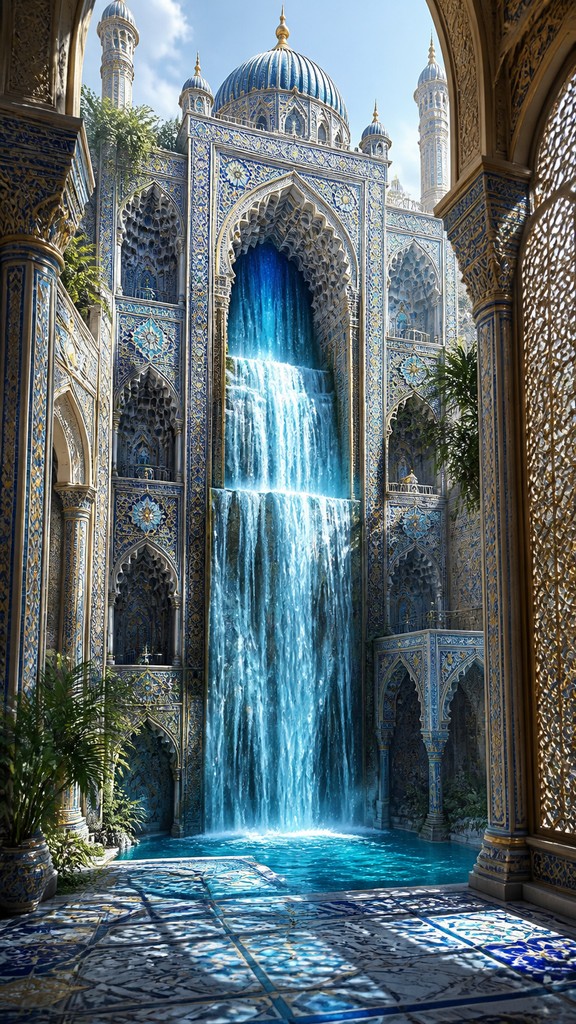
Many buildings are organized around an open court with fountains, arcades, and shaded edges. This arrangement supports ventilation, privacy, and a measured sequence of approach and enclosure.
Try It
Create Videos in Islamic Architecture
Styles aren't just for stills — describe a scene or animate an image and get a short video rendered in Islamic Architecture. Press play to see this pond come to life.
Make a VideoIslamic Architecture Prompt Ideas
Start from an idea — each one opens the generator with the style ready to go. See all 40 Islamic Architecture prompts →
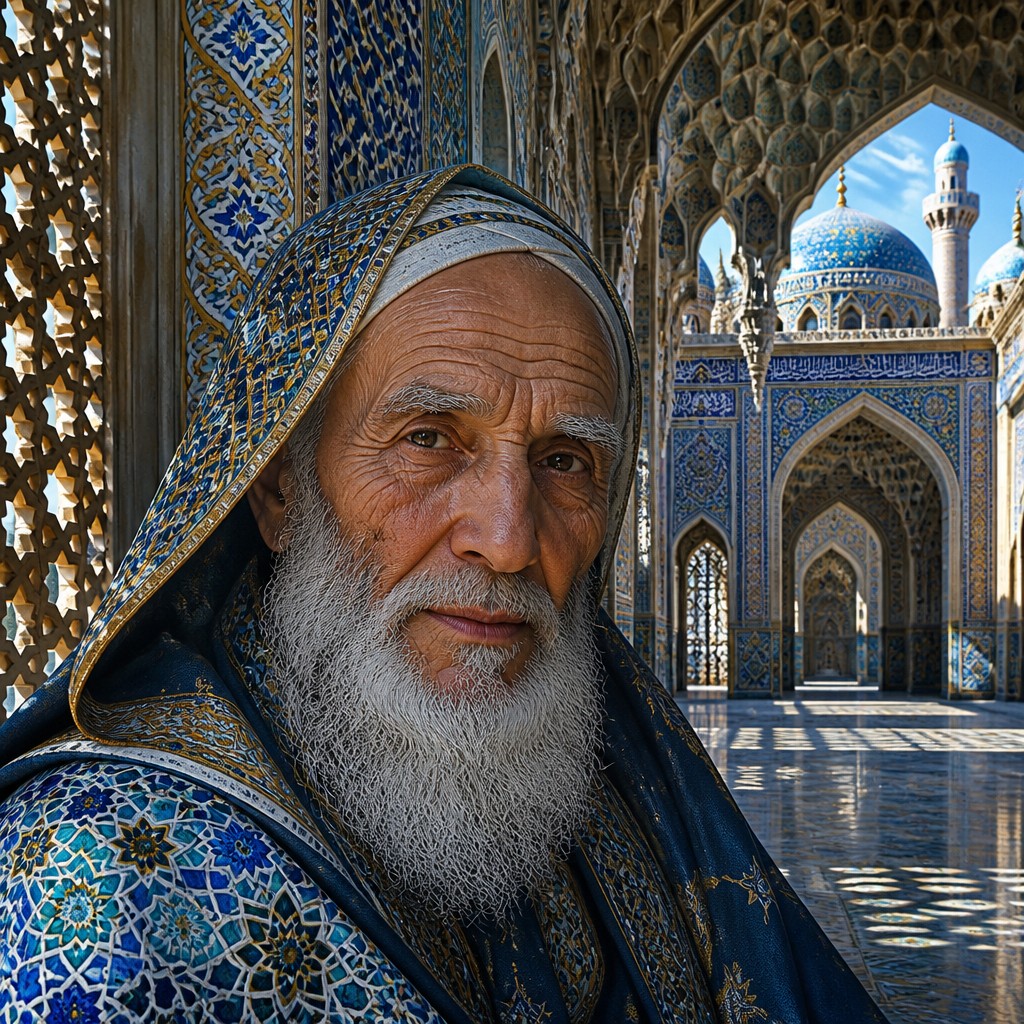
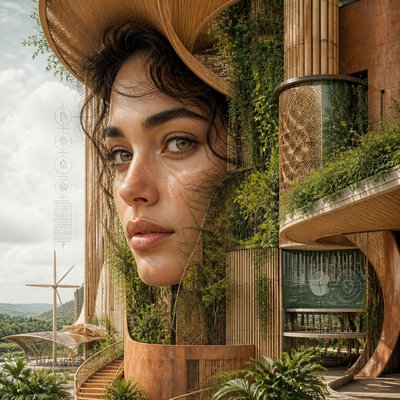
“close-up portrait of an elderly person with expressive weathered features”
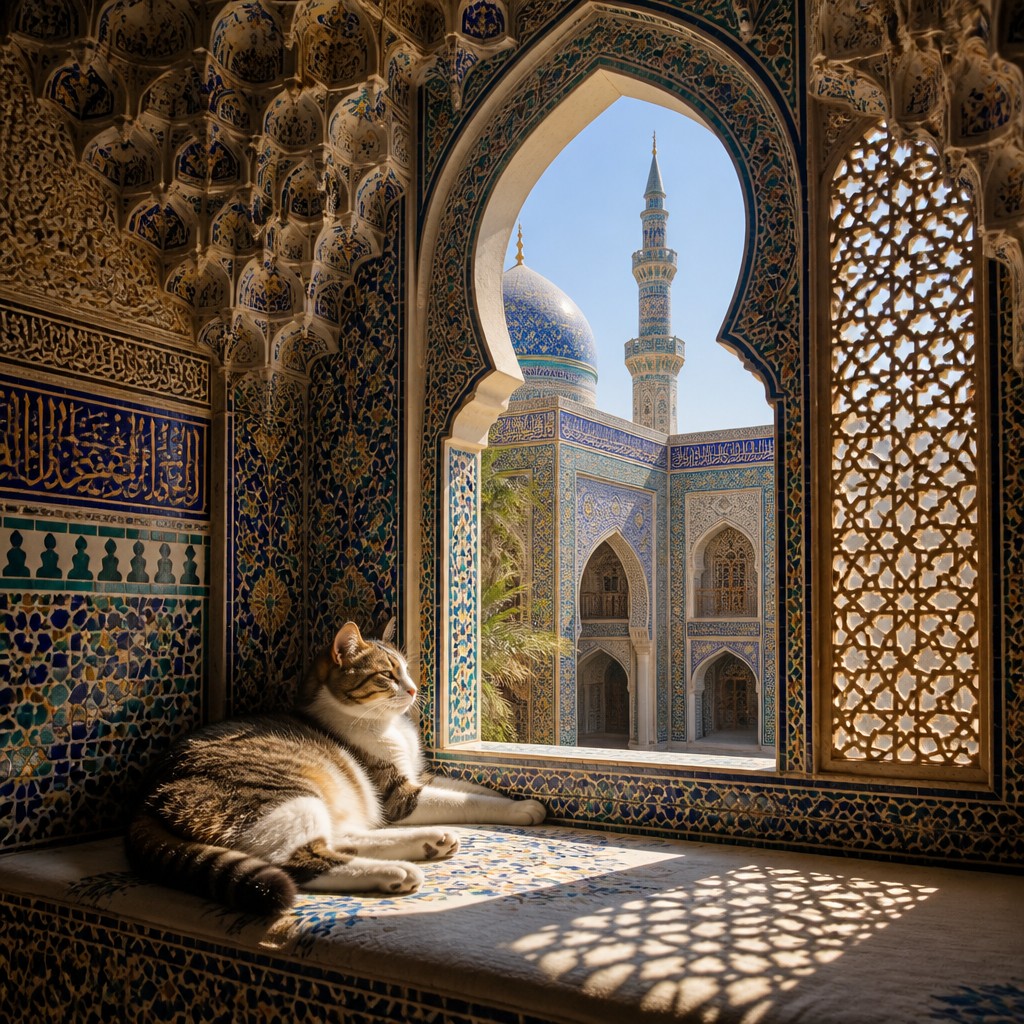
“a cat lounging in a sunlit window”
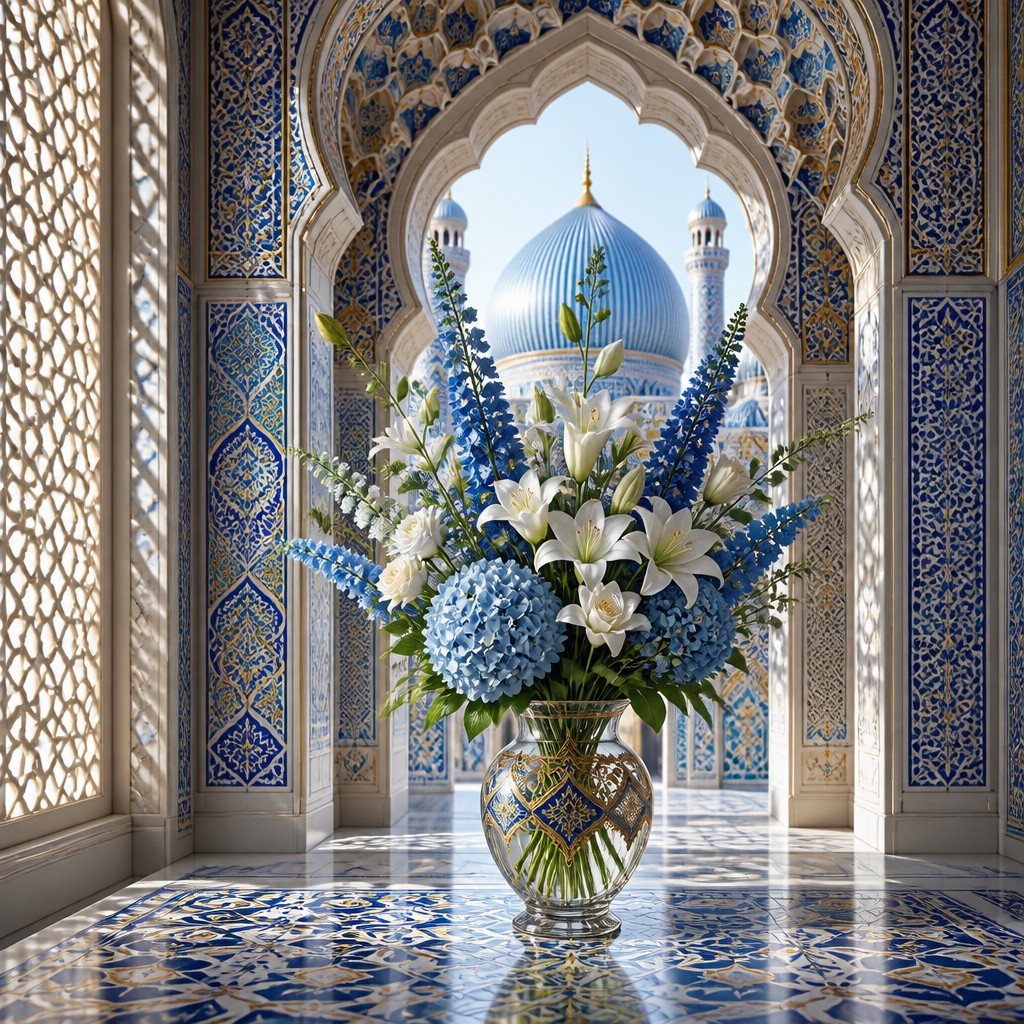
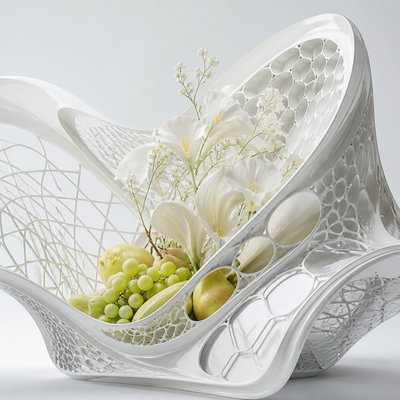
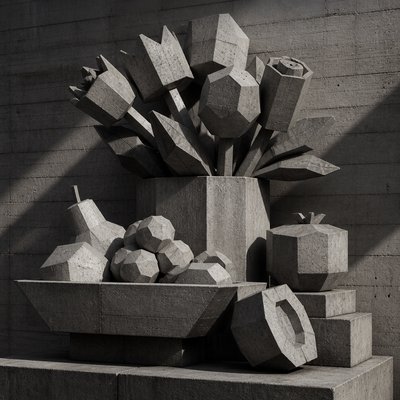
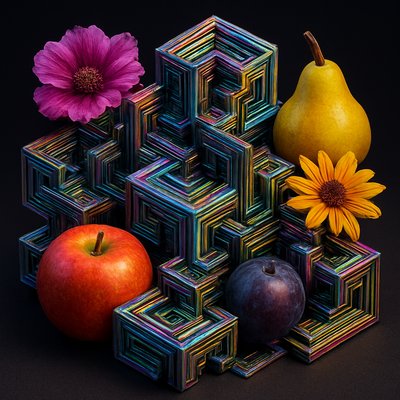
“bouquet of flowers in a glass vase”
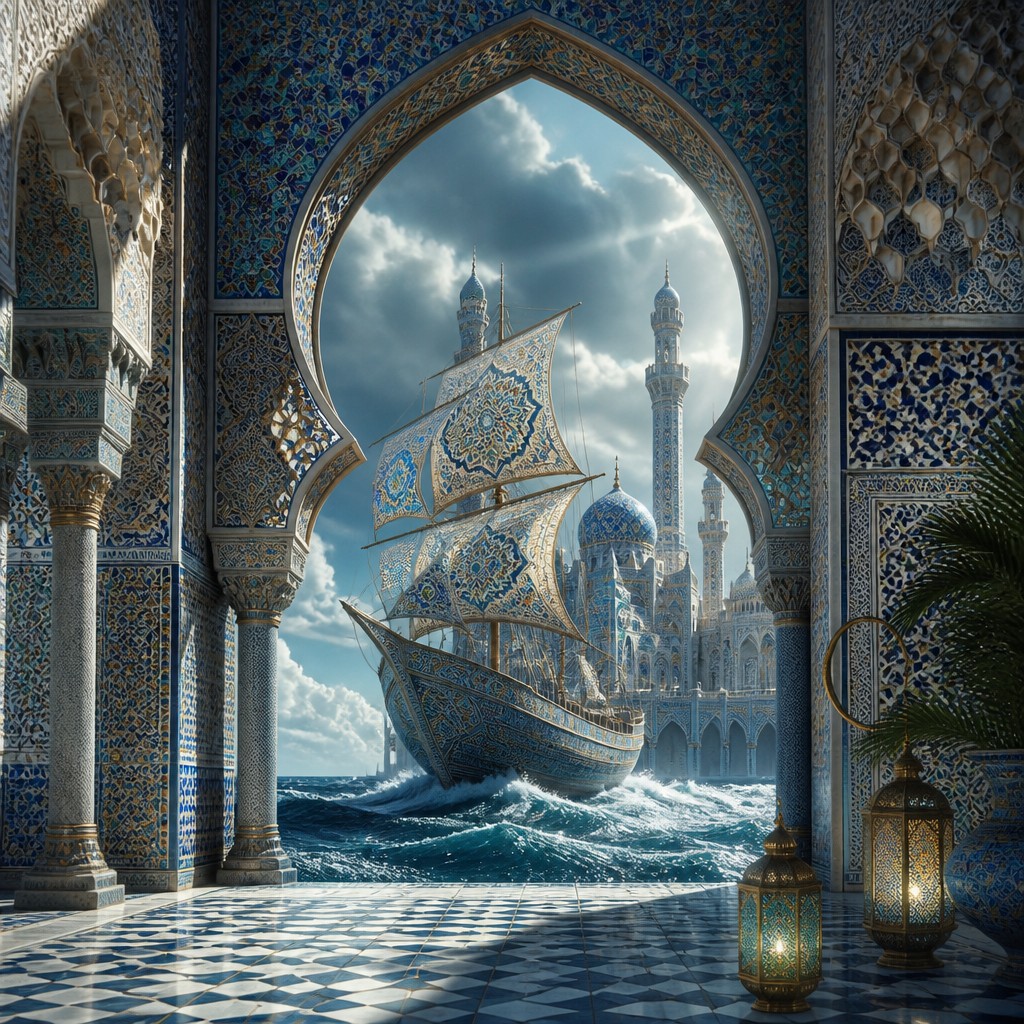
“sailing ship on a stormy sea”
How to Create Islamic Architecture Art
Master the craft step by step — or skip straight to creating. Read the full guide →
- 1
Build from geometry first
Start with clear architectural masses: courtyard, arcade, dome, portal, and minaret or tower if appropriate. Then overlay ornament as a secondary system, using symmetry, repetition, and measured proportion to keep the composition coherent.
- 2
Use authentic material cues
In traditional media, suggest glazed tile through crisp color fields and edge definition, and stucco through shallow relief and fine linework. In digital work, emphasize reflective ceramic highlights, carved depth, and the soft diffusion of shade across stone and plaster.
- 3
Control the light
Let sunlight enter indirectly through screens, arcades, or courtyard openings so that patterns appear in shadow as well as on the surface. Avoid flat, evenly lit scenes; the style depends on contrast between bright exterior light and cool interior calm.
- 4
Layer pattern with restraint
Use complex ornament, but keep the overall hierarchy legible: large architectural forms should remain readable beneath the surface decoration. Dense patterning works best when anchored by strong symmetry, repeated bays, and a limited, harmonious palette.
- 5
For prompt-based generation, specify materials and motifs
Mention arches, domes, muqarnas, cobalt tilework, arabesques, and lattice screens, then add the setting and mood. If the image includes people or objects, keep them secondary so the architecture remains the focus.
The Story
History & Origins of Islamic Architecture
Islamic architecture emerged in the 7th century in the Arabian Peninsula and rapidly absorbed building traditions from the Byzantine, Sasanian, Roman, and local vernacular worlds. Early monumental forms such as the mosque, madrasa, palace, tomb, caravanserai, and bathhouse developed distinct regional expressions as Islamic polities expanded across three continents. Over time, dynasties including the Umayyads, Abbasids, Fatimids, Seljuks, Mamluks, Timurids, Safavids, Mughals, and Ottomans each refined their own architectural vocabularies.
Rather than a single linear evolution, the tradition developed through exchange, patronage, and adaptation. Tilework, stucco carving, stone carving, glazed brick, wood screens, and monumental domes became especially prominent in different regions and periods. The style’s lasting identity comes from its synthesis of geometry, craft, and spatial ethics: architecture that is both highly ornamental and carefully ordered, shaped by liturgical needs, climate, and a strong culture of artisanship.
Influences: Islamic architecture draws on and transforms earlier Byzantine, Roman, Sasanian, and local Near Eastern building traditions, while also developing distinct regional canons in Persia, Andalusia, Anatolia, and South Asia. Its emphasis on proportion, ornament, and spatial sequence has parallels with other highly ordered decorative traditions, but its visual language is rooted in the specific religious, social, and climatic contexts of the Islamic world. Related historical makers and patrons include the anonymous master builders and artisans behind works such as the Alhambra, the Great Mosque of Córdoba, the Seljuk and Timurid monuments of Iran and Central Asia, and the Ottoman imperial complexes associated with Mimar Sinan.
Frequently Asked Questions
What defines Islamic architecture?
It is defined by a combination of structural forms and decorative systems used across the Islamic world, including arches, domes, courtyards, minarets, geometric pattern, arabesques, calligraphy, and tilework. Because it spans many regions and centuries, it is best understood as a broad architectural tradition rather than a single uniform style.
Is Islamic architecture the same everywhere?
No. Maghrebi, Andalusian, Persian, Ottoman, Mughal, and other regional traditions developed different proportions, materials, and ornament. What they share is a common vocabulary of geometry, surface decoration, and spatial design adapted to local craft and climate.
Why does this style use so much geometric ornament?
Geometry provides visual order, repetition, and balance, and it can be extended across walls, ceilings, and floors without relying on figural imagery. In many buildings it also reinforces the sense of harmony between structure and decoration, making the architecture feel unified and contemplative.
How is this style different from Moorish or Ottoman architecture?
Moorish architecture usually refers to Islamic architecture in medieval Iberia and North Africa, especially under Andalusi and Maghrebi rule, while Ottoman architecture is the imperial tradition that developed in Anatolia, the Balkans, and the eastern Mediterranean. Both are part of the larger Islamic architectural family, but each has its own characteristic arches, domes, surface treatments, and spatial layouts.
How can I make an image look like Islamic architecture?
Focus on a strong central structure, repeating arches, richly patterned surfaces, and a controlled light environment. Use a palette of cobalt, turquoise, white, and gold, and include details like lattice screens, muqarnas, tiled spandrels, and carved stucco.
Where is Islamic architecture commonly used today?
It continues to appear in mosques, madrasas, civic buildings, cultural centers, hotels, and restoration projects across the Islamic world and beyond. Contemporary designers often adapt its motifs and spatial principles without copying historical monuments exactly.
Create your first Islamic Architecture artwork
Describe anything — or upload a photo — and see it in Islamic Architecture in seconds.
Related Styles
Discover similar art styles