Bauhaus Architecture
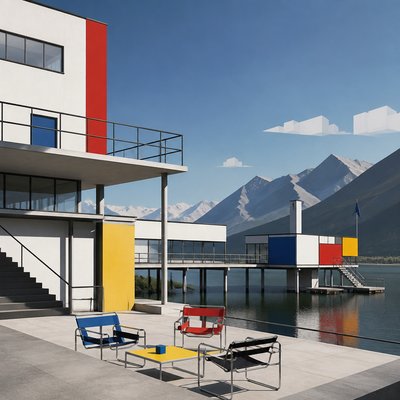
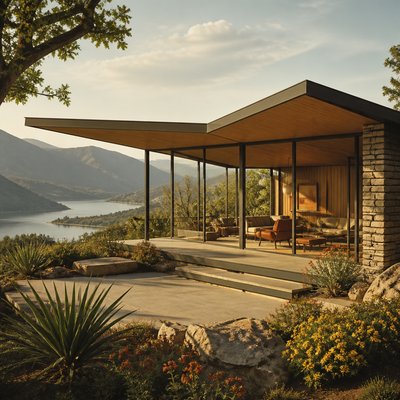
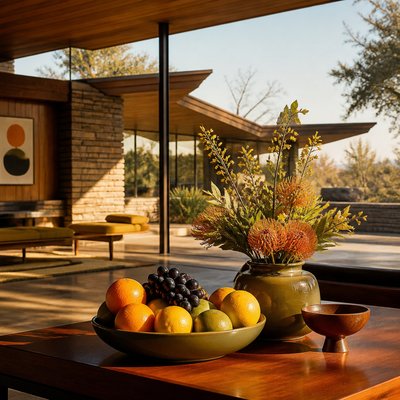
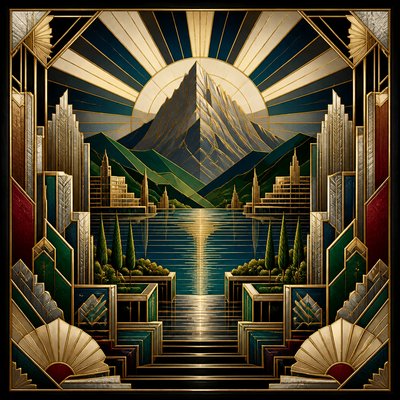
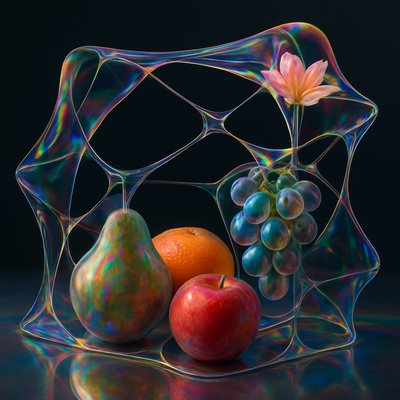
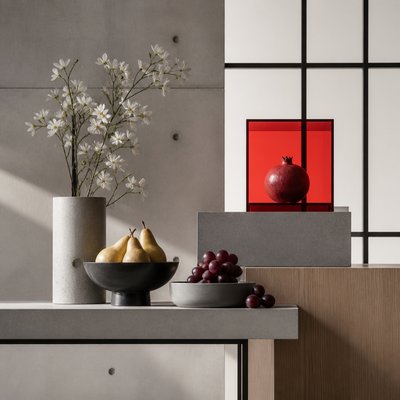
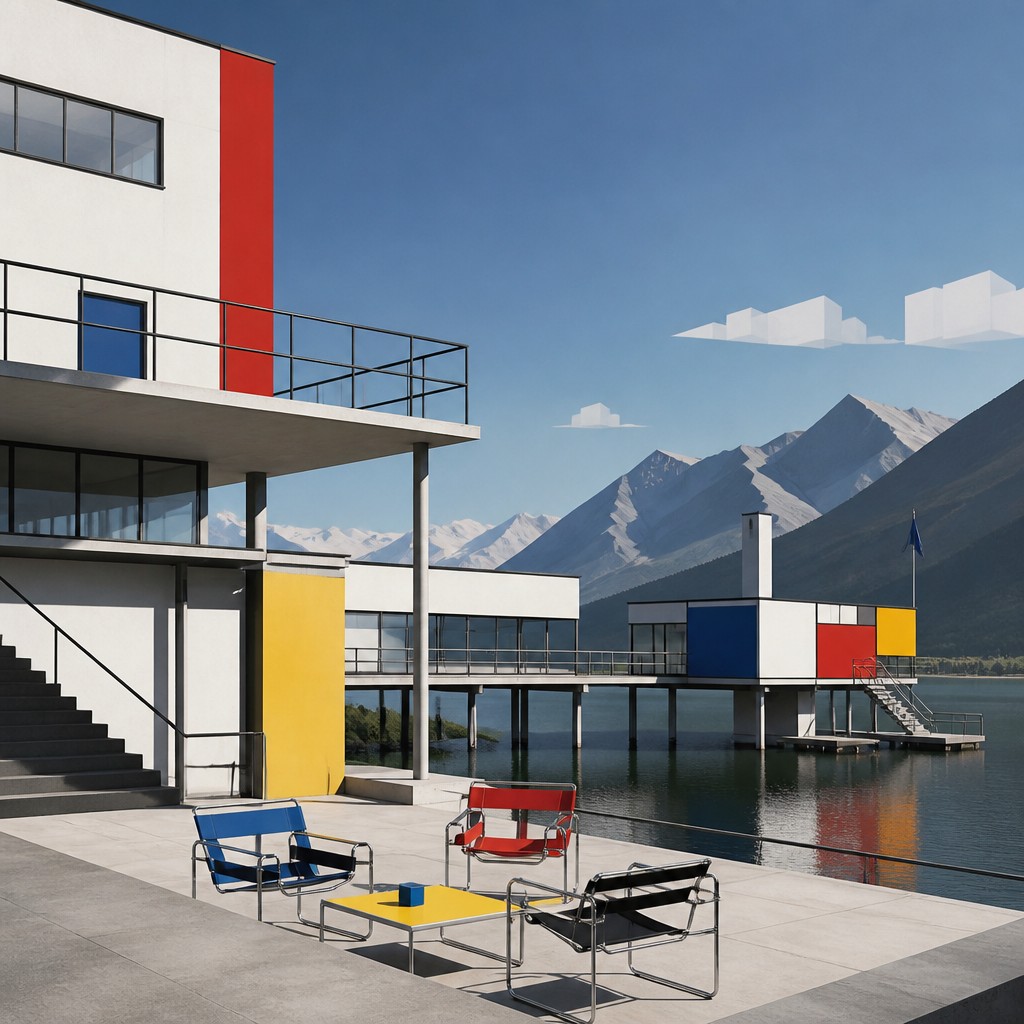
Bauhaus architecture: white planes, ribbon windows, primary accents, and functional modernism shaped by clarity, light, and structure.
Instantly rendered in Bauhaus Architecture — or transform a photo

Bauhaus Architecture Gallery
Tap any artwork to explore it
What is Bauhaus Architecture?
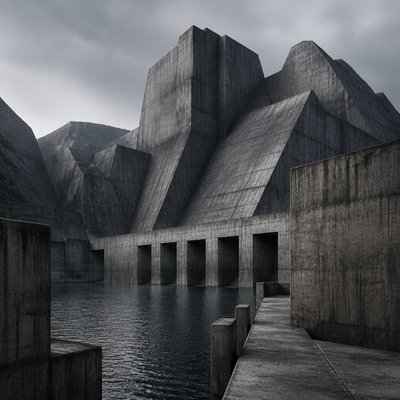
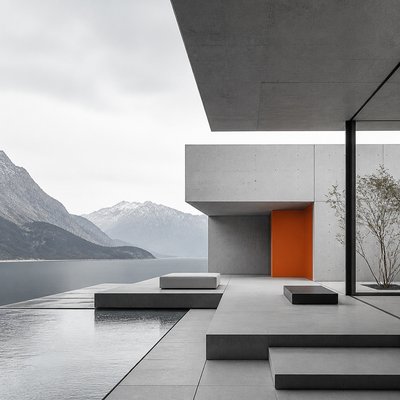
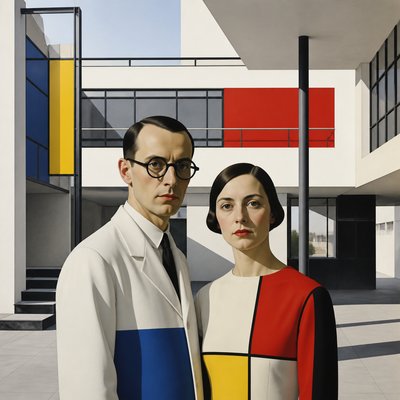
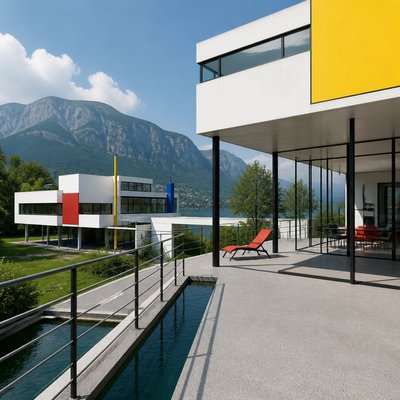
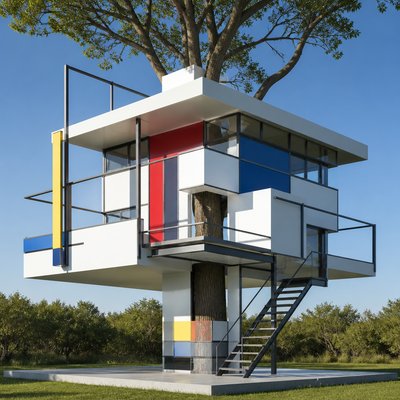
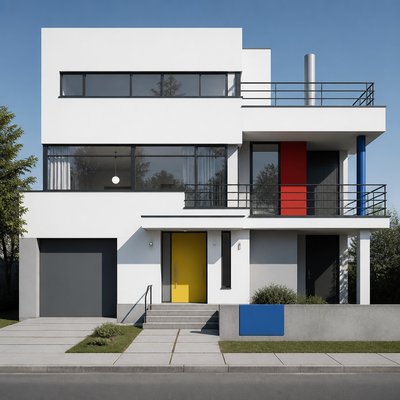
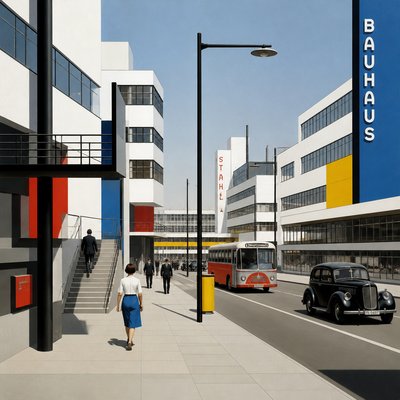
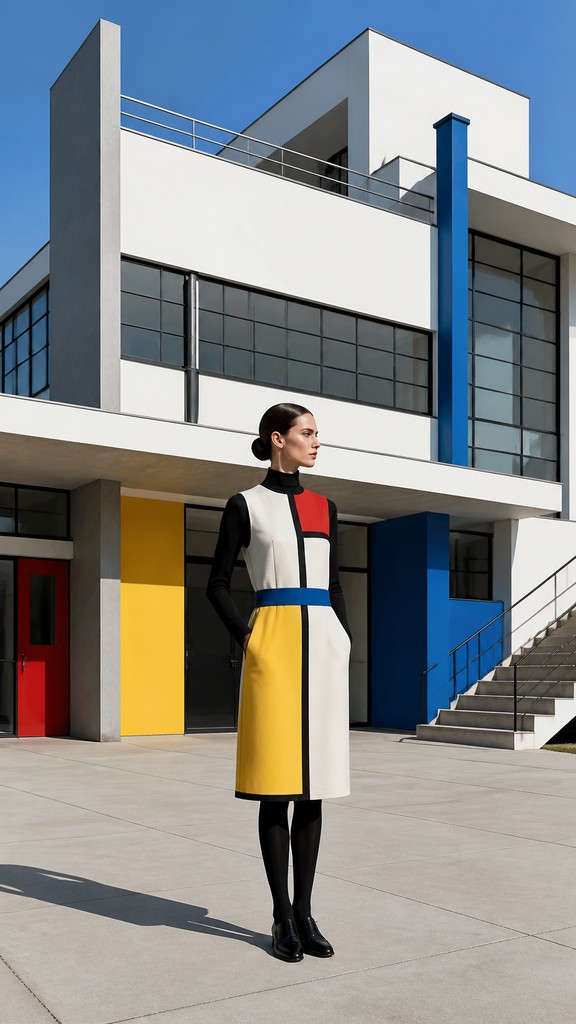
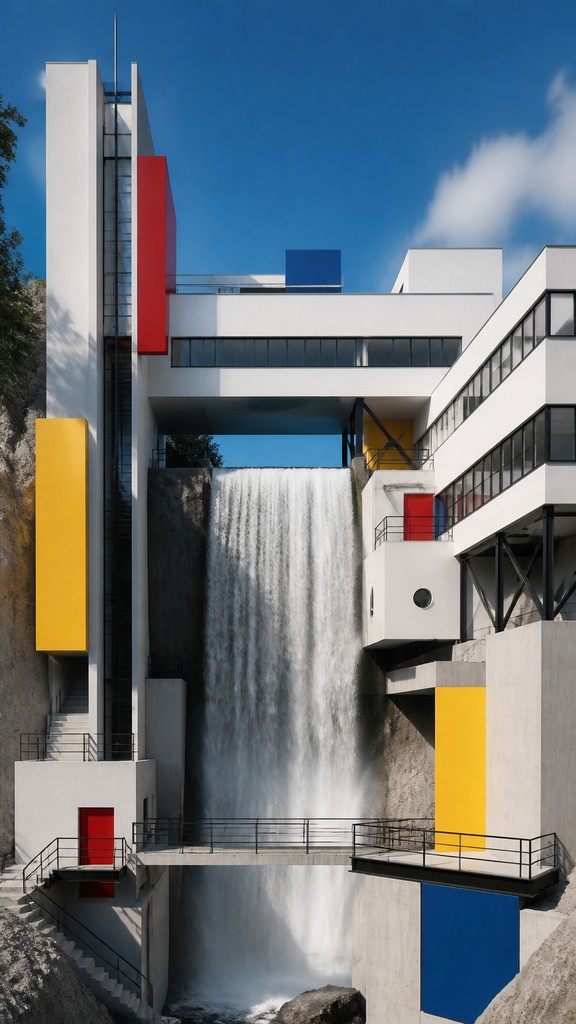
Bauhaus architecture is a functional modernist style defined by flat white planes, strict rectilinear volumes, ribbon windows, and restrained material expression. Its visual identity is spare but not cold: smooth concrete, steel, and glass surfaces are organized into clear geometric masses, often punctuated by small accents of red, yellow, or blue. The result is architecture that reads as rational, legible, and workshop-made rather than decorative.
The style looks this way because it was shaped by the Bauhaus commitment to uniting art, craft, and industry. Form is meant to follow function, so circulation, structure, light, and modular construction become the visible language of the building. Ornament is minimized or eliminated, while proportion, repetition, and honesty of materials create a sense of clarity and optimistic modern order.
Try It On Your Photos
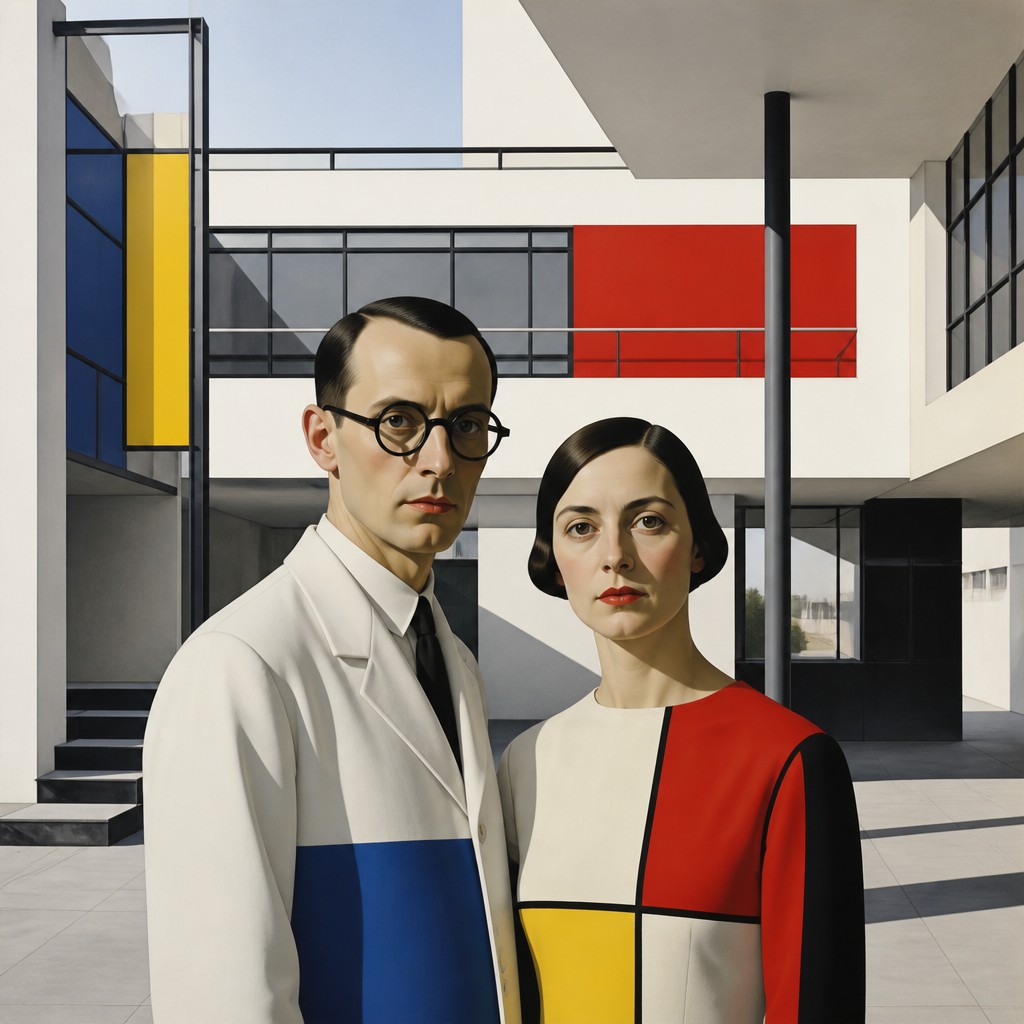
Upload any photo and convert it into Bauhaus Architecture — drag the sliders to compare before and after.
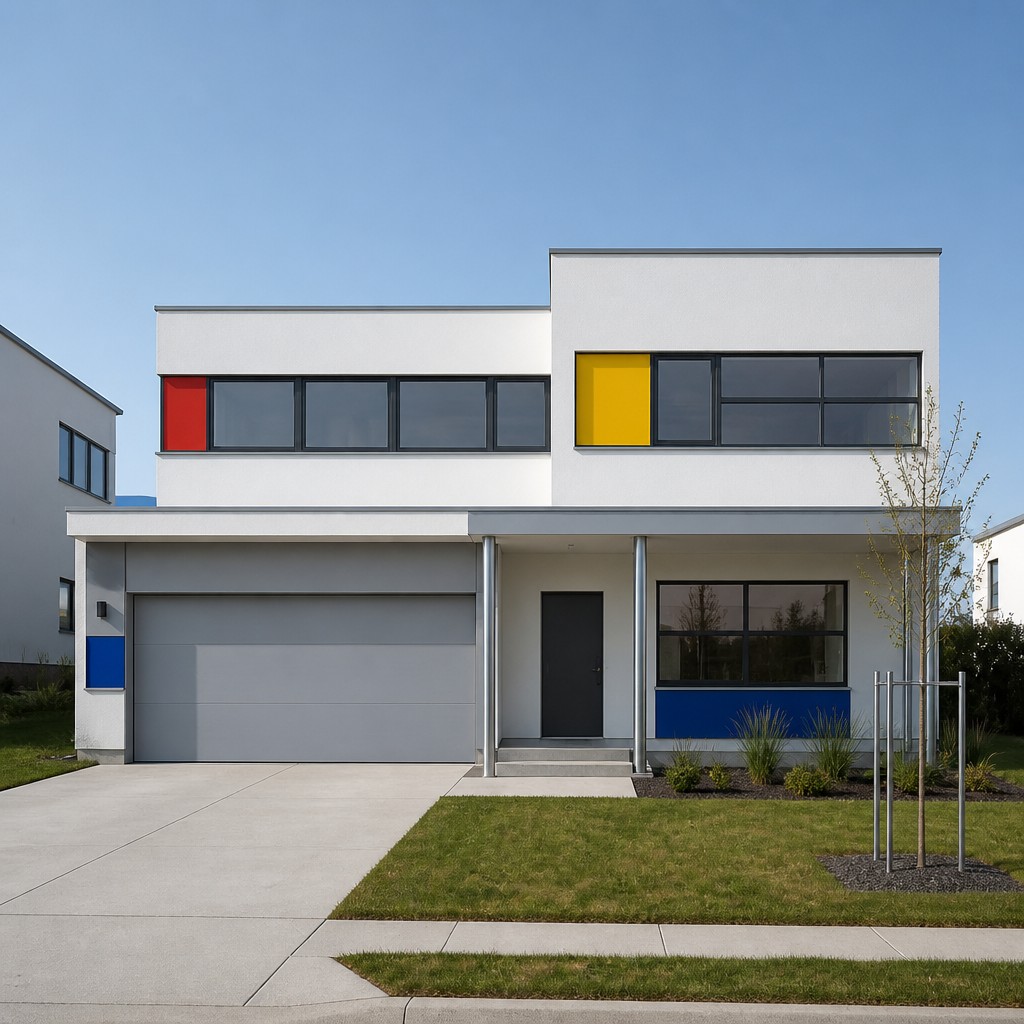
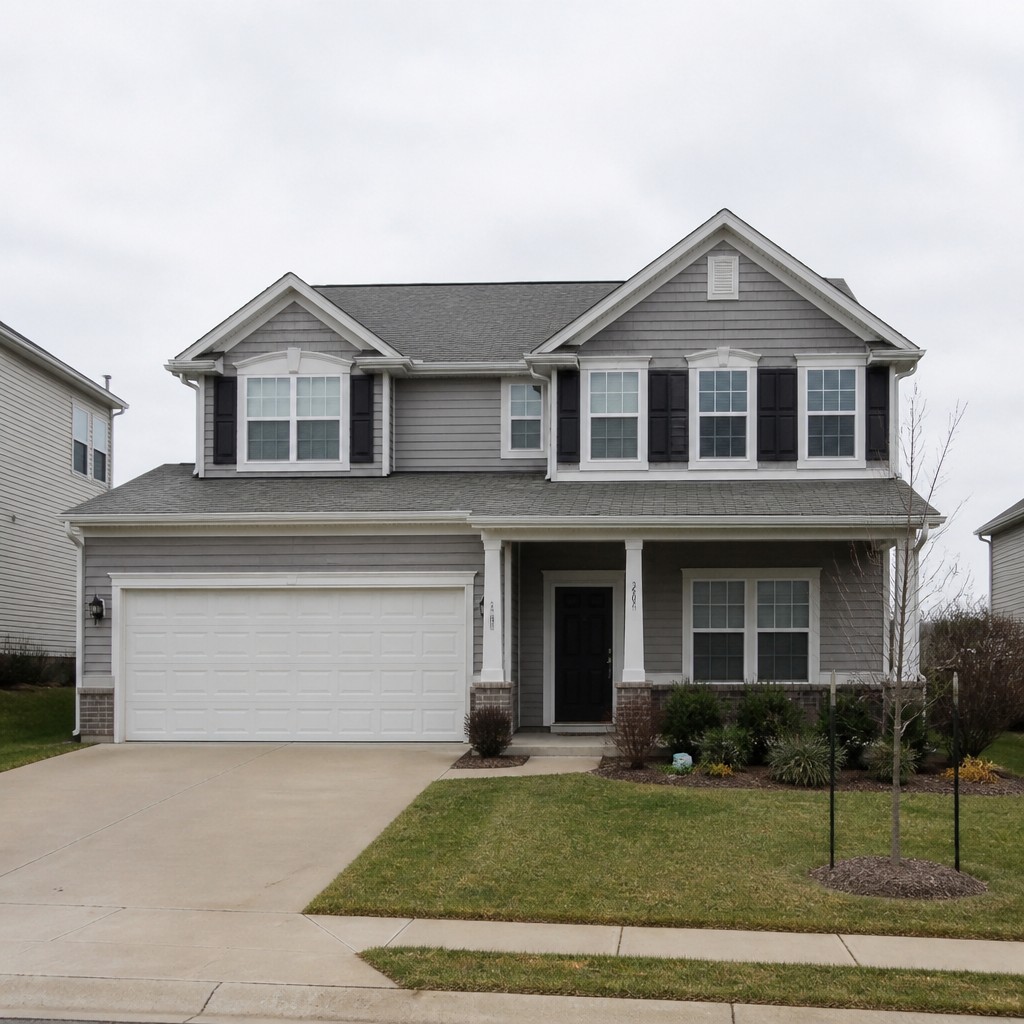


What Defines Bauhaus Architecture
The signature details, up close
White planar volumes
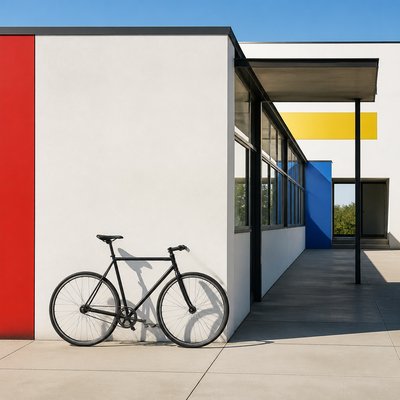
Buildings are often composed of smooth white facades and simple box-like masses. Surfaces are kept visually flat so the geometry reads clearly from a distance.
Ribbon windows
Long horizontal bands of glazing emphasize length, light, and continuity. Thin steel frames and uninterrupted window strips are common markers of the style.
Primary-color accents
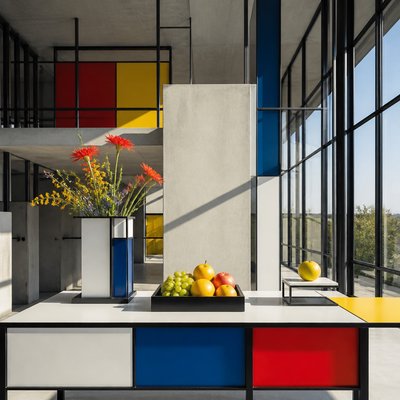
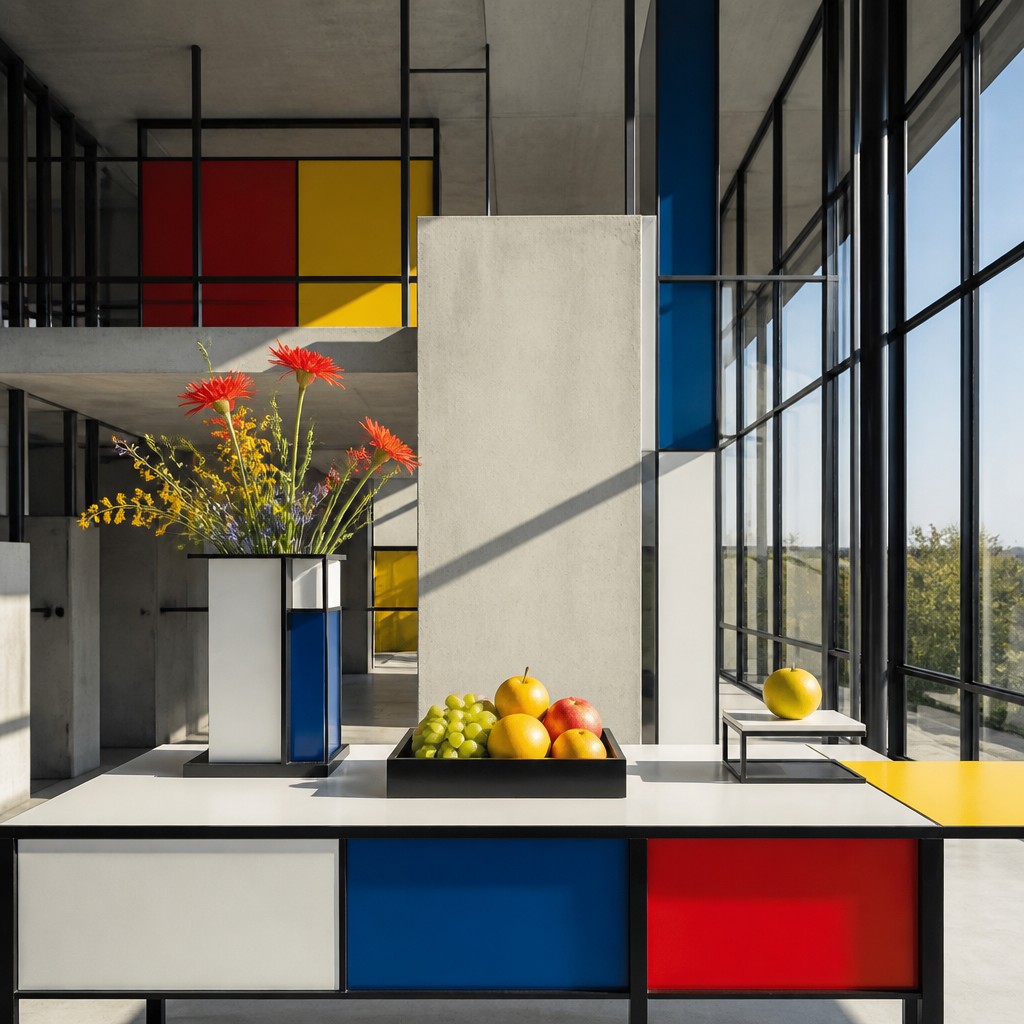
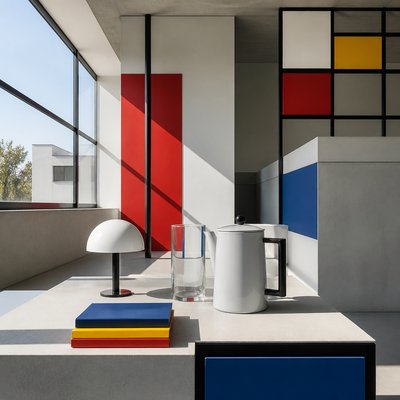
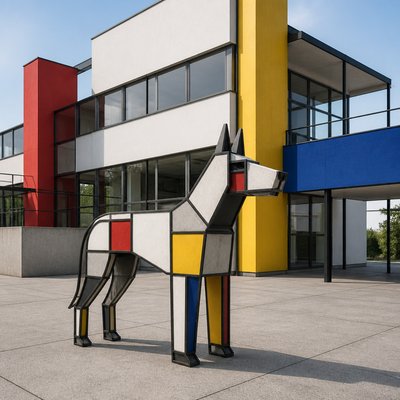
Red, yellow, and blue are sometimes used as controlled highlights on panels, doors, railings, or graphic elements. These accents are sparse and deliberate rather than decorative.
Functional structure
The building’s organization is meant to be legible, with structure and plan expressed plainly. Columns, slabs, and circulation often appear as part of the design language rather than hidden.
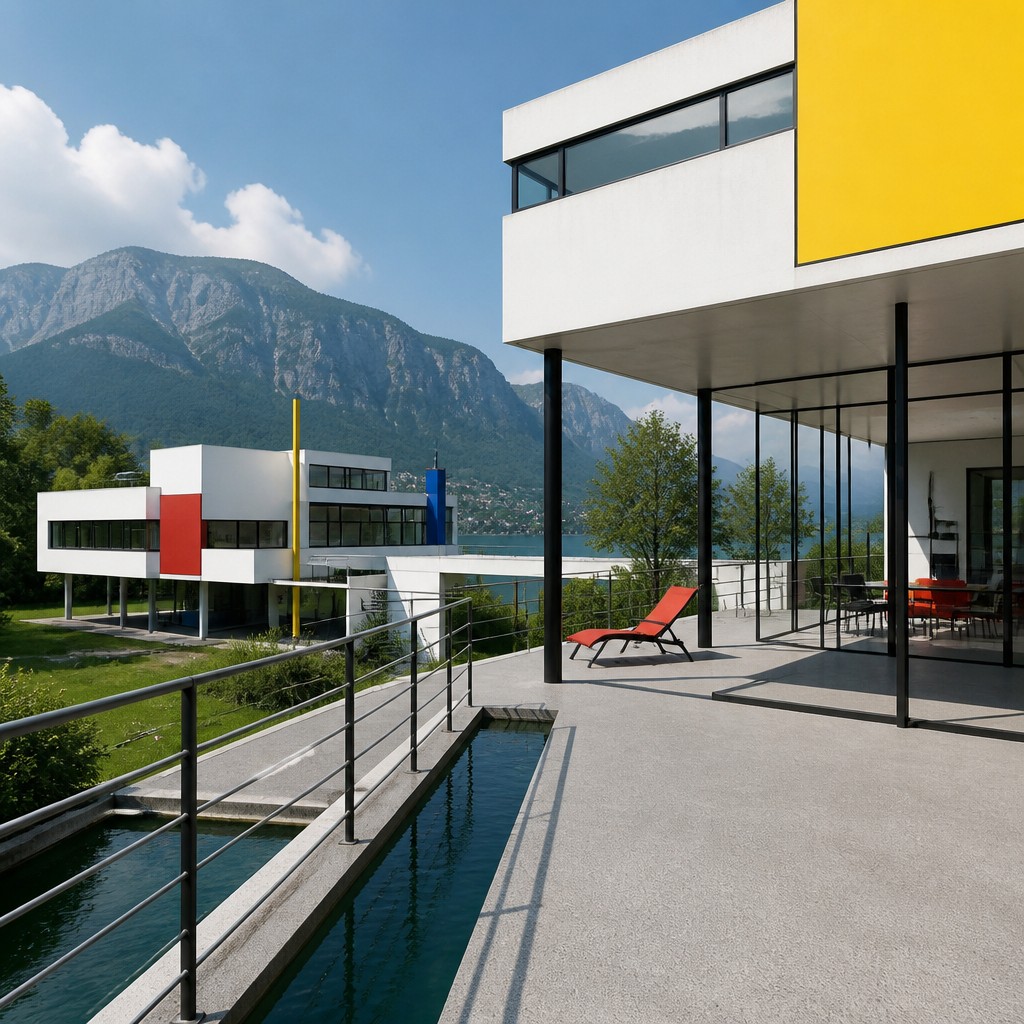
Industrial materials
Glass, steel, tubular metal, and smooth concrete dominate the material palette. Their finishes tend to be clean, matte, and utilitarian rather than ornate or textured.
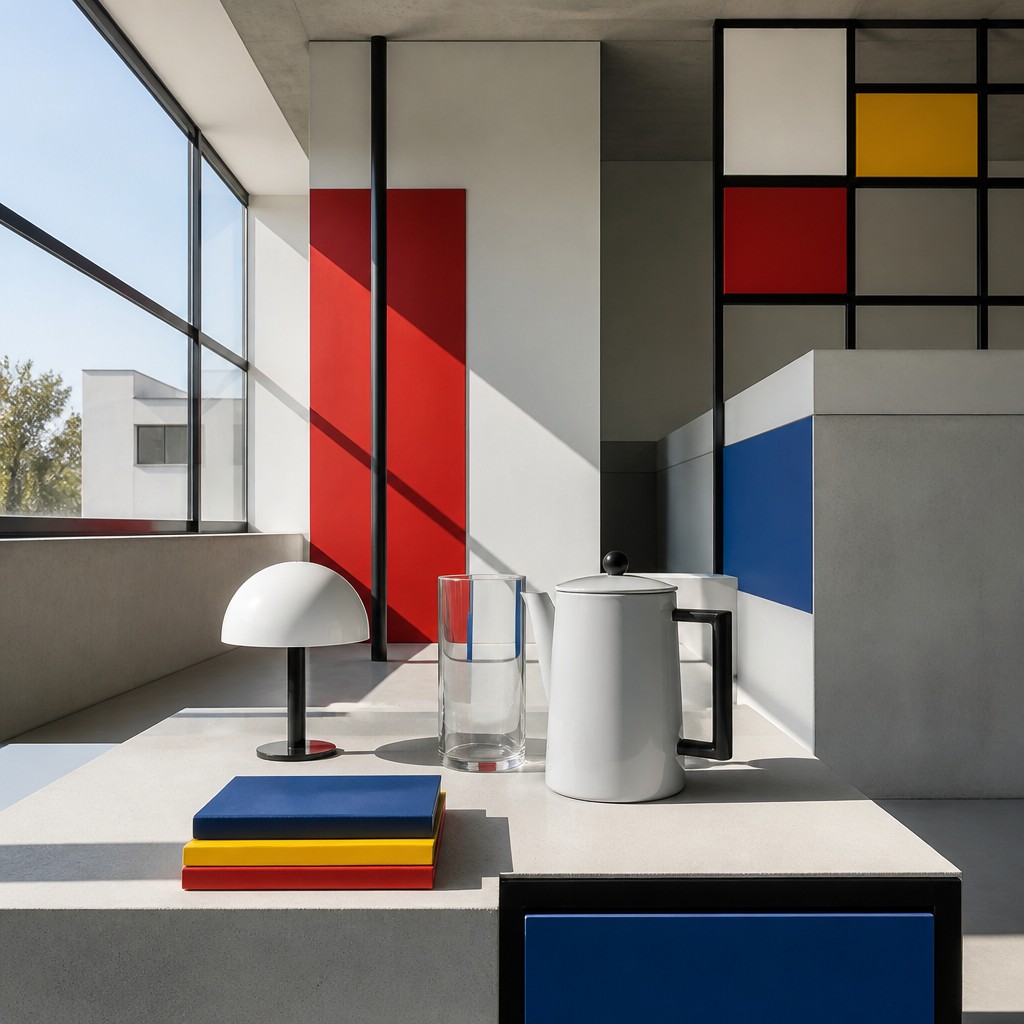
Modular clarity
Repeating bays, grid logic, and measured proportions give the composition order. Even asymmetrical arrangements usually feel balanced through a clear system.
Try It
Create Videos in Bauhaus Architecture
Styles aren't just for stills — describe a scene or animate an image and get a short video rendered in Bauhaus Architecture. Press play to see this pond come to life.
Make a VideoBauhaus Architecture Prompt Ideas
Start from an idea — each one opens the generator with the style ready to go. See all 40 Bauhaus Architecture prompts →
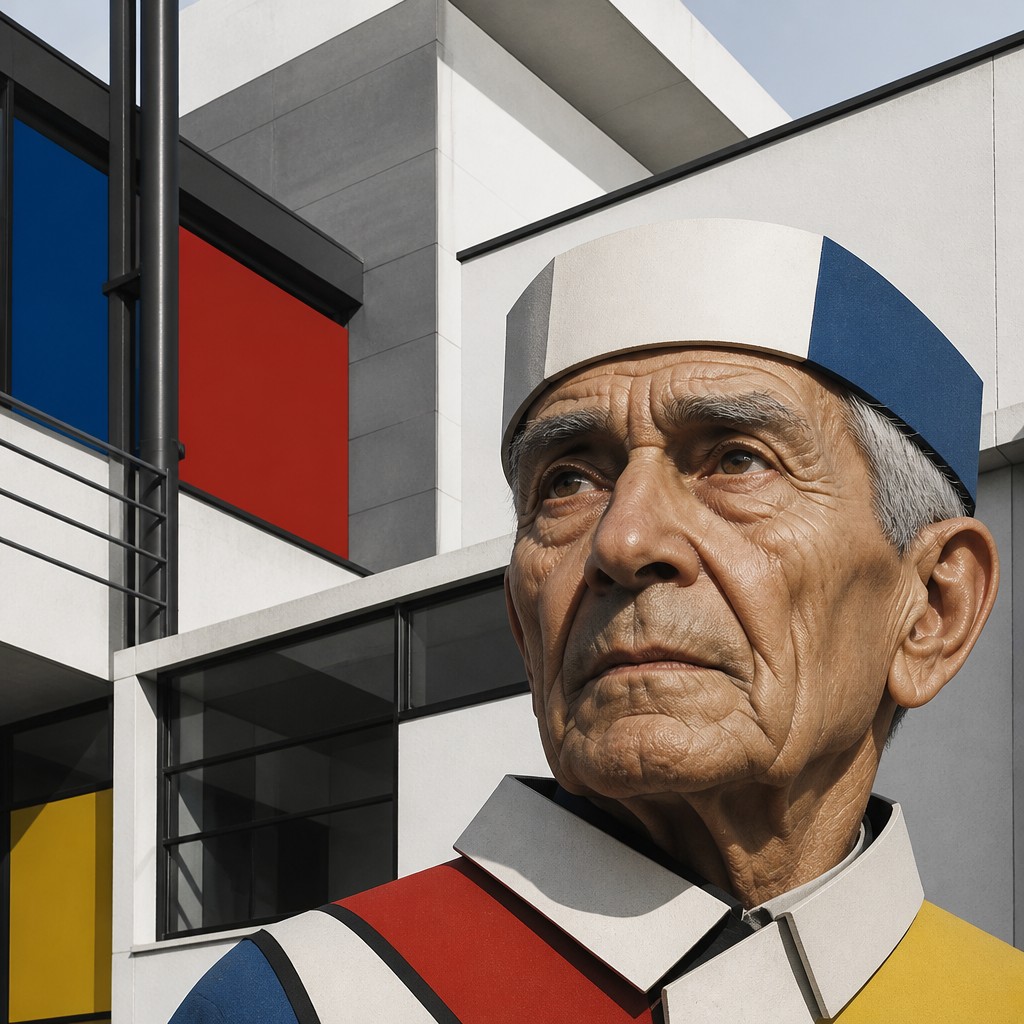
“close-up portrait of an elderly person with expressive weathered features”
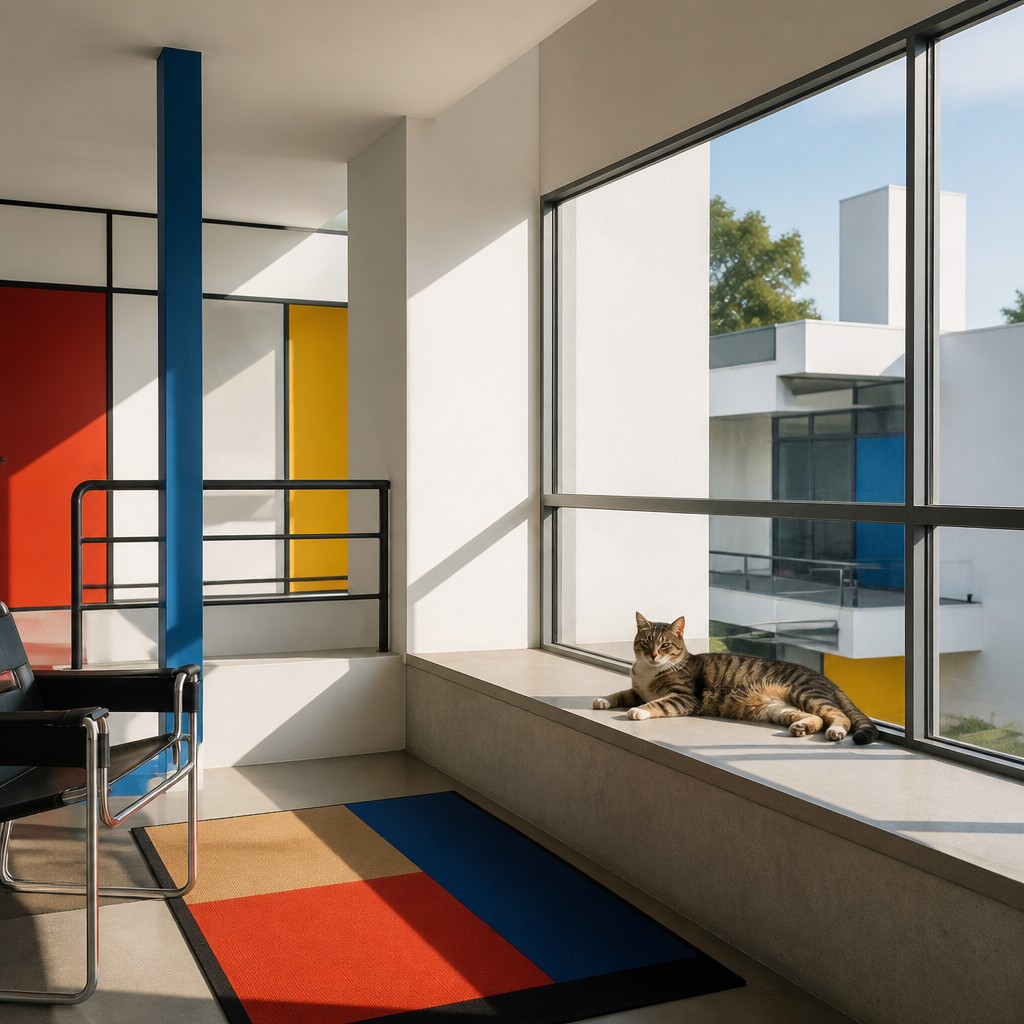
“a cat lounging in a sunlit window”
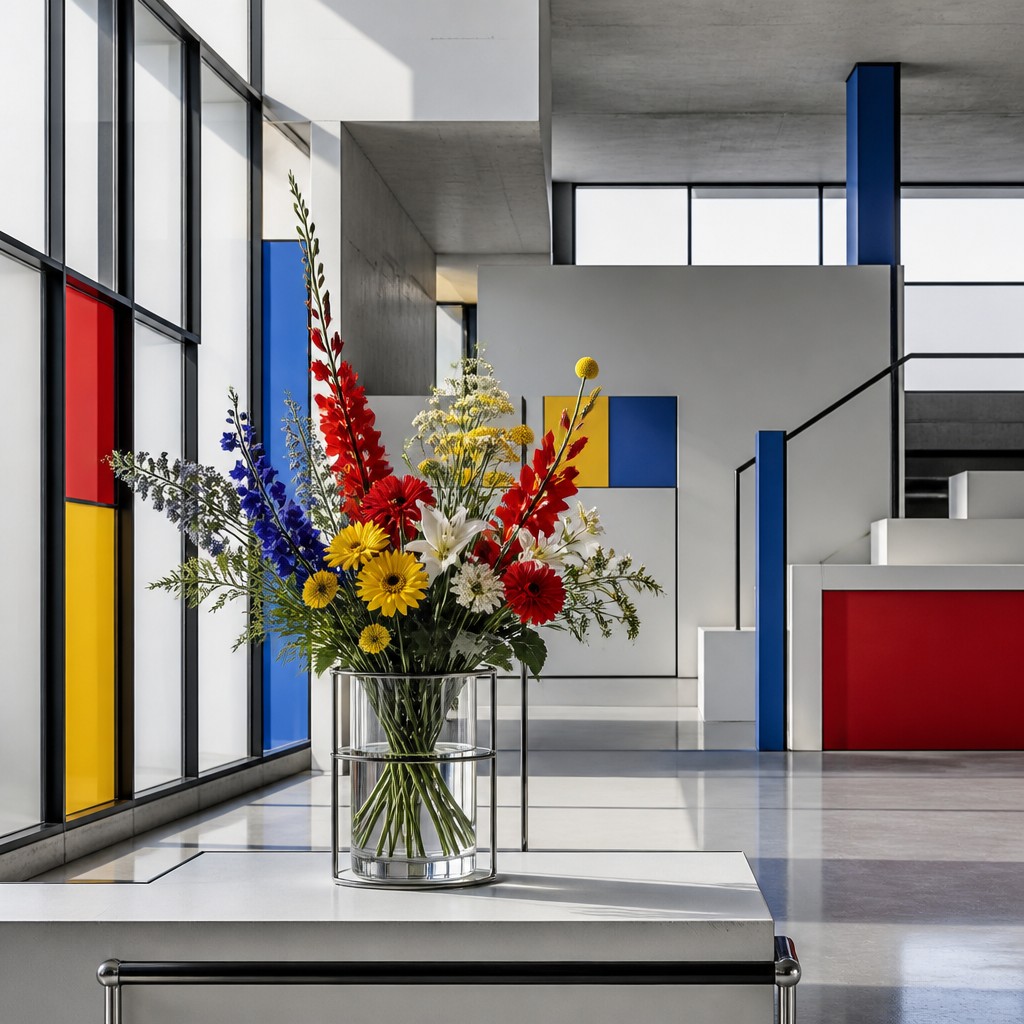
“bouquet of flowers in a glass vase”
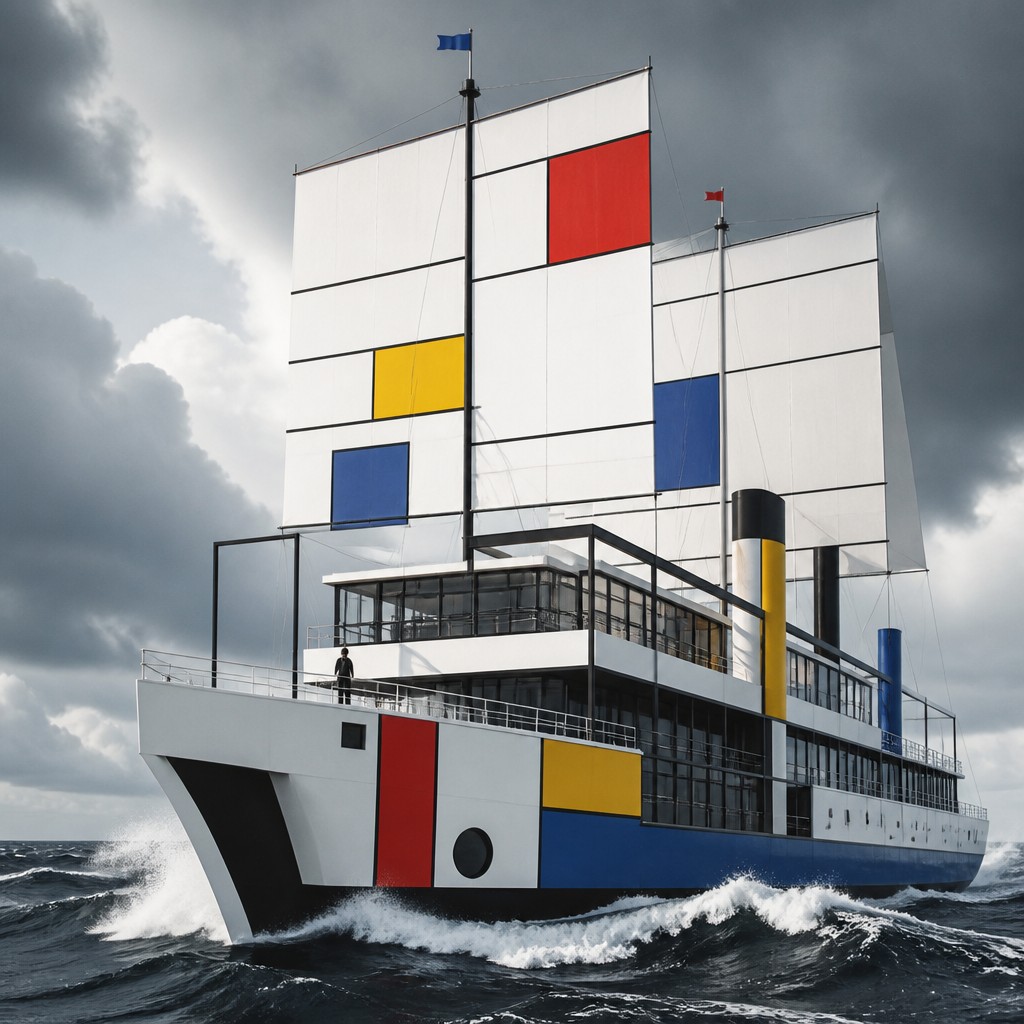
“sailing ship on a stormy sea”
How to Create Bauhaus Architecture Art
Master the craft step by step — or skip straight to creating. Read the full guide →
- 1
Start with simple geometric massing
Block out the building as intersecting rectangles, slabs, and prisms before adding detail. Keep the silhouette rational and avoid curves unless they serve a clear functional purpose.
- 2
Use a restrained material palette
Work primarily with white plaster or painted concrete, steel window frames, and glass. In traditional media, use smooth tonal transitions and crisp edges; in digital work, reduce texture and keep surfaces clean.
- 3
Emphasize horizontal glazing
Add ribbon windows or long strips of glazing to reinforce the modernist profile. Make the windows thin, linear, and structurally believable rather than oversized or highly reflective.
- 4
Place color with discipline
Reserve red, yellow, and blue for a few architectural accents, such as panels, signage, or small facade elements. The color should clarify composition, not overwhelm it.
- 5
Let daylight define the forms
Use even daylight and crisp shadows to show planes, edges, and depth. Strong geometric shadow shapes are especially effective for making the design feel architectural and precise.
- 6
Prompt for structure, not decoration
When generating images, describe rectilinear forms, functional layout, white surfaces, ribbon windows, and controlled primary-color accents. Avoid terms associated with ornament, historical revival styles, or organic asymmetry if you want a convincing Bauhaus result.
The Story
History & Origins of Bauhaus Architecture
Bauhaus architecture emerged in Germany in the 1920s from the Bauhaus school, founded by Walter Gropius in 1919. The school promoted a union of fine art, craft, and industrial production, and its architectural ideas were developed by figures such as Gropius, Hannes Meyer, and Ludwig Mies van der Rohe. The movement was closely tied to the broader international rise of modernism, including functionalism, standardization, and new building technologies such as steel framing and curtain walls.
Its influence spread well beyond the school itself through buildings, publications, emigration, and teaching after the Bauhaus was closed by the Nazis in 1933. Bauhaus principles helped shape the International Style, mid-century modern architecture, and much later minimalist design. Although the historical Bauhaus was relatively brief, its approach to stripped-down geometry, modular planning, and industrial clarity became one of the most durable foundations of twentieth-century architecture.
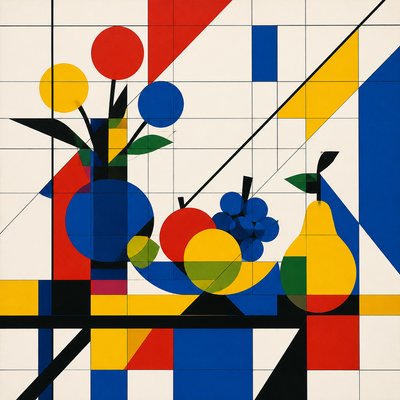
Influences: Bauhaus architecture is closely related to early modernist and functionalist traditions, including the work of Walter Gropius, Hannes Meyer, and Ludwig Mies van der Rohe. It also overlaps with De Stijl in its preference for abstraction and primary-color structure, and with the wider International Style in its emphasis on volume, glass, and industrial clarity. Outside architecture, its visual logic draws from workshop production, typography, and constructivist ideas about design as a rational system.
Frequently Asked Questions
What defines Bauhaus architecture?
Bauhaus architecture is defined by simple geometric forms, white or light facades, horizontal window bands, and an emphasis on function over ornament. It treats the building as a rational, modular object rather than a decorated facade. The style is also associated with industrial materials and a clean, workshop-like visual order.
Is Bauhaus the same as modernist architecture?
Not exactly, but it is one of the most important sources of modernist architecture. Bauhaus ideas helped shape modernism’s preference for minimal ornament, functional planning, and industrial materials. Modernist architecture is broader, while Bauhaus is a specific historical and design movement within it.
How is Bauhaus different from International Style?
The International Style is a later, broader label for the global spread of modernist architecture, while Bauhaus refers to the specific school and its design philosophy in Germany. In practice, they share many traits such as flat roofs, glass, steel, and geometric volumes. Bauhaus often carries a stronger association with workshop experimentation and pedagogical design principles.
What colors are typical in Bauhaus design?
The main architectural palette is usually white, grey, black, glass, and steel. Primary colors—especially red, yellow, and blue—appear as controlled accents rather than dominant surfaces. This makes the color feel structural and graphic, not decorative.
How do I make a Bauhaus-style image?
Focus on clean geometry, ribbon windows, flat roofs, and minimal surface detail. Use smooth materials, balanced asymmetry, and bright daylight with crisp shadows. If you are using digital tools or image generation, describe rectilinear volumes, white planes, steel frames, and small primary-color accents.
Where is Bauhaus architecture used today?
Its influence appears in houses, apartments, schools, offices, museums, and contemporary minimalist design. Many current projects borrow Bauhaus principles even when they are not literal historical reproductions. The style is especially common wherever clarity, efficiency, and a modern institutional look are desired.

Create your first Bauhaus Architecture artwork
Describe anything — or upload a photo — and see it in Bauhaus Architecture in seconds.
Related Styles
Discover similar art styles