Pagoda Architecture Style
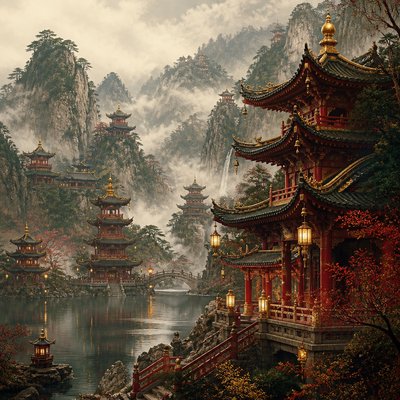
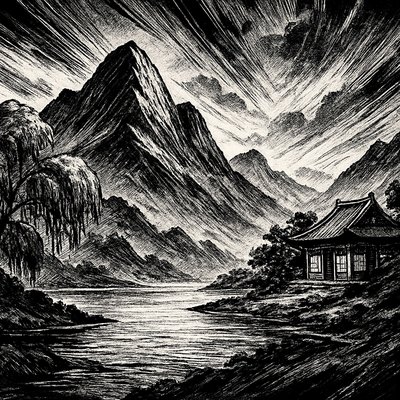
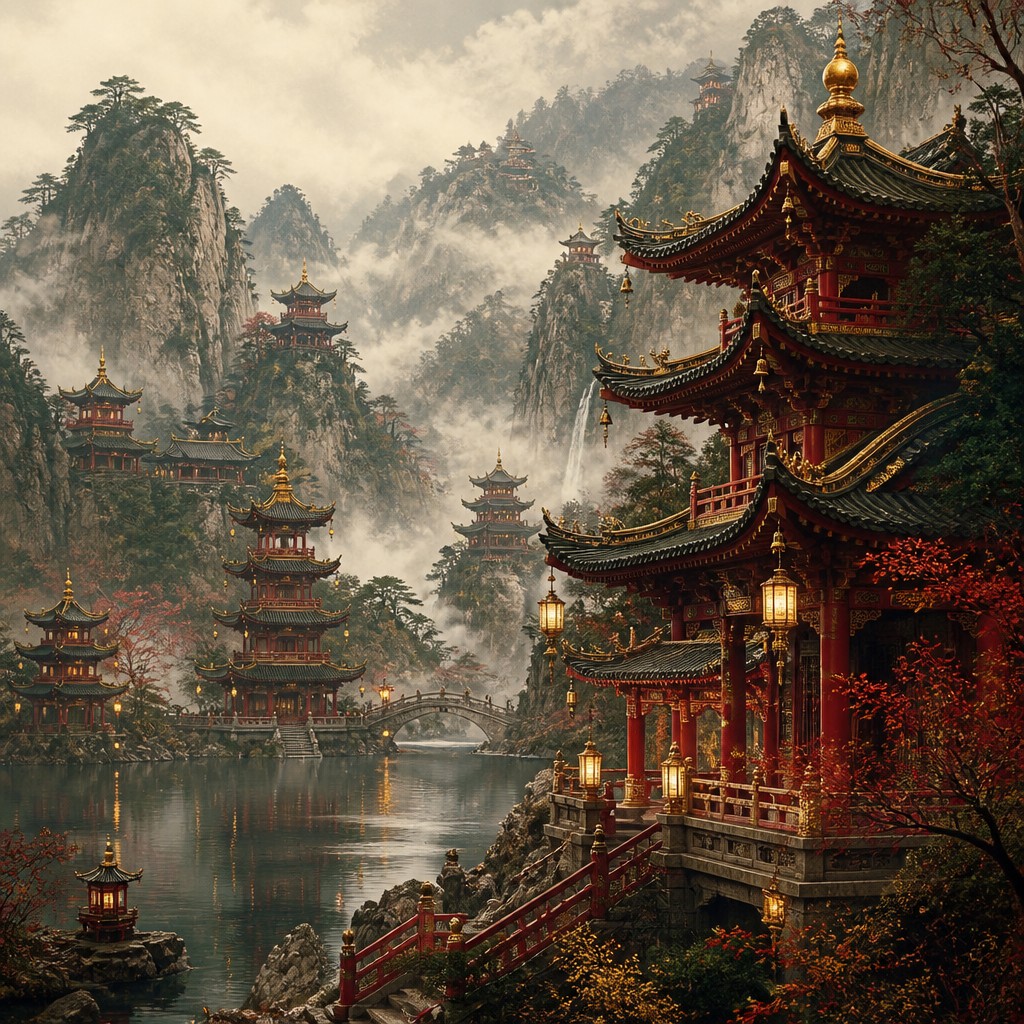
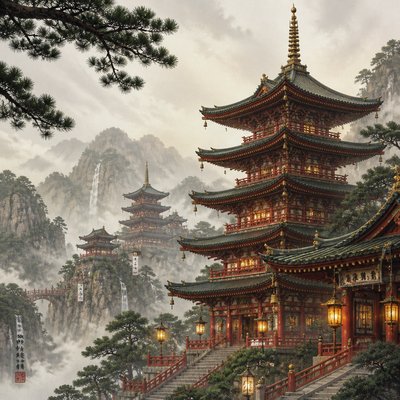
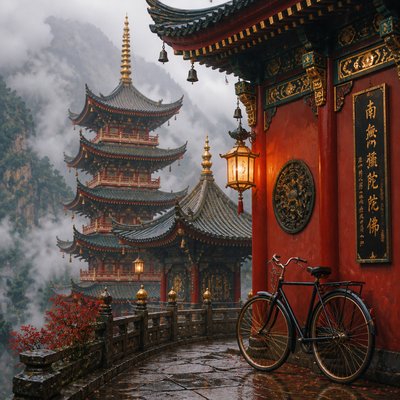
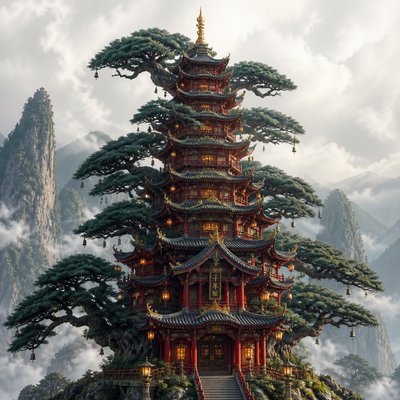
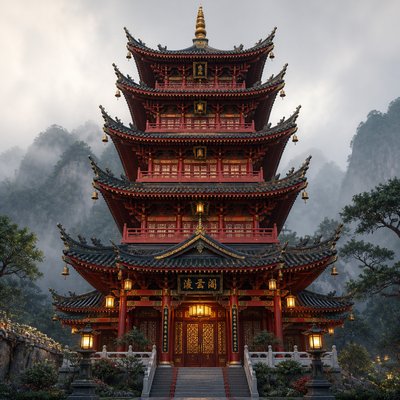
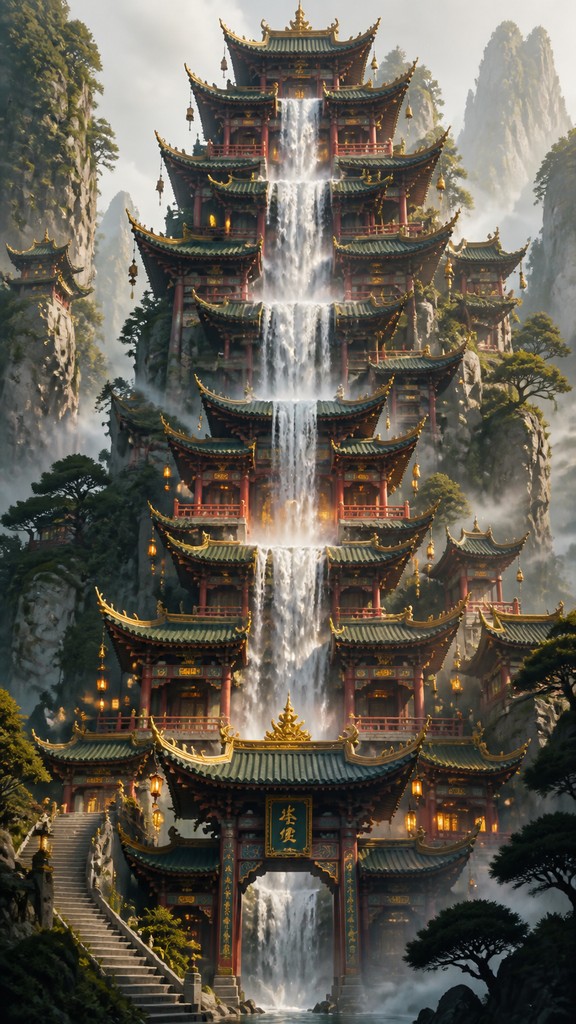
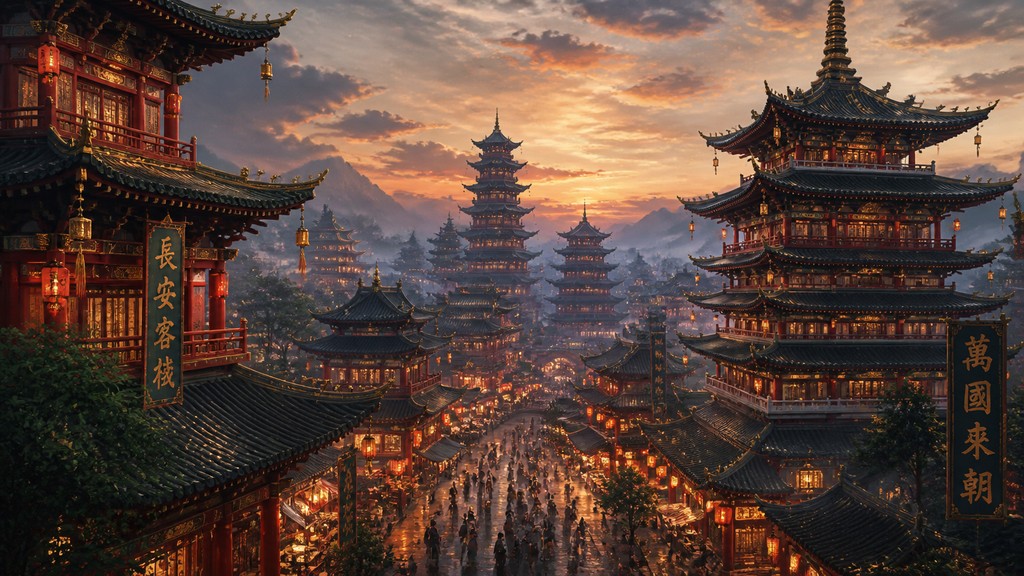
Tiered East Asian towers with upturned eaves, vermilion timber, glazed tiles, and gilded details in serene vertical composition.
Instantly rendered in Pagoda Architecture — or transform a photo

Pagoda Architecture Gallery
Tap any artwork to explore it

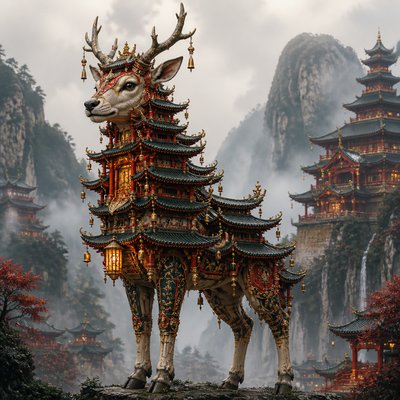
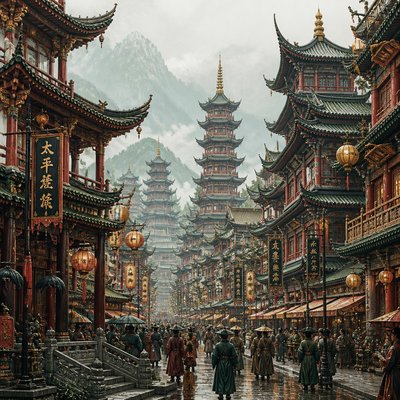
What is Pagoda Architecture Style?
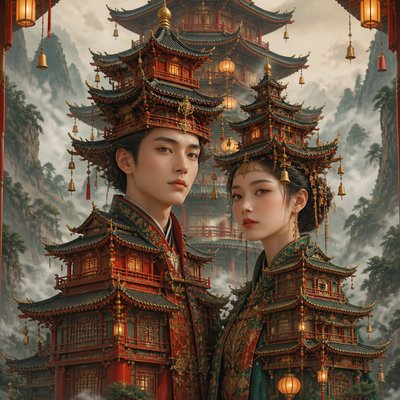
Pagoda architecture style refers to the visual language of multistory towers associated with East Asian Buddhist, temple, and ceremonial architecture. Its defining features are stacked roof tiers that diminish upward, broad overhanging eaves that curve and lift at the corners, exposed timber framing, and richly colored surfaces, especially vermilion, jade green, black lacquer, and gold. The result is a composition that feels both stable and ascending, combining strong horizontal roof lines with a clearly articulated vertical silhouette.
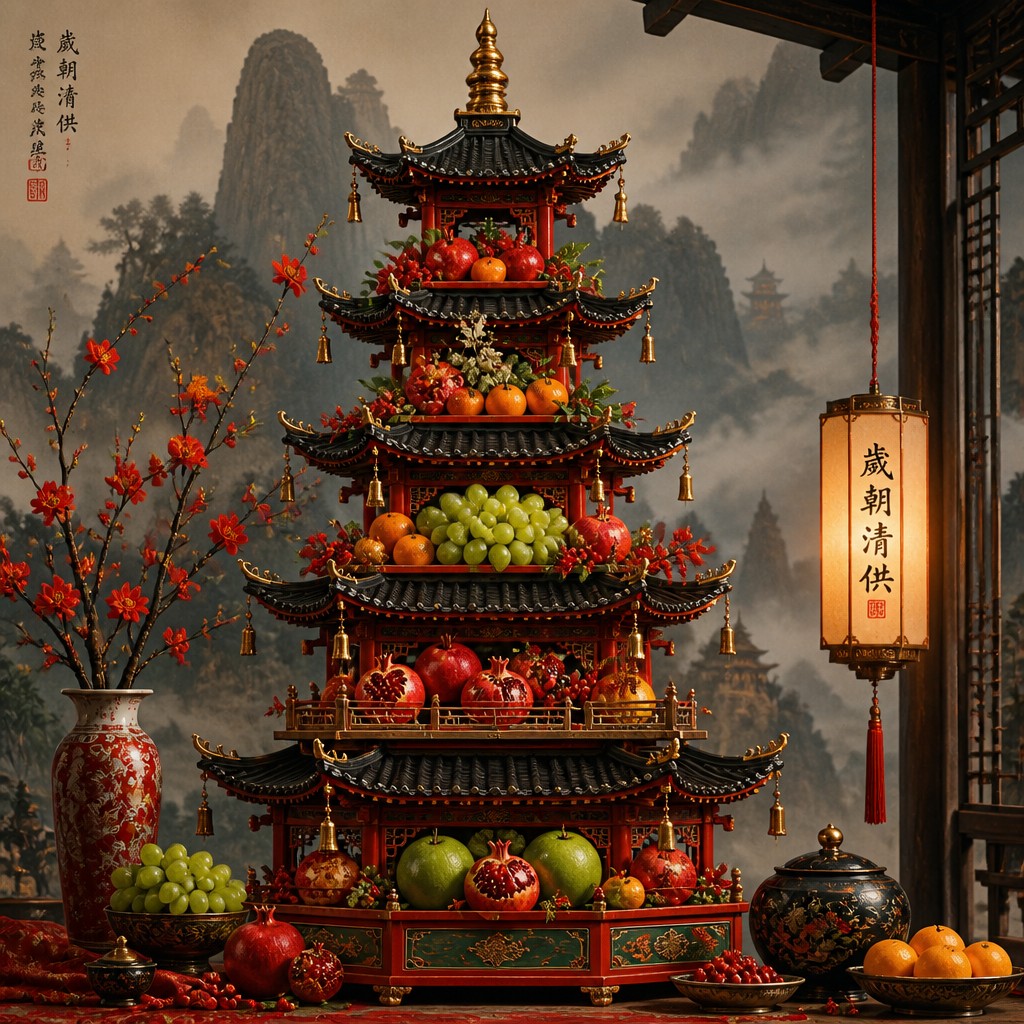
This style is instantly recognizable because the structure is described through roof rhythm and ornamental detail as much as through mass. Bracket clusters, finials, hanging bells, carved beams, and glazed tiles produce a layered surface that catches light and shadow. The aesthetic is shaped by East Asian timber construction traditions, where visible joinery, roof geometry, and symbolic color all contribute to a ceremonial, tranquil atmosphere rather than to monumental heaviness.
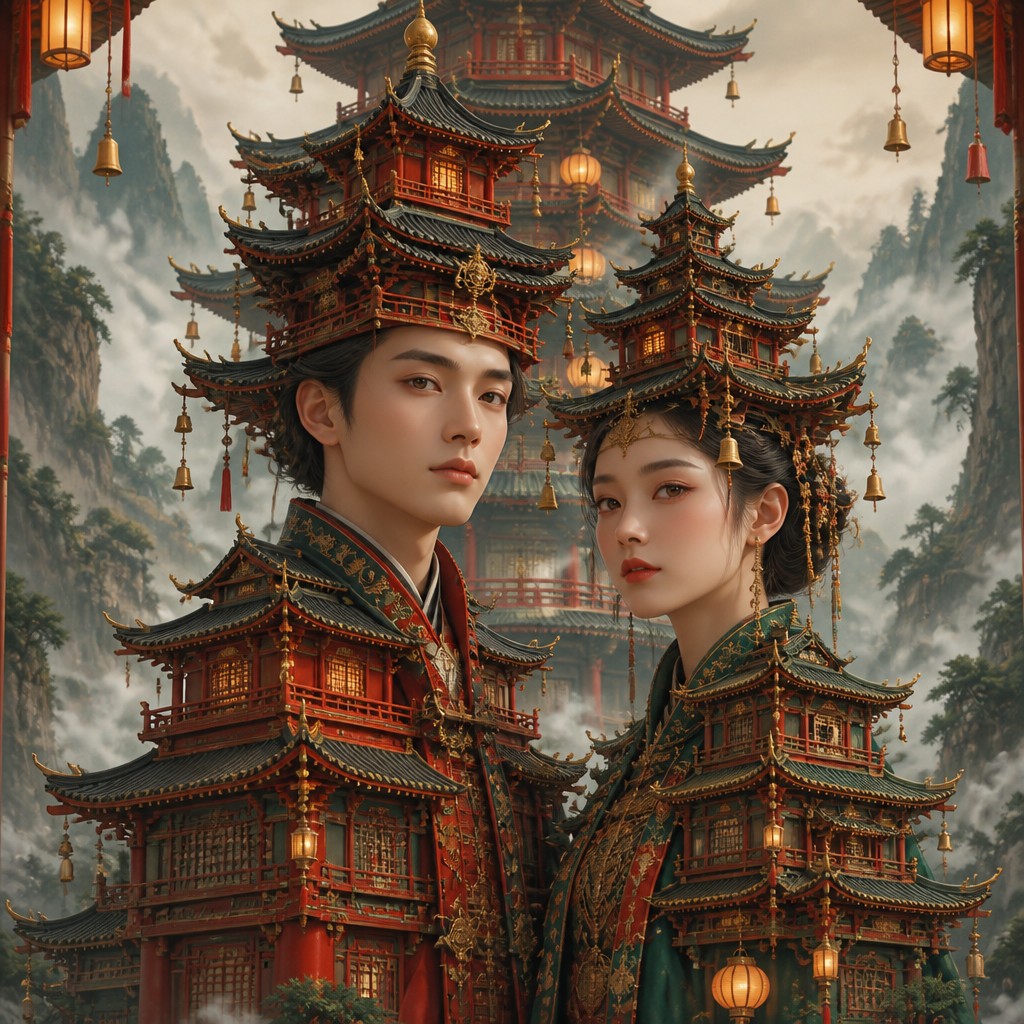
Try It On Your Photos
Upload any photo and convert it into Pagoda Architecture Style — drag the sliders to compare before and after.


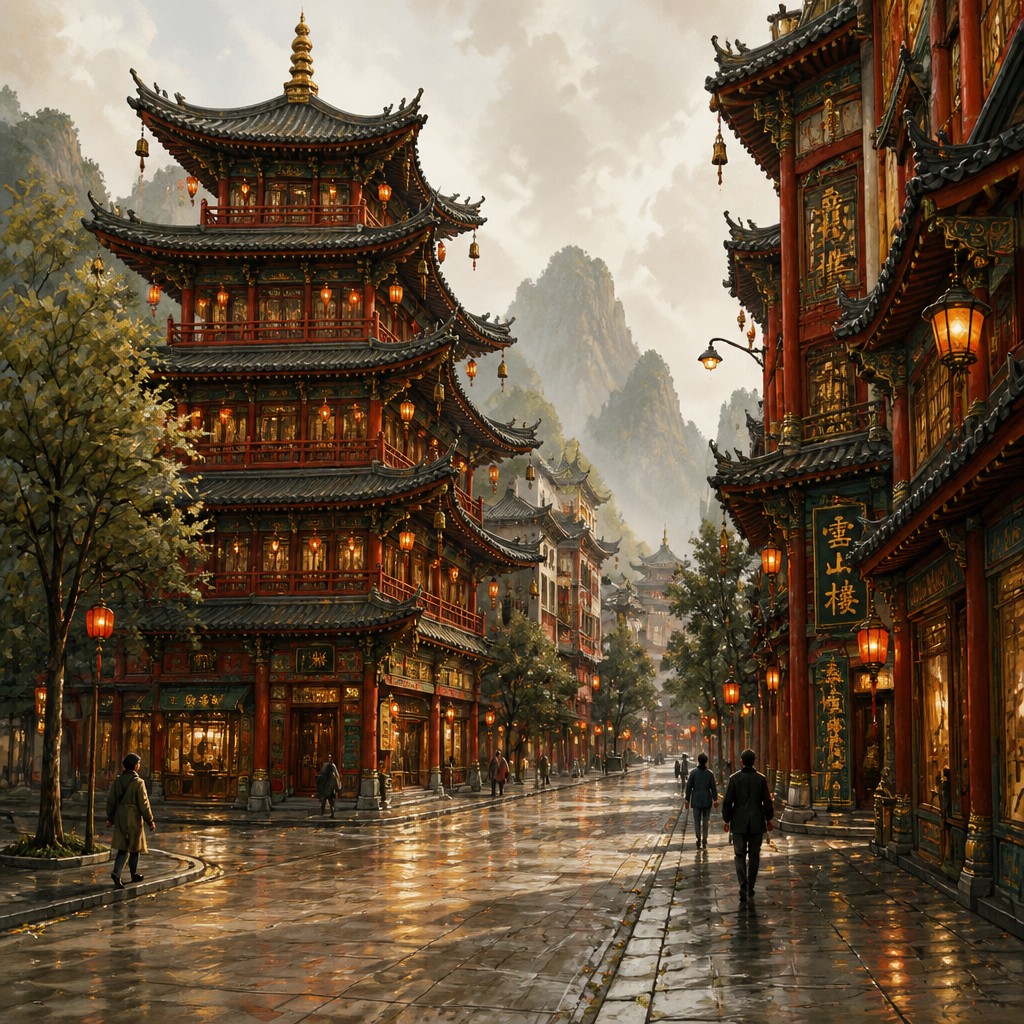

What Defines Pagoda Architecture Style
The signature details, up close
Tiered vertical silhouette
The building rises in stacked stories that visually narrow toward the top, creating a strong sense of ascent. Each level is clearly legible, which gives the structure a rhythmic, ceremonial profile.
Upturned roof eaves
The roofs sweep outward and lift at the corners, producing a graceful, winglike outline. This curve is one of the most recognizable features of the style and softens the tower's geometry.
Vermilion timber structure
Columns, beams, and structural members are often painted in saturated red lacquer or warm wood tones. The color reinforces the temple-like character and contrasts sharply with dark roofs.
Glazed tile roofing
Roof surfaces are usually rendered as dark, glossy tiles in black, green, or deep blue-gray. The sheen emphasizes the layered edges of each tier and helps the roof read clearly in silhouette.
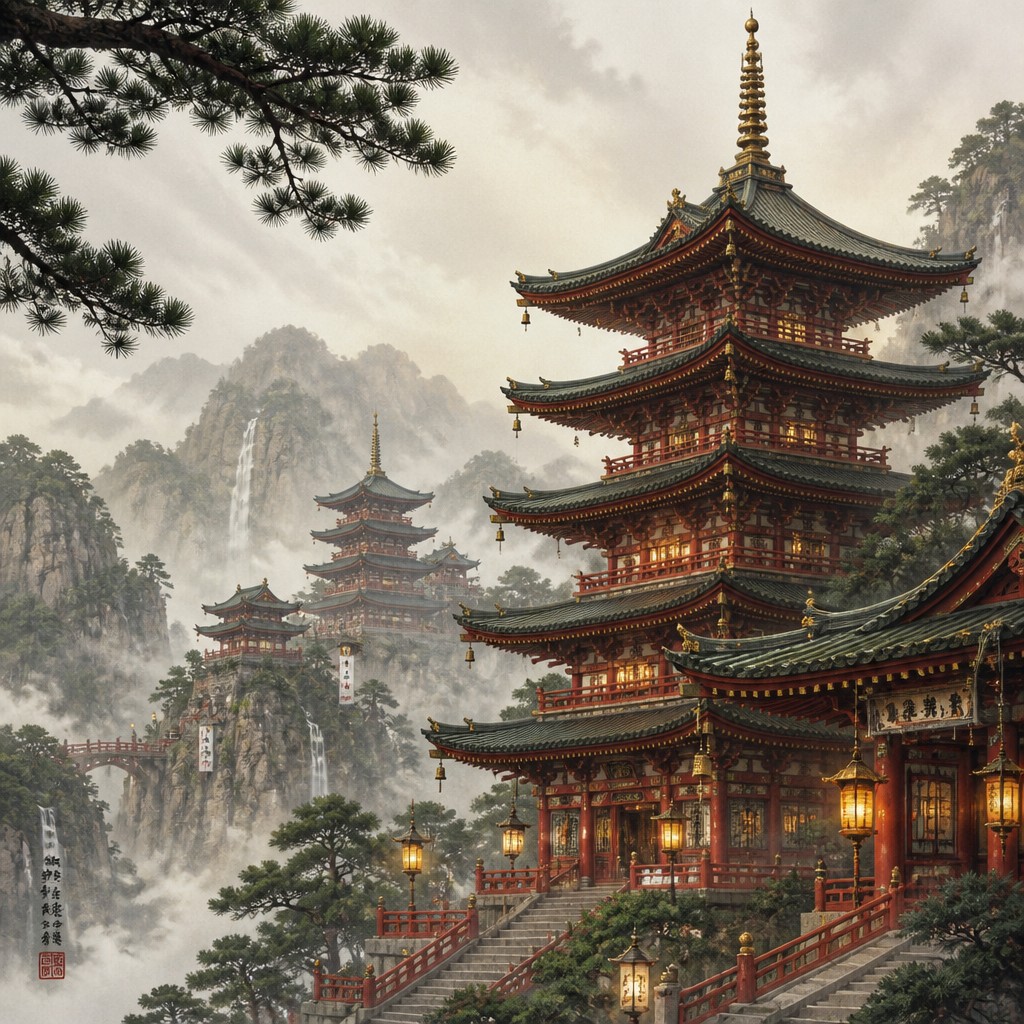
Ornamental bracket and finial details
Interlocking brackets, carved ends, ridge ornaments, and gilded finials add complexity at the roofline. These details signal craftsmanship and make the structure feel ritually elaborated.

Bell-like eave accents
Small hanging bells at the corners of the eaves are a common decorative cue. They add motion, delicacy, and an audible association with temple calm.
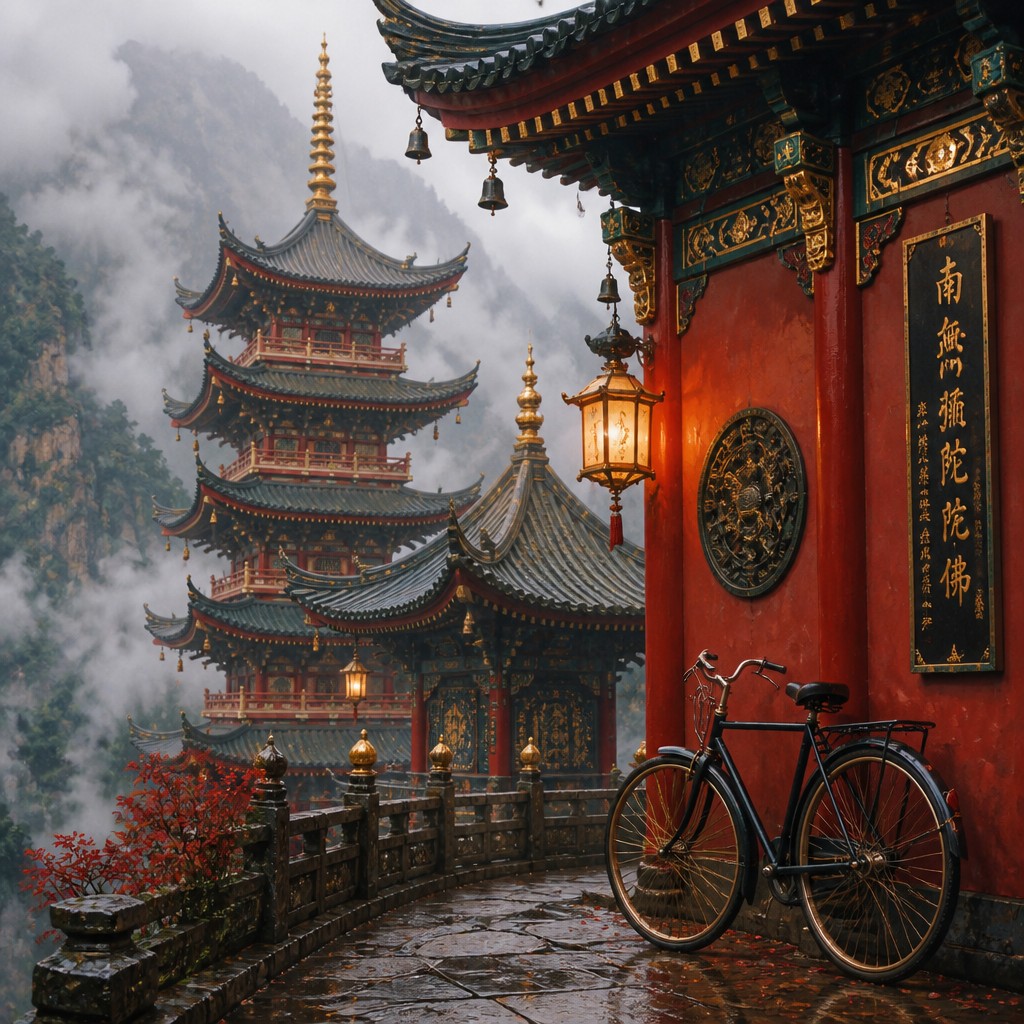
Ceremonial color and atmosphere
Crimson, jade green, ink black, and gold create a balanced palette that feels formal and symbolic. Mist, lantern light, and mountain backdrops often intensify the sense of quiet elevation.
Try It
Create Videos in Pagoda Architecture Style
Styles aren't just for stills — describe a scene or animate an image and get a short video rendered in Pagoda Architecture. Press play to see this pond come to life.
Make a VideoPagoda Architecture Prompt Ideas
Start from an idea — each one opens the generator with the style ready to go. See all 40 Pagoda Architecture prompts →

“close-up portrait of an elderly person with expressive weathered features”
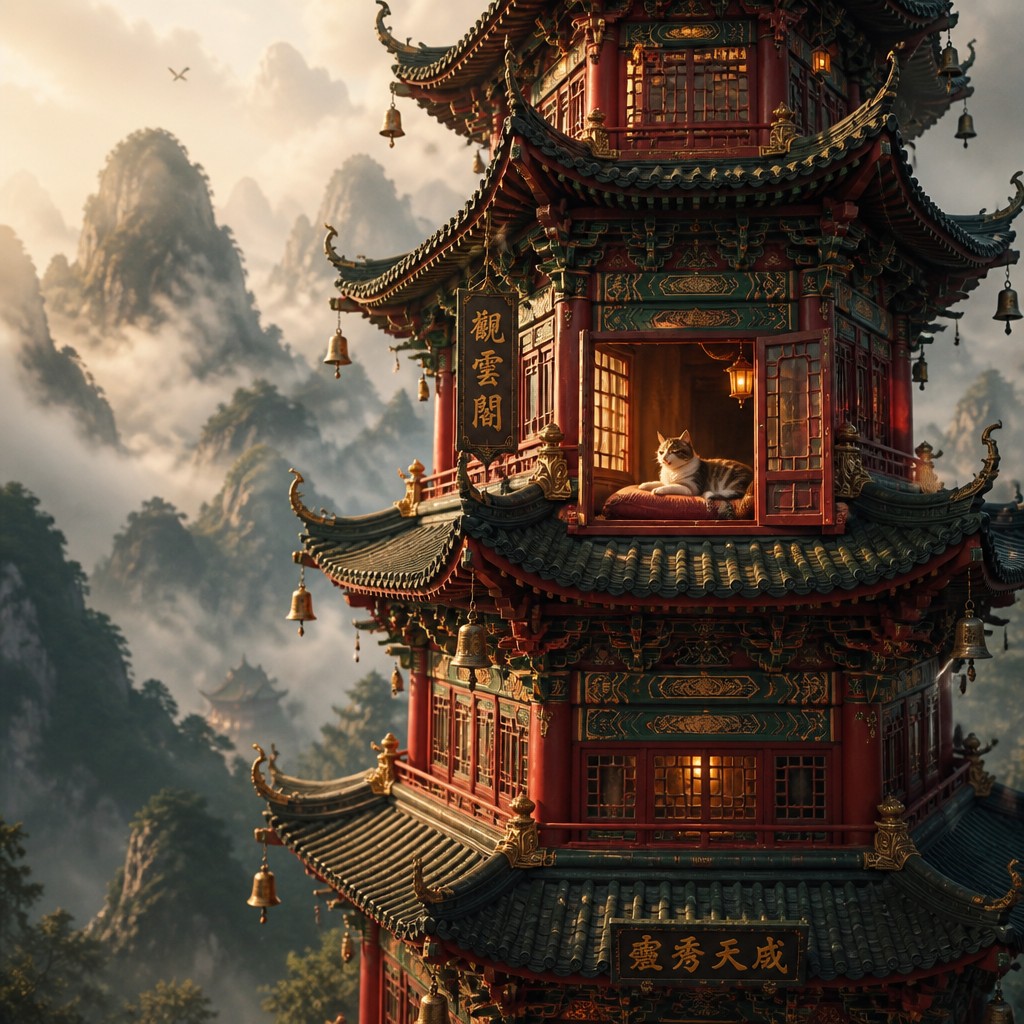
“a cat lounging in a sunlit window”
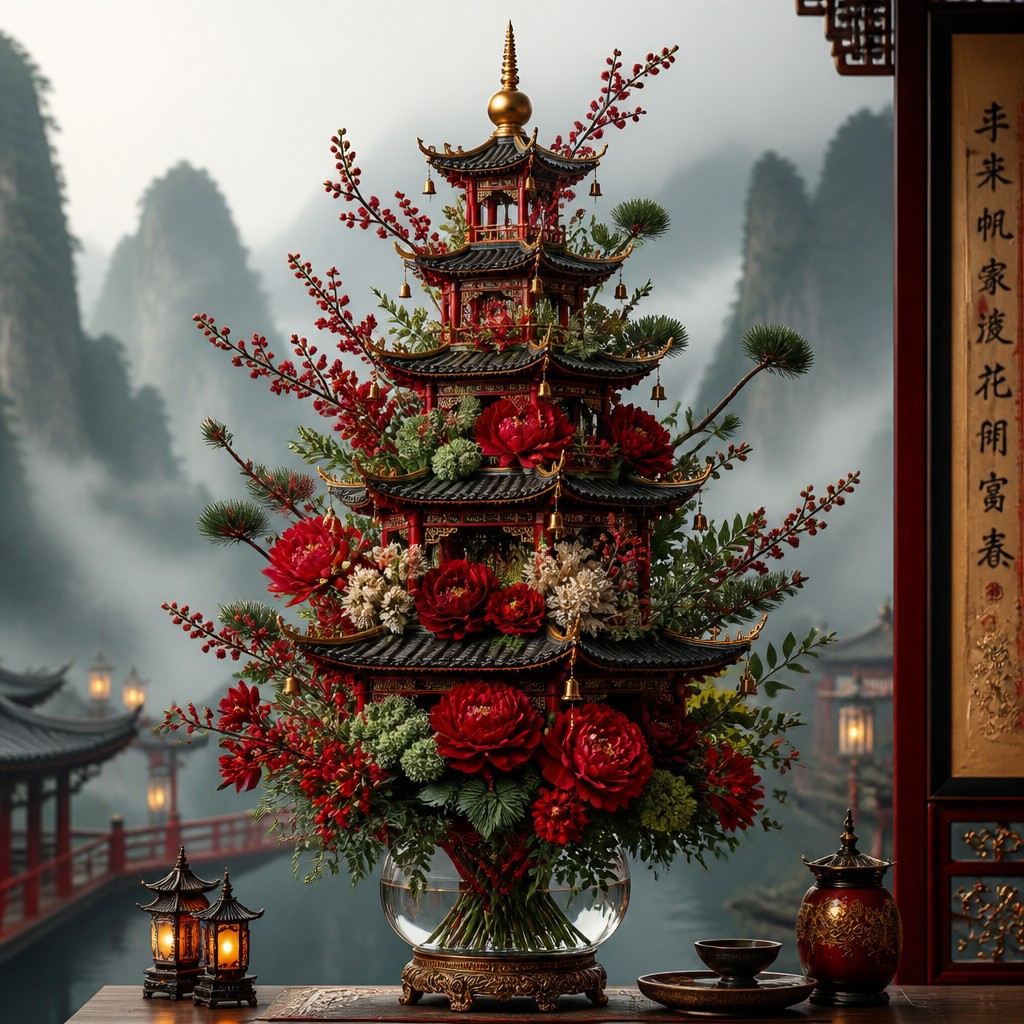
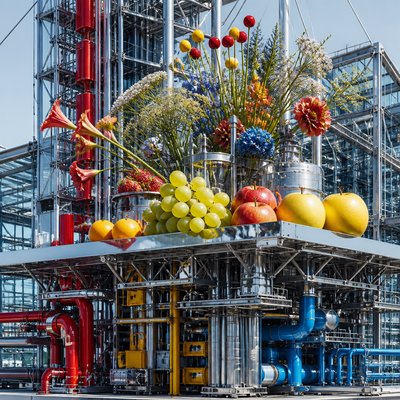
“bouquet of flowers in a glass vase”

“sailing ship on a stormy sea”
How to Create Pagoda Architecture Art
Master the craft step by step — or skip straight to creating. Read the full guide →
- 1
Build the silhouette first
Start with a clear vertical stack of roofed tiers and make sure each level diminishes slightly as it rises. In traditional drawing or painting, use perspective guides to keep the roof planes consistent; in digital work, block in the big shapes before adding ornament.
- 2
Prioritize roof geometry
The eaves should curve upward at the corners and project beyond the walls, since the roofline is the defining visual element. When generating or painting, specify layered roofs, broad eaves, and repeating tiered stories so the form reads immediately.
- 3
Use a restrained symbolic palette
Vermilion timber, dark glazed tiles, and gold accents are the core color relationships. Keep background colors subdued so the tower remains the focal point and the atmosphere feels serene rather than crowded.
- 4
Render structural ornament with hierarchy
Emphasize major joinery, bracket clusters, ridge ornaments, and corner bells before adding smaller carvings. This keeps the architecture readable and avoids turning the facade into generic decoration.
- 5
Set the scene with atmosphere
Mist, lantern glow, mountain silhouettes, or temple courtyards help contextualize the tower and reinforce its contemplative mood. For image generation, include words like 'misty,' 'ceremonial,' 'lantern-lit,' and 'vertical grace' to guide composition and lighting.
- 6
Separate style from subject
Whether you are drawing a fictional pagoda, a real temple, or transforming a photo, preserve the distinctive roof stacking, curved eaves, and lacquered structural rhythm. In prompt-based workflows, describe the subject first and the architectural language second so the result stays focused.

The Story
History & Origins of Pagoda Architecture
Pagoda forms developed in East Asia from the architectural adaptation of the Indian stupa, first transmitted through Buddhist cultural exchange and then transformed in China, Korea, Japan, Vietnam, and neighboring regions. Over time, the pagoda became a distinct vertical tower type built in timber, brick, or stone, often tied to temples, relics, and sacred landscapes. Although regional variations differ, the common lineage emphasizes tiered elevation, sacred symbolism, and carefully proportioned roof stacking.
The aesthetic associated with pagoda architecture is therefore not a single modern movement but a traditional architectural lineage spanning many centuries. In China, Japanese, Korean, and Southeast Asian contexts, builders refined roof curvature, bracket systems, and decorative color schemes to suit climate, ritual use, and local craft traditions. In contemporary visual culture, the pagoda has become a shorthand for serene East Asian monumentality, though authentic examples vary widely by region and period.
Influences: This style draws primarily from East Asian timber temple architecture, especially pagoda traditions shaped by Buddhist transmission from the Indian stupa. It also overlaps with decorative conventions seen in Chinese, Japanese, Korean, and Vietnamese sacred building, including bracketed roof systems, lacquered wood, and symbolic color use. In modern visual culture, it is often paired with landscape painting atmospherics and a romanticized sense of mountain serenity, while still rooted in long-standing architectural craft traditions rather than a single named art movement.
Frequently Asked Questions
What defines pagoda architecture style?
Its defining traits are tiered roof levels, upturned eaves, visible timber construction, and ornamental roof details such as bells and finials. The style is usually read through silhouette first, then through color and craftsmanship.
Is a pagoda the same as a temple?
No. A pagoda is a specific tower form, while a temple is a broader religious complex that may include halls, gates, courtyards, and other structures. Pagodas often appear within temple grounds, but not every temple has one.
How is this different from Chinese or Japanese architecture in general?
It is a narrower visual category focused on vertical, tiered towers rather than all East Asian buildings. It borrows from regional timber traditions, but the key features are the stacked roofs and upward-curving eaves that define pagoda forms.
What colors are most associated with this style?
Vermilion, jade green, black, and gold are the most common palette cues. These colors reinforce the sacred, ceremonial feeling and make the roof structure and timber framing stand out clearly.
How can I make a pagoda look historically grounded?
Use layered roof tiers, exposed structural rhythm, and regionally plausible ornament rather than adding random fantasy details. Reference timber joinery, roof curvature, and modest atmospheric effects like mist or lantern light.
Where is pagoda architecture commonly used in images?
It appears in temple scenes, fantasy landscapes, historical illustrations, city skylines, and ceremonial settings. It is also common as a visual cue for calm, spiritual, or culturally East Asian environments.
Create your first Pagoda Architecture artwork
Describe anything — or upload a photo — and see it in Pagoda Architecture Style in seconds.
Related Styles
Discover similar art styles