Adobe Pueblo Architecture
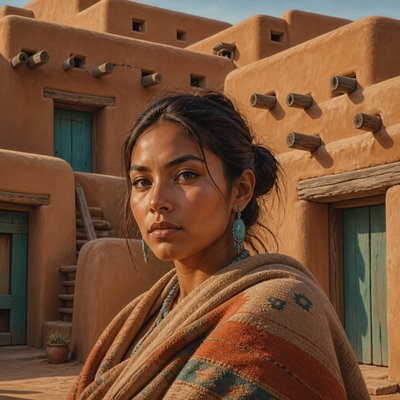
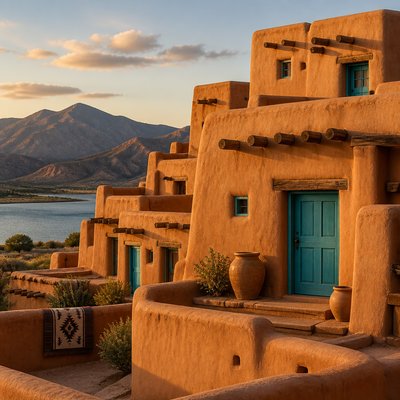
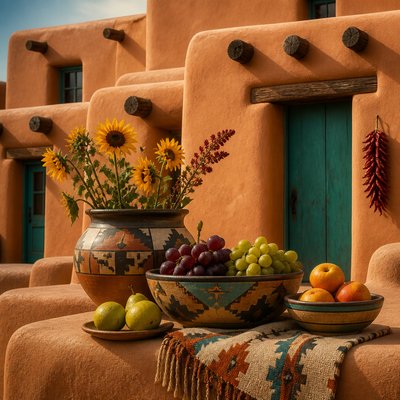
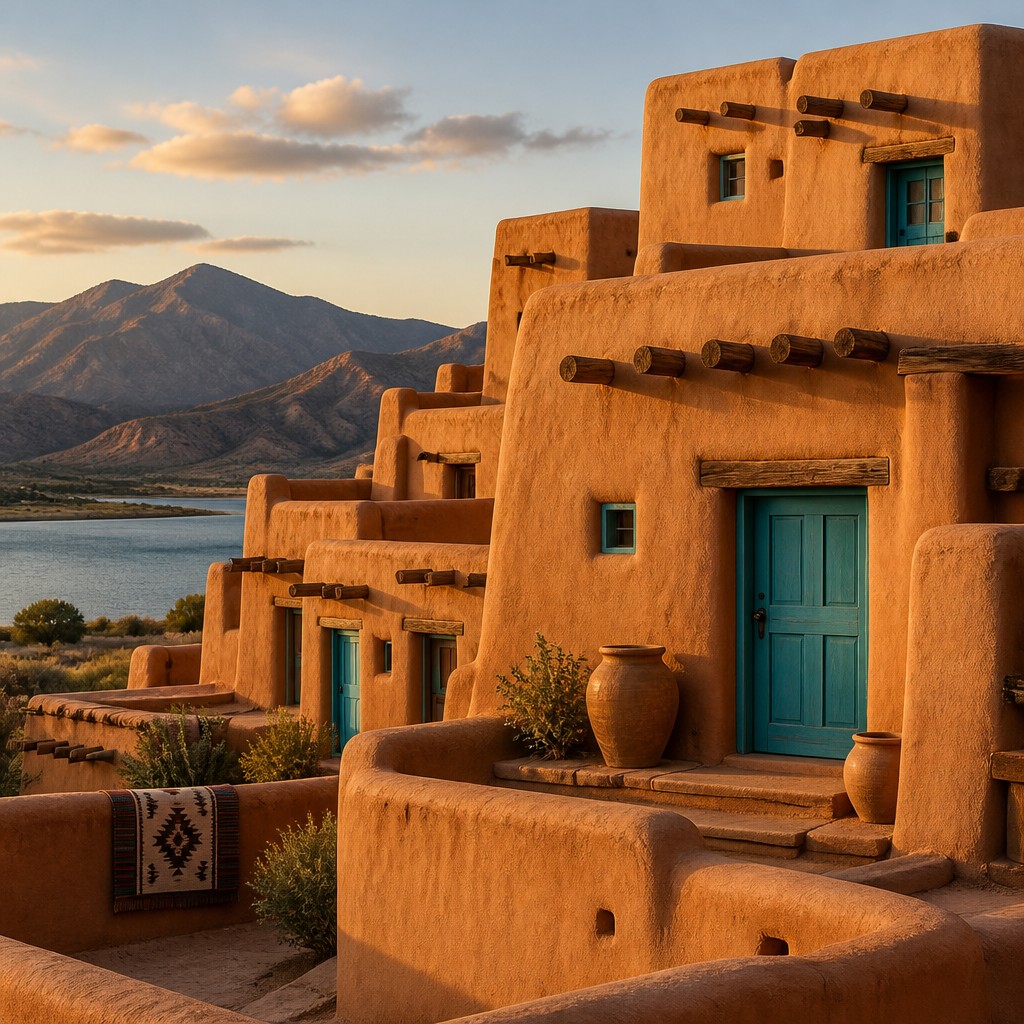
Rounded adobe walls, viga beams, turquoise doors, and soft desert shadows define this Southwestern Pueblo-inspired architectural style.
Instantly rendered in Adobe Pueblo Architecture — or transform a photo
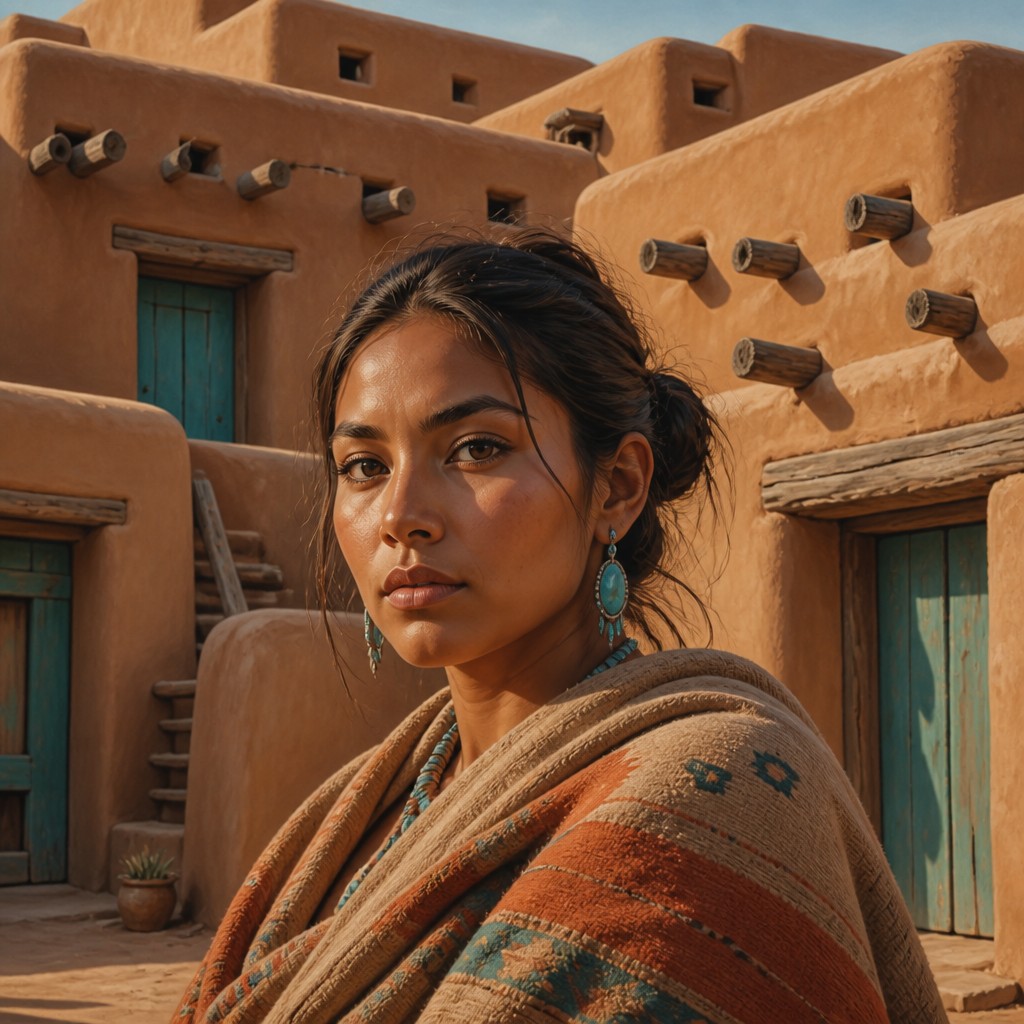
Adobe Pueblo Architecture Gallery
Tap any artwork to explore it
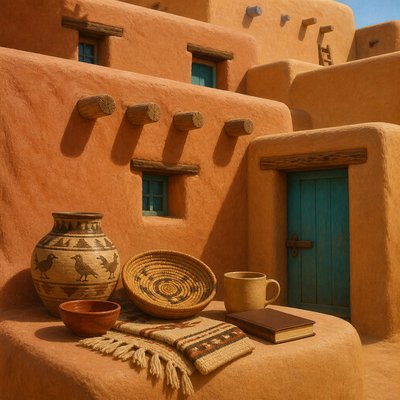
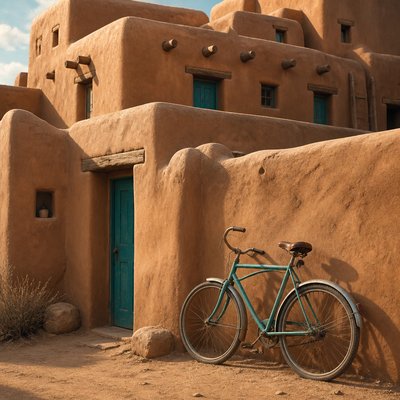
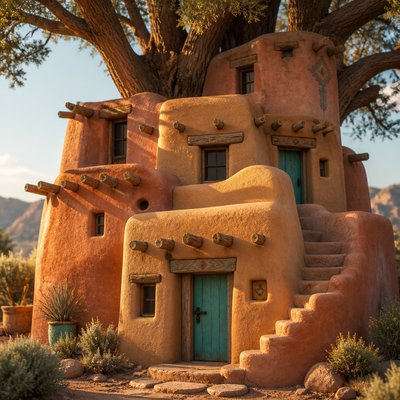
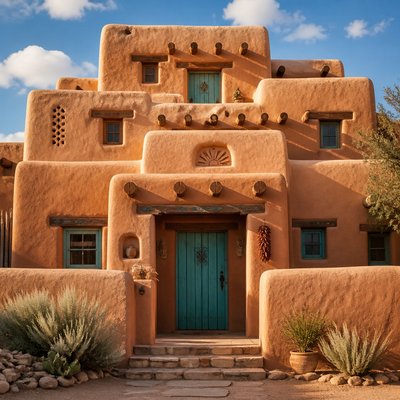
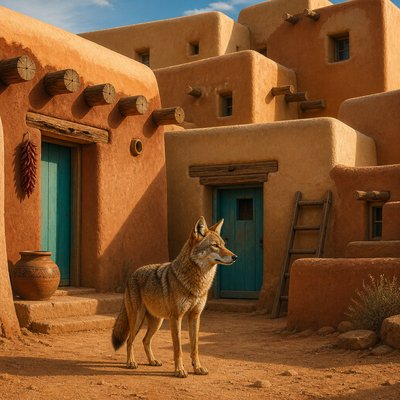
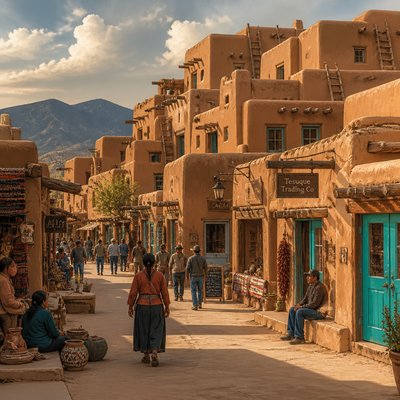
What is Adobe Pueblo Architecture?
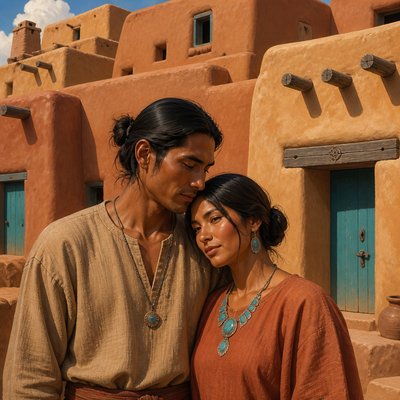
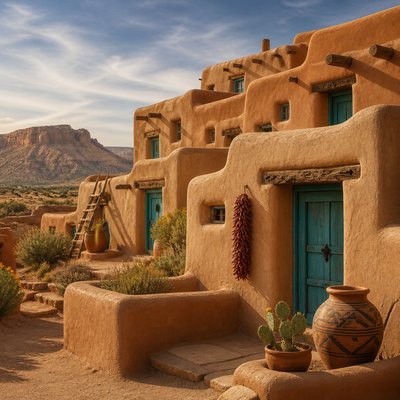
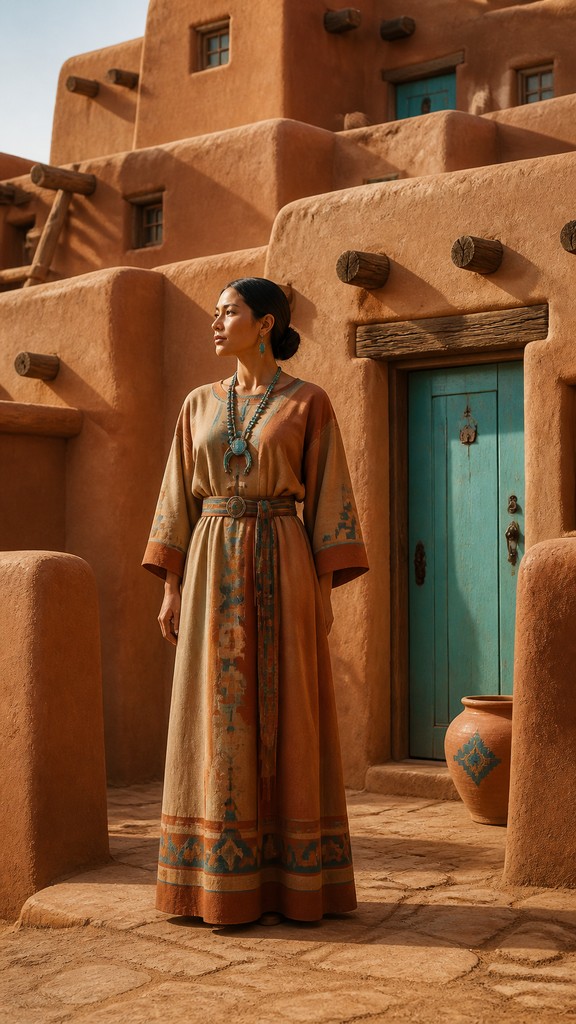
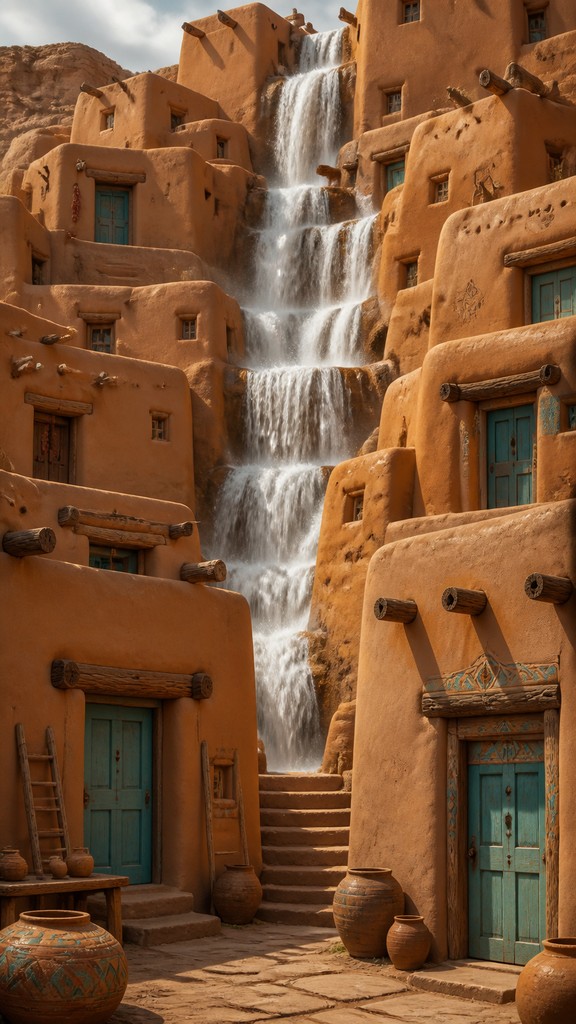
Adobe Pueblo Architecture is a Southwestern building style defined by rounded earthen walls, flat or slightly stepped roofs, exposed wooden vigas, and small openings set deep into thick masonry. Its look is rooted in the visual language of Pueblo and related adobe building traditions of the American Southwest, where hand-formed earthen surfaces, clay plaster, and timber elements create a calm, grounded, sun-warmed appearance.
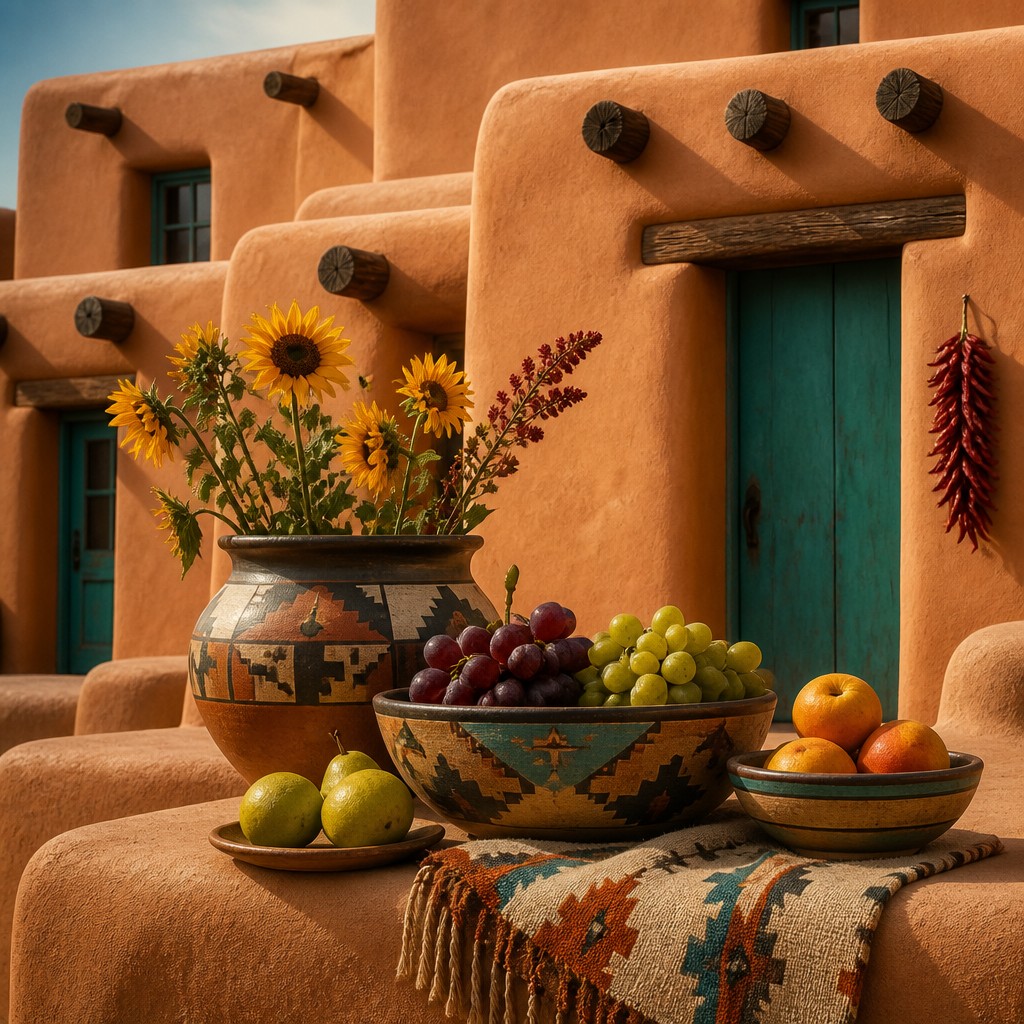
The style is immediately recognizable for its low horizontal massing, warm terracotta and sandy ochre tones, and the contrast between soft plastered walls and rough structural wood. Turquoise-painted doors, carved lintels, and shaded portals often add color and detail, while the heavy walls and recessed windows produce a distinctive pattern of softened light and shadow. The result is an architecture that feels integrated with the desert landscape: tactile, sheltering, and shaped by climate as much as by cultural tradition.
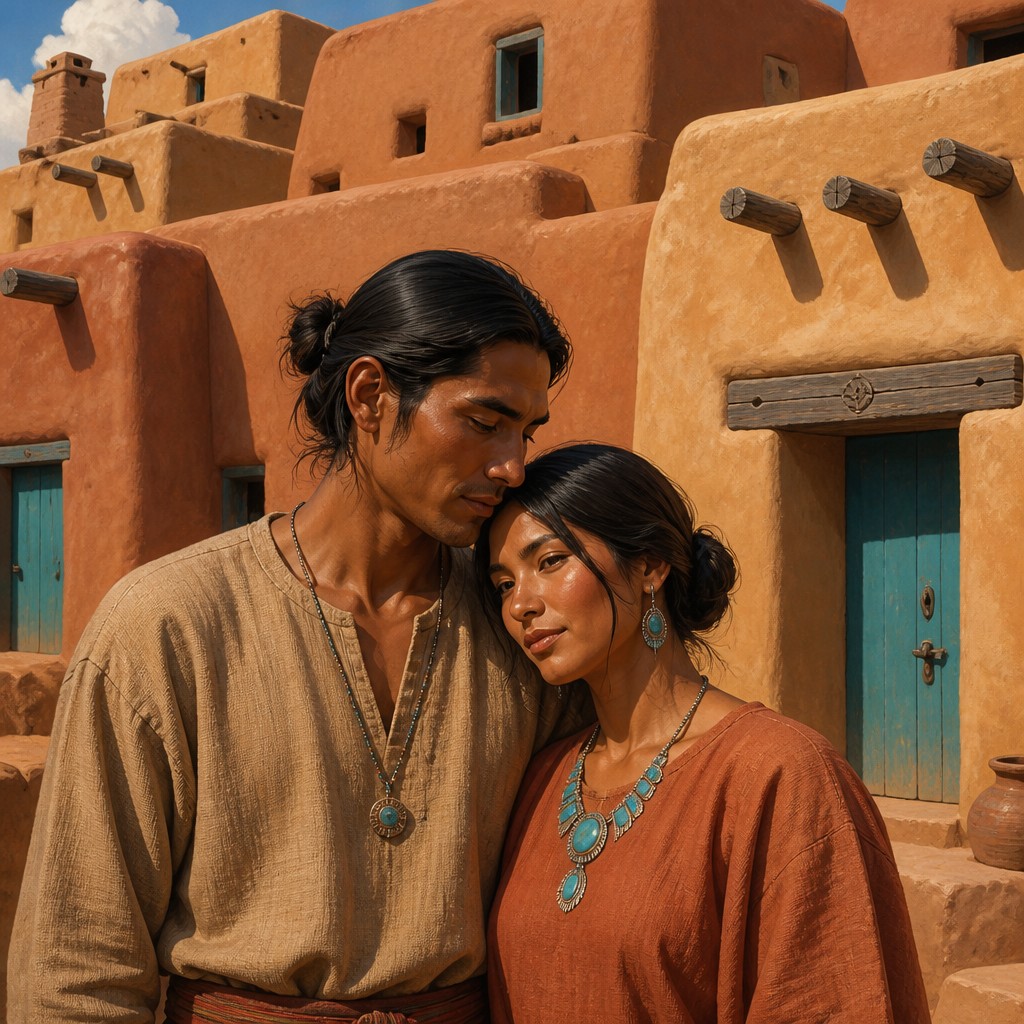
Try It On Your Photos
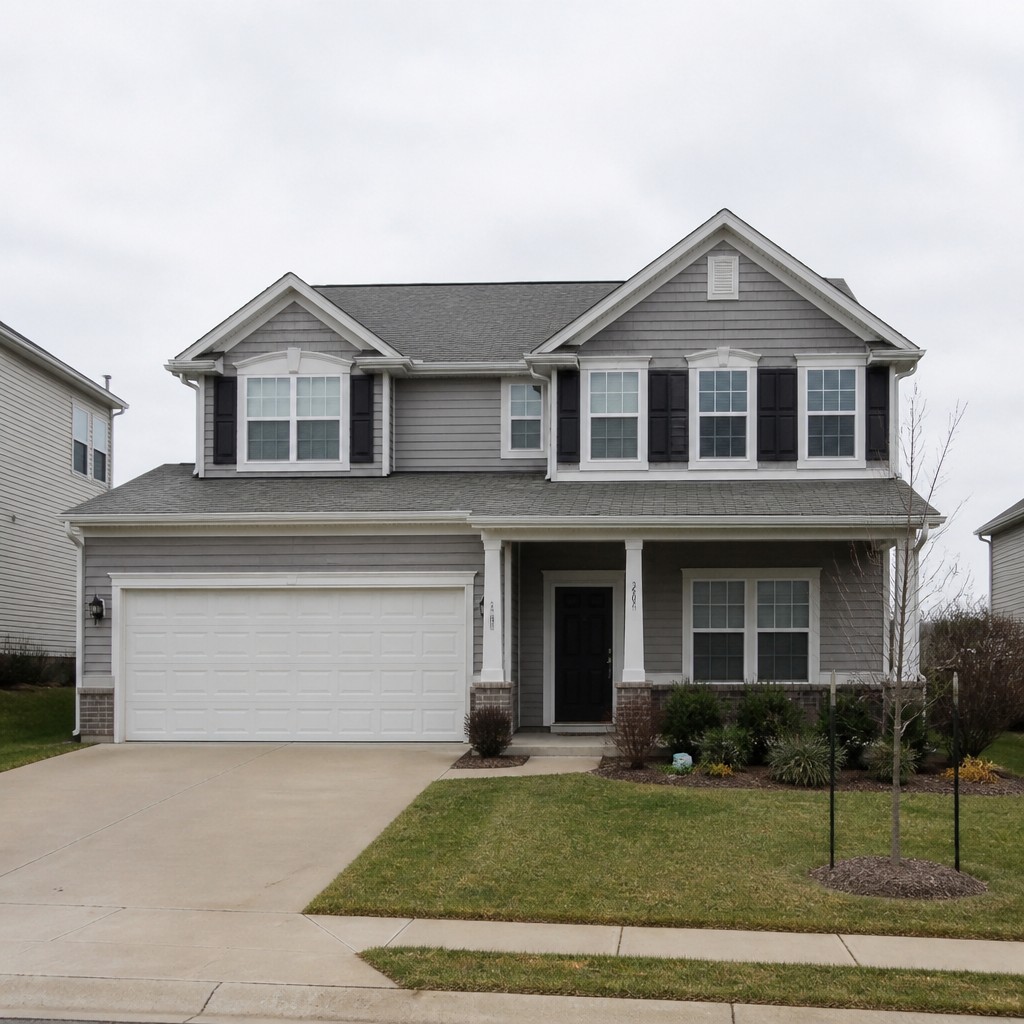
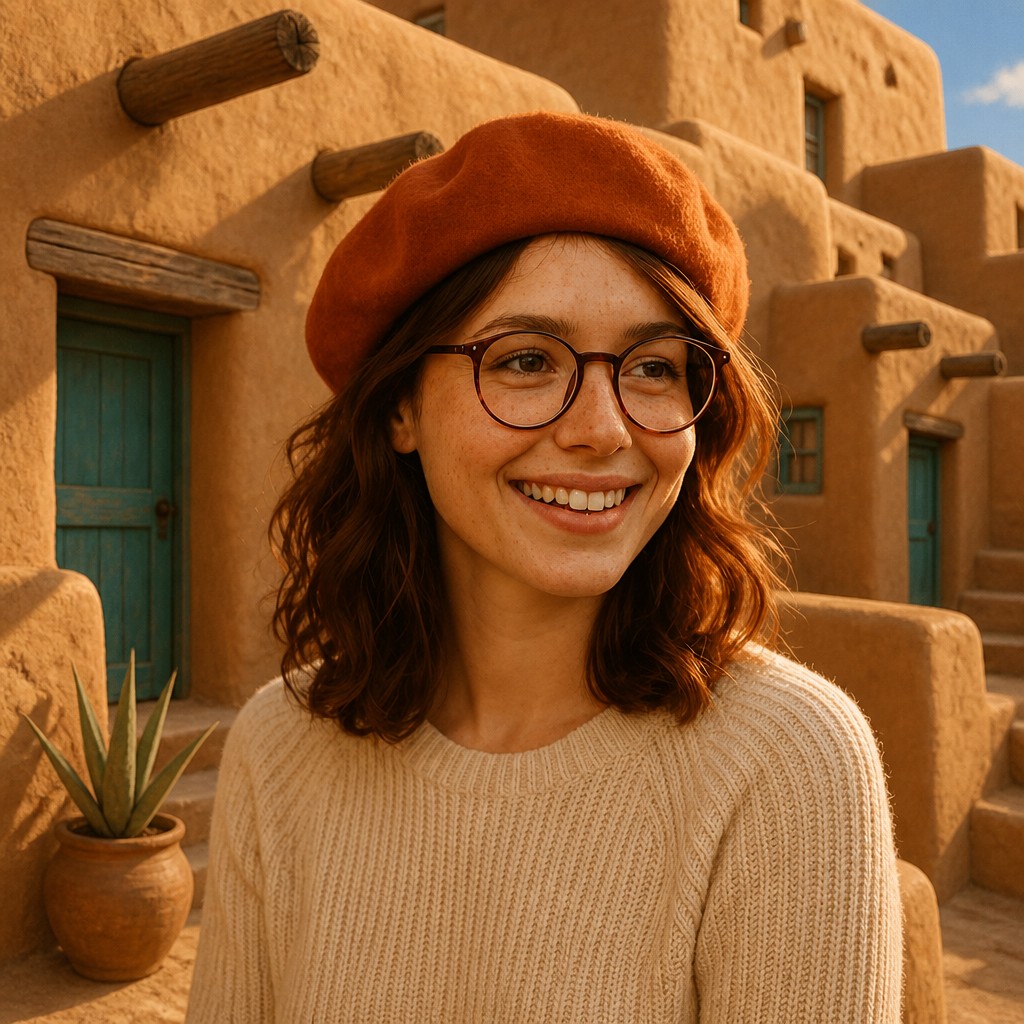
Upload any photo and convert it into Adobe Pueblo Architecture — drag the sliders to compare before and after.
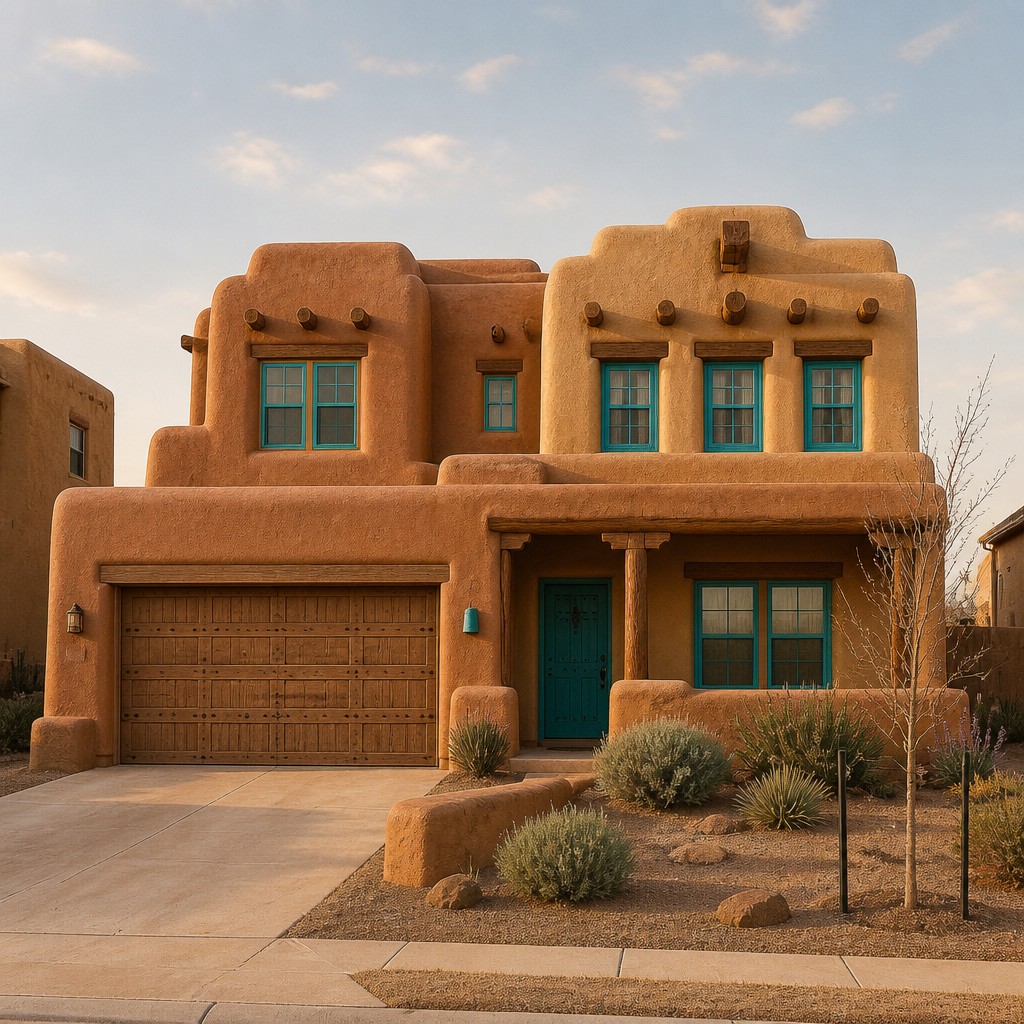

What Defines Adobe Pueblo Architecture
The signature details, up close
Rounded adobe walls
Walls are typically thick, smooth, and softly contoured, with corners that may be rounded rather than sharply squared. Their hand-finished texture gives the architecture a warm, tactile presence.
Exposed vigas and timber details
Rough wooden beams often project through the exterior or support the roof structure, creating a strong rhythmic line. Carved lintels, corbels, and wood trim add artisanal detail against the earthen surfaces.
Deep-set openings
Windows and doors are usually small and recessed, emphasizing the depth of the walls. This produces strong shadow lines and helps the structure feel sheltered from sun and heat.
Earth-toned plaster and clay surfaces
Color palettes favor terracotta, sienna, ochre, and sand, often with matte clay-plaster textures. The surfaces look sun-baked, weathered, and organically irregular rather than polished.
Turquoise accents
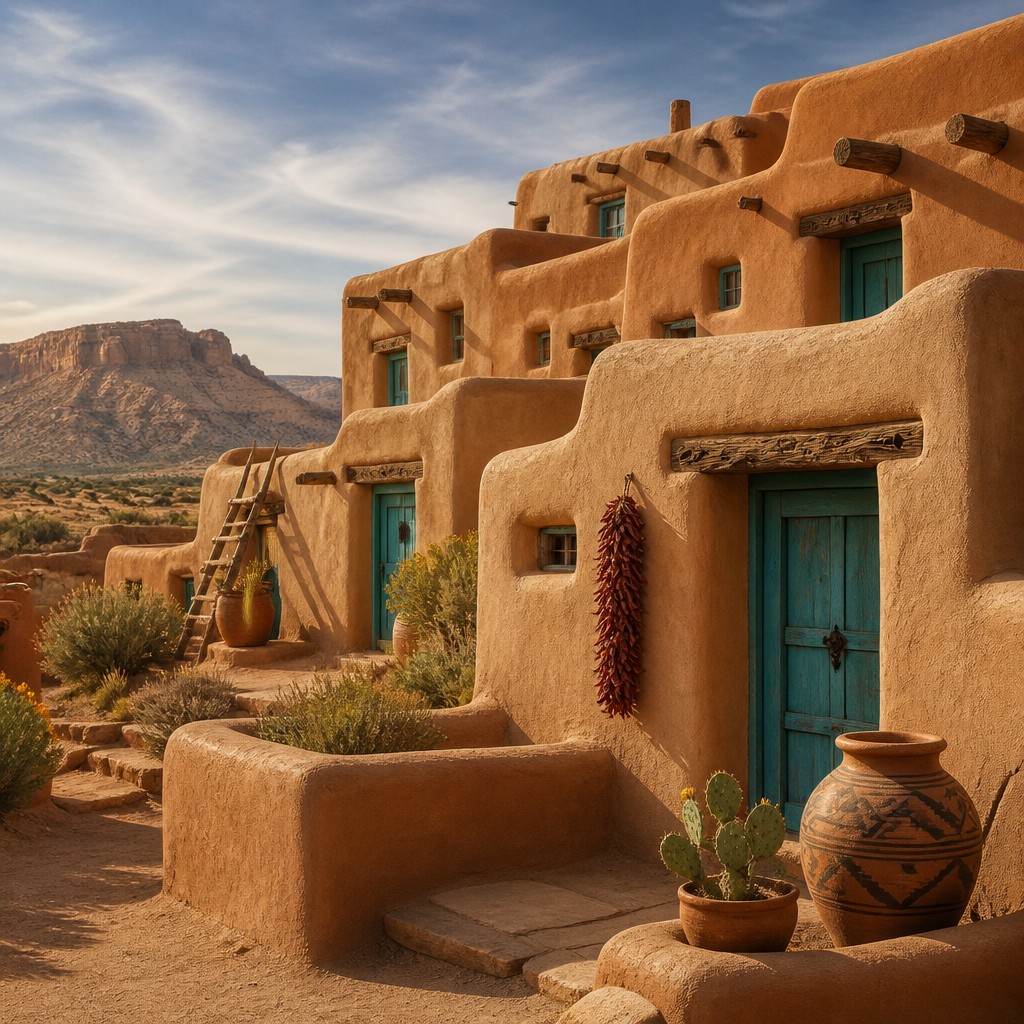
Doors, frames, or small decorative elements are often painted turquoise or blue-green. The color provides a vivid counterpoint to the warm earth tones and is especially characteristic of Southwestern visual culture.
Stepped massing and low horizontality
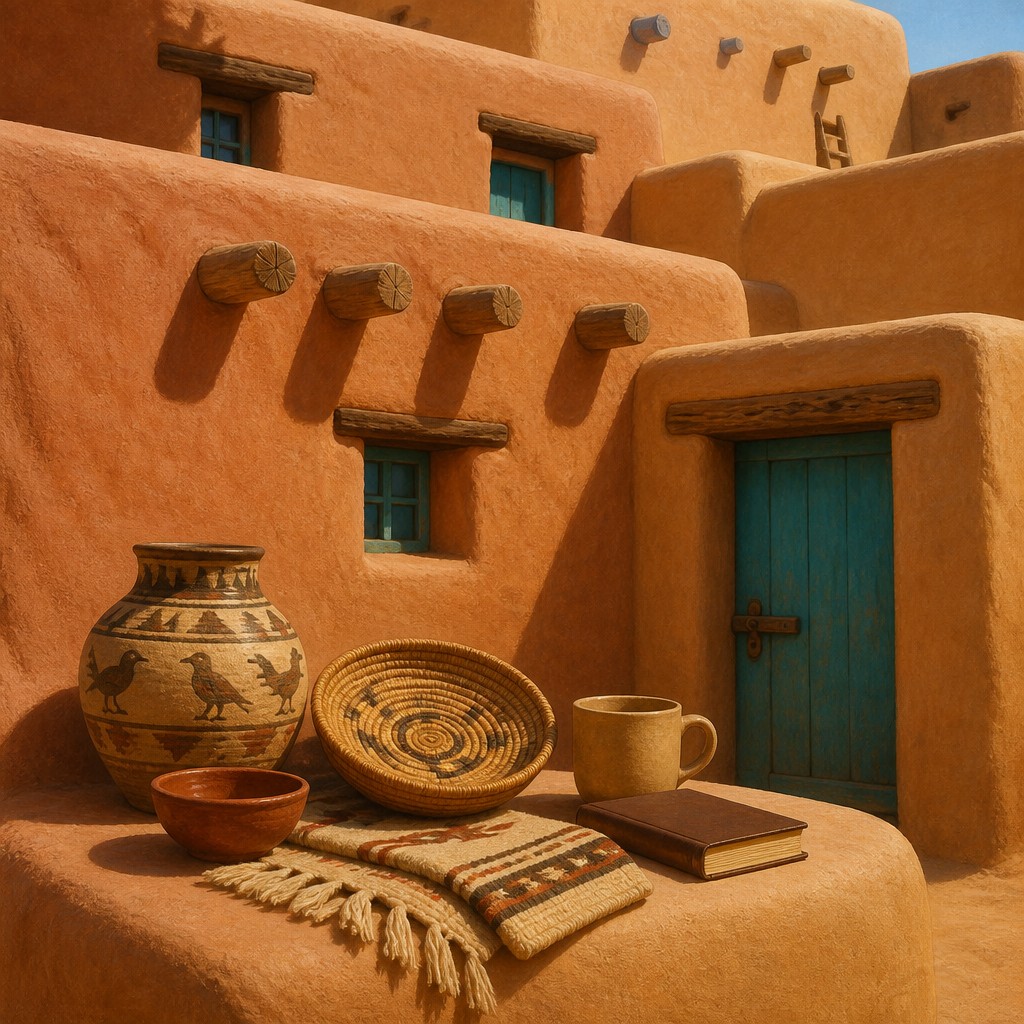
Buildings frequently appear as stacked, stepped-back volumes with flat roofs and parapets. The overall composition stays low and grounded, echoing the landscape and the logic of adobe construction.
Try It
Create Videos in Adobe Pueblo Architecture
Styles aren't just for stills — describe a scene or animate an image and get a short video rendered in Adobe Pueblo Architecture. Press play to see this pond come to life.
Make a VideoAdobe Pueblo Architecture Prompt Ideas
Start from an idea — each one opens the generator with the style ready to go. See all 40 Adobe Pueblo Architecture prompts →
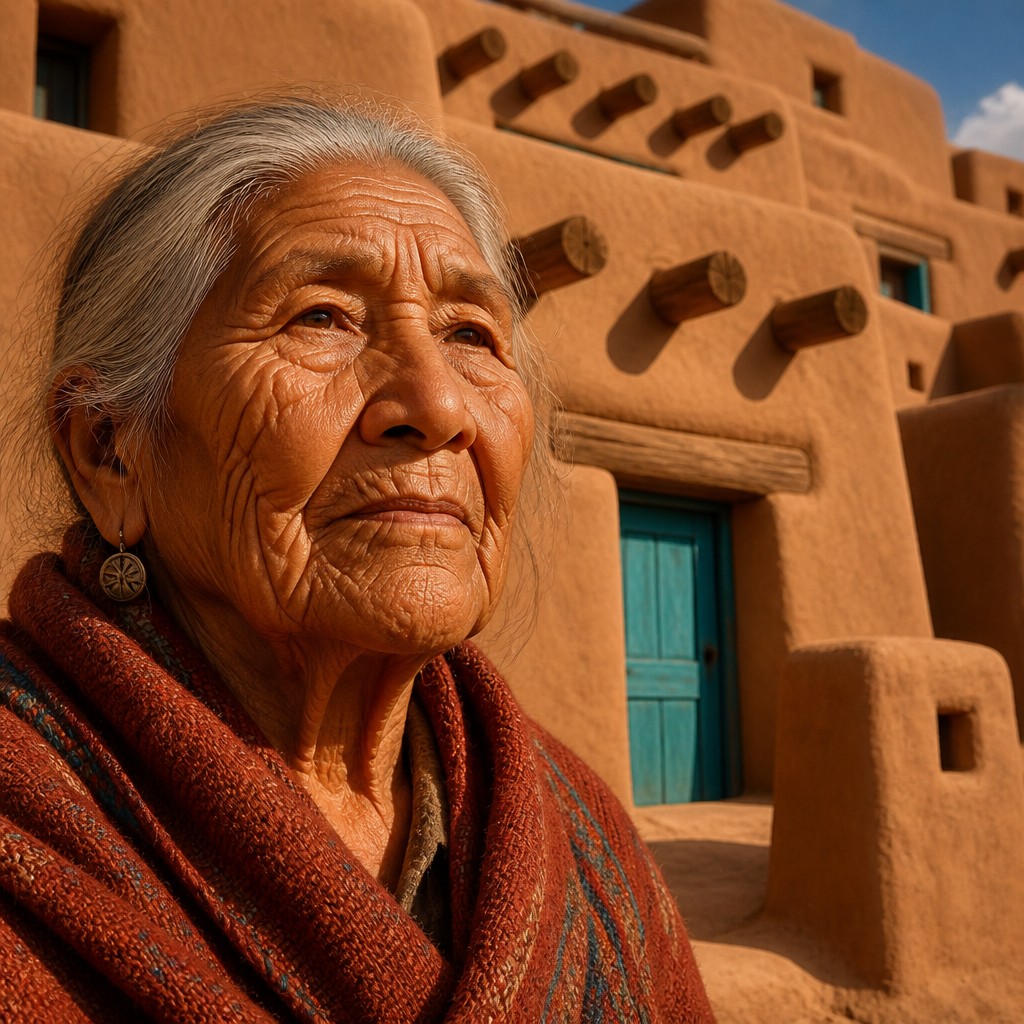
“close-up portrait of an elderly person with expressive weathered features”
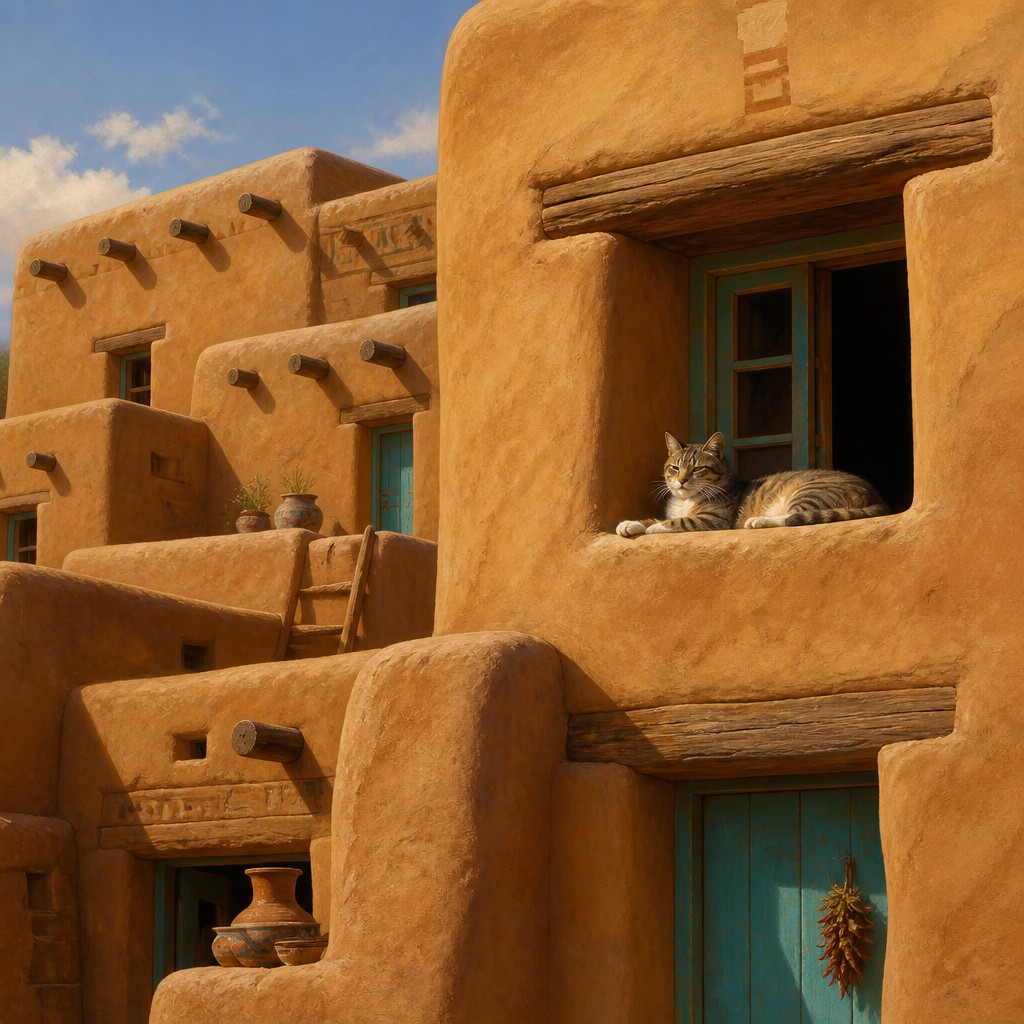
“a cat lounging in a sunlit window”
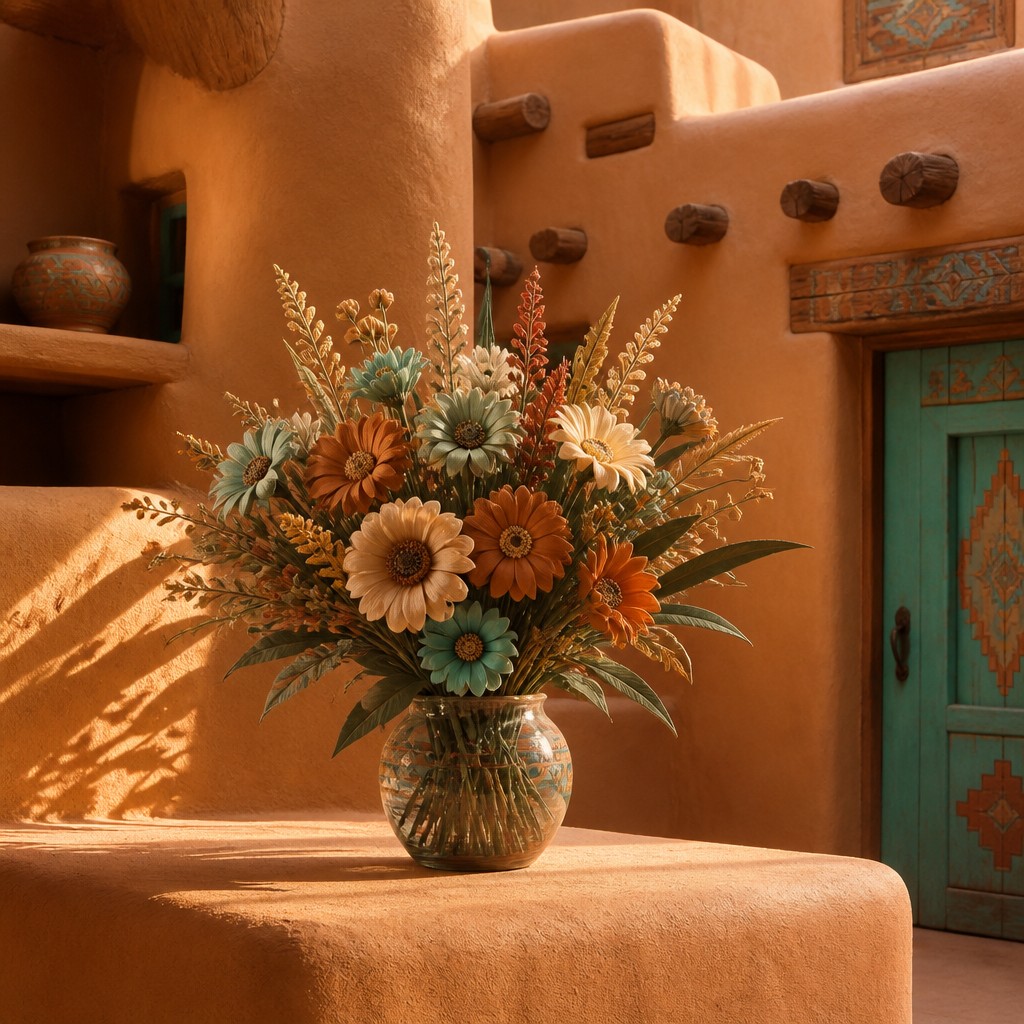
“bouquet of flowers in a glass vase”
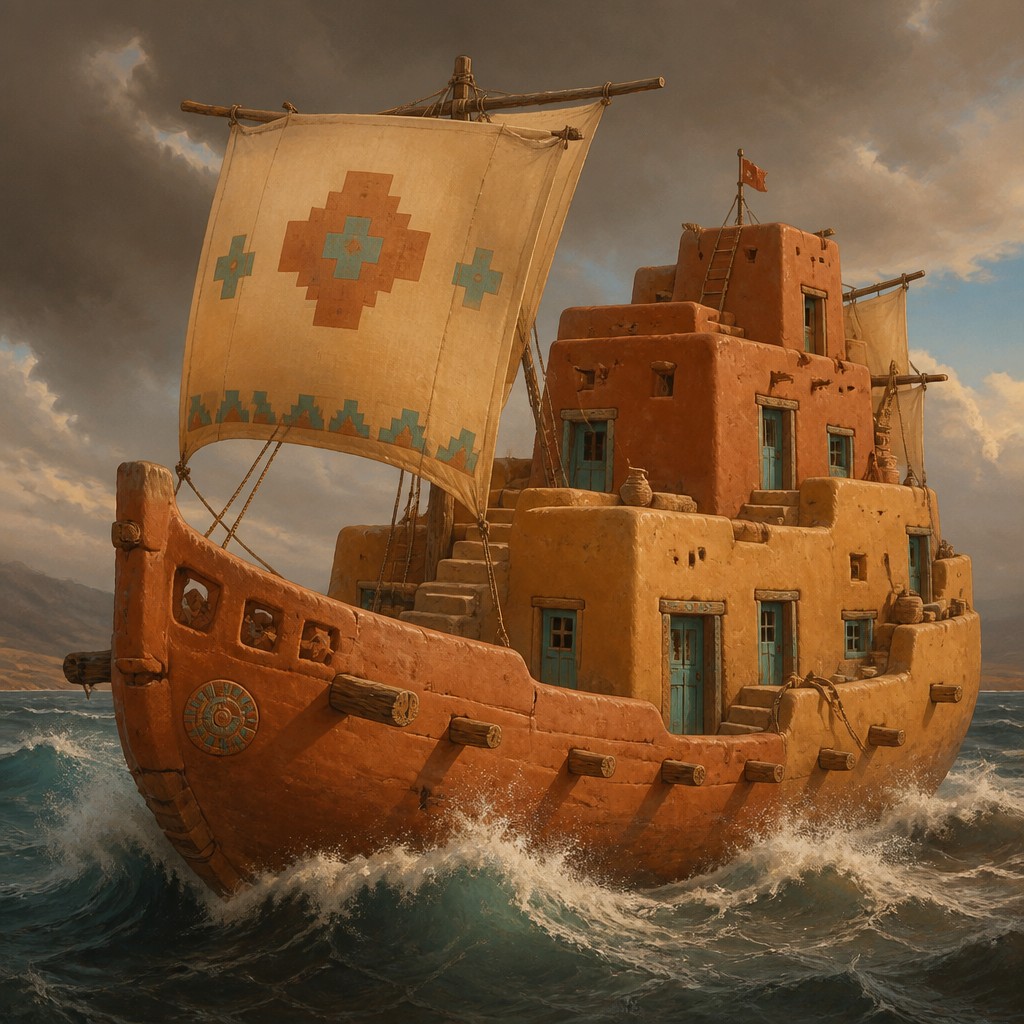
“sailing ship on a stormy sea”
How to Create Adobe Pueblo Architecture Art
Master the craft step by step — or skip straight to creating. Read the full guide →
- 1
Build with thick, simplified forms
When drawing or designing, start with blocky masses and keep the silhouette low and horizontal. Avoid ornate rooflines; instead, emphasize layered terraces, rounded corners, and the weight of the walls.
- 2
Use a matte earthen palette
Work with warm clay reds, sandy beige, muted ochre, and subdued browns, then introduce turquoise sparingly as an accent. Keep highlights soft and avoid high-gloss finishes so the material reads as plaster and adobe.
- 3
Show texture, not polish
Surface detail should suggest hand-applied plaster, subtle cracks, and uneven smoothing. In digital work, use textured brushes and layered noise; in photography or 3D, rely on diffused light to make the surfaces feel tactile.
- 4
Control the light for soft shadows
This style depends on low-angle desert sunlight that creates sculptural but gentle shadows. Place openings deeply and model the beam ends, parapets, and alcoves so that shadow becomes part of the design language.
- 5
Include authentic architectural cues
Add vigas, carved wood lintels, recessed portals, and small grouped windows to anchor the style visually. If generating with text, specify earthen plaster, exposed timber beams, turquoise door, and southwestern adobe forms for clearer results.
The Story
History & Origins of Adobe Pueblo Architecture
Adobe Pueblo Architecture draws from the long-standing building traditions of Pueblo peoples in the American Southwest, particularly in present-day New Mexico and Arizona, where earthen construction developed to suit arid climates and local materials. Adobe—sun-dried earth mixed with straw or other fibers—has been used for centuries across the region, and Pueblo forms evolved through communal building practices, with thick walls, flat roofs, and vigas supporting upper levels or roof structures.
In the modern era, these traditions were adapted into the broader Pueblo Revival and Southwestern regional styles, especially in the early 20th century through civic, residential, and institutional architecture in places such as Santa Fe. The revived aesthetic preserved core features like rounded corners, exposed vigas, and parapet walls while often standardizing them for contemporary construction. Today, the style is valued both as a continuation of regional identity and as an architectural expression of material honesty, climate responsiveness, and cultural continuity.
Influences: This style is shaped primarily by Indigenous Pueblo architecture of the American Southwest and by the later Pueblo Revival movement, which adapted those forms for modern use. It also overlaps with broader adobe and vernacular earthen-building traditions found across arid regions, as well as with regional Southwestern design, where the relationship between material, climate, and settlement is central. In modern design, its visual logic is often echoed in rustic resort architecture and in interiors that borrow from Santa Fe and New Mexican regional traditions.
Frequently Asked Questions
What defines Adobe Pueblo Architecture?
Its defining features are thick earthen walls, rounded or softened edges, exposed wooden vigas, small recessed windows, and a palette of warm desert colors. The style is strongly tied to Southwestern climates and to building traditions that use local materials and passive cooling.
Is this the same as Pueblo Revival architecture?
They are related but not identical. Pueblo Revival is the modern architectural movement that adapted Pueblo forms for 20th-century buildings, while the deeper source is the older Indigenous Pueblo building tradition and related adobe construction practices.
Why do Adobe Pueblo buildings have small windows?
Small, deep-set windows help reduce heat gain and create shade within thick masonry walls. Visually, they also reinforce the heavy, sheltered character of the architecture and make the wall surfaces feel more solid.
What materials are commonly associated with this style?
Adobe mud brick or earthen plaster, timber vigas, clay-based finishes, and wood trim are the most characteristic materials. In contemporary construction, stucco or other substitutes may imitate the look, but the visual language remains grounded in earthen texture and exposed wood.
How is it different from Spanish Colonial architecture?
Spanish Colonial architecture usually emphasizes Mediterranean-derived forms such as symmetry, stucco walls, courtyards, and tile roofs, whereas Adobe Pueblo Architecture favors thicker earthen masses, flat roofs, vigas, and a more distinctly Indigenous Southwestern profile. The two can overlap in the American Southwest, but their formal roots are different.
How can I create this style in a painting or image?
Focus on simplified building volumes, rounded plaster surfaces, and strong but soft-edged sunlight. Include a limited earth-toned palette with a turquoise accent, and emphasize texture and shadow more than ornament.
Create your first Adobe Pueblo Architecture artwork
Describe anything — or upload a photo — and see it in Adobe Pueblo Architecture in seconds.
Related Styles
Discover similar art styles