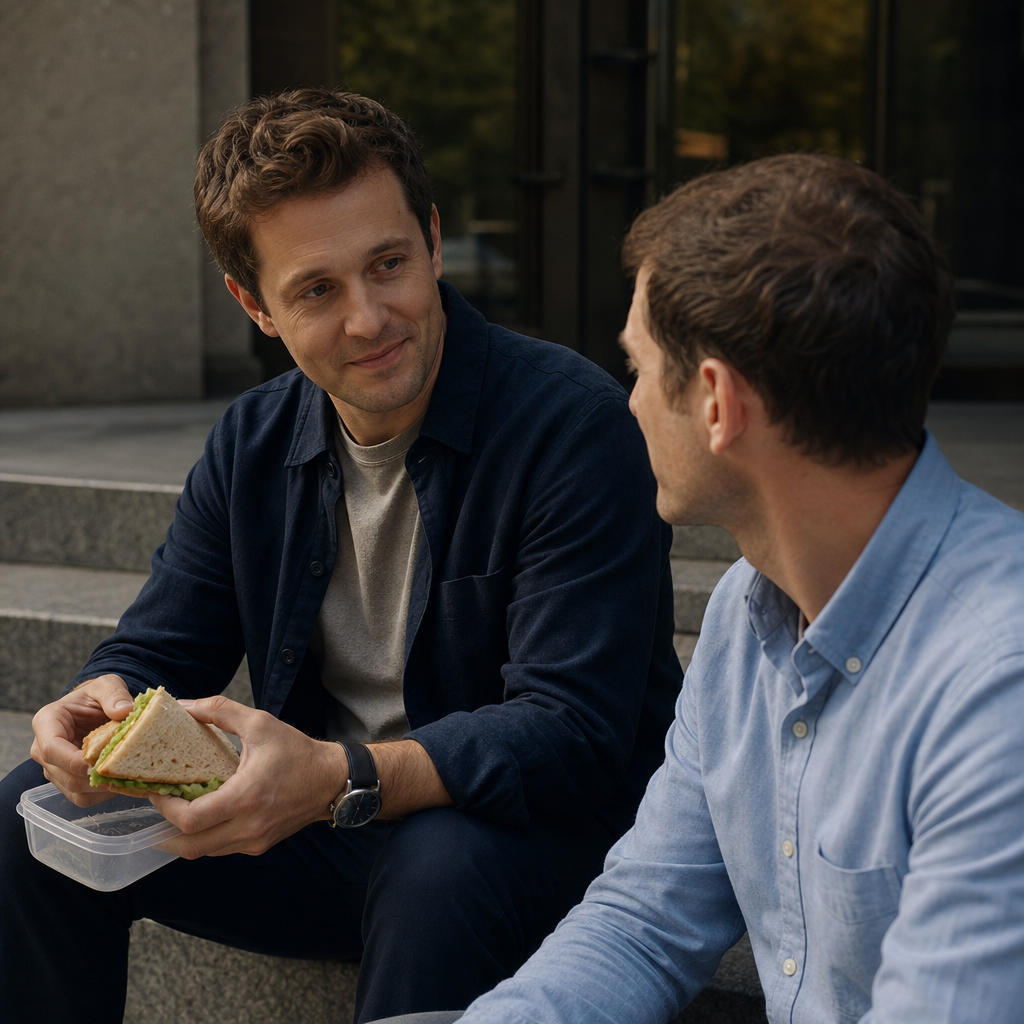
Once I forgot to bring my lunch to work. A close friend of mine said something that has since stuck with me. He said: “As long as I’ve got a sandwich, you’ve got half.”
Public

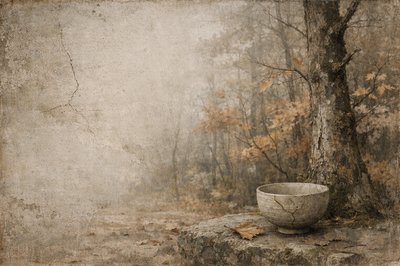
Once I forgot to bring my lunch to work. A close friend of mine said something that has since stuck with me. He said: “As long as I’ve got a sandwich, you’ve got half.”

Style Used

This contemporary realism art style captures modern life with technical precision while maintaining artistic interpretation. It documents today's world through skilled observation, balancing accurate representation with emotional resonance.

See More
Once I forgot to bring my lunch to work. A close friend of mine said something that has since stuck with me. He said: “As long as I’ve got a sandwich, you’ve got half.”
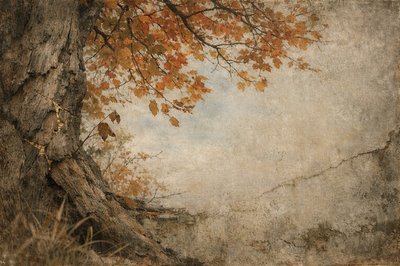
In days to come I stood amazed, walking through that forest, at the blazing symphony of color it brought forth, seemingly just for me.  I grew to love my friend’s words in a new way, through the astounding beauty of the spectacle he knew was coming when he said them.  I was young then, and didn’t know I had many autumns ahead of me.
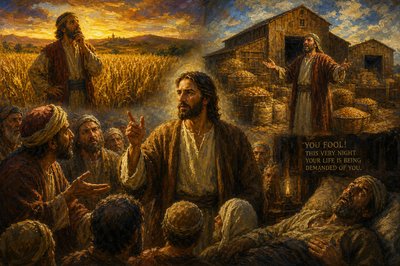
13 Someone in the crowd said to him, “Teacher, tell my brother to divide the family inheritance with me.” 14 But he said to him, “Friend, who set me to be a judge or arbitrator over you?” 15 And he said to them, “Take care! Be on your guard against all kinds of greed, for one’s life does not consist in the abundance of possessions.” 16 Then he told them a parable: “The land of a rich man produced abundantly. 17And he thought to himself, ‘What should I do, for I have no place to store my crops?’ 18 Then he said, ‘I will do this: I will pull down my barns and build larger ones, and there I will store all my grain and my goods. 19 And I will say to my soul, Soul, you have ample goods laid up for many years; relax, eat, drink, be merry.’ 20 But God said to him, ‘You fool! This very night your life is being demanded of you. And the things you have prepared, whose will they be?’ 21 So it is with those who store up treasures for themselves but are not rich toward God.” 
–  Luke 12:13-21
In days to come I stood amazed, walking through that forest, at the blazing symphony of color it brought forth, seemingly just for me.  I grew to love my friend’s words in a new way, through the astounding beauty of the spectacle he knew was coming when he said them.  I was young then, and didn’t know I had many autumns ahead of me.
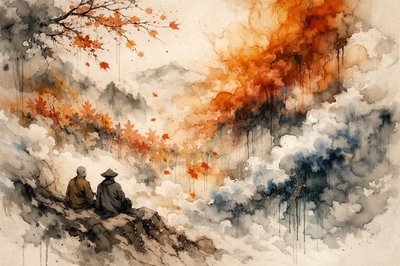
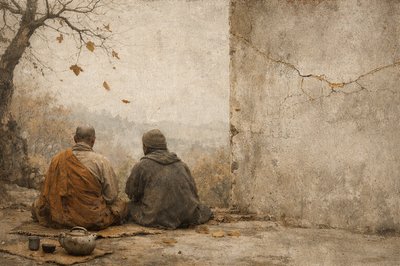
I sat, long ago, on an Asian hill with a Shakya Mundi friend, and watched the autumn leaves fall down from high above, giants in the forest casting off their wakefulness, falling progressively into winter’s long, white sleep. 

“The important thing to know about trees” he said, “is that they are most beautiful in autumn; just before the winter snow.  They live and grow through the entire year just for these brief moments of stunning beauty.  We are like that.” He said, “but we have only one autumn, and a very long winter.”
Express without words “And God said, Let the waters bring forth abundantly the moving creature that hath life, and fowl that may fly above the earth in the open firmament of heaven.” (Genesis 1:20, KJV)
I sat, long ago, on an Asian hill with a Shakya Mundi friend, and watched the autumn leaves fall down from high above, giants in the forest casting off their wakefulness, falling progressively into winter’s long, white sleep. 

“The important thing to know about trees” he said, “is that they are most beautiful in autumn; just before the winter snow.  They live and grow through the entire year just for these brief moments of stunning beauty.  We are like that.” He said, “but we have only one autumn, and a very long winter.”
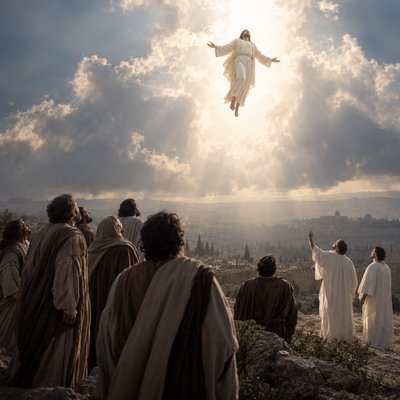
Acts 1:6-11 JUB
(6)  ¶ Then those that were come together asked of him, saying, Lord, wilt thou at this time restore again the kingdom to Israel?
(7)  And he said unto them, It is not for you to know the times or the seasons, which the Father has put under his authority only.
(8)  But ye shall receive the virtue of the Holy Spirit which shall come upon you, and ye shall be witnesses unto me both in Jerusalem and in all Judaea and in Samaria and unto the uttermost part of the earth.
(9)  And when he had spoken these things, while they beheld, he was taken up; and a cloud received him out of their sight.
(10)  And while they looked steadfastly toward heaven as he went up, behold, two men stood by them in white apparel,
(11)  who also said, Ye men of Galilee, what do ye stand gazing at up into heaven? This same Jesus, who is taken up from you into heaven, shall so come in like manner as ye have seen him go into heaven.
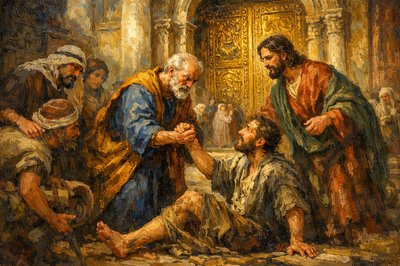
First century Jerusalem at the "gate beautiful" to the temple grounds.  Peter and John were going up to the temple at the hour of prayer, the ninth hour. And a man lame from birth was being carried, whom they laid daily at the gate of the temple that is called the Beautiful Gate to ask alms of those entering the temple. Seeing Peter and John about to go into the temple, he asked to receive alms. And Peter directed his gaze at him, as did John, and said, “Look at us.” And he fixed his attention on them, expecting to receive something from them. But Peter said, “I have no silver and gold, but what I do have I give to you. In the name of Jesus Christ of Nazareth, rise up and walk!” And he took him by the right hand and raised him up, and immediately his feet and ankles were made strong.
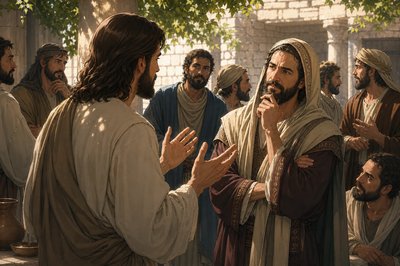
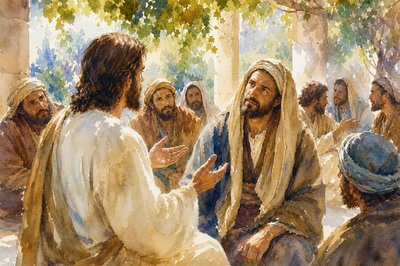
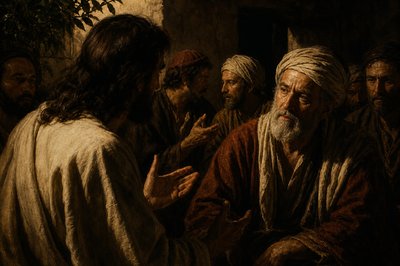
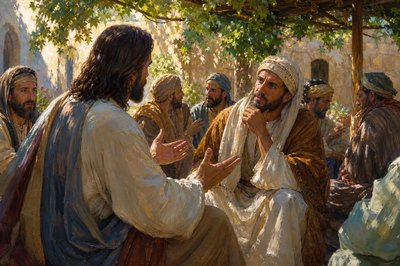
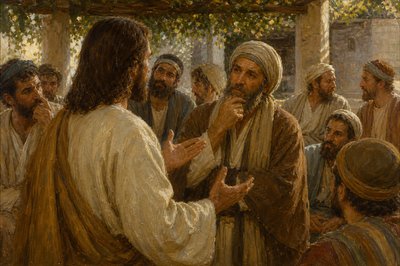
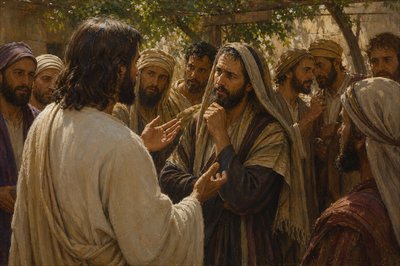
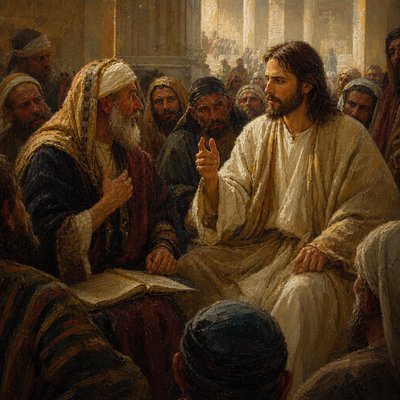
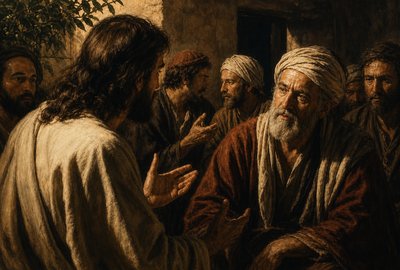
“And one of the scribes came up and heard them disputing with one another, and seeing that he answered them well, asked him, “Which commandment is the most important of all?” Jesus answered, “The most important is, ‘Hear, O Israel: The Lord our God, the Lord is one. And you shall love the Lord your God with all your heart and with all your soul and with all your mind and with all your strength.’ The second is this: ‘You shall love your neighbor as yourself.’ There is no other commandment greater than these.” And the scribe said to him, “You are right, Teacher. You have truly said that he is one, and there is no other besides him. And to love him with all the heart and with all the understanding and with all the strength, and to love one’s neighbor as oneself, is much more than all whole burnt offerings and sacrifices.” And when Jesus saw that he answered wisely, he said to him, “You are not far from the kingdom of God.”  Jesus stands among His disciples in a shady patio area outdoors talking to this scribe.  His disciples wonder at the exchange.  Several of them are also engaged in conversations set around the one Jesus is having.  We see Jesus from the left rear quarter, where we can see only the back of His head and the side of his face.  His hands are expressing His point.  The scribe to whom He speaks has a poignant, thoughtful expression.
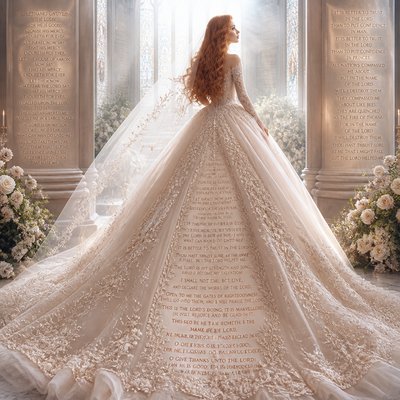
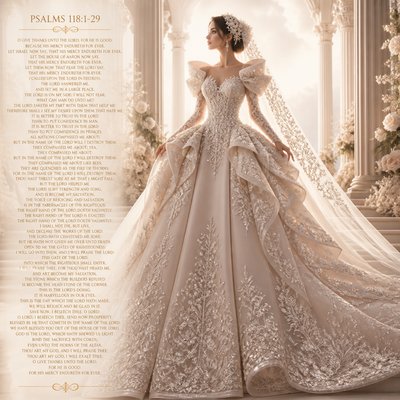
“O give thanks unto the LORD; for he is good: because his mercy endureth for ever. Let Israel now say, that his mercy endureth for ever. Let the house of Aaron now say, that his mercy endureth for ever. Let them now that fear the LORD say, that his mercy endureth for ever. I called upon the LORD in distress: the LORD answered me, and set me in a large place. The LORD is on my side; I will not fear: what can man do unto me? The LORD taketh my part with them that help me: therefore shall I see my desire upon them that hate me. It is better to trust in the LORD than to put confidence in man. It is better to trust in the LORD than to put confidence in princes. All nations compassed me about: but in the name of the LORD will I destroy them. They compassed me about; yea, they compassed me about: but in the name of the LORD I will destroy them. They compassed me about like bees; they are quenched as the fire of thorns: for in the name of the LORD I will destroy them. Thou hast thrust sore at me that I might fall: but the LORD helped me. The LORD is my strength and song, and is become my salvation. The voice of rejoicing and salvation is in the tabernacles of the righteous: the right hand of the LORD doeth valiantly. The right hand of the LORD is exalted: the right hand of the LORD doeth valiantly. I shall not die, but live, and declare the works of the LORD. The LORD hath chastened me sore: but he hath not given me over unto death. Open to me the gates of righteousness: I will go into them, and I will praise the LORD: This gate of the LORD, into which the righteous shall enter. I will praise thee: for thou hast heard me, and art become my salvation. The stone which the builders refused is become the head stone of the corner. This is the LORD'S doing; it is marvellous in our eyes. This is the day which the LORD hath made; we will rejoice and be glad in it. Save now, I beseech thee, O LORD: O LORD, I beseech thee, send now prosperity. Blessed be he that cometh in the name of the LORD: we have blessed you out of the house of the LORD. God is the LORD, which hath shewed us light: bind the sacrifice with cords, even unto the horns of the altar. Thou art my God, and I will praise thee: thou art my God, I will exalt thee. O give thanks unto the LORD; for he is good: for his mercy endureth for ever.” (Psalms 118:1-29, KJVA) bride must have long red hair down to her waist
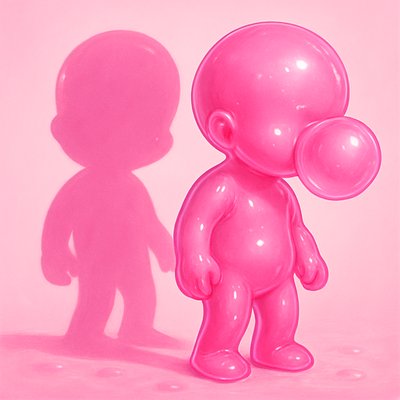
I have a little shadow that goes in and out with me,
And what can be the use of him is more than
I can see.
He is very, very like me from the heels up to the head;
And I see him jump before me, when I jump into my bed.
The funniest thing about him is the way he likes to grow—
Not at all like proper children, which is always very slow;
For he sometimes shoots up taller like an india-rubber ball,
And he sometimes goes so little that there’s none of him at all.
He hasn’t got a notion of how children ought to play,
And can only make a fool of me in every sort of way.
He stays so close behind me, he’s a coward you can see;
I’d think shame to stick to nursie as that shadow sticks to me!
One morning, very early, before the sun was up,
I rose and found the shining dew on every buttercup;
But my lazy little shadow, like an arrant sleepy-head,
Had stayed at home behind me and was fast asleep in bed.
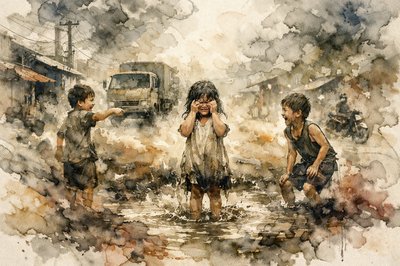
Southeast Asia.  Modern day.  Nearer to the city now, the bus thumps and bumps to a slower pace.
Grinding gears mark spaces between dirty children, playing obliviously in the road.
Neither village nor metropolis, outskirts have no identity:
Just a blurry line of encroachment;
a temporary half-life on the way to something more.

Dust springs up from the tires of trucks headed both ways on the road.
A little girl stands crying in a mud puddle; her brothers laughing from the sides.
She has to learn rejection to participate in this brutal, belonging dance.
A little life, and a little death
for a product truly worthy of its name: a good woman is hard to find.
The monster (Mt. San Gorgonio) rises in the North, 	all hoary-frost above behemoth shoulders.  Snake-like clouds adorning her, I crane my neck, Gaze fixed past the big white house toward uplifted boulders.
And at the South, like his namesake martyr, Hyacinth (Mt. San Jacinto) has lost his head in cloud.  Burned bones against a blue backdrop
	he wears that legacy proud.  Between the two, another sunrise gleams and beams of brilliant, white-hot day flash forth:  Accentuate Sonora’s west extremes, and last night’s moon forgot to go away.
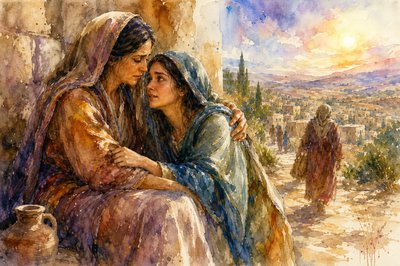
From the Book of Ruth:  "“would you wait for them till they were grown? Would you restrain yourselves from having husbands? No, my daughters; for it grieves me very much for your sakes that the hand of the LORD has gone out against me!” Then they lifted up their voices and wept again; and Orpah kissed her mother-in-law, but Ruth clung to her. And she said, “Look, your sister-in-law has gone back to her people and to her gods; return after your sister-in-law.” But Ruth said: “Entreat me not to leave you, Or to turn back from following after you; For wherever you go, I will go; And wherever you lodge, I will lodge; Your people shall be my people, And your God, my God. Where you die, I will die, And there will I be buried. The LORD do so to me, and more also, If anything but death parts you and me.”"
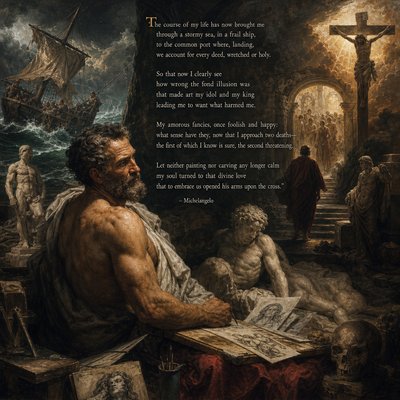
"The course of my life has now brought me
through a stormy sea, in a frail ship,
to the common port where, landing,
we account for every deed, wretched or holy.

So that now I clearly see
how wrong the fond illusion was
that made art my idol and my king
leading me to want what harmed me.

My amorous fancies, once foolish and happy:
what sense have they, now that I approach two deaths-
the first of which I know is sure, the second threatening.

Let neither painting nor carving any longer calm
my soul turned to that divine love
that to embrace us opened his arms upon the cross." - Michelangelo
This day, though, I hiked another autumn wood.  Eastern Europe ancient; overgrown.  So thick the view was dark at just a few feet off the path.  All red and yellow; orange and brown, a million trees, each one in blazing preparation for long, frozen winter.  I cannot but recall my friend’s words, lasting long, though he did not, and the instant truth that follows.  Looking upward at the fiery canopy, matched against the bright cerulean sky beyond, I embrace autumn!  Winter surely comes one day, but spring beyond.  I have a winter to prepare for, but it is not yet.
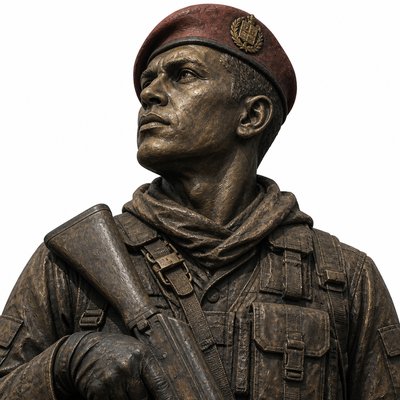
A medium-close up shot, from the chest up, of the bronze sculpture of the Bolivarian soldier with a red beret, exactly as seen in image_1.png. The soldier has a stoic facial expression and is looking upwards and to the left. He is wearing a full field uniform, a detailed tactical vest with multiple pouches and straps, a loose scarf or neckerchief, and a black work glove on his right hand, which is gripping the rifle stock. The red beret has a gold insignia on the side. The lighting highlights the texture of the dark bronze, with subtle reflections. Isolated against a pure white studio background.
“And one of the scribes came up and heard them disputing with one another, and seeing that he answered them well, asked him, “Which commandment is the most important of all?” Jesus answered, “The most important is, ‘Hear, O Israel: The Lord our God, the Lord is one. And you shall love the Lord your God with all your heart and with all your soul and with all your mind and with all your strength.’ The second is this: ‘You shall love your neighbor as yourself.’ There is no other commandment greater than these.” And the scribe said to him, “You are right, Teacher. You have truly said that he is one, and there is no other besides him. And to love him with all the heart and with all the understanding and with all the strength, and to love one’s neighbor as oneself, is much more than all whole burnt offerings and sacrifices.” And when Jesus saw that he answered wisely, he said to him, “You are not far from the kingdom of God.” And after that no one dared to ask him any more questions.” (Mark 12:28–34, ESV)
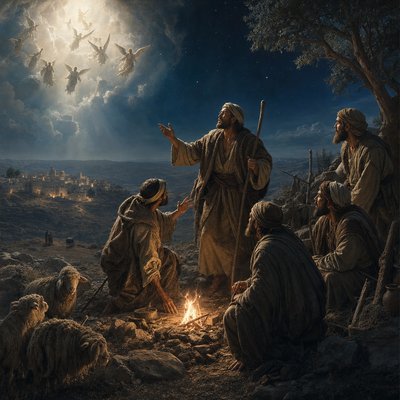
And it came to pass, as the angels were gone away from them into heaven, the shepherds said one to another, Let us now go even unto Bethlehem, and see this thing which is come to pass, which the Lord hath made known unto us.
(Luke 2:15 KJV)
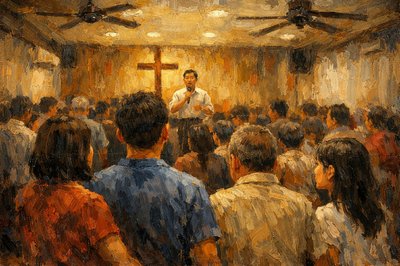
Inside an informal church in Kuala Lumpur.  Wing Sun and his father and mother, along with Siu Zi, his friend from school are there together.  We are standing in the back of the room, and there are many more people than there were in the London church.  There are people of different ethnicities, but mostly Chinese Malaysian.  The Pastor, a Chinese man, is standing up front speaking to the congregation, facing them.  The atmosphere is hot and sweaty, with ceiling fans running, but still welcoming, Wing Sun is happy that his family is together and also that his friend Siu Zi, who he has just learned is a Christian, can be there too.
“O give thanks unto the LORD; for he is good: because his mercy endureth for ever. Let Israel now say, that his mercy endureth for ever. Let the house of Aaron now say, that his mercy endureth for ever. Let them now that fear the LORD say, that his mercy endureth for ever. I called upon the LORD in distress: the LORD answered me, and set me in a large place. The LORD is on my side; I will not fear: what can man do unto me? The LORD taketh my part with them that help me: therefore shall I see my desire upon them that hate me. It is better to trust in the LORD than to put confidence in man. It is better to trust in the LORD than to put confidence in princes. All nations compassed me about: but in the name of the LORD will I destroy them. They compassed me about; yea, they compassed me about: but in the name of the LORD I will destroy them. They compassed me about like bees; they are quenched as the fire of thorns: for in the name of the LORD I will destroy them. Thou hast thrust sore at me that I might fall: but the LORD helped me. The LORD is my strength and song, and is become my salvation. The voice of rejoicing and salvation is in the tabernacles of the righteous: the right hand of the LORD doeth valiantly. The right hand of the LORD is exalted: the right hand of the LORD doeth valiantly. I shall not die, but live, and declare the works of the LORD. The LORD hath chastened me sore: but he hath not given me over unto death. Open to me the gates of righteousness: I will go into them, and I will praise the LORD: This gate of the LORD, into which the righteous shall enter. I will praise thee: for thou hast heard me, and art become my salvation. The stone which the builders refused is become the head stone of the corner. This is the LORD'S doing; it is marvellous in our eyes. This is the day which the LORD hath made; we will rejoice and be glad in it. Save now, I beseech thee, O LORD: O LORD, I beseech thee, send now prosperity. Blessed be he that cometh in the name of the LORD: we have blessed you out of the house of the LORD. God is the LORD, which hath shewed us light: bind the sacrifice with cords, even unto the horns of the altar. Thou art my God, and I will praise thee: thou art my God, I will exalt thee. O give thanks unto the LORD; for he is good: for his mercy endureth for ever.” (Psalms 118:1-29, KJVA)
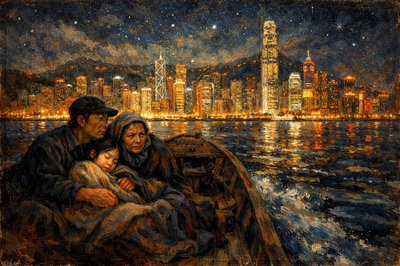
Mr. Chen has arranged for the little family  to cross secretly into Hong Kong—a place known for its bright skyline and bustling streets. Under the cover of darkness and with careful planning, Siu Zi, her father and Grandmother, along with Mr. Chen have boarded a small boat that carries them silently across the water. The sea is calm, its surface reflecting a tapestry of starlight, as if the heavens themselves are guiding them.  Siu-Zi lies nestled between her father and grandmother, wrapped up in blankets, in the forward part of an open boat with quiet motors propelling them along. Their is an air of mystery and tension.
This day, though, I hiked another autumn wood.  Eastern Europe ancient; overgrown.  So thick the view was dark at just a few feet off the path.  All red and yellow; orange and brown, a million trees, each one in blazing preparation for long, frozen winter.  I cannot but recall my friend’s words, lasting long, though he did not, and the instant truth that follows.  Looking upward at the fiery canopy, matched against the bright cerulean sky beyond, I embrace autumn!  Winter surely comes one day, but spring beyond.  I have a winter to prepare for, but it is not yet.
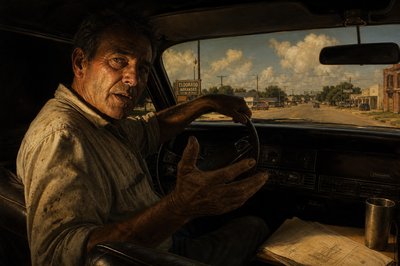
Inside the cab of a 1970 Oldsmobile looking from the passenger seat out toward the road ahead, I see my wise and kindly Uncle Cecil, a building contractor, as he drives from one job to the next and tells me a long story about how things are in his life.  Outside it's a very hot day in Eldorado Arkansas where Cecil builds low-cost housing in rural areas.
Absolutely. Here’s a detailed prompt matching the KING AFFISU 2 poster you uploaded. I’ve kept the visual style, composition, costumes, atmosphere, and typography direction very close to the reference. A strong poster works best when the hero is the clear focal point and the title has its own clean space. 

🎬 KING AFFISU 2 — Movie Poster Prompt

> Create an ultra-realistic cinematic African historical-action movie poster for a film titled “KING AFFISU 2.”

A powerful young Black African king stands prominently in the foreground, occupying the left and center of the frame. He has an intense commanding expression, mouth open as if shouting a battle command, strong facial features, realistic dark skin texture, and a fierce royal presence.

He wears a traditional golden-yellow royal warrior garment draped over one shoulder, a textured yellow ceremonial headband/crown, with several tall fresh green leaves rising from the crown. Around his neck is a dark traditional beaded necklace with a small metallic royal pendant.

Behind him are four African royal guards/warriors, standing in formation at different distances. They wear matching yellow headbands, traditional brown waist garments, and simple white ceremonial body markings. They stand proudly in a natural African landscape, creating depth and scale.

Background: lush tropical African vegetation, earthy brown ground, distant trees, dramatic dark storm clouds covering the sky, sunlight breaking through the clouds, powerful atmospheric contrast, subtle mist and dust in the air.

Lighting: dramatic cinematic lighting, warm golden sunlight hitting the king from the side, deep shadows, strong facial highlights, realistic skin texture, volumetric rays through the clouds, high contrast, subtle golden color grading, epic historical-film atmosphere.

Composition: premium theatrical movie-poster composition, hero extremely prominent in the foreground, supporting characters smaller in the background, strong depth of field, realistic perspective, layered cinematic composition, visually balanced negative space on the upper-right side for the movie title. The poster should feel like an expensive African epic film.

Typography: On the upper-right, place large dramatic three-dimensional weathered stone-and-gold metallic lettering:

KING
AFFISU
2

Above the title, small widely spaced white uppercase text: JAZY FILMS PRESENTS

Under the title: THE SPIRIT OF THE LAND

At the bottom: LEGENDS ARE BORN. EMPIRES ARE BUILT.

Then smaller golden text: COMING SOON

Make the title extremely readable, monumental, embossed, textured, metallic, slightly weathered, with realistic shadows and highlights.

Visual style: photorealistic, cinematic Hollywood-quality African epic, 8K detail, realistic skin pores, realistic fabric texture, natural vegetation, dramatic clouds, volumetric lighting, atmospheric perspective, cinematic depth of field, subtle film grain, HDR, high dynamic range, professional theatrical key art, premium color grading, epic and powerful mood.

Aspect ratio: 2:3 vertical theatrical movie poster.

Important: no cartoon appearance, no plastic skin, no distorted faces, no extra limbs, no duplicated characters, no blurry faces, no misspelled title, no modern buildings, no modern clothing, no futuristic elements.


This follows the same kind of hero-first hierarchy, dramatic contrast, atmospheric depth, and typography-aware composition commonly used in cinematic poster design.
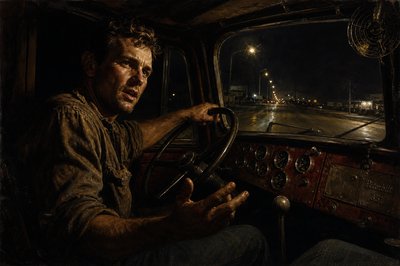
Inside the cab of a 1959 Peterbilt 351 Truck, looking from the passenger seat out toward the road ahead, I see my older brother, Donald, 30 years old, the driver, as he handles the truck and tells me a long story about how things are in his life.
“Neither painting nor sculpture will be able any longer to calm my soul, now turned toward that divine love that opened his arms on the cross to take us in.”
– Michelangelo, Poem 285 (Written in 1554)
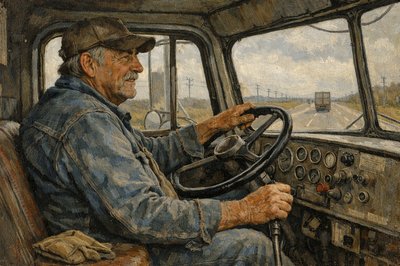
Inside the cab of a 1959 Peterbilt 351 Truck, looking from the passenger seat out toward the road ahead, I see kindly and wise older brother, Donald, the driver, as he handles the truck and tells me a long story about how things are in his life.
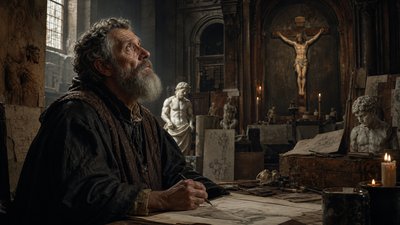
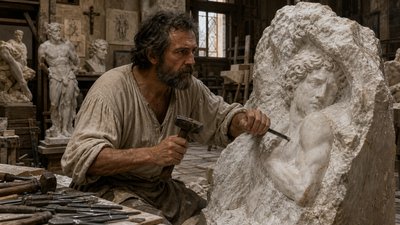
Michelangelo’s intense faith was the primary cause of the greatness of his work. His faith did more than affect the nature of his work—it affected his very thinking on the origin and function of art. Several of his statues portray the struggle of the individual to free himself from matter. He believed that, second only to man, marble was God’s greatest creation and that within each block of marble, there was a figure that God had placed; the job of the sculptor was to release that figure, much like at death our bodies will release our souls.
“And one of the scribes came up and heard them disputing with one another, and seeing that he answered them well, asked him, “Which commandment is the most important of all?” Jesus answered, “The most important is, ‘Hear, O Israel: The Lord our God, the Lord is one. And you shall love the Lord your God with all your heart and with all your soul and with all your mind and with all your strength.’ The second is this: ‘You shall love your neighbor as yourself.’ There is no other commandment greater than these.” And the scribe said to him, “You are right, Teacher. You have truly said that he is one, and there is no other besides him. And to love him with all the heart and with all the understanding and with all the strength, and to love one’s neighbor as oneself, is much more than all whole burnt offerings and sacrifices.” And when Jesus saw that he answered wisely, he said to him, “You are not far from the kingdom of God.”  Jesus stands among His disciples in a shady patio area outdoors talking to this scribe.  His disciples wonder at the exchange.  Several of them are also engaged in conversations set around the one Jesus is having.  We see Jesus from the left rear quarter, where we can see only the back of His head and the side of his face.  His hands are expressing His point.  The scribe to whom He speaks has a poignant, thoughtful expression.