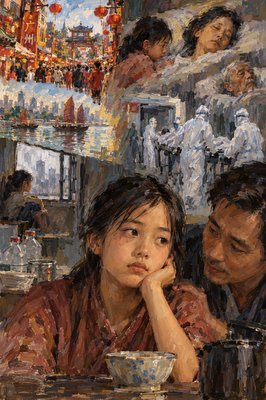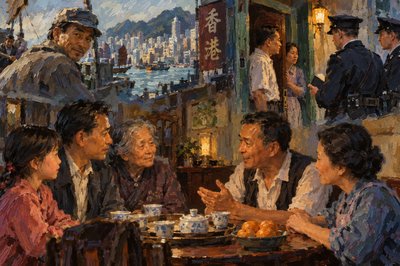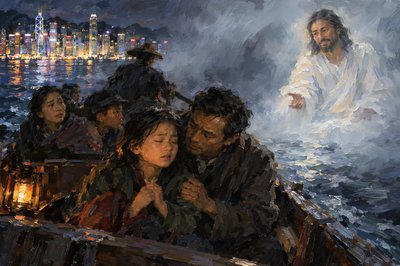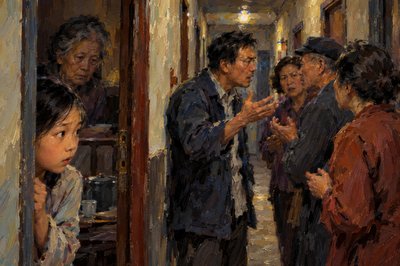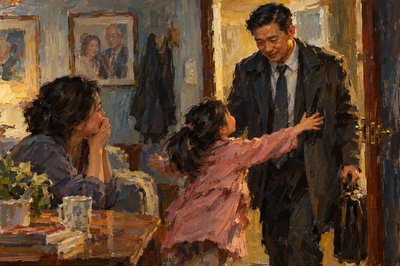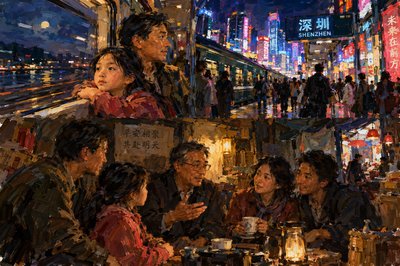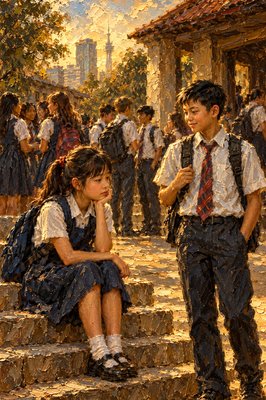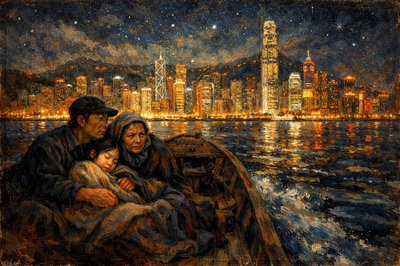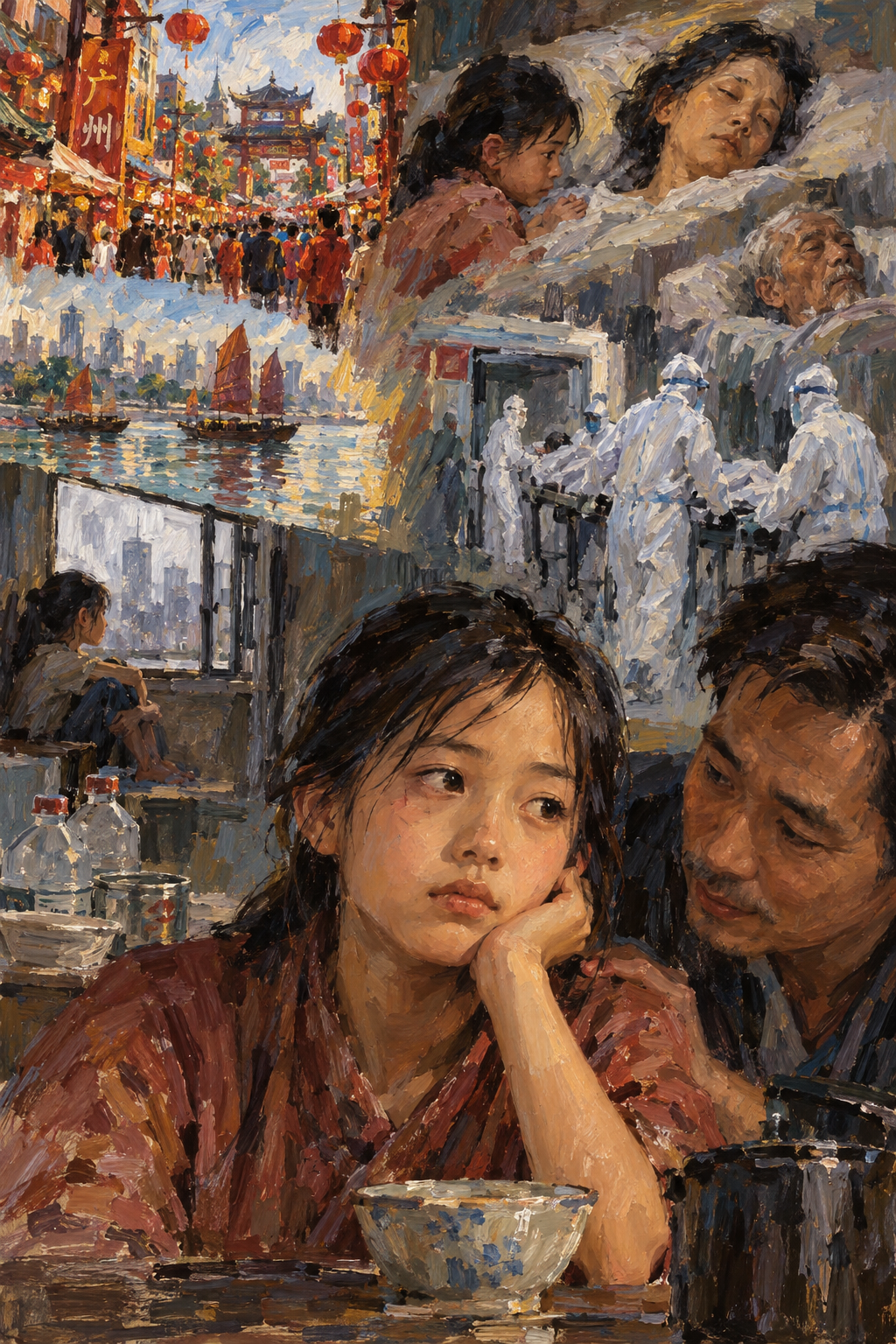
Paint this scene fo rme: Siu-Zi is 12 years old, and her father lovingly calls her Ah Zi, meaning “little seed.” She has always been a quiet, observant child. In the bustling streets of Guangzhou, where her early memories shimmered with bright festivals and quiet moments by the river, life had once seemed full of endless possibility. Until two years ago. She could still see vividly the day her Mother had come home early from her job. She was ill, and while Siu-Zi had seen her ill before, it had never been like this. She remembered with painful clarity the days and nights when her Mother, and then her Grandfather, had lay in bed, hardly moving, barely able to breathe. And then the terrible sadness of the day they were taken by the doctors – were they doctors? They seemed more like policemen in white uniforms! – to the hospital. Siu-Zi never saw either of them again. And it wasn’t just in her home, but in many homes in her part of the city, and then, she learned later, all over the country, something her Father called a pandemic was breaking up families, making mothers and fathers, and grandmothers and grandfathers, disappear. Siu-Zi and her Father were locked in their apartment for a very long time, unable to go outside. They scarcely had enough water to drink, and not nearly enough food to eat. After those terrible days, a deep, silent sorrow had settled over the family.
See More