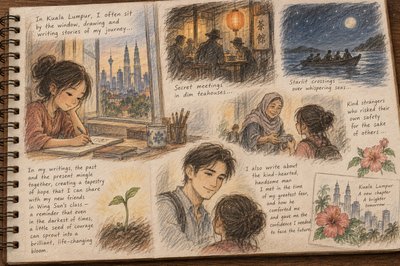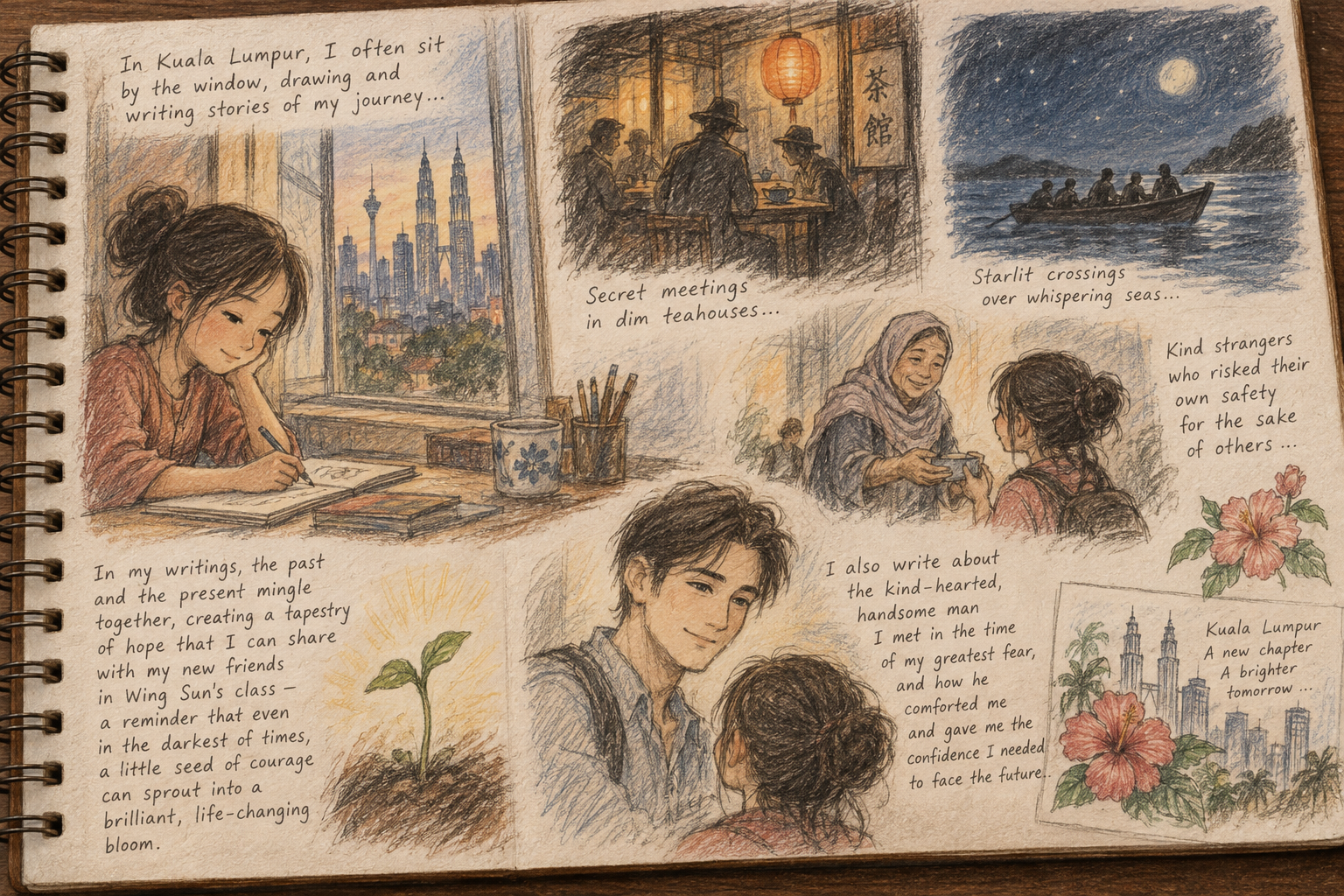
As the days turned into weeks in Kuala Lumpur, Ah Zi would often sit by the window, drawing in her notebook and writing stories of her journey. Stories of secret meetings in dim teahouses, of starlit crossings over whispering seas, and of kind strangers who risked their own safety for the sake of others. In her writings, the past and the present mingled together, creating a tapestry of hope that she could share with her new friends in Wing Sun’s class—a reminder that even in the darkest of times, a little seed of courage could sprout into a brilliant, life-changing bloom.  Ah Zi also wrote about the kind-hearted, handsome man she had met in the time of her greatest fear, and how He had comforted her and given her the confidence she needed to face the future.  Show me a page from Siu-Zi's sketchbook and make it look like sketches in colored pencil.
Public

As the days turned into weeks in Kuala Lumpur, Ah Zi would often sit by the window, drawing in her notebook and writing stories of her journey. Stories of secret meetings in dim teahouses, of starlit crossings over whispering seas, and of kind strangers who risked their own safety for the sake of others. In her writings, the past and the present mingled together, creating a tapestry of hope that she could share with her new friends in Wing Sun’s class—a reminder that even in the darkest of times, a little seed of courage could sprout into a brilliant, life-changing bloom. Ah Zi also wrote about the kind-hearted, handsome man she had met in the time of her greatest fear, and how He had comforted her and given her the confidence she needed to face the future. Show me a page from Siu-Zi's sketchbook and make it look like sketches in colored pencil.

Style Used
Hand-Drawn Icon Design preview
Hand-Drawn Icon Designby @stylecreator
Organic, imperfect icons with artistic character featuring sketch-like qualities and human touch for unique brand personality.

See More

As the days turned into weeks in Kuala Lumpur, Ah Zi would often sit by the window, drawing in her notebook and writing stories of her journey. Stories of secret meetings in dim teahouses, of starlit crossings over whispering seas, and of kind strangers who risked their own safety for the sake of others. In her writings, the past and the present mingled together, creating a tapestry of hope that she could share with her new friends in Wing Sun’s class—a reminder that even in the darkest of times, a little seed of courage could sprout into a brilliant, life-changing bloom.  Ah Zi also wrote about the kind-hearted, handsome man she had met in the time of her greatest fear, and how He had comforted her and given her the confidence she needed to face the future.  Show me a page from Siu-Zi's sketchbook and make it look like sketches in colored pencil.
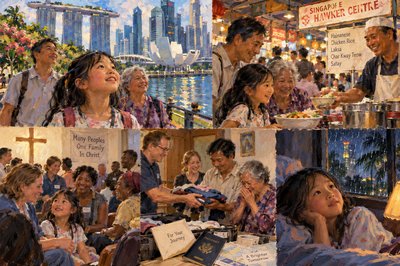
Paint this scene: Singapore was like stepping into a dream for Siu-Zi. Everything was new—the clean streets, the orderly gardens, and the friendly smiles of strangers, things she had only ever seen on television. In a modest hotel near a bustling hawker centre, she discovered the tastes and smells of dishes that were both strange and delightful. For a few weeks, she and her family settled into a quiet rhythm. Siu- Zi made tentative friends at a local church, where she listened wide-eyed to stories of many other people who had traveled from far-off lands, seeking freedom and safety. Each tale, woven with hope and resilience, whispered promises of a safer, kinder world.  They met missionaries there who said they had been praying for Siu-Zi and her family.  Siu-Zi’s grandmother was very moved by their faithfulness, and father was overwhelmed by their gifts of clothing, so they would no longer look like Chinese refugees, but a proper Asian family on holiday, and enough money to continue their journey, a pre-arranged place to stay and a job to do when they got there.
Every night, as the tropical rain tapped gently on the window, Ah Zi lay awake imagining a future free from fear—a future where her father’s faith could shine without the dark threat of government officers taking them away. In Singapore, she learned that sometimes, even in moments of deep loss and uncertainty, God has a mysterious way of planting new seeds of hope and renewing life.
Paint this scene fo rme:  At length, they reached a plan in which Ah Zi's father would ask for a leave of absence.  It was understandable because of the loss of his wife and father-in-law.  He would need time to rearrange his life and make a way to care for Siu-Zi.
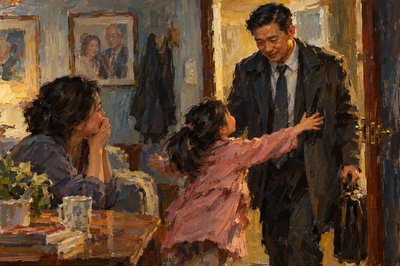
Siu Zi spent several weeks wondering each day if Father would come home from work, tension mounting and the apartment becoming more and more quiet, until finally Father would open the door, and the little family would breathe a long sigh of relief.
a cat lounging in a sunlit window
a cliffside city with waterfalls cascading into a misty canyon, wide establishing shot, no people, no text
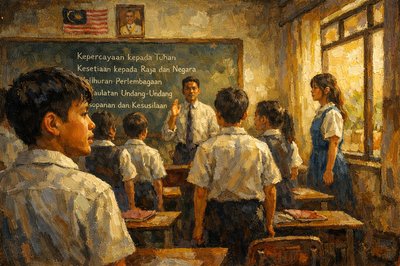
Morning inside the classroom at a private school in Kuala Lumpur before class begins. Students stand next to their desks as the teacher, standing in front, leads them in the usual morning recitations of the five national principles, their voices blending into one:
	"Kepercayaan kepada Tuhan." (Belief in God.)
	"Kesetiaan kepada Raja dan Negara." (Loyalty to the King and Country.)
	"Keluhuran Perlembagaan." (Supremacy of the Constitution.)
	"Kedaulatan Undang-Undang." (Rule of Law.)
	"Kesopanan dan Kesusilaan." (Courtesy and Morality.)
Wing-Sun repeats the words automatically, his eyes drift across the classroom, catching a glimpse of Siu-Zi, the new girl, standing in her usual spot near the window.
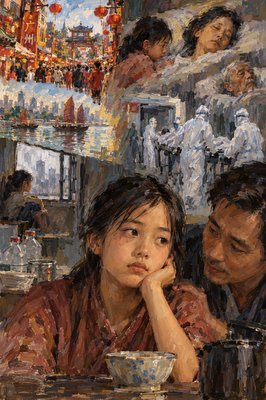
Paint this scene fo rme:  Siu-Zi is 12 years old, and her father lovingly calls her Ah Zi, meaning “little seed.”  She has always been a quiet, observant child. In the bustling streets of Guangzhou, where her early memories shimmered with bright festivals and quiet moments by the river, life had once seemed full of endless possibility. Until two years ago. She could still see vividly the day her Mother had come home early from her job. She was ill, and while Siu-Zi had seen her ill before, it had never been like this. She remembered with painful clarity the days and nights when her Mother, and then her Grandfather, had lay in bed, hardly moving, barely able to breathe. And then the terrible sadness of the day they were taken by the doctors – were they doctors? They seemed more like policemen in white uniforms! – to the hospital. Siu-Zi never saw either of them again. And it wasn’t just in her home, but in many homes in her part of the city, and then, she learned later, all over the country, something her Father called a pandemic was breaking up families, making mothers and fathers, and grandmothers and grandfathers, disappear. Siu-Zi and her Father were locked in their apartment for a very long time, unable to go outside. They scarcely had enough water to drink, and not nearly enough food to eat. After those terrible days, a deep, silent sorrow had settled over the family.
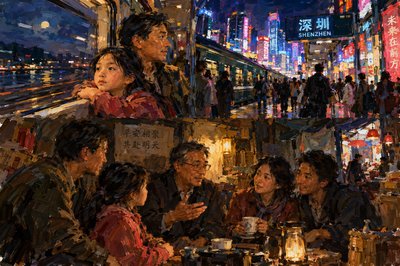
Paint this scene fo rme:  After leaving their home in Guangzhou, Siu Zi and her Father traveled by train to Shenzhen, where the city’s neon lights replaced Guangzhou’s lanterns. The train rumbled through the night, its rhythmic clatter a steady reminder that every mile taken was a step away from the life they once knew—and a step closer to hope, although it still wasn’t clear where or how they would find this new hope. In Shenzhen, they met Mr. Chen once more. In a modest safe house tucked away behind a busy market, he introduced them to a small group of others who, like them, were on the run. There was Mei, a kind woman who had once taught music, and Li, a gentle man whose eyes sparkled with hidden stories. These newfound friends shared whispered words of encouragement, turning fear into a sense of shared purpose.
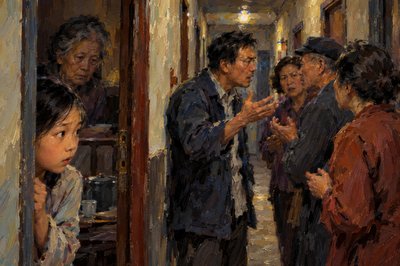
Paint this scene fo rme:  Siu-Zi and her Father were locked in their apartment for a very long time, unable to go outside. They scarcely had enough water to drink, and not nearly enough food to eat. After those terrible days, a deep, silent sorrow had settled over the family. Siu-Zi’s Father and Grandmother were now the adults in her life, and it seemed as if they were at a loss for what to do.  Siu-Zi's Father was very unhappy, not only about the death of his wife and father-in-law, but also about the way the family had been treated by the government officials.  Siu-Zi heard him talking to their neighbor in the hallway outside their apartment, and thought to herself that she had never before heard Father complain about anything. As they talked, two other neighbors came out of their apartments.  The conversation became loud, and it seemed to Siu-Zi that everyone was very upset.