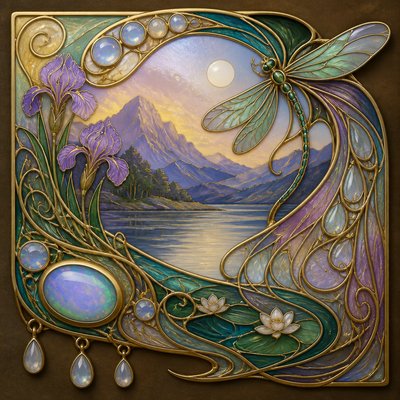
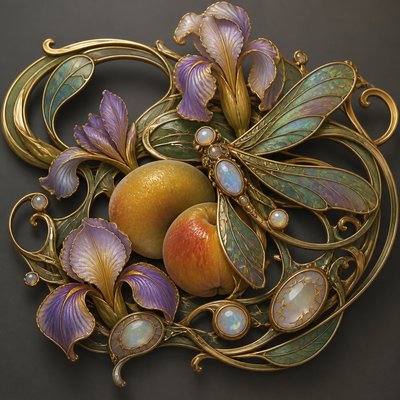
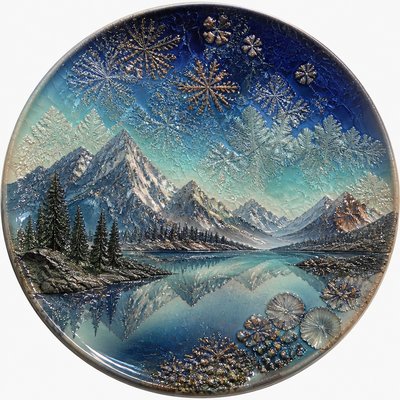
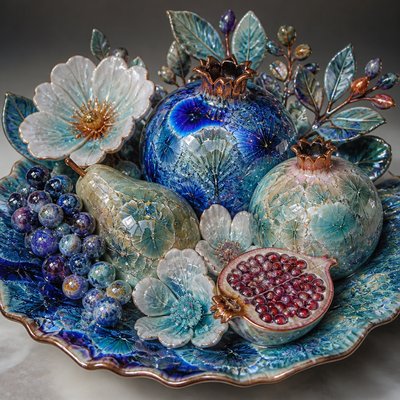
Southwestern Turquoise Jewelry Style
Sky-blue turquoise, stamped sterling silver, and desert craftsmanship inspired by Southwestern Native jewelry traditions.
Instantly rendered in Southwestern Turquoise Jewelry — or transform a photo
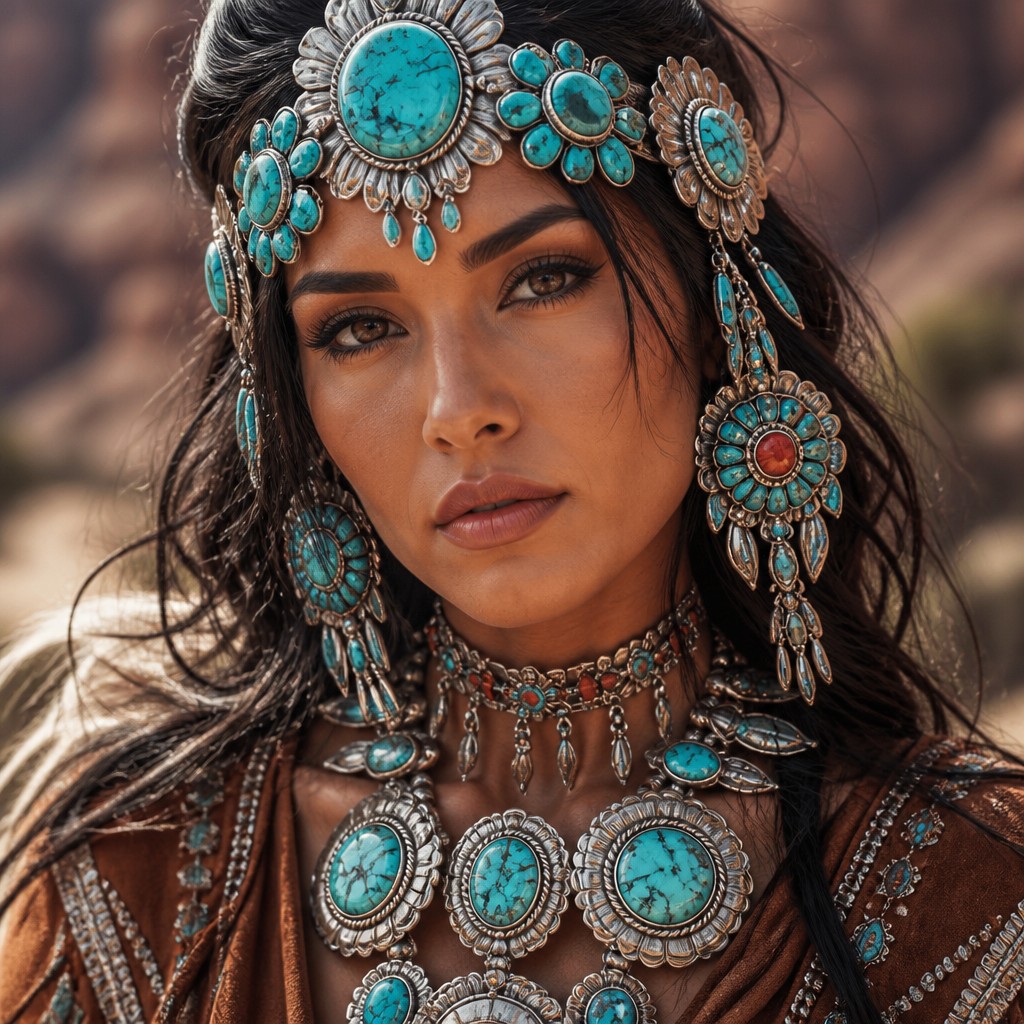
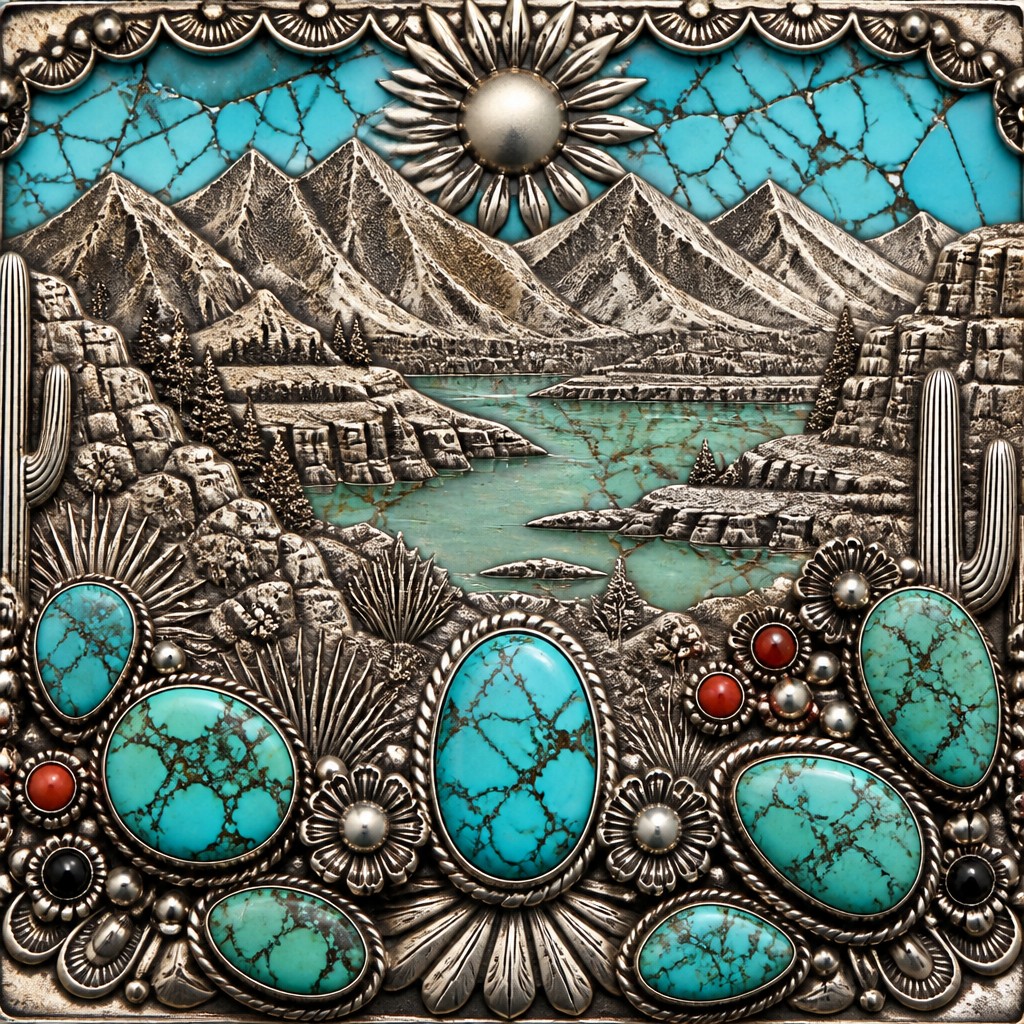
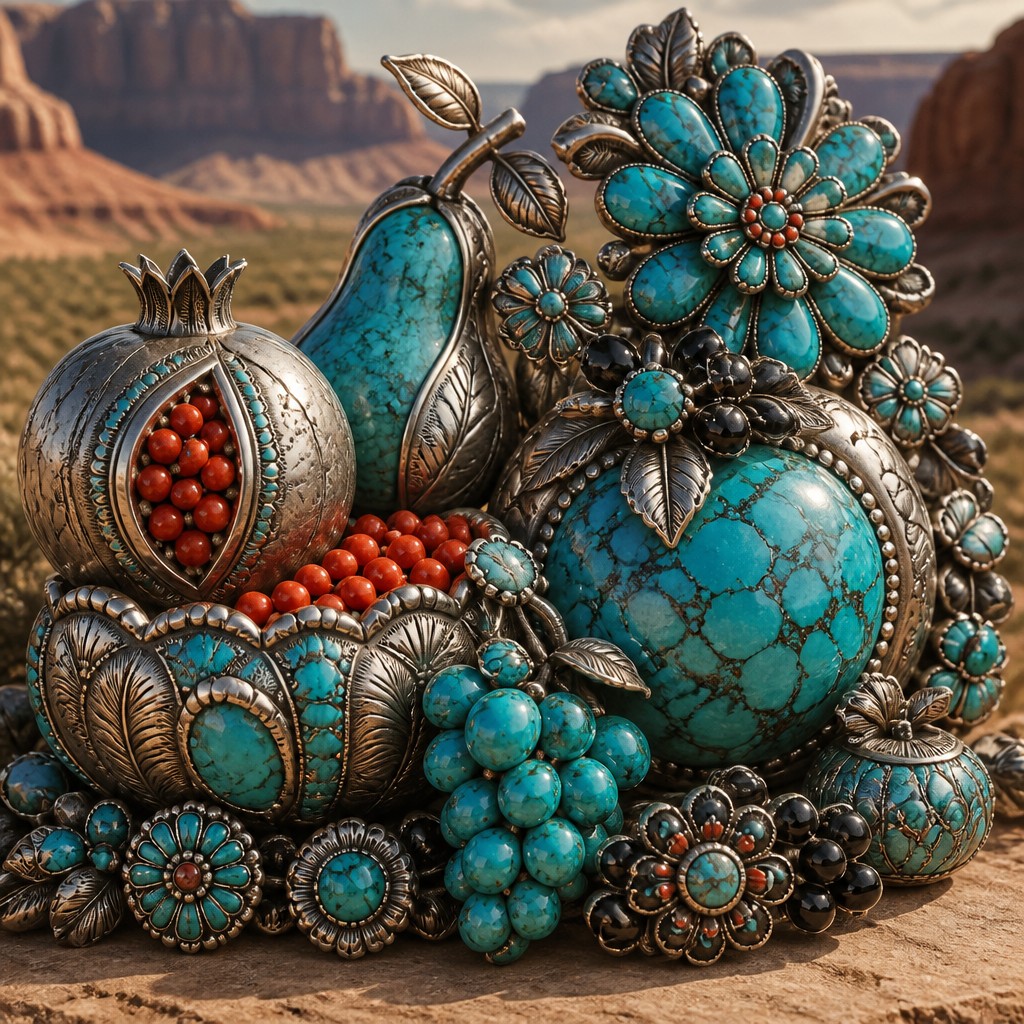
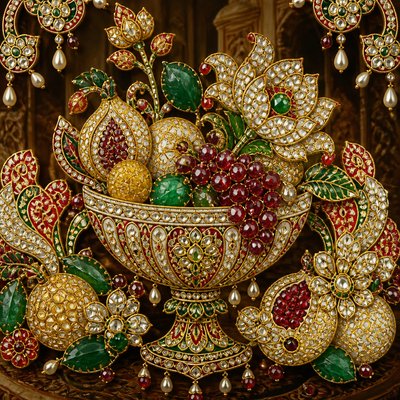
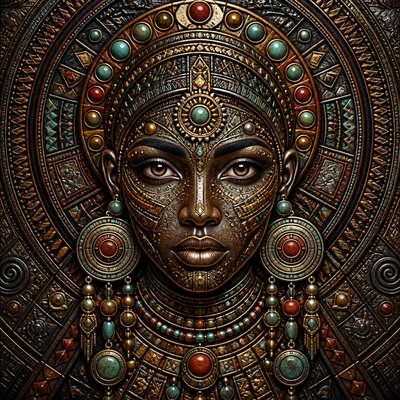
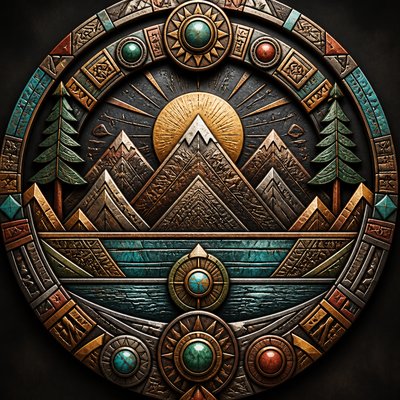
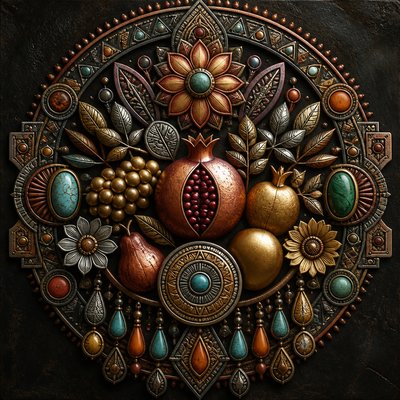
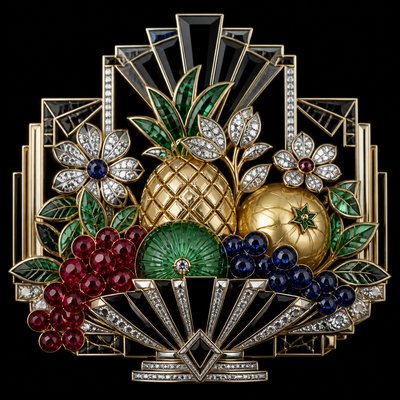
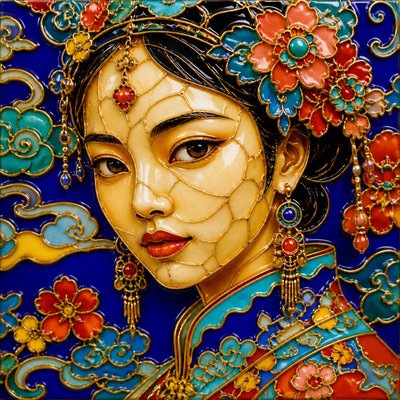
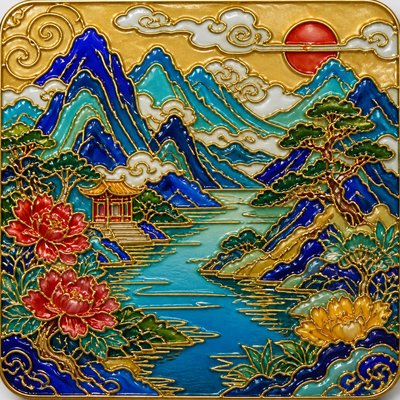
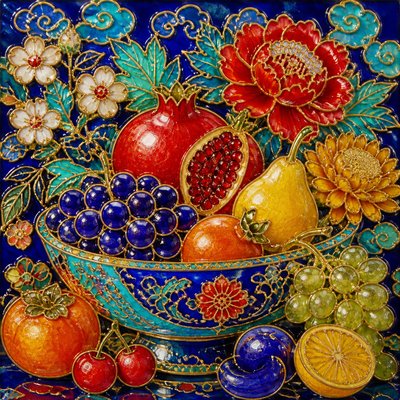
Southwestern Turquoise Jewelry Gallery
Tap any artwork to explore it
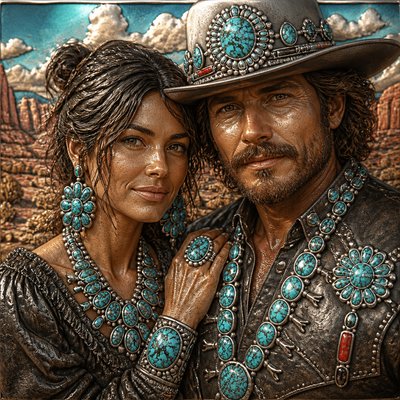
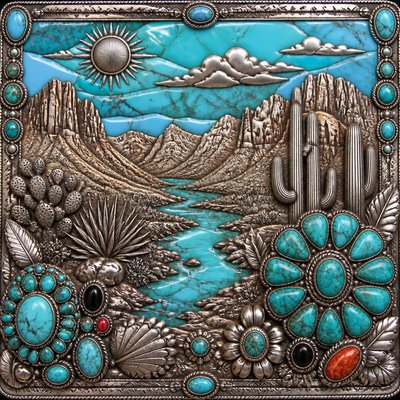
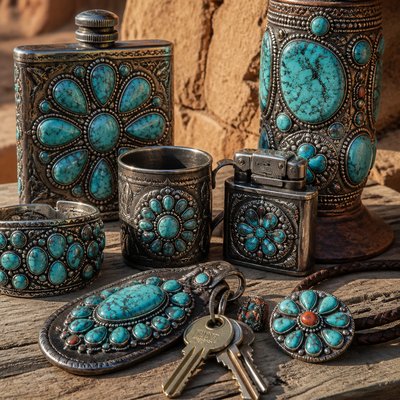
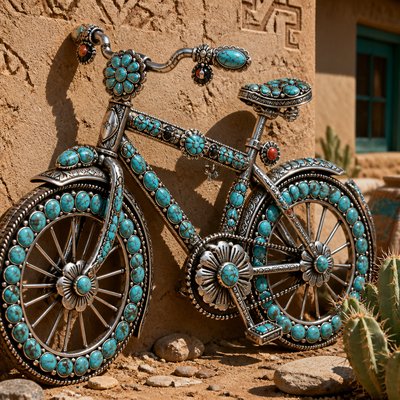
What is Southwestern Turquoise Jewelry Style?
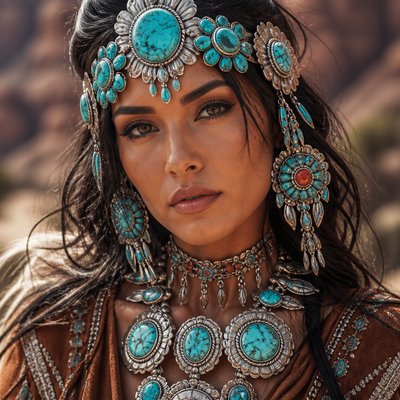
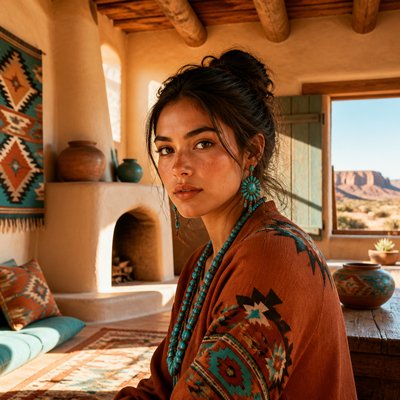
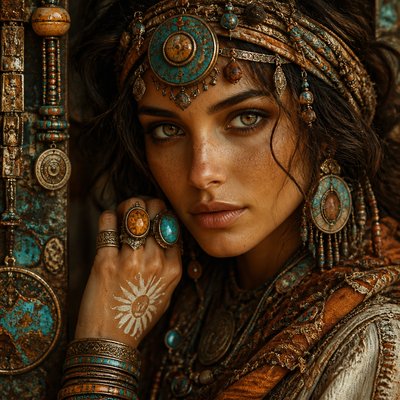
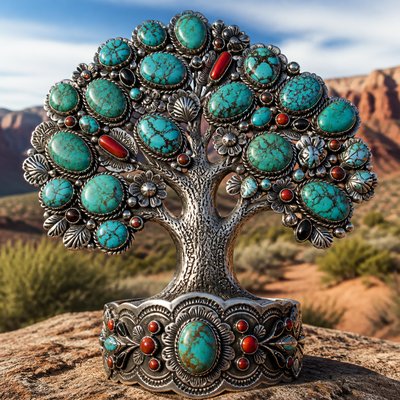
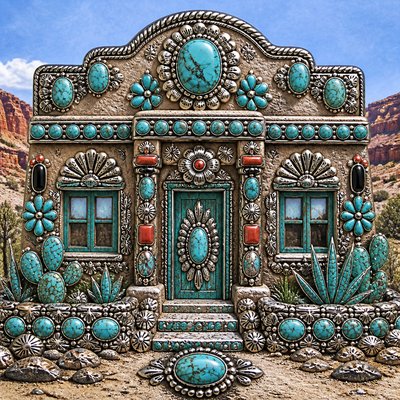
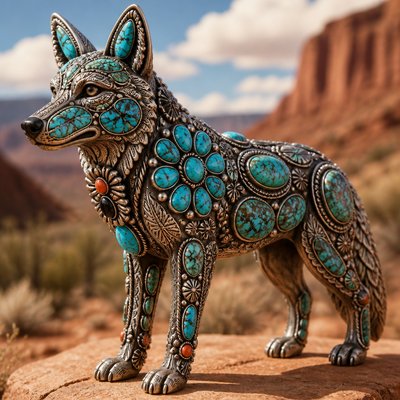
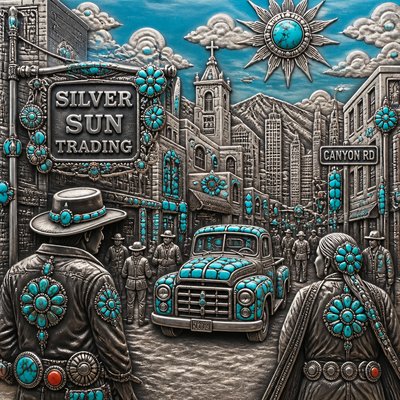
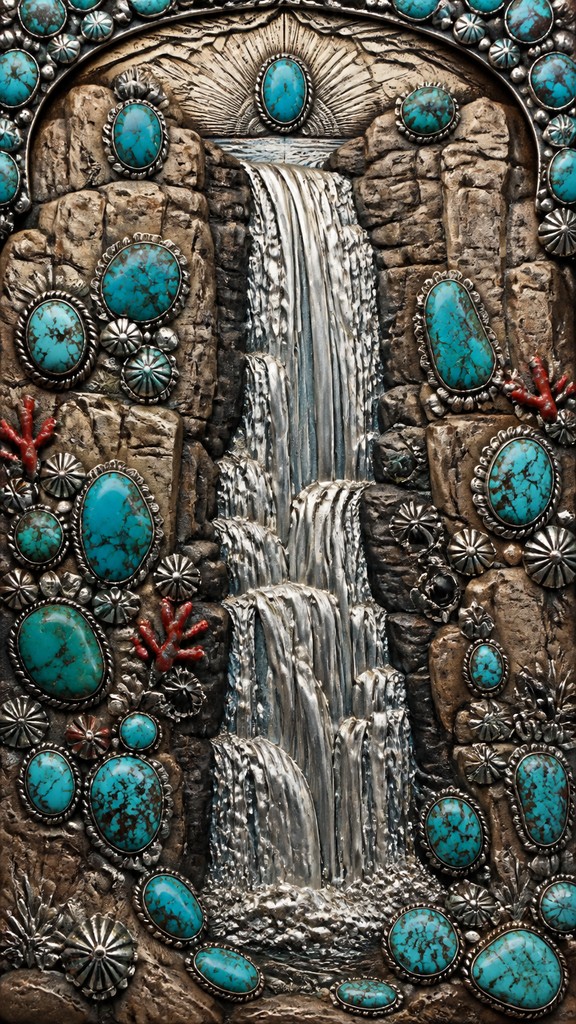
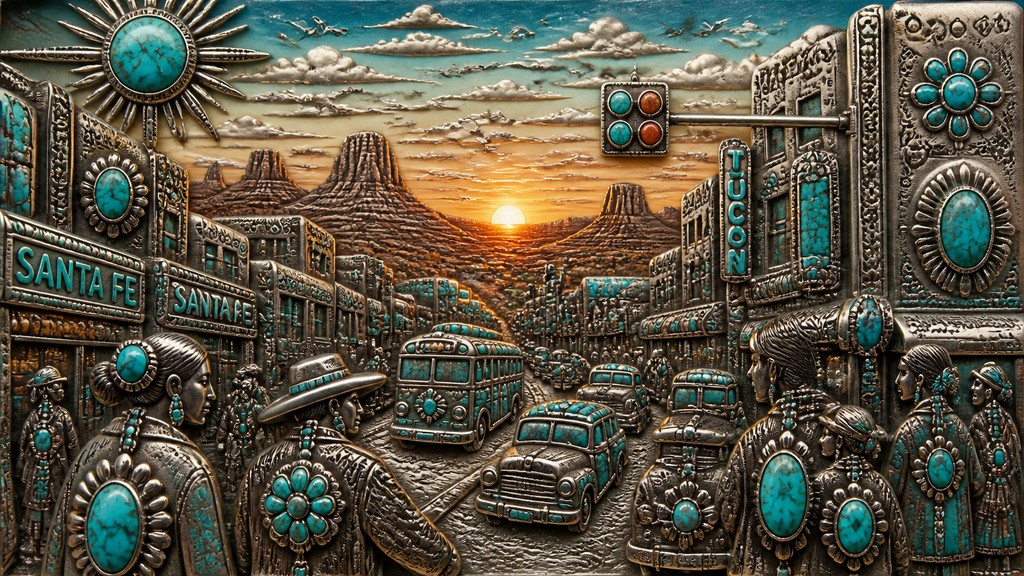
Southwestern Turquoise Jewelry Style is a jewelry aesthetic built around vivid turquoise cabochons set in sterling silver with stamped, repoussé, and hand-hammered surfaces. It is strongly associated with the visual language of the American Southwest: desert light, canyon-country geology, and artisanal metalwork that emphasizes weight, texture, and the natural irregularity of stone.
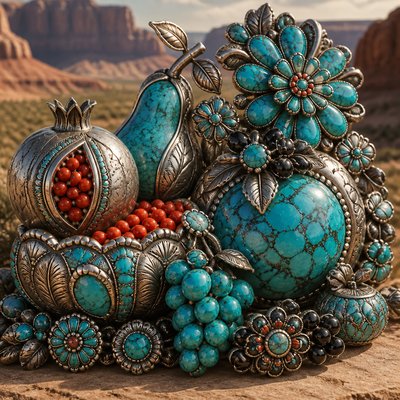
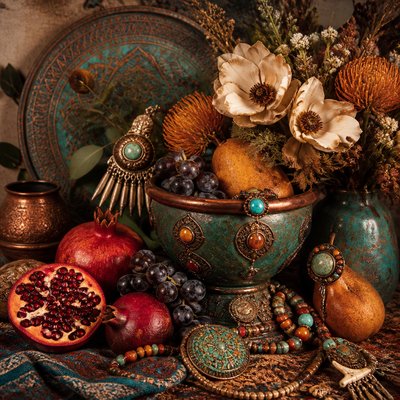
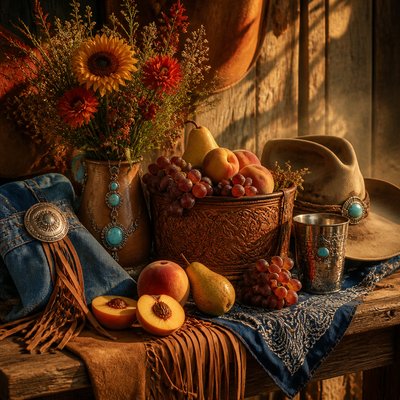
Its visual identity comes from the contrast between cool blue-green turquoise and bright or oxidized silver, often joined by coral, jet, shell, or mother-of-pearl accents. Many pieces are organized as clusters, blossoms, cuffs, rings, and pendants, where the setting itself is as important as the stone. The look feels earthy and storied because it draws on Indigenous silversmithing traditions, regional design vocabularies, and the material character of mined stones and worked metal.
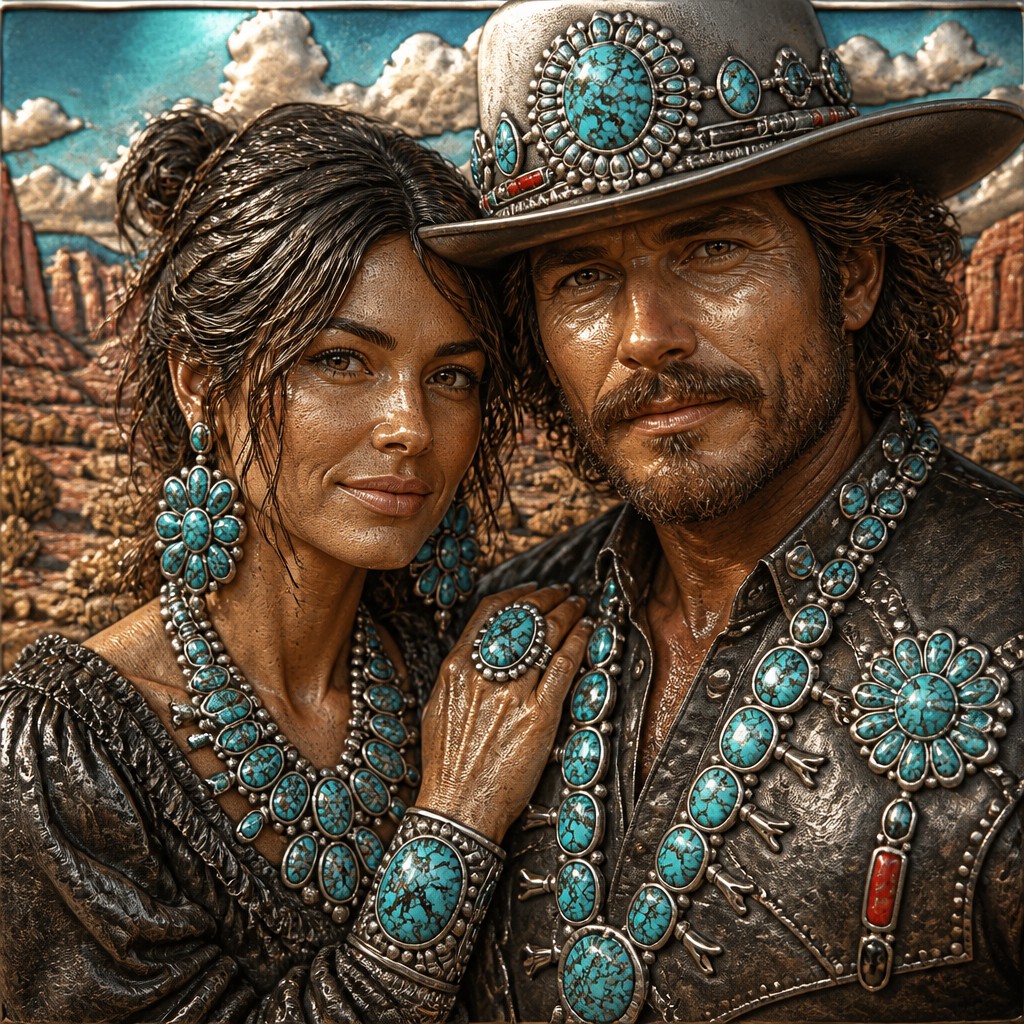
Try It On Your Photos
Upload any photo and convert it into Southwestern Turquoise Jewelry Style — drag the sliders to compare before and after.
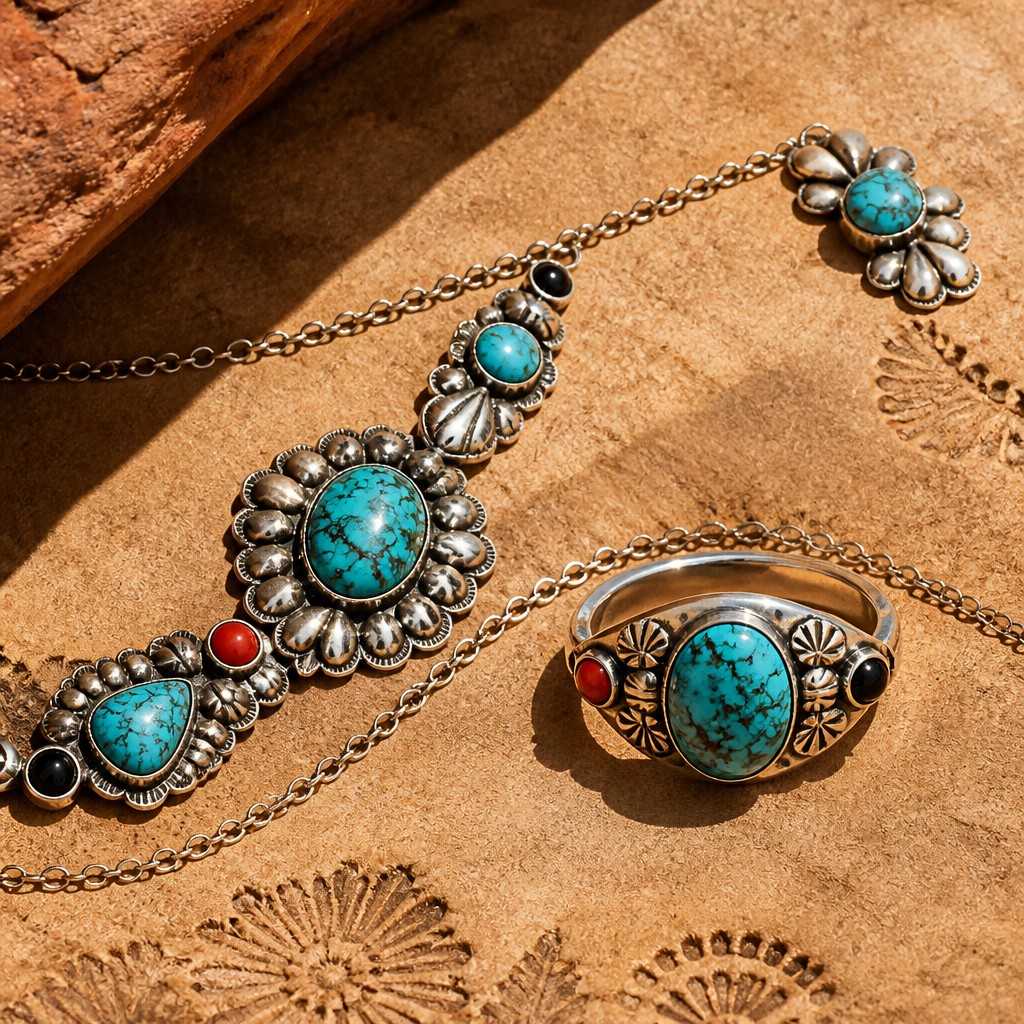
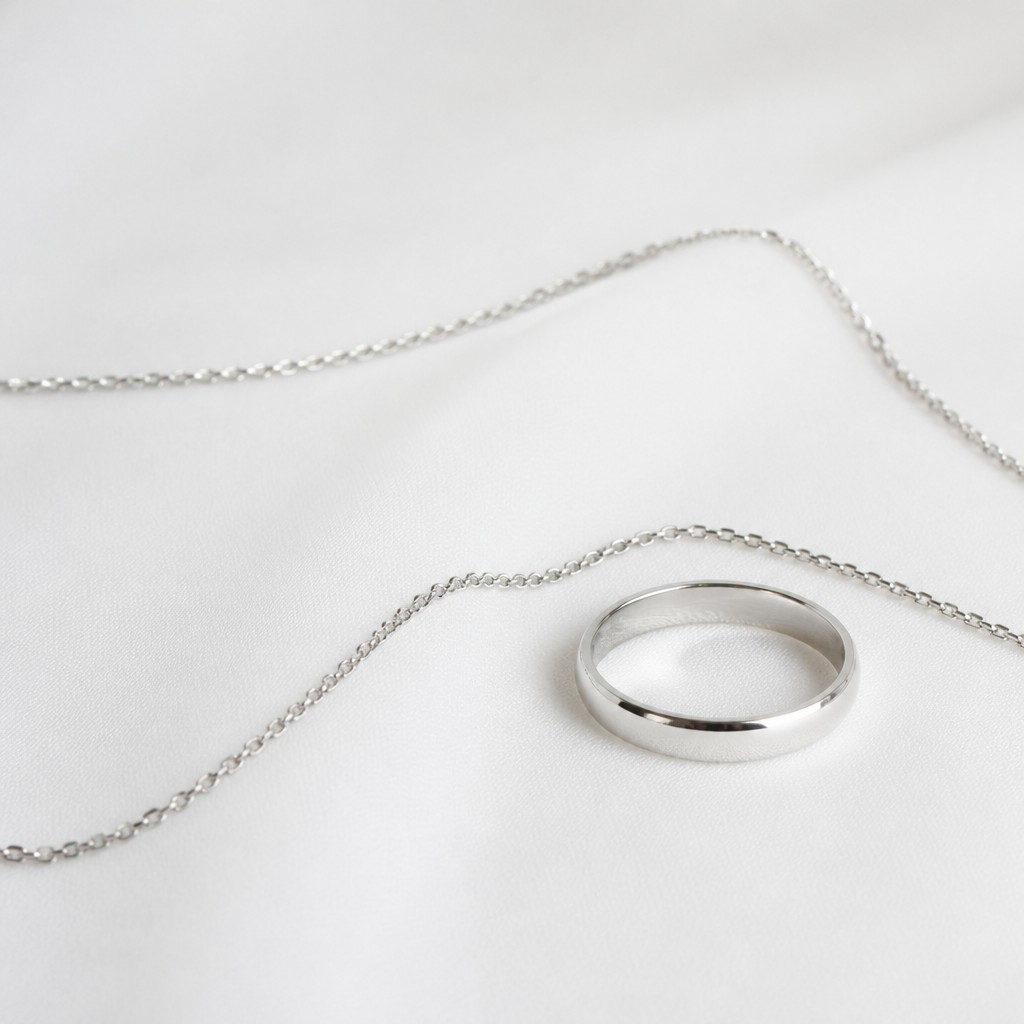
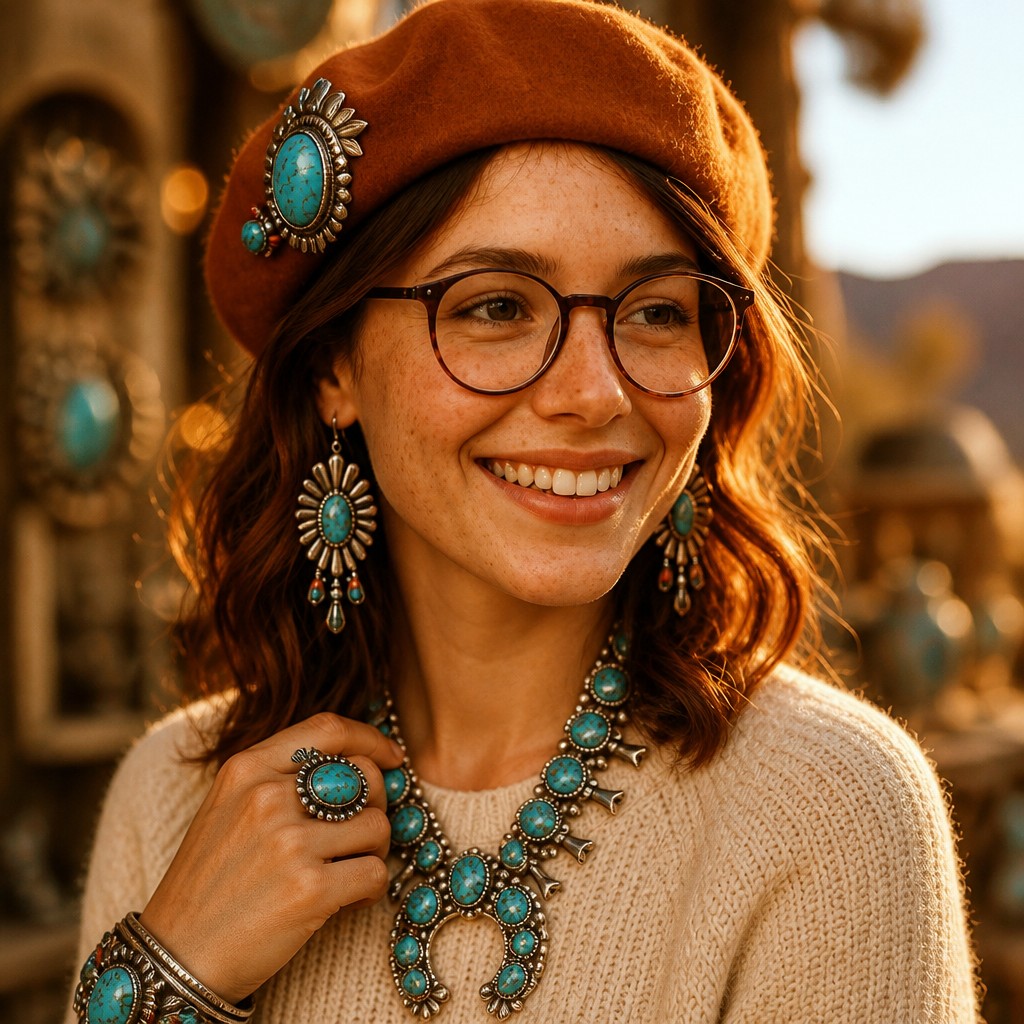

What Defines Southwestern Turquoise Jewelry Style
The signature details, up close
Turquoise as the focal material
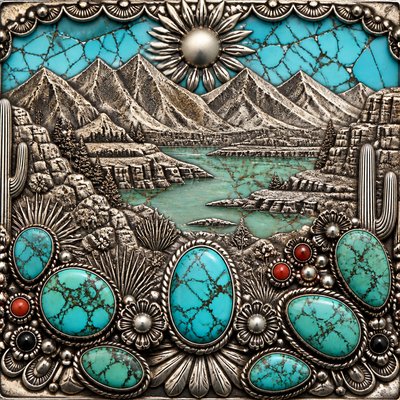
The style centers on turquoise cabochons in sky-blue, blue-green, or green tones, often with visible matrix, spiderweb veining, or natural irregularity. The stone usually provides the color contrast and the emotional center of the piece.
Sterling silver settings
Silver is typically the dominant metal, often left bright, antiqued, or oxidized to deepen the relief. Settings may be substantial and sculptural, with bezels, split shanks, and layered forms that frame the stone rather than hide it.
Stampwork and repoussé texture
Hand-applied decoration such as stamping, chasing, and repoussé gives the surface a tactile, worked character. Repeated motifs, border patterns, and hammered marks communicate craftsmanship and regional tradition.
Cluster and blossom arrangements
Many pieces organize multiple stones into flower-like or clustered compositions. This creates a dense, ornamental silhouette that reads as both botanical and geological.
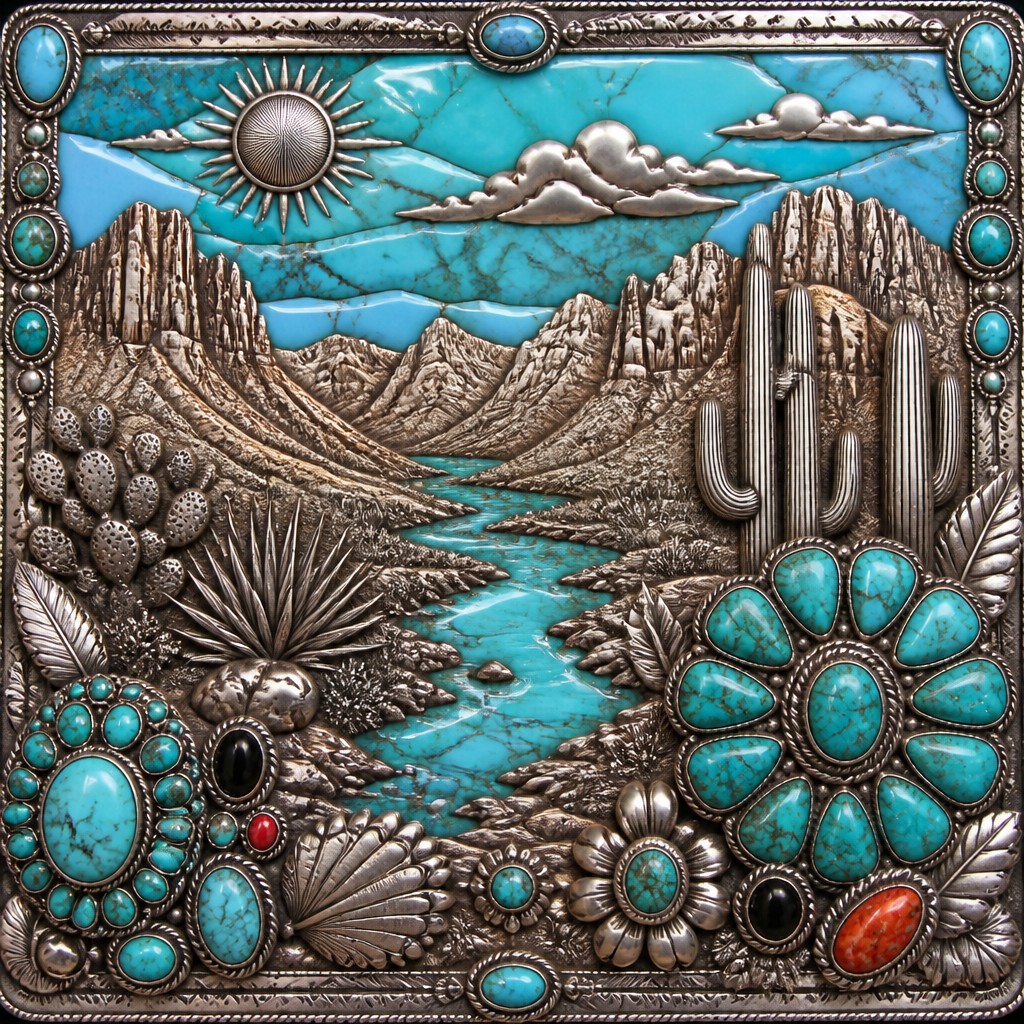
Desert accents and mixed materials
Coral, jet, shell, and occasionally mother-of-pearl may appear as secondary materials. These accents reinforce the earthy palette and connect the jewelry to longstanding Southwestern color combinations.
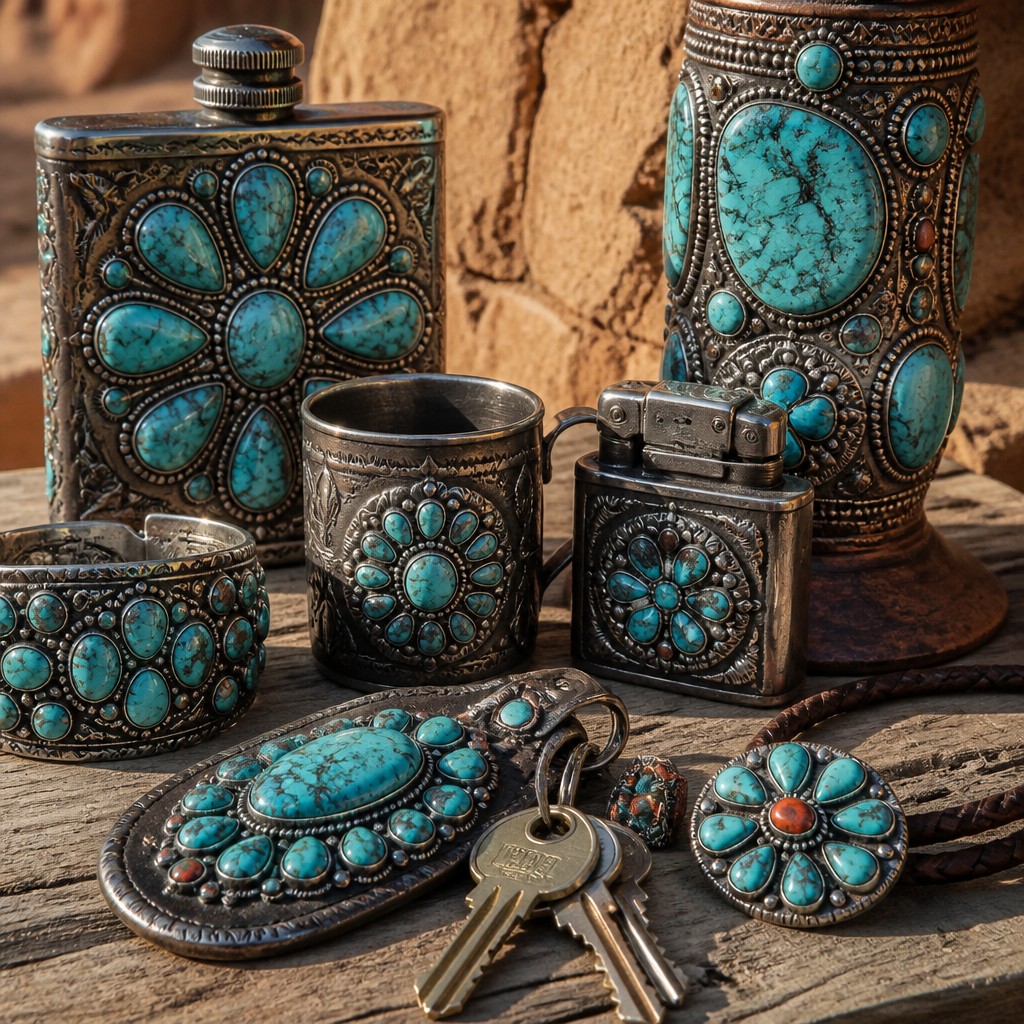
Oxidized recesses and contrast
Darkened grooves and recessed areas make the stamped details and silver relief more legible. The contrast between polished highlights and shadowed texture is central to the style's visual depth.
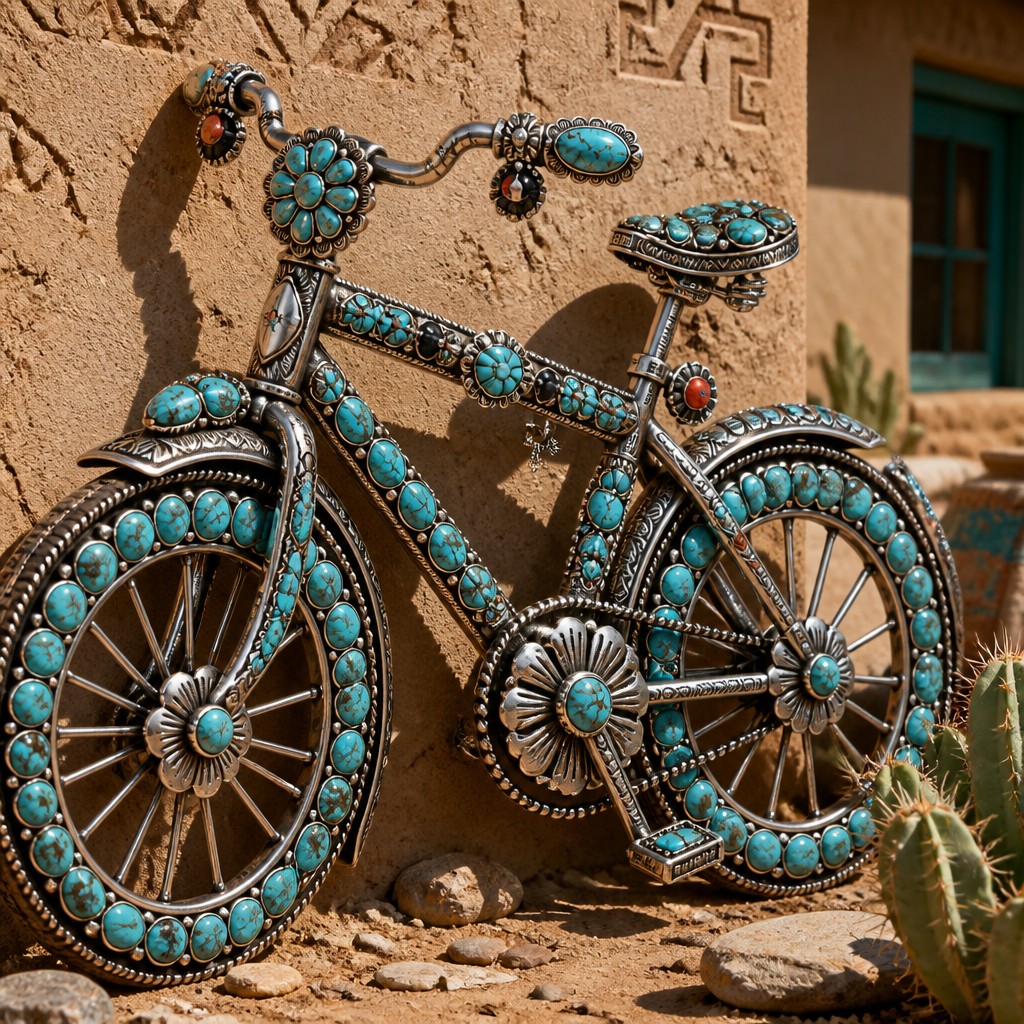
Handmade asymmetry and material presence
Pieces often preserve slight asymmetry, stone variation, and tool marks, which signal hand fabrication rather than machine uniformity. The result feels durable, personal, and tied to place.
Try It
Create Videos in Southwestern Turquoise Jewelry Style
Styles aren't just for stills — describe a scene or animate an image and get a short video rendered in Southwestern Turquoise Jewelry. Press play to see this pond come to life.
Make a VideoSouthwestern Turquoise Jewelry Prompt Ideas
Start from an idea — each one opens the generator with the style ready to go. See all 40 Southwestern Turquoise Jewelry prompts →
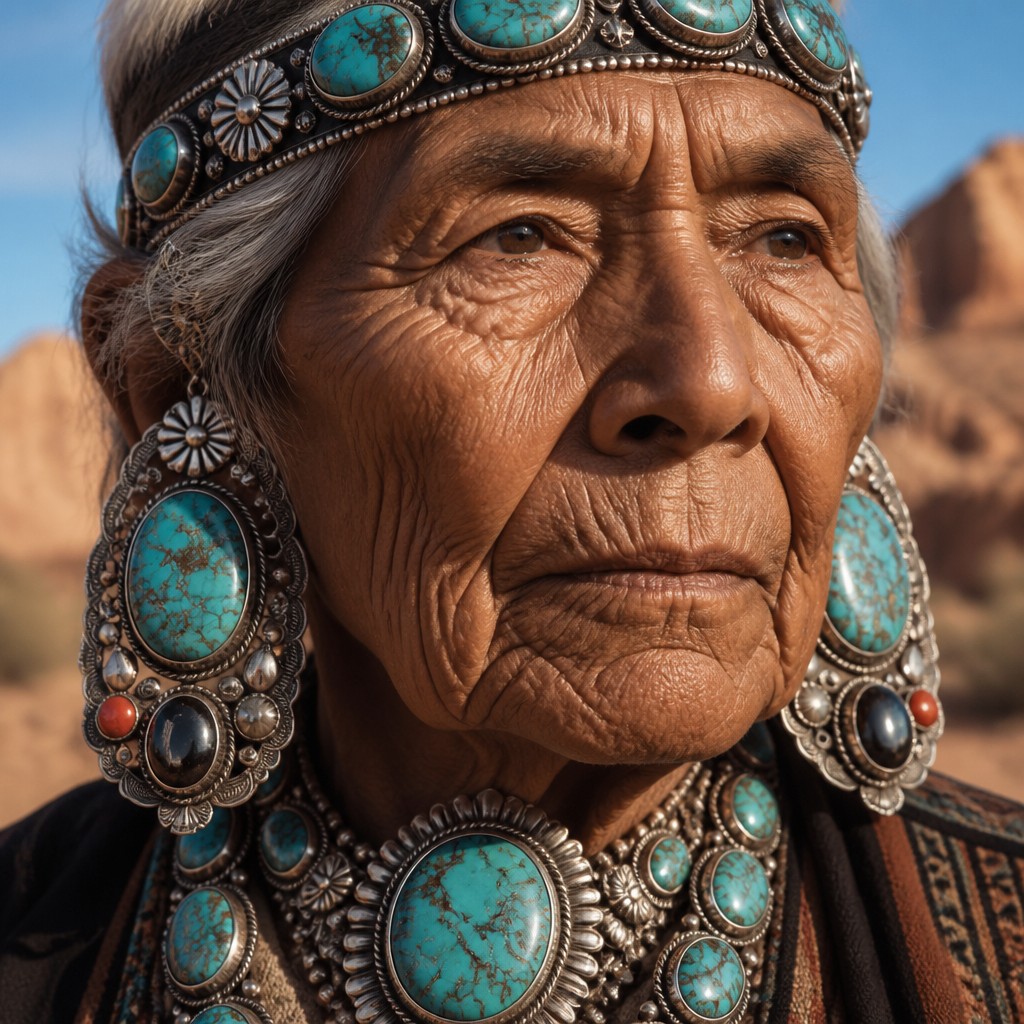
“close-up portrait of an elderly person with expressive weathered features”
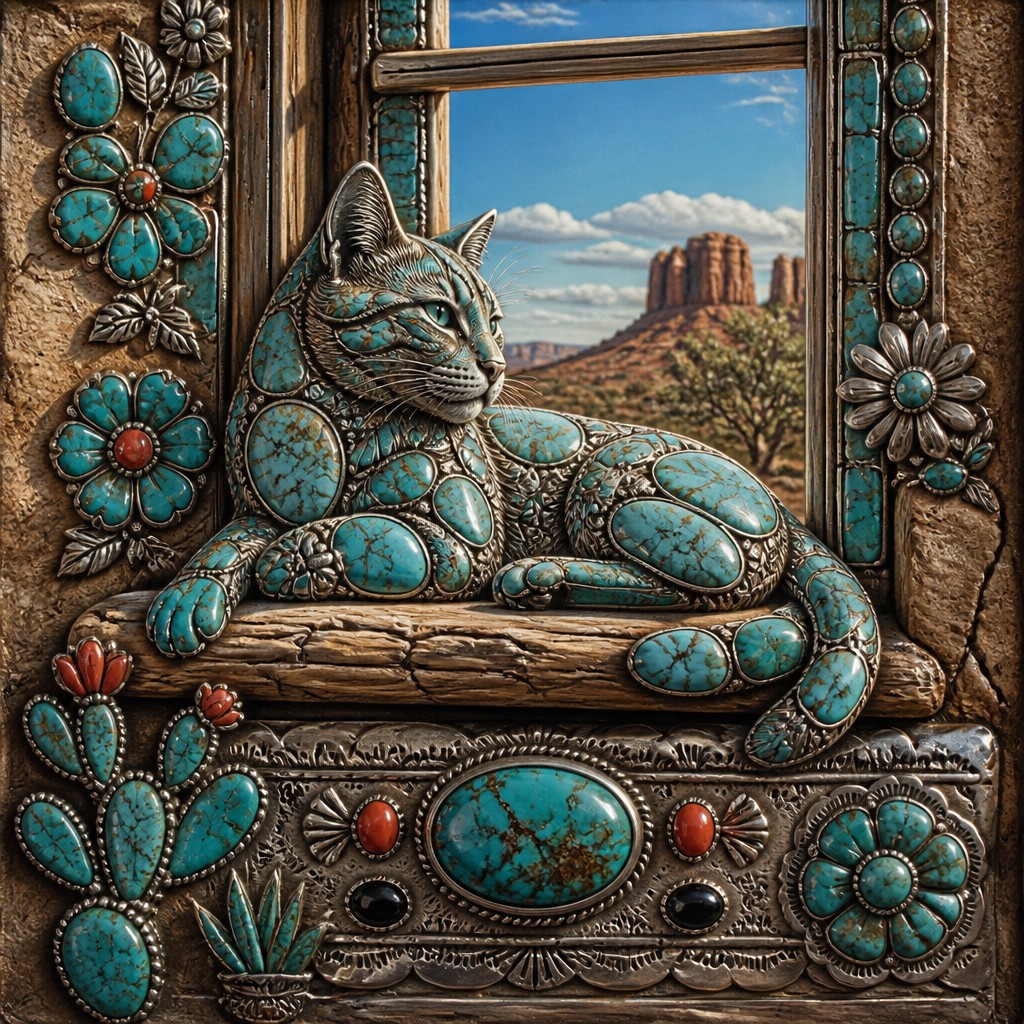
“a cat lounging in a sunlit window”
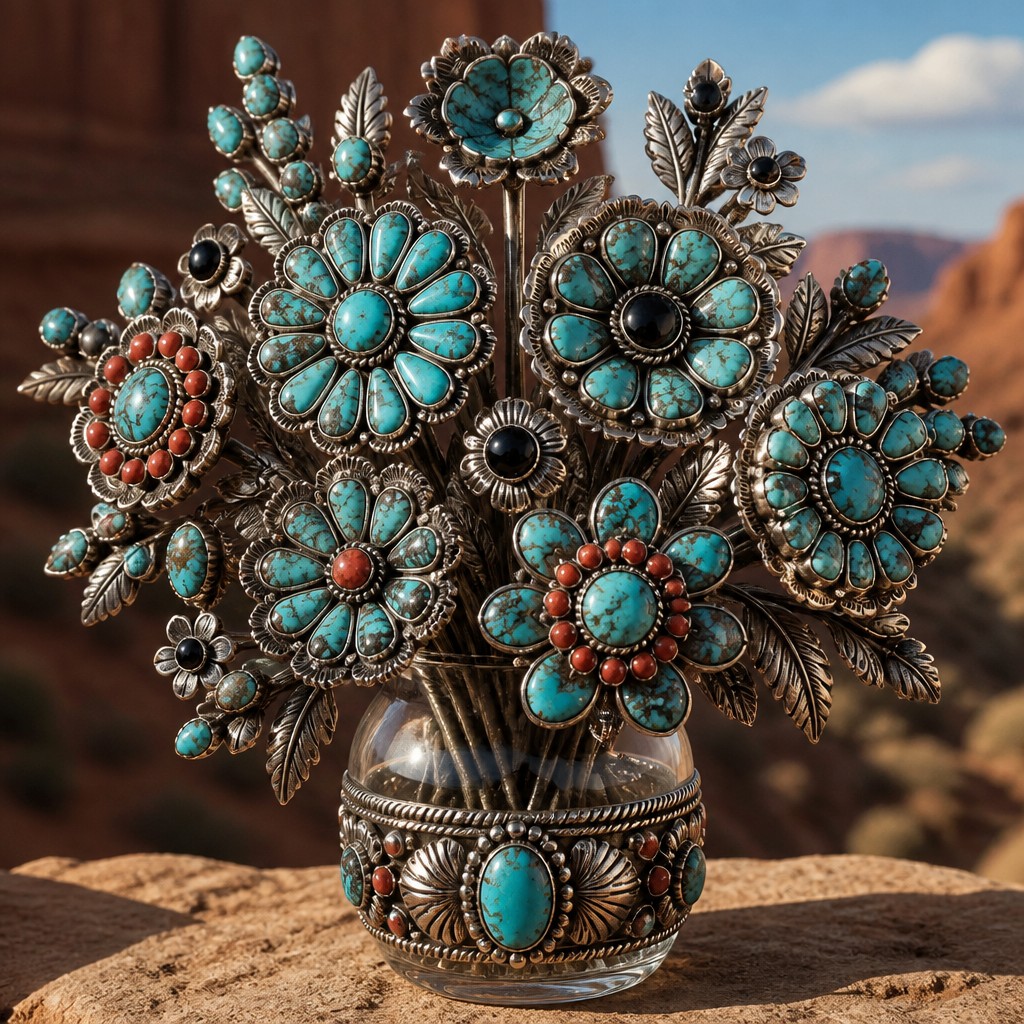
“bouquet of flowers in a glass vase”
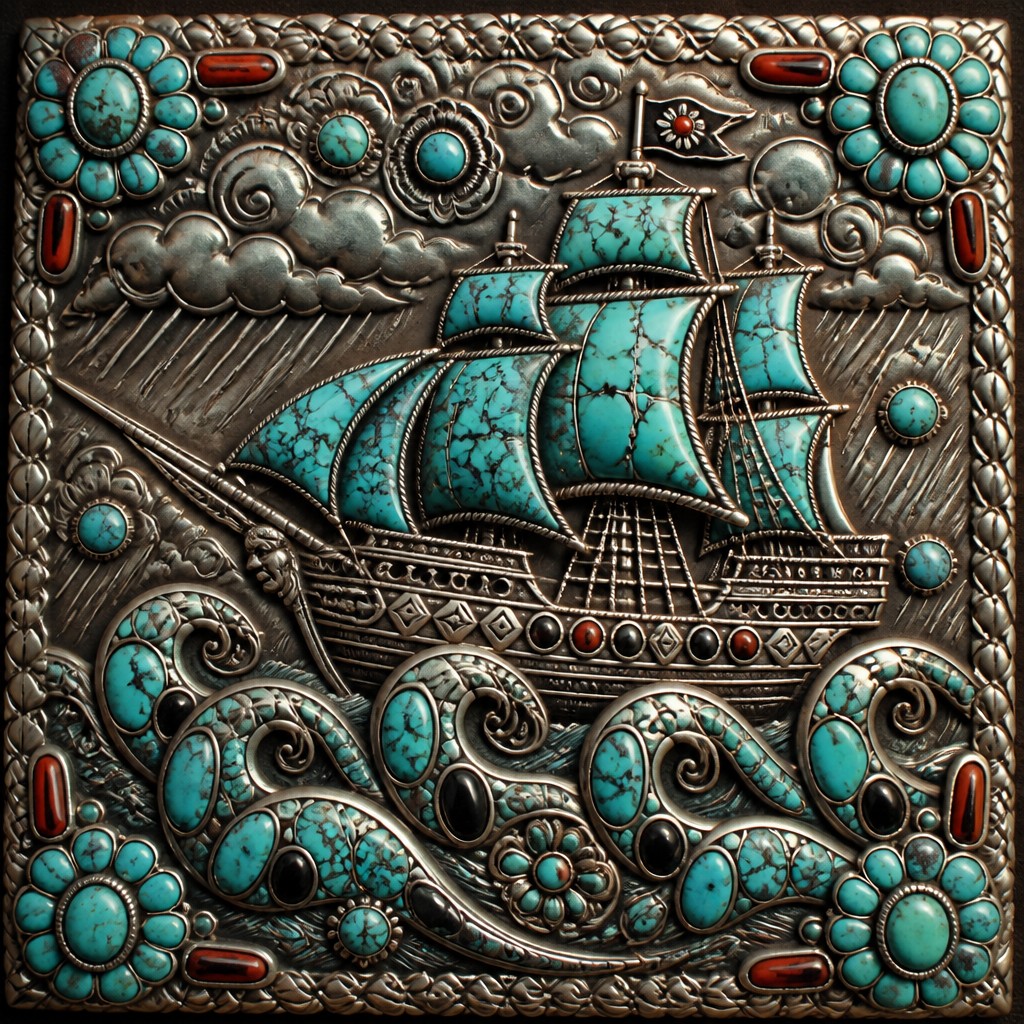
“sailing ship on a stormy sea”
How to Create Southwestern Turquoise Jewelry Art
Master the craft step by step — or skip straight to creating. Read the full guide →
- 1
Start with a strong turquoise focal point
Choose a cabochon shape that suits the composition, such as oval, teardrop, or freeform, and let the stone dictate the scale of the piece. In digital or AI-based work, specify sky-blue or blue-green turquoise with visible matrix and a substantial silver bezel.
- 2
Build the form in silver layers
Use heavy sterling silver bands, borders, and prongs so the metal reads as structural rather than delicate. Traditional makers can model this with sawing, soldering, and filing; digital artists should emphasize thickness, reflected highlights, and solid geometry.
- 3
Add stampwork, texture, and oxidation
Introduce repeated border stamps, scalloped edges, hammered planes, and dark recessed shadows. In a generated image, ask for oxidized recesses, hand-hammered metal, and sandcast texture to capture the worked surface.
- 4
Compose with clusters or radiating motifs
If the piece includes multiple stones, arrange them as blossoms, suns, or tight clusters with a clear center of gravity. Keep spacing deliberate so the composition feels handcrafted and balanced rather than random.
- 5
Use a regional desert palette
Limit accents to coral red, jet black, shell white, and warm silver tones so the turquoise remains dominant. Backgrounds or presentation settings can suggest stone, leather, woven textiles, or high-desert sunlight without overpowering the jewelry.
- 6
Describe the craft specifically in prompts
When generating images, include material and process terms such as sterling silver, repoussé, bezel-set cabochons, stampwork, oxidized grooves, and hand-made silversmithing. These details steer the result away from generic decorative jewelry and toward the intended regional look.
The Story
History & Origins of Southwestern Turquoise Jewelry
This style is rooted in the silversmithing traditions of Native artists in the American Southwest, especially among Diné (Navajo), Zuni, Hopi, and other Indigenous communities whose jewelry practices developed in the late 19th and early 20th centuries and continue today. Turquoise had long held cultural and spiritual importance in the region, while sterling silverwork expanded after metalworking skills and materials were introduced through contact and trade. Over time, distinct regional approaches emerged, including heavy stampwork, intricate stone inlay, cluster settings, overlay work, and sandcast forms.
The broader aesthetic lineage also includes the geology and material culture of the Southwest itself: turquoise mining districts, desert light, ceremonial adornment, and the visual rhythm of stamped metal and cabochon stones. In contemporary usage, the style may appear in fine jewelry, fashion accessories, and decorative design, but its core vocabulary still comes from Indigenous craft traditions and the longstanding association of turquoise with the high-desert landscape.
Influences: This aesthetic is closely related to Native American jewelry traditions of the Southwest, especially Diné (Navajo), Zuni, and Hopi silversmithing, rather than to a single European art movement. Its visual language also overlaps with the broader history of Mexican and Southwestern metalwork, beadwork, and adornment, and with the material culture of the high desert. For modern viewers, it can also intersect with rustic design and artisanal fashion, but its primary lineage remains Indigenous craft and regional jewelry-making traditions.
Frequently Asked Questions
What defines Southwestern Turquoise Jewelry Style?
It is defined by turquoise-centered compositions set in sterling silver, usually with stamped, hammered, or oxidized surfaces. The style emphasizes tactile craftsmanship, desert-inspired color, and forms such as cuffs, rings, pendants, and cluster necklaces.
Is this the same as Native American jewelry?
Not exactly. The style is strongly rooted in Native American jewelry traditions of the Southwest, but that broader category includes many distinct tribal and regional practices. Southwestern Turquoise Jewelry Style is a descriptive aesthetic label for the visual qualities people associate with those traditions.
What materials are most common in this style?
Turquoise and sterling silver are the core materials. Coral, jet, shell, and mother-of-pearl may also appear, along with leather or woven cords in some pieces.
How is this style different from generic boho jewelry?
Boho jewelry often borrows loosely from many sources and may prioritize trend over craft specificity. Southwestern Turquoise Jewelry Style is more material-specific, with recognizable silversmithing techniques, regional stone choices, and a stronger emphasis on handmade metal texture.
How can I make artwork or product imagery in this style?
Focus on material realism: stone shape, matrix detail, silver thickness, stamped borders, and oxidized shadows. Whether drawing, photographing, or generating digitally, the result should feel like a handcrafted object with weight and history.
Where is this style commonly used?
It appears in fine jewelry, fashion accessories, Western wear, souvenir objects, editorial styling, and decorative design. It is especially associated with the American Southwest and with artisan markets, galleries, and regional craft traditions.
Create your first Southwestern Turquoise Jewelry artwork
Describe anything — or upload a photo — and see it in Southwestern Turquoise Jewelry Style in seconds.
Related Styles
Discover similar art styles