Egyptian Revival Jewelry Style
Pharaonic gold jewelry with lapis, turquoise, carnelian, scarabs, lotus motifs, and tomb-treasure opulence.
Instantly rendered in Egyptian Revival Jewelry — or transform a photo
Egyptian Revival Jewelry Gallery
Tap any artwork to explore it
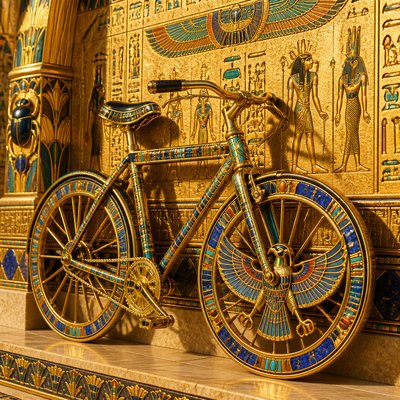
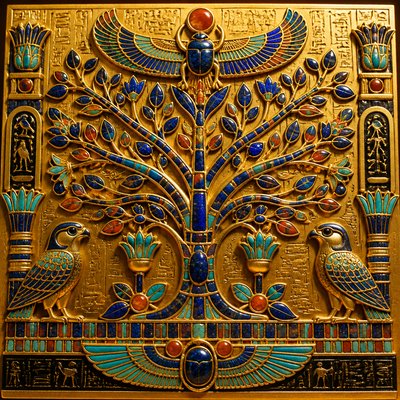
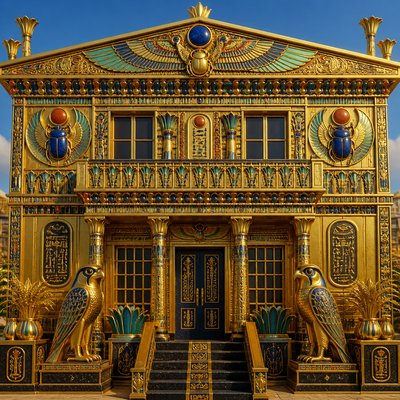
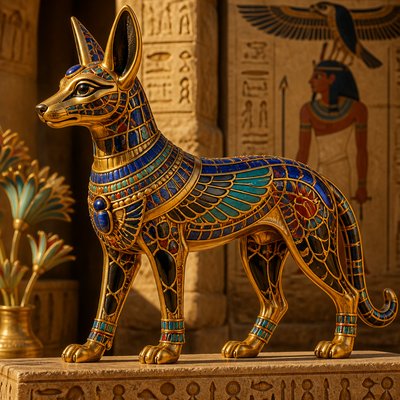
What is Egyptian Revival Jewelry Style?
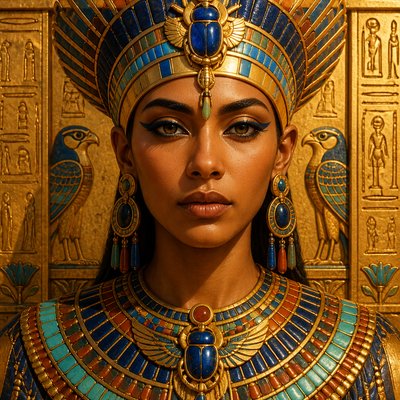
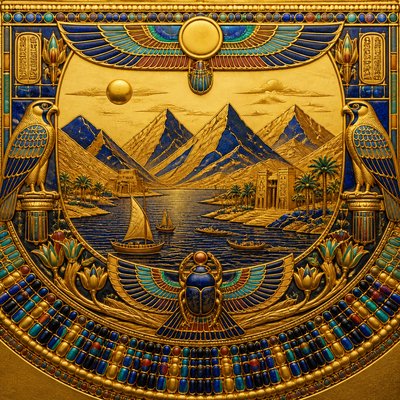
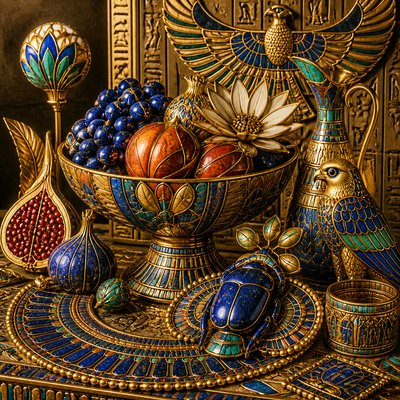
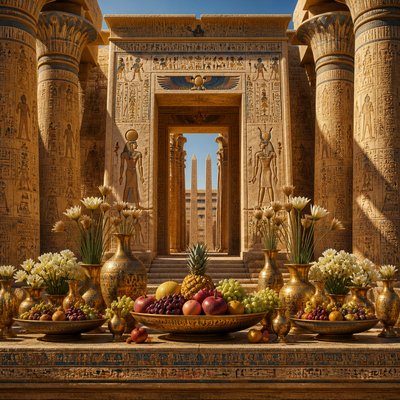
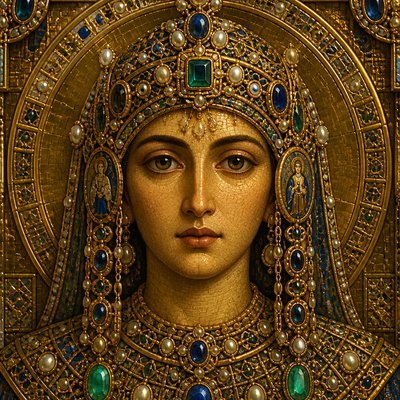
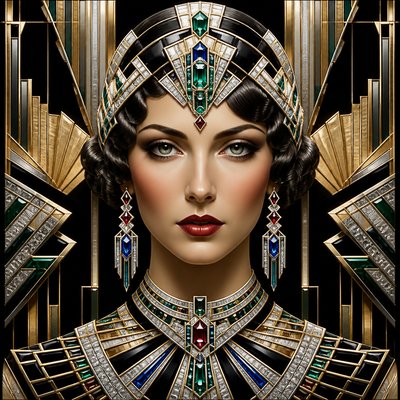
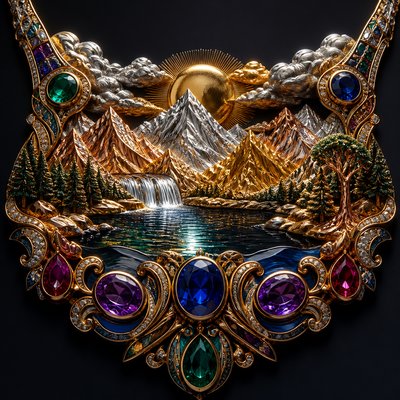
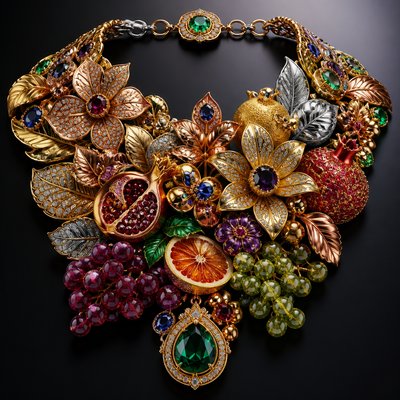
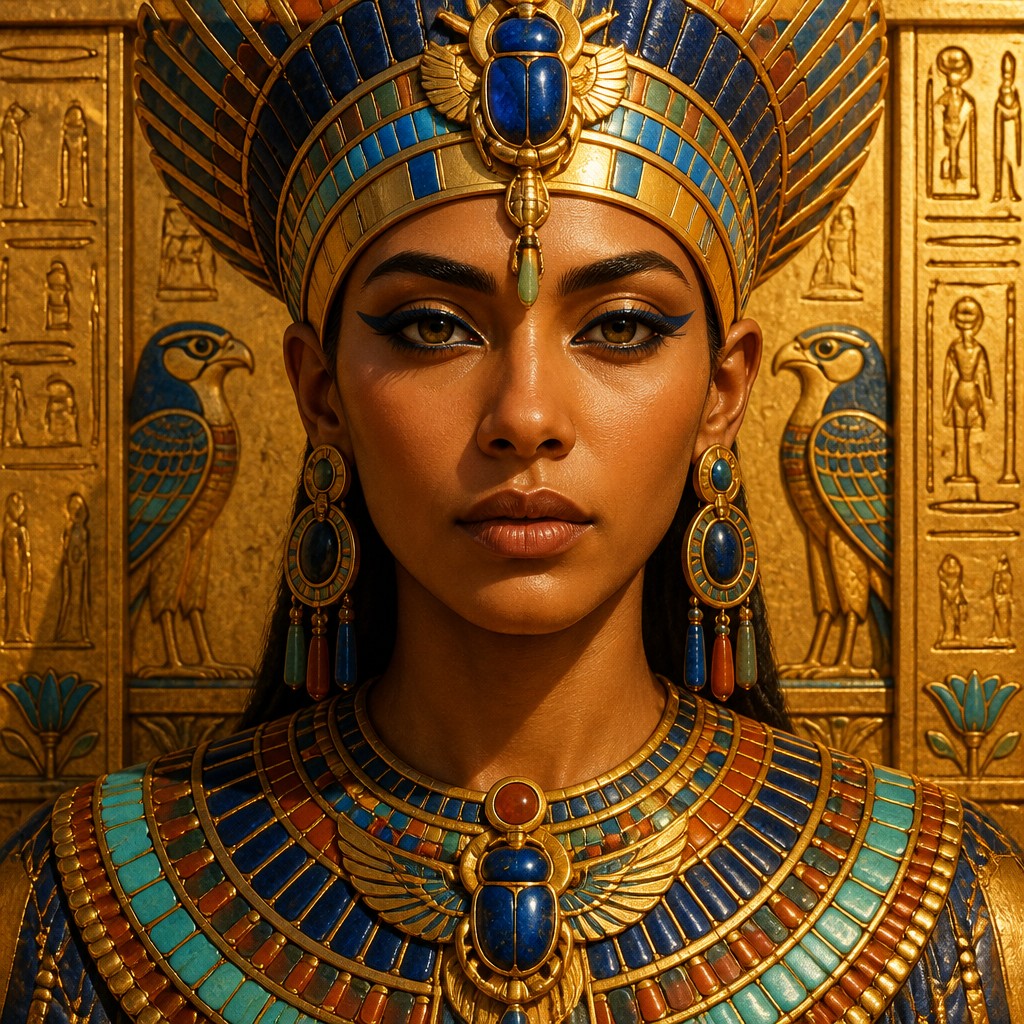
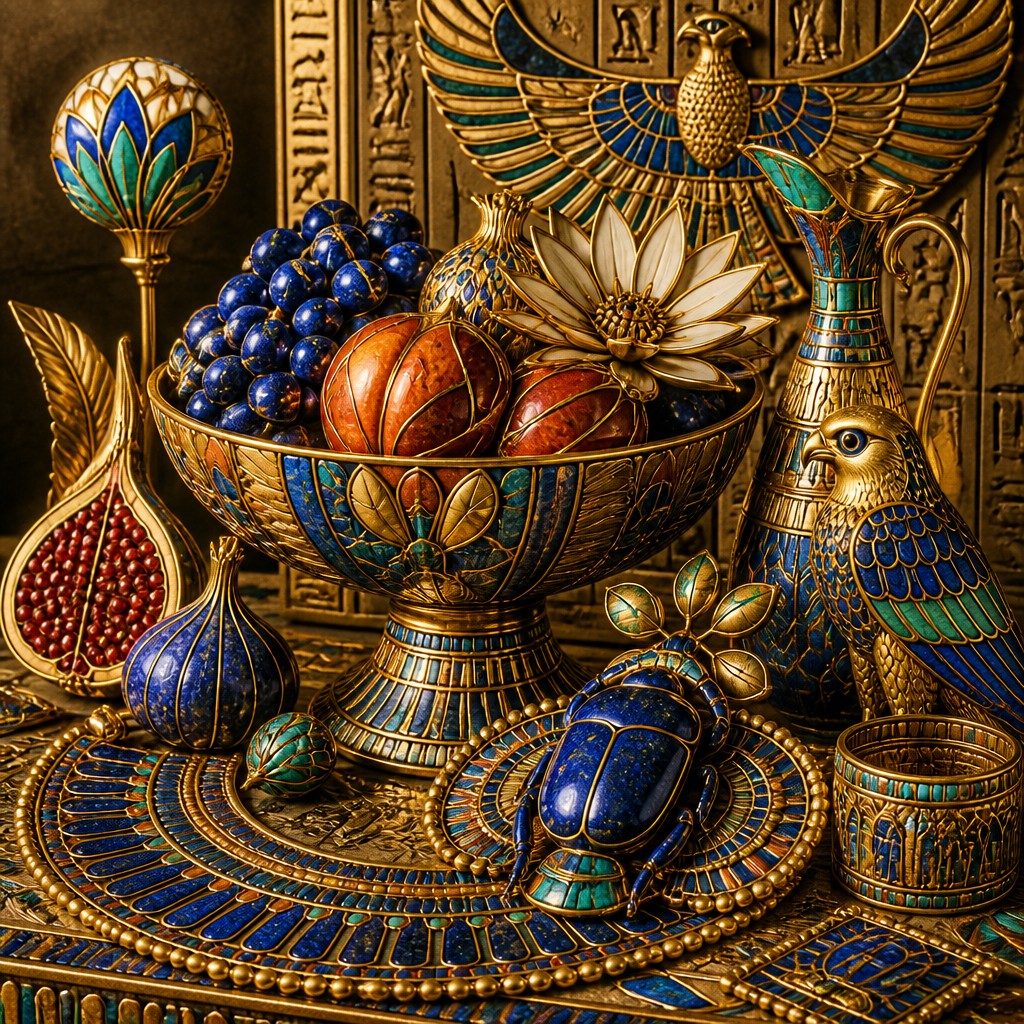
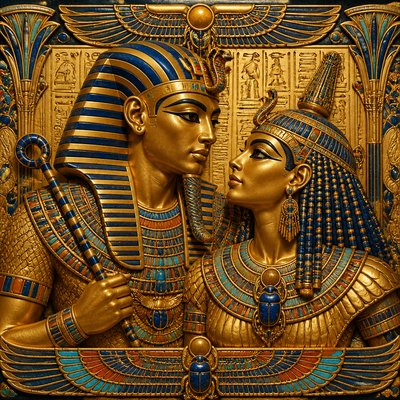
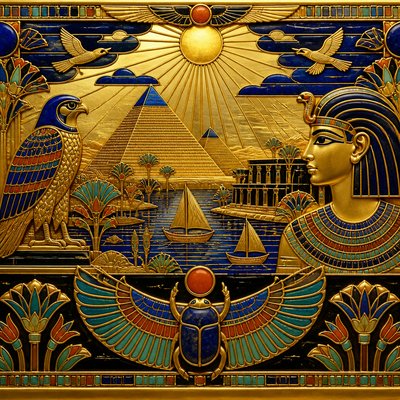
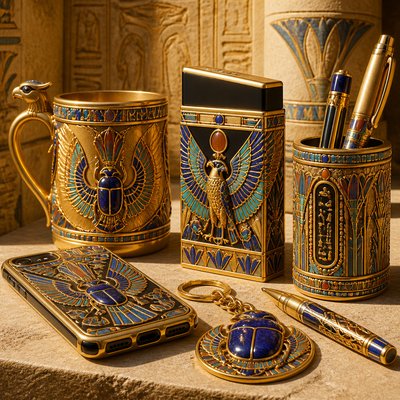
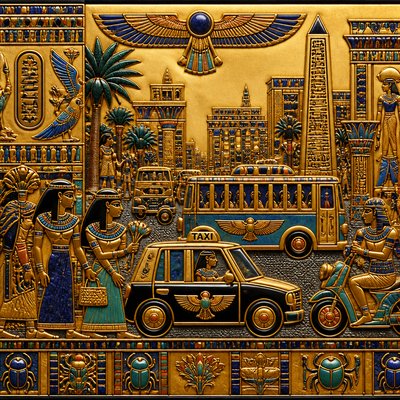
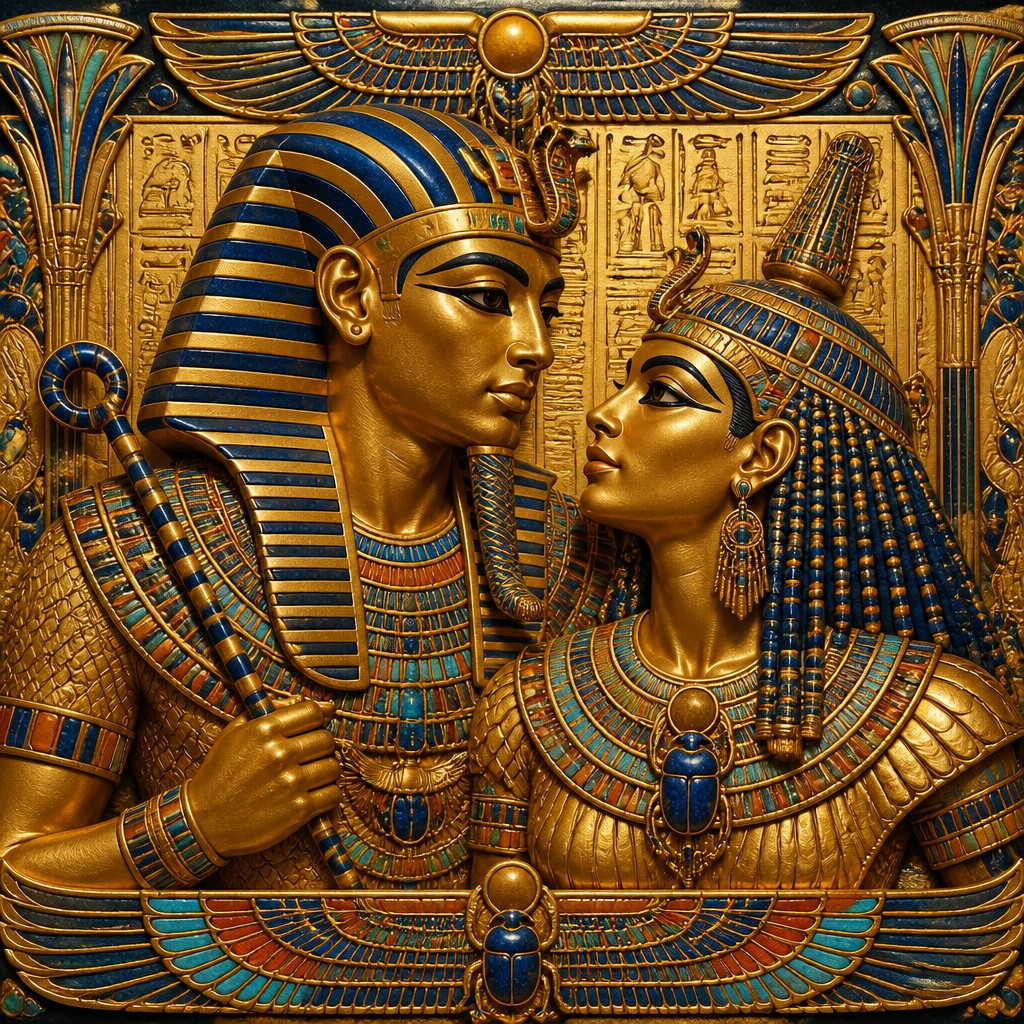
Egyptian Revival Jewelry Style is a decorative mode that reimagines ancient Egyptian ornament through the lens of later revival design: ceremonial gold forms, colored stone inlay, and hieratic motifs such as scarabs, lotus blossoms, falcon wings, and cartouches. It is defined less by one historical period than by a recurring visual language that treats jewelry as portable monumentality—objects meant to feel regal, symbolic, and enduring.
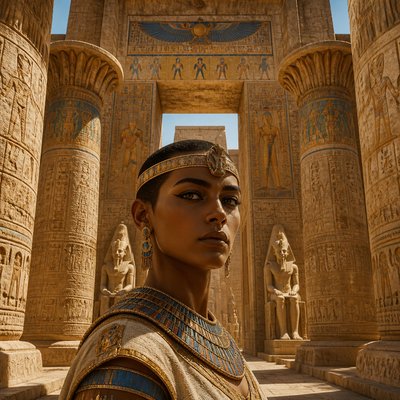
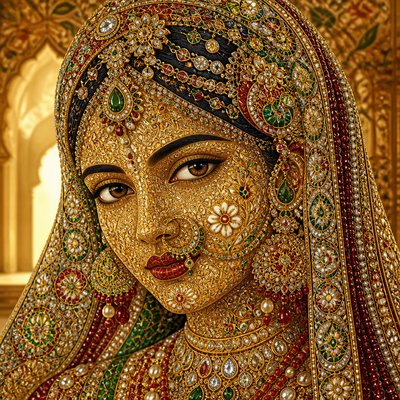
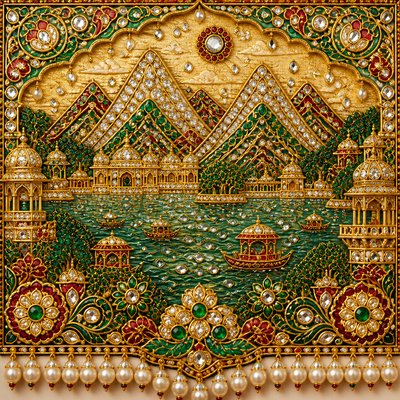
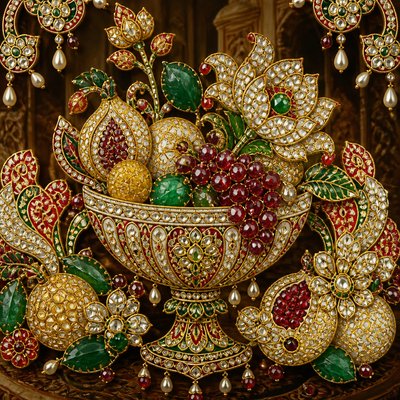
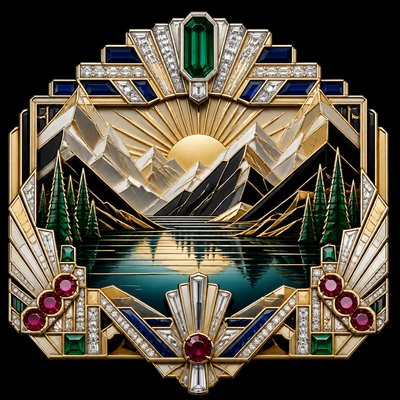
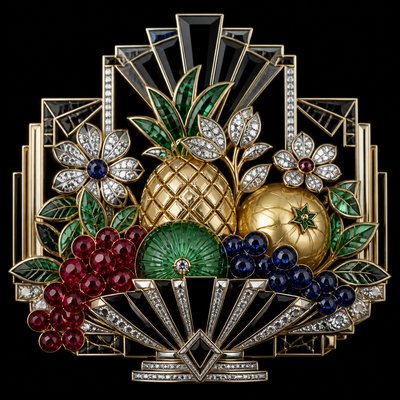
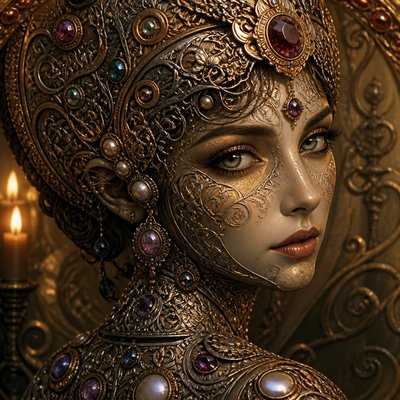
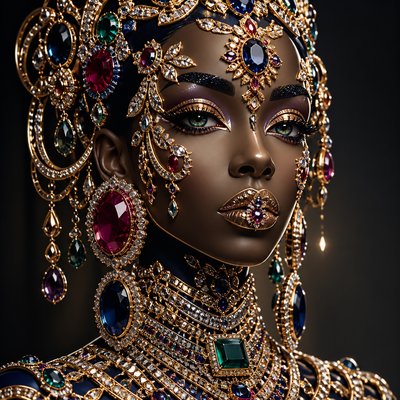
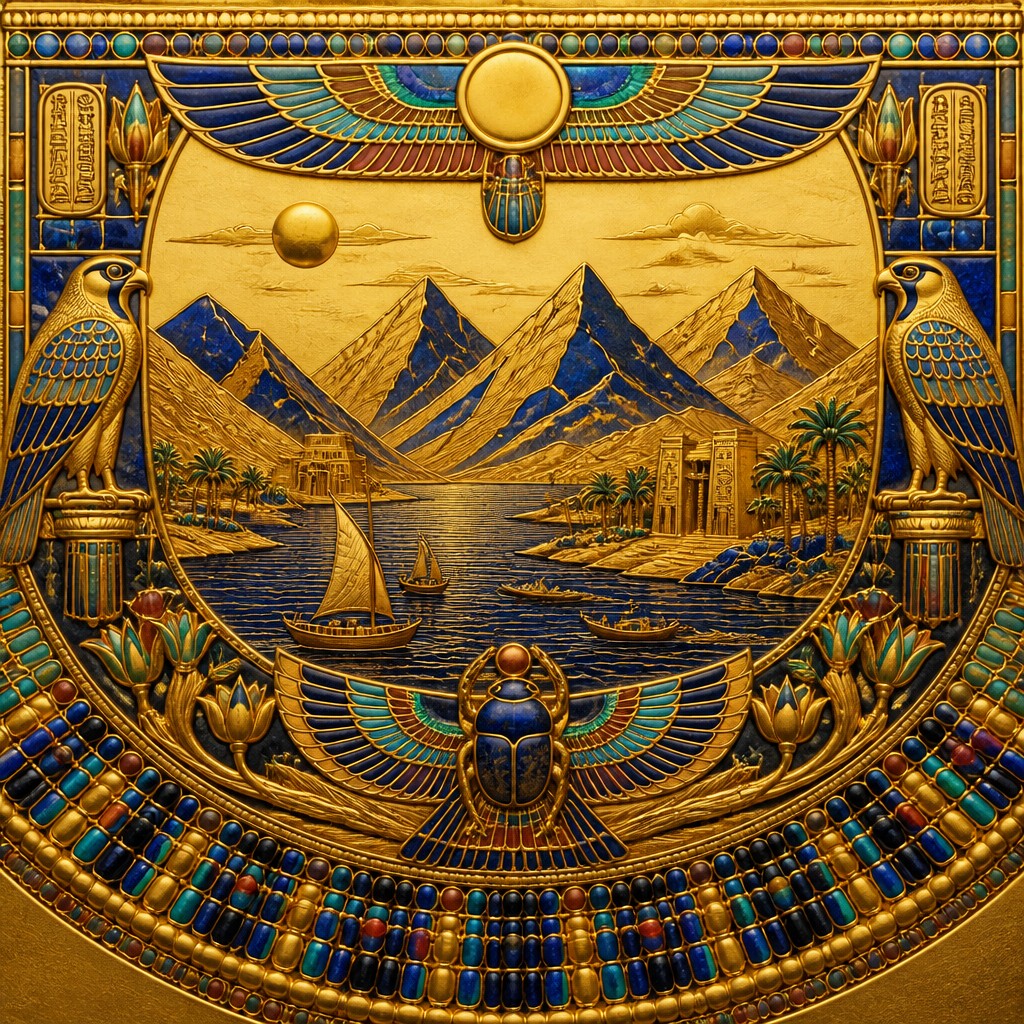
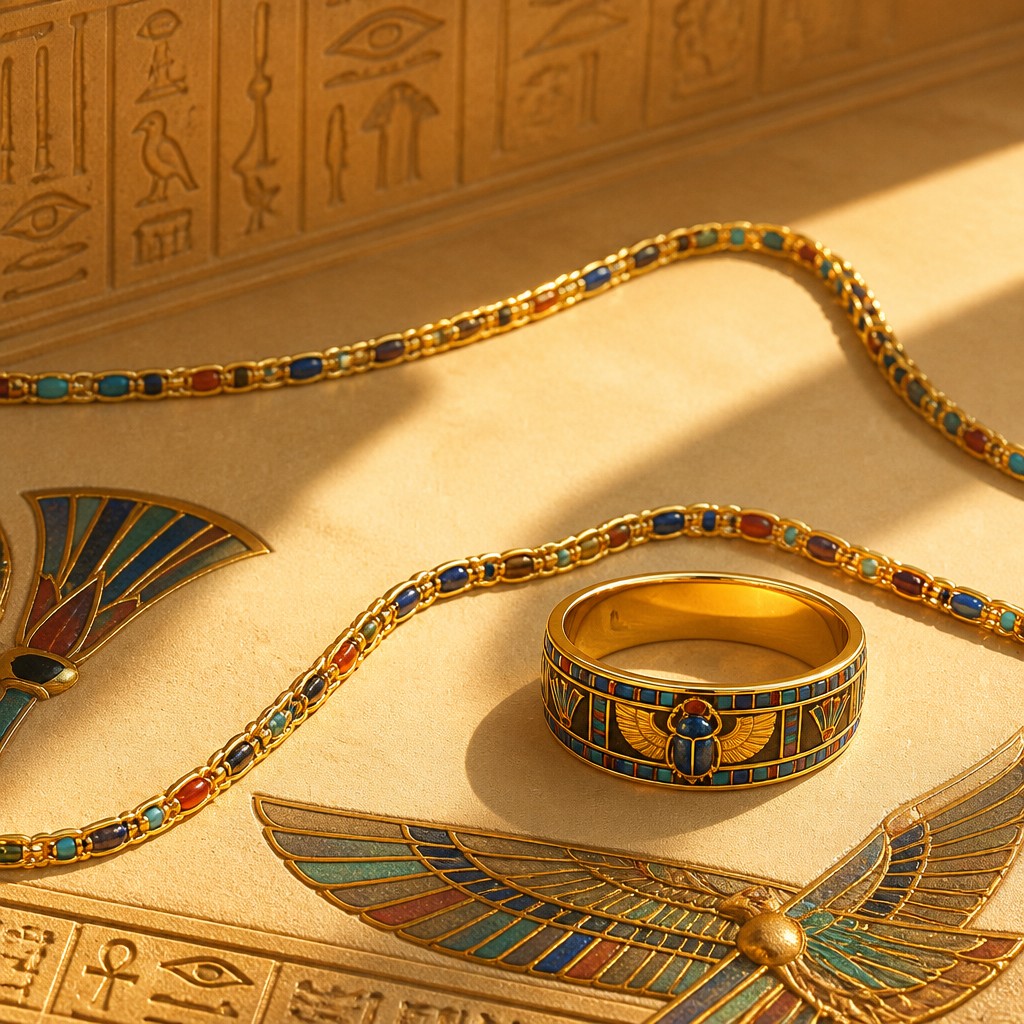
The style is immediately recognizable for its saturated contrasts: warm yellow gold against lapis lazuli blue, turquoise green, carnelian red, black enamel or basalt-like accents, and tightly organized cloisonné or mosaic-like compartments. Its visual effect comes from the combination of archaeological reference and luxury craftsmanship, producing pieces that evoke tomb treasure, temple reliefs, and royal regalia while remaining clearly decorative and wearable.
Try It On Your Photos
Upload any photo and convert it into Egyptian Revival Jewelry Style — drag the sliders to compare before and after.
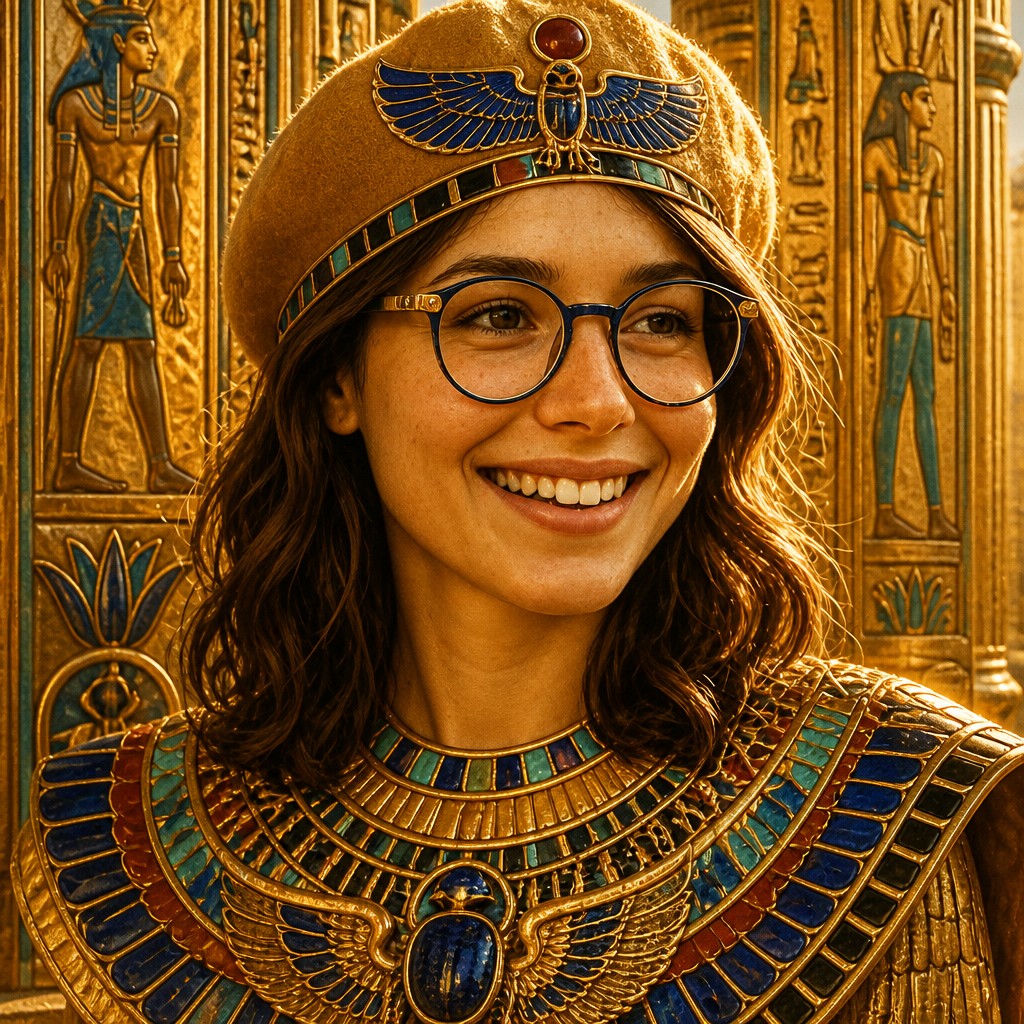

What Defines Egyptian Revival Jewelry Style
The signature details, up close
Yellow gold as the primary surface
The style relies on rich, warm gold that reads as ceremonial and sunlit. Flat planes of polished metal often dominate, giving the piece a monumental, temple-like presence.
Hieroglyphic and pharaonic motifs
Scarabs, lotuses, falcons, winged suns, ankhs, and cartouches are recurring decorative elements. These motifs are used as symbolic emblems rather than narrative illustration.
Gemstone color blocking
Lapis lazuli blue, turquoise green, and carnelian red provide the style’s essential chromatic scheme. Stones are often arranged in bold, compartmentalized patterns that create a strong rhythm across the surface.
Cloisonné-like segmentation
Designs frequently use narrow metal borders and cells to separate colors, echoing ancient inlay methods and enamel work. This creates crisp outlines and a highly structured surface.
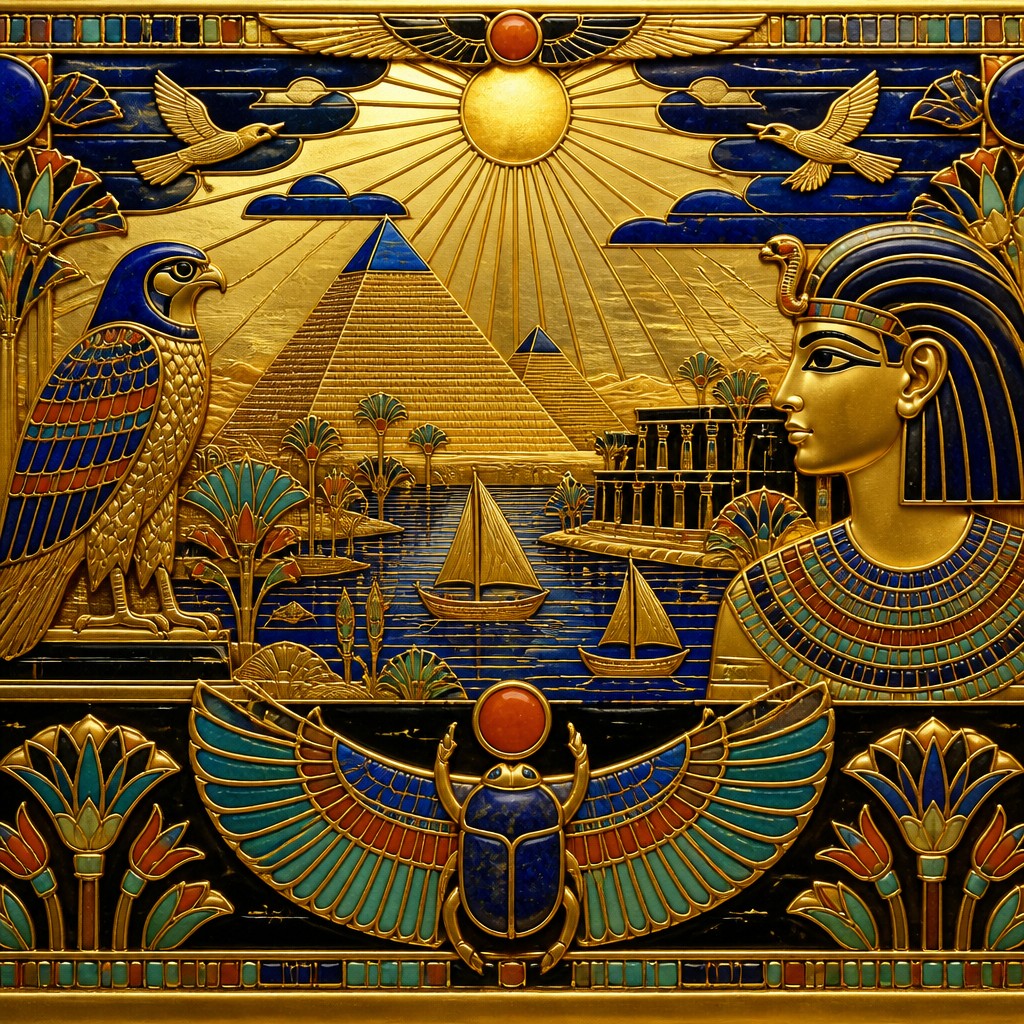
Broad-collar and pectoral rhythms
Many compositions borrow the layered symmetry of Egyptian broad collars and ceremonial pectorals. The result is a low, sweeping arrangement of repeated elements that frames the body like an armor-like ornament.
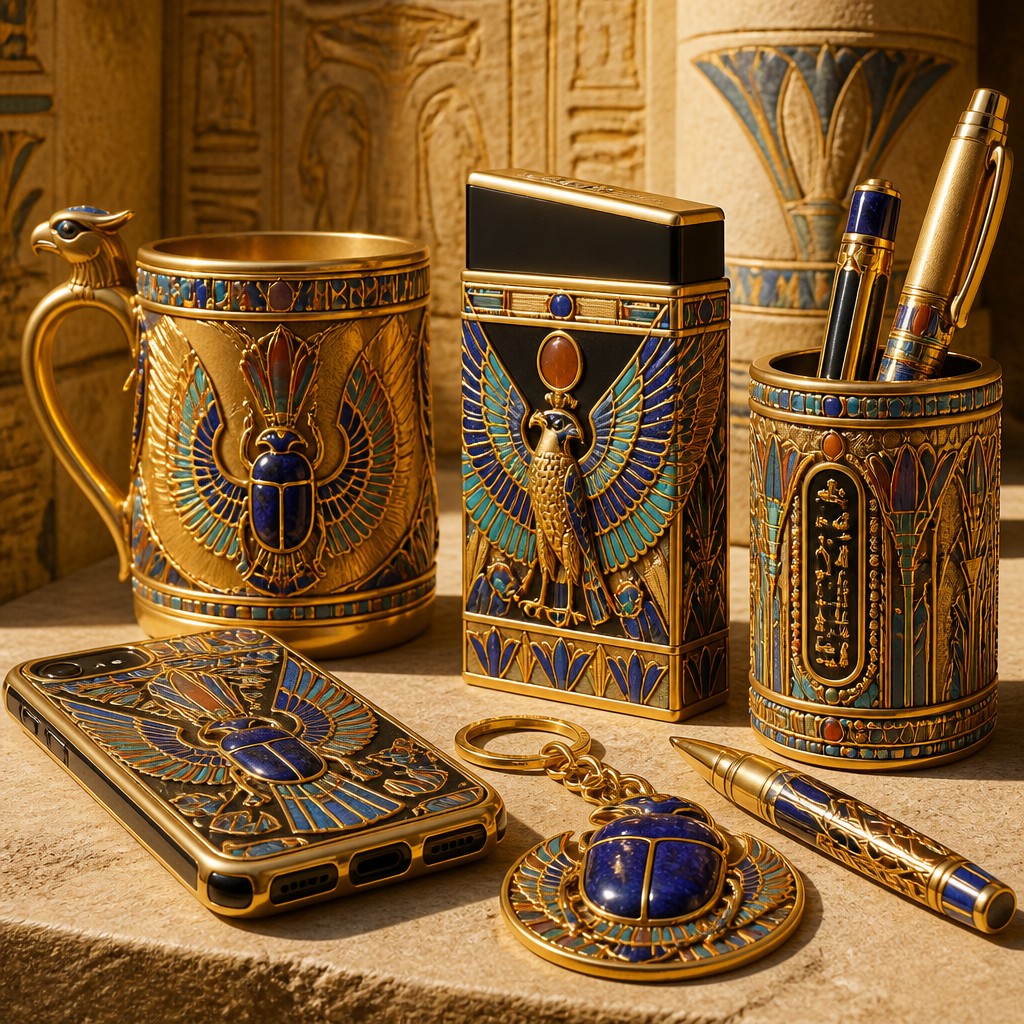
Antique, ritualized finish
The overall impression is less delicate than it is sacred, weighty, and enduring. Pieces often look deliberately ancient, as if excavated, consecrated, or made for a royal burial chamber.
Try It
Create Videos in Egyptian Revival Jewelry Style
Styles aren't just for stills — describe a scene or animate an image and get a short video rendered in Egyptian Revival Jewelry. Press play to see this pond come to life.
Make a VideoEgyptian Revival Jewelry Prompt Ideas
Start from an idea — each one opens the generator with the style ready to go. See all 40 Egyptian Revival Jewelry prompts →
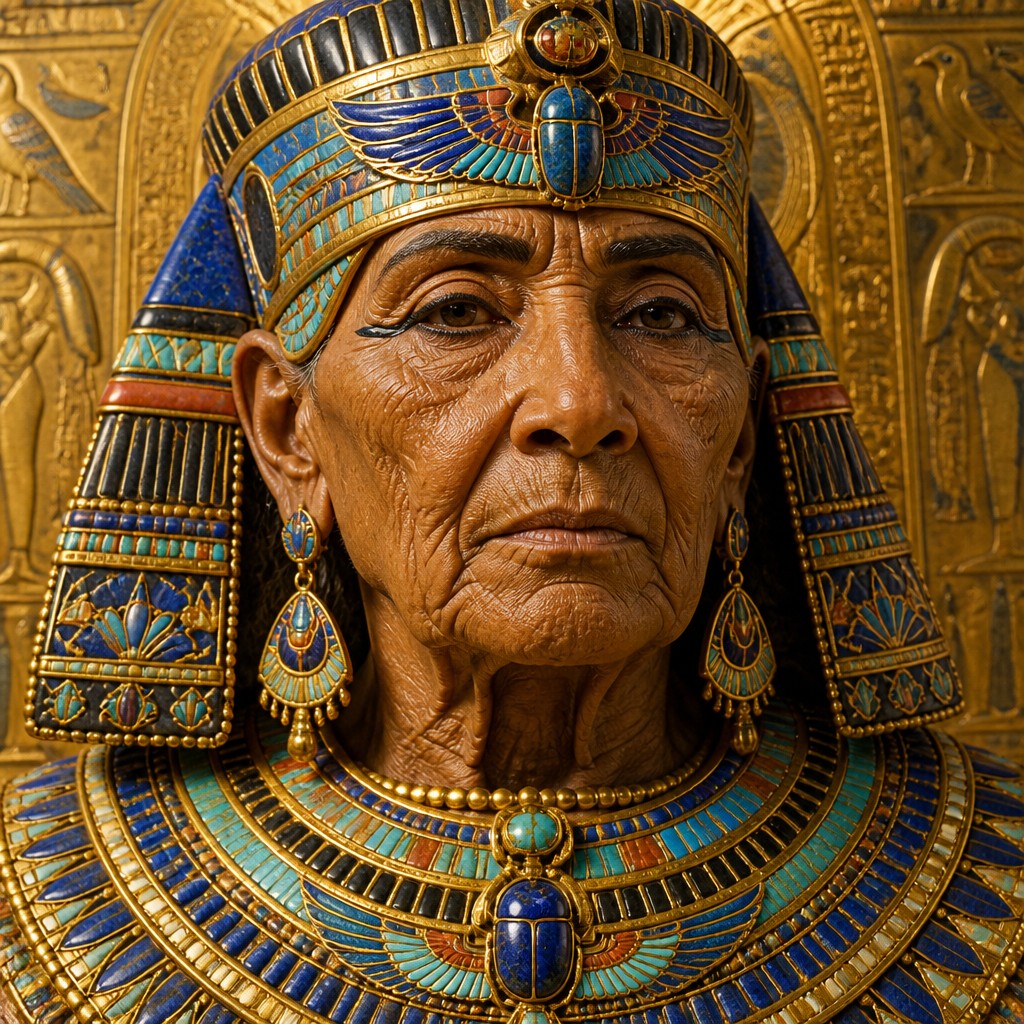
“close-up portrait of an elderly person with expressive weathered features”
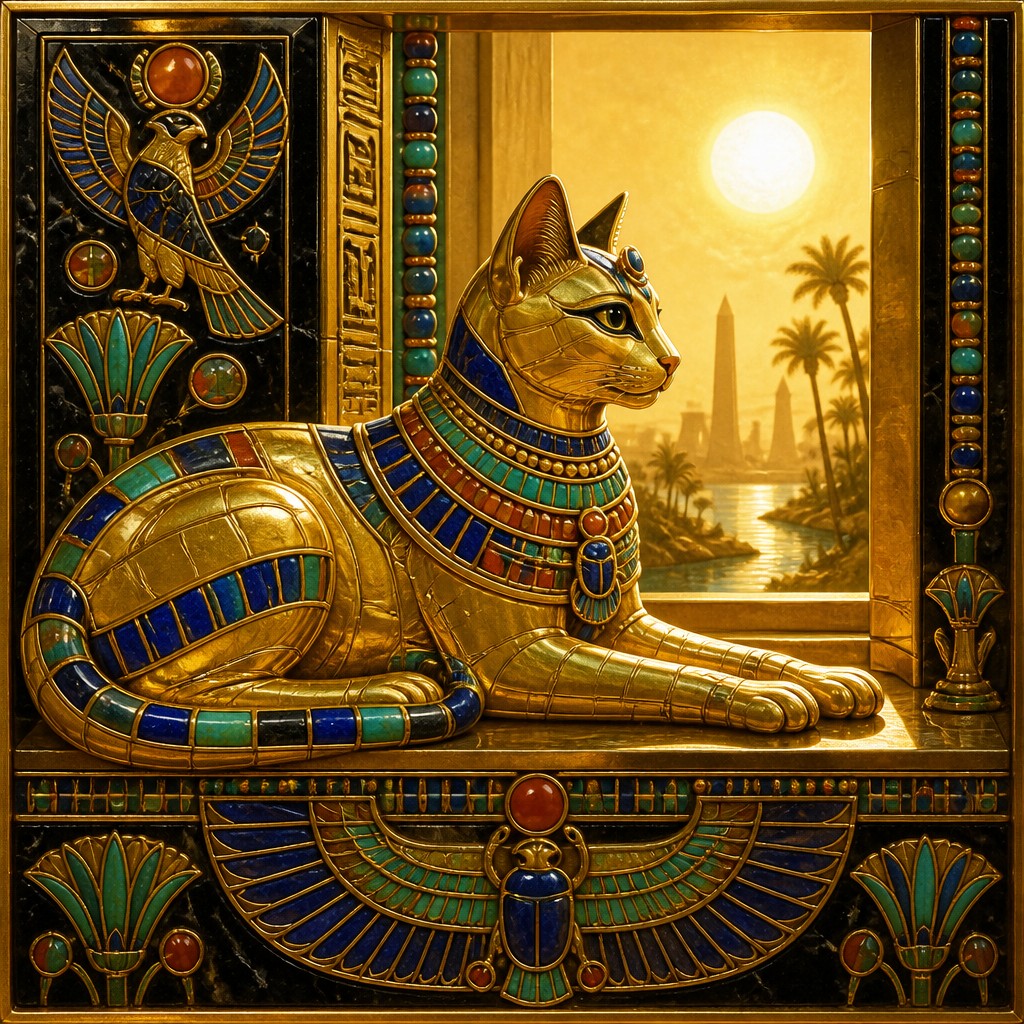
“a cat lounging in a sunlit window”
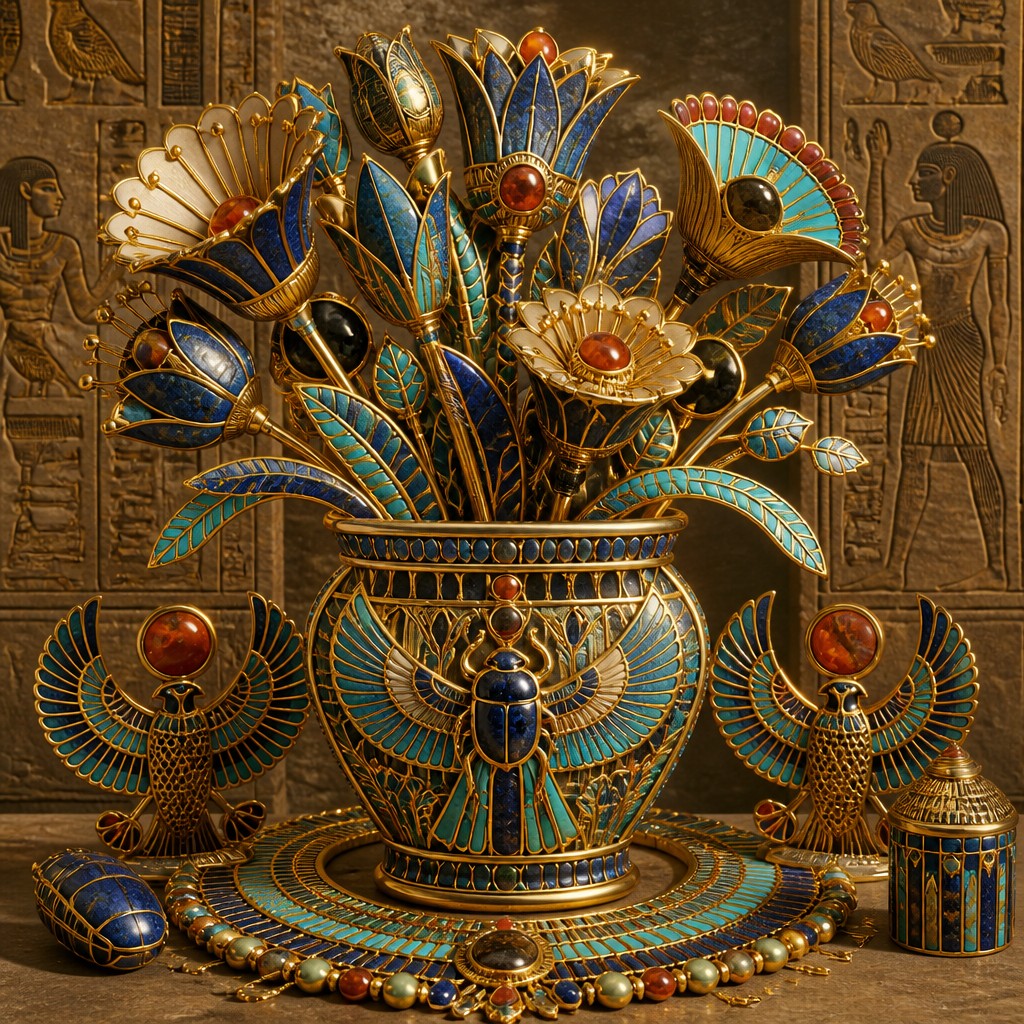
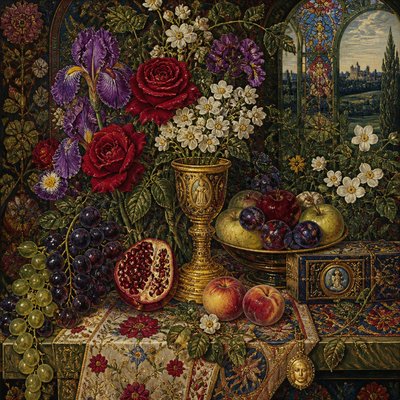
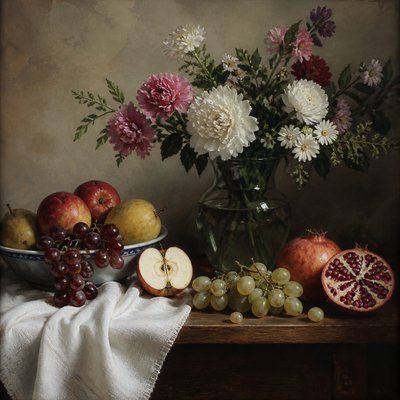
“bouquet of flowers in a glass vase”
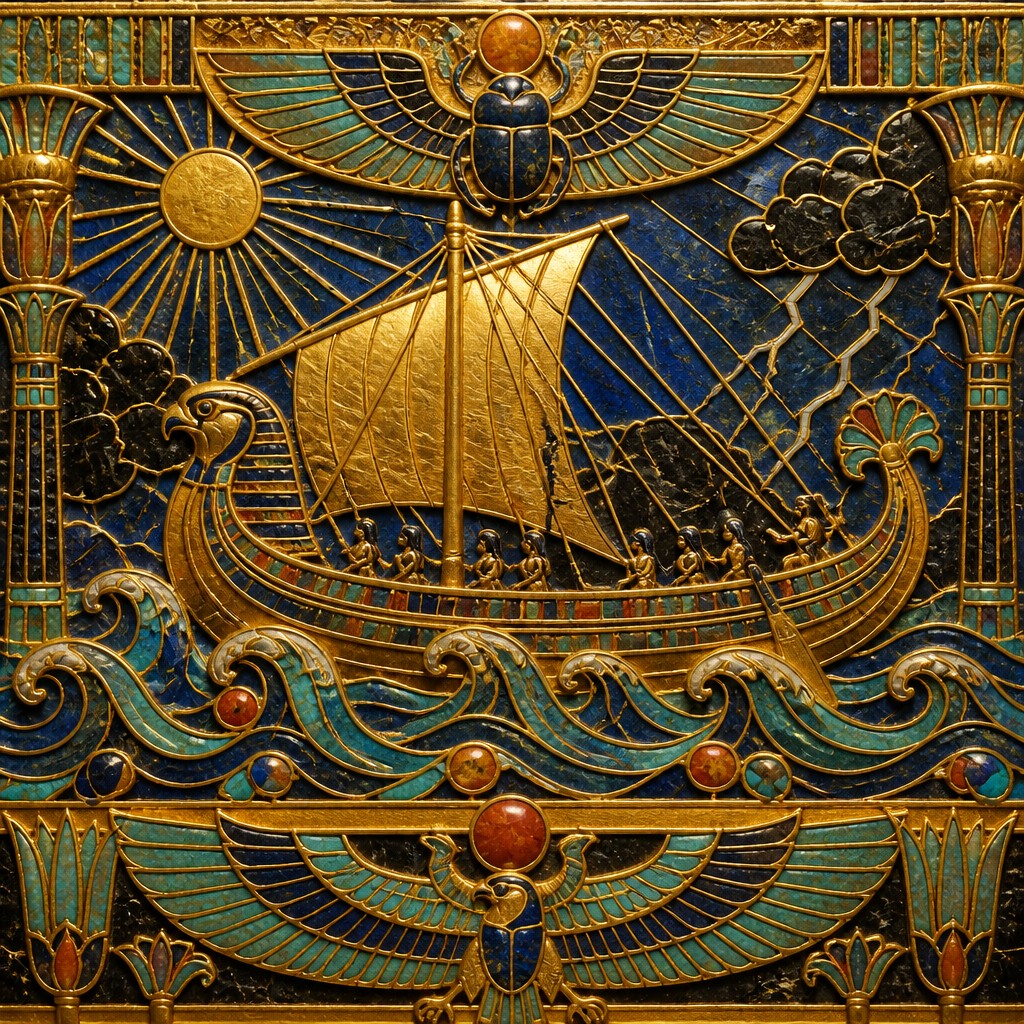
“sailing ship on a stormy sea”
How to Create Egyptian Revival Jewelry Art
Master the craft step by step — or skip straight to creating. Read the full guide →
- 1
Use a pharaonic palette
Build the design around yellow gold, lapis blue, turquoise, and carnelian red, then add black accents to sharpen contrast. Keep the palette limited and jewel-like so the piece feels historically rooted and visually legible.
- 2
Organize the form symmetrically
Plan the jewelry as a centered, balanced object with strong bilateral symmetry. Egyptian-inspired ornament usually reads best when motifs repeat in measured bands, medallions, or collar-like arcs.
- 3
Translate motifs into decorative units
Simplify scarabs, lotus petals, wings, and sun disks into clean shapes that can repeat across the surface. Avoid overly naturalistic rendering; the style depends on stylization, contour, and emblematic clarity.
- 4
Render materials with hard, luminous contrast
Whether working traditionally or digitally, emphasize polished metal, stone inlay, and crisp edges rather than soft blending. Strong highlights on gold and saturated gemstone blocks are essential to the tomb-treasure effect.
- 5
Reference archaeological jewelry forms
Study broad collars, pectorals, amulets, signet rings, and scarab settings from Egyptian collections and revival-era interpretations. Even when inventing a new piece, those silhouettes help the result feel authentic to the style.
- 6
For prompt-based generation, specify both subject and material language
Describe the object, then add cues such as inlaid lapis and turquoise, scarab and lotus motifs, cloisonné cells, polished gold, and ceremonial symmetry. If using image-to-image, preserve the original subject’s silhouette but replace its surface logic with pharaonic ornament.

The Story
History & Origins of Egyptian Revival Jewelry
The aesthetic lineage of Egyptian Revival Jewelry lies in Europe’s and America’s repeated fascination with ancient Egypt, especially after the late 18th-century Napoleonic campaigns, the rise of Egyptology in the 19th century, and the intense revival wave that followed the discovery of Tutankhamun’s tomb in 1922. Jewelers and designers drew on museum objects, tomb imagery, and published archaeological studies to create modern ornaments inspired by ancient forms rather than exact replicas.
The style has appeared in successive revival moments, from 19th-century historicist jewelry to Art Deco interpretations and later theatrical, costume, and luxury design. Its development reflects changing ideas about antiquity: once a source of exotic spectacle, later a field of scholarly quotation and stylized abstraction. The core vocabulary—scarabs, lotus petals, winged motifs, bold color inlay, and broad collar-like compositions—has remained stable because it translates Egyptian visual culture into a compact, ceremonial form.
Influences: Egyptian Revival Jewelry draws from ancient Egyptian adornment, especially broad collars, amulets, pectorals, and gemstone inlay traditions, as well as later historicist design from the 19th century and Art Deco’s interest in crisp geometry and exoticized antiquity. Its modern decorative language also overlaps with museum reproduction, archaeological illustration, and luxury jewelry design. In the broader history of stylized antiquity, related canonical artists and designers include Owen Jones, whose study of ornament helped codify Egyptian motifs for modern audiences, and Art Deco jewelers such as Cartier’s design circle, which adapted ancient forms into sleek, high-contrast compositions.
Frequently Asked Questions
What defines Egyptian Revival Jewelry Style?
It is defined by pharaonic motifs, rich gold surfaces, and a strict palette of lapis, turquoise, carnelian, and black accents. The forms tend to be symmetrical, ceremonial, and highly structured, often echoing broad collars, pectorals, scarabs, and amulets.
Is this the same as ancient Egyptian jewelry?
Not exactly. Ancient Egyptian jewelry refers to objects made in antiquity, while Egyptian Revival Jewelry Style is a later reinterpretation that borrows and stylizes those forms. Revival pieces may be historically informed, but they often adapt the motifs for modern taste and manufacturing.
How is this different from Art Deco jewelry?
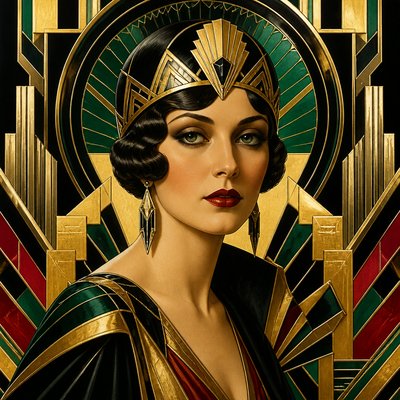
The two styles can overlap because both use symmetry and strong geometry, but Egyptian Revival jewelry is more explicitly tied to pharaonic symbols and tomb-treasure imagery. Art Deco tends to be broader in source material and often feels sleeker, more industrial, or more abstract.
What motifs are most common in this style?
Scarabs, lotus flowers, falcon wings, winged sun disks, ankhs, and cartouches are among the most recognizable. These motifs are usually arranged in bands or centered emblems rather than scattered ornament.
How can I make a piece look authentic to the style?
Use a restrained color palette, strong symmetry, and clear stone-inlay logic. Emphasize polished gold and compact symbolic forms, and avoid delicate filigree or modern minimalist proportions that would undermine the monumental feel.
Where is this style used today?
It appears in fine jewelry, costume jewelry, theatrical design, film wardrobe, museum reproduction, and decorative graphics. It is also popular in conceptual and fantasy imagery because it instantly suggests royalty, antiquity, and ritual splendor.

Create your first Egyptian Revival Jewelry artwork
Describe anything — or upload a photo — and see it in Egyptian Revival Jewelry Style in seconds.
Related Styles
Discover similar art styles