Art Nouveau Jewelry Design
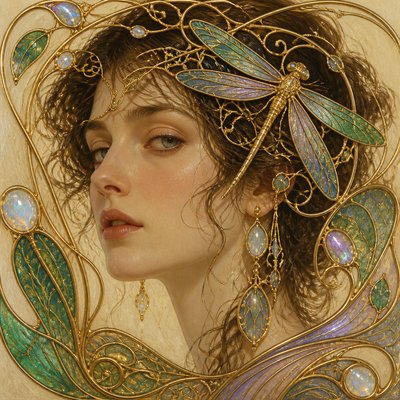
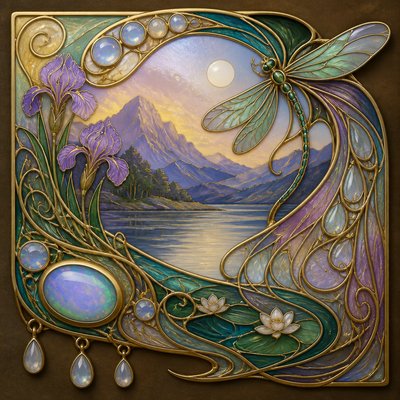
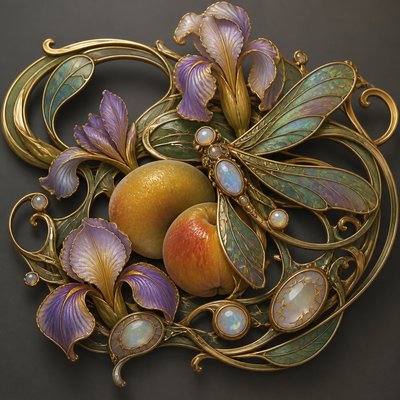
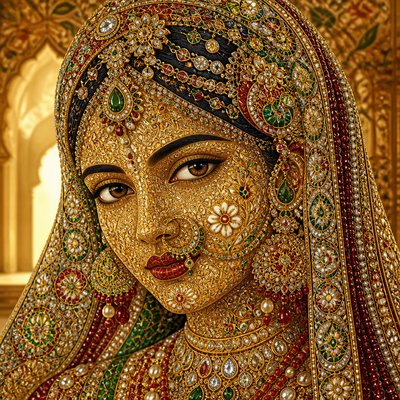
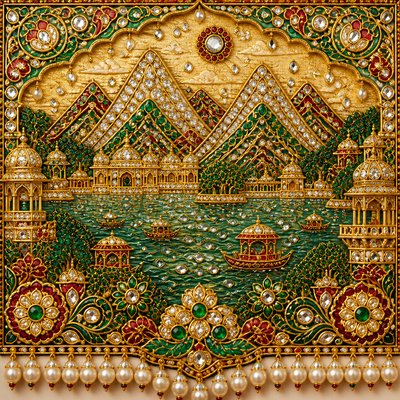
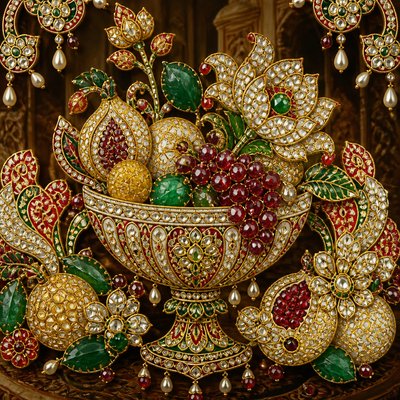
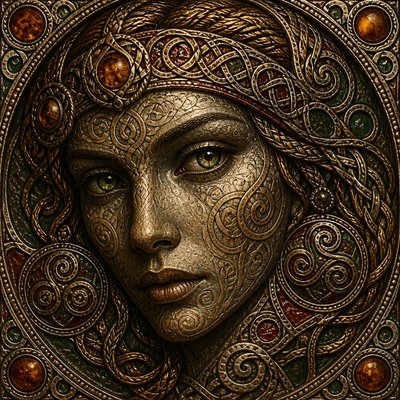
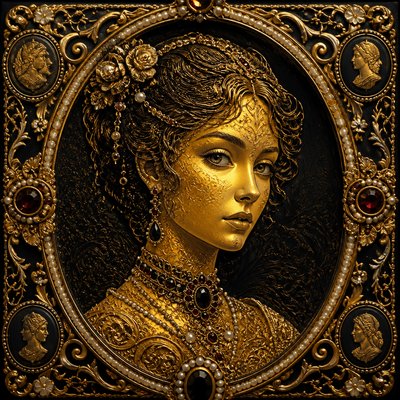
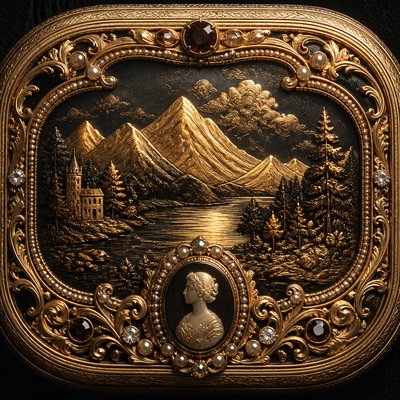
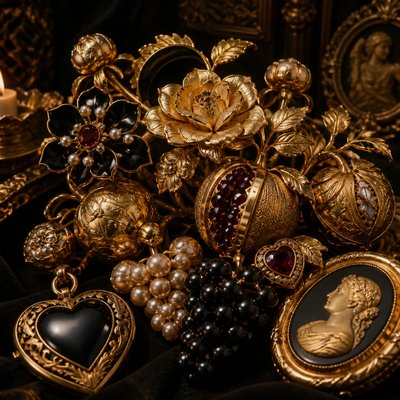
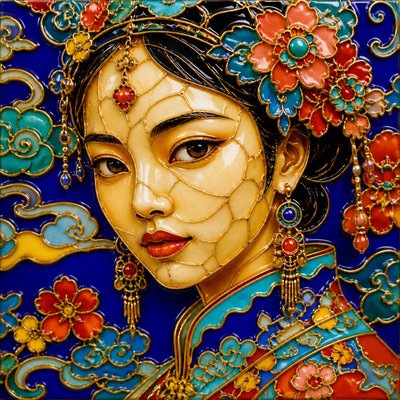
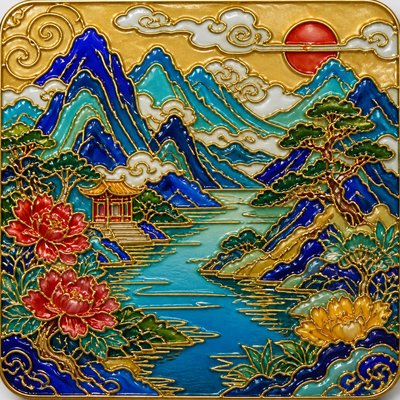
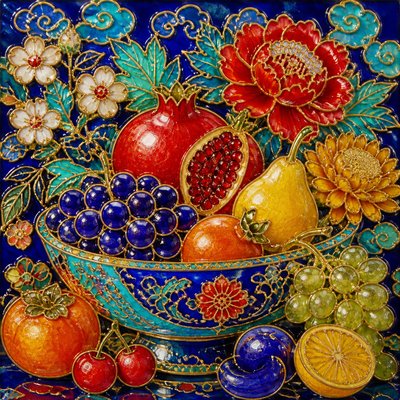
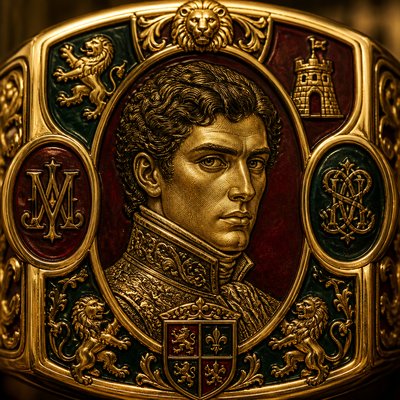
Whiplash gold lines, enamel glow, and opal fire define Art Nouveau jewelry design—organic, asymmetric ornament from c.1890–1910.
Instantly rendered in Art Nouveau Jewelry Design — or transform a photo
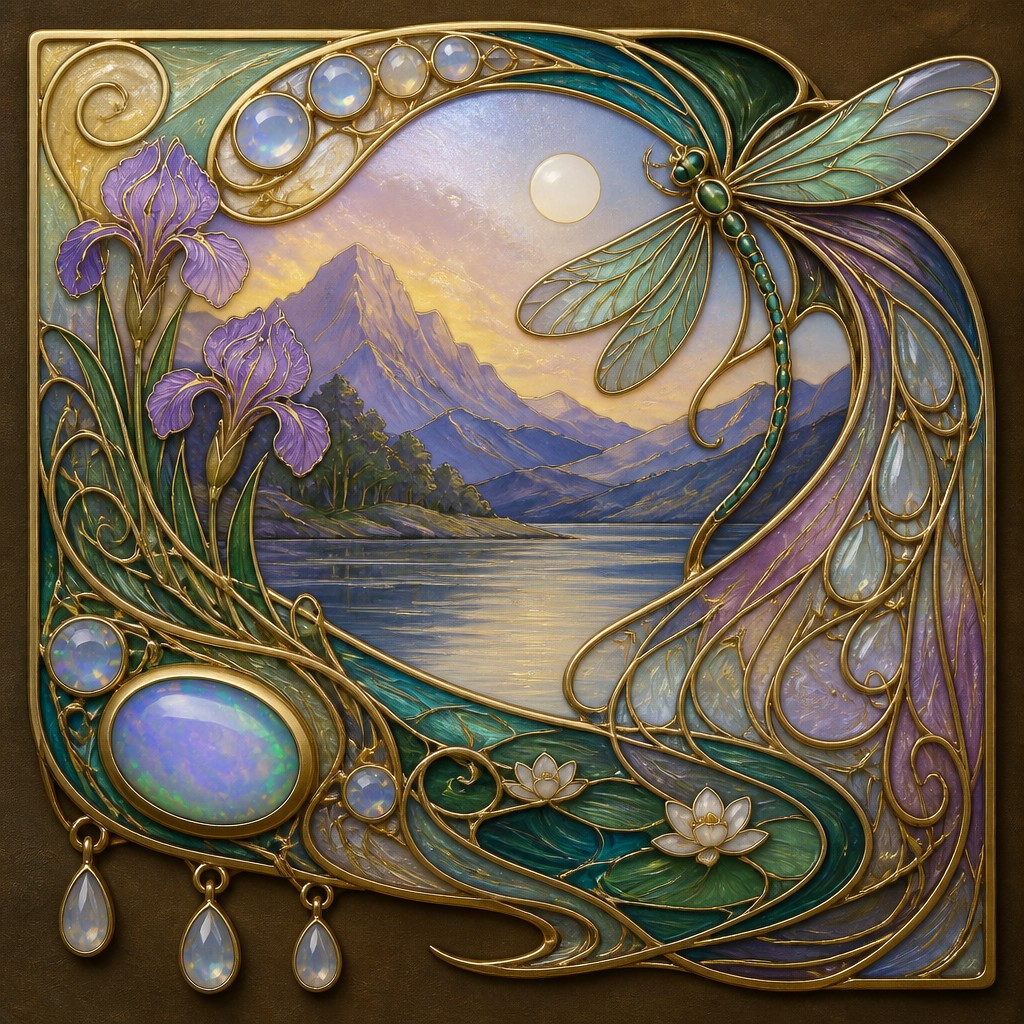
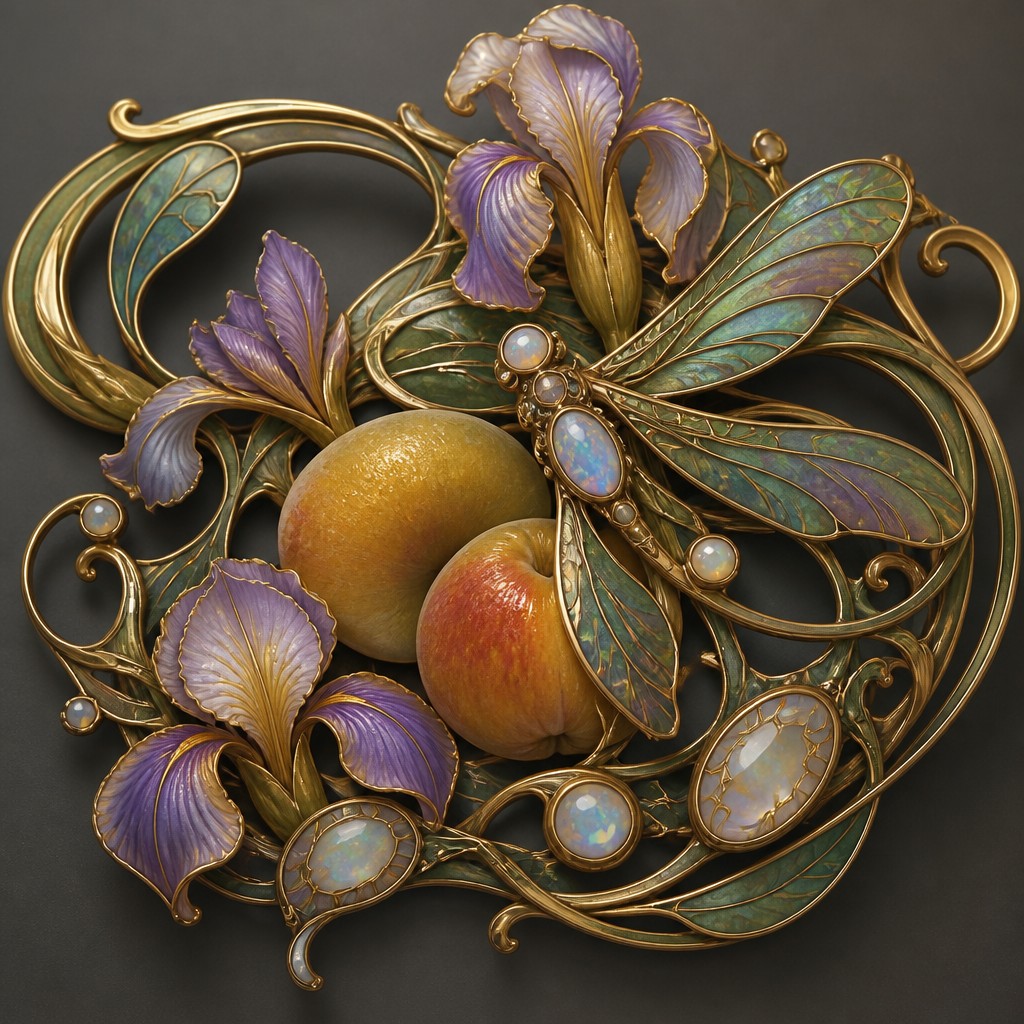
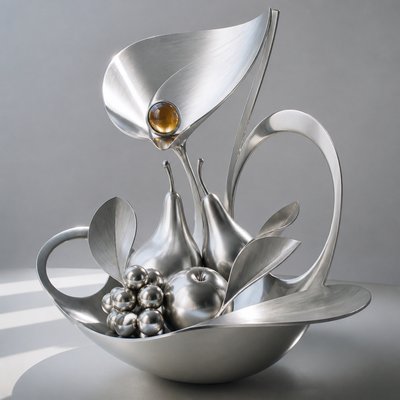
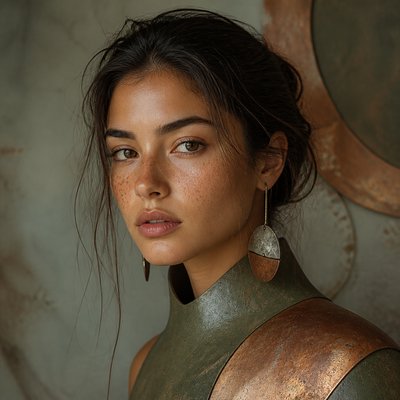
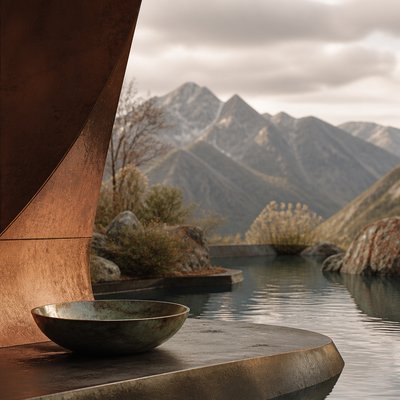
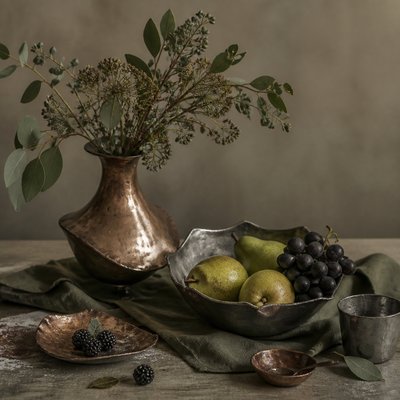
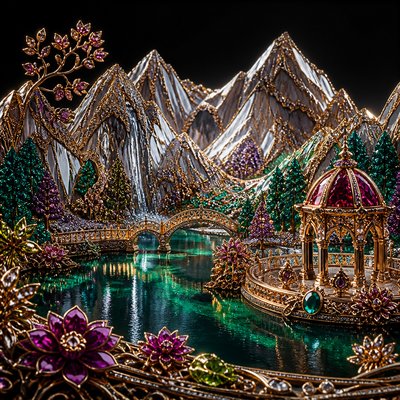
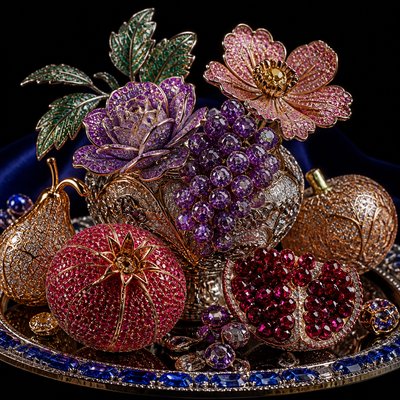
Art Nouveau Jewelry Design Gallery
Tap any artwork to explore it
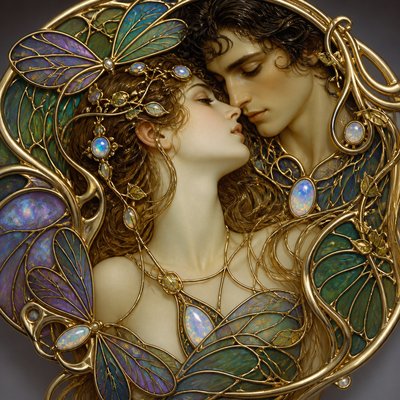
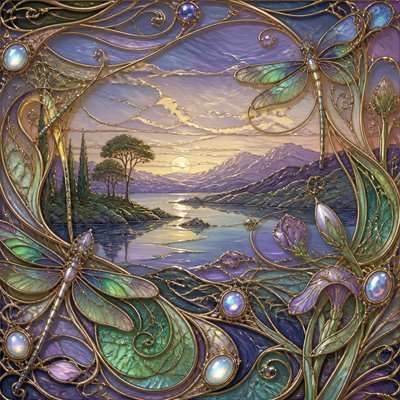
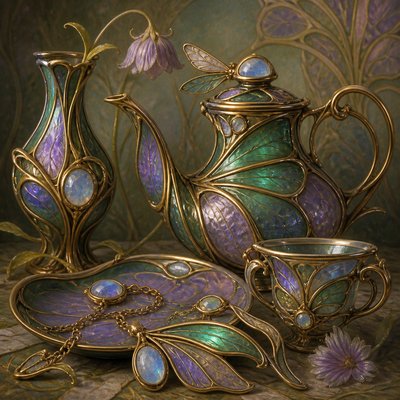
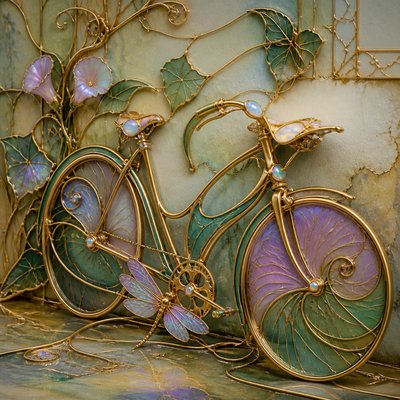
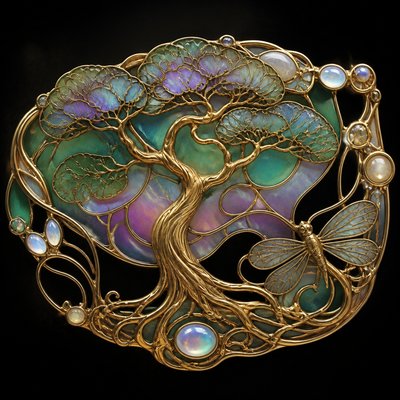
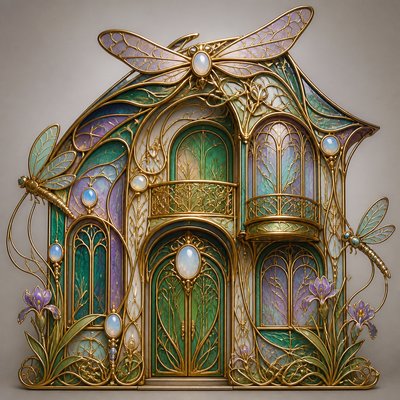
What is Art Nouveau Jewelry Design?
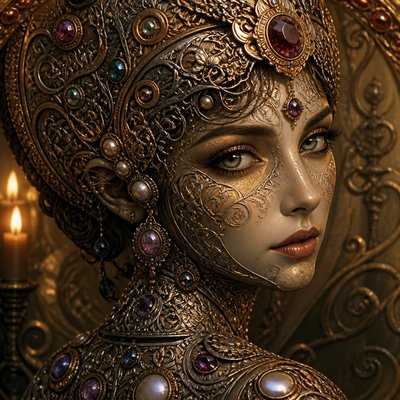
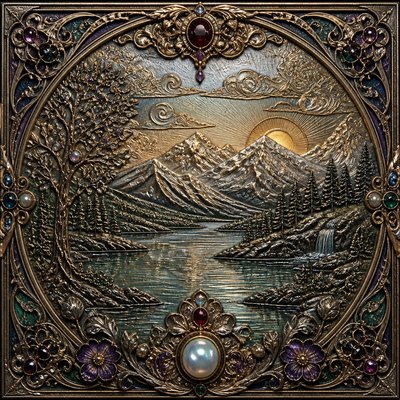
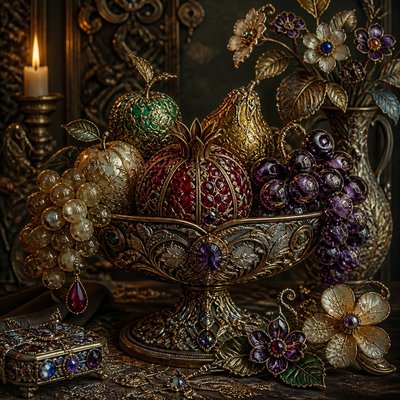
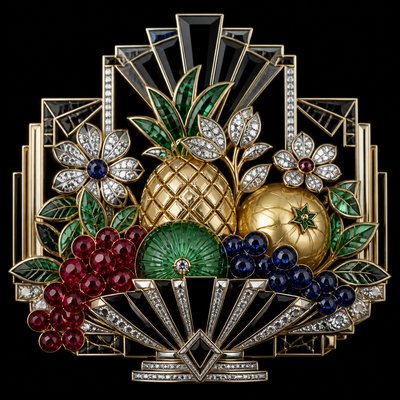
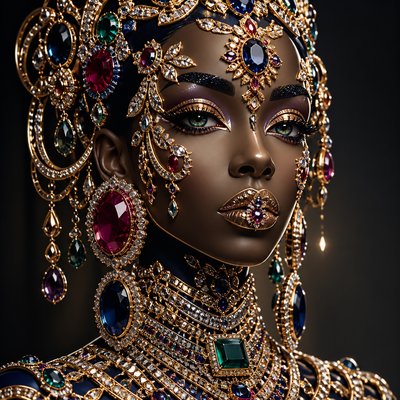
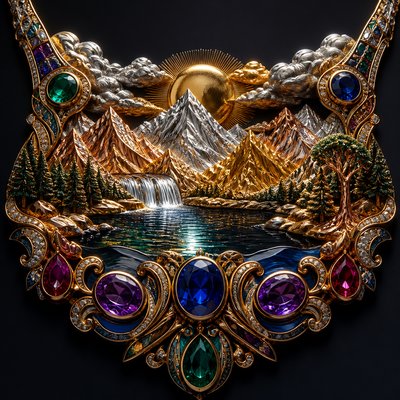
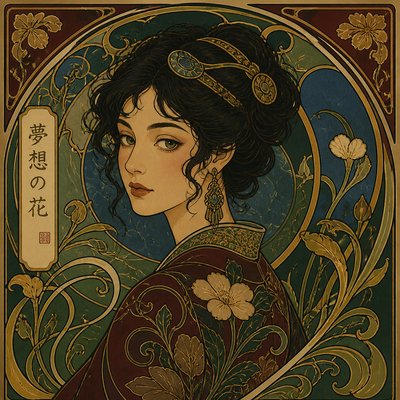
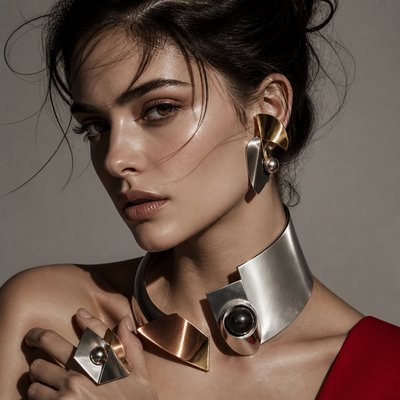
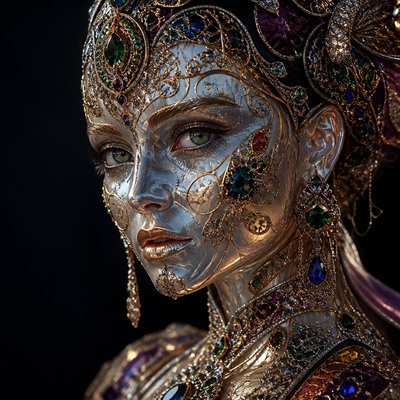
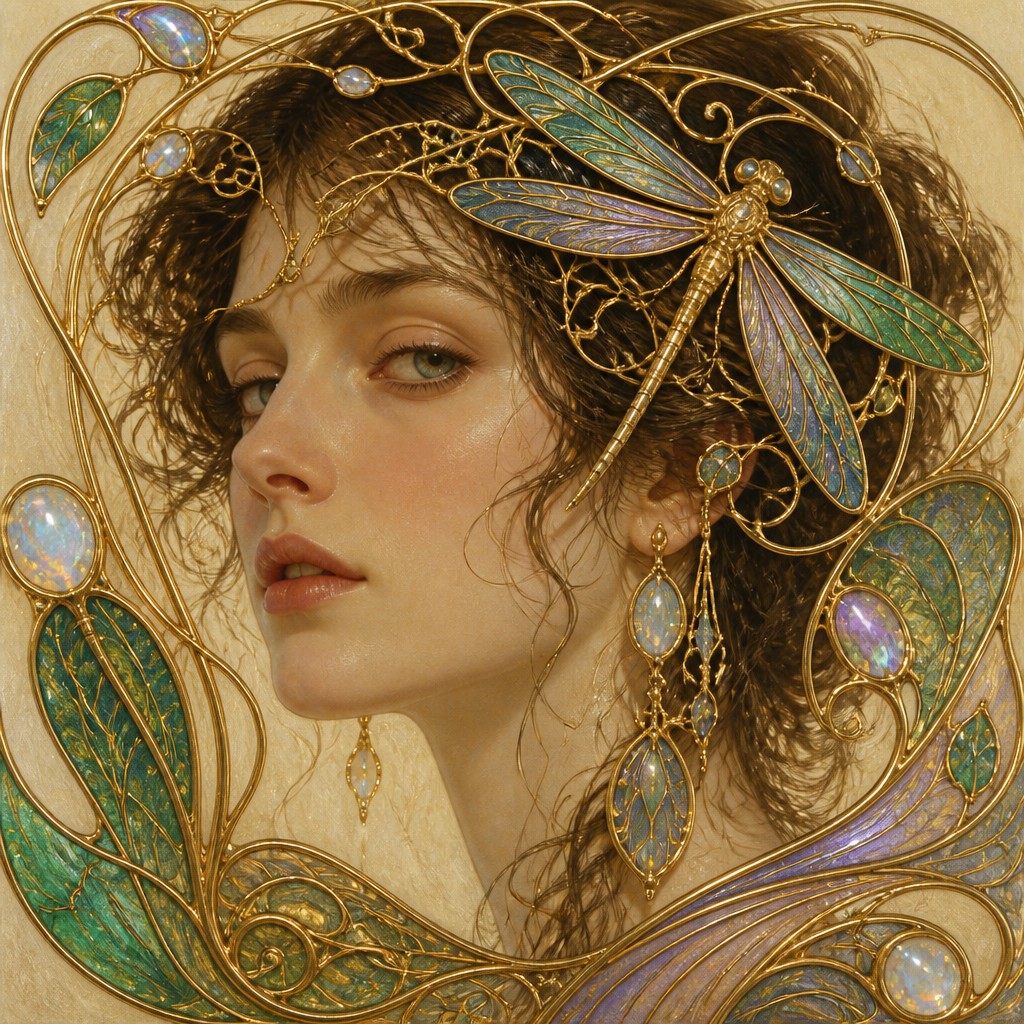
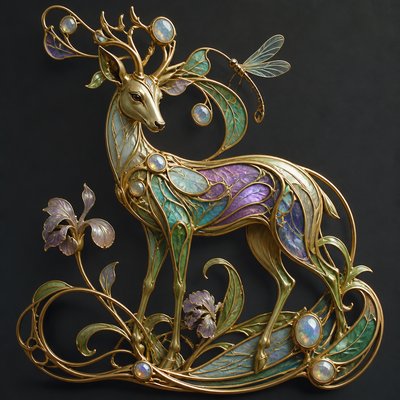
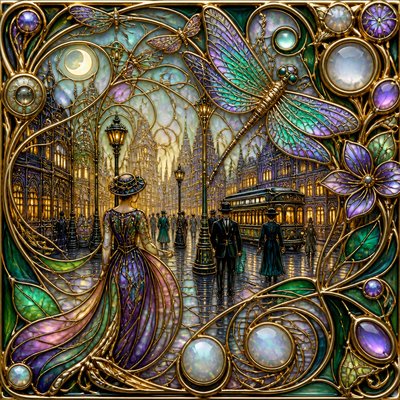
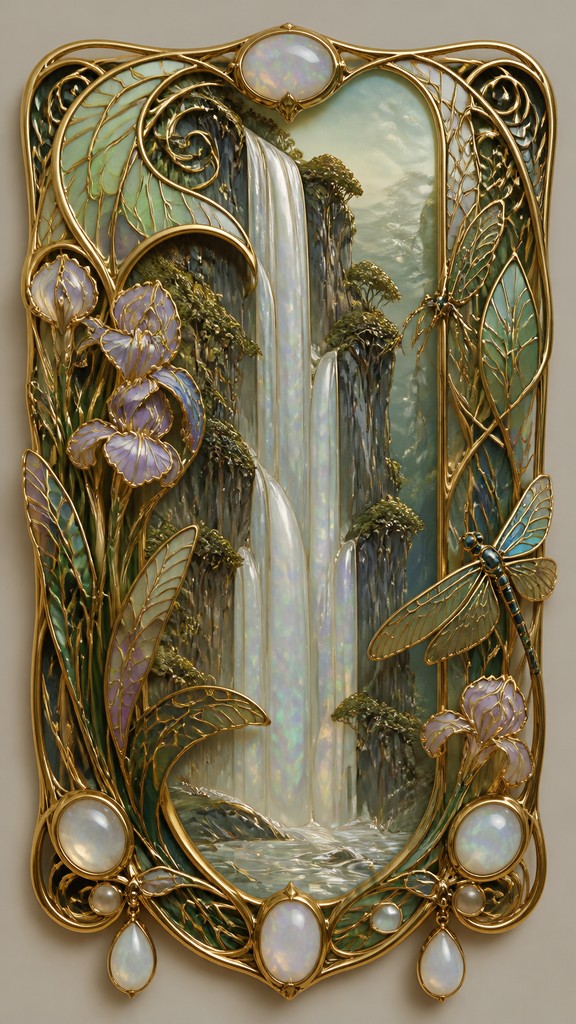
Art Nouveau jewelry design is the ornamental gold-and-gem style associated with the late 19th and early 20th centuries, especially c. 1890–1910. It is defined by flowing, asymmetrical lines; botanical and insect motifs; and a preference for luminous materials such as enamel, opal, moonstone, pearl, and colored gemstones. The style often favors handwrought metalwork over rigid symmetry, giving pieces the feeling of living growth rather than fixed geometry.
Its visual identity comes from a deliberate break with historicist jewelry and industrial sameness. Designers embraced whiplash curves, dragonfly wings, irises, orchids, and vines because these forms could be translated into elegant line, translucent enamel, and delicate openwork. The result is jewelry that appears sensual, airy, and dreamlike, with light playing through plique-à-jour enamel and across polished stones in a way that emphasizes motion, fragility, and organic transformation.
Try It On Your Photos
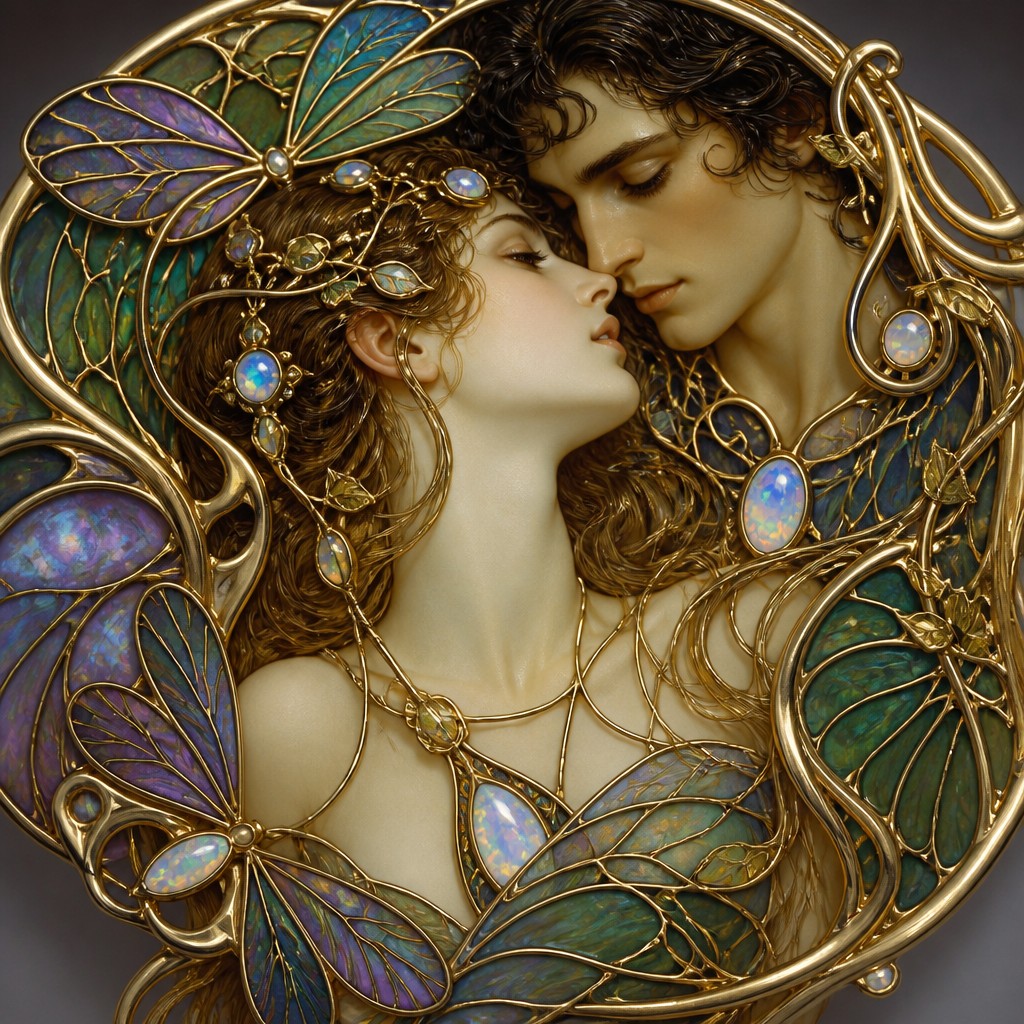
Upload any photo and convert it into Art Nouveau Jewelry Design — drag the sliders to compare before and after.

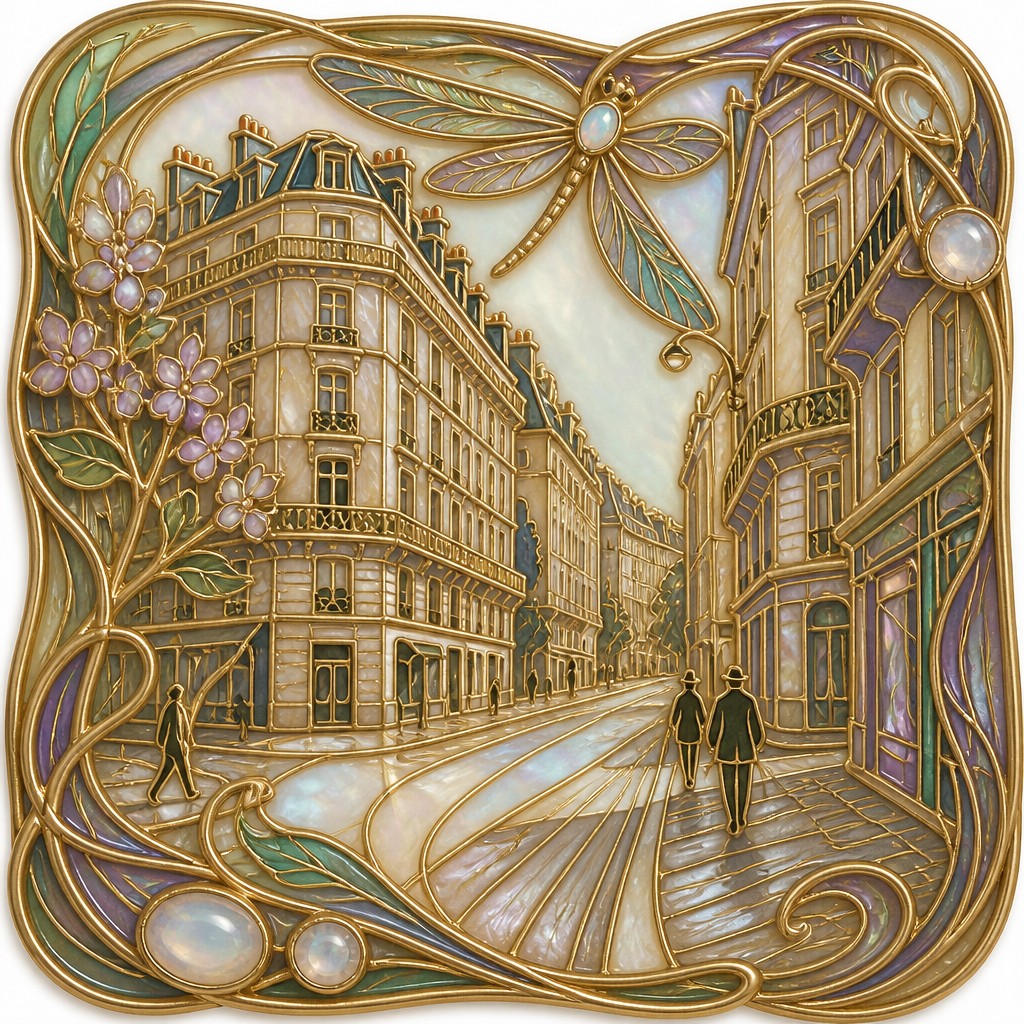

What Defines Art Nouveau Jewelry Design
The signature details, up close
Whiplash line
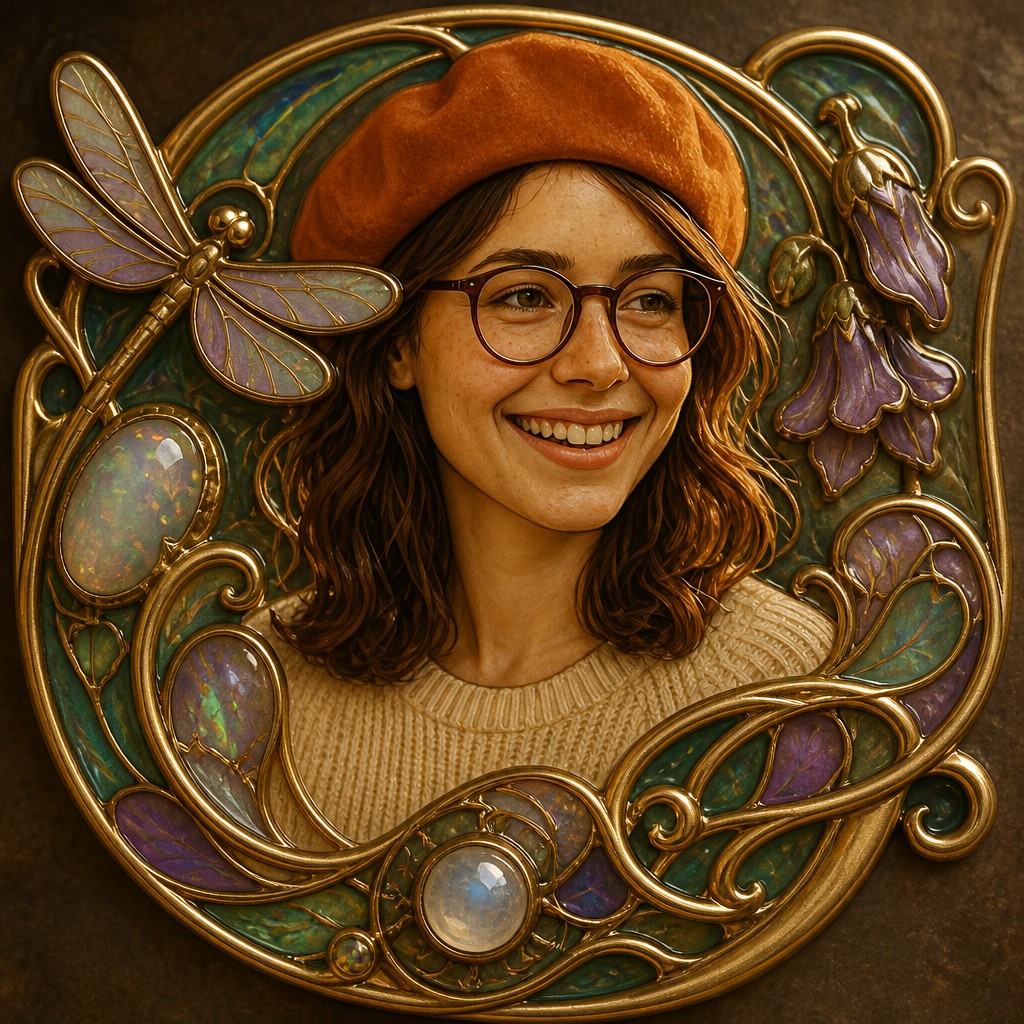
The most recognizable feature is the elastic, asymmetrical curve often called the whiplash line. It creates a sense of continuous growth, as if stems, hair, ribbons, and wings are unfolding in one fluid motion.
Botanical and insect motifs
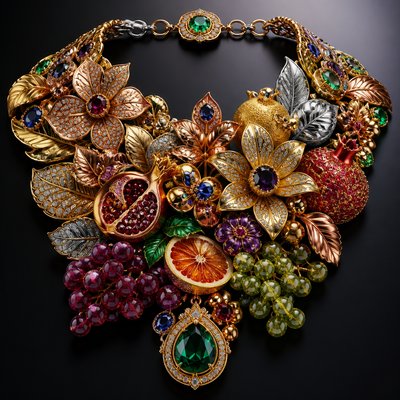
Flowers, seed pods, leaves, vines, dragonflies, moths, and peacocks are common subjects. These motifs are not copied literally so much as stylized into decorative structures with elegant silhouettes.
Enamel translucency
Plique-à-jour enamel is especially associated with the style because it allows light to pass through color like stained glass. Other enamel techniques may also be used, but always to create luminosity and delicacy rather than opaque hardness.
Opals and moonstones
Milky, shifting gemstones suit the style’s mood of ambiguity and metamorphosis. Their soft internal light complements the luminous enamel and helps avoid the hard brilliance of more formal jewelry traditions.
Asymmetry and movement
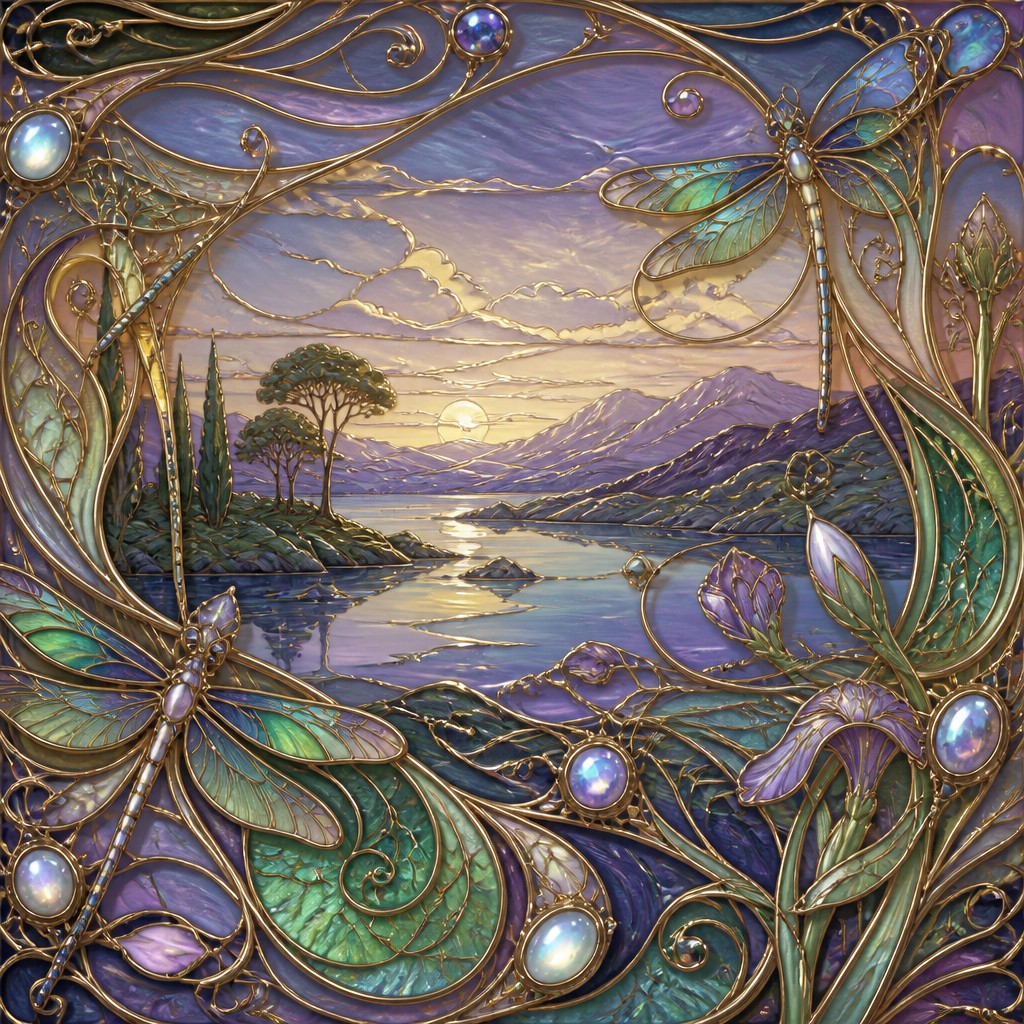
Designs are usually balanced through rhythm rather than mirror symmetry. A brooch or pendant may unfold to one side, giving the impression of an organic organism rather than a static emblem.
Openwork gold structure
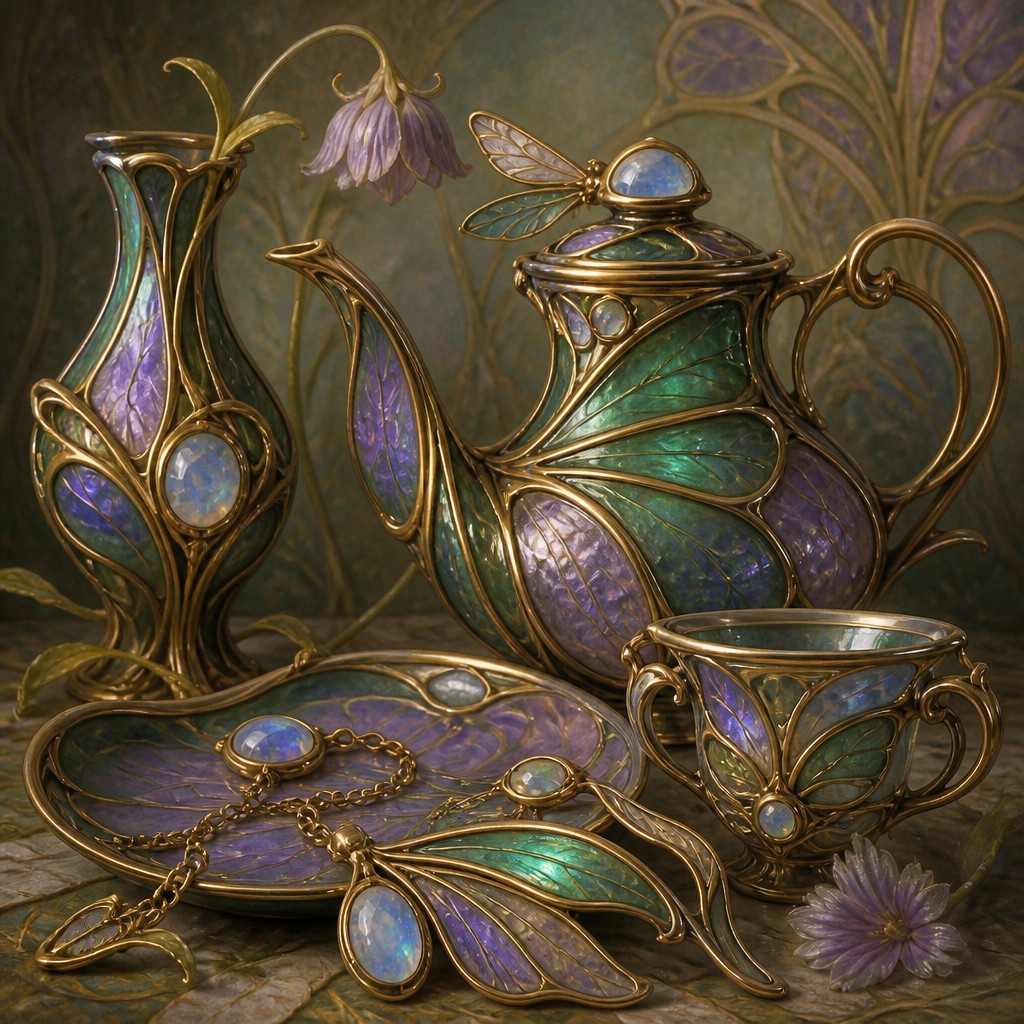
Fine matte or satin gold settings frequently act as a skeletal framework for the design. Negative space is important, allowing the piece to breathe and making the decorative lines feel light instead of heavy.
Try It
Create Videos in Art Nouveau Jewelry Design
Styles aren't just for stills — describe a scene or animate an image and get a short video rendered in Art Nouveau Jewelry Design. Press play to see this pond come to life.
Make a VideoArt Nouveau Jewelry Design Prompt Ideas
Start from an idea — each one opens the generator with the style ready to go. See all 40 Art Nouveau Jewelry Design prompts →
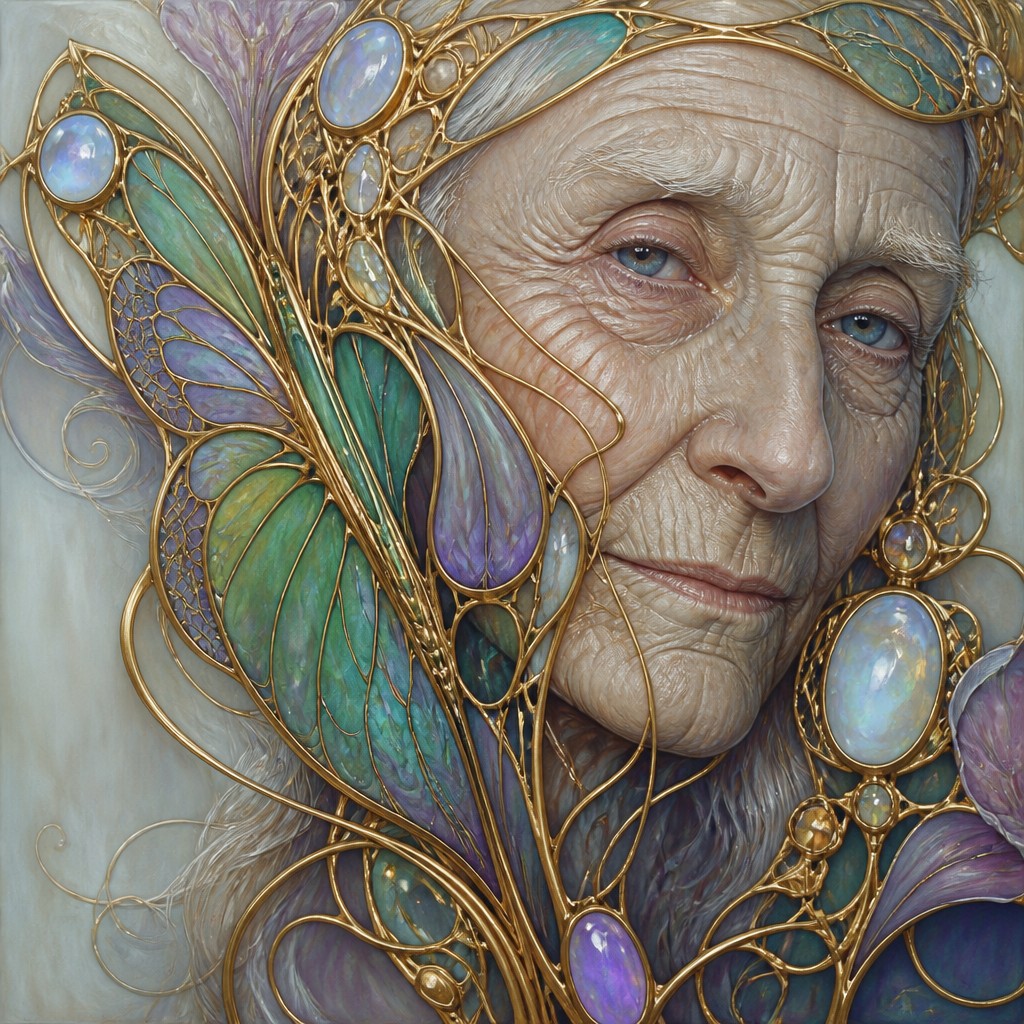
“close-up portrait of an elderly person with expressive weathered features”
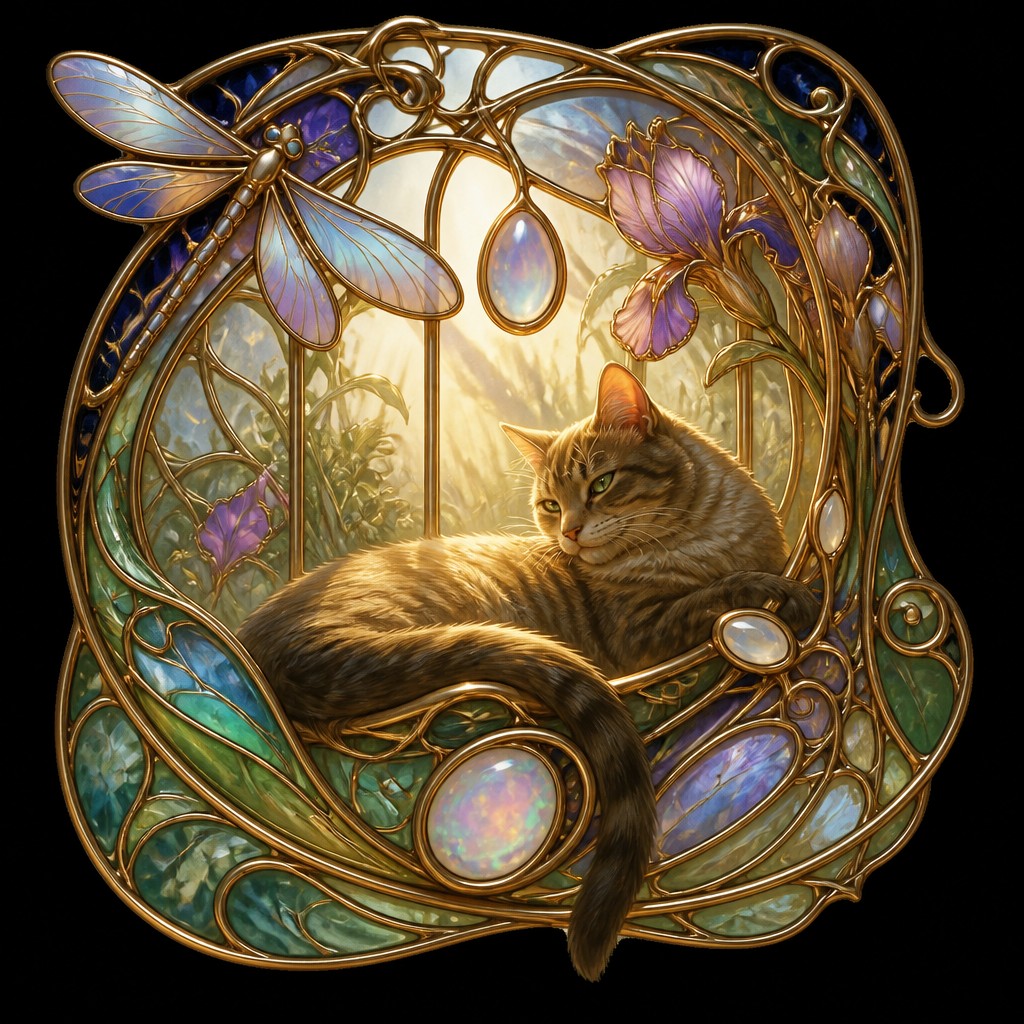
“a cat lounging in a sunlit window”
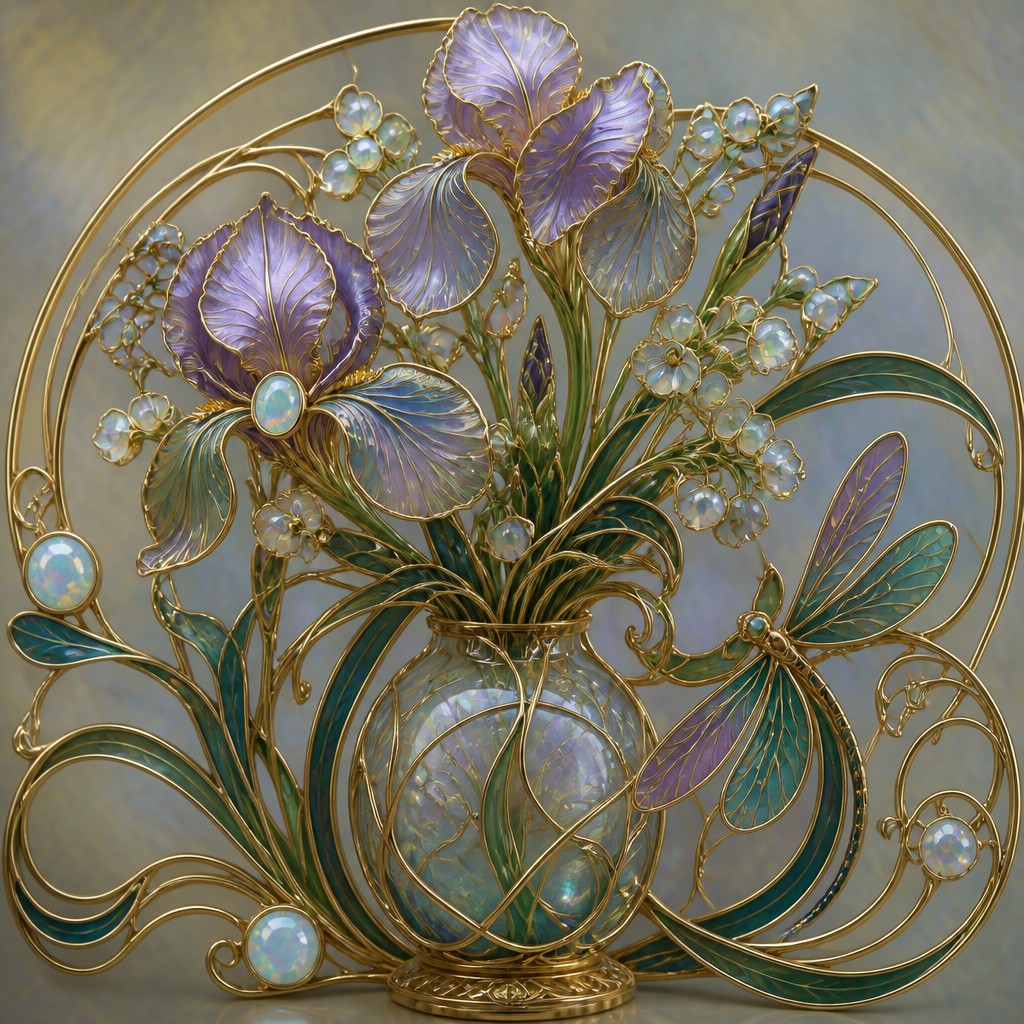
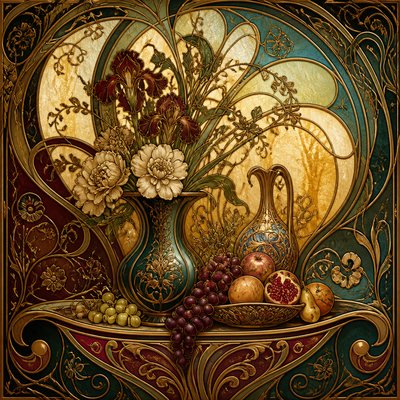
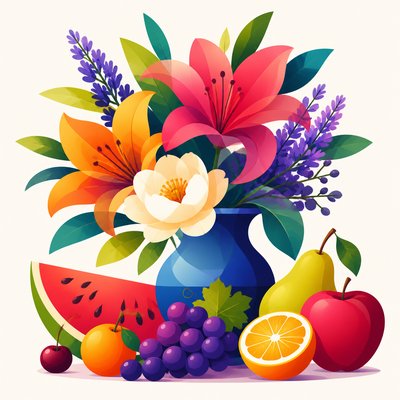
“bouquet of flowers in a glass vase”
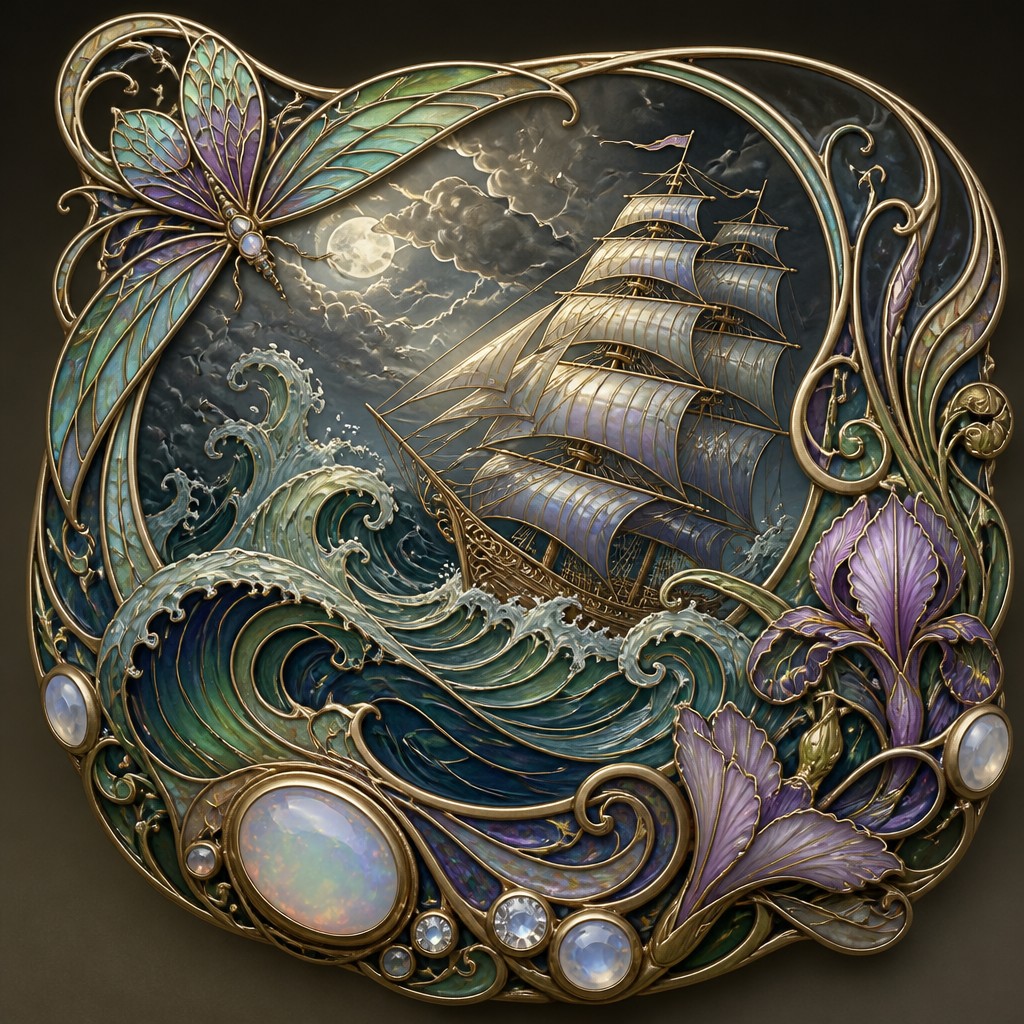
“sailing ship on a stormy sea”
How to Create Art Nouveau Jewelry Design Art
Master the craft step by step — or skip straight to creating. Read the full guide →
- 1
Design the silhouette first
Start with an asymmetrical flow line and build the ornament around it, as if drawing a vine or wing in motion. For digital work or prompt-based generation, specify flowing gold arabesques, botanical curves, and delicate negative space before adding gemstones.
- 2
Use luminous color sparingly
Limit the palette to pearly whites, peacock green, lilac, amber, and pale blue so the material effects stay refined. In traditional rendering, contrast matte metal with translucent enamel to preserve the style’s lightness.
- 3
Prioritize material realism
Show how gold bends, enamel glows, and stones catch light rather than flattening the object into a graphic icon. In image generation, prompt for plique-à-jour enamel, opal fire, moonstone sheen, and translucent light passing through membranes.
- 4
Integrate motif and structure
Let floral or insect elements become part of the architecture of the piece instead of adding them as separate decoration. A dragonfly wing can become a pendant frame; a stem can become the clasp, border, or setting.
- 5
Reference historical craftsmanship
If making by hand, study chased goldwork, cloisonné, plique-à-jour, and gem setting techniques associated with turn-of-the-century jewelry. For AI or digital prompts, include phrases such as handwrought, fine jewelry, antique finish, and museum-quality craftsmanship.
The Story
History & Origins of Art Nouveau Jewelry Design
Art Nouveau emerged across Europe and the United States in the 1890s as part of a broader decorative arts movement that rejected academic revival styles and the heavy mass production associated with industrial ornament. In jewelry, it developed through workshops and firms that treated the object as a unified work of art, often combining goldsmithing, enameling, gem-setting, and design in a single conception. Canonical figures include René Lalique, whose jewelry is among the most important expressions of the style, along with designers and workshops active in France, Belgium, Britain, and elsewhere.
The style flourished roughly until the First World War, after which its sinuous naturalism gave way to the sharper geometry of Art Deco. Its lineage draws on Japanese prints, Symbolism, the Aesthetic Movement, and craft traditions of enameling and metalwork. Today, Art Nouveau jewelry remains a reference point for designers who want a nature-based, sculptural, and highly ornamental language grounded in fine materials and hand-crafted detail.
Influences: Art Nouveau jewelry draws on the broader Art Nouveau movement in architecture, graphic design, and the decorative arts, but in jewelry it is especially shaped by Symbolism, Japonisme, and the Aesthetic Movement. Japanese prints helped popularize asymmetry, cropped composition, and the beauty of natural forms, while Symbolist art encouraged mood, metamorphosis, and dream imagery. René Lalique is the central canonical name in jewelry, and his work helped define the style’s fusion of craftsmanship, eroticism, and nature.
Frequently Asked Questions
What defines Art Nouveau jewelry design?
It is defined by flowing organic lines, botanical and insect motifs, and a strong emphasis on handcrafted materials such as gold, enamel, opal, pearl, and moonstone. The compositions are usually asymmetrical and designed to feel alive, airy, and rhythmic.
What materials are most associated with this style?
Gold, silver, enamel, opals, moonstones, pearls, and occasionally diamonds used as accents are among the most characteristic materials. Plique-à-jour enamel is especially important because it creates a stained-glass effect that matches the style’s interest in translucency.
How is it different from Art Deco jewelry?
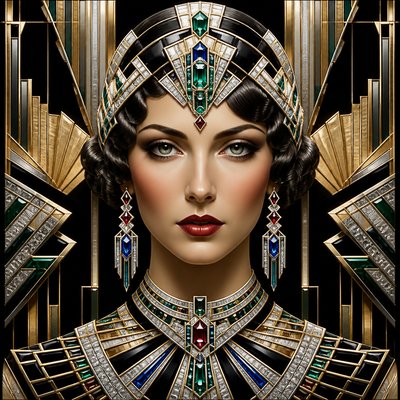
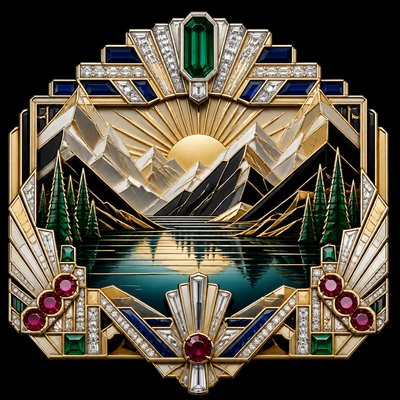
Art Nouveau is curving, organic, and nature-based, while Art Deco is typically geometric, symmetrical, and more architectural. Art Nouveau often looks hand-grown, whereas Art Deco tends to look engineered and streamlined.
Which artists are most associated with this style?
René Lalique is the best-known and most securely associated jewelry designer of Art Nouveau. Depending on the context, the style also connects to broader decorative arts figures and workshops active in France and elsewhere around 1890–1910, but Lalique is the canonical jewelry name.
Can this style work for modern jewelry?
Yes. Contemporary jewelers often adapt Art Nouveau through botanical forms, asymmetry, and enamel techniques while updating scale or wearability. The key is to preserve the sense of organic movement and luminous material contrast.
How do I prompt an image in this style?
Describe the subject first, then add material and formal cues such as whiplash curves, matte gold, plique-à-jour enamel, opal fire, moonstone, and translucent light. Strong prompts usually specify an asymmetrical ornamental structure and a handcrafted antique-jewelry finish.
Create your first Art Nouveau Jewelry Design artwork
Describe anything — or upload a photo — and see it in Art Nouveau Jewelry Design in seconds.
Related Styles
Discover similar art styles