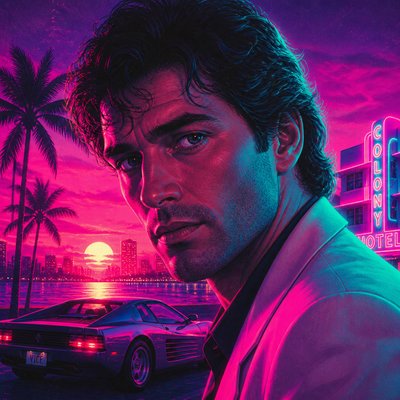
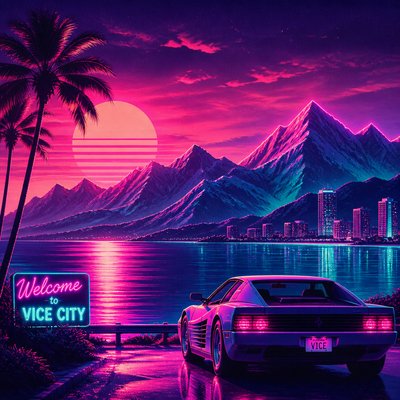
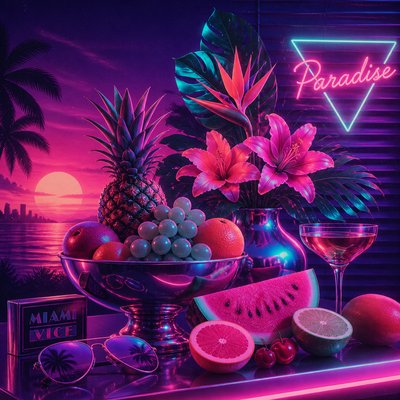
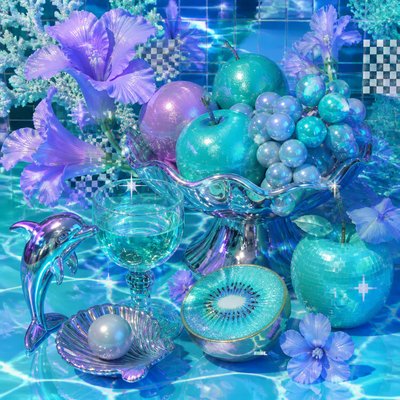
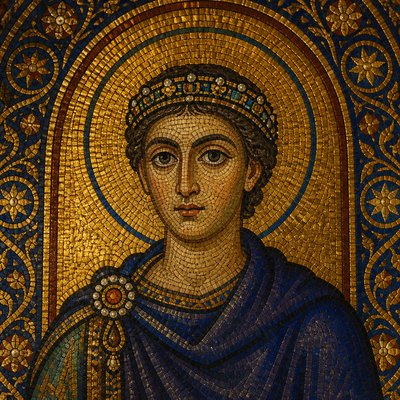
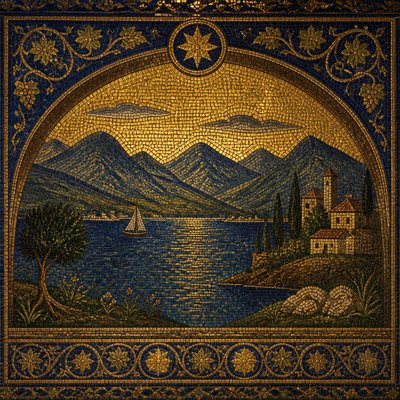
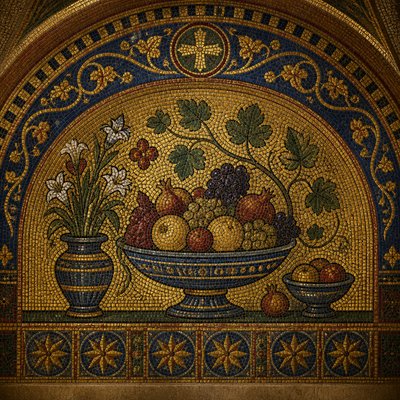
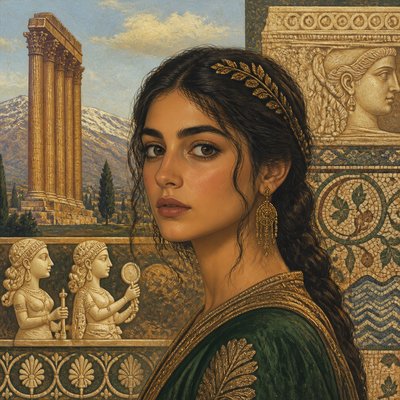
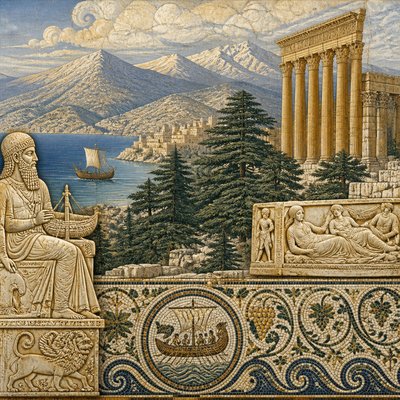
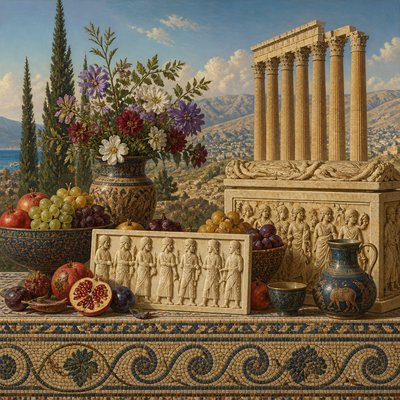
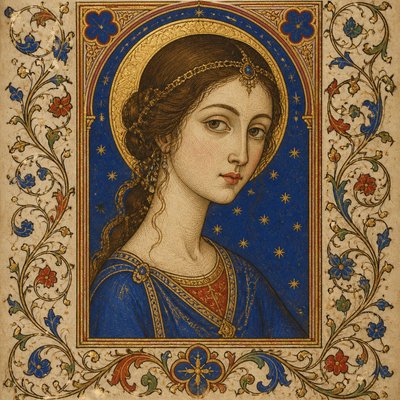
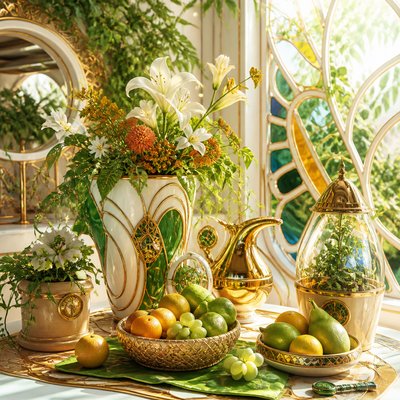
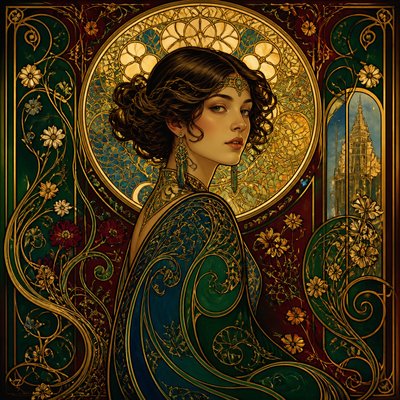
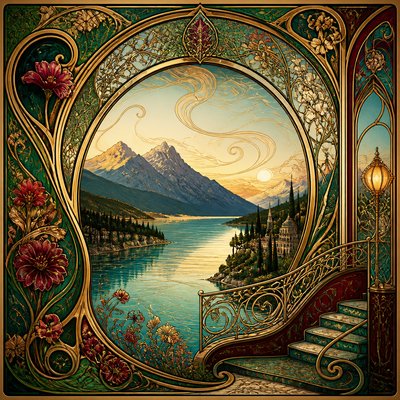
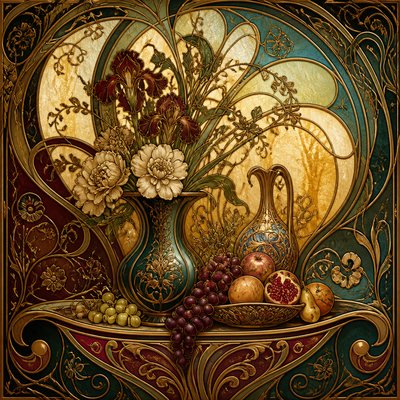
Retro neon synthwave aesthetic with hot pink, turquoise, deep violet dusk, chrome glow, and 1980s-inspired nightlife energy.
Instantly rendered in Miami Vice — or transform a photo
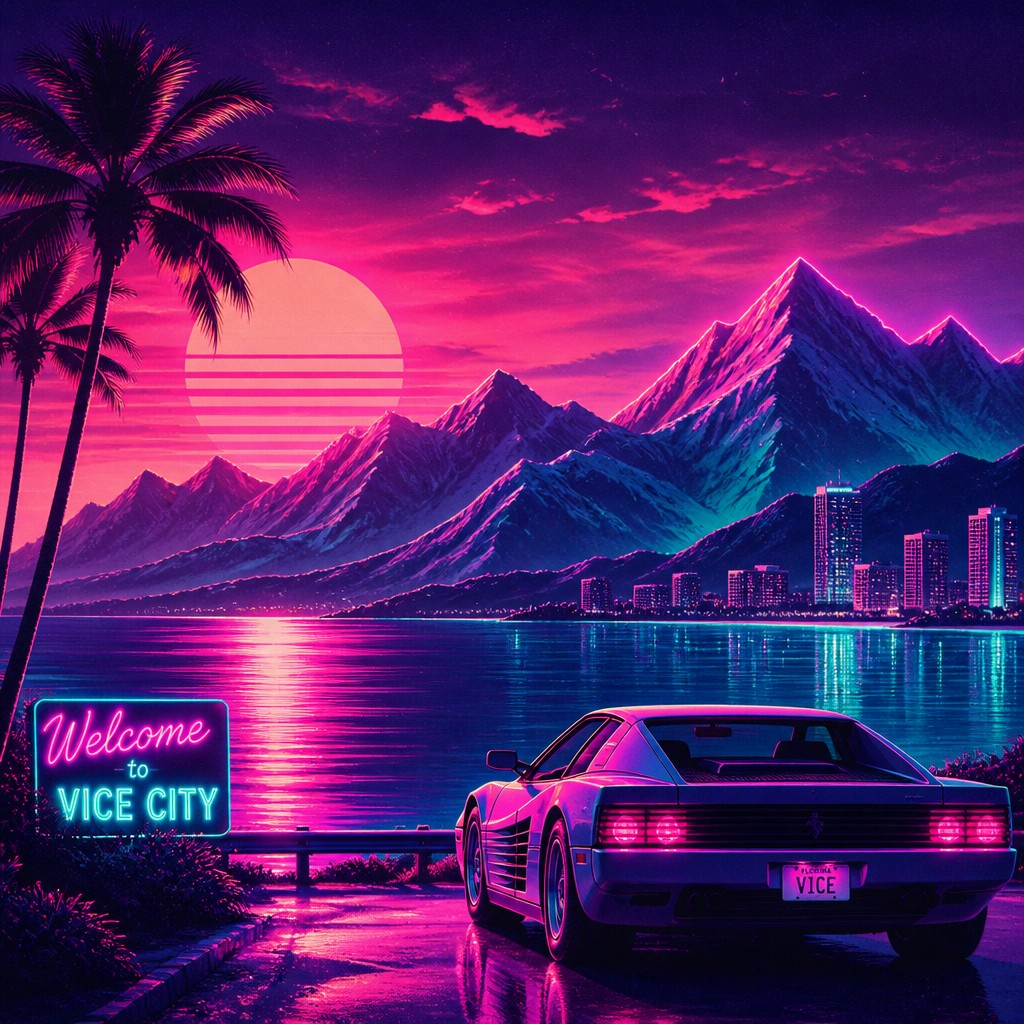
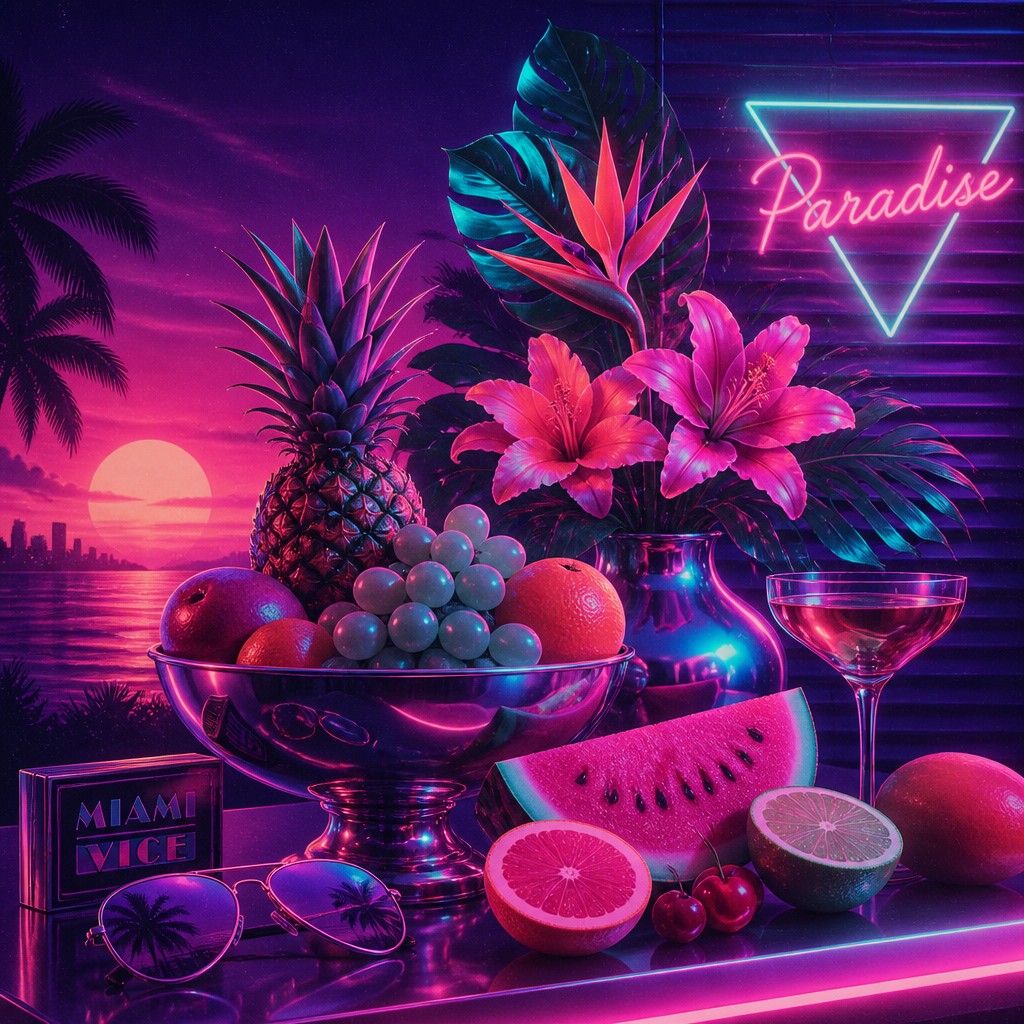
Miami Vice Gallery
Tap any artwork to explore it
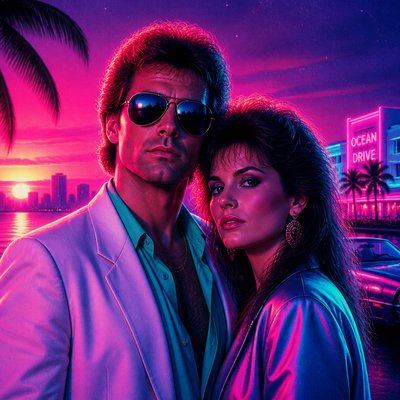
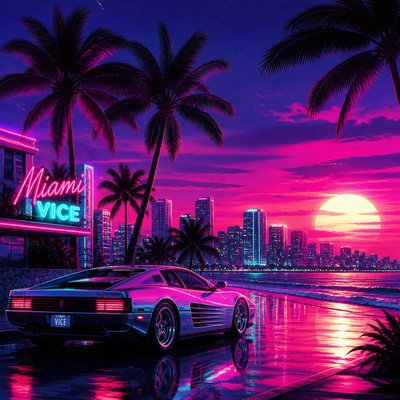
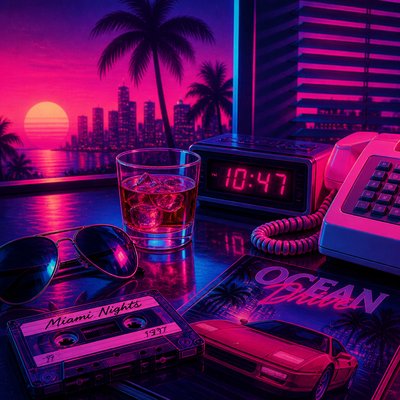
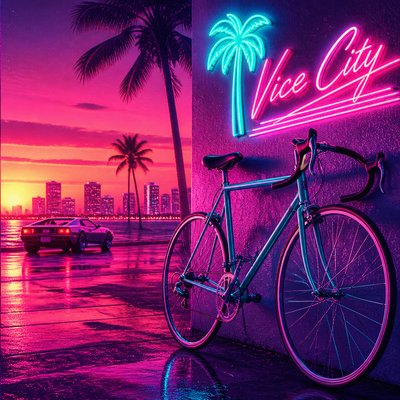
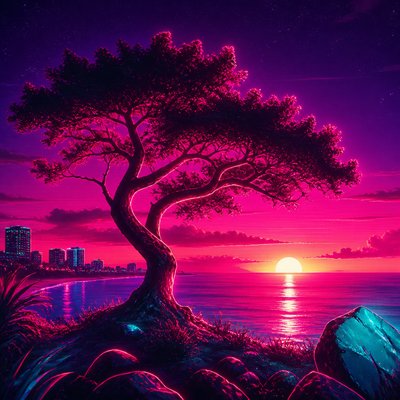
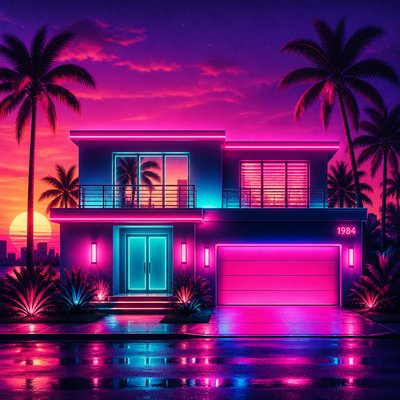
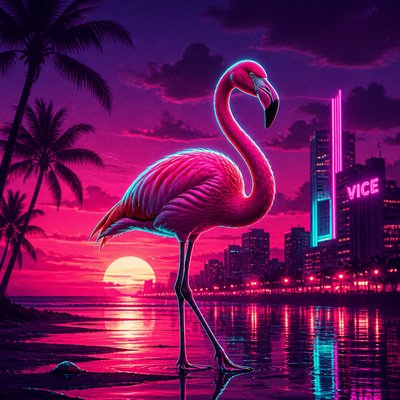
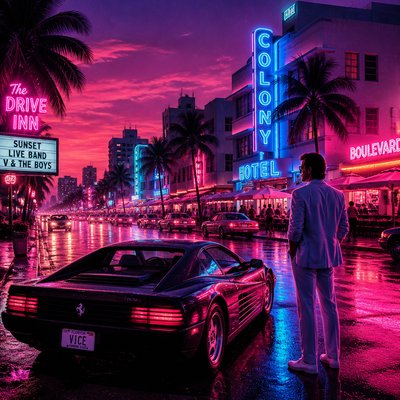
What is Miami Vice?
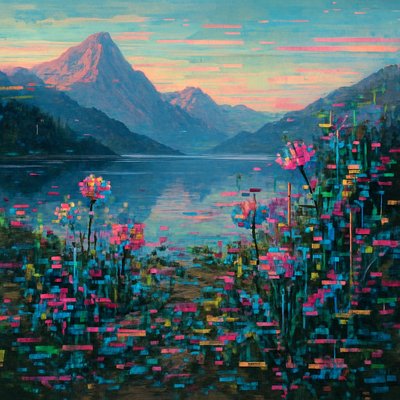
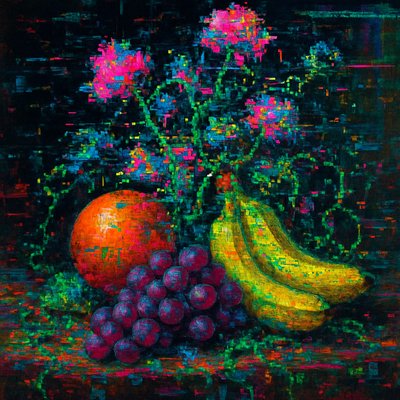
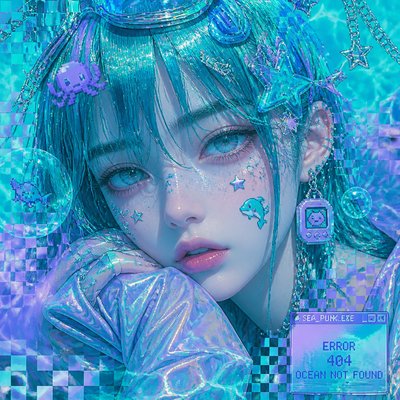
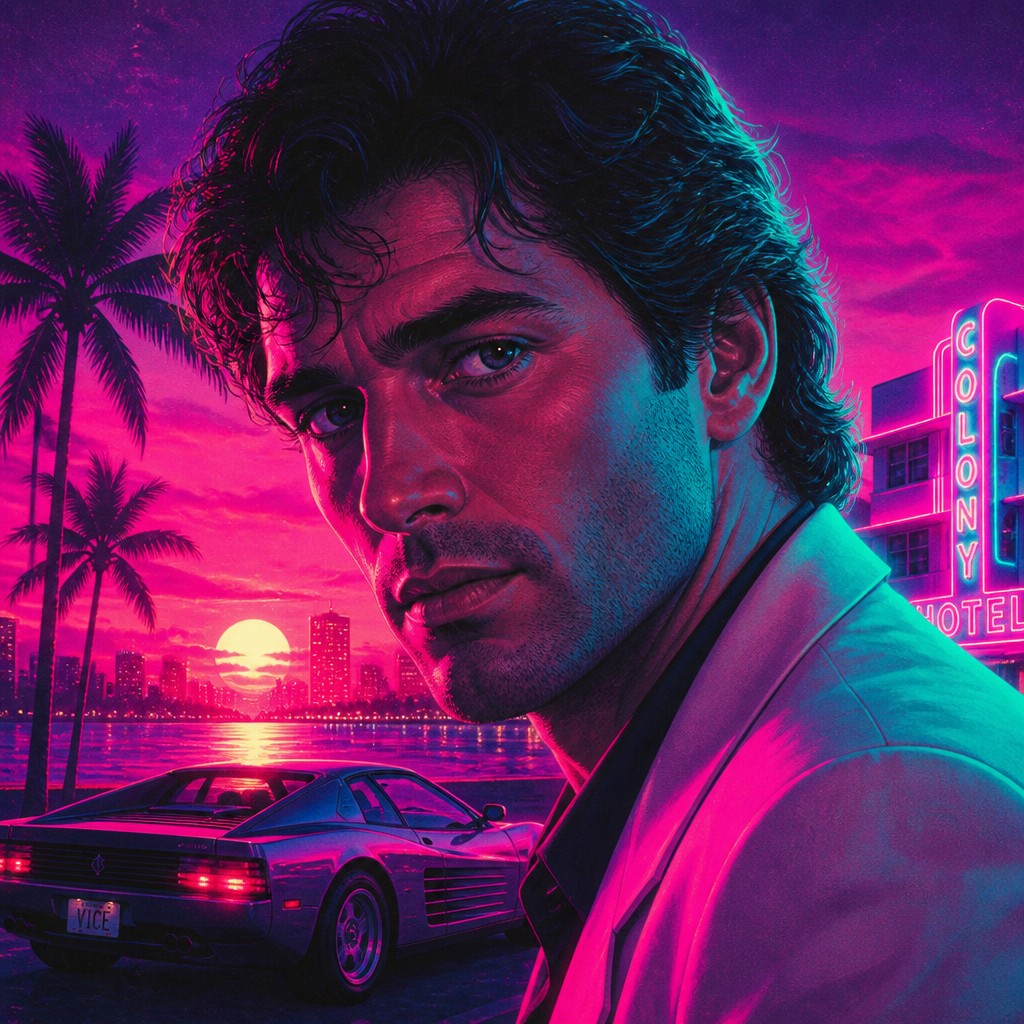
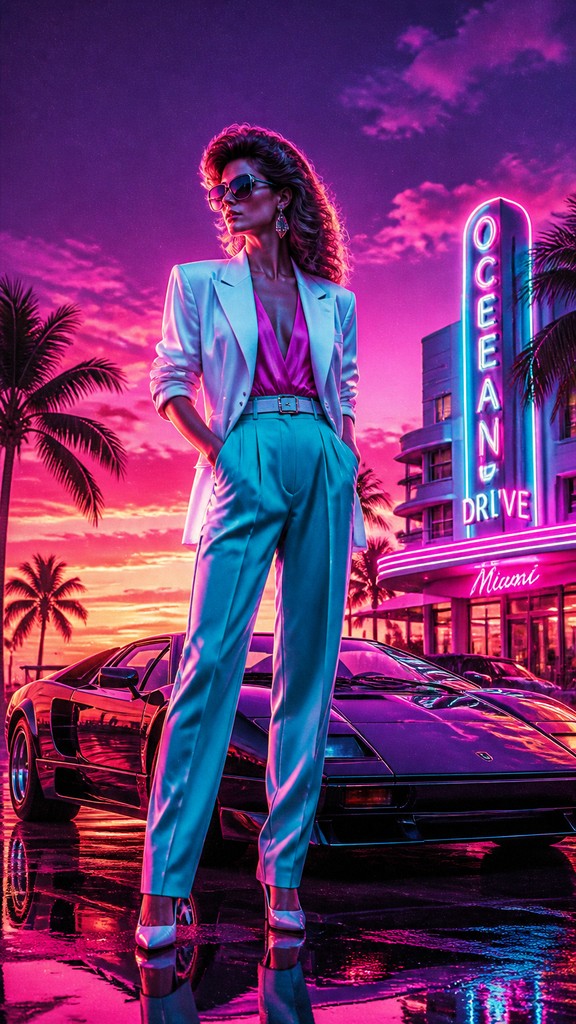
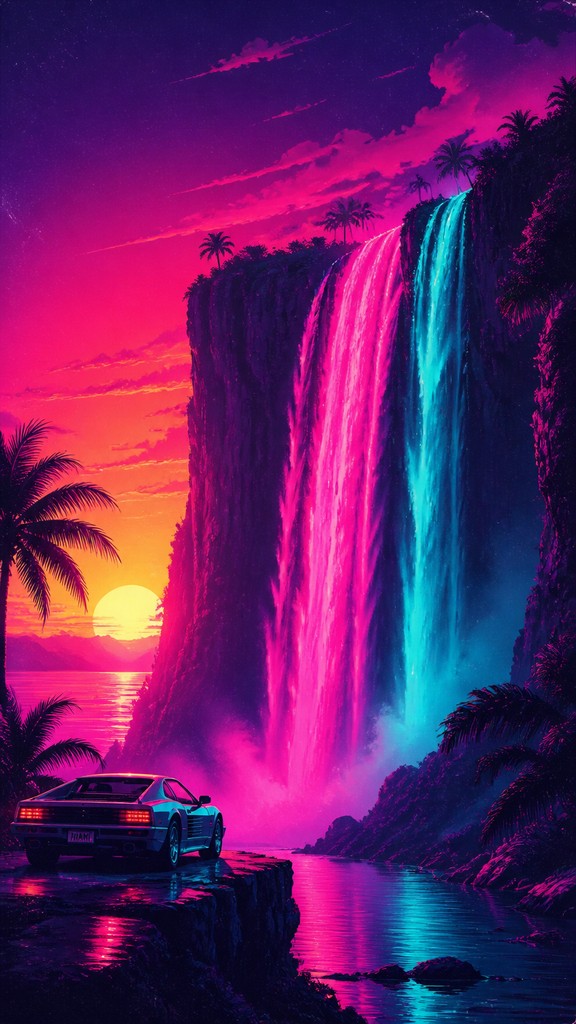
This is a retro-futuristic neon aesthetic built from hot pink, turquoise, electric blue, and deep violet dusk tones. It combines glossy color blocking, luminous rim light, and atmospheric gradients to create a stylized night scene that feels both glamorous and slightly unreal.
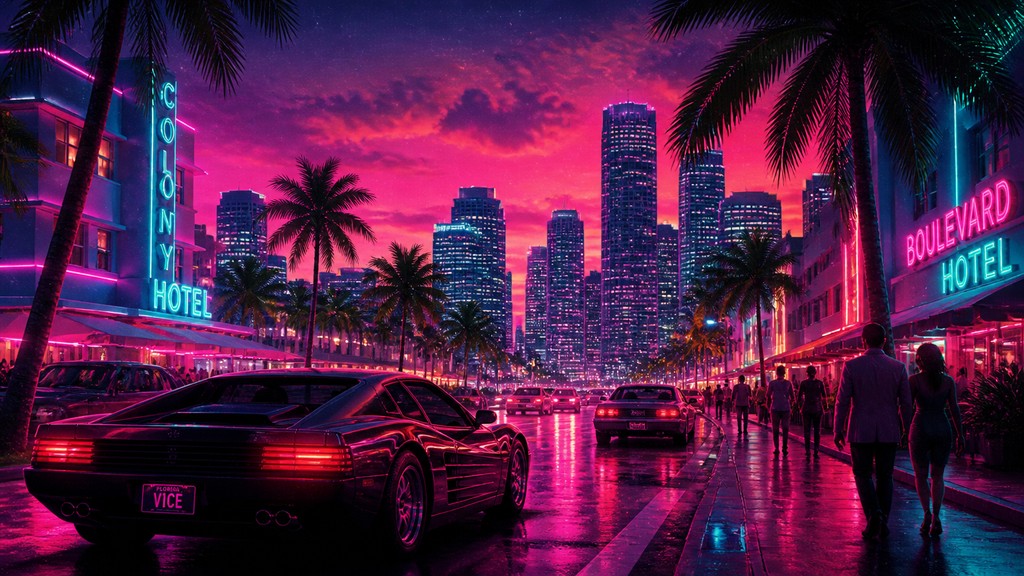
The look is closely associated with 1980s pop culture, especially neon city nightlife, beachside sunsets, chrome surfaces, and the visual language of synthwave and retrowave. Its appeal comes from contrast: warm sunset hues against cool neon accents, hard-edged silhouettes against soft bloom, and a polished, cinematic finish that suggests speed, luxury, and nocturnal energy.
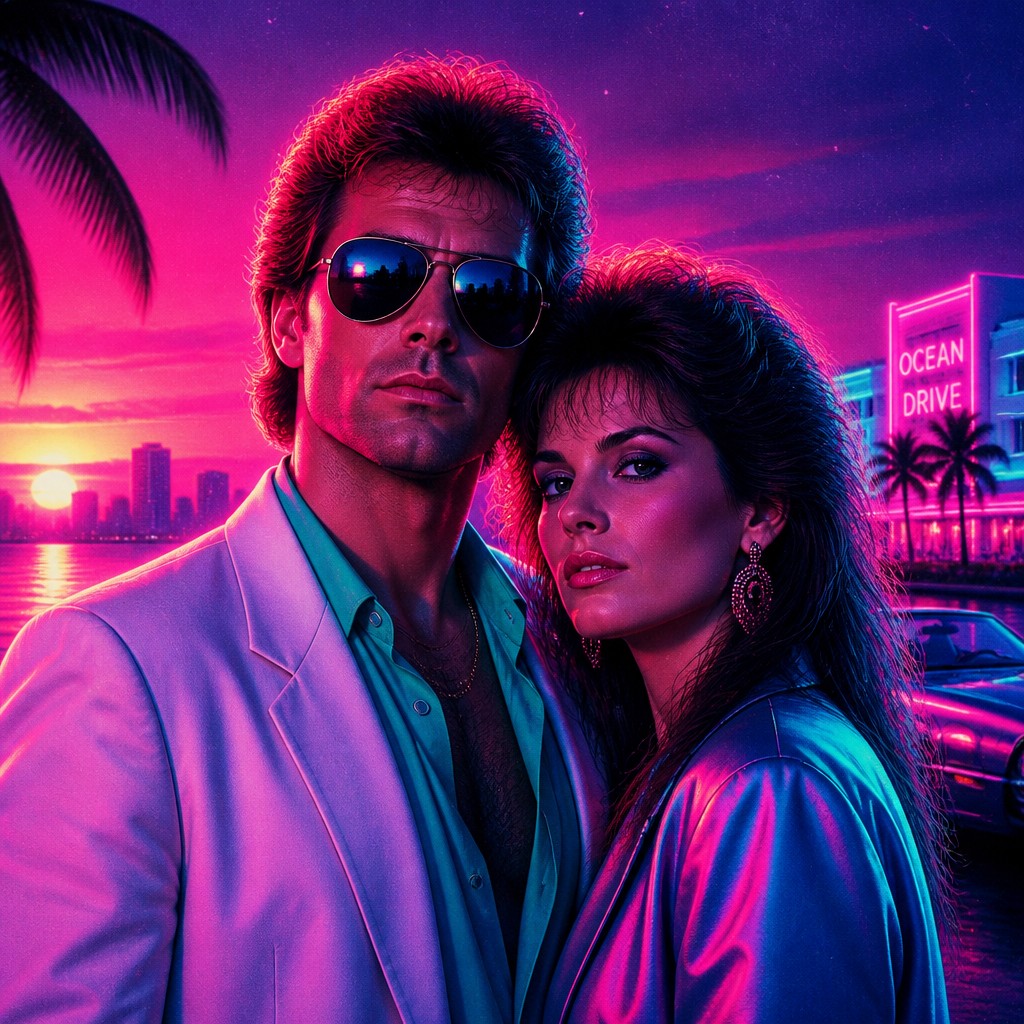
Try It On Your Photos
Upload any photo and convert it into Miami Vice — drag the sliders to compare before and after.
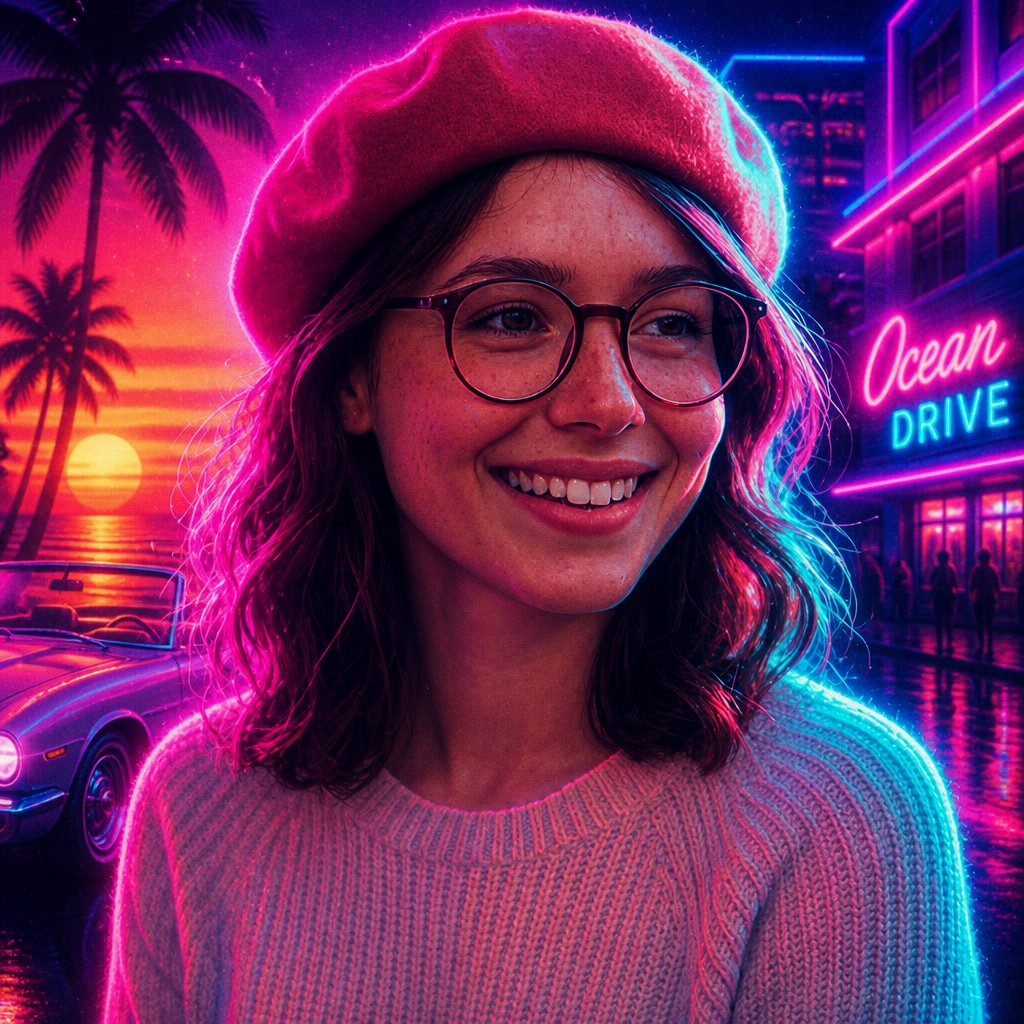

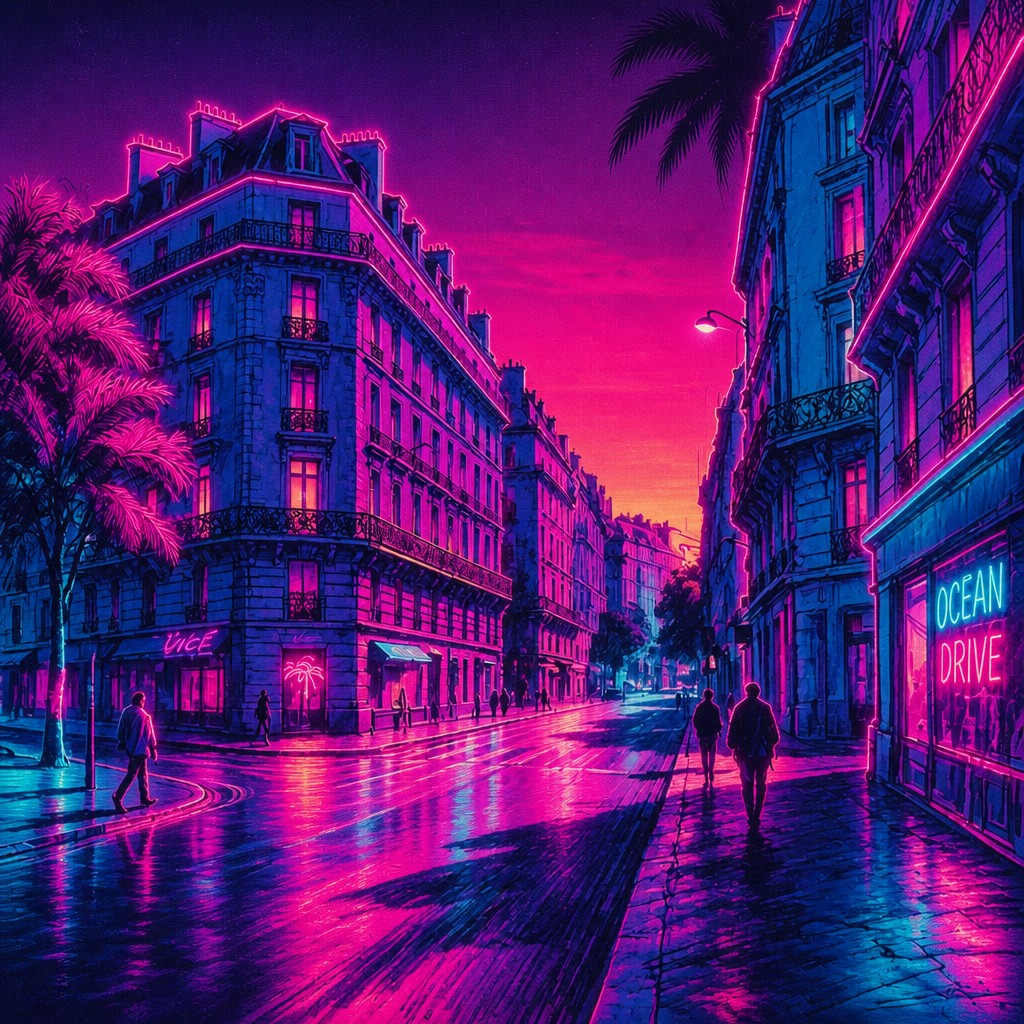

What Defines Miami Vice
The signature details, up close
Neon palette
The defining colors are hot pink, turquoise, electric cyan, and violet, usually pushed to high saturation. These hues create the recognizable neon contrast that gives the style its punch.
Dusk and sunset gradients
Backgrounds often use deep violet skies, magenta horizons, and electric sunset transitions. The gradient atmosphere is central to the style’s retro-futurist mood.
Glow and bloom
Light sources are surrounded by soft bloom, haze, or halo effects. This makes signs, edges, and reflections feel luminous rather than sharply realistic.
Rim-lit silhouettes
Figures and objects are commonly outlined with neon edge light. This separates them from the background and gives them a cinematic, night-driven presence.
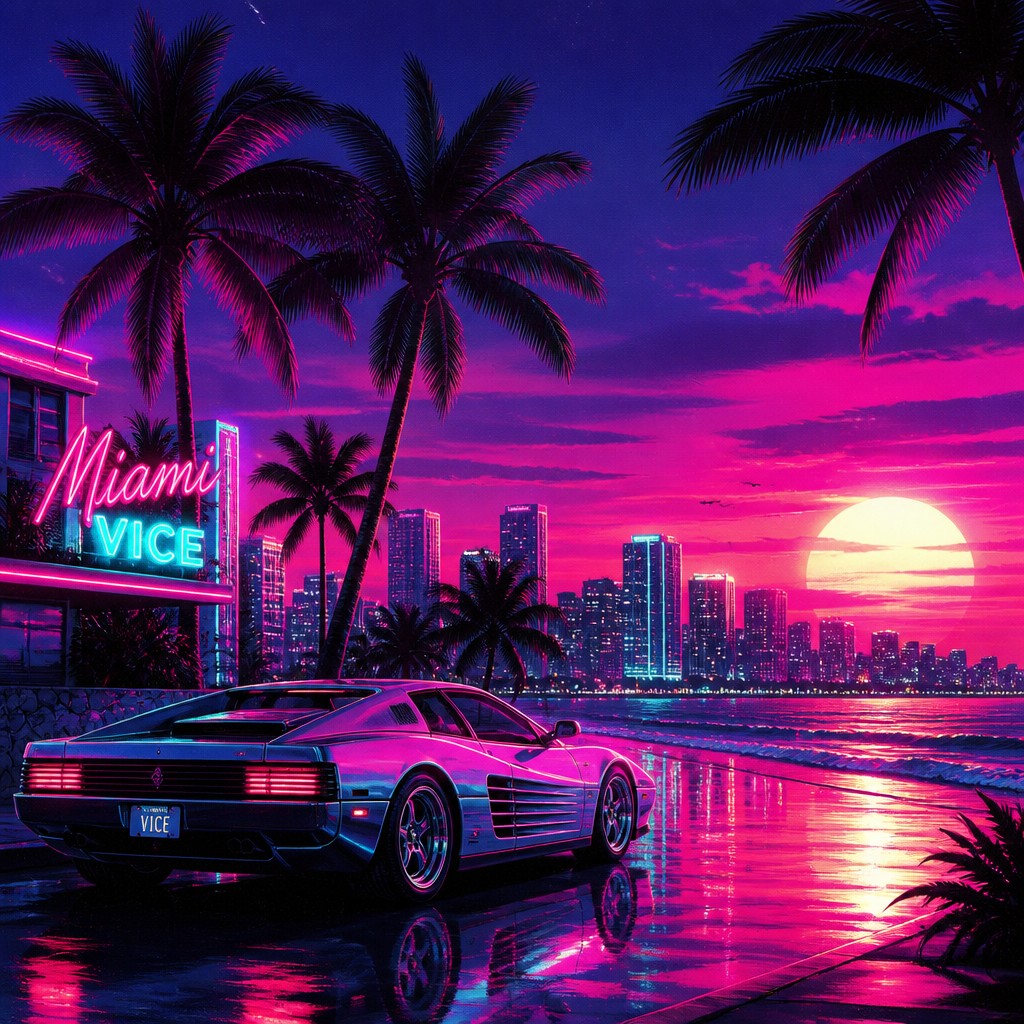
Chrome and gloss
Surfaces often have a polished or metallic sheen, especially on cars, accessories, and architectural details. The reflective finish reinforces the style’s sleek, luxurious feel.
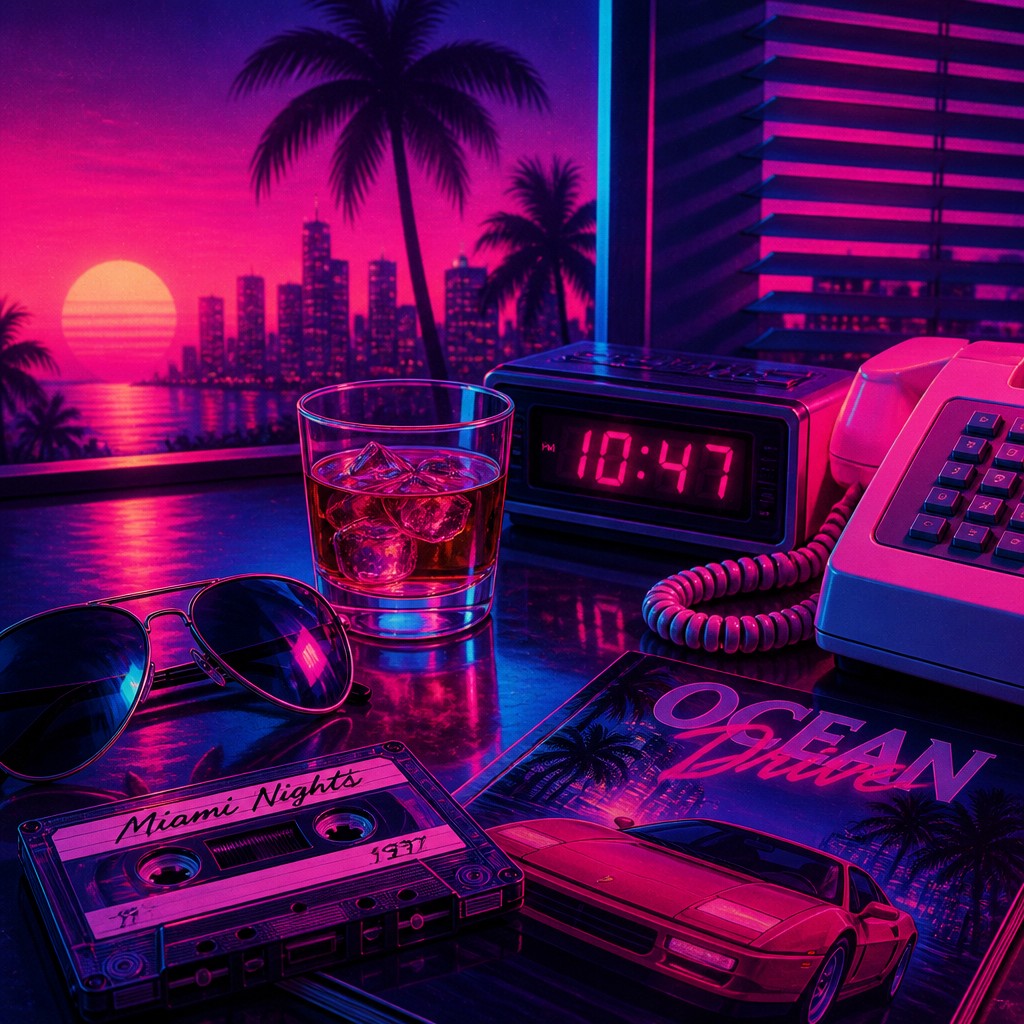
Bold color blocking
Shapes are simplified into strong tonal masses with clear separation between foreground and background. This makes the image read instantly and supports poster-like composition.
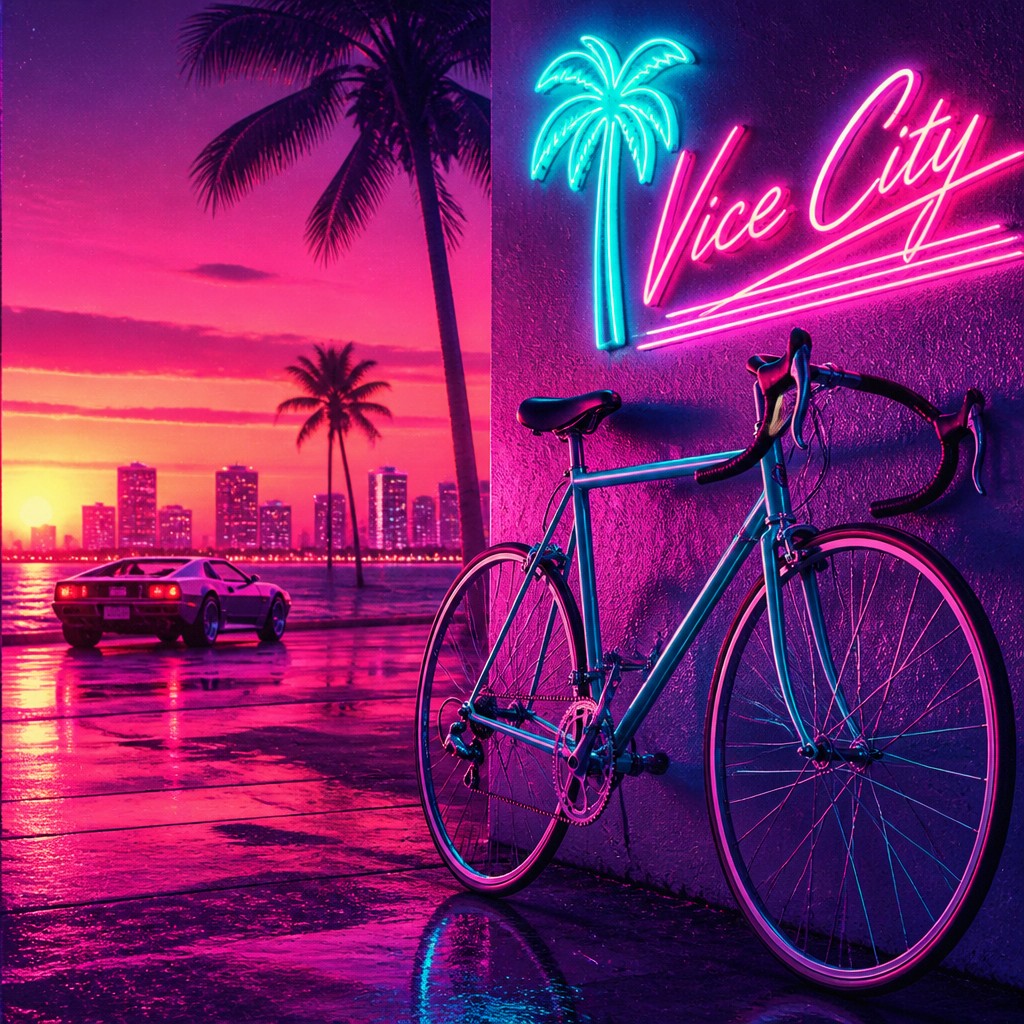
Retro texture
A faint film grain, scanline hint, or print-like texture may be added to evoke analog media. These imperfections keep the look from feeling too sterile or overly digital.
Try It
Create Videos in Miami Vice
Styles aren't just for stills — describe a scene or animate an image and get a short video rendered in Miami Vice. Press play to see this pond come to life.
Make a VideoMiami Vice Prompt Ideas
Start from an idea — each one opens the generator with the style ready to go. See all 40 Miami Vice prompts →
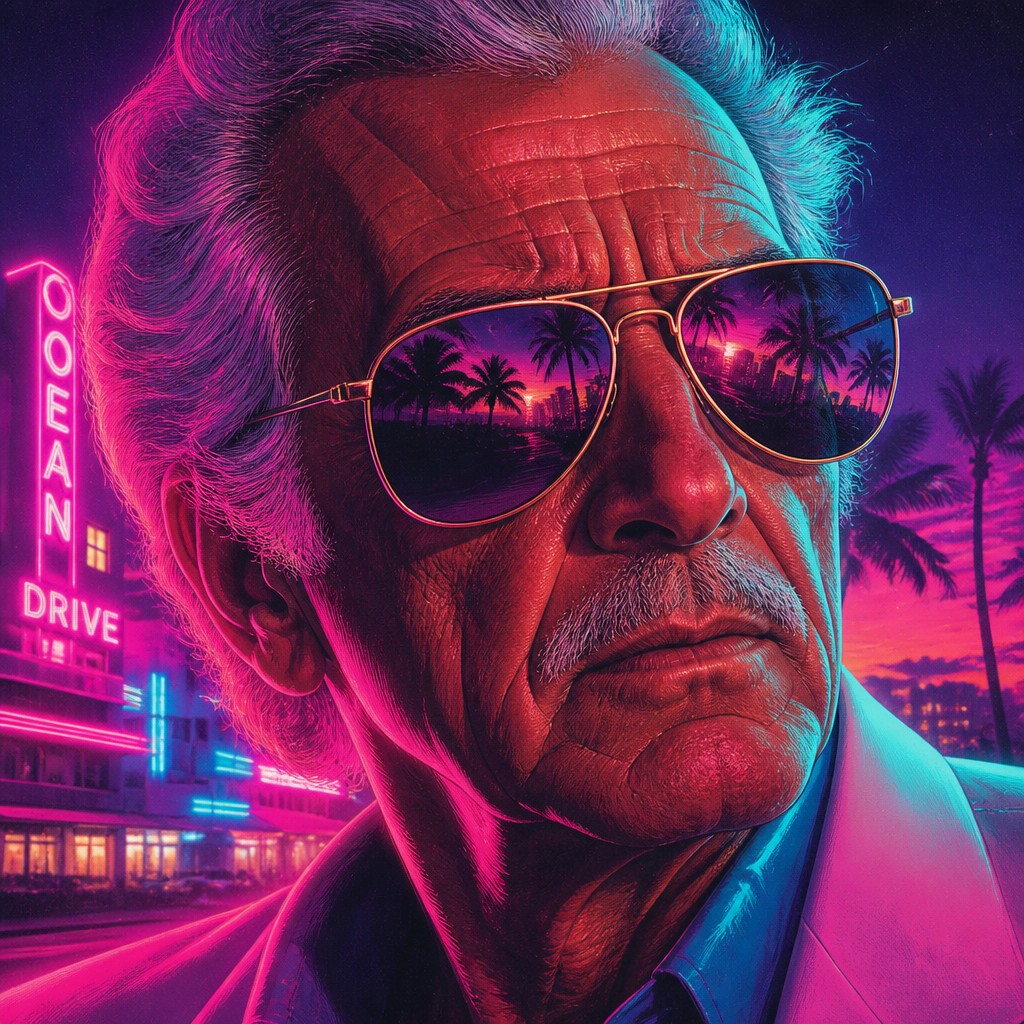
“close-up portrait of an elderly person with expressive weathered features”
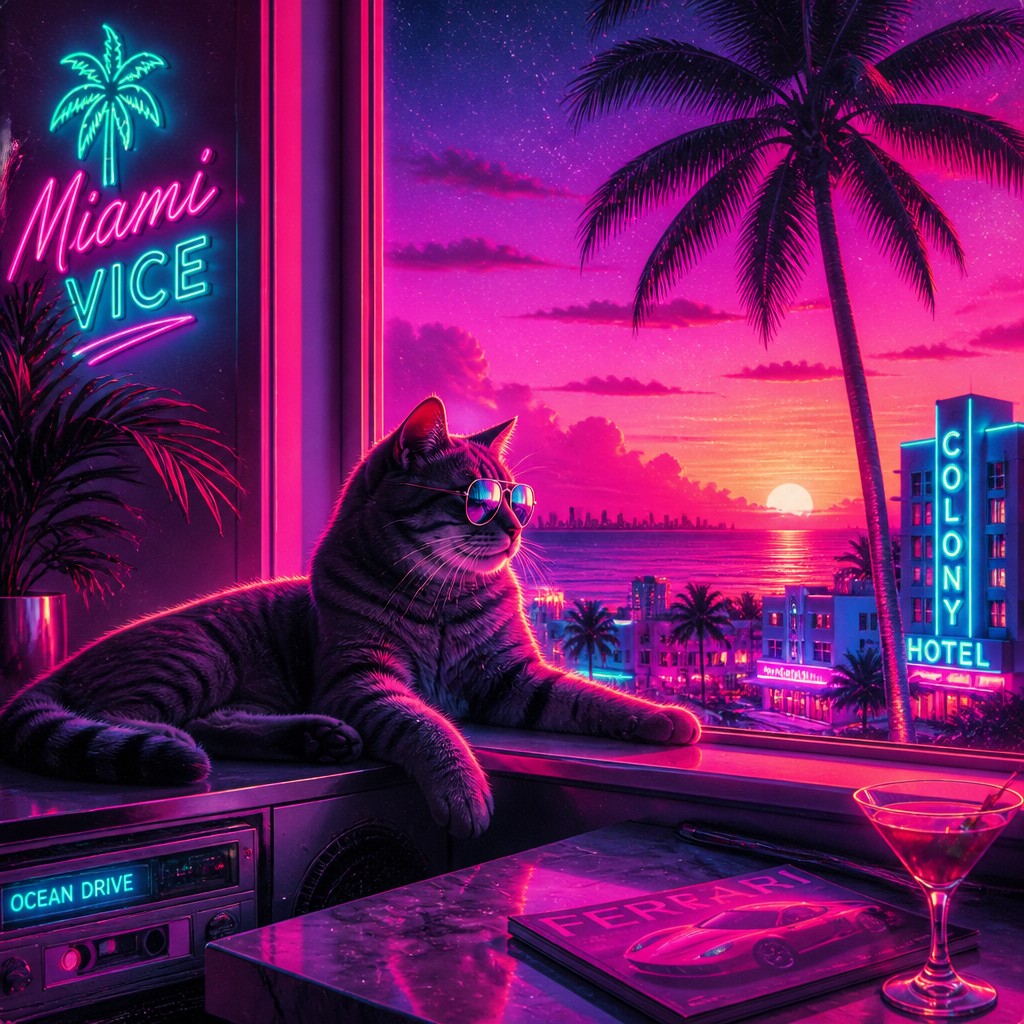
“a cat lounging in a sunlit window”
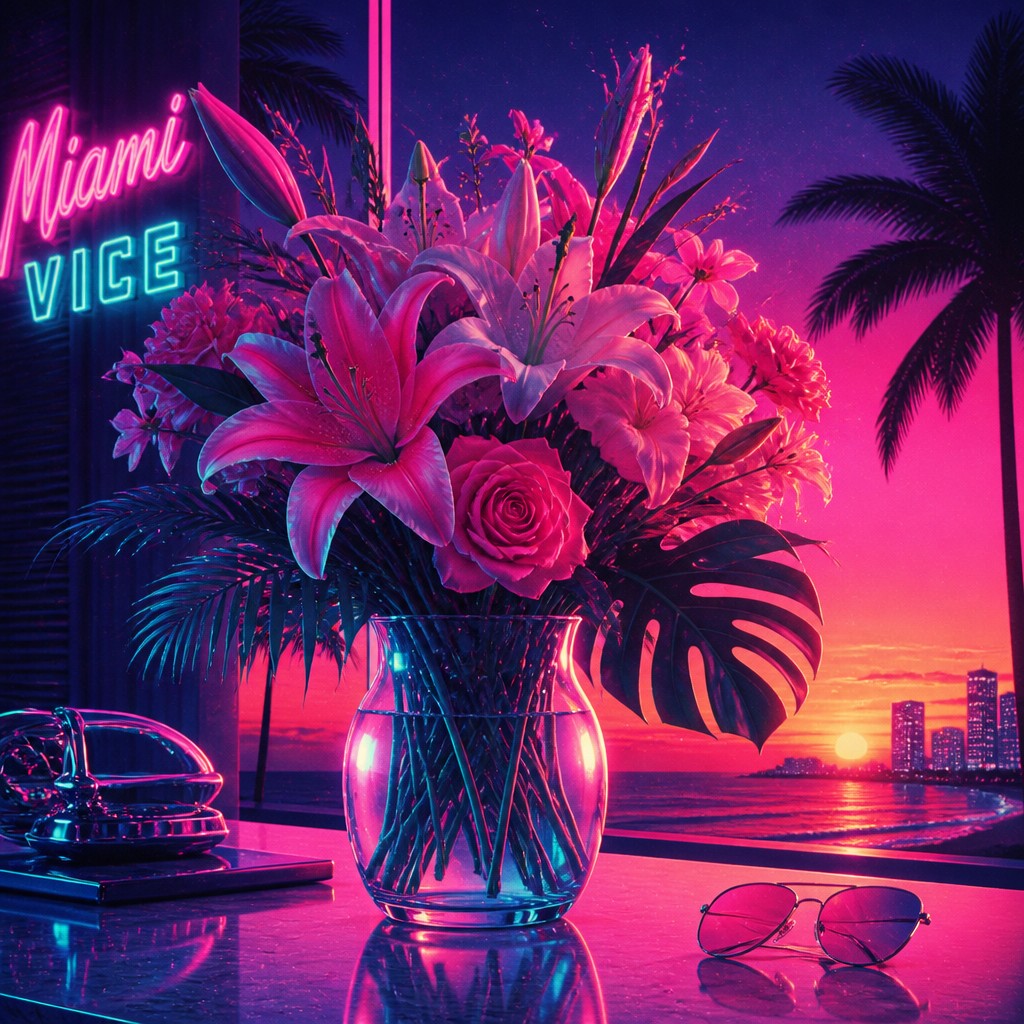
“bouquet of flowers in a glass vase”
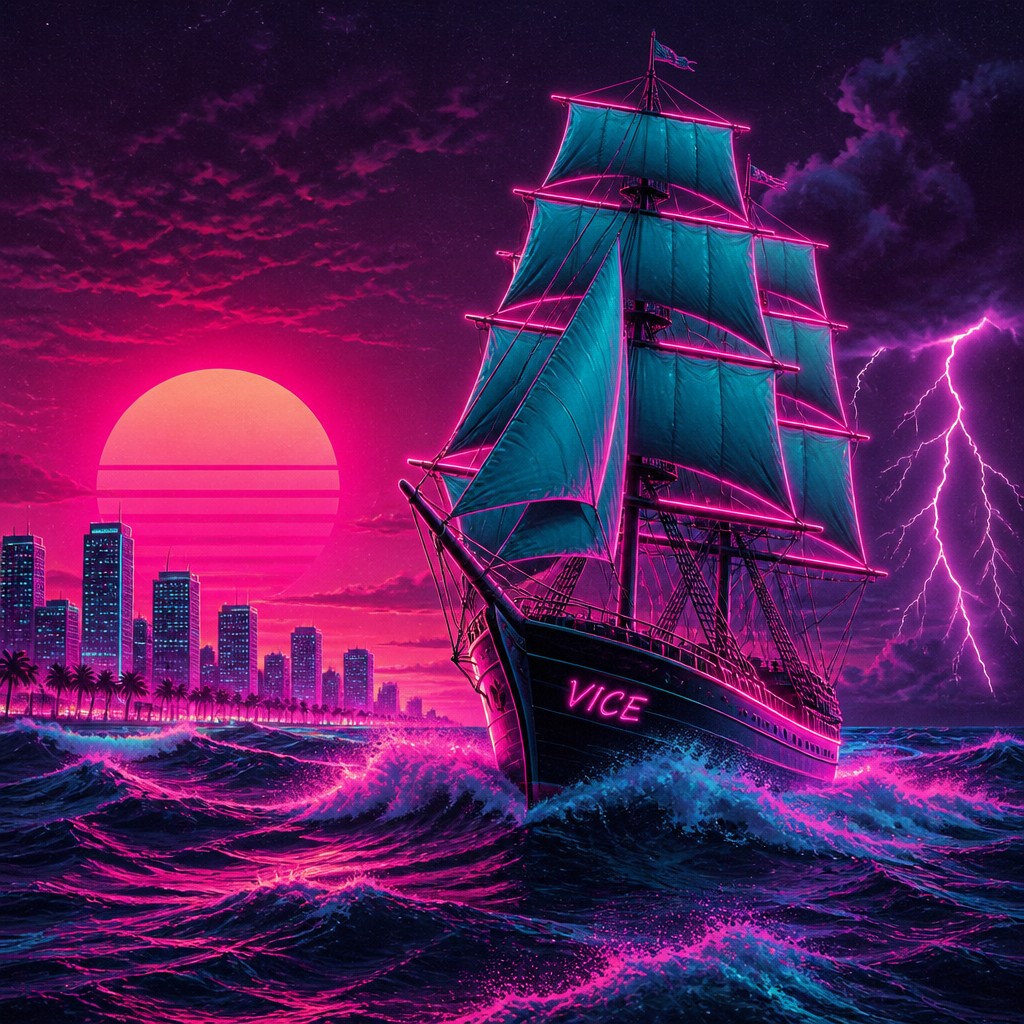
“sailing ship on a stormy sea”
How to Create Miami Vice Art
Master the craft step by step — or skip straight to creating. Read the full guide →
- 1
Build the palette around contrast
Start with a dark violet or midnight base, then layer hot pink and turquoise as the primary accents. Keep the number of dominant colors limited so the neon contrast stays crisp and readable.
- 2
Use lighting as the main design tool
Shape the scene with rim light, backlight, and glowing signs rather than with dense detail. In digital work, add bloom and soft haze; in traditional media, use bright highlights and airbrushed or blended transitions.
- 3
Simplify forms and sharpen silhouettes
Reduce complex subjects to strong, graphic outlines and clean shapes. This is especially effective for cars, palm trees, cityscapes, portraits, and horizon lines where the silhouette does much of the visual work.
- 4
Reference 1980s media cues
Include coastal nightlife, neon signage, chrome trim, vintage sports cars, and sunset beaches to anchor the mood. These motifs help the image read as retro rather than simply colorful.
- 5
Prompt for atmosphere, not just objects
When generating images, specify dusk lighting, neon glow, glossy reflections, and retro film grain along with the subject. The style depends as much on lighting and color treatment as on subject matter.
- 6
Finish with controlled texture
Apply subtle grain, soft bloom, and a slightly hazy glow so the image feels nostalgic and analog-inspired. Too much sharpness or cleanliness can weaken the period feel.
The Story
History & Origins of Miami Vice
This aesthetic is not a historical art movement in the formal sense, but a contemporary visual lineage drawn from 1980s television styling, neon-lit urban photography, synthwave album art, and retrofuturist graphic design. Its name evokes the visual world popularized by a well-known 1980s television crime drama, whose pastel suits, coastal skylines, nightlife scenes, and sleek glamour became shorthand for a certain 1980s mood.
The style also reflects later digital revivals of that era, especially synthwave and retrowave, which reinterpreted 1980s color palettes, grid-based atmospheres, and neon sunsets through modern illustration and digital compositing. In practice, it developed as an image language for nightlife, speed, nostalgia, and futuristic decadence rather than as a single unified movement.
Influences: This aesthetic draws from 1980s television glamour, neon noir photography, synthwave and retrowave illustration, and retrofuturist graphic design. Its visual logic also overlaps with vaporwave, but it is generally brighter, more cinematic, and less deliberately decayed. For real historical parallels, it echoes the high-contrast color design of poster art and the atmospheric lighting concerns of nocturne photography, though it is not tied to a single canonical school or artist.
Frequently Asked Questions
What defines the style visually?
It is defined by neon pink and turquoise contrasts, deep dusk backgrounds, glossy surfaces, and strong rim lighting. The look is usually cinematic, nostalgic, and nightlife-oriented, with an emphasis on glow and atmosphere over realism.
Is it the same as synthwave or vaporwave?
It is closely related to synthwave and retrowave, but it is usually more glamorous and less abstract than vaporwave. Compared with synthwave, it often leans harder into coastal sunsets, polished chrome, and TV-era 1980s fashion cues.
What subjects work best in this style?
Cars, city skylines, palm trees, portraits, night beaches, arcade interiors, and fashion scenes all suit it well. Anything with a strong silhouette and reflective or backlit surfaces can benefit from the neon treatment.
How do I make a photo look like this style?
Boost magenta and cyan tones, darken the shadows into violet, and add glow to bright areas. Then emphasize edge lighting, reflections, and a subtle grain so the image feels like a stylized retro night scene rather than a normal color filter.
Can this style be used for logos or posters?
Yes, because it relies on bold shapes and limited high-impact colors. It is especially effective for event branding, music visuals, nightlife posters, and retro-themed editorial design.
What makes it feel 1980s instead of just neon?
The 1980s feel comes from the combination of color palette, smooth gradients, chrome accents, and glamorous leisure imagery. Neon alone is not enough; the era-specific mood depends on sunset skies, nightlife settings, and polished retro-futurist styling.
Create your first Miami Vice artwork
Describe anything — or upload a photo — and see it in Miami Vice in seconds.
Make Something with Miami Vice
Related Styles
Discover similar art styles