Good Vibes Only
Created by
Public

Good Vibes Only

Style Used
Text-focused stickers featuring creative lettering, motivational quotes, and decorative fonts for personal expression and decoration.

See More

Good Vibes Only
an inside view of a huge pillow fort that has led lights, that are any cool gaming colour, and inside there is also snacks and nerf guns and fidgets and stuffed toys. there are no people in it, just a good view of the whole pillow fort
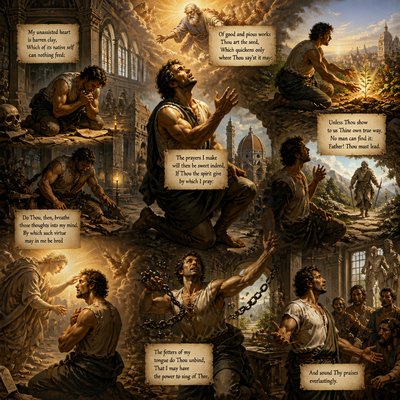
"The prayers I make will then be sweet indeed,
If Thou the spirit give by which I pray:
My unassisted heart is barren clay,
Which of its native self can nothing feed:
Of good and pious works Thou art the seed,
Which quickens only where Thou say'st it may;
Unless Thou show to us Thine own true way,
No man can find it: Father! Thou must lead.
Do Thou, then, breathe those thoughts into my mind
By which such virtue may in me be bred
That in Thy holy footsteps I may tread;
The fetters of my tongue do Thou unbind,
That I may have the power to sing of Thee,
And sound Thy praises everlastingly."

-	by Michelangelo
Prayer by Michelangelo

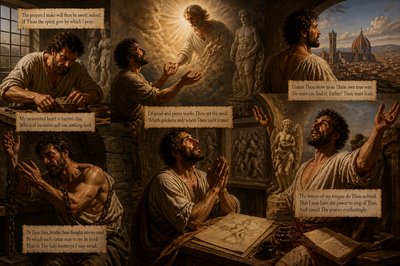
The prayers I make will then be sweet indeed,
If Thou the spirit give by which I pray:
My unassisted heart is barren clay,
Which of its native self can nothing feed:
Of good and pious works Thou art the seed,
Which quickens only where Thou say'st it may;
Unless Thou show to us Thine own true way,
No man can find it: Father! Thou must lead.
Do Thou, then, breathe those thoughts into my mind
By which such virtue may in me be bred
That in Thy holy footsteps I may tread;
The fetters of my tongue do Thou unbind,
That I may have the power to sing of Thee,
And sound Thy praises everlastingly.

-	Translated by William Wordsworth
Prayer by Michelangelo

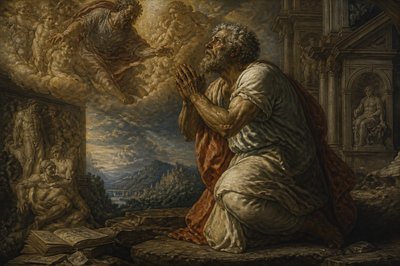
"The prayers I make will then be sweet indeed,
If Thou the spirit give by which I pray:
My unassisted heart is barren clay,
Which of its native self can nothing feed:
Of good and pious works Thou art the seed,
Which quickens only where Thou say'st it may;
Unless Thou show to us Thine own true way,
No man can find it: Father! Thou must lead.
Do Thou, then, breathe those thoughts into my mind
By which such virtue may in me be bred
That in Thy holy footsteps I may tread;
The fetters of my tongue do Thou unbind,
That I may have the power to sing of Thee,
And sound Thy praises everlastingly."

-	Translated by William Wordsworth
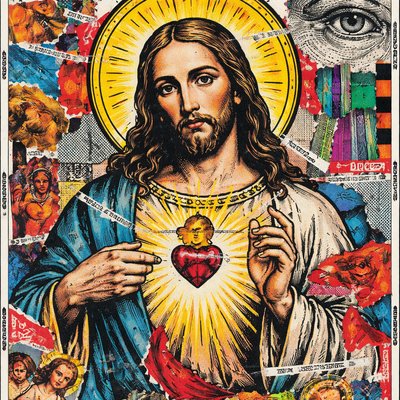
It is God the only Son, who is close to the Father's heart
Pierced luminaire with botanical patterns
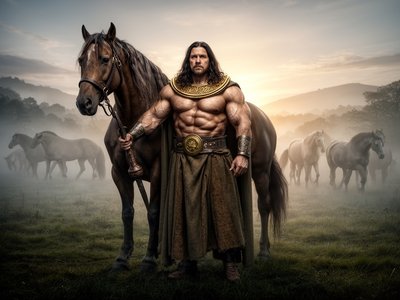
The Dagda, powerful Celtic god, standing with a massive, muscular horse at his side. Earthy robes, bronze and gold torc, long dark hair, commanding presence. Horses moving in the background like living wealth of the land. Misty forest or rolling hills, dawn light piercing fog, mythic realism, cinematic Celtic fantasy, raw authority, natural textures.
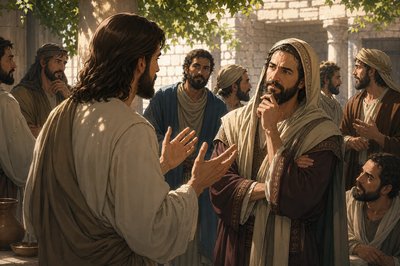
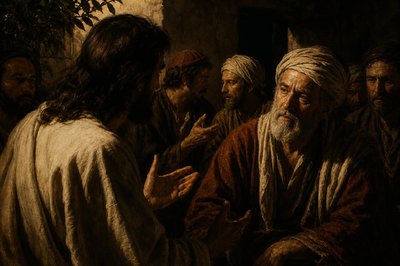
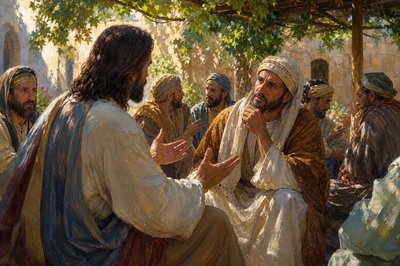
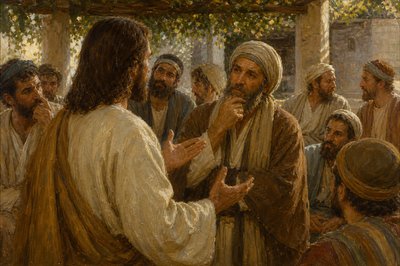
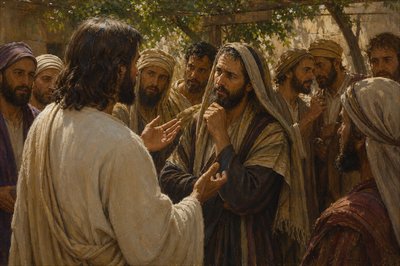
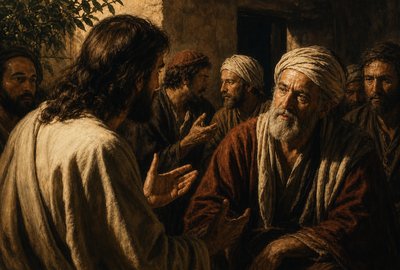
“And one of the scribes came up and heard them disputing with one another, and seeing that he answered them well, asked him, “Which commandment is the most important of all?” Jesus answered, “The most important is, ‘Hear, O Israel: The Lord our God, the Lord is one. And you shall love the Lord your God with all your heart and with all your soul and with all your mind and with all your strength.’ The second is this: ‘You shall love your neighbor as yourself.’ There is no other commandment greater than these.” And the scribe said to him, “You are right, Teacher. You have truly said that he is one, and there is no other besides him. And to love him with all the heart and with all the understanding and with all the strength, and to love one’s neighbor as oneself, is much more than all whole burnt offerings and sacrifices.” And when Jesus saw that he answered wisely, he said to him, “You are not far from the kingdom of God.”  Jesus stands among His disciples in a shady patio area outdoors talking to this scribe.  His disciples wonder at the exchange.  Several of them are also engaged in conversations set around the one Jesus is having.  We see Jesus from the left rear quarter, where we can see only the back of His head and the side of his face.  His hands are expressing His point.  The scribe to whom He speaks has a poignant, thoughtful expression.
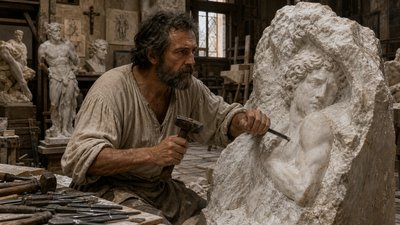
Michelangelo’s intense faith was the primary cause of the greatness of his work. His faith did more than affect the nature of his work—it affected his very thinking on the origin and function of art. Several of his statues portray the struggle of the individual to free himself from matter. He believed that, second only to man, marble was God’s greatest creation and that within each block of marble, there was a figure that God had placed; the job of the sculptor was to release that figure, much like at death our bodies will release our souls.
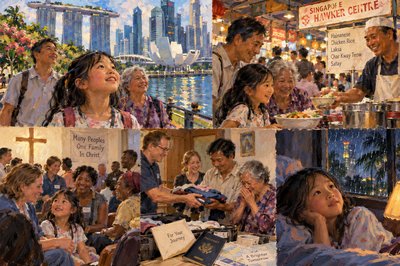
Paint this scene: Singapore was like stepping into a dream for Siu-Zi. Everything was new—the clean streets, the orderly gardens, and the friendly smiles of strangers, things she had only ever seen on television. In a modest hotel near a bustling hawker centre, she discovered the tastes and smells of dishes that were both strange and delightful. For a few weeks, she and her family settled into a quiet rhythm. Siu- Zi made tentative friends at a local church, where she listened wide-eyed to stories of many other people who had traveled from far-off lands, seeking freedom and safety. Each tale, woven with hope and resilience, whispered promises of a safer, kinder world.  They met missionaries there who said they had been praying for Siu-Zi and her family.  Siu-Zi’s grandmother was very moved by their faithfulness, and father was overwhelmed by their gifts of clothing, so they would no longer look like Chinese refugees, but a proper Asian family on holiday, and enough money to continue their journey, a pre-arranged place to stay and a job to do when they got there.
Every night, as the tropical rain tapped gently on the window, Ah Zi lay awake imagining a future free from fear—a future where her father’s faith could shine without the dark threat of government officers taking them away. In Singapore, she learned that sometimes, even in moments of deep loss and uncertainty, God has a mysterious way of planting new seeds of hope and renewing life.
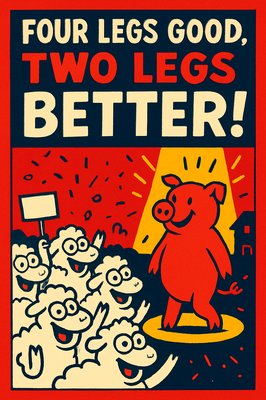
A simple cartoon-style propaganda poster drawn with bold, thick marker lines. Use a limited color palette of bright red, dark navy blue, white, and small black outlines. At the top, include a cool, bold propaganda-style font that looks hand-drawn with marker, saying: “FOUR LEGS GOOD, TWO LEGS BETTER!” Make the word “BETTER” much larger and more dramatic. In the center, show a group of white sheep with simple cartoon faces, wide excited eyes, and big happy smiles, cheering together. The sheep should look identical and drawn with simple marker outlines. They are looking at a pig who is walking upright on two legs in a bright spotlight. The pig should be glowing or surrounded by simple marker-drawn light rays to show fake admiration. Add confetti, simple celebration lines, and maybe one sheep holding a small sign. The background should use strong blocks of red and navy blue, like a simple propaganda poster. Include very simple outlines of a barn or farmhouse in the background. Overall style: cute cartoon, clean, bold marker strokes, easy shapes, limited colors, and a brainwashed, energetic vibe.
A massive, solid metal USSR emblem glows harshly in red and gold, radiating intense, blinding light. The emblem is firmly pressed down onto the back of a large, dark eagle, which is clearly pinned and crushed beneath its weight. The eagle’s wings are forcibly flattened and bent outward, feathers distorted, body warped under the relentless pressure. Its legs and torso are pressed into the ground, unable to move, showing literal physical force. The emblem dominates the composition, casting sharp, dramatic shadows across the dark eagle. The scene is rendered in bold, graphic socialist propaganda poster style, with high-contrast colors, simplified forms, exaggerated perspective, and stylized lighting. Harsh rays of light radiate from the emblem, emphasizing power and oppression. No abstract symbolism, no heroic balance, no floating elements — only a monumental emblem pressing down, physically immobilizing the eagle.
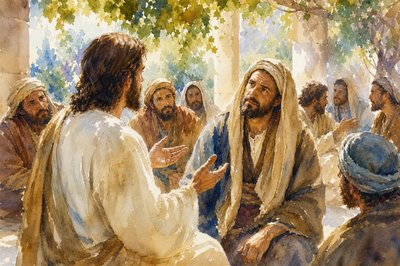
“And one of the scribes came up and heard them disputing with one another, and seeing that he answered them well, asked him, “Which commandment is the most important of all?” Jesus answered, “The most important is, ‘Hear, O Israel: The Lord our God, the Lord is one. And you shall love the Lord your God with all your heart and with all your soul and with all your mind and with all your strength.’ The second is this: ‘You shall love your neighbor as yourself.’ There is no other commandment greater than these.” And the scribe said to him, “You are right, Teacher. You have truly said that he is one, and there is no other besides him. And to love him with all the heart and with all the understanding and with all the strength, and to love one’s neighbor as oneself, is much more than all whole burnt offerings and sacrifices.” And when Jesus saw that he answered wisely, he said to him, “You are not far from the kingdom of God.”  Jesus stands among His disciples in a shady patio area outdoors talking to this scribe.  His disciples wonder at the exchange.  Several of them are also engaged in conversations set around the one Jesus is having.  We see Jesus from the left rear quarter, where we can see only the back of His head and the side of his face.  His hands are expressing His point.  The scribe to whom He speaks has a poignant, thoughtful expression.