Voxel vs 3D Rendered Digital: What's the Difference?
Voxel art is a 3D pixel style built from cubes, creating blocky forms, clean silhouettes, and a playful game-ready feel. It often uses isometric or simplified camera angles, limited detail, and modular shapes that make scenes readable and easy to build.
3D rendered digital art is a more realistic approach that uses modeled forms, ray-traced lighting, physically based materials, and cinematic composition. People compare the two because both are digital 3D styles, but they differ sharply in realism, surface detail, lighting behavior, and the experience they create.
Same Prompt, Both Styles
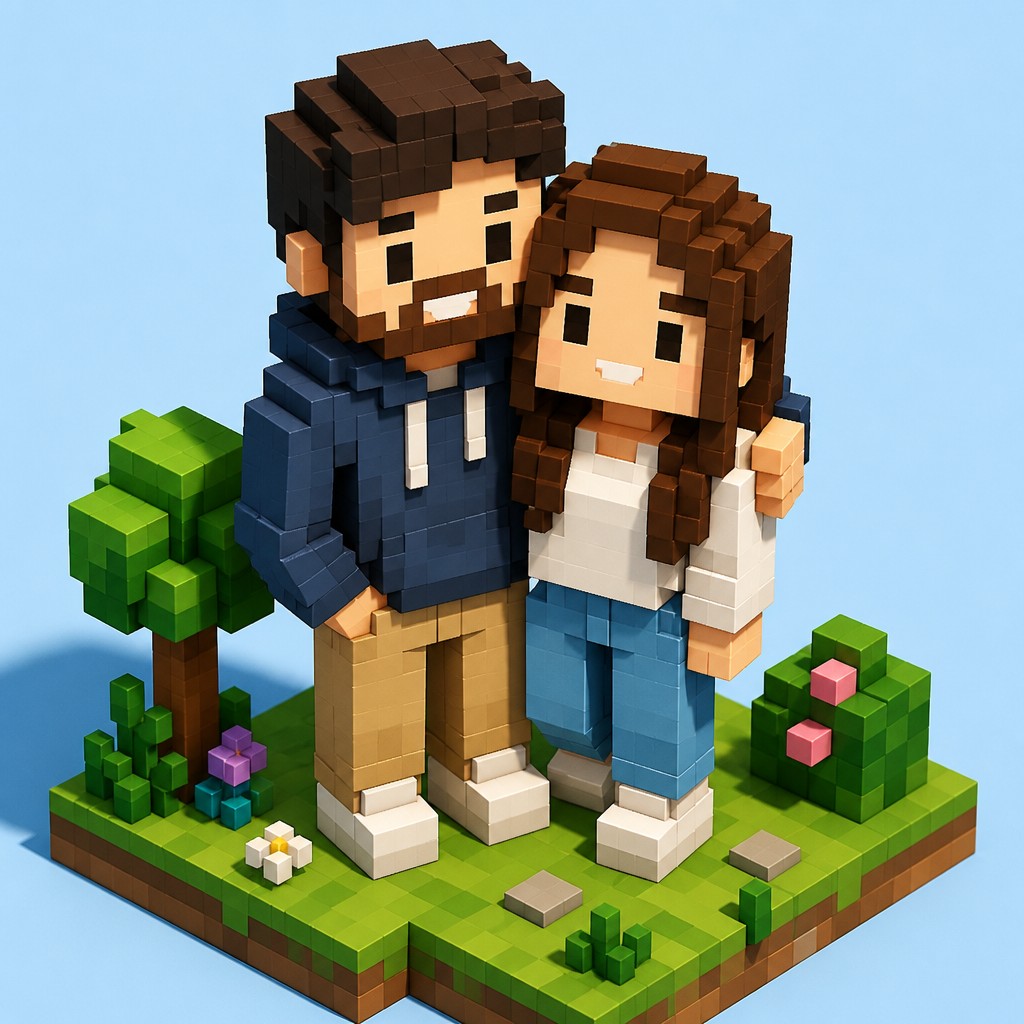
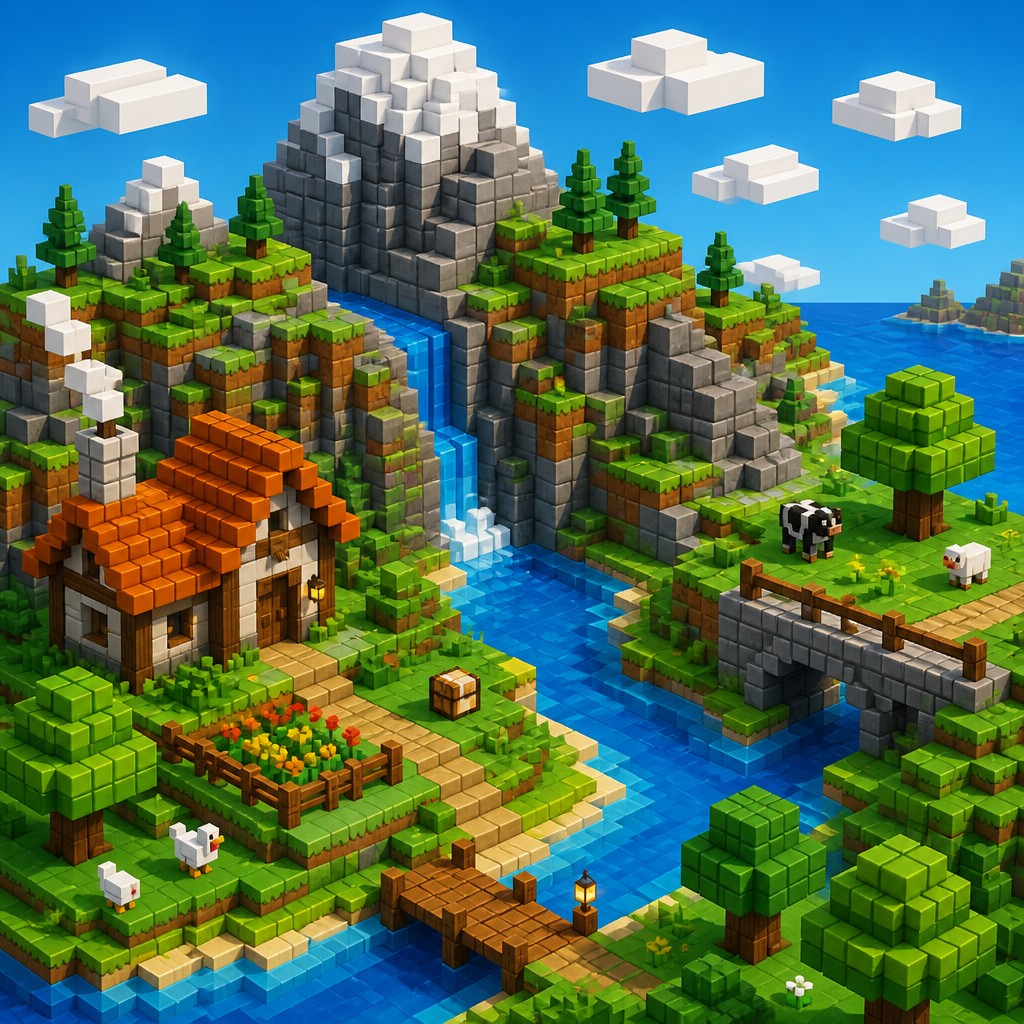
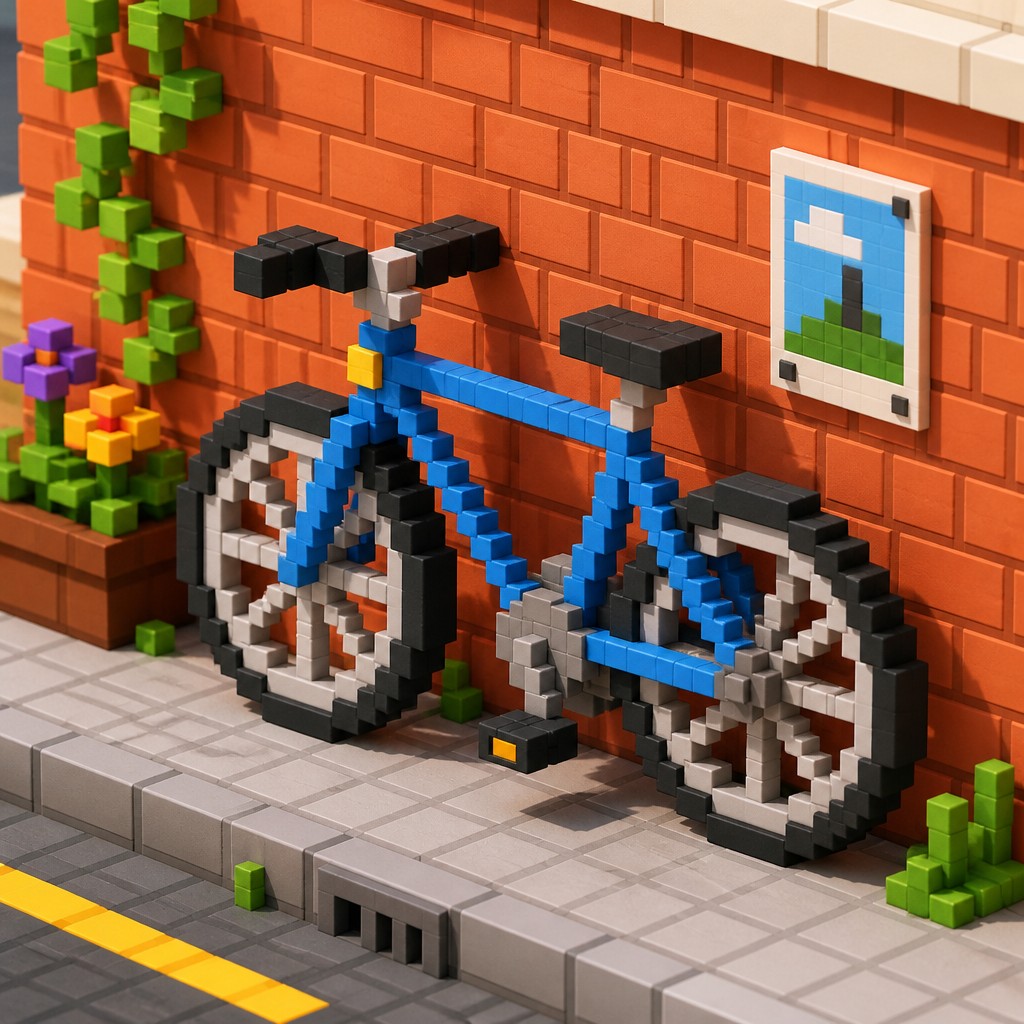
Each pair below was generated from the identical prompt — only the style changed.
“portrait of two people together”

“wide landscape with natural scenery”

“still life with everyday objects”


“bicyle resting against a wall”

Key Differences
| Voxel | 3D Rendered Digital | |
|---|---|---|
| Form | Built from visible cubes and angular block shapes. | Uses smooth, continuous models with natural curves and complex geometry. |
| Surface detail | Relies on simple, low-detail surfaces and clear shapes. | Uses detailed textures, material variation, and realistic surface response. |
| Lighting | Often uses stylized, simplified lighting for clarity. | Uses ray-traced or physically based lighting for realistic depth. |
| Camera feel | Frequently shown in isometric or game-like viewpoints. | Often framed with cinematic angles and natural perspective. |
| Mood | Feels playful, approachable, and handcrafted. | Feels immersive, polished, and atmospheric. |
| Best use | Great for games, icons, and stylized worlds with clear readability. | Great for films, ads, product visuals, and immersive scene renders. |
| Mood | playful, charming, nostalgic, whimsical | immersive, polished, futuristic, realistic |
| Energy | lively | balanced |
| Detail level | moderate | intricate |
| Color | bright, saturated, playful gradients | varied, often vivid with realistic lighting |
| Texture | blocky, faceted, cubic | smooth, physically based surfaces |
| Origin | digital-native aesthetic | digital-native aesthetic |
| Best for | video games, toy-like worlds, children's books, posters, app icons, animation backgrounds | product visuals, game art, movie key art, advertising, architectural visualization, sci-fi scenes |
| Difficulty | moderate | advanced |
Which Should You Choose?
Choose voxel art if you want strong readability, a charming block-based identity, and assets that feel game-friendly or easy to prototype. Choose 3D rendered digital art if you want realism, dramatic lighting, and a polished look that supports immersion, detail, and cinematic presentation.
Frequently Asked Questions
Is voxel art a form of 3D art?
Yes. Voxel art is 3D because it is built in three dimensions, usually from cube-like units. It just uses a much more simplified, block-based visual language than realistic 3D rendering.
Which style is more realistic?
3D rendered digital art is more realistic. It aims to simulate light, materials, and depth closely, while voxel art intentionally keeps a stylized, simplified look.
Which style is easier to read at a glance?
Voxel art is often easier to read quickly because shapes are bold, simple, and highly structured. That clarity makes it especially effective for gameplay and icon-like imagery.
Can the two styles be combined?
Yes, they can be blended. A scene can use voxel-like forms with more advanced lighting or materials, as long as the style remains visually coherent and intentional.