Abstract Geometric vs Bauhaus Geometric: What's the Difference?
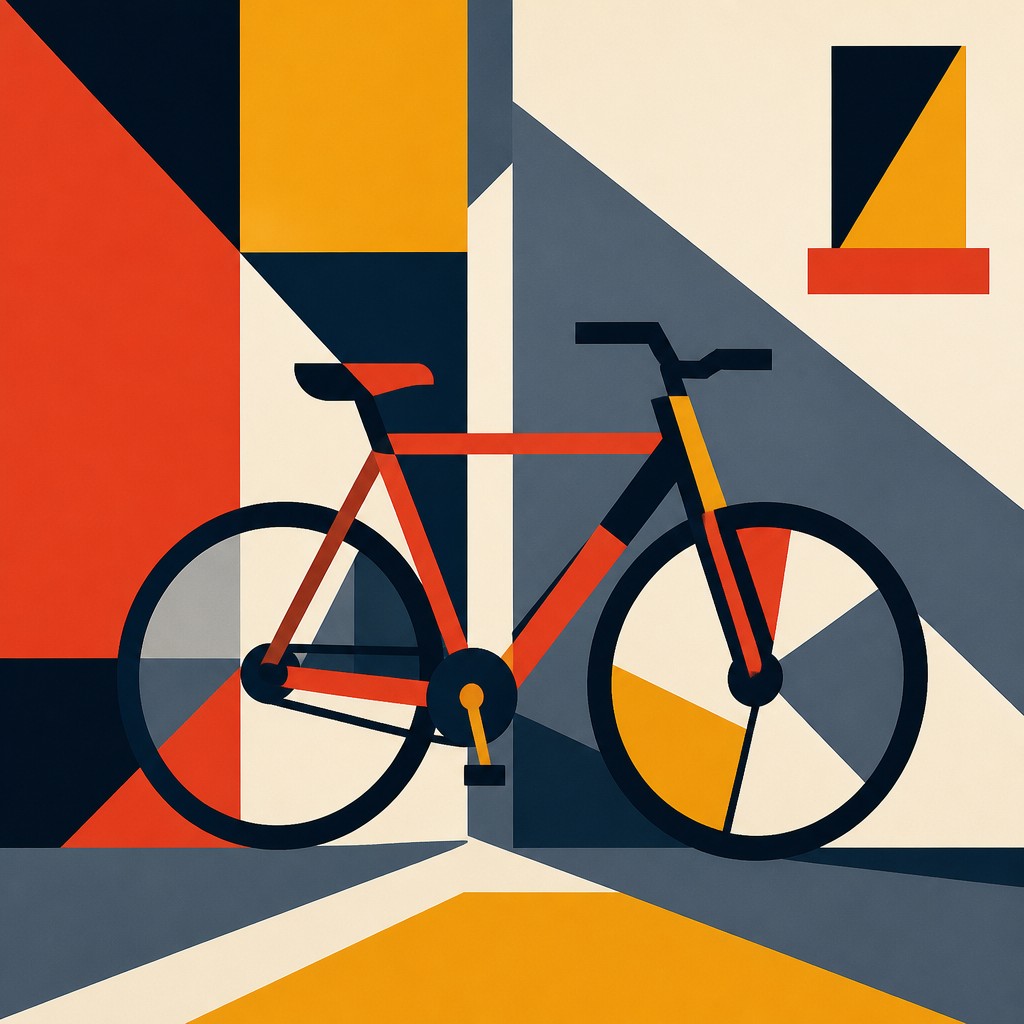
Abstract Geometric Art is non-representational art built from circles, triangles, squares, grids, flat color planes, and precise arrangement. It emphasizes visual order, balance, rhythm, and the interaction of shape, color, and space rather than depicting real-world subjects.
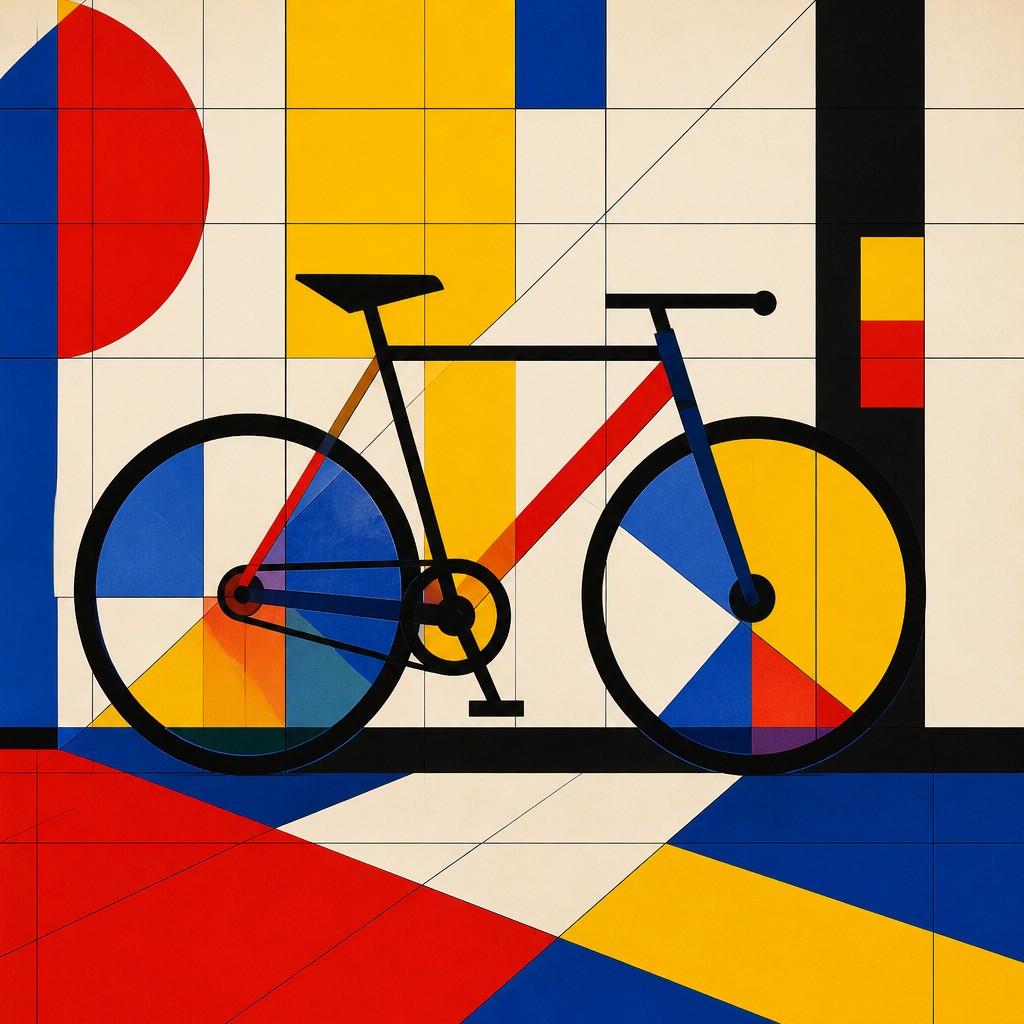
Bauhaus Geometric Art uses similar geometric forms, but its look is tied to modernist design ideas: primary colors, simple shapes, bold outlines, and a functional, structured aesthetic. People compare the two because both use geometry and abstraction, yet Bauhaus Geometric Art is usually more disciplined, design-oriented, and historically linked to applied art, while Abstract Geometric Art can be broader, freer, and more purely expressive.
Same Prompt, Both Styles
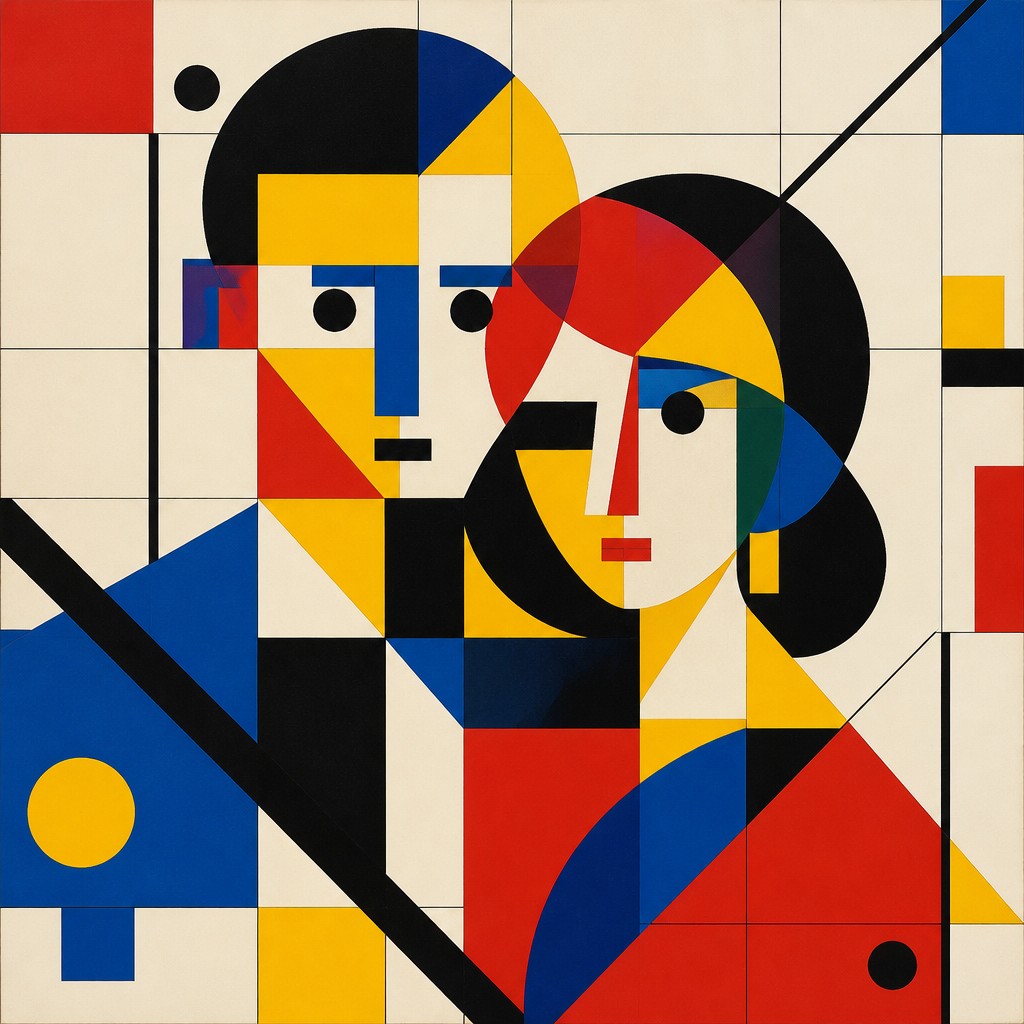
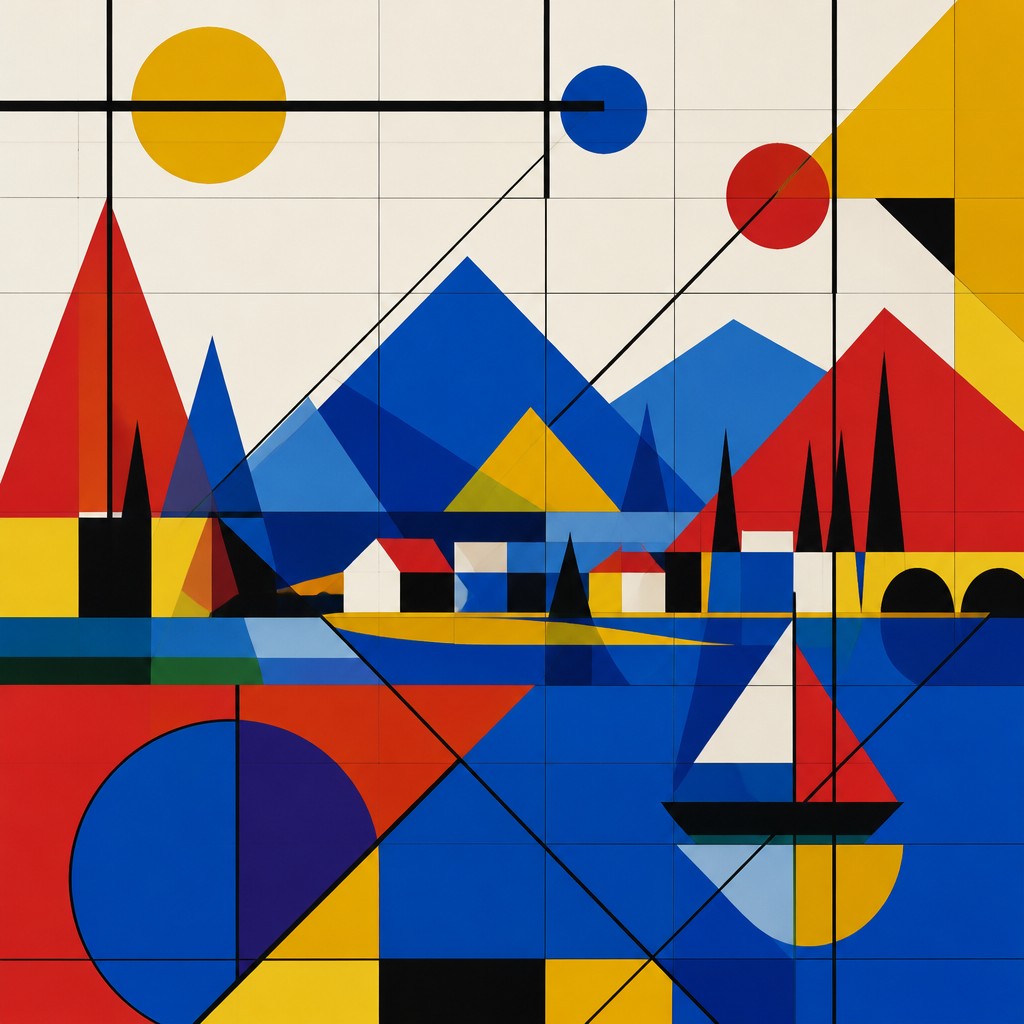
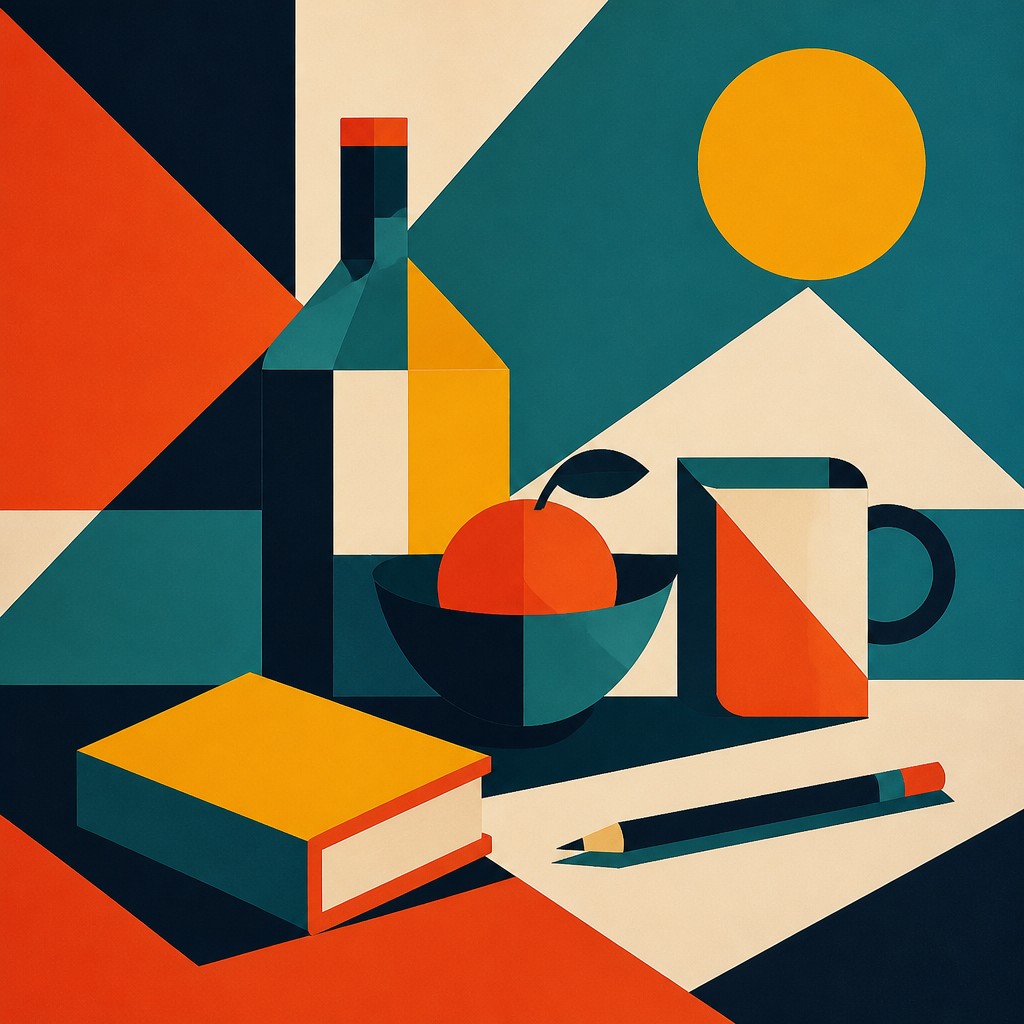
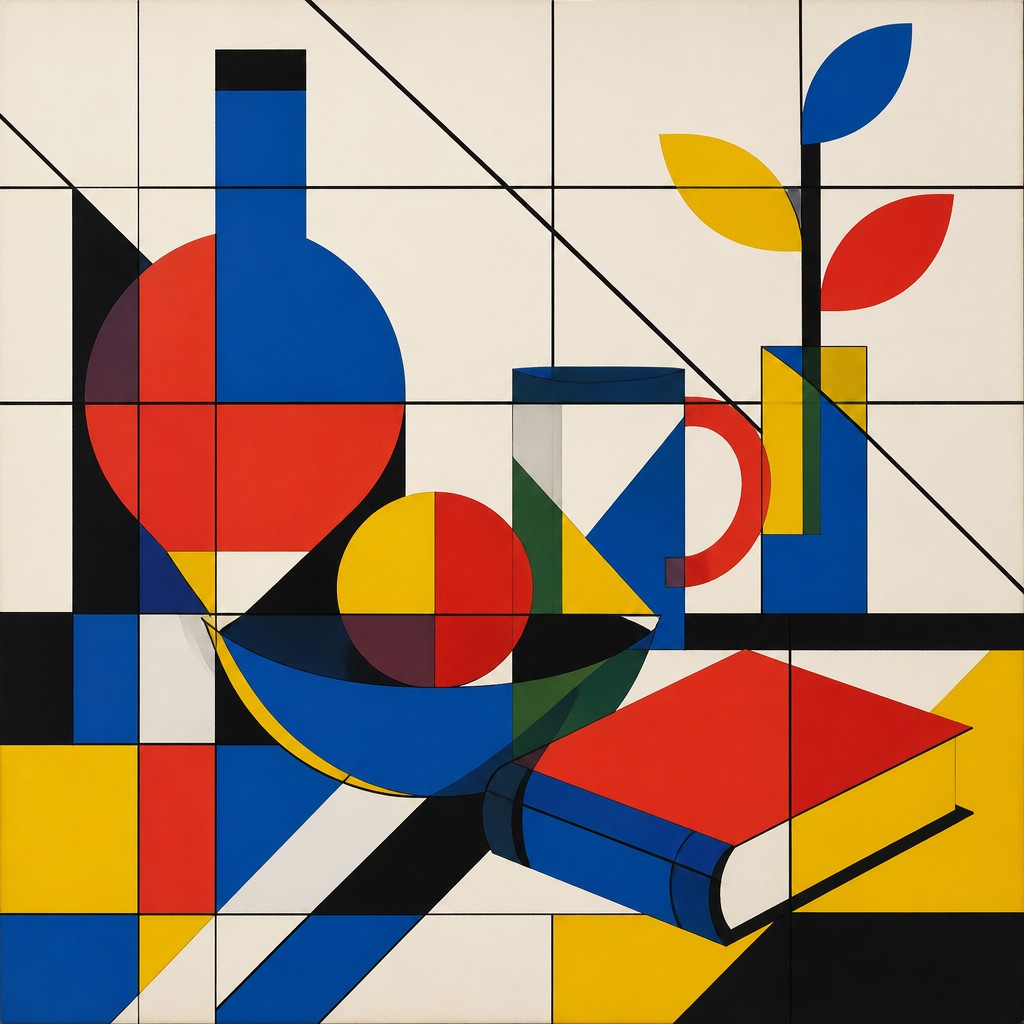
Each pair below was generated from the identical prompt — only the style changed.
“portrait of two people together”

“wide landscape with natural scenery”

“still life with everyday objects”
“bicyle resting against a wall”
Key Differences
| Abstract Geometric | Bauhaus Geometric | |
|---|---|---|
| Purpose | Focuses on visual exploration and pure abstraction. | Balances visual clarity with practical, functional design thinking. |
| Color use | May use any palette, from muted tones to vivid contrasts. | Often relies on primary colors and high-contrast combinations. |
| Shape language | Uses geometric forms in flexible, varied arrangements. | Uses simple, standardized shapes with a restrained vocabulary. |
| Composition | Can feel dynamic, experimental, or highly balanced. | Usually feels orderly, structured, and carefully rational. |
| Line quality | Lines may be subtle, implied, or secondary to color planes. | Bold lines are often a key visual organizing element. |
| Design influence | Draws mainly from abstraction and formal composition. | Draws from modernist design principles and functional clarity. |
| Mood | precise, modern, structured, dynamic | orderly, rational, playful, modern |
| Energy | balanced | balanced |
| Detail level | moderate | minimal |
| Color | bold primaries, neutrals, high contrast | primary colors with black, white, gray |
| Texture | flat, crisp, clean-edged | flat, clean, crisp surfaces |
| Origin | early 20th-century European avant-garde | 1920s Germany, modernist design movement |
| Best for | posters, album covers, branding, editorial graphics, wall art | posters, editorial layouts, album covers, branding, wall art, educational graphics |
| Difficulty | moderate | moderate |
Which Should You Choose?
Pick Abstract Geometric Art if you want maximum freedom in color, form, and mood, especially for a piece that feels more expressive or visually experimental. Pick Bauhaus Geometric Art if you want a cleaner, more modernist look with strong structure, primary colors, and a design-driven feel that works well in interiors, posters, and branding-inspired settings.
Frequently Asked Questions
Are Abstract Geometric Art and Bauhaus Geometric Art the same thing?
No. They overlap visually because both use geometry and abstraction, but Bauhaus Geometric Art is a more specific modernist approach. Abstract Geometric Art is broader and can include many different styles and intentions.
Which style is more minimalist?
Bauhaus Geometric Art is usually more minimalist because it favors simple shapes, bold lines, and a limited color palette. Abstract Geometric Art can be minimalist too, but it may also be more complex, layered, or experimental.
Which style uses primary colors more often?
Bauhaus Geometric Art uses primary colors more often and more intentionally as part of its visual identity. Abstract Geometric Art can use primary colors, but it is not as closely tied to that palette.
Which style is better for modern decor?
Both can work well, but Bauhaus Geometric Art often suits modern decor more naturally because of its clean lines and structured composition. Abstract Geometric Art is a better choice if you want something more varied, bold, or emotionally open-ended.