“But God Prepared A Worm When The Morning Rose The Next Day, And It Smote The Gourd That It Withered. And It Came To Pass, When Art

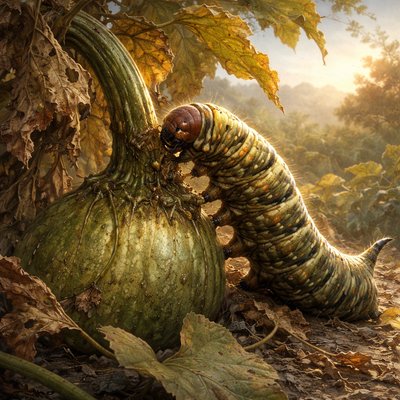
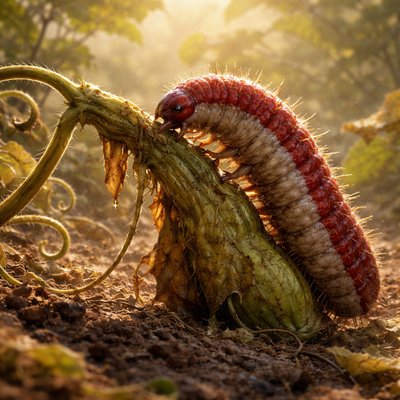
“But God prepared a worm when the morning rose the next day, and it smote the gourd that it withered. And it came to pass, when the sun did arise, that God prepared a vehement east wind; and the sun beat upon the head of Jonah, that he fainted, and wished in himself to die, and said, It is better for me to die than to live.” (Jonah 4:7-8, KJV)
“But God prepared a worm ( Tola worm) when the morning rose the next day, and it smote the gourd that it withered. And it came to pass, when the sun did arise, that God prepared a vehement east wind; and the sun beat upon the head of Jonah, that he fainted, and wished in himself to die, and said, It is better for me to die than to live.” (Jonah 4:7-8, KJV)
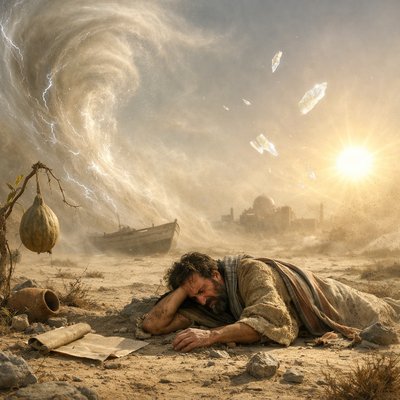
“And it came to pass, when the sun did arise, that God prepared a vehement east wind; and the sun beat upon the head of Jonah, that he fainted, and wished in himself to die, and said, It is better for me to die than to live.” (Jonah 4:8, KJV)
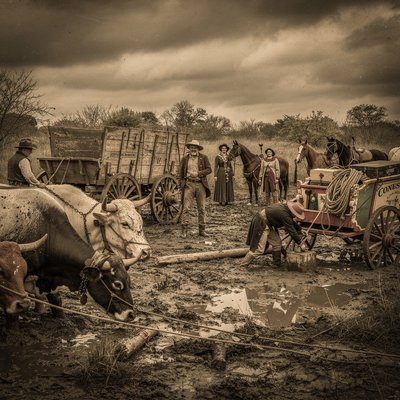
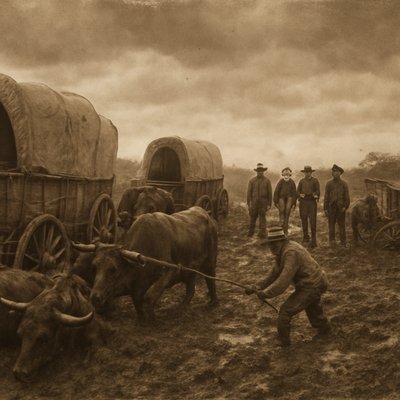
A highly realistic and historically accurate image set in the deep, waterlogged mud of the Texas Cross Timbers (Montague County) in 1840. The scene captures the frustrating moment when the Chihuahua Traders caravan is completely stuck. Foreground focus is on several heavy, wooden Conestoga freight wagons, mired up to their axles in dark, thick mud. Exhausted oxen are straining and distressed, their drivers in rough frontier attire attempting to free the wheels with ropes and levers. In the mid-ground, a small group of the American equestrian circus performers stands next to their distinctive, high-quality riding horses, which are visibly more refined than the typical pack animals. The performers are dressed in sturdy but distinct traveling clothes, looking ill-equipped and frustrated by the muddy conditions. One performer is carefully securing a colorful carriage or cart containing unique circus props, struggling to keep it from sinking. The overall mood is one of miserable delay and hardship. Cloudy, oppressive sky; detailed realism; wide-angle shot; dark, moody lighting.
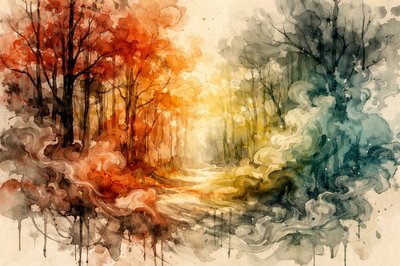
In days to come I stood amazed, walking through that forest, at the blazing symphony of color it brought forth, seemingly just for me.  I grew to love my friend’s words in a new way, through the astounding beauty of the spectacle he knew was coming when he said them.  I was young then, and didn’t know I had many autumns ahead of me.
A highly realistic and historically accurate image set in the deep, waterlogged mud of the Texas Cross Timbers (Montague County) in 1840. The scene captures the frustrating moment when the Chihuahua Traders caravan is completely stuck. Foreground focus is on several heavy, wooden Conestoga freight wagons, mired up to their axles in dark, thick mud. Exhausted oxen are straining and distressed, their drivers in rough frontier attire attempting to free the wheels with ropes and levers. In the mid-ground, a small group of the American equestrian circus performers stands next to their distinctive, high-quality riding horses, which are visibly more refined than the typical pack animals. The performers are dressed in sturdy but distinct traveling clothes, looking ill-equipped and frustrated by the muddy conditions. One performer is carefully securing a colorful carriage or cart containing unique circus props, struggling to keep it from sinking. The overall mood is one of miserable delay and hardship. Cloudy, oppressive sky; detailed realism; wide-angle shot; dark, moody lighting.
A highly realistic and historically accurate image set in the deep, waterlogged mud of the Texas Cross Timbers (Montague County) in 1840. The scene captures the frustrating moment when the Chihuahua Traders caravan is completely stuck.

Foreground focus is on several heavy, wooden Conestoga freight wagons, mired up to their axles in dark, thick mud. Exhausted oxen are straining and distressed, their drivers in rough frontier attire attempting to free the wheels with ropes and levers.

In the mid-ground, a small group of the American equestrian circus performers stands next to their distinctive, high-quality riding horses, which are visibly more refined than the typical pack animals. The performers are dressed in sturdy but distinct traveling clothes, looking ill-equipped and frustrated by the muddy conditions. One performer is carefully securing a colorful carriage or cart containing unique circus props, struggling to keep it from sinking. The overall mood is one of miserable delay and hardship. Cloudy, oppressive sky; detailed realism; wide-angle shot; dark, moody lighting.
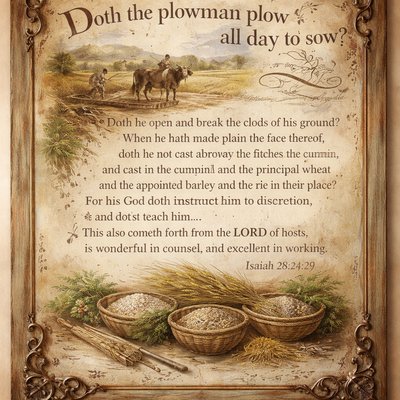
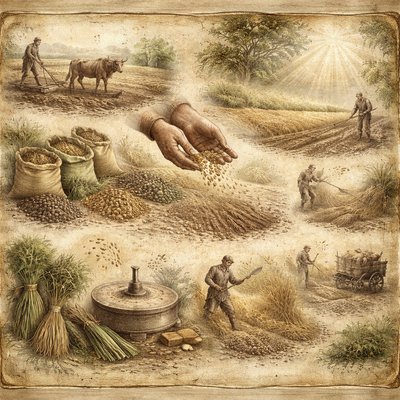
“Doth the plowman plow all day to sow? doth he open and break the clods of his ground? When he hath made plain the face thereof, doth he not cast abroad the fitches, and scatter the cummin, and cast in the principal wheat and the appointed barley and the rie in their place? For his God doth instruct him to discretion, and doth teach him. For the fitches are not threshed with a threshing instrument, neither is a cart wheel turned about upon the cummin; but the fitches are beaten out with a staff, and the cummin with a rod. Bread corn is bruised; because he will not ever be threshing it, nor break it with the wheel of his cart, nor bruise it with his horsemen. This also cometh forth from the LORD of hosts, which is wonderful in counsel, and excellent in working.” (Isaiah 28:24-29, KJV)
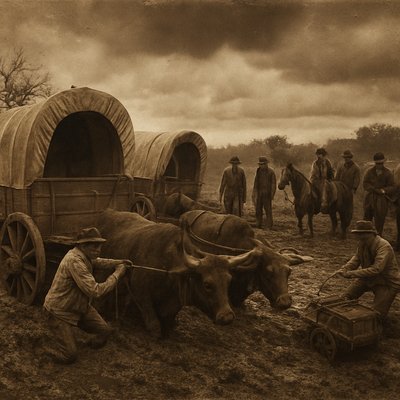
A highly realistic and historically accurate image set in the deep, waterlogged mud of the Texas Cross Timbers (Montague County) in 1840. The scene captures the frustrating moment when the Chihuahua Traders caravan is completely stuck.

Foreground focus is on several heavy, wooden Conestoga freight wagons, mired up to their axles in dark, thick mud. Exhausted oxen are straining and distressed, their drivers in rough frontier attire attempting to free the wheels with ropes and levers.

In the mid-ground, a small group of the American equestrian circus performers stands next to their distinctive, high-quality riding horses, which are visibly more refined than the typical pack animals. The performers are dressed in sturdy but distinct traveling clothes—perhaps featuring slightly tailored jackets or vests—rather than performance costumes, looking ill-equipped and frustrated by the muddy conditions. One performer is carefully securing a small, colorful carriage or cart containing unique circus props, struggling to keep it from sinking. The overall mood is one of miserable delay and hardship. Cloudy, oppressive sky; detailed realism; wide-angle shot; dark, moody lighting.
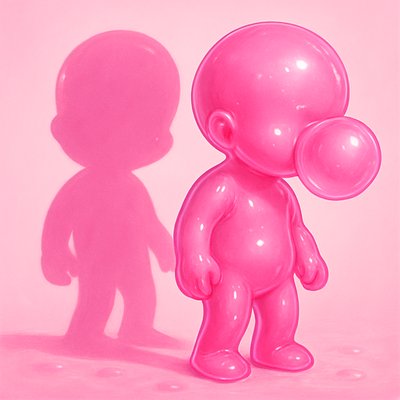
I have a little shadow that goes in and out with me,
And what can be the use of him is more than
I can see.
He is very, very like me from the heels up to the head;
And I see him jump before me, when I jump into my bed.
The funniest thing about him is the way he likes to grow—
Not at all like proper children, which is always very slow;
For he sometimes shoots up taller like an india-rubber ball,
And he sometimes goes so little that there’s none of him at all.
He hasn’t got a notion of how children ought to play,
And can only make a fool of me in every sort of way.
He stays so close behind me, he’s a coward you can see;
I’d think shame to stick to nursie as that shadow sticks to me!
One morning, very early, before the sun was up,
I rose and found the shining dew on every buttercup;
But my lazy little shadow, like an arrant sleepy-head,
Had stayed at home behind me and was fast asleep in bed.
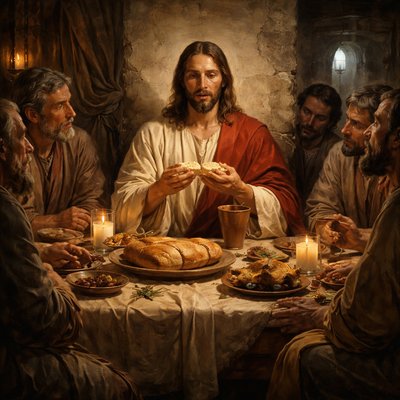
“And as they were eating, Jesus took bread, and blessed it, and brake it, and gave it to the disciples, and said, Take, eat; this is my body. And he took the cup, and gave thanks, and gave it to them, saying, Drink ye all of it; For this is my blood of the new testament, which is shed for many for the remission of sins. But I say unto you, I will not drink henceforth of this fruit of the vine, until that day when I drink it new with you in my Father's kingdom.” (Matthew 26:26-29, KJV)
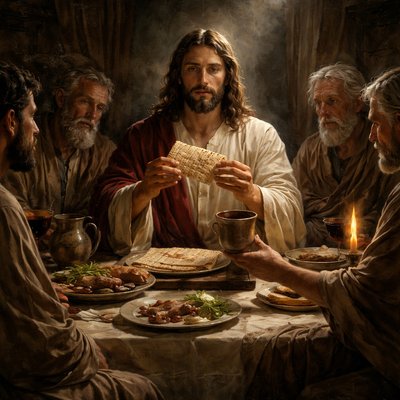
“And as they were eating, Jesus took bread, and blessed it, and brake it, and gave it to the disciples, and said, Take, eat; this is my body. And he took the cup, and gave thanks, and gave it to them, saying, Drink ye all of it; For this is my blood of the new testament, which is shed for many for the remission of sins. But I say unto you, I will not drink henceforth of this fruit of the vine, until that day when I drink it new with you in my Father's kingdom.” (Matthew 26:26-29, KJV) Use Matzo style bread
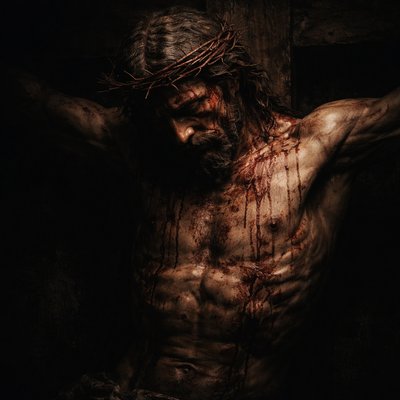
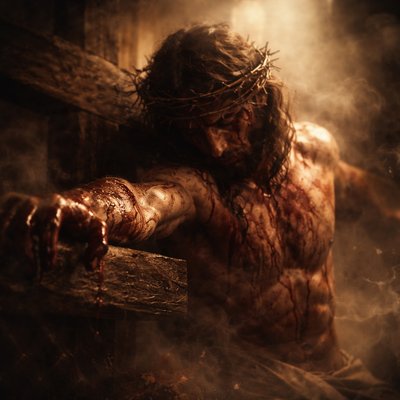
“Yet it pleased the LORD to bruise him; he hath put him to grief: when thou shalt make his soul an offering for sin, he shall see his seed, he shall prolong his days, and the pleasure of the LORD shall prosper in his hand.” (Isaiah 53:10, KJV)
Without using words create “Doth the plowman plow all day to sow? doth he open and break the clods of his ground? When he hath made plain the face thereof, doth he not cast abroad the fitches, and scatter the cummin, and cast in the principal wheat and the appointed barley and the rie in their place? For his God doth instruct him to discretion, and doth teach him. For the fitches are not threshed with a threshing instrument, neither is a cart wheel turned about upon the cummin; but the fitches are beaten out with a staff, and the cummin with a rod. Bread corn is bruised; because he will not ever be threshing it, nor break it with the wheel of his cart, nor bruise it with his horsemen. This also cometh forth from the LORD of hosts, which is wonderful in counsel, and excellent in working.” (Isaiah 28:24-29, KJV)
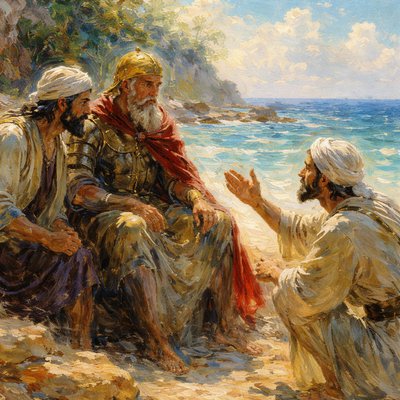
“And his servants came near, and spake unto him, and said, My father, if the prophet had bid thee do some great thing, wouldest thou not have done it? how much rather then, when he saith to thee, Wash, and be clean?” (2 Kings 5:13, KJV)
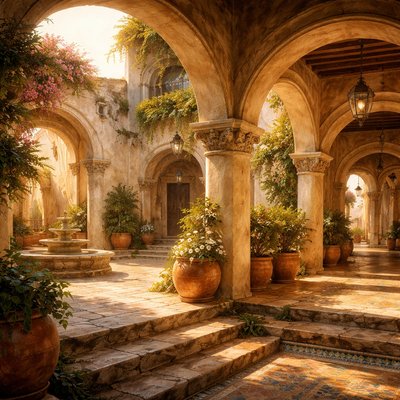
“And Solomon sent to Huram the king of Tyre, saying, As thou didst deal with David my father, and didst send him cedars to build him an house to dwell therein, even so deal with me. Behold, I build an house to the name of the LORD my God, to dedicate it to him, and to burn before him sweet incense, and for the continual shewbread, and for the burnt offerings morning and evening, on the sabbaths, and on the new moons, and on the solemn feasts of the LORD our God. This is an ordinance for ever to Israel. And the house which I build is great: for great is our God above all gods. But who is able to build him an house, seeing the heaven and heaven of heavens cannot contain him? who am I then, that I should build him an house, save only to burn sacrifice before him?” (2 Chronicles 2:3-6, KJV)
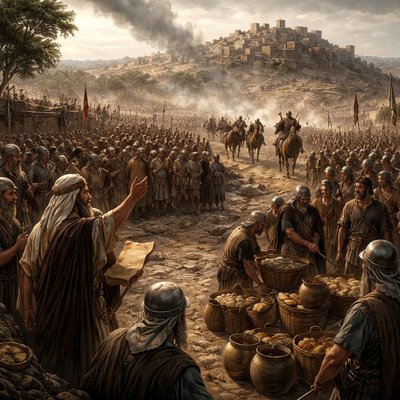
Judges 20:8-12 (KJV)
8 And all the people arose as one man, saying, We will not any of us go to his tent, neither will we any of us turn into his house.
9 But now this shall be the thing which we will do to Gibeah; we will go up by lot against it;
10 And we will take ten men of an hundred throughout all the tribes of Israel, and an hundred of a thousand, and a thousand out of ten thousand, to fetch victual for the people, that they may do, when they come to Gibeah of Benjamin, according to all the folly that they have wrought in Israel.
11 So all the men of Israel were gathered against the city, knit together as one man.
12 And the tribes of Israel sent men through all the tribe of Benjamin, saying, What wickedness is this that is done among you?
“Yet it pleased the LORD to bruise him; he hath put him to grief: when thou shalt make his soul an offering for sin, he shall see his seed, he shall prolong his days, and the pleasure of the LORD shall prosper in his hand.” (Isaiah 53:10, KJV)
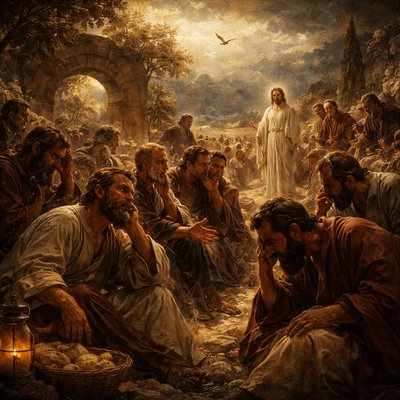
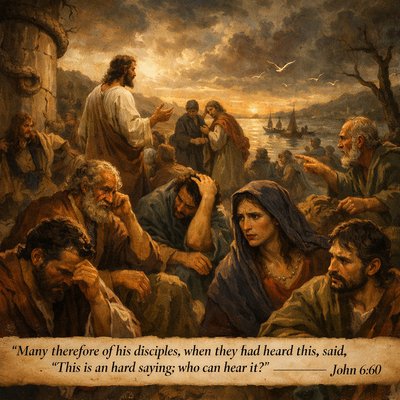
Many therefore of his disciples, when they had heard this, said, This is an hard saying; who can hear it?
John 6:60 (KJV)
Many therefore of his disciples, when they had heard this, said, This is an hard saying; who can hear it?
John 6:60 (KJV)
In days to come I stood amazed, walking through that forest, at the blazing symphony of color it brought forth, seemingly just for me.  I grew to love my friend’s words in a new way, through the astounding beauty of the spectacle he knew was coming when he said them.  I was young then, and didn’t know I had many autumns ahead of me.
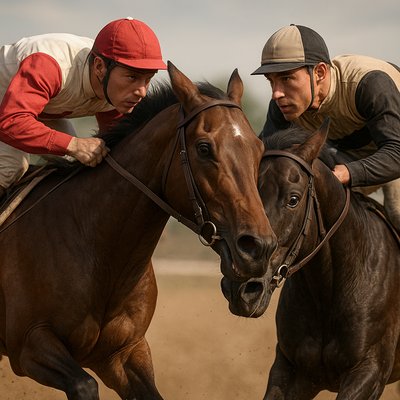
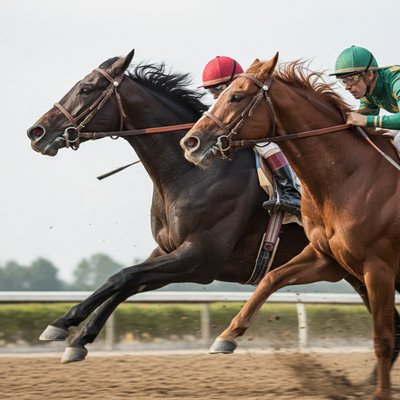
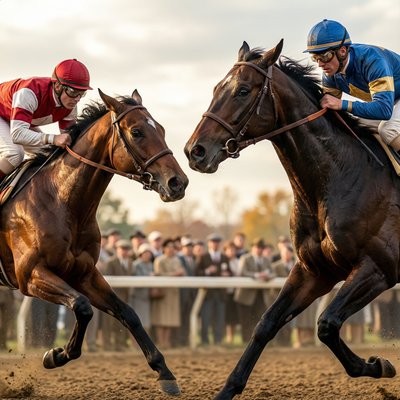
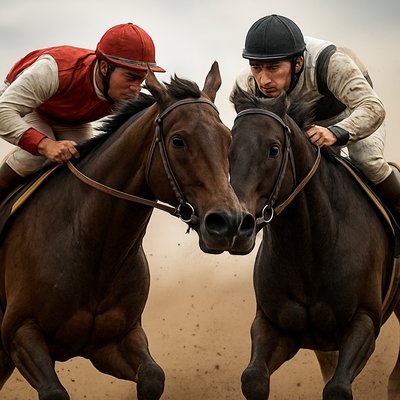
Seabiscuit vs. War Admiral (The Gaze)

    A hyper-realistic, high-resolution photograph capturing the apex of the 1938 match race between Seabiscuit and War Admiral.

    Focus: The composition is tight, showing both horses running neck-and-neck, dominating the frame. The camera angle is side-on and slightly low, emphasizing their size and muscle. The critical focus is on the space between the horses' heads as they are running stride for stride.

    Details: War Admiral (the dark bay) should show determination and slight surprise, with his head stretched out. Seabiscuit (the smaller bay) should display his characteristic "game" look—intense, focused, and seemingly looking directly into War Admiral's eyes (or toward his rival). Both jockeys (Red Pollard or George Woolf for Seabiscuit; Charles Kurtsinger for War Admiral) are visible, leaning low and urging their mounts on.

    Atmosphere: The light should be bright but slightly diffused, suggesting an autumn afternoon at Pimlico. Dust and track debris are kicked up behind them, blurred slightly by the horses' tremendous speed. The image must convey the raw power, intense rivalry, and the exact moment when the smaller horse asserts his dominance.

    Style: Cinematic photography, realistic texture, sharp focus on the horses' eyes and muscle definition.
Seabiscuit vs. War Admiral (The Gaze)

    A hyper-realistic, high-resolution photograph capturing the apex of the 1938 match race between Seabiscuit and War Admiral.

    Focus: The composition is tight, showing both horses running neck-and-neck, dominating the frame. The camera angle is side-on and slightly low, emphasizing their size and muscle. The critical focus is on the space between the horses' heads as they are running stride for stride.

    Details: War Admiral (the dark bay) should show determination and slight surprise, with his head stretched out. Seabiscuit (the smaller bay) should display his characteristic "game" look—intense, focused, and seemingly looking directly into War Admiral's eyes (or toward his rival). Both jockeys (Red Pollard or George Woolf for Seabiscuit; Charles Kurtsinger for War Admiral) are visible, leaning low and urging their mounts on.

    Atmosphere: The light should be bright but slightly diffused, suggesting an autumn afternoon at Pimlico. Dust and track debris are kicked up behind them, blurred slightly by the horses' tremendous speed. The image must convey the raw power, intense rivalry, and the exact moment when the smaller horse asserts his dominance.

    Style: Cinematic photography, realistic texture, sharp focus on the horses' eyes and muscle definition.
Seabiscuit vs. War Admiral (The Gaze)

    A hyper-realistic, high-resolution photograph capturing the apex of the 1938 match race between Seabiscuit and War Admiral.

    Focus: The composition is tight, showing both horses running neck-and-neck, dominating the frame. The camera angle is side-on and slightly low, emphasizing their size and muscle. The critical focus is on the space between the horses' heads as they are running stride for stride.

    Details: War Admiral (the dark bay) should show determination and slight surprise, with his head stretched out. Seabiscuit (the smaller bay) should display his characteristic "game" look—intense, focused, and seemingly looking directly into War Admiral's eyes (or toward his rival). Both jockeys (Red Pollard or George Woolf for Seabiscuit; Charles Kurtsinger for War Admiral) are visible, leaning low and urging their mounts on.

    Atmosphere: The light should be bright but slightly diffused, suggesting an autumn afternoon at Pimlico. Dust and track debris are kicked up behind them, blurred slightly by the horses' tremendous speed. The image must convey the raw power, intense rivalry, and the exact moment when the smaller horse asserts his dominance.

    Style: Cinematic photography, realistic texture, sharp focus on the horses' eyes and muscle definition.
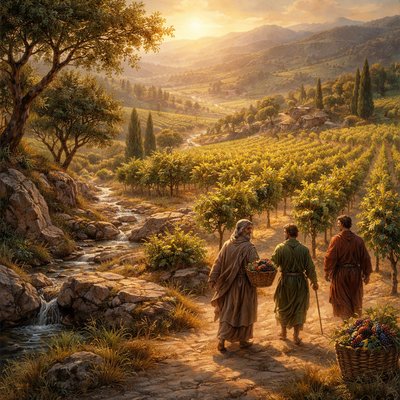
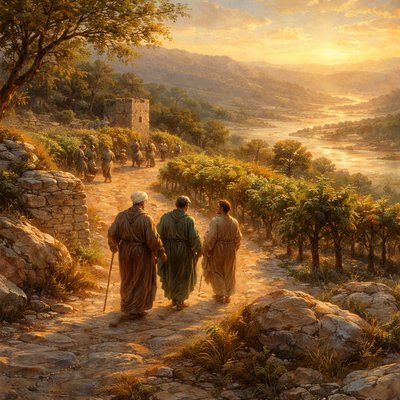
And when the time of the fruit drew near, he sent his servants to the husbandmen, that they might receive the fruits of it. Matthew 21:34 (KJV) setting is a vineyard
Seabiscuit vs. War Admiral (The Gaze)

    A hyper-realistic, high-resolution photograph capturing the apex of the 1938 match race between Seabiscuit and War Admiral.

    Focus: The composition is tight, showing both horses running neck-and-neck, dominating the frame. The camera angle is side-on and slightly low, emphasizing their size and muscle. The critical focus is on the space between the horses' heads as they are running stride for stride.

    Details: War Admiral (the dark bay) should show determination and slight surprise, with his head stretched out. Seabiscuit (the smaller bay) should display his characteristic "game" look—intense, focused, and seemingly looking directly into War Admiral's eyes (or toward his rival). Both jockeys (Red Pollard or George Woolf for Seabiscuit; Charles Kurtsinger for War Admiral) are visible, leaning low and urging their mounts on.

    Atmosphere: The light should be bright but slightly diffused, suggesting an autumn afternoon at Pimlico. Dust and track debris are kicked up behind them, blurred slightly by the horses' tremendous speed. The image must convey the raw power, intense rivalry, and the exact moment when the smaller horse asserts his dominance.

    Style: Cinematic photography, realistic texture, sharp focus on the horses' eyes and muscle definition.
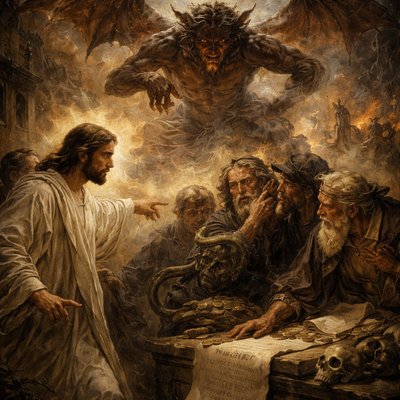
Ye are of your father the devil, and the lusts of your father ye will do. He was a murderer from the beginning, and abode not in the truth, because there is no truth in him. When he speaketh a lie, he speaketh of his own: for he is a liar, and the father of it. John 8:44 (KJV)
Matthew 21:34 (KJV)
34 And when the time of the fruit drew near, he sent his servants to the husbandmen, that they might receive the fruits of it.
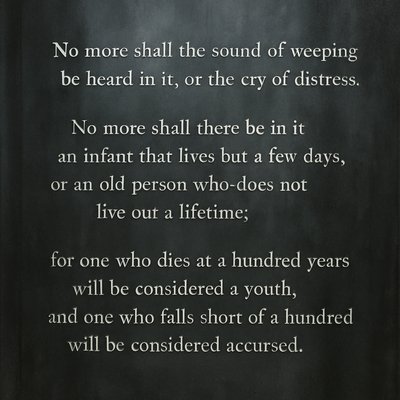
no more shall the sound of weeping be heard in it,
or the cry of distress.

No more shall there be in it
an infant that lives but a few days,
or an old person who does not live out a lifetime;

for one who dies at a hundred years will be considered a youth,
and one who falls short of a hundred will be considered accursed.

They shall build houses and inhabit them;
they shall plant vineyards and eat their fruit.
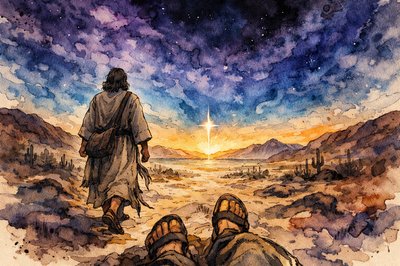
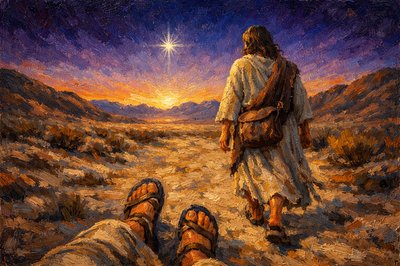
Personal POV scene. Me and Jesus in the desert on a cool morning at daybreak walking toward a bright star. Jesus is wearing old clothes and carrying a satchel. I’m wearing old clothes and sandals just like Him. The air is cool and crisp. The sky is bright blue on the horizon with deep purple fading into black at the upper atmosphere. The air is crisp and clear. It’s like the desert in California looking east toward Arizona. There are desert hills on the north and south sides and mountains in the distance.
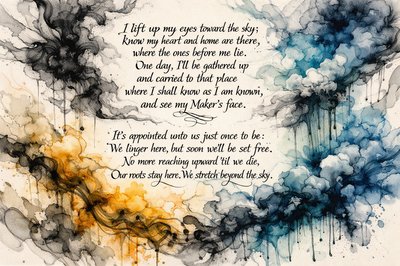
I lift up my eyes toward the sky;
know my heart and home are there,
where the ones before me lie.
One day, I’ll be gathered up
and carried to that place
where I shall know as I am known,
and see my Maker’s face.

	It’s appointed unto us just once to be:
	We linger here, but soon we’ll be set free.
 	No more reaching upward ‘til we die,
	Our roots stay here.  We stretch beyond the sky.
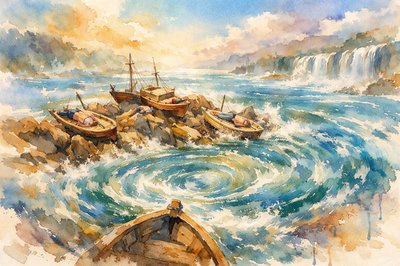
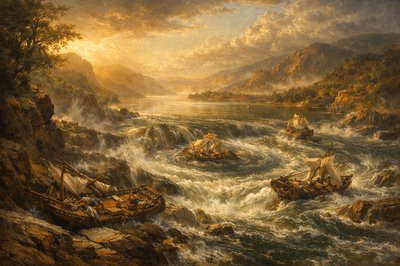
Now, those captains must learn what the river will do
when it makes that great turn out of sight.
How it dashes them up on the rocks of the shore
How it spins to the left and the right.
It beats them and breaks them and crushes their pride
Leaves them dizzy and sick and all jumbled inside
‘til they’ve all but forgotten that glorious ride
lying flat on their deck in the sun.
There they lie, drying out in the sun.

As you round the point where the river was bent
and survey the great wideness ahead,
you can see all those captains alone on their decks,
beat and broken and very near dead.
Then the current takes hold and there’s naught you can do
as it drags you down into its maw.
Headed straight for those rocks, you make ready to crash
but at last, you rise up, roll and yaw.

Going back and away, then forward again,
fearing each time, the rocks will prevail!
You’re trapped in a cycling, circling tide,
in an eddy withstanding a gale.
But each time you circle that great whirling tide
and you’ve not hit the rocks or been thrown to the side
and you’re kept from the falls, cascading and wide,
for the eddy’s small mercy give praise.
Give the merciful currents your praise!
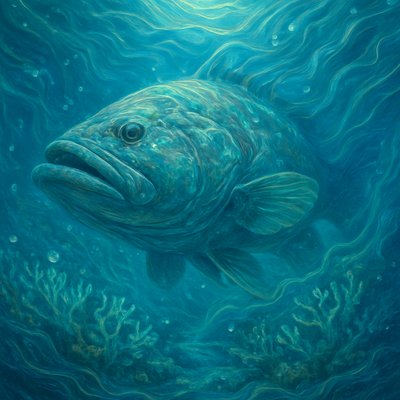
A giant grouper fish, over a coral reef in the ocean, professional photography, extreme detail (
Psalms 124:1-6 KJVA  A Song of degrees of David. If it had not been the LORD who was on our side, now may Israel say;  (2)  If it had not been the LORD who was on our side, when men rose up against us:  (3)  Then they had swallowed us up quick, when their wrath was kindled against us:  (4)  Then the waters had overwhelmed us, the stream had gone over our soul:  (5)  Then the proud waters had gone over our soul.  (6)  Blessed be the LORD, who hath not given us as a prey to their teeth.
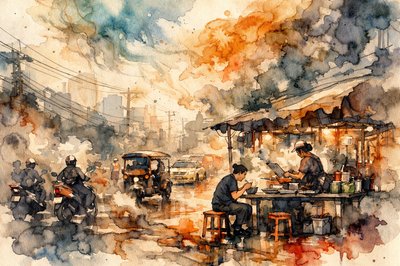
Southeast Asia.  Modern day.  This morning the sound of traffic in the street, 
scooters and tuk-tuks, taxis and trucks, was so loud I couldn’t hear my dream.  
So I turned it off and went dowstairs.
Taking in diesel fumes ‘til it hurt to breathe, I found a hawker-stall and ate.
It’s 100 degrees already; soon the rain will come.
Personal POV scene. Me and Jesus in the desert on a cool morning at daybreak walking toward a bright star. Jesus is wearing old clothes and carrying a satchel. I’m wearing old clothes and sandals just like Him. The air is cool and crisp. The sky is bright blue on the horizon with deep purple fading into black at the upper atmosphere. The air is crisp and clear. It’s like the desert in California looking east toward Arizona. There are desert hills on the north and south sides and mountains in the distance.
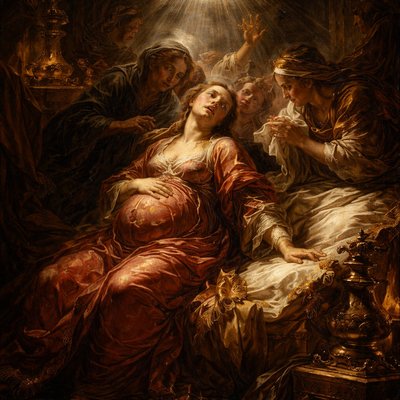
“And his daughter in law, Phinehas' wife, was with child, near to be delivered: and when she heard the tidings that the ark of God was taken, and that her father in law and her husband were dead, she bowed herself and travailed; for her pains came upon her.” (1 Samuel 4:19, KJV)
Now, those captains must learn what the river will do
when it makes that great turn out of sight.
How it dashes them up on the rocks of the shore
How it spins to the left and the right.
It beats them and breaks them and crushes their pride
Leaves them dizzy and sick and all jumbled inside
‘til they’ve all but forgotten that glorious ride
lying flat on their deck in the sun.
There they lie, drying out in the sun.

As you round the point where the river was bent
and survey the great wideness ahead,
you can see all those captains alone on their decks,
beat and broken and very near dead.
Then the current takes hold and there’s naught you can do
as it drags you down into its maw.
Headed straight for those rocks, you make ready to crash
but at last, you rise up, roll and yaw.

Going back and away, then forward again,
fearing each time, the rocks will prevail!
You’re trapped in a cycling, circling tide,
in an eddy withstanding a gale.
But each time you circle that great whirling tide
and you’ve not hit the rocks or been thrown to the side
and you’re kept from the falls, cascading and wide,
for the eddy’s small mercy give praise.
Give the merciful currents your praise!
“And Solomon sent to Huram the king of Tyre, saying, As thou didst deal with David my father, and didst send him cedars to build him an house to dwell therein, even so deal with me. Behold, I build an house to the name of the LORD my God, to dedicate it to him, and to burn before him sweet incense, and for the continual shewbread, and for the burnt offerings morning and evening, on the sabbaths, and on the new moons, and on the solemn feasts of the LORD our God. This is an ordinance for ever to Israel. And the house which I build is great: for great is our God above all gods. But who is able to build him an house, seeing the heaven and heaven of heavens cannot contain him? who am I then, that I should build him an house, save only to burn sacrifice before him?” (2 Chronicles 2:3-6, KJV)
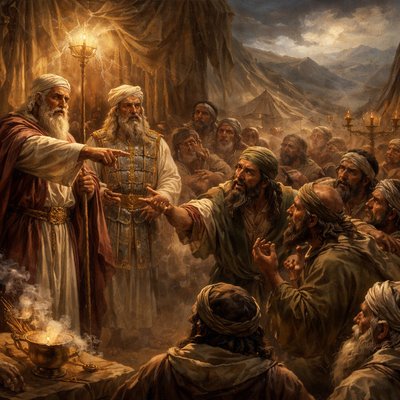
“Seemeth it but a small thing unto you, that the God of Israel hath separated you from the congregation of Israel, to bring you near to himself to do the service of the tabernacle of the LORD, and to stand before the congregation to minister unto them? And he hath brought thee near to him, and all thy brethren the sons of Levi with thee: and seek ye the priesthood also? For which cause both thou and all thy company are gathered together against the LORD: and what is Aaron, that ye murmur against him?” (Numbers 16:9-11, KJV)
The explorers. Explorers explore a wonderful two faced world one world is morning at beautiful and night at very dangerous zombies and skeleton goblin creatures etc. Another world is hell. No day night cycle. Many Monsters in live it. Heros explore this two faced world