Portray Without Words “For The Priesthood Being Changed, There Is Made Of Necessity A Change Also Of The Law. For He Of Whom Art

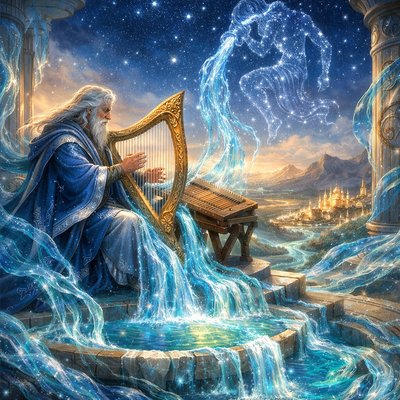
A wide-angle, epic and majestic fantasy-realism style illustration for ArtStyles, based on Psalm 92:3, capturing a grand, celestial-inspired musician at dawn. In a mystical, open-air temple balcony under a starry sky with the constellation Aquarius prominently visible as a shimmering water-bearer icon pouring water, a majestic figure with a flowing beard and blue and silver robes (symbolizing Aquarius and music) is seated. Before the figure are two elaborate instruments.
One is a unique, gilded and carved wooden harp with a distinct triangular frame, which is explicitly and clearly shown with exactly ten distinct, visible, and countable strings stretched taut. The strings are glistening with cool, deep blue and golden light as the musician plucks them. Nearby, a beautiful, multi-stringed wooden psaltery (a trapezoidal zither-like instrument) sits on a stand, also being played by the other hand.
As the musician plays, glowing streams of illuminated, cascading blue and indigo water, visualized as physical music, emanate directly from the vibrating strings of both the ten-string harp and the psaltery. This water-music does not fall as rain, but flows down and out in majestic, powerful, yet gentle streams, just like an outpour from an Aquarian vessel. The water-music pools into a crystal-clear basin below the instruments, and then cascades over a series of carved crystal steps, spreading out across the temple floor and into a valley, illustrating the sound going out. The "solemn sound" is visualized through the deep, rich colors of the flowing water and the light within it, and the steady, powerful, and calming nature of the flow. The atmosphere is solemn, peaceful, and epic. The surrounding architecture is ancient and detailed with astrological symbols of stars and flowing water. In the distant valley, a magnificent city and a winding river are touched by the flowing water-music. No text or labels are on screen. The lighting is early morning gold and blue. Detailed fabric textures and wood grain are visible.
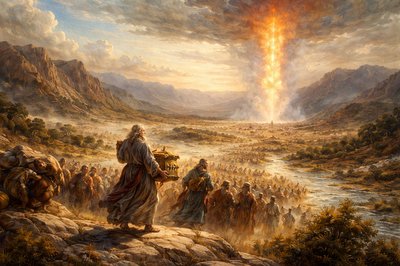
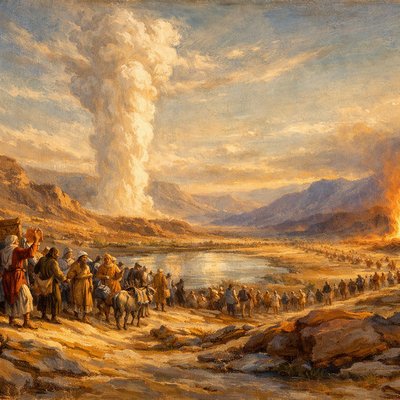
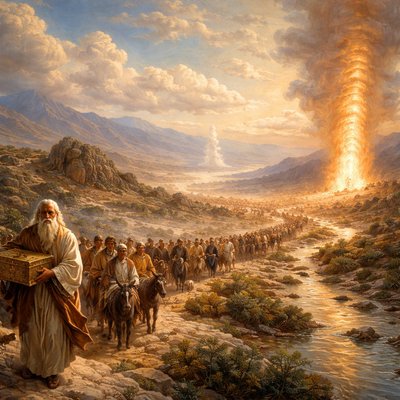
“And Moses took the bones of Joseph with him: for he had straitly sworn the children of Israel, saying, God will surely visit you; and ye shall carry up my bones away hence with you. And they took their journey from Succoth, and encamped in Etham, in the edge of the wilderness. And the LORD went before them by day in a pillar of a cloud, to lead them the way; and by night in a pillar of fire, to give them light; to go by day and night:” (Exodus 13:19-21, KJV)
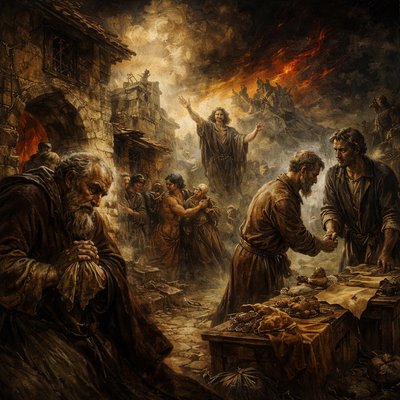
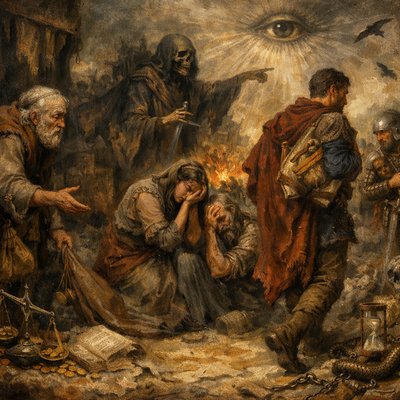
“For the seller shall not return to that which is sold, although they were yet alive: for the vision is touching the whole multitude thereof, which shall not return; neither shall any strengthen himself in the iniquity of his life.” (Ezekiel 7:13, KJV)
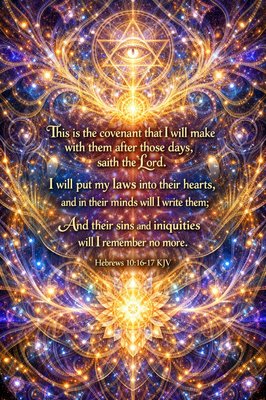
“This is the covenant that I will make with them after those days, saith the Lord, I will put my laws into their hearts, and in their minds will I write them; And their sins and iniquities will I remember no more.” (Hebrews 10:16-17, KJV)
“And Moses took the bones of Joseph with him: for he had straitly sworn the children of Israel, saying, God will surely visit you; and ye shall carry up my bones away hence with you. And they took their journey from Succoth, and encamped in Etham, in the edge of the wilderness. And the LORD went before them by day in a pillar of a cloud, to lead them the way; and by night in a pillar of fire, to give them light; to go by day and night:” (Exodus 13:19-21, KJV)
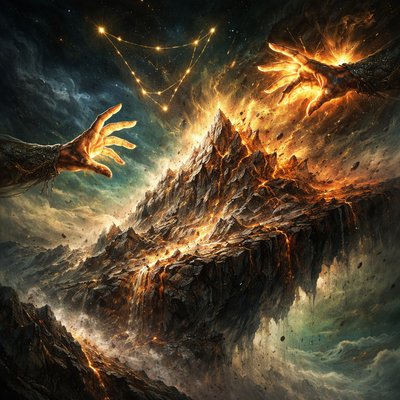
An abstract fusion of the Capricorn constellation and a mountain being turned to ash. Ethereal hands stretching out against a "destroying mountain" as it rolls off a cosmic cliff. The colors are charcoal, deep bronze, and flickering fire-orange. No cornerstones remain; the geometry of the mountain is fracturing. Surrealist style, sharp edges, metallic highlights, symbolic of Jeremiah 51:24-26.
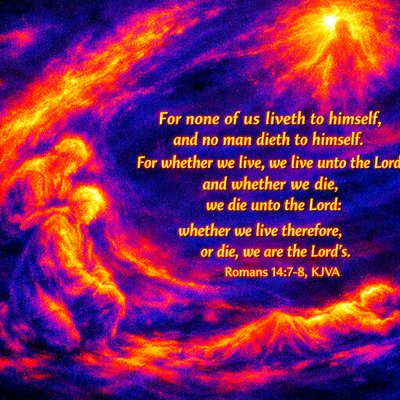
“For none of us liveth to himself, and no man dieth to himself. For whether we live, we live unto the Lord; and whether we die, we die unto the Lord: whether we live therefore, or die, we are the Lord's.” (Romans 14:7-8, KJVA)
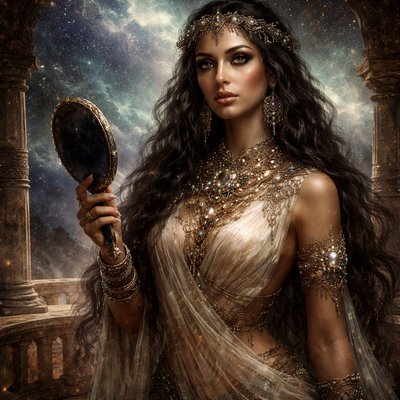
Style: Cinematic Fantasy Portrait, Ancient Near Eastern aesthetic with a mystical, ethereal overlay. The look should feel like a rediscovered fresco brought to life, rich in texture and deep color.

The Subject (Asonya): A woman of arresting, almost supernatural beauty belonging to a pre-flood civilization. She has a powerful, enigmatic presence. Her eyes are large, dark, and intensely knowing, rimmed heavily with kohl (antimony)—a cosmetic taught by the Watchers.

Attire & Adornment (The Forbidden Knowledge): She is dressed not just in fine linen, but in adornments that hint at celestial instruction.

    Jewelry: She wears elaborate, heavy bracelets and necklaces made of hammered metals that gleam with an unusual iridescence, set with uncut, glowing gems that seem almost alive.

    Headpiece: A complex circlet of woven silver and dark stones rests on her long, flowing dark hair, reflecting the starlight.

Action/Pose: She stands holding a polished obsidian mirror in one hand, gazing slightly off-camera with an expression that is both wise and burdened.

Setting: She is standing on the balcony of a megalithic stone structure meant to observe the heavens. The background is a dramatic night sky filled with unfamiliar constellations and perhaps a faint, ethereal glow of an aurora, hinting at the presence of celestial beings. The overall atmosphere is one of ancient mystery and profound beauty.
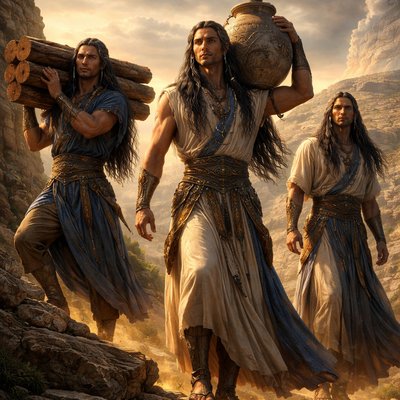
This is a great idea. For this version, let's lean even further into that "Elven High-Fantasy" aesthetic you like, but ground it in their specific Biblical legacy as the "hewers of wood and drawers of water" for the Tabernacle.

In this prompt, we will portray their service not as a lowly task, but as a display of superhuman strength and grace—showing that even in their "servant" role, their "giant" nature and ancient wisdom remained visible.
Written Prompt: The Sage-Giants of Gibeon

    Style: Cinematic High-Fantasy, 8k Resolution, Epic Scale. A blend of The Lord of the Rings aesthetic with Ancient Near Eastern Bronze Age history.

    The Subject: A group of three Gibeonite men, standing at a staggering height of 7.5 feet. They possess the ethereal, noble beauty of High Elves—sharp, intelligent Semitic features, high cheekbones, and long, dark hair intricately braided with silver and lapis lazuli.

    The Stature & Grace: They are lithe and muscular, moving with a fluid grace that defies their size. Despite their "giant" classification, they are elegant, not monstrous.

    The Role (Hewers and Drawers): > * One Gibeonite is seen effortlessly carrying a massive, ornate stone water jar on one shoulder that would require four normal men to lift.

        Another holds a bundle of enormous cedar logs, his posture straight and regal, showing no sign of strain.

    The Attire: They wear a mixture of their new culture and their old heritage. Fine linen tunics in ivory and deep blue are accented by ornate bronze bracers etched with ancient Canaanite geometry. Their clothing is weathered with the dust of the road but still looks "high-born."

    The Setting: They are standing on a high limestone ridge overlooking the ancient city of Gibeon. In the background, the Tabernacle's smoke rises into a golden sunset sky. The architecture around them consists of massive, "cyclopean" stone blocks that match their scale.

    Lighting & Atmosphere: Dramatic "God-rays" of sunlight pierce through the clouds, catching the metallic glint of their jewelry and the profound, wise expressions in their eyes. The mood is one of "Dignity in Service" and "Ancient Wisdom."
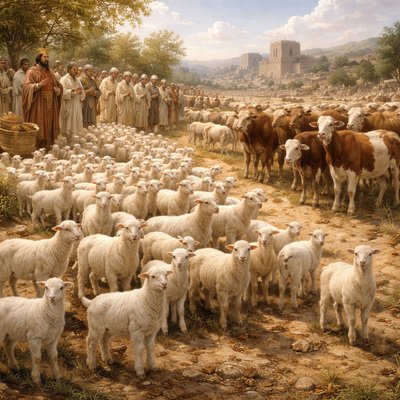
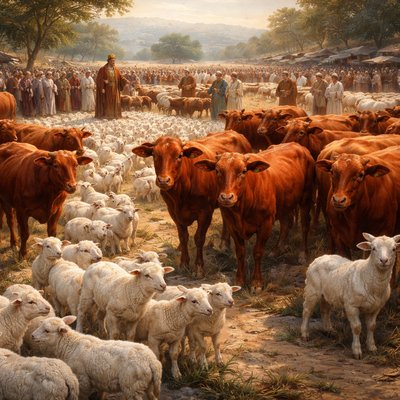
And unto the people that was found there Josias gave thirty thousand lambs and kids, and three thousand calves: these things were given of the king's allowance, according as he promised, to the people, to the priests, and to the Levites. 1 Esdras 1:7 All animals must be without spot or blemish.
And unto the people that was found there Josias gave thirty thousand lambs and kids, and three thousand calves: these things were given of the king's allowance, according as he promised, to the people, to the priests, and to the Levites. 1 Esdras 1:7 All animals must be without spot or blemish. All cal es must be completely red heifers.
“And Solomon sent to Huram the king of Tyre, saying, As thou didst deal with David my father, and didst send him cedars to build him an house to dwell therein, even so deal with me. Behold, I build an house to the name of the LORD my God, to dedicate it to him, and to burn before him sweet incense, and for the continual shewbread, and for the burnt offerings morning and evening, on the sabbaths, and on the new moons, and on the solemn feasts of the LORD our God. This is an ordinance for ever to Israel. And the house which I build is great: for great is our God above all gods. But who is able to build him an house, seeing the heaven and heaven of heavens cannot contain him? who am I then, that I should build him an house, save only to burn sacrifice before him?” (2 Chronicles 2:3-6, KJV)
“And Moses took the bones of Joseph with him: for he had straitly sworn the children of Israel, saying, God will surely visit you; and ye shall carry up my bones away hence with you. And they took their journey from Succoth, and encamped in Etham, in the edge of the wilderness. And the LORD went before them by day in a pillar of a cloud, to lead them the way; and by night in a pillar of fire, to give them light; to go by day and night: He took not away the pillar of the cloud by day, nor the pillar of fire by night, from before the people.” (Exodus 13:19-22, KJV)
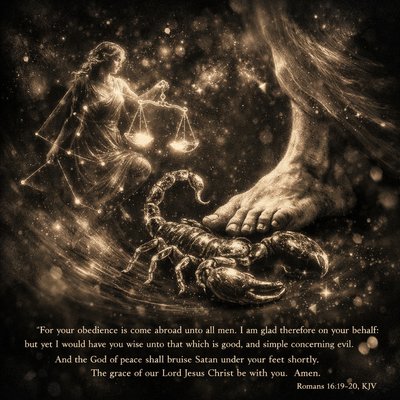
A picture of the heavenly Libra in constellation style combined with Scorpio and the foot of Ophiuchus “For your obedience is come abroad unto all men. I am glad therefore on your behalf: but yet I would have you wise unto that which is good, and simple concerning evil. And the God of peace shall bruise Satan under your feet shortly. The grace of our Lord Jesus Christ be with you. Amen.” (Romans 16:19-20, KJV)
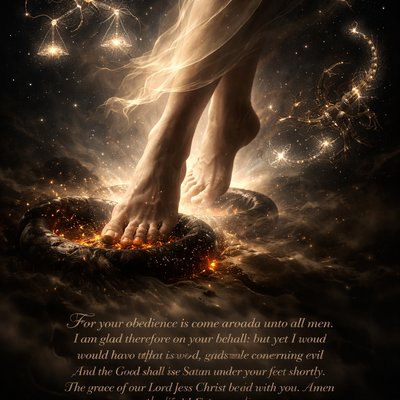
A picture of the heavenly Libra in constellation style combined with Scorpio and the foot of “For your obedience is come abroad unto all men. I am glad therefore on your behalf: but yet I would have you wise unto that which is good, and simple concerning evil. And the God of peace shall bruise Satan under your feet shortly. The grace of our Lord Jesus Christ be with you. Amen.” (Romans 16:19-20, KJV)
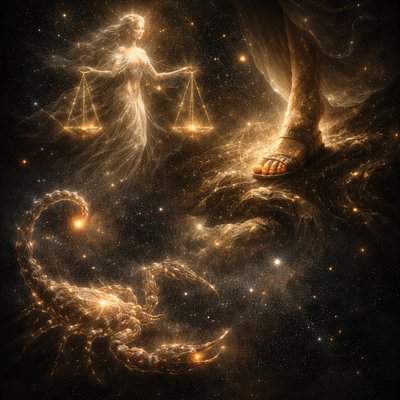
A picture of the heavenly Libra in constellation style combined with Scorpio and the foot of Ophiuchus “For your obedience is come abroad unto all men. I am glad therefore on your behalf: but yet I would have you wise unto that which is good, and simple concerning evil. And the God of peace shall bruise Satan under your feet shortly. The grace of our Lord Jesus Christ be with you. Amen.” (Romans 16:19-20, KJV)
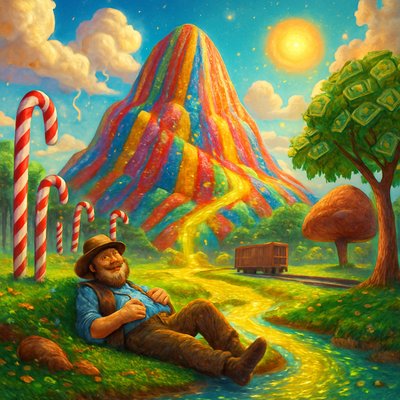
Surrealism Art Style, Digital Art Style, a brilliantly vibrant, whimsical, and exaggerated landscape depicting the mythical "Big Rock Candy Mountain." The massive mountain at the center of the scene is composed entirely of striped rock candy, glistening in the eternal sunshine. A cheerful hobo figure, relaxed and smiling, is seen lounging by a sparkling stream of pure lemonade that flows down the mountainside. The landscape is surrounded by giant peppermint stick forests and trees whose leaves are crisp dollar bills. The clouds in the sky are made of whipped cream, and the rain is a sweet syrup. There are prominent features like a cigarette tree, a luscious ham tree, and railroad tracks where the boxcars are always empty and waiting. The colors are hyper-saturated and joyful, rendered with the smooth, detailed clarity of digital art, yet maintaining a dreamlike, slightly absurd quality. Focus intently on the dazzling texture of the candy landscape, the flowing lemonade water, and the utopian, escapist joy of the scene.
“This is the covenant that I will make with them after those days, saith the Lord, I will put my laws into their hearts, and in their minds will I write them; And their sins and iniquities will I remember no more.” (Hebrews 10:16-17, KJV)
“For the seller shall not return to that which is sold, although they were yet alive: for the vision is touching the whole multitude thereof, which shall not return; neither shall any strengthen himself in the iniquity of his life.” (Ezekiel 7:13, KJV)
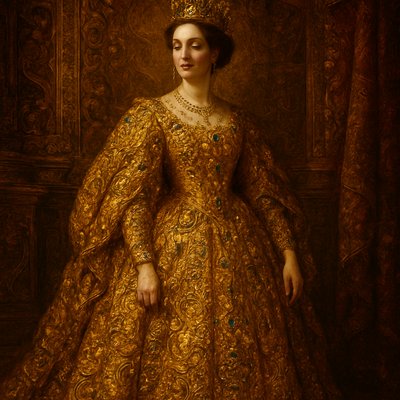
Oil Painting Art Style, Baroque Art Style, a breathtakingly majestic and regal portrait of "The Queen in Gold of Ophir," inspired by Psalm 45. The Queen stands with impeccable grace and royal dignity, her posture radiating quiet power. Her expression is serene, gentle, and profoundly gracious, with a subtle, knowing smile, reflecting noble peace. She is adorned in an exquisitely elaborate gown woven entirely from the finest, purest gold of Ophir, which shimmers and gleams with unparalleled brilliance, catching every ray of light. Her attire is intricately embellished with countless precious jewels—sapphires, rubies, and emeralds—each sparkling intensely with Baroque dynamism. A delicate yet regal golden crown, also ablaze with light, rests upon her head. The setting is a grand, opulent royal palace chamber, with rich tapestries and polished marble, bathed in dramatic, warm, golden ambient light that creates striking highlights and deep, luxurious shadows, making her and her lavish garments glow. Focus on the unparalleled brilliance, texture, and radiant shine of her golden gown, the intense sparkle of her jewels, her majestic yet gentle presence, and the luxurious, sacred atmosphere befitting a queen in God's presence.
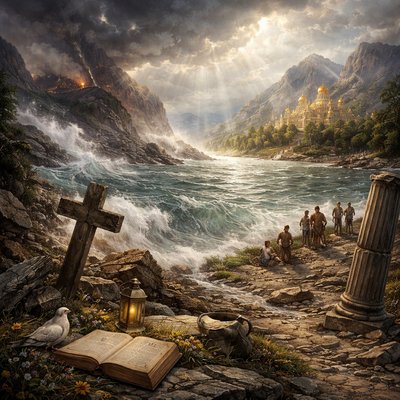
“Therefore will not we fear, though the earth be removed, and though the mountains be carried into the midst of the sea; Though the waters thereof roar and be troubled, though the mountains shake with the swelling thereof. Selah. There is a river, the streams whereof shall make glad the city of God, the holy place of the tabernacles of the most High. God is in the midst of her; she shall not be moved: God shall help her, and that right early.” (Psalms 46:2-5, KJV)
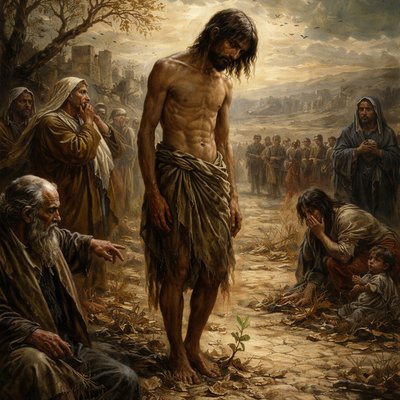
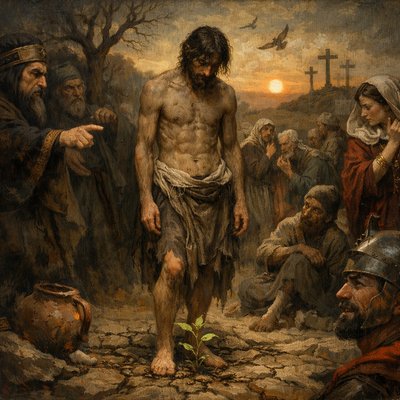
“For he shall grow up before him as a tender plant, and as a root out of a dry ground: he hath no form nor comeliness; and when we shall see him, there is no beauty that we should desire him.” (Isaiah 53:2, KJV)
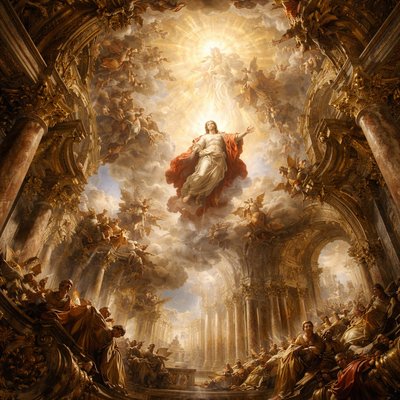
“For Christ is not entered into the holy places made with hands, which are the figures of the true; but into heaven itself, now to appear in the presence of God for us:” (Hebrews 9:24, KJV)
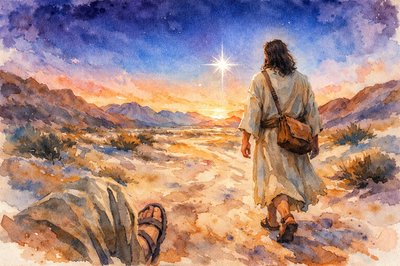
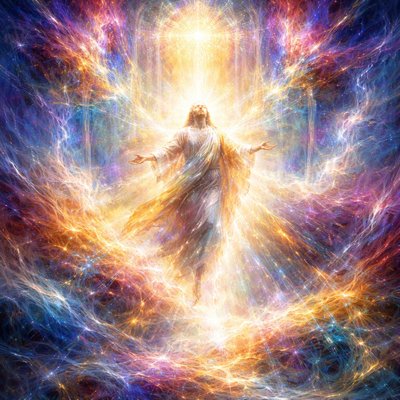
Personal POV scene. Me and Jesus in the desert on a cool morning at daybreak walking toward a bright star. Jesus is wearing old clothes and carrying a satchel. I’m wearing old clothes and sandals just like Him. The air is cool and crisp. The sky is bright blue on the horizon with deep purple fading into black at the upper atmosphere. The air is crisp and clear. It’s like the desert in California looking east toward Arizona. There are desert hills on the north and south sides and mountains in the distance.
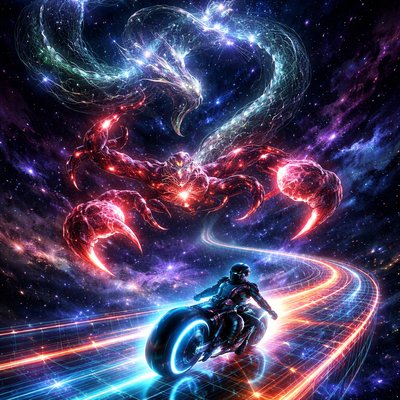
Neon-Futurism Digital Art Style, Bioluminescent Sci-Fi Cosmic Setting. A sleek, futuristic scene set deep in the interstellar void, with absolutely no Earth terrain, asphalt, or atmosphere visible. The Path (The Ecliptic): The "road" is a floating, translucent highway constructed entirely of glowing blue and orange laser grids and condensed stardust, arcing through infinite dark space with dynamic curves. The Rider: A lone rider on a futuristic, hubless "light-cycle" sportbike speeds along this cosmic path at high velocity. The rider is fully encased in a sleek, glowing armored suit with an integrated full-face helmet, leaving a vibrant neon light trail behind them, evading danger with sharp maneuvers. The Constellation (Intense Scorpio and Ophiuchus): Dominating and towering overhead is the immense celestial symbol of Scorpio: a massive, menacing scorpion made of deep crimson glowing stars, luminous energy threads, and bioluminescent nebula plasma, with razor-sharp claws extended and a long curved tail with a glowing stinger poised to strike downward. Directly intertwined and looming even larger above is the abstract form of Ophiuchus, the Serpent Bearer—no full humanoid figure, but represented by powerful restraining arms of shimmering silver and emerald stardust energy that grip and coil around the great serpent (a huge, writhing, translucent serpent of deep green and indigo nebulae). The serpent's body twists through the scene, partially merging with or being restrained from the scorpion's stinger, creating a dramatic overhead struggle. The floating cosmic highway arcs directly under this chaotic overhead clash, so the rider speeds beneath the extended claws of Scorpio while evading their grasp, passing through the shadows of the restrained serpent and Ophiuchus's holding energy as if threading a needle of peril and balance. Radiating intense deep red, crimson, emerald, indigo, and silver lights against the swirling nebula-filled void. Ultra-detailed, cinematic tension, sense of motion and imminent danger.
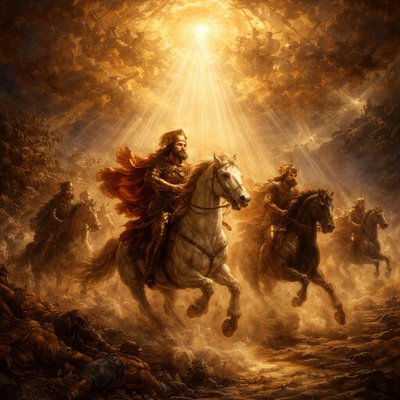
“But ye said, No; for we will flee upon horses; therefore shall ye flee: and, We will ride upon the swift; therefore shall they that pursue you be swift.” (Isaiah 30:16, KJV)
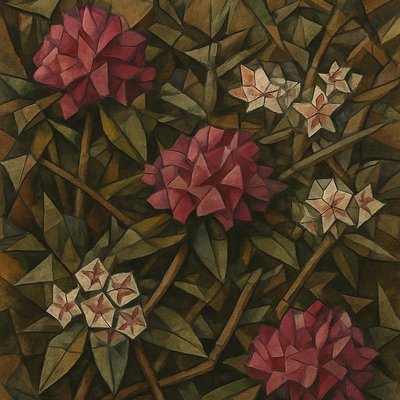
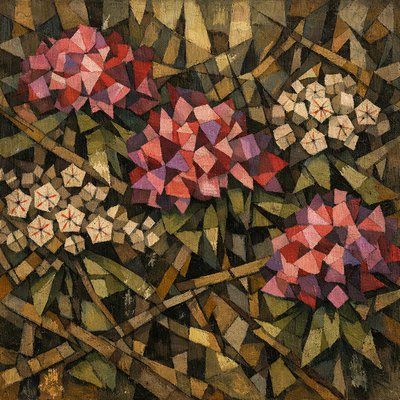
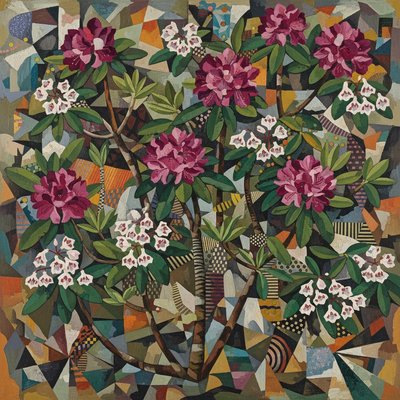
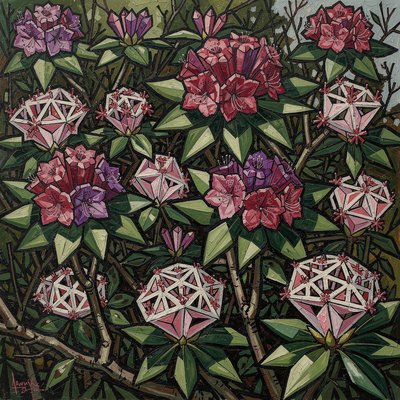
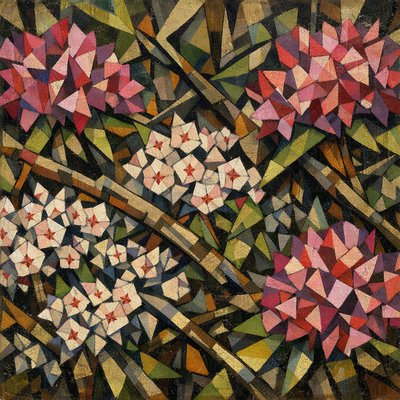
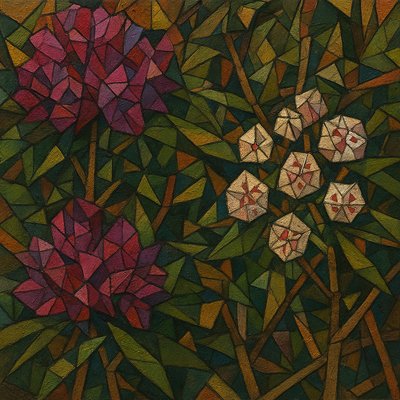
Art Style: Analytical Cubism, avant-garde oil painting style reminiscent of Picasso and Braque.

Subject: A dense, tangled thicket of Rhododendrons and Mountain Laurel bushes.

Composition & Details: The entire natural scene is deconstructed into overlapping geometric planes, fractured shards, and intersecting angles. There are no curved lines; everything is rendered in cubes, cones, and trapezoids.

    The Rhododendrons: Large, showy flower trusses are broken into faceted crystalline structures of deep magenta, rose pink, and violet blocks, looking like explosions of colored quartz rather than soft petals.

    The Mountain Laurels: The smaller, intricate flowers are rendered as complex, repeating geometric star-patterns and angular cups in white and pale pink with distinct red polygonal markings.

    Foliage & Branches: The thick, leathery leaves are fragmented green triangles and parallelograms overlapping each other, creating a sense of depth without traditional perspective. The woody stems and branches are jagged, intersecting brown and grey cylinders that shatter across the frame.

Color & Texture: A palette of muted earth tones—ochre, burnt umber, forest green, and slate grey—contrasted sharply with the jewel-toned facets of the flower colors. The finish should have a heavy, textured oil paint feel with visible palette knife marks and rough brushwork.
Art Style: Analytical Cubism, avant-garde oil painting style reminiscent of Picasso and Braque.

Subject: A dense, tangled thicket of Rhododendrons and Mountain Laurel bushes.

Composition & Details: The entire natural scene is deconstructed into overlapping geometric planes, fractured shards, and intersecting angles. There are no curved lines; everything is rendered in cubes, cones, and trapezoids.

    The Rhododendrons: Large, showy flower trusses are broken into faceted crystalline structures of deep magenta, rose pink, and violet blocks, looking like explosions of colored quartz rather than soft petals.

    The Mountain Laurels: The smaller, intricate flowers are rendered as complex, repeating geometric star-patterns and angular cups in white and pale pink with distinct red polygonal markings.

    Foliage & Branches: The thick, leathery leaves are fragmented green triangles and parallelograms overlapping each other, creating a sense of depth without traditional perspective. The woody stems and branches are jagged, intersecting brown and grey cylinders that shatter across the frame.

Color & Texture: A palette of muted earth tones—ochre, burnt umber, forest green, and slate grey—contrasted sharply with the jewel-toned facets of the flower colors. The finish should have a heavy, textured oil paint feel with visible palette knife marks and rough brushwork.
Art Style: Analytical Cubism, avant-garde oil painting style reminiscent of Picasso and Braque.

Subject: A dense, tangled thicket of Rhododendrons and Mountain Laurel bushes.

Composition & Details: The entire natural scene is deconstructed into overlapping geometric planes, fractured shards, and intersecting angles. There are no curved lines; everything is rendered in cubes, cones, and trapezoids.

    The Rhododendrons: Large, showy flower trusses are broken into faceted crystalline structures of deep magenta, rose pink, and violet blocks, looking like explosions of colored quartz rather than soft petals.

    The Mountain Laurels: The smaller, intricate flowers are rendered as complex, repeating geometric star-patterns and angular cups in white and pale pink with distinct red polygonal markings.

    Foliage & Branches: The thick, leathery leaves are fragmented green triangles and parallelograms overlapping each other, creating a sense of depth without traditional perspective. The woody stems and branches are jagged, intersecting brown and grey cylinders that shatter across the frame.

Color & Texture: A palette of muted earth tones—ochre, burnt umber, forest green, and slate grey—contrasted sharply with the jewel-toned facets of the flower colors. The finish should have a heavy, textured oil paint feel with visible palette knife marks and rough brushwork.
Art Style: Analytical Cubism, avant-garde oil painting style reminiscent of Picasso and Braque.

Subject: A dense, tangled thicket of Rhododendrons and Mountain Laurel bushes.

Composition & Details: The entire natural scene is deconstructed into overlapping geometric planes, fractured shards, and intersecting angles. There are no curved lines; everything is rendered in cubes, cones, and trapezoids.

    The Rhododendrons: Large, showy flower trusses are broken into faceted crystalline structures of deep magenta, rose pink, and violet blocks, looking like explosions of colored quartz rather than soft petals.

    The Mountain Laurels: The smaller, intricate flowers are rendered as complex, repeating geometric star-patterns and angular cups in white and pale pink with distinct red polygonal markings.

    Foliage & Branches: The thick, leathery leaves are fragmented green triangles and parallelograms overlapping each other, creating a sense of depth without traditional perspective. The woody stems and branches are jagged, intersecting brown and grey cylinders that shatter across the frame.

Color & Texture: A palette of muted earth tones—ochre, burnt umber, forest green, and slate grey—contrasted sharply with the jewel-toned facets of the flower colors. The finish should have a heavy, textured oil paint feel with visible palette knife marks and rough brushwork.
Art Style: Analytical Cubism, avant-garde oil painting style reminiscent of Picasso and Braque.

Subject: A dense, tangled thicket of Rhododendrons and Mountain Laurel bushes.

Composition & Details: The entire natural scene is deconstructed into overlapping geometric planes, fractured shards, and intersecting angles. There are no curved lines; everything is rendered in cubes, cones, and trapezoids.

    The Rhododendrons: Large, showy flower trusses are broken into faceted crystalline structures of deep magenta, rose pink, and violet blocks, looking like explosions of colored quartz rather than soft petals.

    The Mountain Laurels: The smaller, intricate flowers are rendered as complex, repeating geometric star-patterns and angular cups in white and pale pink with distinct red polygonal markings.

    Foliage & Branches: The thick, leathery leaves are fragmented green triangles and parallelograms overlapping each other, creating a sense of depth without traditional perspective. The woody stems and branches are jagged, intersecting brown and grey cylinders that shatter across the frame.

Color & Texture: A palette of muted earth tones—ochre, burnt umber, forest green, and slate grey—contrasted sharply with the jewel-toned facets of the flower colors. The finish should have a heavy, textured oil paint feel with visible palette knife marks and rough brushwork.
Art Style: Analytical Cubism, avant-garde oil painting style reminiscent of Picasso and Braque.

Subject: A dense, tangled thicket of Rhododendrons and Mountain Laurel bushes.

Composition & Details: The entire natural scene is deconstructed into overlapping geometric planes, fractured shards, and intersecting angles. There are no curved lines; everything is rendered in cubes, cones, and trapezoids.

    The Rhododendrons: Large, showy flower trusses are broken into faceted crystalline structures of deep magenta, rose pink, and violet blocks, looking like explosions of colored quartz rather than soft petals.

    The Mountain Laurels: The smaller, intricate flowers are rendered as complex, repeating geometric star-patterns and angular cups in white and pale pink with distinct red polygonal markings.

    Foliage & Branches: The thick, leathery leaves are fragmented green triangles and parallelograms overlapping each other, creating a sense of depth without traditional perspective. The woody stems and branches are jagged, intersecting brown and grey cylinders that shatter across the frame.

Color & Texture: A palette of muted earth tones—ochre, burnt umber, forest green, and slate grey—contrasted sharply with the jewel-toned facets of the flower colors. The finish should have a heavy, textured oil paint feel with visible palette knife marks and rough brushwork.
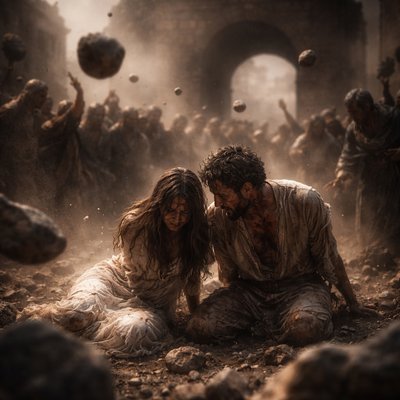
“If a damsel that is a virgin be betrothed unto an husband, and a man find her in the city, and lie with her; Then ye shall bring them both out unto the gate of that city, and ye shall stone them with stones that they die; the damsel, because she cried not, being in the city; and the man, because he hath humbled his neighbour's wife: so thou shalt put away evil from among you.” (Deuteronomy 22:23-24, KJV)
“For your obedience is come abroad unto all men. I am glad therefore on your behalf: but yet I would have you wise unto that which is good, and simple concerning evil. And the God of peace shall bruise Satan under your feet shortly. The grace of our Lord Jesus Christ be with you. Amen.” (Romans 16:19-20, KJV)
“For Christ is not entered into the holy places made with hands, which are the figures of the true; but into heaven itself, now to appear in the presence of God for us:” (Hebrews 9:24, KJV)
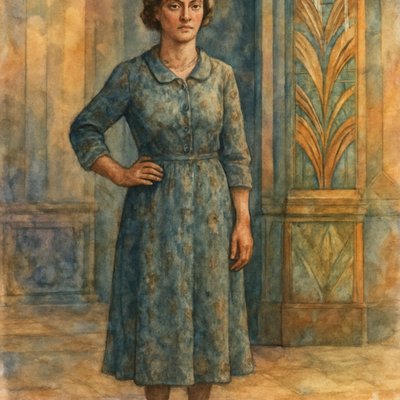
A woman dressed in Great Depression era fashion, standing in a dimly lit, humble setting. She wears a modest, long-sleeved dress made of durable, slightly faded cotton or rayon, with a mid-calf hemline. The dress is a muted color like dusty blue, faded green, or soft brown, possibly with a subtle, small floral or geometric pattern. Her hair is styled simply, perhaps in soft waves or a practical updo, and she wears sturdy, low-heeled lace-up shoes. Her posture is resilient, reflecting the strength of the era. The background is simple and sparse, hinting at the economic hardship, perhaps an old wooden wall or a faded curtain. The overall feeling is one of quiet determination and dignified hardship Use Art Deco architecture or Art Deco interior in the background, but describe the fashion as faded, worn, and humble. Juxtapose the sleek, modern geometry of the setting with the practical, mended, and heavy wool textures of the clothing.