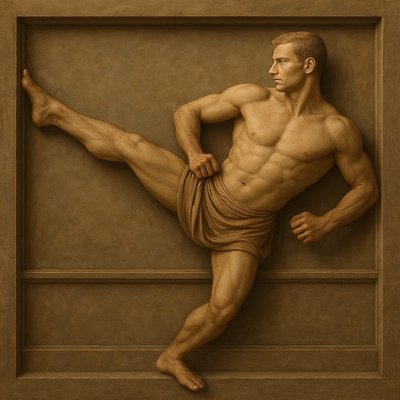
A Shirtless Man Laying On A Rug Flexing His Muscles Art

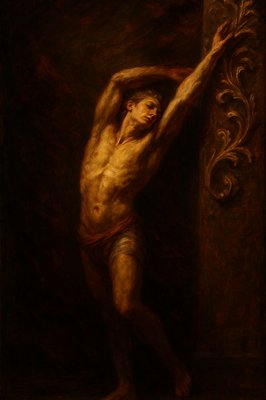
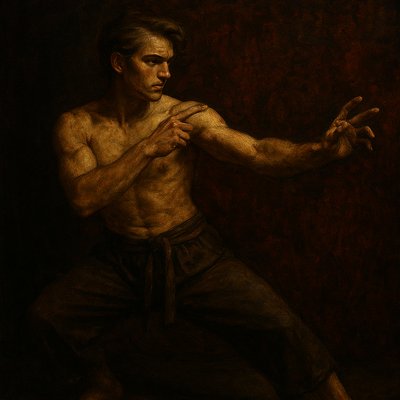
a painting of a man with no shirt on
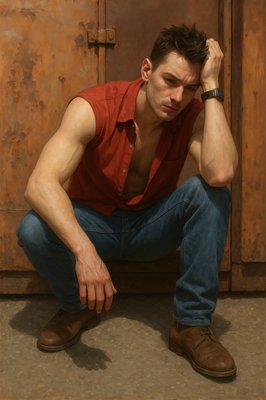
a man in a red shirt is sitting on the floor
a painting of a man with no shirt on
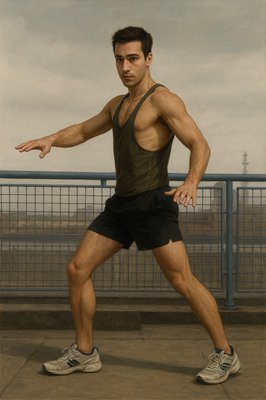
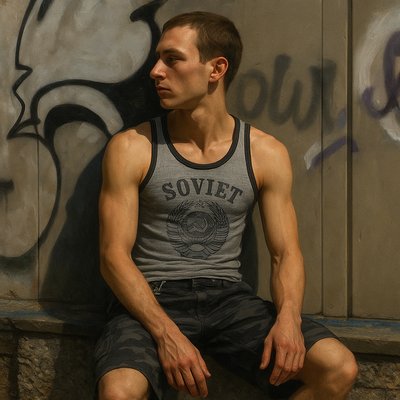
a man sitting on a ledge in front of a graffiti covered wall
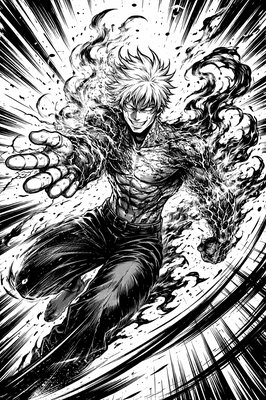
a black and white drawing of a man on a surfboard
a black and white drawing of a man on a snowboard
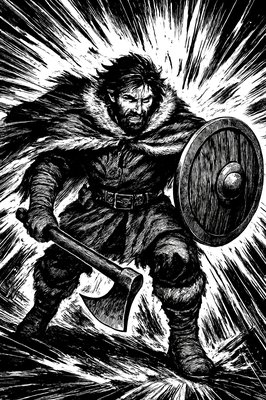
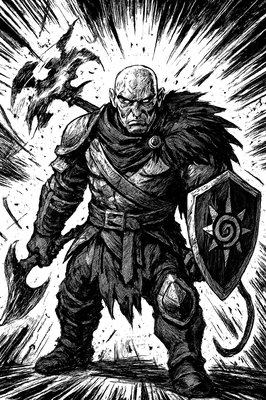
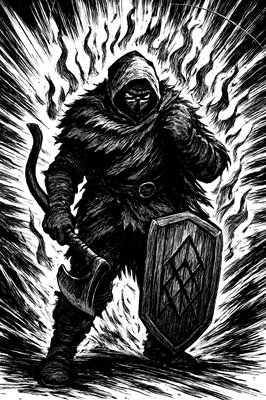
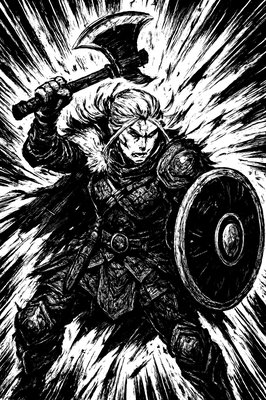
a drawing of a man with a sword and shield
a drawing of a man with a sword and a shield
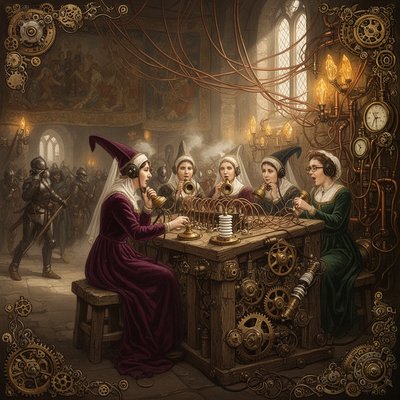
Steampunk Historical Fantasy, Satirical Illustration Style, Cinematic Lighting. A bizarre, anachronistic scene inside a drafty medieval castle great hall (Camelot). A group of noblewomen, dressed in elaborate 6th-century velvet gowns, wimples, and tall pointed hennin hats with veils, are seated on rough wooden stools. They are furiously working a massive, makeshift telephone switchboard operator station.

The Technology: The switchboard is constructed from rough-hewn oak timbers, gleaming brass gears, porcelain insulators, and hundreds of thick, chaotic copper wires that are strung haphazardly across ancient tapestries and stone walls, disappearing out narrow arrow-slit windows.

The Action: The ladies hold bulky, antique Victorian-era earpieces and large brass mouthpieces, plugging heavy cables with oversized jacks into the board with expressions of intense concentration and mild confusion. Knights in armor walk past in the background, looking bewildered. Sunlight streams through gothic windows, illuminating the dust and the clash of eras.
Create an image inspired by the sentiment of 1 Peter 3:3-4, with an emphasis on elements of gentleness and tranquility. The art should evoke a deeply respectful and devotional tone towards Christianity. Although the style should be digital, no text or words should be used in the image. Instead, use symbolism and visual cues to express the essence of the scripture, creating a serene, spiritual atmosphere in the artwork.
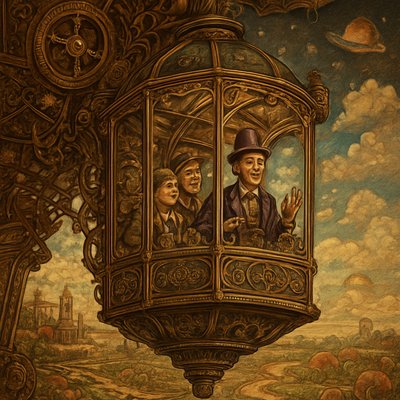
An awe-inspiring and whimsical scene featuring Willy Wonka's Great Glass Wonkavator, soaring through the sky and beyond the confines of the chocolate factory. The Wonkavator itself is a magnificent, multi-directional glass elevator, transparent and sparkling, with Willy Wonka (wearing his iconic top hat, purple coat, and bowtie) and Charlie Bucket (and perhaps Grandpa Joe) inside, looking out with expressions of wonder and excitement. The interior is filled with intricate buttons and levers for controlling its magical flight.

The Wonkavator is depicted in mid-flight, perhaps bursting through the factory roof or ascending above the clouds. Below it, the fantastical landscape of the Chocolate Factory is visible – chocolate rivers, edible gardens, candy cane trees, and various whimsical buildings. Beyond the factory, a stunning, imaginative sky unfolds, perhaps with floating candy clouds, distant fantastical landmarks, or even glimpses of outer space and planets. The lighting is bright and magical, emphasizing the glass's transparency and the vibrant colors of the world below and beyond. The overall mood is one of boundless adventure, limitless possibilities, and pure, joyful fantasy."
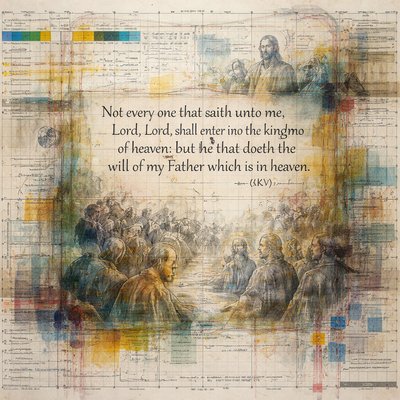
“Not every one that saith unto me, Lord, Lord, shall enter into the kingdom of heaven; but he that doeth the will of my Father which is in heaven.” (Matthew 7:21, KJV)
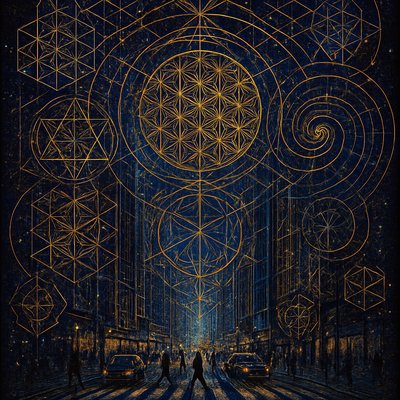
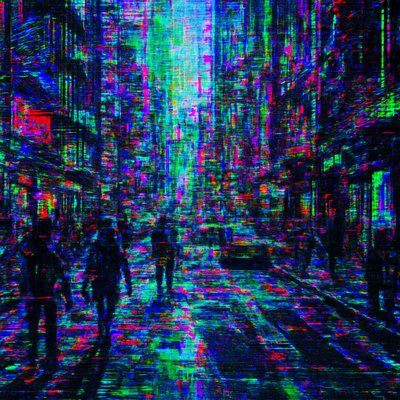
urban street with city activity
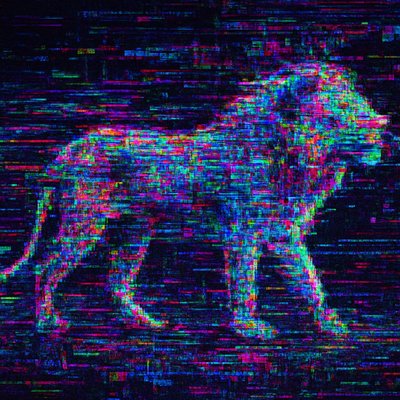
animal standing in natural pose
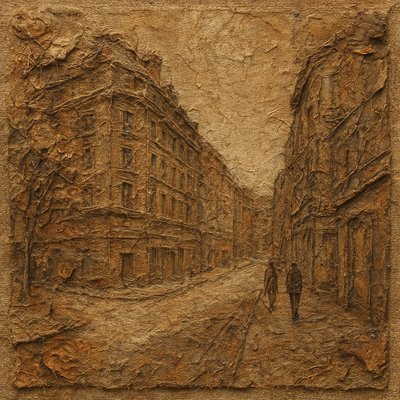
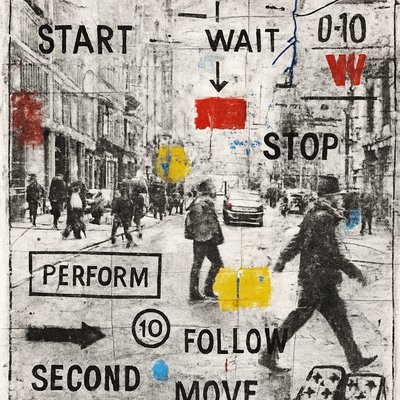
Arte Povera Art Style Style Transfer Example
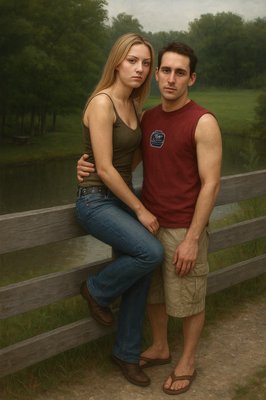
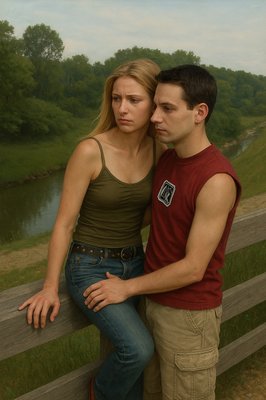
a man and a woman leaning against a fence

Conversation with Gemini
You said
Please help me write a prompt for ArtStyles about 1 Chronicles 7:2 (KJV)

2 And the sons of Tola; Uzzi, and Rephaiah, and Jeriel, and Jahmai, and Jibsam, and Shemuel, heads of their father's house, to wit, of Tola: they were valiant men of might in their generations; whose number was in the days of David two and twenty thousand and six hundred

. I would like each man have some aspect of the meaning of his Hebrew name present and I want Uzzi to actually have an Uzi.

Gemini said
That is a wild and creative request—I love the literal interpretation of "Uzzi" having an Uzi! It adds a fun, "anachronistic-action-movie" vibe to a classic biblical genealogy.

Since you’re using ArtStyles, we’ll want to lean into high-contrast lighting, epic scale, and specific visual metaphors for those Hebrew names.

The ArtStyles Prompt
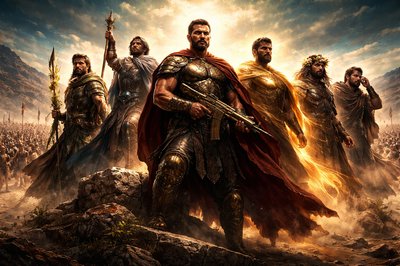
Prompt: A cinematic, hyper-realistic wide shot of six valiant biblical warriors, the sons of Tola, standing as "heads of their father’s house" in an ancient Levantine desert landscape. In the center, Uzzi is a massive, muscular commander clad in bronze armor, incongruously wielding a modern tactical Uzi submachine gun with gold engravings. Surrounding him are his brothers: Rephaiah holding a staff entwined with healing herbs; Jeriel standing atop a massive foundation stone looking toward heaven; Jahmai enveloped in a warm, protective golden aura; Jibsam wearing a garland of fragrant desert lilies; and Shemuel in a posture of listening, hand to his ear as if hearing a divine whisper. In the background, a vast army of 22,600 soldiers stretches to the horizon under the golden sun of King David’s era. Epic composition, dramatic chiaroscuro lighting, intricate leather and metal textures, 8k resolution, ArtStation style.
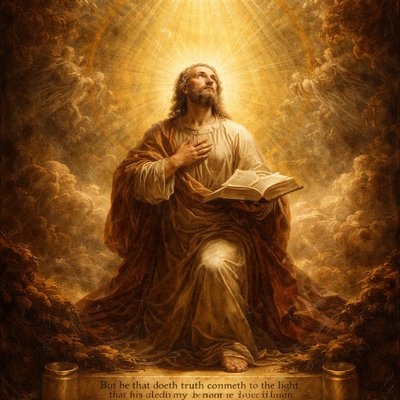
“But he that doeth truth cometh to the light, that his deeds may be made manifest, that they are wrought in God.” (John 3:21, KJV)
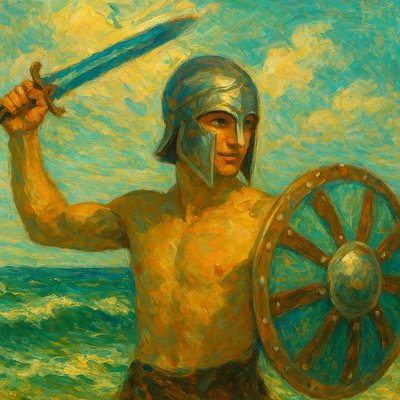
a painting of a man holding a sword and shield
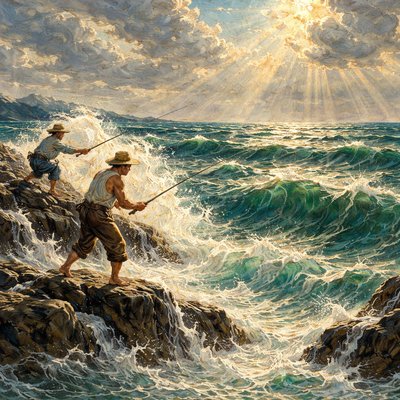
The reverberations of sound in many waters shining with glory
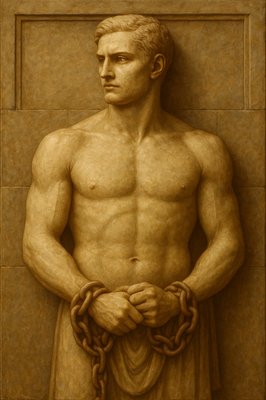
a statue of a man with a chain around his waist
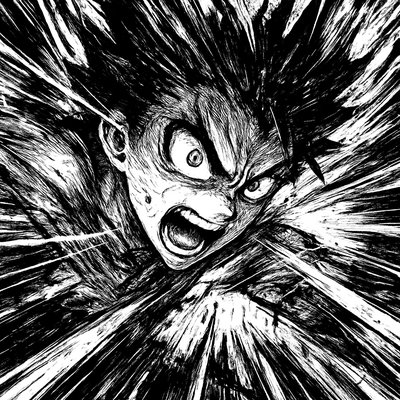
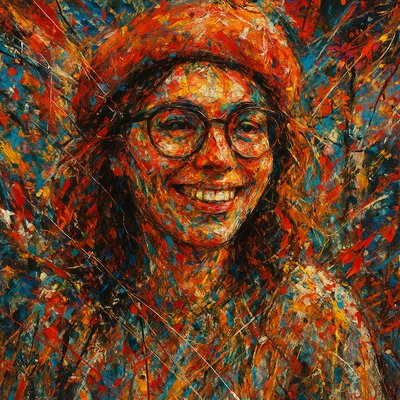
portrait of a person with expressive eyes
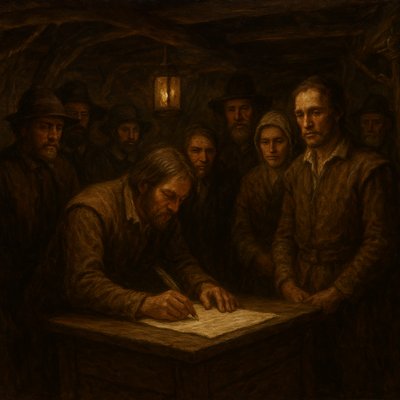
A historically accurate and atmospheric depiction of the signing of the Mayflower Compact aboard the ship in November 1620. The scene is set in the dimly lit, cramped cabin of the Mayflower, with the ship's timbers and rigging subtly visible, conveying the challenging conditions of the voyage. A simple table or chest serves as the signing surface. The primary focus is on a small group of the last individuals signing the document: specifically, the indentured servants (or 'strangers' not directly part of the Separatist congregation) approaching or at the table. Their expressions show a mix of weary determination, understanding of the necessity, and perhaps a hint of quiet apprehension or resignation to this new social contract, given their status. They are dressed in the plain, practical clothing typical of 17th-century commoners and laborers. Figures of prominent Pilgrims or 'Saints' (like William Bradford or John Carver) are visible in the background, observing the proceedings with a sense of gravity and leadership, but they are not the central focus. The lighting is low and warm, perhaps from a lantern, creating a chiaroscuro effect that highlights the faces of the signers. The atmosphere conveys the momentousness of the act under difficult circumstances, the diverse composition of the group, and the early seeds of self-governance in a new world. The artistic style is a realistic, historically detailed oil painting, capturing the solemnity and human element of this pivotal historical moment."

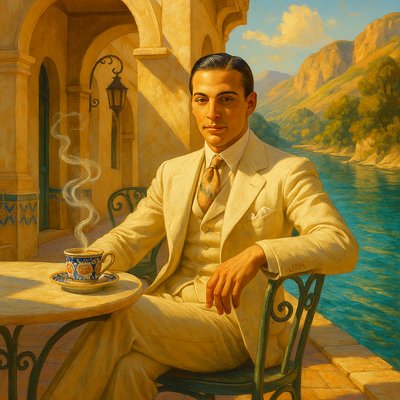
cinematic, vibrant scene of Rudolph Valentino in his youthful prime, seated at a French-style outdoor café table beside a clear, highly reflective teal-blue stream in the Italian mountains. He is strikingly handsome with smooth Mediterranean features, youthful charm, and a confident presence. He wears a tailored cream linen suit with a crisp white shirt, a silk cravat in soft pastel tones, and polished leather shoes. His hair is sleek and perfectly styled in a classic 1920s fashion, evoking timeless elegance. On the table rests a delicate porcelain coffee cup of fine Italian china, painted with intricate cobalt blue, gold, and crimson patterns. Steam rises gracefully from the cup, curling upward like ethereal ribbons, catching the sunlight in cinematic detail. The atmosphere glows with radiant, vibrant colors teal waters shimmering, golden mountain light illuminating the scene, reflections dance across the café table. No dark overlay, only luminous tones and crisp clarity.
a painting of a man standing in a doorway
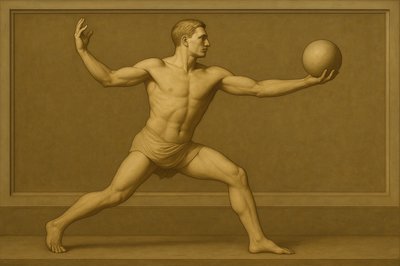
a drawing of a man holding a ball
urban street with city activity
animal standing in natural pose
A koi pond seen from above, orange and white koi fish swimming among lily pads, clear water with subtle ripples, fallen cherry blossom petals floating on the surface, dappled sunlight
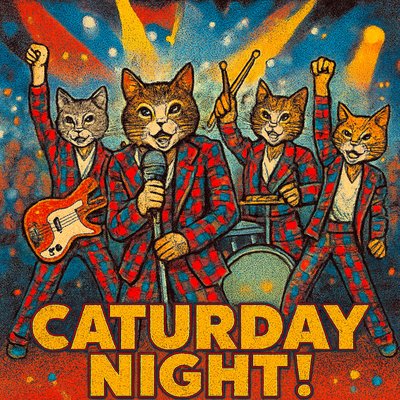
A band of five anthropomorphic cats, depicted as the "Bay City Rollers," performing on a brightly lit stage. They are dressed in matching tartan suits, reminiscent of the band's iconic style. Each cat has expressive facial features, conveying a sense of rock-and-roll energy.

The central cat is the lead singer, holding a vintage microphone and wearing a striking tartan suit. To his left, another cat plays a bass guitar. To his right, another cat stands with drumsticks, ready to play. Two other cats complete the band, striking poses with their fists raised in the air, embodying the energetic performance style of the Bay City Rollers.

In the background, a large, enthusiastic crowd of blurred, indistinct figures is cheering, illuminated by stage lights. Above the stage, spotlights shine down. The stage itself is dark, allowing the cats and their instruments to stand out.

At the bottom of the image, in large, bold, sparkly letters, is the text "CATURDAY NIGHT!" The overall style is vibrant, fun, and captures the retro pop essence of the 1970s.
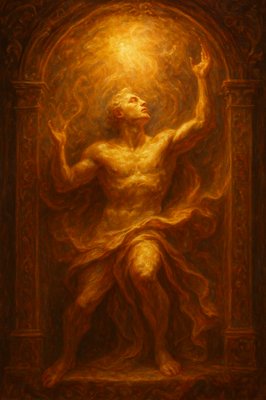
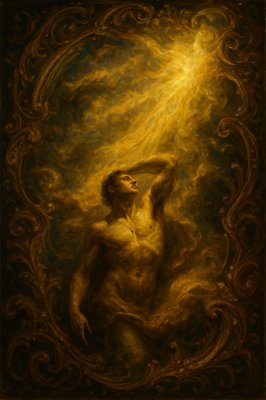
a painting of a man holding a light above his head
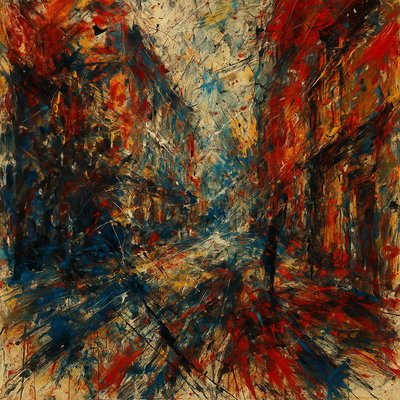
Tachisme Art Style Style Transfer Example
Arte Povera Art Style Style Transfer Example
Tachisme Art Style Style Transfer Example
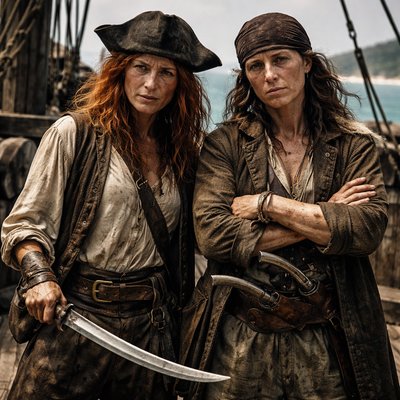
Gritty Historical Realism Style, Cinematic Film Photography, Natural Daylight. A powerful, candid medium shot of the infamous pirate duo, Anne Bonny and Mary Read, standing side-by-side on the weathered wooden deck of the sloop Revenge in the Caribbean Sea (circa 1720).

The Subjects: Both are dressed in practical, worn 18th-century male sailor's attire—loose canvas breeches, oversized linen shirts, heavy leather waistcoats, and bandanas—scruffy clothing that disguises their gender at a distance but reveals them as fiercely capable women upon closer inspection. Their faces are sun-weathered, dirty, and determined.

Specific Details: Anne Bonny (left) has fiery red hair escaping a dark bandana and a tricorn hat pushed back; she holds a drawn cutlass and has a defiant, volatile expression. Mary Read (right) looks sturdier, wearing a heavy wool coat, arms crossed over her chest with two flintlock pistols visible in her sash, looking steady and calculating.

The Setting: The background is a chaotic, working pirate ship deck with coils of tarred rope, rigging, barrels, and a cannon. Beyond the rail is the turquoise ocean and a hazy tropical coastline. The lighting is harsh, midday sun, with salt spray in the air. The mood is tense, rebellious, and authentic. Film grain texture.
urban street with city activity