A Painting Of A Man Wearing A American Flag Shirt Art

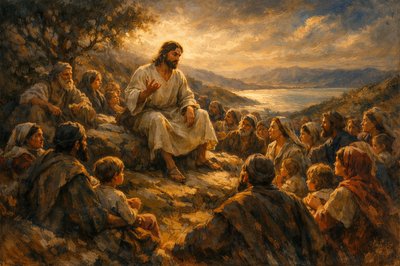
First century Palestine.  Jesus sits on a rock on a hillside teaching a large group of His disciples.  The Sermon on the Mount.  Jesus wears a plain robe like most ordinary men.  Jesus' face is kind, but intense, as He teaches. The other people are mostly peasants, farmers, and tradesmen.  There are also women present, wearing plain, everyday clothing.  Some couples have also brought their children.  The Sea of Galilee shines in the far distance.
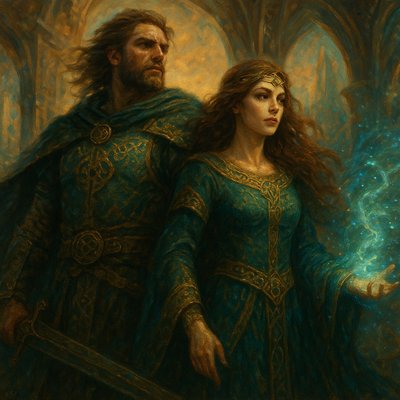
a watercolor painting of a man and a woman
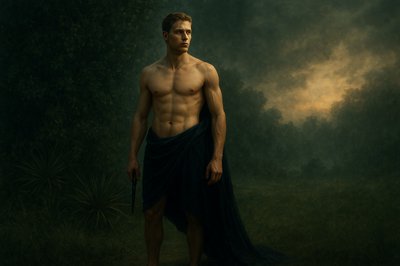
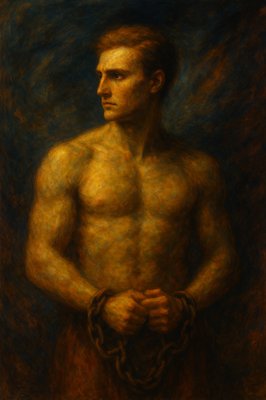
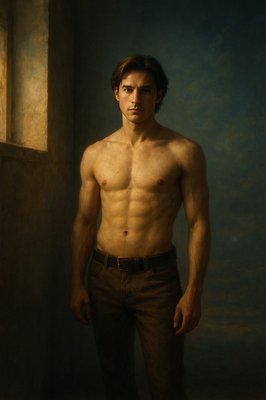
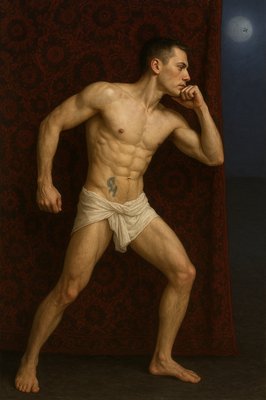
a painting of a shirtless man with a sword
a watercolor painting of a man and a woman
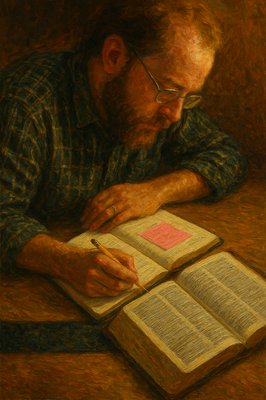
a man sitting at a table with an open book
a black and white photo of a man in a white shirt

Conversation with Gemini
You said
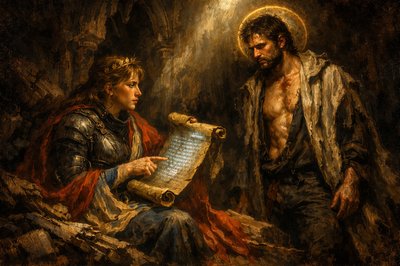
I need a written prompt for ArtStyles based on Sarah Connor and Kyle Reese but create Sarah Connor as Lady Wisdom and Kyle Reese as Jesus

Gemini said
This is a fascinating blend of 80s tech-noir grit and classical religious iconography. To get the best results from an image generator, you want to lean into the "Cyber-Renaissance" aesthetic—combining tactical textures with divine lighting.

Here are a few variations based on different artistic directions:

Option 1: The High-Renaissance Masterpiece
Prompt: A dramatic oil painting in the style of Caravaggio. Sarah Connor as Lady Wisdom, wearing tactical Kevlar armor beneath flowing, iridescent silk robes, holding an ancient scroll that glows with digital code. Beside her, Kyle Reese as a Messianic figure, shirtless and scarred, draped in a tattered trench coat that resembles a holy shroud, a faint halo of golden light illuminating his face. The setting is a ruined Los Angeles cathedral with light filtering through dust and debris. Chiaroscuro lighting, deep shadows, emotional intensity, 8k resolution.
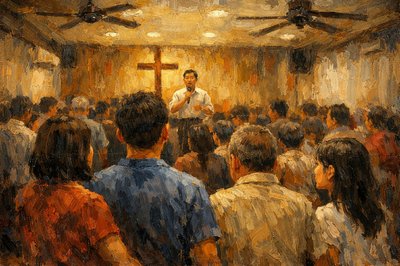
Inside an informal church in Kuala Lumpur.  Wing Sun and his father and mother, along with Siu Zi, his friend from school are there together.  We are standing in the back of the room, and there are many more people than there were in the London church.  There are people of different ethnicities, but mostly Chinese Malaysian.  The Pastor, a Chinese man, is standing up front speaking to the congregation, facing them.  The atmosphere is hot and sweaty, with ceiling fans running, but still welcoming, Wing Sun is happy that his family is together and also that his friend Siu Zi, who he has just learned is a Christian, can be there too.
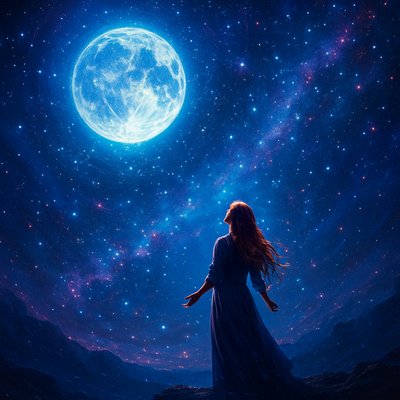
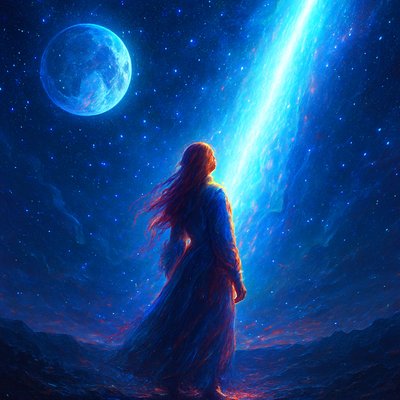
Digital Art Style, Romanticism Art Style, a profoundly majestic and spiritually charged painting inspired by Psalm 8:3-6. The scene features a vast, sweeping, and dramatically illuminated night sky, showcasing a luminous, prominent moon and countless brilliant stars rendered with ethereal digital glows and deep atmospheric effects. In the foreground, standing small against the overwhelming scale of the cosmos, is a solitary woman with long red hair, wearing simple, flowing attire. She is viewed from behind, positioned on a rugged, dark overlook, with her head and hands tilted upwards in an expression of intense awe and spiritual contemplation. The painting is dominated by dramatic digital chiaroscuro, with the radiant glow of the moon and stars breaking through deep, digitally enhanced shadows. Focus on the sublime, emotional impact of the vast heavens, the striking contrast between light and digitally rendered darkness, and the solitary woman's intense, spiritual communion with the divine works.
Siu Zi is a 10 year old Chinese girl in Guangzhou. Late one humid evening, Siu Zi's father meets with a discreet man known simply as Mr. Chen.  In a quiet corner of a small teahouse near the back alleys of Guangzhou, Mr. Chen explains, in careful whispers, how he can help the family obtain the documents they needed to leave the country safely. Other patrons are in the teahouse, and a waiter stands nearby, but nobody can hear what Mr. Chen is saying.  It's safe to talk here.
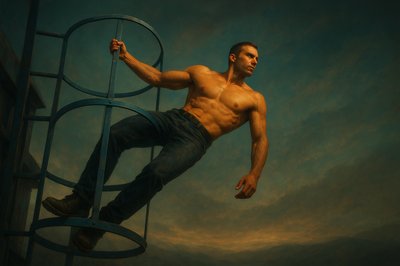
a painting of a shirtless man climbing a ladder
a painting of a shirtless man holding a rope
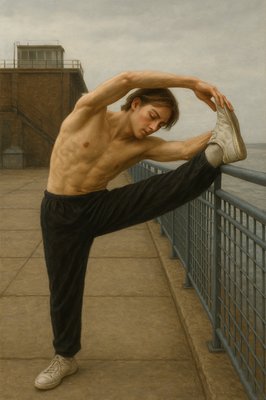
a painting of a shirtless man leaning on a railing
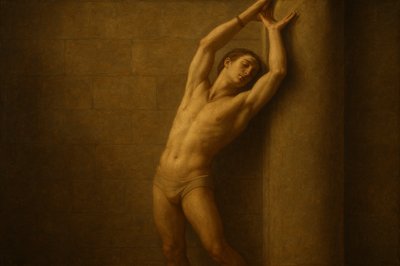
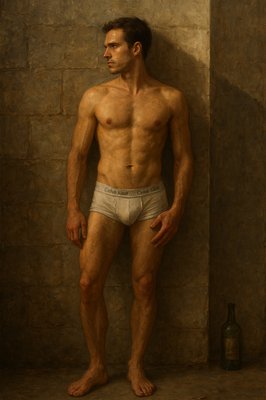
a painting of a naked man leaning against a wall
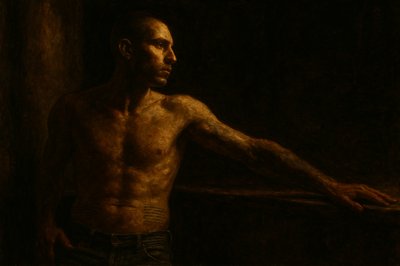
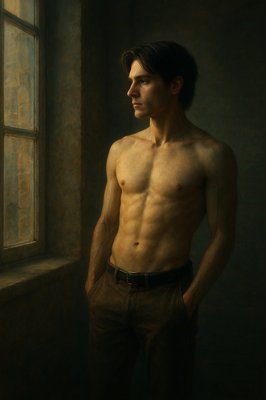
a painting of a shirtless man in a dark room
a painting of a shirtless man standing in front of a window
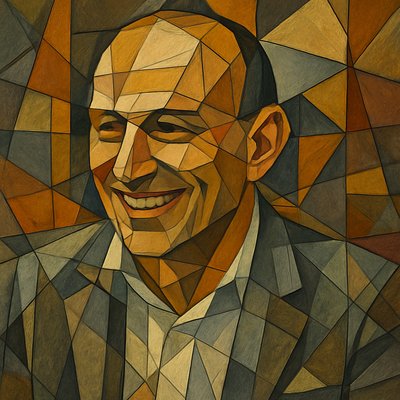
a painting of a smiling man in a suit
a painting of a shirtless man in a red jacket
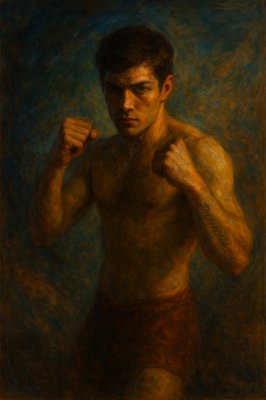
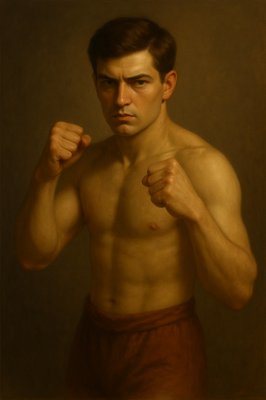
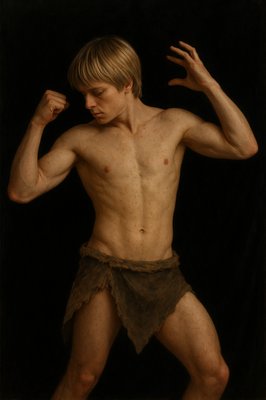
a painting of a shirtless man flexing his muscles
a painting of a shirtless man leaning against a wall
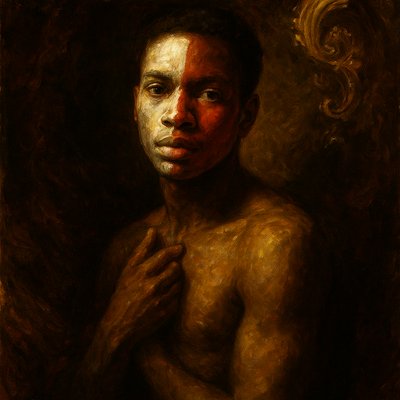
a painting of a shirtless man with his hands on his chest
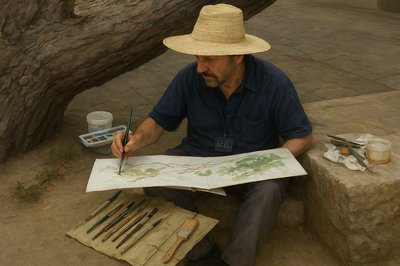
a man in a straw hat is painting on a piece of paper
a painting of a shirtless man posing for a picture
a painting of a shirtless man flexing his muscles
good man and good woman
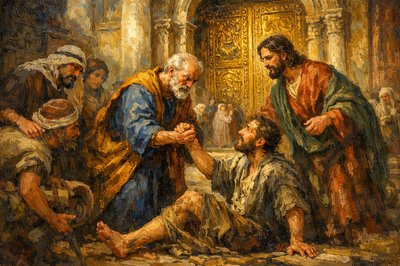
First century Jerusalem at the "gate beautiful" to the temple grounds.  Peter and John were going up to the temple at the hour of prayer, the ninth hour. And a man lame from birth was being carried, whom they laid daily at the gate of the temple that is called the Beautiful Gate to ask alms of those entering the temple. Seeing Peter and John about to go into the temple, he asked to receive alms. And Peter directed his gaze at him, as did John, and said, “Look at us.” And he fixed his attention on them, expecting to receive something from them. But Peter said, “I have no silver and gold, but what I do have I give to you. In the name of Jesus Christ of Nazareth, rise up and walk!” And he took him by the right hand and raised him up, and immediately his feet and ankles were made strong.
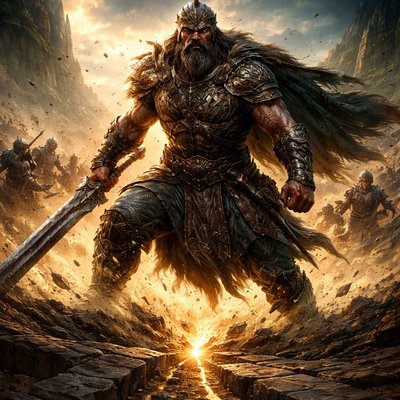
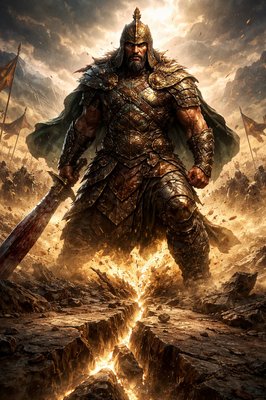
"A hyper-realistic, cinematic portrait of Zelek the Ammonite, one of King David’s elite 'Mighty Men.' He is a towering figure with a weathered, fierce expression, wearing ancient Near Eastern bronze-and-iron scale armor with heavy leather straps. He stands in a stance of immense power, holding a massive, jagged-edged broadsword or a heavy iron-headed spear. The background is a battlefield where he has literally 'broken' through the enemy line—visualized as a physical fissure or crack in the earth radiating from his feet (Baal-perazim style). The enemy 'host' is seen scattering and dissolving in his wake, depicted as shadowy figures falling back into a golden, dusty haze. Art Style: Gritty biblical realism blended with epic 2026 digital concept art; heavy emphasis on texture (hammered metal, scarred skin, desert sand), deep shadows, and high-contrast volumetric lighting. 8K resolution, wide-angle lens, masterpiece quality
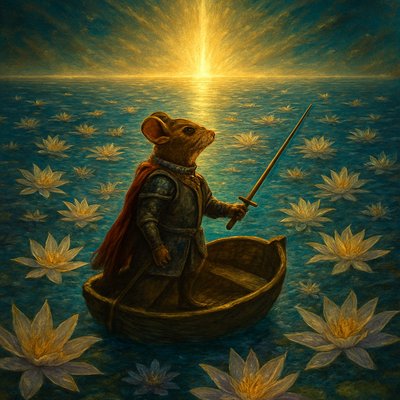
A magical, high-fantasy illustration capturing the final scene of Reepicheep's journey from C.S. Lewis's The Voyage of the Dawn Treader. A very small, simple, wooden coracle (boat) is drifting alone across the vast, calm, crystalline waters of the Silver Sea, which is covered in a dense carpet of large, creamy-white and luminous purple sea flowers (lilies or star-shaped blossoms).
The noble Mouse, Reepicheep, stands bravely in the little boat. He is wearing his formal armor and sword, and his tiny sail is lowered. He is looking ahead with an expression of hope and determination toward the far, shimmering horizon where the sky and sea meet the edge of the world, represented by a column or curtain of bright, clear light. The lighting is ethereal and soft, emphasizing the profound stillness and peacefulness of the scene. The overall style should be reminiscent of classic book illustrations, rich in detail, color, and wonder. Golden light of Aethel-red, epic atmosphere, fantasy illustration."
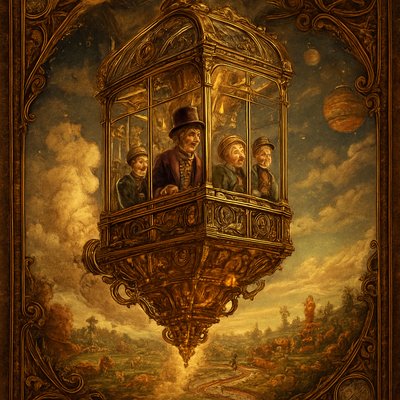
An awe-inspiring and whimsical scene featuring Willy Wonka's Great Glass Wonkavator, soaring through the sky and beyond the confines of the chocolate factory. The Wonkavator itself is a magnificent, multi-directional glass elevator, transparent and sparkling, with Willy Wonka (wearing his iconic top hat, purple coat, and bowtie) and Charlie Bucket and Grandpa Joe inside, looking out with expressions of wonder and excitement. The interior is filled with intricate buttons and levers for controlling its magical flight.

The Wonkavator is depicted in mid-flight, perhaps bursting through the factory roof or ascending above the clouds. Below it, the fantastical landscape of the Chocolate Factory is visible – chocolate rivers, edible gardens, candy cane trees, and various whimsical buildings. Beyond the factory, a stunning, imaginative sky unfolds, perhaps with floating candy clouds, distant fantastical landmarks, or even glimpses of outer space and planets. The lighting is bright and magical, emphasizing the glass's transparency and the vibrant colors of the world below and beyond. The overall mood is one of boundless adventure, limitless possibilities, and pure, joyful fantasy."
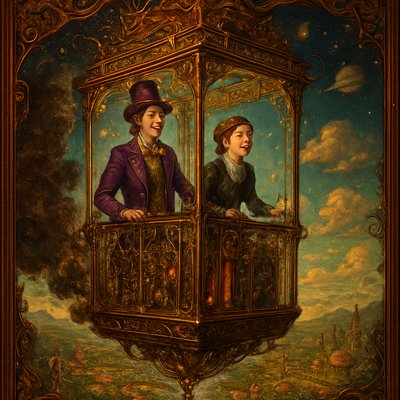
An awe-inspiring and whimsical scene featuring Willy Wonka's Great Glass Wonkavator, soaring through the sky and beyond the confines of the chocolate factory. The Wonkavator itself is a magnificent, multi-directional glass elevator, transparent and sparkling, with Willy Wonka (wearing his iconic top hat, purple coat, and bowtie) and Charlie Bucket (and perhaps Grandpa Joe) inside, looking out with expressions of wonder and excitement. The interior is filled with intricate buttons and levers for controlling its magical flight.

The Wonkavator is depicted in mid-flight, perhaps bursting through the factory roof or ascending above the clouds. Below it, the fantastical landscape of the Chocolate Factory is visible – chocolate rivers, edible gardens, candy cane trees, and various whimsical buildings. Beyond the factory, a stunning, imaginative sky unfolds, perhaps with floating candy clouds, distant fantastical landmarks, or even glimpses of outer space and planets. The lighting is bright and magical, emphasizing the glass's transparency and the vibrant colors of the world below and beyond. The overall mood is one of boundless adventure, limitless possibilities, and pure, joyful fantasy."

Conversation with Gemini
You said
Please help me write a prompt for ArtStyles about 1 Chronicles 7:2 (KJV)

2 And the sons of Tola; Uzzi, and Rephaiah, and Jeriel, and Jahmai, and Jibsam, and Shemuel, heads of their father's house, to wit, of Tola: they were valiant men of might in their generations; whose number was in the days of David two and twenty thousand and six hundred

. I would like each man have some aspect of the meaning of his Hebrew name present and I want Uzzi to actually have an Uzi.

Gemini said
That is a wild and creative request—I love the literal interpretation of "Uzzi" having an Uzi! It adds a fun, "anachronistic-action-movie" vibe to a classic biblical genealogy.

Since you’re using ArtStyles, we’ll want to lean into high-contrast lighting, epic scale, and specific visual metaphors for those Hebrew names.

The ArtStyles Prompt
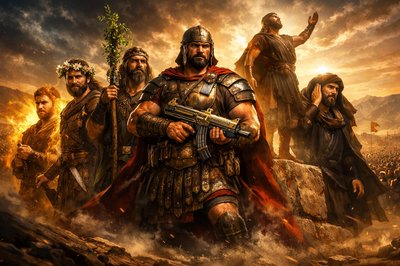
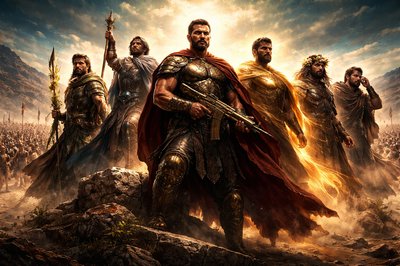
Prompt: A cinematic, hyper-realistic wide shot of six valiant biblical warriors, the sons of Tola, standing as "heads of their father’s house" in an ancient Levantine desert landscape. In the center, Uzzi is a massive, muscular commander clad in bronze armor, incongruously wielding a modern tactical Uzi submachine gun with gold engravings. Surrounding him are his brothers: Rephaiah holding a staff entwined with healing herbs; Jeriel standing atop a massive foundation stone looking toward heaven; Jahmai enveloped in a warm, protective golden aura; Jibsam wearing a garland of fragrant desert lilies; and Shemuel in a posture of listening, hand to his ear as if hearing a divine whisper. In the background, a vast army of 22,600 soldiers stretches to the horizon under the golden sun of King David’s era. Epic composition, dramatic chiaroscuro lighting, intricate leather and metal textures, 8k resolution, ArtStation style.
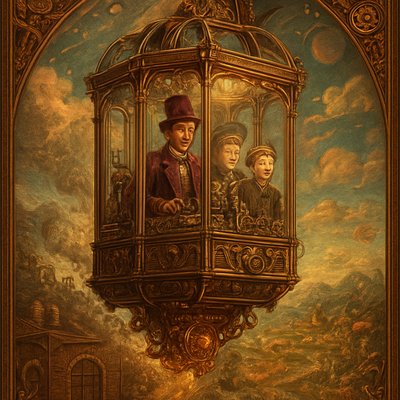
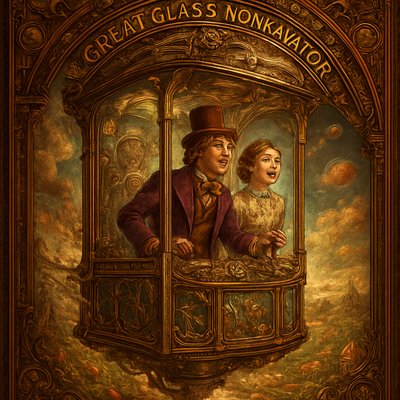
An awe-inspiring and whimsical scene featuring Willy Wonka's Great Glass Wonkavator, soaring through the sky and beyond the confines of the chocolate factory. The Wonkavator itself is a magnificent, multi-directional glass elevator, transparent and sparkling, with a middle aged Willy Wonka (wearing his iconic top hat, purple coat, and bowtie) and a young Victorian well dressed lady looking out with expressions of joy, wonder and excitement. The interior is filled with intricate buttons and levers for controlling its magical flight. The Wonkavator is depicted in mid-flight, perhaps bursting through the factory roof or ascending above the clouds. Below it, the fantastical landscape of the Chocolate Factory is visible – chocolate rivers, edible gardens, candy cane trees, and various whimsical buildings. Beyond the factory, a stunning, imaginative sky unfolds, perhaps with floating candy clouds, distant fantastical landmarks, or even glimpses of outer space and planets. The lighting is bright and magical, emphasizing the glass's transparency and the vibrant colors of the world below and beyond. The overall mood is one of boundless adventure, limitless possibilities, and pure, joyful fantasy."
"A hyper-realistic, cinematic portrait of Zelek the Ammonite, one of King David’s elite 'Mighty Men.' He is a towering figure with a weathered, fierce expression, wearing ancient Near Eastern bronze-and-iron scale armor with heavy leather straps. He stands in a stance of immense power, holding a massive, jagged-edged broadsword or a heavy iron-headed spear. The background is a battlefield where he has literally 'broken' through the enemy line—visualized as a physical fissure or crack in the earth radiating from his feet (Baal-perazim style). The enemy 'host' is seen scattering and dissolving in his wake, depicted as shadowy figures falling back into a golden, dusty haze. Art Style: Gritty biblical realism blended with epic 2026 digital concept art; heavy emphasis on texture (hammered metal, scarred skin, desert sand), deep shadows, and high-contrast volumetric lighting. 8K resolution, wide-angle lens, masterpiece quality
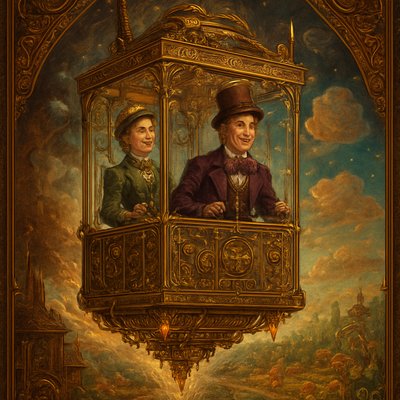
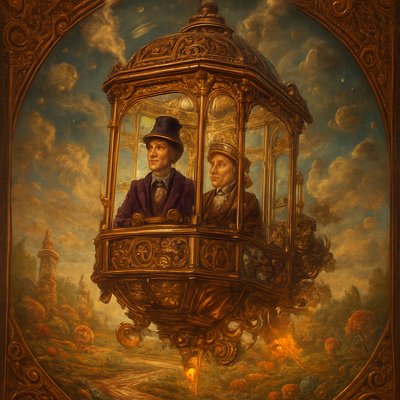
An awe-inspiring and whimsical scene featuring Willy Wonka's Great Glass Wonkavator, soaring through the sky and beyond the confines of the chocolate factory. The Wonkavator itself is a magnificent, multi-directional glass elevator, transparent and sparkling, with Willy Wonka (wearing his iconic top hat, purple coat, and bowtie) and a Victorian well dressed lady looking out with expressions of wonder and excitement. The interior is filled with intricate buttons and levers for controlling its magical flight. The Wonkavator is depicted in mid-flight, perhaps bursting through the factory roof or ascending above the clouds. Below it, the fantastical landscape of the Chocolate Factory is visible – chocolate rivers, edible gardens, candy cane trees, and various whimsical buildings. Beyond the factory, a stunning, imaginative sky unfolds, perhaps with floating candy clouds, distant fantastical landmarks, or even glimpses of outer space and planets. The lighting is bright and magical, emphasizing the glass's transparency and the vibrant colors of the world below and beyond. The overall mood is one of boundless adventure, limitless possibilities, and pure, joyful fantasy."
An awe-inspiring and whimsical scene featuring Willy Wonka's Great Glass Wonkavator, soaring through the sky and beyond the confines of the chocolate factory. The Wonkavator itself is a magnificent, multi-directional glass elevator, transparent and sparkling, with Willy Wonka (wearing his iconic top hat, purple coat, and bowtie) and a young happy Victorian well dressed lady looking out with expressions of wonder and excitement. The interior is filled with intricate buttons and levers for controlling its magical flight. The Wonkavator is depicted in mid-flight, perhaps bursting through the factory roof or ascending above the clouds. Below it, the fantastical landscape of the Chocolate Factory is visible – chocolate rivers, edible gardens, candy cane trees, and various whimsical buildings. Beyond the factory, a stunning, imaginative sky unfolds, perhaps with floating candy clouds, distant fantastical landmarks, or even glimpses of outer space and planets. The lighting is bright and magical, emphasizing the glass's transparency and the vibrant colors of the world below and beyond. The overall mood is one of boundless adventure, limitless possibilities, and pure, joyful fantasy."
Digital Art Style, Romanticism Art Style, an overwhelmingly majestic and spiritually transformational painting inspired by Psalm 8:3-6. The scene captures a sweeping, sublime night sky, featuring a visible, prominent moon and countless brilliant stars, all rendered with luminous, dramatic glow. In the foreground, standing small against the infinite scale of the cosmos, is a solitary woman with long red hair, wearing simple, flowing attire. She is gazing upward, and a blinding shaft of pure, ethereal divine light—representing the glory and presence of the Lord—breaks through the veil of the deepest heavens, bypassing the moon and stars. This light dramatically envelops and transforms the woman, causing her clothing and hair to visibly glow with celestial energy. The artwork uses extreme digital chiaroscuro to emphasize the moment of spiritual encounter, with the vast sky and surrounding earth serving as a dark backdrop to the radiant divine presence. Focus on the sublime scale of the cosmos, the electrifying, transformative power of the pure divine light, and the solitary woman's luminous spiritual encounter against the immense majesty of the creation.

Conversation with Gemini
You said
Please help me write a prompt for ArtStyles about 1 Chronicles 7:2 (KJV)

2 And the sons of Tola; Uzzi, and Rephaiah, and Jeriel, and Jahmai, and Jibsam, and Shemuel, heads of their father's house, to wit, of Tola: they were valiant men of might in their generations; whose number was in the days of David two and twenty thousand and six hundred

. I would like each man have some aspect of the meaning of his Hebrew name present and I want Uzzi to actually have an Uzi.

Gemini said
That is a wild and creative request—I love the literal interpretation of "Uzzi" having an Uzi! It adds a fun, "anachronistic-action-movie" vibe to a classic biblical genealogy.

Since you’re using ArtStyles, we’ll want to lean into high-contrast lighting, epic scale, and specific visual metaphors for those Hebrew names.

The ArtStyles Prompt
Prompt: A cinematic, hyper-realistic wide shot of six valiant biblical warriors, the sons of Tola, standing as "heads of their father’s house" in an ancient Levantine desert landscape. In the center, Uzzi is a massive, muscular commander clad in bronze armor, incongruously wielding a modern tactical Uzi submachine gun with gold engravings. Surrounding him are his brothers: Rephaiah holding a staff entwined with healing herbs; Jeriel standing atop a massive foundation stone looking toward heaven; Jahmai enveloped in a warm, protective golden aura; Jibsam wearing a garland of fragrant desert lilies; and Shemuel in a posture of listening, hand to his ear as if hearing a divine whisper. In the background, a vast army of 22,600 soldiers stretches to the horizon under the golden sun of King David’s era. Epic composition, dramatic chiaroscuro lighting, intricate leather and metal textures, 8k resolution, ArtStation style.
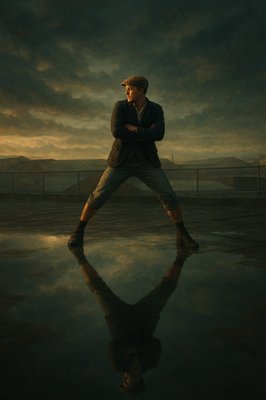
a man is standing in the middle of a body of water
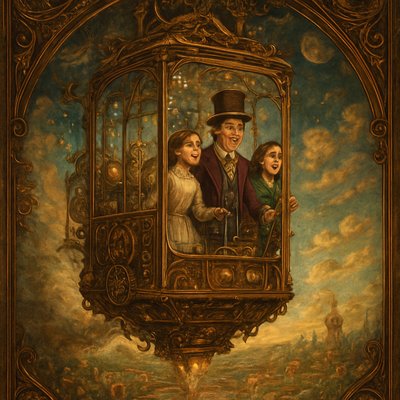
An awe-inspiring and whimsical scene featuring Willy Wonka's Great Glass Wonkavator, soaring through the sky and beyond the confines of the chocolate factory. The Wonkavator itself is a magnificent, multi-directional glass elevator, transparent and sparkling, with Willy Wonka (wearing his iconic top hat, purple coat, and bowtie) and 2 young Victorian well dressed ladies looking out with expressions of joy, wonder and excitement. The interior is filled with intricate buttons and levers for controlling its magical flight. The Wonkavator is depicted in mid-flight, perhaps bursting through the factory roof or ascending above the clouds. Below it, the fantastical landscape of the Chocolate Factory is visible – chocolate rivers, edible gardens, candy cane trees, and various whimsical buildings. Beyond the factory, a stunning, imaginative sky unfolds, perhaps with floating candy clouds, distant fantastical landmarks, or even glimpses of outer space and planets. The lighting is bright and magical, emphasizing the glass's transparency and the vibrant colors of the world below and beyond. The overall mood is one of boundless adventure, limitless possibilities, and pure, joyful fantasy."