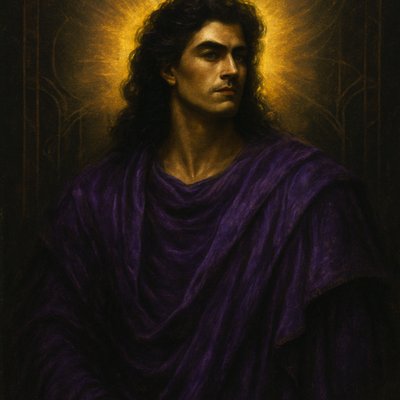
Understood! Let's refine this to specifically identify the subject as male and ensure the luxurious purple clothing receives significant emphasis, moving beyond just an aura. This will create a truly regal and striking image based on Song of Songs 5:11.

Here's the revised prompt:

AI Art Prompt:

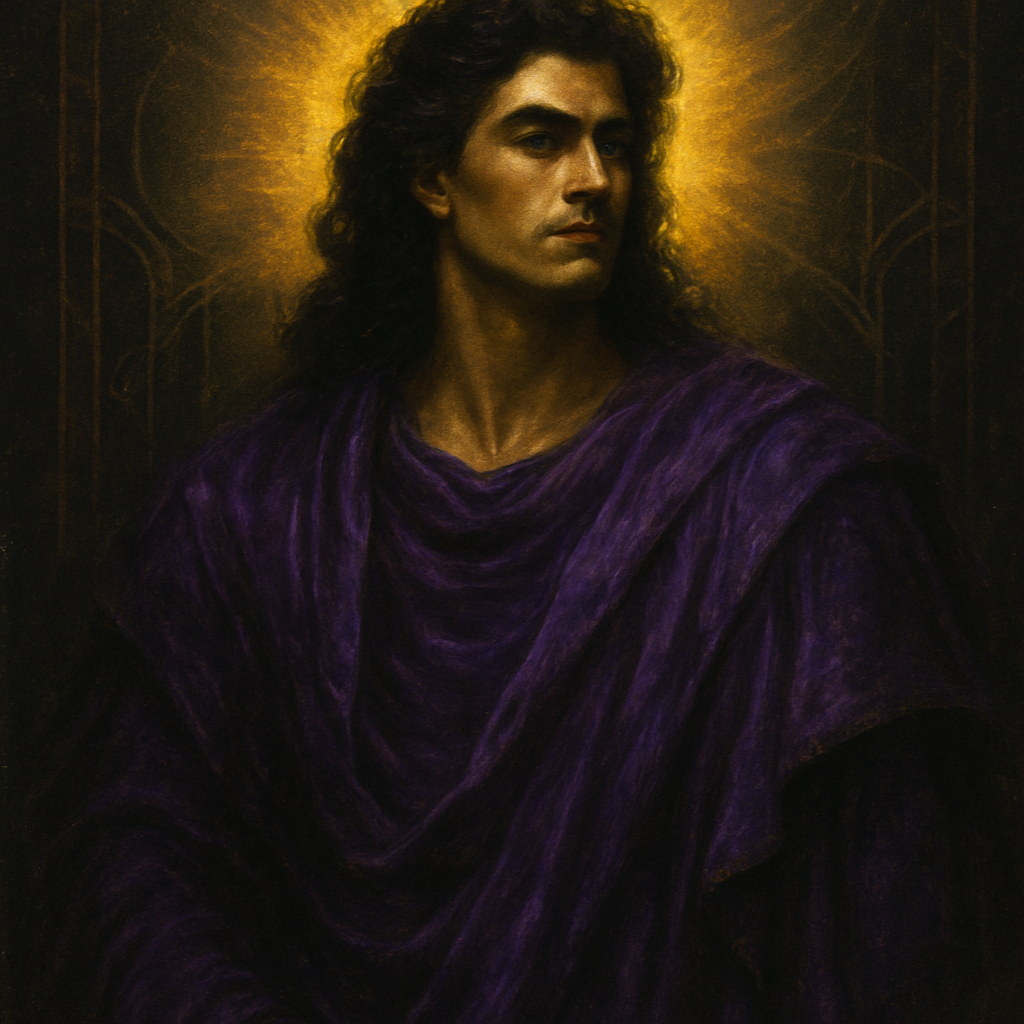
"A powerful and opulent male portrait, dramatically lit and styled, directly inspired by Song of Songs 5:11. The subject's head is crowned with dramatically wavy hair that is intensely, profoundly black—like the glossy, wet feathers of a raven. His gaze is commanding and serene. He is draped in sumptuous, rich royal purple garments made of flowing velvet or silk, featuring intricate drapes and folds that catch the light, emphasizing their regal texture. A radiant, ethereal golden light emanates from around the crown of his head, symbolically representing "purest gold," casting highlights onto his features and the luxurious purple fabric. This golden light and the deep purple of his attire are set against a background of mysterious, yet elegant black shadow and subtle Art Deco-inspired geometric patterns that reinforce the high-contrast aesthetic. The overall mood is one of majestic beauty, divine royalty, and profound symbolic opulence, with the black and purple colors dominating the composition
Created by

Understood! Let's refine this to specifically identify the subject as male and ensure the luxurious purple clothing receives significant emphasis, moving beyond just an aura. This will create a truly regal and striking image based on Song of Songs 5:11. Here's the revised prompt: AI Art Prompt: "A powerful and opulent male portrait, dramatically lit and styled, directly inspired by Song of Songs 5:11. The subject's head is crowned with dramatically wavy hair that is intensely, profoundly black—like the glossy, wet feathers of a raven. His gaze is commanding and serene. He is draped in sumptuous, rich royal purple garments made of flowing velvet or silk, featuring intricate drapes and folds that catch the light, emphasizing their regal texture. A radiant, ethereal golden light emanates from around the crown of his head, symbolically representing "purest gold," casting highlights onto his features and the luxurious purple fabric. This golden light and the deep purple of his attire are set against a background of mysterious, yet elegant black shadow and subtle Art Deco-inspired geometric patterns that reinforce the high-contrast aesthetic. The overall mood is one of majestic beauty, divine royalty, and profound symbolic opulence, with the black and purple colors dominating the composition

Style Used
Symbolism Art Style preview
Symbolism Art Styleby @stylecreator
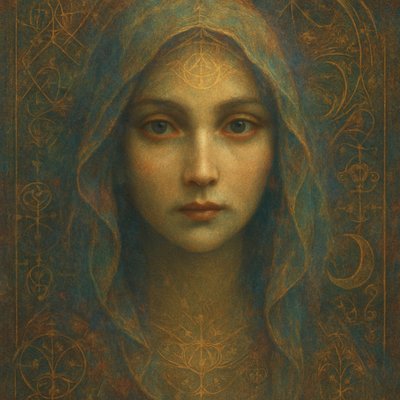
Mystical art using symbols, dreams, and mythology to express emotions and ideas beyond visible reality, featuring otherworldly atmospheres.

See More

Understood! Let's refine this to specifically identify the subject as male and ensure the luxurious purple clothing receives significant emphasis, moving beyond just an aura. This will create a truly regal and striking image based on Song of Songs 5:11.

Here's the revised prompt:

AI Art Prompt:

"A powerful and opulent male portrait, dramatically lit and styled, directly inspired by Song of Songs 5:11. The subject's head is crowned with dramatically wavy hair that is intensely, profoundly black—like the glossy, wet feathers of a raven. His gaze is commanding and serene. He is draped in sumptuous, rich royal purple garments made of flowing velvet or silk, featuring intricate drapes and folds that catch the light, emphasizing their regal texture. A radiant, ethereal golden light emanates from around the crown of his head, symbolically representing "purest gold," casting highlights onto his features and the luxurious purple fabric. This golden light and the deep purple of his attire are set against a background of mysterious, yet elegant black shadow and subtle Art Deco-inspired geometric patterns that reinforce the high-contrast aesthetic. The overall mood is one of majestic beauty, divine royalty, and profound symbolic opulence, with the black and purple colors dominating the composition
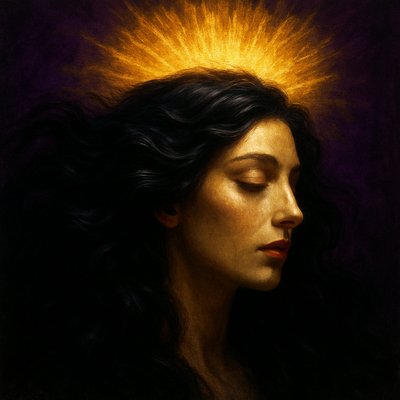
A dramatic, close-up, high-contrast portrait inspired by Song of Songs 5:11. The subject's head is crowned with dramatically wavy hair that is intensely, intensely black—like the glossy feathers of a raven. A radiant, ethereal golden light emanates from the crown of the head, casting a dramatic glow. This golden light is surrounded by a rich, powerful aura of royal deep purple and mysterious black shadow. The portrait should emphasize the texture and depth of the black hair, contrasting sharply with the bright gold and the saturated purple surrounding the subject. The style should be elegant, opulent, and symbolic, focusing purely on the aesthetic of divine beauty and royal power
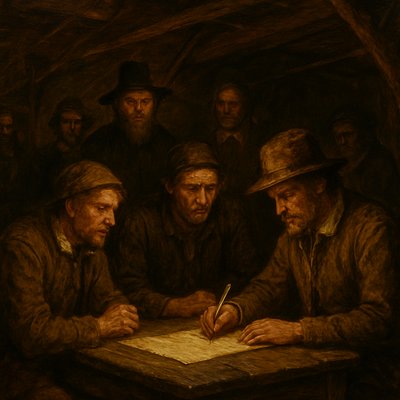
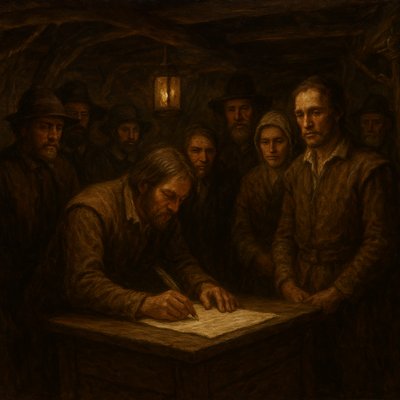
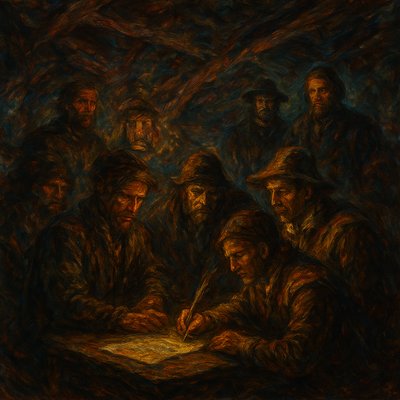
A historically accurate and atmospheric depiction of the signing of the Mayflower Compact aboard the ship in November 1620. The scene is set in the dimly lit, cramped cabin of the Mayflower, with the ship's timbers and rigging subtly visible, conveying the challenging conditions of the voyage. A simple table or chest serves as the signing surface. The primary focus is on a small group of the last individuals signing the document: specifically, the indentured servants (or 'strangers' not directly part of the Separatist congregation) approaching or at the table. Their expressions show a mix of weary determination, understanding of the necessity, and perhaps a hint of quiet apprehension or resignation to this new social contract, given their status. They are dressed in the plain, practical clothing typical of 17th-century commoners and laborers. Figures of prominent Pilgrims or 'Saints' (like William Bradford or John Carver) are visible in the background, observing the proceedings with a sense of gravity and leadership, but they are not the central focus. The lighting is low and warm, perhaps from a lantern, creating a chiaroscuro effect that highlights the faces of the signers. The atmosphere conveys the momentousness of the act under difficult circumstances, the diverse composition of the group, and the early seeds of self-governance in a new world. The artistic style is a realistic, historically detailed oil painting, capturing the solemnity and human element of this pivotal historical moment."
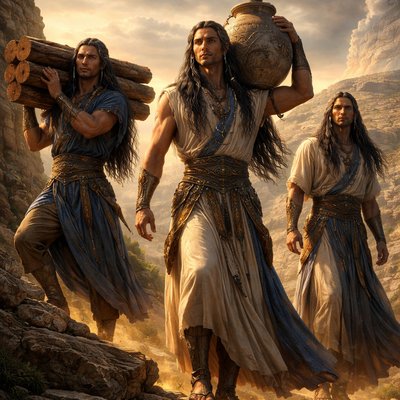
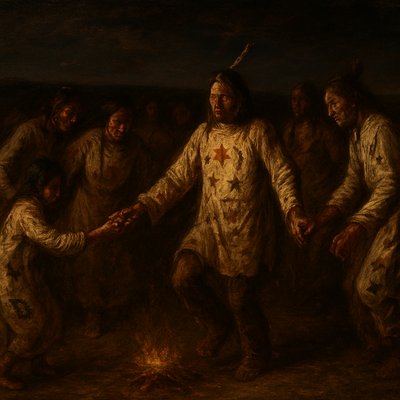
"A historically accurate depiction of a Ghost Dance, focusing on the late 19th-century context, specifically around 1890-1891. The scene shows Lakota (Sioux) or Northern Paiute people (specify one or include elements of both, but avoid anachronisms) participating in the ceremony.

Setting: A vast, open prairie or high desert landscape, under an expansive sky. The time of day could be dusk or night, with a prominent moon or stars, or a bright, clear day. Avoid overtly spiritual or ethereal elements like floating spirits unless explicitly requested for a later, more symbolic iteration. The focus should be on the earthly ceremony.

Participants: A circle of men, women, and children, hand-in-hand, moving in a slow, rhythmic shuffle or circular motion. Their faces show a mixture of devotion, hope, and determination. Some may have expressions of trance or deep concentration.

Attire:

    Ghost Dance Shirts/Dresses: Emphasize the unique Ghost Dance shirts and dresses, which were typically made of muslin or canvas. These garments should feature painted designs such as stars, crescents, birds (especially eagles or crows), buffalo, human figures, or crosses. The designs should appear hand-painted, not mass-produced.

    Hair and Adornments: Participants should have braided hair or wear it long. Some may wear feathers (e.g., eagle or hawk feathers) in their hair. Minimal traditional adornments, as the focus was often on the Ghost Dance shirt itself. Avoid overly elaborate or Hollywood-esque depictions of war bonnets unless relevant to a specific individual and context.

    Footwear: Moccasins or bare feet.

Action/Atmosphere:

    The dancers are moving in a counter-clockwise circle, with a central figure or a small group often leading.

    The overall mood is one of earnest prayer and communal spiritual effort. The dance should convey a sense of hope for renewal and the return of the old ways, rather than aggression or despair.

    There might be a central pole or small fire as a focal point, around which the dance takes place.

    Avoid any signs of direct conflict or violence; the Ghost Dance itself was a non-violent spiritual movement.

Specific Considerations for Accuracy:

    Wovoka's Influence: The teachings of Wovoka (the Northern Paiute prophet) emphasized peace, hard work, and the return of the buffalo and deceased ancestors. The scene should subtly reflect this hopeful, redemptive spirit.

    Regional Variations: If focusing on Lakota, consider their specific interpretations, which sometimes included more imagery related to their warrior traditions on the shirts, but still within the peaceful framework of the dance.

    Respectful Portrayal: Ensure the depiction is respectful and avoids any stereotypical or caricatured representations of Indigenous people. Focus on their human dignity and spiritual sincerity.
A historically accurate and atmospheric depiction of the signing of the Mayflower Compact aboard the ship in November 1620. The scene is set in the dimly lit, cramped cabin of the Mayflower, with the ship's timbers and rigging subtly visible, conveying the challenging conditions of the voyage. A simple table or chest serves as the signing surface. The primary focus is on a small group of the last individuals signing the document: specifically, the indentured servants (or 'strangers' not directly part of the Separatist congregation) approaching or at the table. Their expressions show a mix of weary determination, understanding of the necessity, and perhaps a hint of quiet apprehension or resignation to this new social contract, given their status. They are dressed in the plain, practical clothing typical of 17th-century commoners and laborers. Figures of prominent Pilgrims or 'Saints' (like William Bradford or John Carver) are visible in the background, observing the proceedings with a sense of gravity and leadership, but they are not the central focus. The lighting is low and warm, perhaps from a lantern, creating a chiaroscuro effect that highlights the faces of the signers. The atmosphere conveys the momentousness of the act under difficult circumstances, the diverse composition of the group, and the early seeds of self-governance in a new world. The artistic style is a realistic, historically detailed oil painting, capturing the solemnity and human element of this pivotal historical moment."
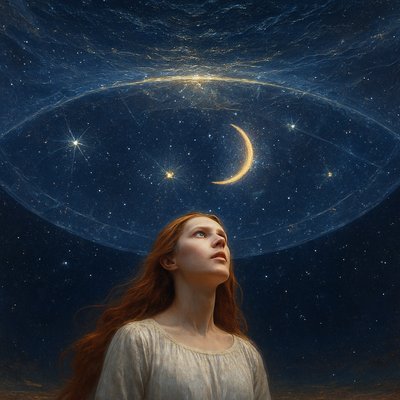
Photorealism Art Style, a breathtaking, upward-looking perspective from the ground, portraying ancient Jewish cosmology for Psalm 8:3. In the lower frame, a young woman with long, flowing red hair, dressed in simple, ethereal white heavenly attire, stands on subtle, ancient earth, gazing upwards with an expression of profound awe and wonder. Above her, the night sky transitions into a vast, layered structure of heavens. Clearly visible is a translucent, crystalline firmament (raqia), appearing as a colossal, shimmering barrier. Within this firmament, large, distinct stars and a glowing crescent moon are vividly captured, appearing as tangible, luminous objects "set into" its surface, radiating a soft, internal light. Beyond and above this firmament, immense, dark yet shimmering celestial waters are visibly contained, looking like a real, suspended ocean reflecting an unseen, brilliant divine light from the highest reaches. The overall scene is imbued with deep blues, celestial purples, and radiant golds from the embedded lights. Focus on the woman's reverent expression, the stunning depth of the layered heavens seen from below, the realistic texture of the firmament, and the tangible, luminous quality of the stars and moon within it, creating an image of overwhelming ancient wonder and divine majesty.