Show Elisha And Elijah Only “And It Came To Pass, As They Still Went On, And Talked, That, Behold, There Appeared A Chariot Of Art

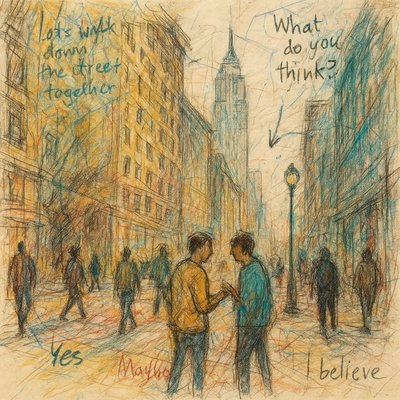
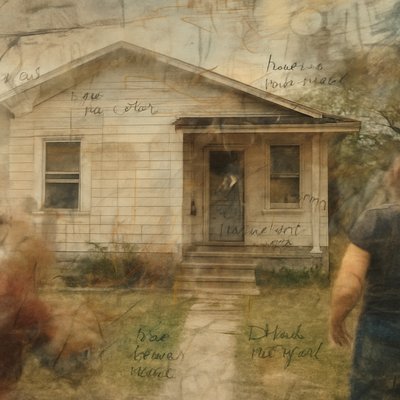
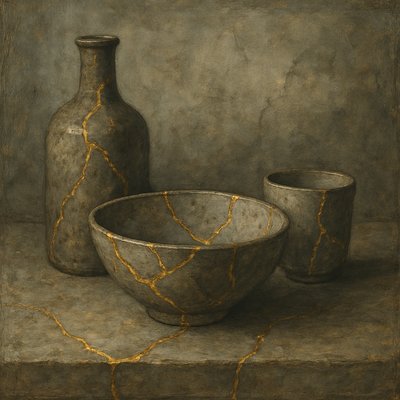
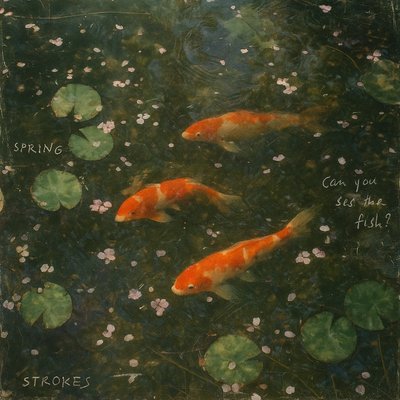
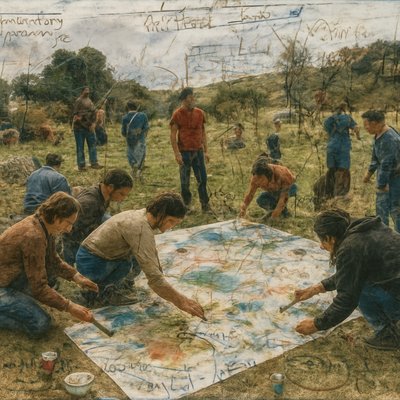
Social Practice Conceptual Art Style Style Transfer Example
house with front view
A historically accurate and deeply somber depiction of the immediate aftermath of the Wounded Knee Massacre in December 1890. The scene captures the desolate, snow-covered landscape of the Pine Ridge Reservation. Focus on the fallen Lakota men, women, and children, scattered across the snow, their bodies still and tragic. A few surviving individuals are shown in postures of profound grief or shock, perhaps tending to the wounded. The distant presence of U.S. soldiers, heavily armed, stands as a stark and cold counterpoint to the devastation. The atmosphere is one of profound sorrow, loss, and the brutal silence of winter. The lighting is cold and muted, emphasizing the harshness of the environment and the tragedy of the event. The artistic style should be a realistic, painterly approach, evoking the historical period with unflinching honesty but without graphic sensationalism. The intent is to serve as a memorial to the victims and a historical testament to the tragic event."
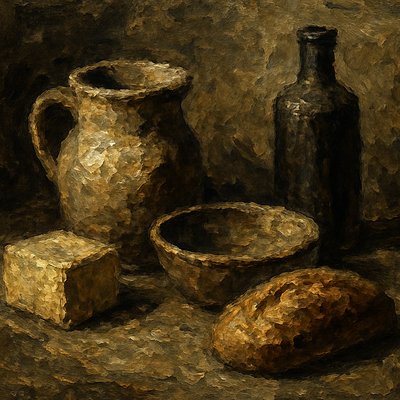
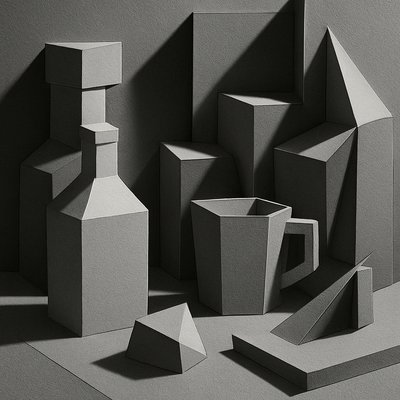
still life with everyday objects
A koi pond seen from above, orange and white koi fish swimming among lily pads, clear water with subtle ripples, fallen cherry blossom petals floating on the surface, dappled sunlight
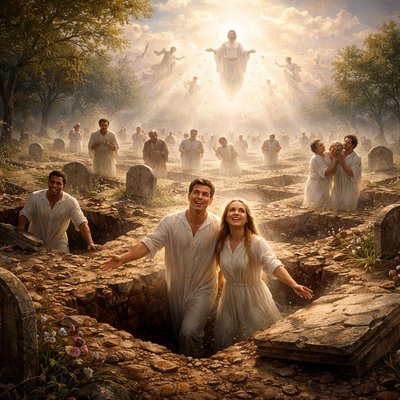
And this is the Father's will which hath sent me, that of all which he hath given me I should lose nothing, but should raise it up again at the last day.
(John 6:39 KJV) Focus on graves opened and joyous youthful looking people coming forth.
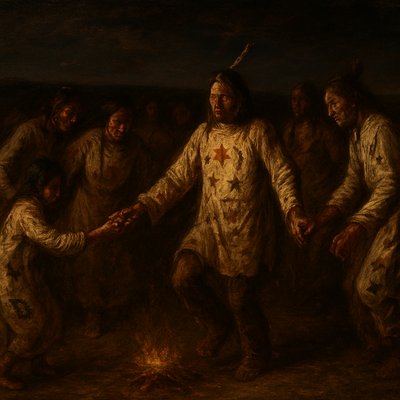
"A historically accurate depiction of a Ghost Dance, focusing on the late 19th-century context, specifically around 1890-1891. The scene shows Lakota (Sioux) or Northern Paiute people (specify one or include elements of both, but avoid anachronisms) participating in the ceremony.

Setting: A vast, open prairie or high desert landscape, under an expansive sky. The time of day could be dusk or night, with a prominent moon or stars, or a bright, clear day. Avoid overtly spiritual or ethereal elements like floating spirits unless explicitly requested for a later, more symbolic iteration. The focus should be on the earthly ceremony.

Participants: A circle of men, women, and children, hand-in-hand, moving in a slow, rhythmic shuffle or circular motion. Their faces show a mixture of devotion, hope, and determination. Some may have expressions of trance or deep concentration.

Attire:

    Ghost Dance Shirts/Dresses: Emphasize the unique Ghost Dance shirts and dresses, which were typically made of muslin or canvas. These garments should feature painted designs such as stars, crescents, birds (especially eagles or crows), buffalo, human figures, or crosses. The designs should appear hand-painted, not mass-produced.

    Hair and Adornments: Participants should have braided hair or wear it long. Some may wear feathers (e.g., eagle or hawk feathers) in their hair. Minimal traditional adornments, as the focus was often on the Ghost Dance shirt itself. Avoid overly elaborate or Hollywood-esque depictions of war bonnets unless relevant to a specific individual and context.

    Footwear: Moccasins or bare feet.

Action/Atmosphere:

    The dancers are moving in a counter-clockwise circle, with a central figure or a small group often leading.

    The overall mood is one of earnest prayer and communal spiritual effort. The dance should convey a sense of hope for renewal and the return of the old ways, rather than aggression or despair.

    There might be a central pole or small fire as a focal point, around which the dance takes place.

    Avoid any signs of direct conflict or violence; the Ghost Dance itself was a non-violent spiritual movement.

Specific Considerations for Accuracy:

    Wovoka's Influence: The teachings of Wovoka (the Northern Paiute prophet) emphasized peace, hard work, and the return of the buffalo and deceased ancestors. The scene should subtly reflect this hopeful, redemptive spirit.

    Regional Variations: If focusing on Lakota, consider their specific interpretations, which sometimes included more imagery related to their warrior traditions on the shirts, but still within the peaceful framework of the dance.
    Respectful Portrayal: Ensure the depiction is respectful and avoids any stereotypical or caricatured representations of Indigenous people. Focus on their human dignity and spiritual sincerity.
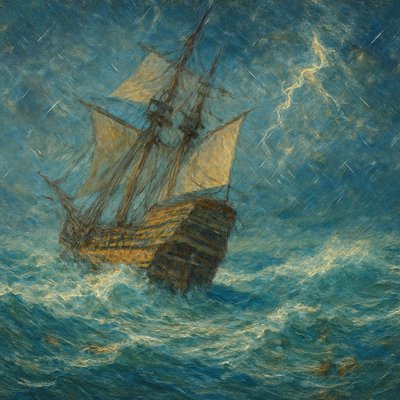
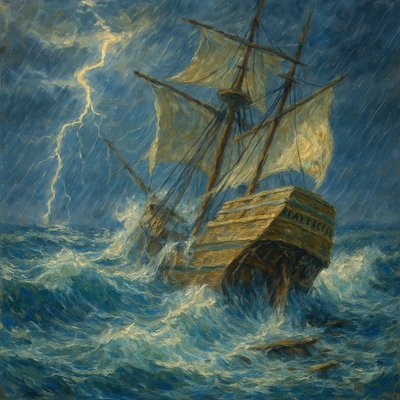
A wooden sailing ship, the Mayflower, on a tempestuous open sea under a dark, stormy sky with lightning. The ship is listing dramatically amidst huge, crashing waves. Rain lashes down. The stern of the ship shows significant damage, with splintered wood and water pouring into the broken transom. Debris from the ship's stern is visible in the churning water around it. The overall mood is one of peril and a desperate struggle against the elements.
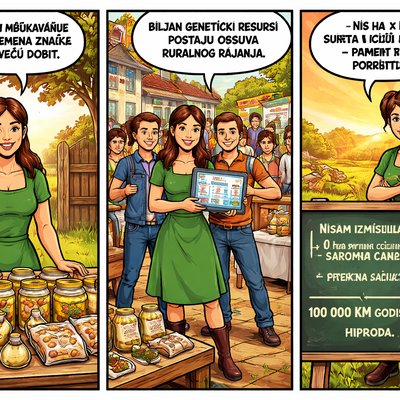
Kadar 6.:Same young rural female entrepreneur with brown hair in a ponytail, wearing a simple green dress, standing in front of her family farm gate. On a wooden table in front of her are jars of bean spread, glass jars with layered bean salads, and small eco paper packages of traditional bean seeds with labels. Warm afternoon light, optimistic atmosphere, cinematic comic illustration, semi-realistic style, detailed, storytelling panel, consistent character design, same face, same hairstyle, same clothing.

Add a speech bubble.

Speech bubble text in Serbian (ijekavian, Latin script). Use EXACTLY this text. Do not translate:

"Prerada i umnožavanje sjemena znače veću dobit."
Kadar 7:Same young rural female entrepreneur with brown ponytail and green dress, standing together with other young farmers in front of a rural cooperative building. They are smiling and holding a tablet showing online shop statistics. There are promotional banners, workshop tables with tasting samples, and rural tourism elements in the background. Bright hopeful atmosphere, cinematic comic style, semi-realistic illustration, detailed, storytelling panel, consistent character design, same face, same hairstyle, same clothing.

Add a speech bubble.

Speech bubble text in Serbian (ijekavian, Latin script). Use EXACTLY this text. Do not translate:

"Biljni genetički resursi postaju osnova ruralnog razvoja."
Kadar.:Same young rural female entrepreneur standing confidently next to a chalkboard with a written business formula. She is smiling proudly in front of her farm landscape at sunset. Warm golden light, inspirational mood, cinematic comic panel, semi-realistic illustration, detailed, consistent character design, same face, same hairstyle, same clothing.

On the chalkboard write in Serbian (ijekavian, Latin script). Use EXACTLY this text. Do not translate:

"10 ha × premium cijena × direktna prodaja × prerada = 100 000 KM godišnje prihoda"

Add a speech bubble.

Speech bubble text in Serbian (ijekavian, Latin script). Use EXACTLY this text. Do not translate:

"Nisam izmislila ništa novo. Samo sam sačuvala staro — i pametno ga iskoristila."
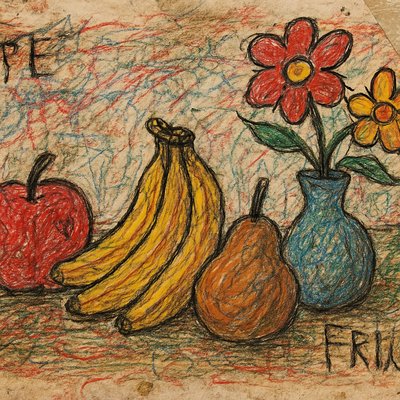
still life arrangement of fruits and flowers
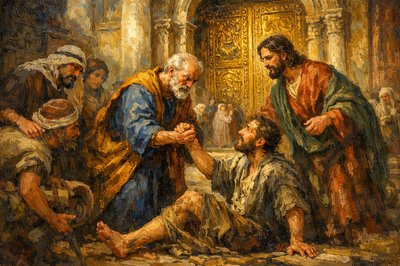
First century Jerusalem at the "gate beautiful" to the temple grounds.  Peter and John were going up to the temple at the hour of prayer, the ninth hour. And a man lame from birth was being carried, whom they laid daily at the gate of the temple that is called the Beautiful Gate to ask alms of those entering the temple. Seeing Peter and John about to go into the temple, he asked to receive alms. And Peter directed his gaze at him, as did John, and said, “Look at us.” And he fixed his attention on them, expecting to receive something from them. But Peter said, “I have no silver and gold, but what I do have I give to you. In the name of Jesus Christ of Nazareth, rise up and walk!” And he took him by the right hand and raised him up, and immediately his feet and ankles were made strong.
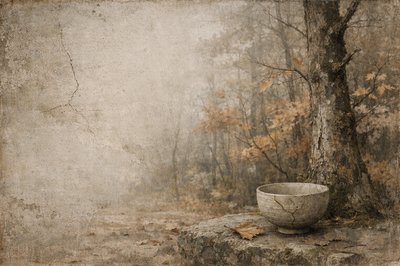
In days to come I stood amazed, walking through that forest, at the blazing symphony of color it brought forth, seemingly just for me.  I grew to love my friend’s words in a new way, through the astounding beauty of the spectacle he knew was coming when he said them.  I was young then, and didn’t know I had many autumns ahead of me.
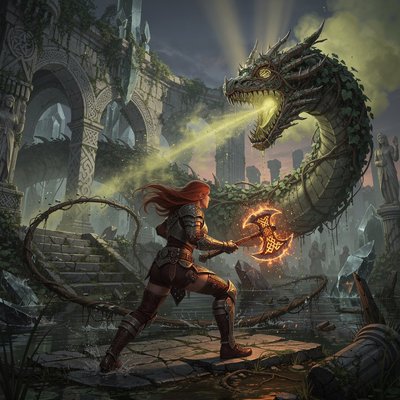
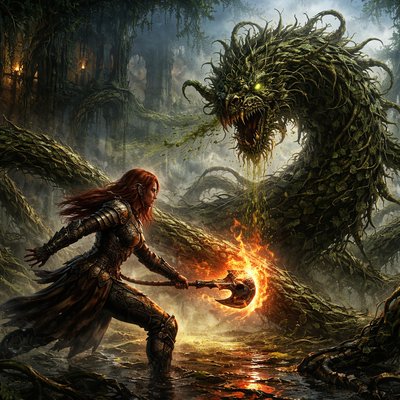
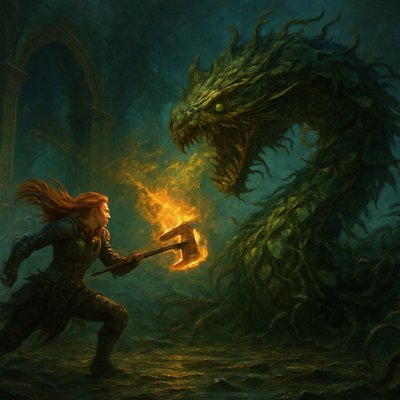
Epic Fantasy Illustration Style, Gritty Cinematic Concept Art, a dynamic, wide-angle action shot of a fierce battle amidst overgrown ancient ruins at twilight. A lady warrior with long red hair clad in practical leather and partial plate armor is in a dynamic combat stance, dodging a massive vine strike. They wield a glowing, enchanted battleaxe that burns with orange fire, striking at the creature. The opponent is a colossal, serpentine Botanical Dragon construct made entirely of writhing, thick poison ivy vines, hairy root systems, and dense clusters of glossy, three-pointed leaves. The "dragon" rears up, its maw a tangled mass of thorns and dripping toxic sap, exhaling clouds of yellowish-green poisonous spores. Its eyes glow with a malevolent verdant light. The ground is treacherous swamp and broken stone. The lighting is dramatic and moody, highlighting the oily sheen of the poisonous leaves and the fire of the warrior's weapon. High detail on the plant textures.
A massive, solid metal USSR emblem glows harshly in red and gold, radiating intense, blinding light. The emblem is firmly pressed down onto the back of a large, dark eagle, which is clearly pinned and crushed beneath its weight. The eagle’s wings are forcibly flattened and bent outward, feathers distorted, body warped under the relentless pressure. Its legs and torso are pressed into the ground, unable to move, showing literal physical force. The emblem dominates the composition, casting sharp, dramatic shadows across the dark eagle. The scene is rendered in bold, graphic socialist propaganda poster style, with high-contrast colors, simplified forms, exaggerated perspective, and stylized lighting. Harsh rays of light radiate from the emblem, emphasizing power and oppression. No abstract symbolism, no heroic balance, no floating elements — only a monumental emblem pressing down, physically immobilizing the eagle.
A wooden sailing ship, the Mayflower, on a tempestuous open sea under a dark, stormy sky with lightning. The ship is listing dramatically amidst huge, crashing waves. Rain lashes down. The stern of the ship shows significant damage, with splintered wood and water pouring into the broken transom. Debris from the ship's stern is visible in the churning water around it. The overall mood is one of peril and a desperate struggle against the elements.
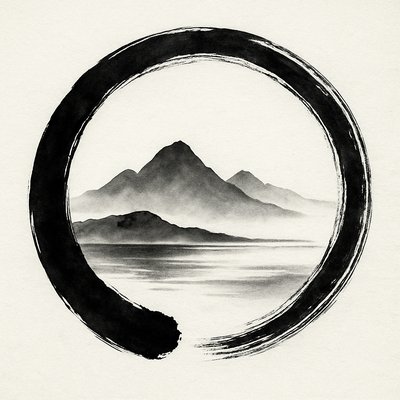
serene landscape with mountains and water
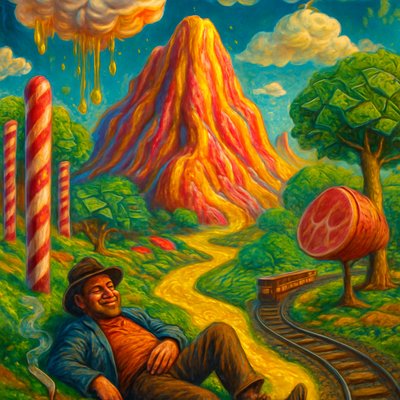
Surrealism Art Style, Digital Art Style, a brilliantly vibrant, whimsical, and exaggerated landscape depicting the mythical "Big Rock Candy Mountain." The massive mountain at the center of the scene is composed entirely of striped rock candy, glistening in the eternal sunshine. A cheerful hobo figure, relaxed and smiling, is seen lounging by a sparkling stream of pure lemonade that flows down the mountainside. The landscape is surrounded by giant peppermint stick forests and trees whose leaves are crisp dollar bills. The clouds in the sky are made of whipped cream, and the rain is a sweet syrup. There are prominent features like a cigarette tree, a luscious ham tree, and railroad tracks where the boxcars are always empty and waiting. The colors are hyper-saturated and joyful, rendered with the smooth, detailed clarity of digital art, yet maintaining a dreamlike, slightly absurd quality. Focus intently on the dazzling texture of the candy landscape, the flowing lemonade water, and the utopian, escapist joy of the scene.
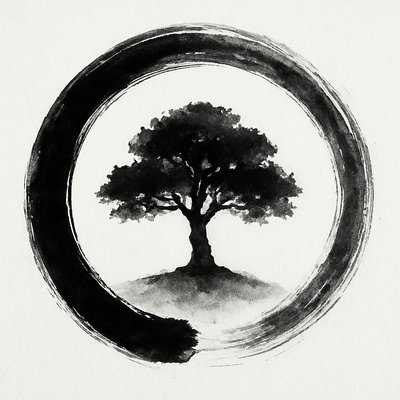
a tree in nature
still life with everyday objects
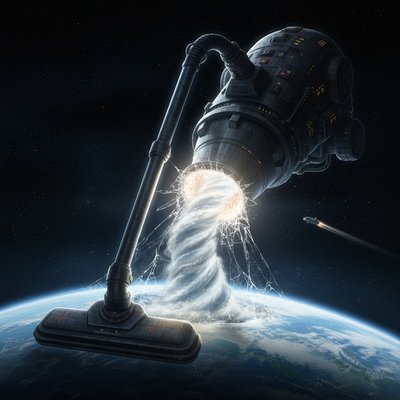
A highly detailed, cinematic rendering of the colossal "Megamaid" spaceship from Spaceballs in its full, transformed state, hovering menacingly above the Earth.

Scene Focus: The Megamaid is positioned directly over the Earth's atmosphere, its massive vacuum nozzle extended. The nozzle is clearly pointed toward the planet's surface, and the mechanism is beginning to suck air out, creating a visible, swirling vortex.

The 'Firmament' Detail: Render the edge of Earth's atmosphere and sky not as a smooth fade to space, but with a highly stylized, almost cracked or crystalline appearance, suggesting the boundary is a literal "firmament." The vacuum is shown actively piercing this boundary, creating a localized, glowing "window of heaven" effect where the atmosphere is being forcefully breached and pulled into the machine.

Atmosphere: The scene is dark, cold space contrasting sharply with the bright, glowing Earth below and the massive, industrial metallic structure of the Megamaid. The lighting should be dramatic and epic, highlighting the ridiculous scale of the vacuum cleaner poised to steal a planet's air. Include a tiny, distant shot of the Eagle 5 (Winnebago) fleeing the scene.

Style: Photorealistic digital painting, sci-fi parody, emphasizing the immense, over-the-top scale and the comedic contrast between the mundane household item and the cosmic threat.
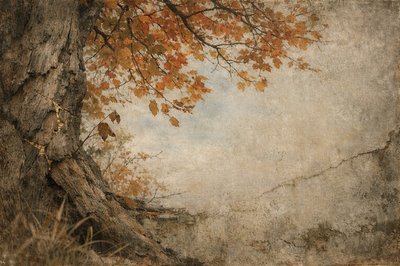
This day, though, I hiked another autumn wood.  Eastern Europe ancient; overgrown.  So thick the view was dark at just a few feet off the path.  All red and yellow; orange and brown, a million trees, each one in blazing preparation for long, frozen winter.  I cannot but recall my friend’s words, lasting long, though he did not, and the instant truth that follows.  Looking upward at the fiery canopy, matched against the bright cerulean sky beyond, I embrace autumn!  Winter surely comes one day, but spring beyond.  I have a winter to prepare for, but it is not yet.
Epic Fantasy Illustration Style, Gritty Cinematic Concept Art, a dynamic, wide-angle action shot of a fierce battle amidst overgrown ancient ruins at twilight. A lone, hardened warrior clad in practical leather and partial plate armor is in a dynamic combat stance, dodging a massive vine strike. They wield a glowing, enchanted battleaxe that burns with orange fire, striking at the creature. The opponent is a colossal, serpentine Botanical Dragon construct made entirely of writhing, thick poison ivy vines, hairy root systems, and dense clusters of glossy, three-pointed leaves. The "dragon" rears up, its maw a tangled mass of thorns and dripping toxic sap, exhaling clouds of yellowish-green poisonous spores. Its eyes glow with a malevolent verdant light. The ground is treacherous swamp and broken stone. The lighting is dramatic and moody, highlighting the oily sheen of the poisonous leaves and the fire of the warrior's weapon. High detail on the plant textures.
A highly detailed, cinematic rendering of the colossal "Megamaid" spaceship from Spaceballs in its full, transformed state, hovering menacingly above the Earth.

Scene Focus: The Megamaid is positioned directly over the Earth's atmosphere, its massive vacuum nozzle extended. The nozzle is clearly pointed toward the planet's surface, and the mechanism is beginning to suck air out, creating a visible, swirling vortex.

The 'Firmament' Detail: Render the edge of Earth's atmosphere and sky not as a smooth fade to space, but with a highly stylized, almost cracked or crystalline appearance, suggesting the boundary is a literal "firmament." The vacuum is shown actively piercing this boundary, creating a localized, glowing "window of heaven" effect where the atmosphere is being forcefully breached and pulled into the machine.

Atmosphere: The scene is dark, cold space contrasting sharply with the bright, glowing Earth below and the massive, industrial metallic structure of the Megamaid. The lighting should be dramatic and epic, highlighting the ridiculous scale of the vacuum cleaner poised to steal a planet's air. Include a tiny, distant shot of the Eagle 5 (Winnebago) fleeing the scene.

Style: Photorealistic digital painting, sci-fi parody, emphasizing the immense, over-the-top scale and the comedic contrast between the mundane household item and the cosmic threat.
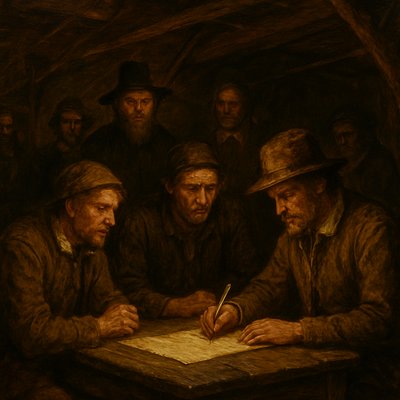
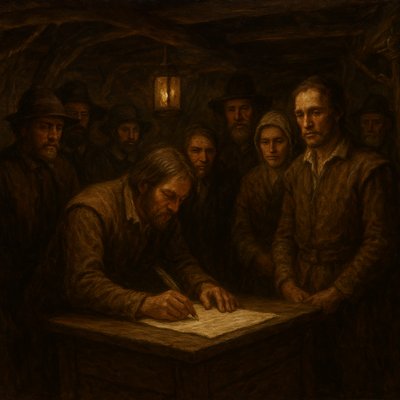
A historically accurate and atmospheric depiction of the signing of the Mayflower Compact aboard the ship in November 1620. The scene is set in the dimly lit, cramped cabin of the Mayflower, with the ship's timbers and rigging subtly visible, conveying the challenging conditions of the voyage. A simple table or chest serves as the signing surface. The primary focus is on a small group of the last individuals signing the document: specifically, the indentured servants (or 'strangers' not directly part of the Separatist congregation) approaching or at the table. Their expressions show a mix of weary determination, understanding of the necessity, and perhaps a hint of quiet apprehension or resignation to this new social contract, given their status. They are dressed in the plain, practical clothing typical of 17th-century commoners and laborers. Figures of prominent Pilgrims or 'Saints' (like William Bradford or John Carver) are visible in the background, observing the proceedings with a sense of gravity and leadership, but they are not the central focus. The lighting is low and warm, perhaps from a lantern, creating a chiaroscuro effect that highlights the faces of the signers. The atmosphere conveys the momentousness of the act under difficult circumstances, the diverse composition of the group, and the early seeds of self-governance in a new world. The artistic style is a realistic, historically detailed oil painting, capturing the solemnity and human element of this pivotal historical moment."
wide landscape with natural scenery
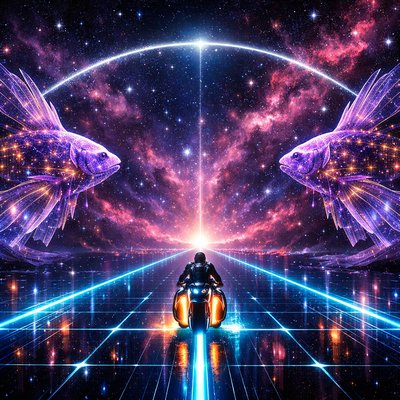
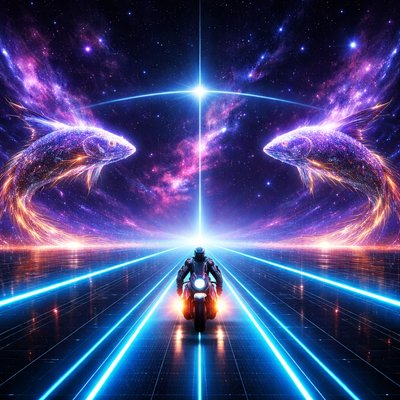
Neon-Futurism Digital Art Style, Bioluminescent Sci-Fi Cosmic Setting, Grand Symmetrical Perspective. > The Rider & Bike: The lone motorcyclist in the sleek armored suit is centered on the highway, speeding away from the viewer on the hubless light-cycle. The cyan and orange glow of the bike is the sharpest point of light in the center of the frame.

The Path: The glowing blue laser-grid highway is a straight, infinite line of light that leads directly into the center of the horizon.

The Pisces Constellation: On the far left and far right sides of the highway, two colossal, ethereal celestial fish are positioned facing away from each other. They are rendered as majestic, crystalline structures made of violet stardust and golden circuitry.

The Composition: The highway passes directly through the vast open space between the two figures. Their large, translucent tail fins fan out like glowing sails on either side of the road, creating a "V" shape that guides the eye toward the center of the cosmos.

The Connection: A thin, radiant silver beam of light connects the two distant figures, arching high above the rider like a celestial wire.

Atmosphere: A serene and vast cosmic void, filled with soft magenta nebulae and shimmering diamond stars, creating a sense of peace and finality at the end of the journey.
Neon-Futurism Digital Art Style, Bioluminescent Sci-Fi Cosmic Setting, Grand Symmetrical Perspective. > The Rider & Bike: The lone motorcyclist in the sleek armored suit is centered on the highway, speeding away from the viewer on the hubless light-cycle. The cyan and orange glow of the bike is the sharpest point of light in the center of the frame.

The Path: The glowing blue laser-grid highway is a straight, infinite line of light that leads directly into the center of the horizon.

The Pisces Constellation: On the far left and far right sides of the highway, two colossal, ethereal celestial fish are positioned facing away from each other. They are rendered as majestic, crystalline structures made of violet stardust and golden circuitry.

The Composition: The highway passes directly through the vast open space between the two figures. Their large, translucent tail fins fan out like glowing sails on either side of the road, creating a "V" shape that guides the eye toward the center of the cosmos.

The Connection: A thin, radiant silver beam of light connects the two distant figures, arching high above the rider like a celestial wire.

Atmosphere: A serene and vast cosmic void, filled with soft magenta nebulae and shimmering diamond stars, creating a sense of peace and finality at the end of the journey.
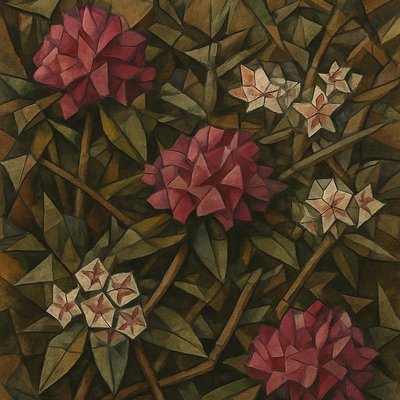
Art Style: Analytical Cubism, avant-garde oil painting style reminiscent of Picasso and Braque.

Subject: A dense, tangled thicket of Rhododendrons and Mountain Laurel bushes.

Composition & Details: The entire natural scene is deconstructed into overlapping geometric planes, fractured shards, and intersecting angles. There are no curved lines; everything is rendered in cubes, cones, and trapezoids.

    The Rhododendrons: Large, showy flower trusses are broken into faceted crystalline structures of deep magenta, rose pink, and violet blocks, looking like explosions of colored quartz rather than soft petals.

    The Mountain Laurels: The smaller, intricate flowers are rendered as complex, repeating geometric star-patterns and angular cups in white and pale pink with distinct red polygonal markings.

    Foliage & Branches: The thick, leathery leaves are fragmented green triangles and parallelograms overlapping each other, creating a sense of depth without traditional perspective. The woody stems and branches are jagged, intersecting brown and grey cylinders that shatter across the frame.

Color & Texture: A palette of muted earth tones—ochre, burnt umber, forest green, and slate grey—contrasted sharply with the jewel-toned facets of the flower colors. The finish should have a heavy, textured oil paint feel with visible palette knife marks and rough brushwork.
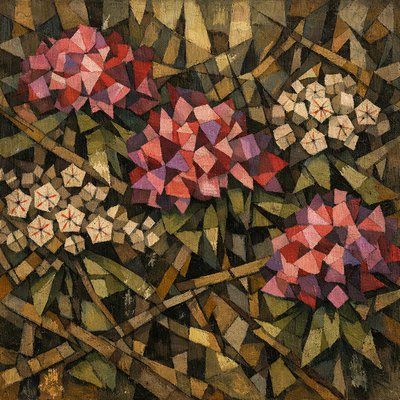
Art Style: Analytical Cubism, avant-garde oil painting style reminiscent of Picasso and Braque.

Subject: A dense, tangled thicket of Rhododendrons and Mountain Laurel bushes.

Composition & Details: The entire natural scene is deconstructed into overlapping geometric planes, fractured shards, and intersecting angles. There are no curved lines; everything is rendered in cubes, cones, and trapezoids.

    The Rhododendrons: Large, showy flower trusses are broken into faceted crystalline structures of deep magenta, rose pink, and violet blocks, looking like explosions of colored quartz rather than soft petals.

    The Mountain Laurels: The smaller, intricate flowers are rendered as complex, repeating geometric star-patterns and angular cups in white and pale pink with distinct red polygonal markings.

    Foliage & Branches: The thick, leathery leaves are fragmented green triangles and parallelograms overlapping each other, creating a sense of depth without traditional perspective. The woody stems and branches are jagged, intersecting brown and grey cylinders that shatter across the frame.

Color & Texture: A palette of muted earth tones—ochre, burnt umber, forest green, and slate grey—contrasted sharply with the jewel-toned facets of the flower colors. The finish should have a heavy, textured oil paint feel with visible palette knife marks and rough brushwork.
still life with everyday objects
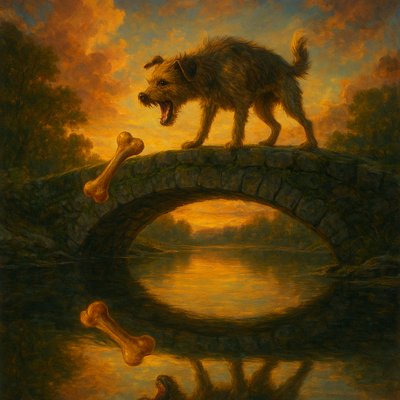
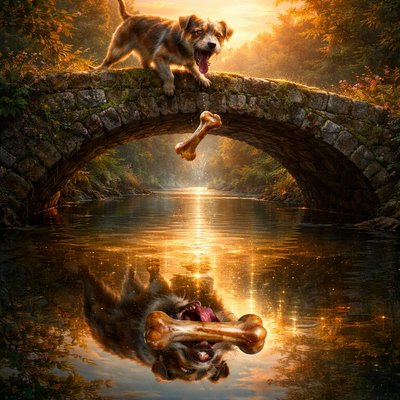
Luminous Storybook Illustration Style, Rich Color Saturation, Magical Realism. A dramatic, painterly scene capturing the precise moment of tragic error on an old, mossy stone bridge spanning a calm river at sunset.

The Reality (The Dog on the Bridge): A scruffy, hungry-looking terrier stands frozen mid-snarl on the edge of the bridge, looking downward. Its mouth is wide open in an aggressive bark. Suspended in mid-air, just inches below its open jaws, a real, decent-sized meaty bone is falling toward the water. The dog’s expression is a mix of greed and sudden confusion.

The Illusion (The Reflection): The surface of the river below is glassy and still, acting like a perfect, deceptive mirror. The reflection shows the same dog, but the reflected bone in its mouth appears impossibly huge, glistening, and juicier than the real one. The reflection is almost hypnotically bright, brighter than the reality above the water. The warm golden light of the setting sun makes the water shimmer invitingly.
bicyle resting against a wall
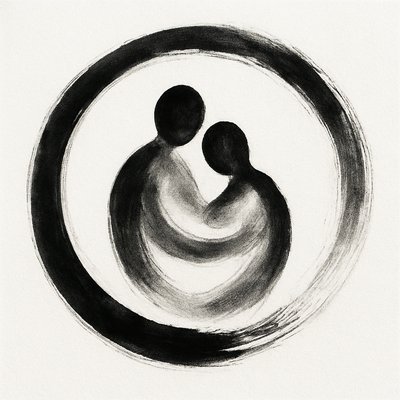
portrait of two people together
portrait of a person with expressive eyes
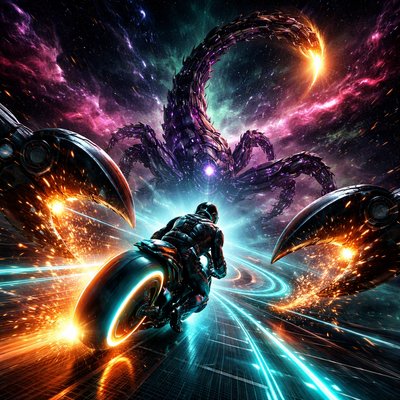
Neon-Futurism Digital Art Style, Bioluminescent Sci-Fi Cosmic Setting, High-Action Composition. A cinematic, low-angle "chase camera" view from behind the rider, looking forward into a perilous section of the cosmos.

The Rider & Bike Consistency: The lone motorcyclist—wearing the same sleek, armored suit with integrated helmet—is leaning hard into a sharp, dramatic turn on the same hubless "light-cycle" sportbike from the previous scenes. The bike’s cyan and orange neon rings leave a zigzagging, vibrant light trail on the road as it maneuvers.

The Action: The rider is narrowly evading two colossal, mechanical pincers that have slammed down onto the highway from the sides. Spark-like digital data fragments fly where the pincers missed the bike by mere inches.

The Path (The Ecliptic): The glowing blue laser-grid highway is no longer straight; it is twisting like a scorpion’s tail through a dark, turbulent nebula of deep magenta and toxic green gas.

The Scorpio Presence: Looming in the background, partially obscured by the nebula, is the massive celestial form of Scorpio. It is rendered as a terrifyingly beautiful construct of obsidian-colored geometry and glowing violet circuitry. Its stinger is arched high above the highway, glowing with a dangerous, concentrated golden light, ready to strike the path ahead.

Atmosphere: Intense lighting contrast, with the bike's neon glow and the golden stinger cutting through the dark, moody colors of the Scorpio nebula.
Luminous Storybook Illustration Style, Rich Color Saturation, Magical Realism. A dramatic, painterly scene capturing the precise moment of tragic error on an old, mossy stone bridge spanning a calm river at sunset.

The Reality (The Dog on the Bridge): A scruffy, hungry-looking terrier stands frozen mid-snarl on the edge of the bridge, looking downward. Its mouth is wide open in an aggressive bark. Suspended in mid-air, just inches below its open jaws, a real, decent-sized meaty bone is falling toward the water. The dog’s expression is a mix of greed and sudden confusion.

The Illusion (The Reflection): The surface of the river below is glassy and still, acting like a perfect, deceptive mirror. The reflection shows the same dog, but the reflected bone in its mouth appears impossibly huge, glistening, and juicier than the real one. The reflection is almost hypnotically bright, brighter than the reality above the water. The warm golden light of the setting sun makes the water shimmer invitingly.
A historically accurate and atmospheric depiction of the signing of the Mayflower Compact aboard the ship in November 1620. The scene is set in the dimly lit, cramped cabin of the Mayflower, with the ship's timbers and rigging subtly visible, conveying the challenging conditions of the voyage. A simple table or chest serves as the signing surface. The primary focus is on a small group of the last individuals signing the document: specifically, the indentured servants (or 'strangers' not directly part of the Separatist congregation) approaching or at the table. Their expressions show a mix of weary determination, understanding of the necessity, and perhaps a hint of quiet apprehension or resignation to this new social contract, given their status. They are dressed in the plain, practical clothing typical of 17th-century commoners and laborers. Figures of prominent Pilgrims or 'Saints' (like William Bradford or John Carver) are visible in the background, observing the proceedings with a sense of gravity and leadership, but they are not the central focus. The lighting is low and warm, perhaps from a lantern, creating a chiaroscuro effect that highlights the faces of the signers. The atmosphere conveys the momentousness of the act under difficult circumstances, the diverse composition of the group, and the early seeds of self-governance in a new world. The artistic style is a realistic, historically detailed oil painting, capturing the solemnity and human element of this pivotal historical moment."
A candid, tender photograph of a person lying sick in a dimly lit, cozy bedroom, buried under a heavy quilt with only their pale face showing, eyes closed in sleep. Tissues and medicine bottles clutter a bedside table. Curled beside the person in bed is a fluffy calico cat that has a pair of feathered angel wings. The cat is asleep too. Soft, natural light streams from a window to the left. Film grain.
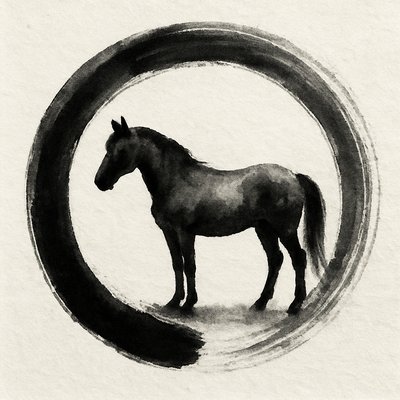
animal standing in natural pose
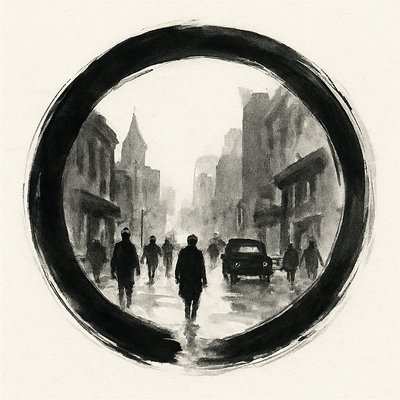
urban street with city activity