Personal Pov Scene. Me And Jesus In The Desert On A Cool Morning At Daybreak Walking Toward A Bright Star. Jesus Is Wearing Old Art

An indoor scene in at home.  A Hispanic Mom and Dad sit on the bed with their little girl, who is smiling.  The mood is warm and secure.  A small crucifix hangs near the bed.  The little girl is about 6 years old and she's chubby.  She's contented.  Dad is about to tell a story.
Seamless triptych artwork with no dividing lines or borders, continuous scene flowing left to right, left panel shows a palomino horse in the foreground on the far left side of the scene walking down a grassy slope toward a reflective teal-blue river in the Scottish Highlands with rocks and ferns around its hooves, center panel continues the same landscape as the horse now appears in the midground at the center of the scene standing at the river’s edge drinking from the reflective water beside ancient moss-covered stone ruins, right panel continues the scene as the horse appears far away in the distance on the far right side of the scene following the riverbank toward steep mist-covered mountains with dramatic sunlight breaking through the clouds, unified natural palette of greens golds and reflective teal blues, consistent cinematic lighting, shared horizon line, smooth uninterrupted left-to-right visual flow with no panel separation.
A young boy, no older than 12, is intensely focused on climbing a steep, rocky hillside in the San Juan National Forest, specifically along the Piedra River. He is scrambling upwards on his hands and knees towards a cougar watching him approach from behind a bush. He is carrying a fishing rod held securely in one hand. The hill is covered in dry dirt and scattered small rocks with ponderosa pines and aspen trees in the landscape.  Far below, at the bottom of the hillside, a clear, meandering mountain stream (the Piedra River) sparkles under twilight. The atmosphere is quiet, tense, capturing the stark beauty of the remote Colorado wilderness.
A young boy, no older than 12, is intensely focused on climbing a steep, rocky hillside in the San Juan National Forest, specifically along the Piedra River. He is scrambling upwards on his hands and knees towards a cougar watching him approach from behind a bush above the boy. He is carrying a fishing rod held securely in one hand. The hill is covered in dry dirt and scattered small rocks with ponderosa pines and aspen trees in the landscape.  Far below, at the bottom of the hillside, a clear, meandering mountain stream (the Piedra River) sparkles under twilight. The atmosphere is quiet, tense, capturing the stark beauty of the remote Colorado wilderness.
A young boy, no older than 12, is intensely focused on climbing a steep, rocky hillside in the San Juan National Forest, specifically along the Piedra River. He is scrambling upwards on his hands and knees. He is carrying a fishing rod held securely in one hand. The hill is covered in dry dirt and scattered small rocks with ponderosa pines and aspen trees in the landscape. Just ahead and slightly above him is a dense scrub oak). Behind this bush, the head of a cougar is visible, watching the boy climbing towards him unaware. Far below, at the bottom of the hillside, a clear, meandering mountain stream (the Piedra River) sparkles under twilight. The atmosphere is quiet, tense, capturing the stark beauty of the remote Colorado wilderness.
Ancient Jerusalem street scene during the feast of passover.  A feeling of festivity.  Pilgrims walking in the marketplace.  Vendors in booths on both sides of the street.  Bright spring day with good weather.
An indoor scene in a grocery store.  A mother squats down to help her little girl, who is crying and making a fuss.  Shoppers are passing by and an employee stands off to the side wearing an apron.  The lighting is focused on the little girl.  Mom is about to be embarrassed.
A cinematic, realistic image, set in the desolate, muddy expanse of the Texas Cross Timbers in 1840. The scene captures the return leg of the Chihuahua Traders Trail. Several heavy, wooden Conestoga wagons are hopelessly mired in deep, dark mud, pulled by straining, distressed oxen and mules. Merchants and teamsters in rugged, damp frontier clothing are struggling, using poles and ropes to try and free a wagon wheel.

In stark contrast, a group of bewildered and exasperated American equestrian circus performers, dressed in bright, slightly tattered stage costumes (e.g., a sequined acrobat, a rider in a velvet jacket, a clown attempting to keep his white makeup clean), stand nearby. They are trying to keep their fine horses and props (perhaps a small, colorful tent piece or a drum) out of the worst of the mire. The sky is overcast and oppressive, reflecting the damp, miserable conditions. The overall lighting should be dark and moody, emphasizing the frustrating five-week delay. Wide-angle shot, photorealistic quality, historical accuracy, dark realism.
Luminous Storybook Illustration Style, Rich Color Saturation, Magical Realism. A dramatic, painterly scene capturing the precise moment of tragic error on an old, mossy stone bridge spanning a calm river at sunset.

The Reality (The Dog on the Bridge): A scruffy, hungry-looking terrier stands frozen mid-snarl on the edge of the bridge, looking downward. Its mouth is wide open in an aggressive bark. Suspended in mid-air, just inches below its open jaws, a real, decent-sized meaty bone is falling toward the water. The dog’s expression is a mix of greed and sudden confusion.

The Illusion (The Reflection): The surface of the river below is glassy and still, acting like a perfect, deceptive mirror. The reflection shows the same dog, but the reflected bone in its mouth appears impossibly huge, glistening, and juicier than the real one. The reflection is almost hypnotically bright, brighter than the reality above the water. The warm golden light of the setting sun makes the water shimmer invitingly.
Neon-Futurism Digital Art Style, Bioluminescent Sci-Fi Cosmic Setting, Monolithic Scale. A perspective shot from behind the rider, looking toward a massive obstacle course in deep space.

The Rider & Bike Consistency: The lone motorcyclist—wearing the same sleek armored suit and helmet—is navigating the hubless "light-cycle" sportbike. The cyan and orange neon rings of the wheels reflect off the floating crystalline surfaces surrounding the road.

The Path (The Labyrinth): The glowing blue laser-grid highway enters a colossal asteroid field where the rocks are perfectly geometric, hovering like floating obsidian city blocks. The path winds through these monoliths, creating a "Cosmic Labyrinth."

The Taurus Presence: Standing at the center of this labyrinth, spanning across the highway, is the monumental form of the Celestial Bull. He is composed of dense, glowing emerald and earth-toned circuitry. His massive, forward-curving horns are made of solid, brilliant starlight and form a natural "archway" that the highway passes beneath.

The Atmosphere: The scene feels grounded and powerful. The deep greens and golds of the Taurus figure contrast with the dark, heavy shadows of the geometric asteroids.

Lighting: The "starlight horns" cast a warm, heavy glow downward onto the rider, illuminating the dust of crushed nebulae kicked up by the bike’s tires.
Neon-Futurism Digital Art Style, Bioluminescent Sci-Fi Cosmic Setting, Monolithic Scale. A perspective shot from behind the rider, looking toward a massive obstacle course in deep space.

The Rider & Bike Consistency: The lone motorcyclist—wearing the same sleek armored suit and helmet—is navigating the hubless "light-cycle" sportbike. The cyan and orange neon rings of the wheels reflect off the floating crystalline surfaces surrounding the road.

The Path (The Labyrinth): The glowing blue laser-grid highway enters a colossal asteroid field where the rocks are perfectly geometric, hovering like floating obsidian city blocks. The path winds through these monoliths, creating a "Cosmic Labyrinth."

The Taurus Presence: Standing at the center of this labyrinth, spanning across the highway, is the monumental form of the Celestial Bull. He is composed of dense, glowing emerald and earth-toned circuitry. His massive, forward-curving horns are made of solid, brilliant starlight and form a natural "archway" that the highway passes beneath.

The Atmosphere: The scene feels grounded and powerful. The deep greens and golds of the Taurus figure contrast with the dark, heavy shadows of the geometric asteroids.

Lighting: The "starlight horns" cast a warm, heavy glow downward onto the rider, illuminating the dust of crushed nebulae kicked up by the bike’s tires.
Luminous Storybook Illustration Style, Rich Color Saturation, Magical Realism. A dramatic, painterly scene capturing the precise moment of tragic error on an old, mossy stone bridge spanning a calm river at sunset.

The Reality (The Dog on the Bridge): A scruffy, hungry-looking terrier stands frozen mid-snarl on the edge of the bridge, looking downward. Its mouth is wide open in an aggressive bark. Suspended in mid-air, just inches below its open jaws, a real, decent-sized meaty bone is falling toward the water. The dog’s expression is a mix of greed and sudden confusion.

The Illusion (The Reflection): The surface of the river below is glassy and still, acting like a perfect, deceptive mirror. The reflection shows the same dog, but the reflected bone in its mouth appears impossibly huge, glistening, and juicier than the real one. The reflection is almost hypnotically bright, brighter than the reality above the water. The warm golden light of the setting sun makes the water shimmer invitingly.
Seamless triptych artwork, continuous scene flowing left to right, left panel shows a palomino horse in the foreground on the far left side of the scene walking down a grassy slope toward a reflective teal-blue river in the Scottish Highlands with rocks and ferns around its hooves, center panel continues the same landscape as the horse now appears in the midground at the center of the scene standing at the river’s edge drinking from the reflective water beside ancient moss-covered stone ruins, right panel continues the scene as the horse appears far away in the distance on the far right side of the scene following the riverbank toward steep mist-covered mountains with dramatic sunlight breaking through the clouds, unified natural palette of greens golds and reflective teal blues, consistent cinematic lighting, shared horizon line, smooth uninterrupted left-to-right visual flow with no panel separation.
A highly detailed photograph of a cheerful female Camp Host with long, flowing red hair, wearing a forest green uniform shirt and khaki pants. She is standing in the San Juan National Forest and is holding a wooden rake. She is engaged in a friendly conversation with Smokey the Bear. The forest setting features large Ponderosa pine trees with orange bark and the ground is covered in a layer of pine needles and raked debris, illustrating fire prevention efforts. The lighting is soft, natural daylight filtering through the trees, giving a warm and encouraging tone. Focus on realistic texture for the uniform, hair, and pine needles.
Golden Age Storybook Illustration Style, Rich Watercolor and Ink, Detailed Textures. A narrative scene capturing the tense moment of realization outside a rugged, dark cave entrance hidden among dry rocks and gnarled roots.

The Fox and the Evidence: In the bright, sunlit foreground, a clever, reddish-orange fox sits alertly on its haunches, a safe distance from the cave mouth. Its head is tilted, looking intently at the dusty ground. The dirt path leading directly into the dark cave is a chaotic, heavily trampled mess of hundreds of distinct footprints—deer hooves, rabbit paws, badger claws—all pointing inward. Crucially, the dusty ground leading away from the cave is completely smooth and untouched by return tracks.

The Lion and the Den: The cave entrance is a gaping maw of deep shadow. Deep within the darkness, only the faint, glowing yellow eyes and the vague, gaunt outline of the old lion lying in wait are visible, watching the fox intently. The contrast between the warm sunlight outside and the cold darkness inside is sharp.
2 young couples with children stand in front of a wall-sized world map, facing the map.  One young father is talking to the other and they are interested in Africa.  One young mother is wearing a backpack and the other has a baby that she's carrying in her arms.  An older couple stand nearby
Epic Biblical Baroque Painting Style, High-Contrast Tenebrism Lighting, Supernatural Realism. A monumental, earth-shattering scene at Golgotha at the precise moment of death.

The Central Figure: Jesus hangs lifelessly on a rough wooden cross, head bowed in finality, his body pale and scarred. A subtle, fading divine light emanates from him. The titulus above his head reads "INRI."

The Manifestation of the Roar (Jasher 54 influence): At the very instant of his death, the environment is violently convulsing, visualizing the "roar" of Judah echoing through time. Behind and above the cross, the dark, stormy clouds are being ripped apart by a massive, translucent ethereal manifestation of a roaring Lion's head formed from dust, lightning, and golden spiritual energy.

The Environmental Impact: The ground beneath the cross is cracking open with deep fissures. Massive boulders are shattering into dust mid-air. The temple veil in the distant city background is visibly tearing top-to-bottom.

The Human Reaction: Below the cross, the scene is one of absolute supernatural terror (as described in Jasher). Roman centurions are cowering on the ground, covering their ears, their helmets knocked off. Horses are rearing wildly, throwing their riders. The few followers present (Mary, John) are driven to their knees, not just in grief, but overwhelmed by the physical force of the cosmic event. The lighting is a chaotic mix of deep eclipse shadow and blinding bursts of supernatural golden-red light from the roaring manifestation.
And be not drunk with wine, wherein is excess; but be filled with the Spirit; Speaking to yourselves in psalms and hymns and spiritual songs, singing and making melody in your heart to the Lord; Giving thanks always for all things unto God and the Father in the name of our Lord Jesus Christ; 
(Ephesians 5:18-20 KJV) Do not use words but only images to interpret the passage.
A historically accurate, deeply reverent and spiritually evocative oil painting. Two traditional Southern Ute individuals, a man and a woman, stand side-by-side with profound solemnity and ancient peace on the high mesa overlooking the twin spires of Chimney Rock National Monument (Chimney Rock and Companion Rock). They are dressed in authentic, richly detailed traditional attire. The man holds a feathered staff, his gaze directed towards the horizon, symbolizing his role as a protector and observer of the earth. The woman gestures subtly towards the sky, her posture conveying an intimate connection to the celestial, perhaps in a gesture of spiritual offering or acknowledgment. The scene's context is the stalling of the moon's analemma, with the moon itself appearing large and prominent, hanging low in the sky, its unique position clearly marking this cyclical astronomical pause. The atmosphere is bathed in the ethereal, soft glow of early morning light, just as the sun begins to kiss the distant peaks, casting long, significant shadows that stretch across the mesa. Their faces are etched with wisdom and a quiet understanding of the cosmos. The vast, spiritual landscape of Chimney Rock is an integral part of the composition, symbolizing their deep, timeless connection to both earth and sky, and their role as guardians of this sacred knowledge. Fine art composition, conveying a powerful sense of timeless ritual, astronomical reverence, and cultural continuity
An interior scene.  An old Bible with dog-eared pages, a black leather cover, and words of Christ in red sits open on a table.  The camera sees the Bible at a 45 degree angle.  The table and chair are old and worn, sitting on a worn carpet on a wood plank floor.  There are some pens and highlighters, along with a  red ribbon bookmark, a half-empty drink and some paper clips.  The room is in low-light, and a small window is in the background.  Someone has been studying and just stepped away for a moment.  Some lines in the Bible are highlighted yellow.
An awe-inspiring and whimsical scene featuring Willy Wonka's Great Glass Wonkavator, soaring through the sky and beyond the confines of the chocolate factory. The Wonkavator itself is a magnificent, multi-directional glass elevator, transparent and sparkling, with Willy Wonka (wearing his iconic top hat, purple coat, and bowtie) and Charlie Bucket (and perhaps Grandpa Joe) inside, looking out with expressions of wonder and excitement. The interior is filled with intricate buttons and levers for controlling its magical flight.

The Wonkavator is depicted in mid-flight, perhaps bursting through the factory roof or ascending above the clouds. Below it, the fantastical landscape of the Chocolate Factory is visible – chocolate rivers, edible gardens, candy cane trees, and various whimsical buildings. Beyond the factory, a stunning, imaginative sky unfolds, perhaps with floating candy clouds, distant fantastical landmarks, or even glimpses of outer space and planets. The lighting is bright and magical, emphasizing the glass's transparency and the vibrant colors of the world below and beyond. The overall mood is one of boundless adventure, limitless possibilities, and pure, joyful fantasy."
A grand night-time view of the iconic fountains at Caesar's Palace in Las Vegas. The water is illuminated from below with vibrant neon magenta, electric blue, and bright tangerine lights. Surrounding the perimeter of the fountain are large, stylized Christmas trees constructed entirely of glossy, metallic ornaments in various sizes. These ornament trees are shimmering in shades of silver, gold, magenta pink, cobalt blue, and tangerine orange. No green or red anywhere in the scene. The Roman-style architecture of the hotel is visible in the background under a dark desert sky. Ultra-glamorous, high-gloss textures, cinematic wide-angle shot, 8k resolution, ray-traced reflections.
"A historically accurate depiction of a Ghost Dance, focusing on the late 19th-century context, specifically around 1890-1891. The scene shows Lakota (Sioux) or Northern Paiute people (specify one or include elements of both, but avoid anachronisms) participating in the ceremony.

Setting: A vast, open prairie or high desert landscape, under an expansive sky. The time of day could be dusk or night, with a prominent moon or stars, or a bright, clear day. Avoid overtly spiritual or ethereal elements like floating spirits unless explicitly requested for a later, more symbolic iteration. The focus should be on the earthly ceremony.

Participants: A circle of men, women, and children, hand-in-hand, moving in a slow, rhythmic shuffle or circular motion. Their faces show a mixture of devotion, hope, and determination. Some may have expressions of trance or deep concentration.

Attire:

    Ghost Dance Shirts/Dresses: Emphasize the unique Ghost Dance shirts and dresses, which were typically made of muslin or canvas. These garments should feature painted designs such as stars, crescents, birds (especially eagles or crows), buffalo, human figures, or crosses. The designs should appear hand-painted, not mass-produced.

    Hair and Adornments: Participants should have braided hair or wear it long. Some may wear feathers (e.g., eagle or hawk feathers) in their hair. Minimal traditional adornments, as the focus was often on the Ghost Dance shirt itself. Avoid overly elaborate or Hollywood-esque depictions of war bonnets unless relevant to a specific individual and context.

    Footwear: Moccasins or bare feet.

Action/Atmosphere:

    The dancers are moving in a counter-clockwise circle, with a central figure or a small group often leading.

    The overall mood is one of earnest prayer and communal spiritual effort. The dance should convey a sense of hope for renewal and the return of the old ways, rather than aggression or despair.

    There might be a central pole or small fire as a focal point, around which the dance takes place.

    Avoid any signs of direct conflict or violence; the Ghost Dance itself was a non-violent spiritual movement.

Specific Considerations for Accuracy:

    Wovoka's Influence: The teachings of Wovoka (the Northern Paiute prophet) emphasized peace, hard work, and the return of the buffalo and deceased ancestors. The scene should subtly reflect this hopeful, redemptive spirit.

    Regional Variations: If focusing on Lakota, consider their specific interpretations, which sometimes included more imagery related to their warrior traditions on the shirts, but still within the peaceful framework of the dance.

    Respectful Portrayal: Ensure the depiction is respectful and avoids any stereotypical or caricatured representations of Indigenous people. Focus on their human dignity and spiritual sincerity.
An awe-inspiring and whimsical scene featuring Willy Wonka's Great Glass Wonkavator, soaring through the sky and beyond the confines of the chocolate factory. The Wonkavator itself is a magnificent, multi-directional glass elevator, transparent and sparkling, with a middle aged Willy Wonka (wearing his iconic top hat, purple coat, and bowtie) and a young Victorian well dressed lady looking out with expressions of joy, wonder and excitement. The interior is filled with intricate buttons and levers for controlling its magical flight. The Wonkavator is depicted in mid-flight, perhaps bursting through the factory roof or ascending above the clouds. Below it, the fantastical landscape of the Chocolate Factory is visible – chocolate rivers, edible gardens, candy cane trees, and various whimsical buildings. Beyond the factory, a stunning, imaginative sky unfolds, perhaps with floating candy clouds, distant fantastical landmarks, or even glimpses of outer space and planets. The lighting is bright and magical, emphasizing the glass's transparency and the vibrant colors of the world below and beyond. The overall mood is one of boundless adventure, limitless possibilities, and pure, joyful fantasy."
The San Gorgonio Pass, Mt. San Gorgonio) rises in the North, all hoary-frost and granite.  Snake-like clouds adorning her peak, I gaze past the big white house toward her uplifted boulders.
And at the South, Mt. San Jacinto has lost his head in cloud.  Burned bones against a blue sky backdrop.  Between the two, another sunrise gleams and beams of brilliant, white-hot day flash forth:  They accentuate the Sonora desert’s west extreme, and last night’s moon, high up on the left, forgot to go away.
Renaissance Painting Art Style, a joyful and purposeful group of ancient Israelites, including smiling elderly men and women, walking with a sense of contentment and humble pride. Each carries beautifully crafted clay jars or alabaster flasks filled with pure, clear, golden oil of pressed olives. The oil shimmers with an ethereal clarity within the translucent vessels. They are making their way along a sunny path in the Tabernacle courtyard, with glimpses of the Tabernacle structure in the background. The light is bright and warm, illuminating their radiant faces and highlighting the honor and devotion in their offering. Focus on the rich textures of their simple linen garments, the liquid clarity and glow of the olive oil, and the celebratory, devotional atmosphere of their task.
    A breathtaking, full-size artistic standing buffalo, rendered entirely in the style of intricate, luminous glass art, reminiscent of the painted buffalo installations. The buffalo's majestic form is composed of countless individual pieces of vibrant, multifaceted stained glass or fused glass, meticulously cut, arranged, and joined.

    The entire surface of this glass buffalo is adorned with various miniature, finely detailed scenes and patterns etched, painted, or embedded within the glass itself, or created by the unique coloration and texture of the glass pieces. These scenes depict:

        Iconic Yellowstone landscapes: Old Faithful erupting in miniature, the Grand Canyon of the Yellowstone, geothermal pools.

        Local wildlife: Elk, bears, wolves, eagles (all rendered in the glass medium).

        Native American art motifs: Geometric patterns, symbols, and figures (also within the glass).

    The buffalo's interior is subtly illuminated, causing the entire sculpture to glow from within, acting as a beacon of art and nature. Light catches every facet of the glass, creating a dazzling play of refracted colors that project intricate patterns onto the surrounding natural environment.

    The setting is the glory of Yellowstone National Park, specifically an expansive, iconic vista. Perhaps in a verdant meadow with distant geysers steaming, or near a crystal-clear river. The morning sun, bright and golden, backlights the buffalo, intensifying its inner glow and creating a dramatic contrast with the rugged, natural beauty of the park. The atmosphere is one of awe, harmony between art and nature, and a profound celebration of the spirit of the American West. The artistic style is hyper-realistic, emphasizing the detailed texture, transparency, and brilliant light play inherent in glass art, seamlessly integrated into a vibrant, natural landscape.
Oil Painting Art Style, a detailed male Northern Bobwhite Quail, its distinctive head markings and feather patterns clearly rendered with rich brushwork, peeking from behind a cluster of vivid, textured fall leaves on the ground. The quail's eyes are sharp and alert. Behind it, an old, weathered, rustic red barn is depicted with strong brushstrokes, showing its aged timber and flaking paint, under a slightly overcast, softly lit autumn sky. The setting is a quintessential Eastern farm in the mountains of Tennessee, with the surrounding hills hinted at in deep, autumnal tones. Focus on the tactile quality of the painted textures, the depth and richness of the autumn colors, and the enduring charm of the rural scene.
Renaissance Painting Art Style, a joyful and purposeful group of ancient Israelites, including smiling elderly men and women, walking with a sense of contentment and humble pride. Each carries beautifully crafted clay jars or alabaster flasks filled with pure, clear, golden oil of pressed olives. The oil shimmers with an ethereal clarity within the translucent vessels. They are making their way along a sunny path in the Tabernacle courtyard, with glimpses of the Tabernacle structure in the background. The light is bright and warm, illuminating their radiant faces and highlighting the honor and devotion in their offering. Focus on the rich textures of their simple linen garments, the liquid clarity and glow of the olive oil, and the celebratory, devotional atmosphere of their task.
    A breathtaking, full-size artistic standing buffalo, rendered entirely in the style of intricate, luminous glass art, reminiscent of the painted buffalo installations. The buffalo's majestic form is composed of countless individual pieces of vibrant, multifaceted stained glass or fused glass, meticulously cut, arranged, and joined.

    The entire surface of this glass buffalo is adorned with various miniature, finely detailed scenes and patterns etched, painted, or embedded within the glass itself, or created by the unique coloration and texture of the glass pieces. These scenes depict:

        Iconic Yellowstone landscapes: Old Faithful erupting in miniature, the Grand Canyon of the Yellowstone, geothermal pools.

        Local wildlife: Elk, bears, wolves, eagles (all rendered in the glass medium).

        Native American art motifs: Geometric patterns, symbols, and figures (also within the glass).

    The buffalo's interior is subtly illuminated, causing the entire sculpture to glow from within, acting as a beacon of art and nature. Light catches every facet of the glass, creating a dazzling play of refracted colors that project intricate patterns onto the surrounding natural environment.

    The setting is the glory of Yellowstone National Park, specifically an expansive, iconic vista. Perhaps in a verdant meadow with distant geysers steaming, or near a crystal-clear river. The morning sun, bright and golden, backlights the buffalo, intensifying its inner glow and creating a dramatic contrast with the rugged, natural beauty of the park. The atmosphere is one of awe, harmony between art and nature, and a profound celebration of the spirit of the American West. The artistic style is hyper-realistic, emphasizing the detailed texture, transparency, and brilliant light play inherent in glass art, seamlessly integrated into a vibrant, natural landscape.
Seek him that maketh the seven stars and Orion, and turneth the shadow of death into the morning, and maketh the day dark with night: that calleth for the waters of the sea, and poureth them out upon the face of the earth: The LORD is his name: 
(Amos 5:8 KJV)
Seek him that maketh the seven stars and Orion, and turneth the shadow of death into the morning, and maketh the day dark with night: that calleth for the waters of the sea, and poureth them out upon the face of the earth: The LORD is his name: 
(Amos 5:8 KJV)
An awe-inspiring and whimsical scene featuring Willy Wonka's Great Glass Wonkavator, soaring through the sky and beyond the confines of Ontario Canada and its flag. The Wonkavator itself is a magnificent, multi-directional glass elevator, transparent and sparkling, with Willy Wonka (wearing his iconic top hat, purple coat, and bowtie) and 2 Canadian ladies looking out with expressions of joy, wonder and excitement. The interior is filled with intricate buttons and levers for controlling its magical flight. The Wonkavator is depicted in mid-flight, ascending above the clouds flying out to the ocean. Below it, the fantastical landscape of Ontario Canada is visible with a large Canadian flay flying over the city. – and various whimsical buildings. Beyond Ontario, a stunning, imaginative sky unfolds, perhaps with floating candy clouds, distant fantastical landmarks, or even glimpses of outer space and planets. The lighting is bright and magical, emphasizing the glass's transparency and the vibrant colors of the world below and beyond. The overall mood is one of boundless adventure, limitless possibilities, and pure, joyful fantasy."
An awe-inspiring and whimsical scene featuring Willy Wonka's Great Glass Wonkavator, soaring through the sky and beyond the confines of the chocolate factory. The Wonkavator itself is a magnificent, multi-directional glass elevator, transparent and sparkling, with Willy Wonka (wearing his iconic top hat, purple coat, and bowtie) and Charlie Bucket (and perhaps Grandpa Joe) inside, looking out with expressions of wonder and excitement. The interior is filled with intricate buttons and levers for controlling its magical flight.

The Wonkavator is depicted in mid-flight, perhaps bursting through the factory roof or ascending above the clouds. Below it, the fantastical landscape of the Chocolate Factory is visible – chocolate rivers, edible gardens, candy cane trees, and various whimsical buildings. Beyond the factory, a stunning, imaginative sky unfolds, perhaps with floating candy clouds, distant fantastical landmarks, or even glimpses of outer space and planets. The lighting is bright and magical, emphasizing the glass's transparency and the vibrant colors of the world below and beyond. The overall mood is one of boundless adventure, limitless possibilities, and pure, joyful fantasy."
An awe-inspiring and whimsical scene featuring Willy Wonka's Great Glass Wonkavator, soaring through the sky and beyond the confines of the chocolate factory. The Wonkavator itself is a magnificent, multi-directional glass elevator, transparent and sparkling, with Willy Wonka (wearing his iconic top hat, purple coat, and bowtie) and Charlie Bucket and Grandpa Joe inside, looking out with expressions of wonder and excitement. The interior is filled with intricate buttons and levers for controlling its magical flight.

The Wonkavator is depicted in mid-flight, perhaps bursting through the factory roof or ascending above the clouds. Below it, the fantastical landscape of the Chocolate Factory is visible – chocolate rivers, edible gardens, candy cane trees, and various whimsical buildings. Beyond the factory, a stunning, imaginative sky unfolds, perhaps with floating candy clouds, distant fantastical landmarks, or even glimpses of outer space and planets. The lighting is bright and magical, emphasizing the glass's transparency and the vibrant colors of the world below and beyond. The overall mood is one of boundless adventure, limitless possibilities, and pure, joyful fantasy."
An awe-inspiring and whimsical scene featuring Willy Wonka's Great Glass Wonkavator, soaring through the sky and beyond the confines of the chocolate factory. The Wonkavator itself is a magnificent, multi-directional glass elevator, transparent and sparkling, with a middle aged Willy Wonka (wearing his iconic top hat, purple coat, and bowtie) and a young Victorian well dressed lady looking out with expressions of joy, wonder and excitement. The interior is filled with intricate buttons and levers for controlling its magical flight. The Wonkavator is depicted in mid-flight, perhaps bursting through the factory roof or ascending above the clouds. Below it, the fantastical landscape of the Chocolate Factory is visible – chocolate rivers, edible gardens, candy cane trees, and various whimsical buildings. Beyond the factory, a stunning, imaginative sky unfolds, perhaps with floating candy clouds, distant fantastical landmarks, or even glimpses of outer space and planets. The lighting is bright and magical, emphasizing the glass's transparency and the vibrant colors of the world below and beyond. The overall mood is one of boundless adventure, limitless possibilities, and pure, joyful fantasy."
    A breathtaking, full-size artistic standing buffalo, rendered entirely in the style of intricate, luminous glass art, reminiscent of the painted buffalo installations. The buffalo's majestic form is composed of countless individual pieces of vibrant, multifaceted stained glass or fused glass, meticulously cut, arranged, and joined.

    The entire surface of this glass buffalo is adorned with various miniature, finely detailed scenes and patterns etched, painted, or embedded within the glass itself, or created by the unique coloration and texture of the glass pieces. These scenes depict:

        Iconic Yellowstone landscapes: Old Faithful erupting in miniature, the Grand Canyon of the Yellowstone, geothermal pools.

        Local wildlife: Elk, bears, wolves, eagles (all rendered in the glass medium).

        Native American art motifs: Geometric patterns, symbols, and figures (also within the glass).

    The buffalo's interior is subtly illuminated, causing the entire sculpture to glow from within, acting as a beacon of art and nature. Light catches every facet of the glass, creating a dazzling play of refracted colors that project intricate patterns onto the surrounding natural environment.

    The setting is the glory of Yellowstone National Park, specifically an expansive, iconic vista. Perhaps in a verdant meadow with distant geysers steaming, or near a crystal-clear river. The morning sun, bright and golden, backlights the buffalo, intensifying its inner glow and creating a dramatic contrast with the rugged, natural beauty of the park. The atmosphere is one of awe, harmony between art and nature, and a profound celebration of the spirit of the American West. The artistic style is hyper-realistic, emphasizing the detailed texture, transparency, and brilliant light play inherent in glass art, seamlessly integrated into a vibrant, natural landscape.
Luminous Storybook Illustration Style, Rich Color Saturation, Magical Realism. A dramatic, painterly scene capturing the precise moment of tragic error on an old, mossy stone bridge spanning a calm river at sunset.

The Reality (The Dog on the Bridge): A scruffy, hungry-looking terrier stands frozen mid-snarl on the edge of the bridge, looking downward. Its mouth is wide open in an aggressive bark. Suspended in mid-air, just inches below its open jaws, a real, decent-sized meaty bone is falling toward the water. The dog’s expression is a mix of greed and sudden confusion.

The Illusion (The Reflection): The surface of the river below is glassy and still, acting like a perfect, deceptive mirror. The reflection shows the same dog, but the reflected bone in its mouth appears impossibly huge, glistening, and juicier than the real one. The reflection is almost hypnotically bright, brighter than the reality above the water. The warm golden light of the setting sun makes the water shimmer invitingly.
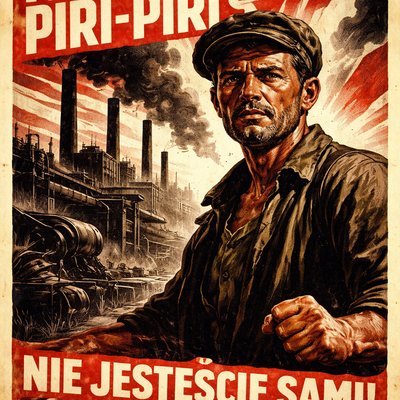
A simple cartoon-style propaganda poster drawn with bold, thick marker lines. Use a limited color palette of bright red, dark navy blue, white, and small black outlines. At the top, include a cool, bold propaganda-style font that looks hand-drawn with marker, saying: “FOUR LEGS GOOD, TWO LEGS BETTER!” Make the word “BETTER” much larger and more dramatic. In the center, show a group of white sheep with simple cartoon faces, wide excited eyes, and big happy smiles, cheering together. The sheep should look identical and drawn with simple marker outlines. They are looking at a pig who is walking upright on two legs in a bright spotlight. The pig should be glowing or surrounded by simple marker-drawn light rays to show fake admiration. Add confetti, simple celebration lines, and maybe one sheep holding a small sign. The background should use strong blocks of red and navy blue, like a simple propaganda poster. Include very simple outlines of a barn or farmhouse in the background. Overall style: cute cartoon, clean, bold marker strokes, easy shapes, limited colors, and a brainwashed, energetic vibe.
An awe-inspiring and whimsical scene featuring Willy Wonka's Great Glass Wonkavator, soaring through the sky and beyond the confines of Ontario Canada and its flag. The Wonkavator itself is a magnificent, multi-directional glass elevator, transparent and sparkling, with Willy Wonka (wearing his iconic top hat, purple coat, and bowtie) and 2 Canadian ladies looking out with expressions of joy, wonder and excitement. The interior is filled with intricate buttons and levers for controlling its magical flight. The Wonkavator is depicted in mid-flight, ascending above the clouds flying out to the ocean. Below it, the fantastical landscape of Ontario Canada is visible with a large Canadian flay flying over the city. – and various whimsical buildings. Beyond Ontario, a stunning, imaginative sky unfolds, perhaps with floating candy clouds, distant fantastical landmarks, or even glimpses of outer space and planets. The lighting is bright and magical, emphasizing the glass's transparency and the vibrant colors of the world below and beyond. The overall mood is one of boundless adventure, limitless possibilities, and pure, joyful fantasy."
An awe-inspiring and whimsical scene featuring Willy Wonka's Great Glass Wonkavator, soaring through the sky and beyond the confines of Ontario Canada and its flag. The Wonkavator itself is a magnificent, multi-directional glass elevator, transparent and sparkling, with Willy Wonka (wearing his iconic top hat, purple coat, and bowtie) and 2 Canadian ladies looking out with expressions of joy, wonder and excitement. The interior is filled with intricate buttons and levers for controlling its magical flight. The Wonkavator is depicted in mid-flight, ascending above the clouds flying out to the ocean. Below it, the fantastical landscape of Ontario Canada is visible with a large Canadian flay flying over the city. –  and various whimsical buildings. Beyond Ontario, a stunning, imaginative sky unfolds, perhaps with floating candy clouds, distant fantastical landmarks, or even glimpses of outer space and planets. The lighting is bright and magical, emphasizing the glass's transparency and the vibrant colors of the world below and beyond. The overall mood is one of boundless adventure, limitless possibilities, and pure, joyful fantasy."