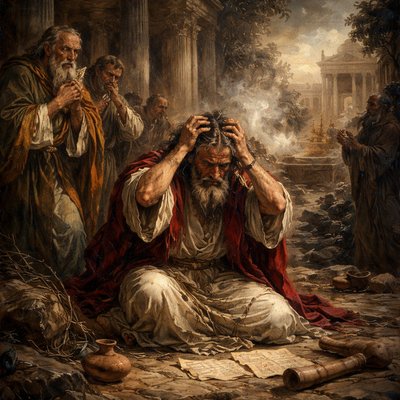
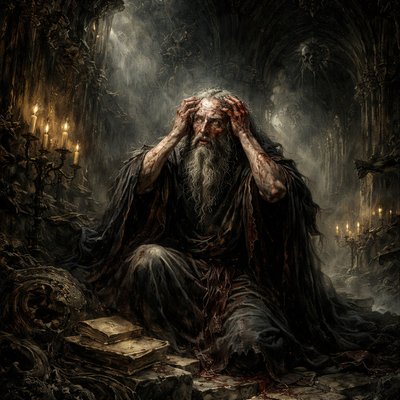
“And When I Heard This Thing, I Rent My Garment And My Mantle, And Plucked Off The Hair Of My Head And Of My Beard, And Sat Down Art

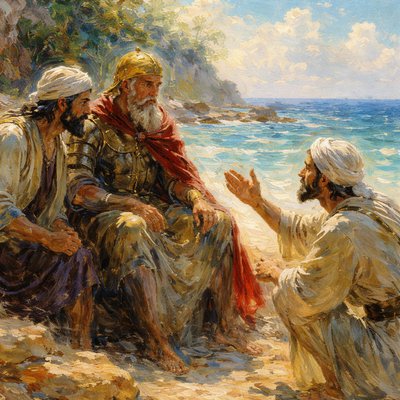
“And when I heard this thing, I rent my garment and my mantle, and plucked off the hair of my head and of my beard, and sat down astonied.” (Ezra 9:3, KJVA)
I have a little shadow that goes in and out with me,
And what can be the use of him is more than
I can see.
He is very, very like me from the heels up to the head;

And I see him jump before me, when I jump into my bed.
The funniest thing about him is the way he likes to grow—
Not at all like proper children, which is always very slow;
For he sometimes shoots up taller like an india-rubber ball,
And he sometimes goes so little that there’s none of him at all.
He hasn’t got a notion of how children ought to play,
And can only make a fool of me in every sort of way.

He stays so close behind me, he’s a coward you can see;
I’d think shame to stick to nursie as that shadow sticks to me!
One morning, very early, before the sun was up,
I rose and found the shining dew on every buttercup;
But my lazy little shadow, like an arrant sleepy-head,
Had stayed at home behind me and was fast asleep in bed.
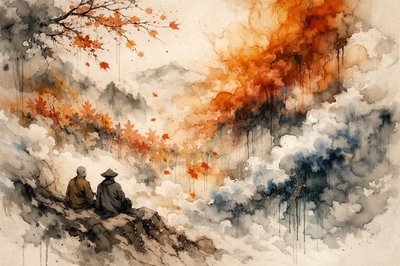
I sat, long ago, on an Asian hill with a Shakya Mundi friend, and watched the autumn leaves fall down from high above, giants in the forest casting off their wakefulness, falling progressively into winter’s long, white sleep. 

“The important thing to know about trees” he said, “is that they are most beautiful in autumn; just before the winter snow.  They live and grow through the entire year just for these brief moments of stunning beauty.  We are like that.” He said, “but we have only one autumn, and a very long winter.”
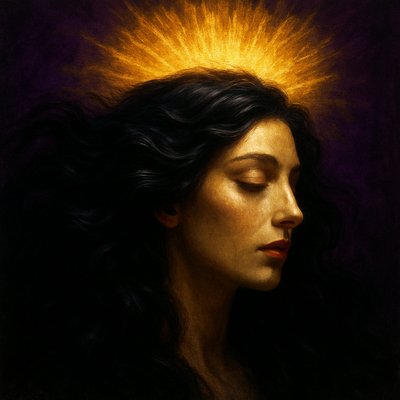
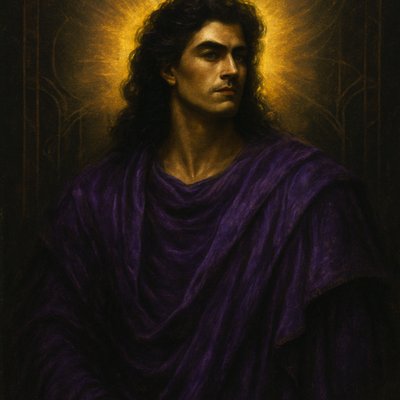
A dramatic, close-up, high-contrast portrait inspired by Song of Songs 5:11. The subject's head is crowned with dramatically wavy hair that is intensely, intensely black—like the glossy feathers of a raven. A radiant, ethereal golden light emanates from the crown of the head, casting a dramatic glow. This golden light is surrounded by a rich, powerful aura of royal deep purple and mysterious black shadow. The portrait should emphasize the texture and depth of the black hair, contrasting sharply with the bright gold and the saturated purple surrounding the subject. The style should be elegant, opulent, and symbolic, focusing purely on the aesthetic of divine beauty and royal power
Understood! Let's refine this to specifically identify the subject as male and ensure the luxurious purple clothing receives significant emphasis, moving beyond just an aura. This will create a truly regal and striking image based on Song of Songs 5:11.

Here's the revised prompt:

AI Art Prompt:

"A powerful and opulent male portrait, dramatically lit and styled, directly inspired by Song of Songs 5:11. The subject's head is crowned with dramatically wavy hair that is intensely, profoundly black—like the glossy, wet feathers of a raven. His gaze is commanding and serene. He is draped in sumptuous, rich royal purple garments made of flowing velvet or silk, featuring intricate drapes and folds that catch the light, emphasizing their regal texture. A radiant, ethereal golden light emanates from around the crown of his head, symbolically representing "purest gold," casting highlights onto his features and the luxurious purple fabric. This golden light and the deep purple of his attire are set against a background of mysterious, yet elegant black shadow and subtle Art Deco-inspired geometric patterns that reinforce the high-contrast aesthetic. The overall mood is one of majestic beauty, divine royalty, and profound symbolic opulence, with the black and purple colors dominating the composition
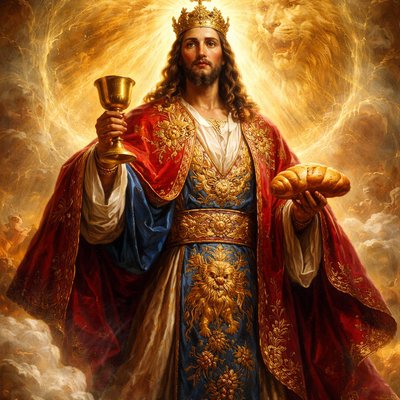
illustration depicting Jesus Christ as the true High Priest after the order of Melchizedek, fulfilling Hebrews 7:11.Standing prominently in radiant, warm golden light, Jesus dominates the foreground. He is clad in majestic, deep royal blue and your signature Tola scarlet priestly robes, heavily embroidered with intricate gold patterns of a roaring lion and flourishing grapevines. He does not wear the traditional Levitical (Aaron) high priestly garments. His expression is regal, compassionate, and powerful.A powerful, luminous golden aura shaped distinctly like a massive, roaring lion's head emanates from behind him, forming a spiritual halo that encompasses him. This symbolizes his dual role as King-Priest from the tribe of Judah. He holds up a golden chalice and a loaf of bread, referring to Melchizedek's offering and the new covenant.
illustration depicting Jesus Christ as the true High Priest after the order of Melchizedek, fulfilling Hebrews 7:11.Standing prominently in radiant, warm golden light, Jesus dominates the foreground. He is clad in majestic, deep royal blue and your signature Tola scarlet priestly robes, heavily embroidered with intricate gold patterns of a roaring lion and flourishing grapevines. He does not wear the traditional Levitical (Aaron) high priestly garments. His expression is regal, compassionate, and powerful.A powerful, luminous golden aura shaped distinctly like a massive, roaring lion's head emanates from behind him, forming a spiritual halo that encompasses him. This symbolizes his dual role as King-Priest from the tribe of Judah. He holds up a golden chalice and a loaf of Unleavened bread, referring to Melchizedek's offering and the new covenant.
A biblical scene of Moses anointing Aaron with oil, inspired by the Book of Exodus. Moses, an older man with a long white beard, is holding a golden goblet and pouring oil directly onto Aaron's uncovered head. Moses is not wearing glasses, and his hands do not touch Aaron's head. Aaron is a man in his 50s with a full beard, dressed in ornate priestly robes with a richly colored ephod and no head covering. The oil flows visibly onto Aaron's head, beard, and garments. The setting is a desert-like environment near the Tabernacle, with woven curtains in the background, illuminated by warm, divine light. The scene reflects a biblical atmosphere with historically accurate clothing and details.
Trees are always trying to reach the sky;
arms stretched out toward heaven
‘til their leaves turn brown and die.
Then will come the winter,
when they stand the icy wind.
waiting for the sun to shine
and spring to come again.

The drama’s reinacted every year:
Leaves come down like clouds of doubt and fear.
While on the ground, the winter passes by,
every tree keeps reaching to the sky.
Trees are always trying to reach the sky;
arms stretched out toward heaven
‘til their leaves turn brown and die.
Then will come the winter,
when they stand the icy wind.
waiting for the sun to shine
and spring to come again.

The drama’s reinacted every year:
Leaves come down like clouds of doubt and fear.
While on the ground, the winter passes by,
every tree keeps reaching to the sky.
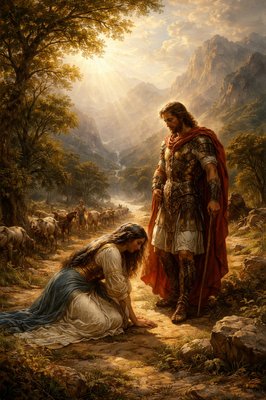
“And when Abigail saw David, she hasted, and lighted off the ass, and fell before David on her face, and bowed herself to the ground, And fell at his feet, and said, Upon me, my lord, upon me let this iniquity be: and let thine handmaid, I pray thee, speak in thine audience, and hear the words of thine handmaid. Let not my lord, I pray thee, regard this man of Belial, even Nabal: for as his name is, so is he; Nabal is his name, and folly is with him: but I thine handmaid saw not the young men of my lord, whom thou didst send.” (1 Samuel 25:23-25, KJVA)
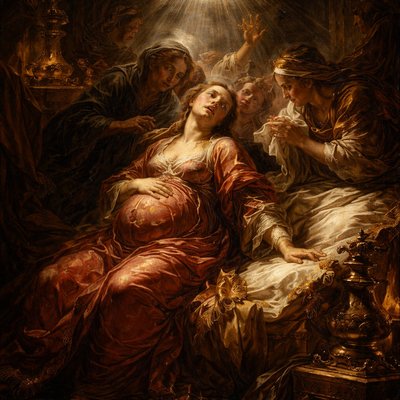
“And his daughter in law, Phinehas' wife, was with child, near to be delivered: and when she heard the tidings that the ark of God was taken, and that her father in law and her husband were dead, she bowed herself and travailed; for her pains came upon her.” (1 Samuel 4:19, KJV)
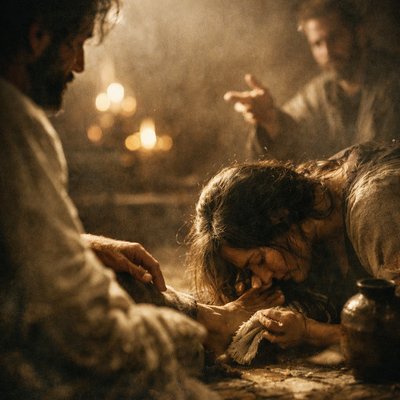
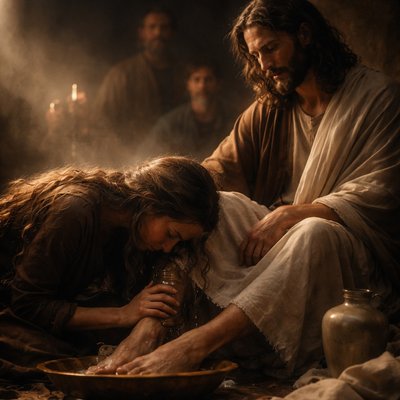
And he turned to the woman, and said unto Simon, Seest thou this woman? I entered into thine house, thou gavest me no water for my feet: but she hath washed my feet with tears, and wiped them with the hairs of her head.
Luke 7:44 (KJV)
And the sons of Jacob returned and came to Tapnach, to take away the spoil of Tapnach, and when they came to Tapnach they heard that the people of Arbelan had gone out to meet them to save the spoil of their brethren, and the sons of Jacob left ten of their men in Tapnach to plunder the city, and they went out toward the people of Arbelan.
And he turned to the woman, and said unto Simon, Seest thou this woman? I entered into thine house, thou gavest me no water for my feet: but she hath washed my feet with tears, and wiped them with the hairs of her head.
Luke 7:44 (KJV)
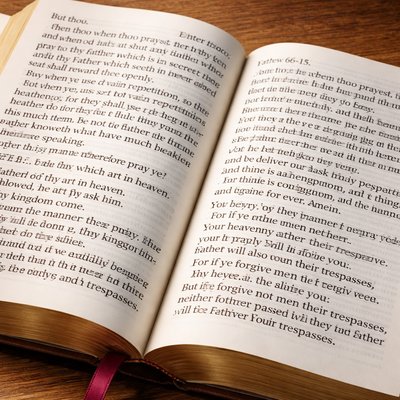
“But thou, when thou prayest, enter into thy closet, and when thou hast shut thy door, pray to thy Father which is in secret; and thy Father which seeth in secret shall reward thee openly. But when ye pray, use not vain repetitions, as the heathen do: for they think that they shall be heard for their much speaking. Be not ye therefore like unto them: for your Father knoweth what things ye have need of, before ye ask him. After this manner therefore pray ye: Our Father which art in heaven, Hallowed be thy name. Thy kingdom come. Thy will be done in earth, as it is in heaven. Give us this day our daily bread. And forgive us our debts, as we forgive our debtors. And lead us not into temptation, but deliver us from evil: For thine is the kingdom, and the power, and the glory, for ever. Amen. For if ye forgive men their trespasses, your heavenly Father will also forgive you: But if ye forgive not men their trespasses, neither will your Father forgive your trespasses.” (Matthew 6:6-15, KJV)
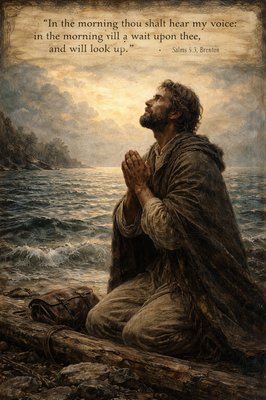
“In the morning thou shalt hear my voice: in the morning will I wait upon thee, and will look up.” (Psalms 5:3, Brenton)
And the sons of Jacob returned and came to Tapnach, to take away the spoil of Tapnach, and when they came to Tapnach they heard that the people of Arbelan had gone out to meet them to save the spoil of their brethren, and the sons of Jacob left ten of their men in Tapnach to plunder the city, and they went out toward the people of Arbelan.
“And his servants came near, and spake unto him, and said, My father, if the prophet had bid thee do some great thing, wouldest thou not have done it? how much rather then, when he saith to thee, Wash, and be clean?” (2 Kings 5:13, KJV)
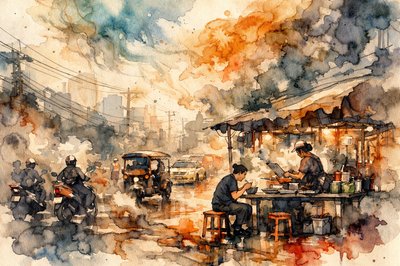
Southeast Asia.  Modern day.  This morning the sound of traffic in the street, 
scooters and tuk-tuks, taxis and trucks, was so loud I couldn’t hear my dream.  
So I turned it off and went dowstairs.
Taking in diesel fumes ‘til it hurt to breathe, I found a hawker-stall and ate.
It’s 100 degrees already; soon the rain will come.
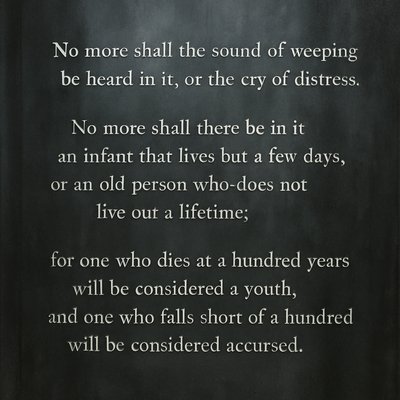
no more shall the sound of weeping be heard in it,
or the cry of distress.

No more shall there be in it
an infant that lives but a few days,
or an old person who does not live out a lifetime;

for one who dies at a hundred years will be considered a youth,
and one who falls short of a hundred will be considered accursed.

They shall build houses and inhabit them;
they shall plant vineyards and eat their fruit.
This day, though, I hiked another autumn wood.  Eastern Europe ancient; overgrown.  So thick the view was dark at just a few feet off the path.  All red and yellow; orange and brown, a million trees, each one in blazing preparation for long, frozen winter.  I cannot but recall my friend’s words, lasting long, though he did not, and the instant truth that follows.  Looking upward at the fiery canopy, matched against the bright cerulean sky beyond, I embrace autumn!  Winter surely comes one day, but spring beyond.  I have a winter to prepare for, but it is not yet.
“For the end, a Psalm of David, concerning her that inherits. Hearken to my words, O Lord, attend to my cry. Attend to the voice of my supplication, my King, and my God: for to thee, O Lord, will I pray. In the morning thou shalt hear my voice: in the morning will I wait upon thee, and will look up.” (Psalms 5:1-3, Brenton)
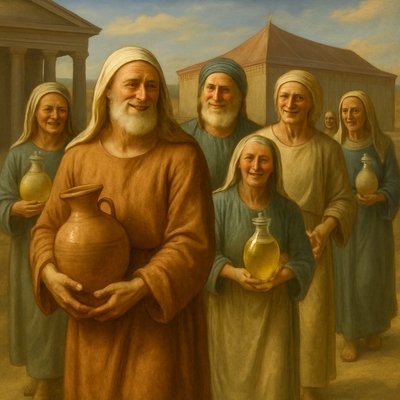
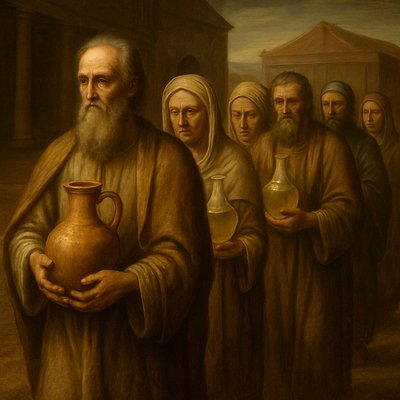
Renaissance Painting Art Style, a joyful and purposeful group of ancient Israelites, including smiling elderly men and women, walking with a sense of contentment and humble pride. Each carries beautifully crafted clay jars or alabaster flasks filled with pure, clear, golden oil of pressed olives. The oil shimmers with an ethereal clarity within the translucent vessels. They are making their way along a sunny path in the Tabernacle courtyard, with glimpses of the Tabernacle structure in the background. The light is bright and warm, illuminating their radiant faces and highlighting the honor and devotion in their offering. Focus on the rich textures of their simple linen garments, the liquid clarity and glow of the olive oil, and the celebratory, devotional atmosphere of their task.
Renaissance Painting Art Style, a solemn and reverent group of ancient Israelites, including elderly men and women, walking purposefully. Each carries beautifully crafted clay jars or alabaster flasks filled with pure, clear, golden oil of pressed olives. The oil shimmers with an ethereal clarity within the translucent vessels. They are making their way along a dusty path in the Tabernacle courtyard, with glimpses of the Tabernacle structure in the background. The light is soft and warm, casting gentle shadows and highlighting the dignified expressions on their faces and the humble, yet sacred, nature of their offering. Focus on the rich textures of their simple linen garments, the liquid clarity and glow of the olive oil, and the devotional atmosphere of their task.
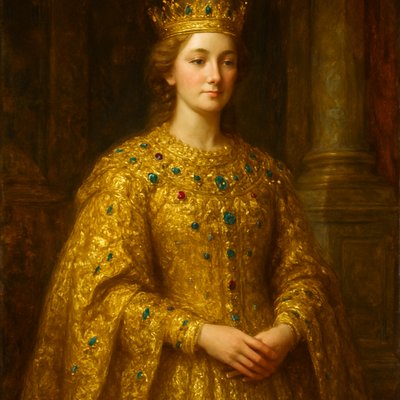
My sincerest apologies that the Queen appeared angry! That's completely contrary to the "serene and noble expression" we aimed for and the dignity implied by Psalm 45. We need to explicitly reinforce a gentler, more gracious demeanor.

You're also right to focus on the gold's shine. We can definitely enhance that.

To address both issues—the expression and the gold's luminosity—we'll make two key adjustments:

    Refine Expression: Use stronger words for a gentle, majestic, and perhaps beatific expression.

    Enhance Gold's Shine: Introduce Baroque Art Style as a secondary influence. Baroque is famous for its dramatic light, intense gleam on metals and jewels, and dynamic richness, which will make the gold truly radiant. It pairs beautifully with Oil Painting for opulence.

Revised Prompt for "Queen in Gold of Ophir - Gentle Expression & Shining Gold"

    Oil Painting Art Style, Baroque Art Style, a breathtakingly majestic and regal portrait of "The Queen in Gold of Ophir," inspired by Psalm 45. The Queen stands with impeccable grace and royal dignity, her posture radiating quiet power. Her expression is serene, gentle, and profoundly gracious, with a subtle, knowing smile, reflecting noble peace. She is adorned in an exquisitely elaborate gown woven entirely from the finest, purest gold of Ophir, which shimmers and gleams with unparalleled brilliance, catching every ray of light. Her attire is intricately embellished with countless precious jewels—sapphires, rubies, and emeralds—each sparkling intensely with Baroque dynamism. A delicate yet regal golden crown, also ablaze with light, rests upon her head. The setting is a grand, opulent royal palace chamber, with rich tapestries and polished marble, bathed in dramatic, warm, golden ambient light that creates striking highlights and deep, luxurious shadows, making her and her lavish garments glow. Focus on the unparalleled brilliance, texture, and radiant shine of her golden gown, the intense sparkle of her jewels, her majestic yet gentle presence, and the luxurious, sacred atmosphere befitting a queen in God's presence.
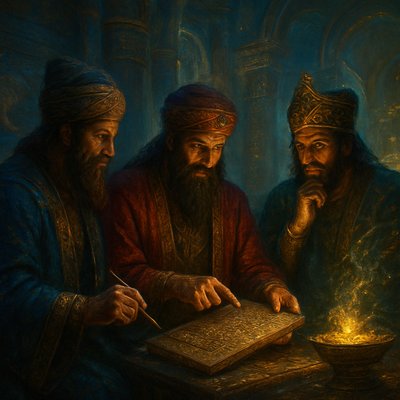
A dramatic, richly detailed scene in the ancient Babylonian royal court. In the foreground, three wise and esteemed Babylonian court magicians (Chaldeans/astrologers) are gathered around a central figure, possibly the king, or intently studying an inscribed clay tablet. They are dressed in opulent, finely woven robes of deep blues, reds, and gold, with elaborate turbans or headwear. Their long, meticulously styled beards and hair indicate their status and wisdom. One magician holds a stylus, another points to intricate cuneiform script on a clay tablet, and the third gazes thoughtfully, perhaps at a celestial chart or into a symbolic brazier. The background reveals the grand, awe-inspiring architecture of the Babylonian palace, with glazed brick walls adorned with depictions of mythical creatures (like the Ishtar Gate lions) and massive, ornate columns. The atmosphere is one of profound intellectual pursuit, ancient wisdom, and mystical interpretation under the watchful eyes of the king. epic fantasy art, cinematic lighting, ultra-detailed, dramatic shadows, mystical glow"
A wide-angle, epic and majestic fantasy-realism style illustration for ArtStyles, based on Psalm 92:3, capturing a grand, celestial-inspired musician at dawn. In a mystical, open-air temple balcony under a starry sky with the constellation Aquarius prominently visible as a shimmering water-bearer icon pouring water, a majestic figure with a flowing beard and blue and silver robes (symbolizing Aquarius and music) is seated. Before the figure are two elaborate instruments.
One is a unique, gilded and carved wooden harp with a distinct triangular frame, which is explicitly and clearly shown with exactly ten distinct, visible, and countable strings stretched taut. The strings are glistening with cool, deep blue and golden light as the musician plucks them. Nearby, a beautiful, multi-stringed wooden psaltery (a trapezoidal zither-like instrument) sits on a stand, also being played by the other hand.
As the musician plays, glowing streams of illuminated, cascading blue and indigo water, visualized as physical music, emanate directly from the vibrating strings of both the ten-string harp and the psaltery. This water-music does not fall as rain, but flows down and out in majestic, powerful, yet gentle streams, just like an outpour from an Aquarian vessel. The water-music pools into a crystal-clear basin below the instruments, and then cascades over a series of carved crystal steps, spreading out across the temple floor and into a valley, illustrating the sound going out. The "solemn sound" is visualized through the deep, rich colors of the flowing water and the light within it, and the steady, powerful, and calming nature of the flow. The atmosphere is solemn, peaceful, and epic. The surrounding architecture is ancient and detailed with astrological symbols of stars and flowing water. In the distant valley, a magnificent city and a winding river are touched by the flowing water-music. No text or labels are on screen. The lighting is early morning gold and blue. Detailed fabric textures and wood grain are visible.
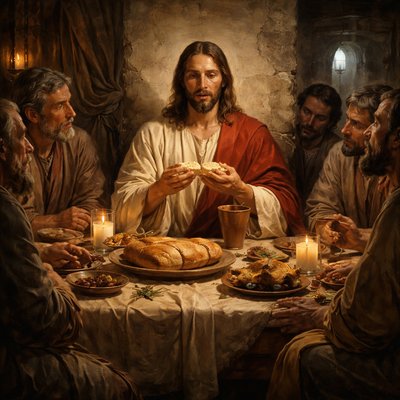
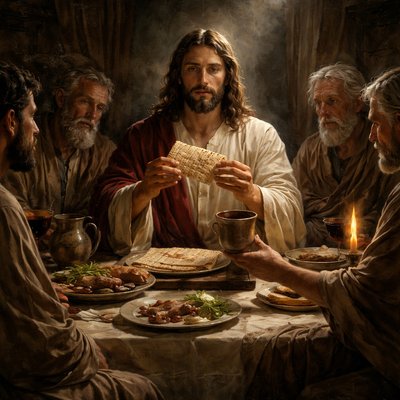
“And as they were eating, Jesus took bread, and blessed it, and brake it, and gave it to the disciples, and said, Take, eat; this is my body. And he took the cup, and gave thanks, and gave it to them, saying, Drink ye all of it; For this is my blood of the new testament, which is shed for many for the remission of sins. But I say unto you, I will not drink henceforth of this fruit of the vine, until that day when I drink it new with you in my Father's kingdom.” (Matthew 26:26-29, KJV)
“And as they were eating, Jesus took bread, and blessed it, and brake it, and gave it to the disciples, and said, Take, eat; this is my body. And he took the cup, and gave thanks, and gave it to them, saying, Drink ye all of it; For this is my blood of the new testament, which is shed for many for the remission of sins. But I say unto you, I will not drink henceforth of this fruit of the vine, until that day when I drink it new with you in my Father's kingdom.” (Matthew 26:26-29, KJV) Use Matzo style bread
Southeast Asia.  Modern day.  Nearer to the city now, the bus thumps and bumps to a slower pace.
Grinding gears mark spaces between dirty children, playing obliviously in the road.
Neither village nor metropolis, outskirts have no identity:
Just a blurry line of encroachment;
a temporary half-life on the way to something more.

Dust springs up from the tires of trucks headed both ways on the road.
A little girl stands crying in a mud puddle; her brothers laughing from the sides.
She has to learn rejection to participate in this brutal, belonging dance.
A little life, and a little death
for a product truly worthy of its name: a good woman is hard to find.
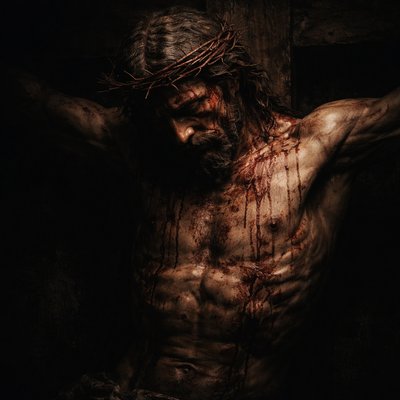
“Yet it pleased the LORD to bruise him; he hath put him to grief: when thou shalt make his soul an offering for sin, he shall see his seed, he shall prolong his days, and the pleasure of the LORD shall prosper in his hand.” (Isaiah 53:10, KJV)
“But thou, when thou prayest, enter into thy closet, and when thou hast shut thy door, pray to thy Father which is in secret; and thy Father which seeth in secret shall reward thee openly. But when ye pray, use not vain repetitions, as the heathen do: for they think that they shall be heard for their much speaking. Be not ye therefore like unto them: for your Father knoweth what things ye have need of, before ye ask him. After this manner therefore pray ye: Our Father which art in heaven, Hallowed be thy name. Thy kingdom come. Thy will be done in earth, as it is in heaven. Give us this day our daily bread. And forgive us our debts, as we forgive our debtors. And lead us not into temptation, but deliver us from evil: For thine is the kingdom, and the power, and the glory, for ever. Amen. For if ye forgive men their trespasses, your heavenly Father will also forgive you: But if ye forgive not men their trespasses, neither will your Father forgive your trespasses.” (Matthew 6:6-15, KJV)
An ethereal and surreal depiction of a figure in a deep dream state, gracefully walking into the heart of the Mountain House constellation, also known as Libra. The figure is a lady with long, flowing red hair, shimmering full length robe  radiating star light. She is stepping off a softly glowing, dream-like pathway or ethereal bridge that extends from a misty, dreamscape foreground into the vastness of space.

    The Mountain House (Libra) constellation is not just stars but appears as a majestic, floating celestial architecture – perhaps as ancient, star-dusted pillars, glowing celestial doorways forming a 'mountain house' structure, built from nebulae and starlight. Within this constellation, gentle cosmic dust, shimmering gas clouds, and distant galaxies are visible, creating a sense of infinite depth.

    The dominant colors are soft blues, purples, and deep indigos of space, interwoven with golden and silver light emanating from the stars and the lady's luminous form and radiant red hair. There's a profound sense of peace, wonder, and weightlessness. The atmosphere is serene and magical, conveying the feeling of transcending physical reality and entering a realm of cosmic balance and ancient wisdom. The artistic style is highly fantastical and painterly, with a focus on glowing effects, subtle transparency, and a dreamlike composition.
An ethereal and surreal depiction of a figure in a deep dream state, gracefully walking into the heart of the Mountain House constellation, also known as Libra. The figure is a lady with long, flowing red hair, shimmering full length dress radiating star light, suggesting her dream presence. She is stepping off a softly glowing, dream-like pathway or ethereal bridge that extends from a misty, dreamscape foreground into the vastness of space.

    The Mountain House (Libra) constellation is not just stars but appears as a majestic, floating celestial architecture – perhaps as ancient, star-dusted pillars, glowing celestial doorways forming a 'mountain house' structure, built from nebulae and starlight. Within this constellation, gentle cosmic dust, shimmering gas clouds, and distant galaxies are visible, creating a sense of infinite depth.

    The dominant colors are soft blues, purples, and deep indigos of space, interwoven with golden and silver light emanating from the stars and the lady's luminous form and radiant red hair. There's a profound sense of peace, wonder, and weightlessness. The atmosphere is serene and magical, conveying the feeling of transcending physical reality and entering a realm of cosmic balance and ancient wisdom. The artistic style is highly fantastical and painterly, with a focus on glowing effects, subtle transparency, and a dreamlike composition.