“And Unto The Angel Of The Church Of The Laodiceans Write; These Things Saith The Amen, The Faithful And True Witness, The Art

Desert installation playing with light and shadow in the art style of Land Art --v 6.1
Deliberately provocative and illogical painting in the art style of Dada --v 6.1
Performance exploring the relationship between body and space in the art style of Body Art --v 6.1
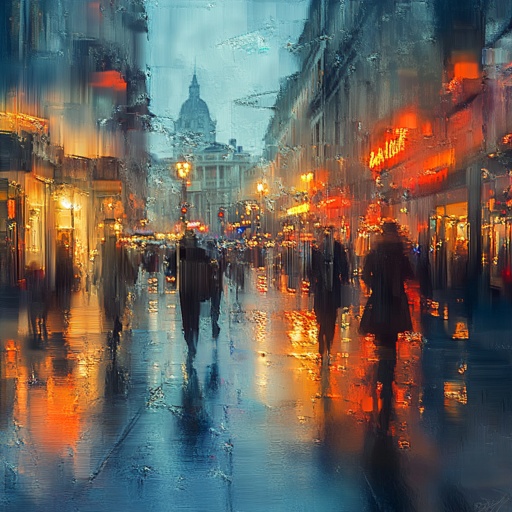
City street scene with blurred figures and rain in the art style of Impressionism --v 6.1
Religious scene with dramatic lighting and gesture in the art style of Academic Art --v 6.1
Satirical piece mocking societal norms and values in the art style of Transgressive Art --v 6.1
Sublime waterfall scene with rainbows and mist in the art style of Hudson River School --v 6.1
Minimalist sculpture emphasizing form and material in the art style of Modernism --v 6.1
Landscape with classical ruins and noble figures in the art style of Neoclassicism --v 6.1
Historical scene with Roman architecture and togas in the art style of Neoclassicism --v 6.1
Ornate theater entrance with neon lights and bold typography in the art style of Art Deco --v 6.1
Portrait emphasizing beauty and sensual qualities in the art style of Aestheticism --v 6.1
Portrait with elaborate costume and busy background in the art style of Maximalism --v 6.1
Interior scene with ambiguous narrative and mood in the art style of New European Painting --v 6.1
Text-based artwork exploring language and meaning in the art style of Neo-Conceptualism --v 6.1
Educational theme promoting literacy and knowledge in the art style of Mexican Muralism --v 6.1
Emotive landscape with thick impasto and vivid hues in the art style of Neo-Expressionism --v 6.1
Monochromatic artwork exploring texture and form in the art style of Abstract Expressionism --v 6.1
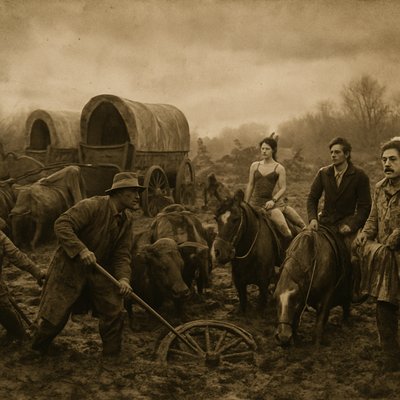
A cinematic, realistic image, set in the desolate, muddy expanse of the Texas Cross Timbers in 1840. The scene captures the return leg of the Chihuahua Traders Trail. Several heavy, wooden Conestoga wagons are hopelessly mired in deep, dark mud, pulled by straining, distressed oxen and mules. Merchants and teamsters in rugged, damp frontier clothing are struggling, using poles and ropes to try and free a wagon wheel.

In stark contrast, a group of bewildered and exasperated American equestrian circus performers, dressed in bright, slightly tattered stage costumes (e.g., a sequined acrobat, a rider in a velvet jacket, a clown attempting to keep his white makeup clean), stand nearby. They are trying to keep their fine horses and props (perhaps a small, colorful tent piece or a drum) out of the worst of the mire. The sky is overcast and oppressive, reflecting the damp, miserable conditions. The overall lighting should be dark and moody, emphasizing the frustrating five-week delay. Wide-angle shot, photorealistic quality, historical accuracy, dark realism.
Piece with elaborate letterforms and background in the art style of Graffiti --v 6.1
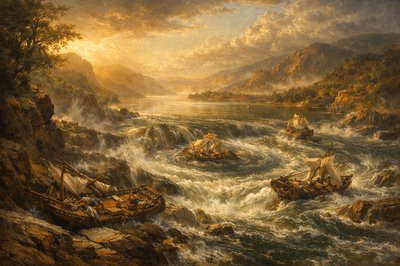
Now, those captains must learn what the river will do
when it makes that great turn out of sight.
How it dashes them up on the rocks of the shore
How it spins to the left and the right.
It beats them and breaks them and crushes their pride
Leaves them dizzy and sick and all jumbled inside
‘til they’ve all but forgotten that glorious ride
lying flat on their deck in the sun.
There they lie, drying out in the sun.

As you round the point where the river was bent
and survey the great wideness ahead,
you can see all those captains alone on their decks,
beat and broken and very near dead.
Then the current takes hold and there’s naught you can do
as it drags you down into its maw.
Headed straight for those rocks, you make ready to crash
but at last, you rise up, roll and yaw.

Going back and away, then forward again,
fearing each time, the rocks will prevail!
You’re trapped in a cycling, circling tide,
in an eddy withstanding a gale.
But each time you circle that great whirling tide
and you’ve not hit the rocks or been thrown to the side
and you’re kept from the falls, cascading and wide,
for the eddy’s small mercy give praise.
Give the merciful currents your praise!
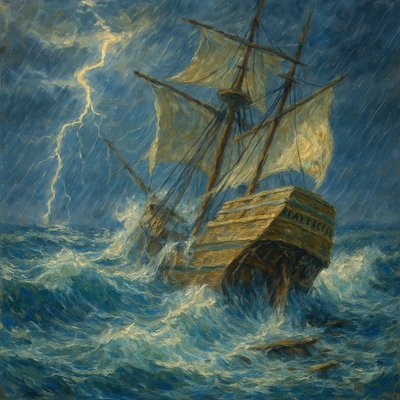
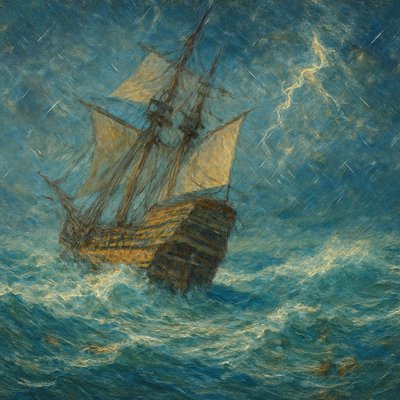
A wooden sailing ship, the Mayflower, on a tempestuous open sea under a dark, stormy sky with lightning. The ship is listing dramatically amidst huge, crashing waves. Rain lashes down. The stern of the ship shows significant damage, with splintered wood and water pouring into the broken transom. Debris from the ship's stern is visible in the churning water around it. The overall mood is one of peril and a desperate struggle against the elements.
Ancient celestial vision: the blazing sun unites with a translucent moon, the moon rendered almost invisible, swallowed by the sun's overwhelming radiance yet delicately outlined as a glass, beams of divine light pouring through, the moon spiritual symbolism of hidden union and concealed intimacy, ethereal golden and silver tones, sun and moon the same size, golden rays enveloping a dark transparent moon.
Ancient celestial vision: the blazing sun unites with a completely translucent moon, the moon rendered invisible except for a silvery faint outline, swallowed by the sun's overwhelming radiance yet delicately outlined as a glass, beams of divine light pouring through, the moon spiritual symbolism of hidden union and concealed intimacy, ethereal golden and silver tones, sun and moon the same size, golden rays enveloping a transparent moon. Moon is ethereal and the sky is blue.

My sincerest apologies that the Queen appeared angry! That's completely contrary to the "serene and noble expression" we aimed for and the dignity implied by Psalm 45. We need to explicitly reinforce a gentler, more gracious demeanor.

You're also right to focus on the gold's shine. We can definitely enhance that.

To address both issues—the expression and the gold's luminosity—we'll make two key adjustments:

    Refine Expression: Use stronger words for a gentle, majestic, and perhaps beatific expression.

    Enhance Gold's Shine: Introduce Baroque Art Style as a secondary influence. Baroque is famous for its dramatic light, intense gleam on metals and jewels, and dynamic richness, which will make the gold truly radiant. It pairs beautifully with Oil Painting for opulence.

Revised Prompt for "Queen in Gold of Ophir - Gentle Expression & Shining Gold"

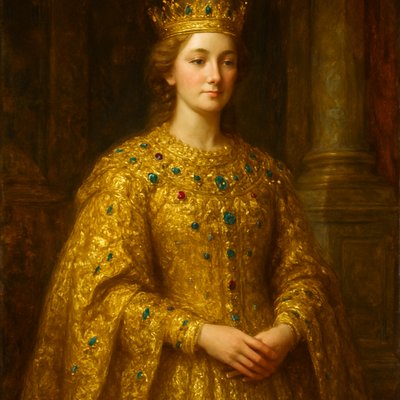
    Oil Painting Art Style, Baroque Art Style, a breathtakingly majestic and regal portrait of "The Queen in Gold of Ophir," inspired by Psalm 45. The Queen stands with impeccable grace and royal dignity, her posture radiating quiet power. Her expression is serene, gentle, and profoundly gracious, with a subtle, knowing smile, reflecting noble peace. She is adorned in an exquisitely elaborate gown woven entirely from the finest, purest gold of Ophir, which shimmers and gleams with unparalleled brilliance, catching every ray of light. Her attire is intricately embellished with countless precious jewels—sapphires, rubies, and emeralds—each sparkling intensely with Baroque dynamism. A delicate yet regal golden crown, also ablaze with light, rests upon her head. The setting is a grand, opulent royal palace chamber, with rich tapestries and polished marble, bathed in dramatic, warm, golden ambient light that creates striking highlights and deep, luxurious shadows, making her and her lavish garments glow. Focus on the unparalleled brilliance, texture, and radiant shine of her golden gown, the intense sparkle of her jewels, her majestic yet gentle presence, and the luxurious, sacred atmosphere befitting a queen in God's presence.
Portrait blending realistic and abstract techniques in the art style of Transavantgarde --v 6.1