Triptych Addressing Personal And Collective History In The Art Style Of New European Painting V 6.1 Art

Group composition addressing Australian cultural diversity in the art style of Antipodeans --v 6.1
Shock-value installation addressing controversial themes in the art style of Transgressive Art --v 6.1
Politically charged action addressing social issues in the art style of Performance Art --v 6.1
Large-scale mural depicting national history in the art style of Mexican Muralism --v 6.1
Conceptual piece addressing body image and identity in the art style of Body Art --v 6.1
Obsessive text-based artwork conveying personal philosophy in the art style of Outsider Art --v 6.1
Portrait emphasizing the artist's personal vision over conceptual ideas in the art style of Stuckism --v 6.1
Obsessive text-based artwork conveying personal philosophy in the art style of Outsider Art --v 6.1
Portrait emphasizing the artist's personal vision over conceptual ideas in the art style of Stuckism --v 6.1
Alternate history book cover featuring anachronistic inventions in the art style of Steampunk --v 6.1
Naive-style painting of local festivities in the art style of Folk Art --v 6.1
Video art remixing found footage into new narrative in the art style of Appropriation Art --v 6.1
Fractal-based digital painting in the art style of Generative Art --v 6.1
Nocturne painting with soft, muted colors in the art style of Tonalism --v 6.1
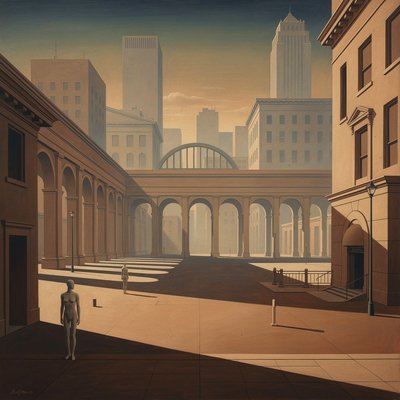
New York City
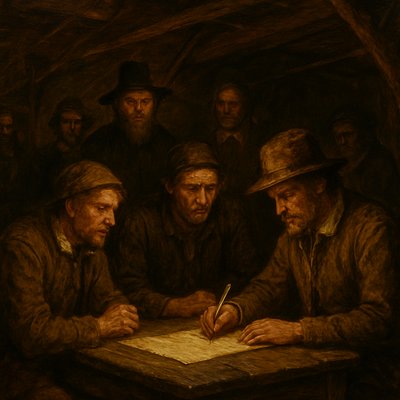
A historically accurate and atmospheric depiction of the signing of the Mayflower Compact aboard the ship in November 1620. The scene is set in the dimly lit, cramped cabin of the Mayflower, with the ship's timbers and rigging subtly visible, conveying the challenging conditions of the voyage. A simple table or chest serves as the signing surface. The primary focus is on a small group of the last individuals signing the document: specifically, the indentured servants (or 'strangers' not directly part of the Separatist congregation) approaching or at the table. Their expressions show a mix of weary determination, understanding of the necessity, and perhaps a hint of quiet apprehension or resignation to this new social contract, given their status. They are dressed in the plain, practical clothing typical of 17th-century commoners and laborers. Figures of prominent Pilgrims or 'Saints' (like William Bradford or John Carver) are visible in the background, observing the proceedings with a sense of gravity and leadership, but they are not the central focus. The lighting is low and warm, perhaps from a lantern, creating a chiaroscuro effect that highlights the faces of the signers. The atmosphere conveys the momentousness of the act under difficult circumstances, the diverse composition of the group, and the early seeds of self-governance in a new world. The artistic style is a realistic, historically detailed oil painting, capturing the solemnity and human element of this pivotal historical moment."