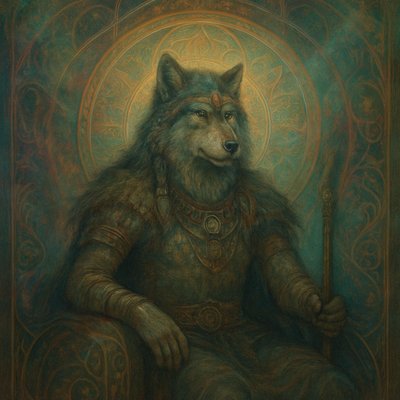
The Central Figure Should Display The Ferocity Of A Wolf In Motion, But The Discipline Of A True Leader In Rest. High Detail Art

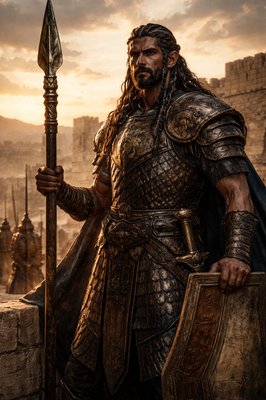
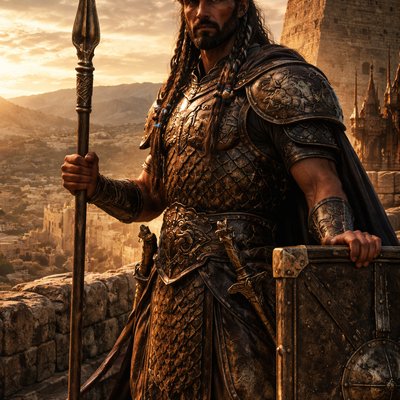
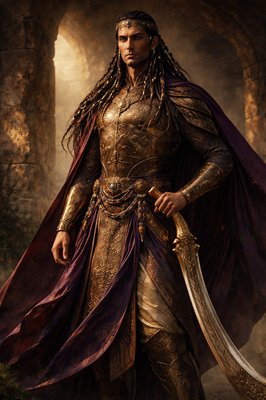
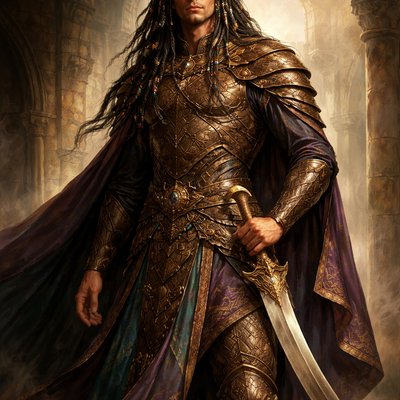
The central figure should display the ferocity of a wolf in motion, but the discipline of a true leader in rest. High-detail fantasy illustration, cinematic lighting, tribal warrior aesthetic, emphasis on the duality of conquest and provision.
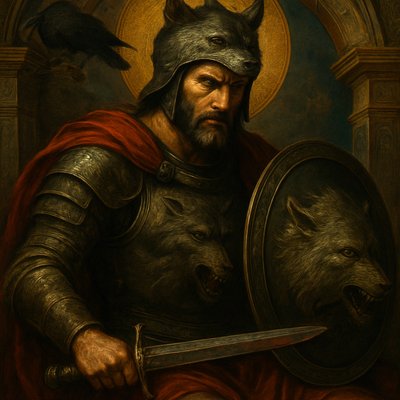
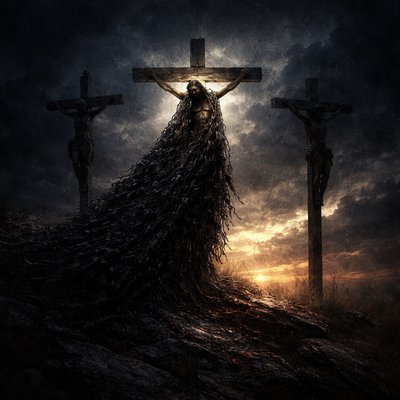
Benjamin shall ravin as a wolf: in the morning he shall devour the prey, and at night he shall divide the spoil.
(Genesis 49:27 KJV)A powerful and dynamic illustration of a figure embodying the Tribe of Benjamin, inspired by the 'ravenous wolf' prophecy. The figure should be an intensely focused, battle-hardened warrior, perhaps with a stylized wolf motif on his armor or shield.The central figure should display the ferocity of a wolf in motion, but the discipline of a true leader in rest. High-detail fantasy illustration, cinematic lighting, tribal warrior aesthetic, emphasis on the duality of conquest and provision.
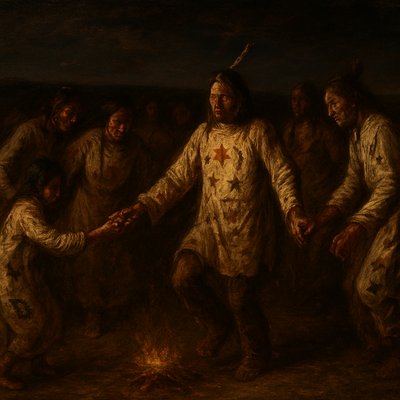
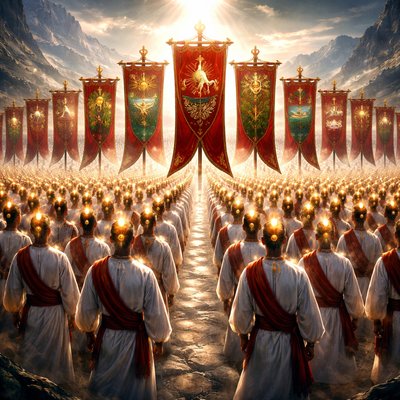
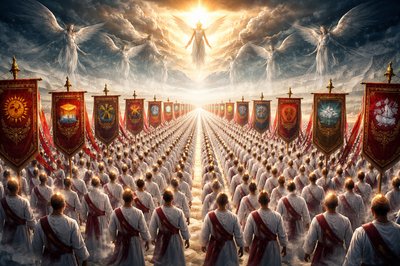
"A historically accurate depiction of a Ghost Dance, focusing on the late 19th-century context, specifically around 1890-1891. The scene shows Lakota (Sioux) or Northern Paiute people (specify one or include elements of both, but avoid anachronisms) participating in the ceremony.

Setting: A vast, open prairie or high desert landscape, under an expansive sky. The time of day could be dusk or night, with a prominent moon or stars, or a bright, clear day. Avoid overtly spiritual or ethereal elements like floating spirits unless explicitly requested for a later, more symbolic iteration. The focus should be on the earthly ceremony.

Participants: A circle of men, women, and children, hand-in-hand, moving in a slow, rhythmic shuffle or circular motion. Their faces show a mixture of devotion, hope, and determination. Some may have expressions of trance or deep concentration.

Attire:

    Ghost Dance Shirts/Dresses: Emphasize the unique Ghost Dance shirts and dresses, which were typically made of muslin or canvas. These garments should feature painted designs such as stars, crescents, birds (especially eagles or crows), buffalo, human figures, or crosses. The designs should appear hand-painted, not mass-produced.

    Hair and Adornments: Participants should have braided hair or wear it long. Some may wear feathers (e.g., eagle or hawk feathers) in their hair. Minimal traditional adornments, as the focus was often on the Ghost Dance shirt itself. Avoid overly elaborate or Hollywood-esque depictions of war bonnets unless relevant to a specific individual and context.

    Footwear: Moccasins or bare feet.

Action/Atmosphere:

    The dancers are moving in a counter-clockwise circle, with a central figure or a small group often leading.

    The overall mood is one of earnest prayer and communal spiritual effort. The dance should convey a sense of hope for renewal and the return of the old ways, rather than aggression or despair.

    There might be a central pole or small fire as a focal point, around which the dance takes place.

    Avoid any signs of direct conflict or violence; the Ghost Dance itself was a non-violent spiritual movement.

Specific Considerations for Accuracy:

    Wovoka's Influence: The teachings of Wovoka (the Northern Paiute prophet) emphasized peace, hard work, and the return of the buffalo and deceased ancestors. The scene should subtly reflect this hopeful, redemptive spirit.

    Regional Variations: If focusing on Lakota, consider their specific interpretations, which sometimes included more imagery related to their warrior traditions on the shirts, but still within the peaceful framework of the dance.
    Respectful Portrayal: Ensure the depiction is respectful and avoids any stereotypical or caricatured representations of Indigenous people. Focus on their human dignity and spiritual sincerity.
Seabiscuit vs. War Admiral (The Gaze)

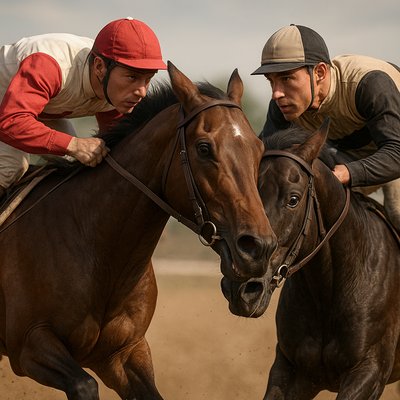
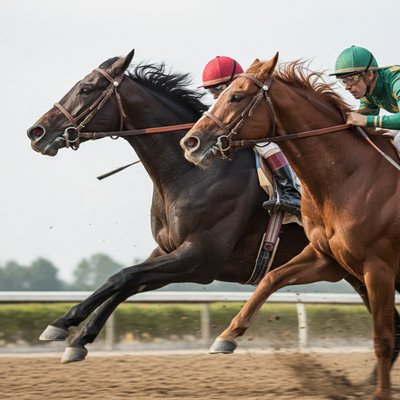
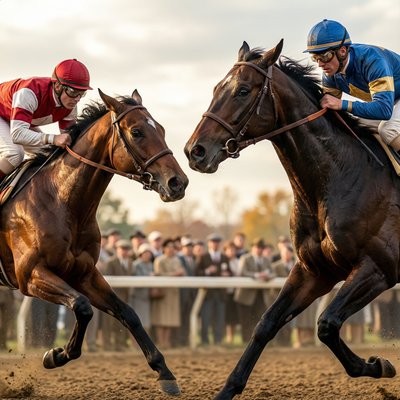
    A hyper-realistic, high-resolution photograph capturing the apex of the 1938 match race between Seabiscuit and War Admiral.

    Focus: The composition is tight, showing both horses running neck-and-neck, dominating the frame. The camera angle is side-on and slightly low, emphasizing their size and muscle. The critical focus is on the space between the horses' heads as they are running stride for stride.

    Details: War Admiral (the dark bay) should show determination and slight surprise, with his head stretched out. Seabiscuit (the smaller bay) should display his characteristic "game" look—intense, focused, and seemingly looking directly into War Admiral's eyes (or toward his rival). Both jockeys (Red Pollard or George Woolf for Seabiscuit; Charles Kurtsinger for War Admiral) are visible, leaning low and urging their mounts on.

    Atmosphere: The light should be bright but slightly diffused, suggesting an autumn afternoon at Pimlico. Dust and track debris are kicked up behind them, blurred slightly by the horses' tremendous speed. The image must convey the raw power, intense rivalry, and the exact moment when the smaller horse asserts his dominance.

    Style: Cinematic photography, realistic texture, sharp focus on the horses' eyes and muscle definition.
Seabiscuit vs. War Admiral (The Gaze)

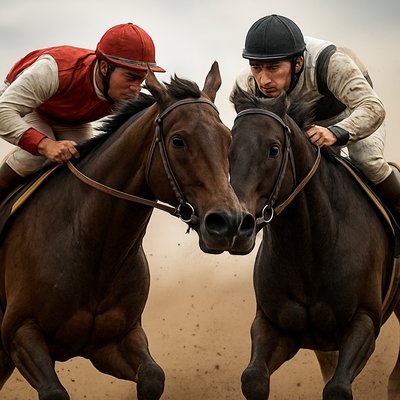
    A hyper-realistic, high-resolution photograph capturing the apex of the 1938 match race between Seabiscuit and War Admiral.

    Focus: The composition is tight, showing both horses running neck-and-neck, dominating the frame. The camera angle is side-on and slightly low, emphasizing their size and muscle. The critical focus is on the space between the horses' heads as they are running stride for stride.

    Details: War Admiral (the dark bay) should show determination and slight surprise, with his head stretched out. Seabiscuit (the smaller bay) should display his characteristic "game" look—intense, focused, and seemingly looking directly into War Admiral's eyes (or toward his rival). Both jockeys (Red Pollard or George Woolf for Seabiscuit; Charles Kurtsinger for War Admiral) are visible, leaning low and urging their mounts on.

    Atmosphere: The light should be bright but slightly diffused, suggesting an autumn afternoon at Pimlico. Dust and track debris are kicked up behind them, blurred slightly by the horses' tremendous speed. The image must convey the raw power, intense rivalry, and the exact moment when the smaller horse asserts his dominance.

    Style: Cinematic photography, realistic texture, sharp focus on the horses' eyes and muscle definition.
Seabiscuit vs. War Admiral (The Gaze)

    A hyper-realistic, high-resolution photograph capturing the apex of the 1938 match race between Seabiscuit and War Admiral.

    Focus: The composition is tight, showing both horses running neck-and-neck, dominating the frame. The camera angle is side-on and slightly low, emphasizing their size and muscle. The critical focus is on the space between the horses' heads as they are running stride for stride.

    Details: War Admiral (the dark bay) should show determination and slight surprise, with his head stretched out. Seabiscuit (the smaller bay) should display his characteristic "game" look—intense, focused, and seemingly looking directly into War Admiral's eyes (or toward his rival). Both jockeys (Red Pollard or George Woolf for Seabiscuit; Charles Kurtsinger for War Admiral) are visible, leaning low and urging their mounts on.

    Atmosphere: The light should be bright but slightly diffused, suggesting an autumn afternoon at Pimlico. Dust and track debris are kicked up behind them, blurred slightly by the horses' tremendous speed. The image must convey the raw power, intense rivalry, and the exact moment when the smaller horse asserts his dominance.

    Style: Cinematic photography, realistic texture, sharp focus on the horses' eyes and muscle definition.
Seabiscuit vs. War Admiral (The Gaze)

    A hyper-realistic, high-resolution photograph capturing the apex of the 1938 match race between Seabiscuit and War Admiral.

    Focus: The composition is tight, showing both horses running neck-and-neck, dominating the frame. The camera angle is side-on and slightly low, emphasizing their size and muscle. The critical focus is on the space between the horses' heads as they are running stride for stride.

    Details: War Admiral (the dark bay) should show determination and slight surprise, with his head stretched out. Seabiscuit (the smaller bay) should display his characteristic "game" look—intense, focused, and seemingly looking directly into War Admiral's eyes (or toward his rival). Both jockeys (Red Pollard or George Woolf for Seabiscuit; Charles Kurtsinger for War Admiral) are visible, leaning low and urging their mounts on.

    Atmosphere: The light should be bright but slightly diffused, suggesting an autumn afternoon at Pimlico. Dust and track debris are kicked up behind them, blurred slightly by the horses' tremendous speed. The image must convey the raw power, intense rivalry, and the exact moment when the smaller horse asserts his dominance.

    Style: Cinematic photography, realistic texture, sharp focus on the horses' eyes and muscle definition.
bicyle resting against a wall
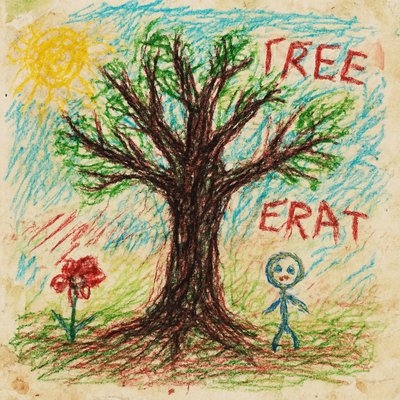
a tree in nature
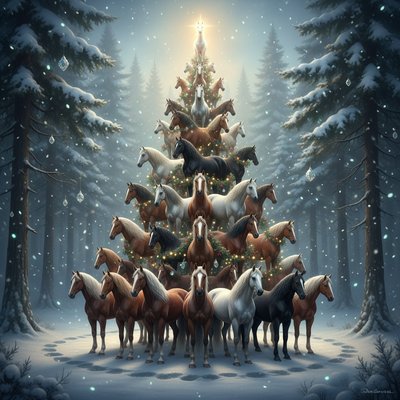
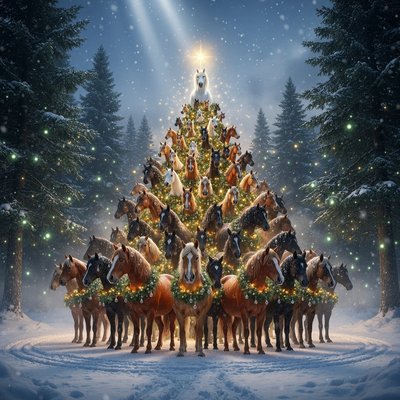
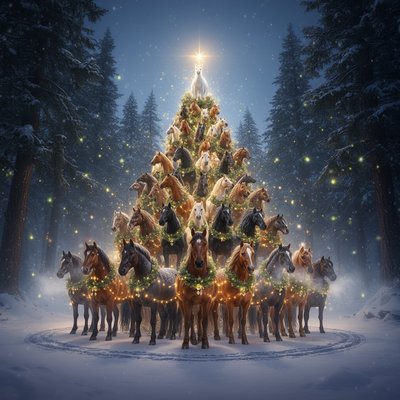
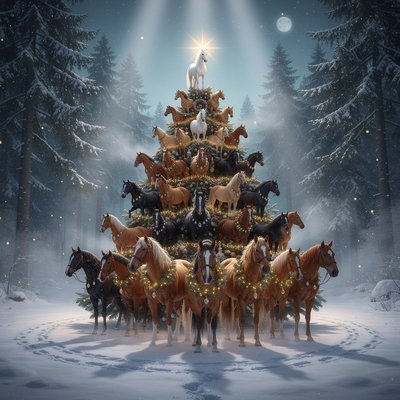
A breathtaking forest clearing at winter twilight, filled with deep emerald pines and soft ambient mist. At the center of the scene stands an extraordinary Christmas tree—its entire form cleverly created by living horses. Dozens of horses of various sizes and colors stand arranged in a perfect triangular formation from wide base to narrow peak, their bodies forming the layered silhouette of a lush holiday tree. Each horse is positioned with elegant precision so their necks, flowing manes, and arched backs mimic the contours of branches. The base layer features large, sturdy draft horses, chestnuts and bays, standing shoulder to shoulder like the lower boughs. Mid-levels transition to sleek Arabians, palominos, and black stallions, their manes fanned outward like sweeping tree limbs. Near the top, smaller ponies and miniature horses form the upper taper, culminating in a single snow-white miniature horse standing proudly at the peak, glowing with soft magical light like a star.
The horses are adorned with delicate festive accents: strands of golden fairy lights draped across their bodies, pine-needle wreath garlands resting on their necks, tiny crystal ornaments clipped lightly to their manes, and subtle silvery frost sparkling on their coats. Each horse’s breath forms soft clouds in the chilly air. Snow gently falls through shafts of moonlight filtering between towering firs. The forest floor is blanketed with untouched white snow, except for the circle of hoofprints surrounding the living tree. Fireflies and bioluminescent particles drift among the trees, adding a mystical glow. Mood is grand, magical, cinematic, hyper-realistic with extreme detail, crisp textures of fur, snow, and pine, volumetric lighting, dramatic shadows, ultra-high resolution, enchanted winter atmosphere.

Camera & Style cues:
– Wide-angle lens, low camera angle looking slightly upward
– Cinematic depth of field
– Hyper-detailed photorealism
– Soft moonlit color palette with warm golden highlights
– 8K clarity, high dynamic range, deep contrast
– Slight ethereal glow for a magical holiday feel
A breathtaking forest clearing at winter twilight, filled with deep emerald pines and soft ambient mist. At the center of the scene stands an extraordinary Christmas tree—its entire form cleverly created by living horses. Dozens of horses of various sizes and colors stand arranged in a perfect triangular formation from wide base to narrow peak, their bodies forming the layered silhouette of a lush holiday tree. Each horse is positioned with elegant precision so their necks, flowing manes, and arched backs mimic the contours of branches. The base layer features large, sturdy draft horses, chestnuts and bays, standing shoulder to shoulder like the lower boughs. Mid-levels transition to sleek Arabians, palominos, and black stallions, their manes fanned outward like sweeping tree limbs. Near the top, smaller ponies and miniature horses form the upper taper, culminating in a single snow-white miniature horse standing proudly at the peak, glowing with soft magical light like a star.

The horses are adorned with delicate festive accents: strands of golden fairy lights draped across their bodies, pine-needle wreath garlands resting on their necks, tiny crystal ornaments clipped lightly to their manes, and subtle silvery frost sparkling on their coats. Each horse’s breath forms soft clouds in the chilly air. Snow gently falls through shafts of moonlight filtering between towering firs. The forest floor is blanketed with untouched white snow, except for the circle of hoofprints surrounding the living tree. Fireflies and bioluminescent particles drift among the trees, adding a mystical glow. Mood is grand, magical, cinematic, hyper-realistic with extreme detail, crisp textures of fur, snow, and pine, volumetric lighting, dramatic shadows, ultra-high resolution, enchanted winter atmosphere.

Camera & Style cues:
– Wide-angle lens, low camera angle looking slightly upward
– Cinematic depth of field
– Hyper-detailed photorealism
– Soft moonlit color palette with warm golden highlights
– 8K clarity, high dynamic range, deep contrast
– Slight ethereal glow for a magical holiday feel
A breathtaking forest clearing at winter twilight, filled with deep emerald pines and soft ambient mist. At the center of the scene stands an extraordinary Christmas tree—its entire form cleverly created by living horses. Dozens of horses of various sizes and colors stand arranged in a perfect triangular formation from wide base to narrow peak, their bodies forming the layered silhouette of a lush holiday tree. Each horse is positioned with elegant precision so their necks, flowing manes, and arched backs mimic the contours of branches. The base layer features large, sturdy draft horses, chestnuts and bays, standing shoulder to shoulder like the lower boughs. Mid-levels transition to sleek Arabians, palominos, and black stallions, their manes fanned outward like sweeping tree limbs. Near the top, smaller ponies and miniature horses form the upper taper, culminating in a single snow-white miniature horse standing proudly at the peak, glowing with soft magical light like a star.

The horses are adorned with delicate festive accents: strands of golden fairy lights draped across their bodies, pine-needle wreath garlands resting on their necks, tiny crystal ornaments clipped lightly to their manes, and subtle silvery frost sparkling on their coats. Each horse’s breath forms soft clouds in the chilly air. Snow gently falls through shafts of moonlight filtering between towering firs. The forest floor is blanketed with untouched white snow, except for the circle of hoofprints surrounding the living tree. Fireflies and bioluminescent particles drift among the trees, adding a mystical glow. Mood is grand, magical, cinematic, hyper-realistic with extreme detail, crisp textures of fur, snow, and pine, volumetric lighting, dramatic shadows, ultra-high resolution, enchanted winter atmosphere.

Camera & Style cues:
– Wide-angle lens, low camera angle looking slightly upward
– Cinematic depth of field
– Hyper-detailed photorealism
– Soft moonlit color palette with warm golden highlights
– 8K clarity, high dynamic range, deep contrast
– Slight ethereal glow for a magical holiday feel
A breathtaking forest clearing at winter twilight, filled with deep emerald pines and soft ambient mist. At the center of the scene stands an extraordinary Christmas tree—its entire form cleverly created by living horses. Dozens of horses of various sizes and colors stand arranged in a perfect triangular formation from wide base to narrow peak, their bodies forming the layered silhouette of a lush holiday tree. Each horse is positioned with elegant precision so their necks, flowing manes, and arched backs mimic the contours of branches. The base layer features large, sturdy draft horses, chestnuts and bays, standing shoulder to shoulder like the lower boughs. Mid-levels transition to sleek Arabians, palominos, and black stallions, their manes fanned outward like sweeping tree limbs. Near the top, smaller ponies and miniature horses form the upper taper, culminating in a single snow-white miniature horse standing proudly at the peak, glowing with soft magical light like a star.

The horses are adorned with delicate festive accents: strands of golden fairy lights draped across their bodies, pine-needle wreath garlands resting on their necks, tiny crystal ornaments clipped lightly to their manes, and subtle silvery frost sparkling on their coats. Each horse’s breath forms soft clouds in the chilly air. Snow gently falls through shafts of moonlight filtering between towering firs. The forest floor is blanketed with untouched white snow, except for the circle of hoofprints surrounding the living tree. Fireflies and bioluminescent particles drift among the trees, adding a mystical glow. Mood is grand, magical, cinematic, hyper-realistic with extreme detail, crisp textures of fur, snow, and pine, volumetric lighting, dramatic shadows, ultra-high resolution, enchanted winter atmosphere.

Camera & Style cues:
– Wide-angle lens, low camera angle looking slightly upward
– Cinematic depth of field
– Hyper-detailed photorealism
– Soft moonlit color palette with warm golden highlights
– 8K clarity, high dynamic range, deep contrast
– Slight ethereal glow for a magical holiday feel
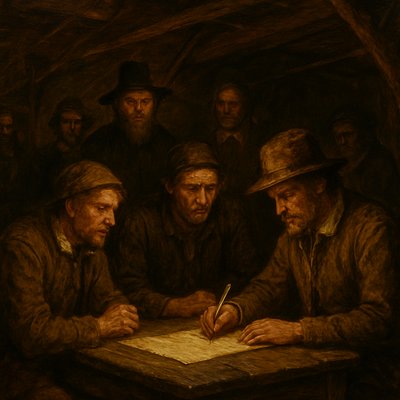
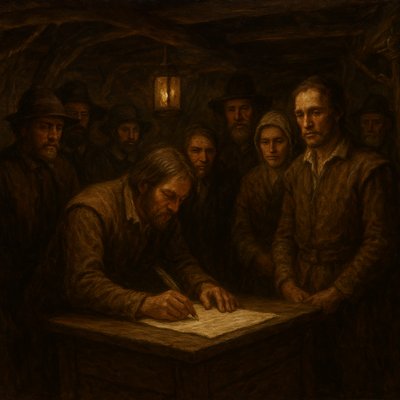
A historically accurate and atmospheric depiction of the signing of the Mayflower Compact aboard the ship in November 1620. The scene is set in the dimly lit, cramped cabin of the Mayflower, with the ship's timbers and rigging subtly visible, conveying the challenging conditions of the voyage. A simple table or chest serves as the signing surface. The primary focus is on a small group of the last individuals signing the document: specifically, the indentured servants (or 'strangers' not directly part of the Separatist congregation) approaching or at the table. Their expressions show a mix of weary determination, understanding of the necessity, and perhaps a hint of quiet apprehension or resignation to this new social contract, given their status. They are dressed in the plain, practical clothing typical of 17th-century commoners and laborers. Figures of prominent Pilgrims or 'Saints' (like William Bradford or John Carver) are visible in the background, observing the proceedings with a sense of gravity and leadership, but they are not the central focus. The lighting is low and warm, perhaps from a lantern, creating a chiaroscuro effect that highlights the faces of the signers. The atmosphere conveys the momentousness of the act under difficult circumstances, the diverse composition of the group, and the early seeds of self-governance in a new world. The artistic style is a realistic, historically detailed oil painting, capturing the solemnity and human element of this pivotal historical moment."
Basketball player's winning shot
An empty dining table set for two
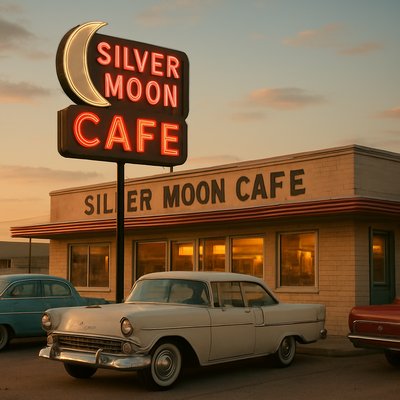
Generate a warm and inviting image of the Silver Moon Cafe in Santa Rosa, New Mexico, as it might have appeared in the 1950s or early 1960s. The focus should be on its classic diner exterior, featuring a prominent sign with its name. Show a few vintage cars from the era, such as a Chevrolet Bel Air or a Ford Fairlane, parked outside. The lighting should evoke a late afternoon or early evening glow, with a hint of warm light emanating from the cafe's windows. Capture the nostalgic, unpretentious atmosphere of a vital stop on Route 66, suggesting a place where travelers and locals alike would find comfort food and a friendly welcome. The style should be realistic but with a slightly enhanced, cinematic feel that highlights the retro charm
A historically accurate and atmospheric depiction of the signing of the Mayflower Compact aboard the ship in November 1620. The scene is set in the dimly lit, cramped cabin of the Mayflower, with the ship's timbers and rigging subtly visible, conveying the challenging conditions of the voyage. A simple table or chest serves as the signing surface. The primary focus is on a small group of the last individuals signing the document: specifically, the indentured servants (or 'strangers' not directly part of the Separatist congregation) approaching or at the table. Their expressions show a mix of weary determination, understanding of the necessity, and perhaps a hint of quiet apprehension or resignation to this new social contract, given their status. They are dressed in the plain, practical clothing typical of 17th-century commoners and laborers. Figures of prominent Pilgrims or 'Saints' (like William Bradford or John Carver) are visible in the background, observing the proceedings with a sense of gravity and leadership, but they are not the central focus. The lighting is low and warm, perhaps from a lantern, creating a chiaroscuro effect that highlights the faces of the signers. The atmosphere conveys the momentousness of the act under difficult circumstances, the diverse composition of the group, and the early seeds of self-governance in a new world. The artistic style is a realistic, historically detailed oil painting, capturing the solemnity and human element of this pivotal historical moment."
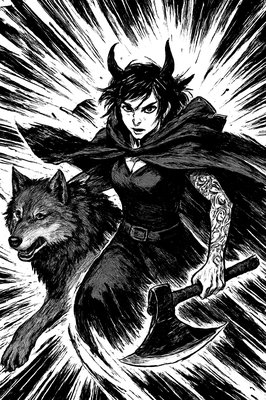
a painting of a woman and a wolf
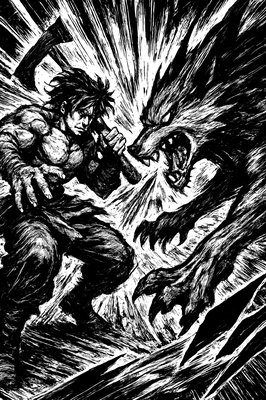
a painting of a man and a wolf
A butterfly emerging
A historically accurate and atmospheric depiction of the signing of the Mayflower Compact aboard the ship in November 1620. The scene is set in the dimly lit, cramped cabin of the Mayflower, with the ship's timbers and rigging subtly visible, conveying the challenging conditions of the voyage. A simple table or chest serves as the signing surface. The primary focus is on a small group of the last individuals signing the document: specifically, the indentured servants (or 'strangers' not directly part of the Separatist congregation) approaching or at the table. Their expressions show a mix of weary determination, understanding of the necessity, and perhaps a hint of quiet apprehension or resignation to this new social contract, given their status. They are dressed in the plain, practical clothing typical of 17th-century commoners and laborers. Figures of prominent Pilgrims or 'Saints' (like William Bradford or John Carver) are visible in the background, observing the proceedings with a sense of gravity and leadership, but they are not the central focus. The lighting is low and warm, perhaps from a lantern, creating a chiaroscuro effect that highlights the faces of the signers. The atmosphere conveys the momentousness of the act under difficult circumstances, the diverse composition of the group, and the early seeds of self-governance in a new world. The artistic style is a realistic, historically detailed oil painting, capturing the solemnity and human element of this pivotal historical moment."
Create an image of the Motel Safari in Tucumcari, showcasing its distinctive Doo Wop or Googie architectural style. The design should feature counter-stacked brickwork with oozing mortar, cinder block walls with unique openings, and metal cylinders with perforated holes that glow softly at night. The sign should incorporate playful geometric shapes, with Clyde the Camel prominently perched on top, illuminated against a vibrant sunset sky. Include a retro Route 66 vibe with neon accents and a welcoming "VACANCY" sign.
Dancer mid-leap
A historically accurate and atmospheric depiction of the signing of the Mayflower Compact aboard the ship in November 1620. The scene is set in the dimly lit, cramped cabin of the Mayflower, with the ship's timbers and rigging subtly visible, conveying the challenging conditions of the voyage. A simple table or chest serves as the signing surface. The primary focus is on a small group of the last individuals signing the document: specifically, the indentured servants (or 'strangers' not directly part of the Separatist congregation) approaching or at the table. Their expressions show a mix of weary determination, understanding of the necessity, and perhaps a hint of quiet apprehension or resignation to this new social contract, given their status. They are dressed in the plain, practical clothing typical of 17th-century commoners and laborers. Figures of prominent Pilgrims or 'Saints' (like William Bradford or John Carver) are visible in the background, observing the proceedings with a sense of gravity and leadership, but they are not the central focus. The lighting is low and warm, perhaps from a lantern, creating a chiaroscuro effect that highlights the faces of the signers. The atmosphere conveys the momentousness of the act under difficult circumstances, the diverse composition of the group, and the early seeds of self-governance in a new world. The artistic style is a realistic, historically detailed oil painting, capturing the solemnity and human element of this pivotal historical moment."
Generate a warm and inviting image of the Silver Moon Cafe in Santa Rosa, New Mexico, as it might have appeared in the 1950s or early 1960s. The focus should be on its classic diner exterior, featuring a prominent sign with its name. Show a few vintage cars from the era, such as a Chevrolet Bel Air or a Ford Fairlane, parked outside. The lighting should evoke a late afternoon or early evening glow, with a hint of warm light emanating from the cafe's windows. Capture the nostalgic, unpretentious atmosphere of a vital stop on Route 66, suggesting a place where travelers and locals alike would find comfort food and a friendly welcome. The style should be realistic but with a slightly enhanced, cinematic feel that highlights the retro charm
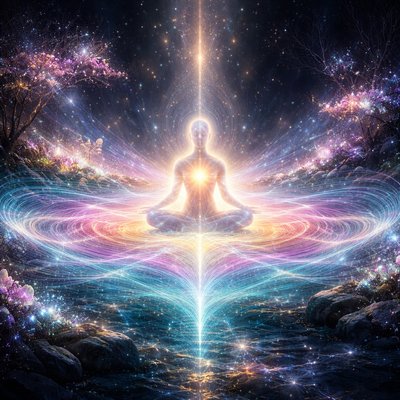
The sound of Om/Aum
A highly detailed, cinematic rendering of the colossal "Megamaid" spaceship from Spaceballs in its full, transformed state, hovering menacingly above the Earth.

Scene Focus: The Megamaid is positioned directly over the Earth's atmosphere, its massive vacuum nozzle extended. The nozzle is clearly pointed toward the planet's surface, and the mechanism is beginning to suck air out, creating a visible, swirling vortex.

The 'Firmament' Detail: Render the edge of Earth's atmosphere and sky not as a smooth fade to space, but with a highly stylized, almost cracked or crystalline appearance, suggesting the boundary is a literal "firmament." The vacuum is shown actively piercing this boundary, creating a localized, glowing "window of heaven" effect where the atmosphere is being forcefully breached and pulled into the machine.

Atmosphere: The scene is dark, cold space contrasting sharply with the bright, glowing Earth below and the massive, industrial metallic structure of the Megamaid. The lighting should be dramatic and epic, highlighting the ridiculous scale of the vacuum cleaner poised to steal a planet's air. Include a tiny, distant shot of the Eagle 5 (Winnebago) fleeing the scene.

Style: Photorealistic digital painting, sci-fi parody, emphasizing the immense, over-the-top scale and the comedic contrast between the mundane household item and the cosmic threat.
A porcelain doll
a black and white drawing of a wolf attacking another wolf
bicyle resting against a wall
A busy city intersection
A highly detailed, cinematic rendering of the colossal "Megamaid" spaceship from Spaceballs in its full, transformed state, hovering menacingly above the Earth.

Scene Focus: The Megamaid is positioned directly over the Earth's atmosphere, its massive vacuum nozzle extended. The nozzle is clearly pointed toward the planet's surface, and the mechanism is beginning to suck air out, creating a visible, swirling vortex.

The 'Firmament' Detail: Render the edge of Earth's atmosphere and sky not as a smooth fade to space, but with a highly stylized, almost cracked or crystalline appearance, suggesting the boundary is a literal "firmament." The vacuum is shown actively piercing this boundary, creating a localized, glowing "window of heaven" effect where the atmosphere is being forcefully breached and pulled into the machine.

Atmosphere: The scene is dark, cold space contrasting sharply with the bright, glowing Earth below and the massive, industrial metallic structure of the Megamaid. The lighting should be dramatic and epic, highlighting the ridiculous scale of the vacuum cleaner poised to steal a planet's air. Include a tiny, distant shot of the Eagle 5 (Winnebago) fleeing the scene.

Style: Photorealistic digital painting, sci-fi parody, emphasizing the immense, over-the-top scale and the comedic contrast between the mundane household item and the cosmic threat.
a tree in nature
"Create a nostalgic and inviting image of a Waffle House restaurant from the 1960s or early 1970s. The focus should be on its distinct mid-century roadside architecture with a prominent, brightly lit "Waffle House" sign featuring its classic yellow and black logo. Show a few vintage cars from the era (e.g., a Ford Mustang, Chevrolet Chevelle, or a classic pickup truck) parked outside. The scene should be set at either dawn or dusk, with warm, inviting light spilling from the restaurant's windows, suggesting a cozy haven for weary travelers. Include subtle details like a classic street lamp or a glimpse of a highway in the background to emphasize its roadside location. The overall aesthetic should evoke a sense of Americana, comfort, and the timeless appeal of a familiar stop on a long journey."
A deep sea jellyfish garden
"Create a nostalgic and inviting image of a Waffle House restaurant from the 1960s or early 1970s. The focus should be on its distinct mid-century roadside architecture with a prominent, brightly lit "Waffle House" sign featuring its classic yellow and black logo. Show a few vintage cars from the era (e.g., a Ford Mustang, Chevrolet Chevelle, or a classic pickup truck) parked outside. The scene should be set at either dawn or dusk, with warm, inviting light spilling from the restaurant's windows, suggesting a cozy haven for weary travelers. Include subtle details like a classic street lamp or a glimpse of a highway in the background to emphasize its roadside location. The overall aesthetic should evoke a sense of Americana, comfort, and the timeless appeal of a familiar stop on a long journey."
bicyle resting against a wall
New york city
bicyle resting against a wall