Self Portrait Art

Portrait
Portrait
Portrait
Portrait
Portrait
Portrait
Portrait
Portrait
Fractal-based digital sculpture with intricate, self-similar details in the art style of Fractal Art --v 6.1
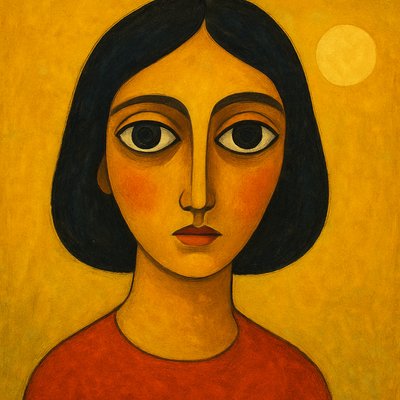
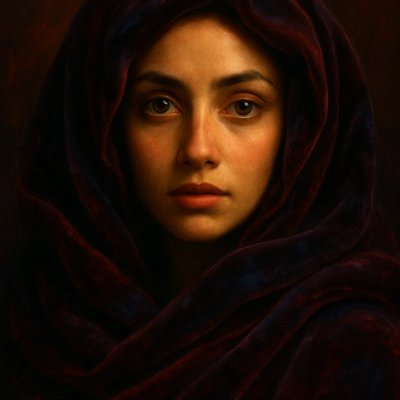
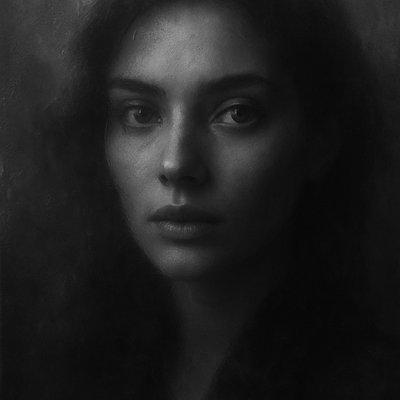
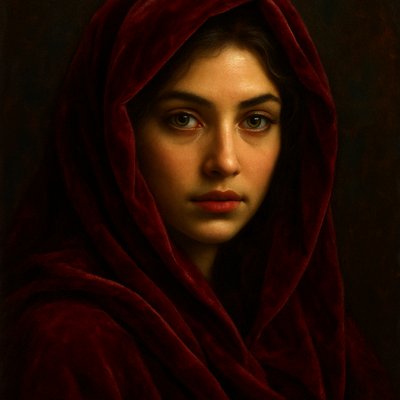
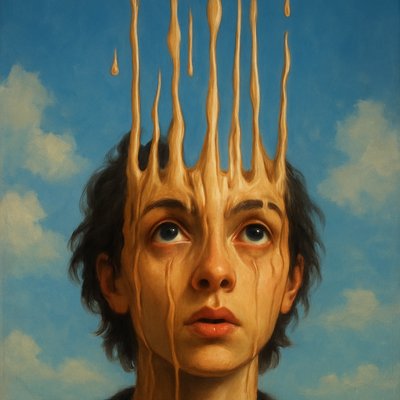
portrait of a person with expressive eyes
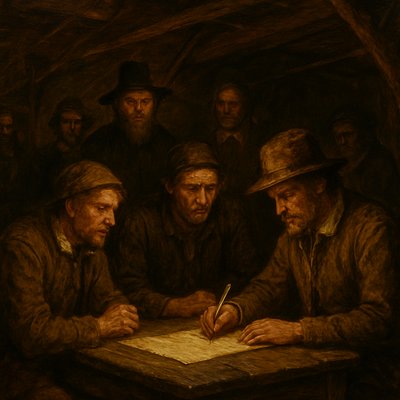
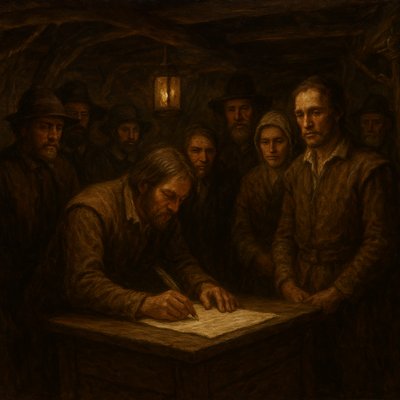
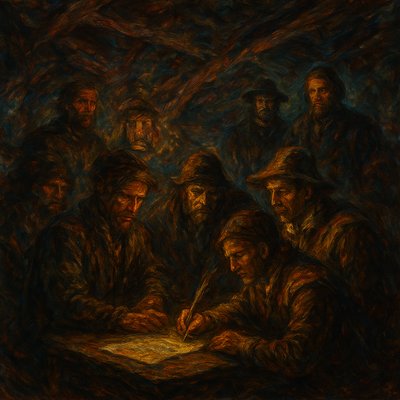
A historically accurate and atmospheric depiction of the signing of the Mayflower Compact aboard the ship in November 1620. The scene is set in the dimly lit, cramped cabin of the Mayflower, with the ship's timbers and rigging subtly visible, conveying the challenging conditions of the voyage. A simple table or chest serves as the signing surface. The primary focus is on a small group of the last individuals signing the document: specifically, the indentured servants (or 'strangers' not directly part of the Separatist congregation) approaching or at the table. Their expressions show a mix of weary determination, understanding of the necessity, and perhaps a hint of quiet apprehension or resignation to this new social contract, given their status. They are dressed in the plain, practical clothing typical of 17th-century commoners and laborers. Figures of prominent Pilgrims or 'Saints' (like William Bradford or John Carver) are visible in the background, observing the proceedings with a sense of gravity and leadership, but they are not the central focus. The lighting is low and warm, perhaps from a lantern, creating a chiaroscuro effect that highlights the faces of the signers. The atmosphere conveys the momentousness of the act under difficult circumstances, the diverse composition of the group, and the early seeds of self-governance in a new world. The artistic style is a realistic, historically detailed oil painting, capturing the solemnity and human element of this pivotal historical moment."
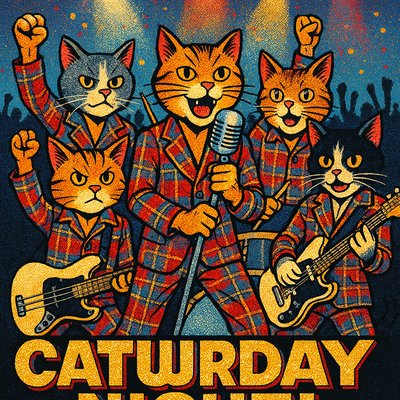
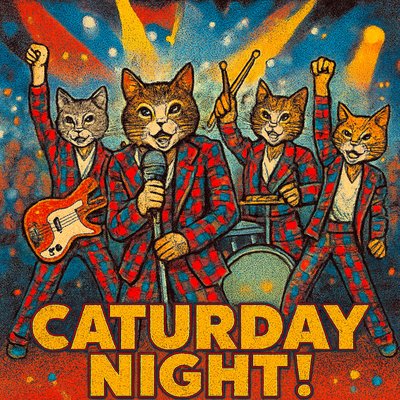
A band of five anthropomorphic cats, depicted as the "Bay City Rollers," performing on a brightly lit stage. They are dressed in matching tartan suits, reminiscent of the band's iconic style. Each cat has expressive facial features, conveying a sense of rock-and-roll energy.

The central cat is the lead singer, holding a vintage microphone and wearing a striking tartan suit. To his left, another cat plays a bass guitar. To his right, another cat stands with drumsticks, ready to play. Two other cats complete the band, striking poses with their fists raised in the air, embodying the energetic performance style of the Bay City Rollers.

In the background, a large, enthusiastic crowd of blurred, indistinct figures is cheering, illuminated by stage lights. Above the stage, spotlights shine down. The stage itself is dark, allowing the cats and their instruments to stand out.

At the bottom of the image, in large, bold, sparkly letters, is the text "CATURDAY NIGHT!" The overall style is vibrant, fun, and captures the retro pop essence of the 1970s.
A band of five anthropomorphic cats, depicted as the "Bay City Rollers," performing on a brightly lit stage. They are dressed in matching tartan suits, reminiscent of the band's iconic style. Each cat has expressive facial features, conveying a sense of rock-and-roll energy.

The central cat is the lead singer, holding a vintage microphone and wearing a striking tartan suit. To his left, another cat plays a bass guitar. To his right, another cat stands with drumsticks, ready to play. Two other cats complete the band, striking poses with their fists raised in the air, embodying the energetic performance style of the Bay City Rollers.

In the background, a large, enthusiastic crowd of blurred, indistinct figures is cheering, illuminated by stage lights. Above the stage, spotlights shine down. The stage itself is dark, allowing the cats and their instruments to stand out.

At the bottom of the image, in large, bold, sparkly letters, is the text "CATURDAY NIGHT!" The overall style is vibrant, fun, and captures the retro pop essence of the 1970s.
A historically accurate and atmospheric depiction of the signing of the Mayflower Compact aboard the ship in November 1620. The scene is set in the dimly lit, cramped cabin of the Mayflower, with the ship's timbers and rigging subtly visible, conveying the challenging conditions of the voyage. A simple table or chest serves as the signing surface. The primary focus is on a small group of the last individuals signing the document: specifically, the indentured servants (or 'strangers' not directly part of the Separatist congregation) approaching or at the table. Their expressions show a mix of weary determination, understanding of the necessity, and perhaps a hint of quiet apprehension or resignation to this new social contract, given their status. They are dressed in the plain, practical clothing typical of 17th-century commoners and laborers. Figures of prominent Pilgrims or 'Saints' (like William Bradford or John Carver) are visible in the background, observing the proceedings with a sense of gravity and leadership, but they are not the central focus. The lighting is low and warm, perhaps from a lantern, creating a chiaroscuro effect that highlights the faces of the signers. The atmosphere conveys the momentousness of the act under difficult circumstances, the diverse composition of the group, and the early seeds of self-governance in a new world. The artistic style is a realistic, historically detailed oil painting, capturing the solemnity and human element of this pivotal historical moment."
Immigrant's journey portrait
Fragmented portrait
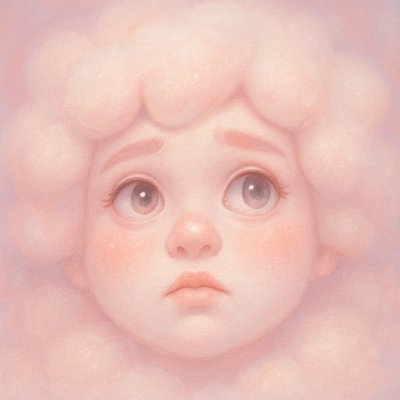
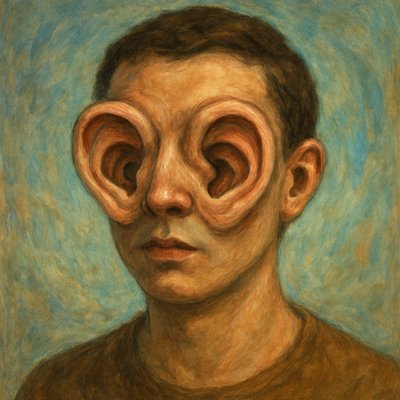
A human portrait
Corrupted portrait
Digital portrait
A portrait of Tesla
A portrait of Tesla
Tech entrepreneur with data visualization elements
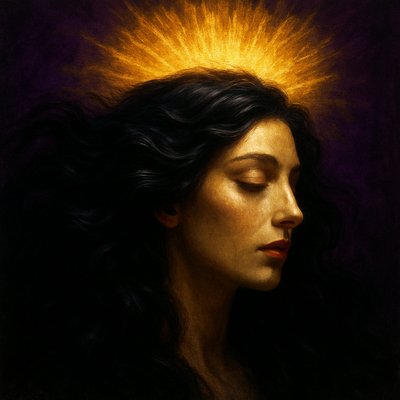
A dramatic, close-up, high-contrast portrait inspired by Song of Songs 5:11. The subject's head is crowned with dramatically wavy hair that is intensely, intensely black—like the glossy feathers of a raven. A radiant, ethereal golden light emanates from the crown of the head, casting a dramatic glow. This golden light is surrounded by a rich, powerful aura of royal deep purple and mysterious black shadow. The portrait should emphasize the texture and depth of the black hair, contrasting sharply with the bright gold and the saturated purple surrounding the subject. The style should be elegant, opulent, and symbolic, focusing purely on the aesthetic of divine beauty and royal power
portrait of a person with expressive eyes
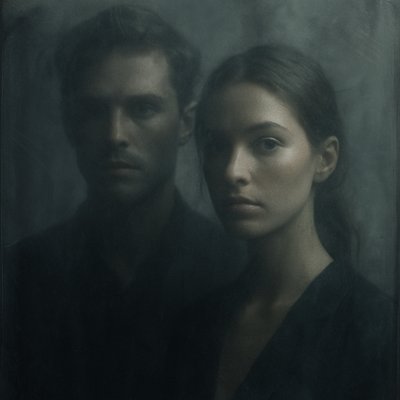
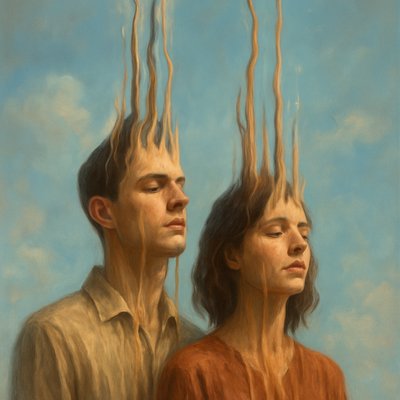
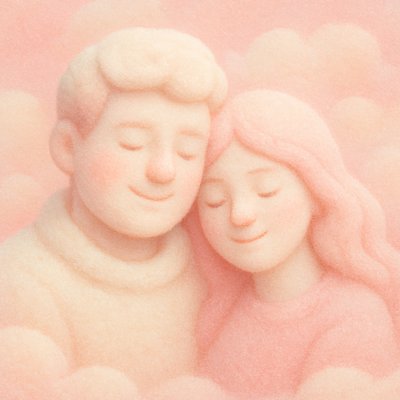
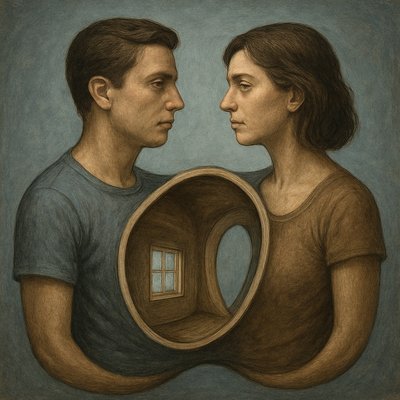
portrait of two people together
portrait of a person with expressive eyes
portrait of two people together
portrait of a person with expressive eyes
portrait of two people together
portrait of a person with expressive eyes
portrait of two people together