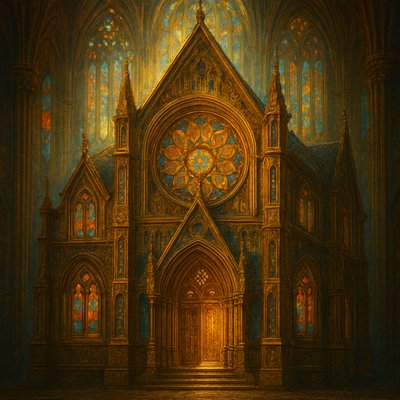
Sacred Geometric Art Style Transfer Example Art

house with front view
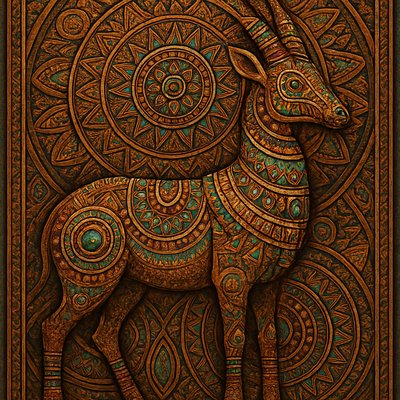
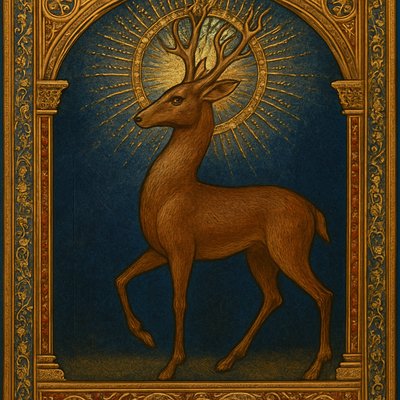
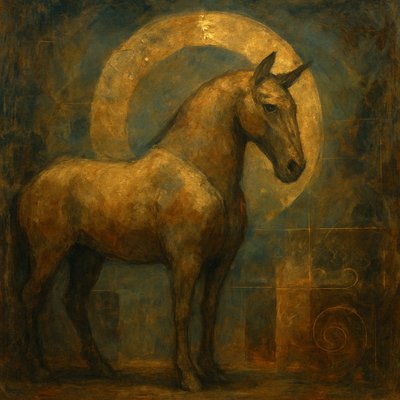
animal standing in natural pose
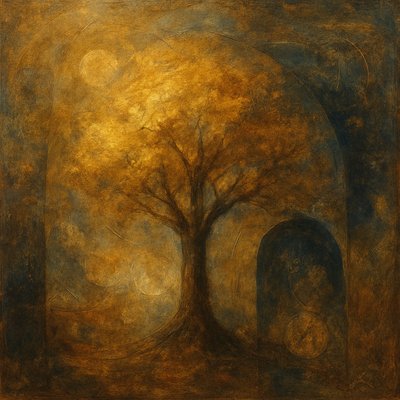
a tree in nature
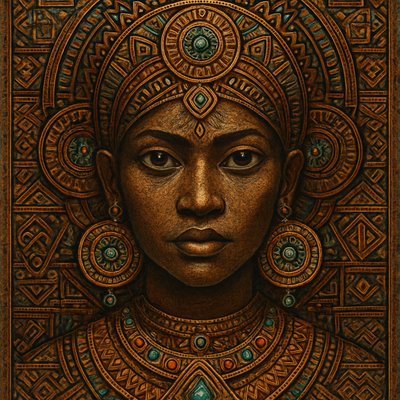
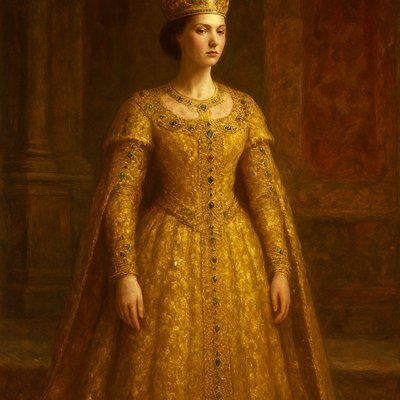
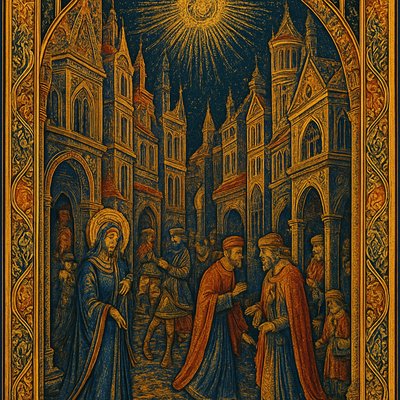
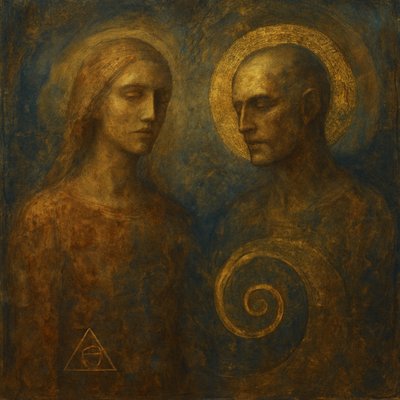
portrait of two people together
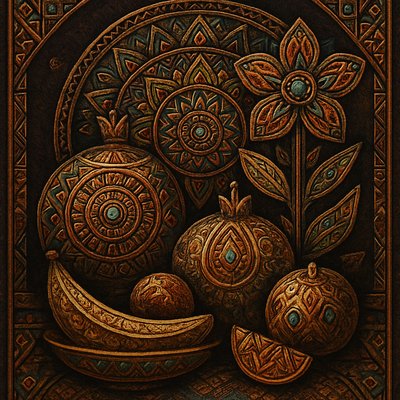
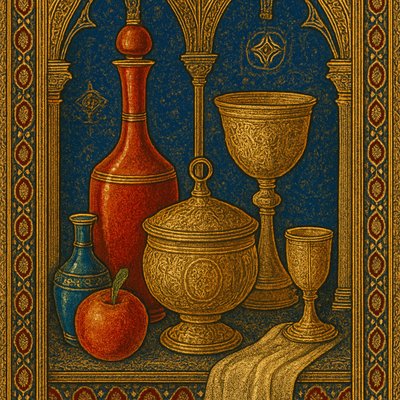
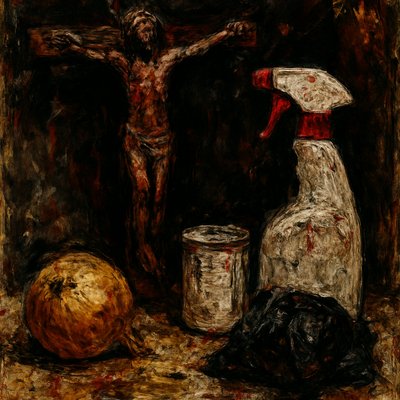
still life with everyday objects
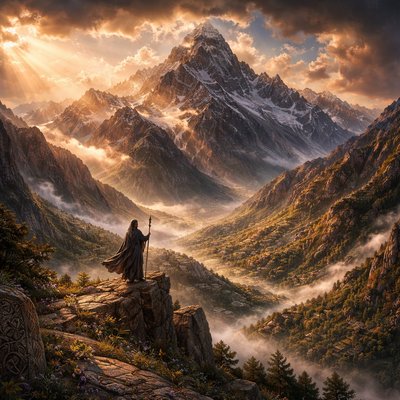
wide landscape with natural scenery
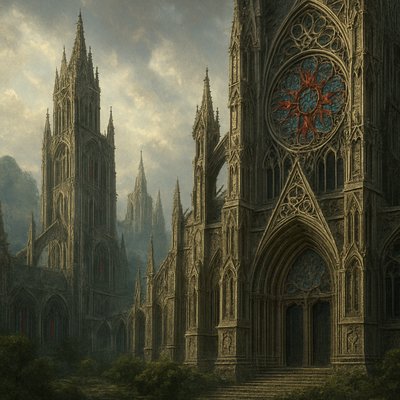
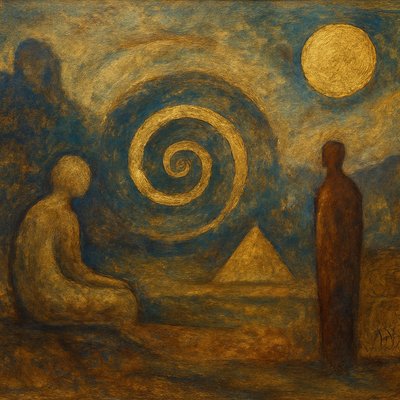
Enigmatic landscape with geometric shapes in the art style of Metaphysical Painting --v 6.1
This sounds like a wonderfully whimsical and festive image! Combining the classic pumpkin head with a burst of candy and unique carving will make for a very creative Halloween or autumn piece.
Here's a prompt for a Happy Pumpkin Head Figure with Candy Bursting Out for ArtStyles.com:

Happy Pumpkin Head with Candy Burst Prompt

"A cheerful and fantastical figure with a large, glowing jack-o'-lantern for a head. The pumpkin's face is carved with a distinctly happy, friendly, wide-mouthed smile and joyful eyes. Instead of traditional jagged cuts, the facial features (eyes, nose, mouth) are intricately carved with elegant, swirling, vine-like patterns, giving it a whimsical and artistic look. The pumpkin head emits a warm, inviting orange glow from within.

Dramatically bursting and cascading out of the very top of the pumpkin's head is an overflowing abundance of vibrant, colorful Halloween candy. This candy explosion includes individually wrapped chocolates, lollipops, jelly beans, candy corn, and various brightly colored sweets, all tumbling outwards in a joyous, sugary fountain.

The figure itself has a rustic, scarecrow-like body, perhaps dressed in tattered but festive autumn-colored clothing (e.g., burlap, plaid, or warm browns and oranges), standing in an autumnal setting. The background could feature a gently lit pumpkin patch, fallen autumn leaves, or a soft, blurred evening sky. The lighting is warm and enchanting, highlighting the pumpkin's glow and the glossy sheen of the candy. The overall mood is one of festive joy, playful magic, and autumnal abundance."whimsical illustration, vibrant autumn colors, detailed candy textures, glowing effects, playful character design, festive atmosphere
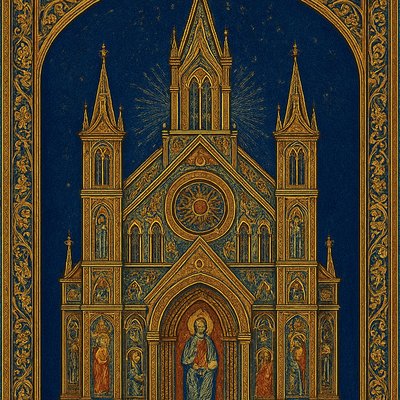
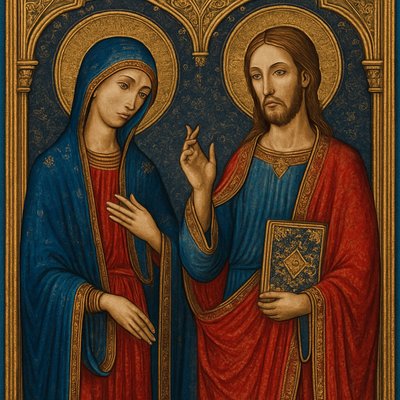
Sikh Golden Temple reflected in sacred pool at sunset in the art style of Religious Art --v 6.1
still life with everyday objects
wide landscape with natural scenery
a tree in nature
house with front view
animal standing in natural pose
serene landscape with mountains and water
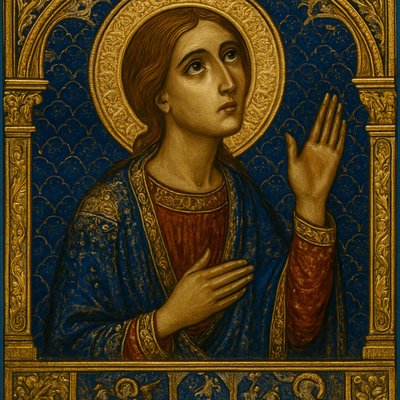
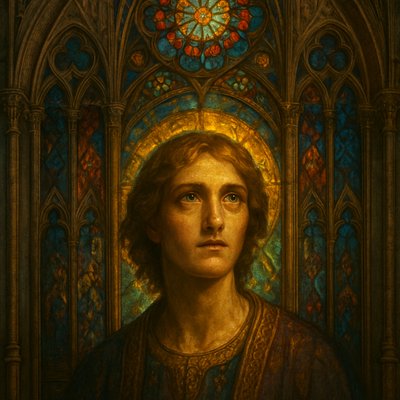
portrait of a person with expressive eyes
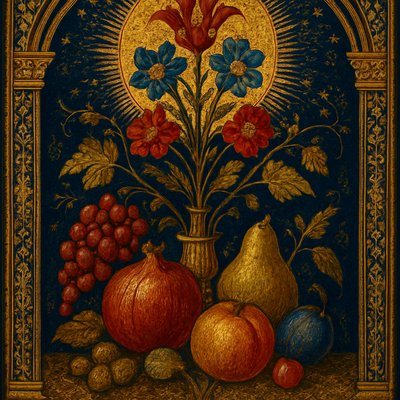
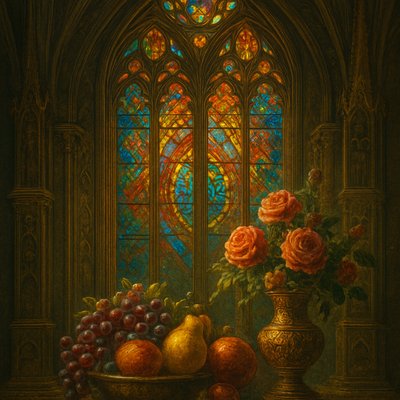
still life arrangement of fruits and flowers
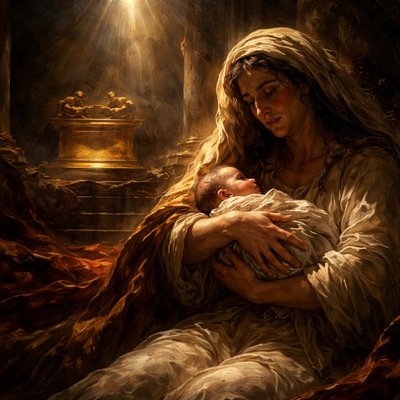
A hyper-detailed, photorealistic depiction of the High Priest of Israel performing the Feast of Weeks (Pentecost) wave offering. The High Priest is dressed in the complete set of holy vestments: a blue robe with golden bells and pomegranates on the hem, a colorful ephod, and a breastplate with twelve jewels. A golden plate engraved 'HOLINESS TO THE LORD' is tied to his linen mitre. He stands in the Tabernacle courtyard, facing the altar, holding the two leavened loaves of firstfruits and two male lambs high, performing the sacred wave offering ritual. Golden morning light, historically accurate setting, cinematic oil painting style.
A detailed, ancient-style map of the land of Canaan, with distinct, labeled territories for the Hivites, Arkite, and Sinite people groups. Each territory should have subtle visual cues reflecting their possible historical characteristics or natural environments. For example, the Hivite territory could show some hilly or forested areas, the Arkite territory might feature a coastal city, and the Sinite territory could suggest a more inland or mountainous region. The map should have a weathered, parchment-like texture, with an elegant, old-world font for the labels. In one corner, a small, illuminated manuscript-style illustration could depict three distinct figures, each subtly representing one of the groups, perhaps dressed in period-appropriate attire and engaging in an activity typical of their region. The overall aesthetic should evoke historical scholarship and cartography."
This sounds like a wonderfully whimsical and festive image! Combining the classic pumpkin head with a burst of candy and unique carving will make for a very creative Halloween or autumn piece.

Here's a prompt for a Happy Pumpkin Head Figure with Candy Bursting Out for ArtStyles.com:

Happy Pumpkin Head with Candy Burst Prompt

"A cheerful and fantastical figure with a large, glowing jack-o'-lantern for a head. The pumpkin's face is carved with a distinctly happy, friendly, wide-mouthed smile and joyful eyes. Instead of traditional jagged cuts, the facial features (eyes, nose, mouth) are intricately carved with elegant, swirling, vine-like patterns, giving it a whimsical and artistic look. The pumpkin head emits a warm, inviting orange glow from within.

Dramatically bursting and cascading out of the very top of the pumpkin's head is an overflowing abundance of vibrant, colorful Halloween candy. This candy explosion includes individually wrapped chocolates, lollipops, jelly beans, candy corn, and various brightly colored sweets, all tumbling outwards in a joyous, sugary fountain.

The figure itself has a rustic, scarecrow-like body, perhaps dressed in tattered but festive autumn-colored clothing (e.g., burlap, plaid, or warm browns and oranges), standing in an autumnal setting. The background could feature a gently lit pumpkin patch, fallen autumn leaves, or a soft, blurred evening sky. The lighting is warm and enchanting, highlighting the pumpkin's glow and the glossy sheen of the candy. The overall mood is one of festive joy, playful magic, and autumnal abundance. stylized realism, intricate detail, dynamic composition, warm dramatic lighting, focus on textures (pumpkin, candy), fantasy elements"
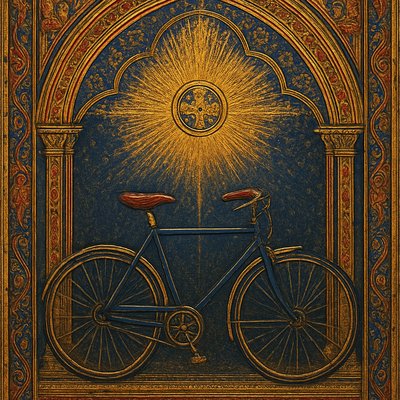
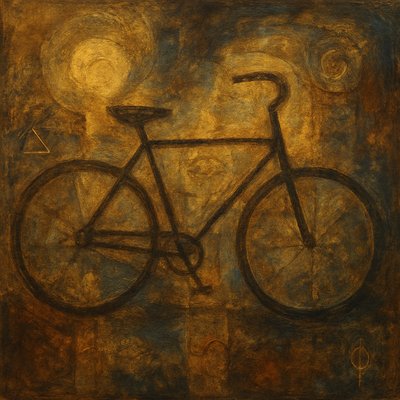
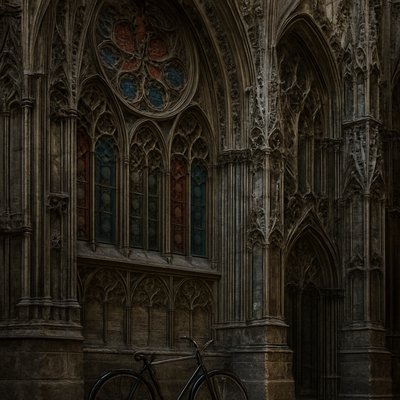
bicyle resting against a wall
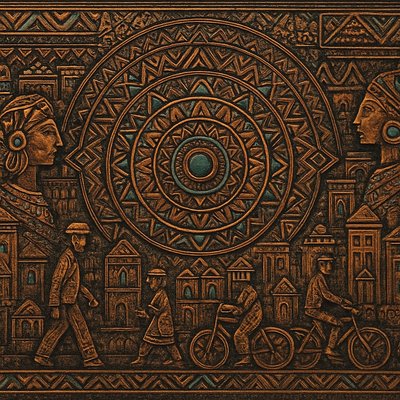
urban street with city activity
serene landscape with mountains and water
portrait of a person with expressive eyes
still life arrangement of fruits and flowers
bicyle resting against a wall
urban street with city activity
portrait of two people together
This is a great idea. For this version, let's lean even further into that "Elven High-Fantasy" aesthetic you like, but ground it in their specific Biblical legacy as the "hewers of wood and drawers of water" for the Tabernacle.

In this prompt, we will portray their service not as a lowly task, but as a display of superhuman strength and grace—showing that even in their "servant" role, their "giant" nature and ancient wisdom remained visible.
Written Prompt: The Sage-Giants of Gibeon

    Style: Cinematic High-Fantasy, 8k Resolution, Epic Scale. A blend of The Lord of the Rings aesthetic with Ancient Near Eastern Bronze Age history.

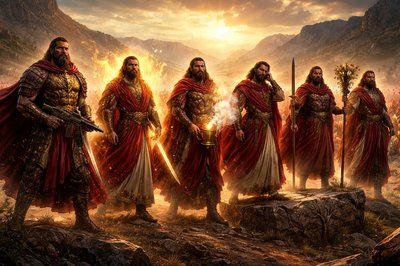
    The Subject: A group of three Gibeonite men, standing at a staggering height of 7.5 feet. They possess the ethereal, noble beauty of High Elves—sharp, intelligent Semitic features, high cheekbones, and long, dark hair intricately braided with silver and lapis lazuli.

    The Stature & Grace: They are lithe and muscular, moving with a fluid grace that defies their size. Despite their "giant" classification, they are elegant, not monstrous.

    The Role (Hewers and Drawers): > * One Gibeonite is seen effortlessly carrying a massive, ornate stone water jar on one shoulder that would require four normal men to lift.

        Another holds a bundle of enormous cedar logs, his posture straight and regal, showing no sign of strain.

    The Attire: They wear a mixture of their new culture and their old heritage. Fine linen tunics in ivory and deep blue are accented by ornate bronze bracers etched with ancient Canaanite geometry. Their clothing is weathered with the dust of the road but still looks "high-born."

    The Setting: They are standing on a high limestone ridge overlooking the ancient city of Gibeon. In the background, the Tabernacle's smoke rises into a golden sunset sky. The architecture around them consists of massive, "cyclopean" stone blocks that match their scale.

    Lighting & Atmosphere: Dramatic "God-rays" of sunlight pierce through the clouds, catching the metallic glint of their jewelry and the profound, wise expressions in their eyes. The mood is one of "Dignity in Service" and "Ancient Wisdom."
A profound and epic scene depicting the Vision of the Dry Bones from Ezekiel 37. In a desolate, vast valley, countless dry human bones are scattered, stark white and ancient. A powerful, divine wind (ruach) swirls through the valley, imbued with a sacred, ethereal glow, causing the bones to rattle and miraculously knit together. Tendons, flesh, and skin rapidly form over the skeletal structures, transforming them into fully-formed human figures. As the divine breath enters, the figures rise, not as individuals, but as a colossal, awe-inspiring army standing upright, gazing forward with renewed life and purpose. The sky above is dramatic, perhaps with stormy clouds breaking to reveal a divine light. The overall mood is one of miraculous resurrection, immense power, and hopeful restoration."
Art Style: Analytical Cubism, avant-garde oil painting style reminiscent of Picasso and Braque.

Subject: A dense, tangled thicket of Rhododendrons and Mountain Laurel bushes.

Composition & Details: The entire natural scene is deconstructed into overlapping geometric planes, fractured shards, and intersecting angles. There are no curved lines; everything is rendered in cubes, cones, and trapezoids.

    The Rhododendrons: Large, showy flower trusses are broken into faceted crystalline structures of deep magenta, rose pink, and violet blocks, looking like explosions of colored quartz rather than soft petals.

    The Mountain Laurels: The smaller, intricate flowers are rendered as complex, repeating geometric star-patterns and angular cups in white and pale pink with distinct red polygonal markings.

    Foliage & Branches: The thick, leathery leaves are fragmented green triangles and parallelograms overlapping each other, creating a sense of depth without traditional perspective. The woody stems and branches are jagged, intersecting brown and grey cylinders that shatter across the frame.

Color & Texture: A palette of muted earth tones—ochre, burnt umber, forest green, and slate grey—contrasted sharply with the jewel-toned facets of the flower colors. The finish should have a heavy, textured oil paint feel with visible palette knife marks and rough brushwork.
Art Style: Analytical Cubism, avant-garde oil painting style reminiscent of Picasso and Braque.

Subject: A dense, tangled thicket of Rhododendrons and Mountain Laurel bushes.

Composition & Details: The entire natural scene is deconstructed into overlapping geometric planes, fractured shards, and intersecting angles. There are no curved lines; everything is rendered in cubes, cones, and trapezoids.

    The Rhododendrons: Large, showy flower trusses are broken into faceted crystalline structures of deep magenta, rose pink, and violet blocks, looking like explosions of colored quartz rather than soft petals.

    The Mountain Laurels: The smaller, intricate flowers are rendered as complex, repeating geometric star-patterns and angular cups in white and pale pink with distinct red polygonal markings.

    Foliage & Branches: The thick, leathery leaves are fragmented green triangles and parallelograms overlapping each other, creating a sense of depth without traditional perspective. The woody stems and branches are jagged, intersecting brown and grey cylinders that shatter across the frame.

Color & Texture: A palette of muted earth tones—ochre, burnt umber, forest green, and slate grey—contrasted sharply with the jewel-toned facets of the flower colors. The finish should have a heavy, textured oil paint feel with visible palette knife marks and rough brushwork.
"Uriel, the Angel of Light and Wisdom from the Book of Enoch, a majestic celestial guide, standing amidst swirling cosmic dust and ethereal nebulae. His form radiates intense, pure light. He gestures towards a hidden cosmic mechanism, revealing ancient knowledge, holding a flaming orb of pure light. Robes of deep sapphire blue and radiant gold, adorned with ancient symbols. Serene, knowing face, eyes glimmering with cosmic insight. Behind him, celestial gears and the fiery essence of the sun. Hyperrealistic digital painting, divine luminosity, epic detailed, cinematic lighting, cosmic gradients."divine luminosity, ethereal glow, celestial being, seraphic presence, sacred geometry, iridescent, luminescent
Art Style: Analytical Cubism, avant-garde oil painting style reminiscent of Picasso and Braque.

Subject: A dense, tangled thicket of Rhododendrons and Mountain Laurel bushes.

Composition & Details: The entire natural scene is deconstructed into overlapping geometric planes, fractured shards, and intersecting angles. There are no curved lines; everything is rendered in cubes, cones, and trapezoids.

    The Rhododendrons: Large, showy flower trusses are broken into faceted crystalline structures of deep magenta, rose pink, and violet blocks, looking like explosions of colored quartz rather than soft petals.

    The Mountain Laurels: The smaller, intricate flowers are rendered as complex, repeating geometric star-patterns and angular cups in white and pale pink with distinct red polygonal markings.

    Foliage & Branches: The thick, leathery leaves are fragmented green triangles and parallelograms overlapping each other, creating a sense of depth without traditional perspective. The woody stems and branches are jagged, intersecting brown and grey cylinders that shatter across the frame.

Color & Texture: A palette of muted earth tones—ochre, burnt umber, forest green, and slate grey—contrasted sharply with the jewel-toned facets of the flower colors. The finish should have a heavy, textured oil paint feel with visible palette knife marks and rough brushwork.
Art Style: Analytical Cubism, avant-garde oil painting style reminiscent of Picasso and Braque.

Subject: A dense, tangled thicket of Rhododendrons and Mountain Laurel bushes.

Composition & Details: The entire natural scene is deconstructed into overlapping geometric planes, fractured shards, and intersecting angles. There are no curved lines; everything is rendered in cubes, cones, and trapezoids.

    The Rhododendrons: Large, showy flower trusses are broken into faceted crystalline structures of deep magenta, rose pink, and violet blocks, looking like explosions of colored quartz rather than soft petals.

    The Mountain Laurels: The smaller, intricate flowers are rendered as complex, repeating geometric star-patterns and angular cups in white and pale pink with distinct red polygonal markings.

    Foliage & Branches: The thick, leathery leaves are fragmented green triangles and parallelograms overlapping each other, creating a sense of depth without traditional perspective. The woody stems and branches are jagged, intersecting brown and grey cylinders that shatter across the frame.

Color & Texture: A palette of muted earth tones—ochre, burnt umber, forest green, and slate grey—contrasted sharply with the jewel-toned facets of the flower colors. The finish should have a heavy, textured oil paint feel with visible palette knife marks and rough brushwork.
Art Style: Analytical Cubism, avant-garde oil painting style reminiscent of Picasso and Braque.

Subject: A dense, tangled thicket of Rhododendrons and Mountain Laurel bushes.

Composition & Details: The entire natural scene is deconstructed into overlapping geometric planes, fractured shards, and intersecting angles. There are no curved lines; everything is rendered in cubes, cones, and trapezoids.

    The Rhododendrons: Large, showy flower trusses are broken into faceted crystalline structures of deep magenta, rose pink, and violet blocks, looking like explosions of colored quartz rather than soft petals.

    The Mountain Laurels: The smaller, intricate flowers are rendered as complex, repeating geometric star-patterns and angular cups in white and pale pink with distinct red polygonal markings.

    Foliage & Branches: The thick, leathery leaves are fragmented green triangles and parallelograms overlapping each other, creating a sense of depth without traditional perspective. The woody stems and branches are jagged, intersecting brown and grey cylinders that shatter across the frame.

Color & Texture: A palette of muted earth tones—ochre, burnt umber, forest green, and slate grey—contrasted sharply with the jewel-toned facets of the flower colors. The finish should have a heavy, textured oil paint feel with visible palette knife marks and rough brushwork.
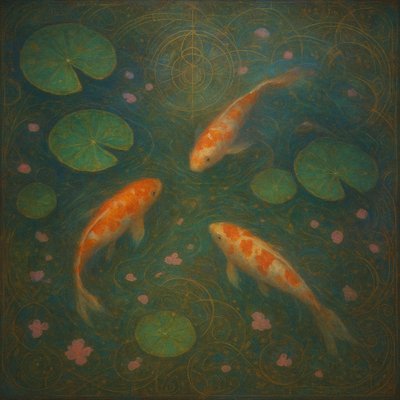
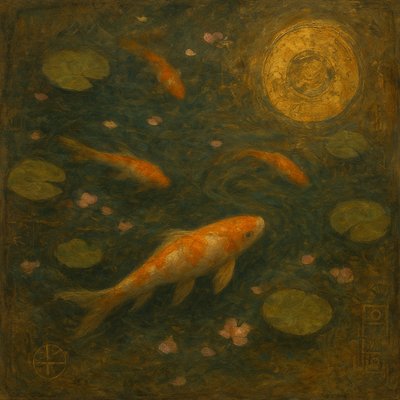
A koi pond seen from above, orange and white koi fish swimming among lily pads, clear water with subtle ripples, fallen cherry blossom petals floating on the surface, dappled sunlight
An incredibly detailed and profound scene depicting the Vision of the Dry Bones from Ezekiel 37. The immediate foreground features a stark, highly detailed close-up of a single ancient human skull, its empty eye sockets gazing out, perfectly rendered with realistic bone texture. Beyond this skull, stretching into the mid-ground, a vast, desolate valley is entirely carpeted with an immense, sprawling expanse of countless other ancient, stark white human bones and skulls. A powerful, divine wind (ruach), emanating an ethereal, sacred glow, swirls violently through this boneyard. This divine energy causes the bones to dramatically rattle, shift, and miraculously knit together, forming complete skeletons. Further in the background, some of these skeletons have already begun to rapidly form tendons, flesh, and skin, starting to rise as part of a nascent, colossal army. The sky above is dramatic and ominous, with streaks of divine light breaking through thick clouds. The overall mood is one of overwhelming desolation, followed by the initial, awe-inspiring moments of miraculous transformation and the promise of life."
A koi pond seen from above, orange and white koi fish swimming among lily pads, clear water with subtle ripples, fallen cherry blossom petals floating on the surface, dappled sunlight