People In Garden Art

a group of people standing next to each other
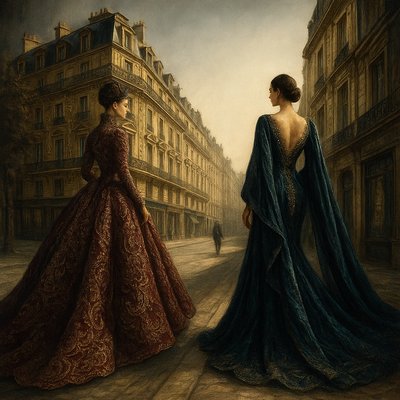
a painting of two people walking down a street
a drawing of two people walking down a street
a painting of people walking down a city street
a group of people sitting next to each other
a painting of two people standing next to each other
two people taking a selfie in a mirror
a group of people standing next to each other
a drawing of people walking down a city street
a couple of people standing next to each other
profound image representing the verse Psalm 119:15. The scene depicts a solitary lady with flowing, long red hair, in a posture of deep contemplation or meditation. She is seated or kneeling in a peaceful, natural setting – perhaps on a gentle hillside overlooking a tranquil landscape, by a calm body of water, or within a serene garden. Her expression is focused and reverent.

Before her, or subtly integrated into the scene, is an ancient scroll or open book, glowing with a soft, ethereal light, symbolizing God's precepts. Her posture and gaze are directed towards this source of wisdom, with a clear sense of 'fixing her eyes' on its profound truth.

Extending from the scroll/book, or subtly woven into the distant landscape, are luminous, ethereal pathways or guiding lights, representing 'Your ways' (God's ways). These pathways are clear and inviting, leading towards a bright, hopeful horizon, symbolizing divine guidance and understanding. The atmosphere is tranquil and reflective, bathed in soft, warm, golden light (perhaps dawn or dusk), signifying clarity and spiritual insight. The overall mood is one of peace, deep wisdom, divine guidance, and focused devotion, rendered with a beautiful, luminous quality."
An awe-inspiring and whimsical scene featuring Willy Wonka's Great Glass Wonkavator, soaring through the sky and beyond the confines of the chocolate factory. The Wonkavator itself is a magnificent, multi-directional glass elevator, transparent and sparkling, with a middle aged Willy Wonka (wearing his iconic top hat, purple coat, and bowtie) and a young Victorian well dressed lady looking out with expressions of joy, wonder and excitement. The interior is filled with intricate buttons and levers for controlling its magical flight. The Wonkavator is depicted in mid-flight, perhaps bursting through the factory roof or ascending above the clouds. Below it, the fantastical landscape of the Chocolate Factory is visible – chocolate rivers, edible gardens, candy cane trees, and various whimsical buildings. Beyond the factory, a stunning, imaginative sky unfolds, perhaps with floating candy clouds, distant fantastical landmarks, or even glimpses of outer space and planets. The lighting is bright and magical, emphasizing the glass's transparency and the vibrant colors of the world below and beyond. The overall mood is one of boundless adventure, limitless possibilities, and pure, joyful fantasy."
An awe-inspiring and whimsical scene featuring Willy Wonka's Great Glass Wonkavator, soaring high above the chocolate factory and ascending into a fantastical sky. The Wonkavator itself is a magnificent, multi-directional glass elevator, transparent and sparkling, with Willy Wonka (in his iconic purple coat and top hat), young Charlie Bucket, and Grandpa Joe clearly visible and enjoying the ride inside. Wonka points excitedly, Charlie looks out with wide-eyed wonder, and Grandpa Joe grins with delight. The interior of the Wonkavator shows intricate, whimsical control panels.

The Wonkavator is depicted in mid-flight, having just burst through the factory roof or rising above the clouds. Below it, the fantastical landscape of the Chocolate Factory is spread out – chocolate rivers, edible gardens, candy cane trees, and various whimsical buildings. Beyond the factory, a stunning, imaginative sky unfolds, filled with floating candy clouds, distant fantastical landmarks, and even glimpses of planets and stars. The lighting is bright and magical, emphasizing the glass's transparency and the vibrant colors of the world below and beyond. The overall mood is one of boundless adventure, limitless possibilities, and pure, joyful fantasy."
An awe-inspiring and whimsical scene featuring Willy Wonka's Great Glass Wonkavator, soaring through the sky and beyond the confines of the chocolate factory. The Wonkavator itself is a magnificent, multi-directional glass elevator, transparent and sparkling, with Willy Wonka (wearing his iconic top hat, purple coat, and bowtie) and 2 young Victorian well dressed ladies looking out with expressions of joy, wonder and excitement. The interior is filled with intricate buttons and levers for controlling its magical flight. The Wonkavator is depicted in mid-flight, perhaps bursting through the factory roof or ascending above the clouds. Below it, the fantastical landscape of the Chocolate Factory is visible – chocolate rivers, edible gardens, candy cane trees, and various whimsical buildings. Beyond the factory, a stunning, imaginative sky unfolds, perhaps with floating candy clouds, distant fantastical landmarks, or even glimpses of outer space and planets. The lighting is bright and magical, emphasizing the glass's transparency and the vibrant colors of the world below and beyond. The overall mood is one of boundless adventure, limitless possibilities, and pure, joyful fantasy."
An awe-inspiring and whimsical scene featuring Willy Wonka's Great Glass Wonkavator, soaring through the sky and beyond the confines of the chocolate factory. The Wonkavator itself is a magnificent, multi-directional glass elevator, transparent and sparkling, with a middle aged Willy Wonka (wearing his iconic top hat, purple coat, and bowtie) and 2 young Victorian well dressed ladies looking out with expressions of joy, wonder and excitement. The interior is filled with intricate buttons and levers for controlling its magical flight. The Wonkavator is depicted in mid-flight, perhaps bursting through the factory roof or ascending above the clouds. Below it, the fantastical landscape of the Chocolate Factory is visible – chocolate rivers, edible gardens, candy cane trees, and various whimsical buildings. Beyond the factory, a stunning, imaginative sky unfolds, perhaps with floating candy clouds, distant fantastical landmarks, or even glimpses of outer space and planets. The lighting is bright and magical, emphasizing the glass's transparency and the vibrant colors of the world below and beyond. The overall mood is one of boundless adventure, limitless possibilities, and pure, joyful fantasy."
An awe-inspiring and whimsical scene featuring Willy Wonka's Great Glass Wonkavator, soaring through the sky and beyond the confines of the chocolate factory. The Wonkavator itself is a magnificent, multi-directional glass elevator, transparent and sparkling, with a middle aged Willy Wonka (wearing his iconic top hat, purple coat, and bowtie) and a young Victorian well dressed lady looking out with expressions of wonder and excitement. The interior is filled with intricate buttons and levers for controlling its magical flight. The Wonkavator is depicted in mid-flight, perhaps bursting through the factory roof or ascending above the clouds. Below it, the fantastical landscape of the Chocolate Factory is visible – chocolate rivers, edible gardens, candy cane trees, and various whimsical buildings. Beyond the factory, a stunning, imaginative sky unfolds, perhaps with floating candy clouds, distant fantastical landmarks, or even glimpses of outer space and planets. The lighting is bright and magical, emphasizing the glass's transparency and the vibrant colors of the world below and beyond. The overall mood is one of boundless adventure, limitless possibilities, and pure, joyful fantasy."
This calls for patient endurance on the part of the people of God who keep his commands and remain faithful to Jesus.
“Who went forth by the way that leadeth to Galgala, and pitched their tents before Masaloth, which is in Arbela, and after they had won it, they slew much people.” (1 Maccabees 9:2, KJVA)
“If therefore perfection were by the Levitical priesthood, (for under it the people received the law,) what further need was there that another priest should rise after the order of Melchisedec, and not be called after the order of Aaron?” (Hebrews 7:11, KJV)
“He was taken from prison and from judgment: and who shall declare his generation? for he was cut off out of the land of the living: for the transgression of my people was he stricken.” (Isaiah 53:8, KJV)
Luke 23:14 (KJV)
14 Said unto them, Ye have brought this man unto me, as one that perverteth the people: and, behold, I, having examined him before you, have found no fault in this man touching those things whereof ye accuse him:
“If therefore perfection were by the Levitical priesthood, (for under it the people received the law,) what further need was there that another priest should rise after the order of Melchisedec, and not be called after the order of Aaron?” (Hebrews 7:11, KJV)
“And the God that hath caused his name to dwell there destroy all kings and people, that shall put to their hand to alter and to destroy this house of God which is at Jerusalem. I Darius have made a decree; let it be done with speed.” (Ezra 6:12, KJV)
First century Palestine.  Jesus walks away from the camera down a road that goes through town with several of His disciples.   Jesus wears a plain robe like most ordinary men.  The other people are dressed like peasants, farmers, and tradesmen.  There are also women in the group, wearing plain, everyday clothing.  Some children are playing near the roadside.  The Sea of Galilee shines in the far distance.
First century Palestine.  Jesus walking away from the camera with 2 of His disciples.  The Temple sits high on a hill in the distance with the road going up to it.  Merchants and houses line the road.  People are coming and going both ways.
Inside a large office building in London, on the 5th floor, Wing Sun's father, a Chinese Malaysian man in his 30s, speaks to his counterpart in the company, and English man, about business.  Other workers are seated at their desks and standing at a copy machine.  There are some Black people, but mostly British.  One whole wall of the room is glass and we can see something of London outside.
"A historically accurate depiction of a Ghost Dance, focusing on the late 19th-century context, specifically around 1890-1891. The scene shows Lakota (Sioux) or Northern Paiute people (specify one or include elements of both, but avoid anachronisms) participating in the ceremony.

Setting: A vast, open prairie or high desert landscape, under an expansive sky. The time of day could be dusk or night, with a prominent moon or stars, or a bright, clear day. Avoid overtly spiritual or ethereal elements like floating spirits unless explicitly requested for a later, more symbolic iteration. The focus should be on the earthly ceremony.

Participants: A circle of men, women, and children, hand-in-hand, moving in a slow, rhythmic shuffle or circular motion. Their faces show a mixture of devotion, hope, and determination. Some may have expressions of trance or deep concentration.

Attire:

    Ghost Dance Shirts/Dresses: Emphasize the unique Ghost Dance shirts and dresses, which were typically made of muslin or canvas. These garments should feature painted designs such as stars, crescents, birds (especially eagles or crows), buffalo, human figures, or crosses. The designs should appear hand-painted, not mass-produced.

    Hair and Adornments: Participants should have braided hair or wear it long. Some may wear feathers (e.g., eagle or hawk feathers) in their hair. Minimal traditional adornments, as the focus was often on the Ghost Dance shirt itself. Avoid overly elaborate or Hollywood-esque depictions of war bonnets unless relevant to a specific individual and context.

    Footwear: Moccasins or bare feet.

Action/Atmosphere:

    The dancers are moving in a counter-clockwise circle, with a central figure or a small group often leading.

    The overall mood is one of earnest prayer and communal spiritual effort. The dance should convey a sense of hope for renewal and the return of the old ways, rather than aggression or despair.

    There might be a central pole or small fire as a focal point, around which the dance takes place.

    Avoid any signs of direct conflict or violence; the Ghost Dance itself was a non-violent spiritual movement.

Specific Considerations for Accuracy:

    Wovoka's Influence: The teachings of Wovoka (the Northern Paiute prophet) emphasized peace, hard work, and the return of the buffalo and deceased ancestors. The scene should subtly reflect this hopeful, redemptive spirit.

    Regional Variations: If focusing on Lakota, consider their specific interpretations, which sometimes included more imagery related to their warrior traditions on the shirts, but still within the peaceful framework of the dance.

    Respectful Portrayal: Ensure the depiction is respectful and avoids any stereotypical or caricatured representations of Indigenous people. Focus on their human dignity and spiritual sincerity.
First century Palestine.  Jesus walks away from the camera along a road that goes through town with several of His disciples.   Jesus wears a plain robe like most ordinary men.  The other people are dressed like peasants, farmers, and tradesmen.  There are also women in the group, wearing plain, everyday clothing.  Some children are playing near the roadside.  Merchants are selling their goods in booths along the road.  There are houses along the road also.  The road goes upward toward the Temple in the far distance.


First century Palestine.  Jesus sits on a rock on a hillside teaching a large group of His disciples.  The Sermon on the Mount.  Jesus wears a plain robe like most ordinary men.  Jesus' face is kind, but intense, as He teaches. The other people are mostly peasants, farmers, and tradesmen.  There are also women present, wearing plain, everyday clothing.  Some couples have also brought their children.  The Sea of Galilee shines in the far distance.
Inside an informal church in London.  Wing Sun's father has been invited to attend with his counterpart from the office.  He doesn't have anything else to do on Sunday morning, so he goes along.  we are standing in the back of the room.  There are many people of different ethnicities, the Pastor is standing up front alongside a worship leader with a guitar, and a young black woman, facing the audience.  The atmosphere is warm and welcoming, but Wing Sun's father feels a little uncomfortable.
Morning city scene in Petaling Jaya. A 10 year old chinese boy and his grandmother.  As they weave through the narrow sidewalk,  taxis zip by, buses screech to a halt at stoplights, motorbikes wend their way through the stopped traffic, trying to get a head start when the light turns green.  People in the informal businesses set up along the sidewalks call out greetings in a mix of Cantonese, Malay, and English. The sky, still soft with the remnants of dawn, and yet already heavy with humid heat, hinted at another sweltering afternoon ahead.
An epic, wide-angle cinematic masterwork of the 144,000 servants of God, divided into twelve massive, disciplined ranks in a valley of white stone. Each rank is led by a towering, ornate scarlet silk banner with gold-embroidered edges. 
The Banners: Distinct symbols are visible on each: a Lion (Judah), Sun over Water (Reuben), Military Tent (Gad), Olive Tree (Asher), Leaping Deer (Naphtali), Fruitful Vine (Manasseh), City Gate (Simeon), Priestly Breastplate (Levi), Celestial Stars (Issachar), Sailing Ship (Zebulun), Wheat Sheaf (Joseph), and Silver Wolf (Benjamin).
The People: In the foreground, the men wear crisp white linen robes with deep Tola-scarlet sashes. Every individual has a brilliant, glowing Golden Seal physically shimmering on their forehead, casting a divine light upward.
“That their hearts might be comforted, being knit together in love, and unto all riches of the full assurance of understanding, to the acknowledgement of the mystery of God, and of the Father, and of Christ; In whom are hid all the treasures of wisdom and knowledge. And this I say, lest any man should beguile you with enticing words. For though I be absent in the flesh, yet am I with you in the spirit, joying and beholding your order, and the stedfastness of your faith in Christ.” (Colossians 2:2-5, KJV)
Please use youthful people to express this.
“That their hearts might be comforted, being knit together in love, and unto all riches of the full assurance of understanding, to the acknowledgement of the mystery of God, and of the Father, and of Christ; In whom are hid all the treasures of wisdom and knowledge. And this I say, lest any man should beguile you with enticing words. For though I be absent in the flesh, yet am I with you in the spirit, joying and beholding your order, and the stedfastness of your faith in Christ.” (Colossians 2:2-5, KJV)
Please use youthful people to express this.
A surrealist, double-exposure art piece. In the foreground, there are translucent, architect’s blueprint lines and ghostly outlines of the ancient Temple altars, lampstands, and the Holy of Holies (representing the "figures of the true"). Overlapping and far superior to them, Jesus Christ stands before an blinding, warm, golden divine presence (representing the "presence of God"). He is actively gesturing forward, presenting a scroll or his own wounds on behalf of unseen people ("for us"). Transcendent, ethereal, glowing edges, minimal color palette of gold, white, and midnight blue.