Paris, France Art

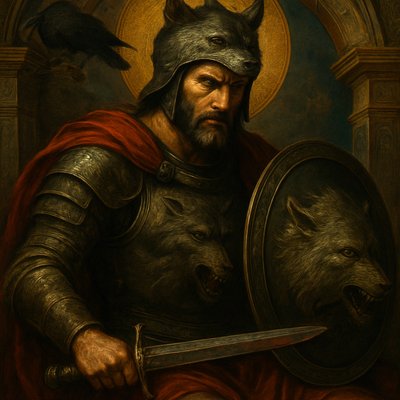
Benjamin shall ravin as a wolf: in the morning he shall devour the prey, and at night he shall divide the spoil.
(Genesis 49:27 KJV)A powerful and dynamic illustration of a figure embodying the Tribe of Benjamin, inspired by the 'ravenous wolf' prophecy. The figure should be an intensely focused, battle-hardened warrior, perhaps with a stylized wolf motif on his armor or shield.The central figure should display the ferocity of a wolf in motion, but the discipline of a true leader in rest. High-detail fantasy illustration, cinematic lighting, tribal warrior aesthetic, emphasis on the duality of conquest and provision.
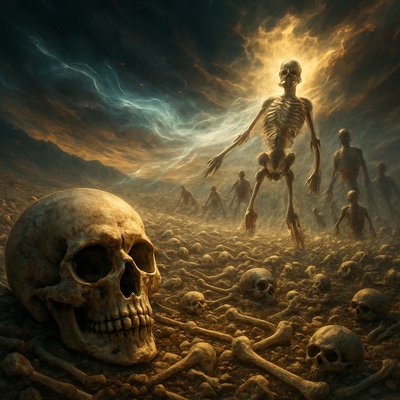
An incredibly detailed and profound scene depicting the Vision of the Dry Bones from Ezekiel 37. The immediate foreground features a stark, highly detailed close-up of a single ancient human skull, its empty eye sockets gazing out, perfectly rendered with realistic bone texture. Beyond this skull, stretching into the mid-ground, a vast, desolate valley is entirely carpeted with an immense, sprawling expanse of countless other ancient, stark white human bones and skulls. A powerful, divine wind (ruach), emanating an ethereal, sacred glow, swirls violently through this boneyard. This divine energy causes the bones to dramatically rattle, shift, and miraculously knit together, forming complete skeletons. Further in the background, some of these skeletons have already begun to rapidly form tendons, flesh, and skin, starting to rise as part of a nascent, colossal army. The sky above is dramatic and ominous, with streaks of divine light breaking through thick clouds. The overall mood is one of overwhelming desolation, followed by the initial, awe-inspiring moments of miraculous transformation and the promise of life."
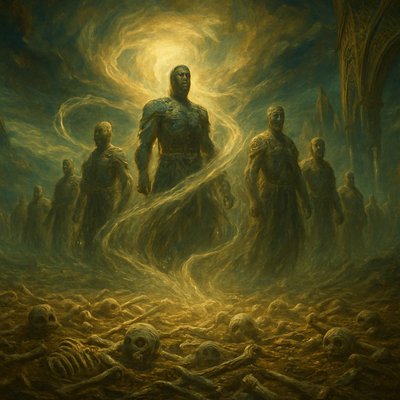
A profound and epic scene depicting the Vision of the Dry Bones from Ezekiel 37. In a desolate, vast valley, countless dry human bones are scattered, stark white and ancient. A powerful, divine wind (ruach) swirls through the valley, imbued with a sacred, ethereal glow, causing the bones to rattle and miraculously knit together. Tendons, flesh, and skin rapidly form over the skeletal structures, transforming them into fully-formed human figures. As the divine breath enters, the figures rise, not as individuals, but as a colossal, awe-inspiring army standing upright, gazing forward with renewed life and purpose. The sky above is dramatic, perhaps with stormy clouds breaking to reveal a divine light. The overall mood is one of miraculous resurrection, immense power, and hopeful restoration."
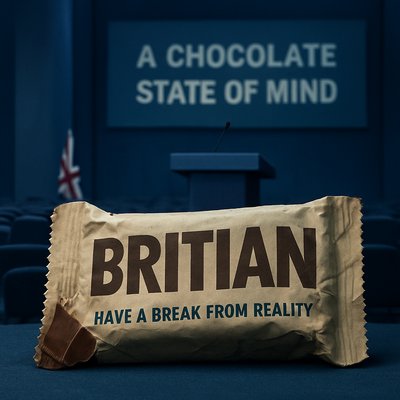
Image Brief — “Britian. A Chocolate State of Mind.” (Landscape / Conference Hall)

Visual Concept:
A photographic, data-style image capturing the absurdity of corporate branding and political satire. The chocolate bar spelling “Britian” is the central focus. The scene is staged in a conference hall, emphasizing the formal-but-absurd atmosphere of a high-profile political event.

Core Elements:
	•	Chocolate bar front and center, wrapper crumpled, spelling clearly visible.
	•	Backdrop / environment: realistic conference hall — lectern in the frame, faint rows of seating or stage elements, subtle signs of a political event. No office props.
	•	Palette: predominantly blue tones (lighting, hall décor, banners), with small Tory-signifier accents (navy, subtle red) to hint at political context.
	•	Orientation: landscape (wide) — must match the style and aspect ratio of other blog images.
	•	Lighting / style: naturalistic photography; soft, realistic shadows; slightly moody, surreal undertone; no cartoonish or illustrative effects.
	•	Mood / atmosphere: dry, ironic, subtly surreal — visually echoing Tom Kite’s sardonic, satirical voice.

Typography (optional):
Small text on wrapper: “Have a break from reality” in clean, bold type, integrated naturally into the photographic scene.

Use / Context:
	•	Featured image for blog post “Britian. A Chocolate State of Mind.”
	•	Must work as both thumbnail and full-size blog header.
	•	Maintain photographic, slightly surreal style consistent with other blog imagery
Inspiration is Hannah Hoch, Jean-Michel Basquiat, John Stezaker
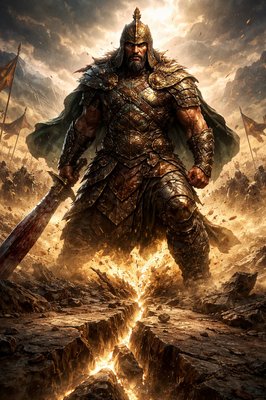
"A hyper-realistic, cinematic portrait of Zelek the Ammonite, one of King David’s elite 'Mighty Men.' He is a towering figure with a weathered, fierce expression, wearing ancient Near Eastern bronze-and-iron scale armor with heavy leather straps. He stands in a stance of immense power, holding a massive, jagged-edged broadsword or a heavy iron-headed spear. The background is a battlefield where he has literally 'broken' through the enemy line—visualized as a physical fissure or crack in the earth radiating from his feet (Baal-perazim style). The enemy 'host' is seen scattering and dissolving in his wake, depicted as shadowy figures falling back into a golden, dusty haze. Art Style: Gritty biblical realism blended with epic 2026 digital concept art; heavy emphasis on texture (hammered metal, scarred skin, desert sand), deep shadows, and high-contrast volumetric lighting. 8K resolution, wide-angle lens, masterpiece quality
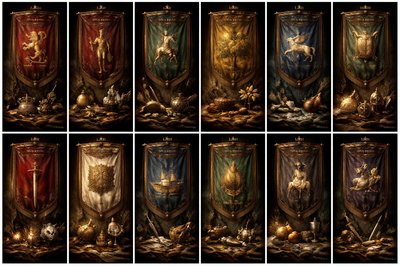
“And I heard the number of them which were sealed: and there were sealed an hundred and forty and four thousand of all the tribes of the children of Israel. Of the tribe of Juda were sealed twelve thousand. Of the tribe of Reuben were sealed twelve thousand. Of the tribe of Gad were sealed twelve thousand. Of the tribe of Aser were sealed twelve thousand. Of the tribe of Nepthalim were sealed twelve thousand. Of the tribe of Manasses were sealed twelve thousand. Of the tribe of Simeon were sealed twelve thousand. Of the tribe of Levi were sealed twelve thousand. Of the tribe of Issachar were sealed twelve thousand. Of the tribe of Zabulon were sealed twelve thousand. Of the tribe of Joseph were sealed twelve thousand. Of the tribe of Benjamin were sealed twelve thousand.” (Revelation 7:4-8, KJV)
Only create 12 tribal ensigns.
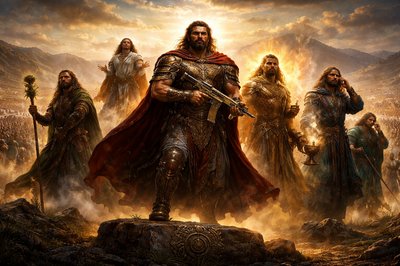
A cinematic, hyper-realistic wide shot of six valiant biblical warriors, the sons of Tola, standing as "heads of their father’s house" in an ancient Levantine desert landscape. In the center, Uzzi is a massive, muscular commander clad in bronze armor, incongruously wielding a modern tactical Uzi submachine gun with gold engravings. Surrounding him are his brothers: Rephaiah holding a staff entwined with healing herbs; Jeriel standing atop a massive foundation stone looking toward heaven; Jahmai enveloped in a warm, protective golden aura; Jibsam Holding a detailed censer releasing fragrant incense smoke.; and Shemuel in a posture of listening, hand to his ear as if hearing a divine whisper. In the background, a vast army of 22,600 soldiers stretches to the horizon under the golden sun of King David’s era. Epic composition, dramatic chiaroscuro lighting, intricate leather and metal textures, 8k resolution, ArtStation style.
Whimsical Storybook Illustration Style, Soft Pastel Color Palette, Dreamy Atmosphere. A charming, heartwarming scene featuring a magical creature, rendered with gentle textures and colored pencil lines.

The Kitten: An impossibly fluffy, cream-colored kitten with enormous, round, sparkling blue eyes and tiny pink paws. It is sitting upright on a soft, mossy cloud, looking at its tail with a delighted, surprised expression.

The Wings: Sprouting from its back are two small, incredibly soft angel wings with white feathers that have a gentle, pearlescent sheen. They look slightly too big for its tiny body, giving it a clumsy sort of grace.

The Magic Tail (The Wand): The tail is long and expressive. Instead of a normal furry tip, the end of its tail is a swirling, glowing orb of concentrated magical energy—soft golds, rosy pinks, and powder blues. The kitten is swishing its tail forward just like a wizard waves a wand.
Whimsical Storybook Illustration Style, Soft Pastel Color Palette, Dreamy Atmosphere. A charming, heartwarming scene featuring a magical creature, rendered with gentle textures and colored pencil lines.

The Kitten: An impossibly fluffy, cream-colored kitten with enormous, round, sparkling blue eyes and tiny pink paws. It is sitting upright on a soft, mossy cloud, looking at its tail with a delighted, surprised expression.

The Wings: Sprouting from its back are two small, incredibly soft angel wings with white feathers that have a gentle, pearlescent sheen. They look slightly too big for its tiny body, giving it a clumsy sort of grace.

The Magic Tail (The Wand): The tail is long and expressive. Instead of a normal furry tip, the end of its tail is a swirling, glowing orb of concentrated magical energy—soft golds, rosy pinks, and powder blues. The kitten is swishing its tail forward just like a wizard waves a wand.
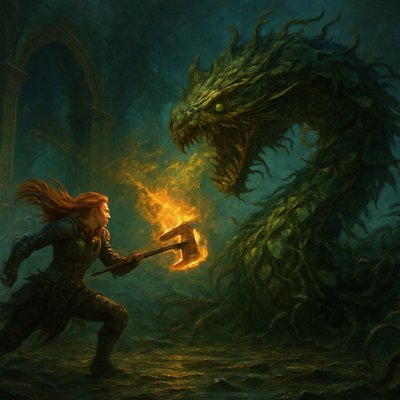
Epic Fantasy Illustration Style, Gritty Cinematic Concept Art, a dynamic, wide-angle action shot of a fierce battle amidst overgrown ancient ruins at twilight. A lone, hardened warrior clad in practical leather and partial plate armor is in a dynamic combat stance, dodging a massive vine strike. They wield a glowing, enchanted battleaxe that burns with orange fire, striking at the creature. The opponent is a colossal, serpentine Botanical Dragon construct made entirely of writhing, thick poison ivy vines, hairy root systems, and dense clusters of glossy, three-pointed leaves. The "dragon" rears up, its maw a tangled mass of thorns and dripping toxic sap, exhaling clouds of yellowish-green poisonous spores. Its eyes glow with a malevolent verdant light. The ground is treacherous swamp and broken stone. The lighting is dramatic and moody, highlighting the oily sheen of the poisonous leaves and the fire of the warrior's weapon. High detail on the plant textures.
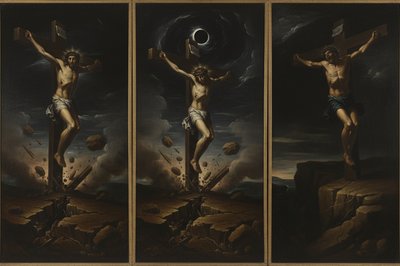
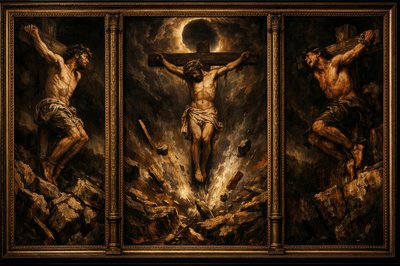
A triptych oil painting, presented as three heavily framed, connected panels in the dramatic, tenebrism style of Baroque masters like Caravaggio. The overall atmosphere is one of supernatural, oppressive darkness and violent chaos.

The Left Panel shows the penitent thief on his cross, body twisted in pain but his face turned toward the center panel with a look of sorrowful acceptance. A faint, supernatural light illuminates his face against a nearly black sky. Below him, rocks are splitting.

The Center Panel is dominated by Jesus on the cross, head bowed in finality. The sky is a swirling vortex of eclipse darkness, blotting out the sun. The ground beneath the cross is violently cracking open, emitting dust and smoke, with debris caught in mid-air from the earthquake shockwave.

The Right Panel shows the impenitent thief, writhing and screaming against his bonds, his face contorted in rage looking away from the center. He is almost swallowed by the shadows. The cross appears unstable as the cliffside crumbles beneath it. The entire triptych has a rich, dark color palette of deep browns, blacks, and muted crimson, textured with visible, frantic brushstrokes.
1950s Vintage Illustration Style, Saturday Evening Post Aesthetic, a heartwarming scene under a decorated Christmas tree. Two fluffy kittens, one a ginger tabby and the other a calico, are joyfully playing in a chaotic pile of discarded Christmas wrapping paper, ribbons, and bows. The ginger kitten is tangled in a long piece of shiny red and green paper, batting at a curled ribbon. The calico kitten is pouncing from inside a torn open cardboard gift box, surrounded by crumpled tissue paper. Torn pieces of colorful wrapping paper (gold foil, snowman patterns, stripes) and empty gift tags are scattered everywhere on a plush rug. The Christmas tree above them is glowing with warm fairy lights and decorated with traditional ornaments. The background is a cozy living room with a fireplace.
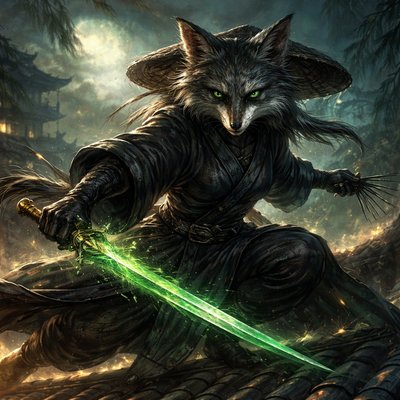
Cinematic Wuxia Art Style, Fantasy Digital Art Style, Dark Fantasy, a dynamic anthropomorphic character portrait of the villain Jade Fox from Crouching Tiger, Hidden Dragon. She is rendered as a mature, grizzled fox with fur that is a mix of deep grey and a subtle, bitter jade-green tint. Her eyes are intensely human—sharp, vengeful, and cunning. She is dressed in dark, practical Qing Dynasty assassin's robes (similar to the male disguise she wears in the film), perhaps with a wide straw hat slung across her back. She is crouched low in a masterful martial arts stance on the curved, moonlit tiled roof of an ancient Chinese building. In one clawed paw, she wields the stolen, green-glowing Green Destiny sword, while the other paw is poised, ready to throw her signature poisoned needles. The background is a misty, sprawling city at night with bamboo silhouettes. The atmosphere is tense, dangerous, and steeped in ancient secrets.
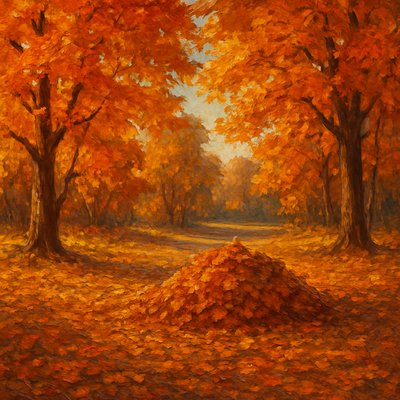
A tranquil and inviting autumn landscape based on the provided image, depicting a park-like setting with large trees and a pile of fallen leaves. The trees framing the foreground and extending into the middle ground are now in their full, glorious fall colors. One feels as if they are under a canopy of trees.

The ground is generously covered with a soft, thick carpet of fallen autumn leaves, rendered in various warm hues. A prominent, neatly gathered pile of raked leaves sits in the middle ground, inviting curiosity or play, with its textures and colors clearly visible. In the background, hints of a path or road gently wind through more fall foliage, suggesting a peaceful stroll.

The sky above is a soft, clear autumn blue, allowing warm, diffused sunlight to filter through the canopy, casting gentle shadows and highlighting the vibrant colors of the leaves both on the trees and on the ground. The overall mood is one of serene autumnal beauty, crisp air, and the pleasant, nostalgic feeling of a beautiful fall day in a park."
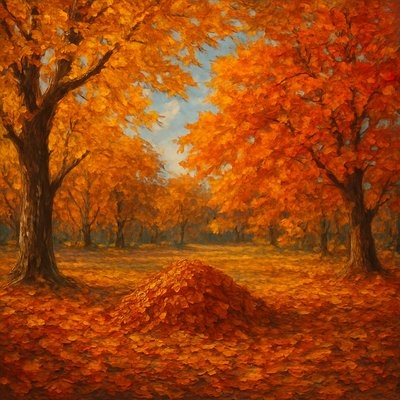
A tranquil and inviting autumn landscape based on the provided image, depicting a park-like setting with large trees and a central pile of fallen leaves. The trees framing the foreground and extending into the middle ground are now in their full, glorious fall colors, displaying a rich tapestry of brilliant yellows, deep oranges, fiery reds, and warm russets.

The ground is generously covered with a soft, thick carpet of fallen autumn leaves, rendered in various warm hues. A prominent, neatly gathered pile of raked leaves sits in the middle ground, inviting curiosity or play, with its textures and colors clearly visible. In the background, hints of a path or road gently wind through more fall foliage, suggesting a peaceful stroll.

The sky above is a soft, clear autumn blue, allowing warm, diffused sunlight to filter through the canopy, casting gentle shadows and highlighting the vibrant colors of the leaves both on the trees and on the ground. The overall mood is one of serene autumnal beauty, crisp air, and the pleasant, nostalgic feeling of a beautiful fall day in a park."
Epic Landscape Photography Style, Wide-Angle Lens, Golden Hour Lighting. A profound, sweeping photograph of a single, colossal ancient Eastern Cottonwood tree standing isolated in the center of a vast expanse of the Nebraska rolling highlands (Sandhills).

The Tree: It is massive and gnarled, a true sentinel of the plains, with a thick, deeply fissured trunk and sprawling, asymmetrical branches shaped by years of constant wind.

The Environment: The surrounding landscape is a sea of undulating, gentle hills covered in knee-high mixed-grass prairie that glows coppery-gold and sage-green in the late afternoon light. The grasses are visibly swaying in the breeze. A faint, winding dirt track leads toward the horizon.

The Sky & Light: The sky is immense and dramatic, taking up two-thirds of the frame, filled with textured cumulus clouds catching the brilliant oranges, deep purples, and soft pinks of the sunset. The light is warm, casting long shadows across the folds of the hills. The mood is quiet, vast, and solitary.
"A hyper-realistic, cinematic portrait of Zelek the Ammonite, one of King David’s elite 'Mighty Men.' He is a towering figure with a weathered, fierce expression, wearing ancient Near Eastern bronze-and-iron scale armor with heavy leather straps. He stands in a stance of immense power, holding a massive, jagged-edged broadsword or a heavy iron-headed spear. The background is a battlefield where he has literally 'broken' through the enemy line—visualized as a physical fissure or crack in the earth radiating from his feet (Baal-perazim style). The enemy 'host' is seen scattering and dissolving in his wake, depicted as shadowy figures falling back into a golden, dusty haze. Art Style: Gritty biblical realism blended with epic 2026 digital concept art; heavy emphasis on texture (hammered metal, scarred skin, desert sand), deep shadows, and high-contrast volumetric lighting. 8K resolution, wide-angle lens, masterpiece quality
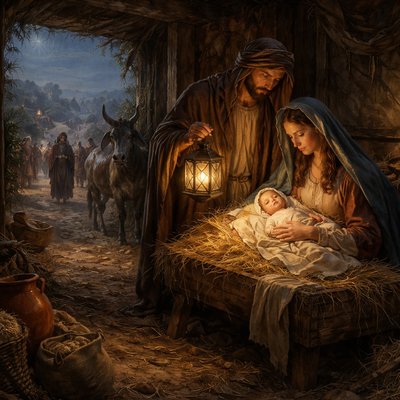
“And it came to pass in those days, that there went out a decree from Caesar Augustus, that all the world should be taxed. (And this taxing was first made when Cyrenius was governor of Syria.) And all went to be taxed, every one into his own city. And Joseph also went up from Galilee, out of the city of Nazareth, into Judaea, unto the city of David, which is called Bethlehem; (because he was of the house and lineage of David:) To be taxed with Mary his espoused wife, being great with child. And so it was, that, while they were there, the days were accomplished that she should be delivered. And she brought forth her firstborn son, and wrapped him in swaddling clothes, and laid him in a manger; because there was no room for them in the inn.” (Luke 2:1-7, KJV)
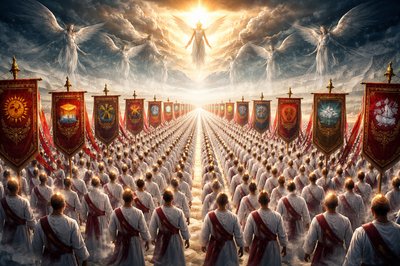
An epic, wide-angle cinematic masterwork of the 144,000 servants of God, divided into twelve massive, disciplined ranks in a valley of white stone. Each rank is led by a towering, ornate scarlet silk banner with gold-embroidered edges. 
The Banners: Distinct symbols are visible on each: a Lion (Judah), Sun over Water (Reuben), Military Tent (Gad), Olive Tree (Asher), Leaping Deer (Naphtali), Fruitful Vine (Manasseh), City Gate (Simeon), Priestly Breastplate (Levi), Celestial Stars (Issachar), Sailing Ship (Zebulun), Wheat Sheaf (Joseph), and Silver Wolf (Benjamin).
The People: In the foreground, the men wear crisp white linen robes with deep Tola-scarlet sashes. Every individual has a brilliant, glowing Golden Seal physically shimmering on their forehead, casting a divine light upward.
The Heavens: In the far distance, four colossal, translucent angels stand at the horizon, their massive wings outstretched to physically block swirling, dark storm-vortices (the four winds). A fifth angel, radiant in pearlescent light, descends from a golden sunrise in the East.
Style: High-contrast chiaroscuro, intricate embroidery textures, hyper-detailed faces, 8k resolution, ArtStation masterpiece. Absolutely no English text or letters.
Judges 20:8-12 (KJV)
8 And all the people arose as one man, saying, We will not any of us go to his tent, neither will we any of us turn into his house.
9 But now this shall be the thing which we will do to Gibeah; we will go up by lot against it;
10 And we will take ten men of an hundred throughout all the tribes of Israel, and an hundred of a thousand, and a thousand out of ten thousand, to fetch victual for the people, that they may do, when they come to Gibeah of Benjamin, according to all the folly that they have wrought in Israel.
11 So all the men of Israel were gathered against the city, knit together as one man.
12 And the tribes of Israel sent men through all the tribe of Benjamin, saying, What wickedness is this that is done among you?
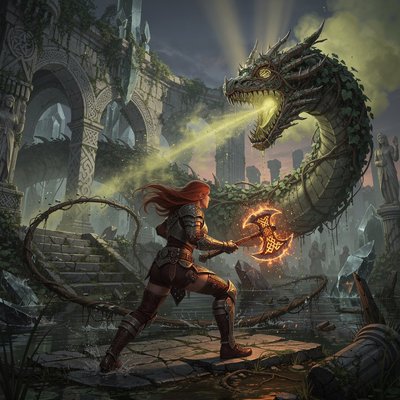
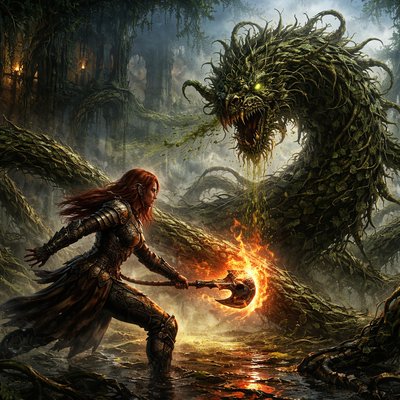
Epic Fantasy Illustration Style, Gritty Cinematic Concept Art, a dynamic, wide-angle action shot of a fierce battle amidst overgrown ancient ruins at twilight. A lady warrior with long red hair clad in practical leather and partial plate armor is in a dynamic combat stance, dodging a massive vine strike. They wield a glowing, enchanted battleaxe that burns with orange fire, striking at the creature. The opponent is a colossal, serpentine Botanical Dragon construct made entirely of writhing, thick poison ivy vines, hairy root systems, and dense clusters of glossy, three-pointed leaves. The "dragon" rears up, its maw a tangled mass of thorns and dripping toxic sap, exhaling clouds of yellowish-green poisonous spores. Its eyes glow with a malevolent verdant light. The ground is treacherous swamp and broken stone. The lighting is dramatic and moody, highlighting the oily sheen of the poisonous leaves and the fire of the warrior's weapon. High detail on the plant textures.
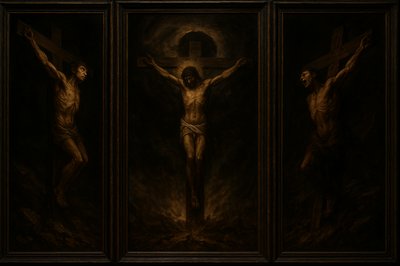
A triptych oil painting, presented as three heavily framed, connected panels in the dramatic, tenebrism style of Baroque masters like Caravaggio. The overall atmosphere is one of supernatural, oppressive darkness and violent chaos.

The Left Panel shows the penitent thief on his cross, body twisted in pain but his face turned toward the center panel with a look of sorrowful acceptance. A faint, supernatural light illuminates his face against a nearly black sky. Below him, rocks are splitting.

The Center Panel is dominated by Jesus on the cross, head bowed in finality. The sky is a swirling vortex of eclipse darkness, blotting out the sun. The ground beneath the cross is violently cracking open, emitting dust and smoke, with debris caught in mid-air from the earthquake shockwave.

The Right Panel shows the impenitent thief, writhing and screaming against his bonds, his face contorted in rage looking away from the center. He is almost swallowed by the shadows. The cross appears unstable as the cliffside crumbles beneath it. The entire triptych has a rich, dark color palette of deep browns, blacks, and muted crimson, textured with visible, frantic brushstrokes.
A triptych oil painting, presented as three heavily framed, connected panels in the dramatic, tenebrism style of Baroque masters like Caravaggio. The overall atmosphere is one of supernatural, oppressive darkness and violent chaos.

The Left Panel shows the penitent thief on his cross, body twisted in pain but his face turned toward the center panel with a look of sorrowful acceptance. A faint, supernatural light illuminates his face against a nearly black sky. Below him, rocks are splitting.

The Center Panel is dominated by Jesus on the cross, head bowed in finality. The sky is a swirling vortex of eclipse darkness, blotting out the sun. The ground beneath the cross is violently cracking open, emitting dust and smoke, with debris caught in mid-air from the earthquake shockwave.

The Right Panel shows the impenitent thief, writhing and screaming against his bonds, his face contorted in rage looking away from the center. He is almost swallowed by the shadows. The cross appears unstable as the cliffside crumbles beneath it. The entire triptych has a rich, dark color palette of deep browns, blacks, and muted crimson, textured with visible, frantic brushstrokes.
A magical, high-fantasy illustration capturing the final scene of Reepicheep's journey from C.S. Lewis's The Voyage of the Dawn Treader. A very small, simple, wooden coracle (boat) is drifting alone across the vast, calm, crystalline waters of the Silver Sea, which is covered in a dense carpet of large, creamy-white and luminous purple sea flowers (lilies or star-shaped blossoms).

The noble Mouse, Reepicheep, stands bravely in the little boat. He is wearing his formal armor and sword, and his tiny sail is lowered. He is looking ahead with an expression of hope and determination toward the far, shimmering horizon where the sky and sea meet the edge of the world, represented by a column or curtain of bright, clear light. The lighting is ethereal and soft, emphasizing the profound stillness and peacefulness of the scene. The overall style should be reminiscent of classic book illustrations, rich in detail, color, and wonder. Golden light of Aethel-red, epic atmosphere, fantasy illustration."
A historically accurate and deeply somber depiction of the immediate aftermath of the Wounded Knee Massacre in December 1890. The scene captures the desolate, snow-covered landscape of the Pine Ridge Reservation. Focus on the fallen Lakota men, women, and children, scattered across the snow, their bodies still and tragic. A few surviving individuals are shown in postures of profound grief or shock, perhaps tending to the wounded. The distant presence of U.S. soldiers, heavily armed, stands as a stark and cold counterpoint to the devastation. The atmosphere is one of profound sorrow, loss, and the brutal silence of winter. The lighting is cold and muted, emphasizing the harshness of the environment and the tragedy of the event. The artistic style should be a realistic, painterly approach, evoking the historical period with unflinching honesty but without graphic sensationalism. The intent is to serve as a memorial to the victims and a historical testament to the tragic event."
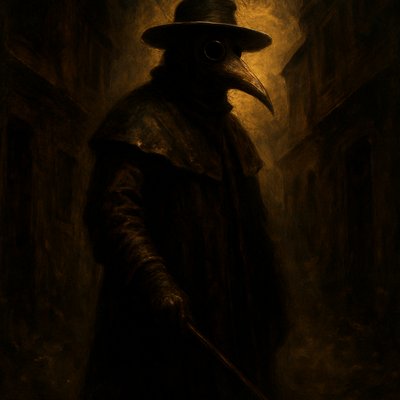
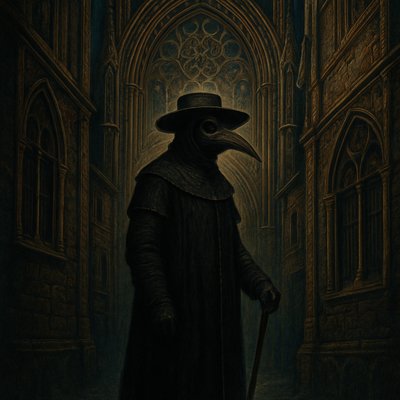
"A solitary and ominous Black Plague Doctor stands in a dimly lit, narrow cobblestone alleyway in a medieval European city. The doctor is clad head-to-toe in their iconic, dark, heavy protective gear: a long, oil-soaked waxed canvas or leather coat, dark gloves, and a wide-brimmed black hat. Their most striking feature, the beaked mask with dark, glass eyeholes, is prominent, creating an eerie, bird-like silhouette that conceals their face entirely. A wooden cane or pointer is held firmly in one gloved hand.

The atmosphere is heavy and foreboding. The background features dark, crumbling stone or timber-framed buildings with shuttered windows, hinting at a city under quarantine. Smoke or mist might subtly swirl around their feet. The lighting is stark and dramatic, perhaps from a distant lantern or a sliver of pale moonlight, casting deep shadows and highlighting the grim details of their attire. The overall mood is one of profound isolation, historical dread, and silent vigilance against an invisible enemy."
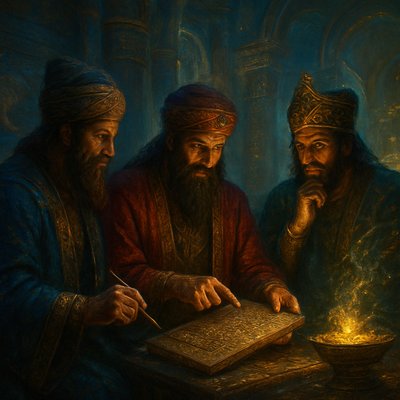
A dramatic, richly detailed scene in the ancient Babylonian royal court. In the foreground, three wise and esteemed Babylonian court magicians (Chaldeans/astrologers) are gathered around a central figure, possibly the king, or intently studying an inscribed clay tablet. They are dressed in opulent, finely woven robes of deep blues, reds, and gold, with elaborate turbans or headwear. Their long, meticulously styled beards and hair indicate their status and wisdom. One magician holds a stylus, another points to intricate cuneiform script on a clay tablet, and the third gazes thoughtfully, perhaps at a celestial chart or into a symbolic brazier. The background reveals the grand, awe-inspiring architecture of the Babylonian palace, with glazed brick walls adorned with depictions of mythical creatures (like the Ishtar Gate lions) and massive, ornate columns. The atmosphere is one of profound intellectual pursuit, ancient wisdom, and mystical interpretation under the watchful eyes of the king. epic fantasy art, cinematic lighting, ultra-detailed, dramatic shadows, mystical glow"
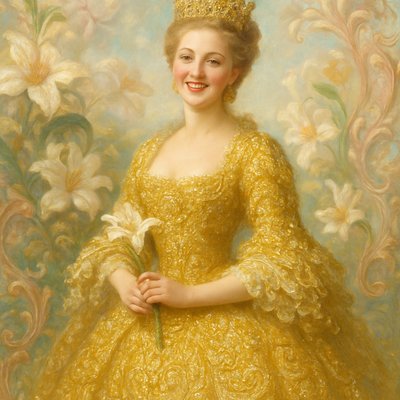
Rococo Art Style, Digital Art Style, a brilliantly joyful, opulent, and ornate three-quarter-length portrait of "The Queen in Gold of Ophir," inspired by Psalm 45. The Queen is facing the viewer with a radiant, happy, and genuinely smiling expression, her pose one of graceful delight. She is adorned in an exquisitely detailed gown woven from the finest gold, which shimmers with a dazzling, intense, almost liquid radiance, typical of Rococo opulence and digital highlight. The gold fabric is intricately embellished with countless sparkling jewels and delicate scrolling patterns in shades of ivory and pearl. A magnificent golden crown, wreathed in tiny golden lilies, rests upon her head. Her hands are gently placed, perhaps holding a single, pure white lily. She is framed by a background featuring large, lush, stylized white and golden lilies and an ornate, soft-focus garden setting bathed in sweet, cheerful daylight. Focus intently on the dazzling, reflective shimmer and ornate detail of the gold gown, the Queen's beautiful, joyous smile, and the light, ethereal quality of the Rococo setting.
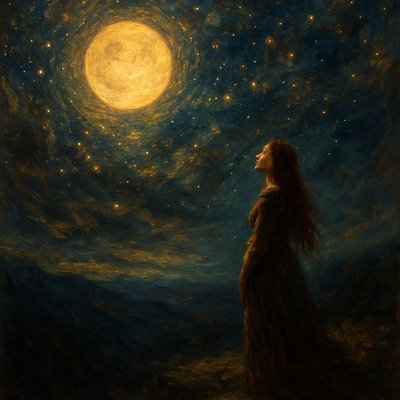
Romanticism Art Style, a profoundly emotional and majestic painting inspired by Psalm 8:3-6. The scene captures a vast, sweeping, and dramatic night sky, filled with an awe-inspiring celestial display of a luminous, prominent moon and countless brilliant stars, depicted with the grandeur and depth characteristic of Romantic landscape painting. In the foreground, set against the overwhelming scale of the cosmos, stands a solitary long red-haired woman, her back partially to the viewer or her face upturned in profound contemplation. She is small in the frame, emphasizing the immense scale, dressed in simple, flowing attire, positioned on a rugged, subtle earthly vantage point like a mountain overlook. Her posture and presence evoke a deep sense of humility, wonder, and spiritual awe at God's creation. The painting is dominated by dramatic chiaroscuro, with the intense glow of the moon and stars piercing through deep, atmospheric shadows. Focus on the sublime scale of the cosmos, the emotional resonance of the human figure contemplating the divine works, and the deep, spiritual awe that pervades the scene, reflecting God's majesty and mindfulness of humanity.
"A solitary and ominous Black Plague Doctor stands in a dimly lit, narrow cobblestone alleyway in a medieval European city. The doctor is clad head-to-toe in their iconic, dark, heavy protective gear: a long, oil-soaked waxed canvas or leather coat, dark gloves, and a wide-brimmed black hat. Their most striking feature, the beaked mask with dark, glass eyeholes, is prominent, creating an eerie, bird-like silhouette that conceals their face entirely. A wooden cane or pointer is held firmly in one gloved hand.

The atmosphere is heavy and foreboding. The background features dark, crumbling stone or timber-framed buildings with shuttered windows, hinting at a city under quarantine. Smoke or mist might subtly swirl around their feet. The lighting is stark and dramatic, perhaps from a distant lantern or a sliver of pale moonlight, casting deep shadows and highlighting the grim details of their attire. The overall mood is one of profound isolation, historical dread, and silent vigilance against an invisible enemy."
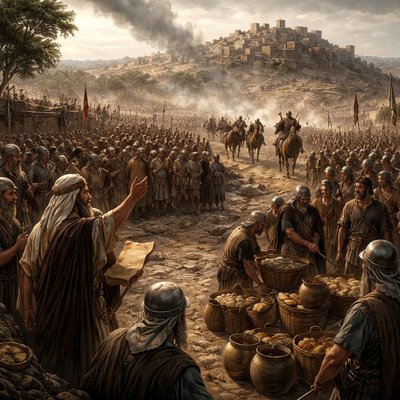
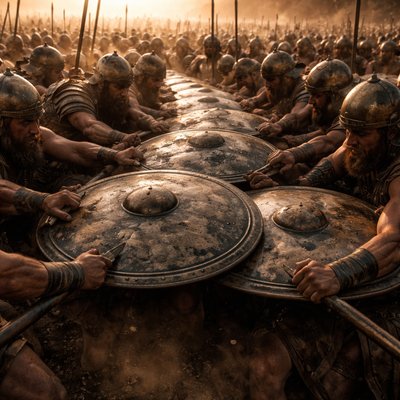
A hyper-realistic, documentary-style photograph of the ancient Hebrew army from Judges 20:11. The low-angle perspective is within the ranks, showing thousands of battle-hardened men in leather and bronze armor. Focus on a tight group of soldiers actively clamping and interlocking their massive, round bronze-faced shields. Their muscles are strained, veins bulging, as they grip the shield edges and spear shafts, physically causing themselves to be fused into one solid unit (Hithpalpel causative-reflexive action). The pattern repeats (Reduplication) in an endless, rhythmic grid of humanity and metal. Dust rises, sweat glistens, faces are set in absolute, synchronized determination. Cinematic golden hour lighting (the vivid amber-orange of a Jerusalem sunset) catches the edges of the bronze, adding intense color and depth. Shallow depth of field, incredible historical texture, 8k resolution.
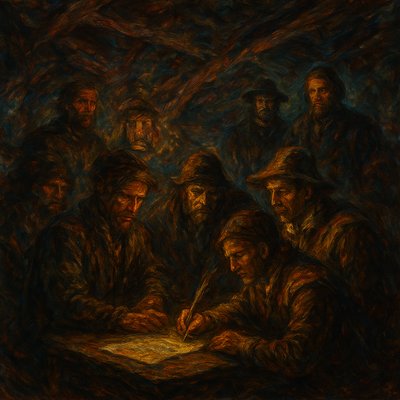
A historically accurate and atmospheric depiction of the signing of the Mayflower Compact aboard the ship in November 1620. The scene is set in the dimly lit, cramped cabin of the Mayflower, with the ship's timbers and rigging subtly visible, conveying the challenging conditions of the voyage. A simple table or chest serves as the signing surface. The primary focus is on a small group of the last individuals signing the document: specifically, the indentured servants (or 'strangers' not directly part of the Separatist congregation) approaching or at the table. Their expressions show a mix of weary determination, understanding of the necessity, and perhaps a hint of quiet apprehension or resignation to this new social contract, given their status. They are dressed in the plain, practical clothing typical of 17th-century commoners and laborers. Figures of prominent Pilgrims or 'Saints' (like William Bradford or John Carver) are visible in the background, observing the proceedings with a sense of gravity and leadership, but they are not the central focus. The lighting is low and warm, perhaps from a lantern, creating a chiaroscuro effect that highlights the faces of the signers. The atmosphere conveys the momentousness of the act under difficult circumstances, the diverse composition of the group, and the early seeds of self-governance in a new world. The artistic style is a realistic, historically detailed oil painting, capturing the solemnity and human element of this pivotal historical moment."
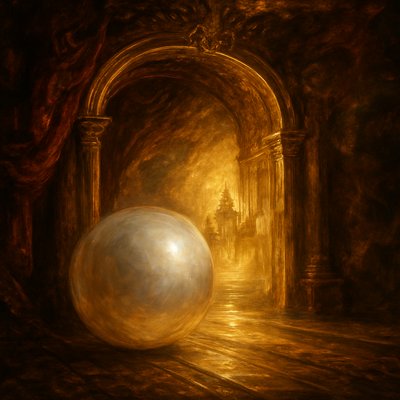
A profoundly symbolic and awe-inspiring depiction of a colossal, luminous pearl gate in the New Jerusalem, captured in the dynamic act of rolling away, similar to the stone being moved from Christ's tomb. The gate, a single, immense, perfectly spherical pearl, is shown mid-motion, having just been set aside from the entrance, revealing the glorious city beyond.

The pearl itself glows with an intense, soft iridescence, reflecting the divine light. Its surface shows subtle, exquisite details of mother-of-pearl. The frame or opening from which it has rolled away is visible, perhaps showing immense, smooth tracks or channels in the transparent gold structure of the city wall, reinforcing the idea of its monumental movement.

Through the now open gate, the radiant glory of the New Jerusalem streams forth. Pure gold streets, like transparent glass, extend into the city, illuminated by an intense, divine light that emanates from within. Heavenly architecture, impossibly beautiful and intricate, is glimpsed in the distance, beckoning. The atmosphere is one of profound sanctity, triumphant revelation, and welcoming access to the divine, with the act of the pearl rolling away symbolizing a breakthrough or an open invitation. The lighting is ethereal and grand, emphasizing the pearl's luster and the city's overwhelming glory."
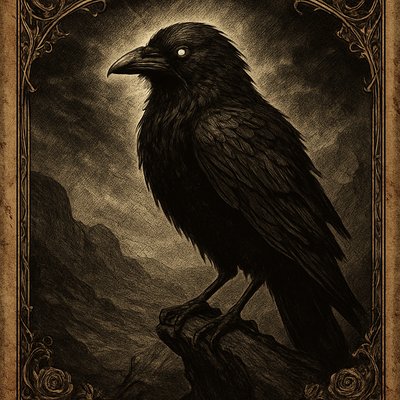
A solitary and intensely symbolic image depicting a magnificent, large black raven as the embodiment of judgment from Proverbs 30:17. The raven is portrayed with immense detail and an almost mythical presence, its feathers dark and glossy, its eyes glowing with a profound, ancient wisdom or stern disapproval. It is perched on a jagged, weathered tree branch or a sharp, craggy rock formation within a desolate, mist-shrouded valley.

The background is stark and emphasizes desolation, featuring barren, rocky slopes and a stormy, oppressive sky with heavy, dark clouds. The lighting is dramatic and stark, perhaps a single shaft of pale, cold light illuminating the raven, casting long, deep shadows around it. The focus is entirely on the raven, its sharp beak, and its piercing gaze, conveying a sense of ultimate, inescapable consequence. The overall mood is one of profound, somber judgment and the quiet, heavy weight of natural law, expressed through the powerful symbolism of the bird."
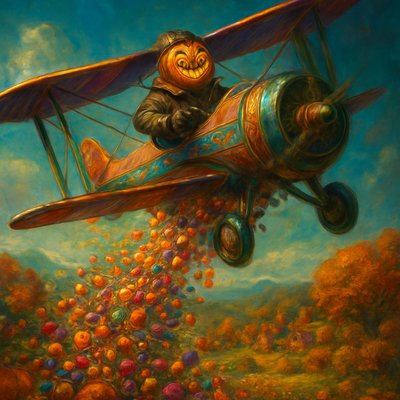
A fantastically cheerful and dynamic scene featuring the happy pumpkin-head figure (with the swirled, smiling carved face and internal glow) as the pilot of a classic, brightly colored biplane. The biplane itself is whimsically designed, perhaps with candy-themed accents or painted in vibrant, cheerful colors like orange, purple, and green.

The biplane is soaring through a clear, azure autumn sky, actively 'crop-dusting' a massive, exuberant stream of colorful Halloween candy from its underside. The candy (an abundant mix of wrapped chocolates, lollipops, candy corn, and various sweets) cascades downwards in a wide, joyous plume, spreading across the landscape below.

The landscape beneath the biplane is an idyllic, festive autumnal scene: rolling hills covered in vibrant fall foliage (golden, red, orange trees), a charming pumpkin patch, or a quaint, candy-colored village. The perspective is dynamic, capturing the plane in motion with the candy streaming behind it. The lighting is bright and sunny, emphasizing the vivid colors of the plane, the candy, and the autumn scenery. The overall mood is one of pure, unadulterated joy, playful magic, and festive exuberance, like a sugary parade from the sky."
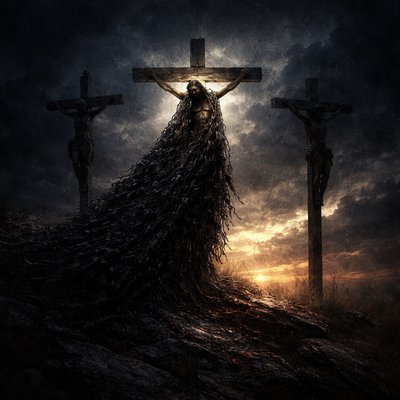
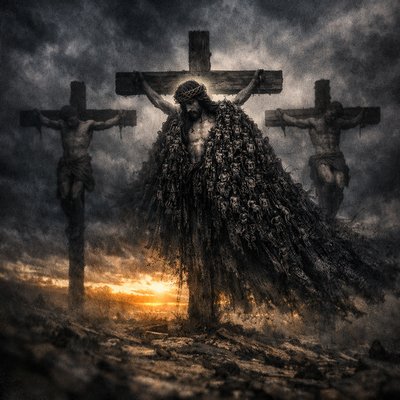
A visceral, raw, and highly texturally detailed conceptual artwork. In the center, three crude wooden crosses are silhouetted against a dark, stormy, indigo sky. The central figure, Christ, is "numbered" among two criminals, but his face is bathed in a faint, unseen celestial glow that the others lack. A massive, heavy, shadowy cloak, made of thousands of tiny, interwoven dark figures and faces (representing "the sin of many"), is visibly draped over his shoulders, weighing him down. Below the crosses, the stormy sky is breaking, revealing a sliver of intense golden dawn, hinting at the "portion with the great" yet to come. Symbolic, poignant, high contrast.“Therefore will I divide him a portion with the great, and he shall divide the spoil with the strong; because he hath poured out his soul unto death: and he was numbered with the transgressors; and he bare the sin of many, and made intercession for the transgressors.” (Isaiah 53:12, KJV)
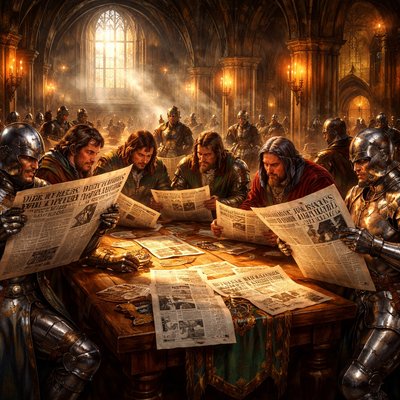
A grand medieval hall in King Arthur's Camelot transformed by modern invention: armored knights in shining full-plate mail and nobles in velvet robes gathered around a large wooden table, intently reading freshly printed newspapers with bold 19th-century headlines like 'Merlin's Latest Blunder Exposed!' and 'Eclipse Prediction: Yankee Wizard Triumphs Again', ink still glistening on the broadsheets, one knight holding the paper upside down in confusion while another points excitedly at an advertisement for bicycles, flickering torchlight and early electric bulbs casting warm dramatic glows on faces and paper, rich textures on crinkled newsprint, polished armor reflections, ornate tapestries and stone arches in background with subtle printing press visible through an open door belching faint steam, vibrant colors with deep crimson reds, golden yellows, and inky blacks, god rays streaming through high arched windows at golden hour, hyper-detailed photorealistic fantasy style, epic cinematic composition capturing satirical anachronism and wonder,
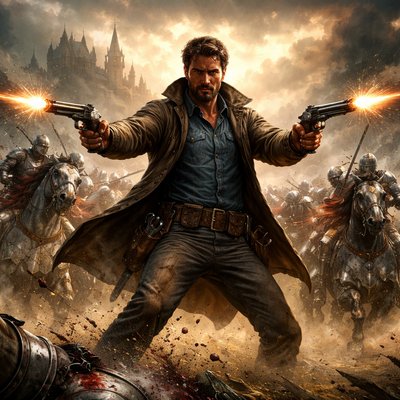
A dramatic epic fantasy scene of a fierce 19th-century Yankee engineer in modern work clothes and coat standing defiantly amid a chaotic medieval battlefield, dual-wielding gleaming Colt revolvers firing with muzzle flashes and smoke trails, facing a charging line of heavily armored knights in full shining plate mail with lances lowered and horses rearing, bullets impacting armor with sparks and dents, knights tumbling in shock and agony, misty Arthurian field with ancient castles and stormy skies in the background at dramatic golden-hour sunset, intense action pose with recoil kick, rich metallic reflections on armor and gun barrels, vibrant crimson blood accents, deep shadows and god-ray lighting piercing through dust and gunpowder haze, hyper-detailed textures on chainmail scratches, fabric tears, and explosive debris, photorealistic cinematic fantasy style, high dynamic range, ultra-detailed 8k masterpiece in the vein of Greg Rutkowski and Simon Stålenhag with epic war realism, absurd violent anachronism from Mark Twain's A Connecticut Yankee in King Arthur's Court, breathtaking composition