Modern, Red Mech With Cape Art

Digital Art Style, Romanticism Art Style, a profoundly majestic and spiritually charged painting inspired by Psalm 8:3-6. The scene features a vast, sweeping, and dramatically illuminated night sky, showcasing a luminous, prominent moon and countless brilliant stars rendered with ethereal digital glows and deep atmospheric effects. In the foreground, standing small against the overwhelming scale of the cosmos, is a solitary woman with long red hair, wearing simple, flowing attire. She is viewed from behind, positioned on a rugged, dark overlook, with her head and hands tilted upwards in an expression of intense awe and spiritual contemplation. The painting is dominated by dramatic digital chiaroscuro, with the radiant glow of the moon and stars breaking through deep, digitally enhanced shadows. Focus on the sublime, emotional impact of the vast heavens, the striking contrast between light and digitally rendered darkness, and the solitary woman's intense, spiritual communion with the divine works.
Digital Art Style, Romanticism Art Style, an overwhelmingly majestic and spiritually transformational painting inspired by Psalm 8:3-6. The scene captures a sweeping, sublime night sky, featuring a visible, prominent moon and countless brilliant stars, all rendered with luminous, dramatic glow. In the foreground, standing small against the infinite scale of the cosmos, is a solitary woman with long red hair, wearing simple, flowing attire. She is gazing upward, and a blinding shaft of pure, ethereal divine light—representing the glory and presence of the Lord—breaks through the veil of the deepest heavens, bypassing the moon and stars. This light dramatically envelops and transforms the woman, causing her clothing and hair to visibly glow with celestial energy. The artwork uses extreme digital chiaroscuro to emphasize the moment of spiritual encounter, with the vast sky and surrounding earth serving as a dark backdrop to the radiant divine presence. Focus on the sublime scale of the cosmos, the electrifying, transformative power of the pure divine light, and the solitary woman's luminous spiritual encounter against the immense majesty of the creation.
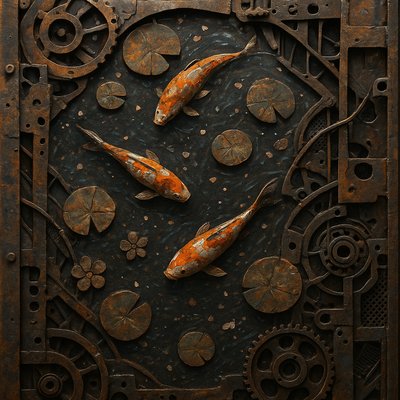
A koi pond seen from above, orange and white koi fish swimming among lily pads, clear water with subtle ripples, fallen cherry blossom petals floating on the surface, dappled sunlight
a tray of tiny horse-shaped sugar cookies, highly detailed icing, pastel holiday colors, sparkle sugar, soft bakery lighting, shallow depth of field, whimsical but elegant, intricate frosting texture, macaron-style softness, christmas atmosphere, ultra-detailed, 3d render look, artisan cookie photography style Christmas setting
A koi pond seen from above, orange and white koi fish swimming among lily pads, clear water with subtle ripples, fallen cherry blossom petals floating on the surface, dappled sunlight
Epic Comic Book Cover Art, Neoclassical Painting Influence, Cinematic Lighting. A majestic female superhero, a fusion of Captain America's tactical practicality and the classical personification of "Columbia." She stands atop a rugged coastal fortress wall with the ocean crashing below at dawn.
The Costume: A blend of armored protection and classical drapery. She wears a fitted, reinforced tactical suit in deep ocean blue with scale-mail elements. Over this, a heavy, flowing crimson and white striped sash is draped toga-style across her chest and shoulder, held by a golden eagle clasp.

The Gear: Instead of a cowl, she wears a gleaming, stylized armored tiara/crown with a prominent central star, evoking classical statues. On her left arm is a massive, ornate round shield. The shield features a relief sculpture design: a central star surrounded by an anchor motif and an encircling laurel wreath, painted in muted red, white, blue, and antique gold. She wears heavy armored gauntlets and combat boots.

The Vibe: Powerful, statuesque, and inspiring. Her pose is strong and unwavering, looking out over the horizon. The lighting is golden sunrise light mixing with sea spray.
A breathtaking full-body photograph captures a woman from behind, standing in a vast, vibrant field of purple lupin flowers in Glacier National Park. Her long, rich plum purple hair is beautifully intertwined with fresh lupin blooms, forming an ethereal halo. She wears a unique 70s-inspired outfit consisting of shimmering lavender bell-bottom pants and a matching tunic-style top with bell sleeves and a square neckline, flared at the waist, adorned with subtle white horse patterns. The setting sun paints the sky in dramatic hues of fiery orange and deep red, silhouetting the majestic purple mountain ranges in the distance. The scene evokes a sense of wonder, serenity, and a deep connection to the wild beauty of nature, with a magical, almost fantastical feel, within the iconic landscape of Glacier National Park.
"A dramatic, full-body portrait of Arnold Schwarzenegger as a Steampunk Terminator, standing powerfully in a dimly lit, richly detailed Victorian-era workshop. Arnold's iconic Terminator face is visible, with a glowing red eye, partially obscured by an intricate, metallic eyepatch and visible cybernetic components around his neck and face. He wears a heavy, dark brown leather duster coat over a tailored waistcoat and trousers, all adorned with brass buckles, gears, and leather straps. His left arm is a formidable steampunk prosthetic, crafted from polished brass, copper, and exposed gears, ending in a massive, Gatling-gun-like weapon integrated into the forearm. His right hand wears a finely detailed leather glove with metallic accents. The background of the workshop is filled with vintage machinery, pressure gauges, steam pipes, exposed brick walls, and the soft glow of gas lamps, casting long shadows. Smoke or steam gently drifts through the air, adding to the atmospheric industrial setting. The overall aesthetic is gritty, sophisticated, and perfectly blends the sci-fi elements of the Terminator with the intricate mechanical beauty of steampunk
A statuesque woman dressed in high-fashion 1930s Great Depression era glamour, imbued with a strong Art Deco aesthetic. She stands confidently, showcasing a bias-cut evening gown of shimmering silk or satin in a rich jewel tone (e.g., emerald green, sapphire blue, ruby red, or metallic silver/gold). The gown features an elongated, sleek silhouette, perhaps a dramatic cowl neck, a plunging back, or subtle shoulder pads. Her hair is styled in soft, sculpted finger waves. She wears elegant, long gloves and carries a small, decorative clutch bag. The background is a sophisticated Art Deco interior, perhaps with geometric patterns, polished chrome details, and ambient, dramatic lighting, or she stands against a backdrop of Art Deco skyscraper architecture. The overall mood is one of sophistication, elegance, and timeless allure."
A fantastically cheerful and dynamic scene featuring the happy pumpkin-head figure (with the swirled, smiling carved face and internal glow) as the pilot of a classic, brightly colored biplane. The biplane itself is whimsically designed, perhaps with candy-themed accents or painted in vibrant, cheerful colors like orange, purple, and green.

The biplane is soaring through a clear, azure autumn sky, actively 'crop-dusting' a massive, exuberant stream of colorful Halloween candy from its underside. The candy (an abundant mix of wrapped chocolates, lollipops, candy corn, and various sweets) cascades downwards in a wide, joyous plume, spreading across the landscape below.

The landscape beneath the biplane is an idyllic, festive autumnal scene: rolling hills covered in vibrant fall foliage (golden, red, orange trees), a charming pumpkin patch, or a quaint, candy-colored village. The perspective is dynamic, capturing the plane in motion with the candy streaming behind it. The lighting is bright and sunny, emphasizing the vivid colors of the plane, the candy, and the autumn scenery. The overall mood is one of pure, unadulterated joy, playful magic, and festive exuberance, like a sugary parade from the sky."
Photorealism Art Style, a magnificent, life-sized, vintage steam train (reminiscent of the "Time Train" from Back to the Future Part III, complete with futuristic modifications and gleaming brass accents) is captured in a dynamic moment, aggressively bursting forth from a shimmering, swirling spacetime continuum portal or wormhole. The portal glows with ethereal blues, purples, and electric greens, distorting the air around it. The train's front half has already emerged, with steam and sparks flying, as it dramatically enters through the mouth of a dark, natural rock tunnel nestled deep within the lush, rugged Appalachian Mountains. The surrounding mountain landscape is ablaze with vibrant fall foliage in stunning hues of deep red, fiery orange, and brilliant gold, mixed with green evergreens, under a slightly overcast, dramatic sky. Focus on the hyper-realistic details of the steam train, the dynamic, energetic effects of the spacetime portal, and the authentic textures of the Appalachian rock and the rich autumn leaves, all illuminated by the contrasting light of the portal and the natural environment.
A breathtaking and dynamic close-up scene depicting two iridescent hummingbirds engaged in a vigorous mid-air duel over a cluster of vibrant, nectar-rich flowers. Their tiny wings are blurred into translucent arcs of motion, a testament to their incredible speed and agility, creating a frantic, energetic atmosphere.

One hummingbird, perhaps a brilliant emerald green, lunges forward, while the other, possibly a fiery ruby red or shimmering blue, hovers defensively, their long beaks pointed towards each other in a fierce territorial display. Their tiny, intense eyes are sharply focused on their opponent.

They are positioned directly above or fiercely guarding a cluster of brightly colored, inviting flowers, such as trumpet vines, fuchsias, or salvia, which are depicted with exquisite detail and rich, saturated hues, dripping with nectar. The background is a soft, dreamlike blur of lush green foliage and dappled sunlight, keeping the focus entirely on the intense aerial ballet. The lighting is bright and dramatic, catching the metallic sheen of their feathers and emphasizing their jewel-like colors. The overall mood is one of intense energy, fierce beauty, and natural competition
A fantastically cheerful and dynamic scene featuring the happy pumpkin-head figure (with the swirled, smiling carved face and internal glow) as the pilot of a classic, brightly colored biplane. The biplane itself is whimsically designed, perhaps with candy-themed accents or painted in vibrant, cheerful colors like orange, purple, and green.

The biplane is soaring through a clear, azure autumn sky, actively 'crop-dusting' a massive, exuberant stream of colorful Halloween candy from its underside. The candy (an abundant mix of wrapped chocolates, lollipops, candy corn, and various sweets) cascades downwards in a wide, joyous plume, spreading across the landscape below.

The landscape beneath the biplane is an idyllic, festive autumnal scene: rolling hills covered in vibrant fall foliage (golden, red, orange trees), a charming pumpkin patch, or a quaint, candy-colored village. The perspective is dynamic, capturing the plane in motion with the candy streaming behind it. The lighting is bright and sunny, emphasizing the vivid colors of the plane, the candy, and the autumn scenery. The overall mood is one of pure, unadulterated joy, playful magic, and festive exuberance, like a sugary parade from the sky." "pop art style, bold outlines, vibrant flat colors, dynamic composition, graphic novel aesthetic, strong visual impact"
Art Style: Analytical Cubism, avant-garde oil painting style reminiscent of Picasso and Braque.

Subject: A dense, tangled thicket of Rhododendrons and Mountain Laurel bushes.

Composition & Details: The entire natural scene is deconstructed into overlapping geometric planes, fractured shards, and intersecting angles. There are no curved lines; everything is rendered in cubes, cones, and trapezoids.

    The Rhododendrons: Large, showy flower trusses are broken into faceted crystalline structures of deep magenta, rose pink, and violet blocks, looking like explosions of colored quartz rather than soft petals.

    The Mountain Laurels: The smaller, intricate flowers are rendered as complex, repeating geometric star-patterns and angular cups in white and pale pink with distinct red polygonal markings.

    Foliage & Branches: The thick, leathery leaves are fragmented green triangles and parallelograms overlapping each other, creating a sense of depth without traditional perspective. The woody stems and branches are jagged, intersecting brown and grey cylinders that shatter across the frame.

Color & Texture: A palette of muted earth tones—ochre, burnt umber, forest green, and slate grey—contrasted sharply with the jewel-toned facets of the flower colors. The finish should have a heavy, textured oil paint feel with visible palette knife marks and rough brushwork.
Art Style: Analytical Cubism, avant-garde oil painting style reminiscent of Picasso and Braque.

Subject: A dense, tangled thicket of Rhododendrons and Mountain Laurel bushes.

Composition & Details: The entire natural scene is deconstructed into overlapping geometric planes, fractured shards, and intersecting angles. There are no curved lines; everything is rendered in cubes, cones, and trapezoids.

    The Rhododendrons: Large, showy flower trusses are broken into faceted crystalline structures of deep magenta, rose pink, and violet blocks, looking like explosions of colored quartz rather than soft petals.

    The Mountain Laurels: The smaller, intricate flowers are rendered as complex, repeating geometric star-patterns and angular cups in white and pale pink with distinct red polygonal markings.

    Foliage & Branches: The thick, leathery leaves are fragmented green triangles and parallelograms overlapping each other, creating a sense of depth without traditional perspective. The woody stems and branches are jagged, intersecting brown and grey cylinders that shatter across the frame.

Color & Texture: A palette of muted earth tones—ochre, burnt umber, forest green, and slate grey—contrasted sharply with the jewel-toned facets of the flower colors. The finish should have a heavy, textured oil paint feel with visible palette knife marks and rough brushwork.
Art Style: Analytical Cubism, avant-garde oil painting style reminiscent of Picasso and Braque.

Subject: A dense, tangled thicket of Rhododendrons and Mountain Laurel bushes.

Composition & Details: The entire natural scene is deconstructed into overlapping geometric planes, fractured shards, and intersecting angles. There are no curved lines; everything is rendered in cubes, cones, and trapezoids.

    The Rhododendrons: Large, showy flower trusses are broken into faceted crystalline structures of deep magenta, rose pink, and violet blocks, looking like explosions of colored quartz rather than soft petals.

    The Mountain Laurels: The smaller, intricate flowers are rendered as complex, repeating geometric star-patterns and angular cups in white and pale pink with distinct red polygonal markings.

    Foliage & Branches: The thick, leathery leaves are fragmented green triangles and parallelograms overlapping each other, creating a sense of depth without traditional perspective. The woody stems and branches are jagged, intersecting brown and grey cylinders that shatter across the frame.

Color & Texture: A palette of muted earth tones—ochre, burnt umber, forest green, and slate grey—contrasted sharply with the jewel-toned facets of the flower colors. The finish should have a heavy, textured oil paint feel with visible palette knife marks and rough brushwork.
Art Style: Analytical Cubism, avant-garde oil painting style reminiscent of Picasso and Braque.

Subject: A dense, tangled thicket of Rhododendrons and Mountain Laurel bushes.

Composition & Details: The entire natural scene is deconstructed into overlapping geometric planes, fractured shards, and intersecting angles. There are no curved lines; everything is rendered in cubes, cones, and trapezoids.

    The Rhododendrons: Large, showy flower trusses are broken into faceted crystalline structures of deep magenta, rose pink, and violet blocks, looking like explosions of colored quartz rather than soft petals.

    The Mountain Laurels: The smaller, intricate flowers are rendered as complex, repeating geometric star-patterns and angular cups in white and pale pink with distinct red polygonal markings.

    Foliage & Branches: The thick, leathery leaves are fragmented green triangles and parallelograms overlapping each other, creating a sense of depth without traditional perspective. The woody stems and branches are jagged, intersecting brown and grey cylinders that shatter across the frame.

Color & Texture: A palette of muted earth tones—ochre, burnt umber, forest green, and slate grey—contrasted sharply with the jewel-toned facets of the flower colors. The finish should have a heavy, textured oil paint feel with visible palette knife marks and rough brushwork.
A fantastically cheerful and dynamic scene featuring the happy pumpkin-head figure (with the swirled, smiling carved face and internal glow) as the pilot of a classic, brightly colored biplane. The biplane itself is whimsically designed, perhaps with candy-themed accents or painted in vibrant, cheerful colors like orange, purple, and green.

The biplane is soaring through a clear, azure autumn sky, actively 'crop-dusting' a massive, exuberant stream of colorful Halloween candy from its underside. The candy (an abundant mix of wrapped chocolates, lollipops, candy corn, and various sweets) cascades downwards in a wide, joyous plume, spreading across the landscape below.

The landscape beneath the biplane is an idyllic, festive autumnal scene: rolling hills covered in vibrant fall foliage (golden, red, orange trees), a charming pumpkin patch, or a quaint, candy-colored village. The perspective is dynamic, capturing the plane in motion with the candy streaming behind it. The lighting is bright and sunny, emphasizing the vivid colors of the plane, the candy, and the autumn scenery. The overall mood is one of pure, unadulterated joy, playful magic, and festive exuberance, like a sugary parade from the sky." whimsical illustration, vibrant, dynamic motion, expressive character, detailed candy and plane design, festive atmosphere
A breathtaking and dynamic close-up scene depicting two iridescent hummingbirds engaged in a vigorous mid-air duel over a cluster of vibrant, nectar-rich flowers. Their tiny wings are blurred into translucent arcs of motion, a testament to their incredible speed and agility, creating a frantic, energetic atmosphere.

One hummingbird, perhaps a brilliant emerald green, lunges forward, while the other, possibly a fiery ruby red or shimmering blue, hovers defensively, their long beaks pointed towards each other in a fierce territorial display. Their tiny, intense eyes are sharply focused on their opponent.

They are positioned directly above or fiercely guarding a cluster of brightly colored, inviting flowers, such as trumpet vines, fuchsias, or salvia, which are depicted with exquisite detail and rich, saturated hues, dripping with nectar. The background is a soft, dreamlike blur of lush green foliage and dappled sunlight, keeping the focus entirely on the intense aerial ballet. The lighting is bright and dramatic, catching the metallic sheen of their feathers and emphasizing their jewel-like colors. The overall mood is one of intense energy, fierce beauty, and natural competition dynamic illustration, vibrant fantasy art, exaggerated motion lines, glowing effects on iridescence, stylized flowers, energetic and fluid composition
Photorealism Art Style, an incredibly majestic and emotionally profound scene inspired by Psalm 8:3-6. The vast, deep, and infinitely starry night sky fills the upper portion of the frame, showcasing a breathtaking, crystal-clear view of the moon and countless stars, rendered with stunning astronomical realism. The moon is a prominent, luminous presence, casting a gentle, ethereal glow across a distant, subtle landscape. In the lower portion of the frame, integrated seamlessly, stands a solitary long red-haired woman, dressed in simple, flowing attire. She is positioned on a subtle, earthy vantage point, her head tilted upwards, gazing into the expanse of the heavens with an expression of profound awe, contemplation, and humility. Her presence emphasizes the scale of the cosmos. The scene is illuminated by the soft, natural light of the moon and stars, creating subtle shadows and highlighting the woman's contemplative face. Focus on the stunning clarity and depth of the starry night sky, the serene yet powerful presence of the moon, and the deep emotional connection of the woman gazing at God's creation, conveying a sense of divine majesty and humanity's cherished place within it.
A surreal, double-exposure art piece. Inside, a detailed architectural interior of a temple with a table of "shewbread" and a glowing altar. Outside and overlapping, a vast, swirling nebula and "heaven of heavens" filled with stars and cosmic light, suggesting the infinite nature of God. The temple walls seem translucent, unable to contain the celestial glory. Ethereal, oil painting style, deep blues and glowing golds, inspired by Rembrandt’s lighting. “And Solomon sent to Huram the king of Tyre, saying, As thou didst deal with David my father, and didst send him cedars to build him an house to dwell therein, even so deal with me. Behold, I build an house to the name of the LORD my God, to dedicate it to him, and to burn before him sweet incense, and for the continual shewbread, and for the burnt offerings morning and evening, on the sabbaths, and on the new moons, and on the solemn feasts of the LORD our God. This is an ordinance for ever to Israel. And the house which I build is great: for great is our God above all gods. But who is able to build him an house, seeing the heaven and heaven of heavens cannot contain him? who am I then, that I should build him an house, save only to burn sacrifice before him?” (2 Chronicles 2:3-6, KJV)
Art Style: Analytical Cubism, avant-garde oil painting style reminiscent of Picasso and Braque.

Subject: A dense, tangled thicket of Rhododendrons and Mountain Laurel bushes.

Composition & Details: The entire natural scene is deconstructed into overlapping geometric planes, fractured shards, and intersecting angles. There are no curved lines; everything is rendered in cubes, cones, and trapezoids.

    The Rhododendrons: Large, showy flower trusses are broken into faceted crystalline structures of deep magenta, rose pink, and violet blocks, looking like explosions of colored quartz rather than soft petals.

    The Mountain Laurels: The smaller, intricate flowers are rendered as complex, repeating geometric star-patterns and angular cups in white and pale pink with distinct red polygonal markings.

    Foliage & Branches: The thick, leathery leaves are fragmented green triangles and parallelograms overlapping each other, creating a sense of depth without traditional perspective. The woody stems and branches are jagged, intersecting brown and grey cylinders that shatter across the frame.

Color & Texture: A palette of muted earth tones—ochre, burnt umber, forest green, and slate grey—contrasted sharply with the jewel-toned facets of the flower colors. The finish should have a heavy, textured oil paint feel with visible palette knife marks and rough brushwork.
Art Style: Analytical Cubism, avant-garde oil painting style reminiscent of Picasso and Braque.

Subject: A dense, tangled thicket of Rhododendrons and Mountain Laurel bushes.

Composition & Details: The entire natural scene is deconstructed into overlapping geometric planes, fractured shards, and intersecting angles. There are no curved lines; everything is rendered in cubes, cones, and trapezoids.

    The Rhododendrons: Large, showy flower trusses are broken into faceted crystalline structures of deep magenta, rose pink, and violet blocks, looking like explosions of colored quartz rather than soft petals.

    The Mountain Laurels: The smaller, intricate flowers are rendered as complex, repeating geometric star-patterns and angular cups in white and pale pink with distinct red polygonal markings.

    Foliage & Branches: The thick, leathery leaves are fragmented green triangles and parallelograms overlapping each other, creating a sense of depth without traditional perspective. The woody stems and branches are jagged, intersecting brown and grey cylinders that shatter across the frame.

Color & Texture: A palette of muted earth tones—ochre, burnt umber, forest green, and slate grey—contrasted sharply with the jewel-toned facets of the flower colors. The finish should have a heavy, textured oil paint feel with visible palette knife marks and rough brushwork.
Art Style: Analytical Cubism, avant-garde oil painting style reminiscent of Picasso and Braque.

Subject: A dense, tangled thicket of Rhododendrons and Mountain Laurel bushes.

Composition & Details: The entire natural scene is deconstructed into overlapping geometric planes, fractured shards, and intersecting angles. There are no curved lines; everything is rendered in cubes, cones, and trapezoids.

    The Rhododendrons: Large, showy flower trusses are broken into faceted crystalline structures of deep magenta, rose pink, and violet blocks, looking like explosions of colored quartz rather than soft petals.

    The Mountain Laurels: The smaller, intricate flowers are rendered as complex, repeating geometric star-patterns and angular cups in white and pale pink with distinct red polygonal markings.

    Foliage & Branches: The thick, leathery leaves are fragmented green triangles and parallelograms overlapping each other, creating a sense of depth without traditional perspective. The woody stems and branches are jagged, intersecting brown and grey cylinders that shatter across the frame.

Color & Texture: A palette of muted earth tones—ochre, burnt umber, forest green, and slate grey—contrasted sharply with the jewel-toned facets of the flower colors. The finish should have a heavy, textured oil paint feel with visible palette knife marks and rough brushwork.
Art Style: Analytical Cubism, avant-garde oil painting style reminiscent of Picasso and Braque.

Subject: A dense, tangled thicket of Rhododendrons and Mountain Laurel bushes.

Composition & Details: The entire natural scene is deconstructed into overlapping geometric planes, fractured shards, and intersecting angles. There are no curved lines; everything is rendered in cubes, cones, and trapezoids.

    The Rhododendrons: Large, showy flower trusses are broken into faceted crystalline structures of deep magenta, rose pink, and violet blocks, looking like explosions of colored quartz rather than soft petals.

    The Mountain Laurels: The smaller, intricate flowers are rendered as complex, repeating geometric star-patterns and angular cups in white and pale pink with distinct red polygonal markings.

    Foliage & Branches: The thick, leathery leaves are fragmented green triangles and parallelograms overlapping each other, creating a sense of depth without traditional perspective. The woody stems and branches are jagged, intersecting brown and grey cylinders that shatter across the frame.

Color & Texture: A palette of muted earth tones—ochre, burnt umber, forest green, and slate grey—contrasted sharply with the jewel-toned facets of the flower colors. The finish should have a heavy, textured oil paint feel with visible palette knife marks and rough brushwork.
Art Style: Analytical Cubism, avant-garde oil painting style reminiscent of Picasso and Braque.

Subject: A dense, tangled thicket of Rhododendrons and Mountain Laurel bushes.

Composition & Details: The entire natural scene is deconstructed into overlapping geometric planes, fractured shards, and intersecting angles. There are no curved lines; everything is rendered in cubes, cones, and trapezoids.

    The Rhododendrons: Large, showy flower trusses are broken into faceted crystalline structures of deep magenta, rose pink, and violet blocks, looking like explosions of colored quartz rather than soft petals.

    The Mountain Laurels: The smaller, intricate flowers are rendered as complex, repeating geometric star-patterns and angular cups in white and pale pink with distinct red polygonal markings.

    Foliage & Branches: The thick, leathery leaves are fragmented green triangles and parallelograms overlapping each other, creating a sense of depth without traditional perspective. The woody stems and branches are jagged, intersecting brown and grey cylinders that shatter across the frame.

Color & Texture: A palette of muted earth tones—ochre, burnt umber, forest green, and slate grey—contrasted sharply with the jewel-toned facets of the flower colors. The finish should have a heavy, textured oil paint feel with visible palette knife marks and rough brushwork.
Art Style: Analytical Cubism, avant-garde oil painting style reminiscent of Picasso and Braque.

Subject: A dense, tangled thicket of Rhododendrons and Mountain Laurel bushes.

Composition & Details: The entire natural scene is deconstructed into overlapping geometric planes, fractured shards, and intersecting angles. There are no curved lines; everything is rendered in cubes, cones, and trapezoids.

    The Rhododendrons: Large, showy flower trusses are broken into faceted crystalline structures of deep magenta, rose pink, and violet blocks, looking like explosions of colored quartz rather than soft petals.

    The Mountain Laurels: The smaller, intricate flowers are rendered as complex, repeating geometric star-patterns and angular cups in white and pale pink with distinct red polygonal markings.

    Foliage & Branches: The thick, leathery leaves are fragmented green triangles and parallelograms overlapping each other, creating a sense of depth without traditional perspective. The woody stems and branches are jagged, intersecting brown and grey cylinders that shatter across the frame.

Color & Texture: A palette of muted earth tones—ochre, burnt umber, forest green, and slate grey—contrasted sharply with the jewel-toned facets of the flower colors. The finish should have a heavy, textured oil paint feel with visible palette knife marks and rough brushwork.
Seabiscuit vs. War Admiral (The Gaze)

    A hyper-realistic, high-resolution photograph capturing the apex of the 1938 match race between Seabiscuit and War Admiral.

    Focus: The composition is tight, showing both horses running neck-and-neck, dominating the frame. The camera angle is side-on and slightly low, emphasizing their size and muscle. The critical focus is on the space between the horses' heads as they are running stride for stride.

    Details: War Admiral (the dark bay) should show determination and slight surprise, with his head stretched out. Seabiscuit (the smaller bay) should display his characteristic "game" look—intense, focused, and seemingly looking directly into War Admiral's eyes (or toward his rival). Both jockeys (Red Pollard or George Woolf for Seabiscuit; Charles Kurtsinger for War Admiral) are visible, leaning low and urging their mounts on.

    Atmosphere: The light should be bright but slightly diffused, suggesting an autumn afternoon at Pimlico. Dust and track debris are kicked up behind them, blurred slightly by the horses' tremendous speed. The image must convey the raw power, intense rivalry, and the exact moment when the smaller horse asserts his dominance.

    Style: Cinematic photography, realistic texture, sharp focus on the horses' eyes and muscle definition.
Seabiscuit vs. War Admiral (The Gaze)

    A hyper-realistic, high-resolution photograph capturing the apex of the 1938 match race between Seabiscuit and War Admiral.

    Focus: The composition is tight, showing both horses running neck-and-neck, dominating the frame. The camera angle is side-on and slightly low, emphasizing their size and muscle. The critical focus is on the space between the horses' heads as they are running stride for stride.

    Details: War Admiral (the dark bay) should show determination and slight surprise, with his head stretched out. Seabiscuit (the smaller bay) should display his characteristic "game" look—intense, focused, and seemingly looking directly into War Admiral's eyes (or toward his rival). Both jockeys (Red Pollard or George Woolf for Seabiscuit; Charles Kurtsinger for War Admiral) are visible, leaning low and urging their mounts on.

    Atmosphere: The light should be bright but slightly diffused, suggesting an autumn afternoon at Pimlico. Dust and track debris are kicked up behind them, blurred slightly by the horses' tremendous speed. The image must convey the raw power, intense rivalry, and the exact moment when the smaller horse asserts his dominance.

    Style: Cinematic photography, realistic texture, sharp focus on the horses' eyes and muscle definition.
Seabiscuit vs. War Admiral (The Gaze)

    A hyper-realistic, high-resolution photograph capturing the apex of the 1938 match race between Seabiscuit and War Admiral.

    Focus: The composition is tight, showing both horses running neck-and-neck, dominating the frame. The camera angle is side-on and slightly low, emphasizing their size and muscle. The critical focus is on the space between the horses' heads as they are running stride for stride.

    Details: War Admiral (the dark bay) should show determination and slight surprise, with his head stretched out. Seabiscuit (the smaller bay) should display his characteristic "game" look—intense, focused, and seemingly looking directly into War Admiral's eyes (or toward his rival). Both jockeys (Red Pollard or George Woolf for Seabiscuit; Charles Kurtsinger for War Admiral) are visible, leaning low and urging their mounts on.

    Atmosphere: The light should be bright but slightly diffused, suggesting an autumn afternoon at Pimlico. Dust and track debris are kicked up behind them, blurred slightly by the horses' tremendous speed. The image must convey the raw power, intense rivalry, and the exact moment when the smaller horse asserts his dominance.

    Style: Cinematic photography, realistic texture, sharp focus on the horses' eyes and muscle definition.
Seabiscuit vs. War Admiral (The Gaze)

    A hyper-realistic, high-resolution photograph capturing the apex of the 1938 match race between Seabiscuit and War Admiral.

    Focus: The composition is tight, showing both horses running neck-and-neck, dominating the frame. The camera angle is side-on and slightly low, emphasizing their size and muscle. The critical focus is on the space between the horses' heads as they are running stride for stride.

    Details: War Admiral (the dark bay) should show determination and slight surprise, with his head stretched out. Seabiscuit (the smaller bay) should display his characteristic "game" look—intense, focused, and seemingly looking directly into War Admiral's eyes (or toward his rival). Both jockeys (Red Pollard or George Woolf for Seabiscuit; Charles Kurtsinger for War Admiral) are visible, leaning low and urging their mounts on.

    Atmosphere: The light should be bright but slightly diffused, suggesting an autumn afternoon at Pimlico. Dust and track debris are kicked up behind them, blurred slightly by the horses' tremendous speed. The image must convey the raw power, intense rivalry, and the exact moment when the smaller horse asserts his dominance.

    Style: Cinematic photography, realistic texture, sharp focus on the horses' eyes and muscle definition.
profound image representing the verse Psalm 119:15. The scene depicts a solitary lady with flowing, long red hair, in a posture of deep contemplation or meditation. She is seated or kneeling in a peaceful, natural setting – perhaps on a gentle hillside overlooking a tranquil landscape, by a calm body of water, or within a serene garden. Her expression is focused and reverent.

Before her, or subtly integrated into the scene, is an ancient scroll or open book, glowing with a soft, ethereal light, symbolizing God's precepts. Her posture and gaze are directed towards this source of wisdom, with a clear sense of 'fixing her eyes' on its profound truth.

Extending from the scroll/book, or subtly woven into the distant landscape, are luminous, ethereal pathways or guiding lights, representing 'Your ways' (God's ways). These pathways are clear and inviting, leading towards a bright, hopeful horizon, symbolizing divine guidance and understanding. The atmosphere is tranquil and reflective, bathed in soft, warm, golden light (perhaps dawn or dusk), signifying clarity and spiritual insight. The overall mood is one of peace, deep wisdom, divine guidance, and focused devotion, rendered with a beautiful, luminous quality."
profound image representing the verse Psalm 119:15. The scene depicts a solitary lady with flowing, long red hair, in a posture of deep contemplation or meditation. She is seated or kneeling in a peaceful, natural setting – perhaps on a gentle hillside overlooking a tranquil landscape, by a calm body of water, or within a serene garden. Her expression is focused and reverent.

Before her, or subtly integrated into the scene, is an ancient scroll or open book, glowing with a soft, ethereal light, symbolizing God's precepts. Her posture and gaze are directed towards this source of wisdom, with a clear sense of 'fixing her eyes' on its profound truth.

Extending from the scroll/book, or subtly woven into the distant landscape, are luminous, ethereal pathways or guiding lights, representing 'Your ways' (God's ways). These pathways are clear and inviting, leading towards a bright, hopeful horizon, symbolizing divine guidance and understanding. The atmosphere is tranquil and reflective, bathed in soft, warm, golden light (perhaps dawn or dusk), signifying clarity and spiritual insight. The overall mood is one of peace, deep wisdom, divine guidance, and focused devotion, rendered with a beautiful, luminous quality."
A fantastically cheerful and dynamic scene featuring the happy pumpkin-head figure (with the swirled, smiling carved face and internal glow) as the pilot of a classic, brightly colored biplane. The biplane itself is whimsically designed, perhaps with candy-themed accents or painted in vibrant, cheerful colors like orange, purple, and green.

The biplane is soaring through a clear, azure autumn sky, actively 'crop-dusting' a massive, exuberant stream of colorful Halloween candy from its underside. The candy (an abundant mix of wrapped chocolates, lollipops, candy corn, and various sweets) cascades downwards in a wide, joyous plume, spreading across the landscape below.

The landscape beneath the biplane is an idyllic, festive autumnal scene: rolling hills covered in vibrant fall foliage (golden, red, orange trees), a charming pumpkin patch, or a quaint, candy-colored village. The perspective is dynamic, capturing the plane in motion with the candy streaming behind it. The lighting is bright and sunny, emphasizing the vivid colors of the plane, the candy, and the autumn scenery. The overall mood is one of pure, unadulterated joy, playful magic, and festive exuberance, like a sugary parade from the sky." whimsical illustration, cartoon animation style, vibrant, dynamic motion, expressive character, detailed candy and plane design, festive atmosphere
in the style of John Atkinson Grimshaw,
bird’s‑eye view, camera looking downward from a moderate height over hot air balloons rising steadily and moving with the wind through clear blue skies,
subtle curvature of the landscape visible below,
rich jewel‑tone reds, teals, and golds catching warm natural sunlight, realistic wind‑driven motion, natural directional flow, a hillside overlook below with small groups of people watching the balloons, holding umbrellas for shade, wearing Victorian‑style clothing,
long tailored coats, layered skirts, high collars,
grounded composition, realistic atmospheric depth, cinematic painterly
in the style of John Atkinson Grimshaw,
bird’s‑eye view, camera looking downward from a moderate height over hot air balloons rising steadily and moving with the wind through clear blue skies,
subtle curvature of the landscape visible below,
rich jewel‑tone reds, teals, and golds catching warm natural sunlight, realistic wind‑driven motion, natural directional flow, a hillside overlook below with small groups of people watching the balloons, holding umbrellas for shade, wearing Victorian‑style clothing,
long tailored coats, layered skirts, high collars,
grounded composition, realistic atmospheric depth, cinematic painterly
rt Style: Cinematic Fantasy Concept Art with mystical sci-fi elements. High contrast lighting, emphasizing texture and impending action. The atmosphere is heavy and tense.

The Subject: The woman with the incredibly long, fiery red hair. Her hair is whipping wildly in the wind, already beginning to crackle with static copper energy, anticipating the release of power. Her expression is determined and focused as she looks toward an oncoming threat.

The Cloak (Pre-Transformation State): She is standing firm against a gale, clutching a massive, voluminous cloak wrapped tightly around her body.

    Material Appearance: The cloak is currently heavy, physical fabric—a dark, iridescent weave that looks like ancient, armored wool interwoven with metallic fibers. It is whipped violently by the wind.

    Signs of Activation: It hasn't turned into a force field yet, but it is about to. The metallic threads throughout the weave and the intricate patterns along the heavy hem are beginning to glow intensely with pulsing amber, gold, and electric blue light. The air around the fabric is shimmering with heat and contained power.

The Environment & Threat:

    She is standing unprotected in a rugged, dark canyon landscape.

    A massive wall of chaotic dust, debris, and shadowy, indistinct shapes is rushing towards her from the middle distance, seconds away from overwhelming her location. The impending impact emphasizes why she is about to activate the cloak.
A breathtaking and dynamic close-up scene depicting two iridescent hummingbirds engaged in a vigorous mid-air duel over a cluster of vibrant, nectar-rich flowers. Their tiny wings are blurred into translucent arcs of motion, a testament to their incredible speed and agility, creating a frantic, energetic atmosphere.

One hummingbird, perhaps a brilliant emerald green, lunges forward, while the other, possibly a fiery ruby red or shimmering blue, hovers defensively, their long beaks pointed towards each other in a fierce territorial display. Their tiny, intense eyes are sharply focused on their opponent.

They are positioned directly above or fiercely guarding a cluster of brightly colored, inviting flowers, such as trumpet vines, fuchsias, or salvia, which are depicted with exquisite detail and rich, saturated hues, dripping with nectar. The background is a soft, dreamlike blur of lush green foliage and dappled sunlight, keeping the focus entirely on the intense aerial ballet. The lighting is bright and dramatic, catching the metallic sheen of their feathers and emphasizing their jewel-like colors. The overall mood is one of intense energy, fierce beauty, and natural competition dynamic illustration. hyperrealistic digital painting, intricate feather detail, luminous iridescent colors, dynamic composition, detailed flowers, energetic brushwork (for motion)
A breathtaking and dynamic close-up scene depicting two iridescent hummingbirds engaged in a vigorous mid-air duel over a cluster of vibrant, nectar-rich flowers. Their tiny wings are blurred into translucent arcs of motion, a testament to their incredible speed and agility, creating a frantic, energetic atmosphere.

One hummingbird, perhaps a brilliant emerald green, lunges forward, while the other, possibly a fiery ruby red or shimmering blue, hovers defensively, their long beaks pointed towards each other in a fierce territorial display. Their tiny, intense eyes are sharply focused on their opponent.

They are positioned directly above or fiercely guarding a cluster of brightly colored, inviting flowers, such as trumpet vines, fuchsias, or salvia, which are depicted with exquisite detail and rich, saturated hues, dripping with nectar. The background is a soft, dreamlike blur of lush green foliage and dappled sunlight, keeping the focus entirely on the intense aerial ballet. The lighting is bright and dramatic, catching the metallic sheen of their feathers and emphasizing their jewel-like colors. The overall mood is one of intense energy, fierce beauty, and natural competition dynamic illustration.dynamic illustration, vibrant fantasy art, exaggerated motion lines, glowing effects on iridescence, stylized flowers, energetic and fluid composition
Art Style: A fusion of "Mystical Sci-Fi" and "Cinematic Fantasy Concept Art." The look should be detailed, textured, but dominated by glowing energy effects. Think Dune meets high-fantasy magic.

The Subject: A woman with incredibly long, fiery red hair. Her hair isn't just resting; it appears almost weightless, billowing slightly around her as if charged with static electricity or magic, glowing with a faint internal copper light.

The "Tent" (The Force Field): She is inside a structure that resembles the frame of a large expedition tent. However, instead of fabric, the spaces between the poles are filled with a shimmering, translucent energy barrier.

    Appearance: The field is a dome of rippling, geometric light patterns (amber, gold, and electric blue) that hum with power. It looks solid yet transparent.

    The Action (The Protection): The force field is actively working. Outside the tent, a fierce, dark environmental threat—perhaps a swirling dust storm full of jagged rocks, or shadowy, ethereal creatures—is bombarding the outside of the dome.

    The Impact: Where the threat hits the tent, the energy field flares brightly, sending out crackling sparks of light, deflecting the danger completely.

Atmosphere & Setting: The interior of the tent is calm and warmly lit by the energy field, while the outside is chaotic and dark. The setting is a rugged, alien canyon at twilight.