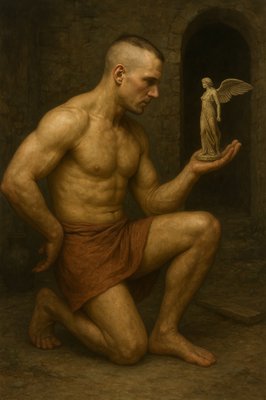
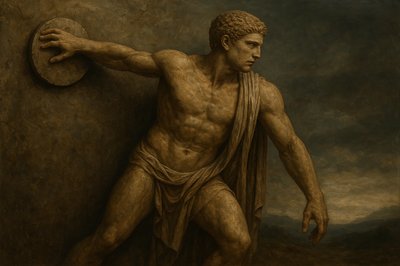
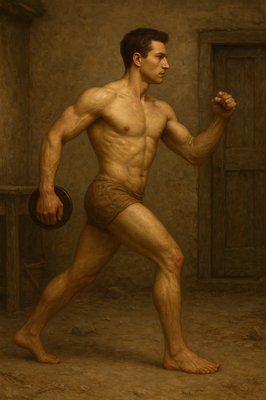
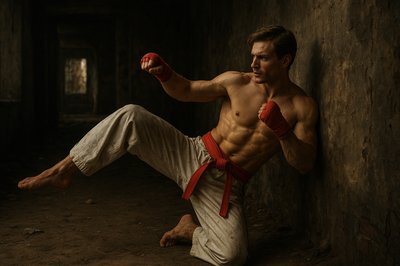
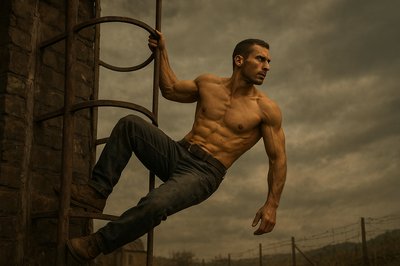
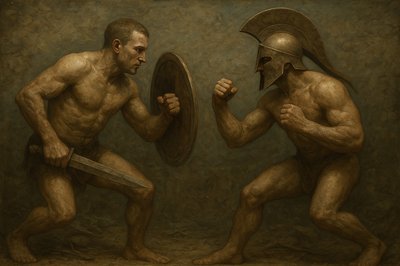
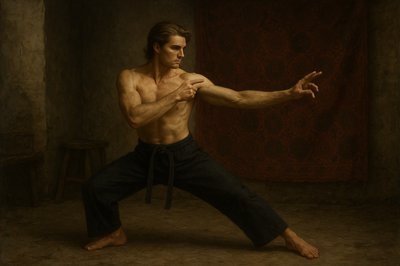
Institutional Critique Conceptual Art Style Style Transfer Example Art

John Singer Sargent Oil Painting Style, Grand Manner Portraiture, Rich Impasto Brushwork. A full-length, elegant portrait of a society figure standing in a dramatic pose, wrapped in a voluminous, heavy emerald green velvet cloak.

The Fabric & Brushwork: The velvet is rendered with deep, saturated greens and near-black shadows, using sweeping, visible brushstrokes to convey weight and a luxurious, soft sheen where the light hits the folds. The ornate gold embroidery and bullion trim along the edges and collar are painted with thick, confident dashes of yellow ochre, burnt sienna, and bright white impasto that make the metal appear to sparkle and catch the light.
The Atmosphere: The lighting is dramatic and directional, coming from the upper left, highlighting the texture of the cloak and the gold. The background is a dark, atmospheric, loosely painted interior of a Gilded Age mansion, with indistinct antique furniture and deep shadows, ensuring all focus is on the figure and the magnificent garment. The overall mood is opulent and mysterious.
“And prepare yourselves by the houses of your fathers, after your courses, according to the writing of David king of Israel, and according to the writing of Solomon his son. And stand in the holy place according to the divisions of the families of the fathers of your brethren the people, and after the division of the families of the Levites. So kill the passover, and sanctify yourselves, and prepare your brethren, that they may do according to the word of the LORD by the hand of Moses.” (2 Chronicles 35:4-6, KJVA)
A dramatic black-and-white engraving in the style of Gustave Doré, depicting a menacing werewolf lurking in the shadows of an old European city street at night. The creature hides behind a stone building corner, partially illuminated by cold moonlight that casts deep, dramatic shadows. The scene evokes the ominous mood of a wanted poster but includes no text or framing. Render with intricate linework, fine etching details, high contrast, and rich textures reminiscent of 19th-century woodcut engravings.
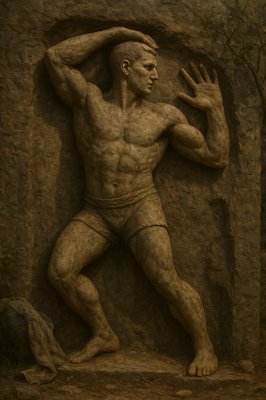
Southeast Asia.  Modern day.  This morning the sound of traffic in the street, 
scooters and tuk-tuks, taxis and trucks, was so loud I couldn’t hear my dream.  
So I turned it off and went dowstairs.
Taking in diesel fumes ‘til it hurt to breathe, I found a hawker-stall and ate.
It’s 100 degrees already; soon the rain will come.
Southeast Asia.  Modern day.  Back out on the open plain, our bus hurtles toward the city.
Smokestacks and temples rise up from the earth; two visions competing for the sky.
The woman on my right holds a chicken in her lap; rural wealth for a city friend?  On my left a Buddhist priest sits in quiet repose and presides over the world.
Southeast Asia.  Modern day.  Afternoon rain forces us into the coolness of the little house, surrounded by rice paddies, 
where Grandmother assembles strings of Christmas lights; bound for somewhere.
Young mother watches three children grow,
and wonders:  What will their lives be?
Can’t dream of what she’s never seen; can’t see what she can’t dream.
bicyle resting against a wall
animal standing in natural pose
wide landscape with natural scenery
serene landscape with mountains and water
portrait of a person with expressive eyes
still life arrangement of fruits and flowers
A profound and epic scene depicting the Vision of the Dry Bones from Ezekiel 37. In a desolate, vast valley, countless dry human bones are scattered, stark white and ancient. A powerful, divine wind (ruach) swirls through the valley, imbued with a sacred, ethereal glow, causing the bones to rattle and miraculously knit together. Tendons, flesh, and skin rapidly form over the skeletal structures, transforming them into fully-formed human figures. As the divine breath enters, the figures rise, not as individuals, but as a colossal, awe-inspiring army standing upright, gazing forward with renewed life and purpose. The sky above is dramatic, perhaps with stormy clouds breaking to reveal a divine light. The overall mood is one of miraculous resurrection, immense power, and hopeful restoration."
A koi pond seen from above, orange and white koi fish swimming among lily pads, clear water with subtle ripples, fallen cherry blossom petals floating on the surface, dappled sunlight
Scifi city in the year 2100
DESIGN ME A HOCKEY JERSEY WITH A SAMURAI BATTLE MASK HELMET
house with front view
portrait of two people together
animal standing in natural pose
bicyle resting against a wall
still life with everyday objects
urban street with city activity
wide landscape with natural scenery
urban street with city activity
bicyle resting against a wall
portrait of two people together
animal standing in natural pose
wide landscape with natural scenery
serene landscape with mountains and water
still life arrangement of fruits and flowers
serene landscape with mountains and water
portrait of a person with expressive eyes
serene landscape with mountains and water
portrait of a person with expressive eyes
still life arrangement of fruits and flowers
Still Life
Landscape
a painting of a woman in a green dress
a group of three girls standing next to each other
A historically accurate and deeply somber depiction of the immediate aftermath of the Wounded Knee Massacre in December 1890. The scene captures the desolate, snow-covered landscape of the Pine Ridge Reservation. Focus on the fallen Lakota men, women, and children, scattered across the snow, their bodies still and tragic. A few surviving individuals are shown in postures of profound grief or shock, perhaps tending to the wounded. The distant presence of U.S. soldiers, heavily armed, stands as a stark and cold counterpoint to the devastation. The atmosphere is one of profound sorrow, loss, and the brutal silence of winter. The lighting is cold and muted, emphasizing the harshness of the environment and the tragedy of the event. The artistic style should be a realistic, painterly approach, evoking the historical period with unflinching honesty but without graphic sensationalism. The intent is to serve as a memorial to the victims and a historical testament to the tragic event."
Low-poly geometric portrait of a cat's upper body facing slightly to the right, with shades of blue tones mixed with shades of. orange, brown, and golden yellow shades polygonal facets, with a large blue eye, black pupil, and subtle white highlight. The right eye is  a vibrant green eye, black pupil, and white highlight. Thin white whiskers extend from the muzzle on both sides. Solid medium-gray background. Style: minimalist vector art, faceted like origami or crystal, high contrast, no outlines except subtle edges.
 He (God) setteth an end to darkness, and searcheth out all perfection: the stones of darkness, and the shadow of death. From Job 28:3