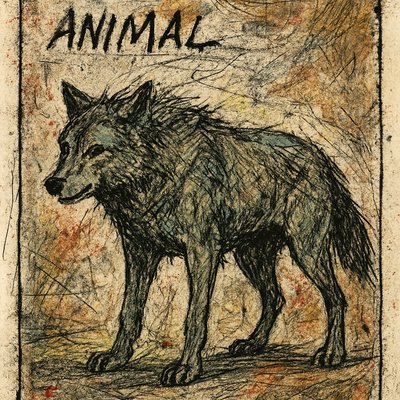
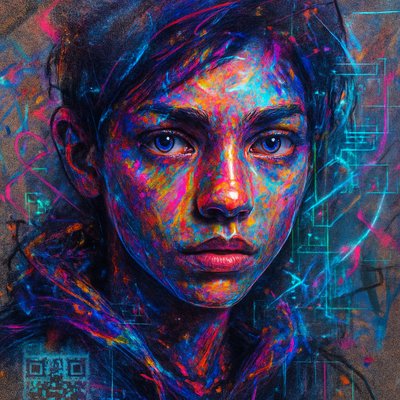
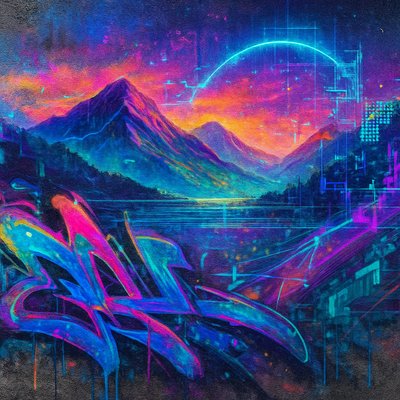
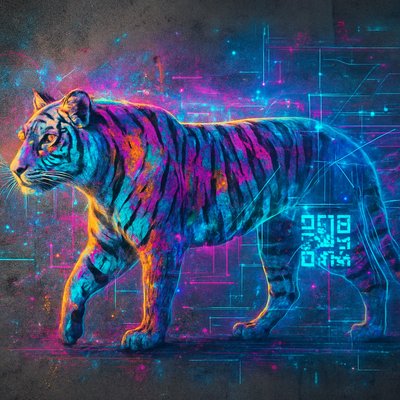
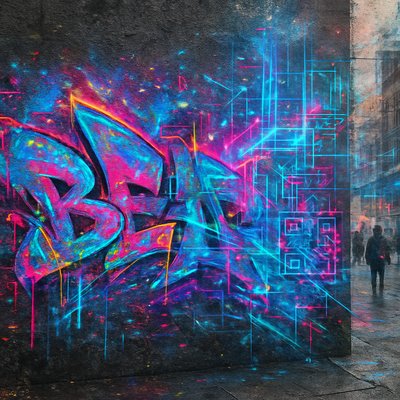
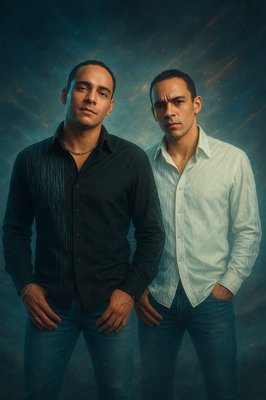
Inside Out Reality Style Transfer Example Art

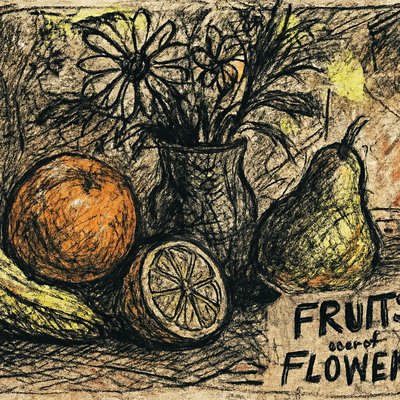
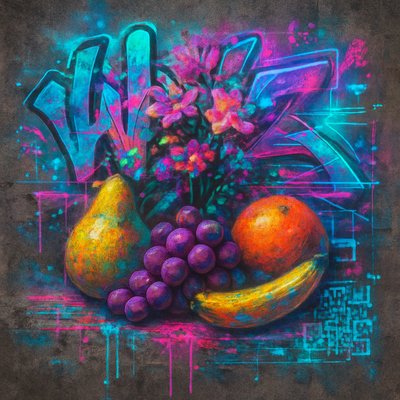
still life arrangement of fruits and flowers
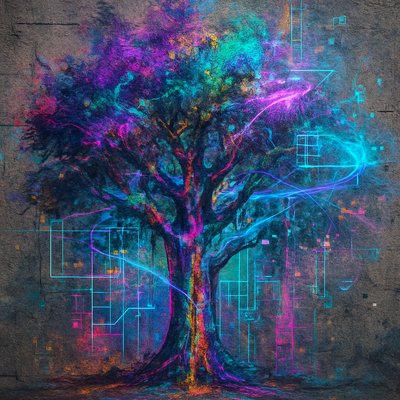
a tree in nature
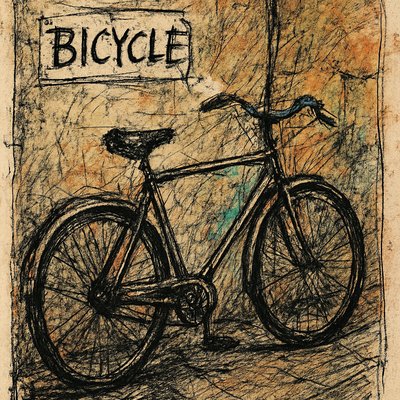
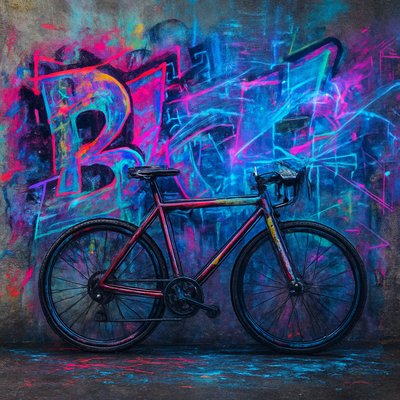
bicyle resting against a wall
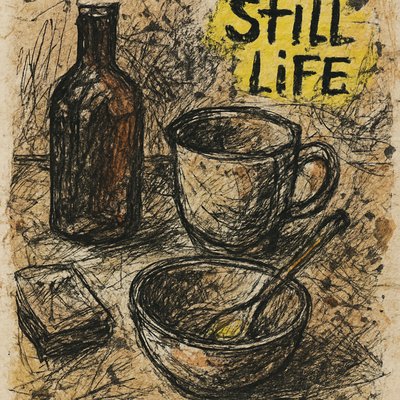
still life with everyday objects
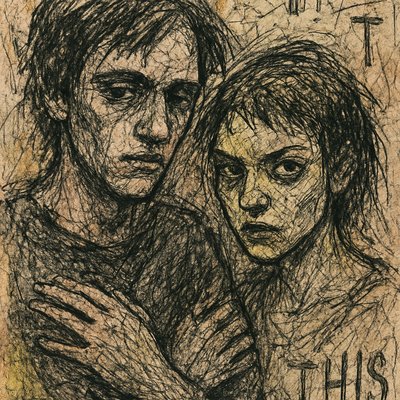
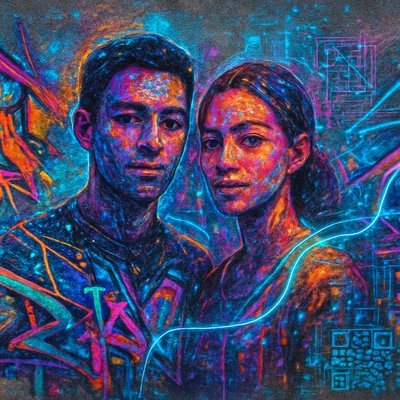
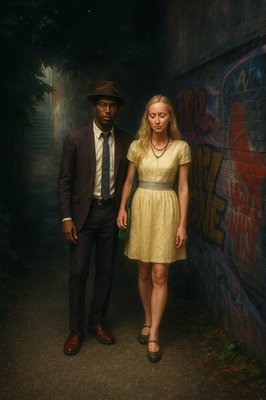
portrait of two people together
wide landscape with natural scenery
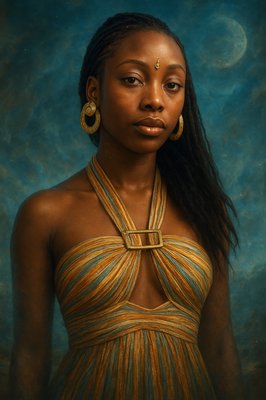
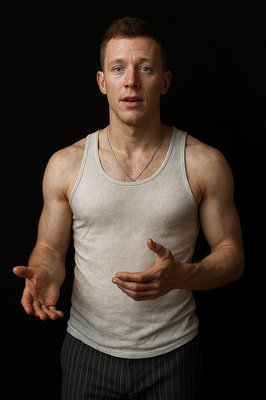
portrait of a person with expressive eyes
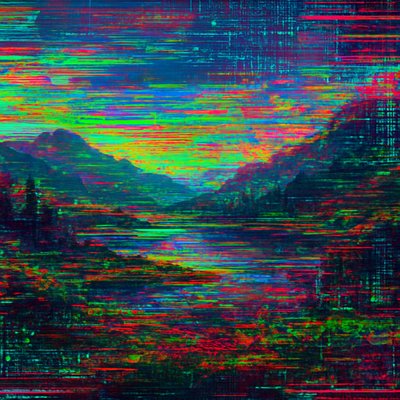
serene landscape with mountains and water
A triptych oil painting, presented as three heavily framed, connected panels in the dramatic, tenebrism style of Baroque masters like Caravaggio. The overall atmosphere is one of supernatural, oppressive darkness and violent chaos.

The Left Panel shows the penitent thief on his cross, body twisted in pain but his face turned toward the center panel with a look of sorrowful acceptance. A faint, supernatural light illuminates his face against a nearly black sky. Below him, rocks are splitting.

The Center Panel is dominated by Jesus on the cross, head bowed in finality. The sky is a swirling vortex of eclipse darkness, blotting out the sun. The ground beneath the cross is violently cracking open, emitting dust and smoke, with debris caught in mid-air from the earthquake shockwave.

The Right Panel shows the impenitent thief, writhing and screaming against his bonds, his face contorted in rage looking away from the center. He is almost swallowed by the shadows. The cross appears unstable as the cliffside crumbles beneath it. The entire triptych has a rich, dark color palette of deep browns, blacks, and muted crimson, textured with visible, frantic brushstrokes.
Out where the river runs wild and free
and only the brave dare row;
where the rapids are deep, and the challenge is fresh
and it takes them where it means to go.
With breakneck speed, grinning into the wind,
standing straight on the bow of their craft,
just a glimpse now and then of those captains you’ll catch
flying by, near capsizing your raft.

They’ve no time for advice to those standing on shore
or to aid the ones just wading out,
for their task is to pilot this current, they think,
and it’s all they can do to stay out of the drink,
and their lives could be gone in the space of a wink
should they lose but a moment to doubt.
Standing tall, they never must doubt!
Golden Age Storybook Illustration Style, Rich Watercolor and Ink, Detailed Textures. A narrative scene capturing the tense moment of realization outside a rugged, dark cave entrance hidden among dry rocks and gnarled roots.
The Fox and the Evidence: In the bright, sunlit foreground, a clever, reddish-orange fox sits alertly on its haunches, a safe distance from the cave mouth. Its head is tilted, looking intently at the dusty ground. The dirt path leading directly into the dark cave is a chaotic, heavily trampled mess of hundreds of distinct footprints—deer hooves, rabbit paws, badger claws—all pointing inward. Crucially, the dusty ground leading away from the cave is completely smooth and untouched by return tracks.
The Lion and the Den: The cave entrance is a gaping maw of deep shadow. Deep within the darkness, only the faint, glowing yellow eyes and the vague, gaunt outline of the old lion lying in wait are visible, watching the fox intently. The contrast between the warm sunlight outside and the cold darkness inside is sharp.
Epic Comic Book Cover Art, Neoclassical Painting Influence, Cinematic Lighting. A majestic female superhero with long red hair, a fusion of Captain America's tactical practicality and the classical personification of "Columbia." She stands atop a rugged coastal fortress wall with the ocean crashing below at dawn.

The Costume: A blend of armored protection and classical drapery. She wears a fitted, reinforced tactical suit in deep ocean blue with scale-mail elements. Over this, a heavy, flowing crimson and white striped sash is draped toga-style across her chest and shoulder, held by a golden eagle clasp. Modest styling.

The Gear: Instead of a cowl, she wears a gleaming, stylized armored tiara/crown with a prominent central star, evoking classical statues. On her left arm is a massive, ornate round shield. The shield features a relief sculpture design: a central star surrounded by an anchor motif and an encircling laurel wreath, painted in muted red, white, blue, and antique gold. She wears heavy armored gauntlets and combat boots.

The Vibe: Powerful, statuesque, and inspiring. Her pose is strong and unwavering, looking out over the horizon. The lighting is golden sunrise light mixing with sea spray.
Epic Comic Book Cover Art, Neoclassical Painting Influence, Cinematic Lighting. A majestic female superhero with long red hair, a fusion of Captain America's tactical practicality and the classical personification of "Columbia." She stands atop a rugged coastal fortress wall with the ocean crashing below at dawn.

The Costume: A blend of armored protection and classical drapery. She wears a fitted, reinforced tactical suit in deep ocean blue with scale-mail elements. Over this, a heavy, flowing crimson and white striped sash is draped toga-style across her chest and shoulder, held by a golden eagle clasp.

The Gear: Instead of a cowl, she wears a gleaming, stylized armored tiara/crown with a prominent central star, evoking classical statues. On her left arm is a massive, ornate round shield. The shield features a relief sculpture design: a central star surrounded by an anchor motif and an encircling laurel wreath, painted in muted red, white, blue, and antique gold. She wears heavy armored gauntlets and combat boots.

The Vibe: Powerful, statuesque, and inspiring. Her pose is strong and unwavering, looking out over the horizon. The lighting is golden sunrise light mixing with sea spray.
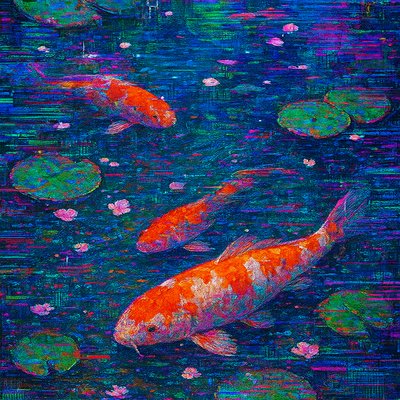
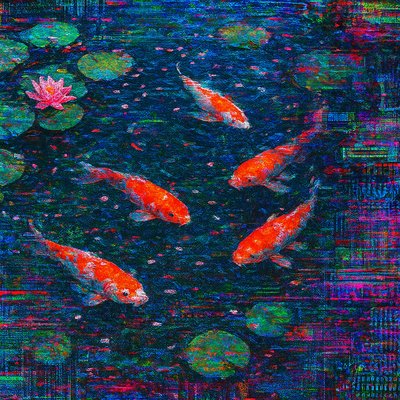
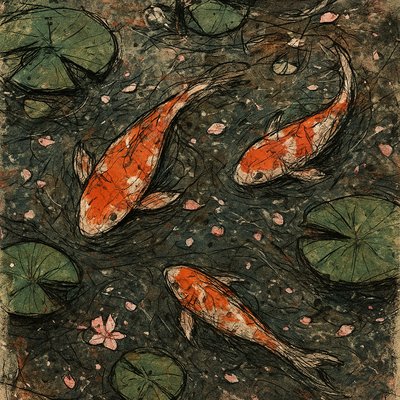
A koi pond seen from above, orange and white koi fish swimming among lily pads, clear water with subtle ripples, fallen cherry blossom petals floating on the surface, dappled sunlight
Epic Comic Book Cover Art, Neoclassical Painting Influence, Cinematic Lighting. A majestic female superhero, a fusion of Captain America's tactical practicality and the classical personification of "Columbia." She stands atop a rugged coastal fortress wall with the ocean crashing below at dawn.

The Costume: A blend of armored protection and classical drapery. She wears a fitted, reinforced tactical suit in deep ocean blue with scale-mail elements. Over this, a heavy, flowing crimson and white striped sash is draped toga-style across her chest and shoulder, held by a golden eagle clasp.

The Gear: Instead of a cowl, she wears a gleaming, stylized armored tiara/crown with a prominent central star, evoking classical statues. On her left arm is a massive, ornate round shield. The shield features a relief sculpture design: a central star surrounded by an anchor motif and an encircling laurel wreath, painted in muted red, white, blue, and antique gold. She wears heavy armored gauntlets and combat boots.

The Vibe: Powerful, statuesque, and inspiring. Her pose is strong and unwavering, looking out over the horizon. The lighting is golden sunrise light mixing with sea spray.
Morning scene. A 10 year old chinese boy enters a train car at the platform on the MRT in Kuala Lumpur.  We see him from the back.  Other passengers are inside the train car and also waiting on the platform.
Luminous Storybook Illustration Style, Rich Color Saturation, Magical Realism. A dramatic, painterly scene capturing the precise moment of tragic error on an old, mossy stone bridge spanning a calm river at sunset.

The Reality (The Dog on the Bridge): A scruffy, hungry-looking terrier stands frozen mid-snarl on the edge of the bridge, looking downward. Its mouth is wide open in an aggressive bark. Suspended in mid-air, just inches below its open jaws, a real, decent-sized meaty bone is falling toward the water. The dog’s expression is a mix of greed and sudden confusion.

The Illusion (The Reflection): The surface of the river below is glassy and still, acting like a perfect, deceptive mirror. The reflection shows the same dog, but the reflected bone in its mouth appears impossibly huge, glistening, and juicier than the real one. The reflection is almost hypnotically bright, brighter than the reality above the water. The warm golden light of the setting sun makes the water shimmer invitingly.
Luminous Storybook Illustration Style, Rich Color Saturation, Magical Realism. A dramatic, painterly scene capturing the precise moment of tragic error on an old, mossy stone bridge spanning a calm river at sunset.

The Reality (The Dog on the Bridge): A scruffy, hungry-looking terrier stands frozen mid-snarl on the edge of the bridge, looking downward. Its mouth is wide open in an aggressive bark. Suspended in mid-air, just inches below its open jaws, a real, decent-sized meaty bone is falling toward the water. The dog’s expression is a mix of greed and sudden confusion.

The Illusion (The Reflection): The surface of the river below is glassy and still, acting like a perfect, deceptive mirror. The reflection shows the same dog, but the reflected bone in its mouth appears impossibly huge, glistening, and juicier than the real one. The reflection is almost hypnotically bright, brighter than the reality above the water. The warm golden light of the setting sun makes the water shimmer invitingly.
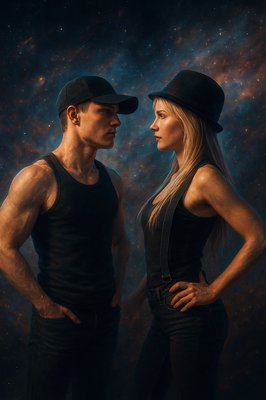
“And Jacob was left alone; and there wrestled a man with him until the breaking of the day. And when he saw that he prevailed not against him, he touched the hollow of his thigh; and the hollow of Jacob's thigh was out of joint, as he wrestled with him. And he said, Let me go, for the day breaketh. And he said, I will not let thee go, except thou bless me.” (Genesis 32:24-26, KJVA)
Luminous Storybook Illustration Style, Rich Color Saturation, Magical Realism. A dramatic, painterly scene capturing the precise moment of tragic error on an old, mossy stone bridge spanning a calm river at sunset.

The Reality (The Dog on the Bridge): A scruffy, hungry-looking terrier stands frozen mid-snarl on the edge of the bridge, looking downward. Its mouth is wide open in an aggressive bark. Suspended in mid-air, just inches below its open jaws, a real, decent-sized meaty bone is falling toward the water. The dog’s expression is a mix of greed and sudden confusion.

The Illusion (The Reflection): The surface of the river below is glassy and still, acting like a perfect, deceptive mirror. The reflection shows the same dog, but the reflected bone in its mouth appears impossibly huge, glistening, and juicier than the real one. The reflection is almost hypnotically bright, brighter than the reality above the water. The warm golden light of the setting sun makes the water shimmer invitingly.
A wide-angle, epic and majestic fantasy-realism style illustration for ArtStyles, based on Psalm 92:3, capturing a grand, celestial-inspired musician at dawn. In a mystical, open-air temple balcony under a starry sky a majestic figure with blue and silver robes is seated. Before the figure are two elaborate instruments.
One is a unique, gilded and carved wooden harp with a distinct triangular frame, which is explicitly and clearly shown with EXACTLY 10 AND ONLY 10 distinct, visible, and countable strings stretched taut. The strings are glistening with cool, deep blue and golden light as the musician plucks them. Nearby, a beautiful, multi-stringed wooden psaltery (a trapezoidal zither-like instrument) sits on a stand being played by an angel.
As the musician plays, glowing streams of illuminated, cascading blue and indigo water, visualized as physical music, emanate directly from the vibrating strings of both the ten-string harp and the psaltery. This water-music does not fall as rain, but flows down and out in majestic, powerful, yet gentle streams, just like an outpour from a vessel. The water-music pools into a crystal-clear basin below the instruments, and then cascades over a series of carved crystal steps, spreading out across the temple floor and into a valley, illustrating the sound going out. The "solemn sound" is visualized through the deep, rich colors of the flowing water and the light within it, and the steady, powerful, and calming nature of the flow. The atmosphere is solemn, peaceful, and epic. No text or labels are on screen. The lighting is early morning gold and blue. Detailed fabric textures and wood grain are visible.
A highly detailed, cinematic rendering of the colossal "Megamaid" spaceship from Spaceballs in its full, transformed state, hovering menacingly above the Earth.

Scene Focus: The Megamaid is positioned directly over the Earth's atmosphere, its massive vacuum nozzle extended. The nozzle is clearly pointed toward the planet's surface, and the mechanism is beginning to suck air out, creating a visible, swirling vortex.

The 'Firmament' Detail: Render the edge of Earth's atmosphere and sky not as a smooth fade to space, but with a highly stylized, almost cracked or crystalline appearance, suggesting the boundary is a literal "firmament." The vacuum is shown actively piercing this boundary, creating a localized, glowing "window of heaven" effect where the atmosphere is being forcefully breached and pulled into the machine.

Atmosphere: The scene is dark, cold space contrasting sharply with the bright, glowing Earth below and the massive, industrial metallic structure of the Megamaid. The lighting should be dramatic and epic, highlighting the ridiculous scale of the vacuum cleaner poised to steal a planet's air. Include a tiny, distant shot of the Eagle 5 (Winnebago) fleeing the scene.

Style: Photorealistic digital painting, sci-fi parody, emphasizing the immense, over-the-top scale and the comedic contrast between the mundane household item and the cosmic threat.
A highly detailed, cinematic rendering of the colossal "Megamaid" spaceship from Spaceballs in its full, transformed state, hovering menacingly above the Earth.

Scene Focus: The Megamaid is positioned directly over the Earth's atmosphere, its massive vacuum nozzle extended. The nozzle is clearly pointed toward the planet's surface, and the mechanism is beginning to suck air out, creating a visible, swirling vortex.

The 'Firmament' Detail: Render the edge of Earth's atmosphere and sky not as a smooth fade to space, but with a highly stylized, almost cracked or crystalline appearance, suggesting the boundary is a literal "firmament." The vacuum is shown actively piercing this boundary, creating a localized, glowing "window of heaven" effect where the atmosphere is being forcefully breached and pulled into the machine.

Atmosphere: The scene is dark, cold space contrasting sharply with the bright, glowing Earth below and the massive, industrial metallic structure of the Megamaid. The lighting should be dramatic and epic, highlighting the ridiculous scale of the vacuum cleaner poised to steal a planet's air. Include a tiny, distant shot of the Eagle 5 (Winnebago) fleeing the scene.

Style: Photorealistic digital painting, sci-fi parody, emphasizing the immense, over-the-top scale and the comedic contrast between the mundane household item and the cosmic threat.
Quantum portal laboratory
Seabiscuit vs. War Admiral (The Gaze)

    A hyper-realistic, high-resolution photograph capturing the apex of the 1938 match race between Seabiscuit and War Admiral.

    Focus: The composition is tight, showing both horses running neck-and-neck, dominating the frame. The camera angle is side-on and slightly low, emphasizing their size and muscle. The critical focus is on the space between the horses' heads as they are running stride for stride.

    Details: War Admiral (the dark bay) should show determination and slight surprise, with his head stretched out. Seabiscuit (the smaller bay) should display his characteristic "game" look—intense, focused, and seemingly looking directly into War Admiral's eyes (or toward his rival). Both jockeys (Red Pollard or George Woolf for Seabiscuit; Charles Kurtsinger for War Admiral) are visible, leaning low and urging their mounts on.

    Atmosphere: The light should be bright but slightly diffused, suggesting an autumn afternoon at Pimlico. Dust and track debris are kicked up behind them, blurred slightly by the horses' tremendous speed. The image must convey the raw power, intense rivalry, and the exact moment when the smaller horse asserts his dominance.

    Style: Cinematic photography, realistic texture, sharp focus on the horses' eyes and muscle definition.
Seabiscuit vs. War Admiral (The Gaze)

    A hyper-realistic, high-resolution photograph capturing the apex of the 1938 match race between Seabiscuit and War Admiral.

    Focus: The composition is tight, showing both horses running neck-and-neck, dominating the frame. The camera angle is side-on and slightly low, emphasizing their size and muscle. The critical focus is on the space between the horses' heads as they are running stride for stride.

    Details: War Admiral (the dark bay) should show determination and slight surprise, with his head stretched out. Seabiscuit (the smaller bay) should display his characteristic "game" look—intense, focused, and seemingly looking directly into War Admiral's eyes (or toward his rival). Both jockeys (Red Pollard or George Woolf for Seabiscuit; Charles Kurtsinger for War Admiral) are visible, leaning low and urging their mounts on.

    Atmosphere: The light should be bright but slightly diffused, suggesting an autumn afternoon at Pimlico. Dust and track debris are kicked up behind them, blurred slightly by the horses' tremendous speed. The image must convey the raw power, intense rivalry, and the exact moment when the smaller horse asserts his dominance.

    Style: Cinematic photography, realistic texture, sharp focus on the horses' eyes and muscle definition.
Seabiscuit vs. War Admiral (The Gaze)

    A hyper-realistic, high-resolution photograph capturing the apex of the 1938 match race between Seabiscuit and War Admiral.

    Focus: The composition is tight, showing both horses running neck-and-neck, dominating the frame. The camera angle is side-on and slightly low, emphasizing their size and muscle. The critical focus is on the space between the horses' heads as they are running stride for stride.

    Details: War Admiral (the dark bay) should show determination and slight surprise, with his head stretched out. Seabiscuit (the smaller bay) should display his characteristic "game" look—intense, focused, and seemingly looking directly into War Admiral's eyes (or toward his rival). Both jockeys (Red Pollard or George Woolf for Seabiscuit; Charles Kurtsinger for War Admiral) are visible, leaning low and urging their mounts on.

    Atmosphere: The light should be bright but slightly diffused, suggesting an autumn afternoon at Pimlico. Dust and track debris are kicked up behind them, blurred slightly by the horses' tremendous speed. The image must convey the raw power, intense rivalry, and the exact moment when the smaller horse asserts his dominance.

    Style: Cinematic photography, realistic texture, sharp focus on the horses' eyes and muscle definition.
Seabiscuit vs. War Admiral (The Gaze)

    A hyper-realistic, high-resolution photograph capturing the apex of the 1938 match race between Seabiscuit and War Admiral.

    Focus: The composition is tight, showing both horses running neck-and-neck, dominating the frame. The camera angle is side-on and slightly low, emphasizing their size and muscle. The critical focus is on the space between the horses' heads as they are running stride for stride.

    Details: War Admiral (the dark bay) should show determination and slight surprise, with his head stretched out. Seabiscuit (the smaller bay) should display his characteristic "game" look—intense, focused, and seemingly looking directly into War Admiral's eyes (or toward his rival). Both jockeys (Red Pollard or George Woolf for Seabiscuit; Charles Kurtsinger for War Admiral) are visible, leaning low and urging their mounts on.

    Atmosphere: The light should be bright but slightly diffused, suggesting an autumn afternoon at Pimlico. Dust and track debris are kicked up behind them, blurred slightly by the horses' tremendous speed. The image must convey the raw power, intense rivalry, and the exact moment when the smaller horse asserts his dominance.

    Style: Cinematic photography, realistic texture, sharp focus on the horses' eyes and muscle definition.
Southeast Asia.  Modern day.  Back out on the open plain, our bus hurtles toward the city.
Smokestacks and temples rise up from the earth; two visions competing for the sky.
The woman on my right holds a chicken in her lap; rural wealth for a city friend?  On my left a Buddhist priest sits in quiet repose and presides over the world.
The Fourth reached out his eager hand and felt about the knee. What most this wondrous beast is like is mighty plain, said he; Tis clear enough the Elephant is very like a tree!
Out where the river runs wild and free
and only the brave dare row;
where the rapids are deep, and the challenge is fresh
and it takes them where it means to go.
With breakneck speed, grinning into the wind,
standing straight on the bow of their craft,
just a glimpse now and then of those captains you’ll catch
flying by, near capsizing your raft.

They’ve no time for advice to those standing on shore
or to aid the ones just wading out,
for their task is to pilot this current, they think,
and it’s all they can do to stay out of the drink,
and their lives could be gone in the space of a wink
should they lose but a moment to doubt.
Standing tall, they never must doubt!
A wide-angle, epic and majestic fantasy-realism style illustration for ArtStyles, based on Psalm 92:3, capturing a grand, celestial-inspired musician at dawn. In a mystical, open-air temple balcony under a starry sky a majestic figure with blue and silver robes is seated. Before the figure are two elaborate instruments.
One is a unique, gilded and carved wooden harp with a distinct triangular frame, which is explicitly and clearly shown with EXACTLY 10 AND ONLY 10 distinct, visible, and countable strings stretched taut. The strings are glistening with cool, deep blue and golden light as the musician plucks them. Nearby, a beautiful, multi-stringed wooden psaltery (a trapezoidal zither-like instrument) sits on a stand being played by an angel.
As the musician plays, glowing streams of illuminated, cascading blue and indigo water, visualized as physical music, emanate directly from the vibrating strings of both the ten-string harp and the psaltery. This water-music does not fall as rain, but flows down and out in majestic, powerful, yet gentle streams, just like an outpour from a vessel. The water-music pools into a crystal-clear basin below the instruments, and then cascades over a series of carved crystal steps, spreading out across the temple floor and into a valley, illustrating the sound going out. The "solemn sound" is visualized through the deep, rich colors of the flowing water and the light within it, and the steady, powerful, and calming nature of the flow. The atmosphere is solemn, peaceful, and epic. No text or labels are on screen. The lighting is early morning gold and blue. Detailed fabric textures and wood grain are visible.
A wide-angle, epic and majestic fantasy-realism style illustration for ArtStyles, based on Psalm 92:3, capturing a grand, celestial-inspired musician at dawn. In a mystical, open-air temple balcony under a starry sky a majestic figure with blue and silver robes is seated. Before the figure are two elaborate instruments.
One is a unique, gilded and carved wooden harp with a distinct triangular frame, which is explicitly and clearly shown with EXACTLY 10 AND ONLY 10 distinct, visible, and countable strings stretched taut. The strings are glistening with cool, deep blue and golden light as the musician plucks them. Nearby, a beautiful, multi-stringed wooden psaltery (a trapezoidal zither-like instrument) sits on a stand being played by an angel.
As the musician plays, glowing streams of illuminated, cascading blue and indigo water, visualized as physical music, emanate directly from the vibrating strings of both the ten-string harp and the psaltery. This water-music does not fall as rain, but flows down and out in majestic, powerful, yet gentle streams, just like an outpour from a vessel. The water-music pools into a crystal-clear basin below the instruments, and then cascades over a series of carved crystal steps, spreading out across the temple floor and into a valley, illustrating the sound going out. The "solemn sound" is visualized through the deep, rich colors of the flowing water and the light within it, and the steady, powerful, and calming nature of the flow. The atmosphere is solemn, peaceful, and epic. No text or labels are on screen. The lighting is early morning gold and blue. Detailed fabric textures and wood grain are visible.
A wide-angle, epic and majestic fantasy-realism style illustration for ArtStyles, based on Psalm 92:3, capturing a grand, celestial-inspired musician at dawn. In a mystical, open-air temple balcony under a starry sky a majestic figure with blue and silver robes is seated. Before the figure are two elaborate instruments.
One is a unique, gilded and carved wooden harp with a distinct triangular frame, which is explicitly and clearly shown with EXACTLY 10 AND ONLY 10 distinct, visible, and countable strings stretched taut. The strings are glistening with cool, deep blue and golden light as the musician plucks them. Nearby, a beautiful, multi-stringed wooden psaltery (a trapezoidal zither-like instrument) sits on a stand being played by an angel.
As the musician plays, glowing streams of illuminated, cascading blue and indigo water, visualized as physical music, emanate directly from the vibrating strings of both the ten-string harp and the psaltery. This water-music does not fall as rain, but flows down and out in majestic, powerful, yet gentle streams, just like an outpour from a vessel. The water-music pools into a crystal-clear basin below the instruments, and then cascades over a series of carved crystal steps, spreading out across the temple floor and into a valley, illustrating the sound going out. The "solemn sound" is visualized through the deep, rich colors of the flowing water and the light within it, and the steady, powerful, and calming nature of the flow. The atmosphere is solemn, peaceful, and epic. No text or labels are on screen. The lighting is early morning gold and blue. Detailed fabric textures and wood grain are visible.
A student seeing their test score
1950s Vintage Illustration Style, Saturday Evening Post Aesthetic, a heartwarming scene under a decorated Christmas tree. Two fluffy kittens, one a ginger tabby and the other a calico, are joyfully playing in a chaotic pile of discarded Christmas wrapping paper, ribbons, and bows. The ginger kitten is tangled in a long piece of shiny red and green paper, batting at a curled ribbon. The calico kitten is pouncing from inside a torn open cardboard gift box, surrounded by crumpled tissue paper. Torn pieces of colorful wrapping paper (gold foil, snowman patterns, stripes) and empty gift tags are scattered everywhere on a plush rug. The Christmas tree above them is glowing with warm fairy lights and decorated with traditional ornaments. The background is a cozy living room with a fireplace.
Golden Age Storybook Illustration Style, Rich Watercolor and Ink, Detailed Textures. A narrative scene capturing the tense moment of realization outside a rugged, dark cave entrance hidden among dry rocks and gnarled roots.

The Fox and the Evidence: In the bright, sunlit foreground, a clever, reddish-orange fox sits alertly on its haunches, a safe distance from the cave mouth. Its head is tilted, looking intently at the dusty ground. The dirt path leading directly into the dark cave is a chaotic, heavily trampled mess of hundreds of distinct footprints—deer hooves, rabbit paws, badger claws—all pointing inward. Crucially, the dusty ground leading away from the cave is completely smooth and untouched by return tracks.

The Lion and the Den: The cave entrance is a gaping maw of deep shadow. The gaunt, old lion lying in wait are visible, watching the fox intently. The contrast between the warm sunlight outside and the cold darkness inside is sharp.
a tree in nature
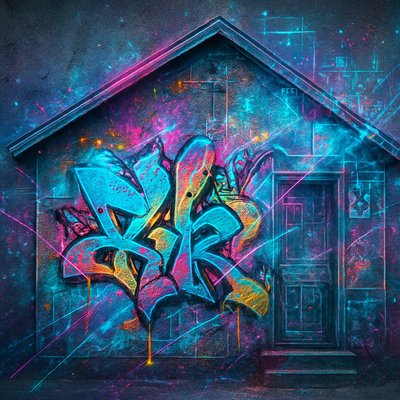
house with front view
bicyle resting against a wall
wide landscape with natural scenery
still life arrangement of fruits and flowers