Graffiti Bear Vinyl Figure Art

a drawing of a man with horns and a beard
a painting of a man with glasses and a beard
Punk angel with torn wings
Dynamic composition with swirling drapery and gesturing figures in the art style of Baroque --v 6.1
Experiential artwork using fog and light beams in the art style of Light and Space --v 6.1
A detailed, ancient-style map of the land of Canaan, with distinct, labeled territories for the Hivites, Arkite, and Sinite people groups. Each territory should have subtle visual cues reflecting their possible historical characteristics or natural environments. For example, the Hivite territory could show some hilly or forested areas, the Arkite territory might feature a coastal city, and the Sinite territory could suggest a more inland or mountainous region. The map should have a weathered, parchment-like texture, with an elegant, old-world font for the labels. In one corner, a small, illuminated manuscript-style illustration could depict three distinct figures, each subtly representing one of the groups, perhaps dressed in period-appropriate attire and engaging in an activity typical of their region. The overall aesthetic should evoke historical scholarship and cartography."
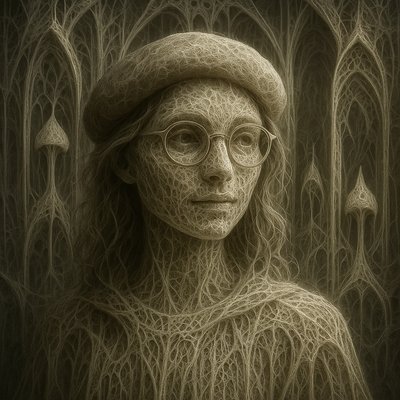
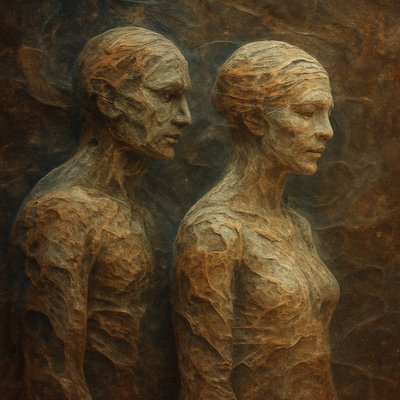
Design surrealist portraits utilizing the elongated figures art style to exaggerate facial features. --v 6.1
A band of five anthropomorphic cats, depicted as the "Bay City Rollers," performing on a brightly lit stage. They are dressed in matching tartan suits, reminiscent of the band's iconic style. Each cat has expressive facial features, conveying a sense of rock-and-roll energy.

The central cat is the lead singer, holding a vintage microphone and wearing a striking tartan suit. To his left, another cat plays a bass guitar. To his right, another cat stands with drumsticks, ready to play. Two other cats complete the band, striking poses with their fists raised in the air, embodying the energetic performance style of the Bay City Rollers.

In the background, a large, enthusiastic crowd of blurred, indistinct figures is cheering, illuminated by stage lights. Above the stage, spotlights shine down. The stage itself is dark, allowing the cats and their instruments to stand out.

At the bottom of the image, in large, bold, sparkly letters, is the text "CATURDAY NIGHT!" The overall style is vibrant, fun, and captures the retro pop essence of the 1970s.
A band of five anthropomorphic cats, depicted as the "Bay City Rollers," performing on a brightly lit stage. They are dressed in matching tartan suits, reminiscent of the band's iconic style. Each cat has expressive facial features, conveying a sense of rock-and-roll energy.

The central cat is the lead singer, holding a vintage microphone and wearing a striking tartan suit. To his left, another cat plays a bass guitar. To his right, another cat stands with drumsticks, ready to play. Two other cats complete the band, striking poses with their fists raised in the air, embodying the energetic performance style of the Bay City Rollers.

In the background, a large, enthusiastic crowd of blurred, indistinct figures is cheering, illuminated by stage lights. Above the stage, spotlights shine down. The stage itself is dark, allowing the cats and their instruments to stand out.

At the bottom of the image, in large, bold, sparkly letters, is the text "CATURDAY NIGHT!" The overall style is vibrant, fun, and captures the retro pop essence of the 1970s.
A historically accurate and atmospheric depiction of the signing of the Mayflower Compact aboard the ship in November 1620. The scene is set in the dimly lit, cramped cabin of the Mayflower, with the ship's timbers and rigging subtly visible, conveying the challenging conditions of the voyage. A simple table or chest serves as the signing surface. The primary focus is on a small group of the last individuals signing the document: specifically, the indentured servants (or 'strangers' not directly part of the Separatist congregation) approaching or at the table. Their expressions show a mix of weary determination, understanding of the necessity, and perhaps a hint of quiet apprehension or resignation to this new social contract, given their status. They are dressed in the plain, practical clothing typical of 17th-century commoners and laborers. Figures of prominent Pilgrims or 'Saints' (like William Bradford or John Carver) are visible in the background, observing the proceedings with a sense of gravity and leadership, but they are not the central focus. The lighting is low and warm, perhaps from a lantern, creating a chiaroscuro effect that highlights the faces of the signers. The atmosphere conveys the momentousness of the act under difficult circumstances, the diverse composition of the group, and the early seeds of self-governance in a new world. The artistic style is a realistic, historically detailed oil painting, capturing the solemnity and human element of this pivotal historical moment."
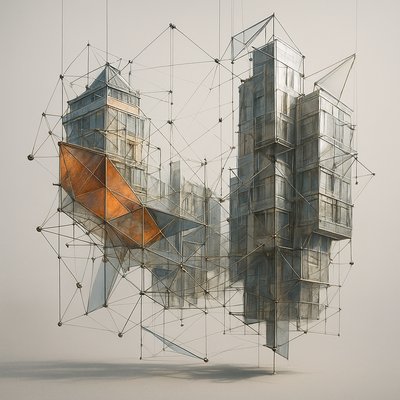
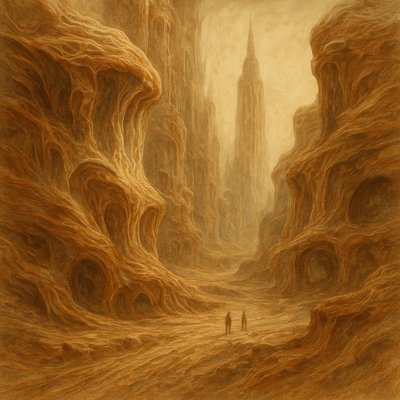
Craft a cityscape where skyscrapers embody the elongated figures art style, resembling stylized humans. --v 6.1
Cinematic Historical Photograph, Gritty Realism, Chiaroscuro Lighting. A tense, high-stakes chess match taking place between two seasoned pirates inside the cramped, dimly lit stern cabin of a rocking galleon at sea during the night.

The Players: On one side sits a grizzled, older Pirate Captain with a heavy grey beard and a scarred face, leaning over the board, his hand rubbing his chin in deep concentration. Opposite him is a younger, cunning Quartermaster with a gold tooth and a confident smirk, holding a clay pipe.

The Board & Pieces: Between them is a heavy wooden table stained with grog. The chessboard is carved directly into the tabletop, with squares made of inlaid mother-of-pearl and burned wood. They are playing with the custom pirate-themed chess set (previously designed): The Captain's side uses pieces carved from yellowed whalebone (King with tricorn, Ship Rooks), and the Quartermaster's side uses pieces cast from dark, tarnished iron. A bone "Knight" piece is currently threatening an iron "Queen."

The Atmosphere: The cabin is lit by a single, swaying oil lantern hanging overhead, casting long, moving shadows and illuminating the smoke in the air. Mugs of rum, a flintlock pistol, and rolled charts are cluttered around the board. Outside a stern window, a dark, stormy ocean is visible. The photo has a film grain texture.
a painting of a man with glasses and a beard
Paint a family portrait in the style of El Greco, employing the elongated figures art style for spiritual effect. --v 6.1
Interpret African tribal masks through the elongated figures art style, highlighting cultural symbolism. --v 6.1
Design surrealist portraits utilizing the elongated figures art style to exaggerate facial features. --v 6.1
Experiential artwork using fog and light beams in the art style of Light and Space --v 6.1
A historically accurate and atmospheric depiction of the signing of the Mayflower Compact aboard the ship in November 1620. The scene is set in the dimly lit, cramped cabin of the Mayflower, with the ship's timbers and rigging subtly visible, conveying the challenging conditions of the voyage. A simple table or chest serves as the signing surface. The primary focus is on a small group of the last individuals signing the document: specifically, the indentured servants (or 'strangers' not directly part of the Separatist congregation) approaching or at the table. Their expressions show a mix of weary determination, understanding of the necessity, and perhaps a hint of quiet apprehension or resignation to this new social contract, given their status. They are dressed in the plain, practical clothing typical of 17th-century commoners and laborers. Figures of prominent Pilgrims or 'Saints' (like William Bradford or John Carver) are visible in the background, observing the proceedings with a sense of gravity and leadership, but they are not the central focus. The lighting is low and warm, perhaps from a lantern, creating a chiaroscuro effect that highlights the faces of the signers. The atmosphere conveys the momentousness of the act under difficult circumstances, the diverse composition of the group, and the early seeds of self-governance in a new world. The artistic style is a realistic, historically detailed oil painting, capturing the solemnity and human element of this pivotal historical moment."
Craft a cityscape where skyscrapers embody the elongated figures art style, resembling stylized humans. --v 6.1
Paint a family portrait in the style of El Greco, employing the elongated figures art style for spiritual effect. --v 6.1
Interpret African tribal masks through the elongated figures art style, highlighting cultural symbolism. --v 6.1
A historically accurate and atmospheric depiction of the signing of the Mayflower Compact aboard the ship in November 1620. The scene is set in the dimly lit, cramped cabin of the Mayflower, with the ship's timbers and rigging subtly visible, conveying the challenging conditions of the voyage. A simple table or chest serves as the signing surface. The primary focus is on a small group of the last individuals signing the document: specifically, the indentured servants (or 'strangers' not directly part of the Separatist congregation) approaching or at the table. Their expressions show a mix of weary determination, understanding of the necessity, and perhaps a hint of quiet apprehension or resignation to this new social contract, given their status. They are dressed in the plain, practical clothing typical of 17th-century commoners and laborers. Figures of prominent Pilgrims or 'Saints' (like William Bradford or John Carver) are visible in the background, observing the proceedings with a sense of gravity and leadership, but they are not the central focus. The lighting is low and warm, perhaps from a lantern, creating a chiaroscuro effect that highlights the faces of the signers. The atmosphere conveys the momentousness of the act under difficult circumstances, the diverse composition of the group, and the early seeds of self-governance in a new world. The artistic style is a realistic, historically detailed oil painting, capturing the solemnity and human element of this pivotal historical moment."
Renaissance Painting Art Style, Symbolism Art Style, a profoundly joyful and uplifting painting inspired by Nehemiah 8:10, emphasizing "the joy of the Lord is your strength." The scene depicts a vibrant, bustling gathering of diverse ancient Israelites, engaged in a communal feast and celebration. People of all ages are shown with radiant, happy faces, some laughing heartily, others sharing food and drinks, and many with expressions of deep, peaceful contentment and spiritual upliftment. A few figures have their heads tilted upwards or hands gently raised, as if receiving a subtle, warm, golden divine light that bathes the scene, emanating from above and symbolizing the presence and strength of the Lord. The setting is an outdoor gathering, perhaps near a restored wall or a communal square, filled with rich textures of food, drink, and colorful garments. The atmosphere is one of shared delight, spiritual renewal, and unbreakable strength. Focus on the authentic, diverse expressions of joy on each individual's face, the sense of vibrant community and shared celebration, and the ethereal, empowering golden light that symbolizes the Lord's strength.
Style: Gritty, epic historical fantasy photograph with high textural detail. The aesthetic is a fusion of "Ancient Near Eastern Warrior" and the "High Elven" nobility established in previous prompts. Golden hour lighting.

The Subject: A single warrior standing guard on the fortified walls of David’s stronghold (Jerusalem or Ziklag). He is immense, standing over seven feet tall, possessing a lean, gladiatorial musculature rather than brute bulk.

Facial Features: He has the signature Gibeonite look: a long, ageless face with high, sculpted cheekbones and intense, calculating eyes that scan the horizon. His dark beard is neatly trimmed, and his long hair is intricately braided with bronze rings and threads of royal blue dyed wool.

The Armor (A Fusion of Cultures): His gear represents his unique status. He wears a heavy cuirass of overlapping bronze scales (Canaanite style) reinforced with iron plates (Israelite adoption). A stylized emblem of the Lion of Judah is subtly engraved onto a central shoulder plate, marking his allegiance to David.

The Weapons: He rests one hand on a massive tower shield made of reinforced cedar and hide. In the other, he holds a spear of immense scale, its shaft thicker than a normal man’s wrist, with a long, leaf-shaped bronze head. A curved khopesh sword is sheathed at his hip.

Atmosphere & Setting: The sun is setting behind the Judean hills, casting long shadows and catching the scars on his armor. His expression is one of silent, dangerous vigilance. In the background, other normal-sized Israelite soldiers are visible, emphasizing his towering presence.
Style: Gritty, epic historical fantasy photograph with high textural detail. The aesthetic is a fusion of "Ancient Near Eastern Warrior" and the "High Elven" nobility established in previous prompts. Golden hour lighting.

The Subject: A single warrior standing guard on the fortified walls of David’s stronghold (Jerusalem or Ziklag). He is immense, standing over seven feet tall, possessing a lean, gladiatorial musculature rather than brute bulk.

Facial Features: He has the signature Gibeonite look: a long, ageless face with high, sculpted cheekbones and intense, calculating eyes that scan the horizon. His dark beard is neatly trimmed, and his long hair is intricately braided with bronze rings and threads of royal blue dyed wool.

The Armor (A Fusion of Cultures): His gear represents his unique status. He wears a heavy cuirass of overlapping bronze scales (Canaanite style) reinforced with iron plates (Israelite adoption). A stylized emblem of the Lion of Judah is subtly engraved onto a central shoulder plate, marking his allegiance to David.

The Weapons: He rests one hand on a massive tower shield made of reinforced cedar and hide. In the other, he holds a spear of immense scale, its shaft thicker than a normal man’s wrist, with a long, leaf-shaped bronze head. A curved khopesh sword is sheathed at his hip.

Atmosphere & Setting: The sun is setting behind the Judean hills, casting long shadows and catching the scars on his armor. His expression is one of silent, dangerous vigilance. In the background, other normal-sized Israelite soldiers are visible, emphasizing his towering presence.
Neon-Futurism Digital Art Style, Bioluminescent Sci-Fi Cosmic Setting, Perfectly Symmetrical Composition. A wide shot looking down a highway that seems to exist in two places at once.

The Rider & Bike Consistency: The lone motorcyclist—in the signature sleek, armored suit and helmet—is centered on the hubless "light-cycle." In this scene, the highway is made of a highly reflective, mirror-like black chrome. As the rider speeds forward, a perfect "ghost" reflection of the bike and rider is visible on the surface below, making it look like two twins are racing tire-to-tire.

The Path (The Dual Ecliptic): The glowing blue laser-grid highway is perfectly straight, but it is flanked by two parallel streams of data-light that pulse in sync, like a heartbeat.

The Gemini Presence: Looming over the path are the colossal Twin Titans. They are rendered as towering figures of translucent silver and electric-blue light. They are positioned facing each other across the highway, their hands nearly touching to form a grand "A-frame" archway over the rider.

The Atmosphere: The space between the Twins is filled with shimmering, binary code "snow" and swirling nebulae in shades of teal and indigo.

The Action: As the rider passes through the center of the Twins, the "ghost" reflection on the road glows with an intense orange light, while the real rider maintains the cyan glow, representing the two sides of a single soul.

Lighting: High-key neon reflections. The silver bodies of the Twins act as mirrors, catching the orange and cyan flashes from the bike and throwing them back across the cosmic void.
Neon-Futurism Digital Art Style, Bioluminescent Sci-Fi Cosmic Setting, Perfectly Symmetrical Composition. A wide shot looking down a highway that seems to exist in two places at once.

The Rider & Bike Consistency: The lone motorcyclist—in the signature sleek, armored suit and helmet—is centered on the hubless "light-cycle." In this scene, the highway is made of a highly reflective, mirror-like black chrome. As the rider speeds forward, a perfect "ghost" reflection of the bike and rider is visible on the surface below, making it look like two twins are racing tire-to-tire.

The Path (The Dual Ecliptic): The glowing blue laser-grid highway is perfectly straight, but it is flanked by two parallel streams of data-light that pulse in sync, like a heartbeat.

The Gemini Presence: Looming over the path are the colossal Twin Titans. They are rendered as towering figures of translucent silver and electric-blue light. They are positioned facing each other across the highway, their hands nearly touching to form a grand "A-frame" archway over the rider.

The Atmosphere: The space between the Twins is filled with shimmering, binary code "snow" and swirling nebulae in shades of teal and indigo.

The Action: As the rider passes through the center of the Twins, the "ghost" reflection on the road glows with an intense orange light, while the real rider maintains the cyan glow, representing the two sides of a single soul.

Lighting: High-key neon reflections. The silver bodies of the Twins act as mirrors, catching the orange and cyan flashes from the bike and throwing them back across the cosmic void.
Wind-driven spiral dancer
a field of violets
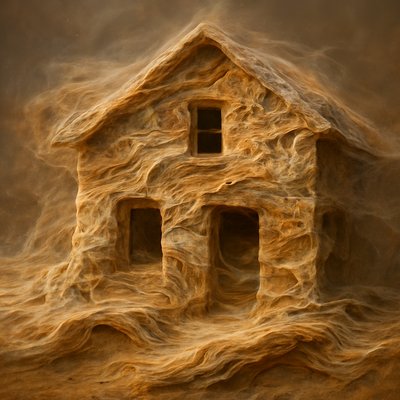
house with front view
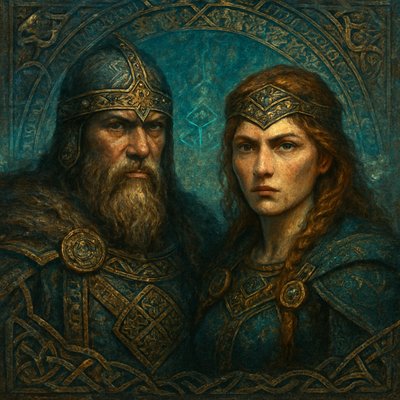
portrait of two people together