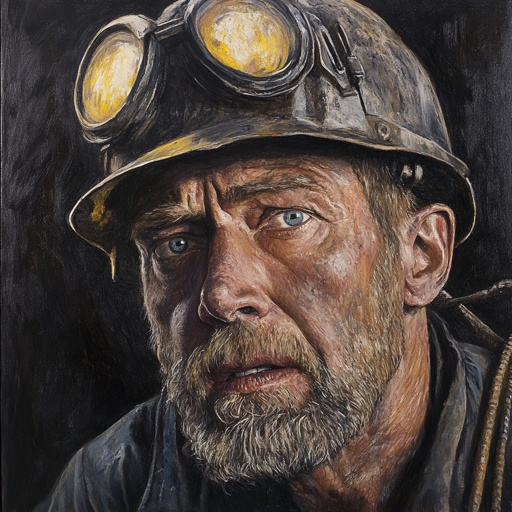
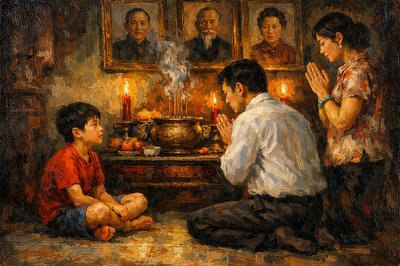
Expressionist Portrait Style Style Transfer Example Art

Naive-style landscape with distorted perspective in the art style of Outsider Art --v 6.1
Kawaii-style composition with cute elements and consumerist critique in the art style of Superflat --v 6.1
Fresco-style painting with architectural elements in the art style of Renaissance --v 6.1
Intimate atmosphere in the art style of Rococo --v 6.1
Superflat-style advertisement critiquing consumer culture in the art style of Superflat --v 6.1
Graffiti-style mural with references to viral internet content in the art style of Neo-Pop Art --v 6.1
Intimate atmosphere in the art style of Rococo --v 6.1
Conceptual restaurant as an artwork in the art style of Relational Art --v 6.1
Backstage at a vaudeville theater in the art style of Ashcan School --v 6.1
Conceptual restaurant as an artwork in the art style of Relational Art --v 6.1
Backstage at a vaudeville theater in the art style of Ashcan School --v 6.1
Shoujo-style romantic scene with floral backgrounds in the art style of Manga --niji 6
Art Style & Atmosphere: A richly detailed, cinematic fantasy photograph with a whimsical, storybook quality. The lighting is dappled and golden, filtering through a complex canopy, creating a serene and wondrous atmosphere.

The Subjects: A magnificent, large Bengal tigress with deep orange and black fur walks with a slow, confident stride through the center of the frame. Perched comfortably on her shoulder blades, looking around with wide-eyed curiosity, is a small tabby kitten with unusual, muted olive-green and brownish-grey striped fur.

The Environment (The Forest-Library): The setting is a seamless, magical fusion of an ancient woodland and a grand library.

    The Trees: Towering, gnarled trees have trunks that are not just bark, but carved wooden bookshelves packed tight with thousands of leather-bound books, scrolls, and codices.

    The Canopy: The "leaves" above are a mixture of real green foliage and open book pages fluttering in the breeze, creating a stained-glass effect with the sunlight.

    The Floor: The forest floor is a mix of moss, roots, and stacks of old books that look like natural rock formations or undergrowth.

    School Elements: Old, weathered wooden school desks are integrated into the landscape, some overgrown with ivy, holding open botanical textbooks. A large slate chalkboard, covered in arcane botanical diagrams, is embedded into a mossy rock face.

Composition: A wide-angle shot showing the scale of the environment as the tigress and kitten move along a path paved with worn flagstones and embedded encyclopedias.
Art Style: A complex, symbolic conceptual illustration blending ancient mysticism with modern schematic design. The aesthetic should feel like an illuminated alchemical manuscript crossed with a celestial blueprint. Textures of aged vellum, carved stone, and glowing divine energy.

Central Composition: A vertical evolutionary flow. At the grounding base, emerging from rough, ancient rock, is the Paleo-Hebrew Aleph symbol (the stylized ox head with horns, looking like an 'A' lying on its side). It is carved deeply, looking primal and strong.

Transition & Meanings: Rising from the Paleo symbol is a swirling vortex of golden and blue light, forming a "pillar of meaning." Within this energy stream, ethereal visual metaphors and text are embedded: ghostly outlines of a powerful ox plowing, a stylized crown representing leadership, and a single radiant beam of light connecting heaven and earth. The English words "STRENGTH," "LEADER," and "FIRST" are written in archaic, glowing script along this rising path.

The Modern Form: At the apex, floating suspended in a sphere of brilliant white light, is the Modern Hebrew letter א (Aleph). It is rendered not just as ink, but as three distinct components of energy (the upper yod, lower yod, and connecting vav) held together in perfect balance, symbolizing divine unity.

Textual Integration:

Floating prominently above the entire composition is the large, glowing number "1".

Bridging the gap between the ancient and modern forms in the center of the image is the word "ALEF" in a bold, timeless font.

Small labels "PALEO-HEBREW" and "MODERN HEBREW" are discreetly placed near their respective symbols.

Overall Mood: Profound, sacred, interconnected, and powerful. The background is a subtle star map with faint sacred geometry lines.
Art Style: Analytical Cubism, avant-garde oil painting style reminiscent of Picasso and Braque.

Subject: A dense, tangled thicket of Rhododendrons and Mountain Laurel bushes.

Composition & Details: The entire natural scene is deconstructed into overlapping geometric planes, fractured shards, and intersecting angles. There are no curved lines; everything is rendered in cubes, cones, and trapezoids.

    The Rhododendrons: Large, showy flower trusses are broken into faceted crystalline structures of deep magenta, rose pink, and violet blocks, looking like explosions of colored quartz rather than soft petals.

    The Mountain Laurels: The smaller, intricate flowers are rendered as complex, repeating geometric star-patterns and angular cups in white and pale pink with distinct red polygonal markings.

    Foliage & Branches: The thick, leathery leaves are fragmented green triangles and parallelograms overlapping each other, creating a sense of depth without traditional perspective. The woody stems and branches are jagged, intersecting brown and grey cylinders that shatter across the frame.

Color & Texture: A palette of muted earth tones—ochre, burnt umber, forest green, and slate grey—contrasted sharply with the jewel-toned facets of the flower colors. The finish should have a heavy, textured oil paint feel with visible palette knife marks and rough brushwork.
Art Style: Analytical Cubism, avant-garde oil painting style reminiscent of Picasso and Braque.

Subject: A dense, tangled thicket of Rhododendrons and Mountain Laurel bushes.

Composition & Details: The entire natural scene is deconstructed into overlapping geometric planes, fractured shards, and intersecting angles. There are no curved lines; everything is rendered in cubes, cones, and trapezoids.

    The Rhododendrons: Large, showy flower trusses are broken into faceted crystalline structures of deep magenta, rose pink, and violet blocks, looking like explosions of colored quartz rather than soft petals.

    The Mountain Laurels: The smaller, intricate flowers are rendered as complex, repeating geometric star-patterns and angular cups in white and pale pink with distinct red polygonal markings.

    Foliage & Branches: The thick, leathery leaves are fragmented green triangles and parallelograms overlapping each other, creating a sense of depth without traditional perspective. The woody stems and branches are jagged, intersecting brown and grey cylinders that shatter across the frame.

Color & Texture: A palette of muted earth tones—ochre, burnt umber, forest green, and slate grey—contrasted sharply with the jewel-toned facets of the flower colors. The finish should have a heavy, textured oil paint feel with visible palette knife marks and rough brushwork.
Art Style: Analytical Cubism, avant-garde oil painting style reminiscent of Picasso and Braque.

Subject: A dense, tangled thicket of Rhododendrons and Mountain Laurel bushes.

Composition & Details: The entire natural scene is deconstructed into overlapping geometric planes, fractured shards, and intersecting angles. There are no curved lines; everything is rendered in cubes, cones, and trapezoids.

    The Rhododendrons: Large, showy flower trusses are broken into faceted crystalline structures of deep magenta, rose pink, and violet blocks, looking like explosions of colored quartz rather than soft petals.

    The Mountain Laurels: The smaller, intricate flowers are rendered as complex, repeating geometric star-patterns and angular cups in white and pale pink with distinct red polygonal markings.

    Foliage & Branches: The thick, leathery leaves are fragmented green triangles and parallelograms overlapping each other, creating a sense of depth without traditional perspective. The woody stems and branches are jagged, intersecting brown and grey cylinders that shatter across the frame.

Color & Texture: A palette of muted earth tones—ochre, burnt umber, forest green, and slate grey—contrasted sharply with the jewel-toned facets of the flower colors. The finish should have a heavy, textured oil paint feel with visible palette knife marks and rough brushwork.
Art Style: Analytical Cubism, avant-garde oil painting style reminiscent of Picasso and Braque.

Subject: A dense, tangled thicket of Rhododendrons and Mountain Laurel bushes.

Composition & Details: The entire natural scene is deconstructed into overlapping geometric planes, fractured shards, and intersecting angles. There are no curved lines; everything is rendered in cubes, cones, and trapezoids.

    The Rhododendrons: Large, showy flower trusses are broken into faceted crystalline structures of deep magenta, rose pink, and violet blocks, looking like explosions of colored quartz rather than soft petals.

    The Mountain Laurels: The smaller, intricate flowers are rendered as complex, repeating geometric star-patterns and angular cups in white and pale pink with distinct red polygonal markings.

    Foliage & Branches: The thick, leathery leaves are fragmented green triangles and parallelograms overlapping each other, creating a sense of depth without traditional perspective. The woody stems and branches are jagged, intersecting brown and grey cylinders that shatter across the frame.

Color & Texture: A palette of muted earth tones—ochre, burnt umber, forest green, and slate grey—contrasted sharply with the jewel-toned facets of the flower colors. The finish should have a heavy, textured oil paint feel with visible palette knife marks and rough brushwork.
Art Style: Analytical Cubism, avant-garde oil painting style reminiscent of Picasso and Braque.

Subject: A dense, tangled thicket of Rhododendrons and Mountain Laurel bushes.

Composition & Details: The entire natural scene is deconstructed into overlapping geometric planes, fractured shards, and intersecting angles. There are no curved lines; everything is rendered in cubes, cones, and trapezoids.

    The Rhododendrons: Large, showy flower trusses are broken into faceted crystalline structures of deep magenta, rose pink, and violet blocks, looking like explosions of colored quartz rather than soft petals.

    The Mountain Laurels: The smaller, intricate flowers are rendered as complex, repeating geometric star-patterns and angular cups in white and pale pink with distinct red polygonal markings.

    Foliage & Branches: The thick, leathery leaves are fragmented green triangles and parallelograms overlapping each other, creating a sense of depth without traditional perspective. The woody stems and branches are jagged, intersecting brown and grey cylinders that shatter across the frame.

Color & Texture: A palette of muted earth tones—ochre, burnt umber, forest green, and slate grey—contrasted sharply with the jewel-toned facets of the flower colors. The finish should have a heavy, textured oil paint feel with visible palette knife marks and rough brushwork.
Art Style: Analytical Cubism, avant-garde oil painting style reminiscent of Picasso and Braque.

Subject: A dense, tangled thicket of Rhododendrons and Mountain Laurel bushes.

Composition & Details: The entire natural scene is deconstructed into overlapping geometric planes, fractured shards, and intersecting angles. There are no curved lines; everything is rendered in cubes, cones, and trapezoids.

    The Rhododendrons: Large, showy flower trusses are broken into faceted crystalline structures of deep magenta, rose pink, and violet blocks, looking like explosions of colored quartz rather than soft petals.

    The Mountain Laurels: The smaller, intricate flowers are rendered as complex, repeating geometric star-patterns and angular cups in white and pale pink with distinct red polygonal markings.

    Foliage & Branches: The thick, leathery leaves are fragmented green triangles and parallelograms overlapping each other, creating a sense of depth without traditional perspective. The woody stems and branches are jagged, intersecting brown and grey cylinders that shatter across the frame.

Color & Texture: A palette of muted earth tones—ochre, burnt umber, forest green, and slate grey—contrasted sharply with the jewel-toned facets of the flower colors. The finish should have a heavy, textured oil paint feel with visible palette knife marks and rough brushwork.
Classical Wildlife Illustration Style, Rich Textures, Warm Golden Hour Lighting. An intimate, detailed look at a dramatic rescue on a sun-dappled forest floor.

The Trapped Giant (The Lion): A massive, powerful male lion with a thick mane is hopelessly tangled in a complex hunter’s net made of thick, coarse hemp ropes. He is lying on his side, exhausted and defeated, his immense paws bound. His expression is one of surprising gentleness and relief as he looks down.

The Tiny Hero (The Mouse): The focal point is a tiny field mouse, rendered with exquisite detail, perched precariously on a thick knot of rope right next to the lion's massive face. The mouse is busily gnawing through a crucial strand of the thick netting with its sharp teeth. Shavings of hemp rope are visible.

The Atmosphere: Warm, late afternoon sunlight filters through the tree canopy, creating patches of bright light that highlight the dusty texture of the ropes, the individual hairs on the mouse, and the deep golden fur of the lion. The immense scale difference between the lion’s head and the mouse’s entire body is central to the composition.
in the style of John Atkinson Grimshaw,
bird’s‑eye view, camera looking downward from a moderate height over hot air balloons rising steadily and moving with the wind through clear blue skies,
subtle curvature of the landscape visible below,
rich jewel‑tone reds, teals, and golds catching warm natural sunlight, realistic wind‑driven motion, natural directional flow, a hillside overlook below with small groups of people watching the balloons, holding umbrellas for shade, wearing Victorian‑style clothing,
long tailored coats, layered skirts, high collars,
grounded composition, realistic atmospheric depth, cinematic painterly
Luminous Storybook Illustration Style, Rich Color Saturation, Magical Realism. A dramatic, painterly scene capturing the precise moment of tragic error on an old, mossy stone bridge spanning a calm river at sunset.

The Reality (The Dog on the Bridge): A scruffy, hungry-looking terrier stands frozen mid-snarl on the edge of the bridge, looking downward. Its mouth is wide open in an aggressive bark. Suspended in mid-air, just inches below its open jaws, a real, decent-sized meaty bone is falling toward the water. The dog’s expression is a mix of greed and sudden confusion.

The Illusion (The Reflection): The surface of the river below is glassy and still, acting like a perfect, deceptive mirror. The reflection shows the same dog, but the reflected bone in its mouth appears impossibly huge, glistening, and juicier than the real one. The reflection is almost hypnotically bright, brighter than the reality above the water. The warm golden light of the setting sun makes the water shimmer invitingly.
Whimsical Storybook Illustration Style, Warm Color Palette, Soft Textures and Detailed Linework. A wide-angle view of a secret, crowded meeting of dozens of anthropomorphic field mice taking place on an upturned wooden crate in the corner of a cluttered, dusty barn.

The Focal Point (The Plan): In the center of the crate spotlighted by a beam of sunlight coming through a crack in the roof, a small, earnest mouse stands on its hind legs, triumphantly holding aloft a shiny brass sleigh bell tied with a bright red ribbon. The bell looks impossibly large and heavy for the mouse.

The Reaction (The Hesitation): The surrounding crowd of mice is a mix of emotions. Some in the front row are cheering with tiny paws raised. However, many others towards the back are exchanging nervous, sidelong glances, scratching their heads, or looking fearfully over their shoulders.

The Threat (The Reality): In the background, on top of a high stack of hay bales, a giant, fluffy tabby cat is fast asleep. Though sleeping, its size and sharp claws are evident, casting a shadow over the edge of the meeting area. The contrast between the small, shiny bell and the enormous sleeping predator is central to the image.
Documentary Photography Style, Analog Film Grain, Warm Golden Hour Backlighting. A dynamic, joyful candid shot of a young Appalachian woman with wildly flowing, fiery red hair playing a dobro resonator guitar with immense energy on the porch of an old log cabin.

The Action & "Lively" Feel: She is sitting on a rough wooden stool with the dobro flat on her lap. She is caught mid-song, head thrown back in laughter, her red hair caught in a breeze and lit up by the setting sun. Her left hand, holding a metal slide bar, is blurring across the neck, and her right hand (wearing fingerpicks) is a blur of motion over the strings.

The Instrument: A well-used square-neck dobro. The distinctive, round shiny metal resonator cover plate reflects the warm sunset light intensely.

The Attire: Rustic and practical: a worn denim vest over a floral thermal shirt, a long patchwork skirt, and dusty leather boots.

The Setting: The cluttered log cabin porch with the hazy mountain ridges in the background remains, enhancing the authentic feel.
Documentary Photography Style, Analog Film Grain, Warm Golden Hour Backlighting. A dynamic, joyful candid shot of a young Appalachian woman with wildly flowing, fiery red hair playing a dobro resonator guitar with immense energy on the porch of an old log cabin.

The Action & "Lively" Feel: She is sitting on a rough wooden stool with the dobro flat on her lap. She is caught mid-song, head thrown back in laughter, her red hair caught in a breeze and lit up by the setting sun. Her left hand, holding a metal slide bar, is blurring across the neck, and her right hand (wearing fingerpicks) is a blur of motion over the strings.

The Instrument: A well-used square-neck dobro. The distinctive, round shiny metal resonator cover plate reflects the warm sunset light intensely.

The Attire: Rustic and practical: a worn denim vest over a floral thermal shirt, a long patchwork skirt, and dusty leather boots.

The Setting: The cluttered log cabin porch with the hazy mountain ridges in the background remains, enhancing the authentic feel.
Epic Landscape Photography Style, Wide-Angle Lens, Golden Hour Lighting. A profound, sweeping photograph of a single, colossal ancient Eastern Cottonwood tree standing isolated in the center of a vast expanse of the Nebraska rolling highlands (Sandhills).

The Tree: It is massive and gnarled, a true sentinel of the plains, with a thick, deeply fissured trunk and sprawling, asymmetrical branches shaped by years of constant wind.

The Environment: The surrounding landscape is a sea of undulating, gentle hills covered in knee-high mixed-grass prairie that glows coppery-gold and sage-green in the late afternoon light. The grasses are visibly swaying in the breeze. A faint, winding dirt track leads toward the horizon.

The Sky & Light: The sky is immense and dramatic, taking up two-thirds of the frame, filled with textured cumulus clouds catching the brilliant oranges, deep purples, and soft pinks of the sunset. The light is warm, casting long shadows across the folds of the hills. The mood is quiet, vast, and solitary.
Mystical Nativity scene 
"In the style of Sandro Botticelli"
"Renaissance elegance with elongated figures and flowing drapery"
"Ethereal angels and symbolic botanical elements"
"Rich gold accents and harmonious color palette"
"Detailed landscapes with mystical religious iconography"
"Graceful poses and serene expressions in Nativity scenes"
"Florentine Renaissance composition with balanced symmetry"