Express Without Words “(For Not The Hearers Of The Law Are Just Before God, But The Doers Of The Law Shall Be Justified.” Art

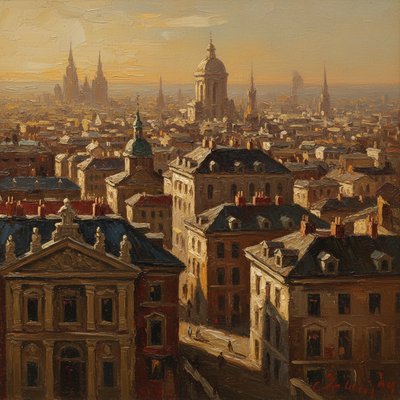
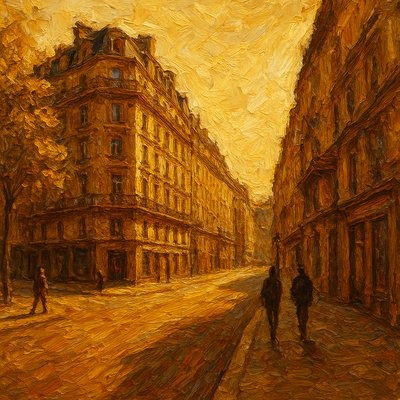
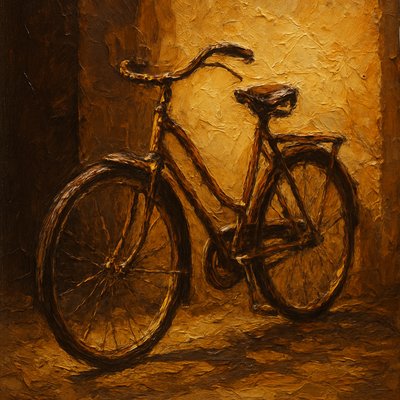
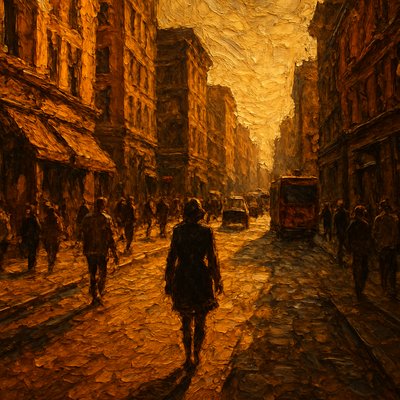
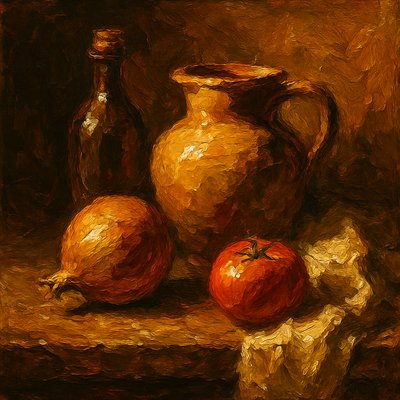
Classical Impasto Realism Style Transfer Example
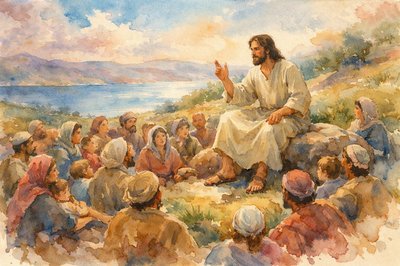
First century Palestine.  Jesus sits on a rock on a hillside teaching a large group of His disciples.  The Sermon on the Mount.  Jesus wears a plain robe like most ordinary men.  Jesus' face is kind, but intense, as He teaches. The other people are mostly peasants, farmers, and tradesmen.  There are also women present, wearing plain, everyday clothing.  Some couples have also brought their children.  The Sea of Galilee shines in the far distance.
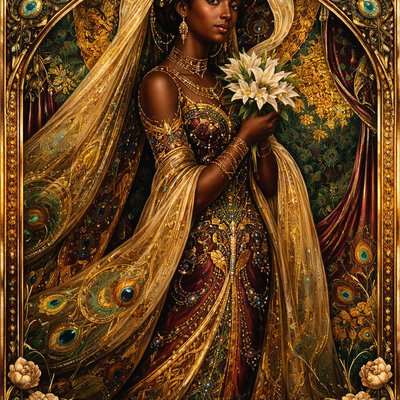
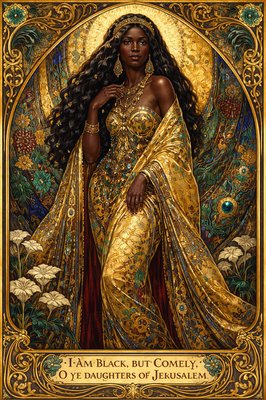
I am black, but comely, O ye daughters of Jerusalem, as the tents of Kedar, as the curtains of Solomon. 
(Song of Solomon 1:5 KJV)
 in the style of Gustav Klimt,shimmering gold patterns,"elaborate symbolic designs,symbolic and allegorical composition, holding to ancient fashion and modesty
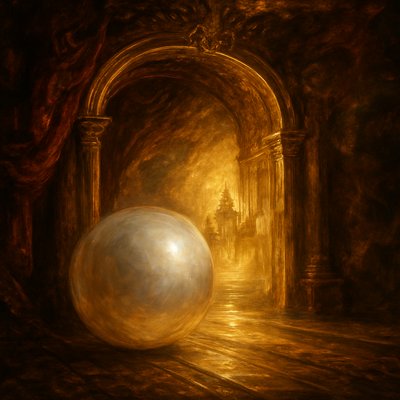
A profoundly symbolic and awe-inspiring depiction of a colossal, luminous pearl gate in the New Jerusalem, captured in the dynamic act of rolling away, similar to the stone being moved from Christ's tomb. The gate, a single, immense, perfectly spherical pearl, is shown mid-motion, having just been set aside from the entrance, revealing the glorious city beyond.

The pearl itself glows with an intense, soft iridescence, reflecting the divine light. Its surface shows subtle, exquisite details of mother-of-pearl. The frame or opening from which it has rolled away is visible, perhaps showing immense, smooth tracks or channels in the transparent gold structure of the city wall, reinforcing the idea of its monumental movement.

Through the now open gate, the radiant glory of the New Jerusalem streams forth. Pure gold streets, like transparent glass, extend into the city, illuminated by an intense, divine light that emanates from within. Heavenly architecture, impossibly beautiful and intricate, is glimpsed in the distance, beckoning. The atmosphere is one of profound sanctity, triumphant revelation, and welcoming access to the divine, with the act of the pearl rolling away symbolizing a breakthrough or an open invitation. The lighting is ethereal and grand, emphasizing the pearl's luster and the city's overwhelming glory."
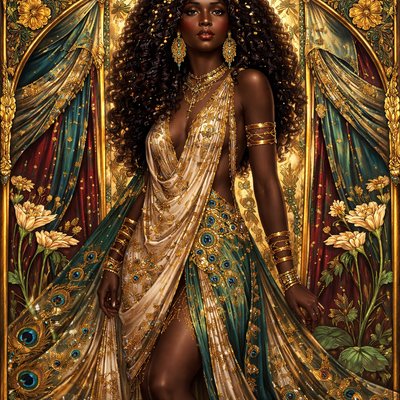
I am black, but comely, O ye daughters of Jerusalem, as the tents of Kedar, as the curtains of Solomon. 
(Song of Solomon 1:5 KJV)
 in the style of Gustav Klimt,shimmering gold patterns,"elaborate symbolic designs,symbolic and allegorical composition
I am black, but comely, O ye daughters of Jerusalem, as the tents of Kedar, as the curtains of Solomon. 
(Song of Solomon 1:5 KJV)
 in the style of Gustav Klimt,shimmering gold patterns,"elaborate symbolic designs,symbolic and allegorical composition, holding to ancient fashion and modesty
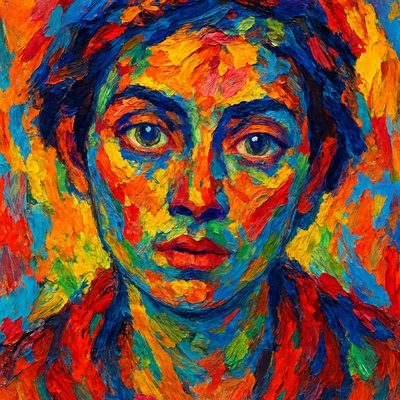
portrait of a person with expressive eyes
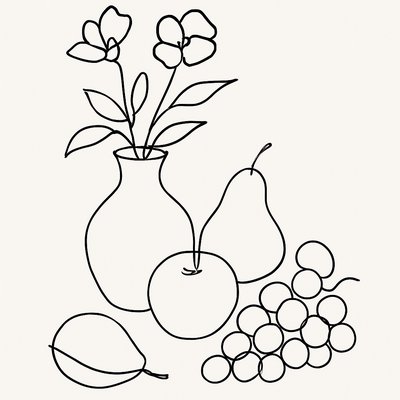
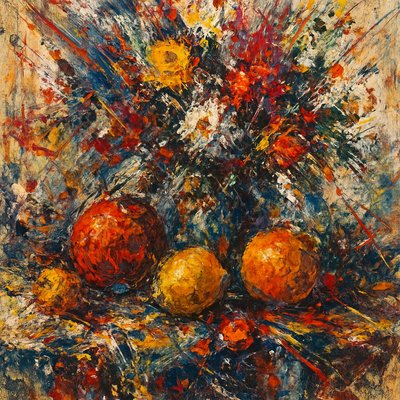
still life arrangement of fruits and flowers
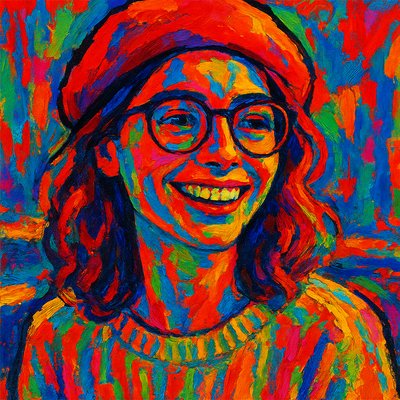
Ukiyo-e Anime Fusion Portrait Style Transfer Example
Fauvism Art Style Style Transfer Example
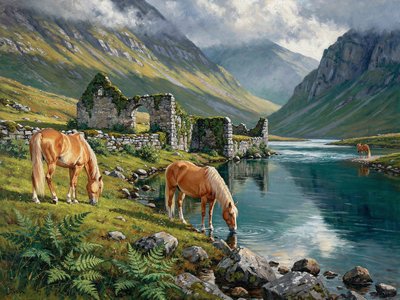
Seamless triptych artwork with no dividing lines or borders, continuous scene flowing left to right, left panel shows a palomino horse in the foreground on the far left side of the scene walking down a grassy slope toward a reflective teal-blue river in the Scottish Highlands with rocks and ferns around its hooves, center panel continues the same landscape as the horse now appears in the midground at the center of the scene standing at the river’s edge drinking from the reflective water beside ancient moss-covered stone ruins, right panel continues the scene as the horse appears far away in the distance on the far right side of the scene following the riverbank toward steep mist-covered mountains with dramatic sunlight breaking through the clouds, unified natural palette of greens golds and reflective teal blues, consistent cinematic lighting, shared horizon line, smooth uninterrupted left-to-right visual flow with no panel separation.
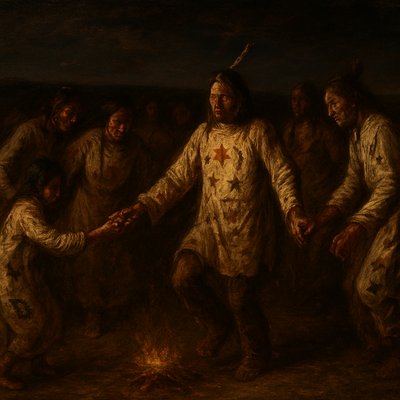
"A historically accurate depiction of a Ghost Dance, focusing on the late 19th-century context, specifically around 1890-1891. The scene shows Lakota (Sioux) or Northern Paiute people (specify one or include elements of both, but avoid anachronisms) participating in the ceremony.

Setting: A vast, open prairie or high desert landscape, under an expansive sky. The time of day could be dusk or night, with a prominent moon or stars, or a bright, clear day. Avoid overtly spiritual or ethereal elements like floating spirits unless explicitly requested for a later, more symbolic iteration. The focus should be on the earthly ceremony.

Participants: A circle of men, women, and children, hand-in-hand, moving in a slow, rhythmic shuffle or circular motion. Their faces show a mixture of devotion, hope, and determination. Some may have expressions of trance or deep concentration.

Attire:

    Ghost Dance Shirts/Dresses: Emphasize the unique Ghost Dance shirts and dresses, which were typically made of muslin or canvas. These garments should feature painted designs such as stars, crescents, birds (especially eagles or crows), buffalo, human figures, or crosses. The designs should appear hand-painted, not mass-produced.

    Hair and Adornments: Participants should have braided hair or wear it long. Some may wear feathers (e.g., eagle or hawk feathers) in their hair. Minimal traditional adornments, as the focus was often on the Ghost Dance shirt itself. Avoid overly elaborate or Hollywood-esque depictions of war bonnets unless relevant to a specific individual and context.

    Footwear: Moccasins or bare feet.

Action/Atmosphere:

    The dancers are moving in a counter-clockwise circle, with a central figure or a small group often leading.

    The overall mood is one of earnest prayer and communal spiritual effort. The dance should convey a sense of hope for renewal and the return of the old ways, rather than aggression or despair.

    There might be a central pole or small fire as a focal point, around which the dance takes place.

    Avoid any signs of direct conflict or violence; the Ghost Dance itself was a non-violent spiritual movement.

Specific Considerations for Accuracy:

    Wovoka's Influence: The teachings of Wovoka (the Northern Paiute prophet) emphasized peace, hard work, and the return of the buffalo and deceased ancestors. The scene should subtly reflect this hopeful, redemptive spirit.

    Regional Variations: If focusing on Lakota, consider their specific interpretations, which sometimes included more imagery related to their warrior traditions on the shirts, but still within the peaceful framework of the dance.

    Respectful Portrayal: Ensure the depiction is respectful and avoids any stereotypical or caricatured representations of Indigenous people. Focus on their human dignity and spiritual sincerity.
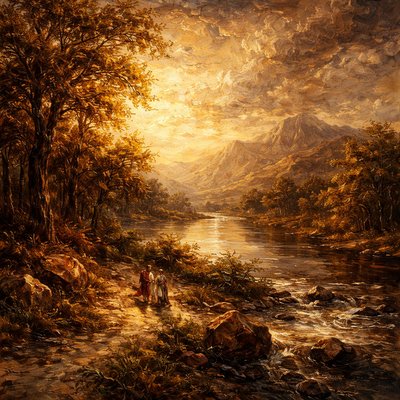
Landscape
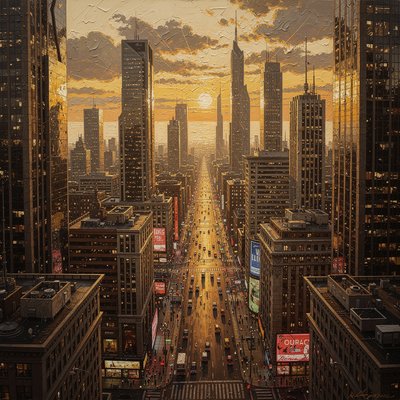
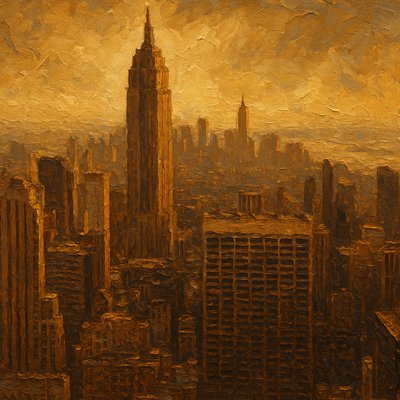
Metropolis
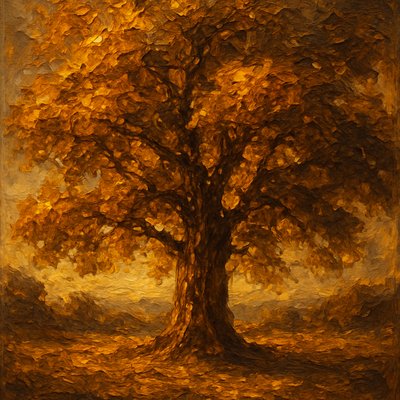
a tree in nature
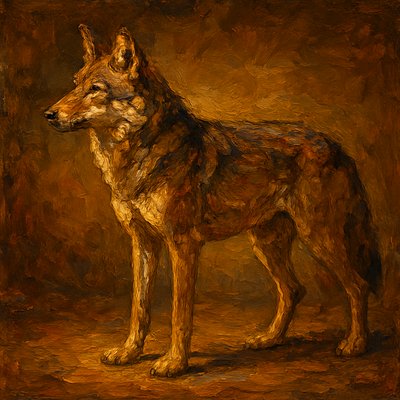
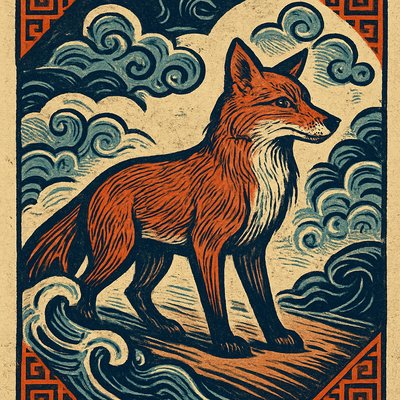
animal standing in natural pose
wide landscape with natural scenery

A majestic and awe-inspiring depiction of one of the twelve gates of the New Jerusalem, as described in Revelation 21:21, with an intense emphasis on the pearl. The gate itself is monumental, fashioned entirely from a single, colossal, luminous pearl, radiating an otherworldly, soft, iridescent glow. The pearl's surface exhibits incredible detail, showing subtle layers, mother-of-pearl sheen, and a perfect, smooth, spherical quality even in its flat gate form.

The gate stands open, revealing a glimpse of the glorious city within – a city made of pure gold, as transparent as glass, with streets of pure gold like transparent glass. Brilliant, divine light streams from within the city, casting ethereal glows and soft shadows. The architecture seen beyond the gate is grand and heavenly, hinting at impossible beauty.

The surroundings of the gate are similarly divine but serve to highlight the pearl: perhaps the foundations are adorned with precious stones as described in Revelation 21:19-20, or the approach to the gate is paved with the transparent gold. The sky above is a glorious, clear, and vibrant heavenly blue, possibly hinting at the glory of God. The lighting is transcendent and soft, emphasizing the pearl's luminous quality and its immaculate perfection. The overall mood is one of profound sanctity, overwhelming beauty, divine welcome, and immense glory.
Seamless triptych artwork, continuous scene flowing left to right, left panel shows a palomino horse in the foreground on the far left side of the scene walking down a grassy slope toward a reflective teal-blue river in the Scottish Highlands with rocks and ferns around its hooves, center panel continues the same landscape as the horse now appears in the midground at the center of the scene standing at the river’s edge drinking from the reflective water beside ancient moss-covered stone ruins, right panel continues the scene as the horse appears far away in the distance on the far right side of the scene following the riverbank toward steep mist-covered mountains with dramatic sunlight breaking through the clouds, unified natural palette of greens golds and reflective teal blues, consistent cinematic lighting, shared horizon line, smooth uninterrupted left-to-right visual flow with no panel separation.
portrait of a person with expressive eyes
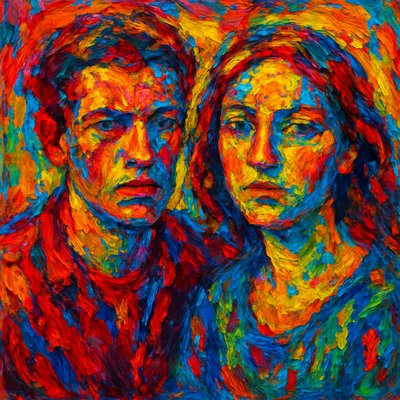
portrait of two people together
A whimsical and enchanting scene inside Willy Wonka's Chocolate Factory, featuring his extraordinary golden egg-laying geese. Several plump, pristine white geese are perched comfortably in ornate, perhaps slightly absurd, nests made of candy floss or sweet wrappers. Each goose is in the process of laying, or has just laid, a perfectly smooth, shimmering golden egg, which glows with a soft, magical luminescence. The geese themselves have a benevolent, slightly proud expression. The background reveals a fantastical, imaginative section of the factory, with edible landscapes, rivers of chocolate, and machinery built from confectionery. The lighting is soft, warm, and magical, emphasizing the golden glow of the eggs and the fantastical nature of the setting. The overall mood is one of sweet wonder, delight, and a touch of eccentricity."
Metropolis
Metropolis
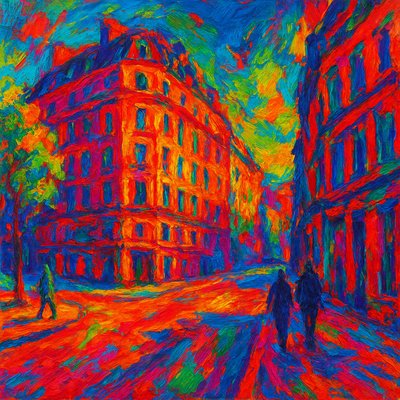
Classical Impasto Realism Style Transfer Example
bicyle resting against a wall
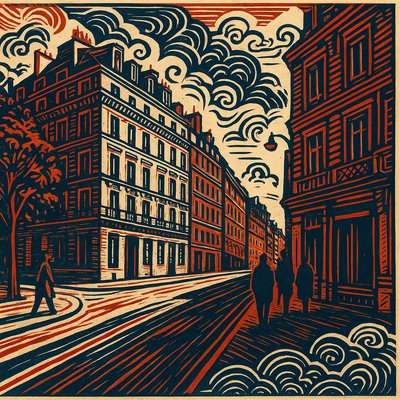
urban street with city activity
still life with everyday objects
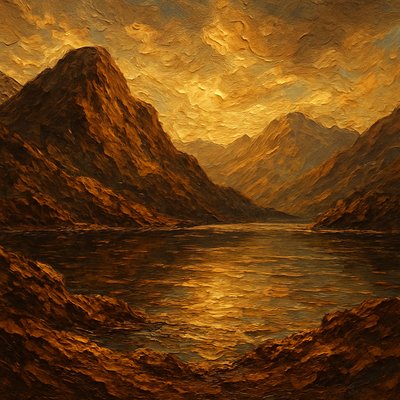
serene landscape with mountains and water
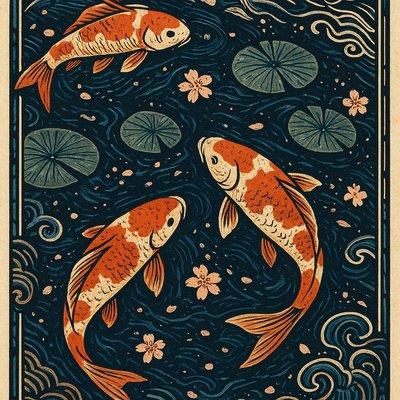
A koi pond seen from above, orange and white koi fish swimming among lily pads, clear water with subtle ripples, fallen cherry blossom petals floating on the surface, dappled sunlight
house with front view
Volume 1 – Chapter 1: “Running Away”

Story Points:

Ji Hun is bored and unhappy with his life in the band “Forever.” Inner thoughts reveal his frustration and desire to escape.

He decides to run away; changes his appearance with a ginger curly wig and glasses to hide his identity.

Ji Hun sneaks out, but security guards notice him and start chasing him.

While running, he accidentally bumps into Min Joon, a girl with long curly black hair, wearing a hoodie and baggy jeans. They fall on the ground.

Min Joon helps him up and insists on taking him to her home to relax.

She offers him tea and biscuits; they start talking. Ji Hun lies and says his name is “Jin” and that he is an accountant.

He notices posters of his band “Forever” in her room and realizes she is a fan. Min Joon praises Ji Hun’s voice, making him shy.

Ji Hun talks about never enjoying life; Min Joon promises to teach him how to enjoy life.

Ji Hun hesitates, worried about being recognized, but she reassures him. He agrees to go with her.

Min Joon prepares to take him outside, setting up the transition to Chapter 2 (car ride and amusement park).

Page/Panel Flow Suggestions:

Pages 1–3: Ji Hun’s frustration, morning in the band dorm, decision to escape.

Pages 4–5: Ji Hun changing disguise.

Pages 6–8: Running and being chased by security guards.

Pages 9–12: Collision with Min Joon, first meeting.

Pages 13–16: Min Joon taking him home, tea and biscuits scene.

Pages 17–20: Conversation about Ji Hun’s unhappiness, Min Joon promising to show him joy.
Visionary Art Style, Bioluminescence Art Style, an awe-inspiring, luminous depiction of ancient Jewish cosmology for Psalm 8:3, presented with profound depth and ethereal glow. The central feature is a vast, shimmering, domed firmament (raqia), appearing as a translucent, opalescent boundary stretching across the scene, separating realms. Above this firmament, immense, glowing celestial waters swirl with bioluminescent currents of deep blues, purples, and greens, illuminated by an unseen, brilliant divine light emanating from the highest heavens. Large, radiant stars and a luminous crescent moon are not distant objects, but rather appear as integral, internally glowing bioluminescent entities set within the shimmering surface of the firmament, their light subtly pulsing. Below, hints of foundational earth and the "waters below" are visible, also touched by soft, ethereal glows. The entire scene is alive with vibrant, jewel-toned celestial colors and a sense of boundless, mystical energy. Focus on the layered, translucent quality of the firmament, the dynamic, living glow of the bioluminescent waters and embedded celestial bodies, and an overwhelming sense of ancient, sacred wonder and divine power.
A koi pond seen from above, orange and white koi fish swimming among lily pads, clear water with subtle ripples, fallen cherry blossom petals floating on the surface, dappled sunlight
Ukiyo-e Anime Fusion Portrait Style Transfer Example
house with front view
animal standing in natural pose
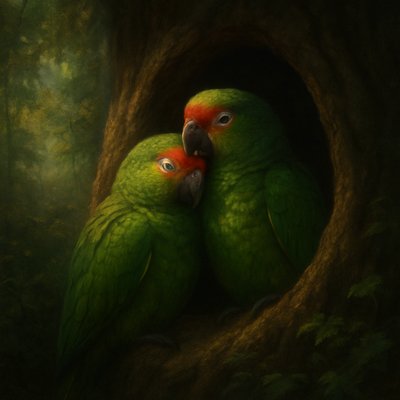
Digital Art Style, Romanticism Art Style, a tender and intimate painting inspired by Psalm 31:20, emphasizing the security of a divine dwelling place. The scene focuses on a monogamous pair of Red-lored Amazon parrots with their vibrant green plumage, distinct red and yellow markings, rendered with luminous digital detail. They are positioned at the dark, secluded entrance of a natural tree cavity, their posture conveying mutual protection and absolute contentment within their refuge. The surrounding forest is lush, with sunlight subtly illuminating the exterior, while the area immediately around the cavity entrance is bathed in a soft, ethereal glow, representing the shelter of God's presence and symbolizing the divine security of their dwelling. The overall atmosphere is one of profound safety, peace, and intimate privacy, as if they are hidden away from the world. Focus on the detailed expressions of peace on the parrots' faces, the tender intimacy of their pair bond, and the dramatic contrast between the bright forest and the secure, glowing darkness of their hidden dwelling.
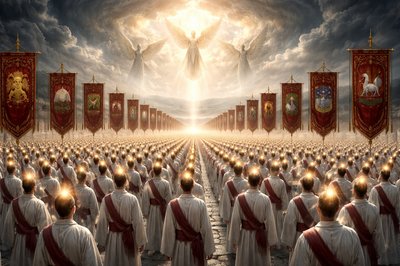
An epic, wide-angle cinematic masterwork of the 144,000 servants of God, divided into twelve massive, disciplined ranks in a valley of white stone. Each rank is led by a towering, ornate scarlet silk banner with gold-embroidered edges. 
The Banners: Distinct symbols are visible on each: a Lion (Judah), Sun over Water (Reuben), Military Tent (Gad), Olive Tree (Asher), Leaping Deer (Naphtali), Fruitful Vine (Manasseh), City Gate (Simeon), Priestly Breastplate (Levi), Celestial Stars (Issachar), Sailing Ship (Zebulun), Wheat Sheaf (Joseph), and Silver Wolf (Benjamin).
The People: In the foreground, the men wear crisp white linen robes with deep Tola-scarlet sashes. Every individual has a brilliant, glowing Golden Seal physically shimmering on their forehead, casting a divine light upward.
The Heavens: In the far distance, four colossal, translucent angels stand at the horizon, their massive wings outstretched to physically block swirling, dark storm-vortices (the four winds). A fifth angel, radiant in pearlescent light, descends from a golden sunrise in the East.
Style: High-contrast chiaroscuro, intricate embroidery textures, hyper-detailed faces, 8k resolution, ArtStation masterpiece. Absolutely no English text or letters.