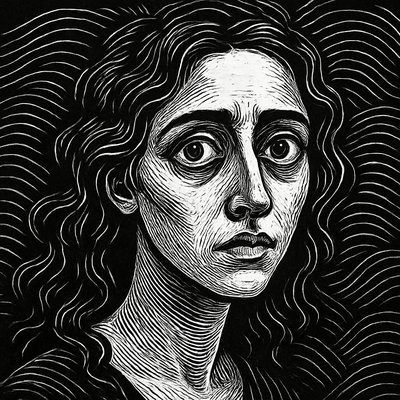
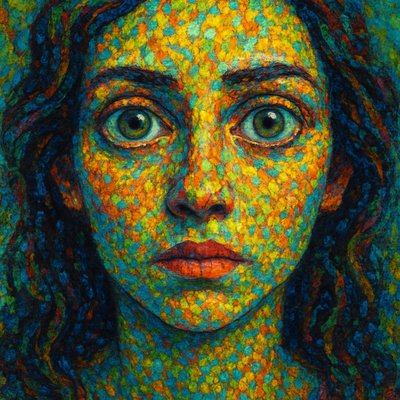
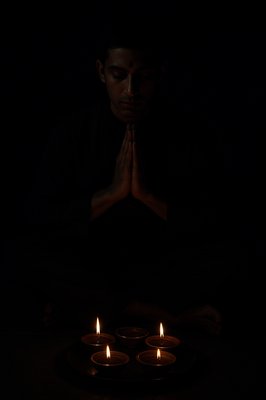
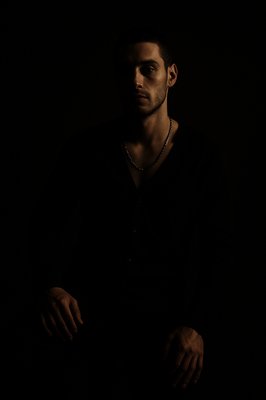
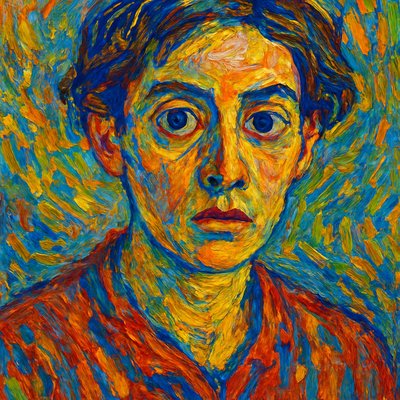
Elderly Person In Natural Window Light Art

A realistic and peaceful image of a 56-year-old woman fishing on the shores of Lake Livingston, Texas, during the Christmas season. She has very long, vibrant red hair that flows all the way down to her waist, gently moving in the breeze.

She is standing on a wooden dock or sitting in a comfortable chair by the water, surrounded by the tall pine trees characteristic of East Texas. The weather is cool but pleasant (Texas winter). She is wearing cozy holiday-themed attire, such as a warm plaid flannel shirt in red and green, a festive scarf, or a beanie. Maybe there is a small Christmas wreath on the railing of the dock or a thermos of hot cocoa nearby. The lake is calm and reflects the soft winter sun. The lighting is warm and golden. High quality, photorealistic, serene atmosphere.
"A fashionable woman dressed in sophisticated, modest 1930s Great Depression era style, embodying an Art Deco aesthetic. She wears an elegant, tailored day dress or a chic suit-dress made of fine wool crepe or flowing rayon. The dress features a sleek, elongated silhouette with a defined natural waist, often belted. Details include a soft cowl neck or a demure V-neck with subtle draping, and perhaps gently puffed or structured sleeves. The hemline is at a modest mid-calf length, possibly with soft pleating or subtle flare. Her hair is styled in sculpted finger waves, and she wears a small, stylish cloche or tilted hat. She holds an elegant, tailored handbag and wears matching gloves. The setting is a refined Art Deco interior, perhaps a classy hotel lobby or a stylish office, with geometric patterns and warm, indirect lighting. The overall mood is one of poise, understated sophistication, and timeless chic."
Luminous Storybook Illustration Style, Rich Color Saturation, Magical Realism. A dramatic, painterly scene capturing the precise moment of tragic error on an old, mossy stone bridge spanning a calm river at sunset.

The Reality (The Dog on the Bridge): A scruffy, hungry-looking terrier stands frozen mid-snarl on the edge of the bridge, looking downward. Its mouth is wide open in an aggressive bark. Suspended in mid-air, just inches below its open jaws, a real, decent-sized meaty bone is falling toward the water. The dog’s expression is a mix of greed and sudden confusion.

The Illusion (The Reflection): The surface of the river below is glassy and still, acting like a perfect, deceptive mirror. The reflection shows the same dog, but the reflected bone in its mouth appears impossibly huge, glistening, and juicier than the real one. The reflection is almost hypnotically bright, brighter than the reality above the water. The warm golden light of the setting sun makes the water shimmer invitingly.
Luminous Storybook Illustration Style, Rich Color Saturation, Magical Realism. A dramatic, painterly scene capturing the precise moment of tragic error on an old, mossy stone bridge spanning a calm river at sunset.

The Reality (The Dog on the Bridge): A scruffy, hungry-looking terrier stands frozen mid-snarl on the edge of the bridge, looking downward. Its mouth is wide open in an aggressive bark. Suspended in mid-air, just inches below its open jaws, a real, decent-sized meaty bone is falling toward the water. The dog’s expression is a mix of greed and sudden confusion.

The Illusion (The Reflection): The surface of the river below is glassy and still, acting like a perfect, deceptive mirror. The reflection shows the same dog, but the reflected bone in its mouth appears impossibly huge, glistening, and juicier than the real one. The reflection is almost hypnotically bright, brighter than the reality above the water. The warm golden light of the setting sun makes the water shimmer invitingly.
A historically accurate and atmospheric depiction of the signing of the Mayflower Compact aboard the ship in November 1620. The scene is set in the dimly lit, cramped cabin of the Mayflower, with the ship's timbers and rigging subtly visible, conveying the challenging conditions of the voyage. A simple table or chest serves as the signing surface. The primary focus is on a small group of the last individuals signing the document: specifically, the indentured servants (or 'strangers' not directly part of the Separatist congregation) approaching or at the table. Their expressions show a mix of weary determination, understanding of the necessity, and perhaps a hint of quiet apprehension or resignation to this new social contract, given their status. They are dressed in the plain, practical clothing typical of 17th-century commoners and laborers. Figures of prominent Pilgrims or 'Saints' (like William Bradford or John Carver) are visible in the background, observing the proceedings with a sense of gravity and leadership, but they are not the central focus. The lighting is low and warm, perhaps from a lantern, creating a chiaroscuro effect that highlights the faces of the signers. The atmosphere conveys the momentousness of the act under difficult circumstances, the diverse composition of the group, and the early seeds of self-governance in a new world. The artistic style is a realistic, historically detailed oil painting, capturing the solemnity and human element of this pivotal historical moment."

Style: Ethereal Historical Fantasy Portrait. The mood is quiet, reverent, and deeply mystical. Soft, natural moonlight is the primary light source, creating gentle rim-lighting.

The Subject (Asonya): A woman of the ancient, antediluvian world, dressed with profound modesty. She is wrapped in multi-layered, heavy robes of woven wool dyed in deep indigo and charcoal grey that conceal her form. A textured veil covers her hair and frames her face. Her expression is contemplative and gentle, with eyes gazing upward.

The Moon Phase Connection: The current moon phase—a slender, glowing Waning Crescent—is intrinsically tied to her appearance.

    The Headpiece: A clasp made of pale, almost translucent moonstone in the exact shape of the crescent moon secures her veil. It seems to hold an internal, soft luminescence.

    The Projection: A faint, ethereal projection of the crescent moon phase is visible subtly glowing on the fabric of her veil over her forehead, as if starlight is clinging to her.

Action & Setting: She stands on an ancient, wind-worn stone platform used for observing the heavens. In her hands, she holds a simple, dark earthenware bowl filled with still water. The reflection of the actual crescent moon in the sky is perfectly captured in the water she holds.

Atmosphere: The background is a vast, clear night sky filled with countless stars. The air feels old and still.
Luminous Storybook Illustration Style, Rich Color Saturation, Magical Realism. A dramatic, painterly scene capturing the precise moment of tragic error on an old, mossy stone bridge spanning a calm river at sunset.

The Reality (The Dog on the Bridge): A scruffy, hungry-looking terrier stands frozen mid-snarl on the edge of the bridge, looking downward. Its mouth is wide open in an aggressive bark. Suspended in mid-air, just inches below its open jaws, a real, decent-sized meaty bone is falling toward the water. The dog’s expression is a mix of greed and sudden confusion.

The Illusion (The Reflection): The surface of the river below is glassy and still, acting like a perfect, deceptive mirror. The reflection shows the same dog, but the reflected bone in its mouth appears impossibly huge, glistening, and juicier than the real one. The reflection is almost hypnotically bright, brighter than the reality above the water. The warm golden light of the setting sun makes the water shimmer invitingly.
A historically accurate and atmospheric depiction of the signing of the Mayflower Compact aboard the ship in November 1620. The scene is set in the dimly lit, cramped cabin of the Mayflower, with the ship's timbers and rigging subtly visible, conveying the challenging conditions of the voyage. A simple table or chest serves as the signing surface. The primary focus is on a small group of the last individuals signing the document: specifically, the indentured servants (or 'strangers' not directly part of the Separatist congregation) approaching or at the table. Their expressions show a mix of weary determination, understanding of the necessity, and perhaps a hint of quiet apprehension or resignation to this new social contract, given their status. They are dressed in the plain, practical clothing typical of 17th-century commoners and laborers. Figures of prominent Pilgrims or 'Saints' (like William Bradford or John Carver) are visible in the background, observing the proceedings with a sense of gravity and leadership, but they are not the central focus. The lighting is low and warm, perhaps from a lantern, creating a chiaroscuro effect that highlights the faces of the signers. The atmosphere conveys the momentousness of the act under difficult circumstances, the diverse composition of the group, and the early seeds of self-governance in a new world. The artistic style is a realistic, historically detailed oil painting, capturing the solemnity and human element of this pivotal historical moment."
A highly detailed mosaic artwork depicting a classic Christmas tree, intricately composed of mixed tesserae including vibrant smalti glass tiles, sparkling gemstones, metallic gold and silver leaf accents, and opaque ceramic tiles. The tree features layered triangular branches in rich greens with iridescent emerald and forest smalti, adorned with multicolored gemstone ornaments in ruby, sapphire, emerald, and amber hues, metallic gold tiles forming garlands and shimmering highlights, and a radiant golden star at the top crafted from gold smalti and metallic inlays. Subtle opaque white and ivory tiles suggest snow accents, with tiny pearl-like elements for added luminosity. The background is a deep midnight blue with subtle starry specks in silver metallic tiles, evoking a festive night sky. Byzantine-inspired ornate style with tiny irregular tesserae, thin dark grout lines for contrast, hyper-detailed texture, luminous reflections on glass and gems, dimensional depth from raised tiles, photorealistic mosaic rendering, sharp focus, elegant and celebratory composition
Santa's Sleigh: A highly detailed mosaic artwork depicting Santa Claus in his traditional red suit, seated in an ornate sleigh loaded with gifts, holding reins as he prepares to take flight with a team of eight reindeer poised on a snowy rooftop under a starry winter night sky. The entire scene is intricately composed of mixed tesserae, including vibrant smalti glass tiles in rich reds, deep greens, and whites for Santa's suit and fur trim, sparkling gemstones in ruby, emerald, sapphire, and diamond hues for accents and gift wrappings, metallic gold and silver leaf tiles outlining the sleigh runners, harnesses, and shimmering highlights, and opaque ceramic tiles in earthy browns and blacks for the reindeer antlers and hooves. Subtle iridescent smalti creates a glowing moon and falling snow effects, with tiny pearl-like inlays adding luminosity to the stars. Byzantine-inspired ornate style with tiny irregular tesserae, thin dark grout lines for sharp contrast, hyper-detailed texture, luminous reflections on glass and gems, slight dimensional depth from raised tiles, photorealistic mosaic rendering, sharp focus, joyful and magical festive composition
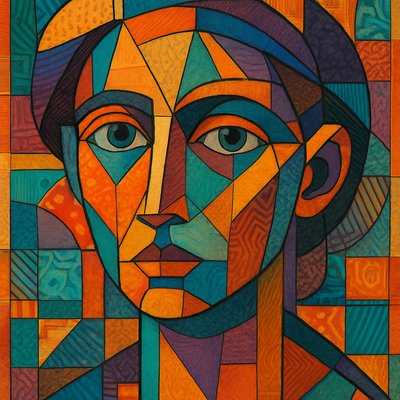
Art Style: Analytical Cubism, avant-garde oil painting style reminiscent of Picasso and Braque.

Subject: A dense, tangled thicket of Rhododendrons and Mountain Laurel bushes.

Composition & Details: The entire natural scene is deconstructed into overlapping geometric planes, fractured shards, and intersecting angles. There are no curved lines; everything is rendered in cubes, cones, and trapezoids.

    The Rhododendrons: Large, showy flower trusses are broken into faceted crystalline structures of deep magenta, rose pink, and violet blocks, looking like explosions of colored quartz rather than soft petals.

    The Mountain Laurels: The smaller, intricate flowers are rendered as complex, repeating geometric star-patterns and angular cups in white and pale pink with distinct red polygonal markings.

    Foliage & Branches: The thick, leathery leaves are fragmented green triangles and parallelograms overlapping each other, creating a sense of depth without traditional perspective. The woody stems and branches are jagged, intersecting brown and grey cylinders that shatter across the frame.

Color & Texture: A palette of muted earth tones—ochre, burnt umber, forest green, and slate grey—contrasted sharply with the jewel-toned facets of the flower colors. The finish should have a heavy, textured oil paint feel with visible palette knife marks and rough brushwork.
Gritty Historical Realism Style, Cinematic Film Photography, Natural Daylight. A powerful, candid medium shot of the infamous pirate duo, Anne Bonny and Mary Read, standing side-by-side on the weathered wooden deck of the sloop Revenge in the Caribbean Sea (circa 1720).

The Subjects: Both are dressed in practical, worn 18th-century male sailor's attire—loose canvas breeches, oversized linen shirts, heavy leather waistcoats, and bandanas—scruffy clothing that disguises their gender at a distance but reveals them as fiercely capable women upon closer inspection. Their faces are sun-weathered, dirty, and determined.

Specific Details: Anne Bonny (left) has fiery red hair escaping a dark bandana and a tricorn hat pushed back; she holds a drawn cutlass and has a defiant, volatile expression. Mary Read (right) looks sturdier, wearing a heavy wool coat, arms crossed over her chest with two flintlock pistols visible in her sash, looking steady and calculating.

The Setting: The background is a chaotic, working pirate ship deck with coils of tarred rope, rigging, barrels, and a cannon. Beyond the rail is the turquoise ocean and a hazy tropical coastline. The lighting is harsh, midday sun, with salt spray in the air. The mood is tense, rebellious, and authentic. Film grain texture.
A highly detailed mosaic artwork depicting a classic Christmas tree, intricately composed of mixed tesserae including vibrant smalti glass tiles, sparkling gemstones, metallic gold and silver leaf accents, and opaque ceramic tiles. The tree features layered triangular branches in rich greens with iridescent emerald and forest smalti, adorned with multicolored gemstone ornaments in ruby, sapphire, emerald, and amber hues, metallic gold tiles forming garlands and shimmering highlights, and a radiant golden star at the top crafted from gold smalti and metallic inlays. Subtle opaque white and ivory tiles suggest snow accents, with tiny pearl-like elements for added luminosity. The background is a deep midnight blue with subtle starry specks in silver metallic tiles, evoking a festive night sky. Byzantine-inspired ornate style with tiny irregular tesserae, thin dark grout lines for contrast, hyper-detailed texture, luminous reflections on glass and gems, dimensional depth from raised tiles, photorealistic mosaic rendering, sharp focus, elegant and celebratory composition
Art Style: Analytical Cubism, avant-garde oil painting style reminiscent of Picasso and Braque.

Subject: A dense, tangled thicket of Rhododendrons and Mountain Laurel bushes.

Composition & Details: The entire natural scene is deconstructed into overlapping geometric planes, fractured shards, and intersecting angles. There are no curved lines; everything is rendered in cubes, cones, and trapezoids.

    The Rhododendrons: Large, showy flower trusses are broken into faceted crystalline structures of deep magenta, rose pink, and violet blocks, looking like explosions of colored quartz rather than soft petals.

    The Mountain Laurels: The smaller, intricate flowers are rendered as complex, repeating geometric star-patterns and angular cups in white and pale pink with distinct red polygonal markings.

    Foliage & Branches: The thick, leathery leaves are fragmented green triangles and parallelograms overlapping each other, creating a sense of depth without traditional perspective. The woody stems and branches are jagged, intersecting brown and grey cylinders that shatter across the frame.

Color & Texture: A palette of muted earth tones—ochre, burnt umber, forest green, and slate grey—contrasted sharply with the jewel-toned facets of the flower colors. The finish should have a heavy, textured oil paint feel with visible palette knife marks and rough brushwork.
Art Style: Analytical Cubism, avant-garde oil painting style reminiscent of Picasso and Braque.

Subject: A dense, tangled thicket of Rhododendrons and Mountain Laurel bushes.

Composition & Details: The entire natural scene is deconstructed into overlapping geometric planes, fractured shards, and intersecting angles. There are no curved lines; everything is rendered in cubes, cones, and trapezoids.

    The Rhododendrons: Large, showy flower trusses are broken into faceted crystalline structures of deep magenta, rose pink, and violet blocks, looking like explosions of colored quartz rather than soft petals.

    The Mountain Laurels: The smaller, intricate flowers are rendered as complex, repeating geometric star-patterns and angular cups in white and pale pink with distinct red polygonal markings.

    Foliage & Branches: The thick, leathery leaves are fragmented green triangles and parallelograms overlapping each other, creating a sense of depth without traditional perspective. The woody stems and branches are jagged, intersecting brown and grey cylinders that shatter across the frame.

Color & Texture: A palette of muted earth tones—ochre, burnt umber, forest green, and slate grey—contrasted sharply with the jewel-toned facets of the flower colors. The finish should have a heavy, textured oil paint feel with visible palette knife marks and rough brushwork.
Elegant Mardi Gras party at the Silver Yacht Club in New Orleans at night from Nancy Drew book #81 The Mardi Gras Mystery. Luxurious yacht club deck or ballroom overlooking water, twinkling lights and purple/green/gold decorations, colorful beads and confetti in the air. Teenage detective Nancy Drew in center, reddish-blonde hair, wearing a sparkling blue masquerade gown with feathered mask, beads, and a determined yet smiling expression, dancing or mingling. Ned Nickerson beside her in a dashing tuxedo or masked costume, arm around her. Bess Marvin (blonde, glamorous) in a pink feathered ball gown laughing with George Fayne (short dark hair) in a fun jester or adventurous outfit. Brian Seaton and his father in partial bat-themed costumes with capes and masks nearby. Background: masked guests in elaborate gowns, tuxedos, and festive attire, live jazz band playing trumpets and saxophones, yacht masts or water view, chandeliers or string lights glowing, subtle suspenseful shadows hinting at mystery. Vibrant 1980s Nancy Drew book illustration style, adventurous festive atmosphere, detailed costumes, cinematic lighting with warm golden hues and colorful pops, high energy party scene
Angelic Woman: A highly detailed photorealistic mosaic artwork in the elegant Art Nouveau style strongly influenced by Gustav Klimt, depicting a serene ethereal angelic female figure in three-quarter profile view from the left, eyes gently closed, calm contemplative expression with subtle blush and red lips, head slightly bowed, hands clasped in prayer over the chest. The entire form--including flawless skin, elaborate voluminous curly hair with flowing organic swirls, large intricate angelic wings, and ornate decorative covering--is intricately composed as a luxurious mixed-material mosaic using tiny irregular tesserae dominated by deep midnight blue and radiant gold tones; vibrant hand-cut smalti glass in midnight blue, sapphire, and luminous gold; abundant sparkling embedded gemstones in lapis, turquoise, and pearl hues; extensive metallic gold leaf accents forming spiral, floral, and whiplash curve patterns; opaque ceramic and marble tiles for subtle texture; and delicate pearl inlays for soft luminosity. Hair and figure feature characteristic Klimt-inspired swirling gold filigree, geometric motifs, and organic curving lines; prominent wings rendered in layered feather-like segments with Art Nouveau flowing forms in gold-outlined midnight blue; radiant golden sunburst halo behind the head enhanced with decorative radial patterns. Vast midnight blue night sky background filled with scattered twinkling stars crafted from pearl and silver inlays and a prominent glowing crescent moon in gold and pearl tesserae, dramatic luminous highlights and iridescent reflections on glass, metals, and gems, slight dimensional depth from raised tiles, thin subtle grout lines for elegant contrast, opulent baroque-infused Art Nouveau hyper-intricate style blending surreal fantasy and symbolic celestial ornamentation, sharp focus, transcendent serene mood
Installation using neon lights with natural elements in the art style of Arte Povera --v 6.1
"Uriel, the Angel of Light and Wisdom from the Book of Enoch, a majestic celestial guide, standing amidst swirling cosmic dust and ethereal nebulae. His form radiates intense, pure light. He gestures towards a hidden cosmic mechanism, revealing ancient knowledge, holding a flaming orb of pure light. Robes of deep sapphire blue and radiant gold, adorned with ancient symbols. Serene, knowing face, eyes glimmering with cosmic insight. Behind him, celestial gears and the fiery essence of the sun. Hyperrealistic digital painting, divine luminosity, epic detailed, cinematic lighting, cosmic gradients."
"Uriel, the Angel of Light and Wisdom from the Book of Enoch, a majestic celestial guide, standing amidst swirling cosmic dust and ethereal nebulae. His form radiates intense, pure light. He gestures towards a hidden cosmic mechanism, revealing ancient knowledge, holding a flaming orb of pure light. Robes of deep sapphire blue and radiant gold, adorned with ancient symbols. Serene, knowing face, eyes glimmering with cosmic insight. Behind him, celestial gears and the fiery essence of the sun. Hyperrealistic digital painting, divine luminosity, epic detailed, cinematic lighting, cosmic gradients."divine luminosity, ethereal glow, celestial being, seraphic presence, sacred geometry, iridescent, luminescent
Installation using neon lights with natural elements in the art style of Arte Povera --v 6.1
"Uriel, the Angel of Light and Wisdom from the Book of Enoch, a majestic celestial guide, standing amidst swirling cosmic dust and ethereal nebulae. His form radiates intense, pure light. He gestures towards a hidden cosmic mechanism, revealing ancient knowledge, holding a flaming orb of pure light. Robes of deep sapphire blue and radiant gold, adorned with ancient symbols. Serene, knowing face, eyes glimmering with cosmic insight. Behind him, celestial gears and the fiery essence of the sun. Hyperrealistic digital painting, divine luminosity, epic detailed, cinematic lighting, cosmic gradients."
"Uriel, the Angel of Light and Wisdom from the Book of Enoch, a majestic celestial guide, standing amidst swirling cosmic dust and ethereal nebulae. His form radiates intense, pure light. He gestures towards a hidden cosmic mechanism, revealing ancient knowledge, holding a flaming orb of pure light. Robes of deep sapphire blue and radiant gold, adorned with ancient symbols. Serene, knowing face, eyes glimmering with cosmic insight. Behind him the fiery essence of the sun. Hyperrealistic digital painting, divine luminosity, epic detailed, cinematic lighting, cosmic gradients."
"Uriel, the Angel of Light and Wisdom from the Book of Enoch, a majestic celestial guide, standing amidst swirling cosmic dust and ethereal nebulae. His form radiates intense, pure light. He gestures towards a hidden cosmic mechanism, revealing ancient knowledge, holding a flaming orb of pure light. Robes of deep sapphire blue and radiant gold, adorned with ancient symbols. Serene, knowing face, eyes glimmering with cosmic insight. Behind him, celestial gears and the fiery essence of the sun. Hyperrealistic digital painting, divine luminosity, epic detailed, cinematic lighting, cosmic gradients."
Rush hour in the rain
A giant kaiju monster
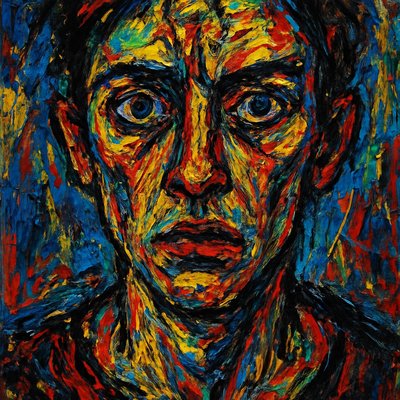
portrait of a person with expressive eyes
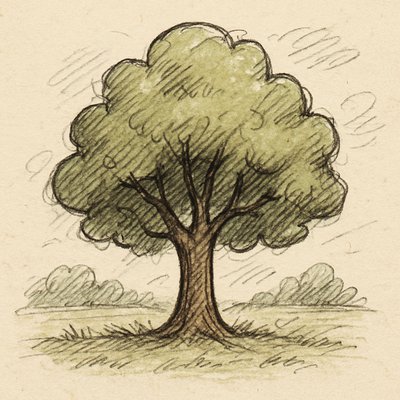
a tree in nature
Steampunk Historical Fantasy, Satirical Illustration Style, Cinematic Lighting. A bizarre, anachronistic scene inside a drafty medieval castle great hall (Camelot). A group of noblewomen, dressed in elaborate 6th-century velvet gowns, wimples, and tall pointed hennin hats with veils, are seated on rough wooden stools. They are furiously working a massive, makeshift telephone switchboard operator station.

The Technology: The switchboard is constructed from rough-hewn oak timbers, gleaming brass gears, porcelain insulators, and hundreds of thick, chaotic copper wires that are strung haphazardly across ancient tapestries and stone walls, disappearing out narrow arrow-slit windows.

The Action: The ladies hold bulky, antique Victorian-era earpieces and large brass mouthpieces, plugging heavy cables with oversized jacks into the board with expressions of intense concentration and mild confusion. Knights in armor walk past in the background, looking bewildered. Sunlight streams through gothic windows, illuminating the dust and the clash of eras.
Steampunk Historical Fantasy, Satirical Illustration Style, Cinematic Lighting. A bizarre, anachronistic scene inside a drafty medieval castle great hall (Camelot). A group of noblewomen, dressed in elaborate 6th-century velvet gowns, wimples, and tall pointed hennin hats with veils, are seated on rough wooden stools. They are furiously working a massive, makeshift telephone switchboard operator station.

The Technology: The switchboard is constructed from rough-hewn oak timbers, gleaming brass gears, porcelain insulators, and hundreds of thick, chaotic copper wires that are strung haphazardly across ancient tapestries and stone walls, disappearing out narrow arrow-slit windows.

The Action: The ladies hold bulky, antique Victorian-era earpieces and large brass mouthpieces, plugging heavy cables with oversized jacks into the board with expressions of intense concentration and mild confusion. Knights in armor walk past in the background, looking bewildered. Sunlight streams through gothic windows, illuminating the dust and the clash of eras.
Steampunk Historical Fantasy, Satirical Illustration Style, Cinematic Lighting. A bizarre, anachronistic scene inside a drafty medieval castle great hall (Camelot). A group of noblewomen, dressed in elaborate 6th-century velvet gowns, wimples, and tall pointed hennin hats with veils, are seated on rough wooden stools. They are furiously working a massive, makeshift telephone switchboard operator station.

The Technology: The switchboard is constructed from rough-hewn oak timbers, gleaming brass gears, porcelain insulators, and hundreds of thick, chaotic copper wires that are strung haphazardly across ancient tapestries and stone walls, disappearing out narrow arrow-slit windows.

The Action: The ladies hold bulky, antique Victorian-era earpieces and large brass mouthpieces, plugging heavy cables with oversized jacks into the board with expressions of intense concentration and mild confusion. Knights in armor walk past in the background, looking bewildered. Sunlight streams through gothic windows, illuminating the dust and the clash of eras.
Steampunk Historical Fantasy, Satirical Illustration Style, Cinematic Lighting. A bizarre, anachronistic scene inside a drafty medieval castle great hall (Camelot). A group of noblewomen, dressed in elaborate 6th-century velvet gowns, wimples, and tall pointed hennin hats with veils, are seated on rough wooden stools. They are furiously working a massive, makeshift telephone switchboard operator station.

The Technology: The switchboard is constructed from rough-hewn oak timbers, gleaming brass gears, porcelain insulators, and hundreds of thick, chaotic copper wires that are strung haphazardly across ancient tapestries and stone walls, disappearing out narrow arrow-slit windows.

The Action: The ladies hold bulky, antique Victorian-era earpieces and large brass mouthpieces, plugging heavy cables with oversized jacks into the board with expressions of intense concentration and mild confusion. Knights in armor walk past in the background, looking bewildered. Sunlight streams through gothic windows, illuminating the dust and the clash of eras.
a tree in nature
portrait of a person with expressive eyes
animal standing in natural pose
a tree in nature
Immigrant's journey portrait
A majestic, ethereal scene depicting golden bowls brimming with luminous, swirling incense. The incense, representing the collective prayers of all saints, rises and coalesces into shimmering, golden tendrils that ascend towards an unseen heavenly throne.There elders worshipping: EACH ELDER HAS ONE BOWL AND EACH ELDER HAS ONE HARP. These are golden bowls of incense. Each bowl is held by a robed elder, KNEELING IN PRAYER TO GOD. The atmosphere is reverent and awe-inspiring, filled with soft, warm light emanating from the golden smoke. Emphasize the precious, divine, and unified nature of the prayers. Inspired by Revelation 5:8